• Home
  • About The Herald
  • Local Agencies
  • Daily Email Update
  • Legal Notices
  • Classified Ads

Contra Costa Herald

News Of By and For The People of Contra Costa County, California

  • Arts & Entertainment
  • Business
  • Community
  • Crime
  • Dining
  • Education
  • Faith
  • Health
  • News
  • Politics & Elections
  • Real Estate

Delta Flood Safety Fair mixes family fun with flood readiness in Isleton on Saturday, Oct. 22

October 19, 2016 By Publisher Leave a Comment

dpc-logoISLETON, CA – In concert with California Flood Preparedness Week, the Delta Protection Commission declares a week in October to be the annual Delta Flood Preparedness Week. In 2016, Delta Flood Preparedness Week will run from Monday, October 17 through Saturday, October 22.

Due to the unique conditions of life in the Delta, flood risk is dramatically different than in other regions of the state. In the Delta, drought conditions do NOT reduce flood risk, because Delta levees hold back water 24 hours a day, 365 days a year – not just when the rivers run high. These unique conditions are addressed at the Delta Flood Safety Fair, a fun and informative day at the Delta Farmers’ Market on Highway 12 west of the Rio Vista Bridge. In its third year, the event is sponsored by the Delta Protection Commission and the Discover the Delta Foundation, and is scheduled for Saturday, October 22nd from 10:00 AM to 2:00 PM.

This year’s participants include perennial favorites River Delta Fire, offering photo ops for the kids with their ladder truck, Solano Office of Emergency Services (OES) giving tours of their Mobile Command Center, the Sacramento County Marine Patrol exhibiting their specialized watercraft, and the specially trained rescue dogs of Sacramento County Search and Rescue. Other participants include the UC Davis School of Veterinary Medicine addressing livestock and pet safety, the US Coast Guard, CalRecycle, the Department of Water Resources’ Division of Flood Management (DWR), the Diving Accident Rescue Team (DART), the Federal Emergency Management Agency (FEMA), the Red Cross, the Delta Science Center and DCC Engineering.

The event also includes food vendors, Delta wine tasting, children’s activities and live music.

WHAT: Delta Flood Safety Fair

WHEN: Saturday, October 22, 2016 – 10:00 AM to 2:00 PM

WHERE: Delta Farmers’ Market, Highway 12 at Highway 160, just west of the Rio Vista Bridge.

PHONE: (916) 375-4886

WHO: CalRecycle, Central California Valley Flood Control Association, DART, DCC Engineering, Delta Protection Commission, Delta Science Center, DWR, Discover the Delta Foundation, Dutra Museum of Dredging, FEMA, Red Cross, River Delta Fire, Sacramento County Marine Patrol, Sacramento Search and Rescue, Solano County OES, UC Davis, US Coast Guard


Filed Under: Environment, The Delta

Save money by slaying the energy vampires in your home, this Halloween

October 19, 2016 By Publisher Leave a Comment

Ghouls and goblins aren’t the only thing California residents have to worry about this Halloween. There’s another threat lurking in nearly every household: you can’t see or feel it, but it drains your hard-earned cash without you even realizing. This threat is the “energy vampire” – and it accounts for nearly 10% of all energy use in California homes.

“Energy vampires” (or standby power) is a term used for any electronic we leave plugged in that slowly sucks energy from our homes. These can be video game consoles, phone chargers, guitar amps, laptops, printers and more. What’s worse, the average U.S. household spends about $130 per year to power devices while they appear to be off.

So how can households reclaim some of these costs? Here are a few tricks and tips:

  • Unplug your devices.Perhaps the most obvious thing you can do to battle energy vampires is to unplug devices when they are not in use. Make it a habit to unplug your charger when your phone is fully charged, or your video game console, when you’ve finished playing. These small, simple behavior changes add up in energy savings – and in dollars and cents.
  • Enable ENERGY STAR power management settings. ENERGY STAR qualified computers and monitors offer a variety of power settings to help you monitor your energy use. By enabling these settings, you can have your devices go into power save mode when they are not actively in use.
  • Use Advanced Power Strips (APS). Replacing your conventional power strips with advanced power strips can help reduce electricity waste when devices are idle – without your having to change the way you normally use your electronics.  Advanced Power Strips work by preventing electronics from drawing power when they are off or not being used.

energy_upgrade_ca_10-16

Filed Under: Environment, Finances

Register now for free 2017 youth conference on clean air

October 5, 2016 By Publisher Leave a Comment

Youth for Environment and Sustainability Conference to be held February 25 in San Francisco

baaqmd-logoThe annual Youth for Environment and Sustainability, or YES, Conference, returns to the Bay Area at 10 a.m. on Saturday, February 25, 2017, at the new Bay Area Metro Center at 375 Beale Street in San Francisco.

The free day-long regional conference will bring together middle and high school students from the nine San Francisco Bay Area counties to discuss topics ranging from climate change and public health to transportation and air pollution. The Bay Area Air Quality Management District and the Metropolitan Transportation Commission sponsor the annual conference.

“The YES Conference is an awesome regional gathering that jumpstarts student-led climate action in our schools and local communities,” said Noah Preute, a student from St. Vincent de Paul High School in Santa Rosa and a member of the student planning committee for the YES Conference. “I’m excited to help plan the conference and inform my generation on the serious consequences climate change and air pollution have on our lives and the planet.”

Registration for the event is now open at http://bit.ly/2cEYWkh. Teachers or youth development coordinators who register their studentsbefore October 30, 2016, will be entered into a drawing for a $250 grant for classroom youth leadership activities involving science, technology, engineering, art and math curriculum and sustainability.

A call for presentation proposals invites pioneering students, youth-leaders, teachers or youth advisors to present at the annual YES Conference. The deadline to submit a proposal is Wednesday, January 3, 2017. The online proposal submittal form is available now at http://bit.ly/2dhuevv.

Attending students will have the opportunity to learn directly from their peers’ efforts by discussing advocacy, communication, leadership development and skill building. The program will include interactive presentations led by students and youth leaders from various schools and cities in the region. The 2017YES conference will be the fourth year of bringing youth together to share information to address climate change. The conference was awarded the 2014 Breathe California Award in the public awareness category.

There is no cost to attend the conference and breakfast and lunch will be provided for participants. Parents and teachers are also welcome. Students are required to have their parents’ permission to attend. For complete conference details, visit www.sparetheairyouth.org/2017-yes-conference/.

The goal of the Spare the Air Youth program is to reduce greenhouse gas emissions and driving by increasing walking and biking as a transportation mode among youths and their familiesthereby improving air quality in the San Francisco Bay Area.

The Air District is the regional agency responsible for protecting air quality in the nine-county Bay Area.MTC is the transportation planning, coordinating and financing agency for the nine San Francisco Bay Area counties.

Filed Under: Education, Environment, Youth

Park District purchases 76-acre property in Marsh Creek Watershed south of Antioch

October 1, 2016 By Publisher Leave a Comment

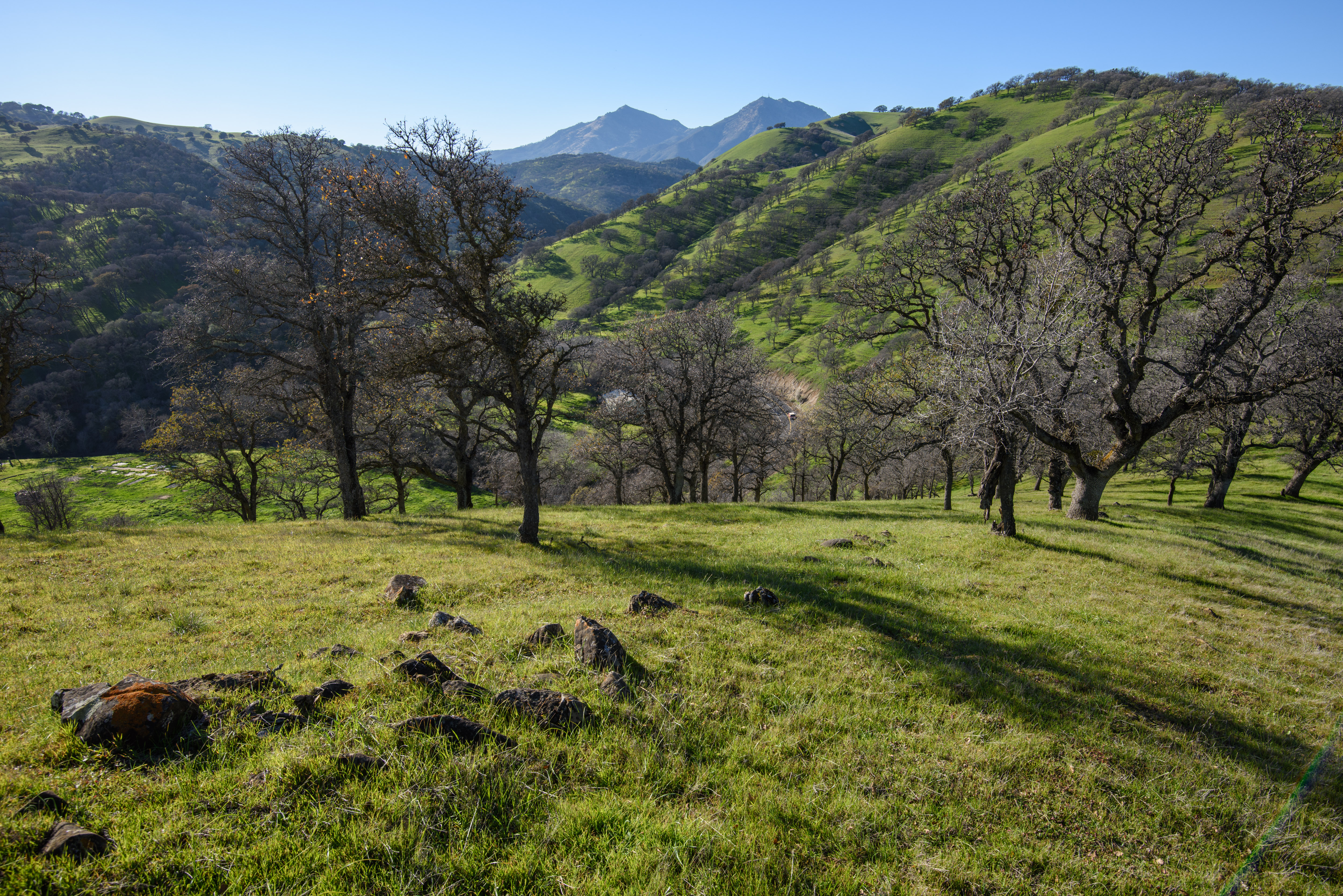
View of Mt. Diablo from the former Hanson Ranch property. photo by Scott Hein

View of Mt. Diablo from the former Hanson Ranch property. photo by Scott Hein

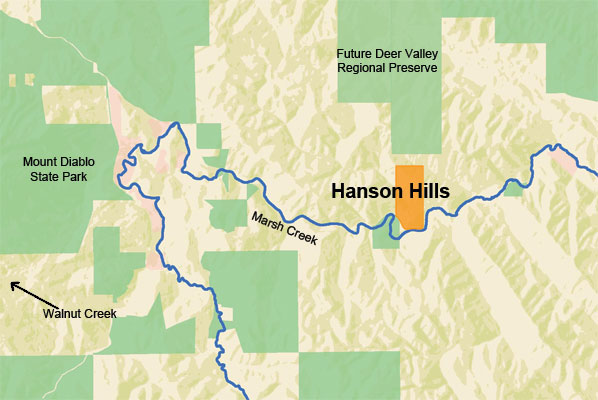
land_acq_hansonhills_map

Location map. courtesy of Save Mt. Diablo

The 76-acre Hanson Hills property on the eastern slopes of Mt. Diablo, will become part of the future Deer Valley Regional Park, extending the park’s southern boundary to Marsh Creek Road. The East Bay Regional Park District purchased the former ranch land, located south of Antioch and west of Brentwood, from Save Mount Diablo for $730,000, its appraised fair market value. East Contra Costa County Habitat Conservancy contributed $547,500 toward the cost and funds from Measure WW covered the remainder.

“This beautiful property will be a tremendous asset for generations of East Bay residents,” said Park District Board Member Diane Burgis, whose ward includes the Hanson Hills property. “It’s also a critical part of the Marsh Creek watershed. We’re thrilled to be able to protect this ecologically sensitive area forever.”

Eastern view from the former Hanson Ranch property. photo by Scott Hein

Eastern view from the former Hanson Ranch property. photo by Scott Hein

The property encompasses canyons and ridges covered with blue-oak forests and native grasslands, as well as a seasonal stream that drains to Marsh Creek. The ridgetops provide panoramic views of Mt. Diablo, the Marsh Creek corridor and Morgan Territory Regional Preserve. It’s also home to eagles, hawks, coyotes, mountain lions, deer, foxes and other species. The acquisition secures important land links that provide habitat for a number of special status species including the California red-legged frog and Alameda whipsnake.

The acquisition represents an important piece in long-term efforts to preserve land around Mount Diablo. Save Mount Diablo acquired the property from the Hanson Family in April, 2014. The Hanson children, now all in their 80’s, remember fishing for steelhead with their grandfather in Marsh Creek, just across the road, and camping out on warm nights atop the tallest hill. It was important to the family that the land they love so dearly be protected forever.

Ted Clement, executive director of Save Mount Diablo, spoke to the importance of partnerships in conserving land in the region.

“We are thrilled to help ensure the permanent protection of 76-acre Hanson Hills through our partnerships with the East Bay Regional Park District and the East Contra Costa County Habitat Conservancy,” Clement said.  “With this transaction not only have we preserved essential wildlife habitat and ensured the protection of a strategic parcel that can later support outdoor public recreation and education, but we have also generated funds to protect more lands around Mount Diablo.”

“This acquisition is another positive step for conservation in east Contra Costa County,” said Pittsburg Councilman Salvatore Evola, chair of the East Contra Costa County Habitat Conservancy board. “It is valuable to have a local land trust, the East Bay Regional Park District and the East Contra Costa County Habitat Conservancy working together to conserve valuable landscapes for species while also providing park and recreation opportunities for the growing population.”

The land will remain closed to the public (“land banked”) until the Deer Valley Regional Park Land Use Plan is completed.

Save Mount Diablo is a non-profit 501(c)(3) conservation organization, which has been preserving lands on and around Mount Diablo and educating the public to the mountain’s natural values since 1971. Preserved lands have increased from 6,788 acres in one park to more than 110,000 acres in more than 40 parks and preserves. Save Mount Diablo continues to preserve, defend and restore the remainder of the mountain for people and wildlife to enjoy. Contact: Save Mount Diablo, telephone: (925) 947-3535, fax: (925) 947-0642, 1901 Olympic Blvd., Suite 320, Walnut Creek, CA 94596; www.SaveMountDiablo.org

The East Bay Regional Park District is a system of beautiful public parks and trails in Alameda and Contra Costa counties east of San Francisco Bay, established in 1934. The system comprises 120,700 acres in 65 parks including over 1,250 miles of trails for hiking, biking, horseback riding and nature learning. www.ebparks.org

For information, please contact East Bay Regional Park District public information supervisor Carolyn Jones at (510) 544-2217, cjones@ebparks.org.


Filed Under: East County, Environment, News, Parks, Recreation

County Flood Control District seeks public input for ambitious creek restoration project

September 27, 2016 By Publisher Leave a Comment

ccc-flood-control-district-logoThe Contra Costa County Flood Control and Water Conservation District (District) will host a public workshop on Tuesday, October 4 from 6:00 to 8:00 PM at 255 Glacier Drive, Martinez to receive public input for the planning phase of an ambitious restoration project for Lower Walnut Creek.

The Walnut Creek watershed is the largest in Contra Costa County, contains eight cities and more than 300,000 residents. The restoration project area consists of the most downstream 4 miles of this watershed that drains to Suisun Bay and is called Lower Walnut Creek.

The District’s long-term vision is to restore and enhance habitat in Lower Walnut Creek and to provide sustainable flood management, while allowing opportunities for public access and recreation. The first public workshop was held in December 2015 early in the planning process. The purpose of this second workshop is to receive public feedback on the restoration alternatives that have been developed to date.

“Since last year, we have worked closely with a representative group of stakeholders to design a project with multiple benefits for flood protection, water quality, wildlife habitat, and other community interests,” said Paul Detjens, District Senior Engineer and project manager for the restoration effort. “The District would like to share with the public what we’ve come up with and to listen to the community’s thoughts about the project.”

An important principle that has guided the planning phase of the project is to anticipate changes such as Sea Level Rise and to design a system that is resilient to change without expensive and environmentally-disruptive management actions.

“The project offers a unique opportunity to connect and expand habitats at the landscape scale, and to do it in a way that will provide benefits with future sea level changes,” said Michelle Orr, the principal technical consultant for the project who works with Environmental Science Associates based in San Francisco.

The community workshop will feature presentations describing different alternatives for the restoration of Lower Walnut Creek and will create a community forum to offer feedback about the direction of the restoration project. The public can also participate in the ongoing conversationa bout Lower Walnut Creek on the project’s Facebook page which can be accessed through www.lowerwalnutcreek.org. There, the public can learn more about the project and view a multi-episode video series produced by the District called Lower Walnut Creek Adventures.

In addition to the community workshop on October 4, the District invites the public to participate in Lower Walnut Creek field tours on October 1 and November 12. These site tours offer a unique opportunity to experience firsthand the restoration potential of Lower Walnut Creek. Seats are limited and registration is required. To register, visit www.lowerwalnutcreek.org.

Filed Under: Central County, Environment, Government

Contra Costa County joins other agencies, groups to sue L.A. water district over Delta islands purchase

April 15, 2016 By Publisher Leave a Comment

On Thursday, Contra Costa County, the Planning and Conservation League and Food and Water Watch, as well as two other Delta local agencies, Central Delta Water Agency and San Joaquin County announced they will file a lawsuit against the Metropolitan Water District of Southern California (Met) over their plan to purchase several islands in the San Francisco Bay-Delta estuary.

On March 14, 2016, Metropolitan Water District had filed a Notice of Exemption under the California Environmental Quality Act for the purchase of the Delta islands, claiming the purchase was for Delta habitat restoration purposes.

However, Met’s General Manager, Jeff Kightlinger, admitted to the press at the time of the island purchase announcement that the islands could facilitate building the $15.7 billion Delta tunnels project championed by Governor Brown by “reducing eminent-domain needs and providing a storage place for construction dirt.”

In addition, Mr. Kightlinger made additional public statements regarding the uses and benefits of the Delta islands that contradicted the CEQA exemption statement.

At a rally in Stockton in support of the lawsuit, Barbara Barrigan-Parrilla, Executive Director, Restore the Delta spoke.

“Based on this improper CEQA filling, we are calling on the Metropolitan Water District Board of Directors to reverse the bad vote that they made at their General Manager’s urging to purchase the Delta islands,” she said. “Clearly, the purchase of the Delta islands is Met’s attempt to anchor the Delta tunnels in our region so that construction could begin, despite the fact that the plan is still not approved or financed.

“The $175 million purchase price for the Delta islands does not count the costs to Southern California ratepayers for the inevitable litigation that begins with today’s filing,” Barrigan-Parrilla continued. “If Met loses in court, they will not be able to ever sell these islands for the same price. That means Southern Californian water users will become owners of a very expensive duck habitat hundreds of miles to the north. Met will also be on the hook for maintenance of hundreds of miles of Delta levees, an ongoing cost that will be paid year after year by Southern California ratepayers.”

“Our 35,000 members from throughout California agree there are better ways for Southern California water agencies to plan for their water future.  More than 7500 area residents have already signed letters that will be sent to Metropolitan Water District’s Board of Directors urging them to drop the Delta islands purchase and to instead invest the $175 million in solutions that build sustainability in Southern California like storm water capture and water recycling,” she added. “Met has already spent nearly $100 million on Delta tunnels planning, but the process at the State Water Board has recently ground to a halt, and there is no financial plan between Met and agricultural water districts, like the SEC fined Westlands, as to who will pay what proportion of the $15.5 billion construction costs.”

For more information on Restore the Delta and their efforts to stop the Delta Tunnels, visit www.restorethedelta.org.


Filed Under: East County, Environment, The Delta

Residents urged to speak against Contra Costa Water District deal on Delta Tunnels, Wed., April 6

April 1, 2016 By Publisher Leave a Comment

Restore the Delta says to tell the Contra Costa Water Board “Say no to back room deals that sell out Delta water 1uality for the region”

By Barbara Barrigan-Parrilla, Executive Director, Restore the Delta

The Contra Costa Water District Board of Directors will soon be reviewing the settlement agreement that they recently signed with the Delta Tunnels plan effort. The settlement drops CCWD’s protest against the tunnels plan in exchange for a separate pipeline to deliver drinking water to its customers. We are urging all concerned residents to attend the meeting.

This may be your only opportunity to register a public comment on how you feel about CCWD’s self-interested approach to secure a water supply at the expense of the community it serves.

What: CCWD Public Board Meeting
When: Wednesday, April 6, 2016, 6:30 to 9:00 pm. 
(Come at 6:00 pm if you would like to organize with us prior to the meeting)
Where: 1331 Concord Ave., Concord, CA.   

The Contra Costa Water District, is choosing to exchange its present contract for Delta water deliveries for an intake above the Delta that will remove even more fresh water from the estuary. This not only puts all other Delta communities at risk for even worse water quality, but also leaves their own customers within their own district with degraded Delta water for other uses. Additionally, their decision leaves the San Francisco Bay Estuary with degraded water quality which will negatively impact that magnificent ecosystem.

Contra Costa County residents recreate in high numbers in the Delta, live around its water ways, and have regular contact with the water.  Environmental justice communities and recreational anglers fish Delta waterways for sustenance and professional tournaments, and Contra Costa County farmers depend on quality Delta water for their businesses.

Furthermore, the impacts will be exacerbated for residents in Discovery Bay for all water uses — from toxic algal blooms to waterways polluted with salt, Selenium and human carcinogens. Reducing flow through the Delta will put the estuary in a state of “permanent drought.”

CCWD’s willingness to settle is an indictment of how bad the Delta Tunnels plan really is. The Tunnels Project will have egregious water quality impacts in the Delta. CCWD should drop the settlement, and rejoin the unified opposition to the Tunnels plan launched by the entire Bay-Delta community, not cut a self-serving back room deal!

Lastly, Restore the Delta and collaborating environmental groups have in the past supported an expansion of Los Vaqueros Reservoir (and an intertie between Contra Costa Water District and Santa Clara Valley Water District) as ways to meet water needs for the greater Bay Area.  However, we are reconsidering our support of such measures seeing that Contra Costa Water District would now become a party to depriving the Bay-Delta estuary of needed flows through the Delta tunnels project. CCWD is effectively transforming the expansion of Los Vaqueros from a solution to a tool of the Bay-Delta estuary water grab.

Read our opposition to this settlement here.

If you have questions, about this alert, please feel free to call our office at 209-475-9550.  We will see you, our members, at 6 pm in order to organize before the meeting on April 6, 2016. If you cannot make the meeting, submit a public comment here.

Thank you for your continued support.

The Contra Costa Water District service area includes Antioch, Bay Point, Brentwood (portion), Clayton, Clyde, Concord, Martinez (portion), Oakley, Pittsburg, Pleasant Hill (portion), Port Costa and Walnut Creek (portion). To find your Director on the Board visit http://www.ccwater.com/426/Division-Map—Find-Your-Director.  If you can’t attend the meeting you can email your Director by visiting http://www.ccwater.com/416/Board-of-Directors.

Filed Under: Central County, East County, Environment, Opinion, The Delta, Water

Restore the Delta opposes DWR-Contra Costa Water District deal on Delta Tunnels

April 1, 2016 By Publisher Leave a Comment

On Tuesday, the Contra Costa Water District announced a withdrawal of their protest petition with the State Water Resources Control Board regarding the “Change of Diversion Petition” filed by the lead state and federal agencies promoting the Delta Tunnels.

The Contra Costa Water District has settled with the Department of Water Resources claiming that the state is going to pay for their new water diversion facility, rather than CCWD customers, to mitigate impacts to drinking water quality resulting from operation of the Delta Tunnels.

Response from Barbara Barrigan-Parrilla, Executive Director, Restore the Delta:

“The settlement is, in itself, an indictment of the Tunnels and represents Contra Costa Water District’s self-interested approach to the Delta as a whole.

“The new CCWD intake will have an impact on water quality and quantity in the Delta and is not covered in the EIR for the Delta Tunnels. The settlement says that DWR reserves the right to override environmental needs and concerns to build/operate the Delta tunnels. They are setting up the project as beyond the law, a project by Governor Brown’s fiat.

“Meanwhile, the CCWD says they are not supporting CA Water Fix — this is simply their insurance policy for their customers. However, Contra Costa residents still need good water quality in the Delta for all the other uses. Contra Costa residents recreate in the Delta in high numbers.

“In addition, a new intake for the Contra Costa Water District will require another change in the point of diversion petition to be brought to the State Water Resources Control Board. The process will continue to unfold for years, yet water exporters still do not have money on the table to continue moving the process forward or to finance the project.

“Sadly, CCWD has sacrificed other Delta communities and Bay-Delta fisheries by agreeing to this settlement, as everyone else in the Delta would be left with degraded water quality. Clearly the Brown Administration is attempting to carve up Delta communities, in the same way Owens Valley was carved up for a water grab many years ago.

“California taxpayers are going to be on the hook to pay for this mitigation so that mega growers in the Westlands Water District and in Kern County can continue to grow almonds in the desert for export. All of this deal making is to create a system that subsidizes mega growers at the expense of California taxpayers and the environment.

“This strategy of CA Water Fix is to work around public processes and to keep the public in the dark in an attempt to push the project through no matter the impacts on the San Francisco Bay-Delta, or the people or species who live here.”

To learn more about Restore the Delta visit www.restorethedelta.org.

Filed Under: Environment, The Delta, Water

Contra Costa Water District signs agreement with Department of Water Resources on water from Delta Tunnels

March 30, 2016 By Publisher Leave a Comment

Preserving water quality and supply for CCWD if the California WaterFix is implemented

The Contra Costa Water District (CCWD) announced, Tuesday that they have signed a settlement agreement with the California Department of Water Resources (DWR) that will protect its customers, facilities, and operations if the Bay Delta Conservation Plan / California WaterFix (CWF), aka the “twin tunnels,” is built. The agreement is an insurance policy to protect the unique water quality and supply issues raised by CCWD.

Since studies began in 2006 to evaluate alternative conveyance strategies for Delta water serving those dependent on the export pumps in the south Delta, CCWD has publicly raised concerns about several issues including potential impacts to the operation of its facilities in the Delta that provide high quality water service to its customers. The state approached CCWD to discuss the water quality and supply concerns unique to CCWD and an agreement was reached that will provide protections for CCWD’s customers if the project is built.

“We take our role to protect our customers seriously and cannot gamble with the future of our water supply or quality,” said General Manager Jerry Brown. “Should this project move forward without these assurances in place, CCWD’s facilities and operations would be negatively impacted. We are confident this is an iron-clad insurance policy for our customers, we wouldn’t have reached an agreement otherwise.”

Key to this settlement is the fact that it will not result in rate increases for CCWD customers nor redirect any potential impacts to other areas. It is a legally binding agreement to protect CCWD’s ability to use the facilities its customers have invested over $1 billion in the past 20 years.

“We are confident knowing we have taken actions to protect our customer’s future if the tunnels are ever constructed,” commented Brown. “The state is committing to a significant investment to ensure CCWD customers will be made whole, and this agreement protects our ability to deliver high quality water to those we serve.”

“We’re pleased to have reached an agreement with CCWD that is good for their customers and good for the 25 million Californians who depend upon the State Water Project,” said DWR Director Mark Cowin. “We appreciate CCWD’s reasonable, efficient, and effective approach to resolving concerns about California WaterFix.”

CCWD is not a proponent of the CWF. This settlement does not change that position, but instead is a way to safeguard CCWD and those it serves if a larger statewide plan is ever implemented. CCWD will remain an active participant in finding statewide solutions and continue to protect the drinking water interests of our customers.

The Board of Directors will review the details of the agreement at the April 6 Board Meeting held at 1331 Concord Ave. in Concord at 6:30 p.m.

For further details related to this settlement, please visit http://www.ccwater.com/317/Bay-Delta-Conservation-Plan-Comments.

Filed Under: Central County, East County, Environment, Water

Representatives DeSaulnier and McNerney introduce bill to expedite expansion of Los Vaqueros Reservoir

March 29, 2016 By Publisher Leave a Comment

Washington, DC – Amid California’s ongoing drought, Representatives Mark DeSaulnier (CA-11) and Jerry McNerney (CA-9) introduced the Sustainable Water Supplies Act (H.R. 4862) to increase the water supply in areas of Northern California by expediting the expansion of the Los Vaqueros Reservoir in Contra Costa County. The reservoir is a 160,000 acre-foot storage facility built in response to the state’s last historic drought in 1977. It was last expanded in 2012 to meet local water needs, and is permitted to be nearly triple its current size.

“As we enter the fifth year of a devastating drought, it is long past the time to find ways to guarantee fresh, clean water for the residents of Contra Costa County and the surrounding area. Our local industry and economy would greatly benefit from a sustainable water source without the public spending a single federal dollar. An expansion of our water supply at no federal cost is a no-brainer,” said DeSaulnier. “Without this bill, local storage facilities like Los Vaqueros would not be allowed to enter water storage agreements with local and federal partners. It is a mechanism for the reservoir to receive investment for the shared goal of creating a sustainable water supply in our area.”

“I am happy to support environmentally sound storage projects like Los Vaqueros.  This bill will promote an important expansion to an essential reservoir at no cost to the government and could provide even more water supply reliability in the region.  We must move toward regional self-sufficiency, and responsible water infrastructure projects like Los Vaqueros are an important part of that process,” said McNerney.

“We thank Congressman DeSaulnier and Congressman McNerney for their efforts in support of water storage projects in California. Further expansion of the reservoir and conveyance facilities would broaden the regional water supply benefits and protection of Delta fisheries. CCWD looks forward to this opportunity to demonstrate how partnerships with local agencies who use space in the reservoir can help us meet our regional needs,” said Lisa M. Borba, Vice President of the Contra Costa Water District.

The legislation outlines a phased approach for the expansion of the reservoir with the help of the Federal Bureau of Reclamation. Under the first step, outside water districts would lease extra space in the existing 160,000-acre-foot reservoir to store surplus water. The reservoir would later be enlarged to up to 500,000 acre feet after enough agencies or water districts agree to share costs and become partners in the planned expansion.

See the full text of the bill, here: HR4862

Filed Under: Environment, Government, News, Water

  • « Previous Page
  • 1
  • …
  • 10
  • 11
  • 12
  • 13
  • Next Page »
Monicas-11-25
Deer-Valley-Chiro-06-22

Copyright © 2026 · Contra Costa Herald · Site by Clifton Creative Web