• Home
  • About The Herald
  • Local Agencies
  • Daily Email Update
  • Legal Notices
  • Classified Ads

Contra Costa Herald

News Of By and For The People of Contra Costa County, California

  • Arts & Entertainment
  • Business
  • Community
  • Crime
  • Dining
  • Education
  • Faith
  • Health
  • News
  • Politics & Elections
  • Real Estate

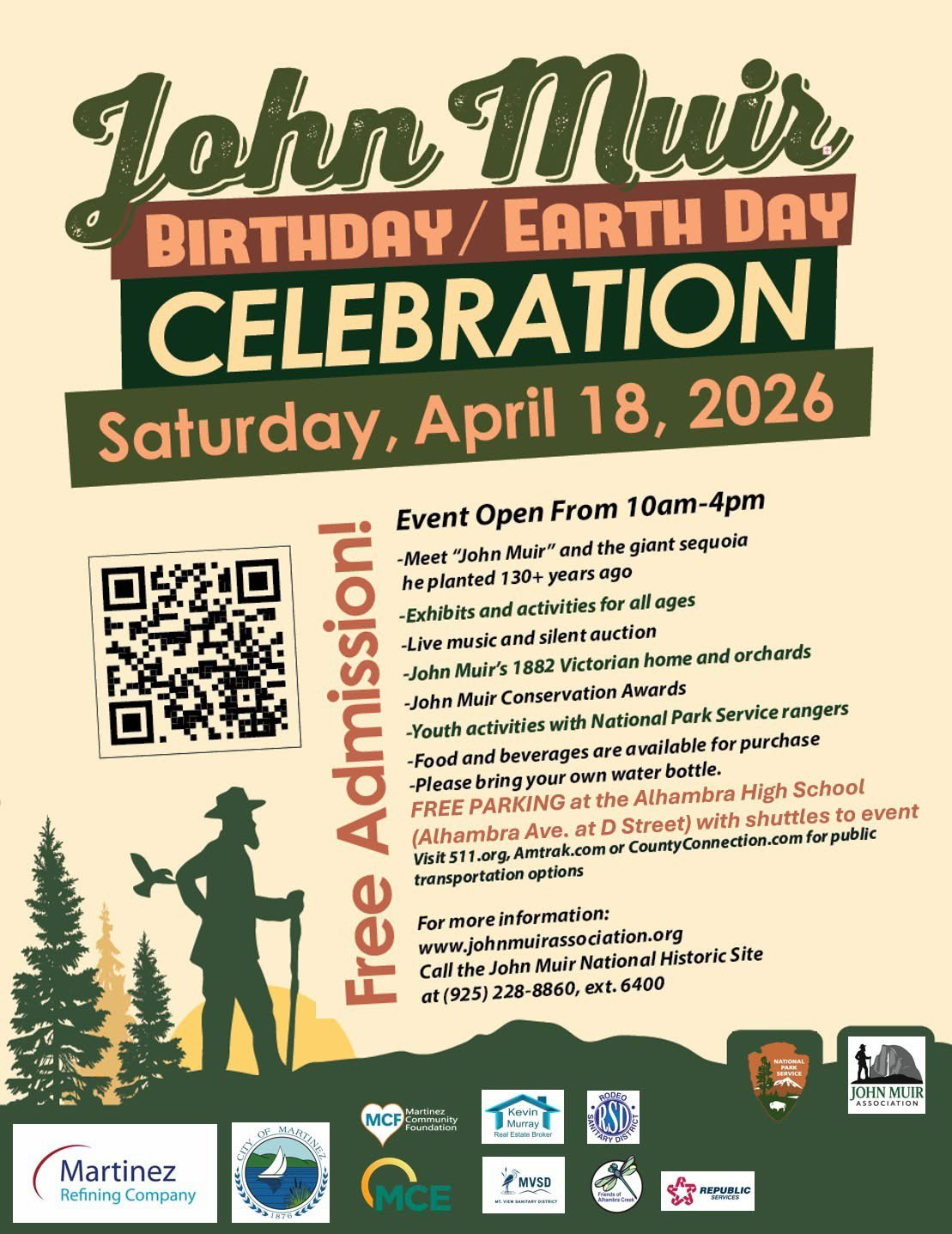
Celebrate John Muir’s 188th birthday and 56th Earth Day in Martinez April 18

April 7, 2026 By Publisher Leave a Comment

By John Muir Association

Come celebrate John Muir’s 188th birthday and Celebrating John Muir’s 188th birthday, the 56th Anniversary of Earth Day plus the 71st Anniversary of the John Muir Association Earth Day at the John Muir National Historic Site in Martinez, CA!

Here you will see “John Muir”, visit numerous exhibitors with children’s activities, an auction, live music, enjoy a tour of the home and even get to enjoy birthday cake. We can’t wait to see you.
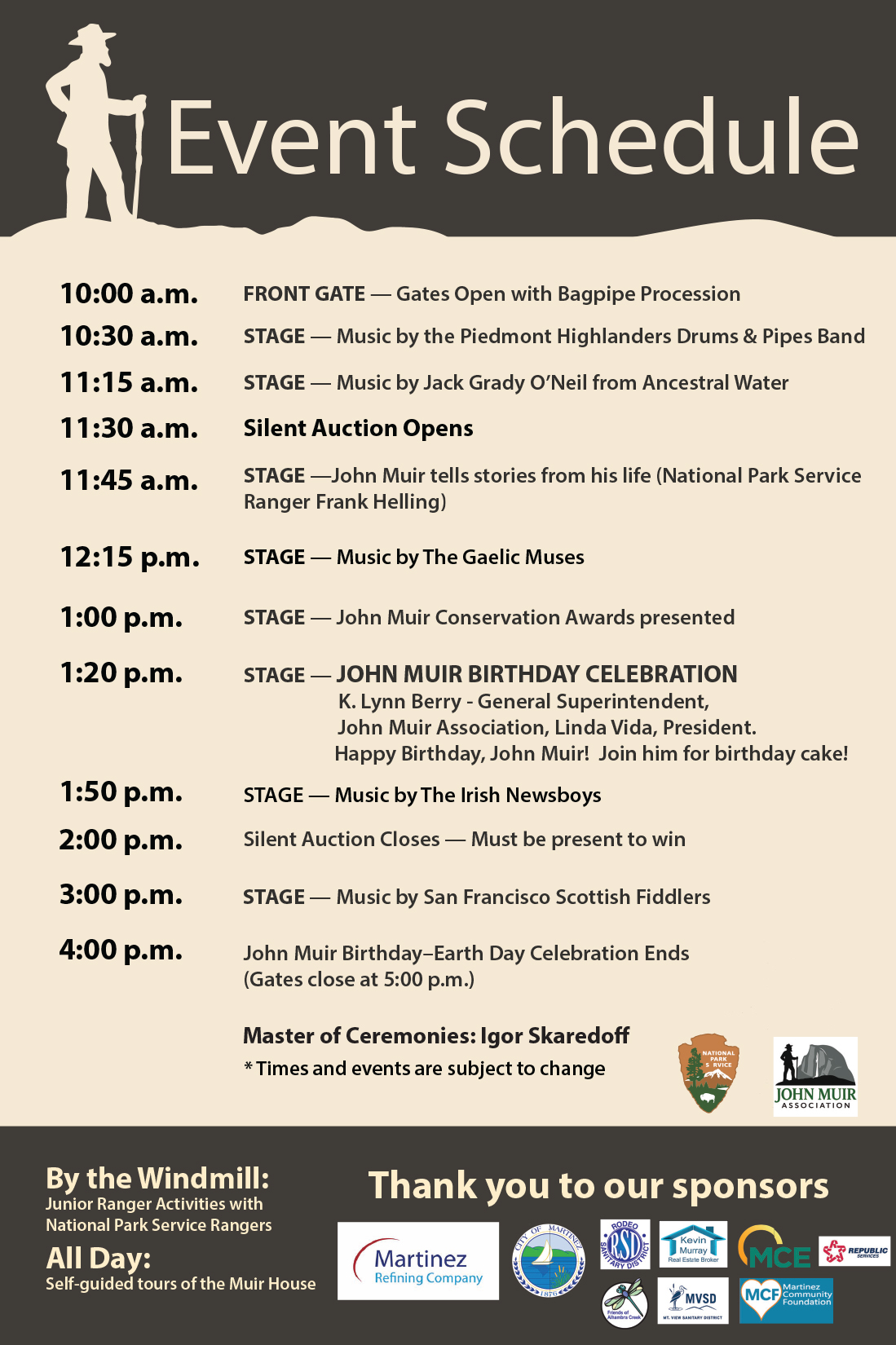
The John Muir National Historic Site is located at 4202 Alhambra Avenue.

For more information about the event visit https://johnmuirassociation.org/birthday-earth-day.
Filed Under: Central County, Environment, Fairs & Festivals, History

Rep. DeSaulnier advances over $46.7 million for local projects in Contra Costa, Alameda counties

April 1, 2026 By Publisher Leave a Comment

Budget requests for infrastructure, transportation, community development, public and environmental health and safety

$10 million for Vasco Road safety & mobility improvements

By Mairead Glowacki, Communications Director, Office of Congressman Mark DeSaulnier

Washington, D.C. – Today, Congressman Mark DeSaulnier (CA-10) announced that he advanced over $46.7 million for 20 projects to benefit Contra Costa and Alameda Counties for consideration by the U.S. House Committee on Appropriations as part of the Fiscal Year 2027 appropriations process. These projects would help to improve quality of life for the people of California’s 10th Congressional District by upgrading infrastructure and transportation accessibility and increasing public and environmental safety.

“Simply put, my number one priority in Congress is to make life better for the people I represent, and the $46.7 million we are advancing will help to do just that by investing in safety and easing congestion for drivers, bikers, and pedestrians alike, housing, emergency preparedness, crime prevention, and more,” said DeSaulnier. “I am continuously grateful to our local governments and organizations for their thoughtful project submissions, and I look forward to fighting to see the projects through the legislative process to bring this important funding home.”

Infrastructure Upgrades, Transportation Accessibility, and Community Development Projects:

  • $5,000,000 for the County of Contra Costa to design a new roadway connection that will improve regional mobility between Contra Costa and San Joaquin Counties using a connector route that shifts interregional traffic from Byron Highway and local roads in the Town of Byron to Vasco Road, to accommodate higher traffic volumes.
  • $5,000,000 for the County of Contra Costa to construct safety countermeasures along a 12.1-mile segment of Vasco Road between Marsh Creek Road and the Alameda County line in unincorporated Byron, California to decrease the number of accidents on this busy thoroughfare.
  • $4,000,000 for the City of Brentwood to construct infrastructure and site improvements to prepare a site to house the Brentwood Agricultural Technology Innovation Center.
  • $2,800,000 for the City of Lafayette to construct the Brown Avenue to Pleasant Hill Road segment of the Aqueduct Pathway, a fully accessible Class I separated bicycle and pedestrian facility located within the East Bay Municipal Utility District (EBMUD) aqueduct corridor in downtown Lafayette, California.
  • $2,000,000 for East Bay Regional Park District to construct a dedicated bus staging and drop-off area designed to accommodate regional transit agencies and other visitors, and remove aging rail infrastructure to replace it with accessible, multi-use pathways as part of the second phase of a project to allow for the Thurgood Marshall Regional Park to be opened up to the public.
  • $2,000,000 for the City of Lafayette to construct a 48-unit development of supportive and affordable housing for individuals with intellectual and developmental disabilities.
  • $2,000,000 for the City of San Ramon to continue buildout and close gaps in the citywide fiber optic network supporting transportation operations, public safety, and future smart city technologies.
  • $1,750,000 to the City of Walnut Creek to install a new traffic signal at the intersection between Treat Boulevard and Arkell Road in Walnut Creek, California, which is currently controlled by stop signs.
  • $1,500,000 for the County of Contra Costa to construct separated wheeled (bicycle, e-bike, and scooter) and pedestrian pathways in the Iron Horse Corridor from Bollinger Canyon Road to Crow Canyon Road in the City of San Ramon to separate wheeled and pedestrian modes and improve user safety.
  • $1,300,000 for the County of Contra Costa to construct a new youth center in Brentwood, California that will provide academic counseling and employment training in the culinary field.
  • $1,296,000 for the City of Orinda to complete pavement rehabilitation work and widening on the Camino Pablo Pathway in Orinda, California to expand and maintain aging infrastructure that currently sees heavy pedestrian use.

Public and Environmental Health and Safety:

  • $5,000,000 for the City of Concord to make improvements to the City of Concord’s Emergency Operations Center (EOC) to ensure that it can continue to function as a critical hub for regional preparedness, response, and recovery efforts during emergencies and disasters.
  • $3,150,000 for Central Contra Costa Sanitary District to add Densified Activated Sludge (DAS) technology to Central San’s existing large-scale Membrane Aerated Biofilm Reactor (MABR) demonstration site and share results with wastewater agencies across the region. DAS and MABR are complementary, cutting-edge technologies that could enhance nitrogen removal and environmental protection while leveraging existing treatment facilities.
  • $2,000,000 for the City of San Ramon to replace the Police Department’s aging Records Management System (RMS), associated software, and supporting equipment. The project will modernize the City’s public safety technology infrastructure by implementing a next-generation RMS, preserving and migrating existing police records, and integrating with electronic files. The project may also incorporate a unified interface that allows officers and investigators to securely access data from multiple regional law enforcement systems within a single platform, improving efficiency, and reducing the need to switch between separate applications.
  • $1,800,000 for the County of Contra Costa to build two mobile communications sites to enhance the resiliency of first responder radio communications in the event of a natural disaster or other widespread threat.
  • $1,684,990 for the City of Antioch to establish a Real-Time Operations Center (RTOC) to serve as the Antioch Police Department’s central hub for intelligence and information-sharing, integrating existing technologies—including gunshot detection, public safety cameras, and Computer-Aided Dispatch (CAD)—into a unified, citywide system that enhances crime monitoring, investigative efficiency, and officer response.
  • $1,650,000 for the County of Contra Costa to expand Contra Costa County’s ability to prioritize and investigate unsolved nonfatal and fatal violent crime, prevent future crimes, and enhance victim/witness safety through coordinated, data driven investigations, focused prosecution, and survivor support services.
  • $1,000,000 for the City of Orinda to maintain and improve the North Orinda Shaded Fuel Break to reduce the probability of catastrophic fire spread while improving firefighter access and operational effectiveness, specifically by maintaining previously treated areas, conducting hazard tree identification and abatement, and expanding interagency coordination.
  • $936,930 for the Town of Moraga to replace and upgrade existing police radios, a combined total of 65 handheld portable radios and 44 vehicle mounted mobile radios, used by the Lafayette, Moraga, and Orinda police departments.
  • $923,000 for Mt. View Sanitary District to initiate pump station and collection systems upgrades by studying the root causes of system stress and the most efficient and effective repair methods.

“For over 135 years the Iron Horse Trail has connected communities in Contra Costa, with the railroad running from 1891-1978, followed by its use as the much-beloved pedestrian and bicycle trail we enjoy today. This $1.5 million investment in the Iron Horse Trail Double Tracking Pilot is about improving safety and enhancing its use as an active transportation corridor. Creating trail separation allows pedestrians to enjoy their walks on the trail without safety concerns related to faster moving bikes. Bicyclists will be able to use their separated bikeway to get to and from work, school, and transit centers more efficiently,” said Candace Andersen, Contra Costa County Supervisor (District II).

“We are deeply grateful to Mark DeSaulnier for selecting the Downtown Aqueduct Pathway Project for Community Project Funding consideration. The Congressman’s support is instrumental in helping Lafayette advance a transformative project that will create a safe, continuous, and car-free route between neighborhoods, downtown destinations, and regional transit,” said Carl Anduri, Mayor of Lafayette.

“We are deeply grateful to have the Congressman’s support of these projects, which reflect San Ramon’s commitment to modernizing critical infrastructure, enhancing public safety, and investing in technology that improves the daily lives of our residents,” said Mark Armstrong, Mayor of San Ramon. “We value the Congressman’s continued partnership and advocacy on behalf of the San Ramon community and appreciate the opportunity to advance to Committee review of these transformative investments that will strengthen mobility, resilience, and public safety citywide.”

“Thank you to Congressman DeSaulnier for championing innovative solutions to one of the Bay Area’s most critical regulatory challenges: reducing nitrogen discharges to the Bay while keeping costs manageable for wastewater customers. The MABR and DAS Bay Area Regional Demonstration Site will advance technologies aimed at better protecting our beautiful Bay, while potentially saving billions of dollars across our region and beyond. We’re grateful for Congressman DeSaulnier’s vision, leadership, and commitment to clean water infrastructure that benefits our communities and the environment both now and, in the future,” said Roger Bailey, General Manager of the Central Contra Costa Sanitary District.

“Thank you to Congressman DeSaulnier for his leadership and support in strengthening community safety and supporting survivors of violence. The Contra Costa Unsolved Violent Crime & Victim Safety Initiative expands the county’s ability to prioritize and investigate unsolved shootings and increase clearance rates – which is the percentage of crimes that result in an arrest or other official resolution. Moreover, the initiative pairs data-driven investigations with survivor-centered services to keep victims and witnesses safe, rebuild community trust, and make sure families affected by violence received the justice and attention they deserve,” said Diana Becton, Contra Costa County District Attorney.

“We appreciate Congressman DeSaulnier for championing investments that expand opportunities for young people in East County. The Brentwood Youth Center Project will create a new 15,000 square foot facility offering culinary training in healthcare, culinary arts and skilled trades, academic support, and mental health counseling spaces—providing local youth with safe, modern, and accessible resources right in their community. This project strengthens workforce development into career pathways, supports whole person development, and ensures Brentwood’s young residents have the tools they need to thrive,” said Tamia Brown, Executive Director, Contra Costa County Workforce Development Board.

“On behalf of Contra Costa County, I want to thank Congressman DeSaulnier for his steadfast support of Contra Costa County projects that will provide wide-benefits to the community—from transportation safety improvements on Vasco Road and the Byron Highway, to critical investments in youth development, public safety communications, and solutions that strengthen justice for victims and families. His continued partnership ensures we can deliver safer roads, stronger emergency response, expanded youth opportunities, and improved community safety for residents across all of Contra Costa and beyond. We are deeply grateful for his leadership and his commitment to bringing meaningful federal resources home to Contra Costa,” said Diane Burgis, Chair of the Contra Costa County Board of Supervisors.

“We are grateful to Representative DeSaulnier and his team for their support of this critical wastewater infrastructure work,” said Lilia Corona, Mt. View Sanitary District General Manager. “The Next-Generation Pump Station and Collection System Projects will bolster the process of replacing equipment at the end of its service life. We’re excited by this major step forward for sanitary operations in Contra Costa County, which will allow Mt. View Sanitary District to continue delivering exceptional service quality to our customers.”

“We are grateful to Congressman DeSaulnier for supporting these important infrastructure and wildfire mitigation projects. The Camino Pablo Pathway will enhance pedestrian mobility and connect key parts of our community, while the North Orinda Shaded Fuel Break will significantly reduce wildfire risk and strengthen emergency response capabilities across the broader Lamorinda region. These projects represent critical investments in Orinda’s safety, sustainability, and quality of life,” said Brandyn Iverson, Mayor of Orinda.

“We are grateful for the support of Congressman DeSaulnier in advancing the Lamorinda Public Safety Radio Replacement project for funding.  Through replacing and upgrading the radios used by the Lafayette, Moraga and Orinda Police Departments, this project will enhance public safety throughout the region and ensure that law enforcement officers are equipped to address emergency situations, evacuations, and other critical incidents. Congressman DeSaulnier’s efforts are helping to keep our communities and law enforcement officers safe with this critical investment in public safety communications equipment,” said Jon King, Chief of Police for the Moraga Police Department.

“Thank you to Congressman DeSaulnier for supporting our community’s continued efforts to make Vasco Road safer for all who rely on it. The Vasco Road Safety Improvements – Phase 3 Project delivers targeted, community‑supported safety upgrades along the corridor, including proven Federal Highway Administration countermeasures designed to reduce collisions and improve visibility. These improvements will help protect commuters and enhance regional mobility along this critical East County route,” said Warren Lai, Director of Public Works, Contra Costa County.

Lai continued, “We are grateful to Congressman DeSaulnier for his continued leadership and support of vital East County transportation investments. The Vasco Road–Byron Highway Connector Project will reduce cut-through traffic in Byron, improve regional mobility between Contra Costa and San Joaquin counties, and enhance safety by providing a more efficient route for commuters and goods movement. This project represents an important step toward long term connectivity and economic opportunity for the region.”

“We are grateful to Congressman DeSaulnier for advancing Antioch’s Real-Time Operations Center project for federal consideration. This investment reflects the kind of forward-looking public safety infrastructure cities need to serve growing communities, improve coordination across government functions, and deliver smarter, more effective services to the public,” said Bessie Marie Scott, Antioch City Manager.

“Brentwood has a robust agricultural history, and a long-standing legacy of providing fresh produce and products from our locally-owned farms to tables across America. This funding investment represents the next chapter in this story and the future of farming. The Agricultural Technology Innovation Center will bring together agriculture, education, and technology to create jobs, support workforce development, and strengthen our nation’s food systems. Federal investment in critical infrastructure is the key to unlocking this opportunity, and we are grateful for Congressman DeSaulnier’s leadership and vision in advancing a project that delivers both regional and national impact,” said Susannah Meyer, Mayor of Brentwood.

“We are grateful to Congressman DeSaulnier for his strong support of Concord’s Emergency Operations Center upgrades. This investment strengthens our ability to protect residents, coordinate a regional response, and ensure our community is prepared when it matters most,” said Laura Nakamura, Mayor of Concord.

“Thank you to Congressman DeSaulnier for his commitment to strengthening public safety and emergency response across the East Bay. The East Bay Regional Communications System – Mobile Communications Sites on Wheels Project will provide deployable, towable mobile towers that ensure backup radio coverage during disasters, domestic terrorism, or large-scale incidents—significantly enhancing the resiliency, reliability, and interoperability of communications for first responders in Contra Costa and Alameda counties. This investment ensures that when emergencies strike, our communities and safety personnel can rely on a stable, redundant system that keeps critical communications operational when they’re needed most,” said David Swing, Executive Director of the East Bay Regional Communications Authority.

“The City of Walnut Creek greatly appreciates Congressman DeSaulnier’s leadership and continued support in advancing safety for our residents. This critical infrastructure project for a new traffic signal will improve the efficiency of regional traffic, emergency vehicle response times, and safety for all modes of transportation,” said Kevin Wilk, Mayor of Walnut Creek.

Selection and submission of projects to the Appropriations Committee is the first stage of the process for Community Project Funding. Each project submitted must meet the criteria set forth by the Committee, which can be found here, and must then be passed in the Committee and by both the House and Senate before it becomes law. The projects are subject to a strict transparency and accountability process, which is detailed here by the Appropriations Committee. Examples of this vetting include certifying that Members have no financial interest in these projects, an audit of a sampling of these projects by the Government Accountability Office, and a requirement for demonstrated community support and engagement for each submission. More information on each project and the certifications of no financial interest can be found here.


Filed Under: Environment, Finances, Government, Infrastructure, Legislation, News, Parks, Police, Transportation

More than 2,100 new affordable Bay Area homes thanks to state funded cleanup of contaminated land

March 28, 2026 By Publisher Leave a Comment

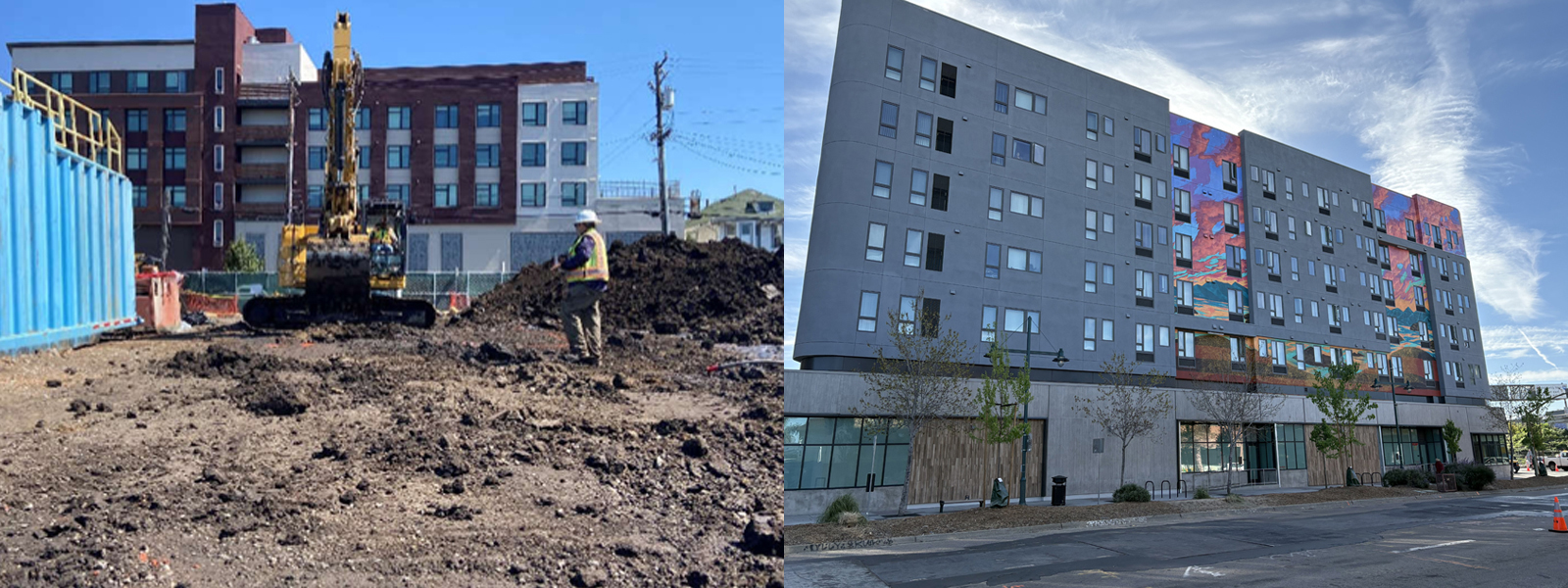
Before and after photos of the Nellie Hannon Gateway project in Emeryville. Source: DTSC

Including 43 units in Richmond

For low-income and unhoused residents

By California Department of Toxic Substance Control

EMERYVILLE – More than 2,100 new affordable homes for low-income and unhoused Bay Area residents will be available thanks to state-funded cleanup of contamination on otherwise unusable land across the region.

Bay Area residents in need are beginning to move in. The opening of 90 new homes was celebrated today when state leaders and local officials gathered at the Nellie Hannon Gateway in Emeryville. Thirty-nine of the rental community’s units are reserved for individuals exiting homelessness. The development also includes a food bank on the ground floor. Seventy-six additional affordable homes will open later this spring at the newly constructed Native American Health Center in Oakland. Forty-three homes opened early this month at Legacy Court in Richmond.

The Department of Toxic Substance Control (DTSC) provided funding and oversight of the removal of contamination at these sites.

“Cleaning up contamination is an essential but often invisible part of solving California’s housing crisis. We are transforming places once dominated by pollution into places of endless possibilities. This complex will be more than a place to live. It will be home for dozens of new residents.” – DTSC Director Katherine Butler

Thousands of properties across California sit vacant because of pollution left behind by gas stations, auto repair shops, dry cleaners and industrial facilities. The Nellie Hannon Gateway was once the site of a dry cleaner. The Native American Health Center site was an auto repair shop. Richmond’s Legacy Court site was a gas station and junkyard. Cleanups at these sites are made possible through DTSC’s Equitable Communities Revitalization Grant program. DTSC is the state agency that oversees the investigation and cleanup of contaminated properties in California.

This work has made once unusable land safe for future residents — an often-overlooked opportunity for developers who otherwise see an insurmountable obstacle to building affordable housing in communities with high pollution burdens and economic disadvantages.

DTSC helps local governments, nonprofits and developers clean up and reuse contaminated properties — known as brownfields — for housing, parks, retail and community spaces. Statewide, DTSC is investing more than $130 million for the cleanup and reuse of more than 150 sites across 49 cities, preparing them for new life in communities that have historically faced environmental and economic barriers.

DTSC is part of a statewide effort, led by Governor Gavin Newsom, to address the need for affordable housing and homelessness.

Rendering source: Eden Housing

Richmond’s Legacy Court

According to Eden Housing, Legacy Court, located at 1243, 1300 & 1329 Fred Jackson Way, is a 43-unit new construction family project in Richmond, CA. The proposed development will serve 42 low-income households earning 30-60 percent of the area’s median income (AMI).

The project will set aside thirteen units to support residents who are experiencing homelessness, at risk of experiencing homelessness and residents in need of mental health services. Contra Costa Behavioral Health Services will provide additional support services for these units, including case management, peer support, mental health care, substance use services, and benefits counseling and advocacy.

The development is designed as seven two to three-story buildings that will be situated across three different sites, all of which are located within one block from each other at the intersection of Fred Jackson Way and Sanford Avenue in North Richmond. The project will include a mix of one-bedroom, two-bedroom, and three-bedroom units. One of the units will be set aside for a live-in community manager, helping ensure that the property is well-managed at all times. On-site project amenities for residents will include a community room, community kitchen, laundry rooms, computer lab with high-speed internet, and bike parking. The common area amenities of the development will facilitate the socialization and sense of community that is important to successful developments and will serve as spaces for resident gatherings, community meetings, social events, programming for resident services such as exercise, health and wellness programs, and art, educational, and cultural activities.

Legacy Court is designed as all-electric and will incorporate energy-efficient appliances, and green elements maximized to reduce the carbon footprint of the project.

Reversing Decades of Inaction on Homelessness

Governor Newsom is creating a structural and foundational model for America:

✅ Creating shelter and support — Providing funding and programs for local governments, coupled with strong accountability measures to ensure that each local government is doing its share to build housing, and create shelter and support, so that people living in encampments have a safe place to go. This week, through a $77 million investment from California’s cap and invest program, Los Angeles announced the expansion and redevelopment of the largest public housing project in the region, the Jordan Downs Project.

✅ Addressing mental health and its impact on homelessness — Ending a long-standing 7,000 behavioral health bed shortfall in California by rapidly expanding community treatment centers and permanent supportive housing units. In 2024, voters approved Governor Newsom’s Proposition 1 which is transforming California’s behavioral health systems. When fully awarded, funding from Proposition 1 bonds is estimated to create 6,800 residential treatment beds and 26,700 outpatient treatment slots for behavioral health care.

✅ Creating new pathways for those who need the most help — Updating conservatorship laws for the first time in 50 years to include people who are unable to provide for their personal safety or necessary medical care, in addition to food, clothing, or shelter, due to either severe substance use disorder or serious mental health illness. Creating a new CARE court system that creates court-administered plans for up to 24 months for people struggling with schizophrenia and other psychotic disorders, often with substance use challenges.

✅ Streamlining and prioritizing building of new housing — Governor Newsom made creating more housing a state priority for the first time in history. He has signed into law groundbreaking reforms to break down systemic barriers that have stood in the way of building the housing Californians need, including broad CEQA reforms.

✅ Removing dangerous encampments — Governor Newsom has set a strong expectation for all local governments to address encampments in their communities and help connect people with support. In 2024, Governor Newsom filed an amicus brief with the Supreme Court defending communities’ authority to clear encampments. After the Supreme Court affirmed local authority, Governor Newsom issued an executive order directing state entities and urging local governments to clear encampments and connect people with support, using a state-tested model that helps ensure encampments are addressed humanely and people are given adequate notice and support.

In 2025, just a year after he issued an executive order urging local governments to better address encampments, the Governor announced his SAFE Task Force to address encampments in California’s ten largest cities. In just a few months, the task force has addressed encampments in San Francisco, Los Angeles, Long Beach, Sacramento, and Fresno — connecting dozens of people with shelter. Since 2021, Caltrans has removed more than 19,000 encampments on state right-of-way and collected approximately 354,000 cubic yards of litter and debris.

About Department of Toxic Substance Control

DTSC’s Mission is to protect California’s people, communities and environment from toxic substances, to enhance economic vitality by restoring contaminated land, and to compel manufacturers to make safer consumer products. Learn more about the department at About DTSC | Department of Toxic Substances Control.

Filed Under: Construction, East Bay, Environment, Homeless, Housing, News, West County

MTC, ABAG release proposed final Plan Bay Area 2050+

March 10, 2026 By Publisher Leave a Comment

Source: Plan Bay Area

Proposed Plan for housing, transportation, the economy and environment in the nine counties will go to committee for review on Friday, March 13

Offers strategies, investments and outcomes for Contra Costa County

By John Goodwin, Assistant Director of Communications & Leslie Lara-Enríquez Assistant Director, Public Engagement, Metropolitan Transportation Commission

After nearly three years of public discussion, technical analysis and refinement, the Metropolitan Transportation Commission and the Association of Bay Area Governments last Friday released the proposed final Plan Bay Area 2050+ and the Final Environmental Impact Report (EIR) for Plan Bay Area 2050+.

Plan Bay Area 2050+ is the latest long-range plan to guide growth and investment across the region’s nine counties and 101 cities. The plan seeks to advance an integrated vision for a Bay Area that is affordable, connected, diverse, healthy and vibrant for all by 2050. It focuses on the four areas of

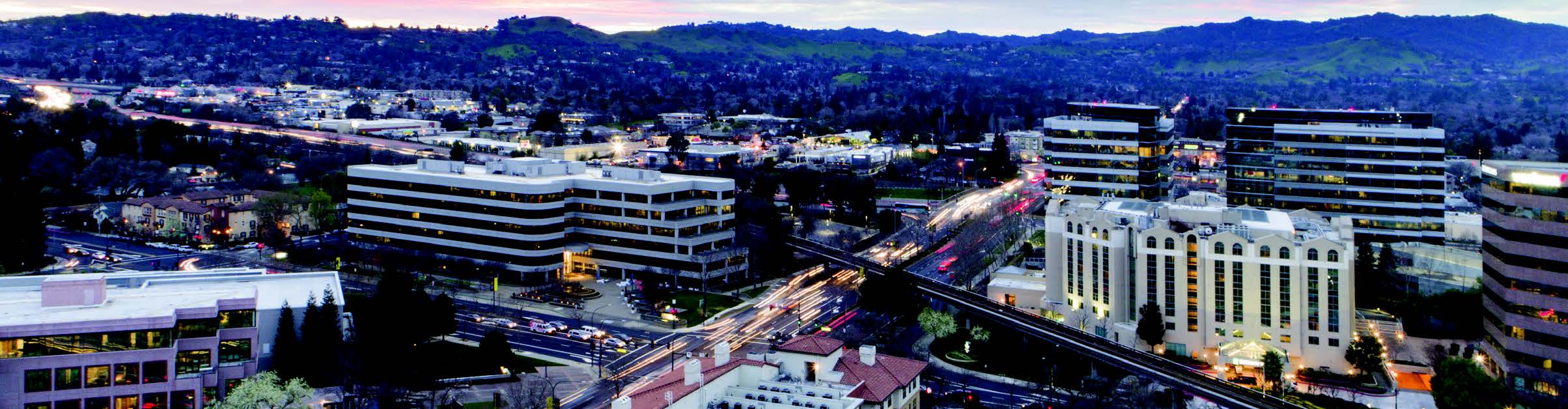
The Contra Costa Centre Transit Village. Photo credit: Karl Nielsen

The plan and its related reports will be presented for review and consideration at a joint meeting of the MTC Planning Committee with the ABAG Administrative Committee on Friday, March 13, before the documents are referred to their respective approving bodies. The ABAG Executive Board will consider certification of the Final EIR and adoption of the final plan at its March 19 meeting. At its March 25 meeting, MTC will consider certifying the Final EIR and adopting the final plan, as well as adopting the accompanying Air Quality Conformity Analysis and an amendment to the 2025 Transportation Improvement Program.

The release of the proposed final Plan Bay Area 2050+ follows a 59-day public comment period for the Draft Plan and the Draft EIR that closed on December 18, 2025. The proposed final plan and Final EIR have been updated to reflect feedback received during the public comment period.

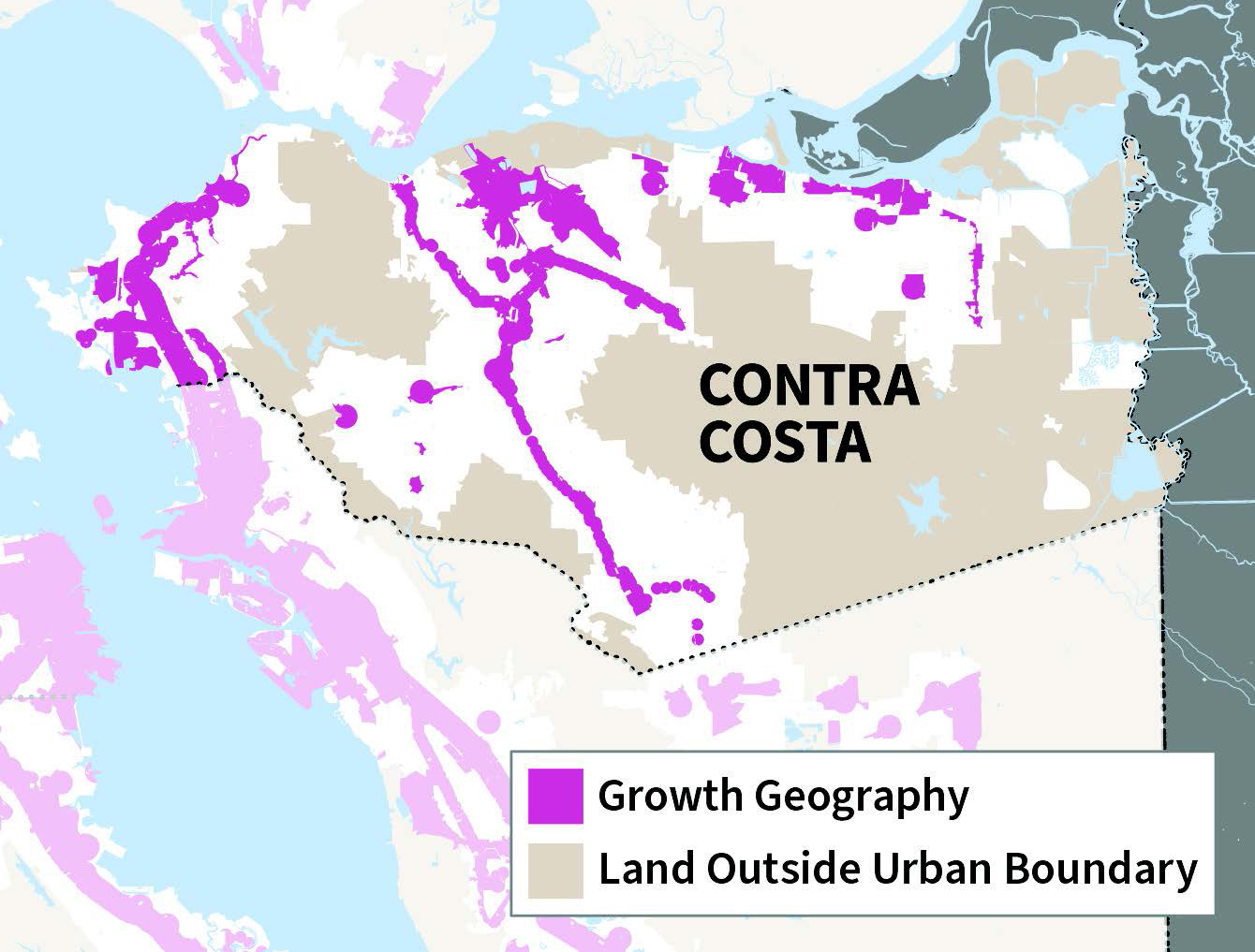
The map above shows Contra Costa County’s Growth Geographies, which are areas identified in Plan Bay Area 2050+ to help guide future housing and job growth. These areas are designated by local jurisdictions or based on their proximity to transit and access to opportunity. Source: MTG/ABAG

The Plan includes Partner Resources: Regional Tools for Local Action that local jurisdictions and partner agencies can use to develop plans, seek funding and take action to make a better Bay Area. It offers a fact sheet for each county, including Contra Costa, which spotlights strategies, investments and outcomes.

Plan Bay Area 2050+ is the latest long-range regional plan for the nine-county Bay Area. The plan lays out a series of funding and policy strategies that can create a more affordable, connected, diverse, healthy and vibrant future for all Bay Area residents in 2050. Unique to this plan cycle is the parallel Transit 2050+ planning effort, which culminated in the first-of-its-kind plan to re-envision the future of Bay Area public transit, in partnership with transit agencies across the region.

Allen D. Payton contributed to this report.

Filed Under: Economy, Environment, Growth & Development, Housing, News, Transportation

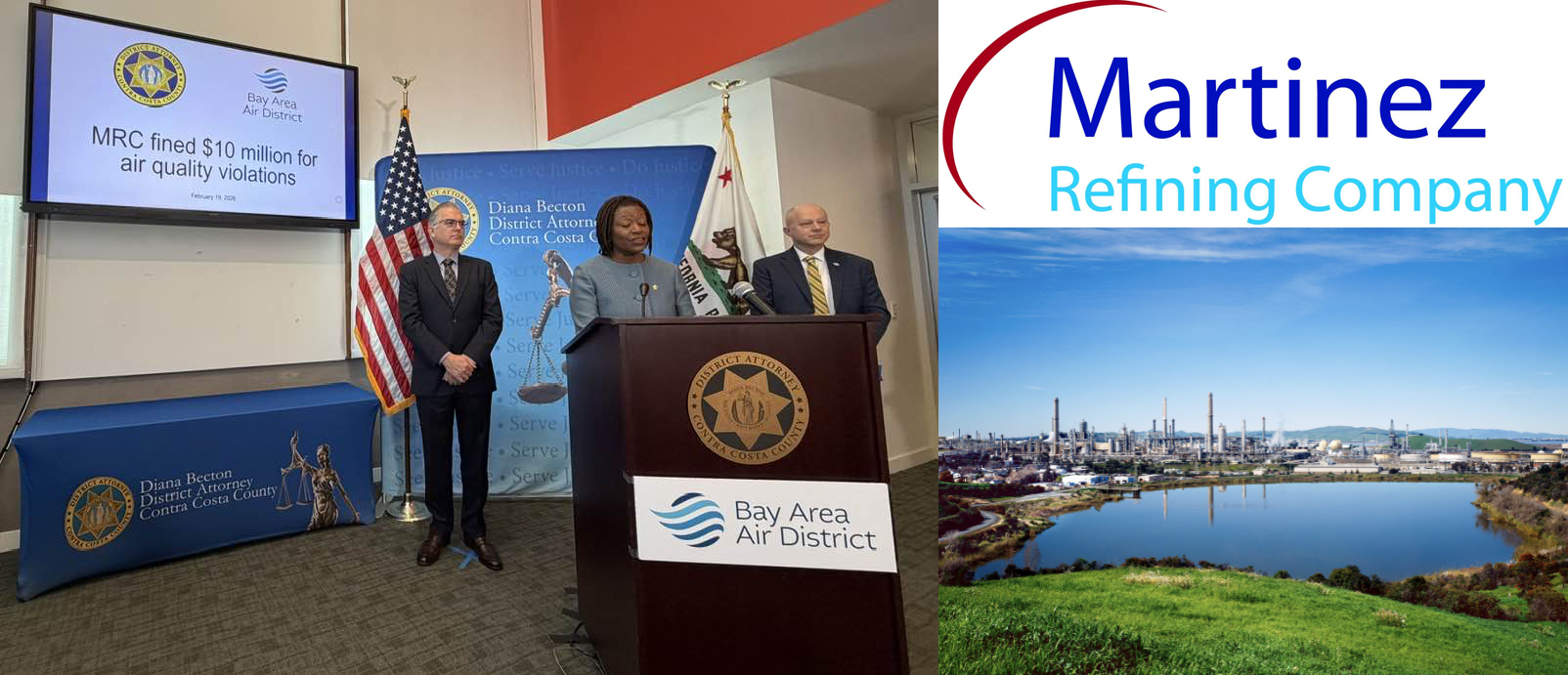
Joint Contra Costa DA, Air District prosecution secures $10.6M from Martinez Refining Company

February 19, 2026 By Publisher Leave a Comment

Contra Costa DA Diana Becton is joined by Deputy District Attorney Brian Tierney and Bay Area Air District General Counsel Alexander Crockett during a press conference on Thursday, Feb. 19, 2026. Photo courtesy of Supervisor John Gioia, Contra Costa County’s representative on the Air District Board.

For violations between 2020 and 2024, doesn’t include Feb. 2025 fire; will benefit multiple agencies

“We are committed to safe, reliable, and environmentally responsible operations and to being actively engaged locally.” – from MRC statement

By Ted Asregadoo, PIO, Contra Costa District Attorney’s Office

Martinez, California – A joint prosecution by the Contra Costa District Attorney and Bay Area Air District has resulted in a $10 million penalty against Martinez Refining Company (MRC), along with compliance improvements at its Martinez refinery, and $600,000 in mitigation payments for supplemental environmental projects.

Judge Benjamin T. Reyes, II signed the final judgment on February 18th, 2026. The case involved a number of violations that occurred at MRC’s refinery located at 3495 Pacheco Boulevard in the City of Martinez and unincorporated Contra Costa County between early 2020 and late 2024, including offenses under the health and safety code, business and professions code, and fish and game code.

The complaint stemmed from violations over four years, including MRC’s 2022 Thanksgiving Day release of spent catalyst that covered parts of Martinez in a white ash-like substance. Other major violations included illegal flaring, fires, leaking tanks, public nuisance-level odors in downtown Martinez, and releases of “coke dust” — a powdery oil refining byproduct — spreading beyond the refinery’s fence line onto neighboring properties. The violations are described in 163 notices of violation issued by the Air District.

This enforcement action does not include the February 1, 2025, fire at the MRC refinery. The Air District is addressing that incident through a separate enforcement action. (See related articles here and here)

District Attorney Diana Becton said, “The residents of Martinez deserve to feel safe in their communities. This civil action holds the Martinez Refining Company accountable for numerous violations, enforces compliance with the law, and reinforces our office’s dedication to protecting public health and safety through all available legal means, including civil action.”

Distribution of $10 Million Penalty

The $10 million penalty will be distributed as follows:

  • $6.35 million to the Air District, most of which will be reinvested in beneficial projects in Martinez and the surrounding areas that were impacted by these violations under the Air District’s Community Benefits Penalty Funds Policy
  • $3.5 million to the District Attorney’s Office Environmental Unit for enforcement efforts
  • $100,000 to Contra Costa Health Services
  • $50,000 to the California Department of Fish and Wildlife

In addition to the $10 million penalty, MRC will also pay $600,000 in mitigation payments to fund supplemental environmental projects. These payments include:

  • $450,000 for air filtration systems in public schools near the Martinez Refinery Company
  • $100,000 to the Certified Unified Program Agency for environmental regulator scholarships
  • $50,000 to Contra Costa County Fish and Game’s Community Propagation Fund to enhance the county’s fish and wildlife resources

Moreover, the judgment requires MRC to change how it operates its catalytic cracking unit to keep key emissions control equipment operational during startup and shutdown operations. The company is also required to install enhanced emissions monitoring systems on various other pieces of equipment.

“This enforcement action reflects significant air quality violations and makes clear that compliance with air quality laws is mandatory,” said Alexander Crockett, the Air District’s general counsel. “The penalty the Air District is collecting through this action will support local and regional projects that improve air quality and public health under our Community Benefits Policy. Strong enforcement ensures accountability while directing resources back to the communities most affected by pollution.”

The attorneys prosecuting the case include Deputy District Attorney Bryan Tierney; Assistant District Attorney Stacey Grassini; and Air District Assistant Counsel Brian Case.

MRC Responds

Asked if MRC had a response, Dominic Aliano, Community & Government Relations Manager for MRC, shared the following: “Martinez Refining Company (MRC) is pleased to announce the settlement of the joint civil enforcement action initiated by the Contra Costa County District Attorney (District Attorney) and the Bay Area Air District (Air District) in November 2023 involving multiple agencies, including the Air District, Department of Fish and Wildlife, and Contra Costa County Health. The parties agreed to the settlement without trial or adjudication of facts or law, and MRC has made no admission of liability to any of the underlying allegations and/or claims.  The settlement resolves all notices of violations issued by the Air District against MRC from February 1, 2020, to February 1, 2025, including those related to the November 2022 catalyst release, and the July 11 and October 6, 2023, coke dust releases, for total civil penalties of $6.35 million. (See related articles here, here, here, here and here)

“MRC will separately pay civil penalties of $100,000 to Contra Costa Health Services and $50,000 to the California Department of Fish & Wildlife for other notices of violations.  The Contra Costa County District Attorney’s Office will receive $3.5 million for its involvement in the action.

“MRC recognizes that we must earn the right to operate in Martinez and that we have a responsibility to be involved in and to give back to the Martinez community. We are committed to safe, reliable, and environmentally responsible operations and to being actively engaged locally. In resolving these matters, MRC included provisions directly for the benefit of the Martinez community. As a result:

  • MRC is providing $450,000 to fund high-performance air filtration systems projects at public schools in the vicinity of the refinery.  Allocation of the funds will be prioritized based on proximity of the applicant schools to the refinery.  The District Attorney and MRC will be providing further information on how public schools located in the City of Martinez can apply to receive the funds.
  • MRC is providing $50,000 to fund the Contra Costa County Fish and Wildlife Committee Propagation Fund to enhance the county’s fish and wildlife resources in the local community.
  • MRC is providing $100,000 to the Certified Unified Program Agency (CUPA) Forum Environmental Protection Trust Fund for scholarships to attend and participate in the annual California Unified Program Annual Training Conference and other trainings to benefit Contra Costa County local CUPAs.

“We thank our employees for their hard work and dedication to safe and reliable operations.  We also thank the District Attorney and Air District for working constructively with us to resolve these matters.

“We look forward to continuing to safely manufacture products that fuel the economy and help make modern life possible.”

City of Martinez responds to Martinez Refining Company violations, penalties

Martinez, CA — The City of Martinez acknowledges the recent announcement by the Contra Costa County District Attorney’s Office and the Bay Area Air District of a $10 million civil penalty assessment on the Martinez Refining Company (MRC), owned by PBF Energy and located in unincorporated Contra Costa County, for violations occurring between 2020 and 2024. In total, 163 notices of violation are addressed by this penalty, including the November 2022 spent catalyst release incident.

Mayor Brianne Zorn noted the significance of this development, stating, “This action is a meaningful first step in addressing the impacts our community has experienced. We appreciate that resources will soon begin to reach Martinez and help protect some of the most vulnerable members of our community, our children. We will continue to follow the process closely as grant funds are made available through the District’s Community Benefits Fund to improve the health and safety of Martinez and our neighbors.”

As outlined in the announcement, the Air District will receive $6.35 million and intends to allocate most of this amount toward community-focused grants under its Community Benefits Penalty Funds Policy, with the intention of funding projects beneficial to residents of Martinez and other affected communities. The grant process for these specific funds is not yet available for applications, and more information about the process and eligibility will be provided by the Air District as the grant process is finalized.

In addition to the $10 million penalty, MRC will also pay $600,000 in mitigation payments to fund supplemental environmental projects, including $450,000 towards air filtration improvements in schools located near the refinery. This initial investment will provide a necessary tangible benefit to students and school faculty within our affected community.

Moreover, the judgment requires MRC to change how it operates its catalytic cracking unit, and the company is also required to install enhanced emissions-monitoring systems on various other pieces of equipment.

This enforcement action does not address incidents that occurred in 2025, including the February 1, 2025 fire incident at MRC. Those matters remain under separate review by the appropriate regulatory agencies. The City will continue to monitor those processes and appreciates the ongoing commitment of the District Attorney’s Office and the Air District to advocate for our community’s health, safety, and wellbeing.

Information Resources:

Bay Area Air District Community Investments Office – https://www.baaqmd.gov/en/community-health/community-investments-office

About the Air District

The Bay Area Air District (formerly the Bay Area Air Quality Management District) is the regional agency responsible for protecting air quality and the global climate in the nine-county Bay Area. Connect with the Air District via Facebook, X, Instagram, YouTube and on their website at www.baaqmd.gov.

About Martinez Refinery Company

According to the company’s LinkedIn profile, the Martinez plant was built in 1915 and refines gasoline, diesel and jet fuel. As the first continuously running refinery in the United States, Martinez is considered the ‘birthplace of the modern refining process’. In 2020, Martinez became part of the PBF Energy Family of Refineries has 560 employees, 250 contract partners and is owned by New Jersey-based PBF Energy. According to the parent company’s website, it “is one of the largest independent petroleum refiners and suppliers of unbranded transportation fuels, heating oil, petrochemical feedstocks, lubricants and other petroleum products in the United States.” For more information visit https://martinezrefiningcompany.com.

Case No. C-26-00490 | The People of the State of California v. Martinez Refining Company, LLC

Filed Under: Central County, District Attorney, Environment, Government, Industry, News

Contra Costa County seeks members for Solid Waste Local Enforcement Agency Independent Hearing Panel

February 9, 2026 By Publisher Leave a Comment

Application Deadline: March 6

By Contra Costa County Office of Communications & Media

(Martinez, CA) – In 2013, the Contra Costa County Board of Supervisors established an Independent Hearing Panel for the Contra Costa Solid Waste Local Enforcement Agency (LEA).

Contra Costa Health’s Environmental Health Program is certified by the California Department of Resources Recycling and Recovery (CalRecycle) as the LEA for Solid Waste in the county. The LEA ensures that all solid waste disposal facilities and medical waste generators comply with applicable local, state and federal codes and regulations.

The three-member panel hears matters related to solid waste enforcement, permits and appeals.

County residents who have an interest in public policy and solid waste management are encouraged to apply for this volunteer opportunity.  Panelists receive a stipend of $50 on those days on which the panel meets.  The County Board of Supervisors will appoint to fill three vacancies for a four-year term ending on March 31, 2030.

Application forms can be obtained from the Clerk of the Board of Supervisors by calling (925) 655-2000 or by visiting the County webpage at: https://contra-costa.granicus.com/boards/forms/321/apply/

Applications should be returned to the Clerk of the Board of Supervisors, County Administration Building, 1025 Escobar Street, Martinez, CA  94553 no later than 5 p.m. on Friday, March 6, 2026.  Applicants should plan to be available for public interviews via video conference on Monday, March 23, 2026.

For more information about the LEA Independent Hearing Panel, contact Tim Kraus, Contra Costa County Environmental Health, at (925) 608-5549 or Tim.Kraus@cchealth.org.

Allen D. Payton contributed to this report.

Filed Under: Environment, Government

13 County DA’s reach multi-million-dollar environmental settlement with pesticide companies

November 19, 2025 By Publisher Leave a Comment

By Ted Asregadoo, PIO, Contra Costa County District Attorney’s Office

Martinez, California – Contra Costa County District Attorney Diana Becton and other California district attorneys have reached a $3.15 million settlement with Clark Pest Control of Stockton, Orkin Services of California, and Crane Pest Control.

The settlement resolves allegations that the companies violated state laws by disposing pesticides and hazardous waste into trash bins destined for landfills not authorized to accept such materials. The settlement also resolves the allegations that the companies discarded customer records containing private information.

“The Contra Costa County District Attorney’s Office is dedicated to ensuring companies are held accountable for conduct that endangers the environment and our citizens,” said DA Becton.

The investigation, led by Contra Costa and San Mateo County District Attorneys, was initiated in 2021. From March 2021 through February 2022, investigators statewide conducted undercover inspections of 40 dumpsters at 22 separate Clark and Orkin facilities. These inspections uncovered thousands of unlawfully disposed items including pesticide containers with liquids, powders, foams, baits, pellets, and aerosol sprays, plus hazardous batteries, e-waste, hand sanitizers, adhesives, and cleaning solutions. Inspectors also found thousands of privacy law violations: customer records that were not shredded — or rendered unreadable — and dumped in regular trash, including service orders, contracts, invoices, and route reports containing personal information.

After prosecutors notified Clark and Orkin of the violations, the companies cooperated fully and promptly updated their policies and procedures to ensure proper waste management and protect customer privacy in California.

Under the stipulated final judgment, Clark, Orkin, and Crane will pay a total of $3.15 million consisting of:

  • $2,017,000 in civil penalties.
  • $400,000 in Supplemental Environmental Projects.
  • $333,000 in investigative costs.
  • $400,000 in credit for Supplemental Environmental Compliance Measures.

The judgment also requires the companies to comply with a permanent injunction mandating significant operational reforms for a period of no less than five years, including:

  • Retention of a third-party auditor to conduct dumpster audits at a minimum of 10% of its facilities each year for five years.
  • Report the findings of the dumpster audits to the prosecutors.
  • Require that all facility employees complete a training program that ensures compliance with applicable pesticide waste and hazardous waste management and maintain proof of the training for three years.
  • Devote a minimum of two thousand hours per year for each year in which the judgment remains in effect to enhanced environmental compliance measures, including compliance reviews of waste accumulation areas, oversight of waste minimization efforts by company technicians, and oversight of enhanced hazardous waste compliance management.

Joining Contra Costa District Attorney Diana Becton and San Mateo District Attorney Steve Wagstaffe in this lawsuit are the District Attorneys of Alameda, Santa Clara, Monterey, San Joaquin, Solano, Sonoma, Yolo, Orange, Riverside, San Diego and Ventura counties.

Case No. C25-03346 | The People of the State of California v. Clark Pest Control of Stockton, Inc., a California corporation, Crane Pest Control, a California corporation, and Orkin Services of California, Inc., a Delaware corporation

Filed Under: Business, Crime, District Attorney, Environment, News

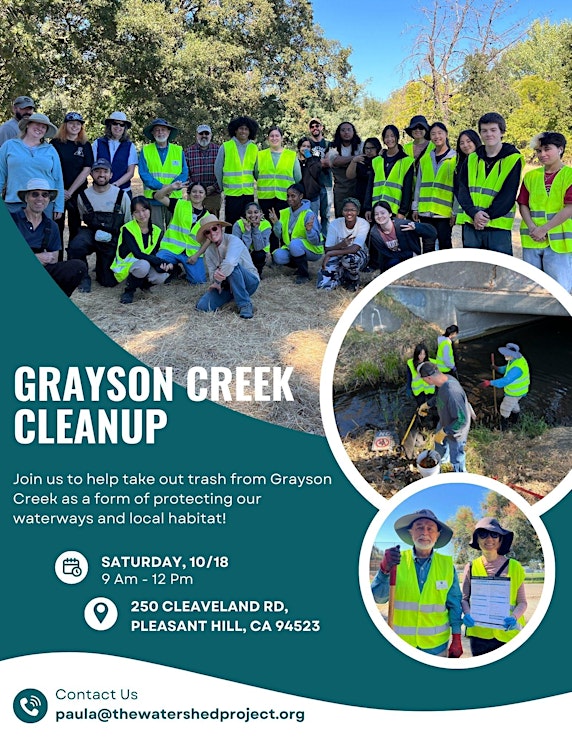
Grayson Creek Cleanup in Pleasant Hill Oct. 18

October 14, 2025 By Publisher Leave a Comment

Help protect Grayson Creek and improve habitat for birds, turtles, otters, and other riparian species!

Please join The Watershed Project, the Contra Costa Resource Conservation District and volunteers from Friends of Pleasant Hill Creeks for a creek cleanup and wildlife observation event.

Grayson Creek is home to more than 100 bird species and also provides habitat for river otters, western pond turtles, and even beavers! Help protect this important community resource by removing trash from the creek banks.

Date: Saturday, October 18 · 9am – 12pm PDT

Event location: Driveway north of 250 Cleaveland Road, Pleasant Hill.

Age Restriction: Volunteers must be at least 16 years old. All volunteers under 18 years old must have parental permission to participate or be accompanied by an adult.

-See sign-up link for details and safety information

Details, Instructions & Directions

Dress appropriately for outdoor work. Wear long sleeves and long pants, sturdy shoes, and wear sun protection (hat and/or sunscreen). All cleanup supplies, water, and light refreshments will be provided. Please bring a reusable water bottle and your own gloves if you have them.

Volunteers must be at least 16 years old. All volunteers under 18 years old must have parental permission to participate or be accompanied by an adult.

Directions to site: Use Google maps to navigate to 250 Cleaveland Road in Pleasant Hill. There is a driveway just north of there. Drive west down the driveway through the opened Flood Control District gate. Park alongside the road.

Contact Paula White paula@thewatershedproject.org for more information.

Register at https://www.eventbrite.com/e/grayson-creek-cleanup-tickets-1716934951659?aff=oddtdtcreator.

Filed Under: Central County, Community, Environment, Government, Non-Profits

Save Mount Diablo launches Advisory Council

October 10, 2025 By Publisher Leave a Comment

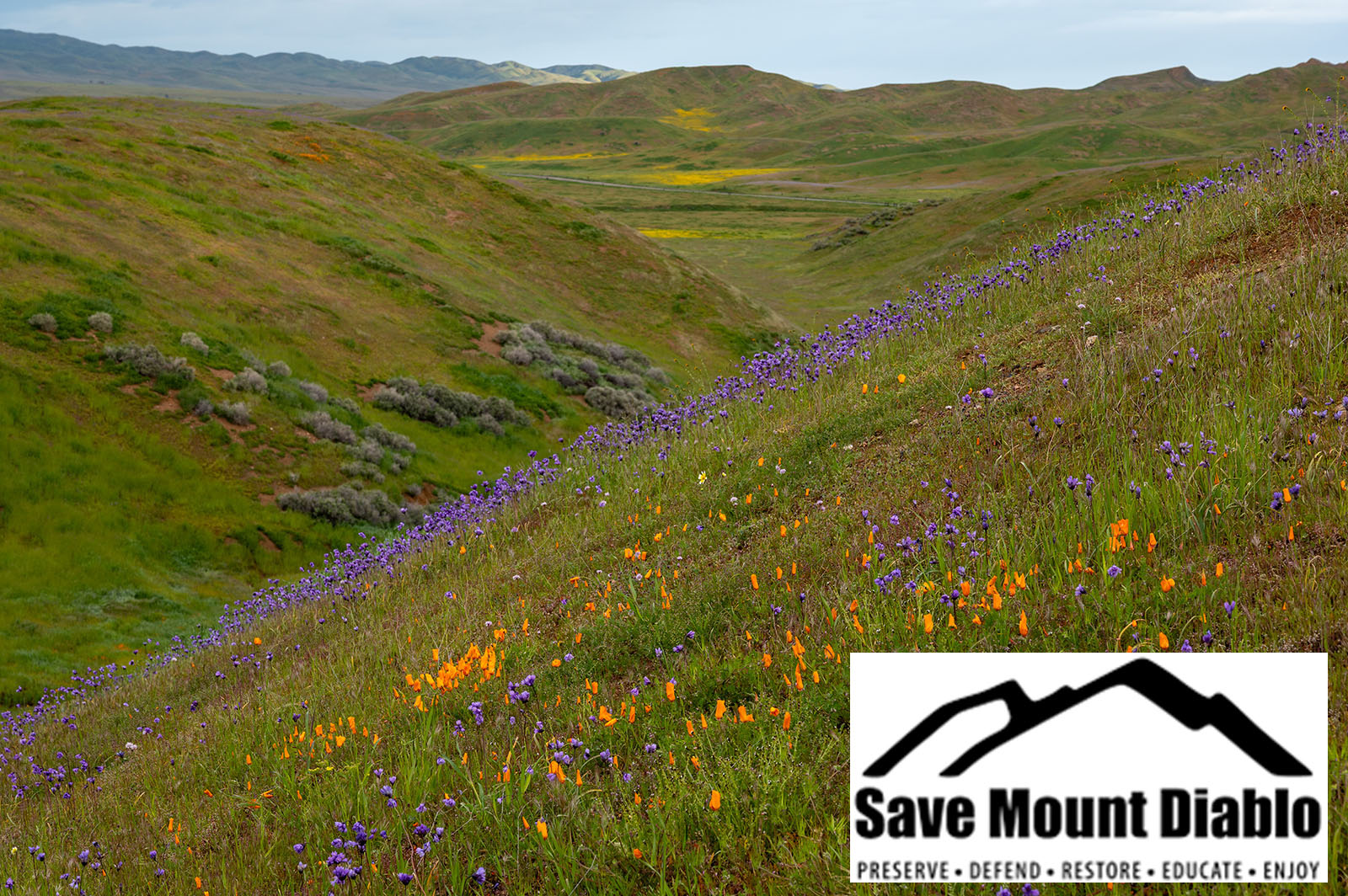
Wildflowers in the Panoche Valley and Hills, southern Diablo Range. Photo: Scott Hein

10-member, all-volunteer Council will further land conservation mission

By Laura Kindsvater, Senior Communications Manager, Save Mount Diablo

WALNUT CREEK, CA—Save Mount Diablo has created an Advisory Council to help further our organization’s land conservation mission for Mount Diablo and the mountain range it is a part of and sustained by, the Diablo Range.

Save Mount Diablo’s all-volunteer Advisory Council consists of distinguished individuals who are willing to contribute their expertise, guidance, connections, and support to further the organization’s mission.

The organization’s Board of Directors and staff will benefit from the knowledge and expertise of the Advisory Council members. Advisors will also act as ambassadors for Save Mount Diablo helping the organization positively connect with strategic peoples and communities.

There are multiple reasons why Save Mount Diablo created its Advisory Council. It gives the organization a way to honor and recognize individuals for their distinguished service to Save Mount Diablo.

It provides a way to involve people who are willing to give critical assistance but have limited time. It provides a way of involving people who would be good candidates for the Board of Directors, but who are unable, or may not be ready, to serve in that role right now.

It provides a way to keep important supporters closely connected to the organization. It creates a direct link to important professional and technical expertise. It elevates and empowers selected people to serve as ambassadors for the organization.

It is a way to assist in efforts to increase philanthropic support. It enlists various types of needed help from the Advisors and their networks.

The basic structure of Save Mount Diablo’s Advisory Council is as follows. The organization’s Board Governance and Nominating Committee reviews and recommends appropriate Advisory Council candidates to the Board of Directors for approval.

Advisors must be elected by the Board of Directors. Advisory Council members advise and assist the organization largely on an as-needed basis. The Advisory Council will be invited to meet at least once annually, typically as part of a Board of Directors meeting or event.

Organizational communications with the Advisory Council, as a group or individually, will typically come from the Executive Director or Board President. The Advisory Council has no governing function within the organization.

The Board of Directors will determine term lengths, if any, the total number of members for the Advisory Council, and other related details.

After careful consideration, the Board of Directors approved creating an Advisory Council at their January 2025 annual Strategic Plan retreat.

After that, Save Mount Diablo’s Board Governance and Nominating Committee worked on creating a list of talented people to invite to be part of the inaugural class of the Advisory Council.

This inaugural class for our Advisory Council, which was approved by the Board of Directors at their October 1, 2025, meeting, consists of the following people:

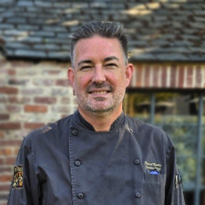
Stewart Beatty

Stewart Beatty is the Head Chef at Postino, where he specializes in creating farm-to-table dishes that highlight fresh, locally sourced ingredients. A lifelong resident of the Mount Diablo area and current Clayton resident, Stewart has a deep connection to the region and its community. He generously shares his culinary talents by providing meals for Save Mount Diablo’s Four Days Diablo and summit dinners, bringing people together to celebrate and support local land conservation efforts.

Joseph Belli

Joseph Belli has been a dedicated Save Mount Diablo donor since 2021 and is a conservation biologist and author, widely recognized as one of California’s leading experts on the Diablo Range.

His deep knowledge and passion for the region have made him an invaluable contributor to Save Mount Diablo’s mission. Joseph has participated in our BioBlitz events and Mary Bowerman Science and Research program, and served as the opening speaker for our first annual Diablo Range Convening in June 2025. In July 2025, he was also featured as a speaker for Save Mount Diablo’s Executive Director Speaker Series, sharing his insights on the unique ecology and conservation challenges of the Diablo Range.

Tom Dowd

Tom has a passion for helping organizations and individuals and transforming people’s lives. He was the founder and CEO of a chemical distribution company (Dowd and Guild, Inc.); he serves on the John Muir Health Foundation Board of Directors as well as on the Advisory Board of Heritage Bank of Commerce. Tom founded Keiretsu Forum Charitable Foundation, a nonprofit organization that raised $1 million for more than 100 charities. After selling Dowd and Guild, Inc., Tom has shifted to full-time charitable work.

Robert E. Doyle        

Robert E. Doyle, General Manager Emeritus, East Bay Regional Park District, worked for 47 years as a park professional at the East Bay Regional Park District in Oakland, California. Bob was a founding Board member of Save Mount Diablo, working with California State Parks to expand one of the original “Olmsted State Parks.” He was also a founding Board member of the East Bay Conservation Corps. Bob currently serves as Board member and Advocacy Co-Chair of the Washington, DC–based City Parks Alliance. He has served as a Board member for the National Association of Olmsted Parks and is a member of the American Academy for Park and Recreation Administration, where he was awarded the prestigious Cornelius Pugsley Medal. In 2024, Bob joined the San Francisco–based Save the Redwoods League Board of Councilors. Bob has received a Save Mount Diablo Mountain Star award for his good work.

Peter Frazier

Peter Frazier, a retired investment professional, has been a Save Mount Diablo supporter for over 40 years, demonstrating a strong commitment to land conservation and environmental education. As a dedicated contributor, Peter helps support programs that inspire and educate future generations about the importance of protecting the Diablo Range and its natural resources. Peter has also helped make possible other important projects for Save Mount Diablo, like the organization’s 50th anniversary oral history project with the Bancroft Library at the University of California, Berkeley.

John Kiefer

John Kiefer is a retired systems applications specialist at Pacific Bell, inventor of the Kiefer Sustainable Chicken Coop, and a longtime supporter of Save Mount Diablo since 1975! He has remained deeply involved through leadership, advocacy, and community building. He is especially supportive of Save Mount Diablo’s environmental education programs and efforts to connect more people to nature and each other. Over the years, John has led hikes on Mount Diablo and has supported Save Mount Diablo in many ways, from hosting events at his home to funding community breakfasts and other events. His passion for trails and open space led to his service on the Lafayette Parks, Trails, and Recreation Commission (1986–1994), where he worked hands-on to maintain trails, collaborated with landowners to create public access, and later served as the city’s field representative for trails. In recognition of his contributions, the John Kiefer Trail was dedicated in his honor in 2014.

Beverly Lane

Beverly Lane has been a dedicated Save Mount Diablo supporter since 1988 and is a respected local historian, published author, and curator of the Museum of the San Ramon Valley. She helped found the Contra Costa History Alliance and the Tri-Valley History Council, fostering the preservation of regional history. Beverly served as Mayor of Danville and represented central Contra Costa County as a Director for the East Bay Regional Park District from 1994 to 2022. She is also an active member of the Anza Trail Foundation, which promotes the Juan Bautista de Anza National Historic Trail, and Friends of San Ramon Creek, reflecting her lifelong commitment to conservation, history, and community.

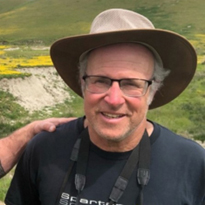
Doug McConnell

Doug McConnell is a long-time Save Mount Diablo supporter and renowned television host and storyteller with a passion for exploring and protecting the natural world. He hosted NBC Bay Area’s OpenRoad with Doug McConnell beginning in 2009 and served as host and editor of the beloved series Bay Area Backroads from 1993 to 2008. Doug is the founder of Convergence Media Productions, creating content that highlights conservation and outdoor adventure. In addition to his media work, he serves as an Advisory Board member for San Francisco Baykeeper, advocating for the protection and preservation of the Bay Area’s natural resources. Doug has received a Save Mount Diablo Mountain Star Award for this good work.

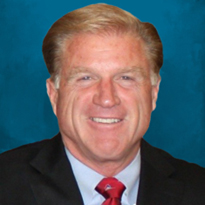
Jeff Stone

Jeff Stone is the CEO of Diamond Construction and co-founder of Enkasa Homes, bringing extensive expertise in environmentally sensitive building and development to his work. A dedicated supporter of land conservation, Jeff served as a Save Mount Diablo Board member (2016–2025). He continues to contribute his leadership, expertise, and passion to support Save Mount Diablo’s land conservation work.

Jeanne Thomas

Jeanne Thomas has been a Save Mount Diablo donor since 1989 and is a proud member of the Diablo Legacy Circle. A retired employee of Kaiser Industries, Jeanne has been a steadfast supporter of Save Mount Diablo for decades, serving on the Development Committee from 2006 to 2014. She has played a vital role in supporting events, acting as a liaison to the Rossmoor retirement community, and was honored with the Mountain Star Award for her dedication. An avid nature enthusiast, Jeanne has spent countless hours hiking Mount Diablo and photographing its wildflowers, reflecting her deep love for the land she helps protect.

We are very grateful that this talented and special group of people answered the call to serve on Save Mount Diablo’s Advisory Council!

With the creation of our Advisory Council, made up of such terrific people, Save Mount Diablo has successfully and strategically expanded our team to help further our land conservation work for Mount Diablo and its Diablo Range.

About Save Mount Diablo

Save Mount Diablo has been preserving lands on and around Mount Diablo and educating the public to the mountain’s natural values since 1971. We are biologists, conservationists, hikers, bikers, equestrians, bird watchers, and people who just love to look at the mountain. Save Mount Diablo is a tax-exempt nonprofit 501(c)(3) organization (tax ID 94-2681735). For more information visit savemountdiablo.org.

Filed Under: Environment, News, Non-Profits, Parks, People

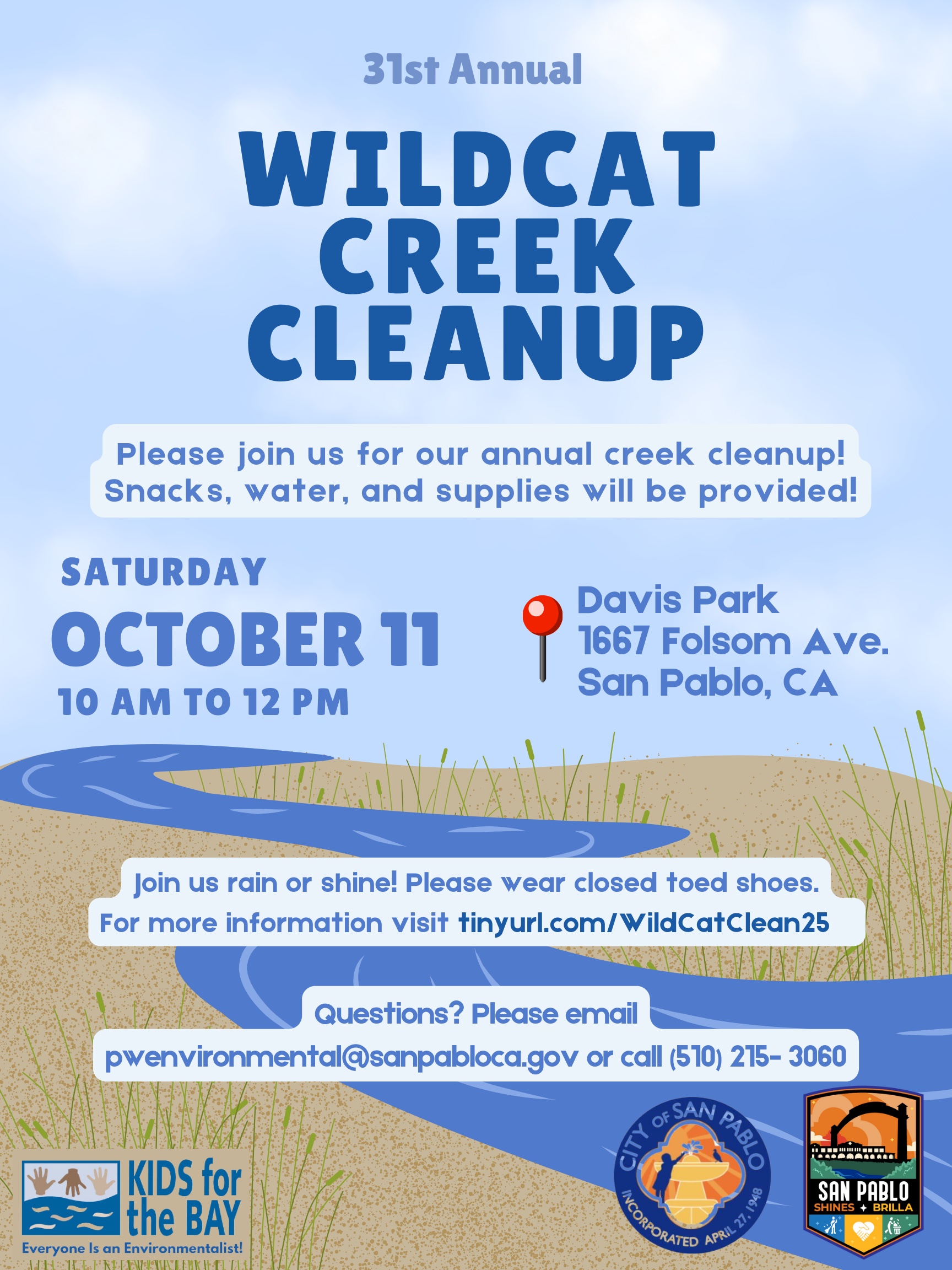
31st Annual Wildcat Creek Cleanup in San Pablo Oct 11

October 9, 2025 By Publisher Leave a Comment

By City of San Pablo

We hope you can join Saturday! Join Kids for the Bay & the City of San Pablo for the 31st Annual Wildcat Creek Cleanup!

  • Saturday, October 11, 2025
  • 10 AM – 12 PM
  • Davis Park, 1667 Folsom Ave.

This family-friendly event welcomes all ages to help care for our creek and community. Snacks, water, and cleanup supplies will be provided. Please remember to wear closed-toe shoes and bring your community spirit! We’ll see you there, rain or shine.

Únete a Kids for the Bay y a la Ciudad de San Pablo para la 31ª Limpieza Anual de Wildcat Creek

  • Sábado, 11 de octubre de 2025
  • 10 AM a 12 PM
  • Davis Park, 1667 Folsom Ave.

Este evento familiar da la bienvenida a todas las edades para ayudar a cuidar nuestro arroyo y nuestra comunidad. Se proporcionarán bocadillos, agua y suministros de limpieza. Por favor recuerde usar zapatos cerrados y traer su espíritu comunitario. ¡Nos vemos allí, llueva o truene! #WildcatCreekCleanup #SanPabloShines #SanPabloBrilla

Filed Under: Community, Environment, Water, West County

  • 1
  • 2
  • 3
  • …
  • 13
  • Next Page »
Deer-Valley-Chiro-06-22

Copyright © 2026 · · Contra Costa Herald · All Rights Reserved