• Home
  • About The Herald
  • Local Agencies
  • Daily Email Update
  • Legal Notices
  • Classified Ads

Contra Costa Herald

News Of By and For The People of Contra Costa County, California

  • Arts & Entertainment
  • Business
  • Community
  • Crime
  • Dining
  • Education
  • Faith
  • Health
  • News
  • Politics & Elections
  • Real Estate

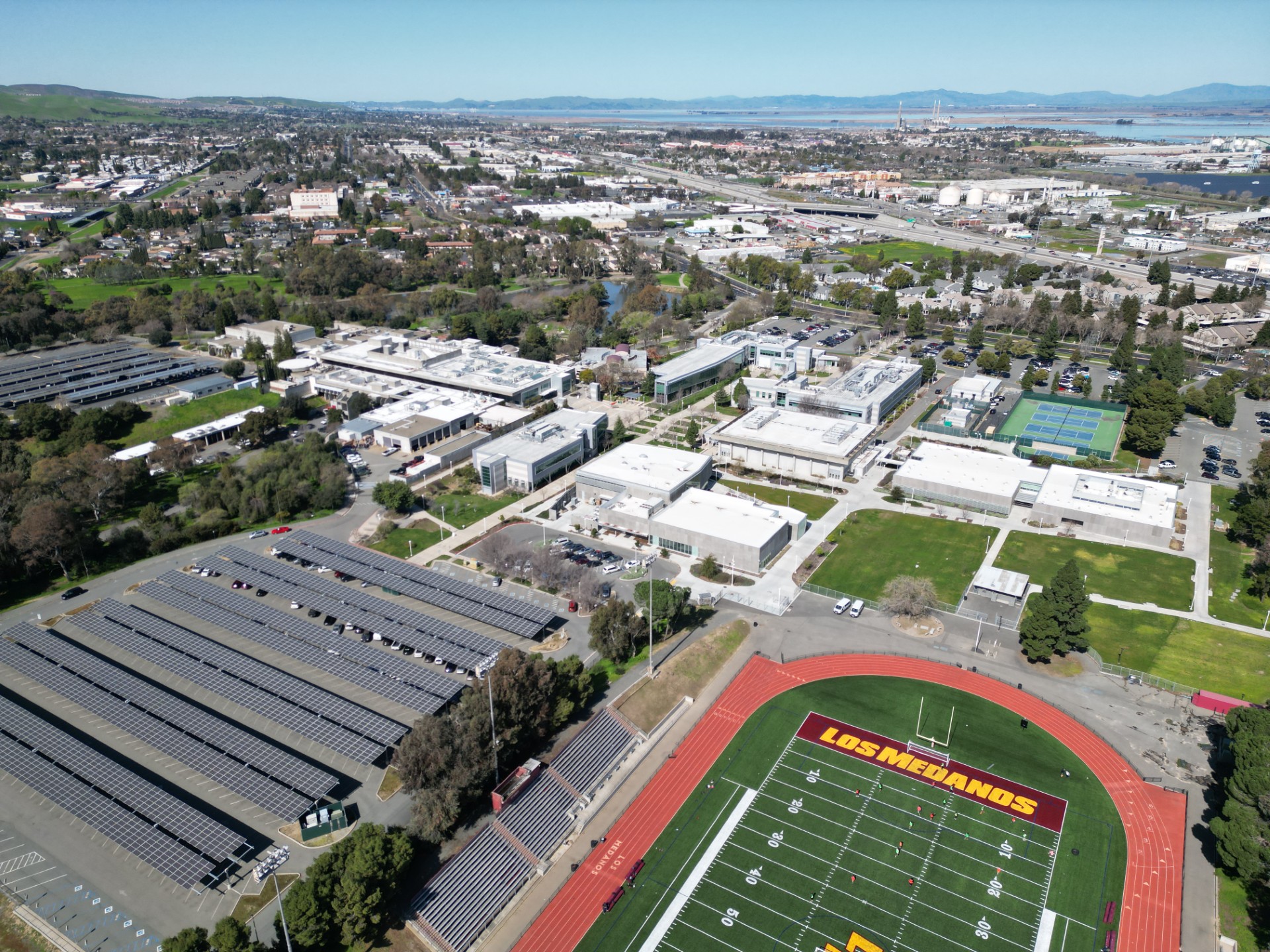
Los Medanos College to lead East County Nonprofit Capacity Building initiative

October 27, 2025 By Publisher 1 Comment

Photo: LMC

By Juliet V. Casey Director of Marketing, Los Medanos College

PITTSBURG, Calif. – Contra Costa County selected Los Medanos College (LMC) to lead a $1 million initiative aimed at strengthening the nonprofit sector in East Contra Costa County. The East County Nonprofit Capacity Building Program, approved by the Contra Costa Community College District Board of Trustees this month, aims to develop future nonprofit leaders and to expand organizational effectiveness across the region.

The initiative will serve communities including Bay Point, Pittsburg, Antioch, Oakley, Brentwood, Byron, Discovery Bay, Knightsen and Bethel Island. LMC was chosen for its proven ability to deliver high-quality education and workforce development programs tailored to community needs.

LMC President Pamela Ralson said the college is eager to move forward, having worked over the past year to create more learning opportunities to support nonprofits. The next step will be to establish the educational programming for the initiative, which runs through Oct. 31, 2028.

Ralston recognized local leaders for their foresight in supporting the initiative.

“County Supervisors, and Supervisors Diane Burgis and Shanelle Scales-Preston in particular, see the value of developing and training future leaders across the nonprofit landscape in our area,” she said. “LMC is proud to be a partner in that effort.”

Contra Costa County Supervisor Diane Burgis said she is grateful for all the community partners who collaborated on the initiative.

“My goal is for this to help train the current and next generation of nonprofit leaders in East County and help all small- and medium-sized nonprofits succeed,” she said.

The initiative features:

  • Educational programming: Fee-based seminars and free workshops on nonprofit management, plus academic courses that stack toward certificates and degrees.
  • Mini-grants: Funding for paid internships and capacity-building projects, with priority given to organizations serving low- to moderate-income and historically underserved communities.
  • Leadership development: A cohort program for mid- to senior-level nonprofit staff, offering executive skills, mentorship, and peer networking.
  • Nonprofit Resource Hub: A collaborative space for nonprofit entrepreneurship and shared learning.

“Building capacity among East Contra Costa County nonprofits is not simply a ‘good idea,’ it is necessary for ensuring sustainability and a steady flow of services to our most in-need constituents those nonprofits serve,” Contra Costa County Supervisor Shanelle Scales-Preston said. “We could not think of a more appropriate strategic partner than Los Medanos College to work collaboratively in this endeavor.”

LMC will subcontract with the Antioch Chamber of Commerce Foundation to manage the project, including hiring a dedicated project manager and convening an advisory group of nonprofit leaders and curriculum experts. The chamber has long advocated for local businesses and nonprofit organizations, which unlike other businesses are not aiming to make a profit, rather they use money for the public good, said Jim Becker, incoming board chair for the Antioch Chamber of Commerce.

“Nonprofits make up 20% of the local economy, and they run just like other businesses. They need HR, financial and legal compliance,” he said. “It’s really exciting to partner with LMC to provide greater and broader access to nonprofit business education.”

About Los Medanos College (LMC): LMC is one of three colleges in the Contra Costa Community College District serving the East Contra Costa County community. Established in 1974, LMC has earned federal designations as a Minority-Serving and Hispanic-Serving institution. It offers award-winning transfer and career-technical programs, support services, and diverse academic opportunities in an inclusive learning environment. With exceptional educators, innovative curriculum, growing degree and certificate offerings, and state-of-the-art facilities, the college prepares students to succeed in their educational pursuits, in the workforce, and beyond. LMC’s Pittsburg Campus is located on 120 acres bordering Antioch, with an additional education center in Brentwood. For more information visit www.losmedanos.edu.


Filed Under: East County, Education, News, Non-Profits

Every baby born in Contra Costa County has a scholarship waiting in their name, worth up to $175

October 27, 2025 By Publisher 1 Comment

Photo source: CalKids

By Vanessa Vizard, Vizard Marketing & PR for CalKids

Contra Costa, CA — Contra Costa County families welcoming a new baby can also celebrate another milestone: their child’s very first scholarship. Through the California Kids Investment and Development Savings Program (CalKIDS), every child born in the state on or after July 1, 2022, automatically has a CalKIDS Scholarship Account waiting in their name —  including more than $2 million in scholarship funds set aside for children in Contra Costa County alone.

CalKIDS is the nation’s largest children’s development account program, designed to support college and career training. For newborns and young children, the state invests up to $175 in a CalKIDS Scholarship Account:

  • $100 for being born in California (babies born July 1, 2023, or later; $25 for those born between July 1, 2022 and June 30, 2023)
  • $25 extra when parents claim the account online
  • $50 extra for linking the account to a ScholarShare 529 College Savings Plan

That’s up to $175 already invested in a child’s future, long before applications, admissions essays, or financial aid forms come into play.

“At First 5 California, we recognize that supporting healthy development begins with a commitment to ensuring every child has the opportunity to thrive,” said Jackie Thu-Huong Wong, Executive Director of First 5 California. “CalKIDS is a powerful way to show families that their child’s future matters from the very beginning.”

With August, September, and October among the most common birth months in California, thousands of families are becoming newly eligible for a CalKIDS Scholarship. It’s a timely opportunity for parents to take an easy first step that can grow into a lifelong advantage for their child’s education.

How to Claim Your Baby’s Scholarship

Claiming is quick, easy, and free at CalKIDS.org. Parents and guardians just need three pieces of information:

  • The county where their child was born
  • Their child’s date of birth
  • The 13-digit Local Registration Number (LRN) on the birth certificate, or the unique CalKIDS code mailed to their home

Once claimed, families can log in anytime to view balances, link a ScholarShare 529 Account, and learn how funds can be used. Eligible expenses include tuition and fees, required books and supplies, and computer equipment at accredited higher education institutions nationwide.

“I appreciate the forward thinking of CalKIDS by investing in the education of our next generation! Starting to save for college early will pay dividends in the long run,” said Contra Costa parent Joshua Tan.

Small Actions Make a Big Difference

Research shows that children with even small savings for higher education are three times more likely to attend college and four times more likely to graduate. Education is also one of the most powerful tools to break the cycle of poverty — a college degree can nearly double lifetime earnings. By giving every child in California a first scholarship, CalKIDS brings that opportunity to families from day one and makes the path to higher education more attainable for millions.

Across California, CalKIDS is working with hospitals, county offices, and community partners like United Ways of California to ensure families know about this opportunity from the very beginning.

“Every child deserves the chance to dream big, and that starts from the moment they are born. CalKIDS is helping families of newborns begin saving for education and career training right away. United Ways of California is proud to support this effort, which aligns with our work to expand economic mobility and opportunity across the state,” said Mandy Nand, Associate Director of Economic Mobility, United Ways of California. “United Ways of California is thrilled to support CalKIDS. By providing funds to every newborn, California is giving families peace of mind and an important financial foundation for their child’s future. This effort reflects our mission to help families build stability and opportunity from the very start of life.”

Since its launch in 2022, CalKIDS has become the largest child development account program in the country. In addition to newborns, CalKIDS also created accounts for over 4 million public school students, accounting for more than 5 million children total with CalKIDS Scholarship Accounts and $2 billion invested. More than 700,000 families have claimed their scholarships, turning possibility into action.

Families can learn more and claim their baby’s first scholarship today at CalKIDS.org.

About CalKIDS: The California Kids Investment and Development Savings Program (CalKIDS) is the nation’s largest child development account program, providing scholarships for higher education. Administered by the ScholarShare Investment Board, and Chaired by State Treasurer Fiona Ma, CPA, the program is designed to promote the pursuit of higher education statewide by empowering families to build assets, nurture savings habits, and raise their educational aspirations. Eligible public school students can receive CalKIDS Scholarships worth up to $1,500 and every child born in California on or after July 1, 2022, is awarded a CalKIDS Scholarship worth up to $175, ensuring more families have the resources needed to support their children’s education. To learn more, visit CalKIDS.org.

Filed Under: Children & Families, Education, Finances, News

CA State Superintendent celebrates rising test scores at Pittsburg Unified, effectiveness of Community Schools Model 

October 22, 2025 By Publisher Leave a Comment

State Superintendent Tony Thurmond visited Pittsburg Unified School District on Wednesday, Oct. 22, 2025. Photo: CA Dept of Education

4.6% improvement in English Language Arts, 1.5% in math, 2.9% in science since last year

By California Department of Education

Pittsburg, CA—State Superintendent Tony Thurmond visited Pittsburg Unified School District (PUSD) today to visit with high school students before joining Assemblymember Anamarie Ávila Farías, Contra Costa County Board of Education Trustee Yazmin Llamas, PUSD Superintendent Dr, Janet Schulze, PUSD Board President Heliodoro Moreno, PUSD Board of Education members, educators, staff and students at a special press event to celebrate the district’s impressive gains in literacy, math, and science assessment scores following their adoption of the community schools model.

Statewide assessment results show that the number of PUSD students who met or exceeded standard in English Language Arts (ELA) increased by 4.6 percent since last year, while the rate of students who met or exceeded standard rose by 1.5 percent in math and 2.9 percent in science. In addition, students’ average scale score increased in every grade level and nearly every student demographic group for ELA and math.

“I commend the hard work of the educators and students in Pittsburg Unified, and I’m proud to have led a reinvestment in public education across the state,” Superintendent Thurmond said. “I have been a longtime advocate for community schools because they break down barriers that limit student and family access to needed services and resources, ensuring the school site itself becomes a community hub to meet families’ needs and deepens relationships between the campus and the community. When our schools address the needs of the whole child, we see outcomes like those in Pittsburg Unified.”

Pittsburg Unified has accelerated student achievement by maximizing their use of statewide resources, including the California Community Schools Partnership Program (CCSPP), which has seen a total investment of $4.1 billion since its launch in 2021.

A community school is a “whole-child” school improvement strategy where the district and school work closely with teachers, students, families and partners. It builds partnerships between public schools and community organizations to provide resources, such as mental health services or family outreach such as home visits and home-school collaboration, that engage families and serve the whole child. Thurmond has championed community schools for almost 20 years, first as a school board member in West Contra Costa, where he authored the resolution that made the entire district a full-service community schools district, and then as a California Assemblymember, where he supported community schools legislation. As State Superintendent, Thurmond has led the largest community schools implementation in the nation with more than a 1,000 community schools sites across California.

Superintendent Schulze credits the test score increases to the hard work of the teachers and staff of Pittsburg Unified and their approach to teaching and learning, continuous improvement, and the needs of the whole child. PUSD is a full-service community schools district thanks to funding from the California Community Schools Partnership Program (CCSPP). Targeted tutoring support for students has also proved impactful, benefitted by funding from the California Extended Learning and Opportunities Program (ELOP).

“Thank you to the State Superintendent for this beautiful recognition of everyone’s hard work,” said Superintendent Schulze. “These gains across multiple areas indicate positive change across our whole system. This is due to the structures, systems and strategies we have collaboratively put in place that allow our scholars’ brilliance to shine.”

PUSD’s progress comes after significant investments in K–12 public education championed and secured by Superintendent Thurmond, which have accelerated learning, including $7.9 billion for the Learning Recovery Emergency Block Grant, an additional $215 million to expand the existing Literacy Coaches and Reading Specialists Grant Program, and $200 million to support professional learning for elementary school educators.

Today’s school visit and press event follows the release of statewide literacy and math assessment scores earlier this month. Watch a recording of the press conference on the CDE Facebook page. More information about the Community Schools Model can be found on the California Department of Education’s website.

Allen D. Payton contributed to this report.

Filed Under: East County, Education, News

Despite test score gains California students still lag behind pre-pandemic levels

October 11, 2025 By Publisher Leave a Comment

Students in a Fresno Unified School District classroom. Credit: Fresno Unified / Flickr

Black and Latino students make progress; pandemic widened math gender gap; more English learners are proficient

New Titles for Four Levels of Achievement: Advanced, Proficient, Developing or Minimal

By Diana Lambert, Zaidee Stavely, Betty Márquez Rosales and Daniel J. Willis, EdSource.org, republished with permission

Top Takeaways

  • California test scores show students still struggle with learning loss five years after the Covid pandemic.
  • Students improved by 1.8 percentage points in math and English language arts last school year, the largest year-over-year increase since before the pandemic.
  • Despite increases, serious equity gaps persist.
  • Science scores were the only ones to return to pre-pandemic levels

Five years after the Covid pandemic closed schools and pushed students into a year of distance learning, California test scores show that — despite increases — students are still struggling with learning loss.

During the 2024-25 school year, the number of students who were advanced or proficient in math and English language arts improved by 1.8 percentage points in each subject — the largest year-over-year increase since before the Covid pandemic, according to Smarter Balanced test scores released Thursday. Science scores increased by 2 percentage points.

“There is greater progress this year than we had last year,” said State Board of Education President Linda Darling-Hammond. “Gains in ELA and science are about four times the level of the gains last year, and the gains in math are about twice the level of the gains last year. So, it feels like there is some momentum toward improvement.”

New Titles for Four Levels of Achievement: Advanced, Proficient, Developing or Minimal

The titles of the four levels of achievement are different this year. In March, the California State Board of Education chose new titles to describe how students perform on standardized tests, including the Smarter Balanced tests.

Students will now be labeled as advanced, proficient, developing or minimal to describe their knowledge and skill level.

Students who are advanced, proficient and developing are all working within their grade level band, while students who are at the minimal level are not consistently showing grade-level standards, said State Board of Education President Linda Darling-Hammond.

“Proficient is a pretty high bar because that is very thorough mastery of grade-level standards and advanced is very sophisticated,” she said.

Smarter Balanced tests are given to students in third through eighth grades and in 11th grade as part of the California Assessment of Student Performance and Progress (CAASPP), which also includes the English Language Proficiency Assessment.

CAASPP test scores for California nearly 1,000 school districts and 10,000 schools are available on EdSource’s searchable database.

Despite the improvement at all grade levels, the number of students who were advanced or proficient in English language arts last year only increased to 48.8%, 37.3% in math, and 32.7% in science.

That wasn’t enough to bring scores up to pre-pandemic levels when more than half of California students, 51.7%, met or exceeded state standards in English language arts, and 39.7% met or exceeded state standards in math.

Science scores were the only ones to return to pre-pandemic levels, with 2.8% more students scoring proficient or better last year compared to 2018-19.

Equity isn’t improving fast enough

“I think certainly these scores are headed in the right direction,” said Christopher Nellum, executive director of EdTrust-West, an education advocacy organization. “I would argue, at the wrong speed if we’re serious about equity … we need double-digit gains, not incremental gains.”

The California School Boards Association is also calling for a state plan to close the achievement gap that includes increased funding for school districts with a large population of high-needs students, as well as increased accountability and transparency from the state.

“We shouldn’t let a point or two in a positive direction detract from the fact that millions of California students are still being underserved and those students are disproportionately concentrated in certain demographic groups that have been lacking for decades,” said Troy Flint, chief information officer at the CSBA. 

Nation’s third graders have similar scores

California’s third-grade reading scores are similar to most other states in the country, which have grown about 1% a year between 2022 and 2025, said David Scarlett Wakelyn, a partner with Upswing Labs, a nonprofit that works with school districts to improve reading instruction. California has had 0.7% annual growth in reading scores in those years, Wakelyn said.

Third grade is considered a crucial year for students to begin reading to learn, a key indicator for academic success. Last school year, 44.21% of California third graders were proficient or advanced in reading. The year before that, it was 42.8%.

Only Louisiana has returned to pre-pandemic levels for third-grade reading, Wakelyn said. The state, which doesn’t use the Smarter Balanced test, has high-quality curriculum and instructional materials in use across the state, he said.

More English learners are proficient

Slightly more English learners tested as proficient on the English Language Proficiency Assessment for California (ELPAC) than last year. Students who speak a language other than English at home and have not yet achieved proficiency in English are classified as English learners and must take the ELPAC every year until they achieve proficiency.

The test measures proficiency in reading, writing, speaking and listening in English, and has four levels of proficiency — “beginning to develop,” “somewhat developed,” “moderately developed,” and “well developed.”

The percentage of English learners with “well developed” English went up from 14.6% in 2024 to 15.5% in 2025, while the percentage of students at the other levels stayed relatively the same. In 2023, however, 16.5% of English learners achieved the “well developed” level of English.

Students’ progress on the ELPAC is important because once students are reclassified as “fluent English proficient,” they generally do better than native English speakers on English and math tests. For example, 60.2% of former English learners who are now considered proficient met or exceeded the standard in English language arts in 2025, compared to 53.3% of native English speakers.

Martha Hernandez, executive director of Californians Together, an organization that advocates for English learners statewide, said she’s happy that more students have progressed to “well developed” English on the ELPAC, but that the state needs to help more students learn English.

“We need to continue investing in professional development focused on comprehensive English Language Development, especially integrated ELD for all teachers across all subjects. I think that’s critical,” Hernandez said, adding that she was hopeful that the state’s new initiatives to teach reading and math with more focus on including instruction for learning English will help students.

She also said English learners need more access to bilingual programs, since research shows students have stronger outcomes in English when they are enrolled in bilingual programs.

Black and Latino students make progress

The number of Black and Latino students who met or exceeded the standard in English language arts, math and science grew somewhat, with the percentage of students in both groups increasing between 2% and 2.4 % over the last year.

Still, the overall percentage of both Black and Latino students meeting or exceeding the standards remained low, compared to white and Asian students. Only about a third (32.8%) of Black students met or exceeded the standard in English, and only about a fifth (20.1%) did so in math.

Among Latino students, 38.8% met or exceeded the standard in English and a quarter (25.7%) did so in math. In comparison, 61.8% of white students met or exceeded standards in English, and 51% in math, and among Asian students, 74.36% met or exceeded standards in English and 70.3% in math.

Students from all groups are still below pre-pandemic levels in both English and math.

“I don’t get why we are not outraged when two-thirds of any subgroup is not meeting proficiency in core areas like reading and math,” said Tyrone Howard, professor of education at UCLA. He said that state and school districts need to examine what may be helping some Black and Latino students and do more of it.

“I think we know to a large degree what works — high-dosage tutoring, that Black students have access to highly trained, culturally competent teachers, that we have the appropriate language supports for multilingual students,” said Howard. “We just haven’t been committed to it.”

Travis Bristol, associate professor of education at UC Berkeley and faculty director for the Center for Research on Expanding Educational Opportunity, said the small growth among Black and Latino students’ test scores should be celebrated.

“The fact that we see increases in Black and Latinx students suggests, at least to me, that some of the state’s strategies to improve outcomes for these students appear to be working,” Bristol said.

He said successful strategies include a state grant program that provides $25,000 incentive awards for national board-certified teachers in schools with large populations of low-income students, English learners or foster youth, as well as the community schools program, with wrap-around health and other services in schools.

“Because they’re paying off, we need to double down and continue to invest so we are not at a place where only a third of Black students meet or exceed the standard in English language arts, or only a quarter of Latinx students meet or exceed the standard in math,” Bristol said. “No one wants that.”

Pandemic widened math gender gap

For the second school year in a row, both girls and boys improved their scores in math and English language arts. This year’s scores show that 52% of girls met or exceeded English language arts standards versus 45% for boys. In math, 35% of girls and 39% of boys met or exceeded standards.

The difference, however, is in how quickly those improvements are occurring.

Between 2022-23 and 2023-24, math scores for girls and boys improved by 0.79 and by 1.04 percentage points, respectively. In comparing the rates of improvement between 2023-24 and 2024-25, girls’ math improved by 1.59 percentage points while boys’ scores jumped by 1.9.

And in English language arts proficiency, girls improved at about the same rate as boys in 2023-24. But the test scores for the most recent school year show a shift, with girls improving by 1.63 percentage points and boys by 1.91.

Due to the difference in the pace of improvement, boys’ scores are much closer than girls to their pre-pandemic math and English scores.

A difference of a few percentage points between students might not be a big issue, “but what could be happening is that girls are interpreting that in a way that makes them feel discouraged about pursuing different types of careers,” said Ian Thacker, an associate professor of educational psychology at the University of Texas at San Antonio who previously also taught math and physics in California.

Prior to the pandemic, girls were advancing in math at such rates that they either nearly or fully closed gender gaps across California. But since the pandemic, the gap has widened. A recent analysis by the Associated Press, using data from the Stanford Education Data Archive, found that girls had higher math scores than boys in 62% of California districts in 2018-19, but in only 4% in 2023-24.

Researchers say there is no known definite reason for this shift, but theories range from higher rates of mental health challenges among girls during the pandemic to gendered differences in academic expectations for girls and boys.

A study Thacker co-authored in 2022, for example, showed differences in teachers’ beliefs about their students’ capacity to succeed in math.

“It’s more than just ‘how skilled are these students,’” Thacker said. “There’s a lot more going on beneath the surface, especially when it comes to cultural social stereotypes, kind of driving people’s self-perceptions.”

Megan Kuhfeld, director of growth modeling and data analytics for the education research company NWEA, has found California’s scores mirror national trends.

“It is important for districts to reexamine classroom dynamics and instructional practices, particularly in STEM classes. If pandemic-era shifts in behavior and teacher attention have disproportionately benefited boys in STEM classrooms, this may be contributing to the divergence we see in achievement,” Kuhfeld said.

Economically disadvantaged students make gains

Statewide, about 38% of socioeconomically disadvantaged students met or exceeded English language arts standards, up from 37% from the prior year, and just over 26% met or exceeded math standards, up from 25% from the prior year.

The socioeconomically disadvantaged subgroup includes students who meet one of eight criteria, including those eligible for free or reduced-priced meals, experiencing homelessness, enrolled in school while at juvenile hall, and eligible for foster care.

While their test scores remain lower than pre-pandemic levels, they have improved year-over-year, with the most recent test scores showing that socioeconomically disadvantaged students are less than 1 percentage point away from their 2018-19 English language proficiency levels and 1.29 percentage points below their math proficiency levels.

What stands out is that the rate of improvement slowed down this year, particularly in math.

During 2023-24, this student group improved by 1.54 percentage points in English and by over 2 percentage points in math. The most recent scores show they improved by 1.4 in English and by 1.2 in math.

Several of the students included in this subgroup have some of the highest rates of chronic absenteeism and often live in unstable environments, at times moving repeatedly due to changes in foster placement or inability to get to school on time because of inconsistent transportation.

Local context is critical, noted Kuhfeld. “State and national data provide helpful starting points, but the real value comes from using those data to guide deeper, community-level inquiry into which students need the most support and where resources can have the greatest impact.”

It’s important to be aware that a focus on proficiency rates could “obscure meaningful trends,” she added.

“Given what we know about how achievement dropped off for lower-performing students during the pandemic, paying attention to those students is critical,” Kuhfeld said. “Without that level of detail, we risk missing the students most in need of support.”

Filed Under: Education, News, State of California

Firearm recovered at Brentwood middle school campus

September 23, 2025 By Publisher Leave a Comment

Photo: Brentwood Union School District

Concealed in student’s backpack

By Lindzie Laughridge, Community Engagement Officer, City of Brentwood

BRENTWOOD, CA- This morning, September 23rd, 2025, at approximately 8:15AM, Adams Middle School staff were alerted to a report of a student on campus who was in possession of a firearm concealed in their backpack. The Brentwood Police Department was immediately contacted and our School Resource Officer responded to the incident.

Upon further investigation, the firearm was determined to be real, and the student was subsequently placed under arrest and transported to Juvenile Hall for booking.

We are working closely with Adams Middle School, the District, and the involved parents, to determine the circumstances surrounding this incident.

Our top priority is the safety of students, staff, and the community. We take any report of a weapon on campus extremely seriously and are thankful for the students who reported their concerns, along with the swift response from school staff.

Based on our investigation, this is an isolated incident.

Anyone with any information regarding this investigation is encouraged to contact the Brentwood Police Department at 925-809-7911.

Filed Under: Crime, East County, Education, News, Youth

New photography classes with fine art photographer offered in Walnut Creek this fall

August 6, 2025 By Publisher Leave a Comment

Fine art photographer Jeff Heyman with student. Source: Jeff Heyman

Adventures in Photography for camera photographers and Fun Photography! for smartphone users

At Acalanes Adult Education

If you want to pick up a camera this fall, award-winning Contra Costa photographer Jeff Heyman is teaching two photography classes at Acalanes Adult Education.

Adventures in Photography is a course on how to use different camera techniques to improve your photographs and help you tell a story with each picture. Fun Photography! is designed for smartphone photographers so they can get the most out of the “best camera in the world” — the one you have with you.

You can read course descriptions and enroll in the classes at https://acalanesadulted.asapconnected.com/?org=3904#CourseGroupID=12444

Acalanes Adult Education is located at the Del Valle Education Center, 1963 Tice Valley Blvd., near Rossmoor, in Walnut Creek. Classes start soon! Call 510-280-3980, Ext. 8001, for more information.

Jeff Heyman’s work has been featured in The de Young Museum Open 2023. For more information visit his website heymanfoto.com, Instagram @heymanfoto or call 510.499.1420.

Filed Under: Central County, Education

UC admits more Californians, but elite campuses stay selective

July 28, 2025 By Publisher Leave a Comment

Professor Joel Ledford teaches the Biology 2C class and they started class policies and then the tree of life during the First Day of classes on September 24, 2024, in California Hall. Credit: Gregory Urquiaga / UC Davis

The system also extended more admission offers to out-of-state students, including many more international students

By Michael Burke And Daniel J. Willis, EdSource – republished with permission

Top Takeaways

  • The number of first-year Californians admitted to the University of California increased by 7% over last year.
  • The gains weren’t evenly distributed across the system, with the most competitive campuses actually admitting fewer in-state students than last year.
  • UC also accepted more transfer students as well as more students from other states and countries.

The University of California admitted more California residents for the upcoming fall term than last year, but not at the system’s most exclusive campuses.

Overall, UC admitted 149,368 first-year students, including 100,947 Californians — 7% more in-state students than the system admitted for fall 2024, according to data UC released Monday.

That increase was driven by gains in the number of Californians admitted to the Merced and Riverside campuses, and to a lesser degree, the Davis and Santa Cruz campuses. That offsets the decline in the number of first-year California residents accepted to the remaining campuses, including UCLA and Berkeley. However, the share of admitted students who choose to enroll at those campuses is much higher than at campuses such as Merced and Riverside, where only a small percentage of accepted students end up attending.

Among first-year Californians, there were also gains across racial groups, with the number of admitted Black, Latino, Asian and white students increasing systemwide.

Most campuses also admitted more students from other states and countries than last year, as well as more transfer students from community colleges.

The systemwide first-year admission rate was 77% for Californians and 73% for all students, both up by 7% from last year.

In recent years, UC has faced pressure from lawmakers to offer more spots to California residents and, as part of a deal with Gov. Gavin Newsom, has agreed to enroll more of those students in exchange for annual budget increases. This year’s funding increase, however, was deferred and will be paid to UC in subsequent years.

Chart: Justin Allen Source: California Department of Education Get the data Created with Datawrapper

“We continue to experience significant growth — a clear indication that Californians recognize the value of a UC degree,” UC President Michael V. Drake said in a statement. “Our latest admissions numbers demonstrate that families across our state recognize that UC degrees prepare students for a lifetime of meaningful contributions in their communities and far beyond.”

Merced accepted 17,481 more first-year Californians than it did a year ago, a staggering 72% increase. Riverside also saw a massive jump, offering admission to just under 17,000 or 46% more in-state students than it did for fall 2024.

At Berkeley and UCLA, the number of first-year Californians offered a spot declined by 8% and 2.4%, respectively. There were also modest declines at the Irvine, San Diego and Santa Barbara campuses.

However, Berkeley was among the campuses to admit more California community college transfer students. The system as a whole admitted 27,845 transfer students from California community colleges, up 6% over last year.

Chart: Justin Allen Source: California Department of Education Get the data Created with Datawrapper

“Creating pathways to a UC education for a wide range of top California students yields benefits not only for those students, but for the state at large,” Han Mi Yoon-Wu, UC’s associate vice provost and executive director for undergraduate admissions, said in a statement.

UC also extended admission offers to far more out-of-state students. The system accepted 2,150 more domestic out-of-state students than last year, a 9% increase. The increase was even more significant for international students, with UC admitting 3,263 more than last year, or a 17% gain.

Facing state budget uncertainties and federal funding cuts, UC could stand to benefit from enrolling more out-of-state students, who pay significantly higher tuition prices than California residents and will pay even more this fall.

In a press release, though, UC said the increased offers to international students were “due to rising uncertainty of their likelihood of enrolling.”

Across California and nationally, many experts and college staff are concerned that international students will be less likely to enroll this fall out of fear that the Trump administration could cancel their visas.

Earlier this year, the Trump administration abruptly terminated the visas of more than 1,500 international students across the country, including many in California. The administration later reversed those terminations, but said at the time that U.S. Immigration and Customs Enforcement was “developing a policy that will provide a framework” for visa terminations.


Filed Under: Education, News, State of California

MDUSD Superintendent Dr. Adam Clark receives Excellence in Education Award

July 20, 2025 By Publisher Leave a Comment

Source: Mt. Diablo Unified School District

The Mt. Diablo Unified School District is proud to announce that Superintendent Dr. Adam Clark has received the 2025 Mike Kneale Excellence in Education Award from the Education Research and Development Institute (ERDI). The national award was presented during a special ceremony on July 16 at the ERDI Summer Institute in Baltimore, MD. Dr. Clark was among three educational leaders honored for exceptional leadership, investment in future leaders, and making a lasting difference in the communities they serve.

The Mike Kneale Excellence in Education Award was established in 2001 by ERDI founder Dr. Mike Kneale and his wife Patty. The award honors superintendents whose careers reflect integrity, visionary leadership, and a lasting commitment to student success.

ERDI selected Dr. Clark for the award based on his tireless advocacy on behalf of students and families, his steady leadership in complex systems, and his ability to build programs that prioritize student well-being and academic achievement. At Mt. Diablo Unified in Contra Costa County, he has led wide-reaching efforts to strengthen learning opportunities, support staff, and engage communities with transparency and resolve.

“Mike Kneale was an incredible leader,” Dr. Clark said.” I am humbled to receive this award from such a prestigious organization.”

In recognition of his honor, a $5,000 donation will be made by Patty Kneale in Dr. Clark’s name to the Mt. Diablo Education Foundation, which was selected by Dr. Clark.

ERDI also presented the Gerald E. Dawkins Leadership Builder Award to Dr. John Kurelja, Executive Director of the Central Susquehanna Intermediate Unit in Pennsylvania; and the Kathy Hurley Distinctive Mentor Award to John Gamba, Entrepreneur-in-Residence in the University of Pennsylvania Graduate School of Education.

Referring to all three award recipients, ERDI President and CEO Dr. Jennifer Ferrari said: “Each of these individuals represents what is best about public education—visionary leadership, deep care for students, and a commitment to helping others thrive. We are honored to recognize their contributions and celebrate their ongoing impact.”

About Mt. Diablo Unified School District

Mt. Diablo Unified School District serves nearly 30,000 students at over 50 school sites in the communities of Concord, Pleasant Hill, Clayton, Bay Point, Pittsburg, and parts of Walnut Creek, Martinez, and Lafayette. MDUSD is committed to ensuring high-quality education for all students and providing innovative programs that prepare them for success in college, career, and life.

About ERDI

The Education Research and Development Institute (ERDI) is a premier professional learning community that brings together education leaders and industry partners to co-design practical, high-impact solutions for today’s public schools. ERDI advances innovation, excellence, and responsive leadership through national convenings and ongoing research initiatives. For more information, visit www.erdius.org or contact jbarraza@erdius.org.


Filed Under: Central County, Education, Honors & Awards, News, People

Virtuous Voices Music Academy students open Brentwood’s Juneteenth Festival with uplifting performance

June 24, 2025 By Publisher 1 Comment

Virtuous Voices Singers (left to right) Ivan Stewart, Lydia Stewart, Elise Culberson, Roma Desilva and Mya King perform at the Brentwood Juneteenth Festival June 19, 2025. Academy Founder, Tiffany Stewart with her students. Photos by Virtuous Voices


Antioch, CA – The City of Brentwood joyfully celebrated its Second Annual Juneteenth Festival this past Thursday with a powerful showcase of culture, unity, and artistic expression. Opening the event with a moving performance was Virtuous Voices Music Academy, whose singers delivered a heartfelt tribute to freedom through song.


As the first act of the day, Virtuous Voices set an inspiring tone for the festival, reminding attendees of the power of music to uplift, connect, and reflect on our shared history. Their performance underscored the importance of celebrating freedom – especially in today’s world where unity and expression remain essential.


The Virtuous Voices Singers performing at the event were Ivan Stewart, Lydia Stewart, Elise Culberson, Roma Desilva, and Mya King.


Virtuous Voices Music Academy, known for cultivating confidence and creativity through vocal performance and music theory, was honored to be part of this meaningful community event.


“We are so proud of our young singers,” said Tiffany Stewart, founder of Virtuous Voices Music Academy, a vocal coach and Music Theory Teacher. “To open a celebration as important as Juneteenth is a true honor. Our students sang not only with skill, but with heart.”


The Juneteenth Festival in Brentwood continues to grow as a cherished local tradition, commemorating the emancipation of enslaved African Americans and celebrating Black culture, resilience, and excellence.


For more information about Virtuous Voices Music Academy, visit www.virtuousvoices.com.

Filed Under: Arts & Entertainment, Education, Fairs & Festivals, History, Holiday, News, Youth

CoCoTax June Luncheon to feature Oakland mayor recall leader

June 5, 2025 By Publisher Leave a Comment

The Contra Costa Taxpayers Association (CoCoTax) invites you to attend a Board and Members Meeting Luncheon at Denny’s Restaurant 1313 Willow Pass Road, Concord, on Friday June 27, 2025, at 11:45 am. Please register in advance on the CoCoTax website where you can pay online, or bring cash or check on Friday and pay at the door: $25 for members, $30 for guests.

MEET OUR SPEAKER: SENECA SCOTT

Seneca Scott moved to Oakland in 2012 to work as the East Bay Director for SEIU Local 1021, representing and negotiating improvements to wages and working conditions for thousands of workers in East Bay cities, most notably Oakland. He also co-founded community groups Bottoms Up Community Gardens and Oakhella.

In 2020, Seneca ran for City Council to bring a voice to his neighbors that he felt was being ignored.

His Neighbors Together movement has since exploded across the city, demanding accountability from its Mayor and City Council.

He later led the successful effort to recall Mayor Sheng Thao and started the YouTube channel Gotham Oakland. He also frequently posts on X about the failures of Oakland’s progressive leadership.

Seneca has worked as a Labor leader and community organizer for over 20 years. He earned his B.S. from Cornell University’s School of Industrial and Labor Relations.

Oakland’s Crisis and Its Implications for Other Cities and Counties

Despite levying high taxes, Oakland suffers from high crime, business closures, blight, and uncontrolled homeless encampments. The City has also faced repeated fiscal crises in recent years.

As Seneca will discuss, the explanations for Oakland’s problems include public corruption and the dominance of a progressive ideology which sounds noble but does a disservice to most residents.

We’ll also learn what lessons Oakland’s troubles might hold for neighboring cities, and whether we in Contra Costa County have anything to worry about

June 27, 2025  11:45 AM – 1:10 PM

Denny’s, 1313 Willow Pass Road, Concord

Registration

  • Member – $25.00
  • Non-Member – $30.00

www.cocotax.org/event-6189658/Registration

Paid advertisement

Filed Under: Education, Government, Non-Profits, Taxes

  • « Previous Page
  • 1
  • 2
  • 3
  • 4
  • …
  • 31
  • Next Page »
Monica's-Riverview-Jan-2026
Liberty-Tax-Jan-Apr-2026
Deer-Valley-Chiro-06-22

Copyright © 2026 · Contra Costa Herald · Site by Clifton Creative Web