• Home
  • About The Herald
  • Local Agencies
  • Daily Email Update
  • Legal Notices
  • Classified Ads

Contra Costa Herald

News Of By and For The People of Contra Costa County, California

  • Arts & Entertainment
  • Business
  • Community
  • Crime
  • Dining
  • Education
  • Faith
  • Health
  • News
  • Politics & Elections
  • Real Estate

Contra Costa’s CyberTran awarded U.S. patent for Transportation Internet

October 2, 2017 By Publisher 3 Comments

Rendering of a CyberTran transit station. Renderings courtesy of CyberTran International, Inc.

Ultra-Light Rail Transit system vehicles travel throughout connected rail networks at low, medium and high speeds, direct to destination and at much lower capital deployment and maintenance costs

CONTRA COSTA COUNTY, CA – CyberTran International, Inc. (CTI) offers the most innovative approach to solving the world’s traffic congestion problems. The recent patent approval for fixed guideway transportation systems, with lower cost of ownership and optimized benefits, validates what they’re calling the Transportation Internet technology. This system can be thought of as the computer-controlled technology solution to the problems of mass transit cost overruns and inefficiency.

Artist rendering of a CyberTran vehicle and station with overhead solar panels generating the power to operate the system.

CTI’s Ultra-Light Rail Transit (ULRT) is a mass transit system with the ability to build out Urban Circulator systems, Commuter Rail systems and High-Speed Rail systems and connect them to one network where small rail vehicles carrying up to thirty passengers can travel throughout the network Direct-to-Destination (nonstop). This allows ULRT to serve three separate markets, low, medium and high speeds! Until today all three markets have been served by three separate distinct technologies that can only be connected at transfer points where passengers have to disembark one system only to transfer to another to reach their destination.

Currently, CTI is closing in on funding for the purpose of demonstration and deployment. “Everybody wants to be second, nobody wants to be first,” said Dexter Vizinau, President of CTI.

Transit officials are hesitant to take a chance on a small and innovative company. The BART system started out as a demonstration project and the technology was the first of its kind. Today, CTI has approximately ten cities that are willing to be first, he explained.

In every major metropolitan region of the world, people are stuck in traffic. Today’s solutions aren’t working.

“Expanding today’s transit systems are too costly to build and maintain, yet transit officials continue to approach this as a solution, with little result,” said Neil Sinclair, CTI Board Chairman. “There’s a $78 billion backlog in transit systems maintenance in the U.S. and the only way to pay for it is to raise taxes. In the meantime, we’re all stuck in traffic with no end in sight.” That is, until today.

Overview rendering of the offline CyberTran stations.

“Our patent validates everything we’ve already proven,” Vizinau continued. “Two full-scale prototype vehicles have already been built and tested. The test vehicles have achieved speeds of up to 60 mph and have climbed a 10% grade, which means ULRT can go over the Sepulveda Pass in Los Angeles and also travel up the Grapevine Summit in Southern California. Bullet train systems and L.A. Metro-like systems cannot climb steep grades and therefore either have to tunnel or go around.”

By building out ULRT networks in cities at 35 mph, and then connecting them together throughout a region at 80 mph, ULRT becomes a commuter rail system like BART and Metro in Los Angeles. ULRT can handle the same throughput as BART during rush hour via the Transbay Tube. CTI can then connect regions with a high-speed line. The ULRT System design is flexible and can expand easily. Guideways and civil structures are manufactured offsite and assembled onsite allowing ULRT systems to be constructed more efficiently. CTI can construct long-distance systems in up to a quarter mile per day. The system was designed to reach speeds of up to 150 mph. (See related article)

CyberTran’s ULRT system also operates from solar power. Canopies of solar panels above the guideway can generate more than one megawatt per mile and eight times more energy than the system consumes, and supply renewable energy to surrounding communities resulting in a net gain to CTI.

Rendering of a possible CyberTran station on the second floor of an office building and campus.

Transit officials currently purchase transit systems from foreign companies. CTI plans to manufacture ULRT transit systems for a global market in Contra Costa County. “We’ve been to China five times in as many years. There are six hundred cities in China that can use this,” says Sinclair. Councilmember Rich Kinney of the City of San Pablo states, “West Contra Costa County in particular has to solve the I-80 corridor congestion issue to attract more businesses and jobs to our cities. This is our opportunity to effectively address that issue. May we not continue to kick the proverbial can down the road – it’s time to embrace the full deployment of CyberTran right here at home.”

Earlier this year the city councils of Oakley, Brentwood and Antioch each voted unanimously to join the cities of Richmond and San Pablo to support efforts by CTI to obtain the needed funding for systems in both Western and Eastern Contra Costa County. (See related article) In addition, CTI has the support of U.C. Berkeley in their efforts to bring the technology to market. (See related article)

The next steps for CTI are to obtain funding to build two showrooms and a factory. This calls for one low-speed demonstration track up to 35 mph, and one rapid speed demonstration track up to 150 mph – in curves and with left and right banking. Both demo tracks and factory construction are to be done concurrently. There were no funding programs to support transit innovation, such as ULRT, at the federal level until CTI lobbied Congress to create one. Program legislation was created and approved in 2014 under a Republican-controlled Congress and Senate. CTI was hopeful that President Obama would release the program funding but it did not happen. CTI is hopeful about the President Trump’s infrastructure package and is encouraged by their reception in Washington, D.C.

Note: The publisher of the Contra Costa Herald has a financial interest in CyberTran International.

Filed Under: BART, Business, East County, News, Technology, Transportation, West County

Supervisors close to cracking down on illegal waste haulers

September 28, 2017 By Publisher Leave a Comment

By Daniel Borsuk

Contra Costa County supervisors have reached the end of the road and are finally aggressively moving to adopt an ordinance that’s been five years in the making that might possibly shut down hundreds of illegal solid waste haulers from operating in the county.

Supervisors plan to take up the issue one more time at either their Oct. 17 or Oct. 24 meeting where they could adopt an ordinance establishing regulations aimed at corralling unregulated haulers.

Supervisors on Tuesday, Sept. 26 instructed county attorneys to confer with Scott Gordon, an environmental land use lawyer representing the county’s two authorized trash haulers – Republic Service in Contra Costa County and Garaventa Enterprises – to finalize an ordinance both sides can finally sign.

County Environmental Health Department officials have observed how illegal dumping around the county has worsened.

“Illegal dumping is a countywide problem and the proposed ordinance is meant to help curtail the practice of illegal dumping,” Dr. William Walker, County Health Services Director, wrote in a Sept. 26 report to the board.  “CCEH has investigated numerous complaints of illegal dumping. In some instances, unregulated haulers that were hired by private parties to remove refuse, dumped the collected material along roadways or on vacant lots. CCEH has also identified more than 41 illegal solid waste transfer stations, located in both incorporated and unincorporated Contra Costa County, that work directly with unregulated haulers.  Unregulated solid waste haulers often go undetected because they dump their collected waste at illegal transfer stations and other unapproved sites.”

Walker also noted illegal transfer stations do not undergo required environmental review or permitting processes and present significant threats to public health and the environment.

“For example,” Walker wrote, “these operations will sort through mixed loads of waste material, remove the valuable material for recycling, and abandon the remainder, dumping it on roadsides, burning it, burying it, or pushing it into creeks.  These are safety issues as well, as the Sheriff’s Department has found unregulated haulers transporting poorly-secured loads on county roads.”

With Board Chair Federal Glover absent due to illness, supervisors did agree in open session on some legal issues with attorney Gordon.  Among items both sides agreed on during public session were:

  • Requiring non-franchised haulers to carry $1 million per occurrence and $1 million aggregate of liability insurance
  • A due process for permit revocation
  • Curbing theft of recyclable materials from franchise haulers’ commercial bins and curbside totes.
  • Implementing an identifiable agency permit requirement.

Safe Drug Disposal Program

In a related issue, supervisors learned the county’s nine-month-old Safe Drug Disposal Program is slowly gaining traction.  Adopted by supervisors on Dec. 13, 2016, the Safe Drug Disposal Ordinance was enacted to require drug manufacturers to establish at least three county drop-off sites in each of the five supervisorial districts in locations allowing convenient and equitable access by residents of the unincorporated areas of those districts.

The county ordinance gives preference for drop-off sites to be set up in pharmacies and law enforcement agencies because these are the only two entities that can legally accept controlled drugs like opioid based pain medications.

So far, the county’s Contra Costa Health Center in Martinez is in compliance with the ordinance and “Kaiser has begun to explore the concept at its Antioch location,” Contra Costa County Public Health Director Daniel Peddycord told supervisors.

“Sutter Delta does not currently have a collection bin on site for the disposal of unwanted medications or sharps,” Peddycord said. “We have been informed that due to security and space issues they are not able to consider being part of a stewardship program at this time.  John Muir Health provides information on their website regarding the safe disposal of unwanted medication at local law enforcement agencies and sanitation districts.”

The City of Danville has expressed interest in learning more and possibly participating in the county program, Peddycord told supervisors.

Peddycord also noted, “The cities of Clayton and San Pablo responded indicating they have some opportunities for drug disposal at their city police stations.

In other action, supervisors unanimously approved endorsing the vision, goals and objectives of the Bay Area Comprehensive Economic Development Strategy that creates a nine-county regional Economic Development District that is recognized by the United States Economic Development Administration.  The ECD will improve county access to economic and workforce related grants and technical assistance from federal and state agencies and private funds.

Filed Under: Business, News

Enjoy the Rivertown Brews & BBQ Cook-Off this Saturday in Antioch’s historic downtown

September 18, 2017 By Publisher Leave a Comment

Filed Under: Arts & Entertainment, Business, Dining, East County

Dow Chemical seeks organizations to apply for annual STEM grant

September 11, 2017 By Publisher Leave a Comment

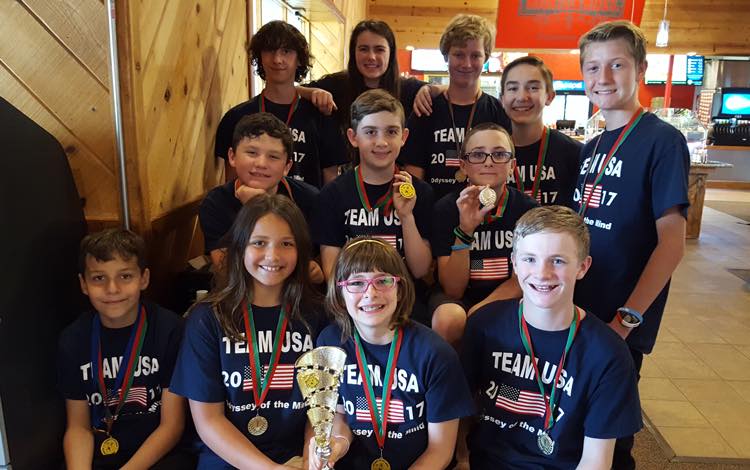
Discovery Bay Odyssey of the Mind students benefited by the 2016 Dow CAP Grant. Photo courtesy of Dow Chemical Pittsburg.

Deadline for applications is Monday, Sept. 18

Do you know a local non-profit in need of funding? Tell them about the 2017 Dow Community Advisory Panel (CAP) Grant. We invite eligible organizations in East Contra Costa County to submit grant proposals for projects supporting STEM (Science, Technology, Engineering and Math) and contribute to improving our community and environment.

Last year, the Dow Community Grant helped our friends at Discovery Bay Odyssey of the Mind prepare for their trip to the Odyssey of the Mind Eurofest competition in Minks, Belarus. The teams, consisting of 8th graders from Excelsior Middle and 5th graders from Discovery Bay Elementary, took home 1st and 2nd place trophies from the GLOBAL competition.

We continue to support STEM/STEAM organizations this year with our 2017 CAP Grant. Apply today. Deadline to apply is September 18.

Don’t …miss out on this opportunity to do great things for your organization. #STEM #STEAM #Grant #ContraCostaCounty

For questions, contact Taylor Gonzalez at tgonzalez2@dow.com. More info: http://www.dow.com/pittsburg/community/cap/ Apply here: http://www.cybergrants.com/dow/applications/open


Filed Under: Business, Community, East County, News

County Supervisors approve ordinance limiting flavored tobacco retail sales

July 20, 2017 By Publisher 1 Comment

Begin review of marijuana regulations

By Daniel Borsuk

Retailers of menthol and flavored tobacco products that are located within 1,000 feet of a public, private school, playground, park, or library in Contra Costa County will be required to sell off their inventory by the end of 2017 now that the Contra Costa County Board of Supervisors voted 5-0 on Tuesday to approve an ordinance creating tobacco sales restrictions and a cap on tobacco retail licenses.

Supervisors limited the number of tobacco retailers in unincorporated Contra Costa at 90.

Supervisors drafted the ordinance after conducting public hearings on how menthol and flavored tobacco products have serious health consequences for teenagers congregating at schools, playgrounds, parks or libraries that are within 1,000 feet from a store selling those tobacco products that are known to lead to heart and cancer health problems later on in life.

Some of the ordinance’s provisions include:

  • Failure to obey the new law could mean a retail license suspension of 30 days for the first violation, up to 90 days for a second violation within two years after the first violation, and up to one year for a third and subsequent violation within two years after the first violation.
  • Although the county tobacco law sets requirements on the how retailers sell cigars, including little cigars that must be sold in a package of at least 10 cigars, the ordinance states “This requirement does not apply to cigars that have a sale price of at least $5.”
  • The ordinance bans retailers from posting tobacco displays on their premises.
  • The law prohibits pharmacies from selling tobacco products.
  • The ordinance also requires retailers to “examine the identification of a person who reasonably appears to under the age of 27 before the tobacco retailers sells tobacco products or paraphernalia to that person.”

“The National Association of Tobacco Outlets opposes this ordinance,” said Jaime Rojas, a NATO representative, “because it represents a bad case of government overreach. You are forcing retailers to sell off an inventory within six months or face consequences.”

“You are taking a big step towards improving public health,” said Dr. Phillip Gardner of the University of California at San Francisco.  He hailed the supervisors action because it will help reduce the influence of menthol flavored tobacco products especially on the African American community.

During the supervisors’ meeting, nothing was disclosed about how the ordinance will be enforced between the Sheriff’s Department, Health Department and perhaps Planning Department and at what cost to county taxpayers.

“Currently we have no idea what the costs will be to enforce this ordinance,” County Administrator David Twa told the Contra Costa Herald after supervisors voted.  “Just wait when the board adopts the recreational marijuana ordinance (see item below).  Expenses will go up dramatically then.”

“We will not begin enforcement on whether a retailer is within the 1,000-foot buffer until Jan. 1,” said District 2 Supervisor Candace Andersen of Danville.

In the meantime, the passage of the ordinance put retailers on notice they should not be reordering flavored tobacco products if they are located within the 1,000-foot buffer zone, said District 1 Supervisor John Gioia of Richmond.

Review of Marijuana Regulations

In other business, Supervisors also kickstarted the review process on how to regulate commercial cannabis enterprises in unincorporated Contra Costa County in compliance with the voter approved State Proposition 64, the legalization of recreational marijuana sales.

During the presentation, supervisors were shown eight preliminary land use maps of where outdoor and indoor cannabis enterprises could potentially operate in unincorporated county.

Planning officials were instructed to present at a future meeting revised land used maps showing other buffer configurations.

The board voted 5-0 to permit County Administrator David Twa to negotiate with the consulting firm of Hinderliter, de Llamas & Associates to prepare a study with recommendations on options for taxation for various cannabis activities.

Twa did not disclose what the county will pay the Hinderliter, de Llamas & Associates because the price has yet to be negotiated.  Twa said information from the Hinderliter, de Llamas & Associates study would be used to draft a proposed countywide cannabis tax measure that would need to go before voters at the next general election, November 2018.

“If the tax fails to pass, so does the marijuana law in the county,” Twa told supervisors.

Gita Dombroski, owner of an Oakland cannabis nursery who said he has $4 million in the bank and wants to expand his nursery operations into Contra Costa County, warned supervisors that they are heading in the wrong direction by potentially levying high taxes.

“You need to be realistic. Your taxes are going to be too be too high and they will dissuade prospective businesses from coming to your county,” he said.

Instead of investing in Contra Costa County, Dombroski said he will open up another nursery in Oakland.

Cannabis proponent Max Fogarty objected to the county proposal of establishing a 1,000-foot buffer between cannabis businesses and public and private schools, parks, playgrounds and libraries, and a 500 foot distance from existing tobacco retail establishments.

“Why 1,000 feet from a school, playground or library.  It does not make sense,” said Fogarty

“Not everyone feels the way you do. We need to protect our communities” said Gioia in defense of the buffers.

Filed Under: Business, News, Supervisors, Youth

Pittsburg steel plant may lay off 635 in July

June 9, 2017 By Publisher 3 Comments

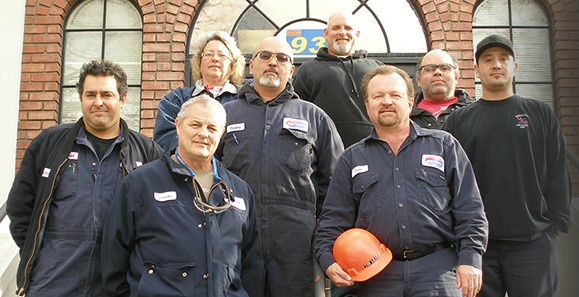
USS-POSCO workers. Photo courtesy of the company website.

By Dave Roberts

Six hundred and thirty-five employees at USS-POSCO Industries in Pittsburg may be laid off July 10, according to a warning notice the company filed with the California Employment Development Department. The potential, temporary layoffs, which were filed under the state’s Worker Adjustment and Retraining Notification system, comprise the largest chunk of more than 3,000 layoffs filed by 42 California companies in May.

USS-POSCO filed the layoff notice on May 9 and it remains to be seen whether it goes through with the layoffs.

However, Kevin Romick, a manager at the Pittsburg plant said “It is my understanding that there are no layoffs that are imminent. The business conditions dictate we are required by law to post this type of letter if we anticipate laying off more than 50 people.”

“We’re hoping and expecting business to pick up,” he added.

The plant filed a similar notice 3½ years ago. At that time, George Kunst, general manager of employee relations for USS-POSCO, told the San Francisco Business Times, “We have issued a WARN notice on a periodic basis due to economic uncertainty. We have no immediate plans to lay off anybody. We have had periodic layoffs for the last several years.”

The company processes hot-rolled steel so that it can be used for items such as office furniture, building materials, containers, conduit and automotive parts, according to the article.

The first Pittsburg steel facility opened in 1910 as a 60-man foundry under the name of Columbia Steel. In the 1920’s, the plant expanded to include the West’s first nail mill, and later, the first hot dip tin mill west of the Mississippi, according to the company’s website. Today it’s a joint venture company of U.S. Steel Corporation and POSCO of the Republic of South Korea.

The company receives mixed reviews from employees on the Glass Door employment review site. Positive comments include good pay, benefits and interesting work environment. Negative comments include lack of work, unmotivated employees and unfair management. Under the “advice to management” category, one worker wrote, “Treat everybody the same. Quit trying to police everyone and pay attention to Quality and Preventive Maintenance. There’s a reason we went from number one to the bottom of the totem pole.”

Filed Under: Business, East County, Employment, News

Annual East Bay USA conference draws 330 business, civic leaders

February 3, 2017 By Publisher Leave a Comment

Hear from keynote speaker astronaut Captain Scott Kelly

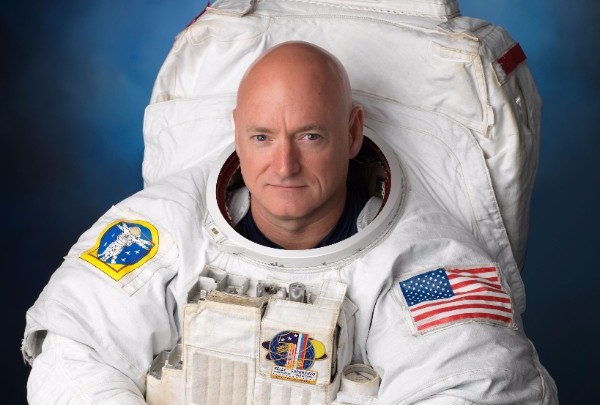
NASA astronaut Captain Scott Kelly, USN. Ret., was the keynote speaker at the 2017 East Bay USA conference on Thursday, Jan. 26, 2017. photo courtesy of East Bay Leadership Council.

At this time last week the East Bay Leadership Council (EBLC) team was putting the finishing touches on what they had hoped would be a memorable night. They were not disappointed.

The 31st Annual East Bay USA event, at the Concord Hilton, drew 330 business and civic leaders, gave a chance to learn about how the major sponsors support innovative STEM programs, provided networking opportunities over local wine, and featured an inspiring keynote by astronaut Captain Scott Kelly, (USN, Ret.) who left the attendees feeling like the sky was not the limit.

“The evening was made possible by 27 companies and 26 community leaders whose commitment to the East Bay Leadership Council makes our work possible. Thank you again to all of our sponsors,” said Kristin Connelly, EBLC President and CEO. “I hope you will save the date and join us on January 18, 2018 for East Bay USA’s 32nd Annual celebration.”

See more photos from the event, here and learn more about the East Bay Leadership Council, here.

NASA astronaut, Captain Scott Kelly, USN, Ret.

About Captain Kelly

Kelly served a one-year mission aboard the International Space Station (ISS) in 2015, then served as the ISS Branch Chief within the Astronaut Office. He served as a backup crewmember for ISS Expedition 5 and as the Astronaut Office Space Station Branch Chief. Kelly also served as a Flight Engineer for ISS Expedition 25 and as the Commander of ISS Expedition 26.

Selected by NASA in April 1996, Kelly reported to the Johnson Space Center in August 1996. Following completion of training, he was assigned technical duties in the Astronaut Office Spacecraft Systems/Operations branch. A veteran of three space flights, Kelly has logged more than 180 days in space. He served as pilot on STS-103 in 1999 and was the Mission Commander on STS-118 in 2007. Following STS-103, Kelly served as NASA’s Director of Operations in Star City, Russia.

Kelly is the recipient of two Defense Superior Service Medals, the Distinguished Flying Cross, Navy Commendation Medal, Navy Achievement Medal, two Navy Unit Commendations, the National Defense Service Medal, Southwest Asia Service Medal, Kuwait Liberation Medal, Sea Service Deployment Ribbon, NASA Distinguished Service Medal, NASA Exceptional Service Medal, NASA Outstanding Leadership Medal, two NASA Space Flight Medals, and the Russian Federation Medal for Merit in Space Exploration.

Filed Under: Business, Central County, Concord, News

Frazier to be guest speaker at East County Boost Your Business workshop in Antioch, Jan. 27

January 13, 2017 By Publisher Leave a Comment

Assemblymember Jim Frazier will be a special guest at an upcoming free workshop for East Contra Costa County businesses that want to learn more about using social media to promote their work. Co-sponsored by the Antioch and Brentwood Chambers of Commerce, the workshop will run from 8:30 to 10 a.m. Friday, January 27, 2017, at the Lone Tree Golf & Event Center, 4800 Golf Course Road in Antioch.

The “Boost Your Business” event will give participants up-to-date tools, insights and best practices for using Facebook and Instagram to grow their business. Participants will also hear tips and tricks from local business owners and learn about creative ways to reach out.

The workshop is free, but registration is encouraged. To sign up, or for more information, visit https://boostantioch.splashthat.com.

To contact Assembly member Jim Frazier please visit his website at www.asmdc.org/frazier or call his District Office at 925-513-0411. Follow and “Like” him on Facebook for updates on events and happenings in the 11th AD.

Filed Under: Business, East County

Pacific Senior Care Services receives 2016 Best Businesses of Walnut Creek Awards

December 30, 2016 By Publisher Leave a Comment

Fifth award during three years in business

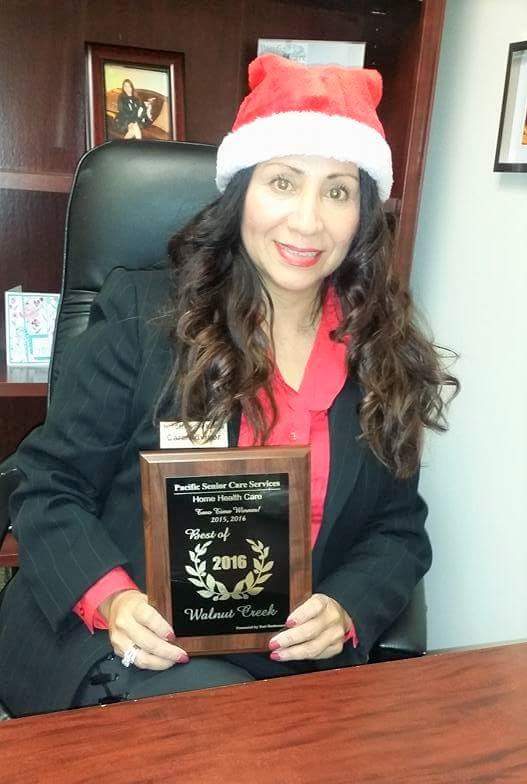
Pacific Senior Care Services owner Kelly Gonzales with the 2016 award from Best Businesses of Walnut Creek.

By Allen Payton

Pacific Senior Care Services, LLC owned by Antioch resident Kelly Gonzales, has been selected for the 2016 Best Businesses of Walnut Creek Award in the Home Health Care and Senior Services organizations categories by the Best Businesses of Walnut Creek Award Program. This is the second time since 2014 that Pacific Senior Care Services has been selected for the awards.

Each year, the Best Businesses of Walnut Creek Award Program identifies companies that the organization believes have achieved exceptional marketing success in their local community and business category. These are local companies that enhance the positive image of small business through service to their customers and our community. These exceptional companies help make the Walnut Creek area a great place to live, work and play.

Various sources of information were gathered and analyzed to choose the winners in each category. The 2016 Best Businesses of Walnut Creek Award Program focuses on quality, not  quantity. Winners are determined based on the information gathered both internally by the Best Businesses of Walnut Creek Award Program and data provided by third parties.

“I’m honored to receive these awards, in just our third year of business,” said Gonzales. “We strive to meet elder needs with love and compassion, as our slogan states.”

They place seniors and others in care homes and senior facilities, offer senior care referral services, as well as senior insurance services through their affiliated company.

This is Pacific Senior Care Services fifth award since she formed her business in April, 2014. They also received the 2016 City Beat News Spectrum Award bestowed on companies for their excellence in customer service.

About the Best Businesses of Walnut Creek Award Program

The Best Businesses of Walnut Creek Award Program is an annual awards program honoring the achievements and accomplishments of local businesses throughout the Walnut Creek area. Recognition is given to those companies that have shown the ability to use their best practices and implemented programs to generate competitive advantages and long-term value.

Filed Under: Business, Central County, East County, Health, Seniors

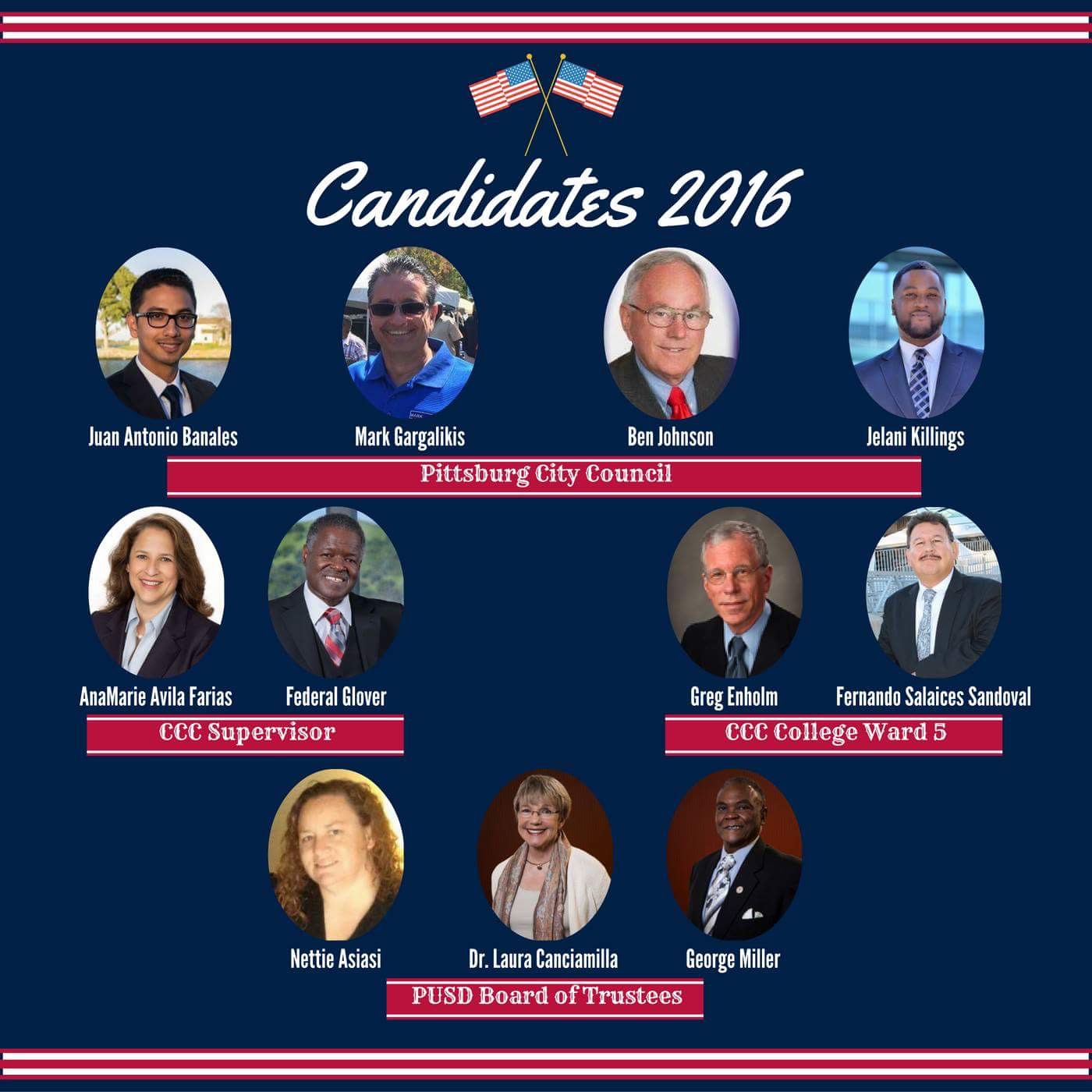
Thursday night forum in Pittsburg to include Supervisor, College Board candidates

October 13, 2016 By Publisher Leave a Comment

pittsburg-chamber-of-commerce-candidates-forum-larger

pittsburg-candidates

Filed Under: Business, East County, Politics & Elections

  • « Previous Page
  • 1
  • …
  • 24
  • 25
  • 26
  • 27
  • 28
  • Next Page »
Deer-Valley-Chiro-06-22

Copyright © 2026 · · Contra Costa Herald · All Rights Reserved