• Home
  • About The Herald
  • Local Agencies
  • Daily Email Update
  • Legal Notices
  • Classified Ads

Contra Costa Herald

News Of By and For The People of Contra Costa County, California

  • Arts & Entertainment
  • Business
  • Community
  • Crime
  • Dining
  • Education
  • Faith
  • Health
  • News
  • Politics & Elections
  • Real Estate

Antioch’s Markstein Sales Company combats slavery, human trafficking, appeals to other business leaders to get involved both locally and nationally

January 15, 2021 By Publisher 2 Comments

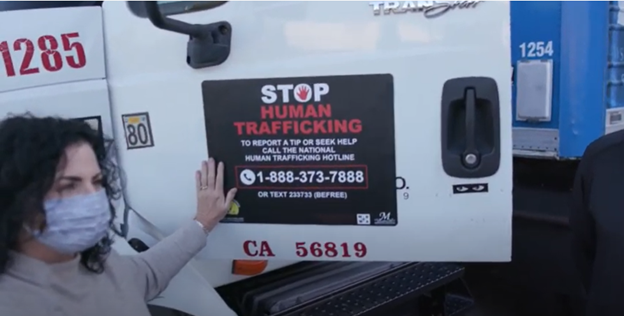
Owner Laura Markstein places a sign on one of the company’s trucks. Video screenshot.

Through partnerships with New Day for Children and the National Beer Wholesalers Association, Markstein is making a difference to stop this growing crime against children

Help Stop Human Trafficking by reporting a tip or seek help by calling the National Hotline at 1-888-373-7888

By Rebecca Butler

ANTIOCH, Calif. – As part of National Slavery and Human Trafficking Prevention Month in January,  Markstein Sales Company (Markstein), a woman-owned and operated wholesale beverage distributor in Northern California, today appealed to business leaders around the country to join in its fight against slavery and human trafficking.  As a long-time supporter and sponsor of the New Day for Children organization that provides funding to help American children who have been recovered from sex trafficking, Markstein has also now joined a nationwide campaign with the National Beer Wholesalers Association (NBWA) where beer distributors, who collectively visit more than 600,000 retail establishments across the country, can play a vital role in identifying and reporting suspicious activity often unseen by the typical public.

“Rapidly escalating profits, the internet, limited police resources, and unaware communities have created a perfect storm for the child sex trafficking industry here in the United States. It is the second fastest growing criminal industry in our country, and one that employs sophisticated business practices and is highly lucrative,” said Sharon Wood, Executive Director of New Day for Children. “Today, the U.S. Justice Department estimates that 300,000 children are at risk of being trafficked for sex in the United States. Through partnership with businesses, such as Markstein Sales Company, we can provide the funds and resources needed to transition many of these children to safe housing and therapeutic care, and help prevent it from happening to another one of our children.”

Human trafficking is a growing problem in the U.S., with more than 11,500 human trafficking cases reported in 2019 alone. California has consistently had the highest human trafficking rates in the United States with 1,507 cases reported in 2019. To help combat this, Markstein is installing signage on all of its 75 vehicles that are typically on the roads of Contra Costa and Alameda Counties 14 hours per day, six days per week. The goal of these signs is to raise awareness locally and to provide easy access to hotline information for people that suspect or know of human trafficking cases. Markstein is also providing personalized training, leveraged from both NBWA and New Day for Children, for all truck drivers and merchandisers so they know what to look out for on their daily routes and in the businesses they serve.

“While our work to end human trafficking began at the local level, this is a national problem that needs all business leaders to stand up and make a difference. I am calling on all companies to get involved locally with groups like New Day for Children and nationally with efforts like those sponsored by the NBWA,” said Laura Markstein, President of Markstein Sales Company. “Whether that involves a sign in a highly visible location or extra eyes and ears for identifying and reporting suspicious behavior, there are many companies such as beer distributors that are in a very public and unique position where they can make a significant difference to fight this cause.”

“Beer distributors have behind-the-scenes access to the prime locations where traffickers could be exploiting victims – from bars, restaurants, hotels, convenience stores, to package stores, sports arenas and grocery stores,” said Lauren Kane, Vice President of Communications, National Beer Wholesalers Association. “We commend the work Markstein Sales Company has already been doing locally with programs like New Day for Children. Combining this with their commitment to the NBWA Distributors Against Human Trafficking campaign, means they have the opportunity to significantly impact the fight against human trafficking. Beer distributors in other states have seen a 175% increase in calls to the National Human Trafficking Hotline after they started educating their employees and putting signage on their trucks. We are confident Markstein’s efforts will bring similar life-changing results to California.

Call to Action

  • If you are a beer distributor, join the campaign being spearheaded by the NBWA to build awareness and provide training to educate employees on recognizing and reporting the warning signs of human trafficking.
  • If you are any other type of company that has vehicles, products or buildings that are constantly in the public eye, leverage your visibility to do your own campaign and encourage others in your industry to follow suit.
  • Support and sponsor New Day for Children. This nationally recognized charity provides support and assistance to American girls, ages 10-18, who have been recovered from the despair of sex trafficking. Your financial support can provide safe housing, school, medical, mental health care, equine therapy, and much more.
  • Take off the blinders.  If you think this is not happening in your community, you are wrong.  Every state, county, city, and town needs to help combat this nationwide crisis.  This Markstein video outlines the problem and the ways companies and individuals can make a difference.

“I am proud to work for a company that provides the tools and training to turn an average workday into an opportunity to help in a big way,” said Dustin Miller, Commercial Driver, Markstein Sales Company. “As I go about my daily routes, I feel more empowered than ever before to play a part in preventing and stopping these horrible crimes against both children and adults.”

New Day for Children is a nationally recognized 501-(c)3 charity that provides support and assistance to American girls, ages 10-18, who have been recovered from the despair of sex trafficking.  Your financial support provides safe housing, school, medical, mental health care, equine therapy and more. New Day for Children collaborates with quality programs for the children’s care. In this video you will see one such facility with New Day supported girls.

About Markstein Sales Company

Markstein Sales Company is a fourth-generation, woman-owned and operated wholesale beverage distributor based in Antioch, Calif. Founded in 1919 with just a horse, a wagon and six cases of beer, Markstein is now in its 101st year and distributing over four million cases annually to 1500 retailers in the Bay Area. The company’s portfolio is composed of multiple world-class beers including the Anheuser-Busch InBev and Constellation Brands family of beers, several high-quality craft beers and many others. Markstein is known for outstanding customer service, dedication to their employees and commitment to the community. The company continues to rank as best in class by retailers and is one of the top ten largest Woman Owned Businesses in the Bay Area. More information can be found at https://www.marksteinsalescompany.com.


Filed Under: Business, Children & Families, East County, News

Raley’s Food For Families raises over $3 million for California, Nevada food banks

January 14, 2021 By Publisher Leave a Comment

Raley’s non-profit sets new record with 43% increase in total year-over-year donations; $483,825 raised for Food Bank of Contra Costa & Solano

By Kevin Buffalino, Public Relations & Partnerships Manager, Raley’s

Raley’s Food For Families Annual Holiday Drive raised over $3 million throughout the 2020 holiday season, the largest amount ever donated in the organization’s 35 years of hosting the event. The donations, which came from customers in-store and online between November 2 and December 31, will provide more than three million meals for those suffering from food insecurity in northern California and Nevada.

One of Raley’s 12 regional food bank partners is the Food Bank of Contra Costa & Solano, and $483,825.00 was raised for them during this year’s Annual Holiday Drive. The customers at the Raley’s and Nob Hill stores in Contra Costa County donated the following amounts to provide meals for their food insecure neighbors.

Raley’s

  • Antioch – $17,932
  • Brentwood – $23,100
  • Oakley – $17,393
  • San Pablo – $21,516

Nob Hill Foods

  • Martinez – $26,025
  • San Ramon – $17,662
  • Walnut Creek – $25,431

“The generosity we have seen this past year within the communities we serve is incredible,” said Becca Whitman, Executive Director of Raley’s Food For Families. “It is no secret that 2020 was an especially difficult year, so we cannot thank our customers enough for their outpouring of support to help their neighbors in need during even the toughest of times. They are the ones who truly deserve the recognition.”

Raley’s Food For Families works every day to alleviate hunger locally by partnering with 12 regional food banks across the company’s footprint in northern California and Nevada. This year’s Annual Holiday Drive was especially important because these partners, which typically serve 1.4 million food insecure individuals each month, saw an increase of an average of 95% in those using their services in 2020.

Although this year’s Annual Holiday Drive has ended, Raley’s accepts donations year-round at check stand pin pads at all store locations and online to support Food For Families. Donations stay local to aid the communities in which they were made, and Raley’s covers all administrative costs for Food For Families, ensuring one hundred percent of donations benefit food bank partners and those in need.

To learn more about Raley’s Food For Families or to donate, visit raleys.com/foodforfamilies.  

About Raley’s Food For Families

Raley’s Food For Families is a registered 501(c)3 organization providing food to Feeding America food banks and their network of partner agencies. The year-round program serves the communities of Northern California and Western Nevada through Raley’s, Bel Air Market, Nob Hill Foods and Food Source stores.

Raley’s Food For Families began as a holiday food drive in 1986 and was founded by Co-Chairman and Owner Joyce Raley Teel and CEO emeritus Charles Collings. In the past 35 years, the organization has raised over $42 million and 40 million pounds of fresh, wholesome food. With a long-standing commitment to local communities, Raley’s Food For Families continues to grow and thrive as an organization dedicated to health and happiness for those experiencing food insecurity. Raley’s covers 100% of the administrative costs for the non-profit, meaning 100% of donations go directly to the food bank partners.

Allen Payton contributed to this report.

Filed Under: Business, Community, Food, News

Following death threat, protests Supervisor Mitchoff drops COVID-19 business fines hike proposal

December 16, 2020 By Publisher Leave a Comment

Reads unedited profanity laced email during Tuesday meeting

Unlikely radioactive material dumped at Keller Canyon Landfill in Pittsburg

Prioritize teachers for COVID-19 vaccine

By Daniel Borsuk

Supervisor Karen Mitchoff, choking back tears after receiving an emailed death threat and listening to an avalanche of protests to her proposal to boost county public health fines on small businesses violating COVID-19 orders, requested the idea be dropped at Tuesday’s Contra Costa County Board of Supervisors meeting.

Supervisors earlier heard from a number of anonymous callers, presumably restaurant owners largely hit by county health inspections and penalty fines.  Most of the speakers protested that the current fines of $250 for the first offense, $500 for the second offense and $1,000 for each additional violation within one year of the initial violation were too extreme.  If a violation continues for more than one day, each day is treated as a separate violation.

At the Board’s December 8 meeting, Mitchoff had proposed the county dramatically increase fines in order to send a message to businessowners thinking of violating county ordinances.  At that meeting the supervisor had said, “I would like to see, $10,000, $15,000, and $20,000 fines.  We have to do something different.  If they want to stay open and spread COVID they have to pay the price.”

Prior to receiving the threatening email or listening to anonymous businessowners torpedo her proposal Tuesday, Mitchoff said “If we do not do something, we’ll lose credibility.  I see many businesses in Concord and Pleasant Hill obey county orders and are closed, but restaurants in Danville are open.”

A group of Danville and San Ramon restaurant owners have stirred up most of the protests.

“We receive 13 complaints a day including customers not wearing masks or not social distancing,” Contra Costa County District Attorney Dianna Becton told the supervisors.  The DA has assigned two inspectors for health code violations.

“Small businesses are really suffering,” said Supervisor Diane Burgis of Brentwood, who said one small busines owner pleaded with her for help because he had difficulty paying his property taxes.  “I am not going to support higher fines.  I am not in support of higher taxes. It won’t work.”

Later, Mitchoff caved into the public protests and especially upon receiving a sort of “interesting”, profanity-laced message during the meeting that she received from Ricky Gunz and read verbatimm:

“F— you Bi—. Sleep lightly. There are some bad people out there.  Karma is a motherf—r.  Keep trying to fine business and see what happens.”

“We hear the pain and the frustration,” said Supervisor John Gioia of Richmond. “It is all about saving lives and slowing the spread of COVID-19 to the 15 percent intensive care unit (ICU) capacity level.  We’re trying to save ICU capacity.”

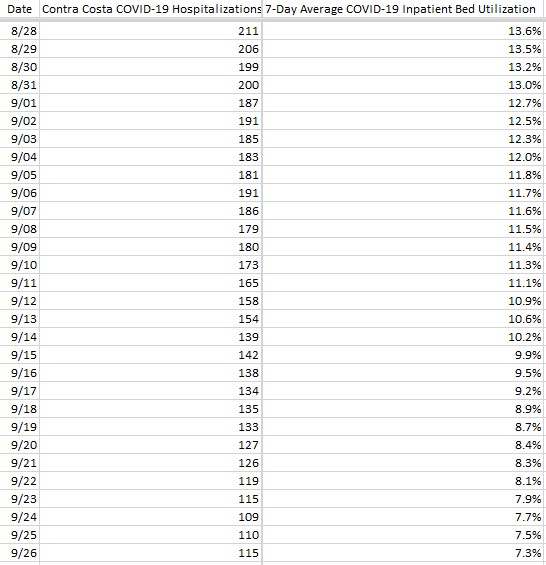
Earlier supervisors learned from Contra Costa County Public Health Officer Dr. Chris Farnitano that Contra Costa had 181 COVID-19 patients in local hospitals, but more crucially, 133 patients were occupying ICU beds.  There are a total of 183 ICU beds in the county.

“That’s a significant increase,” said Farnitano. “Our case rate is 36 cases per day.  December will be our deadliest month.  Of 500 patients, five will die of COVID19,” he warned.

Keller Canyon Landfill Probe: “Unlikely that radiological materials were disposed of at Keller Canyon”

Supervisors also voted 5-0 to accept a two-page report on an investigation whether any radioactive materials from the Hunters Point Naval Shipyard were transported to the Keller Canyon Landfill in Pittsburg.  The report, prepared by TRC Solutions, Inc. was initiated after news reports initially published on April 21, 2018 in the San Francisco Chronicle and later picked up by other news outlets including the Contra Costa Herald about allegations of improper dumping of radioactive materials had occurred in the landfill.

“TRC’s forensic audit started in October 2018 and concluded in May 2019.  Documents reviewed by TRC included special waste authorizations, soil analytical data reports, Hunters Point work plans and reports, Standard Operating Procedures, portal monitor calibration records, and landfill data to ascertain if radiologically contaminated materials were received by KCL from Hunters Point Naval Shipyard.  In addition, site visits were performed at both KCL and HPNS in April 2019,” the report stated.

“Based on this review, of data, reports, logs, interviews, and site visits, it is concluded that it is very unlikely that radiological materials of concern (i.e., radionuclides specific to Hunters Point contaminations and in exceedance of background) were disposed of at Keller Canyon. To obtain certainty that no radiologically contaminated material from Hunters Point was received at Keller Canyon, limited environmental field sampling could be performed at Keller Canyon.”  Republic Services of Contra Costa operates the landfill.

Pittsburg City Manager Garret Evans said the city will continue to monitor the landfill based on the history of landfill’s previous issues about allegedly poor inaccurate data about air monitors and lead.

“Keller Canyon has been very cooperative.  This has been an important and thorough study that has gone through several community meetings, “said Supervisor Federal Glover of Pittsburg, whose District 5 includes the landfill.

Resolution Prioritizes Private and Public Teacher Receive COVID-19 Vaccines

Supervisors passed a resolution urging Gov. Gavin Newsom, the California Department of Public Health and all other state health officials to ensure that all public, parochial and private classroom teachers and staff receive the COVID-19 vaccine at no cost in order to assist school officials to reopen schools when it becomes safe to do so.

Two Cannabis Community Benefit Agreements Approved

Supervisors approved the community benefit agreements with two cannabis retail outlets – The Artist Tree V storefront commercial cannabis dispensary in El Sobrante and the Authentic 925 in Pacheco.  The two items acted on consent items.

The actions mean applicants for the two businesses are nearing approval of use permits whereby the owners will be required to pay the county community benefit taxes based on prospective retail sales.  In the case of SGI Pacheco, doing business as Authentic 925, the county will receive on an annual basis, $150,000 or 1.5 percent of the business’s gross profits, whichever is greater.

In the case of The Artist Tree V, the community benefit is based on percentages of annual gross sales of 2 percent or 3 percent depending on whatever will be gross sales during the operating year.


Filed Under: Business, Health, News, Supervisors

Contra Costa, Bay Area Health Officers implement Newsom’s new regional Stay-At-Home order starting Sunday

December 4, 2020 By Publisher Leave a Comment

Not waiting until local hospitals are near crisis to act

By Contra Costa Health Services

Public Safety Alert text sent Friday afternoon, Dec.. 4, 2020.

Yesterday, Governor Newsom announced that all sectors other than retail and essential operations would be closed in regions of the State where less than 15 percent of ICU beds are available under a new Regional Stay-At-Home Order. Although health officials throughout the Bay Area are glad to see the State take action in light of the rapidly escalating surge in hospitalizations statewide, many believe even more aggressive action is necessary in the Bay Area to slow the surge and prevent our local hospitals from being overwhelmed. (See related article)

Rather than waiting until Intensive Care Unit (ICU) bed availability reaches critical levels and delaying closures that are inevitable, the Health Officers for the Counties of Alameda, Contra Costa, Marin, San Francisco, and Santa Clara as well as the City of Berkeley are jointly announcing that they will implement the State’s Regional Stay Home Order now.

“It takes several weeks for new restrictions to slow rising hospitalizations and waiting until only 15 percent of a region’s ICU beds are available is just too late,” said San Francisco Health Officer Dr. Tomás Aragon. “Many heavily impacted parts of our region already have less than 15 percent of ICU beds available, and the time to act is now.”

“We are seeing a surge in COVID-19 cases and hospitalizations here in Contra Costa County and across our region,” said Contra Costa County Health Officer Dr. Christopher Farnitano. “The number of patients hospitalized with COVID-19 in our county has doubled in just the past couple of weeks, and we are at risk of exceeding our hospital capacity later this month if current trends continue.”

“We cannot wait until after we have driven off the cliff to pull the emergency break,” said Santa Clara County Health Officer Dr. Sara Cody. “We understand that the closures under the State order will have a profound impact on our local businesses. However, if we act quickly, we can both save lives and reduce the amount of time these restrictions have to stay in place, allowing businesses and activities to reopen much sooner.”

“Rising hospitalization rates across the region threaten not only our community members with severe COVID-19, but anyone who may need care because of a heart attack, stroke, accident, or other critical health need,” said Alameda County Health Officer Dr. Nicholas Moss. “By acting together now we will have the greatest impact on the surge and save more lives.”

“Each of us can fight the spread,” said Dr. Lisa B. Hernandez, the City of Berkeley Health Officer. “Keep your family safe by avoiding even small gatherings outside of your household and not traveling. We don’t want holiday gatherings and travel to create a spike of cases on top of the surge we’re already seeing.”

“Although Marin has fared better than some other counties in our region over the last few weeks, we know it is only a matter of time before rising case and hospitalization put pressure on our hospitals too,” said Marin County Health Officer Dr. Matthew Willis. “We must act now, and must act together to ensure all hospitals in the Bay Area have the capacity they need to care for our residents.”

Consistent with the State framework, the six jurisdictions are working to ensure that all sectors have at least 48-hour notice of these closures. Most of the Bay Area Health Officers will implement the State’s Regional Stay At Home Order as of Sunday December 6, 2020. In Alameda County, it is scheduled to take effect on Monday, December 7, 2020, and Marin County’s order will take effect Tuesday, December 8. The new restrictions will remain in place until January 4, 2021.

The sector closures and restrictions on activity under the State’s Regional Stay Home Order are described here.


Filed Under: Business, Health, News

Newsom: more restrictions for Bay Area counties in December based on hospital ICU bed availability

December 3, 2020 By Publisher 1 Comment

Screenshot of Gov. Newsom’s press conference announcing the Regional Stay-At-Home order on Thursday, Dec. 3, 2020.

Hair salons, barber shops, personal services, bars, wineries will be closed temporarily

All non-essential travel temporarily restricted statewide

By Allen Payton

Governor Gavin Newsom announced, during a press conference, Thursday a more restrictive Stay-At-Home order on a regional basis in the state based on hospital intensive care unit (ICU) bed space when it falls below 15 percent. In the nine Bay Area counties, including Contra Costa, the new restrictions are expected in mid-to-late December. The restrictions in the other four regions, Northern California, Greater Sacramento, the San Joaquin Valley and Southern California, are expected to go into effect sooner.

Regions where the ICU capacity falls below 15% will be placed into this Stay-At-Home order for three weeks.

Newsom said “California is pulling an emergency break” and his order directs Californians to “stop gathering with those outside your household” and “Keep it outside and keep your mask on.”

Sectors that will be temporarily closed when a region is placed into the Stay-At-Home include bars, wineries, personal services, hair salons and barber shops. Sectors that will remain open include schools that have received a waiver, critical infrastructure, retail (20% capacity to reduce exposure), and restaurants for take-out and delivery.

All non-essential travel is temporarily restricted statewide, as well, Newsom said.

“The bottom line is if we don’t act now our hospital system will be overwhelmed,” Newsom said. “If we don’t act now, we will continue to see a death rate climb.”

However, the governor encouraged residents to get outdoors and exercise to offset “the mental distress we’re under.”

“This is not a permanent state,” Newsom said to reassure residents. “We had predicted the final surge in the pandemic. There’s light at the end of the tunnel. We are a few months away from truly seeing real progress with the vaccine. We do not anticipate having to do this, once again. But we really all need to step up…and we need to do everything we can to stem the tide, to bend the curve, to give us the time…to get those vaccines in the hands of all Californians across the state.”

Filed Under: Business, Health, News, State of California

Contra Costa Supervisors extend moratorium for renters, landlords, small business owners due to COVID-19 restrictions

November 18, 2020 By Publisher Leave a Comment

Clash over $80,000 marketing outreach budget

By Daniel Borsuk

In response to the state moving Contra Costa County back into the most restrictive COVID-19 Purple Tier, the Board of Supervisors on Tuesday acted to deliver financial assistance in the struggling tenant, landlord and small business sectors.

Earlier Supervisors had learned that Contra Costa’s new daily COVID-19 case rate had risen to 11.4 per 100,000 with a 3.7 percent positivity rate.  As of Tuesday, 41 counties, including Contra Costa, were in the Purple tier.

Supervisors approved an amendment to the County’s Fiscal Year 2019-2020 Community Development Block Grant Action Plan to spend  an additional $4.29 million in CDBG-Coronavirus or CV3 funds under the Coronavirus Aid, Relief, and Economic Security (CARES) Act of 2020 to provide emergency rental assistance and tenant/landlord counseling and related legal services.

Supervisors allotted $3.2 million from a Federal CARES Grant for an emergency rental assistance program to Hayward-based ECHO Housing that would provide tenant-landlord counseling and related legal services to persons meeting eligible income requirements for the program.

Concord-based Shelter, Inc. will work with ECHO in providing rental assistance services in Antioch, Pittsburg, Concord, and Walnut Creek.

At one point, Supervisor Federal Glover of Pittsburg and Supervisor Diane Burgis of Brentwood clashed over the program’s $80,000 marketing/outreach budget that Glover supported, but Burgis preferred to cut by 50 percent. “I like to do outreach,” said Burgis, “but there is so much need and urgency out there right now.”

Despite the disagreement over the outreach money, supervisors kept intact the $80,000 for outreach.

One of the conditions to the federal program is that the county needs to spend the CARES funds by Jan. 31, 2021.

“Obviously, families are struggling to make ends meet, and some of my students have found themselves having to take some economic responsibility to make families’ ends meet,” said Luis Chacon, a West Contra Costa Unified School District teacher.

In other action, supervisors voted 5-0 to pass an urgency ordinance to continue the temporary prohibition on evictions of certain small business commercial tenants financially impacted by COVID-19.  The protection continues through Jan. 31.

“The county must act quickly to assist residents, both tenants and landlords, who are or will be in the crisis due to the COVID-19 pandemic,” said Board Chair Candace Andersen of Danville.  “Providing direct rental payments to landlords on behalf of tenants is critical, and staff will work with community organizations to reach out to those in need, particularly low-income households and neighborhoods severely impacted by economic and housing instability at this difficult time.”

Contra Costa County’s Urgency Ordinance 2020-29 provides protections pursuant to Governor Gavin Newsom’s Executive Order N-80-20, which extends, through March 31, 2021, the authority of local jurisdictions to suspend the evictions of commercial tenants for the non-payment of rent if the non-payment was a result of the COVID-19 pandemic.

“The Board of Supervisors recognizes that the already struggling business environment has become even more challenging with the recent rise of COVID-19 cases,” said Board Chair Andersen. “As we follow public health orders and guidance intended to protect lives, we have to support businesses however we can.”

Supervisors voted 5-0 to impose a 45-day moratorium ordinance on industrial hemp cultivation so that the county Agriculture Commission can establish cultivation and location regulations on the crop harvested in East county.

East County resident John Cisneros, who lives nearby a hemp operation with armed guards, urged supervisors to adopt an ordinance.  “How would you like to live near a hep farm with a security force, that might turn into a cannabis operation?  Not a safe thing,” he said.  “I am not against hemp, but this is not a suitable place.”

Pittsburg Motel 6 Homeless Program Action

In a consent action, supervisors approved a lease with Azad Rahman, Riffat Rahman an Zahin Rahman, who had managed the Motel 6 at 2101 Loveridge Road, Pittsburg  that the county has agreed to buy through the state’s Homekey Program to provide housing for the homeless and social services.

The county agreed to purchase the motel for $17.4 million even though there is a question whether the county properly appraised the property that may have been over appraised by $5 million. (See related article) The county approved a lease with the Rahmans at $600 a month.


Filed Under: Business, Health, News, Supervisors

Contra Costa to close indoor dining, fitness centers, movie theater concessions Tuesday to contain spread of COVID-19

November 13, 2020 By Publisher Leave a Comment

In coordination with other Bay Ara counties

If the current restrictions don’t work “we are prepared for further restrictions” – Dr. Chris Farnitano, Contra Costa Health Officer during Friday afternoon press conference

On Thursday, California reached the unfortunate milestone of 1 million COVID cases statewide. With transmission and hospitalizations on the rise, health officers representing counties across the Bay Area are tightening local rules for high-risk indoor activities where the virus can spread more easily.

Contra Costa Health Services today issued an order to close, effective Tuesday, Nov. 17 at 8 a.m.:

  • Indoor dining
  • Indoor fitness centers
  • Concession stands at movie theaters

Dine-in restaurant and gyms reopened at reduced capacities when the county entered the state’s red tier in late September. But recent increases in COVID cases and hospitalizations make the closures necessary to help contain spread of the virus.

“Indoor interactions at restaurants, movie theaters, and indoor gyms and fitness centers are high-risk activities,” said Dr. Chris Farnitano, Contra Costa County Health Officer. “And given what we’re seeing happen across the country and the region, we must act now.”

Diners at restaurants remove their masks to eat or drink, as do movie patrons when snacking on food from concession stands. People also breathe heavily while they exercise at indoor gyms, increasing the risk of droplet and aerosol transmission of COVID-19, which can be only partially reduced by wearing a face covering.

Contra Costa recently moved from the state’s orange tier to the more restrictive red tier because of an increasing number of cases in the county. Meanwhile, hospitalizations in Contra Costa have returned to levels not seen in several weeks. On Nov. 11, 50 people with COVID were hospitalized in the county – the highest number since September.

“I’ve said this many times before, but it’s so important I can’t repeat it enough: The best way to protect against COVID-19 is to wear a face covering whenever you are near people who do not live with you, and whenever you go in a building that is not your home,” said Dr. Farnitano.

Health officials are especially worried about people gathering indoors with the holidays coming up and may consider other closures in the days and weeks ahead. Contra Costa County, which is now in the red tier, could move into the state’s most restrictive tier, the purple tier, within the coming weeks. If the county moves into the purple tier, schools that haven’t reopened will have to remain closed until the county moves back into the red tier or until they receive a waiver from the state.

“Our hope is that this new health order will slow down the spread of COVID so schools will have a better chance to reopen,” Dr. Farnitano said.

Screenshot of Dr. Chris Farnitano during press conference on Friday, Nov. 13, 2020

Dr. Farnitano Press Conference

During a Zoom press conference Friday afternoon Farnitano was asked by the Herald, “Is this decision based on what’s actually happening in our county, or what’s happening in other Bay Area counties and elsewhere?” he responded, “We’re really looking at all of it.”

Where people are getting COVID, “many if not most cannot pinpoint any specific locations,” Farnitano explained. “But where we can identify, restaurants, gyms we are imposing restrictions.”

“Why can’t we just protect the vulnerable and allow the rest of us get back to living our lives?” the Herald asked.

“That would be an ideal strategy if it can work. But it can’t. The vulnerable can’t live in a bubble,” Farnitano stated. “We see it in our nursing homes. Those who work there go home, go shopping, and are with their families where they can be exposed.”

“To protect the most vulnerable in our society we need to keep the overall transmission to a minimum,” he added.

“What is the basis for closing indoor fitness centers and not other indoor activities,” he was asked.

“We have seen looking across the country and across the state there have been outbreaks in gyms and fitness centers,” Farnitano said during a press conference Friday afternoon. “People can exercise outside or at home. Outdoor fitness operations are still allowed. This current order doesn’t have an endpoint. When our hospital case rates come down…then we can reconsider these orders.

“Masks does not provide the same level of protection when youre around someone breathing heavily and exercising,” he added.

The actions are “due to the rapidly rising of rates in our community,” Farnitano explained.

One person asked about the county “moving the goal posts instead of enforcing existing rules”.

“The enforcement efforts have not proven sufficient,” Farnitano responded. “The more we can wear our masks and stay away from others outside of our households the sooner we can get past this upsurge.”

“Our case rate in the past seven days are already in the Purple Tier. We are testing at higher levels than state averages. Our adjusted case rate is even in the Purple Tier,” he said. “We have seen the case rate increase in the last several days in our hospitals.”

The county is issuing these orders, now so, “We can hope to blunt that wave, blunt that surge…to get us through a winter surge quicker and with less harm to the community as far as illness and death,” Farnitano explained.

“Are church services impacted further,” he was asked.

“Not at this point,” Farnitano responded. “We implemented restrictions on churches last week for the Red Tier. We are prepared to add additional restrictions in the future if our hospitalizations rise, in advance of state restrictions.”

“We are looking at all of our health care systems and how we can get through the latest wave,” he explained.

“Will it be enough? I am not sure. We will have to watch the data and see,” said Farnitano. “We all have to do our part, wear our masks, six feet of social distancing.

“But if it doesn’t we are prepared for further restrictions,” Farnitano added. “The state could move us into Purple the day after Thanksgiving.”

“Why don’t you believe in herd immunity,” he was asked.

“Herd immunity would take an enormous toll on the community and lead to enormous deaths, more than we’ve seen,” Farnitano responded. “We would need 70 to 80% levels of herd immunity. It would take uncontrollable disease for months and months and months and that would be too high of a toll for the community.”

Allen Payton contributed to this report.


Filed Under: Business, Dining, Health, News

Bed Bath & Beyond, Inc., to pay $1.49 million settlement for environmental violations

October 28, 2020 By Publisher Leave a Comment

By Scott Alonso, Public Information Officer, Office of the District Attorney, Contra Costa County 

Martinez, Calif. – On Tuesday, Contra Costa County District Attorney Diana Becton announces a $1,498,750 settlement against New Jersey-based Bed Bath & Beyond, Inc. (“Bed Bath & Beyond”) as part of a settlement of a civil environmental prosecution.

The judgment is the culmination of a civil enforcement lawsuit filed last month in Ventura County Superior Court claiming that more than 200 Bed Bath & Beyond stores throughout the state (including Cost Plus, buybuy BABY, Harmon, Harmon Face Values, World Market, and Cost Plus World Market stores) unlawfully handled, transported and disposed of batteries, electronic devices, ignitable liquids, aerosol products, cleaning agents, and other flammable, reactive, toxic, and corrosive materials, at local landfills that were not permitted to receive those wastes.

“The protection of our environment and public health is always a top priority. This settlement acts as a deterrent to other companies as non-compliant companies will be held accountable for violating our environmental laws,” stated DA Becton.

The investigation was initiated by the Ventura County District Attorney’s Office after a fire broke out on December 24, 2015 at the City of Oxnard’s Del Norte Transfer Facility in a load of store waste from the trash compactor of the Oxnard Bed Bath and Beyond store. The bagged store waste burst into flames when a city employee used a front-end loader to spread the freshly dumped trash pile. Investigation recovered numerous items of regulated waste, including several electronic items and hazardous waste, including lithium batteries and a small can of lighter fluid.

Following these Ventura County events, the Contra Costa County District Attorney’s Office worked in conjunction with 30 other California District Attorneys, and the Los Angeles City Attorney, and local environmental regulatory officials to conduct a series of undercover inspections of Bed Bath & Beyond store waste around the state. These inspections, and other investigation, revealed that Bed Bath & Beyond sending regulated hazardous wastes from stores to local landfills throughout California.

When notified of the investigation, Bed Bath and Beyond took steps to cooperate and to dedicate additional resources towards environmental compliance and improving its existing regulated-waste management program, including by performing regular self-audits of its compactors and waste bins in California.

Under the final judgment, Bed Bath & Beyond must pay $1,327,500 in civil penalties and as reimbursement of investigation and prosecution costs, of which $124,000 will be paid to the Contra Costa County District Attorney’s Office, $16,400,to the Contra Costa County, Health Services Dept., Hazardous Materials Program. The company will pay an additional $171,250 to fund supplemental environmental projects furthering environmental enforcement in California. The retailer will also be bound under the terms of a permanent injunction prohibiting similar future violations of law.

Filed Under: Business, Crime, District Attorney, Environment, News

Contra Costa advances in COVID-19 Reopening Plan – churches, indoor dining now at 50% capacity

October 27, 2020 By Publisher Leave a Comment

Indoor swimming pools can reopen; bars can reopen outdoors; live entertainment for up to 50 people (requires pre-approval), more

By Contra Costa Health Services

More businesses and community activities can reopen beginning today in Contra Costa after the county’s data indicators for COVID-19 transmission showed improvement in October.

California today reassigned Contra Costa to the less-restrictive orange tier of its Blueprint for a Safer Economy, allowing for larger local gatherings for indoor worship services and dining, and the reopening of indoor pools, bars and bowling alleys.

But health officials caution that it is now more important than ever to follow the state health guidance for physical distancing and use of face coverings, to keep everyone safe and healthy during the holiday season and to avoid a return to the red tier.

Contra Costa’s adjusted per-capita case rate – the average daily number of new COVID-19 cases identified in the county per 100,000 population – stood at 3.7 on Tuesday, just qualifying the county to move into the orange tier.

The average daily percentage of COVID-19 tests that return positive in the county is 1.9%, with 4.9% or lower qualifying for the orange tier. That number for census tracts identified by the state’s health equity metric was 3.9% today, with 5.2% required for the orange tier.

Counties in the orange tier can allow:

  • Worship services and other cultural activities indoors at 50% occupancy or 200 people, whichever is fewer;
  • Indoor dining at 50% occupancy or 200 people, whichever is fewer;
  • Indoor swimming pools;
  • Bars and other businesses that sell alcohol without meals to open for outdoor operation;
  • Family entertainment centers to open indoors for “naturally distanced” activities, such as bowling alleys, escape rooms and climbing-wall gyms, at 25% occupancy;
  • Cardrooms to open indoors at 25% occupancy;
  • Small amusement parks to open at 25% of occupancy or 500 people, whichever is fewer;
  • Professional sports venues to open at 20% occupancy;
  • Live entertainment to open with no more than 50 people, if approved by the Health Officer.

The county will remain in the orange tier for at least two weeks. The state could move Contra Costa into the less-restrictive yellow tier, or the more restrictive red tier, if its metrics qualify for one of those tiers for two consecutive weeks. The state updates the official numbers every Tuesday.

To reduce the spread of the virus in Contra Costa County, and to continue its progress toward reopening, county leaders urge the public to get tested for COVID-19 regularly, including people who have no symptoms of illness.

Contra Costa would not have qualified for the orange tier this week had it not tested more residents than the state average. California adjusts the case rates of high-testing counties downward to reflect their work controlling the virus. Without that adjustment, Contra Costa’s per-capita case rate this week would have been 4.1, which would not qualify for the orange tier.

Following the heath guidance for physical distancing and face coverings, practicing good hand hygiene and staying home when you feel sick are also key to continuing Contra Costa’s progress against the pandemic.

About 3,500 people get tested every day for COVID-19 in Contra Costa. By ramping up to test at least 4,500 daily, the county can more quickly notify those infected – particularly people with the virus who do not have symptoms – to prevent outbreaks and better protect community members at high risk of serious illness from COVID-19 because of their age or health.

Contra Costa recommends that workers in jobs that bring them in frequent contact with the public, including all essential workers, consider a COVID-19 test every 30 days. Anyone who has symptoms such as fever, cough or difficulty breathing should also consider a test.

Call 1-844-421-0804 to schedule a fast, free COVID-19 test in Contra Costa, or visit cchealth.org/coronavirus to schedule online.


Filed Under: Business, Dining, Faith, Health, News

Contra Costa County Businesses* can now apply for Micro-Enterprise Relief Fund grants

October 24, 2020 By Publisher Leave a Comment

By Renaissance Entrepreneurship Center

We are excited to let you know that Renaissance Entrepreneurship Center in partnership with the Contra Costa CDBG has started a Contra Costa County Micro-Enterprise Relief Fund. The Contra Costa County Micro-Enterprise Relief Fund offers grants to Contra Costa County micro-businesses impacted by the COVID-19 pandemic. This program aims to provide relief to micro-enterprises in order to help them survive this crisis and to maintain the provision of goods and services for Contra Costa County residents.

For the purposes of this fund, we define a micro-enterprise as a for profit entity with:

  • A maximum of 5 employees
  • Less than $100,000 in annual revenue
  • *Registered, in good standing with, and operating in Contra Costa County cities except for Walnut Creek, Concord, Pittsburg, and Antioch

If you fit these qualifications, you can now apply for the Contra Costa County Micro-Enterprise Relief Fund!

Please find the application here: https://tinyurl.com/ccc-micro-enterprise-fund

This Relief Fund will provide working capital grants of $1,000 – $10,000. Grants can be used to cover costs such as COVID-19 precaution supplies (PPE), safety remodeling (plexiglass, spacing tape, construction labor), facade improvements and signage, online platform fees and social media marketing to further online sales, commercial rents, employee salaries and other operating costs.

For more eligibility criteria please visit this page: https://www.rencenter.org/contra-costa-county-micro-enterprise-relief-fund/

The application period will end on Wednesday, November 11 at Midnight PST.

Filed Under: Business, Finances, News

  • « Previous Page
  • 1
  • …
  • 17
  • 18
  • 19
  • 20
  • 21
  • …
  • 28
  • Next Page »
RepublicServices-Antioch-ad (1)
Monica's dinner 05-26 CCH
Delta-RC-A (2)
Deer-Valley-Chiro-06-22

Copyright © 2026 · · Contra Costa Herald · All Rights Reserved