BART, Capitol Corridor Authority to hold series of Link21 community events in October
To transform passenger rail network in 21-county Nor Cal Megaregion
Link21 is a long-range transportation program sponsored by the San Francisco Bay Area Rapid Transit (BART) and the Capitol Corridor Joint Powers Authority (CCJPA) to transform the passenger rail network serving the 21-county Northern California Megaregion, which includes the greater San Francisco Bay Area, the Monterey Bay area, the Sacramento area, and the Northern San Joaquin Valley.
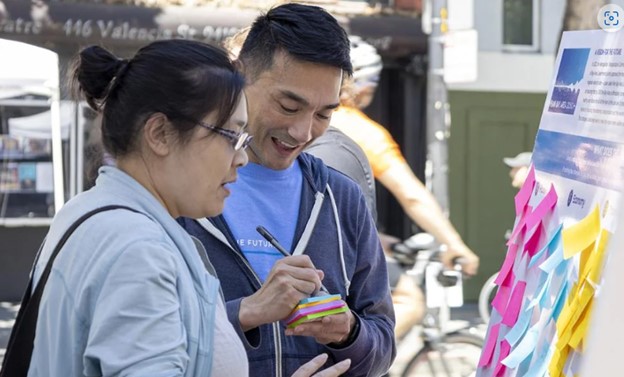
Phase 1 of Link21 is currently underway. The public is invited to attend one of several in-person and virtual events this fall to engage with the Link21 team on this critical long-term planning investment in a new train crossing of the Bay and other improvements. Public input on potential rail improvement concepts is critical to the success of the Link21 Program to create a connected, equitable network of train service that cares for the people, environment, and quality of life for generations to come.
New Transbay Rail Connection
Link21 is planning a new transbay passenger rail connection between Oakland and San Francisco. Travelers will be able to ride comfortably between the Sacramento Area and downtown San Francisco, the Northern San Joaquin Valley, the Peninsula, and the South Bay. Regional Rail riders with destinations across the Bay may be able to take a direct rail connection without transferring to a different service.
Watch experts talk about the benefits of Link21 or read a report on how the new transbay rail crossing will be a game changer for Northern California. – See California Department of Transportation (Caltrans), California State Rail Plan, 2018 and MTC, Horizon, 2019
The Northern California Megaregion is one of the nation’s most dynamic economies with a wide range of geographic, industrial and cultural diversity. Link21 will create a faster, more connected train service.
“We have a once in a lifetime opportunity to design the kind of system that will make rail transit the mode of choice for trips throughout the Megaregion for everyone,” said Sadie Graham, BART’s Link21 Program Director. “We can’t do this alone and need the public to be part of the planning process at every step of this generational undertaking.”
Three Community Meetings
Three virtual community meetings will be hosted in October to provide the public an opportunity to learn about Program concept development, including results of the service improvements survey, and how all of this information and public input will be used to support technical work and further developing and evaluating concepts. The first meeting will provide a Megaregional overview and benefits focus, while the other two will focus on specific locations.
- Megaregional Focus: Tuesday, October 18, 5:30–7 p.m.
- East Bay Focus: Wednesday, October 26, 5:30–7 p.m.
- San Francisco Focus: Wednesday, November 16, 5:30–7 p.m.
In addition, Link21 will be hosting three virtual office hours.to give the public an opportunity to ask questions of the technical teams.
- Wednesday, October 19: Noon–1 p.m.
- Monday, October 24: 5:30–6:30 p.m.
- Thursday, October 27: 4:30–5:30 p.m.
Register at Link21Program.org/events
Events will be in English with Spanish, and Cantonese translators available. To request American Sign Language and other accommodations, please email inquiries@Link21Program.org or call 855-905-Link (5465) between one and five days in advance of the meeting date.
Can’t Make an Event?
Link21 will also be in local communities to share information and engage with the public. Visit the website for more details. Recordings for all virtual events will also be posted on the website.
Amtrak San Joaquins will run Special Event Train to August 7th “Battle of the Bay” baseball game
Deeply discounted; by leaving the car at home, Oakland A’s and San Francisco Giant’s fans can relax, save cash and enjoy the game!
By David Lipari, San Joaquin Joint Powers Authority
Contra Costa residents will be able to take a deeply discounted special event train to the “Battle of the Bay” baseball game between the Oakland Athletics and San Francisco Giants on Sunday, August 7th.
Amtrak San Joaquins tickets to the Oakland Coliseum (OAC) will include an automatically applied 50% discount. Travelers can also apply additional discounts, including the Disabled Rider Discount, Veteran & Active Military Discounts, Student Discount, and others available on the Amtrak San Joaquins promotions page.
Amtrak San Joaquins has modified its route and schedule for the Sunday, August 7th Battle of the Bay game between the Oakland Athletics and the San Francisco Giants, scheduled to begin at 1:07 pm. Train 711 has been modified to travel all the way to the Oakland Coliseum, past its usual stop at Jack London Square and is scheduled to arrive at 10:39 am. After the game, Amtrak Train 718 will depart directly from the Oakland Coliseum at 5:25 pm.
“Amtrak San Joaquins riders utilize our service for a variety of transportation purposes. One of these purposes is to travel to fun, family-oriented events such as the Battle of the Bay,” said David Lipari, San Joaquin Joint Powers Authority marketing manager. “With the price of gas so high, people are looking for opportunities to travel, save cash, and still have a fun and memorable experience. We are happy to be able to provide that with our Battle of the Bay special train.”
For an additional fee of only $10, travelers aboard the 711 train can purchase the Battle of the Bay food bundle, which includes a hotdog and 12oz. beer of any choice, available for pickup in the Café Car.
Special Event Train will serve the following counties:
Contra Costa, San Joaquin, Stanislaus, Merced, Madera, Fresno, Kings and Kern
Date: Sunday, August 7, 2022
Schedule:
For passengers interested in monitoring capacity levels for trains and buses, travelers can utilize Amtrak’s capacity indicator system. This online tool allows customers to see in real-time the percentage of seats sold for each trip option. This gives customers the opportunity to book a train that is less crowded if they choose or cancel the reservation if needed.
All discounts can be accessed at amtraksanjoaquins.com/promotions/. Passengers are encouraged to purchase tickets prior to boarding at stations, online at AmtrakSanJoaquins.com, on the Amtrak app, or at a station kiosk.
About the San Joaquin Joint Powers Authority (SJJPA) Since July 2015, SJJPA has been responsible for the management and administration of Amtrak San Joaquins. SJJPA is governed by Board Members representing each of the ten (10) Member Agencies along the 365-mile San Joaquins Corridor. For more information on SJJPA see www.sjjpa.com.
Amtrak San Joaquins is Amtrak’s 6th busiest route with 18 train stations throughout the Central Valley and Bay Area, providing a safe, comfortable and reliable way to travel throughout California. Amtrak San Joaquins is currently running six daily round-trips. In addition to the train service, Amtrak San Joaquins Thruway buses provide connecting service to 135 destinations in California and Nevada including Los Angeles, Santa Barbara, San Diego, Napa Valley, Las Vegas and Reno.
BAY AREA: Joey Travolta’s film camps for special needs students create videos for positive message campaign

Two students from Class 1 of Joey Travolta’s Vallejo Film Camp hosted by Touro University of California pitch their idea to him (center in grey shirt) and teacher Roger Welch while their classmates look on and a crew from Travolta’s Inclusion Films, including cameraman Danny Sarokin (left), shoot the proceedings on Thursday, July 14, 2022. Photos by Allen D. Payton
Each class develops theme, pitches Travolta then creates a film for use by Pass It On of The Foundation for a Better Life
By Allen D. Payton
Director, actor and former special education teacher Joey Travolta held his third of three film camps in Northern California, last week, for students between 18 and 24 years old with an intellectual disability, to create short videos for use by PassItOn.com for their positive message campaign in theaters, as well as on TV and billboards.
Each film will be five to seven minutes long and “every story has to have the theme of kindness or doing something good, and the thought is don’t hesitate to pass it on,” Travolta explained.
According to his Inclusion Films’ website, “over the two-week session, campers work together in small groups to develop a script, act, and shoot their film with professional support and equipment. The program encourages communication, confidence, and collaboration through acting and digital filmmaking. Stay tuned for future dates & announcements.”

Joey Travolta questions the students from Class 1 pitching their film idea as teacher Roger Welch and the other students look on and cameraman Danny Sarokin shoots the scene.
Travolta and a crew from his Inclusion Films, which includes neuro diverse adults from his brick-and-mortar school in Bakersfield, were also in Antioch last year filming a brief documentary entitled “Music Heals” for the biennial Stand Down on the Delta for military veterans planned for last fall. But due to COVID, that event didn’t occur, so the film was shown during the Music Heals Concert at El Campanil Theatre earlier this month. (See related articles here, here and here)
Travolta and staff held the latest camp last week on Mare Island in Vallejo, inside the campus of Touro University, following camps with the same theme in Livermore, with partners Futures Explored, in Stockton with the Lodi School District and the first one in Arkansas at the end of April.
The Vallejo camp was supported by the Solano County Office of Education (SCOE) and Susan Labrecque, SCOE Senior Director, Kesha Lovett, SCOE Program Manager for Workforce Development and the entire staff from SCOE Workforce Development Department were on hand to assist the students and watch the process.
“All participants are clients of North Bay Regional Center services which is how the camp is funded, along with the Solano County Office of Education to provide youth with skills that transition into the world of work,” Labrecque explained.
The camp was divided into three groups of students and the classes were each led by a separate teacher. On Thursday, July 14, the students presented their film concepts to Travolta, with two of the classmates chosen to make the pitch.
Class 1 Pitch
The first class was led by Roger Welch who’s been teaching at the camps since 2018.
“I’m a family friend and real close with Joey’s sister, Ellen,” he said. “I ran a theater company in Idaho, and she lived in the town and acted in several shows. I got to know the whole family.”
Asked how he connected with the camp Welch said, “when I left that job and was in New York at a dinner with Ellen, Joey, who I’ve known for years, and his wife Wendy, he asked me what I was doing that summer and said, ‘come work for me’ so, I did.”
“I’ve been doing professional theater and film all my life and I’m a teaching artist,” he continued. “I’ve never worked with a neuro diverse population before. But I’ve just worked with them like any other students, using improv as a teaching tool. I’ve found it very challenging but very rewarding.”
“When I’m not doing this, I’m a freelance director for theater all over the country and the director and choreographer of entertainment for the American Queen Voyages,” which is a fleet of river boats on the Mississippi and Columbia Rivers and Great Lakes.

After approval by Travolta of their film concept, students from Class 1 celebrate and congratulate each other.
Two students were chosen to pitch the film concept from their class.
“I’ve only rejected one story. So, good luck,” Travolta said to laughter from the students. He later said that was true and it was because the film’s theme was too depressing.
The first pitch was a sci fi film about friendship and involved a spaceship.
Travolta asked how much it was going to cost him.
The students suggested it could become a series.
“Have you cast this, already?” Travolta asked.
“No,” Welch said.
One of the female students then offered to be an actress in the film. Another student, Sean volunteered to be an actor for it, too.
“I don’t have any say in that,” Travolta responded.
“I don’t like it. I love it!” he then said to cheers and applause from the class.

Class 2 student Jaylon speaks with teacher Barry Pearl before he and classmate Daniel prepare to pitch to Travolta, as they await his arrival.
Class 2 Pitch
The second class was taught by actor Barry Pearl, who portrayed the part of Doody in the movie “Grease” in which Joey’s younger brother John had the lead role playing opposite Olivia Newton John.
It’s an amazing program,” Pearl said. “I’ve been with it for nine years.”

The Inclusion Films crew, which includes adult students Travolta’s school in Bakersfield, prepares to shoot the pitch by Class 2.
Two students in his class pitched their film ideas to him and Travolta.
“This is my third year of camp but my first pitch,” said student Jaylon. His pitch partner, Daniel said this is his third pitch.
“I hope Joey approves” he said to Barry.
Travolta then entered the room asking the students which way he should go to get to his chair.
“I’m really excited about this pitch. The first one went well,” Travolta said after he was seated.
“The name of our film is called ‘The Kindness of the Heart’ about two students who don’t have enough money for lunch,” Daniel explained.
“Two other students raise money to help,” Jaylon shared.
Travolta asked where the film would take place. They said it will be in a school in the cafeteria and outside.
Travolta then asked a female student he named “Princess Sophia”, her thoughts.
“I think this is good, Joey Travolta,” she said.
“If Princess Sophia says it’s good, then you’re approved,” he stated to cheers from the two who pitched and the other students from the class who were sitting and watching the pitch.
Class 3 Pitch
The third class was facilitated by Jessica Saul, a teacher with Inclusion Films. Her background is in neurodiverse theater with a company based in New York and she’s working to bring them to California.
She lives in LA and works with the camps. It’s been a wonderful experience because it brings together my two passions of performing and teaching.
“I connected with Joey through an organization called RespectAbility and he was looking for another teacher and here we are,” Saul said.
The film crew and class prepared for the pitch and Travolta’s arrival.

Students Brian and Cassidy from Class 3 pitch their film concept to Travolta and teacher Jessica Saul.
When he entered the room to applause from the students, Travolta walked toward them asking “how ya doing?” He then said, “I have a question before we start” then like a big kid, turned around and asked, “does my butt make these pants look big?” to laughter from the class.
“No answer from me,” replied one student.
The two students to give the pitch, Brian and Cassidy, placed leis around Travolta’s neck saying, “Aloha”.
“The title of this film is called ‘The Competition’,” they said.
“I like that,” Travolta responded, “What kind of competition?”
“It’s in Hawaii. It’s a talent competition,” Brian explained. “Elvis needs to win the competition so he can afford to go to the Berklee School of Music.”
Each story from the classes has an antagonist.
“Mark and Charlie plan to sabotage Elvis and steal his guitar,” said Brian.
“You’re scaring me,” Travolta said.
“You’re not giving me the end, now, right? Travolta asked.
“No,” they responded, then continued explaining the storyline.

Travolta listens to a joke by one of the students in Class 3 who used a special computer to speak for him as the Inclusion Films crew shoots and his classmates listen.
“I gotta tell you, you guys have me on the edge of my seat. That’s because I have a bad back,” Travolta joked.
The students continued with their pitch.
He then asked, “Are you going to use a green screen?”
Cassidy said, “Brian is going to play Elvis.”
“What are you going to do for Hawaii?” Travolta asked.
Saul pointed to the trees outside saying, “they were inspired by the outside.”
Travolta asked, “who’s going to play Elvis?”
“Thank you very much,” Brian responded giving an elvis impression.
He then asked if Travolta wanted to hear him sing Burnin’ Love.
“I’d like that,” Travolta responded. But before he had Brian start, he asked another student to call “action”.
Brian then sang part of the song to cheers from the class, Travolta and Saul.
Travolta responded by singing, “You’re nothing but a hound dog” to laughter from the students.
“I like this a lot,” he said. “You’re utilizing the area, which is very, very practical.”
“So, I have to approve this,” Travolta stated.
As Saul led the sound of a drumroll with hands on thighs, Travolta turned and asked one of the other students for his opinion of the film idea. The student gave a loud approval.
“OK, guys, you’re approved!” Travolta exclaimed to cheers and high fives from the students.
Brian had to then chase down Travolta, who had left the class, to get the back leis which were needed as props for the film.
See video of Class 3 film pitch and approval: Joey Travolta Vallejo Film Camp Class 3 Pitch 07142022 – YouTube
Inclusion Films Crew
The film crew for the day consisted of staff of Inclusion Films some of whom were previous students in Travolta’s classes.
“I had experience in the music industry,” crew member Mobley said. “So, I stepped up and I’ve been doing sound ever since.”
Crew member Brandon said he’s a student at Inclusion Films in Bakersfield. “I’m part of the upper class,” he added.
“Often times the students get positions in the film industry, including films with John,” Pearl said.
Danny Sarokin, Travolta’s lifelong friend, and NYU film school graduate, was a cameraman at the school.
“I grew up with Joey in New Jersey,” he shared. “We were on the wrestling team. I was a freshman, and he was a senior and he kind of took me under his wing. He’s been mentoring me ever since.”
“In the mid-90’s I co-wrote a children’s film called ‘Everyone Loves Mel’ that starred Ernest Borgnine. Joey directed it and was involved in the producing of it,” said Sarokin.
“I was a camera operator on Carol of the Bells and that was a great experience,” he continued, referring to Inclusion Films’ first full-length movie. “In 2018 Joey brought me back and I’ve been working at the summer camps, as a camera man. We get to mentor the kids, and we get to pass it on.”
Sarokin works for Travolta’s school in Bakersfield, teaching screen writing by Zoom as he lives in L.A. He also filled in as an editing teacher.
“We’ve actually filmed the first script that we wrote in the class just recently,” Sarokin shared. “That one is 30 to 40 minutes long. They cut it down to 25 minutes and show it on cable. It’s called Lost Luggage.”
According to the film’s logline which provides the plot, it’s about two African American sisters who find their grandma’s diary in a hidden suitcase in the basement. Upon reading, they learn about her teen romance with a white classmate in a racially charge environment. The sisters try to reunite with this lost love.
According to a Dec. 10, 2021 report by Lodinews.com it was filmed at McNair High School in Lodi, California last October and was created with Lodi Unified students.
“Now, they’re in preproduction on the second script we wrote in the school,” Sarokin added.
Travolta Shares About the Camps and His Organization

Travolta takes a moment for a photo with the Herald’s Administrative Assistant (and the publisher’s mother) DeeAnn Payton at the Vallejo film camp.
Following the three class pitches, Travolta took some to answer questions, mostly asked by the Herald’s administrative assistant, DeeAnn Payton, who was also at the camp and saw the pitches of all three classes.
“Now, they actually make their films on site,” he said. “Each class will show the rough cut of their film at the camp this Friday.”
“Some of these films will be on the Pass It On website,” he continued. “Then we have the big, red-carpet screening. The kids dress up in tuxedos, have limousines and they get little Academy Awards.”
“The camps are for the younger ones and the location in Bakersfield is for adults,” Travolta explained. “We do the training year-round and do movies like Carol of the Bells.”
“They learn soft skills like communication,” he added.
Asked how decided to start the film school and camps, Travolta said, “I was a special ed teacher in 1973 before I got into show business. I’ve been doing this since 2006.”
He also hosts workshops for adults in San Jose, San Diego and San Bernardino with partners Options For All and in Livermore, Sacramento and Stockton with Futures Explored, as well.
“We’re getting a lot of work from the state and regional centers and every time we do a job half the crew is made up of students trained at the various workshops,” Travolta said.
They have seven brick-and-mortar studios in California each one 5,000 to 8,000 square feet in size, that operate year-round with professionals teaching.
“They’re all funded through the Regional Centers,” he said.
“Then once the students have honed their skills, they get work with one of the three production companies” – Futures, Options and Inclusion – Travolta shared.
“It’s a gift for us to work with this population and we probably get more out of it than the kids, and they get a lot out of it,” he added. “I wish I was 20 years younger.”
Travolta has lived in San Francisco since last year when he and Wendy moved up from L.A. to help take care of their grandson who is two years old.
Host Touro University of California
Asked how Touro University of California’s campus was selected to host the camp, Provost Sarah Sweitzer, PhD said, “Our connection is actually through SCOE who approached us to host this fantastic camp for our young people with disabilities in Solano County. This is our first summer.”
“Our mission is to serve, lead and teach and our function is to serve as an anchor institution in the North Bay counties,” she continued. “It’s at the heart of our mission to create equity in health and education to close the opportunity gaps, especially for our underserved communities.
“We’re a graduate school for healthcare, education and public health – the heart of the pandemic,” Sweitzer stated.
According to their website Touro is America’s largest private institution of higher and professional education under Jewish auspices with over 19,000 students across 35 schools in four countries and first opened in 1971.
The California campus is a graduate school with about 1,300 students. They’re renovating building number eight and they’re celebrating their 25th anniversary, Sweitzer added.
About Pass It On
According to PassItOn.com, for 21 years, the Pass It On campaign promoting positive values has provided uplifting and encouraging messages. It is a project of The Foundation for a Better Life, a 501(c)(3) non-profit organization.
MTC affordable housing loan program expands funding options
For purchase and preservation
Agency aims to attract more borrowers in more Bay Area communities
The Metropolitan Transportation Commission (MTC) announced, recently new underwriting guidelines for its four-year-old Bay Area Preservation Pilot loan fund, which is designed to help nonprofit housing developers and community land trusts finance the acquisition and preservation of existing multifamily properties that are affordable for lower- and moderate-income renters and located in areas with high-frequency transit service. Revisions to the $49 million revolving loan fund include a lower leveraging-ratio requirement and the allocation of up to $6 million for designation as forgivable long-term debt.
The goal of the new underwriting rules is to attract more borrowers by funding loans more quickly for a more diverse set of properties in a more diverse set of Bay Area communities. All loans funded through the Preservation Pilot to date have been used to finance the borrowers’ purchase of rental properties in Oakland. MTC last year approved policy revisions for the Bay Area Preservation Pilot designed to make these funds more accessible to buyers of properties throughout the Bay Area, including those in communities that don’t have their own local preservation funds; properties in which tenants face a high risk of displacement or house families with children, seniors, people of color, people with disabilities, people with extremely low-incomes and people with language barriers; and prospective buyers working in close partnership with existing tenants.
Nonprofit developers and joint venture partnerships can tap the Preservation Pilot fund for loans with terms as long as 10 years to buy nonsubsidized apartment buildings with at least four units. Rents for at least 75 percent of the units must be considered affordable for households whose annual income is no more than 80 percent of the area median. Borrowers also can use the loan proceeds to fund an operating reserve for the acquired property, and to perform life safety upgrades and other rehabilitation work.
MTC established the Bay Area Preservation Pilot in 2018 with a $10 million commitment supplemented by an additional $39 million from program managers Enterprise Community Loan Fund (ECLF) and Low Income Investment Fund (LIIF). Loans are originated on a first-come, first-served basis. Prospective borrowers are encouraged to contact Enterprise and/or LIIF directly to apply. More details on the Bay Area Preservation Pilot fund may be found on the MTC website at https://mtc.ca.gov/BAPP.
MTC is the regional transportation planning, financing and coordinating agency for the nine-county San Francisco Bay Area. ECLF has invested more than $2.3 billion and leveraged over $21 billion in additional capital to create or preserve more than 127,000 housing units affordable for lower-income households nationwide. San Francisco-based LIIF has provided over $3 billion of financing and technical assistance and leveraged another $13 billion to provide some 2.4 million lower-income people around the country with stable housing and community services.
Bay Area Bike to Wherever Days in May
Bike to Work Day returns May 20 after two-year absence
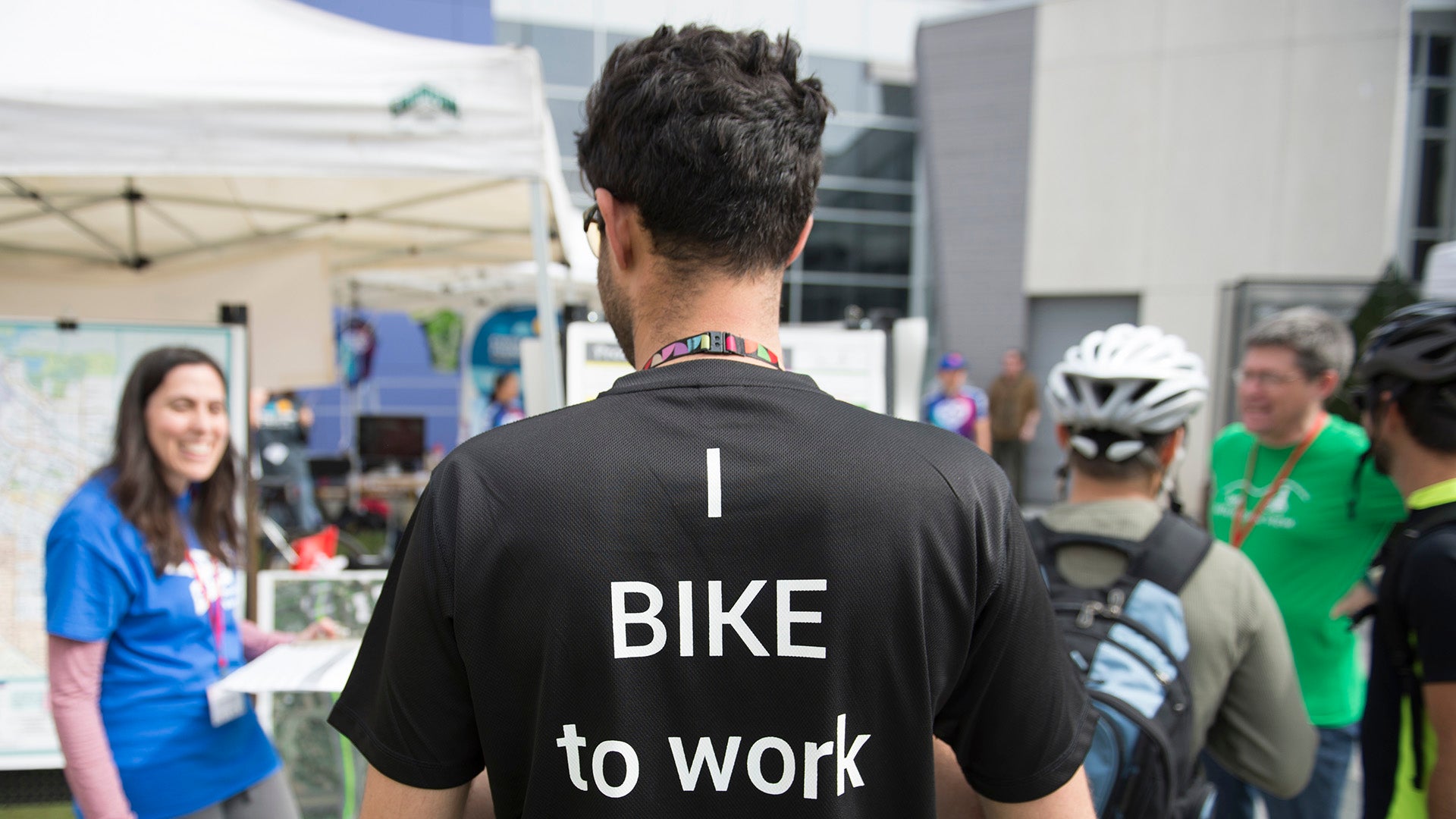
This month, Bike Month and “Bike to Wherever Days” (BTWD) once again will roll across the nine counties of the Bay Area, and include the return of Bike to Work Day on May 20.
For the first time in two years, many employees are beginning to return to their offices, small businesses are seeing a rise in customers and clients, and bicycles once again are being used for commuting – as well as exercise, recreation, traveling to school, running errands and more.
As a result, BTWD 2022 – the event’s 28th year – will be a celebration throughout the entire month of May and will be highlighted by Bike to Work Day, which was modified the last two years due to the pandemic.
“The return of Bike to Work Day is another indicator that life in the Bay Area is slowly, but surely, getting back to normal,” said Alfredo Pedroza, MTC Chairman and Napa County Supervisor. “What better way to celebrate than by getting outdoors and biking. The May events highlight all the many benefits of bicycling, and we want everyone to participate.”
BTWD brings together the nine Bay Area counties to celebrate bicycling, helps new and experienced riders build community, promotes pedaling as a means of transportation, while benefitting the health of residents and the environment.
During Bike Month, county bike coalitions offer classes, activities, education and more. And while each county celebrates all cyclists within its boundaries, one dedicated rider is chosen as its Bike Champion of the Year. This year’s award winners will be announced in late April.
For those who need a little extra encouragement to ride during May – and after Bike Month is over – riders are encouraged to make a pledge to cycle through their respective county coalitions. Details on how to make that pledge – and to learn more about what’s going on in each county – can be found at Bayareabiketowork.com.
Details about Bike to Wherever Days can also be found online at Bayareabiketowork.com. Follow on Facebook at @biketoworkday, Twitter @BikeToWorkSFBay, and Instagram @biketoworkday_bayarea.
Bay Area Bike to Wherever Days is presented by MTC (the transportation planning, financing and coordinating agency for the nine-county San Francisco Bay Area), 511 (the region’s traveler information system) and Amazon. BTWD 2022 also receives regional support from the Bay Area Air Quality Management District (BAAQMD), and Bay Area Rapid Transit (BART), as well as from many sponsors at the local level. Prizes for the Bike Champion of the Year winners were donated by the Association of Bay Area Governments (ABAG), the Bay Area Air Quality Management District, Better World Club and Mike’s Bikes.
Major Bay protection and restoration efforts in S.F. Estuary Blueprint get federal boost
$24 million for clean water program
Money to restore San Francisco Bay and address impacts from climate change received a $24 million boost via the federal omnibus spending bill signed into law this week by President Biden.
The Consolidated Appropriations Act of 2022 provides funds to implement the priority actions identified in the San Francisco Estuary Partnership’s Blueprint. Specifically, the money will go toward the U.S. EPA’s San Francisco Bay Area Water Quality Improvement Fund, which has focused work on removing pollutants, improving wetlands and reducing runoff.
The $24 million annual earmark is the biggest increase to the fund since it began in 2008, with a push from Sen. Dianne Feinstein. The Water Quality Improvement Fund currently receives about $5 million annually to advance wetland restoration, water quality improvement and green urban development projects.
“Thanks to the efforts of Rep. Jackie Speier and our members of Congress, the new law provides funds to implement the priority actions identified in the Estuary Blueprint,” said Caitlin Sweeney, Director of the Estuary Partnership. “This is a huge development and is critical for the long-term health of San Francisco Bay.”
With the support from the Appropriations Act, federal funding for San Francisco Bay will be on par with regional funding from sources like the Bay Area’s Measure AA, which passed in 2016 and dedicates $25 million annually to fund multi-benefit shoreline projects that protect and restore the bay.
The new law also provides a bump in funding for the National Estuary Program, bringing the San Francisco’s Estuary Partnership appropriation this year to $750,000, a $50,000 increase.
Enactment of the omnibus spending bill augments the Bipartisan Infrastructure Law passed by Congress in November 2021, which allocates approximately $5 million annually over the next five years to the Water Quality Improvement Fund and dedicates about $4.5 million over the same period to the Estuary Partnership for implementation of the Estuary Blueprint.
The San Francisco Estuary Blueprint — being updated for 2022-2027 and due out later this year — is a five-year roadmap for restoring the estuary’s chemical, physical, biological, and social-ecological processes to health. The Blueprint identifies the top actions needed for thriving habitats and wildlife, improved water quality for animals and people, increased scale and pace of climate change adaptation and planning, and healthier human and wildlife communities.
Hosted by the Association of Bay Area Governments (ABAG), the San Francisco Estuary Partnership is a collaboration of local, state and federal agencies; non-governmental organizations; and academic and business leaders working to protect and restore the San Francisco Bay-Delta Estuary. The Estuary Partnership was established in 1988 by the state of California and the U.S. Environmental Protection Agency under the Clean Water Act’s National Estuary Program when the San Francisco Estuary was designated as an estuary of national significance.
A’s another step closer to remaining in Oakland with new waterfront stadium
Oakland City Council votes to certify Final EIR
By Oakland Athletics
On Thursday, Feb. 17, 2022, the Oakland City Council voted to certify the Final Environmental Impact Report (EIR) for our waterfront ballpark project at Jack London Square. It follows las month’s unanimous vote by the Oakland Planning Commission recommending the council vote to certify the EIR.
This is a significant milestone for the project and comes after years of work with the City, local community members, and organizations to analyze and outline how our project will adhere to the highest of environmental standards. The project will clean up an industrial site with private dollars and return public access to the waterfront with more than 18 acres of public parks and open greenspace.
In addition, the council voted to approve a resolution requiring community benefits including local hire for jobs and to mitigate impacts to nearby neighborhoods, such as parking in Chinatown, and to West Oakland, following complaints by residents who spoke during the meeting from that neighborhood, as well as freight compatibility for the Port of Oakland.
Oakland Mayor Libby Schaaf issued a statement praising the council action in which she said, “Tonight’s action is more than a milestone — it’s a giant leap forward in our shared mission to create a regional destination that gives back our waterfront to the public, connects a new vibrant neighborhood to our downtown, and provides tens of thousands of good union jobs for our residents — and it does it all while keeping our beloved A’s rooted in Oakland.
Now that the Final Environmental Impact Report has been certified, the floor is set for negotiating robust community benefits that our residents demand and deserve, as well as the final development agreement.
Tonight’s action is more than a milestone – it’s a giant leap forward in our shared mission to create a regional destination that gives back our waterfront to the public, connects a new vibrant neighborhood to our downtown, and provides tens of thousands good union jobs for our residents – and it does it all while keeping our beloved A’s rooted in Oakland.”
Our waterfront ballpark is a once-in-a-generation project, creating transformative environmental and community benefits for Oakland, and setting the stage for more World Championships for our fans.
We thank our fans, community members, and civic leaders who shared their support during the EIR process and in public meetings. While this is the furthest we have come in securing a new ballpark in Oakland for the Athletics, we have more work to do. We now look forward to finalizing the development agreement and community benefits agreement before a vote later this year.
The city council will still have to approve a development agreement with the team which is expected to occur sometime this summer, plus approvals from the Port, the Bay Conservation and Development Commission, and State Lands Commission.
To learn more about our waterfront ballpark at Jack London Square and the progress we’ve made to date, visit WeAreRooted.com.
Go A’s!
Allen D. Payton contributed to this report.
Contra Costa, 9 other Bay Area and Santa Cruz county health officers to lift most indoor mask mandates for vaccinated Feb. 16
Matching state’s order one day prior; order comes one day after Contra Costa Supervisors appoint new county health officer; state continues to require masking in K-12 school settings
In alignment with the State, the Bay Area counties of Contra Costa, Alameda, Marin, Monterey, Napa, San Francisco, San Mateo, Solano, Sonoma, the City of Berkeley, and Santa Cruz County will lift universal mask requirements for vaccinated individuals in most indoor public settings beginning Wednesday, February 16. The change comes one day after Contra Costa Supervisors appointed Dr. Orli Tzvieli as the county’s new health officer. (See related article)
The change aligns with the California Department of Public Health’s (CDPH) decision to let expire the statewide indoor mask requirement, which was instated on December 15 during the latest COVID-19 surge, in spite of scientific evidence masks don’t work in preventing the spread of the virus. That’s because the size of the COVID molecule is much smaller than the gaps in the fabric of most if not all masks being used. In addition, a 2021 study (that has not yet been peer-reviewed), conducted using data from the CDC covering multiple seasons, reports that “mask mandates and use are not associated with lower SARS-CoV-2 spread among US states.” That study also shows “case growth was not significantly different between mandate and non-mandate states at low or high transmission rates, and surges were equivocal.”
Yet, unvaccinated individuals over age 2 will continue to be required to wear masks in all indoor public settings. Businesses, venue operators and hosts may determine their own paths forward to protect staff and patrons and may choose to require all patrons to wear masks.
Plus, indoor masking is still required by the State for everyone, regardless of vaccination status, in public transportation; health care settings; congregate settings like correctional facilities and homeless shelters; long term care facilities; and in K-12 schools and childcare settings.
Bay Area health officers, in alignment with CDPH, continue to strongly recommend masks be used as an effective tool to prevent the spread of the virus especially when case rates are high, or when additional personal protection is needed. Continuing to mask in indoor public settings, especially crowded or poorly ventilated spaces, remains the safest choice for an individual and protects those who are medically vulnerable or are not able to get vaccinated, like our youngest children. As evidence continues to show, vaccinations and boosters remain the best defense against the virus.
The highly contagious Omicron variant brought on a new stage of the pandemic with a high number of new infections, but significantly fewer cases of life-threatening illnesses, especially for those who are vaccinated and boosted. While relaxing indoor masking requirements is part of a population-level shift toward a “new normal” of living with the disease, the Health Officers recognize that essential workers and communities of color continue to be highly impacted by COVID-19 and will need additional support to limit widening health disparities. Changes to health orders and recommendations may be updated as Health Officers follow the science and the data to evaluate whether additional protective measures may be needed as the virus evolves and if future surges occur.
People should continue to choose layered prevention strategies, such as wearing well-fitted masks (N95 or double layer cloth over surgical are best); staying home and testing when symptomatic; testing before gatherings; and improving indoor ventilation in situations where these strategies can add protection for themselves and others. Staying “up to date” on vaccinations, meaning primary series and boosters when eligible, remains the most important way to prevent severe illness, hospitalization, and death.
After reaching a high on January 9 of 2,835 new cases per day, Contra Costa’s case rates have rapidly declined to a 7-day average of 958 on February 1 and continue to drop. Meanwhile, hospitalizations, a lagging indicator of disease, have begun to drop and never exceeded local capacity during this latest surge because of the county’s overall high rates of vaccinations (80%) and boosters (49% of those eligible). Contra Costa’s universal mask mandate has been in place since August 2 when cases began climbing from the Delta variant.
A combination of preventative strategies, along with the community’s cooperation helped get the Bay Area through this last surge together as a stronger community.
“We are able to take this next major step of removing the universal indoor mask requirement because we have laid a strong foundation in good public health protections..and know we can reduce severe illness, hospitalizations and deaths,” said Dr. Ori Tzvieli, health officer for Contra Costa County.
By aligning with the state masking rules, the participating Bay Area counties will not need to meet previously established criteria for lifting local masking orders, which were devised at a different point in the pandemic.
CDPH continues to require masking in K-12 school settings but has indicated adjustments to the state’s policies will be shared in the coming weeks. In the meantime, there is work to be done in closing the remaining gaps in vaccinations and boosters among children with a particular focus on equity gaps within the most highly impacted communities.
For early education programs, such as preschool and childcare settings, CDPH continues to require masking for children older than age two. Vaccinations for children under 5 are currently undergoing federal review. Workplaces will continue to follow the COVID-19 prevention standards set by CalOSHA.
Some people may understandably feel anxious about these changes to masking requirements in the county. People can continue to choose to wear face coverings around others whether it’s mandated or not and should respect people’s choices around their health. Community members who are vaccinated and choose not to mask should respect the choices of those who continue to mask. Officials ask residents and visitors to be kind and respectful as people evaluate their risks and make choices to protect themselves and those around them.
Allen D. Payton contributed to this report.
Violation penalties lowered on 7 Bay Area toll bridges
Retroactive to Jan. 1: Cost for Initial Notice Drops to $5 from $25; Second Notice to $15 from $70; affects all but Golden Gate
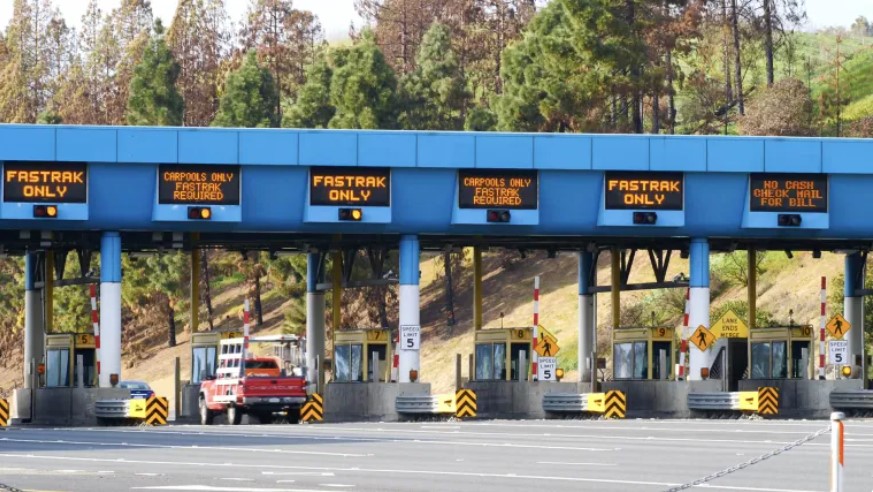
The Bay Area Toll Authority (BATA) today announced a sharp reduction in the penalties associated with toll violation notices sent by the FasTrak® customer service center to customers with unpaid invoices for toll bridge crossings.
Effective immediately — and retroactive to all violation notices since Jan. 1 of this year for outstanding tolls at the San Francisco-Oakland Bay, Antioch, Benicia-Martinez, Richmond-San Rafael, Carquinez, Dumbarton and San Mateo-Hayward bridges — the penalty for first violation notices drops to $5 from the previous $25 and the penalty for second violation notices falls to $15 from the previous $70.
Bridge customers who paid toll violation penalties earlier this year will receive a refund for the difference between the amount(s) they paid and the amount(s) due under the new policy. Distribution of these refunds is expected to begin in February 2022 and continue over the next several months, after which a claim process will be posted at www.bayareafastrak.org for customers who believe they are owed a refund and did not receive one.
The new policy toward violation penalties was approved by BATA at its October 2021 meeting and marks the first policy change adopted as part of its Bay Area tolling equity action plan unveiled in May 2021. BATA at its November 2021 meeting approved several additional policy changes slated to become effective in the spring of 2022. These include dropping the cost of the FasTrak toll tag deposit for new customers who choose not to link their account to a credit card to $5 from the previous $20; crediting $15 to the prepaid toll accounts of existing customers who paid a $20 tag deposit; reducing the minimum opening balance for a FasTrak account for customers who pay with cash or check to $25 from the previous $50; and eliminating transaction fees for customers who replenish FasTrak accounts or pay violation penalties at a cash network location. BATA and the FasTrak customer service center in the coming months are expected to implement additional recommendations designed to make enrollment in the FasTrak electronic toll payment system more convenient, accessible and affordable. The toll payment system is fully automated for FasTrak customers, with the cost of each crossing automatically deducted from their accounts, allowing them to avoid invoices, violation notices and penalties altogether.
FasTrak customers already account for about three-quarters of all crossings at the Bay Area’s state-owned toll bridges. BATA encourages customers who do not already have FasTrak to open accounts online at www.bayareafastrak.org or by phone at 1-877-229-8655 (BAY-TOLL). Customers also may obtain FasTrak tags at select Costco and Walgreens stores. A map of retail locations at which FasTrak tags are available may be found at https://www.bayareafastrak.org/en/howitworks/retailmap.html. Tags purchased at Costco or Walgreens must be registered online. Drivers who would rather replenish their FasTrak accounts with cash can do so at more than 100 Cash Payment Network locations, now including Walmart stores. A map of these locations may be found at https://www.bayareafastrak.org/en/tolls/cashLocationsMap.html.
Drivers also may open a License Plate Account, which is a pay-as-you-go option that links a license plate to an account and charges that account whenever the vehicle crosses a toll bridge; or make a one-time payment, which allows the customer to pay a toll online up to 30 days in advance of a bridge crossing or within 48 hours afterwards. There are no fees for either of these services. More information about License Plate Accounts and one-time payments is available at www.bayareafastrak.org.
Customers who do not have FasTrak or a License Plate Account — and who do not use the online one-time payment option — are required to return invoices with payment within 21 days. Customers who neglect to return payment by the due date on the invoice will receive a “Notice of Toll Evasion” with a $5 penalty for each toll crossing. Customers who do not return payment by the due date on the “Notice of Toll Evasion” will receive a “Second Notice of Delinquent Toll Evasion” with a violation penalty of $15 per crossing. Customers who do not return payment after a second notice may have a hold put on their vehicle registration by the DMV or have the amount owed referred to a collection agency.
BATA administers all toll revenues from the region’s seven state-owned toll bridges.
- « Previous Page
- 1
- …
- 6
- 7
- 8
- 9
- 10
- Next Page »