
Presented by East Bay Family Nights and 4Ever Me Foundation.
News Of By and For The People of Contra Costa County, California
Presented by East Bay Family Nights and 4Ever Me Foundation.

By Bay Area Rapid Transit District
Friday, Feb. 14, marks the start of the 2025 NBA All-Star Weekend, hosted by the Golden State Warriors. BART looks forward to carrying fans to the games and events happening on both sides of the Bay. We’re also proud to partner with the NBA Players Association for the big weekend.
Follow our directions below to make your journey to games and events as smooth as Curry’s free throws. BART will adjust train lengths to accommodate ridership. For tickets and locations find a list of all the NBA All-Star Weekend events.
Win free tickets and prizes
Visit BARTable’s contests and deals page from now until Feb. 16 for a chance to win exclusive prizes and MVP experiences.
Those looking for more opportunities to get free tickets and other prizes, download the NBA Events app which has partnered with BART and other Bay Area agencies to encourage riding transit around the Bay.
After creating a free NBA ID account, visit the participating stations (see below), tap the tile on the dashboard corresponding with the station, and earn your check-in via your mobile device in mixed reality. Each check-in will also count towards unlocking NBA All-Star prizes through the NBA ID All-Star Rewards Program.
Participating stations:
• 16th St Mission
• Coliseum
• Embarcadero
• Lake Merritt
• Powell St
The Grand BART Prizes will be in the form of digital railgoods.com gift cards in amounts ranging from $10 to $100.
Take transit to Chase Center

Take BART to Powell St. Station and transfer to Muni T Third trains at Union Square Station. Signs on the platform and concourse will guide you to the right exit to catch Muni, and the special event trains will read “S Shuttle Mission Bay.” Disembark Muni at UCSF/Chase Center.
Take BART to 16th St./Mission Station and transfer to special Muni 78X bus service. Disembark at 16th St. & Illinois St. Your event ticket is your Muni ticket. Ride Muni to Chase Center for FREE with your event ticket (excluding cable cars). For more information, visit the Chase Center website.
• Friday, Feb. 14, 6pm: Castrol Rising Stars
• Saturday, Feb. 15, 5pm: State Farm All-Star Saturday Night
• Sunday, Feb. 16, 5pm: 74th NBA All-Star Game
Take transit to Oakland Arena

BART takes you directly to the Oakland Arena. Take BART to Coliseum Station and walk across the overpass and around the Coliseum to the arena. Use the arena’s North Entrance for a shorter walk.
• Friday, Feb. 14, 4pm: Ruffles NBA All-Star Celebrity Game
• Saturday, Feb. 15, 11am: NBA All-Star Practice presented by AT&T
• Saturday, Feb. 15, 2pm: NBA HBCU Classic presented by AT&T
Take transit to Moscone Center

Take BART to Montgomery Street Station and walk a short distance to Moscone Center.
• Friday, Feb. 14, to Sunday, Feb. 16: NBA Crossover interactive fan experience
• Sunday, Feb. 16: NBA G League Next Up Game

Take transit to the NBA All-Star Concert Series at Pier 48
The NBA will host a three-day concert series from Friday, Feb. 14, through Sunday, Feb. 16, at Pier 48. Headliners include Noah Kahan, The Chainsmokers, Zedd, and Flo Rida.
Take BART to Powell St. Station and transfer to Muni T Third trains at Union Square Station. Signs on the platform and concourse will guide you to the right exit to catch Muni, and the special event trains will read “S Shuttle Mission Bay.” Disembark Muni at Mission Rock and walk to Pier 48.
Take BART to Embarcadero Station and transfer to Muni N Judah trains on the upper level of the station. Disembark at King and 2nd streets and walk to Pier 48.

Take transit to the NBPA Brotherhood Deli at SPARK Social SF
The National Basketball Players Association (NBPA) will bring their Brotherhood Deli food truck – the only fan experience powered by the 450+ members of the NBPA – along with activations and programming to SPARK Social SF from Friday, Feb. 14, through Sunday, Feb. 16, 11am to 6pm. It’s a short walk from SPARK Social to Chase Center.
The celebration will include player appearances, photo opps, plant-based food, immersive gaming, and hourly slam dunk shows and fan shooting contests. To register and secure your spot during All-Star Weekend click, here: NBPA Brotherhood Deli.
Take BART to Powell St. Station and transfer to Muni T Third trains at Union Square Station. Signs on the platform and concourse will guide you to the right exit to catch Muni. Disembark Muni at Mission Rock and walk to SPARK Social.
Take BART to 16th St./Mission Station and transfer to the Muni 22 bus. Disembark at Mission Bay Blvd North and 3rd Street and walk to SPARK Social.

Are you excited for NBA All Star Weekend?
Share with us on social media at @SFBARTable and #SFBARTable! Keep up with us on Instagram and Facebook to see all of the best BARTable events, places to eat and where to have fun around the Bay.

Loaded firearm confiscated from the suspect by Brentwood Police. Photo source: Brentwood PD
By Brentwood Police Department
This past weekend, a Brentwood officer, while en route to a call, spotted 33-year-old Armondo Joseph Gomez (born 1/27/1991) of American Canyon near the 6700 block of Lone Tree Way, who was known to have a felony warrant for robbery and weapons charges.
When the officer attempted to detain Gomez, he fled on foot. However, the officer was able to safely take him into custody. Upon searching Gomez, the officer discovered a loaded firearm in his possession.
Gomez, a convicted felon, was arrested for the outstanding warrants, possession of a loaded firearm, and other related charges.
According to the Contra Costa County Sheriff’s Office, the six-foot, one-inch tall, 185-pound suspect is being held in the West County Detention Center on no bail and his next court date is scheduled in Delta Superior Court, Dept. 4 in Pittsburg on Feb. 3, 2025.
According to localcrimenews.com, Gomez has a history of arrests dating to 2014 by a variety of agencies in four different counties for crimes including a variety of weapons charges, battery and inflicting corporal injury on a spouse or co-habitant grand theft, stolen vehicles and shoplifting.
Allen D. Payton contributed to this report.

Solano County, CA –The Solano County Black Chamber of Commerce proudly invites the community to join us in celebrating the life and legacy of Dr. Martin Luther King Jr. at our annual MLK Jr. Community Event, taking place on Monday, January 20, 2025, from 1:00 to 3:00 PM at the Solano County Fairgrounds, 900 Fairgrounds Drive, Vallejo. This free event promises to be a powerful reminder of Dr. King’s vision for a society rooted in equality and justice, bringing together individuals committed to civil rights, leadership, and working together for positive change.
As we reflect on Dr. King’s contributions to the civil rights movement, we embrace the call for unity and collaboration within our community. This year’s event will feature inspiring speakers, engaging performances, and thought-provoking discussions that highlight the importance of leadership in the ongoing fight for equality.
“Our aim is to not only celebrate Dr. King’s legacy but also to invigorate our community with a renewed sense of purpose and togetherness,” said Tamuri Richardson, President of the Solano County Black Chamber of Commerce. “By coming together, we can continue to work towards fulfilling the dreams he envisioned for all people.”
The MLK Jr. Community Event will include:
• Inspirational Speakers from local leaders
• Spoken Word Artists
• Performances by local artists and youth groups
• Opportunities for participants to engage in meaningful dialogue about leadership and collaboration
This event is open to all ages, and we encourage everyone in the Solano County area to attend. Together, we can honor Dr. King’s legacy and take actionable steps towards fostering a more inclusive and equitable society.
Event Details:
Date: Monday, Monday January 20, 2025
Time: 1pm to 3pm
Location: Solano County Fairgrounds – McCormick Hall – 900 Fairgrounds Drive, Vallejo, Ca
Admission: FREE (Registration is Required) go to www.solanoblackchamber.com
For more information about the event and registration details, please visit www.solanoblackchamber.com or contact us at 707-673-2148 or info@solanoblackchamber.com.
Let us come together in the spirit of unity and continue the work of Dr. Martin Luther King Jr. as we strive for a brighter future for all.
About Solano County Black Chamber of Commerce:
The Solano County Black Chamber of Commerce is dedicated to promoting the growth and success of African American businesses and fostering economic empowerment within our community. Through advocacy, education, and networking opportunities, we aim to enhance the quality of life for all residents of Solano County.
Follow Us: Facebook/Instagram: SolanoBlackChamber

Photos source: Walnut Creek PD
By Walnut Creek Police Department
Walnut Creek PD recently hosted an extensive and successful Internet Crimes Against Children (ICAC) operation, partnering with numerous local and federal agencies to safeguard children in our communities. This collaborative effort resulted in 13 arrests, showcasing the strength of teamwork and technology in the fight against child exploitation.
We’re proud to work alongside our law enforcement partners to make a difference. Swipe through for a behind-the-scenes look at the operation and its results.

Photos source: Walnut Creek PD
More information regarding specific individuals and their pending charges will be made available to the public once the cases have been reviewed by the CCCDA’s Office.
Participating agencies included Contra Costa District Attorney, Contra Costa Sheriff’s Department, and Brentwood, Concord, Danville, Moraga, Oakley, Pleasant Hill, Novato, San Jose and San Francisco Police Departments.
Together, we stand united in protecting our most vulnerable.
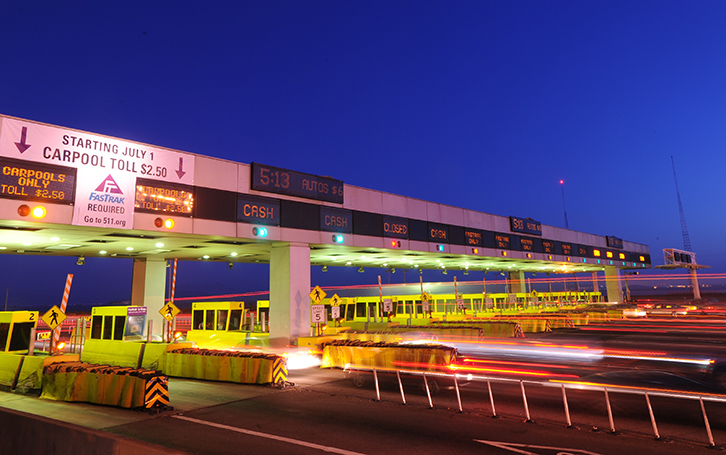
Bay Bridge Toll Plaza. Photo by Noah-Berger. Source: MTC website.
By John Goodwin, Assistant Director of Communications & Rebecca Long, Director, Legislation & Public Affairs, Metropolitan Transportation Commission
The Bay Area Toll Authority (BATA) reminds drivers that tolls at the region’s seven state-owned toll bridges will go up by $1 next Wednesday, Jan. 1, 2025. This will be the third of the three $1 toll increases approved by the California Legislature in 2017 through state Senate Bill 595 and by voters through Regional Measure 3 (RM3) in June 2018 which passed by 55.07% to 44.93%. The first of these toll hikes went into effect on Jan. 1, 2019, and the second on Jan. 1, 2022. It funds $4.45 billion slate of highway and transit improvements but did not include bridge maintenance and repairs. Regular tolls for two-axle cars and trucks (as well as for motorcycles) at the Antioch, San Francisco-Oakland Bay, Benicia-Martinez, Carquinez, Dumbarton, Richmond-San Rafael and San Mateo-Hayward bridges will rise to $8 from the current $7 on Jan. 1, 2025. Tolls for vehicles with three or more axles also will rise by $1 on Jan. 1, 2025, at all seven of the state-owned toll bridges: to $18 for three axles, $23 for four-axles, $28 for five axles, $33 for six axles, and $38 for combinations with seven or more axles. Regional Measure 3 continues the peak-period toll discount for motorcycles, qualifying carpools and qualifying clean-air vehicles crossing any of the state-owned toll bridges on weekdays from 5 a.m. to 10 a.m. and from 3 p.m. to 7 p.m. The discounted toll will rise to $4 on Jan. 1 from the current $3.50. To qualify for this discount, carpoolers, motorcyclists and drivers of clean-air vehicles must use FasTrak® to pay their tolls electronically and must use a designated carpool lane at each toll plaza. Contra Costa Voters Opposed Ballot Measure According to Ballotpedia, RM3 raised bridge tolls in the Bay Area—excluding tolls for the Golden Gate Bridge—by $3 over six years to fund the Bay Area Traffic Relief Plan, including a $4.5 billion slate of transportation projects. It was on the ballot for voters in the city and county of San Francisco and the following counties: Contra Costa, Alameda, Marin, Napa, San Mateo, Santa Clara, Solano and Sonoma. Voters in two of the counties most affected by the bridge tolls rejected RM3. The vote in Contra Costa County was 44.54% opposed to 55.465 in favor and Solano County voters overwhelmingly opposed it 30.03% to 69.97%. But voters in the other seven counties approved the measure. Alameda County where voters and commuters are also most affected by bridge toll increases passed RM3 by 53.89% to 46.11% The vote margin was closest in Napa County, where voters approved the measure 50.7 percent to 49.3 percent.

Source: Ballotpedia
Senate Bill 595 and Regional Measure 3 also established a 50-cent toll discount for two-axle vehicles crossing more than one of the state-owned toll bridges during weekday commute hours of 5 a.m. to 10 a.m. and 3 p.m. to 7 p.m. To be eligible for the toll discount, which is to be applied to the second toll crossing of the day, motorists must pay their tolls electronically with FasTrak®. Carpools, motorcycles and qualifying clean-air vehicles making a second peak-period toll crossing in a single day will qualify for an additional 25-cent discount off the already-discounted carpool toll. New FasTrak® customers can obtain toll tags at Costco warehouse stores and select Walgreens stores around Northern California. A complete list of participating locations — as well as an online enrollment and registration feature — is available on the FasTrak® Web site at bayareafastrak.org. Customers also may enroll in the FasTrak® program by phone at 1-877-229-8655; by calling 511 and asking for “FasTrak” at the first prompt; or in person at the FasTrak® customer service center at 375 Beale Street in San Francisco. FasTrak® can be used in all lanes at all Bay Area toll plazas. Major projects in the Regional Measure 3 expenditure plan include improvements to State Route 37 in the North Bay, freeway interchange improvements in Alameda, Contra Costa and Solano counties, the purchase of more new BART cars, extension of the BART system from Berryessa to downtown San Jose and Santa Clara, extension of the Caltrain corridor to the Salesforce Transit Center in downtown San Francisco, expansion of Muni’s transit vehicle fleet, expansion of San Francisco Bay Ferry service and more frequent transbay bus service, an improved connection between northbound U.S. 101 and the Richmond-San Rafael Bridge in Marin County, upgrades to the Dumbarton Bridge corridor, and extension of the SMART rail system to Windsor and Healdsburg in Sonoma County. In Addition to Recently Approved Bridge Toll Hikes Beginning Jan. 1, 2026
The Regional Measure 3 toll hike that takes effect next week is separate from the 50 cents per year toll hikes approved by BATA earlier this month, which will be phased in over five years, beginning Jan. 1, 2026, to pay for the maintenance, rehabilitation and operation of the seven state-owned toll bridges. It will increase tolls by 2030 to $11.50 for those who don’t use FasTrak and $10.50 for those who do. BATA this month also approved updates to the policies for high-occupancy vehicles on approaches to the state-owned bridges, which will similarly go into effect on Jan. 1, 2026. (See related article)
BATA, which is directed by the same policy board as the Metropolitan Transportation Commission (MTC), administers toll revenues from the Bay Area’s seven state-owned toll bridges. Toll revenues from the Golden Gate Bridge are administered by the Golden Gate Bridge, Highway and Transportation District, which joined with BATA to operate a single regional FasTrak® customer service center in San Francisco. MTC is the transportation planning, financing and coordinating agency for the nine-county San Francisco Bay Area. Allen D. Payton contributed to this report.

Photos source: BATA
By Allen D. Payton
After extending the period for public input, on Wednesday, Dec. 18, 2024, the Bay Area Toll Authority (BATA) Board of Directors voted 15-0-1 to approve toll increases and other toll policy changes for the Bay Area’s seven state-owned bridges beginning Jan. 1, 2026. Tolls will increase to as much as $11.50 by 2030.
According to BATA spokesman John Goodwin, the vote passed “by all 16 members present save one abstention from a brand-new commissioner, Alameda Mayor Marilyn Ezzy-Ashcraft, who represents the cities of Alameda County.”
The board consists of 21 members, with 18 voting members, he shared. Pleasant Hill Mayor Sue Noack, who represents the cities of Contra Costa, and Contra Costa District 5 Supervisor Federal Glover, who represents the County, both voted in favor of the toll increases.
A phased toll increase starting in 2026 is proposed to fund the Toll Bridge Capital Improvement Plan, which includes almost $2 billion of investment which will be used exclusively for the maintenance, preservation and operation of the San Francisco-Oakland Bay Bridge and the Antioch, Benicia-Martinez, Richmond-San Rafael, Carquinez, Dumbarton and San Mateo-Hayward bridges.
The Bay Area’s seven state-owned toll bridges are structurally sound and in good repair. State law requires BATA — working in partnership with Caltrans — to keep them that way.
The toll increases are separate from the $3 increase approved by Bay Area voters in 2018 through Regional Measure 3 to finance a comprehensive suite of highway and transit improvements around the region. The first of the three $1 Regional Measure 3 increases went into effect in 2019, followed by another in 2022. The last of the RM 3 toll hikes will go into effect Jan. 1, 2025, bringing the toll for regular two-axle cars and trucks to $8.
Summary of the 2026 Toll Increase
Toll rates include the last voter-approved Regional Measure 3 (RM 3) toll increase that goes into effect January 1, 2025.
To encourage electronic toll payment with FasTrak® tags, tolls and help recoup the increased costs of collecting tolls via pre-registered license plate accounts or invoices, on Jan. 1, 2027 will also rise by 25 cents for customers who pay with a pre-registered license plate account and on January 1, 2027 will rise by $1 for tolls paid by invoice.

Two-Axle Vehicle Toll increase schedule 2026-30. Source: BATA
Toll Increase: Two-Axle Vehicle Toll
The toll rate update includes an increase of 50 cents a year from 2026 through 2030 for two-axle vehicles. This phased-in approach is similar to the Golden Gate Bridge’s recent multi-year update to its toll schedule.
*HOV rate is 50% of two-axle FasTrak rate.

Three-Axle or More Vehicle Toll increase schedule 2026-30. Source: BATA
Toll Increase: Three-Axle or More Vehicle Toll
Tolls for multi-axle vehicles also will rise by 50 cents per axle per year from 2026 through 2030.
Multi-axle differential pricing:
A Precedent for Tiered Pricing
The Golden Gate Bridge, Highway and Transportation District has used a tiered pricing schedule at the Golden Gate Bridge since 2014.
Golden Gate Bridge tolls by July 2028 will range from $11.25 for FasTrak to $11.50 for license plate accounts to $12.25 for invoice customers.
Summary of the Changes to High-Occupancy Vehicle (HOV) Policies
BATA is also making changes to HOV policies. To provide regional consistency and to support the future deployment of open-road tolling at the state-owned bridges, the changes will establish a uniform three-person occupancy requirement for the discounted toll during weekday commute periods at all seven bridges. It will also allow vehicles with two occupants to use the carpool lanes on the approaches to all bridges except the San Francisco-Oakland Bay Bridge. These two-occupant vehicles will not receive the discounted toll but will be able to use the carpool lanes to save time traveling through the toll plazas.
BATA’s existing toll schedule allows vehicles with three or more occupants (HOV 3+) a discounted toll (half-price), with a two-person (HOV 2+) occupancy requirement for the discounted tolls at the Dumbarton and San Mateo-Hayward bridges. To provide regional consistency and to support the future deployment of open-road tolling at the state-owned bridges, the new policy will establish a uniform three-person occupancy requirement for the discounted toll during weekday commute periods at all seven bridges. The discounted toll rate is available weekdays from 5 to 10 a.m. and from 3 to 7 p.m.
The policy changes will also allow vehicles with two occupants to use the carpool lanes on the approaches to the Antioch, Benicia-Martinez, Carquinez, Dumbarton, Richmond-San Rafael and San Mateo-Hayward bridges. These two-occupant vehicles will not receive the discounted toll but will be able to use the carpool lanes to save time traveling through the toll plazas. There will be no change at the San Francisco-Oakland Bay Bridge, where volumes of vehicles with three or more occupants are much higher than those at other bridges. Use of the carpool lanes on approaches to the Bay Bridge will still require a minimum of three occupants.
In addition to establishing region-wide consistency for the carpool toll discount, the policy changes are designed to:
Read more about the BATA toll increases, here.
See BATA Board meeting agenda items 24-1571 through 24-1575. Watch meeting video.

By Bay Area Rapid Transit District
As BART strives to increase ridership, which is averaging about 40% of weekday pre-COVID figures, BART fares will increase January 1, 2025, to keep pace with inflation so that the agency is able to pay for continued operations and to work toward restoring financial stability. BART’s current funding model relies on passenger fares to pay for operations.
Fares will increase 5.5 percent on New Year’s Day. The increase is tied to the rate of inflation minus a half-percentage point. It’s the second such increase – the first took effect January 1, 2024.
The average fare will increase 25 cents, from $4.47 to $4.72. BART’s fare calculator and Trip Planner have been updated with the new fares for trips with the date 1/1/25 and beyond. Riders can learn how the increase will affect their travels by entering a 2025 date for their trip.
“We understand that price increases are never welcome, but BART fares remain a vital source of funds even with ridership lower than they were before the pandemic,” said BART Board Vice President Mark Foley. “My Board colleagues and I voted in June 2023 to spread necessary fare increases over two years rather than catching up all at once. At the same time, we voted to increase the Clipper START means-based discount from 20 percent to 50 percent to help those most in need.”
The fare increase is expected to raise about $14 million per year for operations. Combined with the previous year’s fare adjustment, BART will use this $30 million per year to fund train service, enhanced cleaning, additional police and unarmed safety staff presence, and capital projects such as the Next Generation Fare Gates project.
Discounts available for those who are eligible
The regional Clipper START program is an important resource for low-income riders of BART and other Bay Area transit systems. The program is for adult riders with a household income of 200% of the federal poverty level or less. Administered by the Metropolitan Transportation Commission, program participants receive a personalized Clipper card that cuts half the cost of fares on more than 20 transit systems.
Regular, predictable increases a long-term strategy
January’s fare increase is the latest adjustment in a strategy to provide BART funding while providing riders predictable, scaled changes to the costs of riding. In 2004, BART first implemented this inflation-based fare increase program that calls for small, regular, less-than-inflation increases every two years, allowing fares to keep up with the cost of providing reliable and safe service.
BART is also much less expensive than driving on a cost per mile basis. The Internal Revenue Service standard mileage rate for driver is 67 cents per mile; BART riders pay an average of 27 cents per mile, 60% less than the cost of driving.
Outdated funding model
BART’s current funding model relies on passenger fares to pay for operations. Even with the fare increase, BART is facing a $35 million operating deficit in FY26 and $385 million in FY27. Since BART’s outdated model of relying on passenger fares to pay most operating costs is no longer feasible because of remote work, the agency must modernize its funding sources to better match other transit systems throughout the country that receive larger amounts of public funding. BART needs a more reliable long-term source of operating funding and continues to advocate at the federal, state, and regional levels for the permanent funding needed to sustainably provide the quality transit service the Bay Area needs.
Addressing BART’s ongoing financial crisis will take a variety of solutions including securing new revenue and continuing to find internal cost savings. BART costs have grown at a rate lower than inflation, showing we have held the line on spending. We have implemented a service schedule that better matches ridership and we are running shorter trains, reducing traction power consumption and maintenance costs.
Allen D. Payton contributed to this report.

By San Francisco Police Department
On September 23, 2024, the San Francisco Police Department General Work Investigations Unit was assigned an Organized Retail Crime related robbery that occurred on September 16, 2024, at Walgreens on the 1100 block of Potrero Avenue. During the incident, several juvenile suspects entered the store, concealed merchandise, and ransacked the store. When an employee asked the suspects to stop, two of the suspects assaulted the employee, resulting in a serious head injury.
During the investigation, officers assigned to the Mission Station Anti-Vendor Enforcement Unit recognized five of the juvenile suspects from an investigation into a separate assault that also occurred on September 16, 2024, at 24th and Mission Streets. The suspects were subsequently taken into custody for the Walgreens incident.
A review of other incidents with the SFPD Burglary–Organized Retail Crime Unit led investigators to identify other incidents based on similarities in the suspect description, victim similarities, and modus operandi (M.O.). Through the diligent work of investigators and Walgreens Asset Protection members, a total of eight suspects were determined to have been involved in at least 23 organized retail crime incidents at various Walgreens locations in San Francisco, totaling over $84,000 in stolen merchandise.
Below are synopses of some of the incidents the crew was involved in:
On July 11, 2024, seven masked suspects began gathering outside Walgreens at 2050 Irving Street. Employees recognized them to be thieves, so they locked the doors and called the police. The suspects then forced the door open and stole over $1.3k in merchandise. (SFPD case 2404353574)
On August 18, 2024, seven suspects entered Walgreens at 1333 Castro Street and began concealing merchandise. One of the suspects jumped over the front counter and stole a cash register. The loss was over $6.5k. (SFPD case 240518223)
On September 9, 2024, nine suspects entered Walgreens at 2690 Mission Street and began concealing merchandise. While the suspects were escaping with over $1k in merchandise, one of the suspects brandished a firearm at a security guard. (SFPD case 240568369)
On September 29, 2024, at 6:14 p.m., eight suspects entered Walgreens at 1333 Castro Street and stole over $15k in merchandise. The same group came back with five more accomplices approximately two hours later and stole almost $12k in merchandise. (SFPD case 240612916)
Brandon McClain, an 18-year-old male from Hayward, CA was arrested for four counts of burglary in the second degree (459 PC), four counts of grand theft (487(a)PC), four counts of organized retail theft (490.4(a)(1)PC).
A 15-year-old male from Oakley, Ca was arrested on charges of five counts of burglary in the second degree (459 PC), five counts of grand theft (487(a)PC) and five counts of organized retail theft (490.4(a)(1)PC).
A 14-year-old male from Pittsburg, CA was arrested on charges of two counts of burglary in the second degree (459 PC), two counts of grand theft (487(a) PC), and two counts of organized retail (490.4(a)(1) PC).
A 12-year-old male from San Francisco was charged with assault likely to produce great bodily injury (245(a)(4) PC), three counts of robbery in the second degree (211 PC), seven counts of burglary in the second degree (459 PC), seven counts of grand theft (487 (a) PC), ten counts of organized retail theft (490.4 PC) and four counts of petty theft (490.2(a) PC).
A 15-year-old male from San Francisco was arrested on the charges of three counts of robbery in the second degree (211 PC), eight counts of burglary in the second degree (459 PC), eight counts of grand theft (487(a)PC), eight counts of organized retail theft (490.4 PC) and petty theft (490.2(a)PC).
A 14-year-old male from San Francisco was charged with assault with a deadly weapon (245(a)(1) PC), assault likely to produce great bodily injury (245(a)(4)PC), battery causing serious bodily injury (243(d) PC), robbery in the second degree (211 PC), burglary in the second degree (459 PC), grand theft (487(a)PC), organized retail theft (490.4(a)(1)PC), petty theft (490.2(a)PC) and three counts of great bodily injury in the commission of a felony (12022.7(a)PC).
A 15-year-old male from Oakland, CA was arrested on charges of robbery in the second degree (211 PC), four counts of burglary in the second degree (459 PC), four counts of grand theft (487(a)PC), four counts of organized retail theft (490.4(a)(1)PC).
A 14-year-old male from San Francisco was charged with robbery in the second degree (211 PC), burglary in the second degree (459 PC), grand theft (487(a)PC), organized retail theft (490.4(a)(1)PC) and petty theft (490.2(a)PC).
Brandon McClain and the 15-year-old San Francisco resident were also each arrested on the charge of carjacking (215(a) PC) regarding a carjacking incident that occurred on November 5, 2024, in the area of Geneva and Cayuga Avenues.These arrests were made possible due to the collaboration between investigators, the Mission Station Anti-Vendor Enforcement Unit, patrol officers citywide, and Walgreens Asset Protection. While arrests have been made, these are open and active investigations. Anyone with information is asked to contact the SFPD at 1-415-575-4444 or Text a Tip to TIP411 and begin the message with SFPD.
SFPD Cases # 246-134-332, 246-134-360, 246-133-920, 240-639-352, 246-131-645, 240-612-916, 240-613-196, 240-592-960, 240-583-561, 240-568-369, 240-518-223, 240-448-244, 240-444-662, 240-441-997, 240-433-574, 240-433-176, 240-429-363, 240-400-777, 240-326-468, 240-319-968, 246-051-786
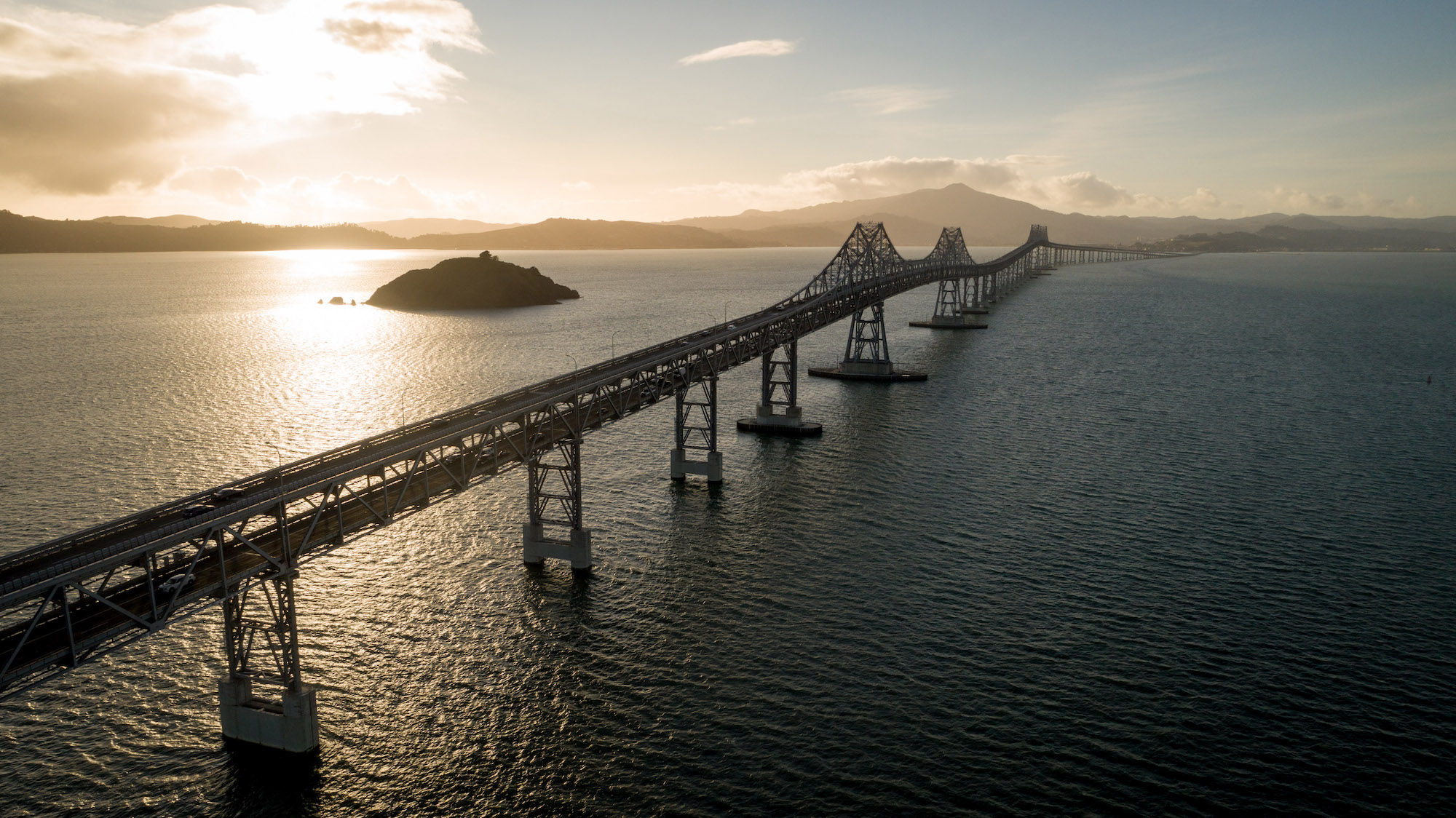
The Richmond-San Rafael Bridge. Photo: MTC
By Marc Joffe
 As if the $1 toll hike on January 1, 2025, is not enough, commissioners at the Bay Area Toll Authority (BATA) plan to approve a series of five fifty cent increases starting in 2026. By 2030, tolls on the Bay Area’s seven state-owned bridges will reach $10.50 for FasTrak users and $11.50 for drivers paying by invoice. Included in the increase are these four bridges with landings in Contra Costa County:
Aside from toll hikes, motorists are facing a gasoline price increase arising from the California Air Resources Board’s recent imposition of the Low Carbon Fuel Standard. According to a research center at the University of Pennsylvania, LCFS could cost drivers up to 85 cents extra per gallon. And this is on top of California’s highly elevated fuel prices, driven by taxes that rise annually under SB1 (2018).
Despite increasing maintenance costs, the Bay Area bridges are quite profitable. BATA expects total revenue of $1.058 billion this year. The costs of operating the bridges, running FasTrak, and paying debt service are projected to total just $757 million, leaving $300 million to spare.
As BATA admits in its own FAQ on the toll increase, $3.00 of the current $7.00 toll is already being siphoned off for purposes other than bridge operations, maintenance, and seismic safety (this will increase to $4.00 of $8.00 on January 1). For example, almost $6 million is diverted annually to the Transbay Joint Powers Authority to operate its empty bus terminal and to pursue its hopeless plan to bring high-speed rail trains into the Salesforce Transit Center. Bridge toll money is also being used to subsidize Bay Area ferries, SF Muni, AC Transit, Golden Gate Transit, and the NAPA Vine bus service.
The toll hike on the Antioch Bridge is especially egregious. BATA is charging the same tolls on all its bridges despite their vastly different lengths. The Bay Bridge is 8.4 miles long while the Antioch Bridge is just 1.8 miles long. Also, unlike all other Bay Area bridges, the Antioch Bridge has just one lane in each direction.
And then there is the question of income. While many Bay Area drivers are wealthy enough to easily absorb the toll hike, that is less true of people living near the Antioch Bridge. According to Census Reporter, Antioch’s per capita income is only 56 percent of the average for the San Francisco-Oakland-Fremont metro region. Rio Vista, the first sizable community on the north side of the bridge, clocks in at just 67 percent of the metro area’s income per person.
At minimum, BATA should exempt the Antioch Bridge from its planned toll hikes. But better yet, the Authority should shelve its entire toll increase plan, stop siphoning off toll money for other purposes, and live within its means.
Marc Joffe is President of the Contra Costa Taxpayers Association.