• Home
  • About The Herald
  • Local Agencies
  • Daily Email Update
  • Legal Notices
  • Classified Ads

Contra Costa Herald

News Of By and For The People of Contra Costa County, California

  • Arts & Entertainment
  • Business
  • Community
  • Crime
  • Dining
  • Education
  • Faith
  • Health
  • News
  • Politics & Elections
  • Real Estate

Applications for grants to help keep California’s waterways clean now accepted

June 24, 2024 By Publisher Leave a Comment

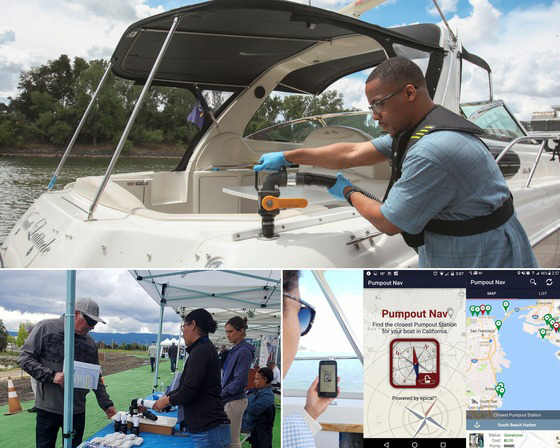
Boater using a sewage pumpout in the Delta. Bottom left: Clean Vessel Act grantee conducting outreach at a boat show in San Mateo County. Bottom right: Boater using the California Pumpout Nav app. Photos from the Division of Boating and Waterways.

Non-profits, local governments, private (for-profit) org’s eligible for state Division of Boating and Waterways’ Clean Vessel Act Education and Outreach Grant Program

Grant applications due August 9, 2024

SACRAMENTO, CA—California State Parks’ Division of Boating and Waterways (DBW) is now accepting grant applications for the Clean Vessel Act (CVA) Education and Outreach Grant Program. A maximum of $280,031 of federal funding per targeted region is available to organizations for educating coastal and San Francisco Bay-Delta Estuary recreational boaters about proper vessel sewage disposal and the use of pumpout facilities, and monitoring pumpout and dump stations.

In 1992, Congress passed the CVA to help reduce pollution from vessel sewage discharges into U.S. waters. The grant program serves as an important educational opportunity for all boaters on how to help keep California’s waterways clean. Discharging sewage overboard creates environmental and human health problems. To reduce the negative impacts of this harmful action, all recreational boaters are encouraged to use sewage management facilities, including pumpout stations, dump stations, and mobile pumpout services.

Eligible Applicants:

  • Non-profit organizations, local government entities, and private (for-profit) organizations.
  • Applicants must be able to demonstrate at least five years’ experience in developing and implementing educational and outreach programs. The written summary of the outcome of the multi-year educational and outreach programs must be verifiable.
  • Grants will not be awarded to fund advocacy work.

This is a reimbursement grant. Reimbursement is available for up to 75% of the total eligible project costs. Grantee is responsible for finding eligible match funding (in the form of cash, donations, or volunteer hours) totaling no less than 25% of the total project value.

The grant program targets two geographic regions of California: San Francisco Bay-Delta Estuary including Contra Costa County, and Southern California Coast. Proposals that cover a portion of the regions will be considered if, over time, the agency can expand program(s) to the entire region.

As part of DBW’s commitment to provide clean, safe, and enjoyable recreational boating in California, the Division serves as the state CVA grant coordinator. DBW will fund two grants (one for each targeted California geographic region) to develop and implement a 12-month Clean Vessel Act Education and Outreach Program. Each regional grant must include education and outreach efforts, and a pumpout/dump station monitoring program. Applications will be evaluated and ranked according to how each application proposal demonstrates comprehensive and proven methods for meeting grant program goals. The deadline to submit applications is Friday, August 9, 2024, by 10 a.m.

Below are some examples of accomplishments from the CVA Education and Outreach Grant Program in the last two grant cycles:

  • Participated in three boating events and conducted nine presentations on clean boating and sewage pollution prevention best management practices, reaching over 700 individual boaters and stakeholders.
  • Produced and promoted a variety of educational videos about sewage management such as “Consider a Marine Composting Toilet” video and the “Marine Sanitation Device & Y-Valve Information for Boaters”
  • Continued to provide boaters with a sewage pumpout Nav App (more than 20,000 downloads since March 2018) that helps them locate nearby participating, functioning sewage pumpout stations, dump stations and floating restrooms.
  • Monitored 152 sewage pumpouts and 15 dump stations in 19 counties eight times. Developed the 2023 California Clean Vessel Act Pumpout and Dump Station Performance Report summarizing the monitoring efforts and results. Monitoring provides an effective means for encouraging regular maintenance and accountability for the pumpouts’ condition.

The CVA Education and Outreach Program grants are funded by the Division of Boating and Waterways with funding provided by the U.S. Fish and Wildlife Service, Sport Fish Restoration and Boating Trust Fund. For detailed information on the grant program, the current grant application, requirements, and a complete guidelines packet, please visit DBW’s website at dbw.parks.ca.gov/CleanVesselActGrants.

The California Department of Parks and Recreation, popularly known as State Parks, and the programs supported by its Office of Historic Preservation and divisions of Boating and Waterways and Off-Highway Motor Vehicle Recreation provide for the health, inspiration and education of the people of California by helping to preserve the state’s extraordinary biological diversity, protecting its most valued natural and cultural resources, and creating opportunities for high-quality outdoor recreation. Learn more at parks.ca.gov.
Filed Under: Recreation, State of California, The Delta

State Division of Boating and Waterways set to control aquatic invasive plants in Delta

February 22, 2024 By Publisher Leave a Comment

Photos from Division of Boating and Waterways.

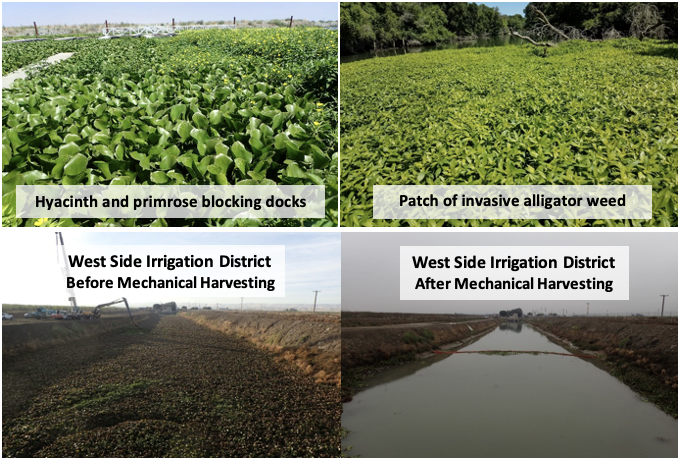
SACRAMENTO, Calif.— California State Parks’ Division of Boating and Waterways (DBW) today announced plans to control aquatic invasive plants in the west coast’s largest estuary, the Sacramento-San Joaquin Delta and its southern tributaries. Starting March 6 through Nov. 30, 2024, DBW crews will begin herbicide treatments on water hyacinth, South American spongeplant, Uruguay water primrose, Alligator weed, Brazilian waterweed, curly leaf pondweed, Eurasian watermilfoil, coontail, ribbon weed, and fanwort in the Delta. Depending on weather conditions and plant growth/movement, treatment dates may change. Select areas of the Delta with high infestations or coverage of water hyacinth will be controlled using mechanical harvesting efforts through December 2024.

DBW works with local, state, and federal entities to better understand the plants and implement new integrated control strategies to increase efficacy. These aquatic invasive plants have no known natural controls and negatively affect the Delta’s ecosystem as they displace native plants. Continued warm temperatures help the plants proliferate at high rates. Plants are also known to form dense mats of vegetation creating safety hazards for boaters, obstructing navigation channels, marinas, and irrigation systems. Due to their ability to rapidly spread to new areas, it is likely that the plants will never be eradicated from Delta waters. Therefore, DBW operates a “control” program as opposed to an “eradication” program.

“Thank you to the public and partners for working with us on combating these aquatic invasive plants,” said DBW’s Deputy Director Ramona Fernandez. “Together we are mitigating their impacts on the lives of all who live, work, and recreate in the Delta.”

All herbicides used in DBW’s Aquatic Invasive Plant Control Program are registered for aquatic use with the U.S. Environmental Protection Agency and the California Department of Pesticide Regulation. Treated areas will be monitored to ensure herbicide levels do not exceed allowable limits and follow EPA-registered label guidelines. The public may view the public notices and sign up to receive weekly updates on this year’s treatment season on DBW’s website.

Below is a list of proposed control actions for the 2024 treatment season:

Floating Aquatic Vegetation (Public Notice)

Water hyacinth, South American spongeplant, Uruguay water primrose, and alligator weed.

Herbicide Control

  • Proposed Treatment Period
    All Sites: March 6, 2024 – Nov. 30, 2024
  • Type of Herbicides: Glyphosate, 2,4-D, Imazamox, or Diquat
  • Potential Treatment Areas: Initially in and/or around, but not limited to the following areas: San Joaquin River, Old River, Middle River, Fourteen Mile Slough, and Snodgrass Slough.

Mechanical Harvesting (If necessary)

  • Harvesting Dates: March 2024 – April 2024 and July 2024 – December 2024
  • Mechanical Harvesting Sites: Select areas of the Delta with high infestations or coverage of water hyacinth. See the Public Notice for potential mechanical harvesting control areas.

Submersed Aquatic Vegetation (Public Notice)

Brazilian waterweed, curlyleaf pondweed, Eurasian watermilfoil, coontail, ribbon weed, and fanwort.

Herbicide Control

  • Treatment Period: Starting March 6, 2024, through Nov. 30, 2024, treatment period is based upon DBW field survey data, water temperatures and fish surveys.
  • Type of Herbicide: Fluridone, Endothall or Diquat.
  • Potential Treatment Areas: In and/or around the following areas (individual areas will be noticed prior to treatment application):

Anchorages, boat ramps and marinas: B & W Resort, Delta Marina Yacht Harbor, Grindstone Joes, Hidden Harbor Resort, Korth’s Pirates Lair, Oxbow Marina, Owl Harbor, River Point Landing, Rivers End, St. Francis Yacht Club, Tiki Lagoon, Tracy Oasis Marina, Turner Cut Resort, Vieira’s Resort, Village West Marina, and Willow Berm.
Near Old River: Berkeley Ski Club, Bullfrog Ski Club, Cruiser Haven, Delta Coves, Diablo Ski Club, Discovery Bay, Golden Gate Ski Club, Hammer Island, Italian Slough, Kings Island, Orwood Marina, Piper Slough, Sandmound Slough, Stockton Ski Club, and Taylor Slough.

Sacramento Area: French Island, Hogback, Long Island Slough, Prospect Island, Sacramento Marina, Snug Harbor, and Washington Lake.

Stockton Area: Atherton Cove, Buckley Cove, Calaveras River, Fourteenmile Slough, Mosher Slough, and Windmill Cove.

Mechanical Harvesting

This type of control method is not used for submersed aquatic vegetation. These plants are spread by fragmentation. Cutting the plants back exacerbates the problem, as shreds of the plants float away and re-propagate.

To report sightings, subscribe for program updates or more information regarding the control program, connect with us online at our website, via email at  AIS@parks.ca.gov, or by phone at (888) 326-2822.

Last year, DBW treated 2,377 acres of floating aquatic vegetation and 1,405 acres of submersed aquatic vegetation. No mechanical harvesting was conducted. A combination of herbicide, biological, and mechanical control methods were used to help control invasive plants at high-priority sites in the Delta.

In 1982, California state legislation designated DBW as the lead state agency to cooperate with other state, local, and federal agencies in controlling water hyacinth in the Delta, its tributaries, and the SuisunMarsh. The Egeria Densa Control Program was authorized by law in 1997 and treatment began in 2001. In 2012, spongeplant was authorized for control upon completion of the biological assessment. In 2013, DBW was able to expand its jurisdiction to include other invasive aquatic plants, and since then other aquatic invasive plants such as Uruguay water primrose, Eurasian watermilfoil, Carolina fanwort, coontail, Alligator weed, and Ribbon weed have been added to the AIPCP program.

Revenues from boaters’ registration fees and gasoline taxes (Harbors and Watercraft RevolvingFund), provide funding for DBW’s Aquatic Invasive Plant Control Program.


Filed Under: News, State of California, The Delta

Delta Levees Investment Strategy becomes California state law

January 4, 2024 By Publisher Leave a Comment

Delta levee work. Photo: Delta Stewardship Council

New flood-related regulations prioritize levee investments in the Delta and Suisun Marsh

By Delta Stewardship Council

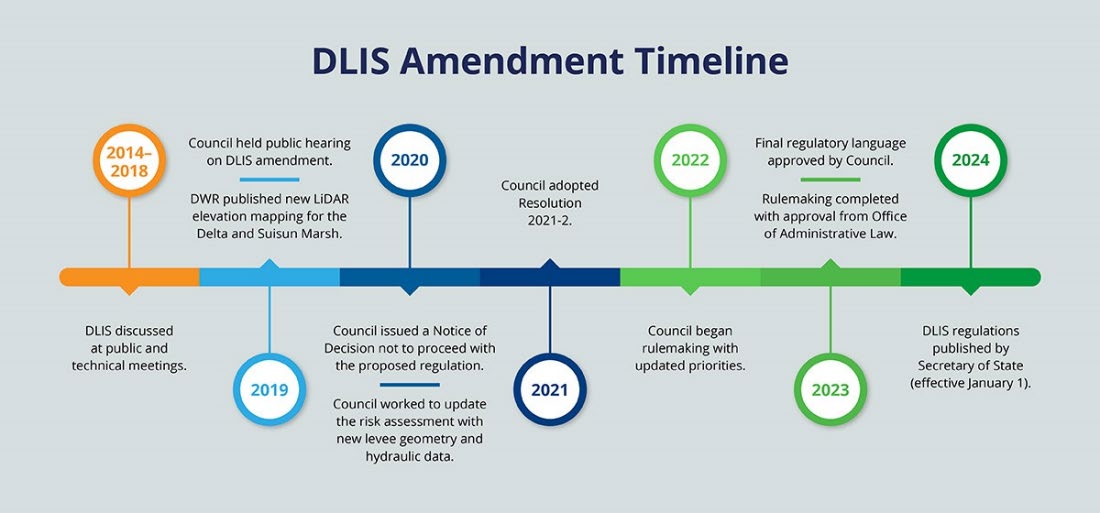
SACRAMENTO – The new year has brought new flood protections for the Sacramento-San Joaquin Delta. The Delta Stewardship Council has successfully amended the Delta Levees Investment Strategy (DLIS), a tool the state uses to prioritize investments in Delta levee operations, maintenance and improvements, thus reducing the likelihood and consequences of levee failures.

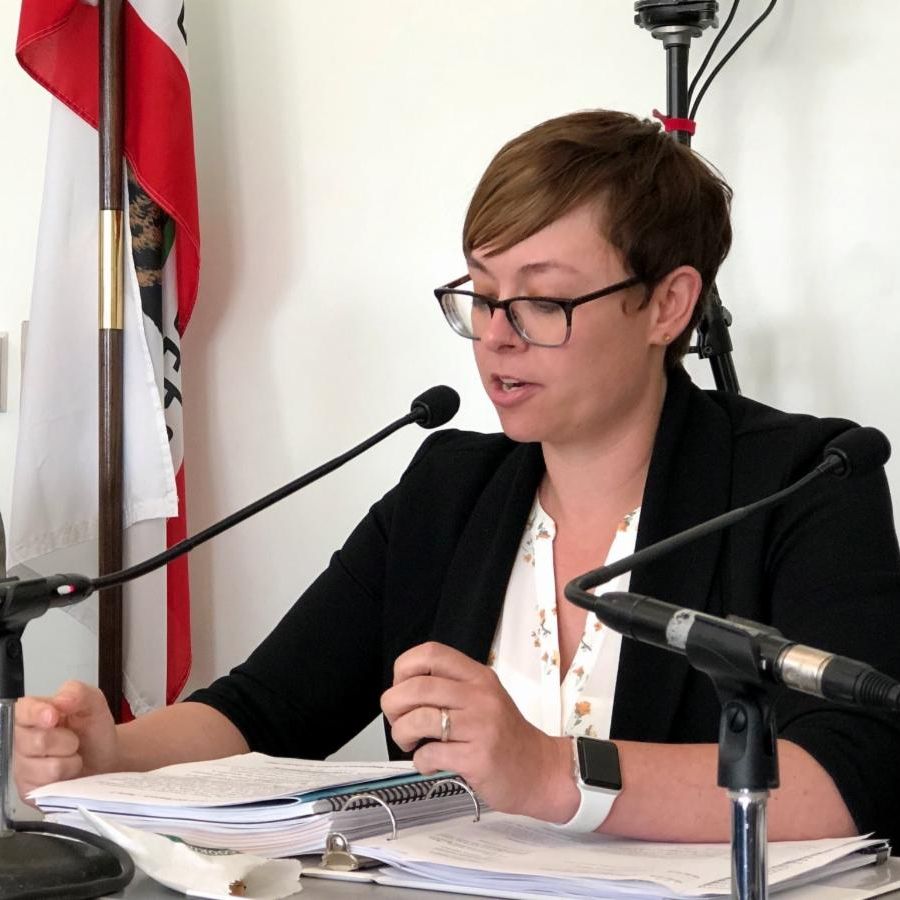
Executive Officer Jessica R. Pearson at a Delta Stewardship Council meeting. Photo: DSC

The amendment assigns very high, high, or other priority to islands or tracts within the Delta and Suisun Marsh and directs the California Department of Water Resources (DWR) to fund levee improvement projects by order of priority. Additionally, it requires the DWR to submit an annual report to the Council describing Delta levee investments relative to the established priorities. The amended regulation took effect on January 1, 2024.

“Delta flood risk is one of the most urgent threats to California and will continue to worsen in the future with changes in sea levels and storm patterns,” says the Council’s Executive Officer Jessica R. Pearson. “Limited funding to address that risk demands clear priorities. The product of nearly a decade of public input and collaboration, the strategy represents one of the Council’s greatest milestone achievements.”


The amendment assigns very high, high, or other priority to islands or tracts within the Delta and Suisun Marsh and directs the California Department of Water Resources (DWR) to fund levee improvement projects by order of priority. Additionally, it requires the DWR to submit an annual report to the Council describing Delta levee investments relative to the established priorities.

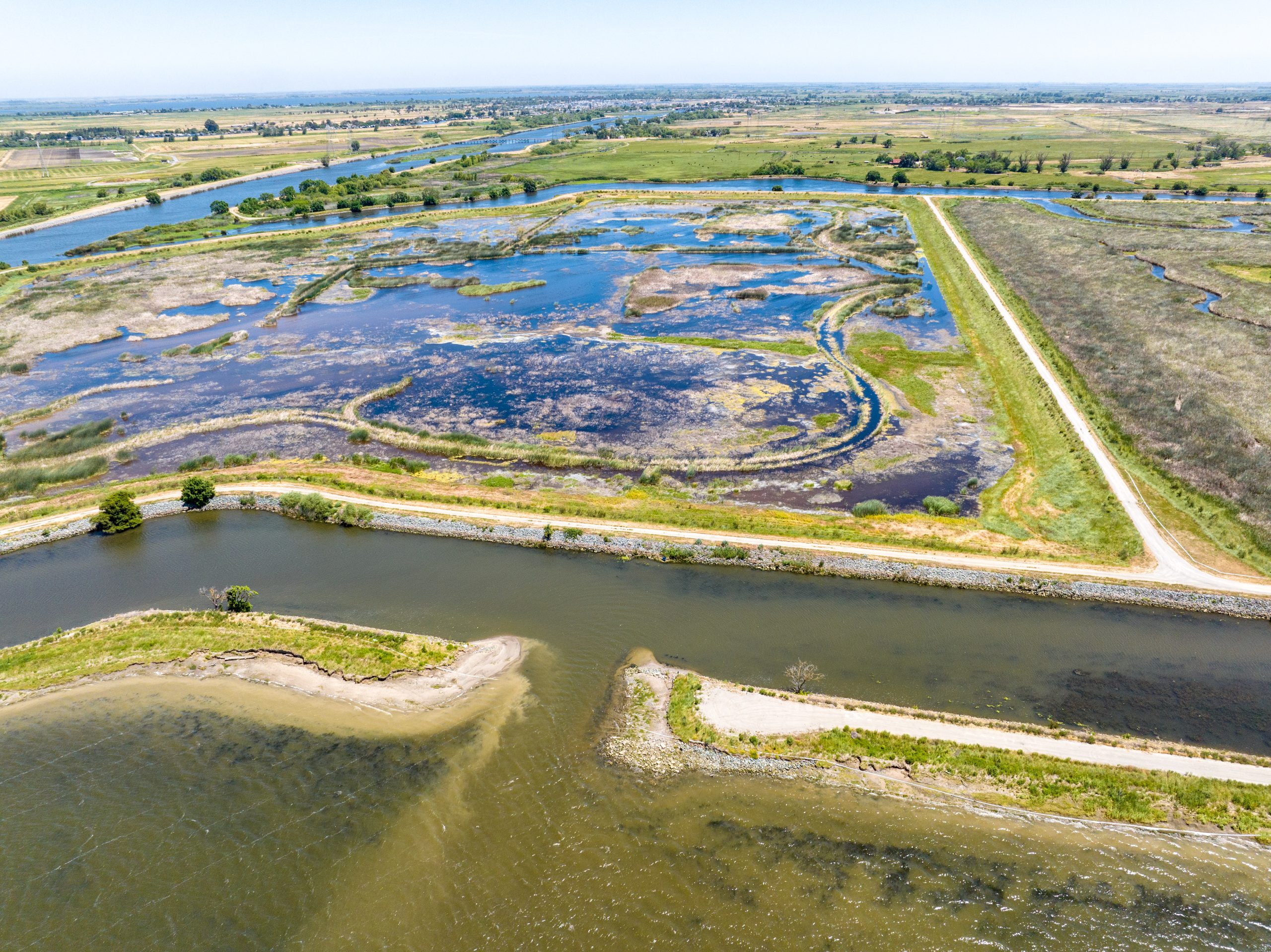
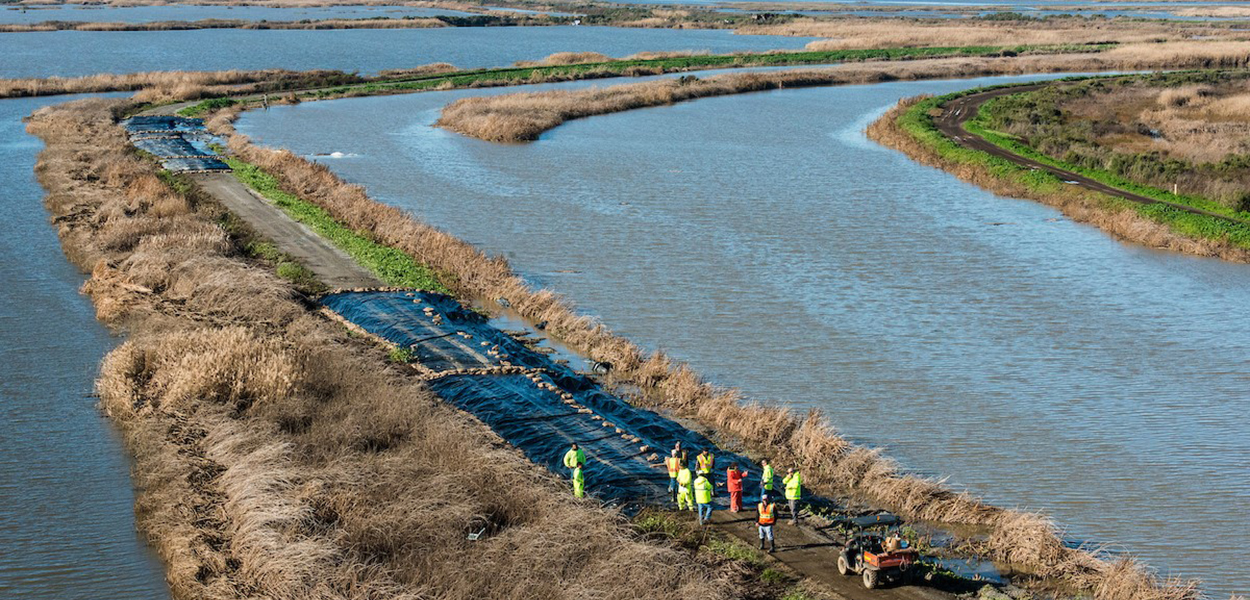
The Dutch Slough Tidal Marsh Restoration Project site, located in the Sacramento-San Joaquin Delta near Oakley, California.
The restoration project implemented by the California Department of Water Resources will restore 1,187 acres into a tidal marsh to provide habitat for salmon and other native fish and wildlife. Photo taken May 18, 2023, by Florence Low / California Department of Water Resources,

“Flood protection is a key piece of DWR’s work to increase water resilience as California moves toward a hotter, drier future,” says DWR Director Karla Nemeth. “DWR stands in partnership with the Delta Stewardship Council across multiple initiatives, including the Delta Levees Investment Strategy. These efforts will provide needed protections to the diverse communities that call the Delta home.”

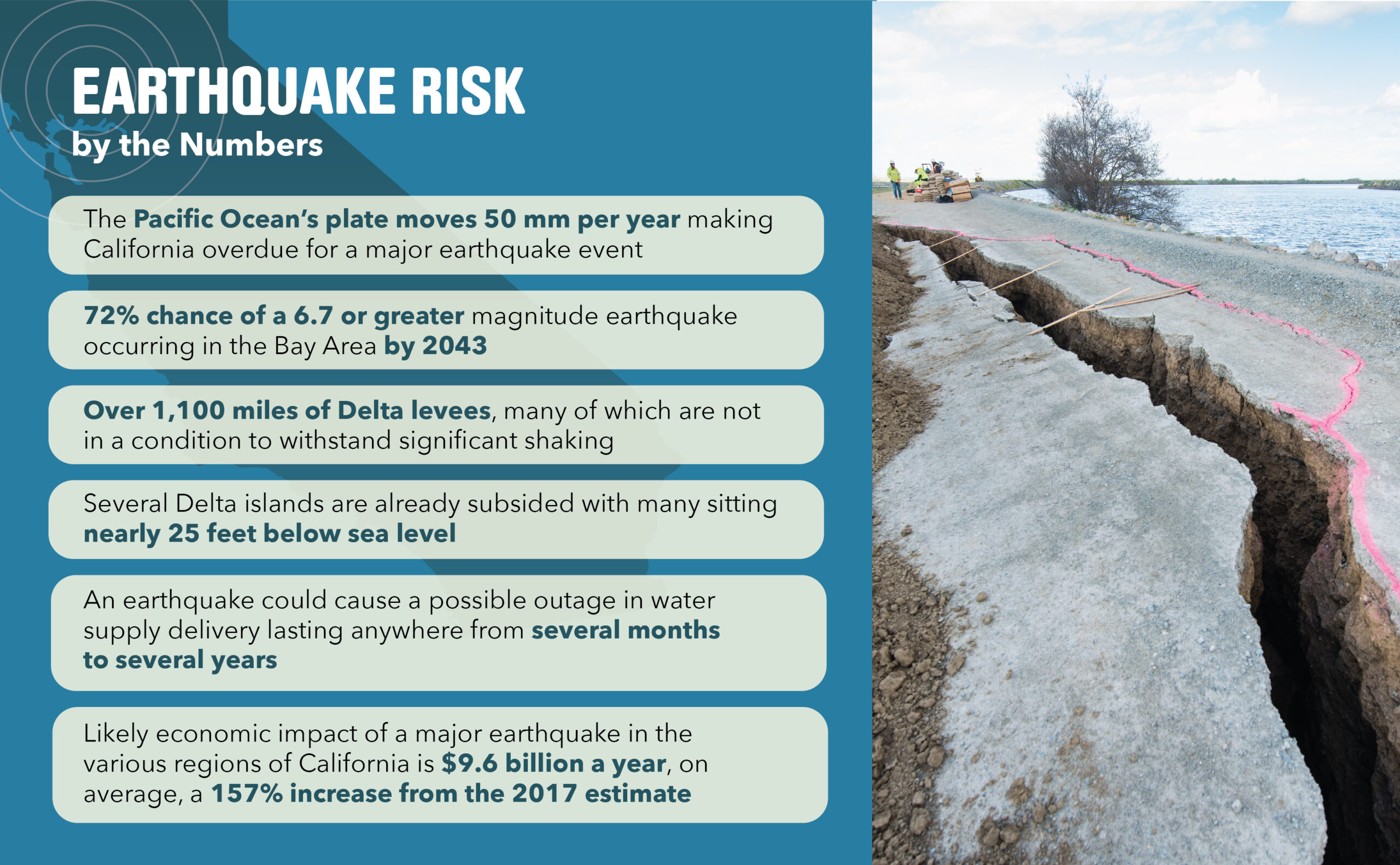
The Delta’s 1,100 miles of levees provide protection for residences, agricultural lands, and infrastructure, which need deliberate and sustainable maintenance and funding. Many of the levees date back to when the Delta was reclaimed for agricultural purposes in the late 1800s.

The updated strategy prioritizes the protection of people, property, and state interests and advances statewide water supply reliability and Delta ecosystem resilience in a manner that protects and enhances the Delta as a place where people live, work, and recreate.

Source: DSC

On September 21, 2023, the Office of Administrative Law approved the Council’s Administrative Procedure Act process to amend the California Code of Regulations, title 23, sections 5001 and 5012, to implement the Council’s Delta Levees Investment Strategy. The amended regulation took effect on January 1, 2024, and is available at on the Delta Levees Investment Strategy web page at deltacouncil.ca.gov/DLIS.

ABOUT THE COUNCIL

The Delta Stewardship Council was created by the California Legislature in 2009 to advance California’s water supply reliability and the Delta’s ecosystem resiliency in a manner that protects and enhances the region’s unique characteristics. It is composed of seven members, advised by an independent 10-member science board, and supported by a dedicated staff. For more information, visit the Council’s website at deltacouncil.ca.gov.

Filed Under: Finances, News, State of California, The Delta

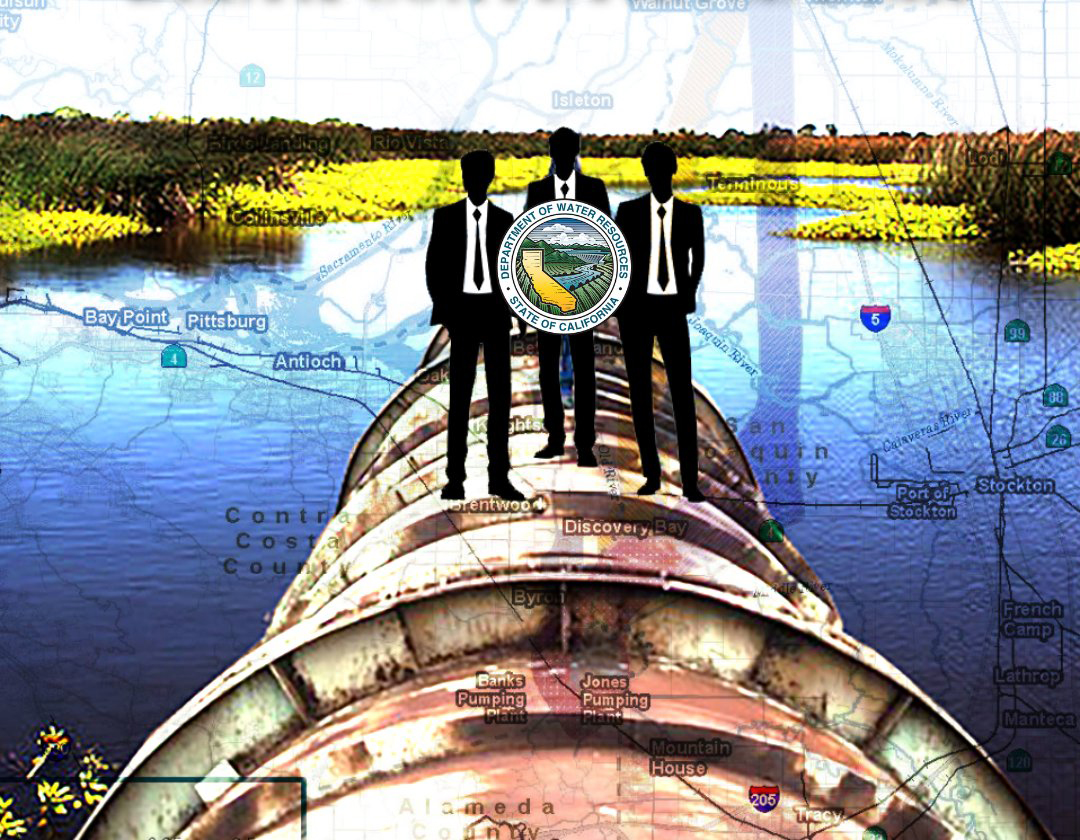
Delta Conveyance (tunnel) Project issues Final Environmental Impact Report

December 8, 2023 By Publisher Leave a Comment


Source: CA DWP

To public agencies prior to certification per CEQA requirements

Haga clic aquí para ver este aviso en español

按一下這裡檢視此通知的中文版本。

By California Department of Water Resources

The California Department of Water Resources (DWR) is today releasing the Final Environmental Impact Report to public agencies that commented on the Draft EIR, per the California Environmental Quality Act (CEQA).* Proposed responses to comments, as well as the Final EIR and accompanying informational resources, can be accessed at www.deltaconveyanceproject.com. This action signifies the last step DWR is required to take under CEQA prior to deciding whether to certify the EIR and approve the proposed project.

The Final EIR was prepared by DWR as the lead agency to comply with the requirements of CEQA. The Final EIR is presented in two volumes: 1) the contents of the entire Draft EIR, as revised, and 2) all comments received on the Draft EIR and responses to substantive comments.

At the conclusion of the CEQA process, DWR will determine if the Final EIR has been completed in compliance with CEQA and whether to certify that the Final EIR reflects DWR’s independent judgment and analysis. Following certification of the Final EIR, DWR would then determine whether to approve the proposed project, an alternative or no project. Learn more about the CEQA process here.

The proposed project identified in the Final EIR would modernize the state’s water infrastructure in the Delta to help protect the reliability of this important water supply for 27 million Californians and 750,000 acres of farmland from earthquakes and climate-driven weather extremes.

Accessing the Final EIR

The Final EIR is available online at www.deltaconveyanceproject.com/planning-processes/california-environmental-quality-act/final-eir/final-eir-document.

Informational Materials and Resources

  • Final EIR Overview Fact Sheet

Project Planning Next Steps

  • Community Benefits Program: Should DWR certify the Final EIR and approve the proposed project, DWR plans to release the Community Benefits Program Implementation Plan and Guidelines Discussion Document next year for review. There will be associated public engagement opportunities announced when that document is released.
  • Additional Permitting: DWR continues to pursue additional required federal and state planning processes, including but not limited to federal and state Endangered Species Act compliance, adding points of diversion to existing water rights and Delta Plan consistency. Information and updates related to these processes can be found on the project’s permit portal website.
    *DWR is releasing the Final EIR to public agencies prior to certification per CEQA requirements. While CEQA does not require—and DWR is not providing—a public comment period on a Final EIR, it does require DWR to send its proposed responses at least 10 days prior to a decision on certification of the EIR.

If you need further assistance, contact
Si necesita ayuda adicional, comuníquese con
如果您需要進一步的協助,請洽
Yog koj xav tau kev pab ntxiv, txuas lus rau
ប្រសិនបើអ្នកត្រូវការជំនួយបន្ថែម សូមទាក់ទង
Kung kailangan mo ng karagdagang tulong, kontakin ang
Nếu quý vị cần thêm trợ giúp, vui lòng liên hệ
1-866-924-9955
deltaconveyance@water.ca.gov

Filed Under: Environment, News, The Delta, Water

Recent Delta earthquakes reminder of modernizing water infrastructure’s vital importance

October 23, 2023 By Publisher Leave a Comment

Source: CA DWR

One large quake last Wednesday, two more smaller quakes on Monday

By CA Department of Water Resources

News of yet another earthquake in the heart of the Delta in the last week is a serious reminder about the importance of modernizing and protecting water supply infrastructure. The quake on Wednesday, Oct. 18th measured 4.2 and was centered 5 kilometers southwest of Isleton. Two more quakes measuring 2.9 magnitude and 2.5 mag, with epicenters 4 km southeast of Rio Vista, occurred on Monday, Oct. 23, according to the US Geological Survey (USGS).

In a report by CBS News last week, Austin Elliott with the USGS said that “a very large earthquake, centered near the Delta, would pose a particularly significant threat to both protective systems that the levees provide, as well as the water distribution and intake systems.”

He also said that “Larger earthquakes magnitude — five or six — would begin to produce liquefaction and damage some of the infrastructure and geotechnical work there.” And according to the USGS, there is a 72 percent chance of a 6.7 or greater magnitude earthquake occurring in the Bay Area by 2043.

The Delta Conveyance Project is meant to help the State Water Project guard against these seismic threats.

DWR has also invested millions of dollars to reinforce many Delta levees through the Delta Levees Special Flood Control Projects programs. Additionally, DWR has been planning for and strategizing how to address the earthquake risk and potential disruption to California’s water supply and has developed detailed plans to guide response and recovery efforts.

For more information on how the proposed Delta Conveyance Project would make California’s water supply more earthquake resilient, check out this digital article and these two in-depth videos (Part 1 and Part 2).

Allen D. Payton contributed to this report.


Filed Under: Earthquakes, Environment, Infrastructure, News, The Delta

CA Boating and Waterways reminds public to boat responsibly over Labor Day weekend

August 31, 2023 By Publisher Leave a Comment

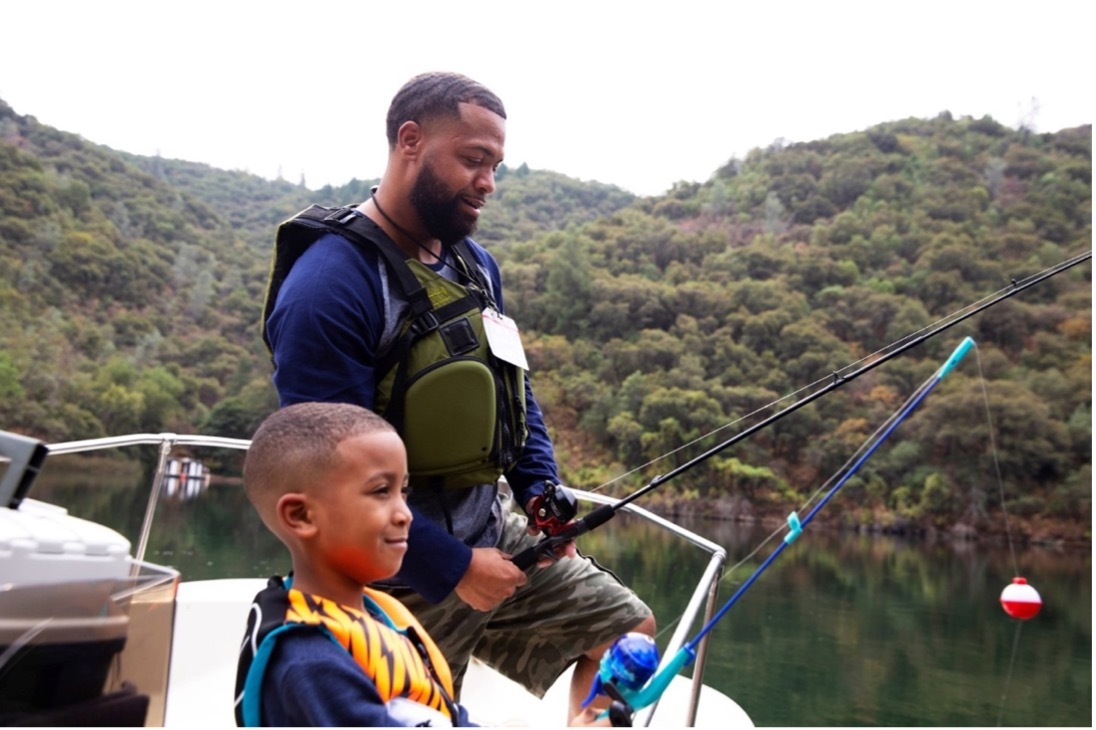
Fishing at Lake Clementine in Auburn State Recreation Area. Photo from Division of Boating and Waterways.

SACRAMENTO, Calif.— With the unofficial end of summer approaching this Labor Day holiday weekend, California State Parks’ Division of Boating and Waterways (DBW) is reminding boaters and water enthusiasts to take extra precautions to stay safe and prevent tragedies on the water. Taking a boating safety course, wearing a life jacket while recreating in the water and actively supervising children when in or near a body of water are simple actions all can take to help improve safety on California’s waterways.

Here are some key safety tips:

  • Always wear a life jacket. Life jackets are the easiest way to reduce the chances of drowning and increase your chances of survival if you are involved in an accident.
    • By California law, all children under 13 are required to wear life jackets on a moving vessel, and DBW urges everyone on a vessel, regardless of age, to always wear a life jacket as a preventative measure.
    • Life jackets are also required on personal watercrafts, also known as Jet Skis, regardless of age. Paddle sports, including stand-up paddleboards and kayaks, are considered vessels and the same life jacket rules apply to people aboard the paddle craft.
    • Ensure each life jacket is U.S. Coast Guard-approved, the right fit for the user and approved for the intended activity by checking the label. The label can be found on the inside of each life jacket along with the U.S. Coast Guard approval number.
    • If you don’t have a life jacket, borrow one through DBW’s Life Jacket Loaner Program.
  • Take a boating safety course and get your California Boater Card. Even the most experienced boaters can learn from boating safety courses. As of Jan. 1, 2023, all operators of motorized vessels on California waterways who are 50 years of age and younger are required to carry a lifetime boater card. By 2025, all operators of motorized vessels will be required to carry one, regardless of age.
  • File a float plan before you head out. Share a float plan with a family member or friend with the details of your trip in the event of an emergency.
  • Check the weather. Know the latest weather forecast prior to going out and check regularly for changing conditions.
  • Leave the alcohol at home. Alcohol and boating never mix. It is against the law to operate a boat with a blood alcohol concentration (BAC) of 0.08% or more. You can be arrested even when the BAC is less than 0.08% if conditions are deemed to be unsafe. The sun, wind and wave action intensify the effects of alcohol.
  • Protect your loved ones:
    • Always supervise children by appointing a designated “water watcher,” taking turns with other adults. Do not assume that someone is watching your children.
    • Know your limits. Swimming in a lake, ocean or river is different than swimming in a pool.
    • If someone is in distress, seek help from a lifeguard or call 911 if one is not available.
  • Stow it, don’t throw it. Keep your trash on board. Never throw cigarette butts, fishing lines or any other garbage into waterways. Take advantage of shoreside facilities to recycle plastic, glass, metal and paper. Avoid excess packaging. Used fishing line can be deposited at a fishing line recycling station.

Download helpful boating apps to your phone. The BoatCA App is a free mobile app with information on boating facilities, life jacket loan stations, laws, boat registration and more.

Subscribe to California State Parks News online at parks.ca.gov/newsroom.

The California Department of Parks and Recreation, popularly known as State Parks, and the programs supported by its Office of Historic Preservation and divisions of Boating and Waterways and Off-Highway Motor Vehicle Recreation provide for the health, inspiration and education of the people of California by helping to preserve the state’s extraordinary biological diversity, protecting its most valued natural and cultural resources, and creating opportunities for high-quality outdoor recreation. Learn more at parks.ca.gov.
Filed Under: Recreation, State of California, The Delta

Body found in river identified as San Leandro man missing while boating last Friday

July 25, 2023 By Publisher Leave a Comment

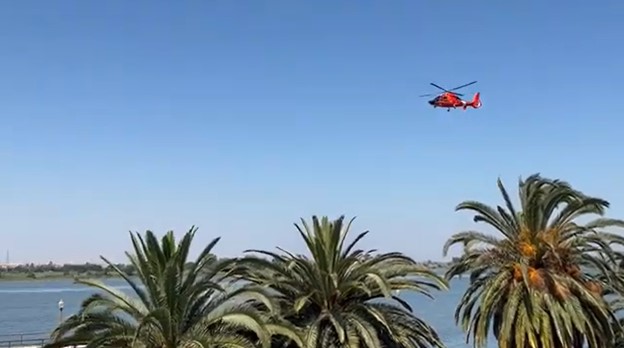
A Coast Guard helicopter flies over the river searching for the missing boater along the Antioch waterfront Friday, July 21, 2023. Screenshot of video by Allen D. Payton

Recovered Monday morning; conflicting information from agencies of what occurred; no investigation by APD

By Allen D. Payton

According to Antioch Police Public Information Liaison Sgt. Price Kendall, on Tuesday, July 25, 2023, the body of the man missing in the river last Friday during a boating mishap was found.

Con Fire spokeswoman, Assistant Fire Chief Tracie Dutter said, “Someone reported a possible deceased male on the rocks near Fulton Shipyard Road on Monday at 7:48 AM. We were requested by PD to assist in recovering the body. We were on scene assisting at about 8:20 a.m. and by 8:40 a.m. the recovery was completed.”

According to Deputy Gonzalez of the Contra Costa County Coroner’s Office, the man was identified as 58-year-old Douglas Cross from San Leandro, based on his driver’s license information.

As previously reported, according to Jimmy Lee, Contra Costa Sheriff’s Office Director of Public Affairs, “On Friday, July 21, 2023, at about 1:51 PM, deputy sheriffs from the Marine Patrol Unit were dispatched to assist the Contra Costa County Fire Protection District and the United States Coast Guard with searching for a missing boater who was apparently trying to push his 20-foot vessel to shore near the Fulton Shipyard on the San Joaquin River. The U.S. Coast Guard and Sheriff’s Office drone team were also involved in the search. The missing boater, who is not being identified at this time, was not located. (See video)

The Marine Patrol Unit continued the search on Saturday, he added.

However, according to Coast Guard Public Affairs Specialist Schnabel, “We suspended the search after searching until around 7:30 pm. One man had fallen overboard from a recreational boat and the other man jumped in after him attempting to get him out of the water leaving the vessel unmanned. Neither had life jackets. One man was recovered by a Good Samaritan and taken to a local boat ramp.”

Asked if an investigation was being conducted to determine what occurred and if the other man had been interviewed to get his side of the story, Sgt. Kendall responded, “No investigation is being conducted by the Antioch Police Department.”

Lee was asked the same question but did not respond prior to publication time. Please check back later for any updates to this report.


Filed Under: Coast Guard, Coroner, East County, News, Recreation, Sheriff, The Delta

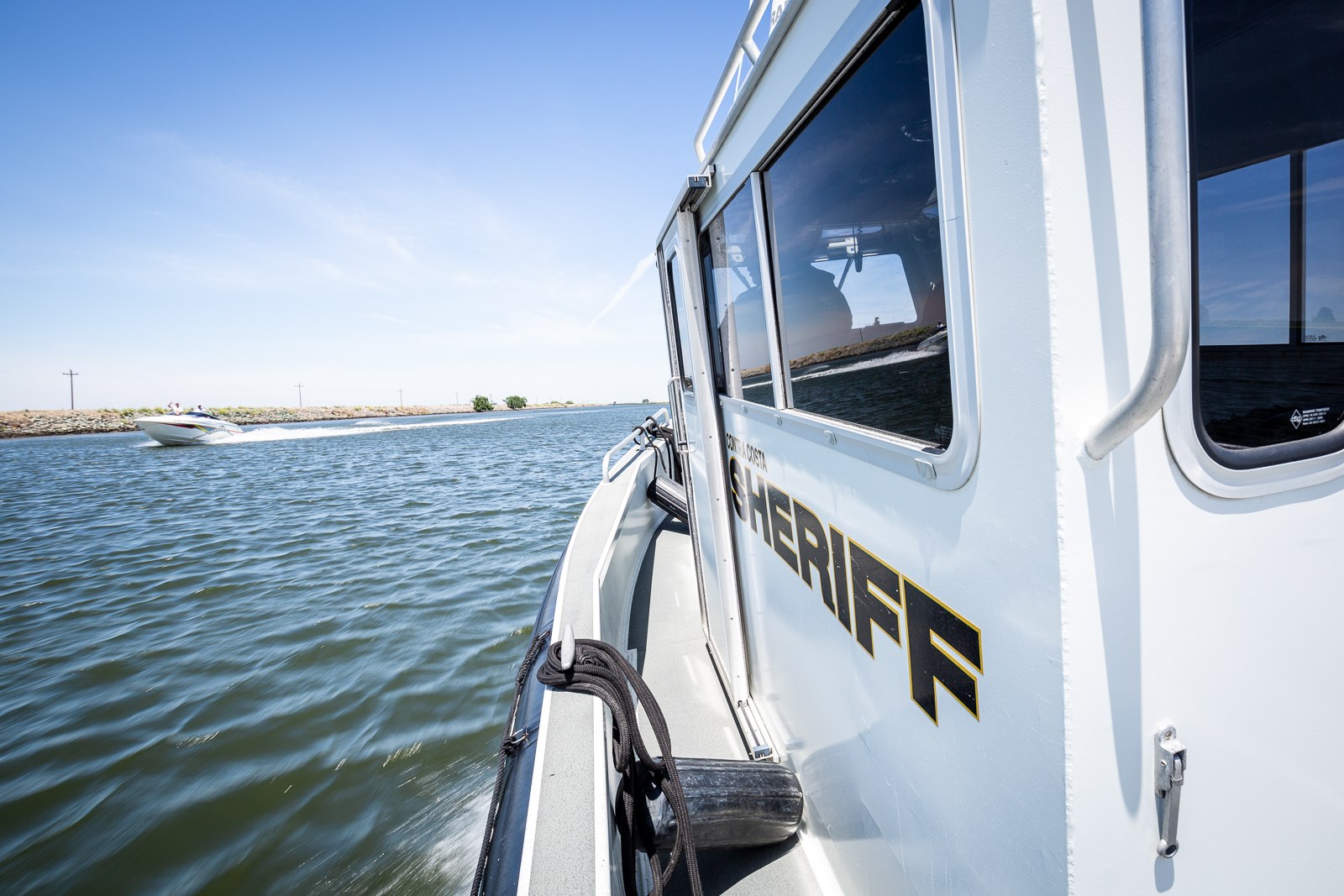
Contra Costa Sheriff offers safety tips for boating season

May 26, 2023 By Publisher Leave a Comment

Source: CoCoCo Sheriff

The Memorial Day holiday weekend traditionally marks the start of boating season on the Delta. A large number of people are expected to be on the water this weekend and throughout the summer to go fishing, boating or take part in water sports, like water-skiing.

“We want all boaters and those on the Delta to enjoy themselves, but to be safe,” said Contra Costa Sheriff David Livingston. “By following the laws and regulations, wearing a life-jacket, avoiding alcohol, and boating safely, you could help avoid an accident or tragedy on the water.”

The Contra Costa County Office of the Sheriff Marine Ser-vices Unit would like to remind all boaters to be safe, alert, and obey the rules. Here are some important rules and tips:

-Anyone 50 or under who oper-ates a vessel that is propelled by an engine, regardless of whether the engine is the principal source of propulsion, must have in their possession a California Boater Card issued by the state. By 2025, anyone operating a motorized vessel will be required to possess a California Boater Card. For more information on the California Boater Card, go to www.dbw.ca.gov.

-All vessels, including stand-up paddle boards (SUPs), must have a U.S. Coast Guard approved life jacket for each person. The life jacket must fit the person intending to wear it. Children under 13 must always wear a life jacket while aboard any vessel, regardless of length, unless they are surrounded by an enclosed cabin or bulkhead. We encourage every-one, regardless of age, to wear a personal floatation device at all times when on the water.

-You must be at least 16 years old to operate a power boat or personal watercraft. All persons on a personal watercraft are required to wear an approved life jacket.

-Boats 16 feet and larger are required to have a life ring or square type 4 throwable flotation device which must be immediately accessible.

-Always travel at a safe speed. Slow down in narrow channels and blind areas and navigate on the right side of the waterway. In crossing situations, the boat on the right has the right of way.

-The operator of a vessel involved in towing a skier must display, or cause to be displayed, a red or orange water ski flag to indicate: a downed skier, a skier in the water preparing to ski, a ski line extended for the vessel, or a ski in the water in the vicinity of the vessel.

-Blue Light law — Any vessel approaching, overtaking, being approached, or being overtaken by a moving law enforcement or emergency vessel operating with a siren or an illuminated blue light, or any vessel approaching a stationary law enforcement vessel displaying an illumi-nated blue light, shall immediately slow to a speed sufficient to maintain steerage. Boaters cannot make a wake near a law enforcement vessel displaying a blue light.

-Always have an emergency kit that includes a flashlight, warm clothing, cell phone, VHF radio and chart. For emergencies on the water, boaters should call 911 or Sheriff’s Dispatch at (925) 646-2441. Be sure to file a float plan before you depart. Go to this link for more information on float plans and how to fill one out:

https://uscgboating.org/recreational-boaters/floating-plan.php

-Be aware of potential carbon monoxide poisoning that can occur when the motor is running while occupying the swim platform or in vicinity of the vessel’s transom.

Boating under the influence (B.U.I.) enforcement is a high priority. Those arrested for B.U.I. will face similar consequences as those who drive a motor vehicle under the influence, including fines and possible jail time.

The ‘ABC’s of Boating’, a handbook of boating rules, is available from most boating shops. Boaters can go to the California Division of Boating and Waterways website at www.dbw.ca.gov for information on boating safety and the California Boater Card. If anyone has any questions about boating safety, please contact the Marine Services Unit at (925) 427-8507.

Filed Under: Recreation, Sheriff, The Delta

In response to DEIR Restore the Delta claims tunnel project “will not save the Delta”

December 16, 2022 By Publisher Leave a Comment

Source: Restore the Delta

“The Tunnel Project will not save the Delta, and it probably will not save the State Water Project’s and Central Valley Project’s reliance on Delta exports either.” – letter from Restore the Delta on DEIR

The proposed Delta Conveyance Project (Delta Tunnel) would construct new water intake facilities on the Sacramento River in the north Delta to fill a single tunnel with diverted freshwater flows. That water would be shipped to large farming operations and water wholesalers south of the Delta. The Delta Conveyance project would divert up to 6,000 cubic feet of water per second. The project is estimated to cost between $16-40 billion and won’t be completed until at least 2040.

After the Draft Environmental Impact Report for the Delta Conveyance Project was released in July, the comment period was extended to today, Friday, December 16, 2022. The Draft EIR was prepared by the state Department of Water Resources (DWR) as the lead agency to comply with the requirements of the California Environmental Quality Act by evaluating a range of alternatives to the proposed project and disclosing potential environmental effects of the proposed project and alternatives, and associated mitigation measures for potentially significant impacts.

No decisions will be made on whether to approve the project until the conclusion of the environmental review process, after consideration of public comments submitted on the Draft EIR and issuances of a Final EIR. At that time, DWR will determine whether to approve the proposed project an alternative or no project.

On Wednesday, Dec. 14, 2022, Restore the Delta submitted detailed comments on the DEIR to the DWR.

“The California Department of Water Resources should be embarrassed by the lack of climate change planning in the DEIR for the proposed Delta Tunnel. The DEIR was out of date for climate change science when it was released in July 2022,” said Tim Stroshane, Policy Analyst, Restore the Delta. “If completed in 2040 it will be obsolete, then. Meanwhile, California will have spent big money on a project the state will be unable to use as Delta water levels rise. Instead, we should invest in the resilience of Delta environmental justice communities and the rest of the state for flood and water supplies, reducing the big projects’ reliance on the Delta for future water needs, using water use efficiency and water recycling, and increasing local and regional water supply self-sufficiency to ward off drought and megafloods.”

“DWR has learned nothing since California WaterFix. Their sales pitch, that the tunnel is a climate project, is built on incomplete data and faulty analysis,” said Barbara Barrigan-Parrilla, Executive Director of Restore the Delta. “They have continued their pattern of erasing how the project will impact Delta urban environmental justice communities. And they are minimizing how construction will ruin small Delta farming towns, and the natural resources essential to the cultural and spiritual practices of historic Delta tribes. The tunnel is a failed idea that nobody supports, except for the Department of Water Resources.”

Read the comment letter and attachments by Restore the Delta.

Highlights from the Comments

Environmental impact of Tunnel:

“Reviewing the Executive Summary, we count 17 significant and unavoidable impacts of the proposed Tunnel project on the environment. Among these impacts will be loss of prime agricultural farmland, loss of local non-tribal cultural resources, transportation and air quality impacts, and painful loss of tribal cultural resources. There are other impacts omitted, belittled, or greenwashed by the Tunnel DEIR.”

Flow and salinity impacts when Tunnel in operation:

“The Tunnel Project has region-scale impacts on the Delta, should it be built. The Tunnel DEIRacknowledges that a major operational impact will be, reducing Sacramento River flows (and hence flows to its distributaries in north and central Delta channels) and reducing the estuary’s ability to repel tidal salt waters which are ever-present (see Attachment 9 to this letter). Such operational impacts will have economic and ecological impact on the Delta region, and a Community Benefits Program must be developed to mitigate the economic and ecological effects of Tunnel operations on Delta communities, especially environmental justice communities.”

Failure to consider alternatives:

“DWR in particular is hide-bound in its loyalty to a Delta conveyance approach eclipsed by the emerging and growing effects of extreme heat and extreme storms.

“A huge failure of imagination by DWR is on display in this DEIR. Each of these alternatives is vulnerable to the slings and arrows of expected climate change effects, which we will go into further below when commenting on project modeling methods and results. But what we see displayed in the Tunnel DEIR is a complete failure of state water officials to imagine alternative approaches these last few years since the demise of California WaterFix in early 2019.”

Faulty consideration of Delta Environmental Justice impacts:

“We are deeply disappointed that DWR resorted to ignoring its ‘Your Delta, Your Voice’ Survey as a basis for informing how and what kind of environmental, environmental justice, and community impacts the Delta Tunnel Project would impose on the Delta EJ community both of the direct Legal Delta and of the Delta Region as a whole. It is plainly obvious that 1) the Legal Delta as well as the Delta Region are bona fide environmental justice communities, with relatively small proportions of white and wealthy populations; 2) Delta residents AND Delta region community members rely substantially on the Delta directly, and the north Delta in particular, for subsistence fishing, and it is thus an environmental impact to have both fishing spots taken away from anglers and fish removed from the vicinity for North Delta Intakes construction activities; and 3) in the operational phase, lost flows in the Delta will increase salinity in the Delta as it reduces flows in north and central Delta channels, and thereby contributing to the spread of harmful algal blooms which will disproportionately injure Delta people who rely on fishing and broad outdoor activities to enjoy the Delta. In sum, the Delta Tunnel Project will harm such beneficial users of water as fish, outdoor water-contact recreation, and environmental justice communities.”

About Restore the Delta
Restore the Delta (RTD) is a grassroots campaign of residents and organizations committed to restoring the Sacramento-San Joaquin Delta so that fisheries, communities, and family farming can thrive there together again; so that water quality is protected for all communities, particularly environmental justice communities; and so that Delta environmental justice communities are protected from flood and drought impacts resulting from climate change while gaining improved public access to clean waterways. Ultimately our goal is to connect communities to our area rivers and to empower communities to become the guardians of the estuary through participation in government planning and waterway monitoring. RTD advocates for local Delta stakeholders to ensure that they have a direct impact on water management decisions affecting the well-being of their communities, and water sustainability policies for all Californians.

ICYMI 12/10/22: Delta Tunnel Meeting, Greenhouse Gaslighting, HABs in 2022 

Allen D. Payton contributed to this report.

Filed Under: East County, Environment, News, The Delta, Water

EB Parks: Celebrate the 10th Anniversary of Big Break Visitor Center in Oakley Sunday

October 14, 2022 By Publisher Leave a Comment

Filed Under: East County, Recreation, The Delta

  • 1
  • 2
  • 3
  • …
  • 5
  • Next Page »
Monica's-Riverview-Jan-2026
Liberty-Tax-Jan-Apr-2026
Deer-Valley-Chiro-06-22

Copyright © 2026 · Contra Costa Herald · Site by Clifton Creative Web