• Home
  • About The Herald
  • Local Agencies
  • Daily Email Update
  • Legal Notices
  • Classified Ads

Contra Costa Herald

News Of By and For The People of Contra Costa County, California

  • Arts & Entertainment
  • Business
  • Community
  • Crime
  • Dining
  • Education
  • Faith
  • Health
  • News
  • Politics & Elections
  • Real Estate

Gov. Newsom signs Executive Order providing relief to California small businesses

March 31, 2020 By Publisher Leave a Comment

Order provides 90-day extension in state and local taxes, including sales tax; extends licensing deadlines and requirements for a number of industries

SACRAMENTO – On Monday, Governor Gavin Newsom signed an executive order that will provide tax, regulatory and licensing extensions for businesses.

The executive order allows the California Department of Tax and Fee Administration (CDTFA) to offer a 90-day extension for tax returns and tax payments for all businesses filing a return for less than $1 million in taxes. That means small businesses will have until the end of July to file their first-quarter returns.

Additionally, the order extends the statute of limitations to file a claim for refund by 60 days to accommodate tax and fee payers.

The executive order also includes extensions that impact state government workers, as well as consumers. For instance, the Department of Motor Vehicles will limit in-person transactions for the next 60 days, allowing instead for mail-in renewals. Additionally, the Department of Consumer Affairs will waive continuing education requirements for several professions, also for the next 60 days.

Further, the order will extend the Office of Administrative Law’s deadlines to review regular department proposed regulations. The order also extends by 60 days the time period to complete investigation of public safety officers based on allegations of misconduct. Finally, deadlines for trainings, investigations, and adverse actions for state workers will also be extended.

A copy of the Governor’s executive order can be found here, and the text of the order can be found here.

For the latest on the state’s COVID-19 response, visit covid19.ca.gov.

Filed Under: Business, Government, Health, News, Taxes

COVID-19: County Tax Collector cancels late-payment charges if you miss April 10 property tax deadline

March 25, 2020 By Publisher Leave a Comment

By Susan Shiu, Director, Office of Communications and Media, Contra Costa County

The Contra Costa County Tax Collector’s Office understands and shares the public’s concern about the impacts of the COVID-19 pandemic on our residents and businesses, and we are committed to helping in any way we can. While we have no legal authority to extend the April 10 property tax delinquent deadline, we can cancel late-payment charges.

  • Existing law R&T 4985.2 authorizes us to cancel penalties and interest on a delinquent payment due to circumstances, such as the pandemic that impacts a taxpayer’s ability to make timely payment. Note the penalty cancellation process will require documentation.
  • Nevertheless, those able to pay should do so online, over the phone, through bill pay at one’s own bank, or by mail.  We will honor the U.S. Postal Services’ cancellation postmark as the receiving day for mail-in payments.  The Office cannot accept walk-in payments.
  • For receipt of payment, a copy of your tax bill with the installment’s payment date is available online in View Bill under Account Lookup. We can mail you a copy as well.

For additional information, please refer to our Frequently Asked Questions, visit our website at www.cctax.us, or email our office at taxinfo@tax.cccounty.us.

For the latest updates on the impacts of the COVID-19 on property tax deadlines, please refer to the Statement from Russell V. Watts, Treasurer-Tax Collector.

Filed Under: News, Taxes

County elections update: Glover inches closer to victory, 30,500 ballots remaining to be counted

March 14, 2020 By Publisher Leave a Comment

Manual tally to begin Monday, four of six tax measures in county passing, Danville development referendum successful

By Allen Payton

With the latest, Interim Update 3 from the Contra Costa County Elections Division from the March 3rd Presidential Primary posted Friday, March 13, there are still approximately 30,500 votes remaining to be counted in the county.

Supervisor Federal Glover gained on his two opponents and is now less than 0.12% from winning re-election outright. He now has 49.89% of the vote for a total of 20,330 votes. His next closest opponent, County Assessor Gus Kramer has 25.62% of the vote or 10,440 votes, followed closely by Martinez Planning Commissioner Sean Trambley with 24.49% or 9,981 votes.

If Glover doesn’t end up having 50% plus one vote, he will face the second-place finisher in a November General Election run-off.

Four of Six Tax Measures Passing

Four of the six tax measures on the ballot in Contra Costa are passing, as of the latest update.

In the Lafayette Measure L school district parcel tax election, which requires a 2/3’s vote to pass, it’s succeeding with 72.6% of the vote and a lead of 4,589 votes.

In the Moraga School District, the Measure M parcel tax election, which also requires a 2/3’s vote to pass, is succeeding with 70.27% of the vote and a margin of 2,731 votes.

In the West Contra Costa Unified School District Measure R school bond election, which requires a 55% vote to succeed, it is passing with 57.3% of the vote and leading the No votes by 8,009 votes.

The election for the Antioch Unified School District’s Measure T school improvement bond, is still too close to call. It needs 55% of the vote to pass and currently has 53.13% with a margin of 1,511 votes.In the Lafayette Measure L school district parcel tax election, which requires a 2/3’s vote to pass, it’s succeeding with 72.6% of the vote and a lead of 4,589 votes.

The Pleasant Hill Park and Recreation Department’s Measure A bond measure, which requires a 2/3’s vote to pass, is failing with only 59.55% of the vote, but leading by 2,463 votes. It needs an increase of 6.12% from the remaining votes.

The countywide Measure J half-cent sales tax for transportation, which requires a 2/3’s vote to pass, was also failing with just 50.6% of the vote, and barely leading by 3,472 votes out of 288,644 counted so far.

Danville Development Referendum Passing

In the Town of Danville’s Measure Y referendum, which will approve the development of 69 homes on 410 acres and requires a simple majority to pass, is winning with 54.26% of the vote and a margin of 1,477 votes.

Following are the estimated number of ballots that remain to be counted as of Friday, March 13.

500          Other

29,200     Provisional

800          Conditional Voter Registration

30,500     Total Estimate

Manual Tally

Beginning Monday, March 16 the Elections Division will conduct a manual audit of ballots cast in the March 3rd Presidential Primary. The public is invited to observe the count.

Filed Under: Education, News, Politics & Elections, Taxes

Want to serve on the county’s Treasury Oversight Committee?

February 28, 2020 By Publisher Leave a Comment

The Contra Costa County Board of Supervisors is seeking an individual with sound knowledge and experience in the field of public and private finance to serve on the Treasury Oversight Committee (Committee) in the Public Representative Seat #3.  To be considered, candidates must be County residents, may not be employed by an entity that has contributed to the reelection campaign of the County Treasurer or a member of the Board of Supervisors in the previous three years, may not directly or indirectly raise money for the County Treasurer or a member of the Board of Supervisors while a member of the Committee, and may not work for bond underwriters, bond counsel, security brokerages or dealers, or financial services firms with whom the County Treasurer does business, either during his or her tenure on the committee or for one year after leaving the Committee. (Government Code §27132.3).

The Committee meets at 3:00 p.m. on the third Tuesday of the month following each quarter at 625 Court Street, Room B001, Martinez, CA 94553.  Each meeting lasts approximately one hour.  The Committee’s duties include reviewing and monitoring the County Treasurer’s annual investment policy, and ensuring an annual audit is conducted to determine the County Treasurer is in compliance with Government Code §§27130-27137. The annual audits, meeting agendas and minutes of the Committee are available online. Members of the Committee receive no compensation for their service.  The Board of Supervisors will appoint the selected individual to complete the four-year term on May 1, 2020 through April 30, 2024.

Application forms can be obtained from the Clerk of the Board of Supervisors by calling (925) 335-1900 or by clicking on the following link: Application Form.  Applications should be returned to the Clerk of the Board of Supervisors, Room 106, County Administration Building, 651 Pine Street, Martinez, CA 94553 no later than Friday, March 27, 2020 by 5 p.m.  More information about the Treasury Oversight Committee can be obtained by calling Russell Watts at (925) 957-2888 or visiting the Treasurer-Tax Collector’s Treasury Oversight Committee webpage.

Filed Under: Finances, Government, Taxes

Supervisors demand NuStar Energy safety probe before Crockett plant is reopened following fire

October 24, 2019 By Publisher Leave a Comment

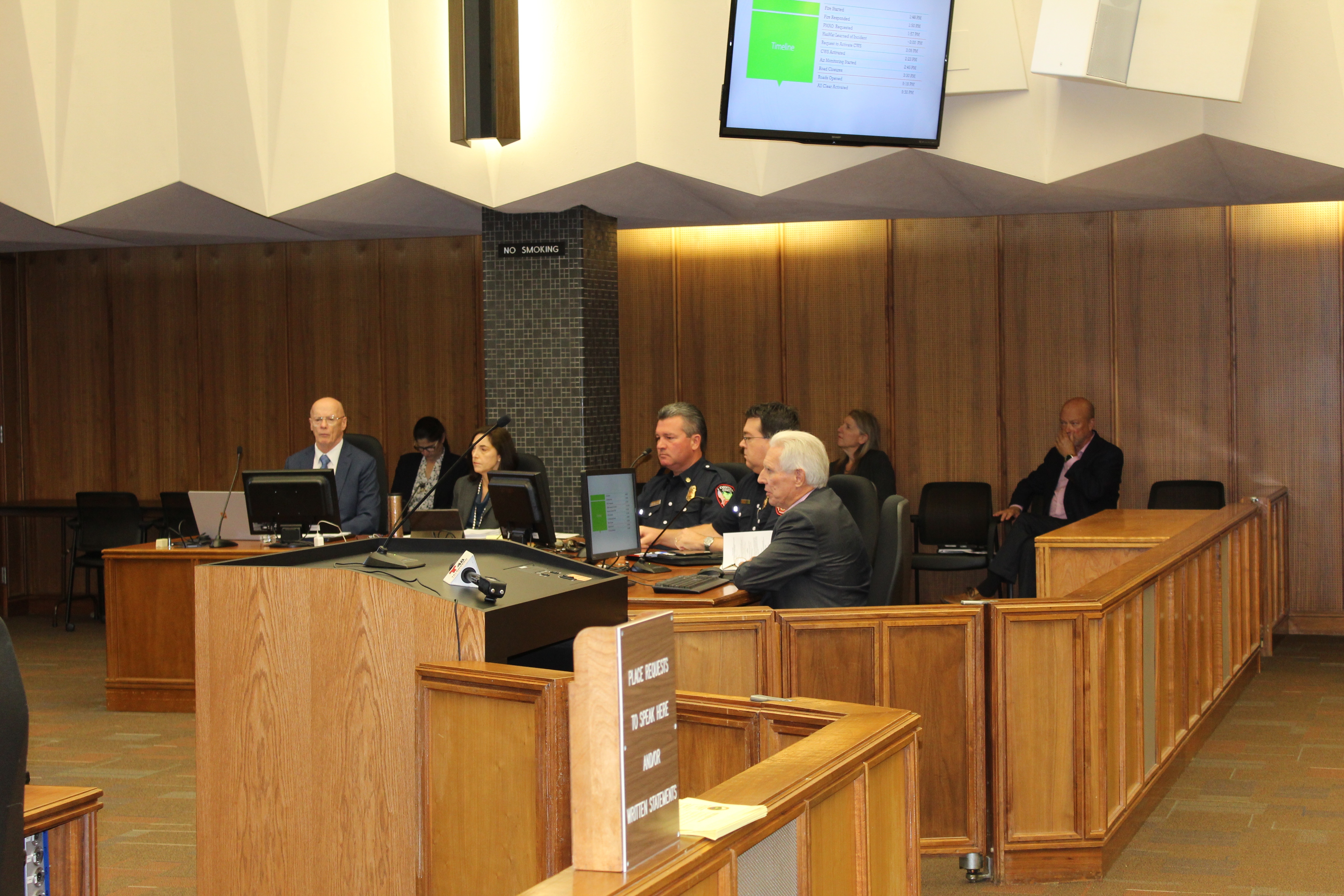
The Contra Costa County Board of Supervisors conducted a hearing on Tuesday to learn from county fire and hazardous materials officials what may have caused the Oct. 15 fire that caused the destruction of 250,000 gallons of ethanol, a chemical mixed with gasoline At the meeting were from left County Administrator David Twa, Contra Costa County Assistant Counsel Mary Ann Mason, Contra Costa County Fire Protection District Deputy Fire Chief Aaron McAllister, CCCFPD Fire Chief Lewis Broschard, and Contra Costa County Hazardous Materials Program Director Randy Sawyer. Photos by Daniel Borsuk.

Form committee to consider half-cent sales tax measure for Nov. 2020 ballot

By Daniel Borsuk

Contra Costa County Supervisors on Tuesday demanded that county officials confirm that operators of the fire damaged NuStar Energy plant in Crockett not resume operations until its fire and hazardous materials safety measures have been completely reviewed and upgraded by state and federal authorities.

“I want updated progress reports on your investigations,” demanded Board Chair John Gioia, whose District 1 covers the Crockett refinery location where the fire erupted from a tank filled with ethanol at 1:45 p.m. on Tuesday, October 15. The fire spread, catching a nearby tank also containing ethanol. Some 250,000 gallons of ethanol were destroyed in the fire.

The blaze forced county authorities to call a Shelter in Place in the Crockett area. Interstate 80 was closed for six hours. The incident was officially over at 8:10 p.m. when I-80 was reopened to traffic by the Highway Patrol, said Contra Costa County Director of Hazardous Materials Randy Sawyer.

“At the end of the day, the incident was contained, “said Contra Costa County Fire Protection District Chief Lewis Broschard. “No other tanks were destroyed. No other materials were discharged.”

Broschard told supervisors it was through the fire fighting resources of NuStar Energy and several other refineries that were able to promptly respond to the fire site to assist CCCFPD in extinguishing fire. Those refineries – Shell, Chevon, Phillips 66, Tessoro, and Marathon – supplied foam that the county fire district did not have to adequately extinguish the blaze, said Chief Broschard.

Chief Broschard said at this time there is no known cause for the fire including whether arson may have been a factor.

Gioia made it clear to Contra Costa County Fire Protection District Chief Broschard and Contra Costa County Hazardous Materials Program Director Randy Sawyer that he wants a thorough investigation completed before “there is a reopening” of the NuStar plant.

Supervisors heard from eight speakers, all critical of NuStar and its safety track record.

NuStar spokesperson Mary Rose Brown told the Contra Costa Herald via an emailed message:

“We absolutely agree, and we are working closely and cooperatively with CalOSHA and other regulatory agencies on detailed plans to ensure that the facility is safe to operate before it is reopened. We also are continuing to work in very close cooperation with all applicable local and state regulatory agencies to investigate the root cause of the incident so that we can take whatever measures are required to ensure the continued safety of our employees, contractors, neighbors and the community. We worked over the weekend to pump liquids out of the incident area and CalOSHA and local fire investigators accessed the area today (Tuesday).”

County resident Carl Davidson suggested that the NuStar plant incident may have been triggered by a seismic event since the facility is located on the Pinole fault and the fire erupted after seismic events were reported in the Pleasant Hill area the previous day.

Twenty-five-year Crockett area resident Isabella Izzi said the board of supervisors and regulators should clamp down on NuStar for this environmental violation and future violations by requiring the refiner to provide hazmat masks to all residents of Crockett. “The Board of Supervisors should make it clear that it will deny any new expansion at that refinery,” she said.

Dan Torres, a representative of an industrial fire sprinkler installation union, questioned the quality and reliability of the fire sprinkler system installed at NuStar.

At the end, Chair Gioia asked that updates on the NuStar fire will be reported at the Public Safety Committee that he chairs.

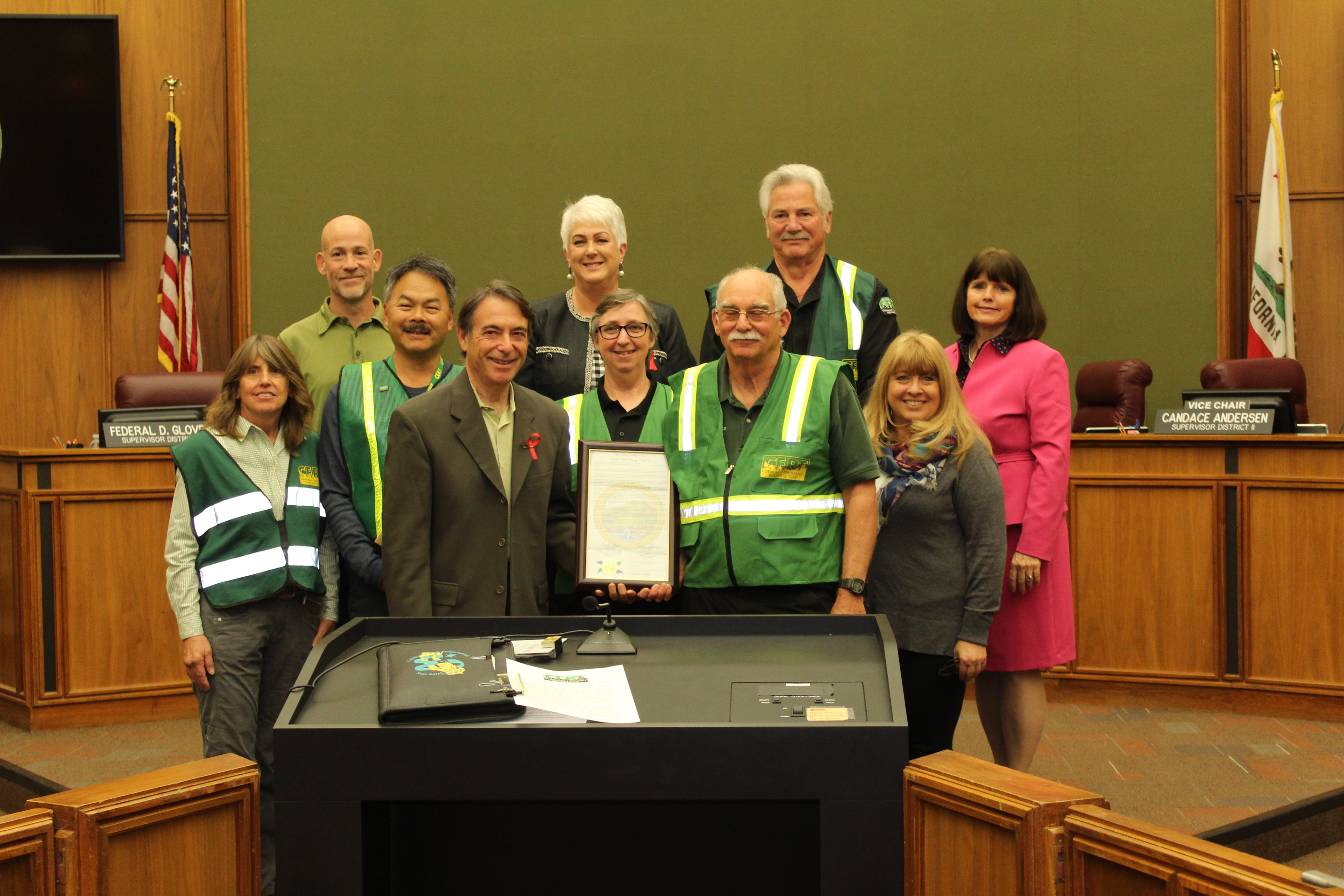
The Contra Costa County Board of Supervisors recognized the community service of CERT C-8 on Tuesday. Currently consisting of 70 members, supervisors recognized the organization that is known to dispatch volunteers to train senior care staff, serve as Amateur Radio Operators, Red Cross Shelter workers, traffic control and join the Contra Costa CART. C-8 has helped to get Spanish Cert out to many areas of the county. The program is called Listos.

Sales Tax Ad Hoc Committee Formed

Supervisors voted 4-0 to create an ad hoc committee to explore the feasibility of placing on the ballot a sales tax measure. The committee will consist mainly of union leaders, county agency heads and nonprofit organizations leaders.

On the vote, District 5 Supervisor Federal Glover was absent.

At the recommendation of District 4 Supervisor Karen Mitchoff, who serves on the Finance Committee, proposed the establishment of a citizen-based ad hoc committee to study a proposal that could wind up on a ballot for county voters to decide on perhaps by the November 2020 general election.

In California, the maximum sales, use, and transactions tax rate is 9.25 percent. That includes a statewide base sale and use tax of 7.25 percent and up to 2 percent for local district transaction and use taxes.

Current projections for annual revenues for a countywide transaction and use tax are one half cent $93 million and quarter cent $46.5 million. Current projections for annual revenues for an unincorporated area transaction and use tax are one half cent: $8.32 million and one.

So far, the ad hoc committee will study several potential tax scenarios. Current projections for annual revenues for a countywide transaction and use tax area:

. 0.50 percent (1/2 cent): $93 million

. 0.25 percent (1/4 cent): $46.5 million

Projections for annual revenues for an unincorporated area transaction and use tax are:

. 0.50 percent (1/2 cent): $8.32 million

. 0.25 percent (1/4 cent): $4.16 million

Mitchoff said she is promoting the sales tax ad hoc committee because she frequently hears from constituents why Contra Costa County does not have a sales tax while other counties like Alameda, San San Mateo, Santa Clara and others do draw additional revenues for county services from a sales tax.

The ad hoc committee will be led by stake holders, not supervisors, Mitchoff said. “We want all comers at the table,” she said. “This will be a difficult lift.”

“This is a huge opportunity,” said Sean Casey, executive director of the nonprofit organization First 5. “16,000 families could benefit from this in Contra Costa County.”

The Contra Costa County Board of Supervisors designated November 6 as ”Shelter-in-Place-Education Day” in all public and private schools and children centers in the county. The Contra Costa Community Awareness Emergency Response Group – CAER – is sponsoring the 18th Annual Shelter-in-Place Drill and assisting schools and childcare centers with their emergency preparedness. At the resolution presentation during the board’s Tuesday meeting were from left REACHProject Executive Director Mickie Marchetti, District 4 Supervisor Karen Mitchoff, Board Chair John Gioia, Contra Costa County Hazardous Materials Program Director Randy Sawyer, District 3 Supervisor Diane Burgis, and Vice Chair Candace Andersen.

In other business, the supervisors:

-Approved a $240,000 contract to Concord Yellow Cab, Inc. to provide non-emergency taxicab transportation services for Contra Costa Regional Medical center and Contra Costa Health Center patients for the period July 1, 2019 through June 30, 2020. The county pays taxicab service for patients unable to transport themselves to medical appointments due to medical conditions, including physical disabilities, patients who have verifiable seizure disorder or patients who have received medications which has or could impair their mobility.

-Approved a $1.97 million Public Works Department contract with Debri-Tech, Inc. to provide on-call assistance with trash and abandoned waste cleanup and removal for the Contra Costa County Watershed Program for the program October 15, 2019 through September 30, 2022.

-Approved the issuance of $85 million in Multifamily Housing Revenue Bond by the California Statewide Communities Development Authority for the Fairfield Hilltop LP, a California limited partnership, to provide for the financing of the acquisition and rehabilitation of a 322-unit multi-family housing development known as Hilltop Commons Apartments located at 15690l Crestwood Drive.

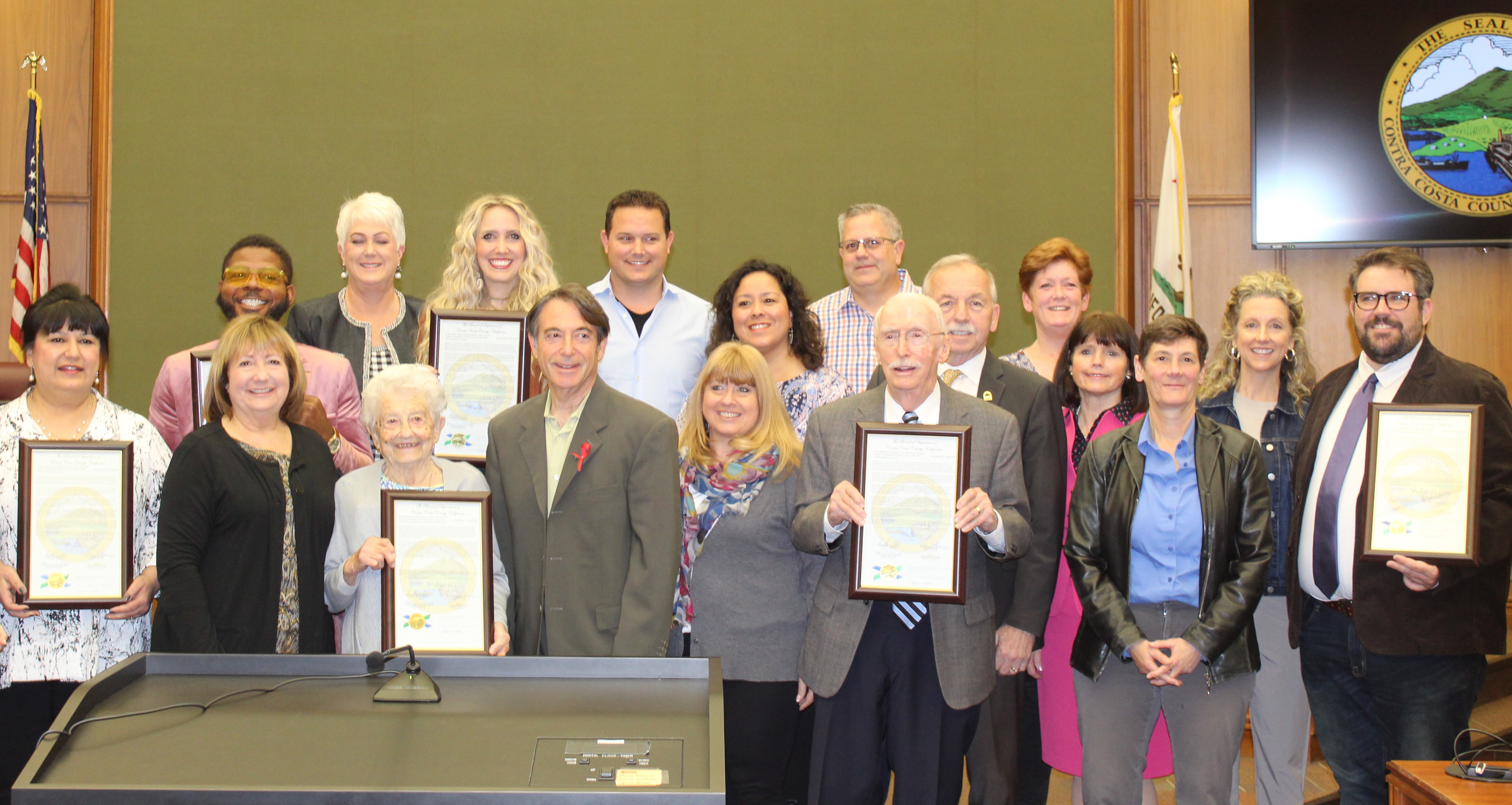
Some of the county’s major figures in the arts were honored by the Contra Costa County Board of Supervisors on Tuesday. Supervisors presented Awards for Outstanding Contributions to the Arts. Supervisors recognized the Lafayette Town Hall Theater for reaching a milestone celebrating its 75th anniversary and 300th theatre production. The theater’s theater and dance education programs serve 600 families each year. The Blue Devil Performing Arts, founded by Tony and Ann Odello in 1957, was recognized for serving more than 6,000 young persons during a long celebrated history. The Blue Devil Performing Arts, founded as a Drum Corps with a separate marching team, but later added glockenspiels (bells), Color Guard and horns to their productions was undefeated State Champion drum and Bell Corps from 1957 to 1970. The majorettes earned six National Championships and 12 National Team titles. Supervisors also honored Michelle Seville, who is retiring after 12 years as manager of Richmond’s Arts & Culture Center. Seveille was one of the original park rangers at the Rosie the Riveter National Historical Park when it was first established in 2000.

Filed Under: News, Supervisors, Taxes, West County

Supervisors withdraw Blackhawk police tax measure set for August 27

June 3, 2019 By Publisher Leave a Comment

Possible November ballot measure instead

By Daniel Borsuk

At a specially called Tuesday meeting, on May 28, the Contra Costa County Board of Supervisors took the unusual action of withdrawing a special tax, measure approved a week earlier, that would have permitted residents of the Blackhawk Homeowners Association to vote on whether to increase a parcel tax to keep police services intact.

The special election scrubbed by supervisors on a 3-0 vote, was originally to be held August 27 and would have generated sufficient parcel tax revenue from Blackhawk homeowners to maintain police services that are provided by the Contra Costa County Sheriff at current levels, three deputies and one lieutenant.

At the request of District 3 Supervisor Diane Burgis of Brentwood, whose district includes the residential area consisting of 2,027 exclusive homes near Danville, the supervisor said after the May 21 action she had met with representatives of the Blackhawk Country Club, which opposes being included in any type of parcel tax proposal for police services. Burgis said she will present at an upcoming meeting a Blackhawk police services parcel tax proposal that would be “fair and agreeable.”

“We’ve had challenges concerning the funding for the police district,” Burgis admitted.

In the May 21 action, the special taxes levied in the zone for police protection would have been increased in fiscal year 2020-2021 to $380 per parcel for residential properties, including single, small multiple and large multiple, $3,040 per parcel for commercial/industrial/institutional properties and $13,300 per parcel for commercial/theater properties. The ordinance also would have taxed parcels owned by the Blackhawk County Club, which are currently exempt from the Zone A police protection special tax.

While admitting the association has been losing revenues to support the police services at current levels, Blackhawk Homeowners Association President Ron Banducci, who is also chairman of the Blackhawk Police Advisory Committee, had informed supervisors at the May 21 meeting that without the infusion of increased revenues from homeowners residents would lose one deputy from its police department.

At Tuesday’s meeting, Banducci warned supervisors to leave intact their May 21 decision to allow a vote on the August 27 parcel tax measure that would also, for the first time, include the Blackhawk Country Club to be assessed parcel taxes.

He cautioned supervisors Federal Glover of Pittsburg and Board Chair John Gioia of Richmond about any “backroom deal by Supervisor Burgis and the Blackhawk Country Club for $40,000 for 10 years” to allegedly be excluded from a police district tax district.

Blackhawk Homeowners Association member, Rick Marse, said the fact that Burgis and the country club have been meeting makes any kind of deal “completely irregular.”

Another Blackhawk resident Henry Schutzel thought that the meeting was invalid because it violates the public open meeting law. “I believe this meeting is a violation of the Brown Act,” he claimed.

Even then, without much comment from Supervisors Glover or Gioia on the issue at hand, Burgis’s request was unanimously approved.

Filed Under: News, Politics & Elections, San Ramon Valley, Sheriff, Taxes

Supervisors to study county sales tax proposal for November 2020 ballot

May 23, 2019 By Publisher Leave a Comment

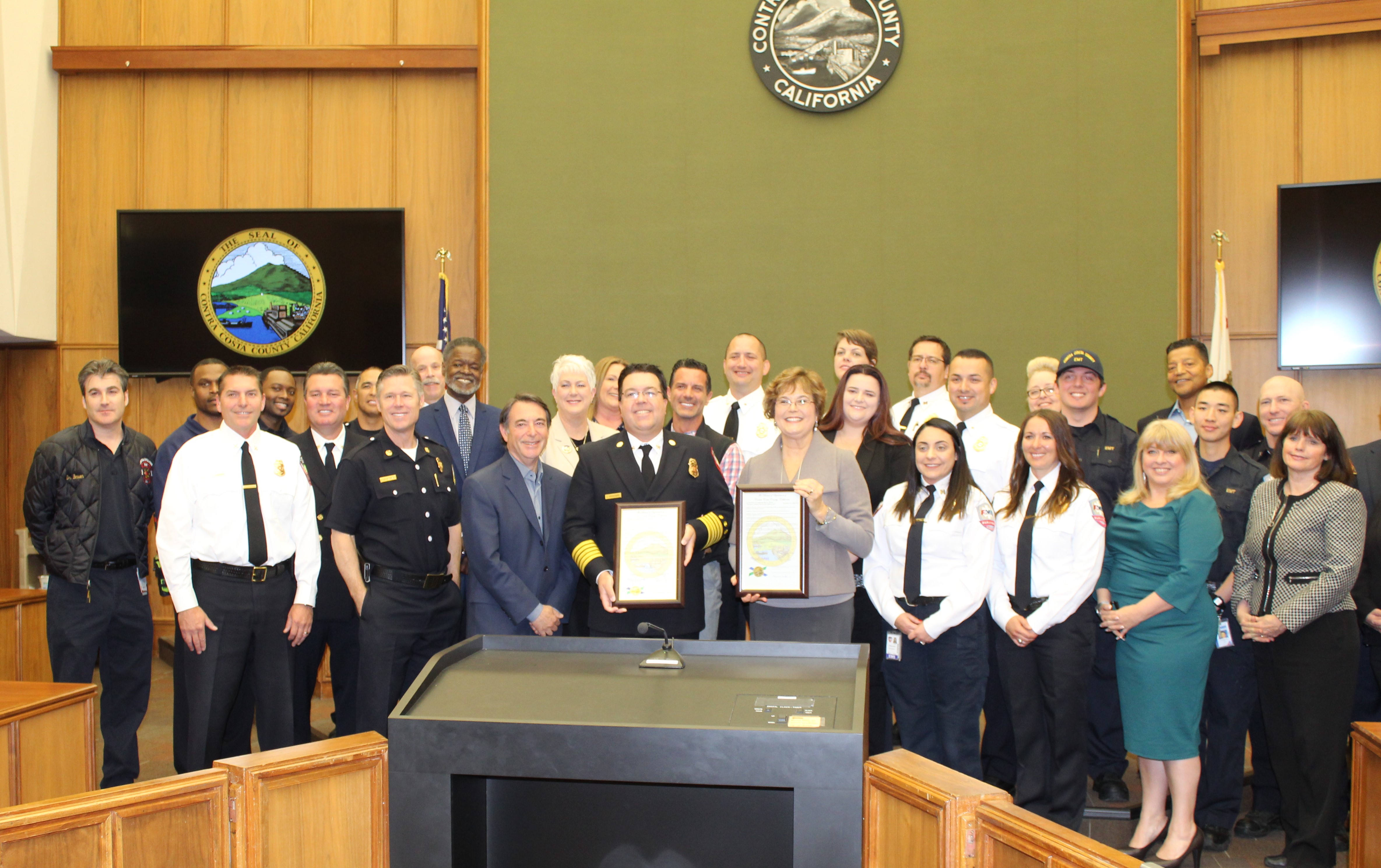
The Contra Costa County Board of Supervisors recognized National Emergency Medical Service Week, May 19 through 25, by handing out resolution to Contra Costa County Fire Chief Lewis Broschard and EMS Director Pat Frost on Tuesday. The supervisors’ resolution recognizes the vital work of responders including medical technicians, paramedics, police, firefighters, emergency nurses, emergency physicians, emergency medical dispatchers, EMS educators, and EMS administrators for the roles they play in the EMS system. Photo by Daniel Borsuk.

Exclude Blackhawk, Bollinger Canyon from commercial cannabis ordinance; prevent rail service from returning to line through Richmond park

By Daniel Borsuk

The possibility Contra Costa County residents might be voting on a sales tax measure, perhaps in the November 2020 general election, gained traction Tuesday when Supervisor Karen Mitchoff convinced supervisors to have the Finance Committee study the feasibility of placing a tax measure before the voters, next year.

Supervisors voted 5-0 to assign the Finance Committee to examine the pros and cons of putting a sales tax proposition on the November 2020 ballot while also considering another agenda item — the pros and cons of placing a half-cent sales tax ballot measure to fund transportation projects laid out in the Contra Costa Transportation Authority’s Transportation Expenditure Plan.

As it turned out, supervisors rejected the idea of pushing ahead on a new transit tax proposition, thinking the timing might be off-track. Mitchoff reasoned another half-cent sales tax for transportation projects might not draw the necessary two-thirds majority voter approval particularly when voters remember passing the half-cent Measure J by a 71 percent voter approval in 2004. Measure J’s $2.5 billion will not be exhausted until 2034.

“I don’t believe our taxpayers will support a transit tax measure requiring a two-thirds voter approval” Mitchoff said. “We need to have a conversation on a countywide general sales tax.”

The supervisor from Pleasant Hill thinks a county sales tax that needs a 50 percent voter approval might be a better route to go, even though the revenue would have to be disbursed to diverse services like medical, social services, public defender, sheriff, public works, district attorney and other county services.

“You should focus on other services,” said Justin Decker of the International Federation of Professional Technical Engineers Local 21. “We’re against the transit proposal.”

County eligibility worker Kathy Beverly said the county is seriously understaffed with eligibility workers at 170 unfilled positions.

“County workers oppose a transit sales tax proposal,” she said.

SEIU Field Representative Ye Do cautioned supervisors that placing a transit tax on the ballot could backfire when there is a need to financially address social services. She cited how a single father of three children needed county assistance when he had to move three time under hardship conditions.

San Mateo, Santa Clara, and Alameda counties assess sales taxes in order to generate additional revenues to fill in funding gaps that property tax and state and federal resources fall short on funding county services, especially social and medical services. Alameda county draws $150 million in annual revenue from its sales tax.

“It’s very clear we need a sales tax for transportation, “said District 5 Supervisor Federal Glover of Pittsburg, who also serves as the county representative on the Metropolitan Transportation Commission. “It’s a quality of life issue. It may not be optional. Just to get to work, to go home. These services are so crucial. I don’t know if we have any other bargaining chips.”

“This is a helpful issue,” said Vice Chair Candace Andersen of Danville. “What we need are more park and ride lots.”

Board Chair John Gioia, who has at previous board meetings promoted the county sales tax concept, remarked because of passage of Measure J, “Things have changed. When one sales tax measure for transportation passes, it makes the next sale tax measure much harder to pass.”

The Contra Costa County Board of Supervisors presented a resolution to Contra Costa County Director of Health Services Anna Roth recognizing May as Menth Health Month. During the month of May, county agencies have made a commitment to raise awareness and public education to replace misinformation and eliminate stigma concerning mental health and promote understanding that people living with mental health challenges can lead to productive lives. Photo by Daniel Borsuk.

Supervisors Exclude Blackhawk, Bollinger Canyon from Commercial Cannabis Ordinance

In other action, supervisors voted 5-0 to add Blackhawk and Bollinger Canyon to the list of areas to be excluded from the county’s commercial cannabis ordinance. The ordinance had prohibited commercial activities in Alamo, Bethel Island, Contra Costa Centre, Sandmound Slough, and Saranap.

Dan Clancy, owner of the Bollinger Canyon property that he had planned for cannabis cultivation and distribution purposes, pleaded with supervisors “give us a shot.”

But the site, which was a former Nike missile site, apparently fell through the cracks during the planning process, according to Ruben Hernandez of the Department of Conservation and Development and was meant to be excluded for any type of cannabis activity.

Supervisor Andersen, who represents the Bollinger Canyon area, said the Bollinger Canyon site was “a clerical error” during the planning review process.

Blackhawk Police Tax Election Set for August 28

Supervisors voted 5-0 to authorize an August 28 election in the County Service Area P-2 Zone A Blackhawk area even though there was opposition from the Blackhawk Country Club that did not want to be included in the police assessment district for the first time in the 35-year history of the police zone. The country club claims it does not need the police services provided by the county sheriff’s department because of the low crime activity emanating from the club. There have been two calls for police services in the past year.

The Blackhawk Police Department consists of one lieutenant and three deputies provided by the county Sheriff-Coroner’s Office, but according to Ron Banducci, chairman of the Blackhawk Police Advisory Committee and president of the Blackhawk Homeowners Association, unless voters pass the August tax measure the police department will have to cut one of the deputy positions.

“Although physically within the district, the Blackhawk Country Club has not historically been included in the parcel tax structure” Banducci told supervisors. “This means that for 35 years, the country club has been receiving services from the Blackhawk police, but has not provided financial support. The Blackhawk Police Advisory Committee believes it’s time for the country club to pay its fair share. The Blackhawk County Club is the largest country club in Contra Costa County. It’s not fair for our residents to be subsidizing police services for a county club which has annual revenues of over $20,000,000.”

Supervisors Oppose BNSF Railway Co. reactivating rail service through Richmond park  

Supervisors voted 5-0 in approving a resolution opposing the plans of BNSF Railway Co. to reactivate rail service through Miller/Knox Regional Shoreline Park and Ferry Point in Richmond. Supervisors cited potential safety, health, and environmental impacts should the railroad resume rail service through the popular park owned and maintained by the East Bay Regional Park District (EBRPD).

No one from the railroad spoke, but based on an Oct. 9, 2018 letter to the EBRPD, the railroad has “indicated that regarding extending use of the rail line through Miller/Knox Regional Shoreline Park, including Ferry Point, that ‘it has notified the Park District of its expanding business of Richmond Terminal, necessitating the reactivation of its rail use with the easement in the near future.”

Among the impacts the supervisors concurred would affect residents frequently using the park are:

  • Creating a significant safety hazard for the community, especially children at the park.
  • Allowing trains to cut off visual and physical access to the shoreline and Bay.
  • Bisecting a heavily used community and regional park.
  • Allowing storage of railroad cars carrying hazardous substances.
  • Increasing harmful diesel emissions in the community and the park, leading to increased health risk, a community which is already disproportionately impacted by local emissions.
  • Increasing asthma rates in a city that already has one of the highest asthmas rates in the Bay Area.
  • Increasing blockage of the West Richmond Avenue railroad grade crossing.

Supervisors receive report on performance bond reduction for solid waste collection ordinance

Supervisors also approved as a consent item a two-page report from Environmental Health Director Marilyn Underwood about the effects of the board’s 2018 decision to reduce the performance bond amount from $50,000 to $20,000 for the Solid Waste Collection & Transportation Ordinance.

“Environmental Health issued the first non-franchise solid waste collection and transport permit on March 19, 2019 to JUNKCAT, LLC, “Underwood’s report states. The company serves mostly West County.

“More recently, EH staff have had productive conversations with local representatives from O2E Brands (parent company of 1-800-GOT-JUNK) and anticipate an application for a non-franchise solid waste collection and transport permit from the Central Contra Costa County branch office in the near future,” the report states.

Underwood’s report also mentions, “EH staff continues to attempt to engage with companies such as Junk Beez and Vets Move Junk (local companies that have begun advertising to Contra Costa County residents) in an effort to inform these companies about the requirements of the non-franchise waste collection and transport permit program.”

Filed Under: Government, News, Taxes

New Year means higher tolls on seven Bay Area bridges beginning Tuesday

December 31, 2018 By Publisher Leave a Comment

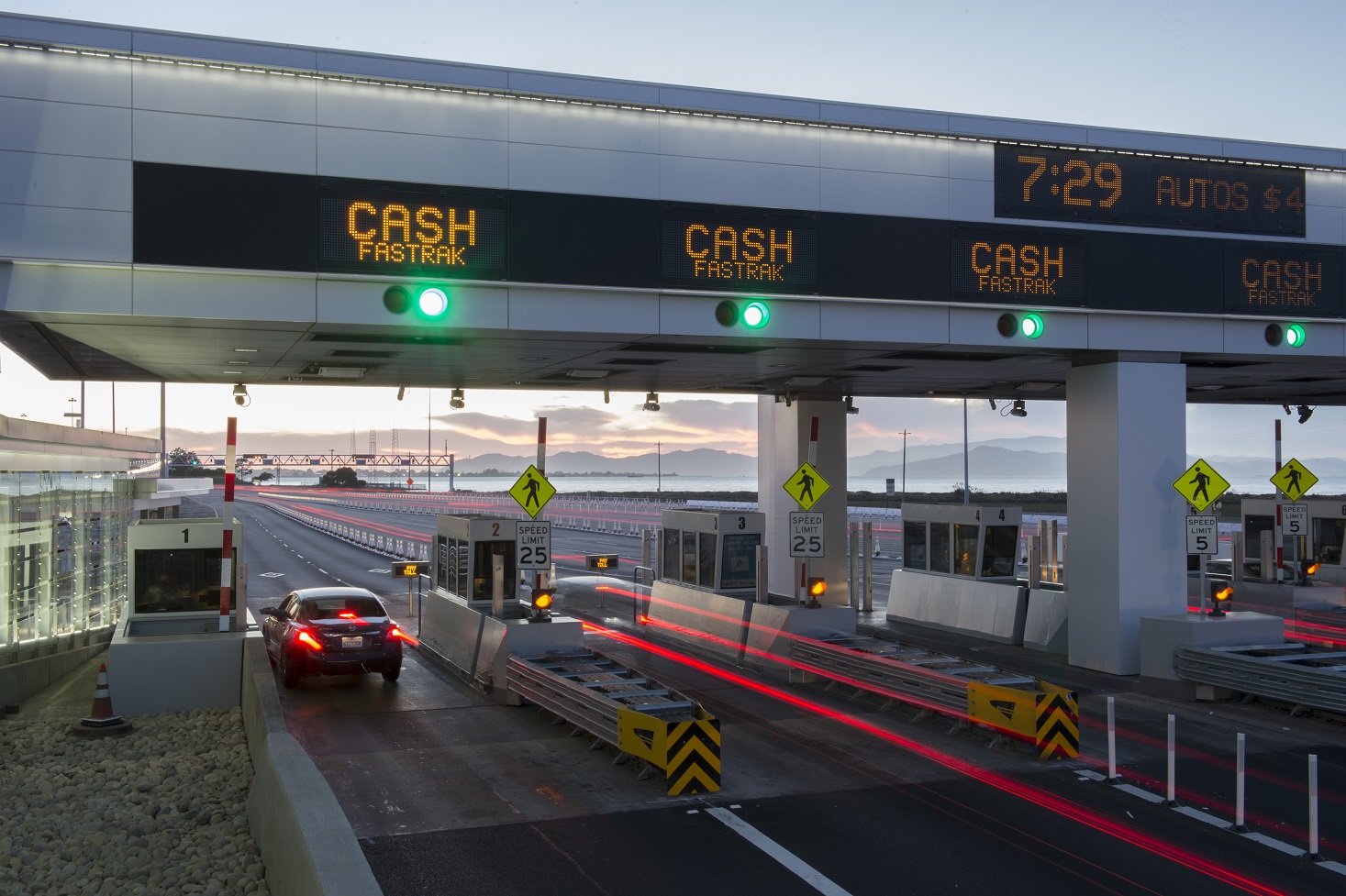
Bay Bridge Toll Plaza photos taken 9 /16 & 18/13. Karl Nielsen Photography www.karlnielsenphotography.com (805) 570-3395

First of three voter-approved increases

The Bay Area Toll Authority (BATA) reminds drivers that several important changes take effect Jan. 1, 2019, at the region’s seven state-owned toll bridges. These include the first of the $1 toll increases approved last year through state Senate Bill 595 and confirmed by voters through Regional Measure 3 in June 2018. This will mark the first toll hike at the state-owned toll bridges since 2010. Additional $1 increases will go into effect on Jan. 1, 2022, and on Jan. 1, 2025.

Regular tolls for two-axle cars and trucks (as well as for motorcycles) at the Antioch, Benicia-Martinez, Carquinez, Dumbarton, Richmond-San Rafael and San Mateo-Hayward bridges will rise to $6 from the current $5 on Jan. 1, 2019.

At the San Francisco-Oakland Bay Bridge, regular tolls will climb to $7 from the current $6 on weekdays from 5 a.m. to 10 a.m. and from 3 p.m. to 7 p.m. During weekday off-peak hours from 12 midnight to 5 a.m., from 10 a.m. to 3 p.m., and from 7 p.m. to midnight, Bay Bridge tolls will rise from $4 to $5; and on Saturdays and Sundays, Bay Bridge tolls will increase to $6 from the current $5.

Tolls for vehicles with three or more axles also will rise by $1 on Jan. 1, 2019, at all seven of the state-owned toll bridges: to $16 for three axles, $21 for four-axles, $26 for five axles, $31 for six axles, and $36 for combinations with seven or more axles.

Senate Bill 595 continues the peak-period toll discount for motorcycles, carpools and qualifying clean-air vehicles crossing any of the state-owned toll bridges on weekdays from 5 a.m. to 10 a.m. and from 3 p.m. to 7 p.m. The discounted toll is scheduled to increase to $3 on Jan. 1, 2019, from the current $2.50. To qualify for this discount, carpoolers, motorcyclists and drivers of qualifying clean-air vehicles must use FasTrak to pay their tolls electronically and must use a designated carpool lane at each toll plaza.

Senate Bill 595 also established a 50-cent toll discount for two-axle vehicles crossing more than one of the state-owned toll bridges during weekday commute hours of 5 a.m. to 10 a.m. and 3 p.m. to 7 p.m. To be eligible for the toll discount, which is to be applied to the second toll crossing of the day, motorists must pay their tolls electronically with FasTrak. Carpools, motorcycles and qualifying clean-air vehicles making a second peak-period toll crossing in a single day will qualify for an additional 25-cent discount off the already-discounted carpool toll. The two-bridge discount will not be available to drivers who use cash to pay their tolls.

New FasTrak customers can obtain toll tags at hundreds of Walgreens and Costco stores around the Bay Area. A complete list of participating locations — as well as an online enrollment and registration feature — is available on the FasTrak Web site at bayareafastrak.org. Customers also may enroll in the FasTrak program by phone at 1-877-229-8655; by calling 511 and asking for “FasTrak” at the first prompt; or in person at the FasTrak customer service center at 375 Beale Street in San Francisco. Operating hours are Monday-Friday, 8:30 a.m. to 5:30 p.m. and Saturdays, 9 a.m. to 1 p.m. FasTrak can be used in all lanes at all Bay Area toll plazas.

On Wednesday, Dec. 19, 2018 BATA formally approved the new toll schedule through adoption of BATA Resolution No. 128 at its regular December meeting. The Authority today also adopted BATA Resolution No. 129, which authorizes arrangements for the escrow of Regional Measure 3 funds pending the resolution of two lawsuits challenging state Senate Bill 595 and Regional Measure 3. Both lawsuits are pending in Superior Court in the City and County of San Francisco. Under BATA Resolution No. 129, the Regional Measure 3 toll increases, when collected, will be placed into an escrow account managed by an independent trustee. Following a process similar to voter-approved sales tax measures that face legal challenge, these funds will be transferred at least once each week from BATA to a Union Bank (Mitsubishi United Financial Group – MUFG) trust account, where the funds will be managed by a bank trust officer until final resolution of all litigation. Once the BATA legal team certifies there is a final resolution, the Authority will be asked to release the escrow. If BATA prevails in the litigation, the funds will be applied to BATA-approved programs. If BATA should lose the litigation, the funds will be reimbursed to tollpayers.

BATA, which is directed by the same policy board as the Metropolitan Transportation Commission (MTC), administers toll revenues from the Bay Area’s seven state-owned toll bridges. Toll revenues from the Golden Gate Bridge are administered by the Golden Gate Bridge, Highway and Transportation District, which joined with BATA to operate a single regional FasTrak customer service center in San Francisco. MTC is the transportation planning, financing and coordinating agency for the nine-county San Francisco Bay Area.

Filed Under: News, Taxes, Transportation

Supervisors consider cannabis industry tax measure, approve $3.5 billion 2018-19 budget

May 10, 2018 By Publisher Leave a Comment

$400 million increase over current year’s budget

By Dan Borsuk

Contra Costa voters could see a cannabis industry tax measure on the November 6 ballot after supervisors on Tuesday thrashed through statistics and ideas on what route to take in complying with the 2016 passage of state Proposition 64.

Determined to assemble a cannabis tax ordinance by an August 10 deadline in order to file a tax measure ballot for the November election, supervisors, under the guidance of Julie Enea of the County Administrator’s Office, presented a cannabis business tax levy proposal assembled by HdL, the Crescent City-based consulting firm hired by the county to assist the county in developing an ordinance in the aftermath of the passage of Proposition 64, the 2016 state initiative that legalized the sale of recreational marijuana.

The proposed cannabis business tax levy sets initial and maximum rates for eight license types.  Those proposed rates are:

  • Cultivator: Indoor, artificial lighting:  7/ft. initial rate, $10/ft. maximum rate.
  • Cultivator: Greenhouse, mixed lighting:  $4/ft initial rate, $7/ft. maximum rate.
  • Cultivator: Outdoor, natural light:  $2 ft. initial rate, $4 ft. maximum rate.
  • Cultivator Nursery: $1/ft. initial rate:  $2/ft. maximum rates.
  • Manufacturer/Non-retail microbusiness: 2.5 % of gross receipts initial rate, 4% of gross receipts maximum rate.
  • Testing: Not Available; initial rate:  2.5% percent of gross receipts maximum rate.
  • Distribution: 2% of gross receipts initial rate; percent maximum rate.
  • Retailer/Retail microbusiness: 4% of gross receipts initial rate and 6% of gross receipts maximum rate.

The supervisors’ cannabis tax ordinance proposal still requires a public hearing slated for July 10 when supervisors are expected to take official action on the tax ordinance proposal as well as the cannabis health ordinance.  The cannabis health ordinance will not appear on the November ballot.

During the supervisor’s proceedings on Tuesday, citizens and supervisors alike were concerned the amount of money the county would raise from a cannabis tax might fall short of the mark in adequately enforcing the law, especially the health ordinance.

Since enactment of Proposition 64 beginning this year, the state has collected only $34 million in tax revenue of the anticipated $175 million.  The state is considering shelving a plan to cut the excise tax from 15 percent to 11 percent even though cannabis sales are not as brisk as anticipated.

Board chair Karen Mitchoff of Pleasant Hill said the board should model the tax ordinance measure so that it requires a two-thirds majority voter approval, have an oversight committee and be reviewed yearly for adjustments based on the consumer price index.

“We’re going to impose this tax to cover our costs,” said District 2 Supervisor Candace Andersen of Danville, who represents a district where a number of citizens have aired widespread opposition to Proposition 64’s implementation.

Shawn Casey of First 5, a pro children’s organization, proposed that the county create with cannabis revenues a fund to aid children harmed by the effects of cannabis.

“I’m in favor of reasonable regulation,” said Vickie Norris of Friends of Proposition 64.  “I’m in favor of a tax.”  Norris noted Contra Costa’s tax proposal that HdL prepared won’t price out businesses like what occurred in Berkeley which had to scale back its retail sales tax which was 35%.

“The legal market is taking a piece out of the black market,” said HdL’s Mark Lovelace.  “Thirty percent of the marijuana remains in the black market.”

Supervisors OK 2018-2019 Budget Proposal

In speedy action, supervisors voted 5-0 in approving a $3.5 billion 2018-2019 recommended budget without public fanfare.  Supervisors will officially adopt the budget in September.  The spending plan is an increase from $3.1 billion for the current 2017-2018 fiscal year.

482,055 Square Foot North Richmond Warehouse Approved

Without hearing any opposition, supervisors unanimously approved a 482,055 square foot warehouse-distribution project that could create up to 800 jobs in the North Richmond.  Construction of the proposed Panattoni Warehouse project at 500 Pittsburg Ave. could get underway in the first quarter of 2019.

District 1 Supervisor John Gioia, who represents the North Richmond development site owned by Redus EL LLC, said the Panattoni Warehouse project is the first of at least two other similar warehouse distribution projects that are in the pipeline that will come before the supervisors in the near future.

Gioia refused to provide details about the other two warehouse-distribution projects.

“This is just not a warehouse,” the supervisor said.  Upon commenting how the North Richmond area is in a stage of transition from residential to warehouse, the supervisor said, “North Richmond has become ground zero for the fulltime warehouse area that is patterned after AMAZON, the type of company the gets products out sooner.”

In approving the project at Pittsburg Avenue and Richmond Parkway, supervisors approved a number of “traffic calming measures” in order to minimize the environmental impacts from more than 100 truck trips during peak period AM and PM periods.  Those traffic calming measures include “chokers and bulbouts.”

The developer will install solar power and plant 200 trees to replace 21 old trees that need to removed from the project site.  A 1.3-acre area site has been designated for a gas station with a mini-mart that will be constructed sometime after the warehouse-distribution building is constructed.

Filed Under: Finances, News, Supervisors, Taxes

Call for Applications: San Francisco Bay Restoration Authority, Independent Citizens Oversight Committee

April 5, 2018 By Publisher Leave a Comment

Deadline Extended – Due April 18, 2018

Measure AA is expected to generate $25 million annually for San Francisco Bay restoration over the next 20 years. Funding from this voter-approved measure will allow for the restoration of thousands of acres of natural habitat for wildlife, support our local economy, improve access to public lands, address flooding issues, and create thousands of new jobs.

The San Francisco Bay Restoration Authority’s Governing Board seeks six individuals to serve on the Independent Citizens Oversight Committee. The Committee has three main roles:

  1. Annually review the Authority’s conformance with Measure AA.
  2. Review the Authority’s audits and expenditure and financial reports.
  3. Publish an annual report of its findings, which will be posted on the Authority’s website.

The Board seeks committee members from all four Bay Area regions (North Bay, East Bay, South Bay and West Bay) with special subject matter expertise. Each member of the Independent Citizens Oversight Committee must possess expertise in one or more of the following:

  • Water quality
  • Pollution reduction
  • Habitat restoration
  • Flood protection
  • Improvement of public access to the San Francisco Bay
  • Financing of these objectives.

Ineligibility Factors for Membership

No person may serve on the Independent Citizens Oversight Committee who:

  • Is an elected official or government employee;
  • Has had or could have a financial interest in a decision of the Authority; or
  • Is affiliated with an organization associated with a member of the Governing Board.

Apply to serve on the Independent Citizens Oversight Committee by April 18, 2018.

Application Submittal, Materials, and Deadline

Send your application to karen.mcdowell@sfestuary.org by April 18, 2018. Electronic signatures and scanned signatures will be accepted.

  • Call for Applications
  • Application Form
  • Guidelines for the Independent Citizens Oversight Committee

For more information, visit the SF Bay Restoration Authority’s website or contact Karen McDowell, Project Manager, SF Bay Restoration Authority or 415-778-6685.

Filed Under: Environment, Government, Taxes

  • « Previous Page
  • 1
  • …
  • 6
  • 7
  • 8
  • 9
  • Next Page »
Furniture-Clearance-02-26B
Celia's-3-26-A
Delta-RC-A
Deer-Valley-Chiro-06-22

Copyright © 2026 · Contra Costa Herald · Site by Clifton Creative Web