• Home
  • About The Herald
  • Local Agencies
  • Daily Email Update
  • Legal Notices
  • Classified Ads

Contra Costa Herald

News Of By and For The People of Contra Costa County, California

  • Arts & Entertainment
  • Business
  • Community
  • Crime
  • Dining
  • Education
  • Faith
  • Health
  • News
  • Politics & Elections
  • Real Estate

Start 2026 Strong by claiming your CalKIDS Scholarship

December 26, 2025 By Publisher Leave a Comment

Source: CalKIDS

Free money for college!

More than 60% of public-school students in grades 2-12 are eligible for up to $1,500

By Vanessa Vizard, Vizard Marketing & PR

Sacramento, CA — As the year comes to a close and families begin setting goals for the year ahead, California is reaffirming its commitment to young people through CalKIDS, the California Kids Investment and Development Savings Program. Backed by a $2 billion statewide investment for more than five million children, CalKIDS is the largest education-focused asset-building effort in the nation, providing automatic scholarship accounts to millions of California children and students to help pay for college or career training after high school.

As families think about meaningful gifts this holiday season and prepare for the opportunities a new year brings, claiming a CalKIDS Scholarship Account is a simple step with a lasting impact. Eligible children and students can receive between $175 and $1,500 in free scholarship funds, with no application, no essays, and no income verification required. These funds are already set aside for children and students and can be used for qualified higher education expenses, making CalKIDS one of the most accessible scholarships available to California families.

“CalKIDS has been an amazing success, with nearly 1 million scholarship accounts already claimed by California families,” said State Treasurer Fiona Ma, CPA, Chair of the ScholarShare Investment Board, which administers CalKIDS. “As we look ahead to the new year, families across the state still have a tremendous opportunity to claim scholarship dollars already set aside for their children and students, funds that can help lower the cost of college or career training and expand what’s possible for their future.”

More than 60% of public-school students in grades 2 through 12 are eligible for a CalKIDS Scholarship Account worth up to $1,500.  When CalKIDS launched in 2022, the program awarded scholarship accounts to students from elementary school to high school, meaning current college students may also be able to claim and use their CalKIDS Scholarship funds today. Awardees can use their funds until age 26.

Additionally, 100% of newborns born on or after July 1, 2022 in California automatically receive a CalKIDS Scholarship Account worth up to $175. This includes an initial scholarship awarded at birth, with additional incentives available when families claim the account and link it to a ScholarShare 529 College Savings Plan where they can continue saving on their own.

CalKIDS Scholarships can be used for tuition and fees, required books and supplies, computer equipment, and other qualified education expenses at accredited institutions nationwide making CalKIDS one of the simplest and most flexible scholarships students can claim this holiday season and in the year ahead.

To date, CalKIDS scholarship funds have been used by nearly 150,000 students towards their academic success at a college or career training program. For one awardee, Bryan a student at California State University, Fullerton, CalKIDS was described as: “A financial ease into pursuing a degree.”

Photo: CalKIDS

How Students and Families Can Claim a CalKIDS Scholarship:

Claiming a CalKIDS Scholarship takes only a few minutes at CalKIDS.org.

  • For public school students, including those who are now college-aged, families will need the Statewide Student Identifier (SSID), a 10-digit number found on school portals, report cards, or by contacting the public school the student attended during the 2021–22, 2022–23, or 2023–24 academic years.
  • For children born in California on or after July 1, 2022, families will need the child’s date of birth and the Local Registration Number, a 13-digit number found on the birth certificate.

Once an account is claimed, families can log in at any time to view their scholarship balance, link it to a ScholarShare 529 account, learn how the funds can be used, and request a disbursement once the student is enrolled in higher education or career training.

CalKIDS reflects California’s long-term commitment to expanding opportunity, reducing education costs, and investing early in the success of its young people.

Families are encouraged to check if they have a CalKIDS Scholarship Account available to claim this holiday season by visiting CalKIDS.org.

Photo: CalKIDS

About CalKIDS: The California Kids Investment and Development Savings Program (CalKIDS) is the nation’s largest child development account program, providing scholarships for higher education. Administered by the ScholarShare Investment Board, and Chaired by State Treasurer Fiona Ma, CPA, the program is designed to promote the pursuit of higher education statewide by empowering families to build assets, nurture savings habits, and raise their educational aspirations. Eligible public school students can receive CalKIDS Scholarships worth up to $1,500 and every child born in California on or after July 1, 2022, is awarded a CalKIDS Scholarship worth up to $175, ensuring more families have the resources needed to support their children’s education. To learn more, visit CalKIDS.org.

Filed Under: Children & Families, Education, Finances, News, State of California, Youth

State Office of Traffic Safety awards $60,000 grant to the Oakley Police Department

November 19, 2025 By Publisher Leave a Comment

For traffic enforcement program to increase road safety

By Danielle Navarro, Oakley Assistant City Manager

Oakley, Calif. – The Oakley Police Department announced today that it has received a grant from the California Office of Traffic Safety (OTS) to support its ongoing enforcement and education programs to help reduce the number of serious injuries and deaths on our roads. The grant program runs through September 2026.

“We are grateful to receive this grant, which will strengthen our traffic enforcement efforts and improve road safety,” said Oakley Police Department Sergeant Steve Soares. “Through a combination of education and enforcement efforts, our goal is to reduce dangerous driving behaviors, prevent crashes, and make our roads safer for everyone.”

The grant will provide additional programs and resources, including:

  • DUI checkpoints and patrols focused on stopping suspected impaired drivers.
  • High-visibility distracted driving enforcement operations targeting drivers in violation of California’s hands-free cell phone law.
  • Enforcement operations focused on the most dangerous driver behaviors that put the safety of people biking or walking at risk.
  • Enforcement operations focused on top violations that cause crashes: speeding, failure to yield, stop sign and/or red-light running, and improper turning or lane changes.
  • Community presentations on traffic safety issues such as distracted driving, impaired driving, speeding and bicycle and pedestrian safety.
  • Collaborative enforcement efforts with neighboring agencies.
  • Officer training and/or recertification: Standard Field Sobriety Test (SFST), Advanced Roadside Impaired Driving Enforcement (ARIDE) and Drug Recognition Expert (DRE).

“Through focused traffic enforcement and education, we’re working toward a future where everyone will be safe on California roads,” said OTS Director Stephanie Dougherty. “By encouraging people to prioritize safety in their daily choices, we are creating a strong road safety culture together.”

Funding for this program was provided by a grant from the California Office of Traffic Safety, through the National Highway Traffic Safety Administration.

Filed Under: Finances, News, Police, State of California, Transportation

Report: The CSU fuels nearly every aspect of California’s growing economy

November 19, 2025 By Publisher Leave a Comment

Source: CSU

From strengthening California’s workforce to contributing billions in statewide industry activity, the CSU’s massive economic impact is undeniable.

By Jason Maymon, Senior Director & Amy Bentley-Smith, Director of Strategic Communications, CSU Media Relations & Public Affairs

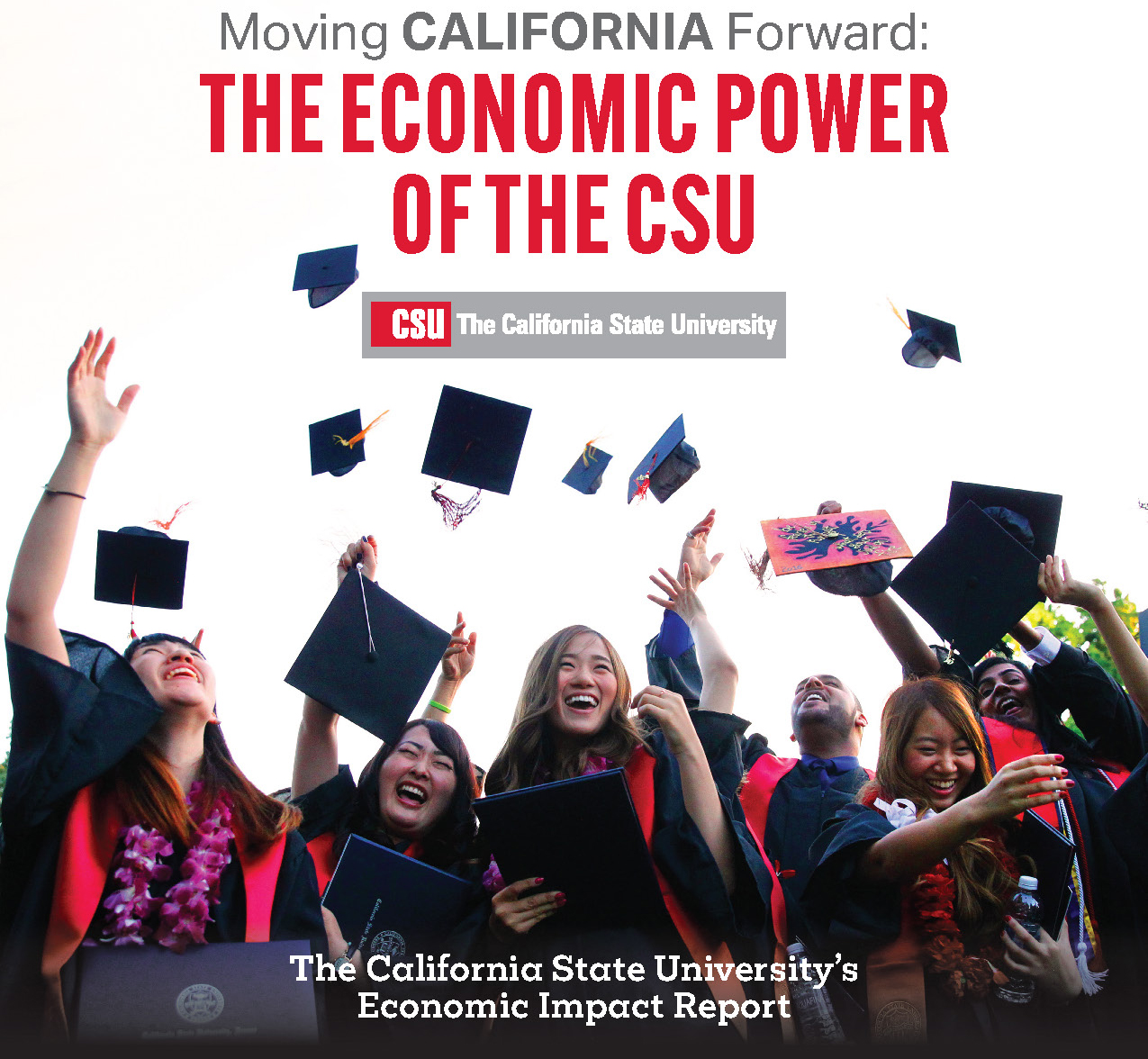
(November 18, 2025) Today, the California State University (CSU) released its 2025 economic impact report, underscoring the system’s broad contributions to fueling nearly every aspect of California’s economy

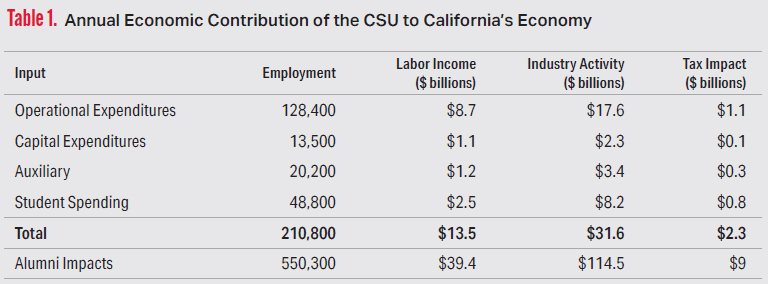
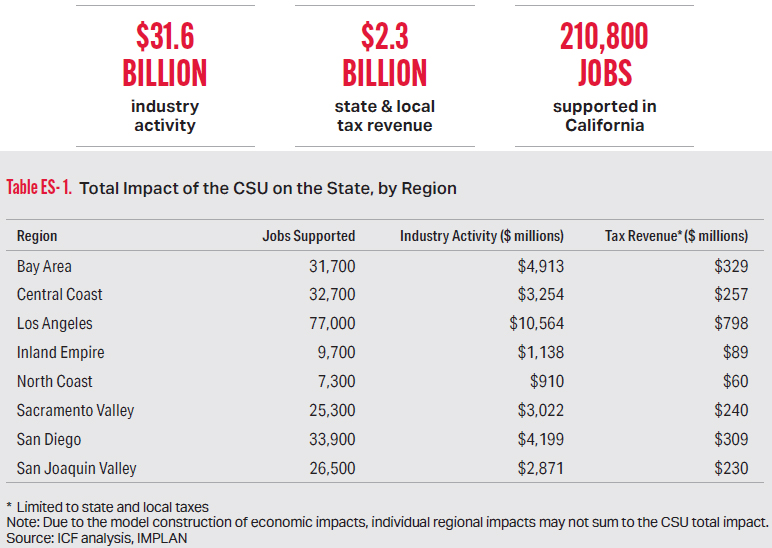
The report, Moving California Forward: The Economic Power of the CSU, details the role the CSU plays in strengthening the state’s key industries and preparing a skilled workforce essential to driving economic vitality. The report finds that in 2023–24 alone, CSU-related spending contributed more than $20 billion directly to California’s economy, generating $31.6 billion in statewide industry activity, supporting 210,800 jobs, and producing $2.3 billion in state and local tax revenue.

“This comprehensive report clearly demonstrates that resources entrusted to the CSU should not be considered an expenditure, but rather an investment – and an investment with a powerful and tangible return,” said CSU Chancellor Mildred García. “Importantly, the report measures not only dollars, jobs and industry activity, but also the CSU’s impact on our students’ lives and families, our contributions as a research powerhouse, and the countless benefits our universities deliver to our workforce, to communities across California, and to our nation.”

Source: CSU

“Education opens doors — and there is no greater or more prestigious educational system than California’s public universities,” said Governor Gavin Newsom. “These schools are a lifeline for first-generation and working-class students and channel vital talent straight into our workforce. From classrooms to clinics, fields to film sets, CSU graduates power the services, industries, and innovation that make California dominate and thrive.”

“Across California, the CSU is moving California and the state’s workforce forward,” said Stewart Knox, secretary of the California Labor & Workforce Development Agency. “Nearly half of all bachelor’s degrees awarded in our state come from the CSU – preparing talent that meets California’s evolving workforce needs in every region and major industry.”

Source: CSU 2025 Economic Impact Report

A Strong Return on Investment for California 

For every dollar California invests in the CSU, the system generates $7.69 in statewide industry activity, which increases to $35.53 when factoring in alumni earnings, the report finds. CSU alumni, whose incremental earnings totaled $97.8 billion in 2024, create a ripple effect across industries and communities statewide.

Beyond the financial return, CSU’s role in educating more than half a million students delivers transformative social value by expanding access to higher education and accelerating upward mobility for the nearly 125,000 graduates who walk the commencement stage every year prepared to contribute and lead in their fields.

Source: CSU’s 2025 Economic Impact Report

Powering California’s Workforce and Key Industries

As the producer of nearly half of California’s bachelor’s degrees, the CSU is providing the diverse, educated and skilled professionals required to meet workforce needs in the state’s top in-demand industries. Specifically, within the education and health services and professional and business services sectors, which together account for more than 1 million projected job openings by 2033, the CSU is producing over half of related bachelor’s degrees. CSU’s engineering and construction program also provides more than half of the state’s general engineering graduates, which supports infrastructure growth.

In the 2023-24 academic year, CSU campuses conferred:

  • 29,000 degrees in health care (representing 46% of such degrees awarded in the state)
  • 23,000 degrees in business and professional services (48%)
  • 14,000 degrees in humanities and social sciences (56%)

The CSU also produces:

  • 78% of the state’s agriculture graduates
  • 46% of graduates in public policy and criminal justice
  • 49% of graduates in media, culture and design
  • 37% of new multiple subject credentialed teachers

Source: CSU’s 2025 Economic Impact Report

Regional Impact: Strengthening Communities Across California 

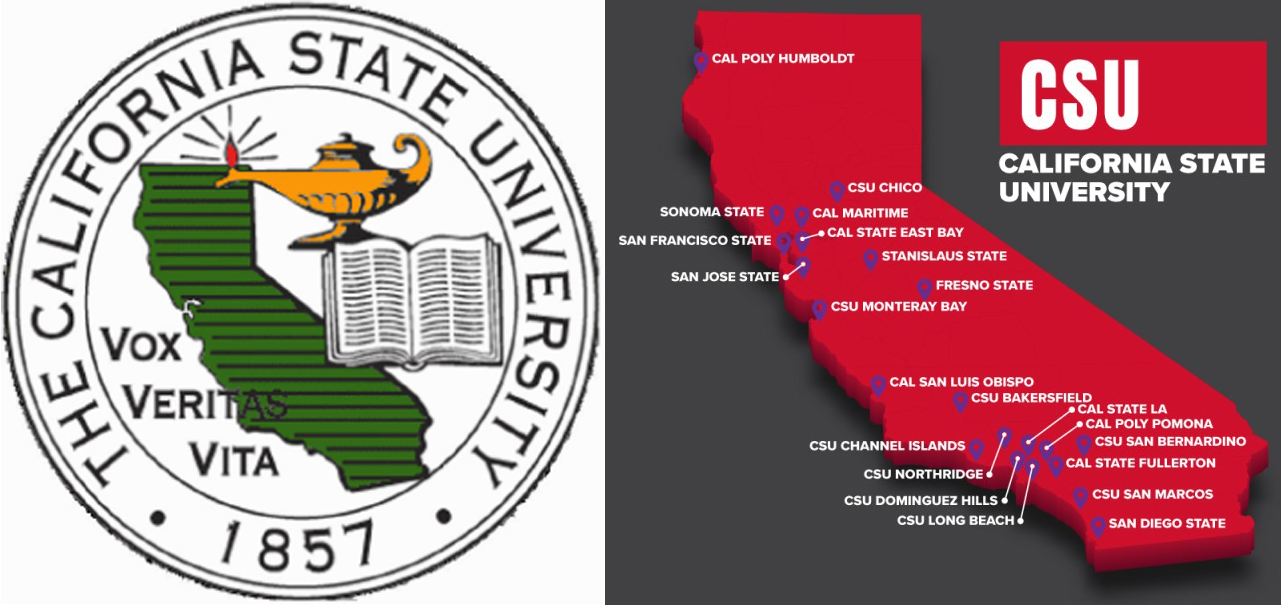
Each of the CSU’s 22 universities serve as anchor institutions, fueling job creation, innovation, and opportunity in their local community. The Economic Impact Report highlights significant regional benefits:

  • Bay Area: $4.8 billion in industry activity and 31,000 jobs supported.
  • Central Coast: $3 billion in industry activity and 31,500 jobs supported.
  • Inland Empire: $1 billion in industry activity and 9,218 jobs supported.
  • Los Angeles: $10 billion in industry activity and 74,900 jobs supported
  • North Coast: $718 million in industry activity and 6,598 jobs supported.
  • Sacramento Valley: $2.8 billion in industry activity and 24,613 jobs supported.
  • San Diego: $3.9 billion in industry activity and 32,760 jobs supported.
  • San Joaquin Valley: $2.6 billion in industry activity and 25,300 jobs supported.

These impacts demonstrate how the CSU powers California’s regional economies, ensuring that every corner of the state benefits from higher education, innovation, and workforce development.

Source: CSU’s 2025 Economic Impact Report

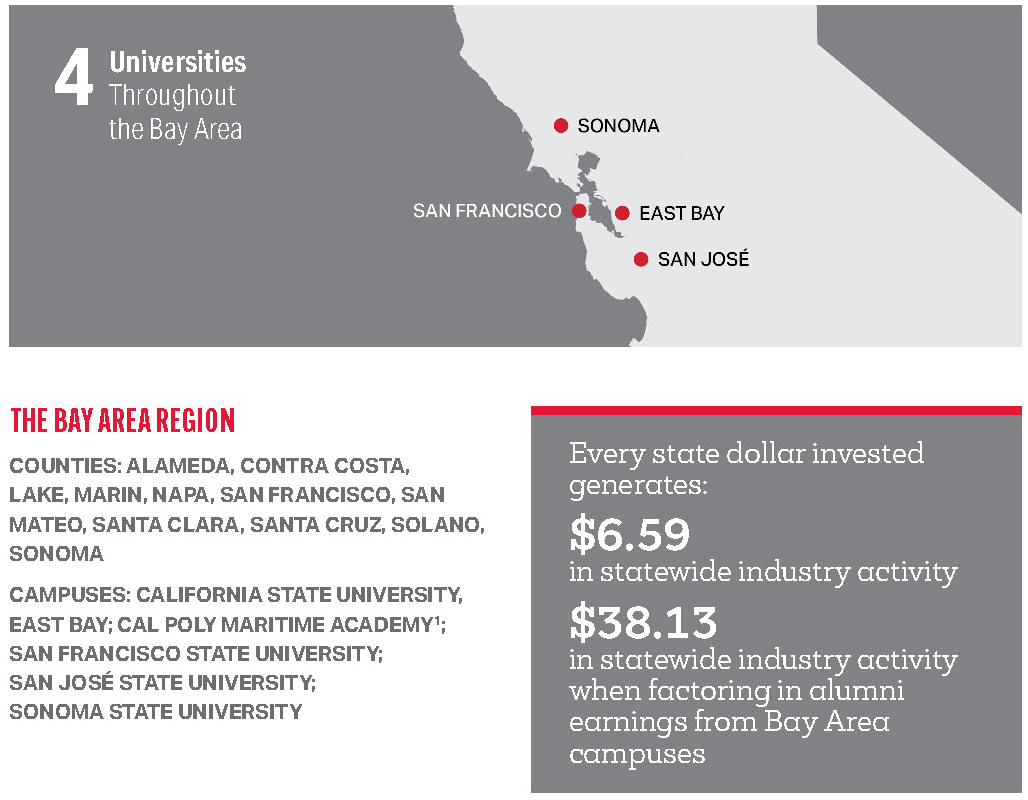
Bay Area Regional Impact

CSU spending through campus operations, capital investment and student spending on and off campus stimulate the economy of the Bay Area region. As detailed in Appendix B of the report, the direct spending for each campus is estimated using CSU financial data, enrollment figures, average student budget estimates and an analysis of California-based alumni earnings over time.

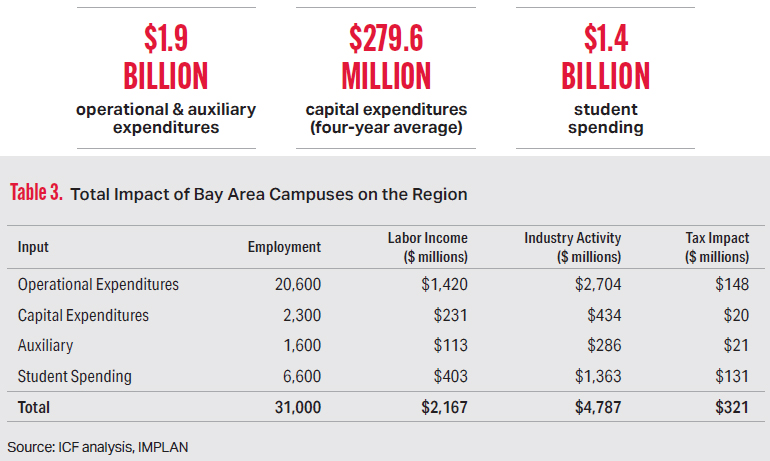
CSUs in the Bay Area had a direct spend of over $3.6 billion during the 2023-24 academic year, comprising the following four categories:

  • $1.7 billion on operational expenditures
  • $279.6 million on capital expenditures (four-year average)
  • $206.2 million on auxiliary expenditures
  • $1.4 billion on student expenditures

Many CSU alumni from campuses in the Bay Area region remain in California, contributing to the local economy. In 2024, they earned $19.5 billion in incremental earnings due to their CSU degree. That money, when spent in the local economy, sparked secondary impacts.

Source: CSU’s 2025 Economic Impact Report

During the 2023-24 academic year, CSUs in the Bay Area region generated a substantial economic impact across the region, supporting over 31,000 jobs and contributing $2.2 billion in labor income. Campus operational activities were the largest driver, accounting for more than 20,000 jobs and $1.4 billion in wages. Student spending and auxiliary services supported more than 8,000 jobs and injected nearly $1.7 billion into industry activity. Capital expenditures, while smaller in scale, supported 2,300 jobs and over $230 million in wages. Altogether, these activities culminated in $4.8 billion in industry activity and $321 million in tax revenues, underscoring the campuses’ vital role in regional economic vitality and public finance. Table 3 provides a further breakdown of results.

For more information, view CSU’s 2025 Economic Impact Report at calstate.edu/impact.

About the California State University

The California State University is the nation’s largest four-year public university system, providing transformational opportunities for upward mobility to more than 470,000 students from all socioeconomic backgrounds. More than half of CSU students are from traditionally underrepresented backgrounds, and more than one-quarter of undergraduates are first-generation college students. Because the CSU’s 22 universities* provide a high-quality education at an incredible value, they are rated among the best in the nation for promoting social mobility in national college rankings from U.S. News & World Report, the Wall Street Journal and Washington Monthly. The CSU powers California and the nation, sending nearly 125,000 career-ready graduates into the workforce each year. In fact, one in every 20 Americans holding a college degree earned it at the CSU. Connect with and learn more about the CSU in the CSU newsroom.​

* Transition to 22 universities in progress (Cal Poly SLO and Cal Maritime integrating). The integration process is anticipated to be complete by fall 2026. 

Filed Under: Economy, Education, News, State of California

County urges immigrants eligible for Medi-Cal to enroll before end of 2025

November 19, 2025 By Publisher 1 Comment

El condado insta a los inmigrantes elegibles para Medi-Cal a inscribirse antes de finales de 2025

By Contra Costa County Office of Communications & Media

(Martinez, CA) – Contra Costa County strongly encourages adult undocumented residents without health insurance to enroll in Medi-Cal this year while they are still eligible.

Starting Jan. 1, people ages 19 and older with what the state defines as unsatisfactory immigration status (UIS) – a category that includes undocumented residents and others who do not meet federal eligibility criteria – will no longer be able to enroll in full-scope Medi-Cal benefits, including seniors. The change in eligibility is the result of state budget cuts.

“We want undocumented members of our community to know they need to act quickly and sign up for Medi-Cal before it’s too late,” said Board of Supervisors Chair Candace Andersen. “Enrolling now will ensure they’re covered when the rules change.”

State residents with UIS status who are already enrolled in Medi-Cal before Jan. 1, 2026, will be able to keep and renew most of their benefits, though adults 19 and older will lose dental coverage beginning in July 2026.

“Under the new rules starting on January 1, 2026, it is very important for Medi-Cal recipients who meet the definition of UIS, to stay in contact with the county and check their mail for any notices or renewal forms. One good way to stay in touch is to create an account in BenefitsCal,” said Marla Stuart, Director of Contra Costa County Employment & Human Services Department (EHSD). “Current UIS Medi-Cal recipients who do not complete a renewal on time will lose their Medi-Cal full coverage and will only be eligible for emergency services when they reapply.”

After the new rules take effect, immigration status will not affect Medi-Cal coverage for children under 19 and pregnant women and their infants. Adults 19 and older who are classified as UIS will still be able to receive Emergency Medi-Cal, which covers emergency medical treatment.

“Sign up today. Having Medi-Cal is one of the best investments you can make in your health,” said Dr. Grant Colfax, CEO of Contra Costa Health. “Whether it is through a primary provider, specialist, in urgent care or in the emergency room, having Medi-Cal it key to getting healthcare for you and your family.”

In Contra Costa, residents can call EHSD at (866) 663-3225 for information about enrolling in Medi-Cal or apply online at BenefitsCal.com.

For more information, read the Department of Health Care Services’ Medi-Cal Immigrant Eligibility FAQs.

En Español

(Martinez, CA) – El condado de Contra Costa recomienda encarecidamente a los residentes adultos indocumentados sin seguro médico que se inscriban en Medi-Cal este año mientras aún sean elegibles.

A partir del 1 de enero, las personas mayores de 19 años con lo que el estado define como estatus migratorio insatisfactorio (UIS), una categoría que incluye a los residentes indocumentados y otras personas que no cumplen con los criterios federales de elegibilidad, ya no podrán inscribirse en los beneficios completos de Medi-Cal, incluidas las personas mayores. El cambio en la elegibilidad es el resultado de los recortes presupuestarios estatales.

“Queremos que los miembros indocumentados de nuestra comunidad sepan que deben actuar rápidamente e inscribirse en Medi-Cal antes de que sea demasiado tarde”, dijo la presidenta de la Junta de Supervisores, Candace Andersen. “Inscribirse ahora asegurará que estén cubiertos cuando cambien las reglas”.

Los residentes del estado con estatus de UIS que ya estén inscritos en Medi-Cal antes del 1 de enero de 2026 podrán mantener y renovar la mayoría de sus beneficios, aunque los adultos mayores de 19 años perderán la cobertura dental a partir de julio de 2026.

“Según las nuevas reglas que comienzan el 1 de enero de 2026, es muy importante que los beneficiarios de Medi-Cal que cumplan con la definición de UIS, se mantengan en contacto con el condado y revisen su correo para ver si hay avisos o formularios de renovación. Una buena manera de mantenerse en contacto es crear una cuenta en BenefitsCal”, dijo Marla Stuart, directora del Departamento de Empleo y Servicios Humanos del Condado de Contra Costa (EHSD). “Los beneficiarios actuales de Medi-Cal del UIS que no completen una renovación a tiempo perderán su cobertura total de Medi-Cal y solo serán elegibles para los servicios de emergencia cuando vuelvan a presentar la solicitud”.

Después de que entren en vigor las nuevas reglas, el estado migratorio no afectará la cobertura de Medi-Cal para niños menores de 19 años y mujeres embarazadas y sus bebés. Los adultos de 19 años o más que estén clasificados como UIS aún podrán recibir Medi-Cal de emergencia, que cubre el tratamiento médico de urgencia.

“Inscríbase hoy. Tener Medi-Cal es una de las mejores inversiones que puede hacer en su salud”, dijo el Dr. Grant Colfax, director ejecutivo de Contra Costa Health. “Ya sea a través de un proveedor de atención primaria, un especialista, en atención urgente o en la sala de emergencias, tener Medi-Cal es clave para obtener atención médica para usted y su familia.”

En Contra Costa, los residentes pueden llamar a EHSD al (866) 663-3225 para obtener información sobre cómo inscribirse en Medi-Cal o presentar una solicitud en línea en BenefitsCal.com.

Para obtener más información, lea las preguntas frecuentes sobre la elegibilidad de inmigrantes de Medi-Cal del Departamento de Servicios de Atención Médica.

Filed Under: Health, Immigration, News, State of California

Prescription for Resiliency: CA State Parks continues to expand use of beneficial fire

November 6, 2025 By Publisher Leave a Comment

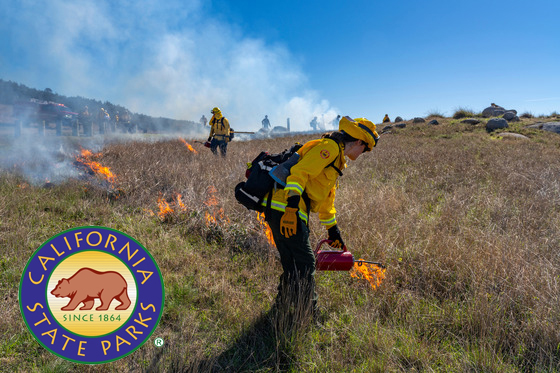
Salt Point State Park TREX TRAINING – A member of the California State Parks burn crew carefully sets fire during a prescribed burn operation at Salt Point State Park Oct. 31, 2025. Photo: ©2025, California State Parks by Brian Baer

By California State Parks, California Department of Parks and Recreation, Divisions of Boating and Waterways, Historic Preservation and Off-Highway Motor Vehicle Recreation

SACRAMENTO — On the heels of Governor Gavin Newsom’s latest executive order aimed at expanding the use of beneficial fire, California State Parks recently wrapped up prescribed burn operations at several parks statewide, continuing a significant expansion thanks to strategic investments under the Newsom administration’s wildfire packages.

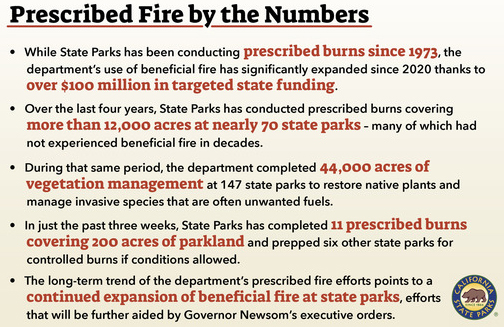
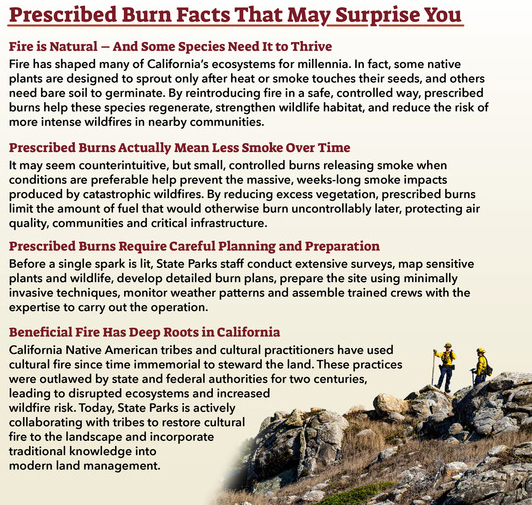
With the help of historic investments under the Newsom administration, California State Parks has significantly expanded its use of prescribed fire to improve wildfire resiliency, reduce fuels and restore fire-adapted ecosystems at parks all over the state – a trend that will continue following a recent executive order.

Among the recent operations was a unique training at Salt Point State Park and Kruse Rhododendron State Natural Reserve in Sonoma County, allowing park experts to showcase how prescribed burns are an important tool in the department’s ongoing efforts to reduce wildfire risk, improve the health of the local ecosystems by supporting native plants and wildlife, protect nearby communities and promote the long-term resilience of California’s public lands.

Source: CA State Parks

“Prescribed fires are not just a land management strategy but a time-tested tool to help increase biodiversity and reduce the risk of larger, more destructive wildfires,” said California State Parks Director Armando Quintero. “Thanks to Governor Newsom’s leadership and the help of our partners, we are expanding this essential work to make our state’s majestic landscapes healthier for generations to come.”

The burn at Salt Point State Park on Oct. 31 was conducted as part of State Parks’ Prescribed Fire Training Exchange, known as TREXs. Led by an experienced team including Statewide Burn Boss Sarah Gibson, the training helps facilitate information sharing and relationship building for personnel who work with fire. These exchanges provide certified fire practitioners with the opportunity to hone their skills and work toward or achieve more advanced qualifications with the support of fellow fire management professionals, some of whom came as far away as Canada to participate. View photos and a video from the training and burn here.

Governor Newsom has signed two executive orders to streamline the use of prescribed fire in California, including one on Oct. 29 aimed at expanding use of beneficial fire as a wildfire prevention strategy, which highlighted the benefits of training exchanges. These directives are helping State Parks increase the pace and scale of its burns by supplementing funding for this essential work, streamlining the permitting process and opening the door for more partners, including volunteer fire departments and Indigenous practitioners, to be part of the burns.

Source: CA State Parks

State Parks has a more than 50-year legacy of using prescribed fire to steward California’s public lands. Even during periods when prescribed burns fell out of favor, the department maintained the use of this critical tool, guided by science and early leaders such as UC Berkeley professor Harold Biswell, a pioneer in modern fire management. Today, State Parks continues that leadership, using science-backed planning to protect native plants and wildlife, preserve cultural resources and promote healthier, more resilient ecosystems.

“State Parks has been burning for 50-plus years, and we incorporate science into every prescribed burn to steward public lands,” said Burn Boss Gibson. “The incredible work our staff is doing is helping keep California’s forests and state parks healthy.”

Learn more about State Parks’ use of prescribed fire and the benefits on our website.

The California Department of Parks and Recreation, popularly known as State Parks, and the programs supported by its Office of Historic Preservation and divisions of Boating and Waterways and Off-Highway Motor Vehicle Recreation provide for the health, inspiration and education of the people of California by helping to preserve the state’s extraordinary biological diversity, protecting its most valued natural and cultural resources, and creating opportunities for high-quality outdoor recreation. Learn more at parks.ca.gov.

Filed Under: Fire, News, Parks, State of California

Highway 24 Caldecott Tunnel overnight Bore #3 closure for maintenance work

November 6, 2025 By Publisher Leave a Comment

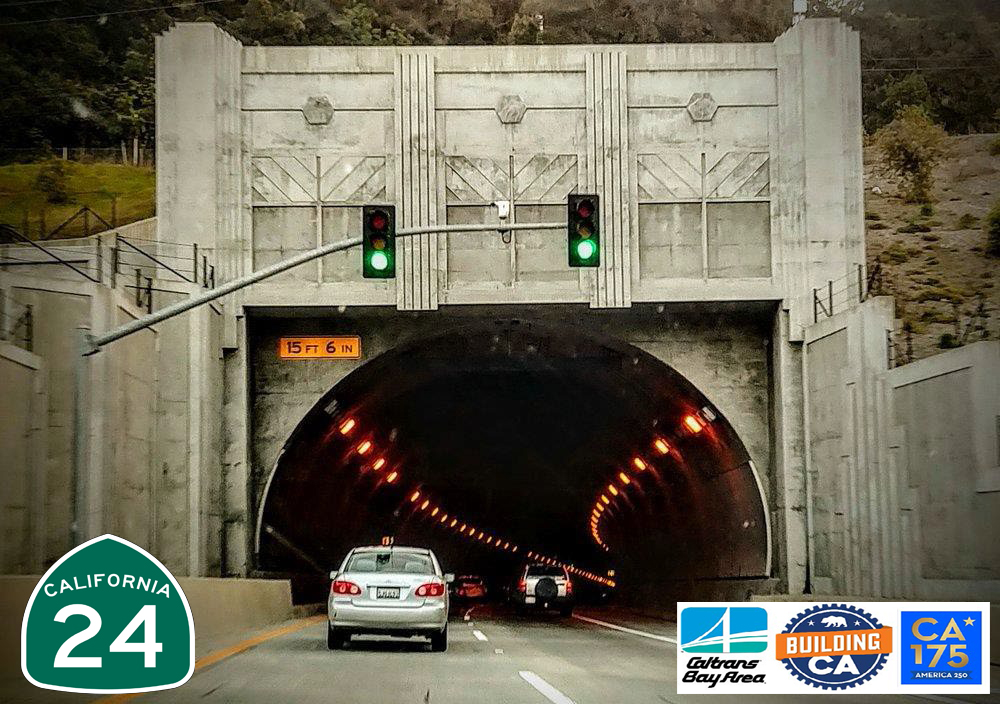
Caldecott Tunnel Bore #3. Photo: Caltrans

Monday-Wednesday, Nov. 10-12th 10:00 PM-4:30 AM

By DeNise Harding, External Affairs/PIO, Caltrans

ALAMEDA AND CONTRA COSTA COUNTIES – Caltrans has scheduled overnight closures of Bore 3 of the Caldecott Tunnel on Westbound State Route 24 (SR-24) for tunnel washing and maintenance.

Starting Monday, November 10, 2025, through Wednesday, November 12, 2025, from 10:00 PM to 4:30 AM each night. Bore 3 of the Caldecott Tunnel on Westbound State Route 24 (SR-24) for tunnel washing and maintenance. During the work, all other bores in each direction will remain open. All work is weather dependent.

Traffic Control Measures:

Changeable message signs will be in place to assist motorists traveling in the area. Motorists are advised to expect delays and allow extra time. Please drive with caution through the construction zone. Slow for the Cone Zone.

For 24/7 traffic updates, follow 511.org on Twitter/X. For real-time traffic, visit Caltrans QuickMap at Quickmap.dot.ca.gov. For more information about D4 Projects, visit: Caltrans D4 Current Projects | CleanCA.com | #BeWorkZoneAlert | Twitter/X | Facebook | YouTube

Filed Under: Lamorinda, News, State of California, Transportation

More than $2.6 Million invested to support Arts in California’s Parks

October 26, 2025 By Publisher Leave a Comment

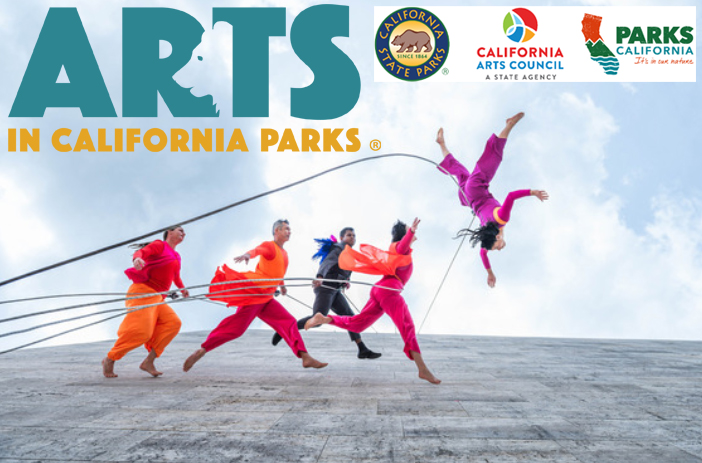
Photo: Project BANDALOOP

California State Parks, California Arts Council and Parks California continue partnership to bring creativity and community connection to local parks  

By Parks California and California State Parks, California Department of Parks and Recreation, Divisions of Boating and Waterways, Historic Preservation and Off-Highway Motor Vehicle Recreation

SACRAMENTO— California State Parks, the California Arts Council and Parks California today announced more than $2.6 million in community grants to organizations statewide as part of their Arts in California Parks partnership. These funds will enable local nonprofit, community and tribal organizations to bring music, dance, storytelling, visual art and cultural programs into parks, transforming them into vibrant spaces that foster creativity, honor cultural heritage and strengthen community connections.

Managed by Parks California, Arts in California Parks is a four-year, $8 million State Parks grants initiative launched in 2024 to support artists, culture bearers, California Native American tribes and local groups in creating art and cultural experiences in outdoor spaces. By expanding access to the arts in nature, the program helps parks remain welcoming, inspiring and inclusive for all Californians. This is the second round of grants awarded as part of the program.

“Art brings people closer to the meaning of their parks — not only as places of natural beauty, but as spaces for reflection, healing and shared experience,” said Armando Quintero, California State Parks Director. “When creativity meets open space, it deepens understanding of one another and reminds us that parks are for everyone. Through initiatives like Arts in California Parks, we’re celebrating the connection between art, nature and community that defines our state.”

This year, 30 organizations across California were awarded grants ranging from $28,000 to $150,000 from a pool of more than 200 applicants. Projects reflect the diversity of California’s people and landscapes. From large-scale performances to culturally focused installations, each initiative provides opportunities for residents and visitors alike to engage with the arts while deepening their connection to nature and local history.

“At Parks California, we believe that access isn’t just about getting to a park — it’s about feeling a sense of belonging once you’re there,” said Kindley Walsh Lawlor, CEO and president, Parks California. “Arts in California Parks helps make that possible by connecting people, stories and cultures to the landscapes that define our sense of place. These projects reflect our shared vision of public lands as places where creativity thrives, communities gather and every Californian can see themselves represented.”

From murals that celebrate cultural heritage to circus performances in city parks, this new round of grants showcases how creativity and community come together across California. A few of the projects underway include:

  • In Oakland, Trybe, Inc. will launch Roots & Rhythms at Clinton Square Park, year-round art and nature programming for youth and families. Activities range from a cultural heritage mural and youth-led garden to summer camps, multicultural art classes and community showcases that celebrate creativity, sustainability and belonging.
  • In Merced, the City of Merced will transform General Vang Pao Park into a vibrant space honoring the region’s Hmong community through a memorial plaza, statue and mural. The project blends art, recreation and cultural heritage while creating new outdoor amenities for residents in an underserved area.
  • In Lake County, EcoArts of Lake County will lead Rooted in Place, a public art initiative activating four county-managed parks with youth-designed murals and a community-built sculpture at Middletown Trailside Park. In collaboration with local tribes, the project honors Indigenous history and resilience following the 2015 Valley Fire.
  • Angels Gate Cultural Center in San Pedro will host Sustainers of Life, a contemporary art exhibition featuring new works by Indigenous women artists. Presented alongside the Many Winters Gathering of Elders, the exhibition and public programs will highlight Native women’s leadership and connection to the land through workshops, films and field trips for local students.
  • In Cathedral City, Hope Rising: Esperanza Park Cultural Celebration will transform a new park in the historically underserved Dream Homes neighborhood, uniting residents through a series of mural-making events, music and family art activities celebrating Hispanic and tribal heritage — turning Esperanza (“hope”) Park into a vibrant symbol of belonging and resilience in the Coachella Valley.
  • In San Diego, Fern Street Circus will launch its Neighborhood Tour 2025, bringing 16 free circus performances and parades to parks in underserved neighborhoods. The tour blends circus arts, puppetry and community storytelling to spark joy and connection while making high quality arts experiences accessible to all.

“Sustainers of Life honors Indigenous women by sharing multidimensional stories woven within broader historical contexts, creating space for both mourning and celebrating the ongoing resilience of those who nurture and protect life, and sustain our connection to the land,” said Cecelia Caro, director of exhibitions at Angels Gate Cultural Center. “Arts in California Parks makes it possible for us to share these powerful voices in a setting where the community can reflect, learn and grow together.”

To learn more about funded projects and upcoming events, visit ArtsInCaliforniaParks.org.

About Arts in California Parks 

Arts in California Parks aligns with statewide initiatives including Governor Gavin Newsom’s Outdoor Access for All, the California Natural Resources Agency’s Outdoors for All and California State Parks’ Reexamining Our Past Initiative. The program supports artists, culture bearers, California Native American tribes and communities in creating art, installations and cultural programming in state and local parks as catalysts for sustainable community connection, health and well-being. Initiated by a one-time general fund allocation that extends through 2027, the program is a partnership between California State Parks, the California Arts Council and Parks California.

The California Department of Parks and Recreation, popularly known as State Parks, and the programs supported by its Office of Historic Preservation and divisions of Boating and Waterways and Off-Highway Motor Vehicle Recreation provide for the health, inspiration and education of the people of California by helping to preserve the state’s extraordinary biological diversity, protecting its most valued natural and cultural resources, and creating opportunities for high-quality outdoor recreation. Learn more at parks.ca.gov.

About California Arts Council

Culture is the strongest signifier of California’s identity. As a state agency, the California Arts Council supports local arts infrastructure and programming statewide through grants, programs and services. The agency’s mission is to strengthen arts, culture, and creative expression as the tools to cultivate a better California for all. Learn more: arts.ca.gov.

About Parks California

Parks California is the official nonprofit partner to California State Parks, created by the state legislature to expand the reach and impact of the parks system. As a public-private partner, we work alongside State Parks, tribal nations, community and nonprofit groups to design solutions that make parks more inclusive, climate-resilient and welcoming. Together, we’re advancing a new partnership model that supports healthy communities and ecosystems and helps parks evolve to meet the needs of a changing California. Learn more: parkscalifornia.org.

Cutline: One of the 2024-25 grantees include Project BANDALOOP in Oakland that connects the human spirit, nature and communities through dance using climbing technology to challenge what is possible. Photo: Parks California.

Filed Under: Arts & Entertainment, Finances, News, Parks, State of California

California invests $5 billion for local projects, bridge repairs, alternative transport options, freight movement

October 23, 2025 By Publisher Leave a Comment

$5.3 million for Contra Costa projects in Danville, Richmond

By Edward Barrera, Division Chief, Caltrans Public Affairs

The California Transportation Commission on Friday, Oct. 17, 2025, approved $4.9 billion to improve safety and mobility on local streets and state highways as well as fund new alternative transportation options and zero emissions projects.

“California is investing in itself — in our communities, our people, and the places we drive, walk, and ride every day. We’re making our roads safer, our commutes smoother, and our transportation system cleaner and more connected,” said Governor Gavin Newsom.

More than half of the allocation will provide 600 local governments and regional transportation agencies with their annual funding to fix roads, bridges and other transportation needs statewide.

“This nearly $5 billion investment highlights California’s strong commitment to creating a modern, resilient transportation system that enhances local streets and strengthens connections between neighborhoods, job centers and schools. Thanks to Governor Newsom’s leadership, Caltrans’ work and the Commission, we are building a safer, more connected and future-ready transportation network that serves all Californians,” said Toks Omishakin, California Transportation Secretary

Among the projects approved is $700 million for repairs and critical upgrades needed for the Vincent Thomas Bridge, a 60-year-old span in the Port of Los Angeles that will soon undergo a major deck refurbishment. Another $140 million will fund truck climbing lanes among other improvements to Interstate 80 in the Sierra foothills between Applegate and Emigrant Gap, a major west coast freight thoroughfare.

“Our local partners are steadfast contributors and valued partners in keeping California’s vast transportation network safe and efficient. When added to the various highway projects also approved, this month’s action ensures that hundreds of essential improvements in our cities and neighborhoods will better enable people and goods to flow throughout the state and beyond,” said Caltrans Director Dina El-Tawansy.

Of the total allocation this month, $470 million comes through Senate Bill (SB) 1, the Road Repair and Accountability Act of 2017, and $4.2 billion from the federal Infrastructure Investment and Jobs Act. The larger than normal funding relates almost exclusively to the annual allocation provided to local governments and regional transportation agencies.

“The Commission is committed to ensuring that California’s transportation system is safe and reliable for everyone who uses it,” said Tanisha Taylor, California Transportation Commission Executive Director. “Today’s nearly $5 billion investment in projects will improve multimodal access to schools and employment centers, boost our growing economy, and reduce out-of-pocket expenses for all Californians.”

Pedestrian facilities also received support from the allocations, including an award of $97 million to replace a pedestrian bridge that connects neighborhoods south of the City College of San Francisco campus and other improvements to Interstate 280 between San Francisco and San Mateo counties. And $6.3 million will be spent on new sidewalks, bike lanes and traffic controls in the cities of Santa Barbara and Santa Rosa and in Santa Clara County.

Other notable Bay Area projects include $10 million to build a floating charging station for zero emission ferries in San Francisco Bay.

Contra Costa County projects include:

  • $5,040,000 In Danville, at the I-680 southbound onramp to El Cerro Blvd. Due to heavy winter rains during January and February 2025 caused damage at three locations due to saturated soils, erosion, and earth movement. The damage includes roadway settlement, leaning sound wall, and slope erosion. This project will repair roadway using polyurethane injection and grind and pave methods, replace damaged portion of sound wall, reconstruct guardrail, stabilize slope embankment, and place erosion control.
  • $276,000 Construction of widened and ADA-compliant sidewalks along Market Avenue, curb extensions at Giaramita Street/Verde Street intersection, and urban greening in Richmond. Construct 4,390 feet of widened sidewalks, narrowed travel lanes, install 4 curb extensions and 18 ADA-compliant curb ramps.

California is expected to receive nearly $42 billion in federal infrastructure funding over a span of five years. These investments will upgrade the state’s roads, bridges, rail, public transit, airports, ports and the electric vehicle charging network.

SB 1 has invested approximately $5 billion annually toward transportation projects since 2017. It provides funding split between the state and local agencies. Road projects progress through construction phases more quickly based on the availability of funds, including projects that are partially funded by SB 1.

For more information about transportation and other infrastructure projects funded with state and federal investments, visit build.ca.gov.

Allen D. Payton contributed to this report.


Filed Under: Construction, News, San Ramon Valley, State of California, Transportation, West County

Pinole officially named a Clean California Community

October 22, 2025 By Publisher Leave a Comment

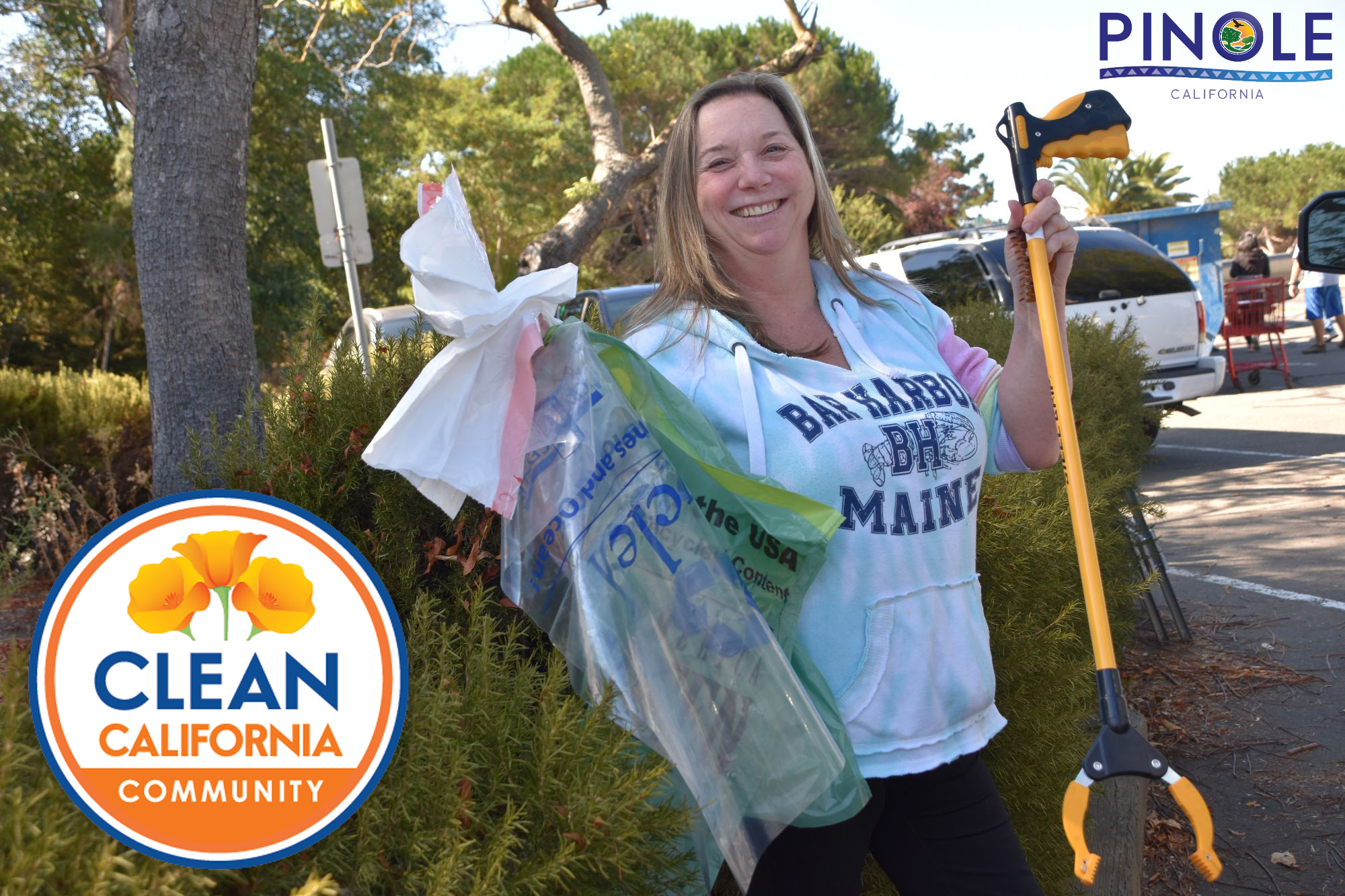
Photo: City of Pinole

From Caltrans’ Clean CA initiative as a leader in California’s Zero Litter movement

By City of Pinole

The City of Pinole has officially earned the unique designation as an official “Clean California Community” from Caltrans’ Clean CA initiative. This makes Pinole one of 30 communities to earn the designation so far in the state.

This designation reflects the City of Pinole’s role as a leader in California’s Zero Litter movement to reduce litter and keep all parts of the state as clean, healthy and beautiful as possible. Proving its leadership over the last few years, Pinole rallied more than 250 volunteers and neighbors to implement an array of long-term, zero-litter policies in support of litter prevention, beautification, and environmental enhancement. As a result, over 3,000 pounds of trash and recyclables have been removed from the Pinole Creek watershed and surrounding areas.

Mayor Cameron Sasai stated: “We are proud that Pinole is among the first cities to earn the Clean California Designation — a direct result of our community’s collective efforts to keep our city clean. This designation is the start of a partnership with the State of California that opens the door to new resources that will expand beautification, tackle litter, and build a vibrant Pinole that we can all be proud of.”

The Clean California Community Designation Program is part of Governor Gavin Newsom’s $1.2 billion Clean California initiative, which was launched in 2021 by Caltrans to clean up, reclaim, transform, and beautify public spaces statewide. The program was developed in partnership with Caltrans, Keep America Beautiful and Keep California Beautiful.

To earn the Clean California designation, the City of Pinole completed at least 10 of 15 criteria to clean up and beautify Pinole, including Litter Assessment and Measurement, and Enforcement.  Earlier this year, Pinole enacted a new ordinance which eliminates single-use plastics in retail and food services, underscoring its commitment to protect the environment and the community’s health.

In recognition of their dedication to a cleaner community, Pinole will receive “Clean California Community” signage, educational resources, automatic membership with Keep California Beautiful, and statewide recognition.

The City of Pinole encourages other communities throughout California to join the program and continue to clean up and transform California. For more information about the program and to take the pledge, visit CleanCA.com/Designation.

For more upcoming cleanup events and activities from the City of Pinole, please visit Pinole.gov/calendar/.

Filed Under: Community, News, State of California, West County

California invests $3 billion to enhance safety, improve travel times, boost multimodal travel options

October 22, 2025 By Publisher Leave a Comment

Over $107 million for Contra Costa projects including $46.9 million on Hwy 4 improvements in East County, $42.4 billion on 680 in San Ramon Valley and $14.6 million on Caldecott Tunnel

By Edward Barrera, Division Chief, Caltrans Public Affairs

In August, the California Transportation Commission (CTC) approved $3 billion in allocations to enhance safety and mobility across the state highway system and expand multimodal travel, including bike lanes and pedestrian pathways. Guided by Governor Gavin Newsom’s Build More, Faster – For All infrastructure agenda, these improvements will make California communities safer, cleaner and increase access to active transportation options.

Of the $3 billion allocated, $663 million derives from Senate Bill (SB) 1, the Road Repair and Accountability Act of 2017 and approximately $2 billion from the federal Infrastructure Investment and Jobs Act of 2021 (IIJA). The funds will serve as a catalyst to increase the capacity of the state’s transportation system, rehabilitate aging roadways and improve travel times, while balancing community impacts and promoting environmental benefits.

The “…investments reflect California’s long-term commitment to safer roads, smarter traffic management and expanded transportation choices that get people where they need to go,” said Caltrans Director Dina El-Tawansy.

“The funds allocated…reflect the Commission’s commitment to investing taxpayer dollars strategically. These investments will improve the safety and reliability of the state’s transportation network and support a thriving economy by improving the movement of freight and reducing out-of-pocket expenses for all California,” said Darnell Grisby, Chair of the California Transportation Commission.

Projects in Contra Costa County approved by the Commission include:

  • $46,900,000 on SR-4 in and near Antioch and Brentwood, from Hillcrest Avenue to Byron Highway, to rehabilitate pavement and drainage systems, upgrade facilities to ADA standards, install Accessible Pedestrian Signals (APS), high-visibility crosswalks, bike loop detectors, and construct Class II bike lanes. This will extend pavement service life and improve ride quality.
  •  $42,374,000 on I-680 in San Ramon and Danville, from Alcosta Boulevard to 0.1 mile north of Diablo Road, to rehabilitate pavement, upgrade guardrail, and upgrade facilities to ADA standards. This will extend pavement service life and improve ride quality.
  • $14,584,000 on SR-24 in Orinda, at the Caldecott Tunnel, to rehabilitate and upgrade the ventilation system in Bores 1, 2, and 3. This will ensure structural integrity and prolong tunnel service life.
  • $1,301,000 on SR-4 in Concord, 0.5 mile east of Port Chicago Highway, to reconstruct a failed slope embankment and repair a displaced down drain due to heavy rainfall in February and March 2025. Work includes installing Rock Slope Protection (RSP), and repairing the down drain, guardrail, and dike. This will enhance driver and pedestrian safety.
  • • $1,275,000 on SR-4 near Pittsburg, 0.3 mile west of Bailey Road, to reconstruct a slope embankment and repair a displaced down drain due to heavy rainfall in February and March 2025. Work includes installing Rock Slope Protection (RSP). This will improve roadway safety.
  • $999,000 on SR-24 in Lafayette, from 0.7 to 1.0 mile east of Acalanes Road, to rehabilitate pavement due to ponding and water seepage caused by heavy rainfall in February and March 2025, which led to cracking and settlement. This will extend pavement life and improve safety.

IIJA is a once-in-a-generation investment in our nation’s infrastructure to improve the sustainability and resiliency of our country’s energy, water, broadband and transportation systems. The total funding for California is nearly $54 billion. This includes investments to upgrade the state’s roads, bridges, rail, public transit, airports, ports, waterways and the electric vehicle charging network.

SB 1 has invested approximately $5 billion annually toward transportation projects since its adoption. It provides funding split between the state and local agencies. Road projects progress through construction phases more quickly, based on the availability of funds, including those partially funded by SB 1.

Visit build.ca.gov to learn more about transformative infrastructure projects happening in communities throughout the state.

Filed Under: Construction, Finances, Infrastructure, News, State of California, Transportation

  • « Previous Page
  • 1
  • 2
  • 3
  • 4
  • …
  • 23
  • Next Page »
Furniture-Clearance-02-26B
Celia's-3-26-A
Delta-RC-A
Deer-Valley-Chiro-06-22

Copyright © 2026 · Contra Costa Herald · Site by Clifton Creative Web