• Home
  • About The Herald
  • Local Agencies
  • Daily Email Update
  • Legal Notices
  • Classified Ads

Contra Costa Herald

News Of By and For The People of Contra Costa County, California

  • Arts & Entertainment
  • Business
  • Community
  • Crime
  • Dining
  • Education
  • Faith
  • Health
  • News
  • Politics & Elections
  • Real Estate

STAND! for Families Free of Violence awarded grant for work in Contra Costa County

August 3, 2016 By Publisher Leave a Comment

Blue Shield of California Foundation recognizes STAND! for Families Free of Violence as a critical leader in California’s domestic violence field

Blue Shield of California Foundation (BSCF) announced on Tuesday, August 2, 2016 a grant of $15,000 to STAND! for Families Free of Violence (STAND!) to support its capacity to provide essential services and shelter for survivors of domestic violence and their families. These core operating funds offer the flexibility to respond to new demands and opportunities so that STAND! can continue to reach many of the most vulnerable Californians.

“Domestic violence can happen to anyone, and impacts everyone. Though we all have a role to play, it is organizations like STAND! that are there when women, children, men, and families need help the most,” said Peter Long, Ph.D., president and CEO of Blue Shield of California Foundation. “STAND! is making our communities safer and healthier every single day, and we remain committed to ensuring that they – and the entire field – have the resources and adaptability to support survivors and bring us closer to ending domestic violence in California.”

“We are really grateful that Blue Shield California Foundation has awarded us this grant. This will help strengthen our ability to save lives, rebuild families, and change the future for our clients. We are truly proud and happy to partner with BSCF in the movement to end domestic violence in California,” expressed Gloria Sandoval, CEO of STAND!

This unrestricted funding is part of a group of grants designed to strengthen and empower domestic violence service providers and enable them to adjust to unexpected changes and challenges. As California’s largest private funder of domestic violence prevention and services, the Foundation is proud to support STAND! through this grant.

About Blue Shield of California Foundation

Blue Shield of California Foundation is one of the state’s largest and most trusted philanthropic organizations. Our mission is to end domestic violence and improve health equity for low-income and underserved Californians. To learn more, visit www.blueshieldcafoundation.org.

About STAND! for Families Free of Violence

STAND! for Families Free of Violence is a catalyst for breaking the multi-generational cycle of violence, promoting safe and strong relationships, and rebuilding lives.” It is the oldest and the only agency in Contra Costa County that works to save lives, rebuild families, and change the future. To learn more, visit www.standffov.org.
Filed Under: Community, Families, News

Contra Costa Transportation Authority adopts 30-year plan, places $2.9 billion sales tax measure on November ballot

July 28, 2016 By Publisher Leave a Comment

Half-cent sales tax in addition to Measure J

The Contra Costa Transportation Authority (CCTA) believes that the future success of Contra Costa County includes offering safe, reliable mobility for all. To provide funding for this goal, on Wednesday, July 20th, the Contra Costa Transportation Authority board – which includes representatives from all parts of the County – voted unanimously to put a tax measure on the November 8 ballot. If approved by voters, the ballot measure will fund transportation improvements throughout Contra Costa County, for the next 30 years. The details are outlined in CCTA’s Transportation Expenditure Plan. CCTA 2016 TEP for Ballot Measure

The measure, which will appear on the November 8 ballot, will ask Contra Costa voters to approve a new half-cent sales tax that will generate $2.9 billion in revenues over 30 years to continue to improve the transportation system in Contra Costa. The tax will be in addition to the current half-cent sales tax for transportation in the county.

The proposed Transportation Expenditure Plan (TEP) is the culmination of months of extensive public outreach, stakeholder engagement, and advocate input. The TEP has also been approved by all of Contra Costa’s 19 cities and towns, as well as the Contra Costa County Board of Supervisors. The plan focuses on innovative strategies and new technologies to promote a strong economy, protect the environment, and enhance the quality of life for all of Contra Costa’s diverse communities.

“The CCTA Board is incredibly proud of the TEP,” said Authority Board Special Meeting Chair Don Tatzin. “This is a transportation plan that reflects the values of our diverse region, has garnered broad support across the county, and will guide the next 30 years of transportation planning. If a super majority of voters approve the tax measure in November, the tax revenue will provide necessary funding for the transportation improvements included in the TEP.”
Contra Costa residents have made significant contributions to their transportation infrastructure since 1988, when voters passed Measure C, a half-cent sales tax dedicated to maintaining the ability of residents to travel safely and conveniently throughout the county. Measure C helped fund the BART extension to Pittsburg/Bay Point, built the Richmond Parkway, improved bicycle and pedestrian trails in the county, and invested more than $30 million in senior and disabled transit services.

In 2004, voters passed Measure J, which renewed the half-cent sales tax through 2034. Measure J has helped deliver the Fourth Bore of the Caldecott Tunnel, generated $1.3 billion dollars of investments to Highway 4 in Eastern Contra Costa County, including a BART extension to Antioch, and combined with Measure C has provided $286 million to Contra Costa’s cities and towns to maintain and repair local streets.

The TEP includes plans to reduce congestion and smooth traffic; improve BART, bus, ferry, and train service; and fix local streets and roads. It also dedicates unprecedented funding to new technologies and bicycle and pedestrian improvements in every part of the county, to give commuters viable alternatives to driving and in the process help get them out of traffic.

The TEP builds on CCTA’s strong record of fiscal responsibility and includes strong taxpayer protections and accountability. A public oversight committee will provide independent review of all funds raised and spent. It will ensure that funds are spent only in accordance with the voter-approved plan and only to benefit Contra Costa County.

“As we move into the future, Contra Costa’s economic strength is going to depend on people being able to travel quickly and conveniently throughout the county – to jobs, shopping and entertainment destinations, and everywhere else they need to go. This plan – and the measure that will fund the improvements it describes – helps make sure that is a reality in years to come,” said Tatzin.

To find out more information about the transportation improvements planned for the next 30 years – including projects in each of Contra Costa’s 19 cities and towns – and the tax measure, which will fund those plans if approved by voters on November 8, 2016, visit KeepContraCostaMoving.net.

About The Contra Costa Transportation Authority

The Contra Costa Transportation Authority (CCTA) is a public agency formed by Contra Costa voters in 1988 to manage the county’s transportation sales tax program and oversee countywide transportation planning efforts. CCTA is responsible for planning, funding and delivering critical transportation infrastructure projects and programs that connect our communities, foster a strong economy, increase sustainability, and safely and efficiently get people where they need to go. CCTA also serves as the county’s designated Congestion Management Agency, responsible for putting programs in place to keep traffic levels manageable. More information about CCTA is available at ccta.net.

Filed Under: News, Politics & Elections, Transportation

BART’s $3.5 billion bond measure for repair, maintenance and upgrades of system on November ballot

July 11, 2016 By Publisher Leave a Comment

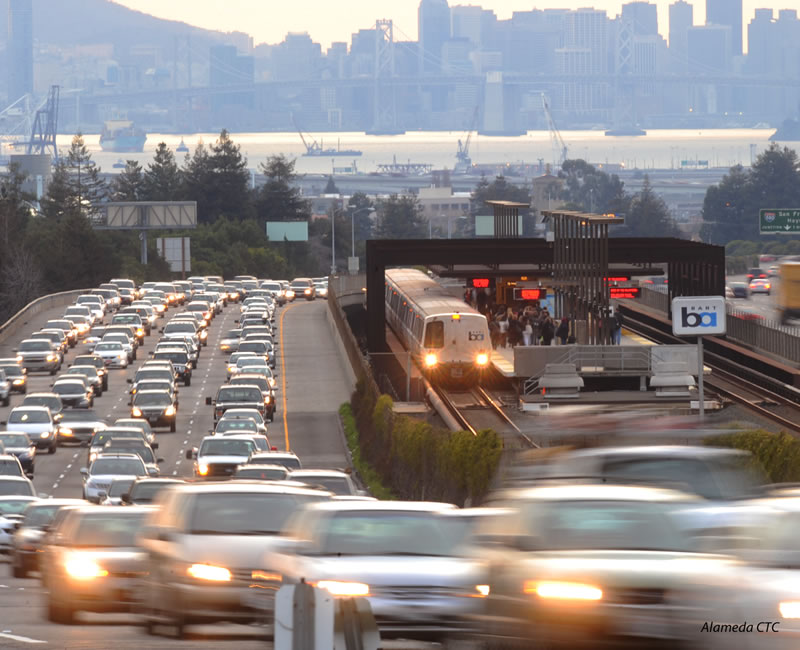
BART photo

By Allen Payton

In June, the BART Board voted 9-0 to place a $3.5 billion bond measure on the November ballot to provide funding for repair and maintenance of and upgrades to the existing system. The measure will appear on ballots in the three counties of Contra Costa, Alameda and San Francisco that make up the BART District, and requires a two-thirds vote to pass.

The system improvements will take 21 years to complete, according to the brochure about the measure. To see the brochure, click here: BetterBART_Brochure

“BART anticipates that the 2016 System Renewal Program Plan will be implemented over the course of twenty-one years, commencing in Fiscal Year 2017 and concluding in Fiscal Year 2038. Projects will be accelerated as practical to maximize the benefit of planned improvements as quickly as possible.”

However, the bonds will take as long as 50 years to pay off.

“We’re not likely to sell $3.5 billion of bonds in the first year or even the first 10 years,” stated BART Director Joel Keller, who represents Concord and Eastern Contra Costa County.  “There are laws that you spend bond proceeds before you issue more bonds. What we’ll do is sell the bonds in what’s called tranches. Let’s say the first tranche is $1 billion and it takes us five to 10 years to spend that money. That tranche will last 30 years. If we do that three or four times, that could take the final payment out years. That’s really an unknown. It could take 40 to 50 years. It will be 30 years after the last bond is sold.”

According to a BART press release, “Estimates show the bond will cost Alameda, Contra Costa and San Francisco county homeowners less than a pack of gum a week.” More specifically, the cost will increase the average property tax bill by $37.21 per year in Contra Costa County if the measure is approved, according to Keller.

The annual cost is based on the appraised of property values, both residential and similar to the BART earthquake retrofit bond measure, which is what property owners are currently paying on the property tax bills.

For the BART earthquake safety measure, which voters approved in 2004, the projected annual cost was between $4.85 and $12.65 per $100,000 of assessed value. However, the actually cost was $2.60 to $9 per $100,000 of assessed value.

“It’s an ad valorem tax with a fixed cost to pay off the bonds,” Keller explained. “So, if property values increase, the cost per $100,000 decrease.”

The 2016 bond measure is projected to cost $8.98 per $100,000 of assessed value. So a property in Contra Costa County with an average value of $414,399 will be assessed $37.21 per year.

Use of Bond Proceeds

The use of funds from the bond measure is split into two categories, according to the BART System Renewal Program Plan 2016.

Repair and Replace Critical Safety Infrastructure – $3.165 billion, 90.43%

“We want to upgrade our computer equipment from Pong-era technology to a modern train control system—which means less waiting for trains on crowded platforms and less frustration from delays. New maintenance facilities will keep the maximum number of cars out serving customers, so that fewer cars clog our congested highways,” from “The Plan” brochure about the measure.

This category is further divided into six sub-categories, with explanations in the brochure.

Renew Power System – $1.225 billion, 35%

Replacing Worn Track – $625 million, 17.85%

Waterproofing & Repairing Tunnels & Structures – $570 million, 16.29%

Modernizing & Replacing Train Control – $400 million, 11.43%

Renovating Stations – $210 million, 6%

Renewing Mechanical Infastructure – $135 million, 3.86%

Safer Station Access – $335 million, 9.57%

Design Future Projects to Reduce Crowding & Reduce Traffic Congestion – $200 million, 5.71%

Expand Opportunities to Safely Access Stations – $135 million, 3.86%

The bond measure brochure clearly states No general operating expenditures: The proceeds of the bond measure cannot be used to support BART’s general operating needs, but must be dedicated to the capital program outlined in this Program Plan.” Therefore none of the funds can be used for employee salaries or benefits.

According to a press release from BART:

The bond measure is a key funding component of BART’s plan to rebuild and renew its aging system, which faces increasing problems as various physical parts of the 44-year-old railway reach the end of their useful lives.  The plan replaces and repairs 90 miles of deteriorating tracks and other aging infrastructure in order to maintain BART’s excellent safety record and protects our environment by keeping thousands of cars off the road.

“This bond measure is practical; it’s dedicated to fixing what we have,” said Board President Tom Radulovich. “We have a responsibility to keep our system safe and reliable while getting the maximum value out of taxpayers’ investment.”

Over the past year, BART’s community outreach department has held over 230 community meetings with local stakeholders and civic groups to ensure widespread understanding of BART’s needs, and to hear the public’s thoughts about its capital reinvestment program.

Due to record-breaking ridership, BART has been able to find funding for many of the solutions needed to increase capacity, meet modern demand, relieve crowding, and upgrade the system.  That includes the newly arriving Fleet of the Future, the Hayward Maintenance Complex, and some of the groundwork for a cutting-edge train control system.

However, the cost of the capital projects needed to repair, fix, and replace worn rail, leaking tunnels, unreliable track circuitry, and failing power transmission equipment outpaces revenue growth.  BART’s plan is to dedicate funds from the bond measure solely to fixing what we have first – without earmarks, pet projects, or frills.

If voters choose to pass the measure in November, great care will be taken to ensure the public’s money is protected and spent wisely.  An independent audit committee will be commissioned to publish regular, transparent reports on how the money is being spent, with open, frequent and public meetings.

BART has proven itself to be a prudent and effective steward of public bond funds in the past, executing its 2004 Earthquake Safety and Retrofitting effort under budget with better and more robust results than expected.

Public transportation continues to be at the intersection of many of the great issues facing cities in the 21st century – and voters were wise in choosing to build such an extraordinary work as BART back in 1962.  Since then, BART has been a staple of this region’s culture, workforce, and values. As both riders and service providers, BART appreciates and is deeply grateful for the opportunity to connect residents to the people and places they care about.

Kerry Hamill, Government Relations Manager for BART offered additional comments regarding the cost and length of the bond measure, in response to an editorial by Dan Borenstein published in the East Bay Times:

The East Bay Times editorialist’s headline – that our bond measure will cost double what we are saying – is flatly incorrect, a conclusion drawn from a selective interpretation of our analysis. In order to assist BART’s Board of Directors in making an informed executive decision, a variety of scenarios were created with different variables relevant to particular presentations. The East Bay Times piece incorrectly appropriated data from these scenarios, resulting in an inaccurate characterization of the bond’s effects. BART has long taken care to illustrate the repayment structure of this bond in a standardized way; we have been doing so through all our exhibits and resolutions since the Board discussions began in earnest this past February.

The editorial also takes issue with how staff described the bond to the Board of Directors and the public, claiming we provided inaccurate information out of either incompetence or deceit – a charge which has absolutely no merit. Bonds are issued over time in subsets called tranches, each lasting 30 years (hence the name ’30-year bond’). This is done to coordinate the timing of bond issuance as closely as possible with construction progress payments, which minimizes interest costs and keeps the annual tax rates as low as possible – a prudent and responsible financial management practice. The editorialist was given this point of clarification multiple times as he repeatedly misrepresented the meaning of a ’30-year bond’ to mean the total span of time property owners would be paying – a false claim BART has never made. We were disappointed to see the author’s misunderstanding make the final printing, despite our best efforts.

The bond measure is projected to cost between $0.80 and $17.49 per $100,000 of a property’s assessed value, for a weighted average of $8.98 per $100,000 over the life of the bond – and for further explanation, that minimum and maximum range is based on the structure of BART’s projected debt service. The editorial’s repeated point that BART made a mathematical error in not compounding the increase in AV is also flatly incorrect, based on a misunderstanding of how the cost of bonds increase or decrease over time. The more the District’s assessed value increases (as housing supply, ownership changes, improvements increase), the lower the rate property owners would pay as the cost is spread over a larger base of assessed values. Furthermore, our models and estimates are built on the assumption of a 4% yearly increase in assessed value. $3.5B Scenario C Tax Rate At 4% AV Escalation

This is not our first bond – when the Earthquake Safety measure went before voters in 2004, the District projected that rates would vary between $4.85 to $12.79 per $100,000 of a property’s assessed value. Since approval, the actual annual cost has ranged between $2.60 (current year) and $9.00 per $100,000 of assessed value. Contrary to popular opinion, we have a proven track record of responsible fiscal stewardship. $3.5B Bond Financing

Concerned property owners are encouraged to do their own math for the sake of accuracy: $8.98 per $100,000 of assessed property value. When we provide averages for particular scenarios, we run the risk of appearing to conceal changes in amounts due to the many variables that can be introduced. Our goal is to provide people with a general understanding of a complex issue based on the best information available, which we have done and will continue to do. We are a transparent organization with deep ties to the community, and have held hundreds of meetings to ensure people understand what this bond is and how it will work. In that vein, we appreciate the opportunity to draw attention to our plan to rebuild the core of the BART system for improved safety, reliability, and traffic congestion relief.

Complete details of what is in the bond and how it relates to safety, reliability, and relief of traffic congestion can be found at bart.gov/betterbart.

Filed Under: BART, News, Politics & Elections

Contra Costa Sheriff Detectives seize guns, drugs, cash at Antioch home, arrest two men Thursday

July 9, 2016 By Publisher Leave a Comment

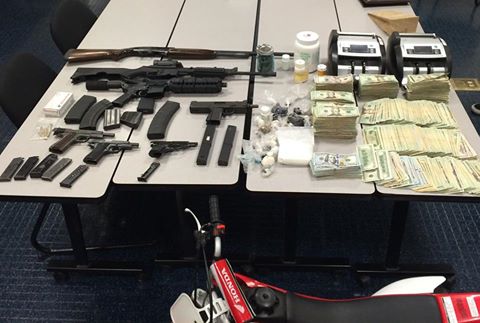
Guns, drugs and cash seized from Antioch home on Thursday. photo courtesy Office of Contra Costa County Sheriff.

Guns, drugs and cash seized from Antioch home on Thursday. photo courtesy Office of Contra Costa County Sheriff.

On Thursday morning, July 7, 2016 at about 11:00 a.m., Detectives from the Contra Costa County Office of the Sheriff Special Investigation Unit, assisted by the Contra Costa County Anti-Violence Support Effort (CASE) team, served a search warrant at a home on the 4500 block of Elkhorn Way in Antioch.

During the search, detectives seized approximately one pound of heroin, methamphetamine, MDMA (ecstasy), and marijuana in sales quantities. The value of the drugs is estimated to be about $30,000.

There were also seven firearms seized, to include one shotgun, two assault rifles with hi-capacity magazines and four handguns, two of which were stolen. Detectives also recovered a stolen motorcycle. In all, over $76,000 in cash was seized.

Two people were arrested at the scene: 40-year-old Michael Green and 30-year-old Joseph Lowery. Both lived at the residence. They were both booked into the Martinez Detention Facility on various charges that include possession of a narcotic controlled substance for sales, maintaining a place for the purpose of selling drugs, possession of drugs while armed with a loaded firearm, possession of stolen property, and child endangerment.

Green is being held in lieu of $430,000 bail; Lowery’s bail is set at $340,000.

Filed Under: Crime, East County, News, Sheriff

Voter fraud discovered in Contra Costa County, officials blame Secretary of State decision

July 9, 2016 By Publisher Leave a Comment

Elections Division officials discover 113 voters successfully cast two ballots in June election

As a result of an emergency accommodation to the California Secretary of State’s office, the Contra Costa County Elections Division has discovered that 113 registered voters voted twice and had both ballots counted during the June 7th Presidential Primary Election.

The Contra Costa Elections Division plans to send those voter fraud cases to the Contra Costa District Attorney’s office, Registrar of Voters Joe Canciamilla said.

Elections Division staff will also send recommendations to the Secretary of State’s office requesting a change in their practices for surrendering vote-by-mail ballots.

Contra Costa County’s long standing practice in administering state Election Code 3016 has been to issue provisional ballots to all vote-by-mail voters who surrender their ballots at a polling place. Part of the reason this practice is in place is to prevent voter fraud.

The process of surrendering a ballot as it is currently written does not provide a means of detecting or preventing this type of fraud until it is too late.

The County is urging Secretary of State Alex Padilla to seek urgency legislation or work with counties to eliminate this vulnerability in the election process for the November election.

Filed Under: News, Politics & Elections

Congressman DeSaulnier comments on FBI Director Comey’s testimony before Oversight & Government Reform Committee

July 7, 2016 By Publisher Leave a Comment

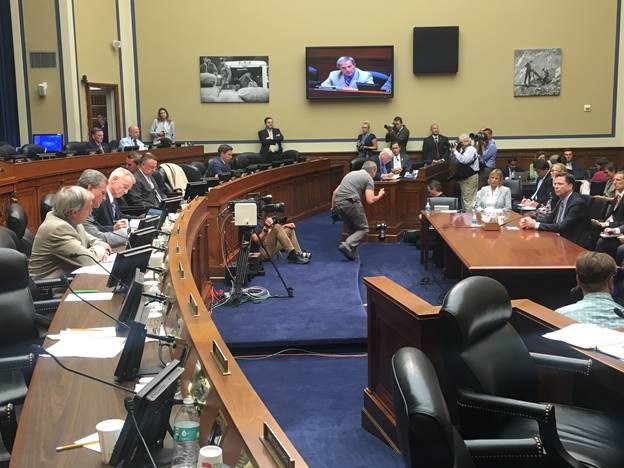
Congressman Mark DeSaulnier speaks with FBI Director James Comey at the House Oversight & Government Reform Committee hearing on Oversight of the State Department.

Congressman Mark DeSaulnier speaks with FBI Director James Comey at the House Oversight & Government Reform Committee hearing on Oversight of the State Department. photo provided courtesy of Office of Representative Mark DeSaulnier

Washington, DC — Today, (Thursday, July 7, 2016) Congressman Mark DeSaulnier (D, CA-11) issued the following statement on FBI Director James Comey’s testimony before the Oversight & Government Reform Committee.

“FBI Director Comey clearly demonstrated that the extensive, 12-month investigation of Secretary Clinton’s emails did not warrant prosecution.

For the Republican presidential nominee, who immediately and outrageously claimed the entire system is rigged, we doubt he is aware that Director Comey was first appointed during the Bush Administration. Today’s hearing assured the country they can, and should, have confidence in public officials, like FBI Director Comey, who put the best interests of America and the U.S. Constitution ahead of partisan politics and self-aggrandizing.

While there is no doubt Director Comey made the only appropriate decision given the facts, the Oversight & Government Reform Committee and Congress need to review lessons learned from Secretaries Powell, Rice and Clinton, and clarify best practices for communications and data security.  Moving forward, the rules should be crystal clear to the Secretary of State and every State Department employee.”

According to a news report on Politico.com, “During an extended exchange with Rep. Trey Gowdy (R-S.C.), Comey affirmed that the FBI’s investigation found information marked classified on her server even after Clinton had said that she had neither sent nor received any items marked classified.

“That is not true,” Comey said. “There were a small number of portion markings on, I think, three of the documents.”

Asked whether Clinton’s testimony that she did not email “any classified material to anyone on my email” and “there is no classified material” was true, Comey responded, “No, there was classified material emailed.”

“Secretary Clinton said she used one device. Was that true?” Gowdy asked, to which Comey answered, “She used multiple devices during the four years of her term as secretary of state.”

Gowdy then asked whether it was true that Clinton, as she said, returned all work-related emails to the State Department.

“No, we found work-related emails, thousands that were not returned,” Comey said.

Attempts to reach DeSaulnier asking for a comment on Comey’s testimony that portions of Secretary Clinton’s previous testimony before his committee were untrue, were unsuccessful.

Filed Under: Government, News

Contra Costa DA files grand theft charges against Antioch couple for four-year Ponzi scheme

July 6, 2016 By Publisher Leave a Comment

The Contra Costa District Attorney has filed eight felony counts of grand theft by fraud and embezzlement against Quyen Tran, age 60, and his wife, Mai Han Tran, age, 56, both of Antioch, for conducting a Ponzi scheme that lasted over four years. The total loss to eight victims was $256,000.

Quyen “Tony” Tran and Mai “Lisa” Tran, made friends with the victims in the Vietnamese church and social community. Mai Tran invited the victims over to her house in Antioch for a social event, but once there, Quyen invited the victims up to his office and told them of his 25 years of investment experience, his investment savvy,  and how he could make a lot of money for them through his investments skill.

He told one victim that he had an inside line on a Pharmaceutical company IPO, that was later found to be non-existent. The victims were impressed by Quyen’s lavish lifestyle and expensive jewelry and cars and his perceived financial acumen and appearance of wealth. Victims believed him when he told them he never lost any money. The investments, primarily in cash, ranged from $4,000 to $156,000 and the agreements were all verbal.

In this classic Ponzi scheme, instead of investing their money, Tran used the victim’s money for personal expenses, and to maintain his lavish lifestyle, and to pay dividends to early investors, in order to keep the illusion that he was making money in order to attract new investors. When some of the victims demanded their money back after receiving nothing after several months, he told them it was a loan, or that the money was generating returns and was locked up and if he returned money it would be taxed at 45% tax rate. He told other victims that he had lost their money and his bank accounts were frozen. When the victims demanded proof that he had purchased stock, he never provided any. Tran did engage in some minor day-trading, but lost money in 4 of 6 years. In the two years that he made a small profit, he never returned any money to the investors. But Tran continued to tell new investors that he never lost any money.

A forensic accountant and an investigator found that there were several victims from years beyond the four year statute of limitations who lost money to Tran, but these victims never went to the police, because of the cultural shame and distrust of the police.

In addition to the eight counts of fraud, both Trans are charged with money laundering, conspiracy, sale of unlicensed securities and a white collar enhancement of stealing over $100,000. The District Attorney also filed a Temporary Restraining Order and a Lis Pendens on the Tran’s residence which has some equity that could be used to pay restitution.

An arrest warrant has been issued for the Tran’s arrest. If you have been a victim of the Trans in the past ten years, please contact Inspector Al Cofer at the District Attorney’s office at 925-957-8761.

Filed Under: Crime, District Attorney, East County, News

BART unveils, begins testing new DMU train for upcoming service to Antioch

July 2, 2016 By Publisher Leave a Comment

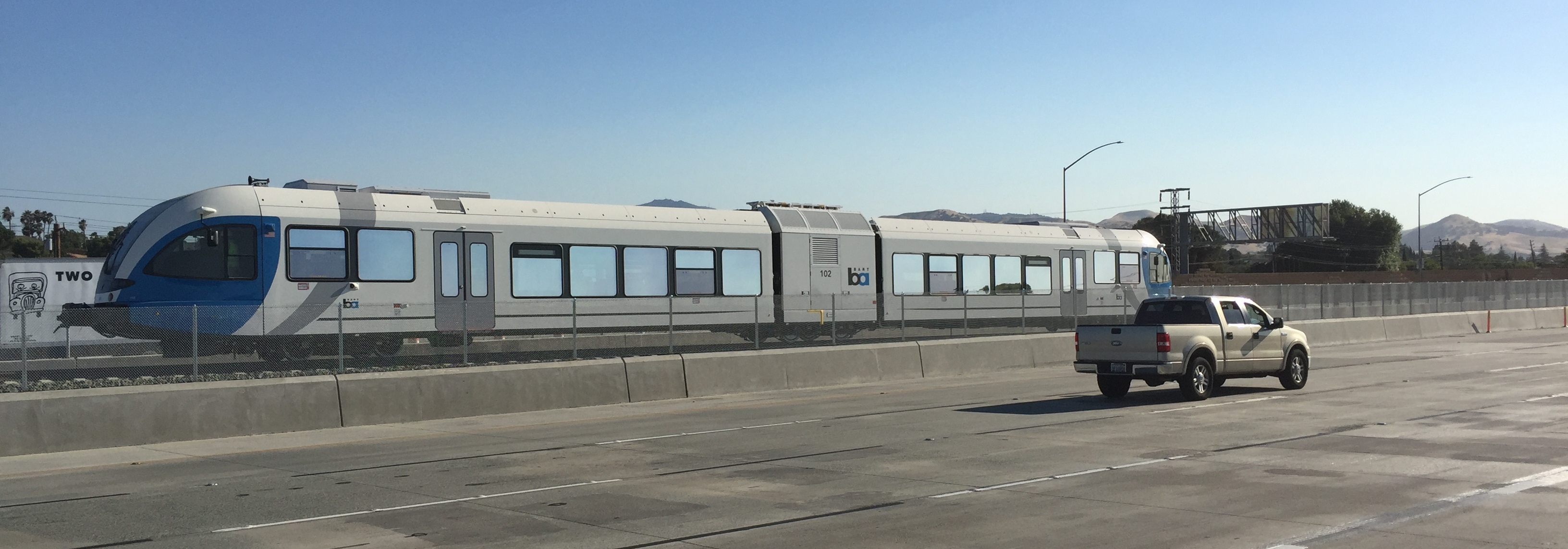
A two-car eBART train undergoes testing in the middle of Highway 4 between Hillcrest Avenue and A Street/Lone Tree Way on Friday evening, July 1st. photo by Allen Payton

A two-car eBART train undergoes testing in the middle of Highway 4 between Hillcrest Avenue and A Street/Lone Tree Way on Friday evening, July 1st. photo by Allen Payton

First of many tests over the next two years

The BART to Antioch Extension Project marked another important milestone Thursday morning, June 30th, with BART unveiling its sleek new diesel-powered trains, soon to be seen linking Pittsburg/Bay Point and Antioch down Highway 4’s median.

“We’ve been working on the arrival of BART to this part of the Bay Area for years, so it’s both thrilling and a bit surreal to finally be here aboard these amazing new vehicles,” said BART Director Joel Keller. “We couldn’t have made BART to Antioch happen without the long-term dedication of East County residents, and the commitment of the many leaders at the local, regional, state, and federal levels who came alongside us to help turn this visionary project into reality.”

The new train cars will run on separate tracks extending past the existing Pittsburg/Bay Point Station, and are a different type than those arriving in BART’s new Fleet of the Future.  This Diesel Multiple Unit (DMU) was chosen to bring rail service to East County residents while remaining cost-effective; the $525 million, 10-mile extension to Antioch is 60% less expensive than conventional BART. Stations for the new service will be located along Highway 4 near the Railroad Ave. intersection in Pittsburg and the Hillcrest Ave. intersection in Antioch, with all eight new vehicles set to arrive by this December prior to a year of state-mandated testing for safety and functionality.

A two-car eBART train could be seen undergoing testing in the middle of Highway 4 heading westbound from Hillcrest Avenue, about 6:15 p.m. Friday evening, July 1st.

“This is an exciting milestone with the first testing of the train on the tracks,” Keller added in a brief interview. “We’re still shooting for a May, 2018 opening, once we get the state approvals. This is the first of many tests.”

The new train cars, rated the most environmentally friendly out of all diesel-powered trains, will be able to move an estimated 2,400 people per hour during commute times, and boast a variety of amenities including six digital signs per vehicle (with multiple language support), automated audio announcements, clear station arrival / destination signage, and modern climate control systems.  Daily ridership of the BART extension to Antioch is expected to exceed 10,100 by 2030 through the Highway 4 corridor, with an initial expected daily ridership of 5,600.

BART to Antioch is part of the nearly-complete Highway 4 Widening Project, which expands Highway 4 from four to eight lanes between Loveridge Road in Pittsburg to just west of State Route 160 in Antioch, and from two to four lanes from Lone Tree Way in Oakley to Balfour Road in Brentwood.  The project provides greater mobility and access to multi-modal transportation, not only expanding lanes and building missing connector ramps at the State Route 160 interchange, but also providing funds for BART to Antioch.

The project has been carefully staged to keep the daily traffic of 130,000 cars moving, even as major construction and demolition work continue.

“The arrival of these new BART vehicles and the beginning of testing is a visible reminder of the progress being made to further economic growth and improve access to jobs and vital services for East County’s 250,000 residents,” said Dave Hudson, Chair of the Contra Costa Transportation Authority. “The Highway 4 Widening and BART to Antioch projects would not have been possible without either the backing of Contra Costa voters in 2004, or the help of partner agencies. We look forward to continued public support for additional innovations and improvements on the Highway 4 corridor in the future.”

Average travel time between stations is expected to be seven minutes between Antioch and Pittsburg Stations, and three minutes between Pittsburg and Pittsburg/Bay Point Stations.  The new stations will use the same BART fare collection machines and gates used elsewhere in the BART system, with full service set to begin winter 2017/2018.

For more information visit the project page.

Allen Payton contributed to this report.

Filed Under: BART, News, Transportation

Governor signs Sen. Glazer’s bill to ban bullet button by expanding definition of assault weapon

July 2, 2016 By Publisher Leave a Comment

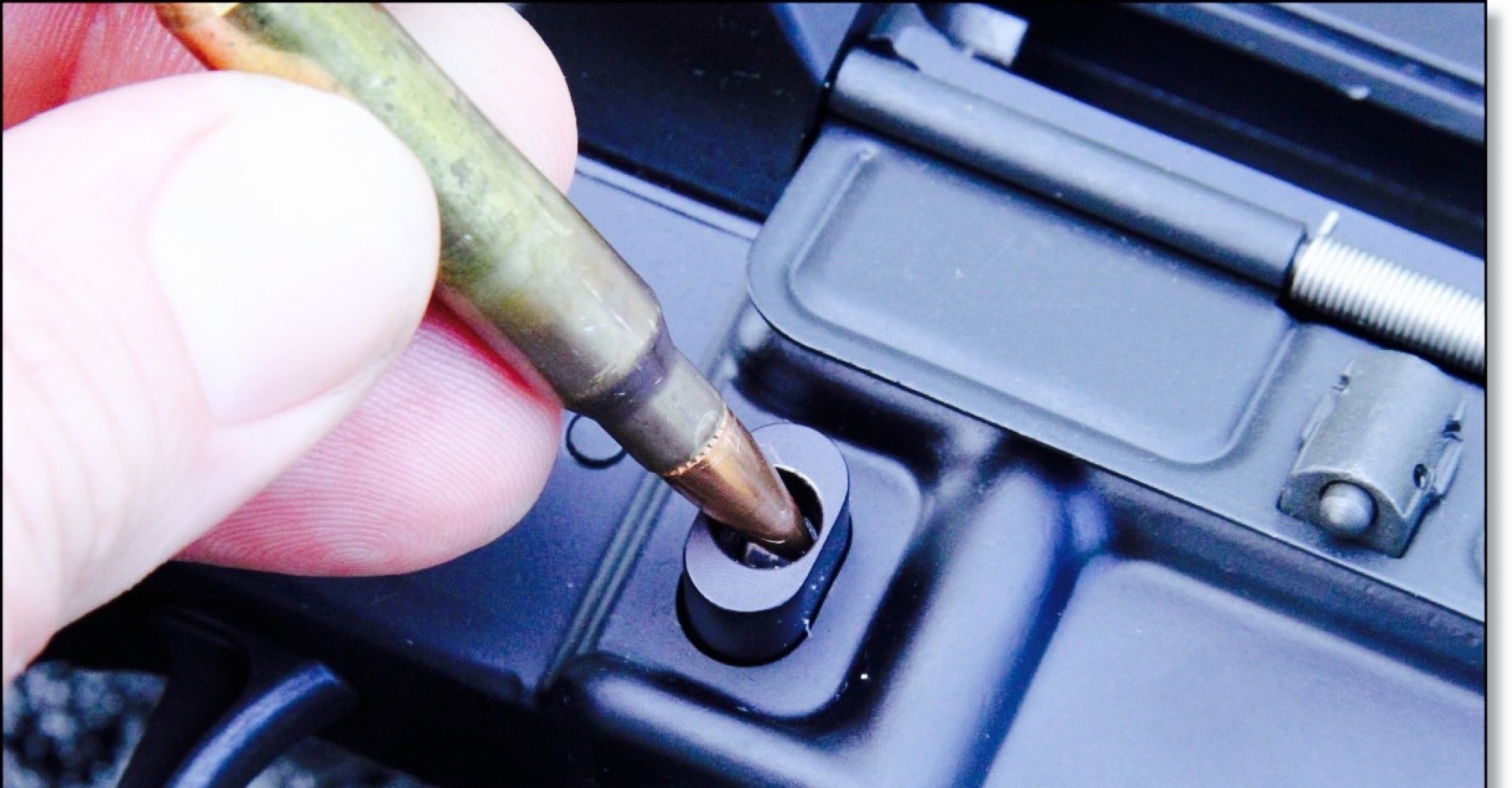
A California-legal bullet button on a semiautomatic rifle. (www.gunsamerica.com)

A California-legal bullet button on a semiautomatic rifle. (www.gunsamerica.com)

Key part of a historic gun reform package

Sacramento – On Friday, July 1st, Gov. Jerry Brown signed into law Senator Steve Glazer’s legislation to ban the so-called bullet button, a key element of a historic gun reform package approved by the Legislature a day earlier.

Glazer, D-Orinda, is joint author with Sen. Isadore Hall, D-Los Angeles, on the bullet button ban, SB 880.

A bullet button assault-style rifle was used by the shooters who killed 14 people and wounded 21 in the San Bernardino terrorist attack last year.

“This isn’t about hunting or home protection,” said Sen. Glazer. “This isn’t about taking people’s guns away. I believe everyone has a right to hunt and to protect their families from harm in their home. It’s about a mechanism on assault-style rifles whose sole purpose is to allow someone to kill a lot of people quickly.

“We need to make it more difficult for a deranged person to enter a schoolyard, movie theater, or workplace with a rapid fire weapon. This measure is another small but important step in making our communities safer.”

Existing law prohibits the possession or sale of assault weapons and limits magazines to 10 rounds. But a loophole in the law – allowing guns with fixed magazines to be modified with a simple “tool”– had led to the manufacture of assault-style guns with magazines that can be easily detached – contrary to the spirit of the assault-weapon ban. The magazines are equipped with a button that can be pressed by a bullet or other tool to quickly detach the magazine. Since the magazine requires a tool, it was considered “fixed” and therefore legal.

To see the full text of the bill, visit the California Legislative Information website.

Opponents argued that the language in the bill was vague, among other things. According to the Firearms Policy Coalition website:

Senate Bill 880 (authored by Senators Hall and Glazer) attempts to subvert long-standing law regarding the definition of “detachable magazine”and “fixed magazine”. It relies on unclear, undefined language such as “without disassembly of the action” or “does not have a fixed magazine”and seeks to prohibit the purchase, inheritance, sale, transfer, transport, importation and manufacture of the most common and popular protected weapons of the modern era.

In Governor Brown’s signing message, he noted that the bullet button bill and certain others in the package “enhance public safety by tightening our existing laws in a responsible and focused manner, while protecting the rights of law-abiding gun owners.”

“Gun makers have exploited a loophole in the law that expressly prohibits assault weapons in California,” Glazer said. “We’ve seen the horror of these weapons with mass murders. We should not allow weapons that are designed specifically for modern warfare to proliferate on our streets.”

Senator Glazer worked as a senior staffer for Sen. President Pro Tem David Roberti in enacting a ban, in 1989, on assault weapons in California, the first state in the U.S. to do so. As mayor of Orinda, he was a charter member of the national organization, “Mayors Against Illegal Guns.”

For more information about the “bullet button” see the article on The Trace website.

Filed Under: Legislation, News

Wife of Orlando terrorist was born, grew up and got married in Contra Costa County

June 20, 2016 By Publisher Leave a Comment

Noor Zahi Salman and Omar Saddiqui Mateen from a Facebook photo.

Noor Zahi Salman and Omar Saddiqui Mateen from a Facebook photo.

By Allen Payton

According to an ABC News report on Sunday, June 19, 2016 and an L.A. Times article posted today, Noor Zahi Salman, the widow of Orlando terrorist Omar Saddiqui Mateen, was born in San Pablo, grew up in Rodeo, graduated from high school in Crocket and married Mateen in Hercules in Western Contra Costa County, California.

The ABC News report states:

The wife of the Orlando nightclub shooter had learning difficulties when she was in middle school and was enrolled in special education classes, according to her now retired teacher in California.

Susan was Noor Zahi Salman’s teacher at her middle school in Crockett, California. ABC News is not using Susan’s full name or showing her face at her request.

“Noor had difficulty with retention. She had difficulty with conceptualizing, understanding — all challenges to her,” Susan said. “She tried hard. She was very sweet.”

Her family confirmed that Susan was Salman’s special education teacher and that she was enrolled in special education classes.

Susan said Salman was considered a “special day class student” – meaning she had to take all her classes with special education teachers.

The L.A. Times article provided more information about Salman’s background and local ties.

The child of Palestinian immigrants, Salman was born in San Pablo, in the Bay Area, and grew up in Northern California in a hilly neighborhood of tract homes in Rodeo, about 25 miles northeast of San Francisco. She graduated from John Swett High School in 2004.

They were married in Hercules, in Contra Costa County, Calif., on Sept. 29, 2011.

Although Salman accompanied Mateen on at least one trip to the Pulse nightclub before the attack for what is being considered reconnaissance, she has not been charged with any crimes, yet, nor is she currently listed as a suspect.

“With respect to the wife, I can tell you that that is only one of many interviews we have done and will continue to do,” said Ronald Harper, FBI assistant special agent in charge in Orlando, said during a news conference on Wednesday, June 15.

“I am not going to speculate today if any charges have or will be brought in this case,” added Lee Bentley, United States Attorney for the Middle District of Florida.

In spite of her special education classes in middle school, Salman graduated from both high school and college, according to other news reports.

The FBI investigation continues.

Filed Under: Crime, News, West County

  • « Previous Page
  • 1
  • …
  • 365
  • 366
  • 367
  • 368
  • 369
  • 370
  • Next Page »
Furniture-Clearance-02-26B
Liberty-Tax-Jan-Apr-2026
Deer-Valley-Chiro-06-22

Copyright © 2026 · Contra Costa Herald · Site by Clifton Creative Web