• Home
  • About The Herald
  • Local Agencies
  • Daily Email Update
  • Legal Notices
  • Classified Ads

Contra Costa Herald

News Of By and For The People of Contra Costa County, California

  • Arts & Entertainment
  • Business
  • Community
  • Crime
  • Dining
  • Education
  • Faith
  • Health
  • News
  • Politics & Elections
  • Real Estate

Contra Costa Health Services celebrates Black Breastfeeding Week Aug. 25-31

August 24, 2019 By Publisher Leave a Comment

WHAT: Join our celebration of Black Breastfeeding Week, Aug. 25-31 at the Chocolate Milk Lounge, a free health education event to help black moms and families meet each other and learn about the importance of breastfeeding their infants.

The Lounge includes certified lactation consultants and information about community resources to support breastfeeding mothers, along with prizes, gift bags, snacks and more. The lounge is sponsored by Contra Costa Health Services, Black Infant Health and First 5 Contra Costa.

For more information, call Pam Moore at 925-313-6128, Marlene Ceballo at 925-646-5200 or Lonnie Watkins at 925-313-6254.

WHO: All are welcome. Registration is required – links below.

WHEN: 12-2pm Tuesday, Aug. 27 at Antioch First 5 Center, 300 H Street – register

11am-2pm Wednesday, Aug. 28 at Pittsburg Health Center, 2311 Loveridge Road – register

10am-12pm Thursday, Aug. 29 at LifeLong Brookside San Pablo Health Center, 2023 Vale Road, San Pablo – register

8:30am-12pm Friday, Aug. 30 at West County Health Center, 501 Gateway Avenue, San Pablo – register

Filed Under: Children & Families, Health

Kaiser Permanent responds to strike vote by SEIU United Healthcare Workers

August 14, 2019 By Publisher Leave a Comment

In response to the vote to strike by the Service Employees International Union – United Healthcare Workers (see related article), John Nelson, Vice President, Communications, Kaiser Permanente issued the following statement:

Kaiser Permanente and SEIU-UHW have been working together toward a mutually beneficial agreement as part of the national bargaining with the Coalition of Kaiser Permanente Unions that began in April. Unfortunately, UHW leadership has decided to use the threat of a strike as a bargaining tactic, designed to divide employees and mischaracterize Kaiser Permanente’s position, even though most of the contracts don’t expire until October.

We believe the result of the strike vote reflects obviously misleading ballot questions used by the union:

  • “I vote YES to authorize our bargaining team to call for a strike to protest Kaiser’s illegal behavior and unfair labor practices and to show my support for a contract with good raises, no take-aways and a ban on subcontracting.” 
  • “I vote NO and am willing to accept a contract that increases our medical costs, cuts our pensions and retiree medical benefits, offers lower pay scales and raises that are less for Oregon and Washington than California.”

To be clear, Kaiser Permanente has presented a contract proposal that would provide annual pay increases that would keep our employees compensated higher than market averages and maintain excellent benefits. Contrary to the union’s claims, there are no pay cuts and no changes to our employees’ defined pension benefit, under our proposal.

It is important to understand that a strike vote does not mean that a strike is imminent, although it does place Kaiser Permanente in the position of having to spend millions of dollars preparing for the threat of a strike event. Our first priority is always continuity of care for our patients and members.

SEIU-UHW leadership is more interested in a power play to position themselves vis a vis other Kaiser Permanente unions – rather than focusing on what is best for their membership.  At a time when we are working hard to keep our care affordable, the Coalition’s demands are not fair to our members and the communities we serve. Coalition-represented employees are already compensated 23% above market rates—we pay well and we have markets where our wage rates are challenging our ability to be affordable. The Coalition’s proposal would actually increase our wages on average 32% above the market over the next five years, adding a billion dollars to our labor costs.

Despite the union leadership’s disruptive tactics, we are hopeful that our employees will value our proposal and SEIU-UHW and the other Coalition unions will move forward with us to reach a new agreement. Our goal is to continue to make Kaiser Permanente a great place to give and receive care.

Proposed Contract Offer

Kaiser Permanente’s bargaining proposal would provide employees with the following best-in-class conditions:

  • Solid wage increases. The average salary of Coalition-represented employees is already higher than market averages. Mindful of our goal to improve the affordability of health care and engage our employees in the effort, the current proposal provides guaranteed wage increases across the board each year through 2022 of 3% each year in Northern and Southern California.
  • Opportunities for new hires. Kaiser Permanente and the Coalition are proposing a $40 million Workforce Development Fund and creation of new-hire training positions, all part of the solution to address the national shortage of health care workers and help develop the next generation of unionized workers in health care.
  • Retirement security. The proposal preserves the existing defined pension plan along with other strong retirement benefits.
  • Career mobility. The proposal includes a more robust tuition reimbursement program for employees that allows more funds to be used for travel.
  • Affordable health care. The proposal includes a pharmacy utilization approach that incents employees to take greater responsibility for their health by rewarding them for increasing their use of mail-order prescriptions.

Just last year SEIU-UHW touted what it described as “strong wages and benefits” in the agreement it reached with Dignity Health, which included lower wage increases (13% over 5 years plus a one-time 1% bonus) than being offered by Kaiser Permanente, and only $2.5 million for workforce development, as compared to $40 million in Kaiser Permanente’s current proposal. (Source: SEIU-UHW press release, March 2018, http://www.seiu-uhw.org/archives/26114)

Filed Under: Health, Labor & Unions, News

Kaiser Permanente workers in Contra Costa, state vote to support strike beginning in October

August 14, 2019 By Publisher 1 Comment

Strike would affect more than 24,000 Kaiser Permanente workers in the Bay Area. Voting results in five other states, D.C. expected by September; would be nation’s largest walkout since 1997

OAKLAND, CA –  Kaiser Permanente workers in California poured out in large numbers to overwhelmingly authorize a strike in early October that would be the biggest in the United States in more than two decades.

Becoming the first of more than 80,000 Kaiser workers to vote, members of the Service Employees International Union – United Healthcare Workers West (SEIU-UHW) across the state voted between July 29 and Aug. 11 whether to approve the unfair labor practices strike at Kaiser Permanente hospitals and clinics. More than 37,000 cast ballots in support of a strike (98 percent) while only 867 voted to oppose (2 percent). The turnout was uncommonly high for a strike vote in any industry, with two-thirds of workers casting ballots.

Strike authorization votes among other groups of Kaiser workers in California, and Kaiser Permanente employees in Oregon, Washington, Colorado, Maryland, Virginia and the District of Columbia run through mid-September. The strike would start in early October and be the nation’s largest since the Teamsters’ walkout at United Parcel Service in 1997.

“Kaiser workers all over California are putting a stake in the ground that it’s time for this corporation to get back on track and live up to its mission to help patients, workers and communities thrive, said Heather Wright, a women’s health clerk at Kaiser Permanente in Santa Clara, Calif. “This strike vote is about stopping Kaiser’s unfair labor practices. This company should be all about providing the best possible patient care, but unfortunately its focus in recent years has been on making billions of dollars in profits and millions of dollars for Kaiser executives.”

Workers want Kaiser Permanente to bargain in good faith and stop committing unfair labor practices, and are fighting for a new contract that would:

  1. Restore a true worker-management partnership, and have Kaiser bargain in good faith;
  2. Ensure safe staffing and compassionate use of technology;
  3. Build the workforce of the future to deal with major projected shortages of licensed and accredited staff in the coming years; and
  4. Protect middle-class jobs with wages and benefits that can support families.

As a non-profit entity, Kaiser Permanente is supposed to serve the public interest in exchange for billions of dollars in tax breaks. But in recent years, the corporation has departed from its mission:

  • Profits: Kaiser made more than $5.2 billion in profits during the first half of 2019, bringing its profits to more than $11 billion since Jan. 1, 2017. The company also sits on $35 billion in reserves.
  • Executive pay: Kaiser gave its CEO a $6 million raise to $16 million a year and pays at least 36 executives a million dollars or more a year.
  • Care for low-income patients: Kaiser provides very little care to Medicaid patients, far less than other non-profit health systems, even though it gets massive tax breaks in exchange for supposedly working in the public interest.
  • Financial transparency: Kaiser lacks transparency and operates in the shadows. It is exempt from many of the financial reporting requirements of other hospitals and health systems. Operating secretly allows Kaiser to avoid the kind of scrutiny consumers, employers, unions and regulators need to protect themselves and the public.
  • Turning its back on workers: Kaiser has worked to destroy what had been the most successful and largest worker-management partnership in the country that was a source of innovation and problem-solving for many years; it has committed numerous unfair labor practices, including refusing to bargain in good faith.
  • Destroying good jobs. Kaiser is actively destroying good jobs by outsourcing them to companies that pay low wages with few benefits, and wants to limit the wages and cut the benefits of its frontline healthcare employees.

The workers’ national contract expired Sept. 30, 2018, and in December 2018 the National Labor Relations Board charged Kaiser Permanente with failing to bargain in good faith. Since then, Kaiser has continued to commit unfair labor practices.

The Coalition of Kaiser Permanente Unions comprises labor unions in California, Oregon, Washington, Colorado, Hawaii, Virginia, Maryland and the District of Columbia, representing more than 80,000 Kaiser caregivers. To learn more, visit www.KaiserKeepThriveAlive.com.     

Filed Under: Health, Labor & Unions, News

OP/ED: State must keep financial assistance for low-income California dialysis patients

July 9, 2019 By Publisher Leave a Comment

Joel Levin

By Joel Levin

I am a local public schoolteacher working with special education students from elementary age through young adults, and I am a dialysis patient who has suffered kidney disease for decades.

I’ve dedicated my career to helping those less fortunate in need. That’s why I’m disappointed that insurance companies are behind legislation that would cut off the charitable financial assistance I need to pay for the dialysis that keeps me alive.

Legislators will soon be voting on Assembly Bill 290, which would eliminate financial assistance that the non-profit American Kidney Fund provides charitably to more than 3,700 qualifying California dialysis patients like me.

AB 290 requires AKF to disclose confidential patient information in violation of the federal regulations governing the program. Because of these unreasonable requirements, AB 290 would force AKF to stop helping California patients altogether.

The losers are patients like me who depend on the financial assistance AKF provides to pay for the dialysis that we need to stay alive. The winners are insurance companies whose profits would go up if it passes.

Even as a kidney patient who must undergo the rigorous dialysis treatment process to stay alive, I feel like one of the fortunate ones. Most people on dialysis can’t work because of the exhausting process of dialysis. Thankfully I can continue working as a teacher while still receiving this time-consuming treatment three times a week for three to four hours at a time, after my workday.

It is not easy, of course. And for dialysis patients who require between 9-12 hours a week of dialysis treatments, our health care coverage is expensive. Although I’m on Medicare, it only covers 80 percent of my health care costs and Medicare also requires monthly insurance premiums. I also have copays for doctor visits and copays for my numerous medications because of my kidney disease.

On top of that, I must get an additional insurance policy, with additional monthly premiums, to cover the 20 percent “gap” that isn’t paid for by Medicare.

As a public schoolteacher, I’m certainly not rich. I have a finite amount of funds. Without the AKF’s assistance program, I’m not sure how I’d be able to afford these payments.

Only a small number of Californians on dialysis, about 5 percent, use financial assistance from a third-party, non-profit charitable organization like the American Kidney Fund to help pay their health insurance premiums. AKF has made premium assistance available for more than 20 years.

I’m extremely thankful they’re in existence and grateful for the help they provide me. For me, the program offers peace of mind that I can pay my expenses and receive the healthcare that I need. I can’t even imagine what would happen to dialysis patients who can’t work. How will they survive?

At its core, AB 290 is about increasing insurance company profits.

Lawmakers who are aligning with insurance companies and supporting the measure are not seeing how it would impact the patients in the long run.

I urge legislators to reject this insurance company scheme and vote no on AB 290.

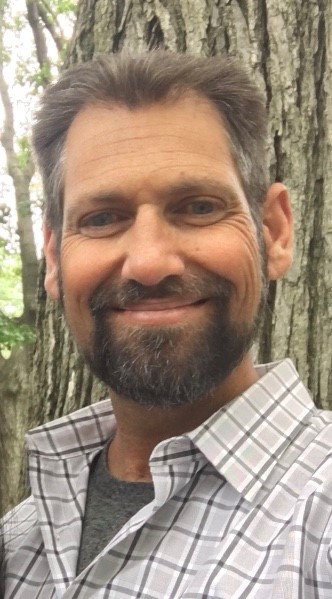
Joel Levin is a dialysis patient and resident of Danville.

Filed Under: Health, Legislation, Opinion

County to hold Mental Health Services Act Supportive Housing Community Forum July 18 in San Pablo

July 8, 2019 By Publisher Leave a Comment

WHAT: Contra Costa Behavioral Health Services, a division of Contra Costa Health Services (CCHS), invites anyone interested in discussing local public mental health services in relation to supportive housing to participate in a public forum on Thursday, July 18, in San Pablo.

The forum offers the community an opportunity to discuss its needs and meet with service providers to discuss current issues relevant to supportive housing. These discussions will help to inform future use of local Mental Health Services Act (MHSA) funding.

California approved Proposition 63 in November 2004, and the Mental Health Services Act became law. The Act provides significant additional funding to the existing public mental health system and combines prevention services with a full range of integrated services to treat the whole person. With the goal of wellness, recovery and self-sufficiency, the intent of the law is to reach out and include those most in need and those who have been traditionally underserved. Services are to be consumer driven, family focused, based in the community, culturally and linguistically competent, and integrated with other appropriate health and social services. Funding is to be provided at sufficient levels to ensure that counties can provide each child, transition age youth, adult and senior with the necessary mental health services, medications and support set forth in their treatment plan. Finally, the Act requires this Three Year Plan be developed with the active participation of local stakeholders in a community program planning process.

WHO: All members of the public are welcome, including people that have or are receiving supportive housing services, their families or loved ones, and interested members of the community. RSVP online at cchealth.org/mentalhealth/mhsa – click the “Supportive Housing Community Forum” button.

Other RVSP options include emailing mhsa@cchealth.org – please include “MHSA Forum” in the subject line – or by telephoning (925) 957-2617. Attendees may also mail RSVPs to MHSA, 1220 Morello Avenue, Suite 100, Martinez, CA 94553.

WHEN: Thursday, July 18th at 1 p.m. to 5 p.m. at Contra Costa College, 2600 Mission Bell Drive, Room GE 225, San Pablo, CA 94806

WHY: Contra Costa County’s current MHSA budget provides over $50 million to more than 80 mental health programs and services. Forum goals include identifying service needs, priorities and strategies to inform the county’s MHSA Three-Year Program and Expenditure Plan for fiscal years 2020-2023.

The forum will include an overview of the MHSA and current funding use in Contra Costa County and will be livestreamed at: cchealth.org/mentalhealth/mhsa.

Visit cchealth.org/mentalhealth/mhsa to access the MHSA Three Year Program and Expenditure Plan Update and other information about the MHSA in Contra Costa.

Filed Under: Government, Health

Supervisors approve $13 million plan to reduce number of mentally ill in county jail

May 15, 2019 By Publisher Leave a Comment

May is Foster Parent Recognition Month

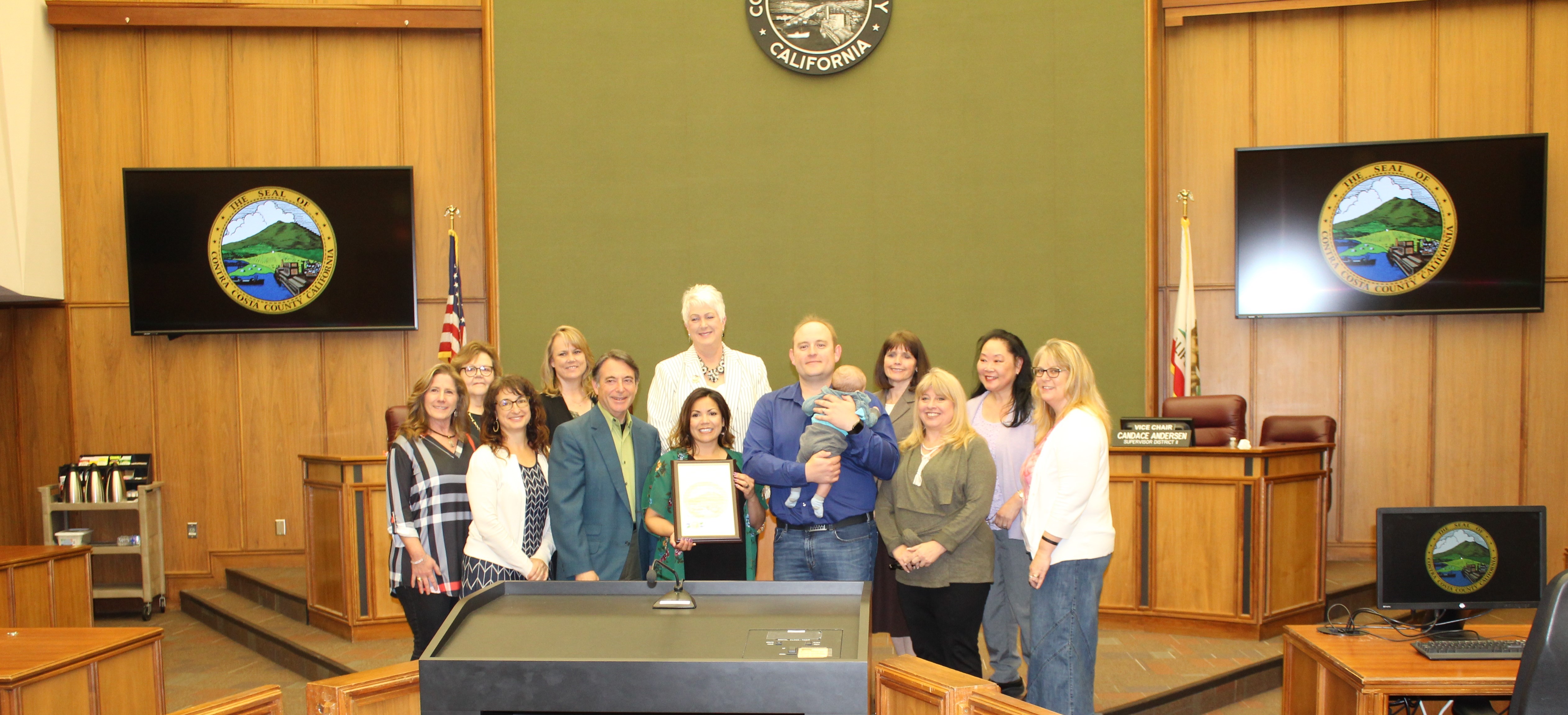
The Contra Cost Board of Supervisors on Tuesday, May 14 recognized May as Foster Parent Recognition Month. Supervisors’ resolution noted there are approximately 1,100 children and youngsters in foster care in the county. At the ceremony, supervisors presented the resolution to first time foster parents Patricia and Ryan Streeter of Antioch, who became the foster parents of two-month-old Samuel. The couple are the parents of their eight-year-old biological son Josiah. The supervisors’ resolution noted the importance of Foster Parent Recognition Month in Contra Costa County for “being provided with a safe, secure and stable home environment, along with the compassion and nurturing of foster relative and non-relative families….” Photo by D. Borsuk

By Daniel Borsuk

The Contra Costa County Board of Supervisors approved on a 4-0 vote Tuesday a $13 million multi-faceted plan that aims to detour people with mental illness who are in county jail and to relocate them in appropriate mental health facilities. Supervisor Federal Glover of Pittsburg was absent.

Chief Assistant County Administrator Timothy Ewell told supervisors the county has grant applications pending totaling about $13 million that will help the fund the recommendations from Policy Research Associates.

Supervisors accepted 13 recommendations drafted by Policy Research Associates, a Delmar, NY-based firm that conducted a conference last January with Contra Costa mental health, medical, law, political officials and other community stakeholders in attendance.

Policy Research Associates researchers Brian Case and Regina Hueter co-authored the study “Sequential Intercept Model Mapping Report for Contra Costa County.”

Supervisors quickly approved the Policy Research Associates report. There were no comments from the public.

Since 2015, Contra Costa County has been involved in the nationwide Stepping Up movement designed to reduce the number of persons with mental illness in county jails. The county’s inmate population’s daily mental illness rate hovers around 15 percent. That is comparable with a national average of 17 percent.

“We have more critically mentally unhealthy people in our jails than in our hospitals. The question is how do we intercept these people?” asked Board Vice Chair Candace Andersen of Danville, who attended the Policy Research Associates conference in January.

The 13 recommendations the supervisors adopted in the “Sequential Intercept Model Mapping Report for Contra Costa County,” include:

  • “Establish an Uber committee and process that allows for shared leadership, responsibility, coordination, and oversight of justice system and behavioral health innovation and reform.”
  • “Establish standardized metrics and data-sharing across county agencies to improve data-informed decision-making.”
  • “Increase county-wide deflection and diversion strategies. Explore the need for a 24-hour crisis stabilization and triage center and a mental health first responder co-responder strategy.”
  • “Further incorporate the use of peers and peer support and recovery across intercepts.”
  • “Identify ‘familiar face’ high utilizer populations to help manage costs, reduce unnecessary utilization of services while increasing individual stabilization. Develop ‘higher utilizer’ strategies.”
  • “Implement a comprehensive substance use disorder strategy: Population identification & treatment resources in the jail & community.”
  • “Examine the need for pre-trial interventions to reduce failure to appear of individuals who are booked and released.”
  • “Improve and pre-and-post-arrest diversion opportunities for the incompetent to stand trial populations.”
  • “Review and address problems solving court criteria to align with national best practice
  • “Increase equity and access to services regardless of AB 109 funding.”
  • “Improve jail-based services and transition planning to reduce recidivism and improve health and other outcomes for detained or jailed individuals.”
  • “Continue to build probation Best Practices, training, and coordination to reduce technical violations and probation revocations.”
  • “Work with Center for Medicare and Medicaid services and the state of California to establish an agreement that allows parolees to access Medi-Cal and receive county services.”

Supervisors also approved the following consent calendar items:

Danville Blvd.-Orchard Court Roadway Project

Supervisors approved a $375,000 Public Works contract with Quincy Engineering Inc. for civil engineering services for the Danville Boulevard-Orchard Court Complete Streets Improvement Project to be completed by March 31, 2021. The road project includes the construction of a roundabout at Danville Boulevard and Orchard Court to reduce speeds and improve pedestrian crossing. The project also includes the restriping of the roadway and lane reconfiguration and storm drain modifications, landscaping, storm water treatment, signage, utility adjustments and changes to existing roadside features.

Emergency Driving Program

Gave the green light for the Sheriff-Coroner to sign a $165,000 contract with the Commission on Peace Officer Standards and Training to provide an emergency vehicle operations course instruction for the period July 1, 2019 through June 30, 2020. The course will serve 110 students at an initial cost of $1,500 per student.

Redesiginating the John Muir Medical Center as Official Trauma Center

Supervisors redesignated John Muir Medical Center as the county’s official trauma center through May 21, 2031. In approving the consent item, supervisors agreed John Muir Medical Center’s trauma center has seen its patient rate grow by 53 percent since 2011, but its trauma inpatient volume has remained relatively steady with an average of about 1,200 inpatients per year. With the supervisors’ consent action, the county will receive $350,000 a year during the duration of the agreement from John Muir Medical Center for the county to fund programs to decrease violence or prevent injuries throughout the county.

Filed Under: Health, News, Supervisors

California bans chlorpyrifos pesticide linked to serious illness in children

May 9, 2019 By Publisher Leave a Comment

CDFA and DPR will convene a new working group to identify, evaluate and recommend alternative pest management solutions. Environmental Working Group praises action.

SACRAMENTO – In a move to protect workers, public health and the environment, the California Environmental Protection Agency (CalEPA) announced on Wednesday that the Department of Pesticide Regulation (DPR) is acting to ban the use of the pesticide and toxic air contaminant chlorpyrifos in California by initiating cancellation of the pesticide.

CalEPA and the California Department of Food and Agriculture (CDFA) also announced that the Governor will propose $5.7 million in new funding in the May Revision budget proposal to support the transition to safer, more sustainable alternatives, and plans to convene a working group to identify, evaluate and recommend alternative pest management solutions.

“California’s action to cancel the registration of chlorpyrifos is needed to prevent the significant harm this pesticide causes children, farm workers and vulnerable communities,” said CalEPA Secretary Jared Blumenfeld. “This action also represents a historic opportunity for California to develop a new framework for alternative pest management practices.”

The decision to ban chlorpyrifos follows mounting evidence, including recent findings by the state’s independent Scientific Review Panel on Toxic Air Contaminants, that the pesticide causes serious health effects in children and other sensitive populations at lower levels of exposure than previously understood. These effects include impaired brain and neurological development.

In April, chlorpyrifos was formally listed as a “toxic air contaminant”, which California law defines as “an air pollutant which may cause or contribute to an increase in mortality or an increase in serious illness, or which may pose a present or potential hazard to human health.” The listing requires DPR to develop control measures to protect the health of farm workers and others living and working near where the pesticide is used.

DPR has determined, in consultation with CDFA, the Office of Environmental Health Hazard Assessment (OEHHA), and the California Air Resources Board (CARB), that sufficient additional control measures are not feasible.

As a result, DPR intends to move forward in a responsible manner by beginning the process of canceling the registrations for products containing chlorpyrifos, and at the same time, convening a cross-sector working group to identify safer alternatives to avoid replacing chlorpyrifos with an equally harmful pesticide.

DPR also will consult with county agricultural commissioners and local air pollution control districts before filing for cancellation. The cancellation process could take up to two years.

During the cancellation process, DPR’s recommendations to county agricultural commissioners for tighter permit restrictions on the use of chlorpyrifos will remain in place. These include a ban on aerial spraying, quarter-mile buffer zones and limiting use to crop-pest combinations that lack alternatives. DPR will support aggressive enforcement of these restrictions.

DPR and CDFA will convene a cross-sector working group to identify and develop safer and more practical and sustainable alternatives to chlorpyrifos, including the use of biological controls and other integrated pest management practices. They will also partner with growers as they transition from using chlorpyrifos to implement safer alternatives.

In addition, the Governor’s May Revision budget proposal includes $5.7 million in funding for additional research and technical assistance to support this effort. In combination, the working group and funding for alternatives will produce short-term solutions and prioritize the development of long-term solutions to support healthy communities and a thriving agricultural sector.

“We look forward to working with the Legislature through the budget process on the Governor’s proposal to support growers in the transition to alternative pest management,” said CDFA Secretary Karen Ross.

In 2015, DPR designated chlorpyrifos as a “restricted material” that requires a permit from the county agricultural commissioner for its application. In addition, application of chlorpyrifos must be recommended by a licensed pest control advisor and supervised by a licensed certified applicator.

The proposed cancellation would apply to dozens of agricultural products containing the pesticide. The pesticide has been prohibited by the U.S. Environmental Protection Agency for residential uses since 2001.

Chlorpyrifos is used to control pests on a variety of crops, including alfalfa, almonds, citrus, cotton, grapes and walnuts. It has declined in use over the past decade as California growers have shifted to safer alternatives. Use of the pesticide dropped more than 50 percent from two million pounds in 2005 to just over 900,000 pounds in 2016.

Environmental Working Group praises action

In response, the Environmental Working Group (EWG) issued the following in a press release on Wednesday:

In contrast to the decision by President Trump and his administration, Newsom’s decision to prohibit the use of chlorpyrifos by agriculture operations in the state demonstrates the kind of leadership where public health takes priority over the narrow interests of chemical agriculture, said EWG President Ken Cook.

“Gov. Newsom has done what the Trump administration has refused to do: protect children, farm workers and millions of others from being exposed to this neurotoxic pesticide,” said Cook. “Just because chemical agriculture wants to use a pesticide on our food that can harm kids’ brains doesn’t mean they should. With the governor’s action, California is once again showing leadership in protecting public health.”

Two years ago, the U.S. Environmental Protection Agency, under former Administrator Scott Pruitt, sided with the pesticide lobby over the agency’s scientists in an 11th-hour decision to abort a proposal to ban chlorpyrifos from use on food crops.

In August the Ninth Circuit Court of Appeals ruled that Pruitt’s decision violated federal law and ordered the EPA to ban chlorpyrifos within 60 days. But new EPA chief Andrew Wheeler refused to obey the court’s order. In September, the Trump Justice Department filed a petition on behalf of the agency, calling on the court to overturn its earlier ruling and leave chlorpyrifos legal. An order last month by the Ninth Circuit gives Wheeler and the Trump administration until mid-July to make its decision.

Earlier this year, State Sen. Maria Durazo (D-Los Angeles) introduced legislation to ban chlorpyrifos. The bill is currently moving through the legislature.

“EWG applauds Gov. Newsom and Sen. Durazo for advancing policies that take a stand on behalf of the health and well-being of California’s children,” said Bill Allayaud, EWG’s director of government affairs for California. “The health and safety of the people of this state should always come before the demands of the pesticide and chemical industries, and today they did.”

Filed Under: Agriculture, Farming, Health, News

Kaiser responds to Tuesday evening’s planned healthcare worker protest at headquarters

May 7, 2019 By Publisher Leave a Comment

In response to yesterday’s announcement by SEIU United Healthcare Workers, regarding launching a protest at Kaiser headquarters in Oakland, today at 5:00 p.m., John Nelson, Vice President Communications, Kaiser Permanente offered the following response.

Regarding the question about gardeners:

As we do with our other medical center campuses, Kaiser Permanente is engaging a professional commercial landscaping vendor at our remaining facilities in Northern California, giving all of our campuses the benefit of the most expert, efficient, and ecologically sound practices.

The decision about landscaping affects 63 employees, some of whom have already found other positions at Kaiser Permanente. We value these employees, and any affected employee who wishes to remain employed with Kaiser Permanente in a new role will be able to do so.

SEIU-UHW is making statements about Kaiser Permanente’s commitment to its employees that are misleading and incorrect. The truth is that Kaiser Permanente is growing and adding jobs overall. With more than 149,000 employees and 16,000 physicians, we have added more than 13,000 jobs in the state since 2016.  In fact, the number of our employees represented by SEIU-UHW has grown by more than 8,000 statewide since 2016.

On the planned labor activity:

Kaiser Permanente has been notified by SEIU-UHW leadership that the union plans to conduct informational picketing at several of our California offices and medical centers during May 2019. It’s important for our members and patients to know that informational picketing is not a strike and it does not impact our care delivery or operations. While this union is staging picketing, the physicians and employees of Kaiser Permanente will remain focused on the important work of delivering high-quality, affordable care to our members and improving the health of the communities we serve.

Kaiser Permanente started bargaining with the Coalition of Kaiser Permanente Unions in mid-April. We believe that by working together in partnership with the unions that represent our employees, we will continue to achieve the best results for our members, patients, and the communities who depend on Kaiser Permanente to provide high-quality, affordable health care — and help to keep Kaiser Permanente a great place to work for all. We reiterate our pledge to bargain in good faith and our commitment to reach fair and equitable agreements that provide our employees with excellent, market-competitive benefits and wages.

We are disappointed that some union leaders are choosing to make false allegations and pursue an adversarial, destructive approach as part of their bargaining strategy.

Filed Under: Health, Labor & Unions, News

Healthcare workers to launch protest Tues, May 7 at Kaiser Headquarters over job cuts, company’s spending

May 6, 2019 By Publisher Leave a Comment

Claim health giant is sitting on $31 billion, yet layoffs begin June 7

OAKLAND, Calif. – Hundreds of healthcare workers, elected officials, faith leaders and community members concerned about healthcare giant Kaiser Permanente’s increasingly profit-driven behavior will rally at 5 p.m., Tuesday, May 7 at national company headquarters, 1 Kaiser Plaza in Oakland, to urge the company to reverse its plan to eliminate jobs at several facilities across Northern California. It is part of a protest at the headquarters and will include an encampment of laid-off workers and their families, a candlelight vigil, visits from politicians and clergy, and the building of a live garden.

“It really tells you something that Kaiser is sitting on tens of billions of dollars in reserves and paying its CEO $16 million a year but then cuts good jobs that support families – it tells you Kaiser is a corporation that has stopped caring about the community,” said Phil Osmond, a Kaiser gardener for 23 years in Oakland. “Kaiser is a non-profit company, and for many years it acted that way and was part of the community. But over the past 10 years it more and more acted like a typical for-profit corporation worried only about the bottom line.”

Under the plan, 63 gardeners will lose their jobs June 7 and an outside company would oversee an entirely new workforce that is paid less and receives fewer benefits than current Kaiser employees. Nearly 100 federal, state and local elected officials in California have sent letters to Kaiser opposing the corporation’s outsourcing plans.

Although the gardeners may be eligible for other jobs within the company, many are concerned they will not find suitable positions because they pay less, are part-time or do not match their skills and experience. Supporters of the workers also have expressed concern that a majority of the affected staff are women and people of color.

The gardeners work at facilities in the following 16 cities: Antioch; Fremont; Manteca; Modesto; Oakland; Richmond; San Francisco; San Jose; San Leandro; San Rafael; Santa Clara; Santa Rosa; Stockton; Vacaville; Vallejo; and Walnut Creek.

Despite being a non-profit organization and self-described community-oriented health provider, Kaiser appears to be behaving just like any other large, for-profit corporation. It reported reserves of $31.5 billion and profits of $6.3 billion the last two years. In 2017, its CEO received a 60 percent raise to more than $16 million in annual compensation, and 35 other executives received more than $1 million annually.

All the while, because it’s a non-profit organization, Kaiser does not have to pay income taxes or property taxes—thus saving itself an estimated $1.1 billion on California and federal income taxes alone in 2017. In contrast, the savings from outsourcing the gardeners is about $1 million, meaning those jobs could easily be protected without putting even a perceptible ripple in the company’s bottom line.

More than 55,000 Kaiser Permanente employees in California are members of SEIU-UHW.

SEIU-United Healthcare Workers West (SEIU-UHW) is one of the largest unions of hospital workers in the western United States with 95,000 members. Learn more at www.seiu-uhw.org

Filed Under: Health, Labor & Unions, News

National Prescription Drug TAKE BACK throughout county Saturday, April 27

April 26, 2019 By Publisher 1 Comment

On Saturday, April 27, 2019, from 10 AM to 2 PM, the Contra Costa County Office of the Sheriff, local police departments and the Drug Enforcement Administration (DEA) will give the public another opportunity to prevent pill abuse and theft by ridding their homes of potentially dangerous expired, unused, and unwanted prescription drugs.

Bring your pills for disposal at the following sites. The DEA cannot accept needles or sharps, only pills, patches, and liquids sealed in their original container. The service is free and anonymous, no questions asked.

DROP OFF LOCATIONS:

-Office of the Sheriff Muir Station, 1980 Muir Road, Martinez, CA.

(Field Operations Building)

-Office of the Sheriff Bay Station, 5555 Giant Highway, Richmond, CA.

(West County Detention Facility)

-Office of the Sheriff Blackhawk, 1092 Eagle Nest Lane, Danville, CA

-Antioch Police Department, Front Lobby, 300 L Street, Antioch, CA

-Brentwood Police Department, 9100 Brentwood Blvd., Brentwood, CA

-Danville Police Department, 510 La Gonda Way, Danville, CA.

-Lafayette Police Department, 3471 Mt. Diablo Blvd., Lafayette, CA

-Orinda Police Department, 22 Orinda Way, Orinda, CA

-Pittsburg Police Department, 65 Civic Avenue, Pittsburg, CA

-San Ramon Police Department, 2401 Crow Canyon Road, San Ramon, CA

The National Prescription Drug Take Back Day addresses a crucial public safety and public health issue. According to the 2017 National Survey on Drug Use and Health, 6 million Americans misused controlled prescription drugs. The study shows that a majority of abused prescription drugs were obtained from family and friends, often from the home medicine cabinet. The DEA’s Take Back Day events provide an opportunity for Americans to prevent drug addiction and overdose deaths.

For more information about the disposal of prescription drugs or about the Take Back event, go to the DEA Office of Diversion Control website at: www.deadiversion.usdoj.gov.

Filed Under: Health, News, Sheriff

  • « Previous Page
  • 1
  • …
  • 45
  • 46
  • 47
  • 48
  • 49
  • …
  • 53
  • Next Page »
Liberty-Tax-Jan-Apr-2026
Deer-Valley-Chiro-06-22

Copyright © 2026 · Contra Costa Herald · Site by Clifton Creative Web