• Home
  • About The Herald
  • Local Agencies
  • Daily Email Update
  • Legal Notices
  • Classified Ads

Contra Costa Herald

News Of By and For The People of Contra Costa County, California

  • Arts & Entertainment
  • Business
  • Community
  • Crime
  • Dining
  • Education
  • Faith
  • Health
  • News
  • Politics & Elections
  • Real Estate

Contra Costa health officials to address Gioia’s complaints of COVID-19 vaccine inequity in high minority population areas of West, East County

January 28, 2021 By Publisher 2 Comments

Source: Contra Costa Health Services

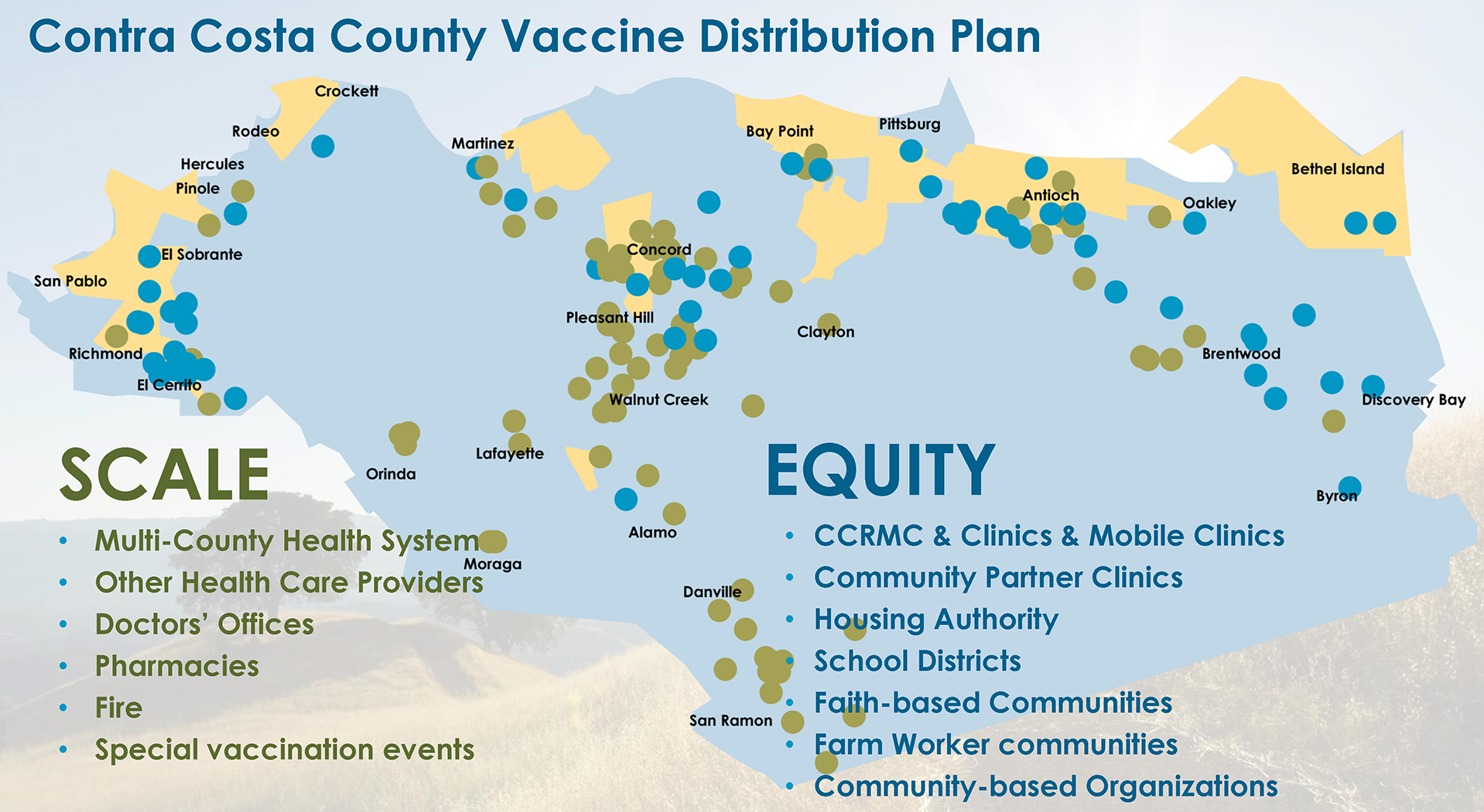
Less than 5% immunization compared to 11-13.8% in Alamo, Lafayette and Walnut Creek where the population is older.

The county is distributing the vaccine primarily to residents 75 years and older, said Contra Costa County Health Officer Dr. Chris Farnitano – “I really do believe we are at the turning of the tide of this pandemic at this point.”

Annual Board Retreat held virtually

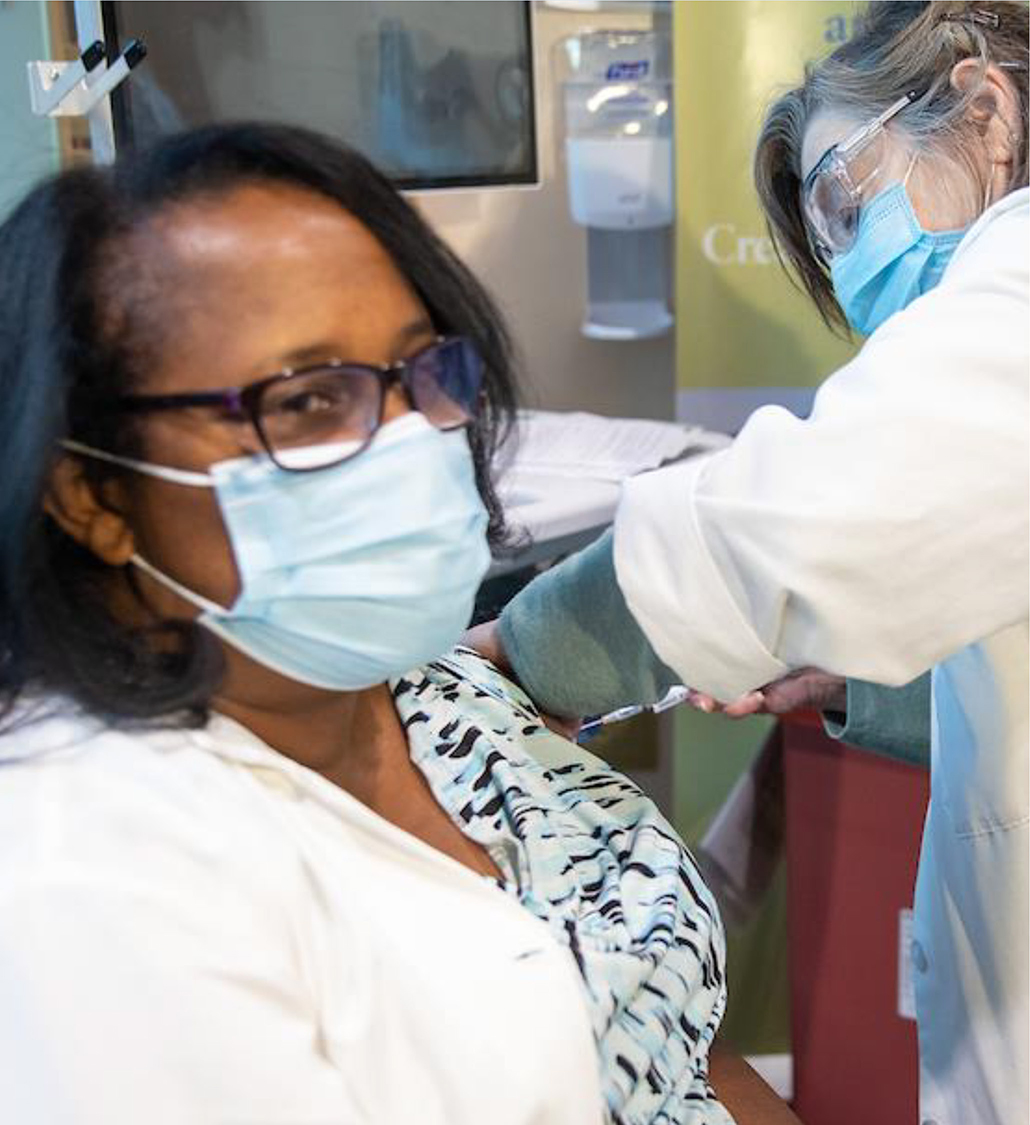
Photo: CC Health Services.

By Daniel Borsuk

During the Contra Costa Board of Supervisors annual retreat Tuesday, Jan. 26, the county’s top health official made a major admission, saying her department will investigate questions into claims of unequal distribution of COVID-19 vaccination injections in areas with high populations of Black and Latino residents.

Contra Costa Health Services Director Anna Roth was put in the hot seat by District 1 Supervisor John Gioia who, like last week, raised similar questions as to why the COVID-19 vaccine is being unequally distributed in the district he represents. His district includes the cities of Richmond and El Cerrito and other communities with high percentages of minorities who are more prone to be stricken with coronavirus, than in other communities that tend to be wealthier and have higher percentages of white residents.

Gioia also cited other high percentage minority communities like Antioch, Bay Point, and Pittsburg in supervisorial District 5 for exposing residents to the COVID-19.  District 5 is represented by Supervisor Federal Glover of Pittsburg who did not comment on the issue.

Gioia said the vaccination rate in Antioch is five percent, in Bay Point it is 4.3 percent, in Richmond it’s 4.5 percent, while in Alamo the vaccination rate is 11 percent, 12 percent in Lafayette, and 13.8 percent in Walnut Creek.

“You make a very important point.  The early data is showing an inequity,” Health Director Roth said.  “We hear your request for a more specific plan.”

Last week, when Gioia raised the same inequity issue, Roth did not acknowledge the Supervisor’s issue as significant enough for possible further study.

Discussion about the vaccine inequity distribution issue arose at the same time Tuesday that President Joe Biden’s administration announced it would boost the supply of COVID-19 vaccines by about 16 percent for the next three weeks.  White House officials said the order would buy enough additional doses to vaccinate most of the U.S. population with a with a two-dose regimen by the end of summer.  Contra Costa County Health officials were unavailable to comment about that development. Like all counties in California, vaccine distribution is overseen by the state.

However, during the Health Services COVID-19 Response Update to the board, Dr. Chris Farnitano, the county’s health officer, pointed out that the county is distributing the vaccine primarily to residents 75 years and older. Of 93,000 doses administered, 61,000 have been given to citizens older than 75 years, he explained.

“I really do believe we are at the turning of the tide of this pandemic at this point,” Farnitano also stated at the end of the presentation.

Retreat Highlights

During their remotely held retreat, the supervisors were presented glimpses of the 2021 budget, economic forecasts, future capital improvement projects, redistricting, economic development, and developments planned at the two County-owned airports in Byron and at Buchanan Field in Concord.

Among some of the highlights of the presentations were:

  • Supervisors expressed their preference for the potential construction of a 20,000 square foot, two-story office building with 80 underground parking spaces to be built at 651 Pine St., the former site of the 12-story McBrien Administration Building that will be demolished now that that county’s new four story $95 million administration David Twa Administration Building has been completed and is open for limited occupancy due to COVID-19.

“The economy will be roaring back,” forecast economist Dr. Christopher Thornberg. He made the prediction despite the fact that California faces a $54 billion budget deficit, “public transit like BART is going to have a tough time getting out of this thing, but electrically powered cars I see coming down the pike.”

  • Former County Administrator David Twa will oversee work on the county’s redistricting process, a process that occurs every 10 years to adjust supervisorial district boundaries. The complex process involves conducting public hearings and meeting state and federal guidelines that are dependent on when the federal government releases 2020 census data.  There is concern that due to COVID-19, the availability of census data might be delayed.
  • The two county airports at Byron and Buchanan have generated a 9% increase in revenue for the county since 2017. The Byron airport recently landed, said Airports Director Keith Freitas, a vertical take landing aviation company.  There are 10 ongoing development projects at the airports including fire station No. 9 and a new administration building at the Buchanan Airport in Concord.

Filed Under: Airports, Health, News, Supervisors

Stay-at-Home order lifted for Bay Area, Contra Costa returns to purple tier

January 25, 2021 By Publisher Leave a Comment

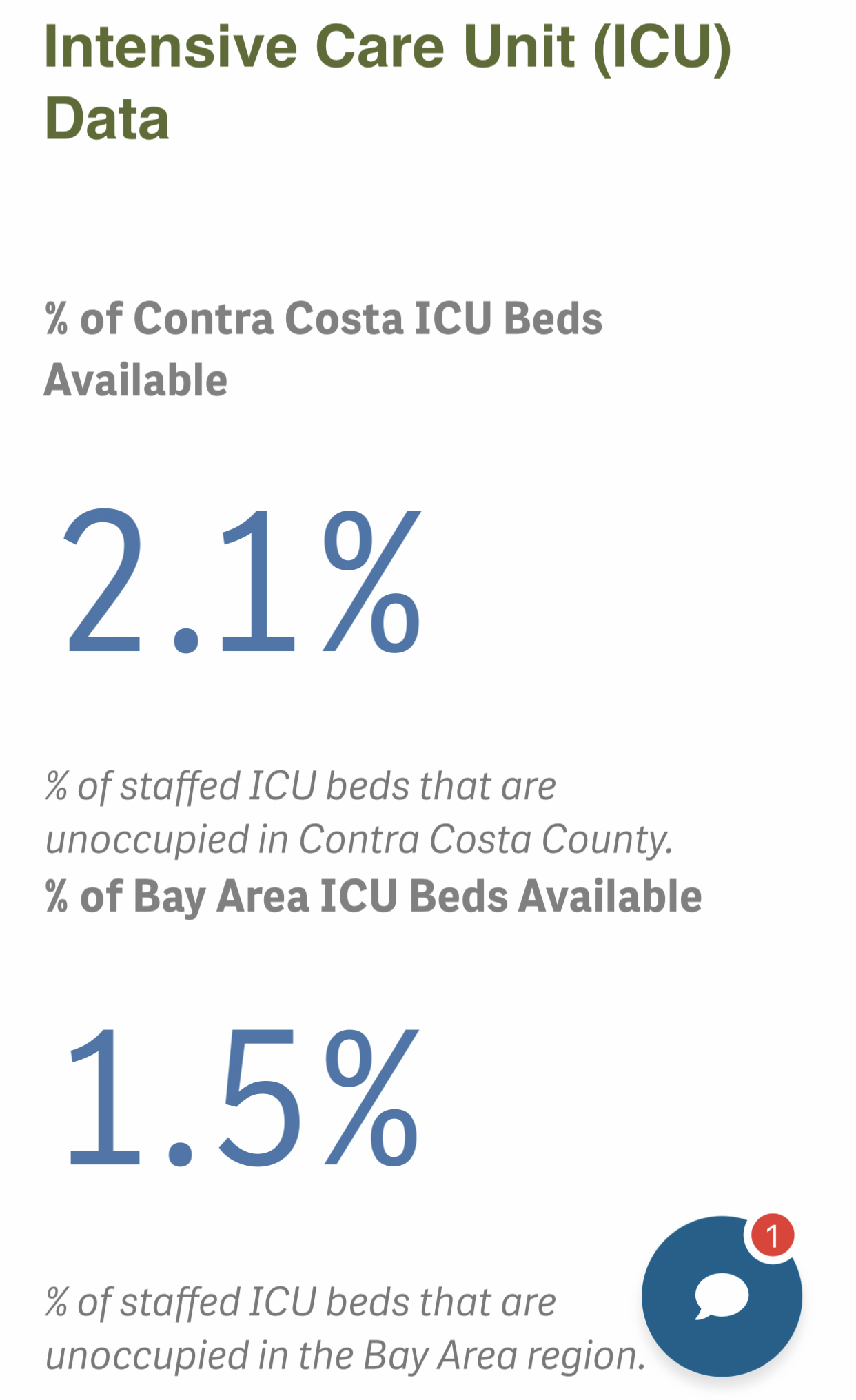
Available ICU beds in Contra Costa County and Bay Area as of Monday, Jan. 25, 2021. Screenshots of CCHealth Services’ website.

Outdoor dining allowed again; hair salons, barber shops can reopen.

State and local stats don’t match.

“The state has changed how they are calculating,” – Scott Alonso, Contra Costa Health Services spokesman

Contra Costa County is urging residents and businesses to continue practicing health safety measures and avoiding risky activities after California lifted its regional stay-at-home order today in the Bay Area. The state lifted the order Monday morning, effective immediately.

Some significant changes resulting from Contra Costa’s return to the purple tier include:

  • Restaurants may offer outdoor dining, following the state health guidelines.
  • Hair salons, barber shops and personal services such as nail salons may reopen following state health guidelines.
  • Outdoor social gatherings involving 25 or fewer people, from three or fewer different households, are now permitted.
  • For the full list of what businesses and venues are allowed to be open as of Monday, Jan 25. click here.
  • More information available at org/coronavirus

The state order helped the region meet the deadly surge in COVID-19 infections following the winter holiday season. But per capita, the adjusted average number of new infections reported every day in Contra Costa was 46.2 in the last week – nearly seven times the threshold for a county to enter the purple tier of the state’s Blueprint for a Safer Economy.

“Our county continues to experience a winter surge in COVID-19 transmission,” said Dr. Chris Farnitano, Contra Costa County health office. “While we are making progress in vaccinating our most vulnerable residents, we are still weeks or months away from seeing the effects of immunization in our community.”

The purpose of the state’s regional stay-at-home order was to slow COVID-19 transmission to protect the intensive care unit (ICU) bed capacity of hospitals and healthcare systems from overwhelming medical surge.

CCC & Bay Area ICU beds availability as of Saturday, Jan. 23, 2021.

Staffed ICU beds in Contra Costa hospitals continue to see heavy use, with 137 of 163 beds occupied on Saturday, including both COVID-19 patients and patients with other major health problems put the county at almost 16%, over the 15% state required threshold. All hospitals in the county remain on contingency care status, and most elective surgeries continue to be postponed.

However, on Saturday the Contra Costa Health Services’ COVID-19 website showed ICU bed capacity in the county at only 1.2% and 2.0% Bay Area-wide. On Monday the CCHS website shows the availability of ICU beds in Contra Costa is 4.0% and 3.7% in the Bay Area, far below the 23% the state is now claiming. Asked why that was, Scott Alonso, a spokesman for CCHS responded, “The state has changed how they are calculating. We are awaiting further information from CDPH and will update the CCHS website once ready and able when we hear from them.”

Health guidelines regarding physical distancing and use of face coverings outside the home remain in effect, as do occupancy caps for indoor businesses and requirements limiting close-contact gatherings of people from different households. Check the state’s web page for industry-specific guidance.

“Under no circumstances should anyone view the state action today as a reason to let down their guard. We have made progress, but we need to continue what we are doing to keep our families and communities safe,” Farnitano said. “It is just common sense.”

Contra Costa has kicked off a countywide drive to provide 1 million doses of COVID-19 vaccine by July 4. County residents who are older than 75 can now get a vaccination appointment by calling 1-833-829-2626 or using Contra Costa Heath Services (CCHS) online request form at cchealth.org/coronavirus. The county expects to extend vaccine eligibility to more people in coming weeks.

Please check back later for any updates to this report.

Allen Payton contributed to this report.

Filed Under: Health, News

Contra Costa County plans to administer 1 million COVID-19 vaccines by July 4

January 23, 2021 By Publisher Leave a Comment

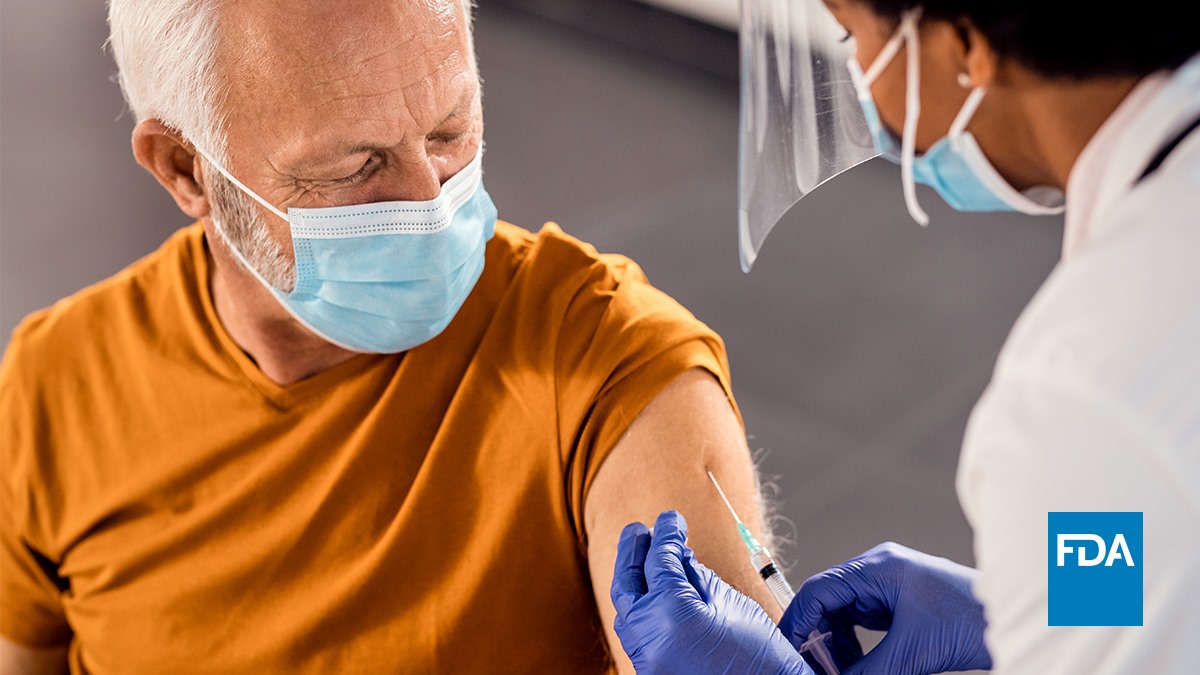
Photo: FDA

Reflecting the countywide commitment to protect all Contra Costa residents from COVID-19, Contra Costa Health Services (CCHS) announced Friday a new goal for the county and its healthcare partners: Deliver 1 million doses of COVID-19 vaccine by Independence Day. That would cover most county residents. The population is currently estimated to be 1,153,526 as of 2019.

“There is no higher priority in Contra Costa County than delivering COVID-19 vaccine to as many eligible residents as possible, as quickly as possible,” said Diane Burgis, chair of the Contra Costa County Board of Supervisors. “We believe this is a realistic goal, provided our supply of vaccine increases.”

The county’s announcement follows a promise yesterday from new President Joe Biden to administer 100 million doses during the first 100 days of his administration.

“Together with our partners in the community, from large health systems to independent doctor’s offices to supermarket pharmacies, we are building the infrastructure to vaccinate hundreds of thousands of county residents, quickly and safely,” said Anna Roth, director of Contra Costa Health Services (CCHS). “When doses arrive, they do not sit in freezers. They go straight to the public.”

Screenshot of FDA video.

Contra Costa went from providing zero doses to more than 5,800 per day during the first month that COVID-19 vaccine became available, and the daily average continues to climb as community health providers offer more shots to patients and members, and as CCHS opens more county-operated community immunization sites.

If the state can supply enough vaccine, CCHS and our partners together will soon have capacity to provide up to 9,000 doses of vaccine daily. With anticipated contributions from other health systems in the community, Contra Costa could achieve its million-dose goal by July 4.

This week, CCHS also launched its new vaccine-appointment phone line – 1-833-VAX-COCO (1-833-829-2626). Now, those who are unable to schedule vaccine appointments online can call us and book an appointment Monday-Friday, 8 a.m. – 8 p.m. Eligible residents seeking appointments are encouraged to use the online form unless they do not have internet access or have difficulty using the online form.

Other local resources, including links to other healthcare providers in the community now offering vaccine, are available at coronavirus.cchealth.org/get-vaccinated.

CCHS also has a new data dashboard on its COIVD-19 web page, cchealth.org/coronavirus, that provides daily updates for the county’s vaccination campaign. More than 65,000 doses of COVID-19 vaccine have been administered so far in the county.

In addition to the first wave of vaccine recipients, which included healthcare and emergency workers and people who live or work in residential care facilities, all county residents 65 and older can now request an immunization appointment through CCHS.

Appointments with CCHS are not first come, first served. Every day we prioritize appointments for people who are in the highest risk categories, according to state and federal guidelines, especially people who are 75 or older.

Appointments for other eligible residents can vary according to several factors, including age, underlying health concerns, how close they live to a vaccination site where an appointment is available, and whether they live in a neighborhood or community that is especially impacted by COVID-19. Because vaccine is scarce, the reality is that it may take weeks for some eligible residents to get a vaccine.

As more private health systems serving Contra Costa expand capacity to serve their members and patients, more county residents will hear from their own healthcare providers about how and when they can access COVID-19 vaccine.

Visit cchealth.org/coronavirus for local information about the COVID-19 pandemic and Contra Costa’s immunization campaign.

Allen Payton contributed to this report.


Filed Under: Health, News

Kaiser Permanente awards $8.15 million for racial equity across U.S., one grant in Contra Costa

January 19, 2021 By Publisher 3 Comments

Photo courtesy of Kaiser Permanente.

In Northern California, grant funding to three grassroots and nonprofit organizations, including one in Contra Costa County, will address structures and practices that prevent communities of color from achieving good health and well-being

By Kerri Leedy, PR and Media Relations Manager, Kaiser Permanente Northern California 

OAKLAND, CA – On Martin Luther King, Jr. Day, Kaiser Permanente, the nation’s largest integrated, nonprofit health system, announced it has awarded $8.15 million to support dozens of nonprofit and community-based organizations whose programs address systemic racism and its accompanying trauma on individuals and communities of color. These grants are part of the $25 million commitment Kaiser Permanente announced in June 2020 to promote health equity and break the cycle of racial inequities, injustices, and stresses that lead to poor health outcomes for its members and communities.

“As we reflect on the legacy of Martin Luther King Jr., I hope Kaiser Permanente is one of many voices plainly saying that there is much, much work still to be done to realize Dr. King’s ideal of an equitable society that guarantees every individual the opportunity to thrive,” said Greg A. Adams, Kaiser Permanente chairman and CEO. “I am encouraged as I see what progress is possible through organization, activism, and advocacy — and I want our support to enable future generations to follow that path to create change.”

This first set of grants, awarded to 39 organizations in eight U.S. states and the District of Columbia, support established national and regional community-based organizations led by people of color, addressing racial and social justice or trauma, including the lifelong impacts of adverse childhood experiences (ACEs).

In Northern California, a total of $975,000 in grants will help three community-based organizations work to end systemic racism and the resulting trauma experienced by people of color.

“It is fitting that we announce these grants on the day when our nation honors Martin Luther King Jr. and his vision of a just and equitable society,” said Yvette Radford, vice president, Kaiser Permanente Northern California External and Community Affairs. “These investments will support our community partners in organizing, advocating, and advancing policies and practices that foster racial equity and justice, healing, and the opportunity for every individual to thrive.”

The following Northern California organizations will each receive $325,000 over the next 24 months, as part of Kaiser Permanente’s $8.1 million investment:

  • RYSE Inc.: Young people of color in Richmond and West Contra Costa will be engaged in RYSE’s leadership pipeline to build the next generation of leaders grounded in racial and social justice. They will work with adult stakeholders to help shape racially just policies and practices.
  • Faith in Action Network (PICO California): Leveraging its organizing expertise and deep connections with Black faith leaders, congregations and directly impacted communities, PICO will work to dismantle systemic racism, reconstruct public safety systems, and help heal, protect and save Black lives.
  • Public Health Advocates (PHA) in Stockton: Working with youth leaders, PHA will educate students on the impact of trauma, develop a campaign to reduce mental health stigma, and create safe healing and support spaces. PHA will work to address racist policies and practices with bi-weekly education and leadership training of youth to help them understand the relationship between public policy, trauma, and health outcomes. 

“This funding sends a message of hope to our youth that they are critical to this movement and have the power to make positive change,” said Tanice Wallace, program manager for Public Health Advocates’ Faces of Resilience program, which will receive additional funding through Kaiser Permanente’s racial equity grants. “Our program helps young people understand the roots of structural racism, then we offer them tools and the opportunity to work toward racial equity in their communities.”

Among the initiatives funded is a $2 million national partnership with PolicyLink to design and scale racial equity strategies, projects, and campaigns. The core issues PolicyLink addresses include housing justice, water equity and climate resilience, corporate racial equity, and reducing inequality.

“To truly honor Dr. King, we must build a just and fair society where all can participate, prosper, and reach their full potential. Sadly, due to us not heeding Dr. King’s charge, more than 100 million people — 1 in 3 Americans — still live in or near poverty,” said Michael McAfee, president and CEO of PolicyLink. “Our partnership with Kaiser Permanente will support creating anti-racist practices and policies inside the organization, within Kaiser Permanente’s vast network, and in the broader society. This project will help to ensure that all people in America — particularly those who face the burdens of structural racism — participate in a just society, live in a healthy community of opportunity, and prosper in an equitable economy.”

As part of this partnership, PolicyLink will also play a role in working with organizations receiving grants — convening, engaging, and mobilizing regional grantees to catalyze learning and action communities. Kaiser Permanente and PolicyLink will evaluate the outcomes of funded programs, with input from a panel of national racial justice and trauma experts, to track and measure overall progress. The grants will be distributed through Kaiser Permanente’s fund at the East Bay Community Foundation.

In addition, in celebration of Martin Luther King Jr. Day, an estimated 1,700 Kaiser Permanente employees in Northern California took part in the organization’s 17th Annual MLK Day of Service. Due to COVID-19, all volunteering was done safely and virtually. Projects ranged from making calls and writing letters to seniors and others who are isolated by the pandemic to creating blankets, masks, and wellness journals for people in need.

Kaiser Permanente Northern California is also donating a 1,000-square-foot mural to the Black Cultural Zone at Oakland’s Liberation Park where it will soon be permanently installed. Two local Oakland artists created the dynamic and colorful piece of art, which depicts images that reflect the Black community and culture.

About Kaiser Permanente

For 75 years, Kaiser Permanente has been committed to shaping the future of health and health care — and helping our members, patients, and communities experience more healthy years. We are recognized as one of America’s leading health care providers and not-for-profit health plans. Since July 21, 1945, Kaiser Permanente’s mission has been to provide high-quality, affordable health care services and to improve the health of our members and the communities we serve. We currently serve 12.4 million members in eight states and the District of Columbia. Care for members and patients is focused on their total health and guided by their personal Permanente Medical Group physicians, specialists and team of caregivers. Our expert and caring medical teams are empowered and supported by industry-leading technology advances and tools for health promotion, disease prevention, state-of-the-art care delivery and world-class chronic disease management. Kaiser Permanente is dedicated to care innovations, clinical research, health education and the support of community health.

Filed Under: Community, Health, News, West County

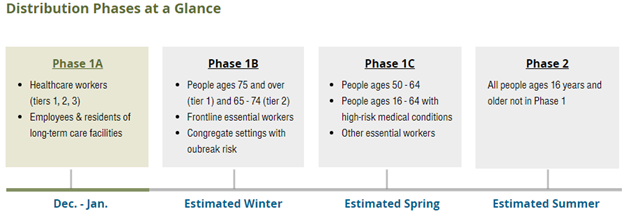
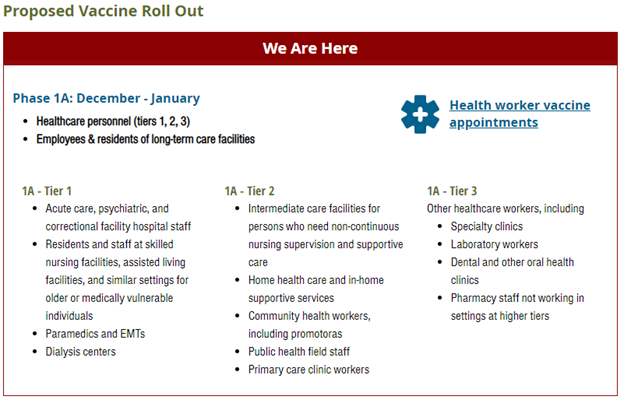
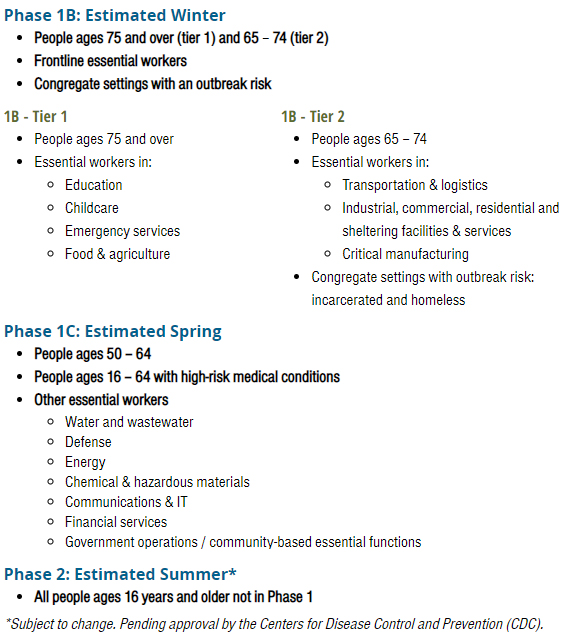
Contra Costa issues proposed COVID-19 vaccination distribution schedule

January 11, 2021 By Publisher 2 Comments

Source: Contra Costa Health Services

Contra Costa County’s healthcare system is gearing up to provide as many as 7,000 vaccines per day in an effort to vaccinate all eligible residents over the next six months. The county expects to triple the number of vaccines offered this week as capacity grows.

Vaccination efforts in Contra Costa County have been in startup mode over the past month, building scheduling systems and putting the staff in place to meet demand. This is all being done during the biggest surge of the pandemic.

“We are at the beginning of the biggest public health immunization campaign in history and it’s going to take time,” Contra Costa Health Services (CCHS) Director Anna Roth said. “At some point, everyone who wants a COVID vaccine will be able to get one. While we aren’t there yet, making vaccine available to everyone is our top priority.”

As of now, all but 1,400 of the 43,675 doses allocated in Contra Costa have been assigned to people in Phases 1A and 1B priority groups. All the doses are expected to be given within the next 14 days, Roth said.

With vaccine in limited supply now, immunizations have only been available to priority groups in high-risk settings, such as frontline healthcare workers and nursing-home residents and staff. As of Jan. 10, 30,245 doses have been administered in the county by various health providers, including Contra Costa Health Services (CCHS) and John Muir Health, as well as the federal long-term care partnership with CVS and Walgreens. Safeway and Rite-Aid are completing their registration process with the state. Safeway will begin offering shots at one location this week with additional sites coming on board in the next two weeks.

Contra Costa County Deputy Health Officer and COVID Operations Chief Dr. Ori Tzvieli asked for the public to be patient as health systems build capacity to keep up with the flow of vaccine supply and meet demand.

“We continue to redirect every resource available to getting shots in arms,” Dr. Tzvieli said. “At the same time, we are developing partnerships and networks that will ensure every pharmacy and healthcare provider in the county can provide the vaccine as more and more people are eligible to receive it.”

The County has opened several vaccination sites across Contra Costa at health centers and other large facilities to vaccinate eligible individuals, and we are opening more sites every week. CCHS has also begun shifting staffing from COVID testing sites to vaccination efforts to increase capacity. We also have activated our volunteer Medical Reserve Corps to give vaccine, and the health department is working with fire agencies to use paramedics to administer vaccine.

County health departments aren’t the only ones who are stepping up. Private health systems such as Kaiser, Sutter and John Muir Health — who are the primary healthcare providers for the vast majority of Contra Costa residents – are all scaling up their efforts to vaccinate their own members and let them know when it’s their turn. Pharmacies are also coming online to provide vaccinations as more people become eligible. CVS and Walgreens are already vaccinating those living in long-term care facilities and their staff.

About 900,000 Contra Costa residents will be eligible for vaccine once the County reaches Phase 2 of the distribution plan. To reach community-immunity levels, 75% of those eligible (725,000 people) would need to be vaccinated in the county. In order to immunize 725,000 people over the next six months (104 business days), roughly 7,000 people will need to be vaccinated every business day on average. That will require a significant boost in vaccinations from current levels. During the first few weeks since a vaccine became available in mid-December, 30,245 shots have been given – about 1,200 a day.


Filed Under: Health, News

Bay Area Stay-At-Home order extended indefinitely

January 9, 2021 By Publisher 34 Comments

From www.cdph.ca.gov.

  • Until a region’s four-week ICU projection shows a capacity of greater than or equal to 15%

  • The extended order, directs residents to stay at home except for work, shopping or other essential activities, such as medical appointments. Gov. recommends no non-essential travel more than 120 miles from home.

  • Latest total numbers for Contra Costa County: 46,618 cases, 389 deaths

In announcing the most recent statistics on COVID-19, including data on intensive care unit (ICU) capacity across the state, today, Saturday, Jan. 9, 2021 the California Department of Public Health (CDPH) extended the Stay-At-Home order indefinitely. That’s based on the latest ICU data showing 3.0% of current available ICU capacity.

Once a region’s four-week ICU projection shows a capacity of greater than or equal to 15%, the order will be lifted for that area. The state will assess the region’s ICU projections in the coming days and announce a formal decision on whether Bay Area meets criteria to exit the order.

Current Available ICU Capacity by Region

  • Bay Area: 3.0%
  • Greater Sacramento: 6.4%
  • Northern California: 27.5%
  • San Joaquin Valley: 0.0%
  • Southern California: 0.0%

* Today’s current available ICU capacity is based on numbers reported as of January 8, 2021.

Current Status of Regional Stay at Home Order in Affected Regions

  • Bay Area: Remains under order; The region’s four-week ICU projections will be assessed in the coming days.
  • San Joaquin Valley: Remains under order; four-week ICU capacity projections do not meet criteria to exit order.
  • Southern California: Remains under order; four-week ICU capacity projections do not meet criteria to exit order.
  • Greater Sacramento: Remains under order; four-week ICU capacity projections do not meet criteria to exit order.

ICU capacity projections for regions that are eligible to exit the order are calculated daily based on four factors: current estimated regional ICU capacity available, measure of current community transmission, current regional case rates and the proportion of ICU cases being admitted. Decreasing community transmission and increasing the health system capacity can help a region’s projected ICU capacity so they can exit the order. Read the full Regional Stay Home Order, Supplement to the Order, and frequently asked questions.

Due to high rates of COVID-19 hospitalizations impacting the health care system, California is also under a Limited Stay at Home Order. The order applies to all counties that are currently under the Regional Stay at Home Order and those in Tier One (Purple) of the Blueprint for a Safer Economy. The Limited Stay at Home Order will expire after the Regional Stay At Home Order has been terminated in all regions of the state.

Hospital Surge Order

On January 5, CDPH issued a public health order to reduce pressure on strained hospital systems. To preserve services for the sickest patients, the hospital surge order requires some non-essential and non-life-threatening surgeries to be delayed in counties with 10% or less of ICU capacity under the Regional Stay at Home Order where the regional ICU capacity is at 0%. Examples of procedures that may be delayed include carpal tunnel release and non-urgent spine surgeries. Surgeries for patients who have serious and urgent medical conditions will continue. Examples of procedures that will continue include serious cancer removal and necessary heart surgeries. The order will remain in effect for at least three weeks and will continue until rescinded.

The order requires hospitals statewide to accept patient transfers from facilities that have implemented contingency or crisis care guidelines as long as those transfers can be done capably and safely. On December 28, 2020 CDPH provided guidance to health care facilities on implementing the Crisis Care Continuum Guidelines issued in June 2020.

Counties Currently Impacted by the Hospital Surge Order:

San Joaquin Valley: Fresno, Kern, Kings, Madera, Merced, San Benito, San Joaquin, and Stanislaus

Southern California: Imperial, Los Angeles, Orange, Riverside, San Bernardino, San Diego, and Ventura

Statewide COVID-19 Data as of Today

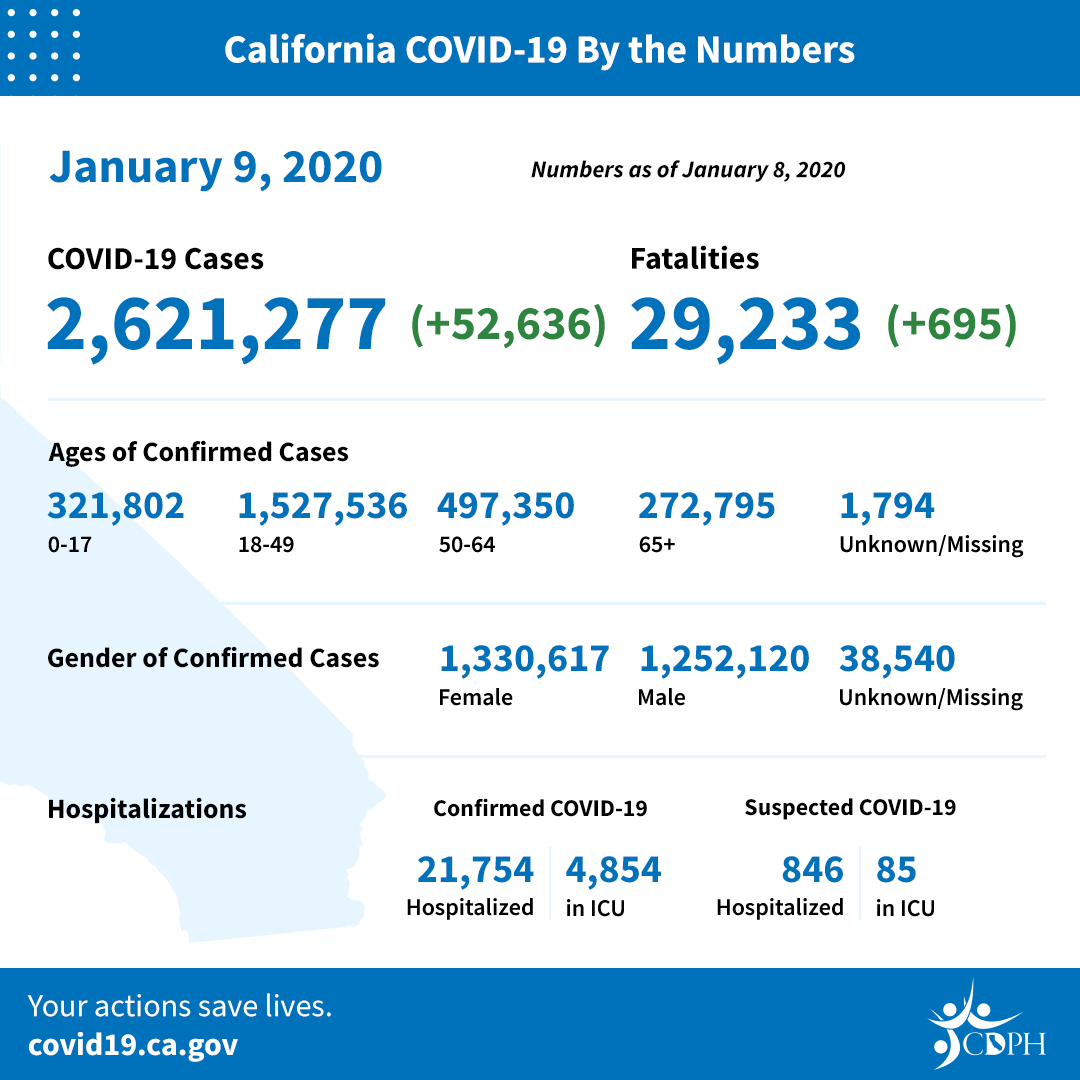
  • California has 2,621,277 confirmed cases to date. Numbers may not represent true day-over-day change as reporting of test results can be delayed.
  • There were 52,636 newly recorded confirmed cases Friday.
  • The 7-day positivity rate is 14.0% and the 14-day positivity rate is 14.0%.
  • There have been 35,353,748 tests conducted in California. This represents an increase of 326,418 during the prior 24-hour reporting period.
  • As case numbers continue to rise in California, the total number of individuals who will have serious outcomes will also increase. There have been 29,233 COVID-19 deaths since the start of the pandemic.
  • As of January 9, a total of 734,405 vaccine doses have been administered statewide. As of January 8, a total of 2,060,800 vaccine doses, which includes the first and second dose, have been shipped to local health departments and health care systems that have facilities in multiple counties.

Tracking COVID-19 in California

State Dashboard – Daily COVID-19 data
County Map – Local data, including tier status and ICU capacity
Data and Tools – Models and dashboards for researchers, scientists and the public
Blueprint for a Safer Economy – Data for establishing tier status

ADDITIONAL DATA & UPDATES

Updated Travel Advisory

CDPH has issued an updated travel advisory. Except in connection with essential travel, Californians should avoid non-essential travel to any part of California more than 120 miles from one’s place of residence, or to other states or countries. Avoiding travel reduces the risk of virus transmission, including by reducing the risk that new sources of infection and, potentially, new virus strains will be introduced to California. Postponing travel and staying home is the best way to protect yourself and others from COVID-19. Non-essential travelers from other states or countries are strongly discouraged from entering California and should adhere to the state’s self-quarantine procedures for 10 days

Safe Schools for All Plan

Governor Newsom released his California’s Safe Schools for All plan, California’s framework to support schools to continue operating safely in person and to expand the number of schools safely resuming in-person instruction.

Vaccinate All 58

The COVID-19 vaccination is one of the most important tools to end the pandemic. California will distribute a safe and effective COVID-19 vaccine in a fair way to everyone who wants it in all 58 counties. Visit the Vaccinate All 58 webpage.

Health Care Workers

As of January 8, local health departments have reported 74,589 confirmed positive cases in health care workers and 281 deaths statewide.

Health Equity

The COVID-19 pandemic has highlighted existing inequities in health that are the result of structural racism and poverty, and the disproportionate prevalence of underlying conditions such as asthma and heart disease among Latinos and African Americans. California is committed to understanding these inequities to help ensure the best health outcomes for all Californians. View COVID-19 Race & Ethnicity Data and Cases and Deaths by Age Group. Visit the new Health Equity Dashboard.

Testing Turnaround Time

The testing turnaround time dashboard reports how long California patients are waiting for COVID-19 test results. During the week of December 27 to January 2, the average time patients waited for test results was 1.4 days. During this same time period, 60% of patients received test results in one day and 87% received them within two days.

Multisystem Inflammatory Syndrome in Children (MIS-C)

As of January 4, 161 cases of Multisystem Inflammatory Syndrome in Children (MIS-C) have been reported statewide. MIS-C is a rare inflammatory condition associated with COVID-19 that can damage multiple organ systems. MIS-C can require hospitalization and be life threatening.

Your Actions Save Lives

Protect yourself, family, friends and your community by following these prevention measures:

  • If you are experiencing symptoms of COVID-19 (fever, cough, shortness of breath, fatigue, muscle or body aches), call your health care provider.
  • If you believe you have been exposed, get tested. Free, confidential testing is available statewide.
  • Stay home except for essential activities and follow local public health guidance.
  • Keep interactions to people who live in your household.
  • Wear a cloth face mask when out in public.
  • Avoid non-essential travel and stay close to home; self-quarantine for 10 days after arrival if you leave the state.
  • Wash hands with soap and water for at least 20 seconds.
  • Avoid close contact with people who are sick and stay home from work, school or other people if you feel ill.
  • Add your phone to the fight by signing up for COVID-19 exposure notifications from CA Notify.
  • Answer the call if a contact tracer from the CA COVID Team or local health department tries to connect.

Filed Under: Health, News, State of California

Residents challenge John Muir CEO and Exec. VP over firing of Trauma Director for letter questioning county health orders

December 24, 2020 By Publisher 7 Comments

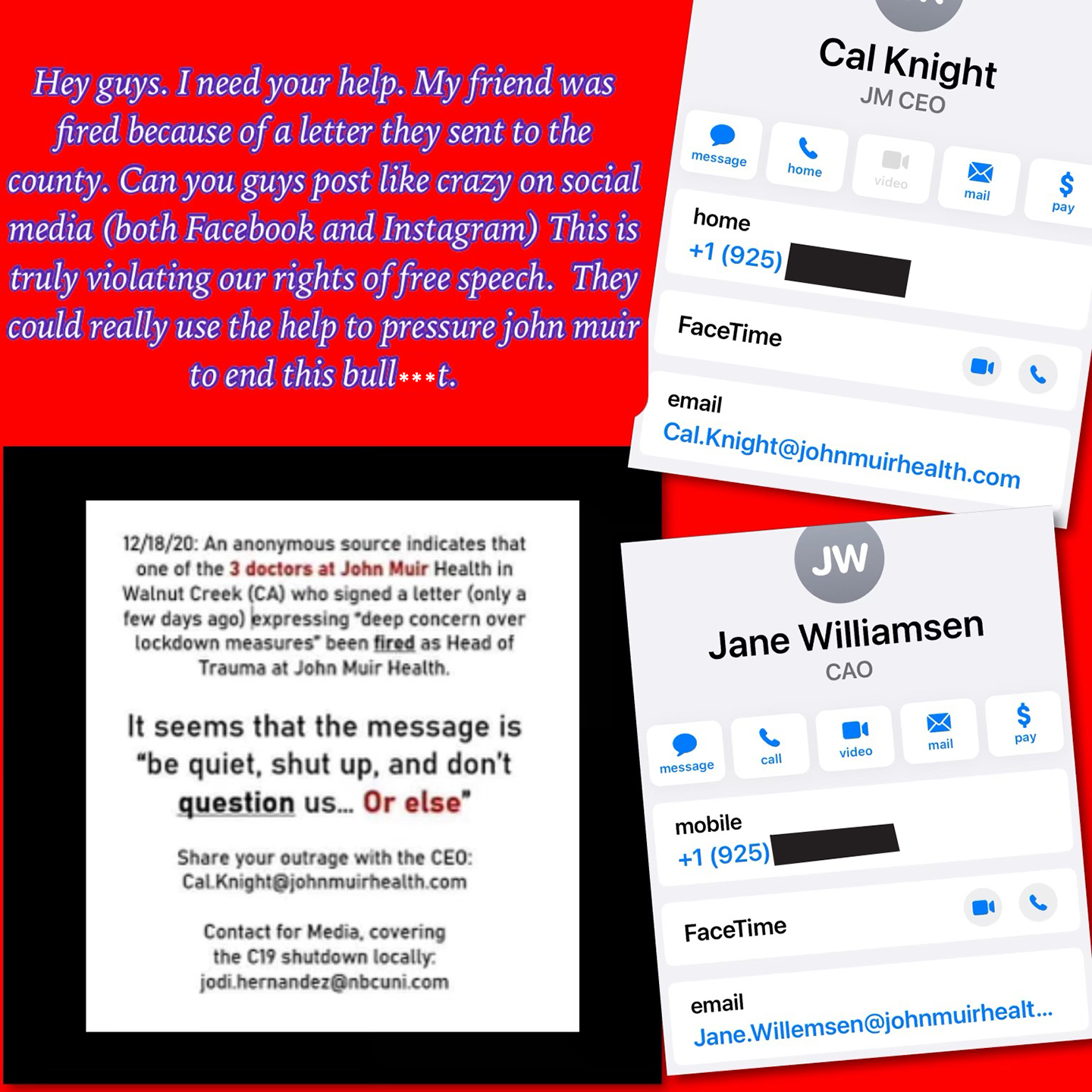
Social media post asking for county residents to contact John Muir Health executives over the firing of Dr. deBoisblanc. Source: anonymous (Information redacted by the Herald)

See doctors’ letter to Dr. Chris Farnitano and Contra Costa County Supervisors; effort now challenges compensation of John Muir executives

Dr. Michael deBoisblanc. Photo: BASS Medical Group

By Allen Payton

Last Friday, Dec. 18, Dr. Michael deBoisblanc was fired as the Medical Director of Trauma and Regional Services for John Muir Health. One of the partners in his private practice, the Bay Area Surgical Specialists (BASS) Medical Group, Dr. Pete Mazolewski, who also works at John Muir, confirmed the firing and said it was done, “without explanation.”

However, according to an NBC Bay Area news report, deBoisblanc “was reassigned after questioning COVID-19 restrictions” and “in a phone call…the doctor said, ‘clearly the interpretation of my letter to the county … they felt the need to separate themselves and remove me from my position.’”

A phone call to John Muir Health’s Director of Corporate Communications, Ben Drew, on Friday, Dec. 18 was never responded to.

That Dec. 10th letter (see below), by deBoisblanc, Mazolewski and Dr. Brian Hopkins, also a member of the BASS Medical Group who works at their John Muir, was sent to Contra Costa Health Officer, Dr. Chris Farnitano and county supervisors. It questioned the impacts of the health orders on the mental health, and the need for it when ICU beds are impacted every winter, as well as the impacts on businesses.

In response, a letter writing campaign was begun through social media to question both Cal Knight, John Muir’s President and CEO, and Jane Willemsen, the Executive Vice President and President of Hospital Operations for both John Muir’s Walnut Creek and Concord Campuses, as well as John Muir Behavioral Health.

Resident’s Letter to John Muir CEO & EVP

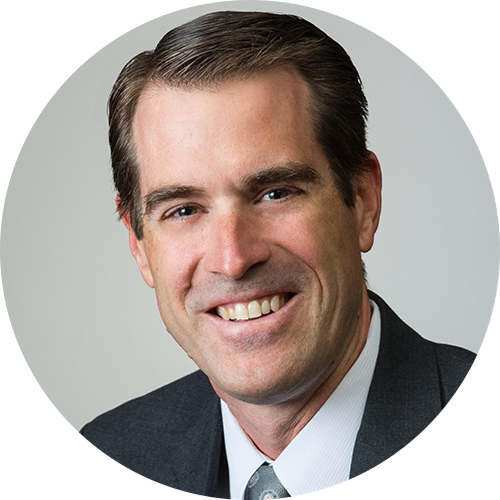
Calvin Knight, CEO & President, John Muir Health. Photo: JohnMuirHealth.com

As part of the campaign, the following letter was sent to Knight and Willemsen, and provided to the Herald anonymously:

“Dear Mr. Knight and Ms. Willemsen,

I am writing you as a very concerned Contra Costa County resident in order to address the recent news of what appears to be a retaliatory termination and/or reprimands directed towards three doctors at John Muir relating to a letter addressed to Contra County Health official – Dr. Chris Farnitano.  As has been reported on NBC Bay Area, KTVU, The California Globe and several other news agencies, it is incredibly concerning that it appears as if John
Muir took retaliatory measures against those doctors for what seems to be a very thoughtful and respectful letter addressed to Dr. Farnitano (California Globe posted the letter in its article).  Additionally, it does not appear as if any of the doctors listed any association with John Muir, or inferred that they were speaking on its behalf in the letter.  As a lifetime California and a 21+ year Contra Costa County resident I am very concerned that John Muir’s actions seem more focused on intimidation and retaliation rather than what is in the best interest of the hospital and our community. Please see three of my specific concerns below:

  1. This is a global pandemic and there are countless well respected views that differ on best practices and treatment.  These differing views are widely articulated by county health officials, mayors, governors, state politicians, research institutions, doctors, nurses, etc.  Based on the doctors letter, I (and many others) feel it was a very thoughtful, well written and respectful letter in both tone and content. The tone was in no way disrespectful nor was there any mention of John Muir.  Additionally, it did not seem in any way out of line with medical questions/comments made daily by many, many well respected health leaders across the country on how to best respond to the virus taking into consideration both short term and long term impacts.

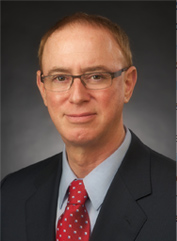
    Jane A Willemsen, Executive VP, John Muir Health. Photo: JohnMuirHealth.com

  2. Recently there have been many doctors in print and on TV from Stanford, UCSF, Harvard, Johns Hopkins, and many other well respected institutions who have very publicly voiced conflicting points of views/opinions and openly included the names of their institutions (not just that they were doctors).  Stanford even recently posted that they supported some of their doctors conflicting views given the amount unknowns regarding the virus.  I have not heard of any retaliatory actions taken on any of those individuals.
  3. Most concerning of all is that John Muir’s actions appears to be retaliatory/intimidating in nature and could seriously compromise staff at the hospital from speaking up in the future. If there is a culture of “don’t say anything or you risk termination”, then no one will ever speak up even when there are serious concerns regarding patient care, best practices or worse outright illegal/harmful activity. As a result, John Muir’s institutional credibility will significantly suffer even more over time and ultimately patient care will be compromised. This is not the type of environment that gives the community confidence in its hospital or its leadership.
    I fully understand that there are many differing points of view regarding best practices, treatment and long term impacts on all actions taken to address the pandemic.  That being said, based on all of the reporting and posted letter that I have seen it does not appear as if the doctors did anything wrong or disrespectful relating to their relationship with John Muir, the community and more importantly their Hippocratic oaths. To be honest, it really feels like the type of thoughtfulness and concern that you would encourage from everyone at the John Muir, including its administrators and executives.”

Letter From Three Doctors

Following is the text of the letter sent by the three John Muir doctors:

“December 10, 2020

Dr Farnitano and Contra Costa County supervisors,
We are writing to you with deep concern regarding more lockdown measures for our county. We feel the science is clear that more lockdowns lead to much more non covid morbidity and mortality as supported by the CDC.
We are confused as to why this is happening as we are often overcapacity in our hospitals and ICUs every winter and we have never done this previously. We also run our ICUs normally at a high rate of occupancy as this is most cost effective.
Here are the issues in a nutshell:
1. Excessive PCR testing is leading to numerous false positive results.  The specificity of PCR testing is really unknown but I have seen many authorities claim it is no higher than the low 90% range because of the attempt to be 100% sensitive using cycle threshold standards of 40. (sensitivity is inversely related to specificity)
2. For the sake of illustration, I will assume a 97-98% specificity which is likely far too high. Back in March when the county could only perform 300-400 tests per day, a 98% specificity would only lead to 6-8 false positive tests. Now we have reached up to 8000 tests per day. With a 98% specificity, that would lead to 160 false positive cases a day in our county. With a population of 1.1 million that would put us at 14.5 positive cases per 100,000 population and we would find ourselves in the worst possible tier based solely on false positive tests!!! This is absolutely a fact of epidemiology/science.
3. Again we have normal ICU and hospital winter surges that happen every winter and we never had any county lockdowns.  Our county figures on your website show essentially a stable ICU occupancy from July 1st to today. In addition on your website, we only have a minimal surge in hospitalized patients as compared to last year.
4. When you test like this for everyone that comes into your hospital, ‘hospital covid patient” numbers will rise simply because you are capturing more asymptomatic disease in patients who otherwise are visiting the hospital for other reasons.
5. Public policy is being based on these erroneous numbers and assumptions.
6. Public policy with shutdowns (various closures) leads to excessive non covid related deaths. Please see attached CDC article which shows clearly that these excessive deaths are most pronounced in the 25-44 year old age range with numerous weeks during this year that 40-50% excessive deaths are seen in this age group. When you measure in terms of life-years lost as compared to life-years lost with actual covid deaths, it is not even close. We are harming more people in our community who do not have nor are at risk of having significant covid disease with senseless closures of businesses and schools. This is data supported.
7. The CDC and pediatric societies across America have voiced their support of opening all schools. School age children are not significant vectors of the disease.
With this information above, can you answer the following questions:
1. How do you account for these high numbers of false positives with the county tiering system? Do you throw these numbers out so that only true positives are counted?
2. Why did you not intervene with any type of community closure in the past winters when our hospitals were at overcapacity? What is different now?
3. What data do you have that supports closures of businesses like gyms and outdoor dining while keeping other businesses open like walmart? What data do you have that supports that we stay indoors as opposed to outdoors? (all the science that we have reviewed supports a predominantly 99% indoor vehicle of transmission).
4. Why have you gone against the medical experts in not recommending the opening of our schools?
5. What about our county’s ICU figures caused you to trigger a closure? As you can see on Contra Costa County website, ICU occupancy has been stable between 75 and 80% since July 1st despite changing covid admissions. Please be specific here. When we run normally at 75% occupancy, why is 85% so terrible? We handle these surges every winter. It is expected.
We look forward to your reply.
Sincerely
Pete Mazolewski, MD, FACS, USAR
Brian Hopkins, MD,
Mike deBoisblanc, MD, FACS, USAR”

John Muir Responds to Letter

In what appears to be a response to the doctors’ letter, on Dec. 11, John Muir Health issued the following statement regarding Stay-at-Home Order and COVID-19 response

“John Muir Health continues to work closely with the Contra Costa County Public Health Officer and Contra Costa County Health Services in support of their efforts to manage the COVID-19 pandemic. We fully support the health orders, including the most recent Stay-at-Home order, implemented by County Health Services to prevent the spread of COVID-19. We have great trust in the County Health Department and appreciate all they have done to support the safety of our community under very difficult circumstances.

We realize there are a number of opinions on the Stay-At-Home order, including within our medical staff, but these views do not represent the views of John Muir Health. This is not a normal winter season. We have significantly expanded our ICU capacity to care for more COVID and non-COVID patients. Every day, we see the devastating effects of COVID-19 on patients and urge our community to wear a mask, not to gather with people outside their home and to limit any non-essential activities.

We will get through this pandemic, and it will take all of us working together. If you need health care, please do not delay seeking care. We are here to safely care for our patients and the community. Our courageous medical teams, who have displayed tremendous resiliency and compassion in the face of unrelenting challenges, appreciate the community’s support.”

Executive Compensation

In addition, the effort is also, now challenging the compensation of the non-profit healthcare organizations executives. According to John Muir Health’s 2018 tax return, Knight was paid nearly $4 million and Willemsen earns almost $1.9 million. (See page 85).

Pages from John Muir Health’s 2018 tax return.

No Response Yet from County Health Officer or Supervisors

As of Thursday, Dec. 24, 2020 the doctors have yet to receive a response to their letter. Efforts to reach Farnitano, county health communications staff and the five members of the Board of Supervisors, Thursday afternoon, were unsuccessful.

12/24/20 6:17 PM UPDATE: However, according to Kim McCarl, Communications Officer for Contra Costa Health Services, following “is the statement that the department released on Dec. 11.”

“Contra Costa County and all of California are in the grip of a deadly pandemic. The number of COVID-19 patients in our county’s hospitals has more than tripled in the past 30 days. The number of intensive care unit beds occupied by COVID-19 patients during the same period has more than doubled – and we do not believe the full effect of local transmission during the Thanksgiving holiday has reached our hospitals at this point. Also, flu season, which sends many people to the hospital, hasn’t peaked yet.

This wave is neither seasonal nor is it normal. It’s illogical to look at what happened at hospitals in prior years to predict what we can expect now. In years past, we weren’t dealing with a once-in-a-lifetime global pandemic.

We cannot afford to wait until our hospitals are actually full to make policy changes to reduce the spread of this deadly virus.

It would be irresponsible to suggest that universally accepted, proven-effective public health prevention measures to promote physical distancing are not in order at this time.

It would be dangerous at this moment to promote unfounded, unsupported theories about the efficacy of the standard test used to detect COVID-19, or to deny the reality that hospitals across California are rapidly filling with people who are very ill because of this virus.

We are now nearly a year into this pandemic. We have learned a few things along the way. We know from experience that stay-at-home orders, as challenging as they are for everyone, flatten the curve and save lives.”

Yet, when asked if the county staff had sent that letter to the three doctors, one of the three, Dr. Hopkins, replied, “No. They did not respond.”

“I saw this but it wasn’t sent to us directly,” he continued. “Lots of problems with this.  It all ‘sounds’ good and appeals to those not trained in science or medicine or statistics . They still haven’t been able to show that the ICU and/ or hospital numbers are different from prior years. Also “case” numbers are up compared to Spring, but the numbers don’t translate to the same numbers of deaths proportionally as the Spring wave for a ton of reasons.”

“Additionally, the data shows lockdowns have not been effective anywhere in the world at stopping the spread in areas where the virus is established,” Hopkins explained. “Finally, they missed the boat entirely on our message:  that the lockdowns are more destructive than the virus itself. This is an epidemiologic disaster from the standpoint of suicides, missed medical appointments and cancer screenings, depression, drug overdoses, etc.”

“So, they actually didn’t address anything in our letter. This response looks like it was written by a junior high school student.  Pathetic,” he concluded. “We are right about this just like we were in April and May when we said kids need to be back in school. Now, that is undisputed. The data backed that up back then, as well.”

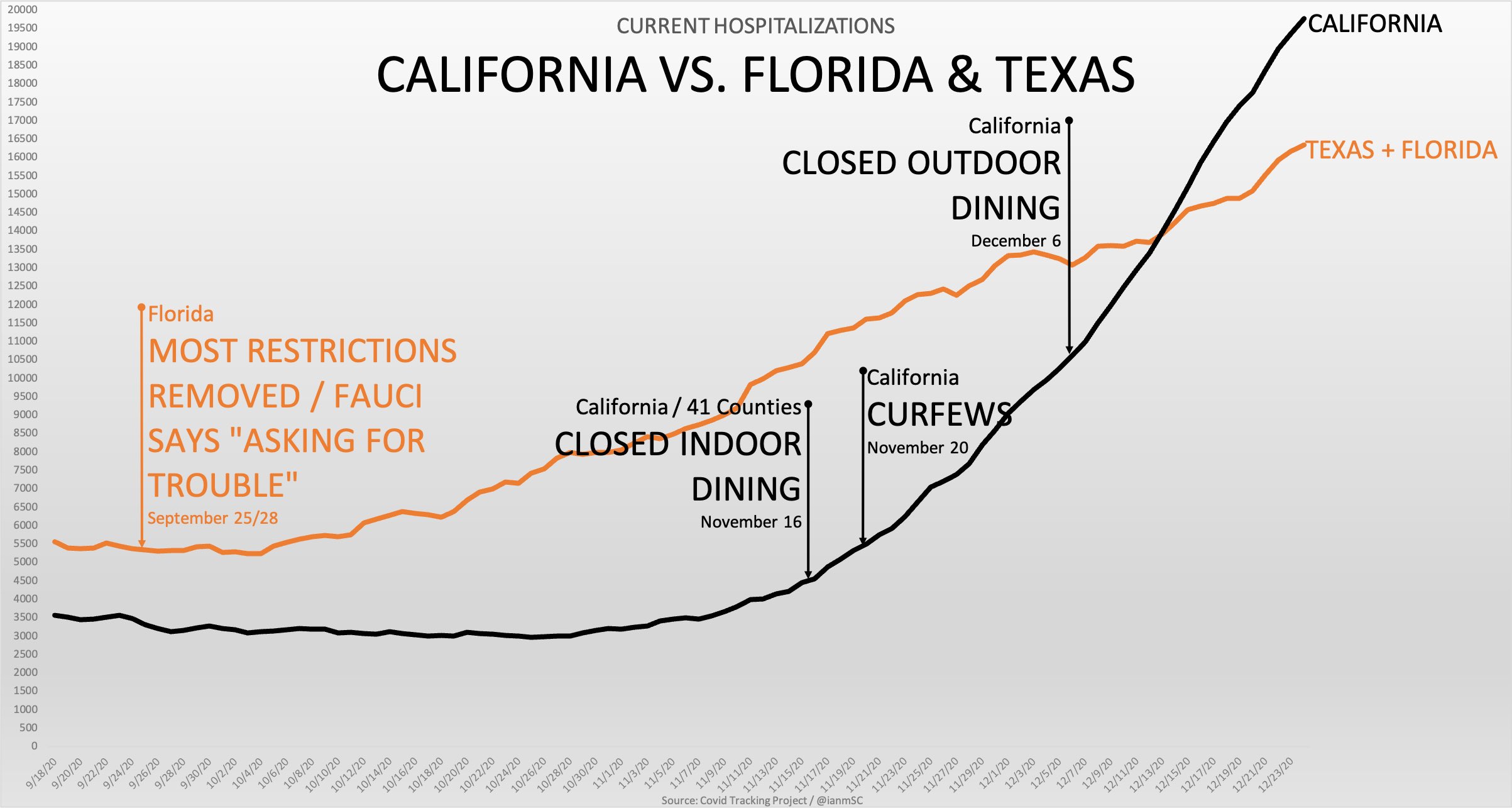
“Ian Miller has some very nice graphics on lockdowns, mask mandates, and their lack of relationship to case numbers and deaths. See: https://rationalground.com/mask-charts/ or his Twitter feed is even better: Twitter@ianmSC,” Hopkins added.

From rationalground.com


Filed Under: Central County, Health, News

Dr. Anthony Fauci’s special message to Lafayette in interview with Councilmember Cam Burks

December 23, 2020 By Publisher Leave a Comment

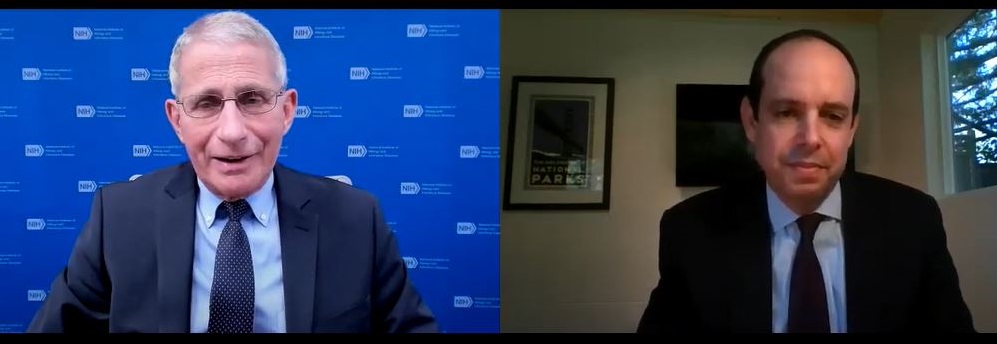
Dr. Anthony Fauci with Lafayette Councilmember Cam Burks during an online interview on Tuesday, Dec. 22, 2020. Courtesy City of Lafayette.

Hello Lafayette:

On Tuesday, December 22, I had the opportunity to sit down with Dr. Anthony Fauci, Director of the National Institute for Allergy and Infectious Diseases, for a virtual one-on-one fireside chat to briefly discuss the state of the current virus situation and how well we, Lafayette as a community, have been doing.

I congratulated him as just a few hours before our chat, Dr. Fauci himself received his first vaccination shot!

He praised Lafayette and encouraged us to continue our measures, and to become vaccinated as soon as it becomes available to us. He provided valuable advice on how we can prevent transmission and was genuinely proud of our community for taking COVID-19 so seriously.

Dr. Fauci turns 80 on December 24. As a surprise, I sprang on him the idea that we, as a city, would proclaim December 24, 2020, as Dr. Anthony Fauci Day in Lafayette. He excitedly accepted!

Just another example of Love Lafayette!

You can watch Dr. Fauci’s message to Lafayette on the City’s YouTube Channel here: https://youtu.be/40xxtGLreA0

Happy holidays, happy New Year, and please be safe.

Cam Burks, Lafayette City Council

Filed Under: Health, Lamorinda, News

Following death threat, protests Supervisor Mitchoff drops COVID-19 business fines hike proposal

December 16, 2020 By Publisher Leave a Comment

Reads unedited profanity laced email during Tuesday meeting

Unlikely radioactive material dumped at Keller Canyon Landfill in Pittsburg

Prioritize teachers for COVID-19 vaccine

By Daniel Borsuk

Supervisor Karen Mitchoff, choking back tears after receiving an emailed death threat and listening to an avalanche of protests to her proposal to boost county public health fines on small businesses violating COVID-19 orders, requested the idea be dropped at Tuesday’s Contra Costa County Board of Supervisors meeting.

Supervisors earlier heard from a number of anonymous callers, presumably restaurant owners largely hit by county health inspections and penalty fines.  Most of the speakers protested that the current fines of $250 for the first offense, $500 for the second offense and $1,000 for each additional violation within one year of the initial violation were too extreme.  If a violation continues for more than one day, each day is treated as a separate violation.

At the Board’s December 8 meeting, Mitchoff had proposed the county dramatically increase fines in order to send a message to businessowners thinking of violating county ordinances.  At that meeting the supervisor had said, “I would like to see, $10,000, $15,000, and $20,000 fines.  We have to do something different.  If they want to stay open and spread COVID they have to pay the price.”

Prior to receiving the threatening email or listening to anonymous businessowners torpedo her proposal Tuesday, Mitchoff said “If we do not do something, we’ll lose credibility.  I see many businesses in Concord and Pleasant Hill obey county orders and are closed, but restaurants in Danville are open.”

A group of Danville and San Ramon restaurant owners have stirred up most of the protests.

“We receive 13 complaints a day including customers not wearing masks or not social distancing,” Contra Costa County District Attorney Dianna Becton told the supervisors.  The DA has assigned two inspectors for health code violations.

“Small businesses are really suffering,” said Supervisor Diane Burgis of Brentwood, who said one small busines owner pleaded with her for help because he had difficulty paying his property taxes.  “I am not going to support higher fines.  I am not in support of higher taxes. It won’t work.”

Later, Mitchoff caved into the public protests and especially upon receiving a sort of “interesting”, profanity-laced message during the meeting that she received from Ricky Gunz and read verbatimm:

“F— you Bi—. Sleep lightly. There are some bad people out there.  Karma is a motherf—r.  Keep trying to fine business and see what happens.”

“We hear the pain and the frustration,” said Supervisor John Gioia of Richmond. “It is all about saving lives and slowing the spread of COVID-19 to the 15 percent intensive care unit (ICU) capacity level.  We’re trying to save ICU capacity.”

Earlier supervisors learned from Contra Costa County Public Health Officer Dr. Chris Farnitano that Contra Costa had 181 COVID-19 patients in local hospitals, but more crucially, 133 patients were occupying ICU beds.  There are a total of 183 ICU beds in the county.

“That’s a significant increase,” said Farnitano. “Our case rate is 36 cases per day.  December will be our deadliest month.  Of 500 patients, five will die of COVID19,” he warned.

Keller Canyon Landfill Probe: “Unlikely that radiological materials were disposed of at Keller Canyon”

Supervisors also voted 5-0 to accept a two-page report on an investigation whether any radioactive materials from the Hunters Point Naval Shipyard were transported to the Keller Canyon Landfill in Pittsburg.  The report, prepared by TRC Solutions, Inc. was initiated after news reports initially published on April 21, 2018 in the San Francisco Chronicle and later picked up by other news outlets including the Contra Costa Herald about allegations of improper dumping of radioactive materials had occurred in the landfill.

“TRC’s forensic audit started in October 2018 and concluded in May 2019.  Documents reviewed by TRC included special waste authorizations, soil analytical data reports, Hunters Point work plans and reports, Standard Operating Procedures, portal monitor calibration records, and landfill data to ascertain if radiologically contaminated materials were received by KCL from Hunters Point Naval Shipyard.  In addition, site visits were performed at both KCL and HPNS in April 2019,” the report stated.

“Based on this review, of data, reports, logs, interviews, and site visits, it is concluded that it is very unlikely that radiological materials of concern (i.e., radionuclides specific to Hunters Point contaminations and in exceedance of background) were disposed of at Keller Canyon. To obtain certainty that no radiologically contaminated material from Hunters Point was received at Keller Canyon, limited environmental field sampling could be performed at Keller Canyon.”  Republic Services of Contra Costa operates the landfill.

Pittsburg City Manager Garret Evans said the city will continue to monitor the landfill based on the history of landfill’s previous issues about allegedly poor inaccurate data about air monitors and lead.

“Keller Canyon has been very cooperative.  This has been an important and thorough study that has gone through several community meetings, “said Supervisor Federal Glover of Pittsburg, whose District 5 includes the landfill.

Resolution Prioritizes Private and Public Teacher Receive COVID-19 Vaccines

Supervisors passed a resolution urging Gov. Gavin Newsom, the California Department of Public Health and all other state health officials to ensure that all public, parochial and private classroom teachers and staff receive the COVID-19 vaccine at no cost in order to assist school officials to reopen schools when it becomes safe to do so.

Two Cannabis Community Benefit Agreements Approved

Supervisors approved the community benefit agreements with two cannabis retail outlets – The Artist Tree V storefront commercial cannabis dispensary in El Sobrante and the Authentic 925 in Pacheco.  The two items acted on consent items.

The actions mean applicants for the two businesses are nearing approval of use permits whereby the owners will be required to pay the county community benefit taxes based on prospective retail sales.  In the case of SGI Pacheco, doing business as Authentic 925, the county will receive on an annual basis, $150,000 or 1.5 percent of the business’s gross profits, whichever is greater.

In the case of The Artist Tree V, the community benefit is based on percentages of annual gross sales of 2 percent or 3 percent depending on whatever will be gross sales during the operating year.


Filed Under: Business, Health, News, Supervisors

COVID-19 vaccine will be distributed first to frontline health workers in county

December 15, 2020 By Publisher Leave a Comment

Then will follow federal, state framework

Joint Statement of the Bay Area Health Officers

As Bay Area nurses, doctors and other healthcare workers caring for COVID-19 patients receive the first, small batches of a rigorously tested vaccine, the region’s Health Officers see hope: we now have a critical tool to help fight this pandemic.

These vaccinations in acute care hospital settings follow a federal and state framework adopted locally that will also soon protect those living in skilled nursing facilities, settings where elderly, vulnerable members of our communities are more likely to have severe illness and die from COVID-19.

As vaccine supplies grow to eventually include other groups, the Bay Area’s Health Officers and federal officials believe these safe and effective vaccines will work in tandem with the daily habits and essential public health work that will ultimately end the pandemic.

Those key steps to fight the pandemic include public health work to protect high-risk groups and health care workers, identifying and isolating cases, and also tracing and quarantining contacts. For the public that means wearing face coverings, avoiding gatherings, postponing travel, and staying home whenever possible.

“This first batch of vaccines will protect our front-line healthcare workers so they can help our hospitals withstand the current winter COVID-19 wave and save as many lives as possible,” said Dr. Chris Farnitano, Contra Costa County’s health officer. “Now is the time to double down on our efforts to slow the spread of the pandemic so that we can all stay alive and healthy until there is enough vaccine for everyone.”

The 12 health officers for the counties of Alameda, Contra Costa, Marin, Monterey, Napa, San Benito, San Francisco, San Mateo, Santa Clara, Santa Cruz, Sonoma and the City of Berkeley support the state’s vaccine distribution guidelines, which now prioritize healthcare workers in acute care facilities. Each jurisdiction will use that roadmap to implement the distribution of vaccines in this first phase, which may take several months as supplies increase. Vaccines for the general public may be available by early summer.

All of the region’s health officers plan to take the vaccine when the opportunity comes.

These early doses of COVID-19 vaccine come amidst an unprecedented surge of cases regionally and statewide. As hospitals’ intensive care units near capacity, stay at home orders are either in place or anticipated soon throughout the region.

Staying home saves lives.

“In this darkest hour, the vaccine gives us a beacon to show the direction we’re headed,” said Dr. Lisa B. Hernandez, Health Officer for the City of Berkeley. “The actions and daily habits we each take increase the light on that path and improve safety for all.”

Learn more about the state’s guidelines for the first phase:

California Department of Public Health: COVID-19 Vaccine Phase 1A distribution guidelines


Filed Under: Health, News

  • « Previous Page
  • 1
  • …
  • 25
  • 26
  • 27
  • 28
  • 29
  • …
  • 53
  • Next Page »
Liberty-Tax-Jan-Apr-2026
Deer-Valley-Chiro-06-22

Copyright © 2026 · Contra Costa Herald · Site by Clifton Creative Web