• Home
  • About The Herald
  • Local Agencies
  • Daily Email Update
  • Legal Notices
  • Classified Ads

Contra Costa Herald

News Of By and For The People of Contra Costa County, California

  • Arts & Entertainment
  • Business
  • Community
  • Crime
  • Dining
  • Education
  • Faith
  • Health
  • News
  • Politics & Elections
  • Real Estate

Contra Costa Board of Supervisors names first female, first Hispanic County Administrator to be approved

December 2, 2020 By Publisher Leave a Comment

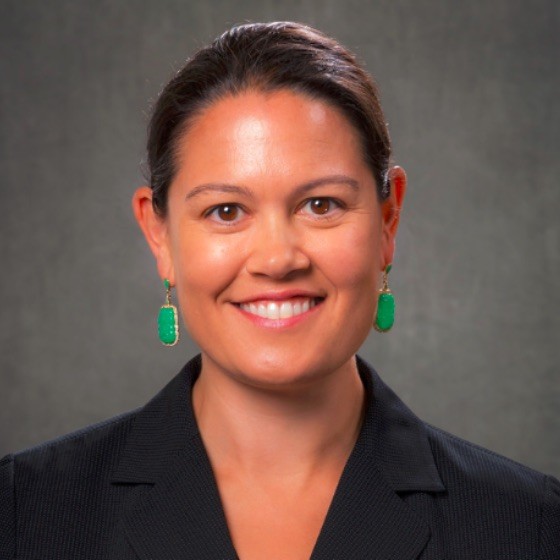
San Joaquin County Administrator and candidate for Contra Costa County Administrator, Monica Nino. Photo: San Joaquin County

By Susan Shiu, Director, Office of Communications and Media, Contra Costa County

On Tuesday, December 8, 2020, the Contra Costa County Board of Supervisors will vote on a meeting agenda item for approval to select San Joaquin County Administrator Monica Nino as the new county administrator, making her the first female and first Hispanic County Administrator in the County’s 171-year history.  Ms. Nino, who was chosen out of a pool of three finalists, is replacing retiring County Administrator David Twa.

Ms. Nino’s appointment follows an extensive recruitment process, where her long and distinguished career as a public administrator, experience in pandemic response, work with County hospitals and finance background resulted in her selection as the successful candidate.

Ms. Nino assumed the San Joaquin County Administrator position in June of 2013 after serving as the Chief Executive Officer for Stanislaus County, where she began her career in local government in 1988.  As San Joaquin County Administrator, serving under the direction of the County Board of Supervisors, Nino oversaw 26 county departments, an annual operating budget of $1.9 billion, and over 7,500 county employees serving 765,000 residents.

In addition to her County Administrator duties, Ms. Nino served on the San Joaquin Health Commission, Sex Offender Management Board (appointed by Governor Brown), the Council of Governments Management & Finance Committee, and iHub San Joaquin.

“We’re fortunate to appoint someone with Monica’s professional expertise to help us lead this organization into the future,” said Contra Costa County Board of Supervisors Chair Candace Andersen.  “Her knowledge of County operations, command of county budgets, experience with county hospitals and her local leadership during the COVID-19 health crisis are exceptional.  We know that Monica is committed to continuing to build a community that is forward-thinking and inclusive of all its residents.  We look forward to having her on board.”

When reached for comment, Nino said, “I’m very excited that the board is considering me for the next county administrator of Contra Costa.”

Ms. Nino’s start date will be January 4, 2021.

Allen Payton contributed to this report.

Filed Under: Government, News, Supervisors

Gov. Newsom issues statewide curfew beginning Saturday, Nov. 21 to slow spread of COVID-19

November 19, 2020 By Publisher Leave a Comment

For counties in Purple Tier like Contra Costa, non-essential businesses and personal gatherings are prohibited between 10 PM and 5 AM

Unless you’re eating dinner with the governor at a fancy restaurant. Just kidding! – The Herald

SACRAMENTO – In light of an unprecedented, rapid rise in COVID-19 cases across California, Governor Gavin Newsom and the California Department of Public Health (CDPH) today announced a limited Stay at Home Order requiring generally that non-essential work, movement and gatherings stop between 10 PM and 5 AM in counties in the purple tier. The order will take effect at 10 PM Saturday, November 21 and remain in effect until 5 AM December 21. This is the same as the March Stay at Home Order, but applied only between 10 PM and 5 AM and only in purple tier counties that are seeing the highest rates of positive cases and hospitalizations.

“The virus is spreading at a pace we haven’t seen since the start of this pandemic and the next several days and weeks will be critical to stop the surge. We are sounding the alarm,” said Governor Newsom. “It is crucial that we act to decrease transmission and slow hospitalizations before the death count surges. We’ve done it before and we must do it again.”

This limited Stay at Home Order is designed to reduce opportunities for disease transmission. Activities conducted during 10 PM to 5 AM are often non-essential and more likely related to social activities and gatherings that have a higher likelihood of leading to reduced inhibition and reduced likelihood for adherence to safety measures like wearing a face covering and maintaining physical distance.

“We know from our stay at home order this spring, which flattened the curve in California, that reducing the movement and mixing of individuals dramatically decreases COVID-19 spread, hospitalizations, and deaths,” said California Health and Human Services Secretary Dr. Mark Ghaly. “We may need to take more stringent actions if we are unable to flatten the curve quickly. Taking these hard, temporary actions now could help prevent future shutdowns.”

“We are asking Californians to change their personal behaviors to stop the surge. We must be strong together and make tough decisions to stay socially connected but physically distanced during this critical time. Letting our guard down could put thousands of lives in danger and cripple our health care system,” said Dr. Erica Pan, the state’s acting Public Health Officer. “It is especially important that we band together to protect those most vulnerable around us as well as essential workers who are continuing their critical work amidst this next wave of widespread community transmission across the state. Together we prevented a public health crisis in the spring and together we can do it again.”

COVID-19 case rates increased by approximately 50 percent in California during the first week of November. As a result, Governor Newsom and California’s public health officials have announced a list of measures to protect Californians and the state’s health care system, which could experience an unprecedented surge if cases continue their steep climb.

On Monday, the state pulled an emergency brake in the Blueprint for a Safer Economy putting more than 94 percent of California’s population in the most restrictive tier. The state will reassess data continuously and move more counties back into a more restrictive tier, if necessary. California is also strengthening its face covering guidance to require individuals to wear a mask whenever outside their home, with limited exceptions.

Late last week, the state issued a travel advisory, along with Oregon and Washington, urging people entering the state or returning home from travel outside the state to self-quarantine to slow the spread of the virus. The travel advisory urges against non-essential out-of-state travel, asks people to self-quarantine for 14 days after arriving from another state or country, and encourages residents to stay local.


Filed Under: Government, Health, News, State of California

President Trump approves major disaster declaration for California to help wildfire victims

October 16, 2020 By Publisher Leave a Comment

Includes grants for temporary housing, home repairs, low-cost loans for uninsured property losses, more

WASHINGTON – Oct. 16, 2020 – 9:20 PM EST – FEMA announced that federal disaster assistance has been made available to the state of California to supplement state and local recovery efforts in the areas affected by wildfires from Sept. 4 and continuing.

The President’s action makes federal funding available to affected individuals in Fresno, Los Angeles, Madera, Mendocino, San Bernardino, San Diego and Siskiyou counties.  Assistance can include grants for temporary housing and home repairs, low-cost loans to cover uninsured property losses and other programs to help individuals and business owners recover from the effects of the disaster.

Federal funding is also available to the state, tribal and local governments and certain private nonprofit organizations on a cost-sharing basis for emergency protective measures in Fresno, Los Angeles, Madera, Mendocino, San Bernardino, San Diego and Siskiyou counties.

Federal funding is also available on a cost-sharing basis for hazard mitigation measures statewide.

Willie G. Nunn has been named the Federal Coordinating Officer for federal recovery operations in the affected area. Additional designations may be made at a later date if warranted by the results of damage assessments.

Individuals and business owners who sustained losses in the designated area can begin applying for assistance by registering online at www.DisasterAssistance.gov or by calling 1-800-621- 3362 or 1-800-462-7585 TTY

Filed Under: Fire, Government, News

DA’s Office: anonymous political website gives false information on Corruption Unit investigation of Moraga town manager

October 9, 2020 By Publisher 2 Comments

By Scott Alonso, Public Information Officer, Contra Costa County Office of the District Attorney

Cynthia Battenberg Moraga Town Manager. From Town of Moraga website.

Recently, the Contra Costa County District Attorney’s Office became aware of a website allegedly run by “Citizens for a Fair East Bay” with false and misleading information regarding town officials in the Town of Moraga and our Office’s involvement with these officials.

Moreover, this anonymous website proclaims a complaint was filed regarding the Town Manager of Moraga. This statement is misleading – our Office has not filed any criminal or civil actions against the Town Manager. Further, the use of our Office logo and website was not authorized by our Office in this manner.

In September, our Office’s public corruption unit received a confidential request to investigative a potential crime. A thorough investigation was conducted, and no further enforcement action was deemed warranted. The matter was closed – no action is being taken by our Office regarding the Town Manager of Moraga.

Asked who handled the investigation and what it entailed, Alonso responded, “DDA Steve Bolen is the attorney who handles these types of cases. We do not comment about the specifics of an investigation like this.”

Further questions were sent to Alonso asking if after an investigation has been completed the DA’s office can’t share how they determined that the claims are baseless and if the evidence isn’t public. He responded, “it will depend on the investigation but generally for these types of investigations we do not comment. Given the website contained false information we felt we had to issue some sort of public statement.”

Allen Payton contributed to this report.

Filed Under: District Attorney, Government, News, Politics & Elections

Gov. Newsom signs exec order phasing out gas-powered cars, passenger trucks sold in state by 2035

September 23, 2020 By Publisher Leave a Comment

To “drastically reduce demand for fossil fuel in California’s fight against climate change”

Transportation currently accounts for more than 50 percent of California’s greenhouse gas emissions   

Zero-emission vehicles are a key part of California’s clean, innovation economy – already California’s second largest global export market  

Order also directs state to take more actions to tackle the dirtiest oil extraction and support workers and job retention and creation as we make a just transition away from fossil fuels  

SACRAMENTO – Governor Gavin Newsom announced Wednesday that he will aggressively move the state further away from its reliance on climate change-causing fossil fuels while retaining and creating jobs and spurring economic growth – he issued an executive order requiring sales of all new passenger vehicles to be zero-emission by 2035 and additional measures to eliminate harmful emissions from the transportation sector. (The text of today’s executive order can be found here and a copy can be found here.)

The transportation sector is responsible for more than half of all of California’s carbon pollution, 80 percent of smog-forming pollution and 95 percent of toxic diesel emissions – all while communities in the Los Angeles Basin and Central Valley see some of the dirtiest and most toxic air in the country.

“This is the most impactful step our state can take to fight climate change,” said Governor Newsom. “For too many decades, we have allowed cars to pollute the air that our children and families breathe. Californians shouldn’t have to worry if our cars are giving our kids asthma. Our cars shouldn’t make wildfires worse – and create more days filled with smoky air. Cars shouldn’t melt glaciers or raise sea levels threatening our cherished beaches and coastlines.”

Following the order, the California Air Resources Board will develop regulations to mandate that 100 percent of in-state sales of new passenger cars and trucks are zero-emission by 2035 – a target which would achieve more than a 35 percent reduction in greenhouse gas emissions and an 80 percent improvement in oxides of nitrogen emissions from cars statewide. In addition, the Air Resources Board will develop regulations to mandate that all operations of medium- and heavy-duty vehicles shall be 100 percent zero emission by 2045 where feasible, with the mandate going into effect by 2035 for drayage trucks. To ensure needed infrastructure to support zero-emission vehicles, the order requires state agencies, in partnership with the private sector, to accelerate deployment of affordable fueling and charging options. It also requires support of new and used zero-emission vehicle markets to provide broad accessibility to zero-emission vehicles for all Californians. The executive order will not prevent Californians from owning gasoline-powered cars or selling them on the used car market.

California will be leading the nation in this effort – joining 15 countries that have already committed to phase out gasoline-powered cars and using our market power to push zero-emission vehicle innovation and drive down costs for everyone.

By the time the new rule goes into effect, zero-emission vehicles will almost certainly be cheaper and better than the traditional fossil fuel powered cars. The upfront cost of electric vehicles are projected to reach parity with conventional vehicles in just a matter of years, and the cost of owning the car – both in maintenance and how much it costs to power the car mile for mile – is far less than a fossil fuel burning vehicle.

The executive order sets clear deliverables for new health and safety regulations that protect workers and communities from the impacts of oil extraction. It supports companies who transition their upstream and downstream oil production operations to cleaner alternatives. It also directs the state to make sure taxpayers are not stuck with the bill to safely close and remediate former oil fields. To protect the health and safety of our communities and workers, the Governor is also asking the Legislature to end the issuance of new hydraulic fracturing permits by 2024.

The executive order directs state agencies to develop strategies for an integrated, statewide rail and transit network, and incorporate safe and accessible infrastructure into projects to support bicycle and pedestrian options, particularly in low-income and disadvantaged communities.

This action continues the Governor’s commitment to strengthening California’s resilience while lowering carbon emissions – essential to meeting California’s air quality and climate goals. In the last six months alone, the California Air Resources Board has approved new regulations requiring truck manufacturers to transition to electric zero-emission trucks beginning in 2024 and the Governor signed an MOU with 14 other states to advance and accelerate the market for electric medium- and heavy-duty vehicles. Last fall, California led a multi-state coalition in filing a lawsuit challenging the U.S. Environmental Protection Agency’s attempt to revoke portions of a 2013 waiver that allows the state to implement its Advanced Clean Car Standards.

Last September, Governor Newsom took action to leverage the state’s transportation systems and purchasing power to strengthen climate mitigation and resiliency and to measure and manage climate risks across the state’s $700 billion pension investments. To mitigate climate threats to our communities and increase carbon sequestration, the Governor invested in forest health and fuel reduction and held utilities accountable for building resiliency. The Governor also directed state agencies to develop a comprehensive strategy to build a climate-resilient water system and made a historic investment to develop the workforce for California’s future carbon-neutral economy.


Filed Under: Business, Economy, Environment, Government, News, State of California

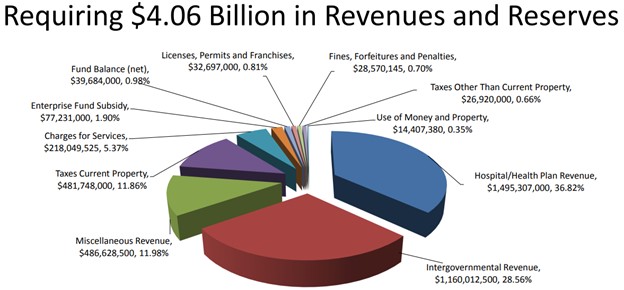
Election costs rise as Contra Costa Supervisors OK $3.6 billion 2020-2021 budget

September 16, 2020 By Publisher Leave a Comment

Source: CoCoCo

Gioia makes his support conditional on reviewing county jail facilities for closure

Includes funding for the Sheriff’s Office to hire 24 deputies for mental health duties at  Martinez jail

By Daniel Borsuk

On the same day Contra Costa County taxpayers were pinched with a new $3.6 billion 2020-2021 fiscal year budget, supervisors also unanimously approved on Tuesday  a County Clerk-Recorder’s request to boost 2021 election ballot printing and mailing costs an additional $1.8 million to a new payment limit of $6 million.

“This is going to be the costliest election year that I have experienced in my 25 year -career,” Assistant Registrar of Voters Scott O. Konopasek said in reference to the upcoming Presidential election and how the county’s contract extension with K&H Printers-Lithographers, Inc. to print and mail ballots and election pamphlets will alarmingly rise again by $8 million for elections held in 2021.

Konopasek said Governor Gavin Newsom’s Emergency Order instructing California counties election officials to mail ballots to every registered voter for the November election means an additional 160,000 Contra Costa voters, or 25 percent of all registered voters, will receive ballots in the mail thereby driving up costs linked to printing and mailing.   That Emergency Order applies to any and all elections conducted in 2021.

While supervisors ignored the Registrar of Voters expense item, they unanimously approved the $3.6 billion 2020-2021 budget that garnered the support of all the supervisors, including Supervisor John Gioia of Richmond, who several weeks ago had said he would vote against the budget when it was ready for formal adoption.  He said he now supports the budget provided supervisors study the closure of the Marsh Creek detention facility, and to have a study conducted on the future of the Orin Allen Youth Rehabilitation Facility in Byron and Juvenile Hall in Martinez.

When Supervisor Karen Mitchoff of Pleasant Hill questioned Gioia why he switched his initial negative vote on the budget, Gioia responded, “I support the county budget as a whole that is over $3 billion and as long as these three issues – Marsh Creek, Orin Allen Youth Rehabilitation Facility and Juvenile Hall are studied and come back to the supervisors for consideration.”

County Administrator David Twa said supervisors can expect Covid-19 related costs to continue to increase over the next 12 to 24 months.  The county spent $131 million overall in Covid-19 connected expenses because it operates a hospital, health services for the homeless, provides Covid-19 testing and numerous other public health services.

Twa said operating costs will increase $28.4 million because of the newly opened County Administration Building and the Emergency Operations Center/Public Safety Building, both located in Martinez.

Supervisors provided funding for the Sheriff’s Office request to hire 24 deputies for the Martinez jail to handle mental health duties, a budget item that met public criticism especially in the summer aftermath of the George Floyd murder case.

Because of rising expenses, the county has placed on the November ballot a half-cent sales tax measure, Proposition X, that county officials counts on to generate new revenues, some $81 million a year for 20 years to fund hospitals, health centers, childhood services, and other community services.

Filed Under: Finances, Government, News, Supervisors

Contra Costa Hazardous Materials Commission seeks applicants 

September 15, 2020 By Publisher Leave a Comment

WHAT: The Contra Costa County Hazardous Materials Commission seeks applicants for four open seats.

The commission is a voluntary body appointed by the Contra Costa Board of Supervisors that makes policy recommendations to the board and county staff regarding hazardous materials and hazardous waste.

WHO: The commission’s 14 members and alternates serve four-year terms and include representatives of industry, labor, civic groups, environmental organizations, environmental engineers, the public and the Contra Costa Mayors Conference.

The current openings are for a representative from an environmental organization and one alternate, and the Environmental Justice seat, for a member of a county community disproportionately impacted by hazardous materials releases, and one alternate.

All candidates must live or work in Contra Costa County, have a demonstrated interest in hazardous materials issues and an understanding and commitment to the principles of environmental justice as defined in county policy. Candidates must be able to commit to one to two meetings per month, or to fill in as needed for alternates.

Candidates for the Environmental seat must be nominated by an environmental organization.

WHEN: Mail completed applications to the Clerk of the Contra Costa Board of Supervisors, 651 Pine St., First Floor, Martinez, CA 94553. Applications must be received by September 30.

Interviews for qualified applicants will take place from 10 a.m. to 2 p.m. on October 9, by Zoom or telephone.

HOW: For an application form or more information, contact Michael Kent, the executive assistant to the commission at 925-250-3227. Applications are also available online or from the Clerk of the Contra Costa Board of Supervisors, 651 Pine Street, First Floor, in Martinez.


Filed Under: Government, Health

Gov. Newsom signs statewide COVID-19 tenant and landlord protection legislation, extended through Jan. 31, 2021

September 4, 2020 By Publisher Leave a Comment

New law includes targeted protections for tenants to shield them from evictions due to COVID-19-related back rent through February 1, 2021 

Extends anti-foreclosure protections in the Homeowner Bill of Rights to small landlords

SACRAMENTO — Governor Gavin Newsom on Monday announced that he had signed legislation to protect millions of tenants from eviction and property owners from foreclosure due to the economic impacts of COVID-19. These protections apply to tenants who declare an inability to pay all or part of the rent due to a COVID-related reason.

Under the legislation, no tenant can be evicted before February 1, 2021 as a result of rent owed due to a COVID-19 related hardship accrued between March 4 – August 31, 2020, if the tenant provides a declaration of hardship according to the legislation’s timelines. For a COVID-19 related hardship that accrues between September 1, 2020 – January 31, 2021, tenants must also pay at least 25 percent of the rent due to avoid eviction.

“COVID-19 has impacted everyone in California – but some bear much more of the burden than others, especially tenants struggling to stitch together the monthly rent, and they deserve protection from eviction,” said Governor Newsom. “This new law protects tenants from eviction for non-payment of rent and helps keep homeowners out of foreclosure as a result of economic hardship caused by this terrible pandemic. California is stepping up to protect those most at-risk because of COVID-related nonpayment, but it’s just a bridge to a more permanent solution once the federal government finally recognizes its role in stabilizing the housing market. We need a real, federal commitment of significant new funding to assist struggling tenants and homeowners in California and across the nation.”

On Friday, the Governor, Senate President pro Tempore Toni G. Atkins and Assembly Speaker Anthony Rendon announced an agreement on the legislation, AB 3088, co-authored by Assemblymembers David Chiu (D-San Francisco) and Monique Limón (D-Santa Barbara) and Senators Steven Bradford (D-Gardena) and Anna Caballero (D-Salinas).

Tenants are still responsible for paying unpaid amounts to landlords, but those unpaid amounts cannot be the basis for an eviction. Landlords may begin to recover this debt on March 1, 2021, and small claims court jurisdiction is temporarily expanded to allow landlords to recover these amounts. Landlords who do not follow the court evictions process will face increased penalties under the Act.

The legislation also extends anti-foreclosure protections in the Homeowner Bill of Rights to small landlords; provides new accountability and transparency provisions to protect small landlord borrowers who request CARES-compliant forbearance; and provides the borrower who is harmed by a material violation with a cause of action.

Additional legal and financial protections for tenants include:

  • Extending the notice period for nonpayment of rent from 3 to 15 days to provide tenant additional time to respond to landlord’s notice to pay rent or quit.
  • Requiring landlords to provide hardship declaration forms in a different language if rental agreement was negotiated in a different language.
  • Providing tenants a backstop if they have a good reason for failing to return the hardship declaration within 15 days.
  • Requiring landlords to provide tenants a notice detailing their rights under the Act.
  • Limiting public disclosure of eviction cases involving nonpayment of rent between March 4, 2020 – January 31, 2021.
  • Protecting tenants against being evicted for “just cause” if the landlord is shown to be really evicting the tenant for COVID-19-related nonpayment of rent.

Existing local ordinances can generally remain in place until they expire and future local action cannot undermine this Act’s framework. Nothing in the legislation affects a local jurisdiction’s ability to adopt an ordinance that requires just cause, provided it does not affect rental payments before January 31, 2021.

The legislation builds on the state’s strongest-in-the-nation rent cap and eviction protections passed by the Legislature and signed into law by the Governor last year. The Governor also signed major legislation last year to boost housing production, remove barriers to construction of accessory dwelling units and create an ongoing source of funding for borrower relief and legal aid to vulnerable homeowners and renters. Last year’s budget made a historic $1.75 billion investment in new housing and created major incentives – both sticks and carrots – to incentivize cities to approve new home construction. In the first weeks of his administration, Governor Newsom signed an executive order that created an inventory of all excess state land and has launched partnerships with California cities to develop affordable housing on that land. This year, the Governor prioritized $550 million in federal stimulus funding to purchase and rehabilitate thousands of motels around the state for use as permanent housing for people experiencing homelessness and provided an additional $350 million in general fund support to California’s cities and counties for homeless services and housing.

Local leaders and advocates welcomed the signing of the Act:

Los Angeles Mayor Eric Garcetti: “No one should lose their home due to this public health crisis — and while cities like Los Angeles have strong tenant protections in place, there is no substitute for a clear, statewide framework that keeps hard-hit Californians under a roof. With the state legislature’s action and Governor Newsom’s signature, tenants and landlords can rest easier tonight, but the fight continues for every dollar in federal assistance to help struggling families survive the choppy waters of COVID-19 and navigate the economic destruction left in its wake.”

Sacramento Mayor Darrell Steinberg: “The COVID-19 pandemic has devastated low-income families across the state and right here in the City of Sacramento. The eviction protections signed into law today will protect some of the most vulnerable – those who have lost income or suffered other unimaginable hardships in these past few months — from falling into homelessness. I appreciate the work of the Legislature and the Governor to provide this meaningful relief.”

San Francisco Mayor London Breed: “Protecting people from eviction has been critical from Day One of the COVID crisis, when it became clear that this pandemic was going to threaten our residents and our economies like nothing we have ever seen. People are living in fear of losing their homes because they have lost their jobs, seen their wages cut, or have been forced to close their businesses. I want to thank Governor Newsom for working with our Legislative leaders to pass AB 3088, especially our own Assemblymember David Chiu who has been an early and tireless fighter for tenants on this issue.”

UC, Berkeley Terner Center Faculty Director Carol Galante: “California is taking a big step forward today to protect the most vulnerable tenants at this moment of acute crisis. As our research has shown, more than one million California renters households have experienced job loss during COVID-19, and this directly impacts their housing security. While today’s new laws are necessary, more must be done – and this means the Congress and the President stepping into their rightful role as provider of a meaningful renter relief package as part of the next stimulus. California deserves credit for acting, and now we must demand the Federal government follow suit.”

The Governor also announced that he has signed the following bills:

  • AB 2782 by Assemblymember Mark Stone (D-Scotts Valley) – Mobilehome parks: change of use: rent control.
  • AB 3364 by the Committee on Judiciary – Judiciary omnibus.

Additional information on the Tenant, Homeowner, and Small Landlord Relief and Stabilization Act can be found here. For full text of the bills signed today, visit: http://leginfo.legislature.ca.gov


Filed Under: Government, Health, Legislation, News

Contra Costa Supervisors seek applicants for two seats on Juvenile Justice Coordinating Council

August 7, 2020 By Publisher Leave a Comment

Contra Costa County District Attorney Diana Becton (center) with the Juvenile Justice Coordinating Council. Photo by CCC.

The Contra Costa County Board of Supervisors is seeking applicants who may be interested in serving on its 19-member Juvenile Justice Coordinating Council (JJCC).

The JJCC is a multi-agency advisory body charged with creating and maintaining the County’s comprehensive Juvenile Probation Consolidated Annual Plan and coordinating county-based juvenile delinquency prevention initiatives. The state-mandated Juvenile Probation Consolidated Annual Plan is designed to improve services for Contra Costa County’s juvenile justice population by assessing existing practices and resources, identifying system needs and gaps, and prioritizing and recommending solutions.

The Juvenile Justice Coordinating Council is composed of the following 19 members:

Nine (9) ex-officio voting members:
1. Chief Probation Officer, as Chair
2. District Attorney’s Office representative
3. Public Defender’s Office representative
4. Sheriff’s Office representative
5. Board of Supervisors’ representative
6. Employment and Human Services Department representative
7. Alcohol and Other Drugs Division representative
8. Behavioral Health Division representative
9. Public Health Division representative

Ten (10) additional voting members selected and appointed by the Board of Supervisors:
10. City Police Department representative
11. County Office of Education representative
12–15. Four (4) At-Large Members, residing or working within Contra Costa County;
16–17. Two (2) Community-Based Organization representatives;
18–19. Two (2) At-Large Youth, age 14 to 21 years old, residing or working in Contra Costa County

The Board is now seeking applications for two (2) of the seats identified above:

–Two (2) Community-Based Organization representatives

The Board is now seeking applications for two (2) of the seats identified above:

–Two (2) Community-Based Organization representatives

This recruitment effort is for mid-term appointments to JJCC seats #16 and #17. The Board of Supervisors is looking to appoint individuals to these seats to complete the remainder of their two-year term that is set to expire on June 30, 2021.

The JJCC is expected to meet on a regular basis, at intervals to be established by the JJCC. Members will serve without compensation, stipends, or reimbursement of expenses. The community-based organization representatives should reflect the geographic, ethnic, and racial diversity of the County and should include those providing restorative justice, faith-based, or mentoring services, to justice-involved, homeless, or foster-care involved youth.

Applicants will be interviewed by the Board of Supervisors’ Public Protection Committee: Supervisors Candace Andersen, District II, and Federal Glover, District V. The nominations for the Juvenile Justice Coordinating Council will then be forwarded to the full Board of Supervisors for action.

Below is a timeline of the recruitment process for the two vacancies:

  • September 18, 2020: Final Day of the Application Period, due by 5:00 p.m.
  • September 28, 2020: Public Protection Committee Meeting Interviews
  • October 6, 2020: Board of Supervisors’ Consideration of Nominees

Application forms can be obtained from the Clerk of the Board of Supervisors by calling (925) 335-1900 or by visiting the County’s webpage at http://www.contracosta.ca.gov/3418/. Completed applications should be emailed to ClerkoftheBoard@cob.cccounty.us. Applications can also be mailed to the Clerk of the Board of Supervisors, Room 106, County Administration Building, 651 Pine Street, Martinez, CA 94553.


Filed Under: Crime, District Attorney, Government, News, Youth

DA Becton supports closing Contra Costa Juvenile Hall, establishes Reimagine Youth Justice Task Force

August 7, 2020 By Publisher 1 Comment

Supervisors Gioia, Glover support her efforts

By Scott Alonso, Public Information Officer, Office of the District Attorney, Contra Costa County 

Contra Costa District Attorney Diana Becton. From CCC website.

On Tuesday, Contra Costa County District Attorney Diana Becton issued the following statement regarding the status of Contra Costa County’s Juvenile Hall and the Orin Allen Youth Rehabilitation Facility.

“These are historic times and we have an opportunity and a responsibility to re-imagine our justice system so that our youth have a greater chance to lead successful and enriching lives.

I am forming a Reimagine Youth Justice Task Force, which will include county departmental and community representatives, that will study and make recommendations on the most effective ways to invest in our justice involved youth through restorative, community-based solutions, with an initial focus on developing an effective process for closing Juvenile Hall.

Youth crime has been on a steady decline over the last twenty years, reinforcing the conclusion that moving away from youth incarceration is in the best interest of rehabilitation, public safety, and fiscal responsibility. Research has shown that youth can be better treated and rehabilitated in community contexts where they can retain ties to family, school, and their community. Programming and services which are based in the home or in the community are more successful at holding youth accountable and positively changing behavior than institutional settings.

Despite the steep decline in youth crime and consequent reduction in numbers of incarcerated youth, the money invested into the operation of youth prisons has not been reduced accordingly. Data shows that the average cost per incarcerated child in Contra Costa Juvenile Hall skyrocketing to over $473,000 per year.

The Reimagine Youth Justice Task Force will make explicit recommendations for financial investments in community-based services for youth instead of investing in youth prisons which have proven to result in worse outcomes for our children and families. Such an approach will allow for critical re-investments in basic needs such as housing, mental health services, and workforce development as well as support the creation of alternatives to incarcerating children in locked facilities.

In the meantime, we should pause and not take any actions to close the Orin Allen Youth Rehabilitation Facility until the Task Force has made its recommendations to the Contra Costa County Board of Supervisors.

This transition is urgent. The Task Force should finish its efforts by the end of this year and make evidence-based recommendations for the process to close Juvenile Hall to the Board of Supervisors in January 2021. The Task Force will present a proposed timeline and transition process for closing Juvenile Hall and will identify alternative investments for our public dollars into community-based services and programming for youth. Implementing these recommendations will create a safer community and help youth get on the right track in their lives.”

“I support District Attorney Becton’s efforts to reimagine youth justice in our County,” said District 1 Supervisor John Gioia. “We need to move away from institutionalization of young people and instead invest in community based restorative justice solutions which make us safer and are more fiscally responsible.”

“I applaud District Attorney Diana Becton’s effort to examine restorative justice alternatives to simply incarcerating our county’s youth,” District 5 Supervisor Federal Glover said. “The factors that lead young people to run afoul of the law are as varied as the youth themselves. In many cases a service-oriented approach will achieve much more in rehabilitating and helping them to become productive members of our community.”


Filed Under: Crime, District Attorney, Finances, Government, News, Youth

  • « Previous Page
  • 1
  • …
  • 21
  • 22
  • 23
  • 24
  • 25
  • …
  • 42
  • Next Page »
Monicas-11-25
Deer-Valley-Chiro-06-22

Copyright © 2026 · Contra Costa Herald · Site by Clifton Creative Web