• Home
  • About The Herald
  • Local Agencies
  • Daily Email Update
  • Legal Notices
  • Classified Ads

Contra Costa Herald

News Of By and For The People of Contra Costa County, California

  • Arts & Entertainment
  • Business
  • Community
  • Crime
  • Dining
  • Education
  • Faith
  • Health
  • News
  • Politics & Elections
  • Real Estate

Public workshops, hearings announced for Draft Plan Bay Area 2050

May 26, 2021 By Publisher Leave a Comment

Regional plan for transportation, housing, the economy, and the environment

Interested agencies, organizations and individuals are invited by the Metropolitan Transportation Commission (MTC) and the Association of Bay Area Governments (ABAG) to comment on the Draft Plan Bay Area 2050. As required by state and federal law, MTC and ABAG have jointly developed this regional plan for transportation, housing, the economy, and the environment, which will serve as the San Francisco Bay Area’s Regional Transportation Plan (RTP) and Sustainable Communities Strategy (SCS) upon its adoption. Draft Plan Bay Area 2050 is defined by 35 integrated strategies designed to advance the region towards a more equitable and resilient future.

A Draft Environmental Impact Report (DEIR) prepared on the Draft Plan Bay Area 2050 will be subject to public review pursuant to a separate notice.

The following online public workshops have been scheduled to receive comment on the Draft Plan Bay Area 2050:

ONLINE PUBLIC WORKSHOP

East Bay Workshop
Contra Costa and Alameda Counties
Monday, June 14, 5:00 to 6:30 p.m.
https://bit.ly/33uXj0y
Passcode: 179826
Webinar ID: 862 3482 0389

ONLINE PUBLIC HEARINGS

Additionally, MTC and ABAG will hold three (3) public hearings to receive oral testimony and written comments about the Draft Plan Bay Area 2050. Copies of the draft plan are on file with the Secretary of the Board of MTC and open to public inspection at planbayarea.org/learnmore. Should you require a hard copy of the draft plan, please submit your request to info@bayareametro.gov or call 415-778-6757 and one will be mailed to you.

The first public hearing will be held during the regular meeting of the Joint MTC Planning Committee with the ABAG Administrative Committee on:

Friday, June 11, 2021 at 9:40 a.m. (Remotely)
https://bit.ly/33xhpav
Webinar ID: 874 2787 4017
Bay Area Metro Center
Board Room, 1st Floor
375 Beale Street, San Francisco, CA 94105

In light of Governor Newsom’s State of Emergency declaration regarding the COVID-19 outbreak and in accordance with Executive Order N-29-20 issued by Governor Newsom on March 17, 2020 and the Guidance for Gatherings issued by the California Department of Public Health, the meeting will be conducted via webcast, teleconference, and Zoom for all participants. Detailed instructions on participating via Zoom are available at: https://mtc.ca.gov/how-provide-public-comment-board-meeting-zoom. The meeting accessibility instructions also will be posted to: https://mtc.ca.gov/whats-happening/events/public-hearings no less than 72 hours prior to the hearing.

Two additional online public hearings have been scheduled for:

Hearing 2
Tuesday, June 22, 5:30 p.m.
https://bit.ly/3y0ZiYp
Passcode: 177176

Webinar ID: 812 0345 4209

Hearing 3
Wednesday, July 7, 1:30 p.m.
https://bit.ly/2SIduFK
Passcode: 908706

Webinar ID: 854 5833 8822

The Draft Plan Bay Area 2050 will be available for public review beginning Wednesday, May 26, 2021, online at https://mtc.ca.gov/whats-happening/events/public-hearings,  https://abag.ca.gov/meetings-events/public-hearings, and planbayarea.org. In an effort to reduce printing costs and conserve paper and in accordance with EO N-29-20 and the Guidance for Gatherings issued by the California Department of Public Health, you are urged to review the Draft Plan Bay Area 2050 on the website listed above. Should you require a hard copy of the Draft Plan Bay Area 2050, please submit your request to info@bayareametro.gov or call 415-778-6757 and one will be mailed to you.

The public comment period for the Draft Plan Bay Area 2050 begins on Wednesday, May 26, 2021 and ends on Tuesday, July 20, 2021 by 5:00pm. All written comments must be received no later than Tuesday, July 20, 2021 by 5:00pm. All written comments on the Draft Plan Bay Area 2050 are being accepted via mail to MTC Public Information, Attn: Draft Plan Comments, 375 Beale Street, Suite 800, San Francisco, CA 94105; via e-mail to info@planbayarea.org; and online at planbayarea.org/learnmore. Comments also are being accepted by phone by leaving a voicemail at (415) 778-2292.

Public comment on the Draft Environmental Impact Report (DEIR) for the Draft Plan Bay Area 2050 will be sought pursuant to a separate notice. After considering public comment, MTC and ABAG are slated to adopt Plan Bay Area 2050 in fall 2021. For more information, call the MTC Public Information Office at (415) 778-6757.

Do you need an interpreter or any other assistance to participate? Please call 415-778-6757. We require at least three working days’ notice to accommodate assistance requests. For TDD or hearing impaired, call 711, California Relay Service, or 1-800-735-2929 (TTY), 1-800-735-2922 (voice) and ask to be relayed to 415-778-6700.

您需要口譯員或任何其他幫助才能參加嗎?請致電415-778-6757。我們要求至少提前三個工作日通知,以便滿足您的請求。對於TDD或聽障人士,請致電711,加州中繼服務,或1-800-735-2929(TTY),1-800-735-2922(語音),並要求轉接到415-778-6700。

¿Necesita un intérprete o cualquier otra ayuda para participar? Llame al 415-778-6757. Requerimos un aviso de al menos tres días hábiles para atender las solicitudes de asistencia. Para personas con discapacidad auditiva o TDD, llame al 711, California Relay Service, o al 1-800-735-2929 (TTY) o al 1-800-735-2922 (voz) y pida que lo comuniquen al 415-778-6700.

Filed Under: Bay Area, Economy, Environment, Growth & Development, News, Transportation

Save Mount Diablo sues Discovery Builders over development on major ridgeline shared with new regional park

May 21, 2021 By Publisher 2 Comments

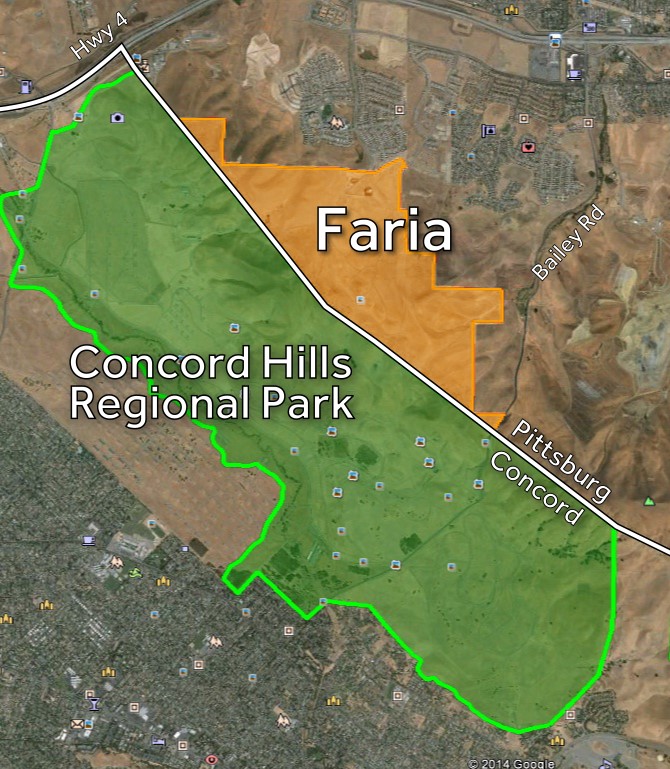
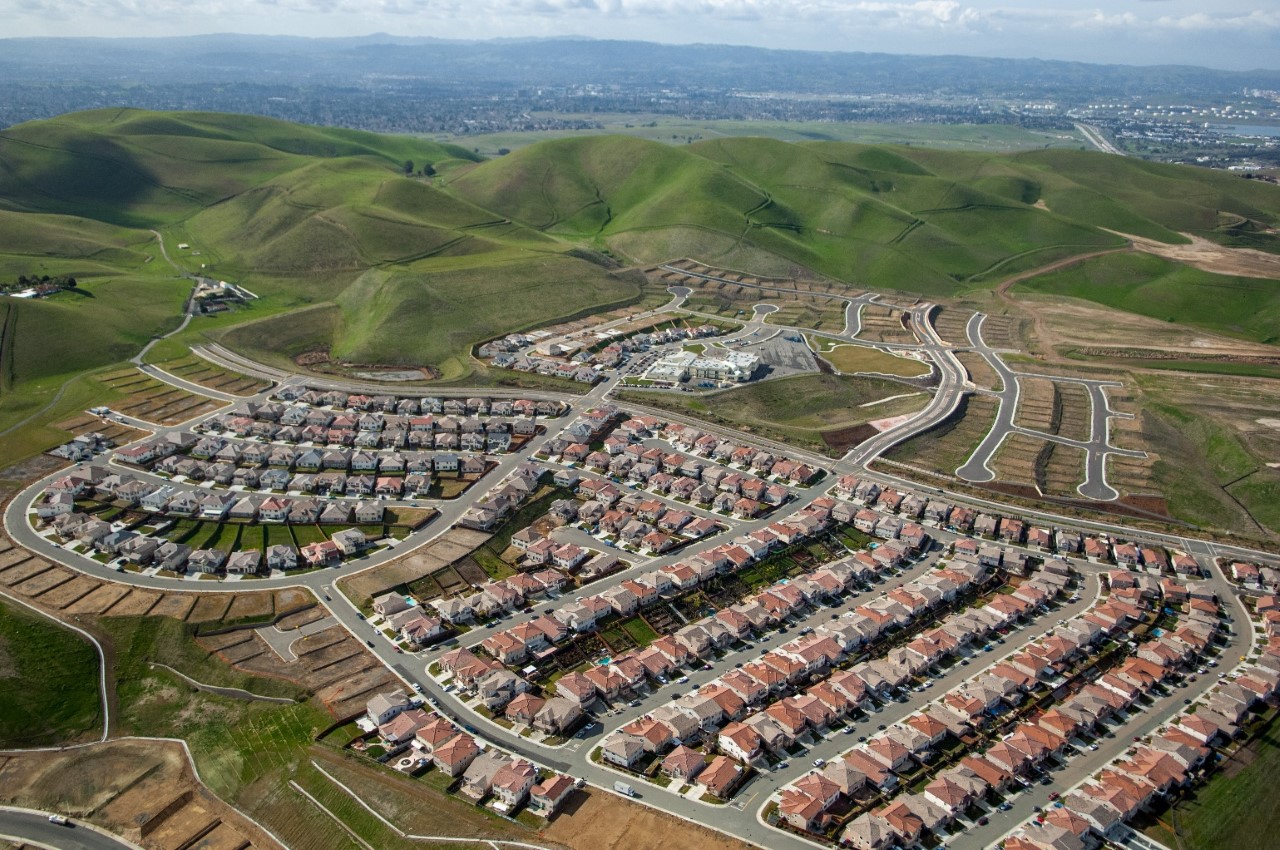
The new Concord Hills Regional Park is directly adjacent to the approved Faria project. Credit: Save Mount Diablo/Google Earth.

Developer’s attorney calls lawsuit “poorly drafted and baseless”; 1,650-home project requires LAFCO annexation approval

Save Mount Diablo issued a statement, Thursday, May 20, 2021 announcing they are suing the developer of the recently approved large housing project on the edge of Pittsburg’s southwest hills that abuts the future regional park on the Concord side of the ridge. The organization claims that Discovery Builders’ Faria project would damage the major ridgeline between east and central Contra Costa County, threaten views from throughout the region, and impact the new regional park.

The Pittsburg City Council voted 5-0 during a special meeting on Feb. 22, 2021 to approve the project, following approval by the city’s planning commission.

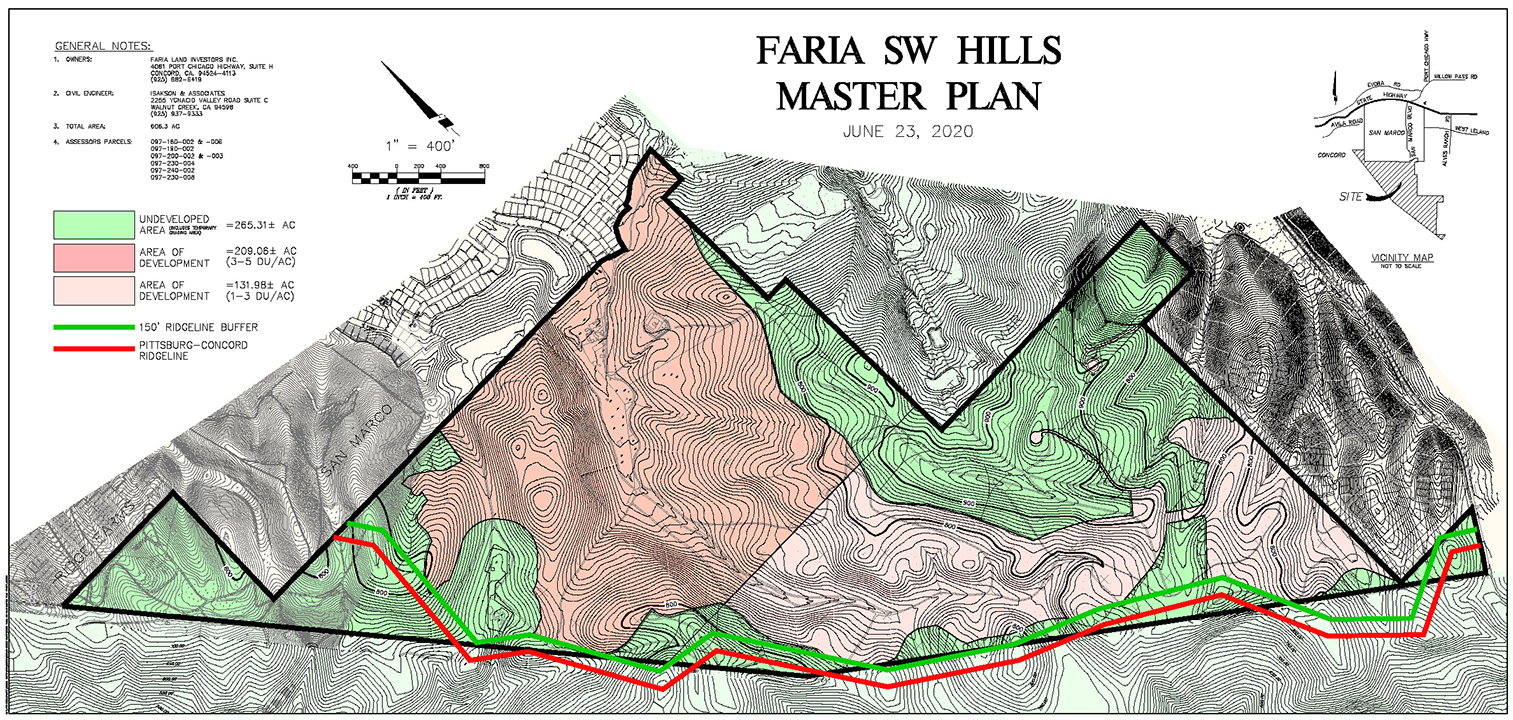
On March 30, 2021, Save Mount Diablo filed the lawsuit challenging the City of Pittsburg’s approval of the 1,650-unit Faria project, on the ridgeline between Pittsburg and Concord. According to the agenda item documents, the master plan overlay district encompasses approximately 607 acres of land. The district is generally bounded by Bailey Road and the approved but not yet constructed, “Bailey Estates” subdivision to the east; the Concord City Limits and recently closed Concord Naval Weapons Station (CNWS) property to the south and west; and the San Marco and Vista Del Mar residential subdivisions (substantially developed) along the northern boundary and other open space areas along the northeastern boundary.

Faria SW Hills Master Plan map. Source: City of Pittsburg

“Save Mount Diablo is simply trying to protect one of the East Bay’s most prominent and well-known ridgelines. The Pittsburg City Council approved Seeno-owned Discovery Builders’ Faria project.  If we do nothing, massive grading will take place; the project will be built; the ridge damaged; other natural resources, including scenic vistas, will be harmed; and the new regional park, which we advocated for over many years, will be negatively impacted,” said Ted Clement, Executive Director, Save Mount Diablo.

Asked why it took so long for the organization to respond to the project’s approval, Seth Adams, Land Conservation Director for Save Mount Diablo responded, “things take time.” Asked if they had a court date set, yet, he said, “No. We’re at the stage where we have a mandatory settlement conference and where the preparation of the administrative record, which includes all the public comments, etc. That’s what the whole trial is about.”

According to Save Mount Diablo, the Faria project violates Pittsburg’s General Plan, state planning and zoning law, and the California Environmental Quality Act (CEQA). CEQA requires legally adequate environmental review, consideration of appropriate alternatives, and implementation of mitigations to reduce impacts.

Save Mount Diablo’s lawsuit challenges the approval of the Faria project claiming the city council ignored hundreds of letters and public comments that opposed the project.

The Faria site is rugged, landslide prone, and badly suited for development, which will only be possible with massive grading, the environmental organization contends. The project as approved by the city authorizes the development of a major, new residential subdivision on 607 acres of ridgeline and hillside grazing land in what is currently unincorporated Contra Costa County, immediately south of the City of Pittsburg.

The biologically rich site supports sensitive wildlife species and rare plants and is in one of the most visible and most environmentally constrained areas of the county.

The Faria project would change the beautiful green hills forever by annexing the property to the City of Pittsburg and locating 1,650 new residences far from jobs, transit, and services, Save Mount Diablo claims. As a result, rare habitat for special status species would be lost. The extensive grading would increase landslide risks and degrade creeks and streams. Building in the wildland urban interface would create new wildfire risks and strain the City of Pittsburg’s existing firefighting services. Traffic on Bailey Road, San Marco Blvd., and Highway 4 would be made much worse.

The Pittsburg hills where the Faria project has been approved for construction, as seen from the San Marco neighborhood in Pittsburg. Photo: Scott Hein

Save Mount Diablo claims the Faria project would also impact the new Concord Hills Regional Park, which the East Bay Regional Park District (EBRPD) has long planned at the former Concord Naval Weapons Station at the Faria site’s southwestern edge. The Faria project would sit directly above the new park on a ridgeline, degrading views from surrounding areas. It would fragment open space and damage wildlife corridors.

The East Bay Regional Park District adopted the Land Use Plan for the new park last year on July 7, 2020. Discovery Builders and Faria Land Investors filed suit to stop the new regional park.

The Concord Hills Regional Park Land Use Plan provides for public access, preserves 95 percent of the area’s natural habitat, and honors the unique natural and human history of the land.

According to an August 21, 2020 media release by EBRPD: “This approval paved the way for the Park District to begin work on park and trail development of the 2,540-plus-acre regional park at the former Concord Naval Weapons Station and was the product of two decades of community advocacy and partnership amongst the Park District, U.S. Navy, National Park Service, City of Concord, with overwhelming support from the residents of Central Costa County.

“Despite a thorough environmental analysis of the new Regional Park’s plans, which include public access for recreation, permanent preservation of the land as natural habitat, and a joint visitor center with the National Park Services that will also honor the Black sailors who died in the massive Port Chicago explosion, Mr. Seeno’s Discovery Builders and Faria Land Investors filed suit to stop the new regional park. In their lawsuit, Mr. Seeno alleges that the Park, after a decades long collaborative planning efforts to protect and preserve open space, would cause undisclosed impacts on the environment and would impact their planned Faria residential development in Pittsburg on a 606-acre parcel adjacent to the ridgeline of the park,” stated the media release.

By comparison, next door and above the new park, Faria would include hundreds of acres of impacts, Save Mount Diablo claims. The City of Pittsburg prepared an Environmental Impact Report (EIR) that fell far short of CEQA’s requirements. Among other flaws, the EIR lacks adequate analysis of numerous impacts, including biological resources, water supply, wildfire, traffic, and land use. The EIR failed to provide an adequate project description, for example, by omitting information about the location of elements of the planned residential development and about related public services, such as water consumption rates. It also failed to discuss appropriate alternatives. And the mitigation adopted for many impacts is plainly inadequate or ineffective.

Save Mount Diablo is not opposed to all growth. Pittsburg has thousands of housing units already approved but not yet built, including units at Seeno’s San Marco, Sky Ranch II, Montreux, and Tuscany Meadows projects and now including Faria. A smaller or more compact Faria project could easily protect the beautiful ridge, expand the new regional park onto the Pittsburg side, and provide easy public access for Pittsburg residents.

According to Pittsburg’s Current Project Pipeline List, there are currently 5,853 housing units approved or under construction, 88 percent of them by Seeno’s Discovery Builders (5,141 housing units). Those units represent approximately 60,000 new car trips per day that will soon impact local roads and Highway 4, Save Mount Diablo claims.

According to Clement, “Throughout the East Bay, residents have worked hard to protect our ridges and views, and to defend our parks. Pittsburg residents deserve the same protections and quality of life.”

City of Pittsburg General Plan December 2011.

Developer’s Attorney Responds

In response, Discovery Builders’ attorney, Kristina Lawson, Managing Partner of Hanson Bridgett issued the following statement:

“The City of Pittsburg, as the lead agency, and the City’s environmental consultant have performed a comprehensive and extensive analysis of potential impacts of this project.  Their work was thorough and well done.  Following that analysis, planning and engineering staff at the City recommended approval of this project; the Pittsburg Planning Commission recommended approval of this project; and the City Council voted unanimously to approve this project.

Furthermore, Pittsburg voters approved this land to become part of the City of Pittsburg, and to be developed with much needed housing, consistent with the City’s General Plan which has long provided for this land to be developed for housing.

My client knows that the City Manager, City employees and City-appointed and elected officials all have the best interests of the City in mind and agrees with the many staff recommendations and City approvals for the project.  Given the City and their consultant diligently analyzed potential impacts of this project, my client is not concerned with this poorly drafted and baseless lawsuit filed solely for the purpose of delay.”

Allen Payton contributed to this report.


Filed Under: Central County, East County, Environment, Growth & Development, Legal, News

Delta Conveyance aka tunnel Project Community Benefits Program Workshop 1 of 3 April 14

April 12, 2021 By Publisher Leave a Comment

Opportunity for neighboring community members to offer input of what they want from the impacts of the project

If you live or work in the Delta, we’d like to invite you to join an online workshop to provide feedback to the Department of Water Resources about the Community Benefits Program of the Delta Conveyance (tunnel) Project. On April 14, between 6:00 and 8:00 pm, Ag Innovations will facilitate a large online workshop to gather feedback from Delta residents on the Department of Water Resources (DWR), Community Benefits program.

To Register for the April 14 Workshop Email DeltaConveyanceCBP@water.ca.gov
Click Here for more information.

However, as of Monday, April 12, the day the Herald received the notification of the meeting on the 14th, registrations are closed. If you would still like to participate, please email us at DeltaConveyanceCBP@water.ca.gov. If you cannot participate in the workshop, but would like to provide input, please email us at DeltaConveyanceCBP@water.ca.gov. A recording of each workshop will be posted, along with the background material, at https://water.ca.gov/Programs/State-Water-Project/Delta-Conveyance/Community-Benefits-Program

About the workshop: DWR is developing a community benefits program to acknowledge that if the Delta Conveyance project is approved it could have potential adverse effects on communities through construction of major capital projects. The Community Benefits program could create economic, social, and other benefits in the local community. A Community Benefits Program could go beyond what traditional “environmental mitigation” typically affords.

Why participate: While people oppose the Delta Conveyance Project, DWR has no expectation that participating in the workshops signals any support for the Delta Conveyance Project. The community benefits program would only proceed if the project were approved. But participating now provides community members a chance to shape the program to best suit the needs of the local community.

Ag Innovations is a 501c3 nonprofit and is committed to reaching out to underrepresented voices and creating meaningful opportunities to provide input, including at a time when the COVID-19 pandemic makes this challenging.  Please let us know if you have ideas for how we might work with you to bring your input into this process.

Stay tuned for additional workshops on the Community Benefits Program future workshops will be on:

Thursday, May 6, 2021 | 6:00pm – 8:00pm.

CLICK HERE to REGISTER

Tuesday, May 25, 2021 | 6:00pm – 8:00pm.

CLICK HERE to REGISTER

What is the Delta Conveyance Project?

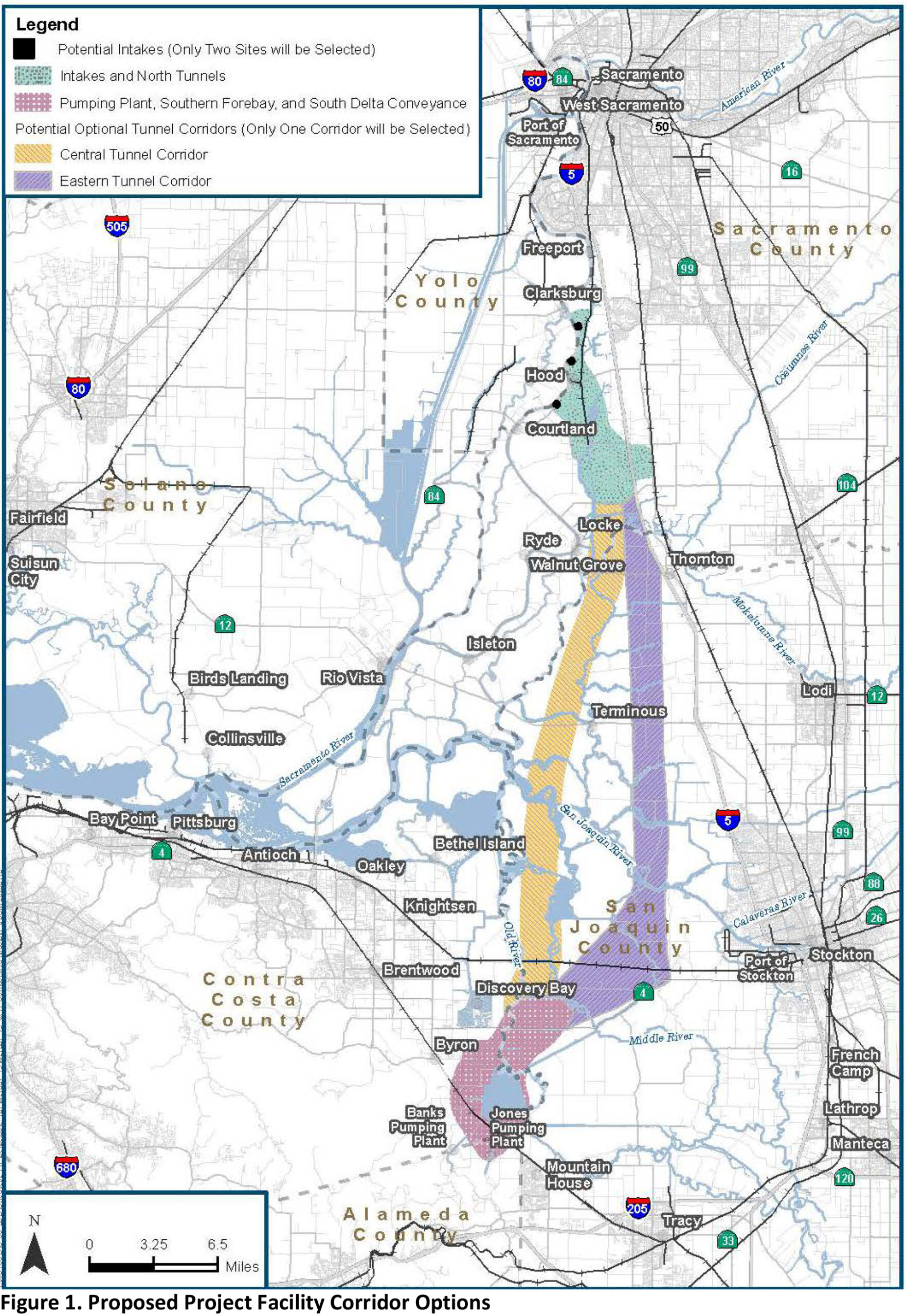
The state is studying the potential impacts and benefits of two possible routes for a tunnel in the Delta, labeled the Delta Conveyance Project. The proposal aims to protect the reliability of the State Water Project to deliver clean water to homes, farms, and businesses in the Bay Area, Central Coast, and Southern California.

The project would catch fresh water in the northern Delta – especially during storms – through two new intakes near the town of Hood. A deep underground tunnel would carry that water 40 miles to the southern Delta where it would be pumped into the State Water Project. The project would be constructed over approximately 16 years.

DWR is currently studying potential impacts on traffic, noise, air quality, and historical, cultural, recreational, and other resources.

They have launched the Environmental Justice Community Survey to better understand how the project may affect the resources, values, and priorities that are most important you.

(See related articles here and here)

Filed Under: Environment, News, The Delta, Water

Contra Costa Flood Control completes first phase of Three Creeks Parkway Restoration Project in Brentwood

April 2, 2021 By Publisher Leave a Comment

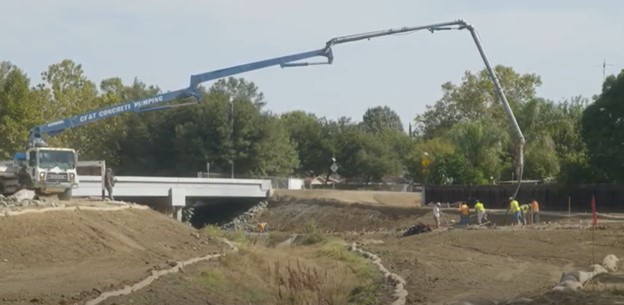
Screenshot of Three Creeks Parkway Restoration Project Phase 1 completion video.

Releases video instead of holding ribbon cutting

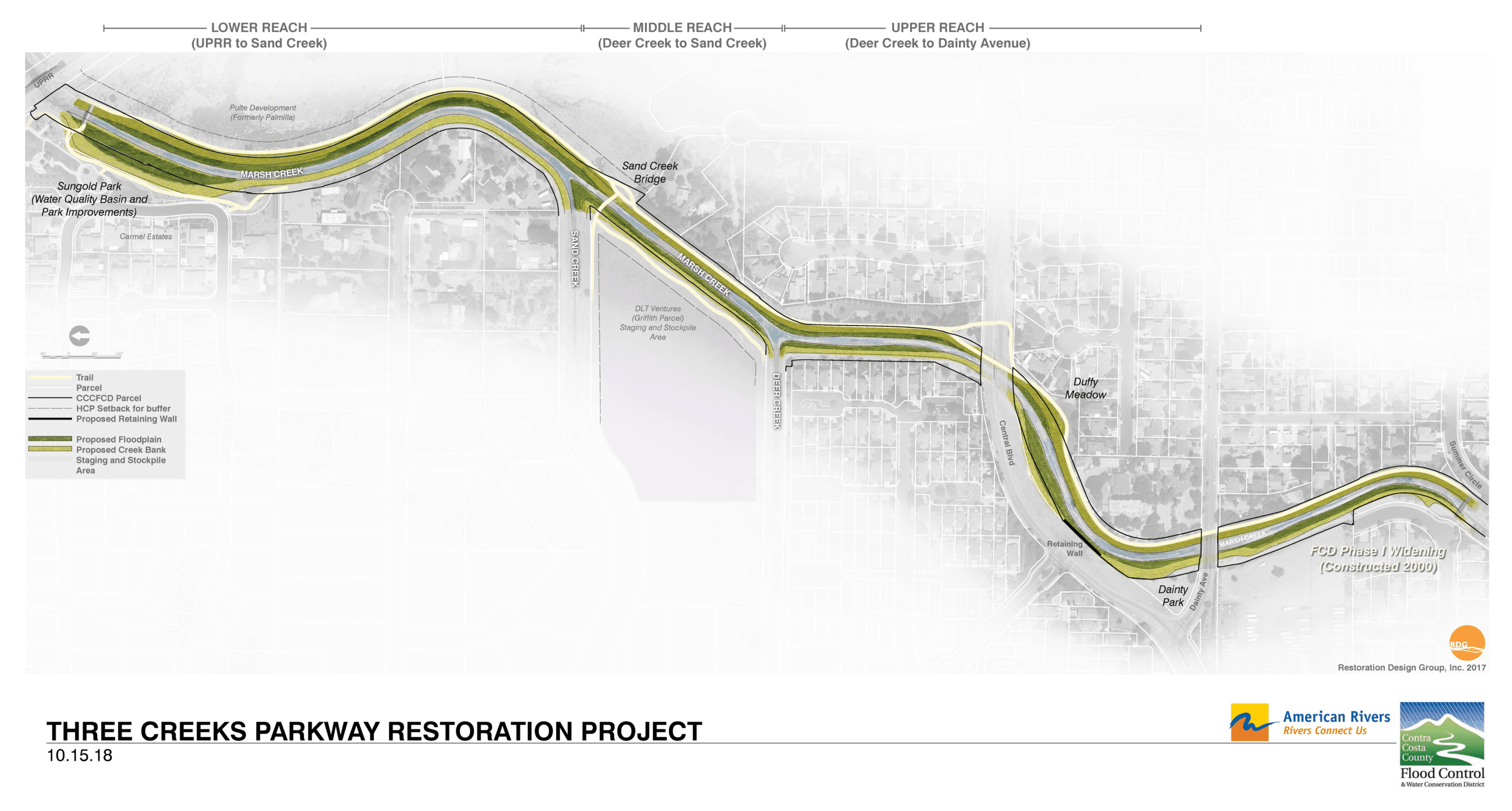
The Contra Costa County Flood Control District is proud to announce that the widening of Marsh Creek is complete and planting has begun on the Three Creeks Parkway Restoration Project.  Noticeable improvements include a trail extension under Central Blvd. in Brentwood, foundation and abutments for a future pedestrian bridge at Sand Creek, and an integrated water quality basin and expanded trail system at Sungold Park.

The Three Creeks Parkway Restoration Project is a multi-benefit, multi-agency, public-private partnership to plant trees and vegetation along a nearly one-mile, treeless stretch of Marsh Creek near downtown Brentwood.

Source: CCC Flood Control District

As part of the first phase, approximately 19,500 cubic yards of soil were excavated and removed from the creek’s banks and the creek’s channel was widened on average by about 25 feet.  The next phase of the project, the planting of native vegetation and installation of landscape features by American Rivers, is expected to be completed by the end of August 2021, weather permitting.

In lieu of an in-person ribbon cutting event, a video was produced showcasing key partners and features of the project.

To learn more about this project visit www.contracosta.ca.gov/5814/Three-Creeks-Parkway-Project.

About Contra Costa County Public Works Department:

Contra Costa County Public Works Department (CCCPWD) maintains over 660 miles of roads, 150 miles of streams, channels and other drainage and over 200 County buildings throughout Contra Costa County. CCCPWD provides services such as Parks and Recreation, Sand Bag Distribution and Flood Control throughout unincorporated areas of Contra Costa County. For more information about CCCPWD, please visit us at www.cccpublicworks.org


Filed Under: East County, Environment, News

Dredging up the past at Antioch Dunes National Wildlife Refuge

January 7, 2021 By Publisher 1 Comment

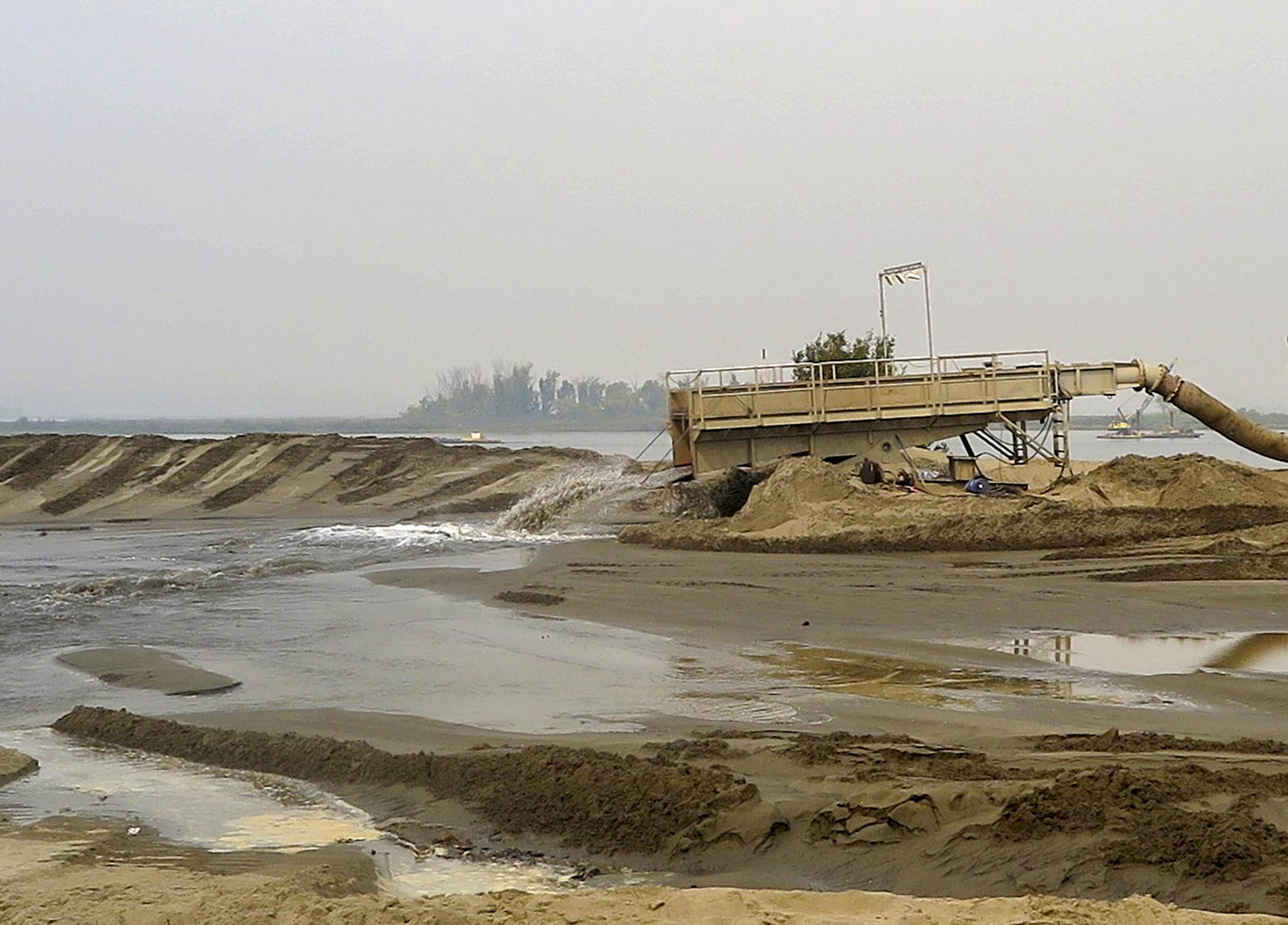
Sand and water dredged from the San Joaquin River are pumped onto Antioch Dunes National Wildlife Refuge in October. The water will return to the river through outfall pipes, leaving the sand behind. Credit: Mark Hayes/USFWS

Sand from the Port of Stockton is restoring a unique refuge

By Brandon Honig, External Affairs Specialist, U.S. Fish and Wildlife Service

Over thousands of years, the shifting sands of time built dunes that reached 120 feet high and stretched for two miles along the San Joaquin River, about 35 miles east of San Francisco. Isolated from similar habitats, the Antioch Dunes slowly developed species found nowhere else in the world.

The gradual shifting of sand, however, was replaced by a rapid effort to turn it into bricks in 1906, after a devastating earthquake and fires demolished buildings in San Francisco. As industry depleted the sand over the next 70 years, the dunes’ unique species struggled to survive on dunes that eventually topped out at 50 feet.

Now the U.S. Fish and Wildlife Service (USFW) and Port of Stockton are trying to turn back the clock, one load of sand at a time. Since 2013, the Port has pumped nearly 92,000 cubic yards of sand — enough to fill more than 6,500 dump trucks — onto the dunes to support three endangered species: the Lange’s metalmark butterfly, Antioch Dunes evening primrose and Contra Costa wallflower.

There may be fewer than 50 Lange’s metalmark butterflies remaining today, down from an estimated 25,000 between 50 and 100 years ago. The butterfly is only found at Antioch Dunes National Wildlife Refuge. Credit: Steve Martarano/USFWS

“The population of Lange’s has been trending downward for a couple of decades now,” said Mark Hayes, a biologist with the Service’s San Francisco Bay-Delta Office. “We counted about 10 butterflies in 2020, and the total population is very likely less than 50 currently. This is precariously low.”

The orange, black and white butterfly with a wingspan of 1 to 1.5 inches, whose population likely numbered 25,000 less than a century ago, was listed as endangered in 1976. The white-petaled primrose and yellow-petaled wallflower followed with listings in 1978.

The Service established Antioch Dunes National Wildlife Refuge for the three species in 1980, making it the first national refuge for insects and plants. At the time, the 55-acre urban refuge with two non-adjacent units was also the nation’s smallest.

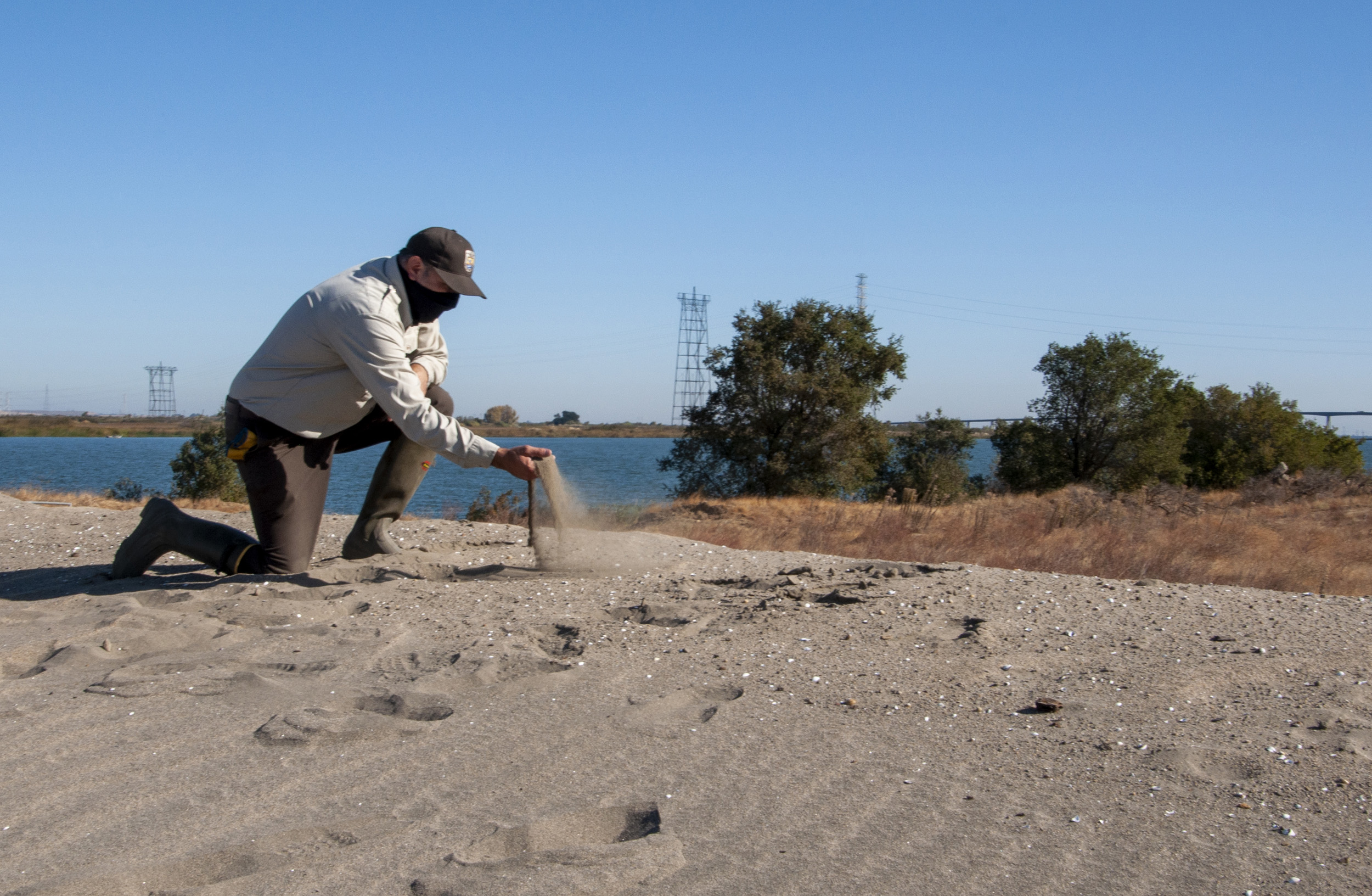
partnership with the Port of Stockton. The landscape to the right shows refuge land that has not yet been restored with sand. Credit: Brandon Honig/USFWS

“This is a very industrial neighborhood we’re tucked into,” Louis Terrazas, a wildlife resource specialist for the refuge, said of Antioch Dunes. “There’s a shipyard on one side, a gypsum-processing plant, an old water-treatment facility over there and two strips of land owned by Pacific Gas and Electric.”

As sand disappeared in the 20th century, non-native grasses and plants took hold, crowding out the primrose, the wallflower and the Antioch Dunes buckwheat, which is the only plant where the Lange’s butterfly will lay its eggs. In the early 2000s, a series of wildfires further cut the butterfly population, leaving only about 100 alive in 2010 — all on the refuge’s 14-acre eastern unit.

With no butterflies to protect on the western unit, the Service decided to overhaul that site and try to restore the conditions that had once enabled the dunes’ endangered species to thrive. Refuge staff began looking for sources of sand in 2012 and were soon contacted by the Port of Stockton.

Beachgoers lounge on an Antioch, California, sand dune in the early 1900s, before much of the sand was mined for building materials. Credit: Contra Costa County Historical Society

The Army Corps of Engineers dredges sand from the San Joaquin River each year to clear passage for cargo ships, and the Port is responsible for finding sites to place the sand. The Port typically sent sand to nearby Sherman Island, but saw an opportunity to make a real impact at Antioch Dunes.

“Our board has been pushing us to reach out and find projects like this — ways we can go above and beyond the normal regulations to try to have a beneficial impact on the [Sacramento-San Joaquin River] Delta,” said Jeff Wingfield, the Port of Stockton’s director of environmental and public affairs. “It costs us a little extra in time and prepping the site and some other little work, but for us it’s important to beneficially reuse the material.”

Since the Port’s first delivery in 2013, the evening primrose has experienced a huge jump in numbers, Terrazas said, and the wallflower and buckwheat are also reappearing. Eventually the refuge hopes to re-establish the Lange’s butterfly on the western unit as well.

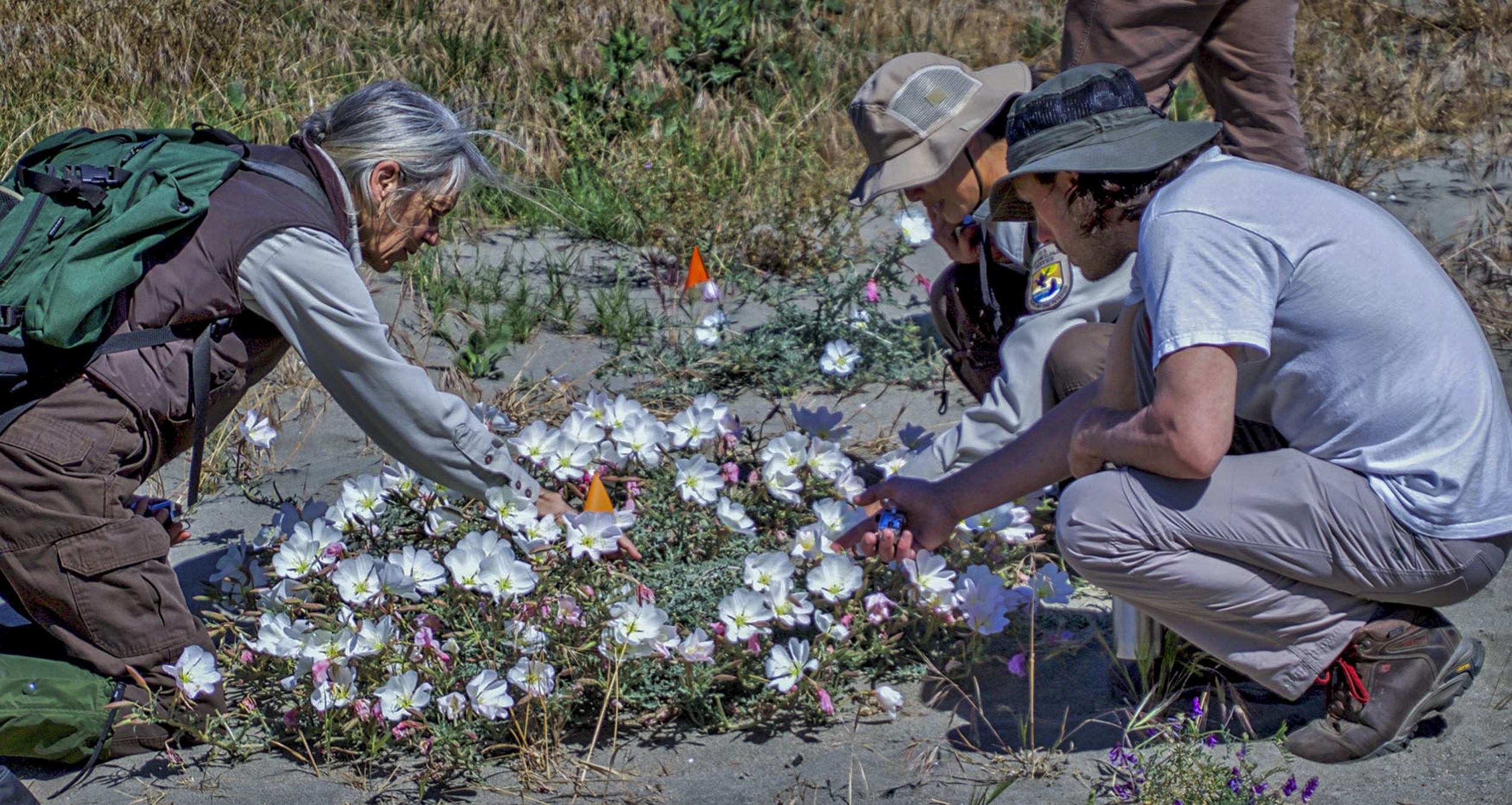
The Contra Costa Wallflower, right, and Antioch Dunes evening primrose live side by side at Antioch Dunes National Wildlife Refuge, the only national refuge established to protect plants and insects. Credit: Susan Euing/USFWS

To fully restore the refuge’s dune system, the Service could continue taking sand deposits for a couple of decades, Terrazas said, which might not be possible without the Port partnership.

“We bought some sand from another site in 2009, but it was really expensive, and the sand material had some non-native species in it,” he said. “We decided it was not the best method of restoring the site.”

The endangered Antioch Dunes evening primrose has shown a huge jump in numbers since dune-restoration began in 2013. Credit: Steve Martarano/USFWS

Under the current method, the Port provides and delivers clean sand, and it doesn’t cost the Service a dollar. USFW staff devotes a great deal of time to this project, but the sand itself and the labor to place it at the Antioch Dunes are donated.

“Restoring the dunes is vitally important to the refuge’s ecosystem and could be the key to long-term preservation of its endangered species,” Hayes said. “We value our partnership with the Port and hope this continues as we implement our restoration plan.”

Filed Under: East County, Environment, News, Parks, Recreation

East County residents asked to take Delta tunnel Environmental Justice Community Survey by Friday, Dec. 11

December 8, 2020 By Publisher Leave a Comment

The Environmental Justice Community Survey launched by the Department of Water Resources (DWR) closes this Friday, December 11th. The survey takes just a few minutes and is intended to gather perspectives from community members who live or work in the Stockton, Sacramento, and Antioch region and the small towns in between. Your input is crucial to identifying the potential impacts and benefits of the proposed Delta tunnel known as the Conveyance Project.

Don’t wait – if you haven’t already, take the survey today – and share with others in the Delta region!

Click here to TAKE THE SURVEY TODAY!

About the Survey

Through the “Your Delta, Your Voice” survey, DWR is specifically aiming to engage those who live or work in the Delta region and are often not adequately represented in public processes by seeking direct input from low income residents and workers, people of color, limited English speakers, Tribal members and other underrepresented communities.

They survey has two primary goals. One is to accurately reflect how the members of a variety of Delta communities value the region’s cultural, recreational and natural resources, through a series of questions and a map that allows people to identify places that are special to them. The other is to seek input about ways the project may cause impacts to these resources or potentially bring benefits to Delta communities.

Spread the Word

Please help spread the word about the survey by forwarding this email to those in your network so the voices of the Delta’s diverse communities can be heard.

You can also share the survey on social media using the following links:

   Share on Facebook:  English  |  Español  |  中文
   Share on Twitter:  English  |  Español  |  中文

Filed Under: East County, Environment, The Delta

County high school students explore new ways to connect with nature

November 23, 2020 By Publisher Leave a Comment

De La Salle students gather with Save Mount Diablo Executive Director Ted Clement at SMD’s Big Bend property east of Clayton to prepare for their solo experiences in nature. Photo by Al Johnson.

De La Salle High School students team up with Save Mount Diablo to learn about nature while staying safe during the pandemic

By Laura Kindsvater, Communications Manager, Save Mount Diablo

De La Salle High School students, eager to get outdoors, leapt at the chance to be part of Save Mount Diablo’s newly revised, hands-on Conservation Collaboration Agreement program designed  to connect young people to nature while keeping them safe during the pandemic. “Students are geniuses at adapting,” said Ted Clement, Executive Director of Save Mount Diablo (SMD). “When we had to change the way we deliver our experiential Conservation Collaboration Agreement (CCA) education program, they and their teachers took up the challenge and are making it work.”

Two De La Salle students breaking ground to plant some native coyote brush as part of restoring Save Mount Diablo’s Big Bend property during an environmental service project. Photo by Al Johnson.

De La Salle High School is not new to the CCA program. An earlier class took part in 2018, when the program’s traditional three-part format was in place. Then, students learned basic information during classroom presentations by SMD staff and, on a separate day in the field, completed a hands-on stewardship project along with a hike, a presentation by an environmental educator, and a solo journaling experience. The impact was powerful: Students’ knowledge and intentions to spend more time outdoors skyrocketed.

Now SMD has moved presentations to a Zoom platform, and outdoors activities take place with social distancing and masks. Plus, students can opt for self-directed outdoors projects under the guidance of SMD and their teacher instead of gathering with their classmates. The question is: Will the new format be as effective?

Save Mount Diablo Land Stewardship Manager Roxana Lucero pulls mulch out of a wheelbarrow as De La Salle students and Honors Biology Teacher Henriette Howett prepare to rake it around a newly planted native coyote brush shrub. Photo by Al Johnson.

So far, yes. This year’s class – a total of 54 Honors Biology students – is jumping right in to the new CCA format. After two initial Zoom presentations, the class spent a day outdoors – a group of 21 completed a restoration project on Save Mount Diablo’s Big Bend property, and 33 created their own hands-on nature service projects. Save Mount Diablo gave these 33 students a list of project ideas, such as creating art from trash, cleaning up their neighborhoods, planting native plants in their gardens, removing invasive weeds with landowners’ permission, and reducing energy usage in their homes.

Wearing masks and distancing themselves socially, the group of 21 worked hard to restore habitat at Save Mount Diablo’s Big Bend property, planting yarrow, coyote bush, Pacific blackberry, and California rose. They also potted up blue oak acorns for planting next year. The 33 students who completed the program as an independent study project will report on their experience in the class’s upcoming, and final, Zoom meetings today and tomorrow.

Two De La Salle students planting some native coyote brush on November 14 at Save Mount Diablo’s Big Bend property in the Marsh Creek watershed. Photo by Al Johnson.

“On Saturday, November 14th, 2020, I was fortunate to take 21 of my Honors Biology students on a field trip to work on a Conservation Collaboration Agreement with Save Mount Diablo. This is my second year doing a CCA and it was a wonderful experience. I’m currently teaching remotely, so this was the first time for me to see my students in person. As always, it was so nice to be out in nature, but more so now because of the pandemic. Many students are feeling isolated being home in front of the computer all day long for virtual meetings. I’ve been encouraging them to go out for hikes and to get some fresh air, but it was nice to have the experience together. My favorite part of the day was the solo in nature. I watched eagerly as 10 of my students walked up the oak-covered hillside and selected a tree to sit by. They reflected on their prompts about nature, as did I. In this busy time where all the days seem to drag together, day after day, it was a meaningful experience to sit and slow down. I’m so grateful to have had this opportunity with my students and the Save Mount Diablo staff,” stated Henriette Howett, De La Salle High School Honors Biology Teacher.

A De La Salle student contemplating nature amid a forest of blue oak trees during the solo part of the field experience. Photo by Al Johnson.

This enthusiasm is important because youth today, “spend less time outside than prison inmates, with the average child playing freely outside for just four to seven minutes a day,” according to a 2017 report commissioned by REI Co-op, The Path Ahead. This report notes that the average American now spends about 95 percent of their life indoors. It further reports that we are becoming an “indoor species,” which comes with consequences: “Our health and well-being may suffer. And the less we value our outdoor spaces, the less likely we are to protect them.”

Clement considers De La Salle one of the CCA program’s benchmark participants. “It’s clear that De La Salle students embrace new challenges, and their teachers support them every step of the way,” he noted. “Having this group use our new CCA format, so we can continue to connect kids to nature during the pandemic, is a privilege and will pave the way for other classes to be successful.” He continued, “Save Mount Diablo thanks De La Salle High School for its commitment to getting young people connected to the beautiful Mount Diablo natural areas through our Conservation Collaboration Agreement program. This type of leadership is directly addressing the disturbing trend of ‘nature deficit disorder’ in our modern culture.”

De La Salle students work with Save Mount Diablo Land Stewardship Manager Roxana Lucero to gather mulch for native planting sites. Photo by Al Johnson.

In the final portion of the CCA program, designed to engage students in educational and participatory philanthropy, the class will work to raise funds to become members of SMD through SMD’s discounted youth membership program.

About Save Mount Diablo

SMD is a nationally accredited, nonprofit land trust founded in 1971 with a mission to preserve Mount Diablo’s peaks, surrounding foothills, and watersheds through land acquisition and preservation strategies designed to protect the mountain’s natural beauty, biological diversity, and historic and agricultural heritage; enhance our area’s quality of life; and provide recreational opportunities consistent with the protection of natural resources. Learn more at www.savemountdiablo.org.

DeLaSalle students with Save Mt. Diablo Executive Director Ted Clement. Photo by Floyd McCluhan.

About De La Salle High School

De La Salle High School is a private Roman Catholic school for boys in Concord, California. The school was founded in 1965. De La Salle currently enrolls 1,039 students, and roughly 99 percent of each graduating class goes on to attend a university or college. Learn more at www.dlshs.org.


For other photos, please credit photographer in image file name. For video files, please credit Floyd McCluhan.


Filed Under: Central County, Education, Environment, Parks

Bed Bath & Beyond, Inc., to pay $1.49 million settlement for environmental violations

October 28, 2020 By Publisher Leave a Comment

By Scott Alonso, Public Information Officer, Office of the District Attorney, Contra Costa County 

Martinez, Calif. – On Tuesday, Contra Costa County District Attorney Diana Becton announces a $1,498,750 settlement against New Jersey-based Bed Bath & Beyond, Inc. (“Bed Bath & Beyond”) as part of a settlement of a civil environmental prosecution.

The judgment is the culmination of a civil enforcement lawsuit filed last month in Ventura County Superior Court claiming that more than 200 Bed Bath & Beyond stores throughout the state (including Cost Plus, buybuy BABY, Harmon, Harmon Face Values, World Market, and Cost Plus World Market stores) unlawfully handled, transported and disposed of batteries, electronic devices, ignitable liquids, aerosol products, cleaning agents, and other flammable, reactive, toxic, and corrosive materials, at local landfills that were not permitted to receive those wastes.

“The protection of our environment and public health is always a top priority. This settlement acts as a deterrent to other companies as non-compliant companies will be held accountable for violating our environmental laws,” stated DA Becton.

The investigation was initiated by the Ventura County District Attorney’s Office after a fire broke out on December 24, 2015 at the City of Oxnard’s Del Norte Transfer Facility in a load of store waste from the trash compactor of the Oxnard Bed Bath and Beyond store. The bagged store waste burst into flames when a city employee used a front-end loader to spread the freshly dumped trash pile. Investigation recovered numerous items of regulated waste, including several electronic items and hazardous waste, including lithium batteries and a small can of lighter fluid.

Following these Ventura County events, the Contra Costa County District Attorney’s Office worked in conjunction with 30 other California District Attorneys, and the Los Angeles City Attorney, and local environmental regulatory officials to conduct a series of undercover inspections of Bed Bath & Beyond store waste around the state. These inspections, and other investigation, revealed that Bed Bath & Beyond sending regulated hazardous wastes from stores to local landfills throughout California.

When notified of the investigation, Bed Bath and Beyond took steps to cooperate and to dedicate additional resources towards environmental compliance and improving its existing regulated-waste management program, including by performing regular self-audits of its compactors and waste bins in California.

Under the final judgment, Bed Bath & Beyond must pay $1,327,500 in civil penalties and as reimbursement of investigation and prosecution costs, of which $124,000 will be paid to the Contra Costa County District Attorney’s Office, $16,400,to the Contra Costa County, Health Services Dept., Hazardous Materials Program. The company will pay an additional $171,250 to fund supplemental environmental projects furthering environmental enforcement in California. The retailer will also be bound under the terms of a permanent injunction prohibiting similar future violations of law.

Filed Under: Business, Crime, District Attorney, Environment, News

Supervisors declare climate emergency on 5-0 vote, county’s COVID-19 status improving

September 24, 2020 By Publisher 1 Comment

County COVID-19 Ranking Expected to Improve to Red Next Week

County to Mail More than 700,000 Ballots for Nov. 3 Election

By Daniel Borsuk

For a county with five major petroleum refineries, the Contra Costa County Board of Supervisors took a major step in addressing climate change by adopting a three-page climate emergency declaration. 43116_BO_ADOPT Climate Emergency Resolution

About 30 people supported the resolution’s nine items dealing with the global environmental issue during the supervisors’ tele-conferenced Board meeting on Tuesday.  Supervisors also received a positive COVID-19 report from Contra Costa County Public Health Department officials and a report on the Nov. 3 California General and National Election from Contra Costa County Clerk-Recorder Deborah Cooper.

Upon adopting the climate change resolution, supervisors positioned the county in support of the State of California’s goals to cut greenhouse gases by 40 percent below 1990 levels by 2030, achieve net carbon neutrality by 2045, and provide 100 percent of the State’s electricity from clean energy sources by 2045.

The Board’s action also forms an interdepartmental task force of all county department heads or senior deputies that will focus on “urgently implementing the County’s Climate Action Plan – as currently adopted ….and identifying additional actions, policies, and programs the county will undertakes to reduce and adapt to the impacts of a changing climate.  This task force should report to the Board of Supervisors through the County Sustainability Commission and the Board’s Sustainability Committee on a semi-annual basis starting in March 2021.  Reports to the Board of Supervisors shall be discussion items for the Board.”

The resolution states that “Contra Costa County should develop policies to require all new construction to be fully electric through the adoption of Reach Building Codes.”

“Contra Costa County will prioritize the implementation of its Climate Action Plan in order to achieve greenhouse gas reductions as soon as possible and will consider equity and social justice issues in the implementation of the plan,” the Board’s resolution states.

In addition, the resolution states: “that health, socio-economic, and racial equity considerations should be included in policymaking and climate solutions at all levels and across all sectors as the consequences of climate change have significant impacts on all County residents, especially the young, the elderly, low-income, or communities of color and other vulnerable populations.”

Initially it appeared Board Chair Candace Andersen, who says she drives a hybrid car, was leaning to cast a “no” vote on the resolution, but after listening to about 30 speakers mostly in support of the resolution, the  Danville-based Supervisor voted in support of the resolution.  The Supervisor said she had an issue about the urgency of the state shifting from a fossil fueled based economy to an electric powered based economy that would potentially be more energy efficient and less environmentally harmful.

Jackie Garcia, a Lafayette-based builder, asked Supervisors to pass the resolution because “People want energy-efficient houses. People don’t use gas stoves anymore.  They use energy efficient electric stoves.”

“This resolution requires immediate action,” said Supervisor Karen Mitchoff of Pleasant Hill who also serves on the commission of the Bay Area Air Quality Management District. “I will support this resolution.”

Incoming Board Chair for 2021 Supervisor Diane Burgis of Brentwood, who said she has worked on environmental issues, especially related to water, said “I will support this resolution because it will directly affect our future way of life in Contra Costa County.”

Supervisor Federal Glover of Pittsburg, who was elected to serve as Vice Chair for 2021 by his colleagues provided he is reelected in November’s election against County Assessor Gus Kramer, said “This is a good first step. It gives people notice.”

In passing the resolution that more than 1,000 other California cities, counties and regional governmental agencies have done before Tuesday’s supervisors’ meeting, the Contra Costa resolution “declares a climate emergency that threatens the long-term economic and social well-being, health, safety,  and security of the County, and that urgent action by all levels of government is needed to immediately address this climate emergency.”

“Real Good News” on the COVID-19 Front

Contra Costa County Public Health Department Director Anna Roth informed supervisors there is “real good news” concerning COVID-19.  She expects the state to announce perhaps on Sept. 29 that the county’s COVID-19 status will be upgraded from purple to red.

The color change will mean the county will probably be allowed to open more businesses that have been shuttered since the public health shutdown order went into effect in March.

Roth expects some K-12 schools, as many as 35, could reopen for students with proper health protocols in place.  Roth said Contra Costa County Superintendent of Schools Lynn Mackey will oversee the reopening of the schools.

Roth reported there have been 15,156 COVID-19 patients in the County since the outbreak of the flu in March.  There have been 202 deaths in the county since March.  In the past 24 hours there were 52 COVID-19 patients reported in the county hospital and no deaths have been reported, she said. “Our County death rate is less than the national average,” she said.

In a push to increase the number of people who are tested for COVID-19, Contra Costa County Public Health Officer Dr. Chris Farnitano said about 330,000 residents have been tested.  “That’s still not enough,” said Dr. Farnitano, who said the County will open a drive-up test site at the Bay Point Health Center in October.

Dr. Farnitano said the county will start to give free flu shots at the County’s Antioch, Concord, Richmond and San Ramon drive up sites. “Vaccination is important because it is difficult to tell the difference between the flu and COVID,” he said.

More Than 700,000 Ballots Expected for Nov. 2 Election

The Contra Costa County Office of Elections expects to mail more than 700,000 ballots to registered voters for the Nov. 3 election, up from 687,000 ballots mailed last November to registered voters, said Contra Costa County Clerk-Recorder and Registrar of Voters Deborah Cooper.

“We encourage people to stay safe and vote by mail,” said Cooper.  There will also be 37 ballot drop boxes around the County so voters can drop off ballots 24/7 from Oct. 5 through Nov. 3.  Official ballots will be mailed to voters on Oct. 5, but if a registered voter has not received a ballot by Oct.  19 they should contact the Elections Office, (925) 335-7800.


Filed Under: Environment, News

Gov. Newsom signs exec order phasing out gas-powered cars, passenger trucks sold in state by 2035

September 23, 2020 By Publisher Leave a Comment

To “drastically reduce demand for fossil fuel in California’s fight against climate change”

Transportation currently accounts for more than 50 percent of California’s greenhouse gas emissions   

Zero-emission vehicles are a key part of California’s clean, innovation economy – already California’s second largest global export market  

Order also directs state to take more actions to tackle the dirtiest oil extraction and support workers and job retention and creation as we make a just transition away from fossil fuels  

SACRAMENTO – Governor Gavin Newsom announced Wednesday that he will aggressively move the state further away from its reliance on climate change-causing fossil fuels while retaining and creating jobs and spurring economic growth – he issued an executive order requiring sales of all new passenger vehicles to be zero-emission by 2035 and additional measures to eliminate harmful emissions from the transportation sector. (The text of today’s executive order can be found here and a copy can be found here.)

The transportation sector is responsible for more than half of all of California’s carbon pollution, 80 percent of smog-forming pollution and 95 percent of toxic diesel emissions – all while communities in the Los Angeles Basin and Central Valley see some of the dirtiest and most toxic air in the country.

“This is the most impactful step our state can take to fight climate change,” said Governor Newsom. “For too many decades, we have allowed cars to pollute the air that our children and families breathe. Californians shouldn’t have to worry if our cars are giving our kids asthma. Our cars shouldn’t make wildfires worse – and create more days filled with smoky air. Cars shouldn’t melt glaciers or raise sea levels threatening our cherished beaches and coastlines.”

Following the order, the California Air Resources Board will develop regulations to mandate that 100 percent of in-state sales of new passenger cars and trucks are zero-emission by 2035 – a target which would achieve more than a 35 percent reduction in greenhouse gas emissions and an 80 percent improvement in oxides of nitrogen emissions from cars statewide. In addition, the Air Resources Board will develop regulations to mandate that all operations of medium- and heavy-duty vehicles shall be 100 percent zero emission by 2045 where feasible, with the mandate going into effect by 2035 for drayage trucks. To ensure needed infrastructure to support zero-emission vehicles, the order requires state agencies, in partnership with the private sector, to accelerate deployment of affordable fueling and charging options. It also requires support of new and used zero-emission vehicle markets to provide broad accessibility to zero-emission vehicles for all Californians. The executive order will not prevent Californians from owning gasoline-powered cars or selling them on the used car market.

California will be leading the nation in this effort – joining 15 countries that have already committed to phase out gasoline-powered cars and using our market power to push zero-emission vehicle innovation and drive down costs for everyone.

By the time the new rule goes into effect, zero-emission vehicles will almost certainly be cheaper and better than the traditional fossil fuel powered cars. The upfront cost of electric vehicles are projected to reach parity with conventional vehicles in just a matter of years, and the cost of owning the car – both in maintenance and how much it costs to power the car mile for mile – is far less than a fossil fuel burning vehicle.

The executive order sets clear deliverables for new health and safety regulations that protect workers and communities from the impacts of oil extraction. It supports companies who transition their upstream and downstream oil production operations to cleaner alternatives. It also directs the state to make sure taxpayers are not stuck with the bill to safely close and remediate former oil fields. To protect the health and safety of our communities and workers, the Governor is also asking the Legislature to end the issuance of new hydraulic fracturing permits by 2024.

The executive order directs state agencies to develop strategies for an integrated, statewide rail and transit network, and incorporate safe and accessible infrastructure into projects to support bicycle and pedestrian options, particularly in low-income and disadvantaged communities.

This action continues the Governor’s commitment to strengthening California’s resilience while lowering carbon emissions – essential to meeting California’s air quality and climate goals. In the last six months alone, the California Air Resources Board has approved new regulations requiring truck manufacturers to transition to electric zero-emission trucks beginning in 2024 and the Governor signed an MOU with 14 other states to advance and accelerate the market for electric medium- and heavy-duty vehicles. Last fall, California led a multi-state coalition in filing a lawsuit challenging the U.S. Environmental Protection Agency’s attempt to revoke portions of a 2013 waiver that allows the state to implement its Advanced Clean Car Standards.

Last September, Governor Newsom took action to leverage the state’s transportation systems and purchasing power to strengthen climate mitigation and resiliency and to measure and manage climate risks across the state’s $700 billion pension investments. To mitigate climate threats to our communities and increase carbon sequestration, the Governor invested in forest health and fuel reduction and held utilities accountable for building resiliency. The Governor also directed state agencies to develop a comprehensive strategy to build a climate-resilient water system and made a historic investment to develop the workforce for California’s future carbon-neutral economy.


Filed Under: Business, Economy, Environment, Government, News, State of California

  • « Previous Page
  • 1
  • …
  • 4
  • 5
  • 6
  • 7
  • 8
  • …
  • 13
  • Next Page »
Monicas-11-25
Deer-Valley-Chiro-06-22

Copyright © 2026 · Contra Costa Herald · Site by Clifton Creative Web