• Home
  • About The Herald
  • Local Agencies
  • Daily Email Update
  • Legal Notices
  • Classified Ads

Contra Costa Herald

News Of By and For The People of Contra Costa County, California

  • Arts & Entertainment
  • Business
  • Community
  • Crime
  • Dining
  • Education
  • Faith
  • Health
  • News
  • Politics & Elections
  • Real Estate

BART to pay $1.275 million settlement in environmental prosecution case by DA’s of three counties

February 1, 2017 By Publisher Leave a Comment

Transit agency failed to implement plans notifying first responders of the presence of large quantities of hazardous materials at its facilities throughout the Bay Area

Martinez, , CA – The Contra Costa County Office of the District Attorney, along with District Attorneys from Alameda County and San Mateo County, announced today that Alameda County Superior Court Judge Morris Jacobson has ordered San Francisco Bay Area Rapid Transit District (BART) to pay $1.275 million as part of a settlement of a civil environmental prosecution alleging that the transit agency failed to implement hazardous materials business plans at facilities throughout the three counties as well as violating aboveground storage tank, underground storage tank, and hazardous waste laws.

The judgment agreed to by BART, resolves allegations made in a civil enforcement lawsuit filed January 31, 2017 in Alameda County and covers environmental violations dating back to January 2010.  The lawsuit claimed that at over 30 of BART’s 190 facilities throughout Alameda, Contra Costa, and San Mateo Counties, BART unlawfully failed to establish and implement a hazardous materials business plan for emergency response to a release or threatened release of hazardous materials.  These hazardous materials included large quantities of diesel fuel, petroleum, sulfuric acid contained in industrial batteries, and fire extinguishing chemicals.  The lawsuit further alleged that at these and other facilities, BART violated its environmental obligations related to its aboveground storage and underground storage of petroleum, and its hazardous waste.

“The protection of the public and the environment from dangerous hazardous materials through the enforcement of environmental protection laws is and always will be a high priority,” say District Attorney, Mark A. Peterson. “I am committed to ensuring both private and public entities comply with environmental laws enacted to protect our community and environment.”

In January of 2014, during routine compliance inspections, hazardous materials inspectors from the Alameda County Department of Environmental Health observed large aboveground storage tanks containing diesel at BART facilities in East Dublin/Pleasanton, West Dublin, and Castro Valley. These tanks, which contained 500 to over 1,700 gallons of diesel, fueled backup generators and were located in close proximity to areas accessed by thousands of BART commuters each day.  Despite the presence of large quantities of hazardous materials, BART had never implemented a hazardous materials business plan for any of these facilities as required by law.  These plans contain critical emergency response information for first responders, such as firefighters, and BART employees, should there be a release or threatened release of hazardous materials into the environment.  These hazardous materials business plans are designed to ensure the protection of the public and the environment in the event of a hazardous materials spill.

The violations were brought to the attention of the Alameda County District Attorney’s Office Environmental Protection Division who then conducted a follow up investigation with the District Attorney’s Offices’ Environmental Protection Units of Contra Costa County and San Mateo County.  The Contra Costa Health Services Hazardous Materials Program and San Mateo County Environmental Health Division also conducted inspections of all BART facilities in their respective Counties.  The follow up investigations revealed that BART’s failure to implement hazardous materials business plans was more widespread and covered over 30 BART facilities in the three counties.  The investigation also revealed that, at numerous other BART facilities, BART was committing violations of California’s aboveground storage tank, underground storage tank, and hazardous waste laws.

BART was cooperative throughout the investigation and worked hard to bring their agency into substantial environmental compliance.  During the investigation, BART hired an third party to conduct an audit of its environmental management programs and the audit identified areas of improvement related to hazardous materials, aboveground storage tanks, and hazardous waste. As part of the settlement, BART agreed to implement the recommendations from this audit.

Under the settlement, BART must pay $675,000 in civil penalties paid out, according to statute, to other government agencies, and $300,000 to reimburse the costs of the investigation.  As part of the settlement, BART must also commit $300,000 to an additional environmental compliance position, for a total of two such positions for the next two years.  BART will also be bound under the terms of a permanent injunction prohibiting similar future violations of law.

Filed Under: BART, District Attorney, Environment, Health, News

County Health Officials order halt to deliveries at Richmond composting facility due to public nuisance

January 30, 2017 By Publisher Leave a Comment

Contra Costa Health Services’ Environmental Health division (CCEH), acting for CalRecycle as the Local Enforcement Agency (LEA), has issued a cease-and-desist order to a Richmond composting facility to stop them from accepting new green-waste, food waste or other compostable material until it changes business practices that increase fire danger and cause foul odors in the surrounding community.

The cease-and-desist order was issued on January 24, 2017 after repeated inspections showed that West Contra Costa Sanitary Landfill’s Organic Materials Processing Facility accepted more compostable waste than permitted and unsafely operated the biological manufacturing operation (composting).

“Since September 2016, there have been more than 400 complaints from the surrounding community about odors coming from the facility. Although the odors are not imminently dangerous they do cause a public nuisance and some reports indicated having headache, nausea, throat irritation and breathing problems,” said Dr. Marilyn Underwood, CCEH Director.

CCEH will meet with CalRecyle and the compost facility to ensure the cease-and-desist is done in a manner that does not a create public health nuisance.

Inspectors have repeatedly cited too-high piles of composting material and volumes of material greater than permitted at the facility, and in October 2016 issued an order requiring the operator to stop releasing noxious odors off site. The facility did not comply and was fined $45,000.

“We have been in regular communication with the facility regarding its waste management practices,” Dr. Marilyn Underwood said. “We are not satisfied that the facility operators are doing all that it should to prevent fires or the release of strong odors into the community. We encourage composting but it must be done correctly. ”

Since March 2014, seven fires have been documented in the composting area of the facility on Parr Boulevard, resulting from improperly managed concentrations of organic material.

CCEH has ordered the facility to submit a written plan detailing how it will change its business practices by February 1, and to remove material identified as causing off-site odors to a permitted facility.

Failure to comply with the order may result in additional fines and the permanent loss of the facility’s permit.

The order will not prevent private individuals from bringing waste materials to the facility.

To make a complaint about air pollution or industrial odors in Contra Costa County, call the Bay Area Air Quality Management District at 1-800-344-ODOR (6367).

Filed Under: Environment, Health, News, West County

Delta Diablo wins Governor’s Award for Sustainability Leadership

January 27, 2017 By Publisher Leave a Comment

From Left to Right: Mike Bakaldin, Interim General Manager; Phil Govea, Engineering Services Director; Joaquin Gonzalez, Operations Manager holding the plaque; Amanda Roa, Environmental Programs Manager; and Robert Brothers, Environmental Compliance Specialist II.

Delta Diablo was honored in Sacramento on Thursday evening, January 19th with a prestigious 2016 Governor’s Environmental and Economic Leadership Award (GEELA). GEELA is California’s highest environmental honor, administered by the California Environmental Protection Agency.

The program recognizes individuals, organizations, and businesses who have demonstrated exceptional leadership and made notable, voluntary contributions in conserving California’s precious resources, protecting and enhancing our environment, building public-private partnerships and strengthening the state’s economy.

This award recognizes Delta Diablo for its commitment and achievements in sustainability. At Delta Diablo, sustainability is not just one project or program, but rather a mindset that is holistically expressed throughout the entire organization. This can be observed through the recycled water and renewable energy projects that we implement, the innovative technologies we pilot, and the regional coalitions we lead.

These projects and programs reflect how Delta Diablo embodies sustainability and excellence throughout the organization, achieving 12 consecutive years of 100% permit compliance, and awards at every level in the organization for public education, safety, financial reporting, human resources, labor relations, procurement, engineering, leadership and innovation. Delta Diablo is proud to help maintain sustainable facilities, practices, and communities, and desires to be a Utility of the Future to advance the state of the industry for water resource recovery, helping to create a sustainable California.

Delta Diablo’s Board of Directors’ Chair Pete Longmire confirms: “This award recognizes every aspect of Delta Diablo’s services and the efforts of all our dedicated employees across every department. It is a recognition of the daily work they do providing critical public health and resource recovery services to 200,000 people in Antioch, Bay Point and Pittsburg, as well as their leadership with several regional industry coalitions.”

Each year GEELA recipients are chosen from five categories and Delta Diablo was recognized under the “Sustainable Practices, Communities or Facilities” category.

Delta Diablo (District) provides water resource recovery services for the City of Antioch, the City of Pittsburg, and the unincorporated community of Bay Point, serving a population of nearly 200,000. The water resource recovery services consist of conventional treatment of wastewater, recycled water production and distribution, pollution prevention, energy recovery, beneficial reuse of biosolids, street sweeping, and household hazardous waste collection. For more information visit www.deltadiablo.org.

Filed Under: East County, Environment, Government, News

Discover Diablo, new Free Public Hike Series offered by Save Mount Diablo, beginning this weekend

January 17, 2017 By Publisher Leave a Comment

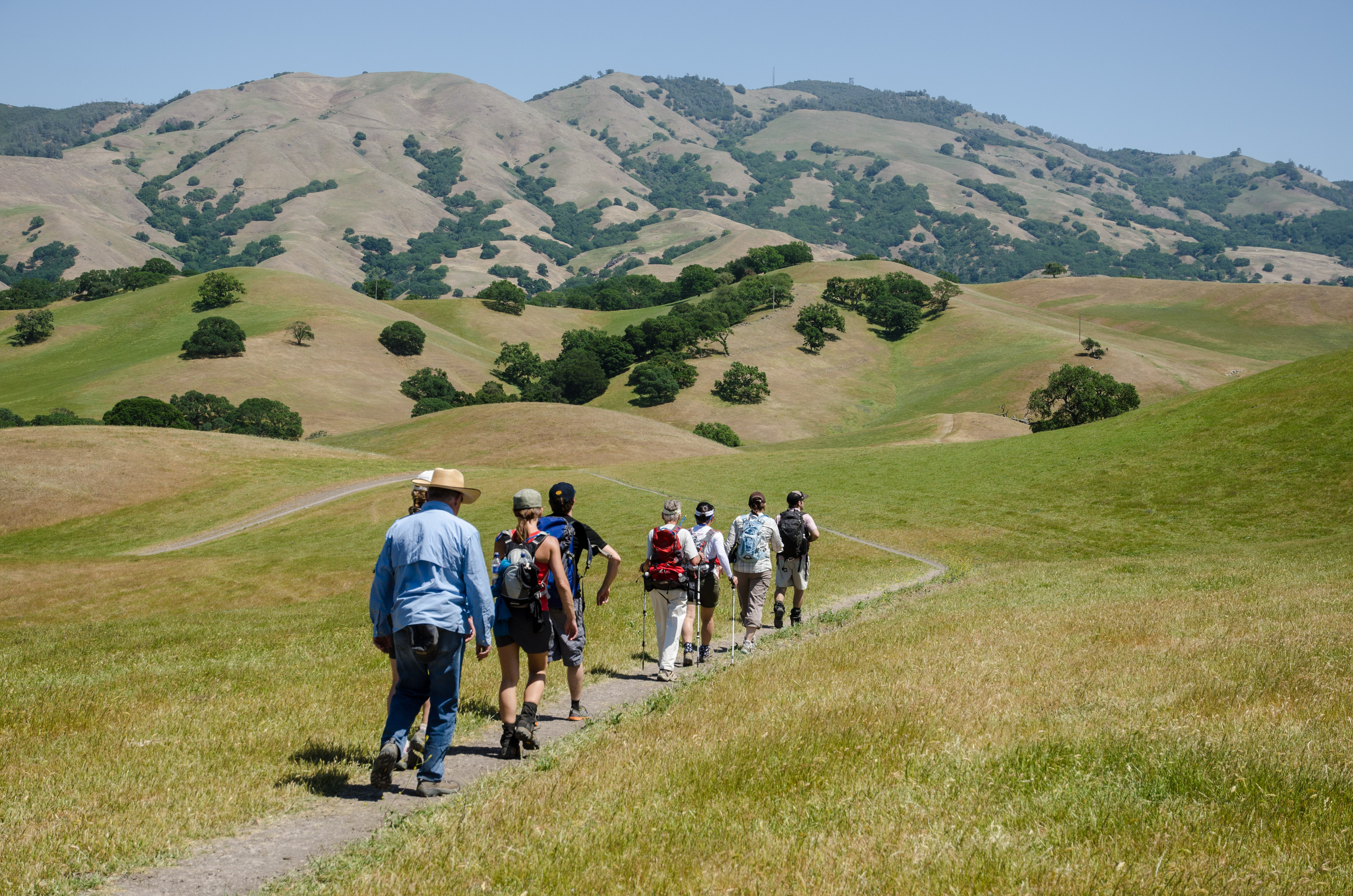
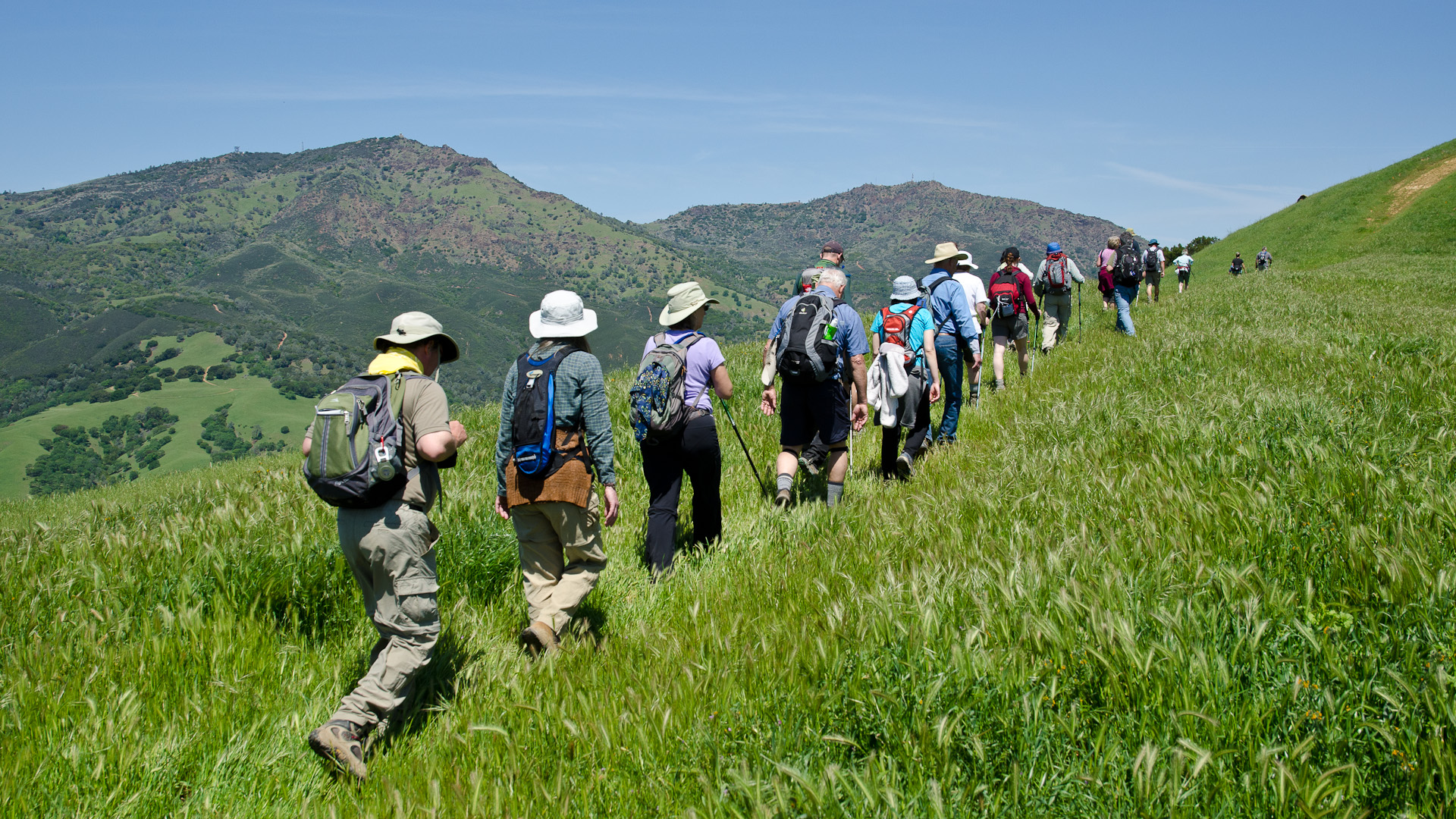
Hikers enjoy the trails on Save Mount Diablo’s Four Days Diablo Group Camping Trip, a 30-mile trek along the Diablo Trail over 4 day leading you on an adventure through rarely seen Mount Diablo landscapes. Photos by Scott Hein, Save Mt. Diablo Board President

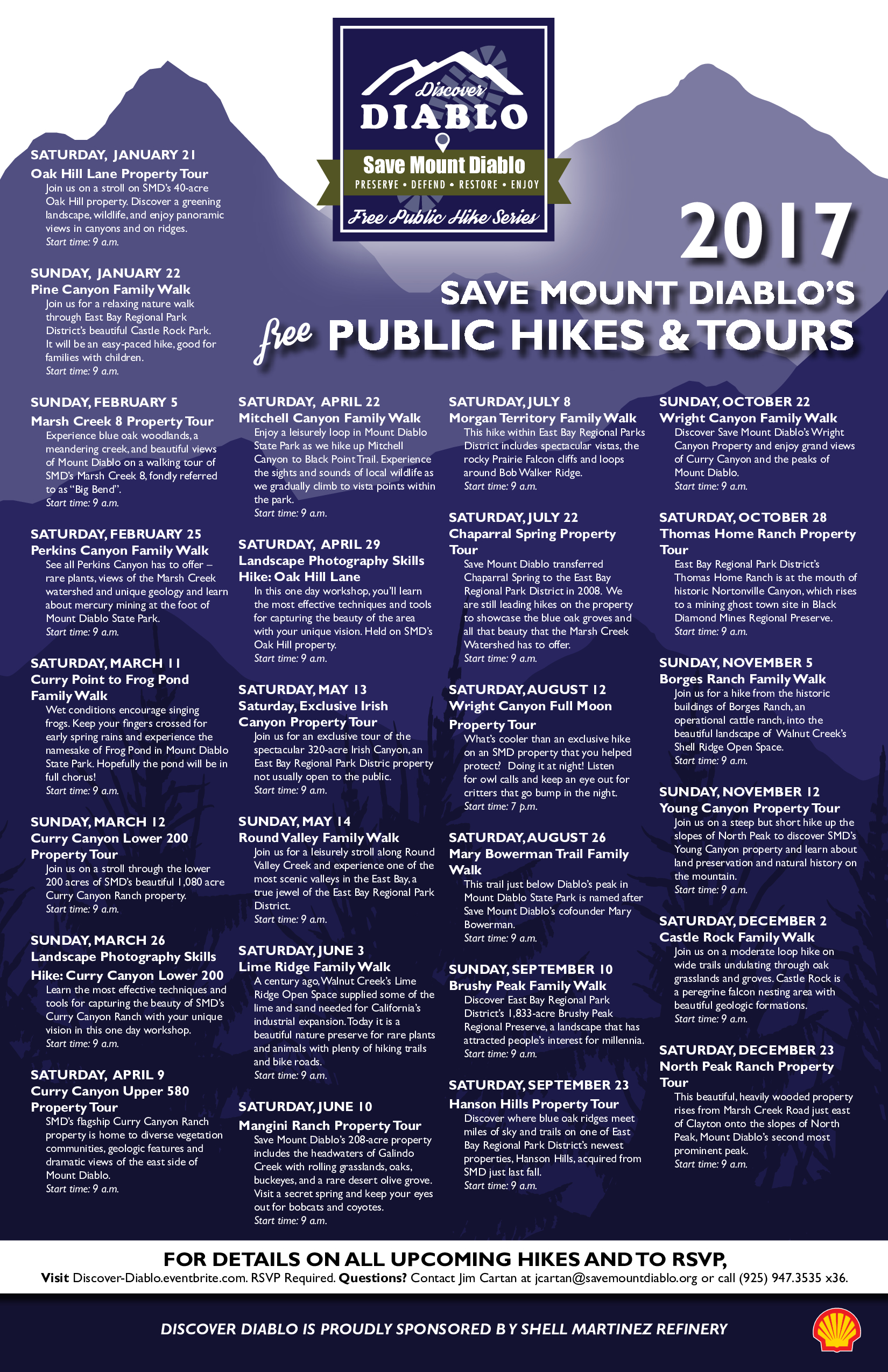
Discover Diablo is Save Mount Diablo’s new free public hike series, offering an annual schedule of guided walks, hikes and interpretive tours open to any and all trail blazers. Generously sponsored by the Shell Martinez Refinery, the Discover Diablo Free Public Hike Series will launch in early 2017. Discover Diablo will offer two events per month for the entire year (please see schedule, below) – one taking place and focusing on a Save Mount Diablo property and one designed for families on other public parks.

Hosted by Save Mount Diablo, the new Discover Diablo program seeks to build awareness of local land conservation efforts and to convey the importance of protecting open space for habitat and recreation. With the launch of Discover Diablo, we intend to reach new audiences, build our membership base of adventurers, explorers and outdoor enthusiasts, and spark a passion for the Diablo Range.

Four Days Diablo 2012

We invite you to join us in exploring the Bay Area’s beautiful wild lands and open spaces. We hope that with two events per month in various locations, there will be something for everyone to enjoy and learn from. Save Mount Diablo’s Family walks are for hikers of all skill levels and will take place on other portions of open space on and around the mountain. Save Mount Diablo’s Property tours will illustrate the importance of preserving wildlife habitat, building corridors between existing parks, and of course, all the beauty that the Diablo Range has to offer.

To honor Save Mount Diablo’s mission, we aim to display both our current property holdings as well as those we have helped protect over the years. Hosting monthly hikes is an effective way to engage and grow communities invested in the sustainability of local open space. SMD properties aren’t usually open to the public, so these are rare opportunities.

To complete the land conservation picture in the Diablo Range and pay homage to collaborating agencies, we also host monthly outings on Mount Diablo State Park, East Bay Regional Park District, and Walnut Creek Open Space Foundation lands. Save Mount Diablo’s new hike series, Discover Diablo, ties these outings together by offering an annual schedule of free public hikes to explore these diverse lands – with the added bonus of being guided by staff and experienced volunteer hike leaders.

According to Ted Clement, Executive Director of Save Mount Diablo, “It is the goal of the Discover Diablo program to build connections between people and land, helping communities develop a strong sense of place and a deepened appreciation for our collective backyard. Most importantly, we want to cultivate a love of the land in participants – so as to grow the land ethic and stewardship for our precious Mount Diablo area.”

We intend to reach audiences from all over the Bay Area to improve awareness of and advocacy efforts for the Diablo Range. There is something for us all to discover in the nooks and crannies surrounding Mount Diablo. Please join us on the trails to find your own individual inspiration!

Visit us on Eventbrite to our full schedule of upcoming hikes: Discover-Diablo.eventbrite.com. RSVP required.

What: Save Mount Diablo’s Discover Diablo Free Public Hike Series

When: Two monthly events throughout 2017. (See schedule below)

Where: CONTRA COSTA COUNTY – Walnut Creek, Clayton, Concord, Livermore, Pittsburg.

Save Mount Diablo is a nationally accredited, non-profit land trust founded in 1971 with a mission to preserve Mount Diablo’s peaks, surrounding foothills, and watersheds through land acquisition and preservation strategies designed to protect the mountain’s natural beauty, biological diversity, and historic and agricultural heritage; enhance our area’s quality of life; and provide recreational opportunities consistent with the protection of natural resources. To learn more and support Save Mount Diablo please visit www.savemountdiablo.org.

Filed Under: Central County, Concord, East County, Environment, Recreation

Guest Commentary: Single tunnel option not a quick fix for the Delta

December 27, 2016 By Publisher Leave a Comment

By Barbara Barrigan-Parrilla, Restore The Delta

These are not good times for Governor Brown’s Delta Tunnels (WaterFix) proposal.

The twin 40-foot-diameter, 30-mile-long tunnels would harvest Sacramento River water before it flows through the San Francisco Bay-Delta estuary. A vast majority of this water would be sent to Big Ag operations like The Wonderful Company in the Southern San Joaquin Valley. It will destroy the largest estuary on the West Coast of the Americas.

But as the San Francisco Chronicle recently editorialized, “The tunnel project, now marketed to Californians as WaterFix, lacks community trust and political will and is saddled with a $16 billion (and growing) price tag that appears much larger than water agencies are willing to pay.

“Water districts, rural users, and entire cities like San Diego and Santa Monica are starting to question the wisdom or affordability of such a big project that does not deliver one new drop of new water.

“This November, a coalition of conservation and public interest organizations sent a letter to the Obama administration asking them to terminate the proposal so his legacy isn’t dragged down by a financial and environmental nightmare. The groups explain how the next administration will blame the boondoggle on Obama. They will say:

“We inherited the WaterFix from the previous administration and presumed that they knew what they were doing and had fully evaluated the project in good faith when they determined it should go forward.”
As environmental and financial obstacles continue to mount for the proposal, California water policy wonks are now scrambling for a viable Plan B.

The influential Public Policy Institute of California recently took a step back from support for the Twin Tunnels and offered a scaled back, Plan B. In an op-ed for the Sacramento Bee they offer, A Grand Compromise for the Delta.

PPIC now proposes a smaller plan they believe can settle the water wars over the Bay-Delta. Their proposal includes one-tunnel, managing water flows for entire ecosystems not just specific species, strengthening Delta levees, and letting communities tap into tunnel water supplies where local water is salty.

Restore the Delta is certainly encouraged the Public Policy Institute of California has backed down from support for the highly destructive Twin Delta Tunnels proposal. But the scaled-back project the PPIC now proposes is a completely different and new project. Before it can be analyzed, we still need to figure out how much water the Delta needs to maintain ecological health for the communities who live there and the species who depend on a healthy estuary.

The State Water Board’s flow hearings for the San Joaquin and Sacramento rivers must be completed before any project can be analyzed.

Independent fishery experts now say that the San Joaquin River needs at least 50 percent unimpaired flows to stop extinction and achieve legally required doubling goals for salmon.

Any new tunnel proposal would, we hope, include a more comprehensive public scoping process so as to include Delta environmental justice communities, made up of hundreds of thousands of residents. We would also hope for a more transparent environmental and economic review process with better science and better public debate than what was put forth for the current Delta Tunnels proposal. CA WaterFix touts hundreds of meetings over the last ten years, but most were never properly noticed to Delta communities for meaningful participation.

If, indeed, support for the Big Twin Tunnels project is fading, let’s kill that proposal once and for all. Californians who voted in 1982 against the Peripheral Canal assumed we had made that decision long ago.

In an era of climate change and shrinking snowpack in the Sierra, less snowmelt means that by the time the expensive Twin Tunnels project would be finished, it may sit empty most of the time. The same may be true for one tunnel.  We don’t know yet.

Instead, we should invest in California’s water future. Southern California already taking the lead on the cutting edge of a water technology. Stormwater harvesting, conservation, water recycling, and groundwater recharging are reducing the need for imported water to the Southland. Many of these ideas can be found in a report titled A Sustainable Water Plan for California by the Environmental Water Caucus.

The Delta Tunnels, even a scaled back version, may not be the best use of limited funds. Let’s kill off the big Delta Tunnels plan once and for all. Then we can redirect those funds to create local jobs that build water sustainability by adding new water into the system. That is the path to provide real security for California’s future.

Originally published by KCET, December 19, 2016. Republished with permission. Commentaries are the opinions of their authors, and do not necessarily reflect the views of KCETLink.

Filed Under: Environment, Opinion, The Delta, Water

Delta tunnels opponents asked to speak out at Dec. 16th State Water Board meeting in Stockton

December 2, 2016 By Publisher Leave a Comment

speak-up-against-delta-tunnels

Restore the Delta, the organization fighting to stop the Delta tunnels is asking citizens also opposed to the tunnels, to speak out at the State Water Resources Control Board meeting on what’s now known as the California WaterFix. The meeting will be held in Stockton at the Civic Auditorium, 925 N. Center Street beginning at 9:00 a.m. on Friday, December 16th. The meeting could run until 8:00 p.m. – as long as there are comments from the public, the Board will hear them.

The opposition group issued the following call to action, last month:

Earlier this year, thousands of Restore the Delta supporters signed a petition urging the State Water Resources Control Board to update outdated water quality standards for the Bay-Delta region. Now we need your action in person.

This outdated 20-year-old Water Quality Control Plan allows more than half the water needed for the delta’s ecological health to be diverted away for unsustainable Big Agriculture on the west and south San Joaquin Valley.

The State Water Resources Control Board is currently in Phase I of updating the plan. We need to make sure that the State Water Board gets it right and is not influenced by special interests. New water quality standards that truly protect communities and species is a proactive step that helps ensure reliable water supplies for all water users of the Bay-Delta. Learn more about water quality here.

We need you to make your comments. The public comment process ends January 17, 2017, and all hearings conclude January 3, 2017. Please limit your oral public comment to three minutes in length.

Here are some important points to make:

1) A permanent reduction of exports must happen to protect the Delta. What is the true efficacy of this update to SJ flow standards if water exports from the Delta are not going to be dealt with? The San Joaquin River must reach Chipps Island in order to restore, protect, and preserve the entire estuary. If unsustainable water exports are not dealt with, we worry that water quality and quantity objectives for the Delta will never be met.

2) We do not want to see a weakening of salinity standards in the South Delta. Water quality standards must be protected for agriculture, drinking water, municipal discharge, fisheries, and ground water recharge.

3) The State Water Board must consider environmental justice communities in terms of drinking water and domestic use. Phase 1 Recirculated Draft SED fails to consider environmental justice communities in chapters 5 and 9 (hydrology/water quality and groundwater).

For other dates and locations, click here to see the State Water Board’s notice.

If you cannot make any of the dates, you can make a written comment by following these instructions:

SUBMISSION OF WRITTEN COMMENTS

The State Water Board will accept both written and oral comments on the proposed Plan Amendment and the SED. Written comments must be received no later than 12:00 noon on January 17, 2017, and addressed and submitted to:

Jeanine Townsend, Clerk to the Board
State Water Resources Control Board
1001 I Street, 24th Floor
Sacramento, CA 95814-0100

Comment letters may be submitted electronically, in pdf text format (if less than 15 megabytes in total size) to the Clerk to the Board via e-mail at commentletters@waterboards.ca.gov. Please indicate in the subject line: “Comment Letter – 2016 Bay-Delta Plan Amendment & SED.” You may also submit your comments by fax at (916) 341-5620. Electronic submission is preferred, but not required.

Couriers delivering comment letters must check in with lobby security personnel, who can contact Jeanine Townsend at (916) 341-5600.

Filed Under: Environment, Government, The Delta

Save Mount Diablo acquires its first ever Conservation Easement, protecting property in Clayton

November 16, 2016 By Publisher Leave a Comment

1650 Curry Canyon Road, Clayton, CA - Google Maps.

1650 Curry Canyon Road, Clayton, CA – Google Maps.

By Caleb Castle

Wednesday, October 12, 2016 was a historic day for Save Mount Diablo as we successfully sold our five-acre Rideau property at 1650 Curry Canyon Road, Clayton to private buyers, Joseph Favalora and Jane McGuire, as part of our newly expanded Conservation Buyer Program. With this transaction the organization acquired our first, perpetual Conservation Easement on the same land.

The parcel’s preservation has been a three year process, and expands preservation of 4.3 mile Curry Canyon and beautiful Curry Creek to almost 85%. The Rideau property’s oak woodland and riparian habitat along Curry Creek will be protected and strategic trail connections retained to other Save Mount Diablo Curry Canyon properties.

The transaction purchase price also allowed Save Mount Diablo to help pay off remaining debt on our historic Curry Canyon Ranch acquisition. This transaction has also reduced Save Mount Diablo’s liability and expense from ownership of the Rideau property while gaining a new partner – the buyers – in the stewardship and management of that land going forward.

The Conservation Easement that Save Mount Diablo acquired on the Rideau parcel upon the sale of the land to Joseph Favalora and Jane McGuire protected the property’s conservation values while also providing the buyers a one-acre building envelope around an existing house where they now live.

“We welcome Joe and Jane to our team of terrific people who are helping us protect and steward the important open space lands of the Mount Diablo area,” said Save Mount Diablo Executive Director Ted Clement. “Our newly expanded Conservation Buyer Program is bringing in more people and resources to help us with our time-sensitive land conservation work while also providing a new tool, the perpetual Conservation Easement, to use where appropriate.”

“We’ve searched, for the past year, for a home in the average neighborhoods that a first time homebuyer would look. Nothing caught our attention until we encountered the outstanding beauty of this Curry Canyon property,” said Joe.

Jane added, “we knew at first sight that Curry Canyon is where we wanted to call home. Waking up to the green hills, the trees and the many families of deer we share the property with is all we’ve ever dreamed. We couldn’t be more happy.”

Curry Canyon is the largest remaining unprotected canyon on Diablo’s main peaks, between the Diablo summit and the Blackhills – 4.3 miles from Curry Point within Mt. Diablo State Park, northeast down to Morgan Territory Road. The top of the canyon was among the first state park acquisitions in the 1930s. Upper Curry Canyon was acquired in 1965 and 1987.

Save Mount Diablo has now protected approximately 1200 acres in lower Curry Canyon starting with the Wright property in 2001. Nearly 85% of the 4.3 mile canyon has now been protected.

The Rideau conservation easement was a new strategy for SMD and its Conservation Buyer Program. As we have done for many years, we sell strategic land to governmental partners to become part of a public park system and we then utilize the revenue to further our land conservation mission.

Now, in addition to our traditional approach, we also sell some lands to private buyers subject to permanent Conservation Easements, which we will hold, and then utilize the revenue to advance our work. This method allows us to protect properties with important conservation values (wildlife habitat, water resources, scenic vistas, agricultural resources, etc.) that may not be well suited additions to a government park because of their size, location or other factors.

A Conservation Easement is a voluntary legal agreement between a landowner and a qualified organization, such as a land trust like Save Mount Diablo, which restricts activities on the land to protect its conservation values forever.

Save Mount Diablo is a nationally accredited, non-profit land trust founded in 1971 with a mission to preserve Mount Diablo’s peaks, surrounding foothills, and watersheds through land acquisition and preservation strategies designed to protect the mountain’s natural beauty, biological diversity, and historic and agricultural heritage; enhance our area’s quality of life; and provide recreational opportunities consistent with the protection of natural resources. The organization is currently involved with its important year-end appeal to raise critical resources for its time-sensitive land conservation mission. To learn more and support Save Mount Diablo, please visit www.savemountdiablo.org.

Ted Clement contributed to this report.

Filed Under: Central County, Environment

Frazier sends letter to California WaterFix to oppose Delta tunnels

November 5, 2016 By Publisher Leave a Comment

Assemblymember Jim Frazier, whose 11th Assembly District includes much of the Sacramento-San Joaquin Delta, has called upon a state board to reject a change in water rights as proposed by proponents of the Delta twin tunnels project. frazier-waterfix-letter-nov-2016

“My constituents expect to be protected by the State of California,” Frazier said in a six-page letter to the State Water Resources Control Board, which is considering a petition to divert water from the Sacramento River into the tunnels that would be built by the California WaterFix Project.

The project requires a change in water rights. A petition for that change was filed this summer by the state Department of Water Resources and the U.S. Bureau of Reclamation, which want to ship water to Central and Southern California by going around the Delta via twin tunnels.

With public hearings on the petition continuing this month and into the new year, Frazier denounced the proposed diversions, saying they would “devastate Delta communities that rely on a healthy Delta environment to ensure a thriving local economy.”

Frazier asserted that the WaterFix Project does not meet the requirements of the 2009 Delta Reform Act, which established the co-equal goals of providing a reliable water supply while protecting, restoring and enhancing the Delta – “in a manner that protects and enhances the unique cultural, recreational, natural resource and agricultural values of the Delta.”

“This language was not just provided as an idle consideration for the administration, but represents a high-level declaration of policy that must be satisfied,” he wrote.

Frazier criticized the WaterFix Project, stating that it does nothing to increase or ensure a reliable water supply, nor does it take into consideration that the water it proposes to take is needed by those who live and work in and around the Delta. The diversions, he said, will endanger the livelihoods of those who depend on Delta farming, fishing and tourism, as well as the millions of Californians who get their drinking water directly from the Delta.

And a proposal to backfill the diversion by taking water from farmers and communities in other parts of the state is also unacceptable, he said.

“I urge the administration not to take water from farmers and communities around the state to give it to the Delta just so that the administration can turn around and justify shipping approximately the same volume of water to Southern California,” Frazier added.

To contact Assemblymember Frazier please visit his website at www.asmdc.org/frazier or call his District Offices at 707-399-3011 or 925-513-0411. Follow Frazier on Facebook and “Like” him for updates on events and happenings in the 11th AD.

Filed Under: Environment, News, The Delta, Water

Congressman DeSaulnier Awarded High Marks from the League of Conservation Voters

October 29, 2016 By Publisher Leave a Comment

Washington, DC – Congressman Mark DeSaulnier (CA-11) received a 97% score from the League of Conservation Voters (LCV) on its 2015 National Environmental Scorecard. The high score reflects his record of fighting for important issues, including energy, global warming, public health, public lands and wildlife conservation, and supporting environmental programs during his first session of Congress.

“Preserving our planet’s natural resources for generations to come has been one of my priorities since serving on the California Air Resources Board in the 1990s. It is an honor to be recognized by the League of Conservation Voters for my environmental work, and I will continue to work with the LCV to promote policies that address climate change and protect public health while strengthening our economy,” said Congressman DeSaulnier.

“The 2015 Scorecard shows that our cornerstone environmental standards are under attack more than ever before,” said Gene Karpinski, President of the League of Conservation Voters. “Thankfully, Congressman DeSaulnier is helping lead the charge against these extreme attacks. His stellar record during his first year in the U.S. House builds on his strong record at the state-level fighting to protect the air we breathe and confront the climate crisis and we look forward to continue working with him.”

LCV’s National Environmental Scorecard ranks 35 different votes to provide objective, factual information about the most important environmental legislation considered in the 114th Congress and the corresponding voting records of all members of Congress. The Scorecard represents the consensus of experts from approximately 20 respected environmental and conservation organizations who select the key votes on which members of Congress should be scored.

The full scorecard can be found here.

Congressman Mark DeSaulnier also has earned a lifetime score from the League of Conservation Voters of 97%.


Filed Under: Central County, East County, Environment, Lamorinda, News, Politics & Elections, West County

Sunny outlook for solar power at Antioch, Lafayette BART stations

October 29, 2016 By Publisher Leave a Comment

On October 27, the Board of Directors authorized BART to enter into an agreement with Solar City to install, operate, and maintain solar panels at the new, upcoming Antioch station as well as Lafayette Station.

BART will purchase electricity generated from these two new installations, which once constructed will be the largest solar generation facilities on District property.  As an additional benefit to customers, the panel canopies will provide shade over a portion of the parking lots at each location.

“The BART to Antioch project is putting a brand new face on transit in eastern Contra Costa, and it’s exciting to see new, environmentally-friendly technologies like solar powering up these upcoming stations,” said BART Director Joel Keller.

The cost of the project will be paid from the energy operating budget, and will cost a cumulative $3.75 million and $3.85 million at Antioch and Lafayette stations, respectively, over the 20-year term of the agreement.

Construction of the panels is expected to be completed at Antioch station by fall 2017, and in Lafayette by late spring 2017.

Filed Under: BART, East County, Environment, Lamorinda, News

  • « Previous Page
  • 1
  • …
  • 9
  • 10
  • 11
  • 12
  • 13
  • Next Page »
Monicas-11-25
Deer-Valley-Chiro-06-22

Copyright © 2026 · Contra Costa Herald · Site by Clifton Creative Web