• Home
  • About The Herald
  • Local Agencies
  • Daily Email Update
  • Legal Notices
  • Classified Ads

Contra Costa Herald

News Of By and For The People of Contra Costa County, California

  • Arts & Entertainment
  • Business
  • Community
  • Crime
  • Dining
  • Education
  • Faith
  • Health
  • News
  • Politics & Elections
  • Real Estate

California State Parks invites you to explore the magic of Hearst Castle® After Dark with new evening tour series

August 28, 2024 By Publisher Leave a Comment

Galatea on a Dolphin, a 19th century Italian marble sculpture, illuminated in the Lily Pond on the Main Terrace of Hearst Castle – one of the many works that can be viewed as part of the ‘Art Under the Moonlight’ tour. Photo from California State Parks

‘Art Under the Moonlight’ tours will allow guests to explore William Randolph Hearst’s famed art collection like never before

By California Department of Parks and Recreation, Divisions of Boating and Waterways, Historic Preservation and Off-Highway Motor Vehicle Recreation

SAN SIMEON, Calif.— California State Parks is excited to announce a new limited series of evening tours at the iconic Hearst Castle® this fall. The “Art Under the Moonlight” tours will offer guests a unique opportunity to explore William Randolph Hearst’s world-renowned art collection like never before – under the enchanting glow of the moon. These guided tours will be available on select Fridays and Saturdays from Oct. 4 through Nov. 16. Due to the limited availability, reservations are highly recommended.

WHAT: ‘Art Under the Moonlight’ tours
WHEN: Select Fridays and Saturdays from Oct. 4 – Nov. 16, 2024
WHERE: Hearst San Simeon State Historical Monument (Hearst Castle®)
COST: $50 for guests over 12 years old, $25 for children ages 5-12, no cost for children under 5.
ACCESSIBILITY: The tour will involve navigating 160 stairs and will take moderate effort. An ADA-accessible version of the tour that involves no stairs and can accommodate up to four people per tour is also available.
HOW TO JOIN: Visit HearstCastle.org or ReserveCalifornia.com to make your reservation. The tour lasts 100 minutes.

The new tour offers a rare chance to view illuminated outdoor works of art while learning about their significance through time and enjoying their beauty as one of Hearst’s honored guests would have done in the 1930s. Inside the historic castle, guests will get an intimate look at the art collection that the influential media mogul amassed during his time there.

“This is an incredible opportunity to be under the moonlight on the same path that Mr. Hearst and his guests strolled while smelling the fragrant blooms and hearing the calming sound of the hilltop fountains,” said San Luis Obispo Coast District Superintendent Dan Falat. “The evenings are magical here, and this one-of-a-kind art collection is shown off in the best lighting.”

About Hearst Castle®

La Cuesta Encantada, “The Enchanted Hill” high above the ocean at San Simeon, was the creation of two extraordinary individuals, William Randolph Hearst and architect Julia Morgan. Their collaboration, which began in 1919 and continued for 28 years, transformed an informal hilltop campsite into the world-famous Hearst Castle® – an estate that comprises the magnificent 115-room main house plus three sumptuous guesthouses, pools, and 127 acres of terraced gardens, fountains, and paths. The main house, “Casa Grande” and the three guesthouses, “Casa del Monte,” “Casa del Sol,” and “Casa del Mar” are home to Hearst’s extraordinary art collection and have hosted many influential guests, including President Calvin Coolidge, Winston Churchill, George Bernard Shaw, Hedda Hopper, Joan Crawford, Charlie Chaplin, and a diverse array of luminaries from the sports, show business, and publishing industries.

The California Department of Parks and Recreation, popularly known as State Parks, and the programs supported by its Office of Historic Preservation and divisions of Boating and Waterways and Off-Highway Motor Vehicle Recreation provide for the health, inspiration and education of the people of California by helping to preserve the state’s extraordinary biological diversity, protecting its most valued natural and cultural resources, and creating opportunities for high-quality outdoor recreation. Learn more at parks.ca.gov.

Filed Under: Arts & Entertainment, History, News, Parks, State of California, Travel

2024 East Bay Gallery Tour begins October 1st

August 17, 2024 By Publisher 1 Comment

Source: Samantha McNally

Visit 13 art galleries in Contra Costa County and Benicia for a chance to win prizes

By Samantha McNally, Main Street Arts Gallery

The Second Annual East Bay Gallery Tour has added six Benicia Art Galleries to the Tour this year! We now have 13 Art Galleries for you to visit during the month of October. You have the whole month to visit them and get your Gallery Tour postcard stamped for a chance to win a prize worth $300!

There will be a couple of smaller prizes if you don’t get to visit all of them. The winners will be chosen at random, picked from the completed postcards. The winners will get a certificate to purchase any artwork at any of the galleries in the Tour! This event is free and open to anyone who’d like to participate.

Visit any of the galleries listed below at the end of September or in October to pick up your postcard with a map and addresses of all the Art Galleries. The galleries will start stamping postcards on October 1.

The participating galleries are:

aRt Cottage 2238 Mt. Diablo Street, Concord www.artcottage.info
Bedford Gallery 1601 Civic Dr, Walnut Creek www.bedfordgallery.org/home-bedfordnew
Benicia Art Glass 309 1st Street, Benicia www.beniciaartglass.com
Benicia Plein Air Gallery 307 First Street, Benicia www.beniciapleinair.com
Blackhawk Gallery, ADAS 3416 Blackhawk Plaza Circle, Danville www.adas4art.org
Gallery 621​ 920 First Street, Suite 203, Benicia https://gallery621.com
HQ Gallery 333-D First Street, Benicia www.hqgallery.net
JOR Clayton Gallery 1026 Oak Street Suite 102, Clayton https://jorfineartgallery.com
The Little Art Shop 129 First Street, Benicia www.thelittleartshop.com
Main Street Arts Gallery 613 Main Street, Martinez www.mainstreetarts.net
Moraga Art Gallery 432 Center Street, Moraga www.moragaartgallery.com
NY2CA Gallery 617 1st St, Benicia https://ny2cagallery.com
Valley Art Gallery 1661 Botelho Drive, Suite 110, Walnut Creek https://valleyartgallery.org

QR code to the Google map showing locations of all galleries in the tour.

For more information visit www.mainstreetarts.net/east-bay-gallery-tour-2024.html.

Filed Under: Arts & Entertainment, Central County, East Bay, San Ramon Valley

Bethel Island Boats and Berries Musical Festival this weekend

August 16, 2024 By Publisher Leave a Comment

For more information visit www.facebook.com/Bethel.Island.Chamber.

Filed Under: Arts & Entertainment, Children & Families, Community, East County, Fairs & Festivals

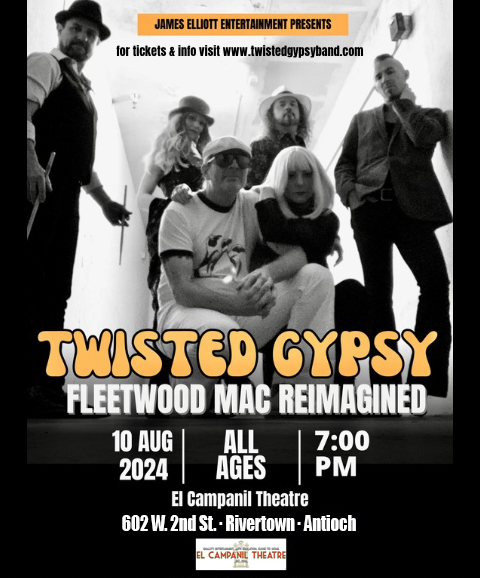
Fleetwood Mac tribute band Twisted Gypsy in Antioch Aug. 10

July 25, 2024 By Publisher Leave a Comment

Paid advertisement.

Tickets and information at www.twistedgypsyband.com.

Filed Under: Ads & Coupons, Arts & Entertainment, East County

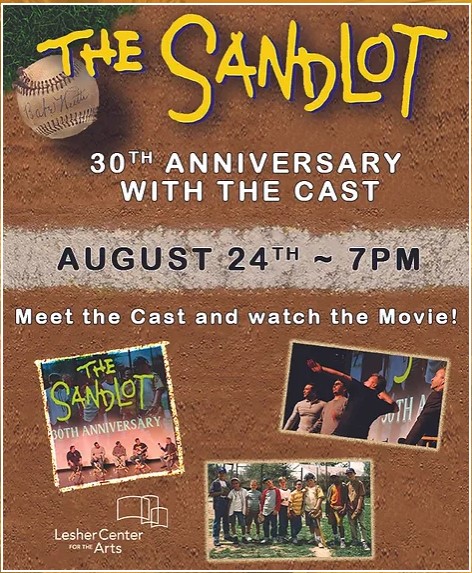
The Sandlot movie 30th Anniversary Tour coming to Walnut Creek Aug. 24

June 21, 2024 By Publisher Leave a Comment

See the film, hear from and meet the actors; tickets on sale July 26

Walnut Creek native, former Antioch resident is a producer of the tour

By Allen D. Payton

Cast members from the classic baseball movie “The Sandlot”, known to be one of the most famous of all time, are coming to Walnut Creek, California on Saturday, August 24th, 2024. 30 years after The Sandlot’s 1993 debut, a few of those former kids, now men in their 40s, are celebrating the film’s lasting power and its devoted fans.

Featuring Tom “smalls” Guiry, Chauncey “squints” Leopardi, Marty “yeah yeah” York, and possibly others of the original cast will be in person to watch the film that found its way into so many baseball fans’ hearts.

After the movie the cast will describe events and activities while on the set as well as tell anecdotes of their experiences, behind-the-scenes stories and why it is still a great memory to them. The audience will also be engaged in an interaction for a question-and-answer session with the cast members. VIP ticket holders will have the opportunity to meet personally with the cast members and get pictures and autographs with them.

Andrew Lenz, of NuWorlds Productions, is one of the producers of the Sandlot Anniversary Tour and is excited to bring it to his hometown area.

“I was born and grew up in Walnut Creek and Antioch so this area means a lot to me,” he said.

Lenz graduated from Las Lomas High School in 1984.

“My parents moved then to Antioch,” he shared. “I went to college at Diablo Valley and worked in San Francisco so at the time I had to drive to Concord to catch BART and then to Antioch every day for two years. So, I remember what it was like back then and how it has changed since!”

He was an actor and actually performed years ago in the same theater where this performance will be held.

“So, it is very nostalgic for me,” Lenz added.

About the tour, the St. Louis Post Dispatch wrote, “THANKS to the boys of summer – nine wonderful child actors – and a sweetly nostalgic story well told by writer-director David Mickey Evans, The Sandlot is a winner.”

The 30th Anniversary Tour lands at the Lesher Center for the Arts at 1601 Civic Drive in Walnut Creek and tickets go on sale to the public July 26th. Special Presale access available to those who sign up at: https://www.hollywoodonbroadway.com/sandlotwalnutcreek

Filed Under: Arts & Entertainment, Central County, News

Historic, refurbished Delta Theater reopens in downtown Brentwood

June 12, 2024 By Publisher Leave a Comment

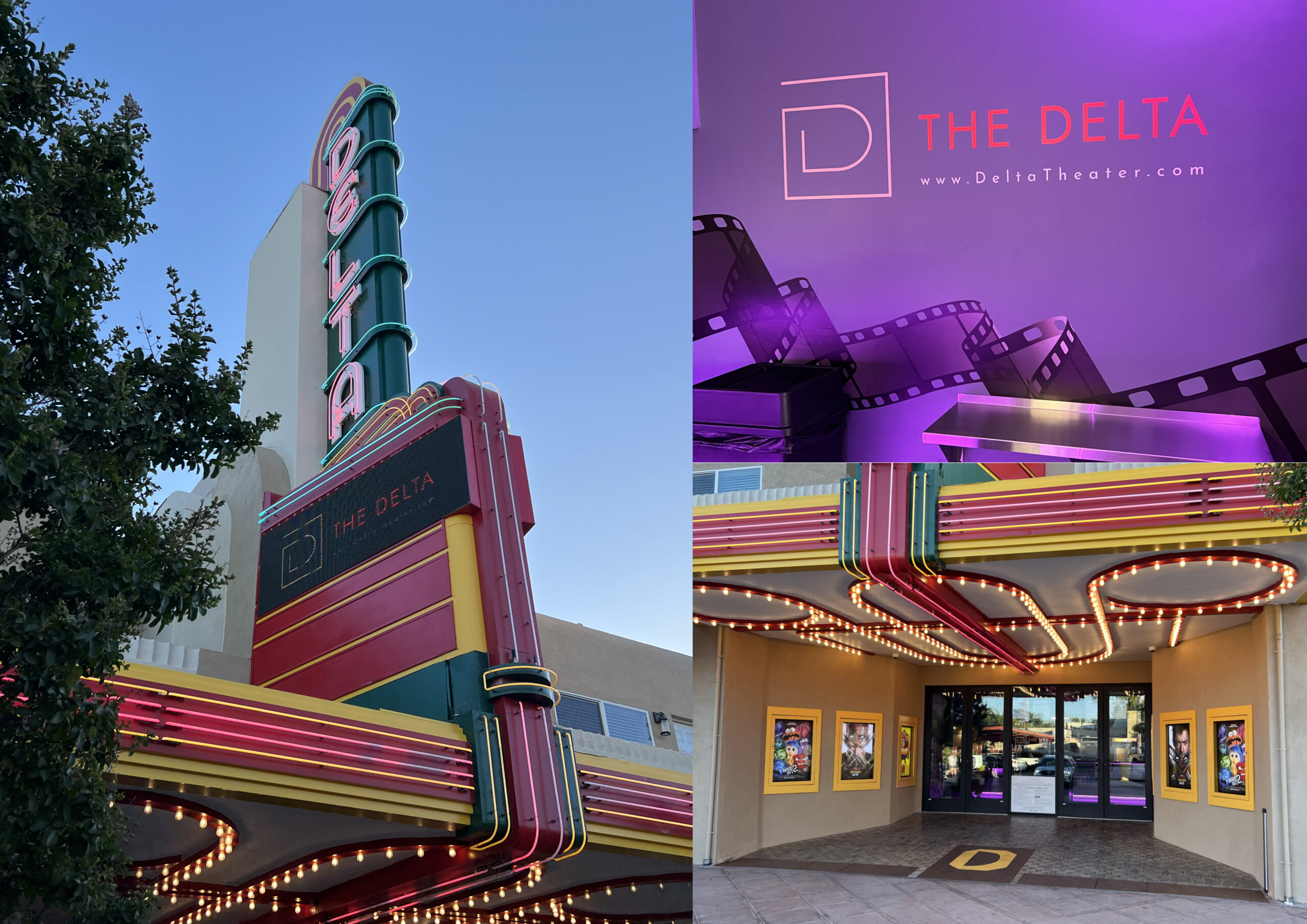
The historic marquee, outside entrance (bottom right) and inside entrance wall of the modernized Delta Theater in downtown Brentwood is open again as of Thursday, June 13, 2024, Photos by Allen D. Payton

Classic on the outside, modern on the inside

Another Sean McCauley success story in East County

By Allen D. Payton

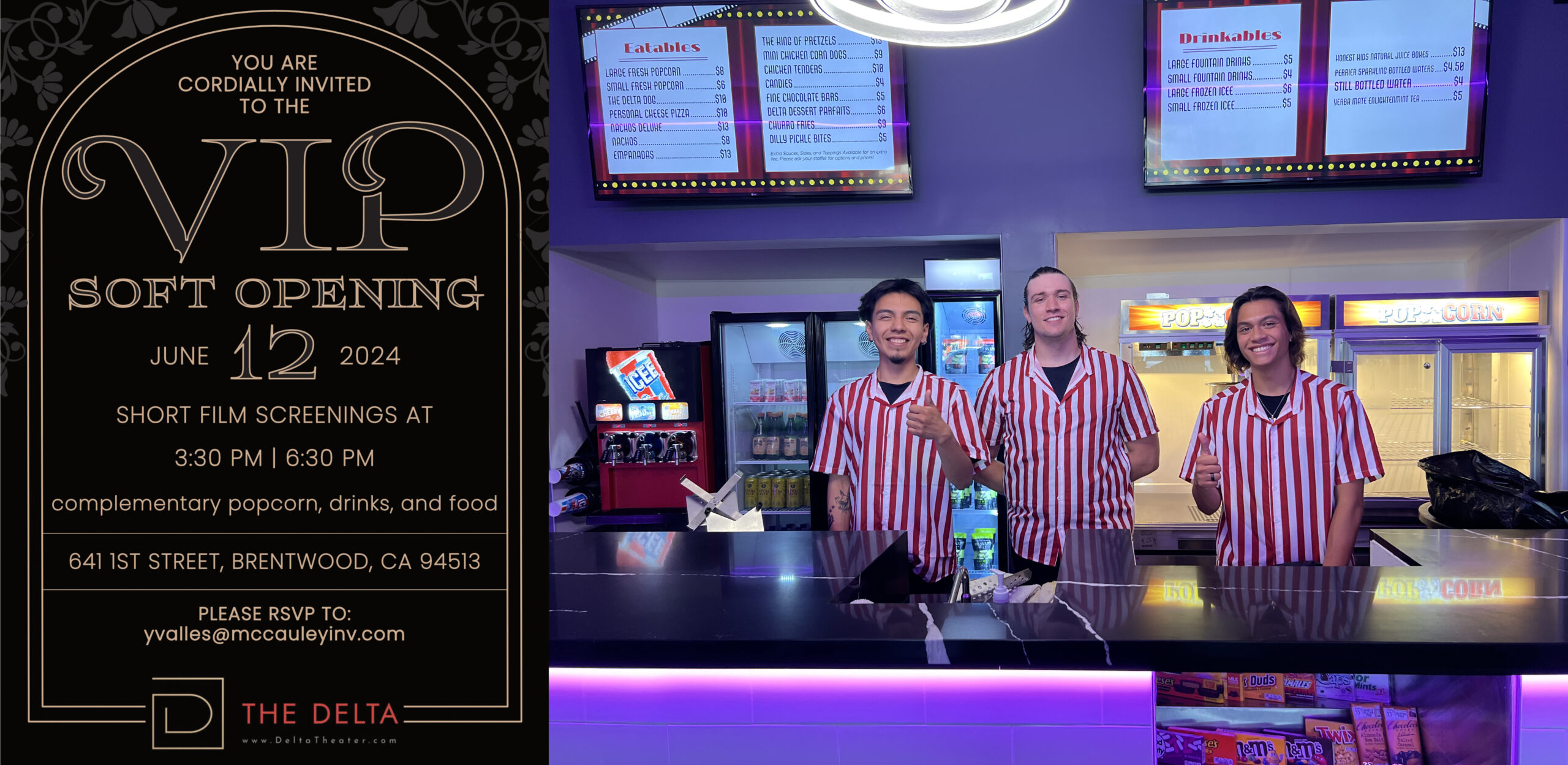
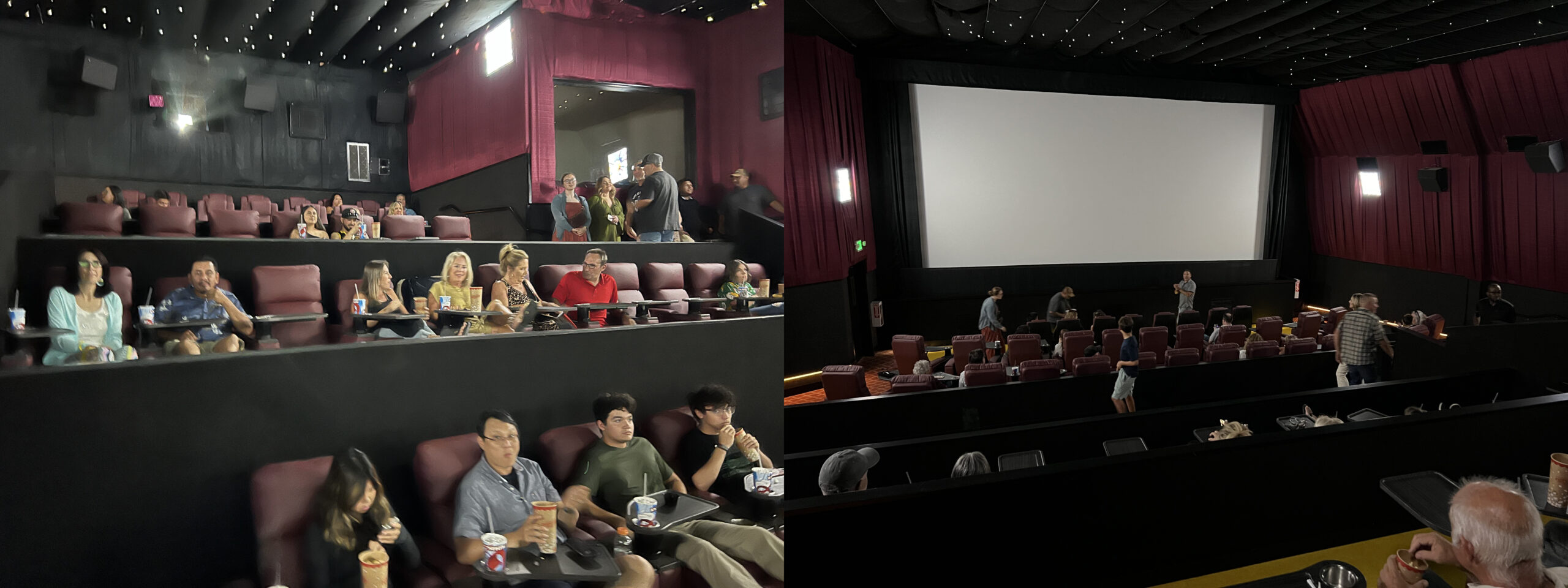
The long-awaited, refurbished Delta Theater is finally open in downtown Brentwood thanks to the efforts of owners Sean McCauley, Ron Harrison and Josh Cadle and their team, with the first showings on Thursday, June 13, 2024. They held two VIP Soft Openings on Wednesday night allowing family, friends and community leaders to enjoy a short film about Brentwood.

The VIP Soft Opening guests were served by the friendly Delta Theater concession stand workers.

The guests entered below the historic, colorfully lit marquee, and were treated to complementary popcorn, snacks and soft drinks. After they each found one of the modern, reclining seats with attached trays, but before showing the film, McCauley welcomed the audience saying, “We’re working through the bugs and we’re trying to get this right. So, we appreciate you guys being our Guinea pigs.”

“We have a really cool video we produced through Weblative about Brentwood,” he continued. “We’re really proud of our city and I think this video will really move everybody. We’re so happy to have you guys here. You guys are the first ones to view it besides the 3:30 VIP Soft Opening folks. Anyway, it’s fantastic. So, I hope you enjoy it.”

A Bit of History

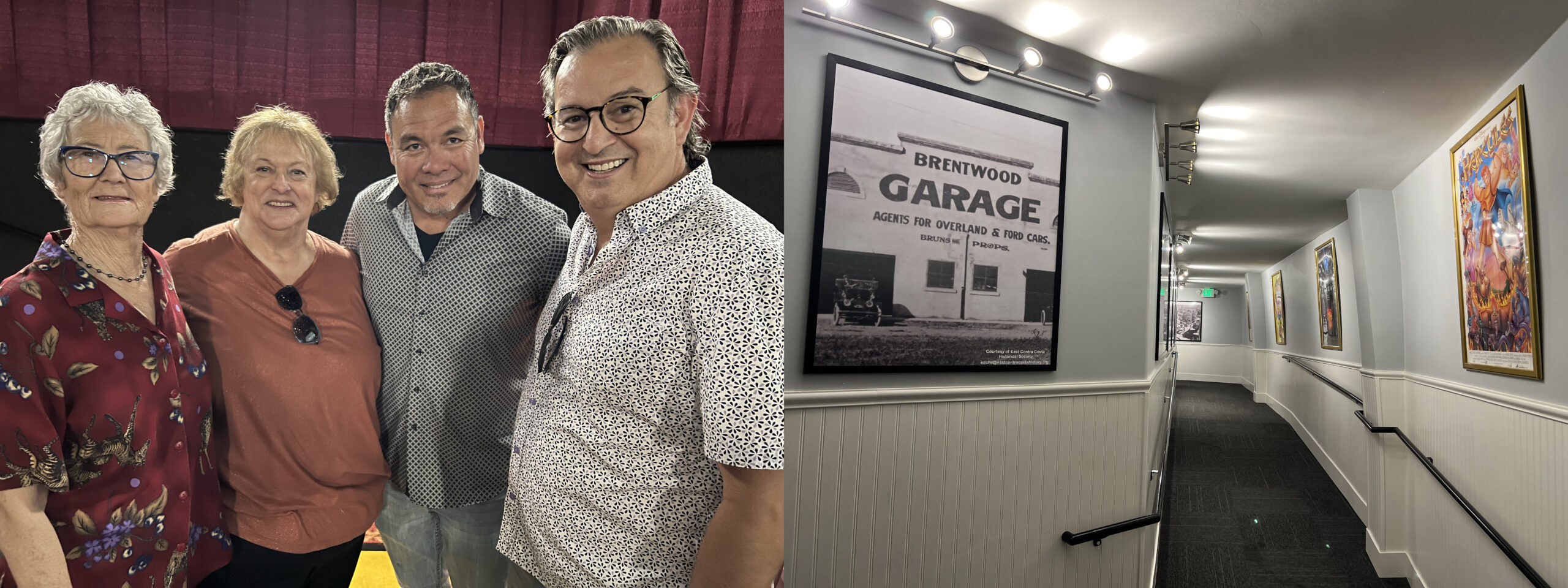
At the evening event, Doreen Pierce Forlow and her sister Lill Pierce were in attendance. Their parents, Clifford and Rose Pierce were the second owners of the theater from 1955 to 1969. Also, in attendance was Antioch dentist, Dr. Rigo Martin, a former employee at the theater during the 1970’s. He worked in the concession stand-candy counter “and did the cleaning,” Martin added.

The three shared some history of the theater and reminisced about their own experiences while growing up and working there.

Opened in 1938 with two screens, the original owner was a magician, Lill shared. He sold it to the Pierces in 1955. One of the theaters had (and still has) a stage which featured live “Mexican stage shows including top billed acts and traveling troops from Mexico,” Martin mentioned.

“They showed Mexican movies two days a week,” Doreen stated.

“Tuesday nights were Ladies Night and they got in for free because the movies changed on Wednesdays to Mexican films,” Lill explained. “There was a double feature every night with cartoons in between and they showed news reels, too.”

Sisters Doreen Pierce Forlow and Lill Pierce, Sean McCauley and Dr. Rigo Martin shared their varied experiences at the theater. The hallway displays historic photos of the theater and movie posters.

Doreen said she was eight years old when her parents bought the theaters.

“I watched every movie shown in the theater,” she added.

The sisters’ cousin, Johnny Giannini, bought it from their parents, Doreen said. “Then sold it around 1979,” Rigo stated. “Then it was purchased by Roberto Arteaga and family.”

“On Sundays, it was a packed house all day watching the Mexican movies,” he added.

“Some people would bring their folding chairs and sit in the aisles,” said Doreen with a chuckle.

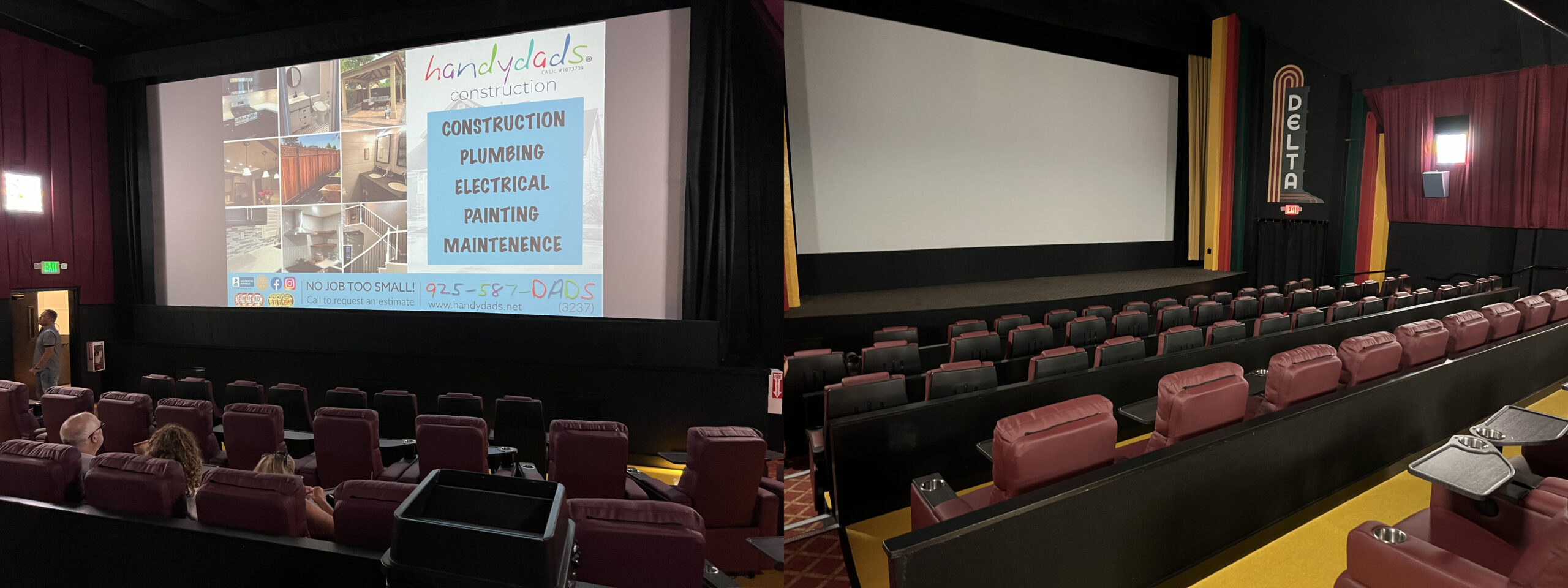
On-screen advertising is offered, and a second theater which includes screen and stage is available for rentals.

New Owners

McCauley and Harrison said they bought the building on First Street, which includes the theater, in 2019. Then COVID hit. They started refurbishing all three units which took them over four-and-a-half years.

“We’re glad it’s over,” McCauley said with a laugh. “Seriously, we look forward to serving the community.”

“And giving back,” Harrison added.

The third partner, Cadle is the General Manager.

“He’s a movie geek,” McCauley interjected.

“We’re so happy we’re finally to this point,” a clearly relieved Cadle stated.

“We have contracts with all the big companies: Warner Brothers, Disney, Universal, Paramount,” McCauley shared. “But we’ll also show local films, short films, hold corporate events and we have a stage for live performances.”

“The two theaters seat 200 total,” he added.

Delta Theater, located at 641 First Street in Brentwood, opens to the public on Thursday and will be “showing Inside Out 2 in both theaters. It’s a perfect movie to open with. It’s family friendly,” Cadle said. As of Wednesday night, they were almost sold out with only 11 tickets remaining for opening day.

For movie tickets visit DeltaTheater.com. For on-screen advertising or rentals for the theater with the stage and screen only, call (925) 634-1253.

The project is one of McCauley’s many success stories in and improvements to East County’s historic downtowns including in Antioch and Pittsburg, as well. To learn more about his other successful ventures visit the Sean McCauley Investments website.


Filed Under: Arts & Entertainment, Business, East County, History, News

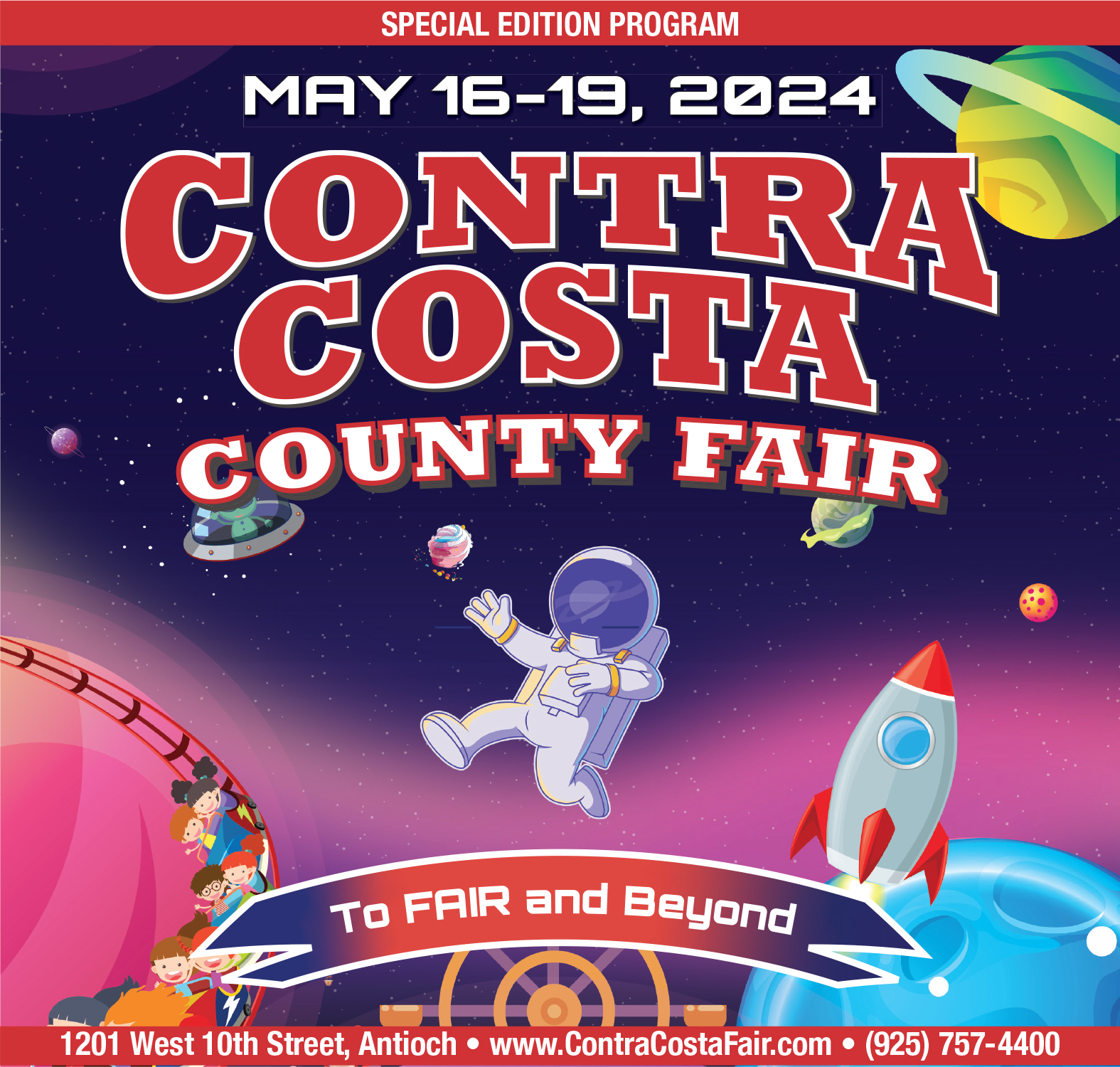
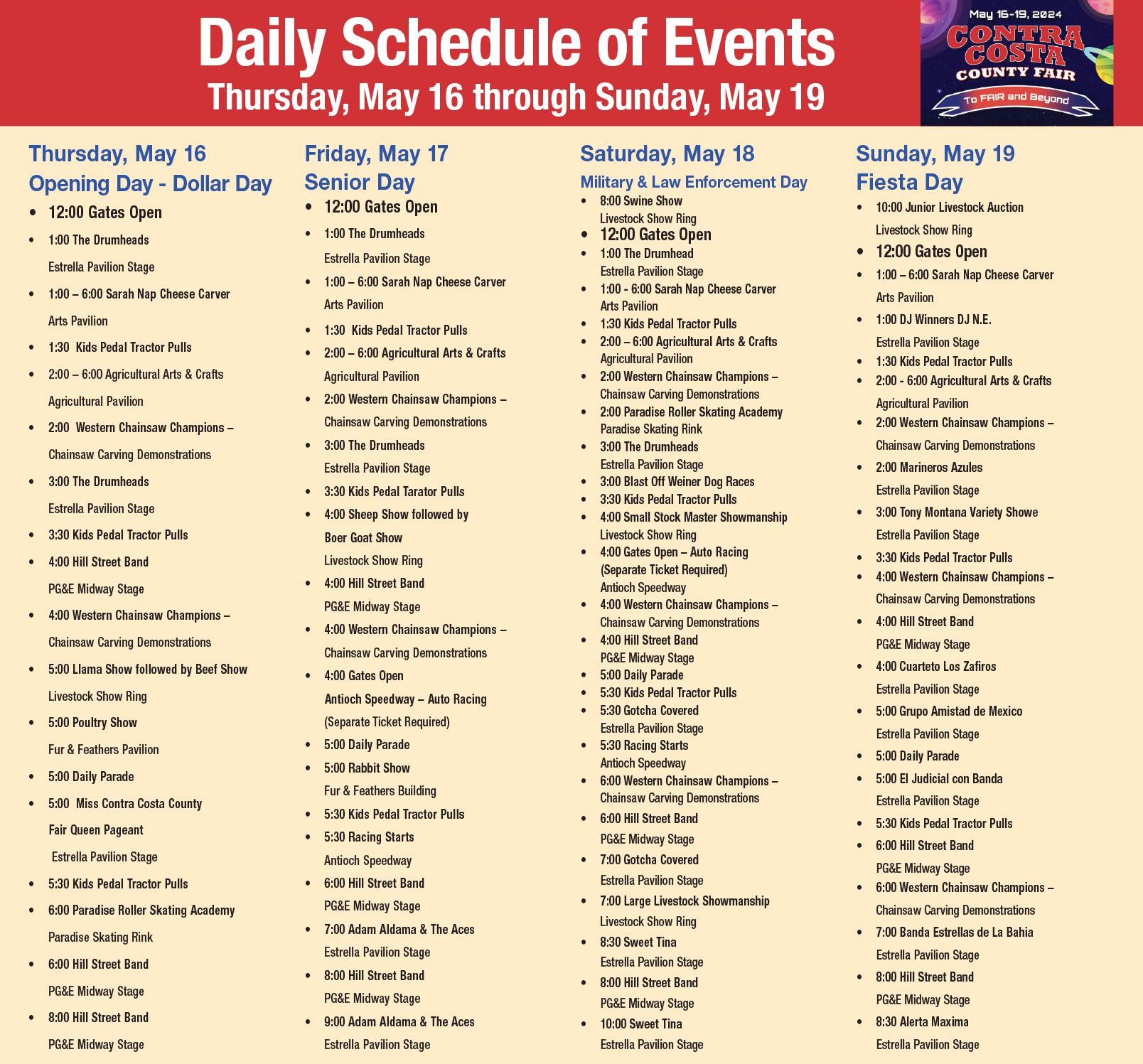
Enjoy the 2024 Contra Costa County Fair May 16-19

May 15, 2024 By Publisher Leave a Comment

Provided courtesy of The Press.

The Contra Costa County Fair will be held at the Contra Costa Event Park, 1201 W. 10th Street in Antioch.

For more information visit Contra Costa County Fair 2024 (contracostafair.com).

Filed Under: Animals & Pets, Arts & Entertainment, Community, East County, Fairs & Festivals

Maya Cinemas Pittsburg holds scholarship drive through April 15th

April 3, 2024 By Publisher Leave a Comment

Get free passes for donating to Maya Community Foundation

By Greg Heckman, Director of Marketing, Maya Cinemas

Maya Cinemas, known for developing movie theatres in underserved communities with state-of-the-art presentation, first-class amenities and community involvement, is offering free movies passes for donations to the Maya Community Foundation. Beginning on April 1st and running through April 15th, movie-goers can make a donation at any Maya Cinema and receive 1 free movie passes (valid 4/1/24 – 5/15/24) for every $10 they donate and 3 passes for every $25. One hundred percent of donations will be granted as college scholarships to members of the communities surrounding the theaters. Scholarship applications are live at wearemaya.org/scholarship-applications.html and will be open until May 30th.

The Maya Community Foundation is dedicated to the development and enrichment of the lives of people in the community in which Maya Cinemas’ theatres serve. The foundation is dedicated to fostering and supporting under-served, low-income communities through a variety of programs.

Donations can be made in-theatre at any of Maya’s six locations:

Pittsburg, CA – 4085 Century Boulevard

Salinas, CA – 153 Main Street

Delano, CA – 401 Woollomes Avenue

Fresno, CA – 3090 East Campus Pointe Drive

Bakersfield, CA – 1000 California Avenue

North Las Vegas, NV – 2195 North Las Vegas Blvd.

“Support of higher education is an important building block. The Maya Community Foundation and Maya Cinemas endeavors to enrich the community through several efforts with education being a primary focus.” said Heidi Garcia, Maya Community Foundation.

ABOUT MAYA CINEMAS

Maya Cinemas was chartered in 2000 with a mission to develop, build, own and operate modern, first-run, multi-plex movie theaters in underserved, family oriented, Latino-dominant communities.  Maya Cinemas offers first-run Hollywood movies and unique content through its Canal Maya program in high-end theaters focused on quality of design, state-of-the-art film presentation technology, and providing first-rate entertainment with superior customer service.  The Maya Community Foundation is dedicated to the development and enrichment of the lives of people in the community in which Maya Cinemas serve.

Filed Under: Arts & Entertainment, East County, Education

DeSaulnier announces 2024 Congressional Art Competition for high school students

February 20, 2024 By Publisher Leave a Comment

2022 District CA-11 Congressional Art Competition winner, “Growing Up” by Menglin Cai of Danville. Source: Office of Congressman Mark DeSaulnier (when he represented the 11th District)

Deadline for submittals is April 5th

Walnut Creek, CA – Today, Congressman Mark DeSaulnier (D, CA-10) announced he will participate in the nationwide 2024 Congressional Art Competition. High school artists living in California’s 10th Congressional District may begin submitting original artwork to his office virtually from now through Friday, April 5th. The winning piece will be selected by a panel of local judges who will view all artwork electronically and announced at a reception to celebrate all participants following the submission deadline.

Participants may submit one photograph or scan of their artwork, taken in the highest possible resolution, to kaylee.deland@mail.house.gov. Submissions must include the Student Release Form. Artwork entered in the contest may be up to 26 inches by 26 inches, may be up to 4 inches in depth, and not weigh more than 15 pounds. If your artwork is selected as the winning piece, it must arrive framed and must still measure no larger than the above maximum dimensions.

  • Paintings – including oil, acrylics, and watercolor
  • Drawings – including pastels, colored pencil, pencil, charcoal, ink, and markers (It is recommended that charcoal and pastel drawings be fixed.)
  • Collages – must be two dimensional
  • Prints – including lithographs, silkscreen, and block prints
  • Mixed Media – use of more than two mediums such as pencil, ink, watercolor, etc.
  • Computer-generated art
  • Photography

All entries must be original in concept, design and execution and may not violate any U.S. copyright laws. Any entry that has been copied from an existing photo or image (including a painting, graphic, or advertisement) that was created by someone other than the student is a violation of the competition rules and will not be accepted. Work entered must be in the original medium (that is, not a scanned reproduction of a painting or drawing).

The rules for the 2024 competition are available here or on House.gov.

“Every year I am so impressed by the talent of the students in our district who participate in the Congressional Art Competition,” said DeSaulnier. “I am pleased to again host this event as an opportunity for young artists to showcase and be recognized for their creativity.”

The competition is open to all high school students living in California’s 10th Congressional District. The winning piece will be displayed in the U.S. Capitol and the winner will be invited to Washington D.C. to attend a national reception honoring winners from around the country. All submissions must be emailed to Kaylee.deland@mail.house.gov no later than 5:00 p.m. PT on April 5, 2024.

The Congressional Art Competition is a nationwide high school visual art competition to recognize and encourage artistic talent in the nation and in each congressional district. Since the Competition began in 1982, more than 650,000 high school students have participated. Complete contest guidelines and submissions forms are available on the Congressman’s website here. For more information or help submitting artwork, please contact DeSaulnier’s office at 925-933-2660.

Filed Under: Arts & Entertainment, Education, Government, News, Youth

The history of Black History Month and 2024 theme: African Americans and the Arts

February 5, 2024 By Publisher Leave a Comment

ASALH – The Founders of Black History Month

From Association for the Study of African American Life and History (ASALH)

The story of Black History Month begins in Chicago during the summer of 1915. An alumnus of the University of Chicago with many friends in the city, Carter G. Woodson traveled from Washington, D.C. to participate in a national celebration of the fiftieth anniversary of emancipation sponsored by the state of Illinois. Thousands of African Americans travelled from across the country to see exhibits highlighting the progress their people had made since the destruction of slavery. Awarded a doctorate in Harvard three years earlier, Woodson joined the other exhibitors with a black history display.

Despite being held at the Coliseum, the site of the 1912 Republican convention, an overflow crowd of six to twelve thousand waited outside for their turn to view the exhibits. Inspired by the three-week celebration, Woodson decided to form an organization to promote the scientific study of black life and history before leaving town. On September 9th, Woodson met at the Wabash YMCA with A. L. Jackson and three others and formed the Association for the Study of Negro Life and History (ASNLH).

When Woodson established Negro History week in 1926, he realized the importance of providing a theme to focus the attention of the public. The intention has never been to dictate or limit the exploration of the Black experience, but to bring to the public’s attention important developments that merit emphasis.

He hoped that others would popularize the findings that he and other black intellectuals would publish in The Journal of Negro History, which he established in 1916. As early as 1920, Woodson urged black civic organizations to promote the achievements that researchers were uncovering. A graduate member of Omega Psi Phi, he urged his fraternity brothers to take up the work. In 1924, they responded with the creation of Negro History and Literature Week, which they renamed Negro Achievement Week. Their outreach was significant, but Woodson desired greater impact. As he told an audience of Hampton Institute students, “We are going back to that beautiful history, and it is going to inspire us to greater achievements.” In 1925, he decided that the Association had to shoulder the responsibility. Going forward it would both create and popularize knowledge about the black past. He sent out a press release announcing Negro History Week in February 1926.

Woodson chose February for reasons of tradition and reform. It is commonly said that Woodson selected February to encompass the birthdays of two great Americans who played a prominent role in shaping black history, namely Abraham Lincoln and Frederick Douglass, whose birthdays are the 12th and the 14th, respectively. More importantly, he chose them for reasons of tradition. Since Lincoln’s assassination in 1865, the black community, along with other Republicans, had been celebrating the fallen President’s birthday. And since the late 1890s, black communities across the country had been celebrating Douglass’. Well aware of the pre-existing celebrations, Woodson built Negro History Week around traditional days of commemorating the black past. He was asking the public to extend their study of black history, not to create a new tradition. In doing so, he increased his chances for success.

Yet Woodson was up to something more than building on tradition. Without saying so, he aimed to reform it from the study of two great men to a great race. Though he admired both men, Woodson had never been fond of the celebrations held in their honor. He railed against the “ignorant spellbinders” who addressed large, convivial gatherings and displayed their lack of knowledge about the men and their contributions to history. More importantly, Woodson believed that history was made by the people, not simply or primarily by great men. He envisioned the study and celebration of the Negro as a race, not simply as the producers of a great man. And Lincoln, however great, had not freed the slaves—the Union Army, including hundreds of thousands of black soldiers and sailors, had done that. Rather than focusing on two men, the black community, he believed, should focus on the countless black men and women who had contributed to the advance of human civilization.

From the beginning, Woodson was overwhelmed by the response to his call. Negro History Week appeared across the country in schools and before the public. The 1920s was the decade of the New Negro, a name given to the Post-War I generation because of its rising racial pride and consciousness. Urbanization and industrialization had brought over a million African Americans from the rural South into big cities of the nation. The expanding black middle class became participants in and consumers of black literature and culture. Black history clubs sprang up, teachers demanded materials to instruct their pupils, and progressive whites stepped and endorsed the efforts.

Woodson and the Association scrambled to meet the demand. They set a theme for the annual celebration, and provided study materials—pictures, lessons for teachers, plays for historical performances, and posters of important dates and people. Provisioned with a steady flow of knowledge, high schools in progressive communities formed Negro History Clubs. To serve the desire of history buffs to participate in the re-education of black folks and the nation, ASNLH formed branches that stretched from coast to coast. In 1937, at the urging of Mary McLeod Bethune, Woodson established the Negro History Bulletin, which focused on the annual theme. As black populations grew, mayors issued Negro History Week proclamations, and in cities like Syracuse progressive whites joined Negro History Week with National Brotherhood Week.

Like most ideas that resonate with the spirit of the times, Negro History Week proved to be more dynamic than Woodson or the Association could control. By the 1930s, Woodson complained about the intellectual charlatans, black and white, popping up everywhere seeking to take advantage of the public interest in black history. He warned teachers not to invite speakers who had less knowledge than the students themselves. Increasingly publishing houses that had previously ignored black topics and authors rushed to put books on the market and in the schools. Instant experts appeared everywhere, and non-scholarly works appeared from “mushroom presses.” In America, nothing popular escapes either commercialization or eventual trivialization, and so Woodson, the constant reformer, had his hands full in promoting celebrations worthy of the people who had made the history.

Source: ASALH

Well before his death in 1950, Woodson believed that the weekly celebrations—not the study or celebration of black history–would eventually come to an end. In fact, Woodson never viewed black history as a one-week affair. He pressed for schools to use Negro History Week to demonstrate what students learned all year. In the same vein, he established a black studies extension program to reach adults throughout the year. It was in this sense that blacks would learn of their past on a daily basis that he looked forward to the time when an annual celebration would no longer be necessary. Generations before Morgan Freeman and other advocates of all-year commemorations, Woodson believed that black history was too important to America and the world to be crammed into a limited time frame. He spoke of a shift from Negro History Week to Negro History Year.

In the 1940s, efforts began slowly within the black community to expand the study of black history in the schools and black history celebrations before the public. In the South, black teachers often taught Negro History as a supplement to United States history. One early beneficiary of the movement reported that his teacher would hide Woodson’s textbook beneath his desk to avoid drawing the wrath of the principal. During the Civil Rights Movement in the South, the Freedom Schools incorporated black history into the curriculum to advance social change. The Negro History movement was an intellectual insurgency that was part of every larger effort to transform race relations.

The 1960s had a dramatic effect on the study and celebration of black history. Before the decade was over, Negro History Week would be well on its way to becoming Black History Month. The shift to a month-long celebration began even before Dr. Woodson death. As early as 1940s, blacks in West Virginia, a state where Woodson often spoke, began to celebrate February as Negro History Month. In Chicago, a now forgotten cultural activist, Fredrick H. Hammaurabi, started celebrating Negro History Month in the mid-1960s. Having taken an African name in the 1930s, Hammaurabi used his cultural center, the House of Knowledge, to fuse African consciousness with the study of the black past. By the late 1960s, as young blacks on college campuses became increasingly conscious of links with Africa, Black History Month replaced Negro History Week at a quickening pace. Within the Association, younger intellectuals, part of the awakening, prodded Woodson’s organization to change with the times. They succeeded. In 1976, fifty years after the first celebration, the Association used its influence to institutionalize the shifts from a week to a month and from Negro history to black history. Since the mid-1970s, every American president, Democrat and Republican, has issued proclamations endorsing the Association’s annual theme.

What Carter G. Woodson would say about the continued celebrations is unknown, but he would smile on all honest efforts to make black history a field of serious study and provide the public with thoughtful celebrations.

Daryl Michael Scott, ASALH Former National President

Read more about the origins of Black History Month.

Learn about and watch the 2024 Black History Month Virtual Festival – ASALH.

Annual Themes

For those interested in the study of identity and ideology, an exploration of ASALH’s Black History themes is itself instructive. Over the years, the themes reflect changes in how people of African descent in the United States have viewed themselves, the influence of social movements on racial ideologies, and the aspirations of the Black community.

The changes notwithstanding, the list reveals an overarching continuity in ASALH – our dedication to exploring historical issues of importance to people of African descent and race relations in America.

2024 Theme

African American art is infused with African, Caribbean, and the Black American lived experiences. In the fields of visual and performing arts, literature, fashion, folklore, language, film, music, architecture, culinary and other forms of cultural expression, the African American influence has been paramount. African American artists have used art to preserve history and community memory as well as for empowerment. Artistic and cultural movements such as the New Negro, Black Arts, Black Renaissance, hip-hop and Afrofuturism, have been led by people of African descent and set the standard for popular trends around the world. In 2024, we examine the varied history and life of African American arts and artisans.

For centuries Western intellectuals denied or minimized the contributions of people of African descent to the arts as well as history, even as their artistry in many genres was mimicked and/or stolen. However, we can still see the unbroken chain of Black art production from antiquity to the present, from Egypt across Africa, from Europe to the New World. Prior to the American Revolution, enslaved Africans of the Lowcountry began their more than a 300-year tradition of making sweetgrass baskets, revealing their visual artistry via craft.

The suffering of those in bondage gave birth to the spirituals, the nation’s first contribution to music. Blues musicians such as Robert Johnson, McKinley ‘Muddy Waters’ Morganfield and Riley “BB” B. King created and nurtured a style of music that became the bedrock for gospel, soul, and other still popular (and evolving) forms of music. Black contributions to literature include works by poets like Phillis Wheatley, essays, autobiographies, and novels by writers such as David Walker and Maria Stewart. Black aesthetics have also been manifested through sculptors like Edmonia Lewis and painters like Henry O. Tanner.

In the 1920s and 30s, the rise of the Black Renaissance and New Negro Movement brought the Black Arts to an international stage. Members of the armed forces, such as James Reese Europe, and artists such as Langston Hughes, Josephine Baker and Lois Mailou Jones brought Black culture and Black American aesthetics internationally, and Black culture began its ascent to becoming a dominant cultural movement to the world. In addition to the Harlem Renaissance, today we recognize that cities like Los Angeles, Chicago, and New Orleans also were home to many Black artists.

The 1960s continued this thread through the cultural evolution known as the Black Arts Movement, where artists covered issues such as pride in one’s heritage and established art galleries and museum exhibitions to show their own work, as well as publications such as Black Art. This period brought us artists such as Alvin Ailey, Judith Jamison, Amiri Baraka, Nikki Giovanni and Sonia Sanchez. The movement would not have been as impactful without the influences from the broader Black world, especially the Negritude movement and the writings of Frantz Fanon.

In 1973, in the Bronx, New York Black musicians (i.e. DJ Kool Herc and Coke La Rock) started a new genre of music called hip-hop, which comprises five foundational elements (DJing, MCing, Graffiti, Break Dancing and Beat Boxing). Hip-hop performers also used technological equipment such as turntables, synthesizers, drum machines, and samplers to make their songs. Since then, hip-hop has continued to be a pivotal force in political, social, and cultural spaces and was a medium where issues such as racial violence in the inner city, sexism, economic disinvestment and others took the forefront.

The term Afrofuturism was used approximately 30 years ago in an effort to define cultural and artistic productions (music, literature, visual arts, etc.) that imagine a future for Black people without oppressive systems and examines how Black history and knowledge intersects with technology and science. Afrofuturist elements can be found in the music of Sun Ra, Rashan Roland Kirk, Janelle Monáe and Jimi Hendrix. Other examples include sci-fi writer Octavia Butler’s novels, Marvel film Black Panther, and artists such as British-Liberian painter Lina Iris Viktor, Kenyan-born sculptor Wangechi Mutu, and Caribbean writers and artists such as Nalo Hopkinson, and Grace Jones.

In celebrating the entire history of African Americans and the arts, the Association for the Study of African American Life and History (ASALH) puts into the national spotlight the richness of the past and present with an eye towards what the rest of the twenty-first century will bring. ASALH dedicates its 98th Annual Black History Theme to African Americans and the arts.

Filed Under: Arts & Entertainment, History, News, People

  • « Previous Page
  • 1
  • …
  • 4
  • 5
  • 6
  • 7
  • 8
  • …
  • 21
  • Next Page »
The Lemon Tree generic
RepublicServices-Antioch-ad (1)
Furn-Clrnc-Outlet-06-26B web
Monica's dinner 05-26 CCH
Celia's-07-26
Delta-RC-B 07-26
Deer-Valley-Chiro-06-22

Copyright © 2026 · · Contra Costa Herald · All Rights Reserved