• Home
  • About The Herald
  • Local Agencies
  • Daily Email Update
  • Legal Notices
  • Classified Ads

Contra Costa Herald

News Of By and For The People of Contra Costa County, California

  • Arts & Entertainment
  • Business
  • Community
  • Crime
  • Dining
  • Education
  • Faith
  • Health
  • News
  • Politics & Elections
  • Real Estate

Setting aside local control, legislation would mandate how to teach reading in California

February 8, 2024 By Publisher Leave a Comment

Pointing to dismal test scores, veteran lawmaker and a coalition of advocacy groups introduce AB 2222

By John Fensterwald, EdSource.org – Republished with permission

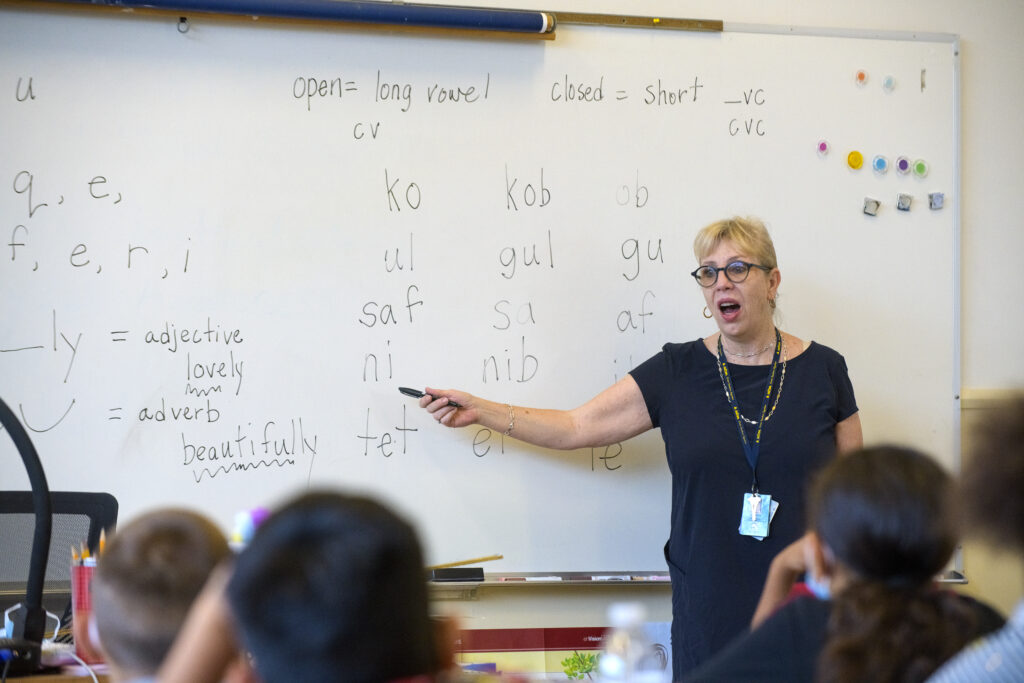
A veteran legislator who taught elementary school for 16 years introduced comprehensive early-literacy legislation Wednesday that would impose requirements on reading instruction and add urgency to the state’s patchwork of reading reforms.

Evidence-based practices, collectively known as “the science of reading,” would become the mandated approach to reading instruction for TK-5, if Assembly Bill 2222, authored by Assemblymember Blanca Rubio, D-Baldwin Park, becomes law.

The bill would shift the state’s decade-old policy of encouraging districts to incorporate fundamental reading skills in the early grades, including phonics, to demanding that they do so. This would depart from the state policy of giving school districts discretion to choose curriculums and teaching methods that meet state academic standards.

Between now and 2028, all TK to fifth-grade teachers, literacy coaches and specialists would be required to take a 30-hour-minium course in reading instruction from an approved list.

School districts and charter schools purchasing textbooks would select from approved materials endorsed by the State Board of Education in a new round of textbook adoption.

The California Commission on Teacher Credentialing would receive money to add several experts for accreditation of teacher preparation programs in the science of reading. The bill would strengthen accountability for those programs that have not taught effective reading strategies, as required under recent state law.

Rubio and the advocacy nonprofits EdVoice,  Decoding Dyslexia CA, and Families in Schools, the bill’s co-sponsors, argue that another generation of California children cannot wait for districts teaching ineffective techniques using inadequate materials to come around.

“California is facing a literacy crisis,” the first sentence of the bill states. “There are far too many children who are not reading on grade level by the end of third grade and who will not complete elementary school with the literacy skills and language development they need to be successful academically in middle school and high school.”

Only 43% of California third graders met the academic standards in the state’s standardized test in 2023. Only 27.2% of Black students, 32% of Hispanic students, and 35% of low-income children were proficient, compared with 57.5% of white, 69% of Asian and 66% of non-low-income students.

“There’s always this delicate balance between local control versus let’s move forward collectively,” said Marshall Tuck, CEO of EdVoice and former candidate for State Superintendent of Public Instruction. “But when we have an issue that the vast majority of lower-income kids, who are disproportionately Black and Latino, are not reading at grade level, it requires urgency to do what we know works as fast as possible.”

Rubio, who recalled being handed coloring books instead of reading lessons in first grade as a non-English-speaking Mexican immigrant, said that data on the effectiveness of the science of reading convinced her to author the bill. However, her own experience as a fourth-grade teacher who previously taught kindergarten and first grade reinforced it.

“When I have fourth graders that are at first- or second-grade reading, something’s wrong. I can tell you right then and there, if a kid doesn’t know phonics in the fourth grade, we screwed them up somewhere. If they’re not reading in the third grade, they may never recover,” said Rubio, who was first elected to the Assembly in 2016.

A piecemeal approach to literacy changes

The science of reading refers to research from neurology, psychology, and the cognitive and developmental sciences about how children learn to read. In the last decade, 47 states and Washington, D.C., have enacted laws to incorporate elements of the science of reading strategies. Fewer — Mississippi, Connecticut, Tennessee, and Virginia among them — have adopted and funded policies that coordinate multiple key elements: preparing and training teachers, supplying them with aligned instructional materials, testing for learning difficulties like dyslexia and engaging parents.

California is among the 47 states. Within the past three years, Gov. Gavin Newsom and the Legislature enacted discrete pieces of a state policy.

They funded $25 million to the University of California San Francisco to create a screening test for the risk of dyslexia and other learning difficulties; universal screening of K-2 students will begin in 2026-27.

They passed legislation to create a teaching credential for TK-3 that includes new literacy standards grounded in the science of reading; teacher preparation programs must introduce them starting next fall, and teachers will take a performance assessment as part of their new credential.

Newsom included $500 million in the last two state budgets for hiring and training of literacy coaches in the 5% of schools with the most low-income students. The Sacramento and Napa county offices of education, strong advocates of the science of reading, are overseeing the effort.

At the encouragement of State Board of Education President Linda Darling-Hammond, a professor emerita at the Stanford University School of Education, Newsom included $1 million in the current budget for a “literacy road map,” which will serve as a guide, with online resources, for districts to implement evidence-based reading strategies. Leading that effort are two respected literacy experts, Bonnie Garcia and Nancy Brynelson, whom State Superintendent of Public Instruction Tony Thurmond named the state’s first state literacy co-directors.

Tuck credits the steps taken by the Legislature and Newsom, “who has been an anchor on early education.” But guidelines won’t ensure that students in all districts will receive effective reading instruction —especially high-poverty schools that may be “slower to make adjustments when they’re dealing with so many challenges and so much complexity.”

Megan Potente, co-state director of Decoding Dyslexia CA, points to her 20 years as a teacher, who, as a new teacher frustrated by the ineffectiveness of her reading training, took a course on phonics and fundamental reading skills. “You feel like you’re not good at your job, and you weren’t equipped. And that’s a terrible feeling for new teachers,” she said. “So I went back to school, and I learned what I needed.”

Years later, she became a coach, supporting teachers in districts using balanced literacy that de-emphasizes evidence-based practices. She found it difficult to apply what she knew, she said, “because the curriculum materials didn’t follow the science; the teaching methods didn’t follow the science.”

A piecemeal approach to reading reforms inevitably leads to a game of “whack-a-mole,” former Tennessee Education Commissioner Penny Schwinn, who is credited with implementing successful comprehensive policies in her state during the pandemic, told EdSource.

Newsom did not require nor explicitly encourage districts to use the $20-plus billion they received in federal and state Covid-relief funding on teaching training in the science of reading nor on updating reading texts and materials. Now that the state is heading into a lean budget year, a scarcity of funding, particularly for teacher training, could set back a timeline to implement the bill. Newsom’s proposed budget for 2024-25 includes no significant money for new TK-12 programs.

A spokesperson for the Newsom administration, which usually declines to discuss pending legislation, offered no further comment.

What’s in Assembly Bill 2222

AB 2222 would define evidence-based literacy instruction as “evidence-based explicit and systematic instruction in phonological and phonemic awareness, phonics, vocabulary and oral language development, fluency, comprehension, and writing …  that adheres to the science of reading.” (Phonics are rules that relate letters in words to the sounds of spoken language. A phoneme is the smallest element of a sound within spoken language. Phonemic awareness reflects the ability to understand that words combine multiple phonemes when pronounced.)

The bill sets requirements for three principal elements of literacy instruction:

Teacher training

Starting in March 2026 and no later than June 30, 2028, all teachers in grades TK to 5 must complete an approved professional development and training program satisfactorily. The California Department of Education would appoint one or more county offices of education with expertise in the science of reading and evidence-based literacy instruction to serve as the state literacy expert lead that would select the list of eligible training programs. Districts would have to notify parents if fewer than 90% of the required teachers failed to complete the course.

Instructional materials

The last state textbook adoption for English language arts and English language development was 2015. The bill would require the State Board of Education to complete the next adoption cycle by Jan. 1, 2026, for TK through eighth grade. The materials would have to adhere to the science of reading. School districts would not be required to replace materials they’re currently using, but they would need a waiver to buy basic instructional materials that aren’t approved.

Textbooks like “Units of Study,” by noted literacy author Lucy Calkins, whose instruction relies on visual cues, including the three-cuing method of reading, would not be eligible for the approved list.

Teacher preparation

The bill would strengthen the accountability requirements of landmark Senate Bill 488, the 2023 law that requires instructing candidates for a TK-5 or elementary credential in evidence-based reading instruction.

It would require the Commission on Teacher Credentialing to establish a probationary accreditation process for teacher prep programs that aren’t meeting the literacy instruction requirements. Faculty in those programs would have to complete professional development in the science of reading for the program to avoid a loss of accreditation.

The bill would provide funding for the credentialing commission to hire experts in the science of reading to help with program accreditation. One of the dozen members of the Committee of Accreditation would have to be an expert in the science of reading.


Filed Under: Education, Legislation, News, State of California

BBB Tip: Scammer or soulmate? How to avoid online romance scams 

February 8, 2024 By Publisher Leave a Comment

Source: BBB

Just in time for Valentine’s Day! “Looking for love in all the wrong places?”

Many have turned to online dating and social media throughout the last couple of years. New apps have been developed, and some social media platforms have even created ways to find your better half online. Unfortunately, these platforms have not only made it easier than ever to meet new people and find dates but have also made it easier to be scammed as well. Con artists create compelling backstories and full-fledged identities, then trick you into falling for someone who doesn’t exist. This form of deception is known as “catfishing”. Better Business Bureau (BBB) has witnessed a growth in romance scams in recent years. With Valentine’s Day around the corner BBB encourages those looking for love to be wary of fraudsters. Don’t let your quest for love blind you to the realities of romance scams.

How the scam works:

Most romance scams start with fake profiles on online dating sites created by stealing photos and text from real accounts or elsewhere. Scammers often claim to be in the military or working overseas to explain why they can’t meet you in person. Over a short period of time, the scammer builds a fake relationship with you, exchanging photos and romantic messages, even talking on the phone or through a webcam.

Just when the relationship seems to be getting serious, your new sweetheart has a health issue or family emergency or wants to plan a visit. No matter the story, the request is the same: they need money. But after you send money, there’s another request, and then another. Or the scammer stops communicating altogether.

Tips to spot this scam:

  • Too hot to be true.Scammers offer up good-looking photos and tales of financial success.
  • In a hurry to get off the site.Catfishers will try very quickly to get you to move to communicate through email, messenger, or phone.
  • Moving fast.A catfisher will begin speaking of a future together and tell you they love you quickly. They often say they’ve never felt this way before.
  • Talk about trust.Catfishers will start manipulating you with talk about trust and its importance. This will often be the first step to asking you for money.
  • Don’t want to meet.Be wary of someone who always has an excuse to postpone a meeting because they say they are traveling or live overseas or are in the military.
  • Suspect language.If the person you are communicating with claims to be from your hometown but has poor spelling or grammar, uses overly flowery language or uses phrases that don’t make sense, that’s a red flag.
  • Hard luck stories. Before moving on to asking you for money, the scammer may hint at financial troubles like heat being cut off or a stolen car, or a sick relative, or they may share a sad story from their past (death of parents or spouse, etc.).

Protect yourself from this scam:

  • Never send money or personal information that can be used for identity theft to someone you’ve never met in person.
  • Ask specific questions about details given in a profile.
  • Do your research. Many scammers steal photos from the web to use in their profiles. You can do a reverse image lookup using a website like comor images.google.com to see if the photos on a profile are stolen from somewhere else.

To report a scam, go to BBB Scam Tracker.

Check out our romance scam resource page at BBB.org/romance.

ABOUT BBB: The Better Business Bureau has empowered people to find businesses, brands, and charities they can trust for over 110 years. In 2022, people turned to BBB more than 250 million times for BBB Business Profiles on more than 5.3 million businesses and Charity Reports on about 12,000 charities, all available for free at BBB.org. The International Association of Better Business Bureaus is the umbrella organization for the local, independent BBBs in the United States, Canada, and Mexico.


Filed Under: Holiday, News

Ballots are on the way to Contra Costa residents for March 5th primary

February 8, 2024 By Publisher Leave a Comment

Voting in person and by mail has begun; public test of county’s Vote By Mail counting equipment Friday, Feb. 9

Across the Bay Area, elections officials have dropped ballots in the mail and those ballots will be arriving in mailboxes this week.  Bay Area Elections Officials encourage you to vote early!

Bay Area Residents should note that if they do not receive the ballot they were expecting, they can contact their local Registrar’s office to find out more about receiving the ballot they wish to vote.

All eligible California voters will receive a ballot in the mail for the March 5, 2024 Presidential Primary Election. Remember that Bay Area residents have many options to cast their ballot.

  • You can vote in person from February 5th through March 5th.
  • Mail your completed ballot to your Elections office in your postage paid return envelope.
  • Drop your completed ballot in the return envelope in an official ballot drop box.
  • You can even register and vote on the same day.

Don’t forget to sign your envelope!

Contra Costa County Registrar of Voters Kristen Connelly wants you to know, “we are here to help you understand the process and ensure that you cast your vote and that it is counted.”

Voters who vote by mail can track their VBM ballot to know when it is mailed, received, and processed by the county elections office. Sign up at the Secretary of State’s office (https://wheresmyballot.sos.ca.gov). See the attached graphic to better understand what the vote by mail process looks like.

Information on this topic as well as direct links to local elections offices can be found on our website, BayAreaVotes.org, or our Facebook page, Bay Area Votes. For more local information, go to your local county election official, who is your trusted source of nonpartisan election information.

Ballots lined up to be counted in the County Elections office on Tuesday, November 15, 2016. Herald file photo

Contra Costa Election Equipment Testing to Ensure Accuracy, Friday, Feb. 9

The March 5, 2024 Presidential Primary Election is underway. Ballots have been mailed and the elections office is ready to receive voted ballots sent by mail or dropped in drop boxes. The Contra Costa County Elections Division will perform the County’s official logic and accuracy testing on central ballot counting and processing equipment at 10:00 am Friday, February 9, 2024 at the Elections Office, located at 555 Escobar Street in Martinez and the public is invited to observe.

Logic and accuracy testing is a standard pre-election procedure. The test will confirm that all central count equipment is in working order and functioning properly. A set of test ballots will be run through each scanner to ensure they are properly programmed and operating as expected.

If you would like to observe this process, we encourage you to let us know in advance by contacting the Elections office at 925-335-7800. On the day of testing, visitors will be asked to check-in at the Elections lobby on the first floor.


Filed Under: News, Politics & Elections

65 Bay Area candidates in March 5th primary share vision, values on transportation issues

February 7, 2024 By Publisher Leave a Comment

Only 9 running to represent Contra Costa respond; read the questions and their answers

A coalition of transportation advocacy groups from around the Bay published the results “Transportation Questionnaire” for Bay Area Candidates for Office that are on the March 5th 2024 Ballot which the public can view in its entirety here. People can view it by region at: East Bay; North Bay; Peninsula; San Francisco; and South Bay.

The project, led by Transbay Coalition, SPUR, Seamless Bay Area, San Francisco Transit Riders, Silicon Valley Bike Coalition, and Bike East Bay will help voters across the Bay Area make more informed decisions about candidates for local, state and federal office.

“Candidate’s stances on how to make it easier for people to get around the Bay Area and what needs fixing is essential information for voters,” said Carter Lavin, the project lead at the Transbay Coalition. “Transportation policies impact everyone and every elected official, no matter the office, has the power to make it easier, greener, safer, more affordable, just and accessible for people to get around– or they can make it harder. Voters deserve to know where the candidates vying for their vote stand.”

“To my knowledge, this is the only vetting process that really seeks to demystify where candidates stand on the region’s transportation issues, which is critical given how much public funding goes into transportation and the pivotal moment we are in” said Laura Tolkoff, Transportation Policy Director for SPUR, a public policy nonprofit rooted in the Bay Area.

Candidates were asked the following questions included in the survey:

  1. Which forms of transit and active transportation (bicycling, walking, scooters, wheelchair) do you use on a regular basis and for what types of trips– and why?
  2. Would you seek additional funding for Bay Area transit and what form of funding do you think makes sense?
  3. Public transit in the Bay Area is highly fragmented, with 27 transit agencies, each with different fares, schedules, branding, and customer information. Do you believe it should be a priority for the region to create an well-coordinated transit system? And as an elected leader or potential member of a local transit agency board, would you support state legislation that advances a more integrated, high ridership system, even if it diminishes local control?
  4. Transportation is the largest single source of carbon emissions in California, and in the Bay Area, and the largest share of transportation emissions come from single occupancy vehicles.  What are your top priorities to achieve substantial reduction in transportation-related GHG emissions?
  5. The Bay Area still has road projects under development that would increase Vehicle Miles Traveled (VMT), greenhouse gas emissions, and air pollution.  What decisions would you make about projects that increase VMT and pollution?
  6. Transit priority improvements are proven to make taking the bus faster and more reliable, while also reducing operating costs. Should local governments be able to stop transit priority improvements on local roads?
  7. What do you think are the most important actions that can be taken to make public transit comfortable, accessible, and safe for all communities?
  8. Traffic violence and deaths in California are increasing annually; in 2021, 4,258 people died in vehicle crashes, a 10.7% increase from the prior year. If elected, what will you do to reverse the trend, increase street safety, save lives and reduce injuries in our community?  What policies or specific projects would make the greatest impact?
  9. What do you think are the biggest access and mobility needs for disadvantaged populations in your district, and how would you propose to solve them?
  10. In what circumstances do you support removing parking or repurposing vehicle travel lanes to create safer and more efficient bus, biking, and walking options? How do you propose balancing the demands of different interest groups who may disagree on how streets should be designed?

Contra Costa County Candidates Who Responded

So far, only the following candidates have responded to the questionnaire in the following races:

Assembly District 14 – Margot Smith 2024 Transp Qnr    Buffy Wicks 2024 Transp Qnr

Assembly District 15 – Karen Mitchoff 2024 Transp Qnr  Monica E Wilson 2024 Transp Qnr

Assembly District 16 – Joseph Rubay 2024 Transp Qnr

State Senate District 3 – Jackie Elward 2024 Transp Qnr

State Senate District 7 – Jovanka Beckles 2024 Transp Qnr  Dan Kalb 2024 Transp Qnr

Congressional District 10 – Mohamed Elsherbini 2024 Transp Qnr

No candidates have responded yet in the races for Contra Costa County Supervisor District 5, Assembly District 11, State Senate District 9 nor Congressional District 8.

“Over the next few years, the region faces important decisions about continuing on a path toward convenient, rider-friendly, accessible worldclass public transportation – or taking steps backward. Our elected officials at the local, state and federal levels will make key decisions steering our region on a path toward improvement or into a downward spiral. Voters deserve to know where candidates stand at this pivotal time,” said Adina Levin, Co-Founder and Advocacy Director, Seamless Bay Area.

“With the rise of biking and walking fatalities across the Bay Area, it is more important than ever that voters know where candidates stand in building communities that are joyful, safe, and inclusive” said Justin Hu-Nguyen, Bike East Bay’s  Co-Executive Director of Mobility Justice.

“Public transit is a lifeline for so many people in the Bay Area. Allowing transit agencies to go unfunded would hurt economically disadvantaged and transit-dependent people the worst, leaving thousands of transit riders — including workers, seniors, and people with disabilities — without a reliable way of getting around. It connects folks with everything from food, to healthcare, family, friends and fun. We’re excited to release this questionnaire, which lifts the issues that matter to transit riders, with our other partners in the space. In order to make the Bay Area a more pleasant, affordable, and green place to live, our elected representatives need to center public transit and transit riders in the choices they make for us,” said Dylan Fabris, Community & Policy Manager for San Francisco Transit Riders.

Candidates who have not yet responded can email their answers to info@transbaycoalition.org and the coalition could potentially update their website and include them.

The Transbay Coalition is a grassroots public transportation advocacy group championing bold near-term solutions to the Bay Area’s regional transportation challenges. Learn more at www.transbaycoalition.org.

Allen D. Payton contributed to this report.

Filed Under: Bay Area, News, Politics & Elections, Transportation

Contra Costa’s Measure X sales tax: Living Up to the Promise?

February 7, 2024 By Publisher Leave a Comment

Zoom discussion Feb. 16 sponsored by League of Women Voters, Contra Costa County Library, Contra Costa TV

Voters passed Measure X, a new countywide 20-year, half-cent sales tax to support health and human services for our neighbors and families, in November 2020. The ballot measure language stated that the intent of Measure X is “to keep Contra Costa’s regional hospital open and staffed; fund community health centers, emergency response; support crucial safety-net services; invest in early childhood services; protect vulnerable populations; and for other essential county services.” Learn whether it’s living up to what was promised to voters in a Zoom discussion on Thursday, February 16 at 4 p.m.

How is the Board of Supervisors providing accountability to the public about the impact of the tax monies? What did we learn from this first year of sales tax allocations? What does this mean for the future? A panel of experts will discuss what was funded by Measure X and what gaps remain:

  • John Gioia, Contra Costa County Supervisor
  • Marianna Moore, Chair of the Measure X Community Advisory Board
  • Kanwarpal Dhaliwal, Co-Director of RYSE, a non-profit for Richmond youth
  • Sara Gurdian, Contra Costa County Budget Justice Coalition

Shanelle Scales-Preston will moderate the panel discussion.

Decisions about the first year’s Measure X allocations, as analyzed by the Measure X Community Advisory Board, will be presented as well as the remaining gaps they identified. Other topics will include changes to the Advisory Board’s bylaws and any barriers encountered during the first year.

Register for the Zoom webinar with your email here.

REGISTER FOR THIS EVENT »

Information on how to access the Zoom webinar will be sent to your email address 24 hours before the program.

The Library will provide closed captioning for this event. The program will be recorded and posted on the following sites after the meeting:

LWVDV YouTube channel

Contra Costa County Library YouTube channel

Sponsors include the League of Women Voters of Diablo Valley, the League of Women Voters of West Contra Costa County, the Contra Costa County Library and Contra Costa TV.

Contact programs@lwvdv.org for more information.

Filed Under: Government, Taxes

City of Clayton kicking off widespread infrastructure upgrades

February 7, 2024 By Publisher Leave a Comment

Using $1.9 million state loan, plus $150K COVID-relief funds

The City of Clayton is happy to announce the launch of the construction phase of its new Comprehensive Infrastructure Renewal and General Fund Savings Program. Faced with aging infrastructure and limited staff bandwidth, the City developed this program to advance conservation efforts, combat PG&E rate increases, and provide staff support via technology enhancements.

“Our energy program is really moving the needle on our fiscal and environmental priorities,” said City Manager Bret Prebula. “Clayton’s infrastructure is in the process of becoming smarter, safer and more efficient and that impact has a ripple effect across our community.”

Funding for the initiative comes primarily from a $1.9 million California Energy Commission 1% Loan through the Energy Conservation Assistance Act, as well as less than $150,000 in American Rescue Plan Act (ARPA) dollars.

“We believe that actions speak louder than words,” said Mayor Jim Diaz. “By progressing with this infrastructure renewal program, we reaffirm our commitment to building a future for generations of Claytonians.”

The improvements target core areas of Clayton’s infrastructure needs: lighting, water, HVAC and Building Automation Systems (BAS), electric vehicle charging and solar. All modernizations drastically reduce energy consumption and maintenance and operations needs. The result: savings for years to come.

New LED lights will soon replace street, pathway and building lighting, enhancing public safety around the City after hours. The LED system plugs into a modern dashboard that allows City staff to monitor the lights remotely, making it faster than ever to identify and repair outages. The City’s new smart irrigation system will feature a similar dashboard, tracking on major leaks and reducing water waste in the event of a break.

The City’s incoming HVAC modernizations improve air quality and occupancy comfort, while complementary BAS ensures the HVAC system maintains the same temperature in facilities. Occupancy sensors automatically turn off indoor lighting when facilities aren’t being used.

“With the constant rise in energy costs, the City of Clayton needed to identify new strategies to save funds so that we may continue to invest in our great community,” added Councilmember Jeff Wan. “The modernizations will bring significant energy savings that will mitigate the impact of double-digit utility rate increases felt in Clayton and across California. It brings me great pride to see these growth opportunities come to fruition. Especially in a fiscally responsible manner.”

The City is also pursuing renewable energy by way of a new EV charging station at the Library for both City and public use as well as a solar-mounted parking structure placed in the Maintenance Building parking lot. After construction is complete, the complex, including City Hall and the Clayton Community Library and maintenance yard, is projected to achieve Net Zero Energy status, meaning it will generate more renewable energy on-site than it consumes annually.

“This project also brings the attention needed to staff and residents on the importance of sustainability and the benefits we can reap from making these modernizations,” said Councilmember Peter Cloven. “This project elevates Clayton to become a leader in the green space, especially with a Net Zero Energy complex for City Service areas… while staying true to the core values and soul of our small town.” Council Member Holly Tillman adds, “We are very excited for what the program will do for Clayton and its residents. The City is committed to creating the best and most sustainable version of Clayton we can. This project is a big step in that direction.”

“As a member of the Energy Services and Infrastructure Renewal Ad Hoc Committee, it was a privilege to help move forward this important community program while the City underwent a transition in city managers,” said Vice-Mayor Kim Trupiano. “The collaborative effort of Ad Hoc Committee Member Wan, City Council, residents, Climatec, and other stakeholders brought this project to a new level, putting Clayton on the path other local cities can mimic. Thanks to the work of everyone involved, the City of Clayton will benefit for decades to come.”

About the City of Clayton

The City of Clayton lies on the outskirts of the San Francisco Bay Area, at the base of Mt. Diablo. The City of over 11,000 residents highly values civic partnership with business leaders, community leaders and neighbors. This safe, scenic community has been listed three times running in CNN’s Money Magazine’s “Top 100 Places to Live in the Nation” for small cities.

Filed Under: Central County, Government, Infrastructure, News

It’s not too late to run for office as a write-in candidate in the March 5th primary election

February 7, 2024 By Publisher Leave a Comment

Sources: Contra Costa County and State of California.

Supervisors Andersen, Burgis face no opposition, no Republican running for State Senate District 9

By Allen D. Payton

According to the schedule of Key Dates on the Contra Costa Elections Office website, the deadline to file a Write-In Declaration of Candidacy runs through February 20th. So, if you want to run in the March 5th primary it’s still a possibility and there are three races in the county that offer opportunities.

Supervisor Districts 2 and 3

First, in the County Supervisor District 2 race, incumbent Candace Andersen is running unopposed for a fourth term and in the District 3 race, incumbent Diane Burgis is also facing no opponent as she seeks a third term.

If either receives more than 50% of the vote they will be re-elected to another four-year term. But if one or more write-in candidates enter either race and the incumbent doesn’t receive more than 50% of the vote in the primary election the top two candidates in that race face off in the November election.

District 2 includes Lamorinda and the San Ramon Valley, including the cities of Lafayette, Moraga, Orinda, Danville and San Ramon and the communities of Rheem, Canyon, Alamo, Diablo, Blackhawk, Tassajara Valley, the Rossmoor area of Walnut Creek and the unincorporated area of Saranap between Walnut Creek and Lafayette.

District 3 includes the cities of Brentwood and Oakley, the communities of Discovery Bay, Bethel Island, Knightsen and Byron and most of the City of Antioch. (See map)

State Senate District 9

Third, in the State Senate District 9 race to replace incumbent Steve Glazer, who would not be able to complete a full, four-year term if re-elected due to term limits, there is no Republican or any other party candidate running. Only two Democrats, Assemblyman Tim Grayson and San Ramon Councilwoman Marisol Rubio.

The Senate district includes all of East and Central County, Crockett in West County, Lamorinda and the San Ramon Valley in Contra Costa County, plus the cities of Castro Valley and San Leandro and the community of San Lorenzo in Alameda County. (See map)

The top two candidates face off in the November election.

There is no filing fee to run as a write-in candidate. To learn more call (925) 335-7800 and to obtain the Write-In Declaration of Candidacy form visit the Elections Office at 555 Escobar Street in Martinez.

Filed Under: News, Politics & Elections

Poll paid for by Antioch Councilwoman Wilson’s Assembly District 15 campaign shows her in lead

February 6, 2024 By Publisher Leave a Comment

Source: Wilson for Assembly campaign.

“At least 70% of voters say they have never heard of any of the Democratic candidates” – pollster FM3

Fake Republican leads before bios read to participants

“It’s two months old. The poll means nothing.” – Opponent Karen Mitchoff

By Allen D. Payton

In a January 3, 2024 press release announcing the results of a poll of 442 likely voters in the 15th Assembly District race, Antioch District 4 Councilwoman Monica Wilson’s campaign claims she “a recent poll conducted…demonstrates her viability as the frontrunner in the race.”

The poll conducted by Fairbank, Maslin, Maullin, Metz & Associates, known as FM3 Research, from November 28th to December 3rd included interviews by phone (cell and landline) and online with randomly selected likely primary voters in California’s 15th Assembly District. The margin of sampling error for the study is +/-4.9% at the 95% confidence level; margins of error for subsamples will be higher. Due to rounding, not all totals will sum to 100%.

It shows an open playing field for candidates when first introduced to the race with 46% of voters being undecided and a fake Republic businessman leading the pack.

According to the memo by Dave Metz, Miranda Everitt, and Denny Han of FM3, “In an initial match-up, the Democratic candidates have equal shares of support — with a plurality of voters undecided. At least 70% of voters say they have never heard of any of the Democratic candidates for Assembly, or do not know enough about them to offer an opinion. No candidate starts with a meaningful advantage in name recognition or favorability.

Source: Wilson for Assembly campaign.

The poll did not include the name of businesswoman and Realtor Sonia Ledo, the only Republican in the race. Instead, it included a fake Republican businessman, Dylan Silva-Briard, whose name is not on the ballot. Before Wilson’s background was shared with participants the poll shows him in the lead and Wilson in third place.

The memo further reads, “As shown in Figure 1…about one in ten voters support each Democratic candidate when presented with their names and ballot designations. Dylan Silvia-Briard, the sole Republican candidate, has 21% of the vote, while 46% of voters are undecided.”

According to the press release, “After introducing the candidates through their biographies, voters clearly support Councilmember Monica Wilson with two-thirds finding her favorable and over a quarter of voters saying they found her very favorable.”

Wilson’s campaign claims the poll shows her “with a clear lead in the race after biographies of the candidates are shared, she leads the candidates with 25% support from voters, a 14-point gain from the initial vote, a 7-point lead over her opponents and shrinks the undecideds to 19%.”

Source: Wilson for Assembly campaign.

The following statement about her background was given to voters who participated in the poll:

“Monica Wilson is currently serving on the Antioch City Council, where she was the first African American woman elected. She has championed police reform and safe neighborhoods; solutions to homelessness; expansion of mental health response teams; and a ban on new liquor stores. She is a regional and statewide leader in the flight against human trafficking, servicing as a program manager for a Bay Area nonprofit battling exploitation. In the Assembly, she will focus on improving public safety, addressing climate change, and reducing the skyrocketing cost of living. Monica is the only candidate endorsed by the California Democratic Party, statewide labor organizations, the California Federation of Teachers, State Controller Malia Cohen, and Christine Pelosi. Monica lives in Antioch.”

The memo on the poll claims, “Wilson’s biography is appealing to voters. As shown in Figure 3, two-thirds of voters view Wilson favorably after being presented with a brief biography. Notably, more than one-quarter (27%) say they have a ‘very favorable’ view of her with this information.”

“We have serious issues to address for our working families right now including the affordable housing and homelessness crises,” Wilson is quoted in the press release, “As a local leader, I have championed housing, addressing homelessness and job creation for our local workforce. At the state level I will continue to collaborate with our communities to create solutions for our most pressing problems.”

Asked if her campaign paid for the poll and if not, who did, neither Wilson nor her campaign responded. Metz of FM3 was also asked the same questions.

Source: CA Secretary of State

Wilson Campaign Paid $29,250 for Poll

Her campaign finance report, known as a 460, for the period of July 1 through Dec. 31, 2023, shows a payment to FM3 of $29,250. Asked if that was for the specific poll or included other polling, Metz said, “For this poll. That’s about the going rate.”

Not a Push Poll

Although it was paid for by Wilson’s campaign, Metz said it’s not considered a push poll. According to PoliticalDictionary.com, “A ‘push poll’ is a form of interactive marketing in which political operatives try to sway voters to believe in certain policies or candidates under the guise of an opinion poll. More akin to propaganda than an actual unbiased opinion survey, a push poll is most often used during a political campaign as part of a candidate’s election strategy or by a political party to gain advantage over a rival or rivals.”

Metz explained, “No. It’s a poll that tested people’s positions in the race. Giving people positive information about the candidates in the race. Standard practices.”

Poll Conducted Before Candidate Filing Closed

Asked why the fake Republican businessman’s name was included instead of Ledo’s he said, “The poll was done before the field (of candidates) was finalized. So, we used that name for a possible Republican candidate.”

Because incumbent Assemblyman Tim Grayson is running for State Senate instead of re-election, filing for his seat was extended until December 13, 10 days after the poll was concluded. According to the Contra Costa Elections office, Ledo didn’t pull nomination papers until Dec. 6 and filed them on the final day.

Wilson’s press release also reads, “Monica has strong support locally and statewide including a long list of endorsements including State Controller Malia Cohen, State Senators Lola Smallwood-Cuevas and Steven Bradford, Assemblymembers Mike Gipson, Chris Holden, Corey Jackson, Ash Kalra, Tina McKinnor and Lori Wilson and several dozen labor unions including the California Labor Federation, Contra Costa County Building Trades Council, National Union of Healthcare Workers, SEIU One Voice and several others.”

“Working families are getting priced out of our region and costs of living have skyrocketed,” said California Nurses Association Executive Director Bonnie Castillo, “Monica has experienced these issues herself and as Assemblymember she will fight to address pocketbook issues for the well-being of every Californian.”

“Monica is a groundbreaking leader who is recognized as a champion and trusted voice on issues like homelessness and mental health,” said State Building and Construction Trades Council of California President Chris Hannan. “She understands the importance of creating and protecting jobs for Californians. Monica Wilson is the type of leader working families in Contra Costa County need in Sacramento as we struggle with inflation and a housing crisis.”

Conclusion – Wilson Well Positioned to Win Primary

The poll memo offers the following about the race from the poll results: “In conclusion, the race for the 15th Assembly District is currently wide open, with most voters initially undecided and unfamiliar with the candidates. However, after a balanced set of positive messages (a brief paragraph of information about each), Wilson takes a clear lead. Given a strong, well-funded campaign to introduce her to voters, Wilson is well-positioned to win the primary.”

Poll “Two Months Old”, “Means Nothing” Mitchoff States

When reached for comment and asked if she knew if Wilson’s campaign paid for the poll one of her opponents, former county supervisor Karen Mitchoff said, “That’s my understanding. It was done in early December. It’s two months old. The poll results showed that she was at 25%. There are four people in the race. At the time the poll was taken we were all equal at 25%. I’m sure if my bio was read that my numbers would go up or if Anamarie’s experience was read hers would, too”.

“The poll means nothing as people begin voting after they’ve been receiving their ballots in the mail,” she added.

Asked about the background on the other candidates provided to the voters polled, Metz of FM3 said they were, “short summaries taken from each candidate’s website and background. Truly positive.”

The election is Tuesday, March 5, 2023 and the two candidates with the most votes will face off in the November general election.

Filed Under: News, Politics & Elections

Learn about senior care for veterans from TreVista Antioch Feb. 27

February 6, 2024 By Publisher Leave a Comment

Filed Under: East County, Health, Seniors, Veterans

West Contra Costa Unified fails to provide qualified teachers, complaints allege

February 5, 2024 By Publisher Leave a Comment

By Monica Velez, EdSource – Republished with permission

Three complaints have been filed last week with the West Contra Costa Unified School District alleging some schools failed to provide students with qualified teachers, according to Public Advocates, a nonprofit civil rights law firm.

Attorneys have discovered numerous teacher vacancies at Stege Elementary School, Helms Middle School and John F. Kennedy High School, according to the complaints. There’s also been a pattern of filling vacancies with long-term substitutes, which attorneys say is illegal.

Although teacher shortages are a national problem, West Contra Costa is facing more vacancies than surrounding districts, said Karissa Provenza, a law fellow at Public Advocates. If the district can’t fill vacancies, officials need to “take advantage of the numerous lawful options for filling vacancies with emergency yearlong teachers instead of subs,” she said.

“Beyond the emergency fixes, the district and the state need to boldly invest in sustainable solutions to attract and retain teachers from within the community who reflect the diverse backgrounds of their students,” Provenza added.

Teacher vacancies are not only undermining quality instruction for students, attorneys said, but they’re placing burdens on educators in the district by relying on them to fill vacant classes and passing students along.

“Some (students) have gone several years in a row being assigned to a class without a permanent, qualified teacher,” said Jeremiah Romm, a complainant and educator who has taught at Helms Middle School for 16 years, in a statement. “It becomes difficult to convince students that this district cares about their success, and I don’t know if I believe that myself.”

Educator vacancies have kept Sam Cleare, a complainant and educator at Stege Elementary School for seven years, from collaborating with other teachers and focusing on instruction. Cleare said there have been times when 10 or more students are placed in classrooms for multiple days because of the lack of substitutes.

“Working over the contractual limit of students is unacceptable,” Cleare said. “It is impossible for students to learn or for me to teach with these conditions. I have had to speak with many parents and explain that their child hasn’t had a teacher for multiple years. These conversations leave me heartbroken. The inequitable learning opportunities are unacceptable.”

The school district was contacted for a response to this article. Please check back later for any updates.

Allen D. Payton contributed to this report.


Filed Under: Education, News, West County

  • « Previous Page
  • 1
  • …
  • 95
  • 96
  • 97
  • 98
  • 99
  • …
  • 483
  • Next Page »
Monicas-11-25
Deer-Valley-Chiro-06-22

Copyright © 2026 · Contra Costa Herald · Site by Clifton Creative Web