• Home
  • About The Herald
  • Local Agencies
  • Daily Email Update
  • Legal Notices
  • Classified Ads

Contra Costa Herald

News Of By and For The People of Contra Costa County, California

  • Arts & Entertainment
  • Business
  • Community
  • Crime
  • Dining
  • Education
  • Faith
  • Health
  • News
  • Politics & Elections
  • Real Estate

Princeton University student from Antioch wins Projects for Peace award

January 20, 2024 By Publisher Leave a Comment

Princeton University senior and Dozier-Libbey Medical High School of Antioch graduate Carlos Cortez, 2023 Projects for Peace grant recipient. Photo by Gwen McNamara.

It takes a village: Carlos Cortez – Class of ’24 – and the people of Zináparo bring music and soccer to their youth

By Lou Chen, Trenton Arts at Princeton Program Manager

Originally published by Princeton University’s Pace Center for Community Service. Republished with permission.

Carlos Cortez ’24 straddles two worlds.

The 2020 Dozier-Libbey Medical High School gradaute’s family is from Zináparo, a small rural village in Michoácan, Mexico, where few people have ever heard of Princeton University.

The son of Carlos and Eréndira Cortez is a senior at Princeton University, where few people have ever heard of Zináparo.

But Carlos, the student, had an idea to bring these two worlds together. Last year, with the funding he won as Princeton’s 2023 Projects for Peace award recipient, he started a music and soccer summer camp for Zináparo youth.

Now everyone in Zináparo knows Princeton. And Princeton is just getting to know Zináparo.

Carlos Cortez (back right) and his soccer team. Photo by Lou Chen.

An Idea

Even though Carlos was born and raised in Antioch, California, he considers his real hometown to be Zináparo, where most of his extended family still lives. Twice every year, he travels to Zináparo to enjoy the balmy summers and festive winters, hiking in the nearby mountains and participating in the annual peregrinación (religious pilgrimage).

Accepted into Princeton as a Questbridge scholar, Carlos chose to major in neuroscience and committed to the pre-med track, supplementing his coursework with research and tutoring jobs. Despite his busy schedule, he felt restless. His thoughts constantly returned to Zináparo.

Carlos in Zináparo’s town square. Photo by Lou Chen.

“My dream was to become a doctor and open a pediatric clinic in Zináparo,” he says. “But I realized that it would be many years before I could accomplish this. I didn’t want to wait that long. I wanted a chance to do something now.”

That chance soon arrived. During his junior year, he heard about the Pace Center for Civic Engagement’s Projects for Peace initiative, which provides Princeton undergraduates with a $10,000 award to implement a service project anywhere in the world. With his family’s encouragement, he proposed a music and soccer summer camp for children in Zináparo.

“Growing up in California, music and soccer were very important for me in making community,” he says. “I wanted the kids in Zináparo to have the same experience.”

In the spring of 2023, he won the award.

According to a preview article about his project, “He saw his project as an opportunity to not only influence the youth of his town, but to have positive reverberations for the entire community and surrounding communities as well.

He summarizes this hope as he looks forward to this summer by saying, ‘just like a musical note can travel through both time and space when it is played, I am hopeful of learning how my project’s ideals and goals are going to have transgenerational effects on the future generations of Zináparo and ultimately transcend beyond the borders of my hometown,” he shared before the project began.’”

Carlos and his music students. Photo by Adrián Pimentel.

A Village

As any entrepreneur will tell you, the road from idea to execution is a winding one. “Right before arriving in Zináparo, I was feeling that the process would be easy,” Carlos says. “But when I landed in Zináparo, I started to realize that it was going to be a long journey with a lot of challenges.”

The first challenge was recruiting children for the camp, which Carlos had titled, “Musical Notes: A Composition for Peace.” Even though Carlos was a frequent visitor to Zináparo, he remained an unfamiliar face to many people. It didn’t matter that Princeton was supporting the camp; none of the children knew what Princeton even was.

Carlos purchases a bass in Paracho. Photo by Adrián Pimentel.

He began by visiting the local high school where his aunt Noemí taught history and ethics, going from classroom to classroom and telling students about his new program. He later found out that one of the students called up Noemí, a widely respected community leader in Zináparo, and told her that someone from Princeton University wanted to start a summer camp. “Do you know about this?” the student asked. “Can we trust him?”

“Of course, you can,” Noemí replied. “He’s my nephew!”

Another challenge was procuring instruments. Almost 40 kids wanted to learn guitar, violin, or bass—but none of them had their own instrument. One hot summer day, Carlos, his younger sister Natalia, his mother, his uncle Adrián, and his grandfather Guillermo piled into the family van and drove two hours to Paracho, a small town in Michoácan that specializes in making instruments. (Paracho inspired the setting of the Oscar-winning animated film Coco.)

Once in Paracho, they purchased several instruments from a local luthier. Somehow, they crammed one bass, five guitars, and seven violins into a van that already contained five people. “I was pressed up against the side of the van,” says Carlos. “It was definitely an experience.” They made several return trips to Paracho for more instruments, and on one occasion, the aforementioned luthier drove a second bass all the way to Zináparo by himself.

Carlos was surprised by how enthusiastically the Zináparo community rallied around the camp. Countless people pitched in: the neighbor who let them use his house for rehearsals; the business owner who let them use his shop for a private recital; and Carlos’ 10-year-old student Hector and Hector’s mother Luz, who cleaned up after every rehearsal. “Without everyone’s help, this project would not have been possible,” says Carlos.

The camp exceeded even Carlos’ wildest expectations. Every Monday through Thursday for two and a half months, almost 100 children aged four to 17 participated in one or more classes: soccer, choir, guitar, and violin/bass. Carlos coached the soccer team and hired teachers for the other subjects. “I wanted teachers who were passionate about working with kids,” says Carlos. “I didn’t want them to treat this as just another way to make money.”

On the last day of camp, his soccer team surprised him with a loud round of applause. One student cried out, “Carlos for president!” Carlos promised to buy them jerseys out of his own money if they continued to practice soccer.

Carlos and his soccer team. Photo by Adrián Pimentel.

Continue they did. Even though Carlos had to return to Princeton for his senior year, he was determined to keep the camp going. He found two people to coach the soccer team on a volunteer basis; they had recently moved to Zináparo and had long dreamed of coaching their own team. He used his leftover Projects for Peace funding to pay for weekly choral and instrumental lessons for his students until December and let them keep their instruments. Noemí took his place as the point person for the program.

For Carlos, the experience was a blessing. “I just wanted to change the future of even one of the kids,” he says. “I’m seeing that difference already.”

A Debut

On January 7, Carlos woke up with butterflies in his stomach. Today was the debut of Musical Notes: A Composition for Peace. Since the summer, the choir and orchestra (consisting of guitar, violin, and bass) had been rehearsing weekly for a big concert in the Zináparo town square. The entire community had been invited, and Carlos’ extended family in California had flown out to watch.

Carlos’ soccer team wears their new Princeton-themed jerseys. Photo by Lou Chen.

First, Carlos stopped by the soccer field to observe a match between his team and a team from a neighboring town. He had kept his promise: His team was wearing brand-new orange and black jerseys. Natalia had designed the jerseys, including the iconic image of a Princeton tiger glaring through claw marks.

“In one of our first games, we played against a team from a much wealthier town,” says Carlos. “I could tell how discouraged my students were to see how much nicer [the opposing team’s] field was. I got them jerseys because I wanted them to feel proud to be on this team. I wanted them to feel like they were a part of something bigger…like they had the support of Princeton University.” The new jerseys seemed to do the trick: After putting them on, his team won the next game.

After the match, Carlos and his parents walked to the town square to set up for the performance. The owner of the local funeral home, whose daughter was in the choir, had donated 150 chairs for the audience—and had even purchased new ones so that there would be enough.

The audience seated (and standing) in the town square. Photo by Lou Chen.

Carlos was worried that not enough people were going to show up to fill the seats. But as people started entering the town square, he realized that he had the opposite problem: He didn’t have enough seats. His family raced to the rehearsal space, grabbed as many chairs as they could, carried them back, and set them up with only minutes to spare. The new chairs were quickly occupied, and latecomers had to stand. At least 350 people were in the audience.

The choir performs “Noche de paz.” Photo by Lou Chen.

As Natalia helped tune the guitars, she noticed a student looking forlorn. She asked him what was wrong, and he quietly asked if this was the last day of the program. “Of course not,” Natalia assured him. He smiled.

The choir opened the concert with six Christmas carols. During “Noche de paz” (Silent Night), they cradled candles in their hands, their faces glowing as if lit from within. For their final song, “Ven a Cantar” (Sing with Us), they rolled up their sleeves, revealing bracelets made of jingle bells. As they clapped their hands, the ringing of bells filled the crisp winter air.

The orchestra was up next, performing two songs that featured a 15-year-old choral student named Andrea. Her voice, initially hesitant and wavering, gradually grew in power. The guitarists kept the orchestra together with their steady strumming, and the violinists trained their eyes on the conductor, determined not to miss their tremolo entrance. In the very back, a student plucked away at the bass that Carlos had brought back from Paracho.

José delivers his speech. Photo by Lou Chen.

After the orchestra finished, Noemí invited Hector and Luz to the stage and thanked them for keeping the rehearsal space clean. She presented them with gifts and embraced a clearly overcome Luz. The crowd cheered.

Next to speak was Carlos’ student José, who at 17 years old was the oldest member of the program. “I want to give a special thank you to Carlos for giving me and the children of this town the opportunity to learn music,” he said. “I hope this continues…Zináparo needs these programs.”

Carlos walked onstage to deliver the concluding remarks. “Thank you to my grandparents for giving me a love of Zináparo,” he said, choking back tears. “I know I wasn’t born here, but this is my home.”

As Carlos left the stage, he was mobbed by students, parents, complete strangers—all of whom wanted to take a picture with him. Grown men were crying and little kids were beaming. “Before this camp, the children of Zináparo didn’t have anything like this,” says Eréndira. “But now, they do.”

Carlos hopes that the camp will take place every summer, with weekly programming throughout the rest of the year. He hopes that someday his music students will be paid to perform or even to teach. (This is already happening: José has been invited by his guitar teacher to perform in a mariachi band, and Carlos wants him to teach for the camp.) He hopes to solicit donations from Zináparo residents who have immigrated to the United States, and to potentially seek funding from the Mexican government.

Musical Notes: A Composition for Peace. Photo by Lou Chen.

These are all big dreams. It’s a lot for one Princeton student—and soon-to-be-alum—to take on alone.

But Carlos knows he isn’t alone. “I feel honored to have so many different communities believe in the project,” he says. “It ensures the life of the project, because there are so many people invested in wanting to see the kids succeed.”

To learn more about Musical Notes: A Composition for Peace, follow them on Instagram. Their full debut performance can be viewed on YouTube.

Allen D. Payton contributed to this report.

Filed Under: Arts & Entertainment, Community, East County, Education, International, News, Sports, Youth

BART PD investigates Friday shooting of two at Pittsburg Center Station

January 20, 2024 By Publisher Leave a Comment

Pittsburg Center Station. Photo: BART

By BART.gov

At 3:51 pm on Friday, January 19, 2024, BART Police received a call about a shooting that occurred on the platform of Pittsburg Center Station located at 2099 Railroad Avenue. The initial report was that a male suspect shot a male victim and fled the scene. The victim was taken to an area hospital and remains in critical condition.

A few hours later a second male victim who had also been shot showed up at an area hospital. The second victim remains in stable condition with a wound to his leg. BART PD is working to determine a motive for the shooting. At this point, investigators believe the shooting was not random.

The incident forced the shutdown of Pittsburg Center Station for approximately 4 1/2 hours so investigators could gather evidence. Investigators are also reviewing surveillance video captured by platform cameras at the station. The station was reopened and normal service restored.


Filed Under: BART, Crime, East County, News, Police

Supervisors honor Contra Costa Humanitarians of the Year

January 19, 2024 By Publisher Leave a Comment

Contra Costa Board of Supervisors Chair Federal Glover with Humanitarians of the Year Willie Mims, Vedant Kathrani, Robi ToZulAhmad and Noor ToZulAhmad. Photo by Office of Congressman Mark DeSaulnier.

Willie Mims of Pittsburg and three Dougherty Valley High students recognized during annual Martin Luther King, Jr. ceremony

By Allen D. Payton

During their 46th Annual Rev. Dr. Martin Luther King, Jr. themed “Beloved Community” ceremony on Tuesday, Jan. 16, 2024, the Contra Costa County Board of Supervisors honored Humanitarian of the Year, Willie Mims for his tireless commitment and Student Humanitarians of the Year, Vedant Kathrani, Robi ToZulAhmad, and Noor ToZulAhmad for improving the lives of Contra Costa County residents and all for reflecting the spirit of Dr. Martin Luther King, Jr.

Mims has been a community activist since 1963 and helped found the East County NAACP and Pittsburg’s Black Political Association. He has been a constant presence in the community and in public meetings, where he has always been ready to weigh in with his perspective. A retired teacher, Mims has been an advocate for quality education, especially, making sure students know history, particularly the history of the African-American experience. See video of and about Mims.

The three honored students were recognized for founding PlatetoPeople, a non-profit committed to ending hunger, preventing food waste and positively impact the environment. They partnered with White Pony Express and RecycleSmart to distribute meals. See video of the three students.

“Our students are remarkable young people who do remarkable things,” said San Ramon Valley Unified School District Superintendent Dr. John Malloy. “These three students have followed a path of exemplary service to their community, and we are so proud.”

Noor and Robi Tozulah are brothers from Rohingya, Myanmar, and Dougherty Valley High School students. Hunger is personal for the Tozulahmad brothers; they were born and Myanmar and had to live parts of their childhood begging on the streets in Malaysia to get their next meal.

At six years old, the brothers took a harrowing 11-day boat journey to Malaysia, where they faced moments when they feared their fate. In 2016, the Tozul Ahmad brothers arrived in America and gained a deeper understanding of global issues, with one problem standing out prominently – food waste and its environmental impact.

Vedant Kathrani, a Dougherty Valley High School junior, is an aspiring computational environmentalist committed to community improvement through STEM, innovation, and environmental sustainability. He has been acknowledged locally and globally for his academic achievements and community service, and he is also a Global Youth Ambassador for the Gates Foundation. When he discovered that food from restaurants often went to waste at the end of the day rather than being given to those in need, he joined forces with Robi and Noor to make a difference.

PlateToPeople collects food from restaurants, schools, and other businesses to provide food for the homeless. Their mission is to fight hunger and provide food for those in need in their community and beyond. The organization believes that everyone deserves access to healthy and nutritious food.

“Through our journey from Rohingya to America, I’ve learned the value of food, resilience, compassion, and the potential for positive change in the face of adversity,” said Noor Tozul Ahmad, Co-Founder of PlateToPeople.

“Our initiative involves saving surplus food and serving it to the homeless, one plate at a time,” shared Robi Tozul Ahmad, Co-Founder of PlateToPeople.

Learn more about PlateToPeople at https://platetopeople.org/. 

Ilana Israel Samuels, Director of Communications, Family and Community Engagement, SRVUSD contributed to this report.
Filed Under: Honors & Awards, News, People, Supervisors

Slay California’s Death Tax

January 19, 2024 By Publisher Leave a Comment

About 1.2 million signatures needed by February 5th to qualify the Repeal the Death Tax Act for November’s ballot

Download your petition below to help

By Katy Grimes

This article was first by the California Globe. Republished with permission.

Last week when Gov. Gavin Newsom was sharing his proposed 2024-2025 budget, he insisted that he was opposed to a proposed wealth tax. And sure enough, Assembly Bill 259 by Assemblyman Alex Lee (D-Palo Alto), which will impose an annual “worldwide net worth” tax of 1 percent on net worth above $50 million, rising to 1.5 percent on net worth over $1.0 billion, was killed in committee that afternoon.

However, the governor has been mum about another type of wealth tax – California’s sneaky Death Tax, which adds a new tax on property inherited by a family member, which was already was taxed over the years of ownership.

In 2020, Proposition 19 resurrected the Death Tax on families whose property is left to loved ones when they die, putting their homes, property and businesses at significant risk. While the initiative was cleverly disguised as a benefit for the elderly and disabled communities, Proposition 19 caused far more harm than good.

In May, Senator Kelly Seyarto (R-Murrieta) introduced Senate Constitutional Amendment 4, to restore taxpayers’ property rights by reversing the state’s “death tax” written into in Proposition 19. Deviously titled “the Property Tax Transfers, Exemptions, and Revenue for Wildfire Agencies and Counties Amendment,”

SCA 4 would have reversed one of the largest property tax increases in state history, a little-noticed provision of Proposition 19 that revoked the ability of families and parents to pass property to their children without any change to the property tax bill, according to the Howard Jarvis Taxpayers Association.

However, Democrats killed Seyarto’s SCA 4 in a legislative committee.

I remember when the Death Tax was first slayed.

“It was 1986 when the parent-child exclusion from reassessment was first added to the state constitution,” Susan Shelly recently wrote. “A growing number of Californians were angry to discover that state law treated death and inheritance as a “change of ownership” under Prop. 13, triggering reassessment to current market value just as if it was a sale. The legislature proposed a constitutional amendment that would allow parent-child transfers of a home and a limited amount of other property, such as a small business or a rental property, without reassessment.”

“The parent-child transfer protection passed by a unanimous vote in both houses of the legislature, and then was approved by 75% of voters statewide.”

Howard Jarvis Taxpayers Association elaborates on how Proposition 19 hurts taxpayers:

Proposition 19, had two main elements. The first was expanded “portability” of base-year property taxes. Homeowners who are 55 years of age or older, who are victims of a wildfire, or who are disabled may now move to a replacement home anywhere in the state, of any value, and take the base-year property tax assessment of the old home with them to a new home up to three times.

Now to the other part of Proposition 19. Previously under the state constitution, property transfers between parents and children, and sometimes grandparents and grandchildren, were excluded from reassessment. These family members could transfer a home of any value and up to $1 million of assessed value of other property, such as a small business property, a vacation cabin, or a rental property, without any increase in the property tax bill. This taxpayer protection was added to the state constitution in 1986 by Proposition 58 (parents and children) and in 1996 by Proposition 193 (grandparents and grandchildren) with overwhelming public support.

Proposition 58 was approved by more than 75% of California voters, and Proposition 193 was approved by nearly the same margin. Now, these taxpayer protections are gone.

Proposition 19 has replaced 58 and 193 with a very narrow exclusion for family transfers of property. Only a principal residence that the inheriting child occupies as his or her permanent primary residence is eligible for an exclusion from reassessment. Unless the new owner can move in within one year, the property is reassessed to market value. Business properties and rental properties lose the protection entirely.

So, what can be done?

Susan Shelly continues, “the Howard Jarvis Taxpayers Association, where I am on staff as VP of Communications, is collecting signatures to put an initiative on the ballot that would repeal the tax increase that was hidden in Prop. 19, without touching the other provisions in it. The official petition is available at RepealTheDeathTax.com and can be downloaded and printed on one sheet of ordinary letter-size paper. This enables instant distribution of the petition throughout the state. Theoretically, a million people could download the petition at the same time, fill it out and sign it, and have one other registered voter in the household also sign it.”

It’s easy. Click on RepealTheDeathTax.com and/or

Click here to DOWNLOAD the official petition RIGHT NOW

RepealTheDeathTax.com has more details HERE:

Read the Initiative here.

Please note: You must print and sign the petition with paper and ink. It’s not electronic.

Follow the easy instructions. And please note:

DEADLINE EXTENDED! Return signed petitions to HJTA postmarked by FEBRUARY 5

Download the official, legal petition to put the REPEAL THE DEATH TAX initiative on the November 2024 ballot.

Complete instructions are included in the pdf file.

Get your petition in the mail ASAP – before February 5th.

Katy Grimes, the Editor in Chief of the California Globe, is a long-time Investigative Journalist covering the California State Capitol, and the co-author of California’s War Against Donald Trump: Who Wins? Who Loses?


Filed Under: Opinion, Politics & Elections, State of California, Taxes

Kaiser Permanente Nor Cal receives nationally recognized health equity accreditation

January 19, 2024 By Publisher Leave a Comment

Photo: Kaiser Permanente

The National Committee for Quality Assurance recognizes Kaiser Permanente Northern California for working to reduce health care disparities by providing high-quality, equitable care

By Antonia Ehlers, PR and Media Relations, Kaiser Permanente Northern California

OAKLAND, Calif., Jan. 16, 2024 – Kaiser Permanente Northern California is being recognized by the National Committee for Quality Assurance (NCQA) for providing high-quality, equitable care.

The NCQA awarded Kaiser Permanente Northern California the Health Equity Accreditation, which focuses on building an internal culture that supports the organization’s external health equity work; collecting data that helps the organization create and offer language services and provider networks mindful of individuals’ cultural and linguistic needs; and identifying opportunities to reduce health inequities and improve care.

Kaiser Permanente Northern California’s Health Equity accreditation covers all lines of business including its Commercial HMO, Exchange HMO, Medicaid HMO, and Medicare HMO health care plans.

“As a health care organization, we are committed to providing culturally responsive, equitable care to our members, patients and the communities we serve,” said Carrie Owen Plietz, FACHE, president of Kaiser Permanente’s Northern California region. “We believe everyone should have access to high-quality, affordable health care. This is core to our mission, and we are continually working to reduce barriers and eliminate health care inequities.”

Photo: Kaiser Permanente

Some of these efforts include:

  • In 2022, a study published in the New England Journal of Medicine showed that Kaiser Permanente Northern California has eliminated colorectal cancer disparities between Black and white adults. This study looked at colorectal cancer screening participation, incidence, and death rates for Black and white KP Northern California members ages 50 to 75.  The study covered a 19-year period in which our screening rate increased from approximately 40% to 80%.
  • In 2022, Kaiser Permanente Northern California invested $1.1 billion in the health of the communities it serves in Northern California. A significant part of the investments supported access to quality care through participation in the Medi-Cal program and Medical Financial Assistance.​
  • Kaiser Permanente Northern California remains focused on addressing the root causes of health disparities, such as economic opportunity, affordable housing, health and wellness in schools, and a healthy environment.
  • Kaiser Permanente embeds practices to identify and eliminate inequities across operations — from how we design buildings to how we conduct research and deliver care.  Kaiser Permanente is dedicated to delivering culturally responsive care, with multi-language outreach, call center staff fluent in more than 140 languages, and medical facilities uniquely focused on the needs of specific communities.
  • Kaiser Permanente’s integrated care model, which provides both care and coverage, and our coordinated approach to delivering care make us a leader in addressing health disparities among our members and communities. Because Kaiser Permanente takes care of nearly all our members’ needs and records all patient care interactions in an electronic health record, Kaiser Permanente can identify health disparities among different groups.
  • Kaiser Permanente employees and physicians reflect and embrace the diverse communities we serve. This allows Kaiser Permanente to provide culturally responsive, equitable care for our members and patients.

“Advancing health equity is a foundational commitment of Kaiser Permanente, because everyone deserves access to high-quality health care,” said Maria Ansari, MD, FACC, chief executive officer and executive director of The Permanente Medical Group. “This NCQA accreditation reflects our ongoing commitment to creating and maintaining a culture focused on providing equitable care to our members and patients, which is essential to improving the health and well-being of the communities we serve.”

According to the NCQA, having health care organizations that are committed to eliminating health disparities in underserved populations will lead to better health outcomes and reduce overall treatment costs. NCQA’s Health Equity Accreditation program offers an actionable framework for helping health systems continuously improve—and prioritize—health equity for the patients and communities they serve.

About Kaiser Permanente

Kaiser Permanente is committed to helping shape the future of health care. We are recognized as one of America’s leading health care providers and not-for-profit health plans. Founded in 1945, Kaiser Permanente has a mission to provide high-quality, affordable health care services and to improve the health of our members and the communities we serve. We currently serve 12.6 million members in 8 states and the District of Columbia. Care for members and patients is focused on their total health and guided by their personal Permanente Medical Group physicians, specialists, and team of caregivers. Our expert and caring medical teams are empowered and supported by industry-leading technology advances and tools for health promotion, disease prevention, state-of-the-art care delivery, and world-class chronic disease management. Kaiser Permanente is dedicated to care innovations, clinical research, health education, and the support of community health. For more information, go to about.kp.org


Filed Under: Health, News

Park Happenings for January

January 19, 2024 By Publisher Leave a Comment

News from the East Bay Regional Park District

By Dave Mason, Public Information Supervisor, East Bay Regional Park District

Welcome to the East Bay Regional Park District’s 90th Anniversary year. Established in 1934, the Park District has grown to be the largest regional park district of its kind in the nation, with 73 regional parks available for hiking, biking, swimming, horseback riding, boating, fishing, picnicking, camping, and nature discovery. Wherever you live in the East Bay, there is a beautiful regional park close to you.

We will be hosting numerous special events and programs throughout the year to commemorate our anniversary, including a community birthday celebration on May 11 and monthly naturalist-led “Explore Your Parks” adventure programs. Join us for the next “Explore Your Parks” adventure program, Community Science Bio Blitz at Sunol Wilderness Regional Preserve in Sunol on Saturday, January 27, from 10:00 a.m. to noon. For more information about the Park District’s 90th Anniversary, including events and activities, visit www.ebparks.org/celebrating-90-years.

The East Bay Regional Park District’s 2024 Trails Challenge program is underway, offering 20 new trails for the new year. In its 31st year, the annual Trails Challenge program encourages the public to explore and enjoy their Regional Parks. The free guide provides 20 designated trails for all levels, ranging from easy and moderate to challenging and is open to hikers, bicyclists, dogs, and equestrians. The 2024 Trails Challenge program also offers increased accessibility with trails that have been evaluated and identified as usable by persons with mobility limitations. The trail guide is available online at www.ebparks.org/TrailsChallenge

To complete the challenge, hike five of the 20 trails, or 26.2 miles (the distance of a marathon) of trails within the East Bay Regional Park District. The Trails Challenge program is made possible with help from the Regional Parks Foundation and Kaiser Permanente. To get started, visit www.ebparks.org/TrailsChallenge.

Celebrate the fruits of winter at the Tilden Fungus Fair! View hundreds of local mushroom specimens, mingle with the mycological community, and enjoy presentations by guest speakers at this two-day special event, Saturday, January 20, and Sunday, January 21, from 10:00 a.m. to 4:30 p.m. at Tilden Nature Area. For more information, visit www.ebparks.org/events/tilden-fungus-fair.

Black Diamond Mines has begun offering weekend Mining History Tours and Hazel-Atlas Mine Tours again, in addition to their Coal Mine Experience tours. From the mid-1920s to the mid-1940s, the Hazel-Atlas Mine produced silica sand to make jars, bottles, and other glass items. Tour participants can now take a walk into the mine to see mine workings, ore chutes, the shifter’s office, and ancient geological features. For safety reasons, you may tour the mine only as part of a guided tour, and all participants must be at least seven years old. For more information, visit www.ebparks.org/calendar and search “Mine Tours.”

Water’s Amazing Journey at Coyote Hills! Water surrounds Coyote Hills, but where does it come from, and where does it go? In winter, we expect rain to fall from the clouds (precipitation) and land on mountains, lakes, and rivers. Some of this water is soaked up by plants and seeps into the ground, replenishing groundwater. Explore the Coyote Hills watershed, discover where your water comes from, and learn how we are connected and responsible for our watersheds at the Water, Water, Everywhere program on Saturday, January 27, from 10:30 a.m. to noon at Coyote Hills Visitor Center. For more information, visit www.ebparks.org/calendar and search “Water, Water, Everywhere.”

The East Bay Regional Park District is the largest regional park system in the nation, comprising 73 parks, 55 miles of shoreline, and over 1,330 miles of trails for hiking, biking, horseback riding, and environmental education. The Park District receives an estimated 30 million visits annually throughout Alameda and Contra Costa counties in the San Francisco Bay Area

Filed Under: East Bay, News, Parks

San Pablo Dam Road work in El Sobrante begins Monday, Jan. 21

January 19, 2024 By Publisher Leave a Comment

Source: CCC Public Works

By Kelly Kalfsbeek, Community & Media Relations Coordinator, PIO, Contra Costa County Public Works

Contra Costa County Public Works will be upgrading traffic signal hardware to improve pedestrian safety at nine (9) intersections on San Pablo Dam Road between El Portal Drive and Castro Ranch Road. Work will begin on Monday, January 22, 2024, and continue through Friday, June 21, 2024, barring unforeseen circumstances. Work will take place between 8:30 a.m. and 4:00 p.m., Monday through Friday (excluding holidays), weather permitting. Restrictions will be in place to minimize impacts to drivers during commute hours.

Funding for this project is provided by Gas Tax (SB1 Road Repair and Accountability Act) and Highway Safety Improvement Program (HSIP). For more information regarding this work, visit: www.contracosta.ca.gov/San-Pablo-Dam-Road-and-Bailey-Road-Signal-Hardware-Upgrades

About Contra Costa County Public Works Department:

Contra Costa County Public Works Department (CCCPWD) maintains over 660 miles of roads, 150 miles of streams, channels, and other drainage and over 150 County buildings throughout Contra Costa County. CCCPWD provides services such as Parks and Recreation, Sandbag Distribution and Flood Control throughout unincorporated areas of Contra Costa County.  CCCPWD operates two airports, Buchanan Field Airport in Concord, and Byron Airport in Byron. For more information about CCCPWD, please visit us at: www.cccpublicworks.org. Follow us on Facebook, Instagram and X @cccpublicworks.


Filed Under: Construction, News, Transportation, West County

Read and listen to the Rev. Dr. Martin Luther King Jr.’s “I Have A Dream” speech

January 15, 2024 By Publisher Leave a Comment

Dr, King delivering the speech on Aug. 28, 1963. Photo: National Archives and Records Administration.

In honor of Martin Luther King Jr. Day, today, following is the complete text of his famous “I Have A Dream” speech, given on the steps of the Lincoln Memorial in Washington, D.C. during the March on Washington for Jobs and Freedom on August 28, 1963. (Listen to the audio, by clicking here.)

I am happy to join with you today in what will go down in history as the greatest demonstration for freedom in the history of our nation.

Five score years ago, a great American, in whose symbolic shadow we stand today, signed the Emancipation Proclamation. This momentous decree came as a great beacon light of hope to millions of Negro slaves who had been seared in the flames of withering injustice. It came as a joyous daybreak to end the long night of their captivity.

But one hundred years later, the Negro still is not free. One hundred years later, the life of the Negro is still sadly crippled by the manacles of segregation and the chains of discrimination. One hundred years later, the Negro lives on a lonely island of poverty in the midst of a vast ocean of material prosperity. One hundred years later, the Negro is still languishing in the corners of American society and finds himself an exile in his own land. So we have come here today to dramatize a shameful condition.

In a sense we have come to our nation’s capital to cash a check. When the architects of our republic wrote the magnificent words of the Constitution and the Declaration of Independence, they were signing a promissory note to which every American was to fall heir. This note was a promise that all men, yes, black men as well as white men, would be guaranteed the unalienable rights of life, liberty, and the pursuit of happiness.

It is obvious today that America has defaulted on this promissory note insofar as her citizens of color are concerned. Instead of honoring this sacred obligation, America has given the Negro people a bad check, a check which has come back marked “insufficient funds.” But we refuse to believe that the bank of justice is bankrupt. We refuse to believe that there are insufficient funds in the great vaults of opportunity of this nation. So we have come to cash this check — a check that will give us upon demand the riches of freedom and the security of justice. We have also come to this hallowed spot to remind America of the fierce urgency of now. This is no time to engage in the luxury of cooling off or to take the tranquilizing drug of gradualism. Now is the time to make real the promises of democracy. Now is the time to rise from the dark and desolate valley of segregation to the sunlit path of racial justice. Now is the time to lift our nation from the quick sands of racial injustice to the solid rock of brotherhood. Now is the time to make justice a reality for all of God’s children.

It would be fatal for the nation to overlook the urgency of the moment. This sweltering summer of the Negro’s legitimate discontent will not pass until there is an invigorating autumn of freedom and equality. Nineteen sixty-three is not an end, but a beginning. Those who hope that the Negro needed to blow off steam and will now be content will have a rude awakening if the nation returns to business as usual. There will be neither rest nor tranquility in America until the Negro is granted his citizenship rights. The whirlwinds of revolt will continue to shake the foundations of our nation until the bright day of justice emerges.

But there is something that I must say to my people who stand on the warm threshold which leads into the palace of justice. In the process of gaining our rightful place we must not be guilty of wrongful deeds. Let us not seek to satisfy our thirst for freedom by drinking from the cup of bitterness and hatred.

We must forever conduct our struggle on the high plane of dignity and discipline. We must not allow our creative protest to degenerate into physical violence. Again and again we must rise to the majestic heights of meeting physical force with soul force. The marvelous new militancy which has engulfed the Negro community must not lead us to a distrust of all white people, for many of our white brothers, as evidenced by their presence here today, have come to realize that their destiny is tied up with our destiny. They have come to realize that their freedom is inextricably bound to our freedom. We cannot walk alone.

As we walk, we must make the pledge that we shall always march ahead. We cannot turn back. There are those who are asking the devotees of civil rights, “When will you be satisfied?” We can never be satisfied as long as the Negro is the victim of the unspeakable horrors of police brutality. We can never be satisfied, as long as our bodies, heavy with the fatigue of travel, cannot gain lodging in the motels of the highways and the hotels of the cities. We cannot be satisfied as long as the Negro’s basic mobility is from a smaller ghetto to a larger one. We can never be satisfied as long as our children are stripped of their selfhood and robbed of their dignity by signs stating “For Whites Only”. We cannot be satisfied as long as a Negro in Mississippi cannot vote and a Negro in New York believes he has nothing for which to vote. No, no, we are not satisfied, and we will not be satisfied until justice rolls down like waters and righteousness like a mighty stream.

I am not unmindful that some of you have come here out of great trials and tribulations. Some of you have come fresh from narrow jail cells. Some of you have come from areas where your quest for freedom left you battered by the storms of persecution and staggered by the winds of police brutality. You have been the veterans of creative suffering. Continue to work with the faith that unearned suffering is redemptive.

Go back to Mississippi, go back to Alabama, go back to South Carolina, go back to Georgia, go back to Louisiana, go back to the slums and ghettos of our northern cities, knowing that somehow this situation can and will be changed. Let us not wallow in the valley of despair.

I say to you today, my friends, so even though we face the difficulties of today and tomorrow, I still have a dream. It is a dream deeply rooted in the American dream.

I have a dream that one day this nation will rise up and live out the true meaning of its creed: “We hold these truths to be self-evident: that all men are created equal.”

I have a dream that one day on the red hills of Georgia the sons of former slaves and the sons of former slave owners will be able to sit down together at the table of brotherhood.

I have a dream that one day even the state of Mississippi, a state sweltering with the heat of injustice, sweltering with the heat of oppression, will be transformed into an oasis of freedom and justice.

I have a dream that my four little children will one day live in a nation where they will not be judged by the color of their skin but by the content of their character.

I have a dream today.

I have a dream that one day, down in Alabama, with its vicious racists, with its governor having his lips dripping with the words of interposition and nullification; one day right there in Alabama, little black boys and black girls will be able to join hands with little white boys and white girls as sisters and brothers.

I have a dream today.

I have a dream that one day every valley shall be exalted, every hill and mountain shall be made low, the rough places will be made plain, and the crooked places will be made straight, and the glory of the Lord shall be revealed, and all flesh shall see it together.

This is our hope. This is the faith that I go back to the South with. With this faith we will be able to hew out of the mountain of despair a stone of hope. With this faith we will be able to transform the jangling discords of our nation into a beautiful symphony of brotherhood. With this faith we will be able to work together, to pray together, to struggle together, to go to jail together, to stand up for freedom together, knowing that we will be free one day.

This will be the day when all of God’s children will be able to sing with a new meaning, “My country, ’tis of thee, sweet land of liberty, of thee I sing. Land where my fathers died, land of the pilgrim’s pride, from every mountainside, let freedom ring.”

And if America is to be a great nation this must become true. So let freedom ring from the prodigious hilltops of New Hampshire. Let freedom ring from the mighty mountains of New York. Let freedom ring from the heightening Alleghenies of Pennsylvania!

Let freedom ring from the snowcapped Rockies of Colorado!

Let freedom ring from the curvaceous slopes of California!

But not only that; let freedom ring from Stone Mountain of Georgia!

Let freedom ring from Lookout Mountain of Tennessee!

Let freedom ring from every hill and molehill of Mississippi. From every mountainside, let freedom ring.

And when this happens, when we allow freedom to ring, when we let it ring from every village and every hamlet, from every state and every city, we will be able to speed up that day when all of God’s children, black men and white men, Jews and Gentiles, Protestants and Catholics, will be able to join hands and sing in the words of the old Negro spiritual, “Free at last! free at last! thank God Almighty, we are free at last!”

Filed Under: History

10 Contra Costa Shark Tank Youth Competition finalists announced

January 13, 2024 By Publisher Leave a Comment

Students ages 11-17 selected from over 300 applicants 

Finalist pitch event February 6th at Lafayette library will determine $1,000 winner

MORAGA, CALIFORNIA –Ten students in Contra Costa County have been selected as finalists for the first Contra Costa Shark Tank Youth Competition (www.contracostasharktank.org).

The competition, open to all Contra Costa County students in grades Kindergarten through 12th grade, is a fun way to promote youth entrepreneurship. When young people succeed as entrepreneurs, they improve their own lives while also contributing to the economic development of their local communities.

“The best way to learn about entrepreneurship is by starting a business,” explains high school junior Maya Hammerman, the competition founder and one of the judges. “My journey as an entrepreneur started in elementary school. I created the competition to inspire kids in Contra Costa County to start or grow any type of business from traditional ones such as lemonade stands, to innovative new products or services that they create.”

The ten finalists listed below were selected by members of the Campolindo High School Entrepreneurship Club from over 300 applicants.

  1. SportzCity, Hunter Smith (5th Grade, Burton Valley Elementary, Lafayette)
  2. Experimental Kids, Archit Kundu (5th Grade, Bella Vista Elementary, San Ramon)
  3. Lydia’s Soap, Lydia Stewart (7th Grade, Homeschool, Antioch)
  4. Loonies, Valerie Castellanos, Angie Alvarenga, Giovanny Perez (7th, Summit Tamalpais, Richmond)
  5. Tied Up in a Bow, Himna Imam & Mahum Malik (9th Grade, Venture & Dougherty Valley, San Ramon)
  6. ElderSafe, Ronen Jain (10th Grade, Monte Vista High, Danville)
  7. MiracleAlgae, Nicolas Angel-Ordonez & Shashank Koundinya (11th Grade, San Ramon Valley, Danville)
  8. Synchroma Studio, Hector Espinoza (12th Grade, Freedom High, Oakley)
  9. ScrubWoofer™, Beatrice Roberge (12th Grade, Campolindo High, Moraga)
  10. Workout Wizard, Fatimah Hussain (12th Grade, Dougherty Valley High, San Ramon)

Winners will receive $1,000 for first place, $500 for second place, and $250 for third place. Sponsors for the competition include Chevron, Visa, PG&E, Lafayette Chamber of Commerce, and Campolindo Parents Club. Winners will be chosen by a panel of five judges at the Finalist Pitch Event at the Lafayette library on Tuesday February 6, 2024 at 7pm. For ticket information visit www.contracostasharktank.org

 Contact Information:

Contra Costa Shark Tank Youth Competition

Maya Hammerman, Founder

Email: contracostasharktank@gmail.com

Website: www.contracostasharktank.org

Instagram: www.instagram.com/contracostasharktank

Facebook: www.facebook.com/profile.php?id=61550742340795

LinkedIn: https://www.linkedin.com/company/contracostasharktank


Filed Under: Business, News, Youth

Felony vehicle alert results in stolen gun recovered in Concord

January 13, 2024 By Publisher Leave a Comment

Photos: Concord PD

By Concord Police Department

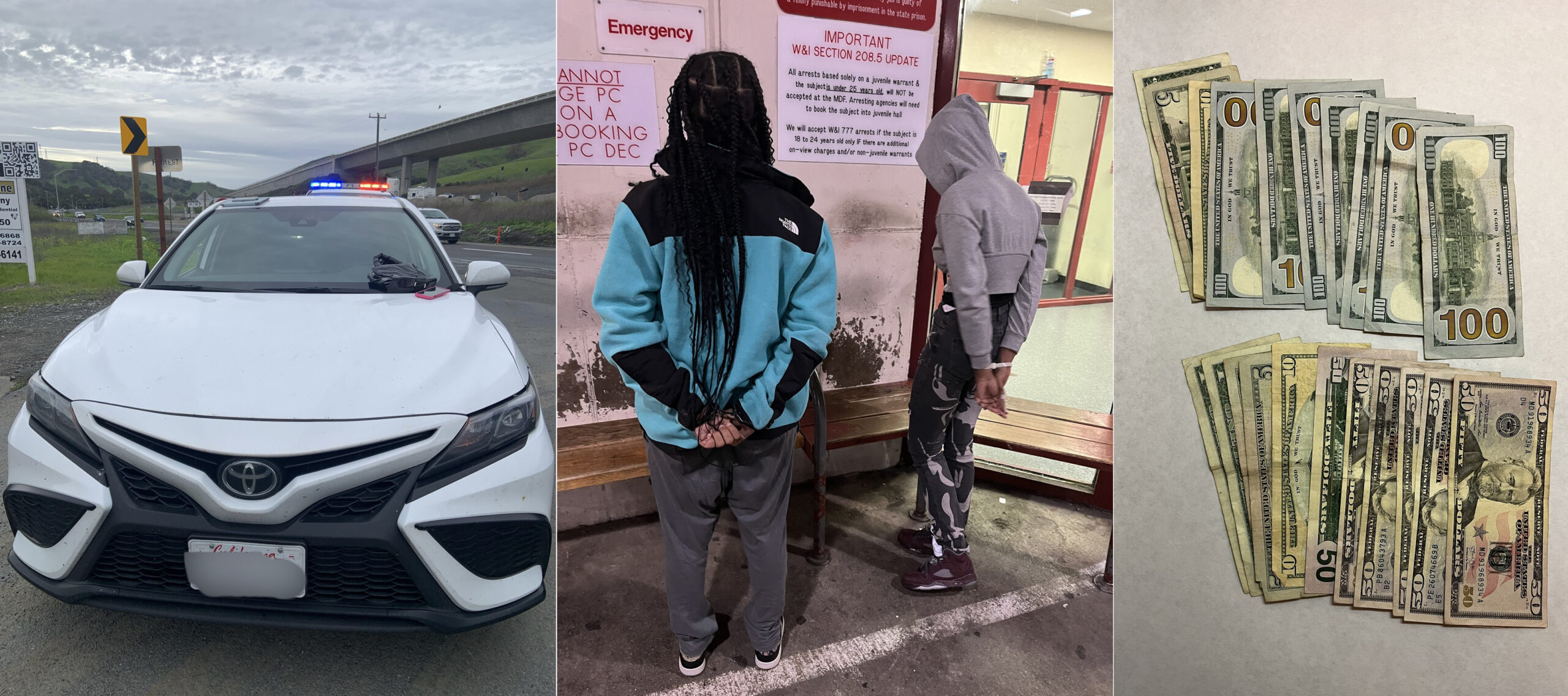
Responding to a felony vehicle alert, a graveyard officer located the suspect’s vehicle near our downtown area. Following a high-risk stop, the driver was taken into custody.

But the story doesn’t end there! During the arrest, officers uncovered a stolen, loaded firearm with extended magazines. This quick and decisive action undoubtedly prevented a potential threat to our community.

Filed Under: Central County, Concord, Crime, News, Police

  • « Previous Page
  • 1
  • …
  • 99
  • 100
  • 101
  • 102
  • 103
  • …
  • 483
  • Next Page »
Monicas-11-25
Deer-Valley-Chiro-06-22

Copyright © 2026 · Contra Costa Herald · Site by Clifton Creative Web