• Home
  • About The Herald
  • Local Agencies
  • Daily Email Update
  • Legal Notices
  • Classified Ads

Contra Costa Herald

News Of By and For The People of Contra Costa County, California

  • Arts & Entertainment
  • Business
  • Community
  • Crime
  • Dining
  • Education
  • Faith
  • Health
  • News
  • Politics & Elections
  • Real Estate

Ribbon cutting celebrates new Balfour Road interchange marking completion of Hwy 4 extension

December 12, 2018 By Publisher Leave a Comment

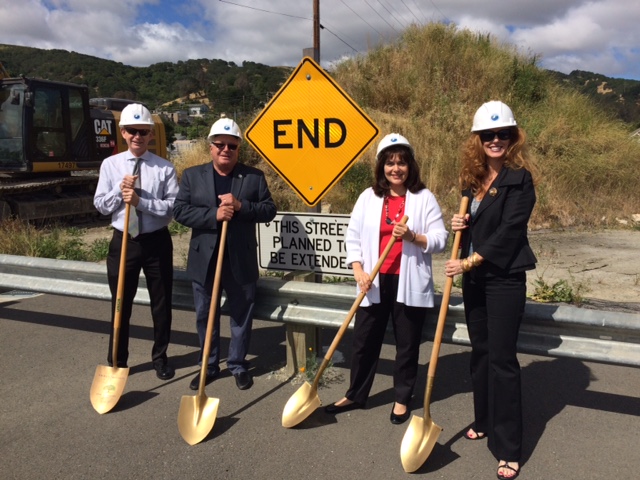
Elected officials and staff from Brentwood, East County and the Contra Costa Transportation Authority cut the ribbon to mark the opening of the new Balfour Road – Highway 4 Interchange on Monday, Dec. 10, 2018. Photo by Allen Payton

20 years since the right-of-way was purchased, completes $1.3 billion in East County transportation projects

The Contra Costa Transportation Authority (CCTA) and its partners, the Contra Costa Water District (CCWD), the Contra Costa Regional Fee and Financing Authority (ECCRFFA), the California Department of Transportation, and the City of Brentwood, held a ribbon cutting ceremony for the completion of the Highway 4 and Balfour Road Interchange Project. CCTA was joined by State, regional, and local officials to celebrate the completion of the interchange project, which brings much-needed traffic relief to Brentwood and Contra Costa County.

“Today’s ribbon cutting is one more symbol of the transformation taking place in Brentwood and Eastern Contra Costa County,” said CCTA Vice Chair and Brentwood Mayor Bob Taylor.  “This project has reduced traffic, improved safety, and will have long term economic benefits for our region.”

He stated that the project was “on time and under budget.”

“This organization does a wonderful job. This is an amazing structure and it will be here for generations,” Taylor added.
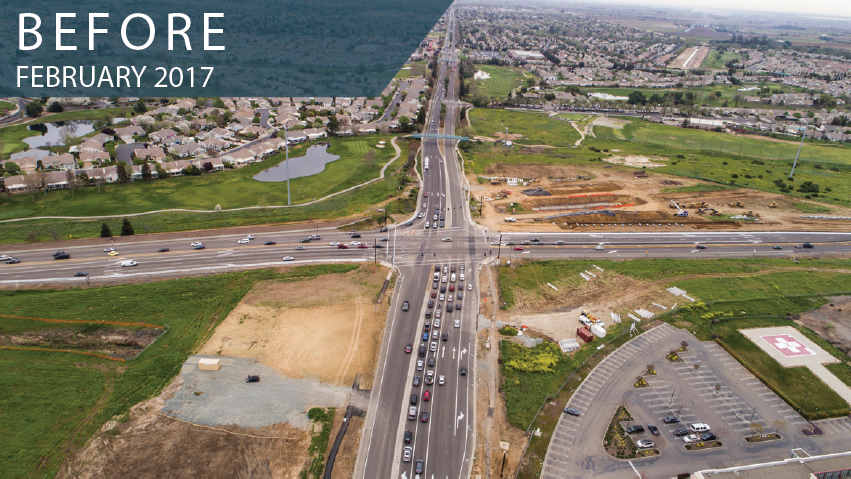
Photo courtesy of CCTA.

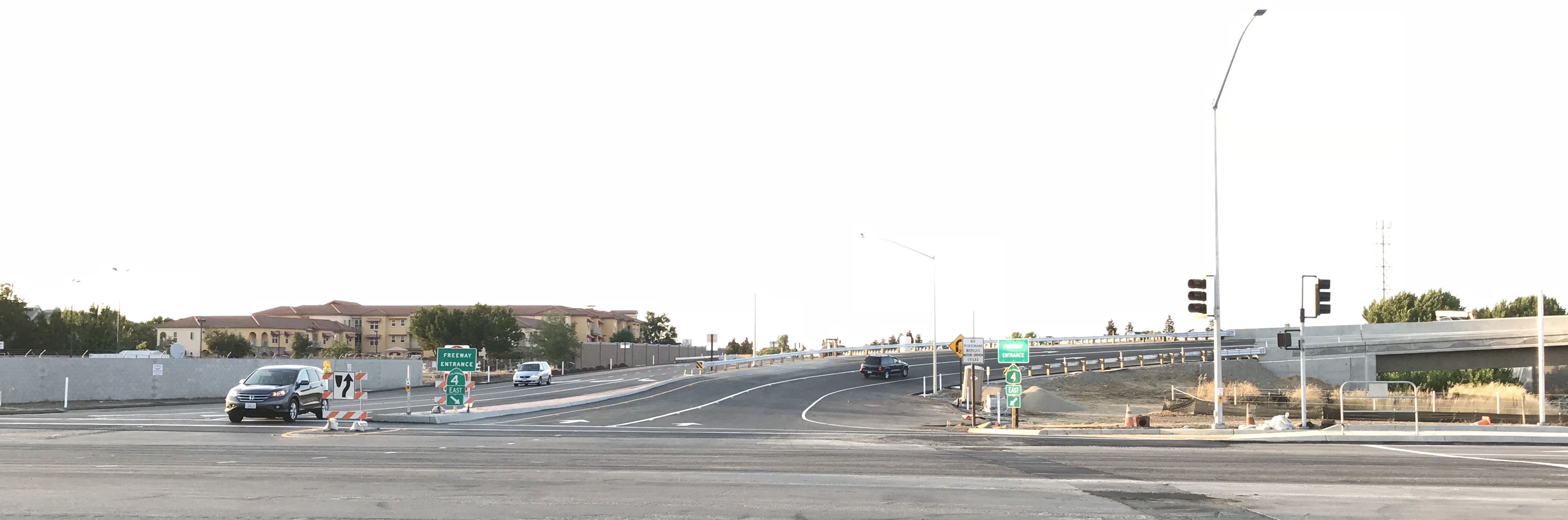
The Balfour Road Interchange Project replaced the existing signalized, at-grade intersection at Balfour Road and State Route 4 with a grade-separated interchange and corresponding on- and off-ramps.  The project involved raising State Route 4 to cross over Balfour Road, creating a new, safer undercrossing.  This new configuration has eased traffic congestion and improved safety at this intersection for motorists, cyclists, and pedestrians

The project was one of the first in the state to use innovative drone technology to monitor construction progress.  With assistance from engineering firm Alta Vista Solutions, CCTA flew drones equipped with a combination of LiDAR and camera technology to measure the volumes of earth that were moved during the $42 million construction project.  Utilizing this technology enabled CCTA to track construction progress firsthand and improve safety by taking workers out of live traffic.

“In 2008 when I was rescued from CalTrans, we finished the work on the Loveridge interchange,” stated CCTA Executive Director Randy Iwasaki. “Here we are and now we’re opening the last segment of the projects we had identified. Today marks the official opening of the $42 million Highway 4, Balfour Road interchange.”

“We are always looking for new ways to increase safety and efficiency on construction projects,” he shared. “Drones give us aerial views of the site that were hard to come by before, making it safer for surveyors to do their job and helping us manage the large volume of dirt that was used to improve this intersection. This technology also allowed us to monitor environmentally sensitive areas without disturbing the habitat.”
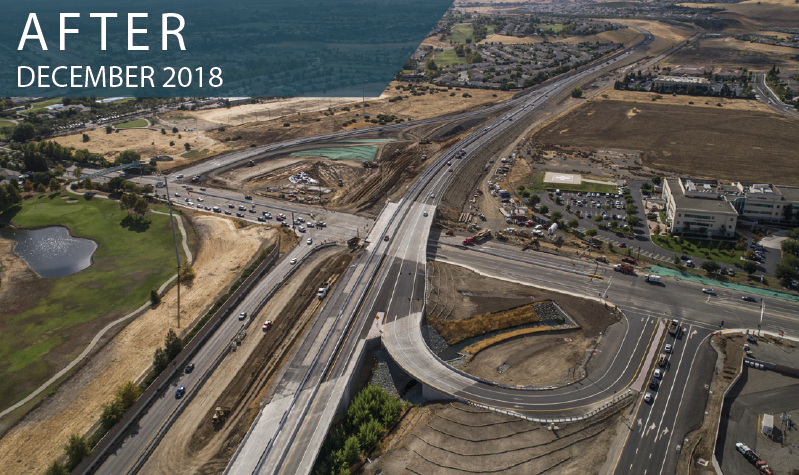
Photo courtesy of CCTA.

Innovation on the project extended beyond the use of technology.  CCTA also facilitated a collaborative, multi-agency agreement that saved both time and money for the Balfour Road Interchange project.  Prior to the start of construction, CCTA and the Contra Costa Water District (CCWD) worked together to gain Caltrans approval to leave the 90-inch Los Vaqueros Pipeline in place along the project alignment, essentially building the new highway infrastructure in conformity with the existing pipeline. Rather than a complete relocation of the relatively new pipeline, CCTA, CCWD and Caltrans arrived at a design that maintained the reliability and longevity of the infrastructure, worked for all agencies, reduced environmental and community impacts – which saved Contra Costans approximately $18 million in environmental permitting, property acquisition and construction costs.

Constance Holdaway, Vice President of the CCWD Board of Directors said, “We have a 90-inch pipeline running through this area from the Los Vaqueros Reservoir.” She gave credit to “creative minds” which “ssaved money and minimized environmental impacts.”

State Assemblyman Jim Frazier, who served on the CCTA Board in the past, and is now Chairman of the Assembly Transportation Committee shared some background on the funding for the project.

“We delivered $83 million for Highway 4 improvements including this project,” he stated. “We went hat in hand” to the state capital asking for funding.

“You were very sick, that day,” Taylor interjected.

“Yes, I was. I checked myself out of the hospital to go that day. Then I checked myself back in,” Frazier shared.

“I have to recognize the good work of the CCTA, and the contractors Brosamer & Wall and Bay Cities,” he continued. “I want to thank the CC building and trades and the CHP working to protect the workers.

“Randy and I are working on the Sand Creek (Road) project from the interchange to Kaiser, with the developers,” Frazier stated. “I’m also working with Tri Delta Transit and instead of BART, we’re looking at a bus rapid transit system from Hillcrest to Marsh Creek Road.”

Supervisor Diane Burgis, Chair of the Eastern Contra Costa Regional Fee and Financing Authority, which collects and provided developer fees for the project, said “Today, we have a project that really contributes to the quality of life in Eastern Contra Costa County. Residents who use this road…they’re going to get home quicker.”

She acknowledged Dale Dennis who was the lead staff member for the Bypass Authority.

“Those of us who are using this freeway are already enjoying the benefits of it,” Burgis added

Former State Route 4 Bypass Authority Chairman, Allen Payton, offered some history about the project, honoring Tom Torlakson, who was a County Supervisor at the time he proposed the idea of the extension to Highway 4, formerly known as the “bypass”. Payton stated it was 20 years ago, this year that the authority approved the purchase of 250 feet of right-of-way for the segment between Lone Tree Way and Balfour Road for $950,000 to provide room for four lanes of traffic and two lines of transit.

“It started out in 1994 with three votes in favor versus eight votes against at the CCTA,” he shared. “It took us four years to get to an 11-0 vote to approve the road.”

He thanked Iwasaki and Frazier for “finding the hidden pockets of state money” to complete the freeway extension. Payton also encouraged the elected representatives in attendance, specifically Frazier, of the need to speed up the approval and implementation process for traffic improvements. Iwaski agreed.

Iwasaki then mentioned the funding from the county’s half-cent sales tax Measure J and thanked CCTA staff members Jack Hall, Stephanie Hu, Linsay Willis, Susan Miller, Tim Hale and Ross Chittenden for their work on the project. He also acknowledged “the engineering and design, and construction teams and all the subcontractors, the men and women who built this project.” They included Quincy Engineering, specifically Carl Gibson, the chief designer on the project and PSOMAS, specifically Bonaventure Ezeji, the resident engineer.

Iwasaki then honored Steve Kersevan, the City of Brentwood Traffic Engineer for his help on the project and presented him with a plaque.

“I was just doing my job. Now I can retire” Kersevan said with a smile.

The extension to Highway 4 is the only stretch of new freeway in the entire nine-county Bay Area between 1998 and 2018, and was the first section of state highway in California history to be partially funded with local developer fees.

About the Contra Costa Transportation Authority

The Contra Costa Transportation Authority (CCTA) is a public agency formed by Contra Costa voters in 1988 to manage the county’s transportation sales tax program and oversee countywide transportation planning efforts. With a staff of twenty people managing a multi-billion-dollar suite of projects and programs, CCTA is responsible for planning, funding and delivering critical transportation infrastructure projects and programs that connect our communities, foster a strong economy, increase sustainability, and safely and efficiently get people where they need to go. CCTA also serves as the county’s designated Congestion Management Agency, responsible for putting programs in place to keep traffic levels manageable. More information about CCTA is available at ccta.net

About the Highway 4 Projects

The Highway 4 projects include improvements that will help modernize eastern Contra Costa County. The projects expand Highway 4 from four to eight lanes between Loveridge Road in Pittsburg to just west of State Route 160 in Antioch, from two to four lanes from Lone Tree Way to Balfour Road in Brentwood, add missing connector ramps at the State Route 160/Highway 4 interchange, and add a BART extension from Pittsburg to Antioch (eBART). This will greatly improve transit accessibility for the region, help reduce traffic congestion, and enhance the quality of life for the more than 250,000 residents of eastern Contra Costa County. The projects have been carefully staged to keep 130,000 vehicles per day moving as major construction and demolition work continue. These projects, plus previously constructed projects in the region, bring the total investment in East County to $1.3 billion, including State, Federal, Contra Costa Transportation Authority Measures C and J, regional bridge tolls, and other funds.

For additional information about the Balfour Road Interchange Project, please visit www.4eastcounty.org.
Filed Under: East County, News, Transportation

Final two lanes of Highway 4, first stage of Balfour Road interchange in Brentwood completed

July 21, 2018 By Publisher Leave a Comment

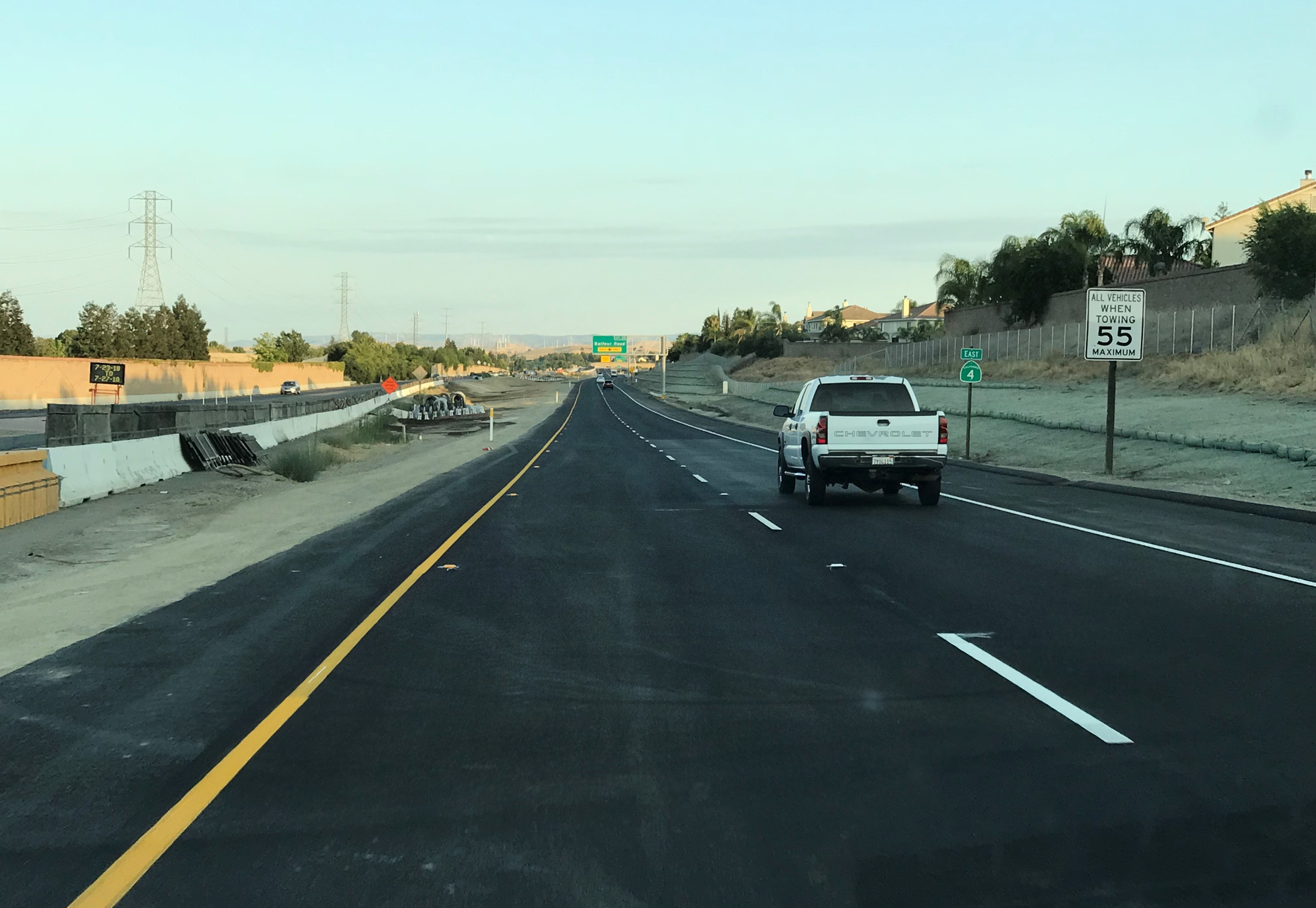
The two new southbound lanes of Highway 4 between Sand Creek and Balfour Roads in Brentwood opened today, Saturday, July 21, 2018.

The Contra Costa Transportation Authority (CCTA) has completed the first stage of construction on the Balfour Road Interchange Project, and has opened newly constructed lanes to the public as of Saturday morning. This major project milestone is part of a $42.7 million-dollar construction project to improve safety and efficiency at this busy intersection in Brentwood.

A traffic switch will occur this weekend that will move eastbound Highway 4 drivers onto the newly built, elevated alignment over Balfour Road. Additionally, eastbound Highway 4 motorists will be able to use newly constructed on and off-ramps. A new signal will be activated at the intersection of Balfour Road and the new off-ramp, and directional signage will be in place to help inform motorists.

“This is a big deal for Brentwood”, said Brentwood Mayor Bob Taylor. “Balfour Road is a major intersection, and the opening of these new lanes bring us one step closer to making this a better, safer intersection for drivers, bicyclists and pedestrians.”

“Our goal is to help keep Contra Costa moving”, stated CCTA Executive Director Randy Iwasaki. “The Balfour Road Interchange Project is the final piece in the modernization of Highway 4 that our agency has led over the past eight years – and we are excited to be delivering on our promise to the public by bringing improved mobility to eastern Contra Costa County.”

The new Balfour Road on- and off-ramps from and to southbound Highway 4 opened today, Saturday, July 21, 2018.

“We purchased the right-of-way for the four lanes of traffic and two lines of transit down the center, 20 years ago, this year,” said Allen Payton, Chairman of the State Route 4 Bypass Authority in 1998. “Half of that section, of what was known as the Highway 4 Bypass, was paid for with local developer fees. The other half was to be paid for with state funds. But that commitment took years to be fulfilled. Special thanks go to Randy Iwasaki for helping secure the money from the state and to the CCTA for getting the project completed.” 

A portion of the funds to complete the project were from Measure J, the county’s half-cent sales tax for transportation which is allocated by the CCTA. The effort for the project began in the early 1990’s and took until 1998 to get approval from the CCTA Board of Directors, without any financial commitment at that time.

Visualizations of the new eastbound on and off-ramps, as well as eastbound through traffic can be viewed online at:

https://youtu.be/2RU5o3CjcIs

https://youtu.be/2acw46W4AdI

https://youtu.be/saN5QOS9A4E

Traffic on westbound Highway 4 towards Antioch will remain on the same alignment and continue to operate without any changes at this time. The entire project is expected to be complete in late 2018 or early 2019.

About the Highway 4 Projects

The Highway 4 projects include improvements that will help modernize eastern Contra Costa County. The projects expand Highway 4 from four to eight lanes between Loveridge Road in Pittsburg to just west of State Route 160 in Antioch, from two to four lanes from Lone Tree Way to Balfour Road in Brentwood, add missing connector ramps at the State Route 160/Highway 4 interchange, and add a BART extension from Pittsburg to Antioch with a new stop in Pittsburg and Antioch. This will greatly improve transit accessibility for the region, help reduce traffic congestion, and enhance the quality of life for the more than 250,000 residents of eastern Contra Costa County. The projects have been carefully staged to keep 130,000 vehicles per day moving as major construction and demolition work continue. These projects, plus previously constructed projects in the region, bring the total investment in East County to $1.3 billion, including State, Federal, Contra Costa Transportation Authority Measures C and J, regional bridge tolls, and other funds. View the story of Highway 4 at http://4eastcounty.org/stories/

About the Contra Costa Transportation Authority

The Contra Costa Transportation Authority (CCTA) is a public agency formed by Contra Costa voters in 1988 to manage the county’s transportation sales tax program and oversee countywide transportation planning efforts. With a staff of twenty people managing a multi-billion dollar suite of projects and programs, CCTA is responsible for planning, funding and delivering critical transportation infrastructure projects and programs that connect our communities, foster a strong economy, increase sustainability, and safely and efficiently get people where they need to go. CCTA also serves as the county’s designated Congestion Management Agency, responsible for putting programs in place to keep traffic levels manageable. More information about CCTA is available at ccta.net.

Filed Under: East County, News, Transportation

Richmond’s CyberTran to host Alameda County Supervisors’ Transportation Committee meeting Thursday to discuss ultra-light rail transit system

July 18, 2018 By Publisher 3 Comments

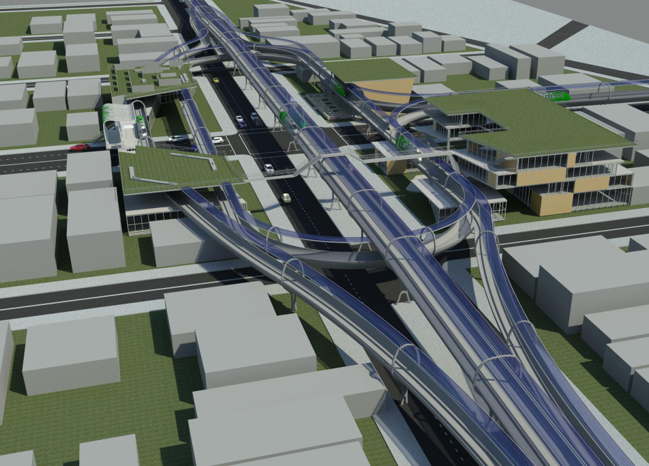
Artist’s rendering of a CyberTran vehicle and station with overhead solar panels generating the power to operate the system.

The Alameda County Board of Supervisors’ Transportation/Planning Committee will be holding a first of its kind, off-sight meeting to learn about an “Ultra Light Rail Transit System in the Alameda County East Bay Region” known as CyberTran. The meeting will be held at the U.C. Berkeley Global Campus in Richmond, where CyberTran International, Inc. has their headquarters and lab.

Overview rendering of the offline CyberTran stations.

The meeting is being held in response to the recent action by the BART Board to vote down the extension to Livermore, as the Board of Supervisors looks for an alternative transit system from the Pleasanton BART Station east.

“Alameda County has critical needs when it comes to traffic congestion. We can help,” said Dexter Vizinau, President of CyberTran International.

The solar-powered CyberTran system has been tested including by BART’s engineering department, which determined it can be built for a fourth of the cost of a BART system and operate a fraction of the cost. It can move as many people per hour per direction as BART can through the Bay Tube, which is 17,000 passengers.

During the meeting, the supervisors who serve on the committee will discuss a resolution in support of using the CyberTran system in Alameda County. The agenda for the meeting can be viewed here.

For more information about CyberTran, visit www.cybertran.com.

Editor’s Note: The publisher of the Herald has a financial interest in CyberTran International, Inc.

Filed Under: News, Technology, Transportation, West County

Assemblymember Grayson announces state funding for I-680/SR 4 Interchange improvements

May 17, 2018 By Publisher Leave a Comment

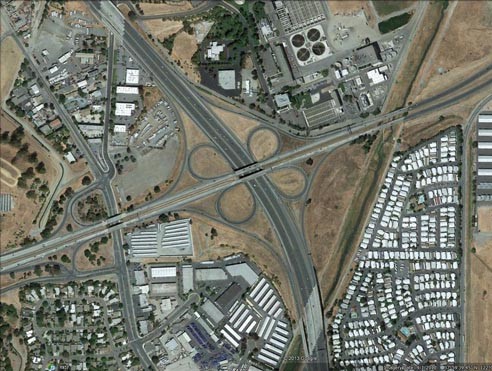
Interstate 680 / Highway 4 Interchange. From CCTA.net

Assemblymember Tim Grayson (D-Concord) announced that the California Transportation Commission (CTC) has approved $34 million in funding for improvements of the Interstate 680 / State Route 4 highway interchange in Concord, one of the most congested freeway interchanges in the Bay Area.

“Anyone who has driven in the East Bay knows this interchange is notorious for gridlock, which is why I have been working for more than a year with the CTC, Department of Transportation, and Contra Costa Transportation Authority to secure the funding needed to get this project started,” Grayson said. “As a critical artery for the region, it is incumbent on us to ensure the conditions of this interchange are improved so commuters are able to navigate this interchange without the additional stress caused by standstill traffic and bottlenecks. I applaud the CTC for funding this project so that the people of my district, and the East Bay Area, will be able to spend less time sitting in traffic and more time at home with their families.”

The I-680/SR4 Interchange connects a major north-south thoroughfare for Solano, Contra Costa, and Alameda Counties with the main east-west artery for Contra Costa County. In its review, the Commission concluded the existing I-680/SR 4 interchange has deficiencies that contribute to heavy traffic congestion and inefficient traffic operations. This project, one of several phases of improvements planned by the Contra Costa Transportation Authority for Highway 4, will construct almost 10 miles of new traffic lanes to ease congestion and will retrofit bridges to meet seismic standards as well as extend on-ramps to improve traffic safety. CCTA was awarded the funding through the CTC’s competitive Local Partnership Program.

Grayson represents the 14th Assembly District that includes the communities of Benicia, Concord, Clayton, Martinez, Pleasant Hill, Vallejo, Pittsburg and Walnut Creek. For more information please visit the Assemblymember’s website, www.assembly.ca.gov/a14.

Filed Under: Central County, Concord, News, Transportation

County Public Works to perform maintenance on Mountain View Blvd in Walnut Creek beginning Monday

April 21, 2018 By Publisher Leave a Comment

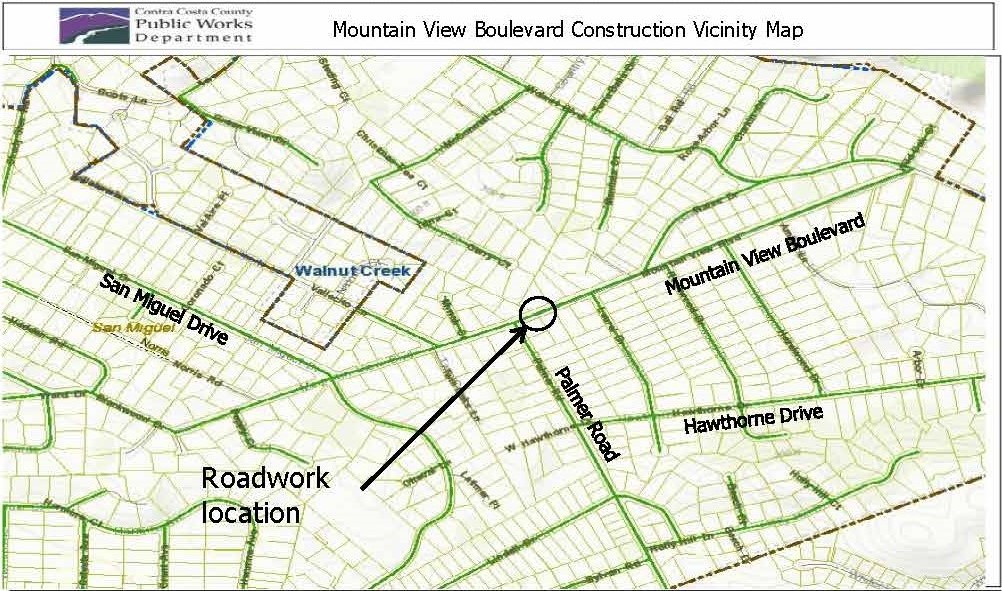
Contra Costa County Public Works will perform roadwork on Mountain View Boulevard just east of Palmer Road between April 23rd and May 10th, weather permitting, to replace an existing storm drain culvert. 

Traffic will be controlled with flaggers between the hours of 9:00am – 4:00pm.  Construction signs will be placed in advance of the construction activities.  Delays should be expected. 

Filed Under: Central County, News, Transportation

Third eastbound lane on Richmond-San Rafael Bridge opens Friday

April 19, 2018 By Publisher Leave a Comment

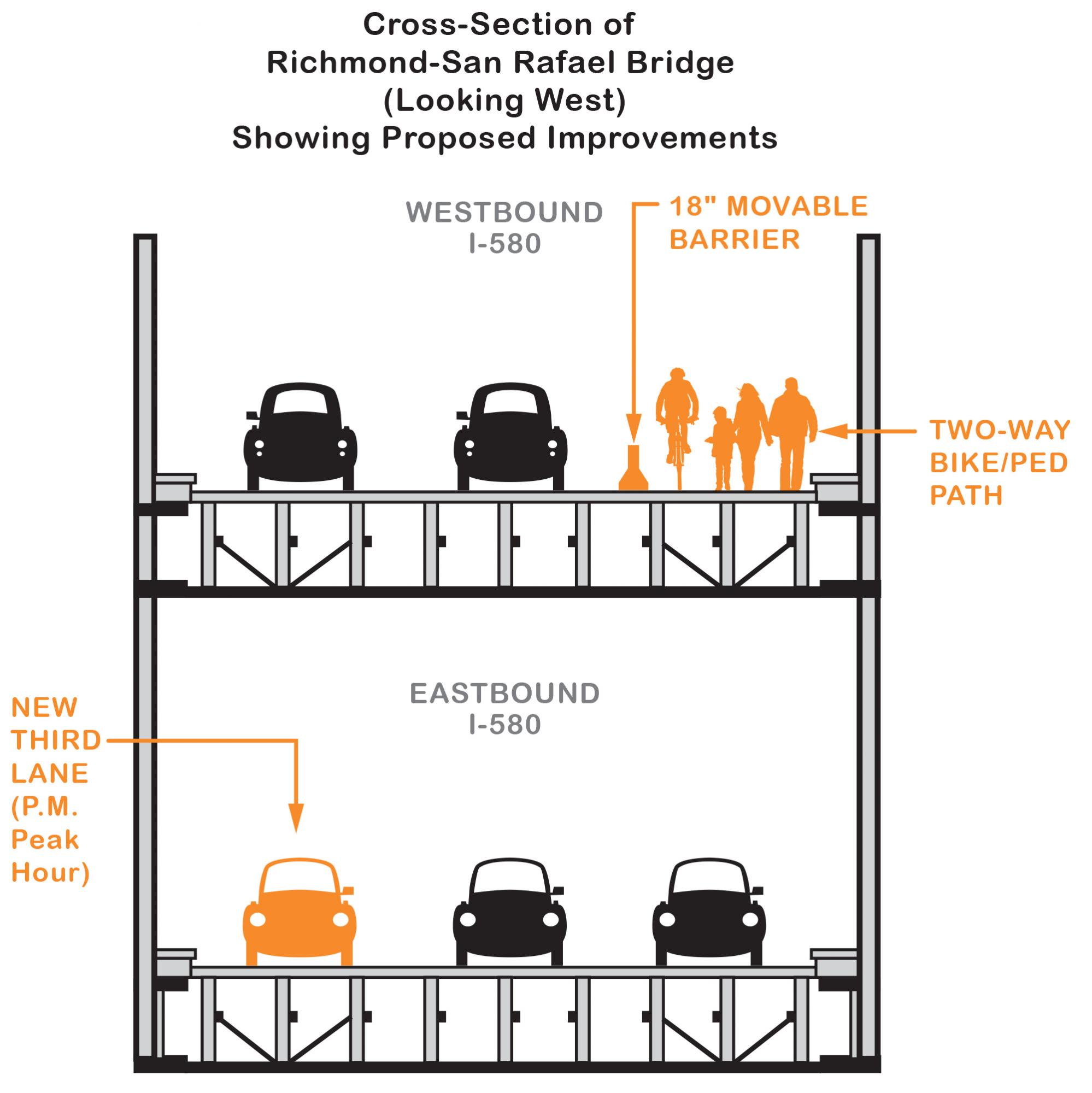
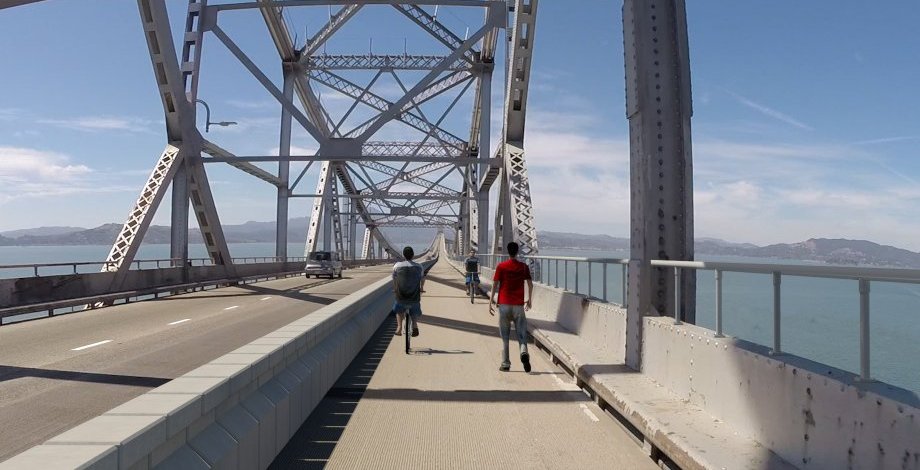
Richmond-San Rafael Bridge new third lane diagram. Courtesy of MTC.

Caltrans, on Friday, April 20 will open a long-awaited third eastbound lane on Interstate 580 to accommodate peak period traffic from San Rafael to Richmond. The opening of the lane marks a major milestone in the multi-year, $53 million project undertaken by Caltrans and the Metropolitan Transportation Commission’s Bay Area Toll Authority (BATA) affiliate, in partnership with the Contra Costa Transportation Authority (CCTA) and the Transportation Authority of Marin (TAM), to convert the right shoulder to accommodate peak-period traffic from Sir Francis Drake Blvd. in San Rafael to a newly-expanded Richmond Parkway/Point Richmond exit in Richmond. The new lane typically will be open to traffic each day from 2 p.m. to 7 p.m.

Artist’s rendering of the planned bicycle/pedestrian path on the Richmond-San Rafael Bridge on the westbound upper deck. Courtesy of MTC.

A series of newly-installed electronic signs will indicate to motorists when the new third lane is open to traffic. These include both a large changeable message board on the Marin County approach to the Richmond-San Rafael Bridge and 20 smaller signs installed over each traffic lane on the bridge. The smaller signs will display green arrows to indicate open lanes or a red X to indicate a closed lane.

The opening of the new third lane will be preceded by a 9:00 a.m. ribbon-cutting ceremony featuring local, regional and state officials who galvanized the partnership that delivered the new peak-period traffic lane and is now working to complete the first-ever bicycle/pedestrian link between Contra Costa and Marin counties.

A video and other information about the I-580 Richmond-San Rafael Bridge Access Improvement Projects can be found on the MTC website at mtc.ca.gov/our-work/plans-projects/major-regional-projects/richmond-san-rafael-bridge-access-improvements.

MTC is the regional transportation planning, financing and coordinating agency for the nine-county San Francisco Bay Area. BATA, which administers revenue from the region’s seven state-owned toll bridges, is funding the Richmond-San Rafael Bridge Access Improvement Projects with support from Caltrans to integrate these improvements into the state’s traffic management system.

Filed Under: News, Transportation, West County

New traffic signal at Byron Highway and Camino Diablo Intersection to be activated Thursday

February 21, 2018 By Publisher Leave a Comment

Improvement project completed

Contra Costa County Public Works Department will activate the new traffic signal at the Byron Highway and Camino Diablo intersection starting Thursday, February 22, 2018.  All lanes across Camino Diablo will be open to traffic.  Message boards in the area will alert drivers of the signal activation.

The completed project widened roadway pavement to provide shoulders and left turn lanes on Byron Highway and eastbound Camino Diablo. The project also installed a traffic signal, sidewalk and ADA compliant curb ramps along the north side of Camino Diablo to Main Street and upgraded the railroad crossing on Camino Diablo.  This work is part of the Byron Highway and Camino Diablo Intersection Improvements project. Additional project information is available at: http://www.cccounty.us/pwdmap.

Filed Under: East County, News, Transportation

County Public Works to make public safety repairs on Marsh Creek Road Feb. 12-Mar. 1

February 12, 2018 By Publisher Leave a Comment

The Contra Costa County Public Works Department will perform work on Marsh Creek Road from Camino Diablo to the Clayton City limits, from February 12 through March 1, 2018. The work will occur between the hours of 8:30 a.m. and 4:00 p.m to trim back trees and vegetation along the road edge and make spot shoulder repairs.

The purpose of this work is to increase driver visibility, awareness and public safety. The work may be rescheduled based on weather conditions. Electronic message boards will alert drivers of the scheduled work. There will be traffic control through the work area and motorists can expect delays.

About Contra Costa County Public Works Department:

Contra Costa County Public Works Department (CCCPWD) maintains over 660 miles of roads, 150 miles of streams, channels and other drainage and over 200 County buildings throughout Contra Costa County.   CCCPWD provides services such as Parks and Recreation, Sand Bag Distribution and Flood Control throughout unincorporated areas of Contra Costa County.  For more information about CCCPWD, please visit us here.

Filed Under: East County, News, Transportation

Work to be done on Kirker Pass Road Jan. 24 & 25

January 18, 2018 By Publisher Leave a Comment

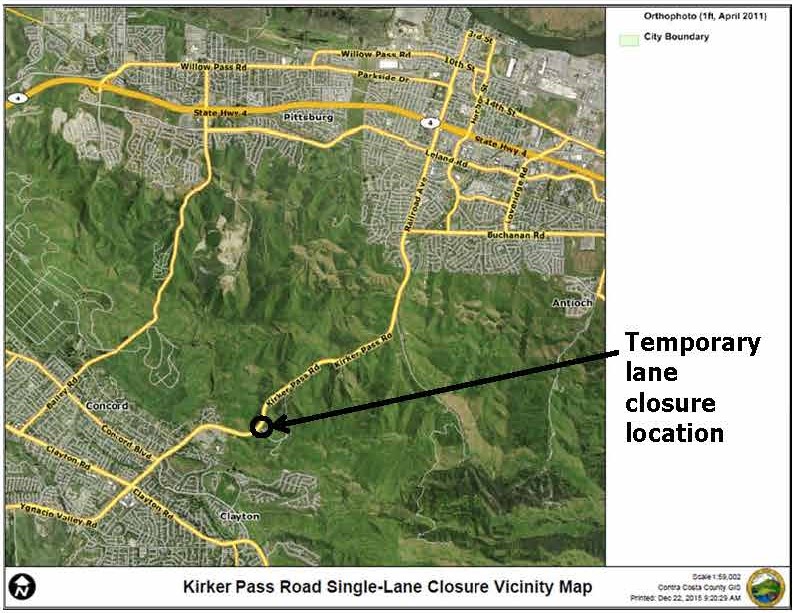
The Contra Costa County Public Works Department will perform roadwork on Kirker Pass Road at the intersection of Hess Road (south) on Wednesday and Thursday, January 24 and 25, 2018, weather permitting, to replace the center-divide crash cushion system. 

Traffic will be controlled with temporary single-lane closures reducing the two lanes to a single lane in both directions.  Turning left from Kirker Pass Road (southbound) onto Hess Road will not be permitted during the work.  The lane closures will occur between the hours of 9:00 am – 3:00 pm.  Changeable message sign boards and other construction signs will be placed in advance of the work.      

Filed Under: East County, News, Transportation

Martinez breaks ground on final phase of downtown intermodal transportation facility

January 9, 2018 By Publisher Leave a Comment

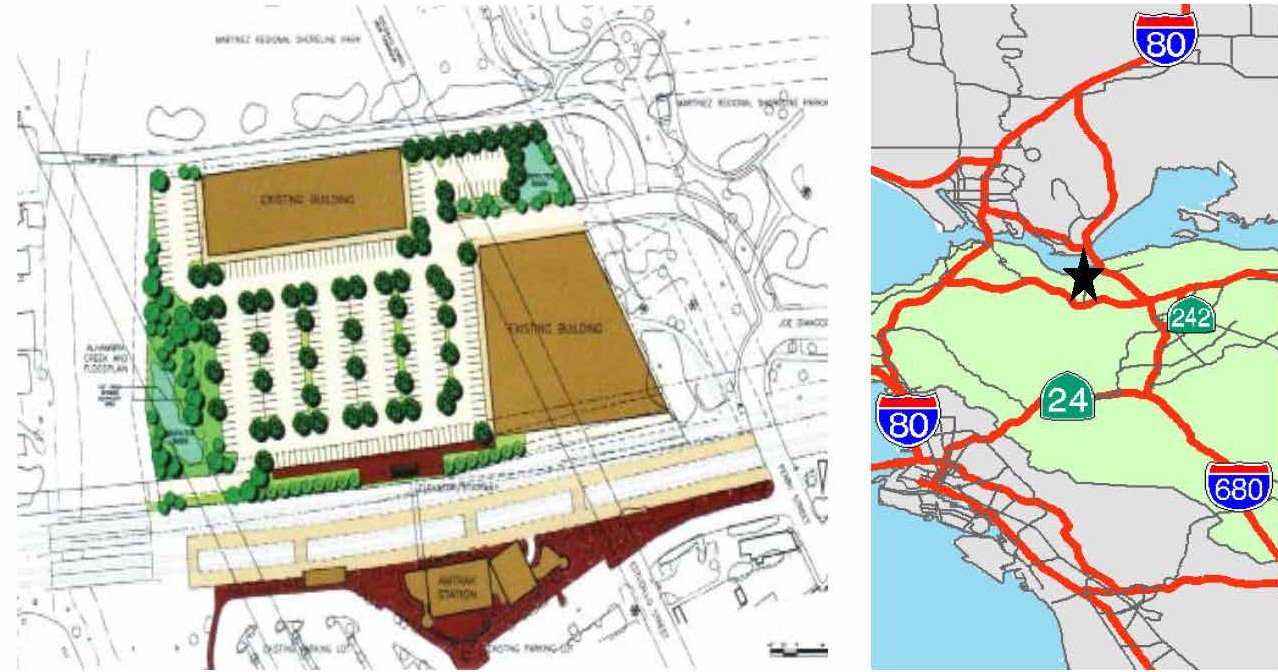
The location maps for the Martinez Intermodal Facility in downtown. Courtesy of City of Martinez

The City of Martinez held a final ground-breaking ceremony for the initiation of the third and final phase of the multi-million-dollar Intermodal Facility project in downtown on Friday, Jan. 5, 2018. The project has spanned over 20 years.

A photo of the previous groundbreaking of Phase 3 of the Intermodal Station in May, 2016 with Martinez City Council members. (Left to right) Mark Ross, Mayor Rob Schroder, Debbie McKillop and Lara DeLaney. Courtesy of City of Martinez

In 1994, the City of Martinez moved forward with the property acquisition of the old railroad yard south of the tracks. Three years later in 1997, the parking lot was constructed along with enhancements to Alhambra Creek, replacement of the railroad bridge, and the addition of two northerly tracks. Later in 2002, the Amtrak Station building, and platforms were completed and opened to the public. The City then acquired the Zocchi property in 2008, which is the parking lot north of where the tracks now exist, for the implementation of Phase 3.

This last phase of the Intermodal Facility, Phase 3, is funded by the Contra Costa Transportation Authority (CCTA) Measure J sales tax revenues. The project is located north of the Amtrak Station and includes a 110-foot long prefabricated steel bridge to be installed over the UPRR tracks, a paved trail along the west south, and east perimeters of the site along with a 30-foot long prefabricated pedestrian bridge near Ferry Street and the UPRR tracks. The project also includes and a new entrance road at the Ferry Street/Joe DiMaggio Drive intersection which connects to the easterly side of the recently constructed parking lot. Other features include an elevator, wetland mitigation, landscaping, and street and parking lot lighting. This work is scheduled to begin this month and be substantially complete by December 2018. Once the structural supports are constructed, the placement of the 110-foot long prefabricated pedestrian bridge crossing the railroad tracks will occur between midnight and 5:00 a.m. on a Sunday morning (date still to be determined). The City awarded the construction contract to Gordon N. Ball, Inc., (Alamo) with a total bid amount of $6,150,676.00.

CCTA staff members involved in the project included Randell Iwasaki, Hisham Noeimi, and Jack Hall; the design was provided by NV5, Inc., supported by LCC Engineering and Surveying, Inc., BSK Associates, LSA, and Cynthia Easton Architects. Agencies involved in the project include EBRPD, UPRR, Amtrak, CPUC, PG&E, Shell Oil, AT&T, CDF&W, USCOE, and RWQCB.

Please visit these links to view the location map and the pedestrian bridge architectural plan.

Filed Under: Central County, News, Transportation

  • « Previous Page
  • 1
  • …
  • 22
  • 23
  • 24
  • 25
  • 26
  • …
  • 31
  • Next Page »
Furniture-Clearance-02-26B
Celia's-3-26-A
Delta-RC-A
Deer-Valley-Chiro-06-22

Copyright © 2026 · Contra Costa Herald · Site by Clifton Creative Web