• Home
  • About The Herald
  • Local Agencies
  • Daily Email Update
  • Legal Notices
  • Classified Ads

Contra Costa Herald

News Of By and For The People of Contra Costa County, California

  • Arts & Entertainment
  • Business
  • Community
  • Crime
  • Dining
  • Education
  • Faith
  • Health
  • News
  • Politics & Elections
  • Real Estate

Marsh Creek Road closed from Clayton city limits to Morgan Territory Road

March 6, 2019 By Publisher 1 Comment

By Steve Padilla, Director Contra Costa County Public Works Department

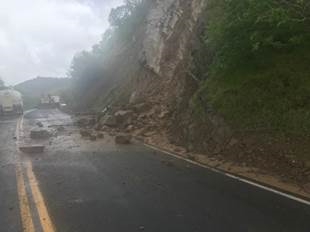
March 6, 2019, Clayton, CA – Marsh Creek Road is closed in both directions, between the Clayton City limits and Morgan Territory Road due to rock and mud slides.  We anticipate re-opening the road by early afternoon. Please take alternative routes to avoid this area.

Filed Under: Central County, News, Transportation

Annual Redefining Mobility Summit to highlight latest trends in transportation technology in San Ramon Friday

March 5, 2019 By Publisher Leave a Comment

The Contra Costa Transportation Authority will host government and industry leaders to discuss cutting edge transportation technology; Six start-ups competing for $10,000 prize money

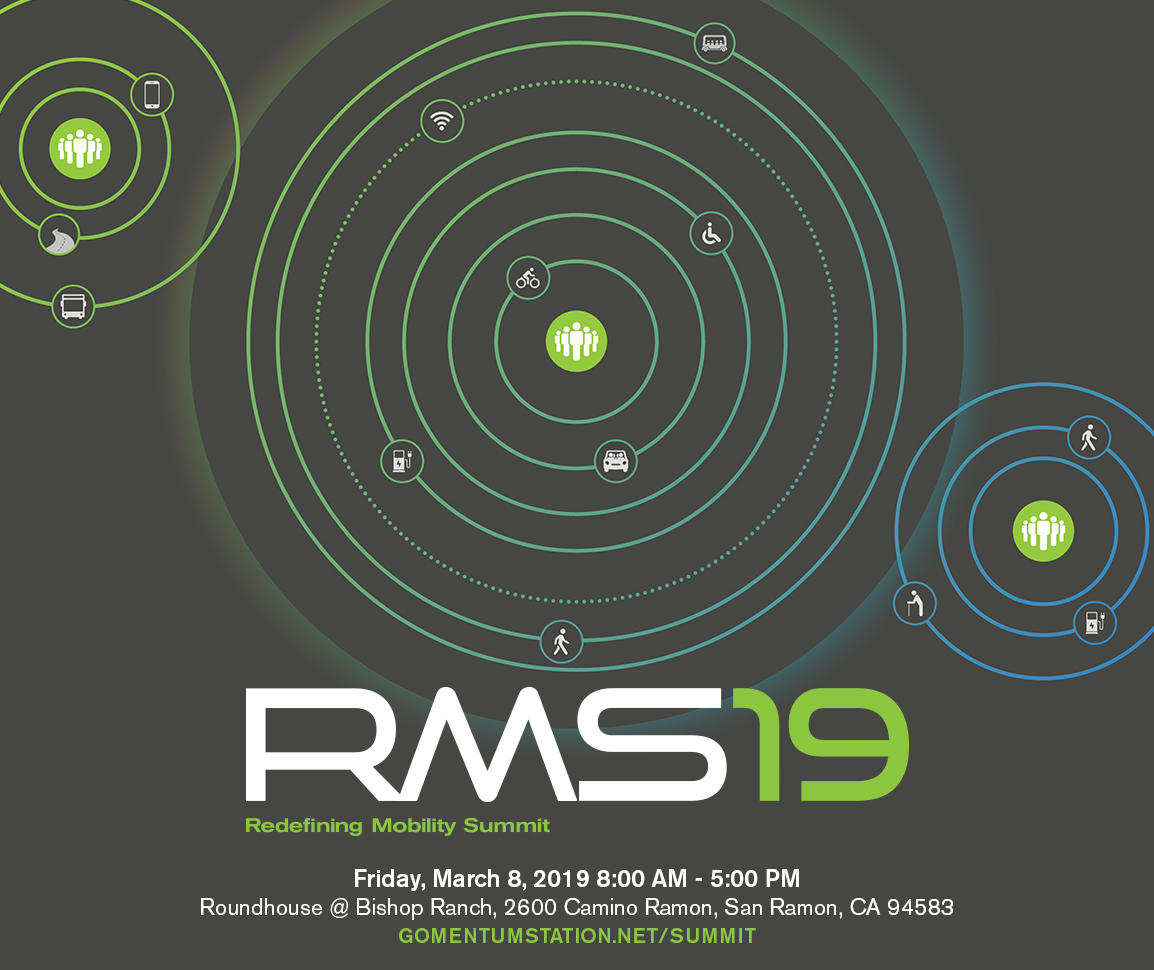
The Contra Costa Transportation Authority (CCTA) will host the fifth annual Redefining Mobility Summit on Friday, March 8th in San Ramon. The Redefining Mobility Summit brings together government and industry leaders to discuss how innovative research and cutting edge technology are revolutionizing transportation.

What:      Redefining Mobility Summit

Who:       Industry leaders speaking about the future of Connected Vehicle/Autonomous Vehicle technology

When:     Friday, March 8, 2018 from 8:15am-4:45pm

Where:    Roundhouse Conference Center, 2600 Camino Ramon, Suite 100 San Ramon, CA  94583

A complete list of speakers is available here.

A brief overview of the schedule and highlighted speakers is below:
8:15am: A roundtable with transportation innovators around the world including Japan, Canada, Spain and Australia and New Zealand.

10:00am: Keynote speaker, Anousheh Ansari, Co-founder and Executive Chairwoman of Prodea Systems, space explorer, and serial entrepreneuer.

10:45am: A panel on the latest and safest self-driving car innovations from AAA and AV technology developers featuring Ignacio Garcia, VP, Autonomous Vehicle Strategy – AAA NCNU; Alan Jowett – VP of Business Development – Ottopia and others.
1:00pm: Six transportation start-ups competing for $10,000 to help them on their quest to redefine mobility including Route Reports; Detecterra; Smart Edge; Traffic Patterns;  Allvision IO; and EVSEE.

2:30pm: The future of freight, moderated by California Transportation Commission Chair Fran Inman and featuring Jonny Morris, Head of Public Policy, Embark and Paul Konasewich, Director of Business Development, PACCAR Silicon Valley Innovation Center, and others.

3:30pm: A panel on the dynamic nature of urban mobility with Ali Mortazavi; the director of Nissan R&D and AI Sohier Hall, President/CEO of Luum; Hugo Fozzati Director of Business & Operations for AutoX and others focused on shifting transportation’s mindset from thinking about moving cars to moving people.

4:45pm: Closing Remarks & Announcement of Start-up Pitch Winner About the Contra Costa Transportation Authority

The Contra Costa Transportation Authority (CCTA) is a public agency formed by Contra Costa voters in 1988 to manage the county’s transportation sales tax program and oversee countywide transportation planning efforts. With a staff of twenty people managing a multi-billion-dollar suite of projects and programs, CCTA is responsible for planning, funding and delivering critical transportation infrastructure projects and programs that connect our communities, foster a strong economy, increase sustainability, and safely and efficiently get people where they need to go. CCTA also serves as the county’s designated Congestion Management Agency, responsible for putting programs in place to keep traffic levels manageable. More information about CCTA is available at ccta.net.

Filed Under: News, San Ramon Valley, Transportation

Frazier supports Gov. Newsom’s announcements on high speed rail, Delta Tunnels

February 13, 2019 By Publisher Leave a Comment

Assemblyman Jim Frazier

SACRAMENTO – Assemblymember Jim Frazier (D-Discovery Bay), chairman of the Assembly Transportation Committee, released the following statements on Tuesday after California Gov. Gavin Newsom delivered his first State of the State Address before a joint session of the Legislature.

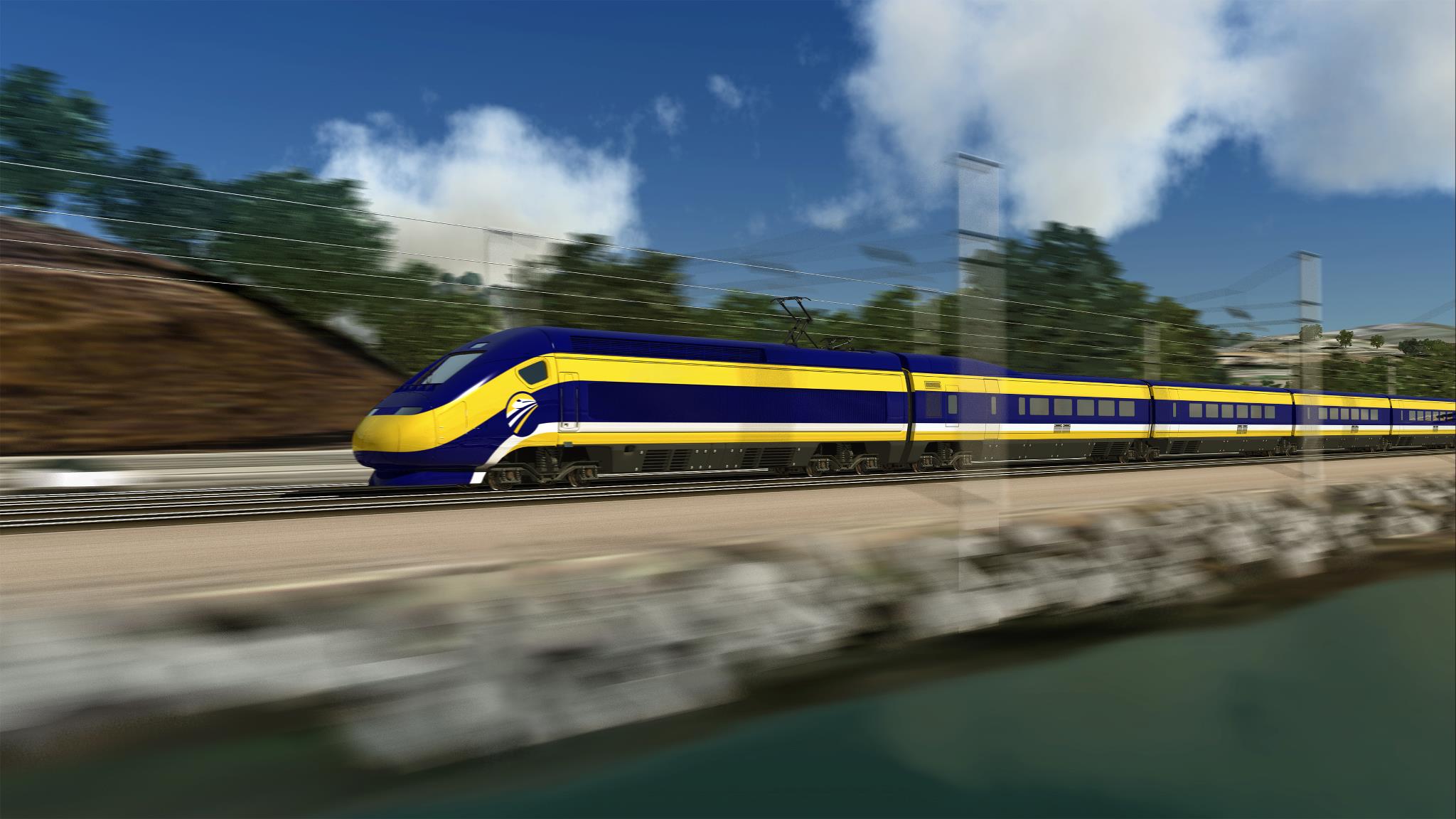
“Governor Newsom inherited a high-speed rail project that is a mess. He showed he is ready to step up and take the reins as a leader, recognizing there needs to be wholesale changes. I appreciate his realistic and common-sense approach to this project.

The governor also has a soft spot in his heart for the intellectually and developmentally disabled and recognizes that we need to step up our game to better support the special needs community.”

The governor also announced he will appoint a new member to the California High-Speed Rail Authority Board of Directors, with the expectation the new appointee will become chair. Frazier responded with the following statement:

“I applaud the decision to appoint Lenny Mendonca to the High-Speed Rail Authority Board with the governor’s intention that Mendonca become chairman. An investigation by State Auditor Elaine Howle revealed a pattern of repeated failures at the Authority, under the direction of current Chairman Dan Richard, with hundreds of millions in cost overruns and a lack of honesty and transparency. That is just one reason I have been advocating for a change in leadership. I have high hopes for Mr. Mendonca to lead the High-Speed Rail Authority to complete the scaled down project the governor outlined in his State of the State Address today. A change of leadership at the HSRA was long overdue.”

Regarding Newsom’s announcement on scaling back the twin Delta tunnels to a single tunnel project, Frazier, whose district encompasses a large portion of the Delta, issued the following statement:

“I’m grateful Governor Newsom has been willing to listen to local stakeholders in the battle for the future of the Delta. His unequivocal denunciation of the twin tunnels project is a step in the right direction. I look forward to working with the governor to convince him there are alternative water delivery solutions that are economical and can be delivered in a timely manner, nullifying the need for even a single tunnel.”

Assemblymember Frazier represents the 11th Assembly District, which includes the communities of Antioch, Bethel Island, Birds Landing, Brentwood, Byron, Collinsville, Discovery Bay, Fairfield, Isleton, Knightsen, Locke, Oakley, Pittsburg (partial), Rio Vista, Suisun City, Travis AFB, Vacaville and Walnut Grove.

Filed Under: Government, News, The Delta, Transportation, Water

First segment of 680/Hwy 4 Interchange Improvement Project breaks ground

January 24, 2019 By Publisher Leave a Comment

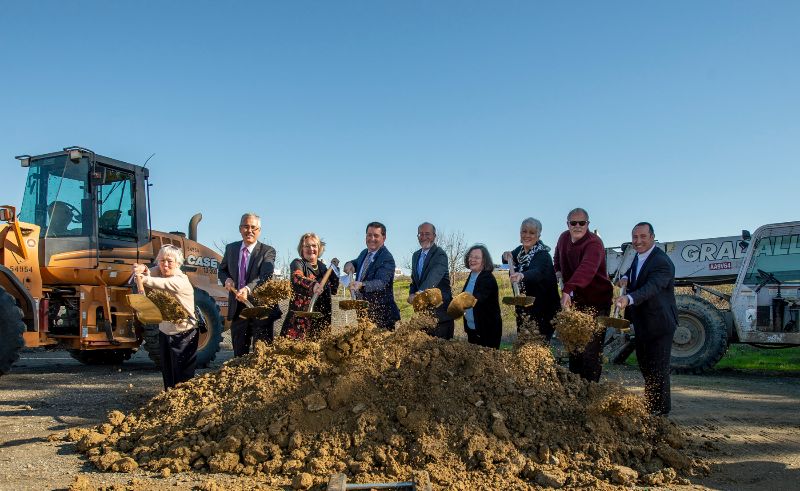
State and local elected officials join Contra Costa Transportation Authority Executive Director Randy Iwasaki (2nd from left) to break ground on improvements to the Interstate 680/State Route 4 Interchange Thursday, Jan. 24, 2019. Photo by CCTA.

One of the largest SB-1- funded capital projects to break ground in the State of California  

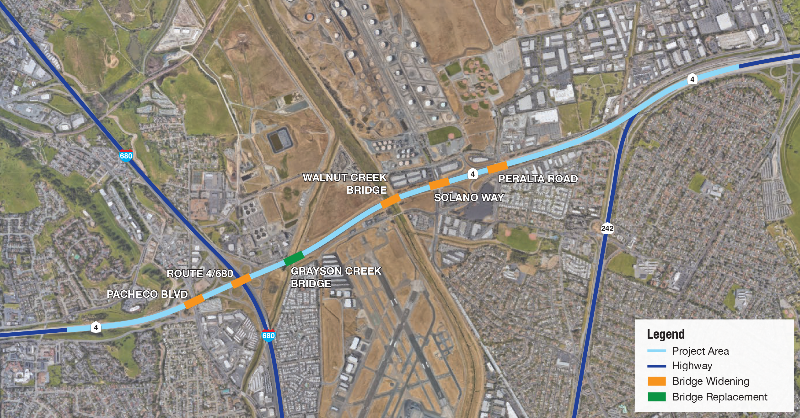
The Contra Costa Transportation Authority (CCTA) and the California Department of Transportation (Caltrans) announced the start of construction on the first phase of a multi-phased project to improve safety and help reduce congestion at the Interstate-680/State Route 4 Interchange in central Contra Costa County. The initial phase of construction involves widening a four-mile segment of State Route 4 in both directions between Morello Avenue in Martinez and State Route 242.  This phase of work also involves the replacement of the Grayson Creek Bridge to bring it up to current State bridge safety codes.

“Improving the I-680/SR4 Interchange has been a priority for the Contra Costa Transportation Authority for many years,” said CCTA Board Chair Federal Glover. “Thanks to an infusion of Senate Bill 1 funds from the State, we are able to take this first, important step in improving safety at this critical interchange.” The total cost for improving this segment is approximately $136 million.
“For too many years we have neglected our infrastructure, and as a result Californians spend too much time in traffic, too much money on car repairs, and far too little time with their friends and families,” said Assemblymember Grayson. “I have been working for over two years with the California Transportation Commission and Contra Costa Transportation Authority to fund and break ground on this long-awaited project so that our community can spend less time sitting in traffic and more time doing what they enjoy.”

“This project will reduce the travel time for the more than 100,000 people who drive this corridor each day, and is a key piece of an ambitious regional improvement plan,” said Caltrans District 4 Director Tony Tavares. “The funding from Senate Bill 1 is enabling Caltrans and the Contra Costa Transportation Authority to rebuild California’s highways.”

The Interstate 680/State Route 4 Interchange Improvement Project will widen approximately four miles of State Route 4 by adding a third lane in the eastbound and westbound directions to improve on-ramp and off-ramp merging.  The project also includes widening of five structures, extending eastbound State Route 4’s carpool lane approximately two miles, installation of safety lighting, and replacement of the Grayson Creek Bridge. Over 50 years old, the Grayson Creek Bridge has exceeded its serviceable life.

Breaking ground for this segment of work in this multi-phased project will lay the groundwork for future improvements to connector ramps, improve traffic safety and enhance traffic flow.

Interstate 680 serves as the main artery for motorists traveling through central Contra Costa County, connecting it with Solano County to the north and Alameda and Santa Clara counties to the south. State Route 4 serves as the only major east-west transportation link joining the communities of Antioch, Bay Point, Pittsburg and Brentwood with central and western Contra Costa County and the Bay Area. The I-680/SR 4 Interchange Improvement project will widen four miles of State Route 4 by adding a third lane in the eastbound and westbound directions and improve on-ramp and off-ramp merging actions. The project also includes widening of five structures, installation of safety lighting, and replacement of the Grayson Creek Bridge. This project will lay the groundwork for future improvements to connector ramps, improve traffic safety and enhance traffic flow.

Filed Under: Central County, News, Transportation

New subsidy program fuels Bay Area vanpooling

January 24, 2019 By Publisher Leave a Comment

Photo courtesy of MTC.

Program usage surged 23 percent last month

For drivers frustrated with a long, grueling commute, it’s never been a better time to look into vanpooling, thanks to the new Bay Area Vanpool Program, which provides direct subsidies to both new and existing vanpools.  A $9.5 million commitment approved by the Metropolitan Transportation Commission (MTC) in July 2018 allows qualifying vanpools that rent their vehicles through Commute With Enterprise, a service of Enterprise Rent-A-Car, to reduce the cost of their van rates by $350 a month, initially for the next five years.

More than 500 commute vanpools currently operate in the nine-county Bay Area, and MTC hopes the subsidy will grow the fleet to more than 800 vans over the next several years. The first Bay Area Vanpool Program subsidies were distributed in November 2018 to 71 separate vanpools, a number that rose last month to 88 vanpools.

“Vanpooling is a good option for commuters traveling 20 miles or more each way and who have pretty regular schedules,” said Megan Nangle, program manager for MTC’s Bay Area Vanpool Program. “More and more people are needing to commute farther given the Bay Area housing market, so vanpooling is becoming a good choice for more commuters.”

A vanpool typically consists of seven to 15 people commuting to and from home to work; often with two or three participants sharing the driving. If the vanpool includes seven people, the Bay Area Vanpool Program subsidy would average $50 per person per month. Participants can use pretax dollars to pay for the remainder of their vanpool expenses, further reducing the cost of their shared commute.

“Offering employees the ability to pay vanpool costs with pre-tax dollars is a way employers can comply with the Bay Area’s Commuter Benefits Program,” said Eric Pop, air quality specialist with the Bay Area Air Quality Management District. The Bay Area Commuter Benefits Program requires employers with 50 or more employees in the Bay Area to provide some type of commuter benefit to their workforce — be it transit or vanpool subsidies, shuttles to transit, or the ability to pay transit and vanpool costs with pre-tax dollars.

“Before these subsidies, a person’s vanpool cost typically would be around $150 a month, with the price varying by how far they commute, the number of people in the vanpool and the rental cost of the vehicle,” said Nangle, MTC’s vanpool program coordinator. “Between these new subsidies and the longstanding tax benefits, vanpooling is going to be a really cost-effective option for commuters traveling long distances.”

Vanpool driver Beth Russel, who commutes daily between Vacaville and Richmond, praised the merits of vanpooling. “With the added vanpool subsidy, our folks are happier than ever and now saving more than 60 percent off their commute costs of driving alone. There are only a few simple requirements to qualify for the program. Tracking our ridership and fuel costs is something we did anyway, and Enterprise has made it easy to track that information online now. It’s that simple to save even more money now on our daily commute, help reduce road congestion, build relationships with fellow van members and know that we are doing our part in making our planet a little bit greener.”

Commuters who do not already have a group with which to vanpool can learn how to join a vanpool or start a new one by visiting https://511.org/carpool-vanpool/vanpool/overview.

Vanpools can apply for the Bay Area Vanpool Program subsidies on the Enterprise site at https://www.commutewithenterprise.com/en/partners/mtc.html. The program is funded by MTC with federal Congestion Mitigation and Air Quality Improvement (CMAQ) transportation dollars and a grant from the Bay Area Air Quality Management District. The Commission selected Enterprise as the program vendor through a competitive process.

MTC is the transportation planning, financing and coordinating agency for the nine-county San Francisco Bay Area.

Filed Under: News, Transportation

New Year means higher tolls on seven Bay Area bridges beginning Tuesday

December 31, 2018 By Publisher Leave a Comment

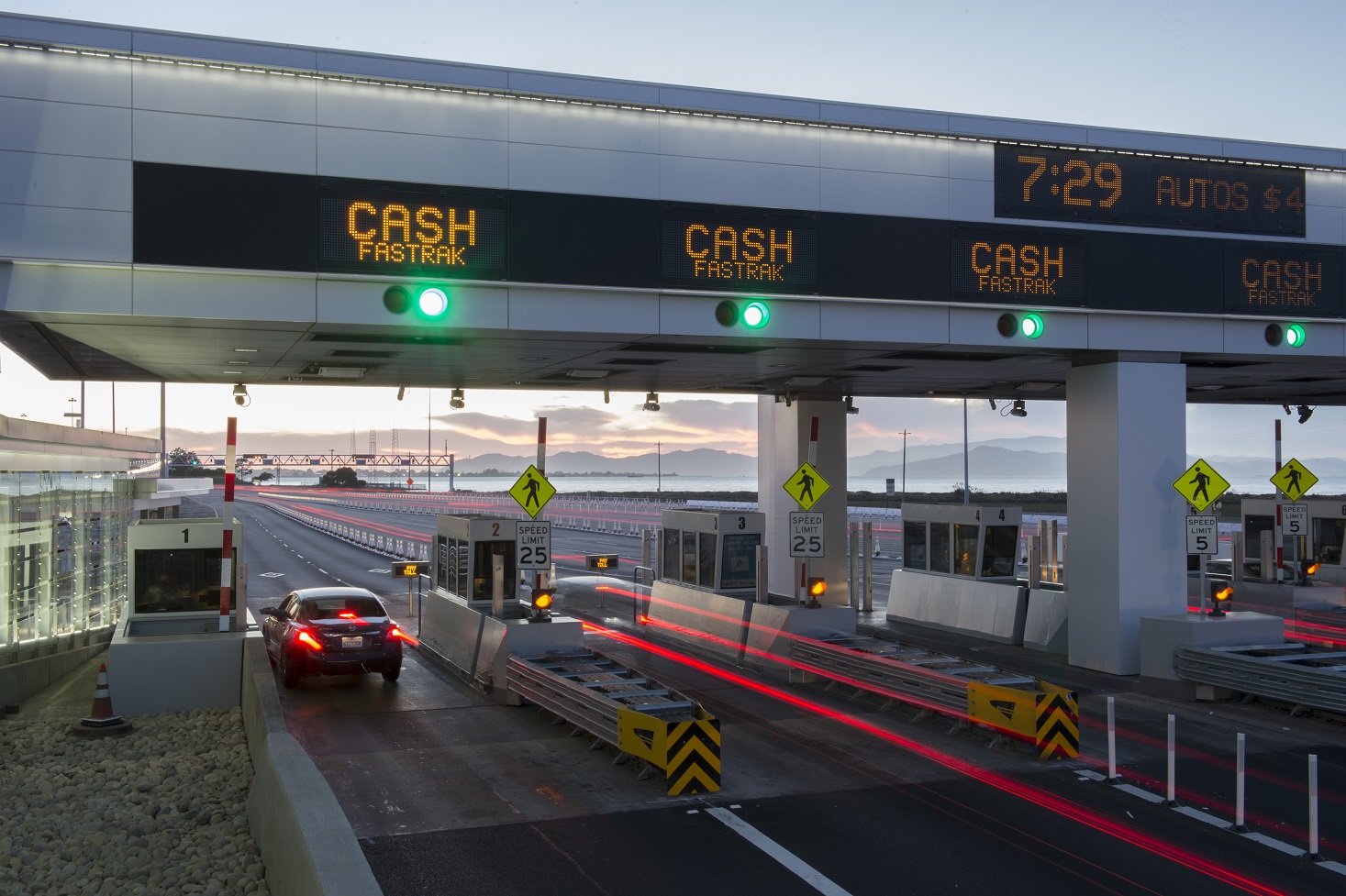
Bay Bridge Toll Plaza photos taken 9 /16 & 18/13. Karl Nielsen Photography www.karlnielsenphotography.com (805) 570-3395

First of three voter-approved increases

The Bay Area Toll Authority (BATA) reminds drivers that several important changes take effect Jan. 1, 2019, at the region’s seven state-owned toll bridges. These include the first of the $1 toll increases approved last year through state Senate Bill 595 and confirmed by voters through Regional Measure 3 in June 2018. This will mark the first toll hike at the state-owned toll bridges since 2010. Additional $1 increases will go into effect on Jan. 1, 2022, and on Jan. 1, 2025.

Regular tolls for two-axle cars and trucks (as well as for motorcycles) at the Antioch, Benicia-Martinez, Carquinez, Dumbarton, Richmond-San Rafael and San Mateo-Hayward bridges will rise to $6 from the current $5 on Jan. 1, 2019.

At the San Francisco-Oakland Bay Bridge, regular tolls will climb to $7 from the current $6 on weekdays from 5 a.m. to 10 a.m. and from 3 p.m. to 7 p.m. During weekday off-peak hours from 12 midnight to 5 a.m., from 10 a.m. to 3 p.m., and from 7 p.m. to midnight, Bay Bridge tolls will rise from $4 to $5; and on Saturdays and Sundays, Bay Bridge tolls will increase to $6 from the current $5.

Tolls for vehicles with three or more axles also will rise by $1 on Jan. 1, 2019, at all seven of the state-owned toll bridges: to $16 for three axles, $21 for four-axles, $26 for five axles, $31 for six axles, and $36 for combinations with seven or more axles.

Senate Bill 595 continues the peak-period toll discount for motorcycles, carpools and qualifying clean-air vehicles crossing any of the state-owned toll bridges on weekdays from 5 a.m. to 10 a.m. and from 3 p.m. to 7 p.m. The discounted toll is scheduled to increase to $3 on Jan. 1, 2019, from the current $2.50. To qualify for this discount, carpoolers, motorcyclists and drivers of qualifying clean-air vehicles must use FasTrak to pay their tolls electronically and must use a designated carpool lane at each toll plaza.

Senate Bill 595 also established a 50-cent toll discount for two-axle vehicles crossing more than one of the state-owned toll bridges during weekday commute hours of 5 a.m. to 10 a.m. and 3 p.m. to 7 p.m. To be eligible for the toll discount, which is to be applied to the second toll crossing of the day, motorists must pay their tolls electronically with FasTrak. Carpools, motorcycles and qualifying clean-air vehicles making a second peak-period toll crossing in a single day will qualify for an additional 25-cent discount off the already-discounted carpool toll. The two-bridge discount will not be available to drivers who use cash to pay their tolls.

New FasTrak customers can obtain toll tags at hundreds of Walgreens and Costco stores around the Bay Area. A complete list of participating locations — as well as an online enrollment and registration feature — is available on the FasTrak Web site at bayareafastrak.org. Customers also may enroll in the FasTrak program by phone at 1-877-229-8655; by calling 511 and asking for “FasTrak” at the first prompt; or in person at the FasTrak customer service center at 375 Beale Street in San Francisco. Operating hours are Monday-Friday, 8:30 a.m. to 5:30 p.m. and Saturdays, 9 a.m. to 1 p.m. FasTrak can be used in all lanes at all Bay Area toll plazas.

On Wednesday, Dec. 19, 2018 BATA formally approved the new toll schedule through adoption of BATA Resolution No. 128 at its regular December meeting. The Authority today also adopted BATA Resolution No. 129, which authorizes arrangements for the escrow of Regional Measure 3 funds pending the resolution of two lawsuits challenging state Senate Bill 595 and Regional Measure 3. Both lawsuits are pending in Superior Court in the City and County of San Francisco. Under BATA Resolution No. 129, the Regional Measure 3 toll increases, when collected, will be placed into an escrow account managed by an independent trustee. Following a process similar to voter-approved sales tax measures that face legal challenge, these funds will be transferred at least once each week from BATA to a Union Bank (Mitsubishi United Financial Group – MUFG) trust account, where the funds will be managed by a bank trust officer until final resolution of all litigation. Once the BATA legal team certifies there is a final resolution, the Authority will be asked to release the escrow. If BATA prevails in the litigation, the funds will be applied to BATA-approved programs. If BATA should lose the litigation, the funds will be reimbursed to tollpayers.

BATA, which is directed by the same policy board as the Metropolitan Transportation Commission (MTC), administers toll revenues from the Bay Area’s seven state-owned toll bridges. Toll revenues from the Golden Gate Bridge are administered by the Golden Gate Bridge, Highway and Transportation District, which joined with BATA to operate a single regional FasTrak customer service center in San Francisco. MTC is the transportation planning, financing and coordinating agency for the nine-county San Francisco Bay Area.

Filed Under: News, Taxes, Transportation

Frazier reappointed as Chair of Assembly Transportation Committee

December 29, 2018 By Publisher Leave a Comment

Also continues on Insurance and Veterans Affairs Committees

Assemblyman Jim Frazier

Sacramento, CA – Assemblymember Jim Frazier (D–Discovery Bay) made the following statement after Speaker Anthony Rendon (D – Paramount) reappointed him as Chair of the Assembly Transportation Committee:

“I am honored that Speaker Rendon has given me the privilege to continue as Chair of the Assembly Transportation Committee.  Serving as chair of this Committee has given me the opportunity to help lead California into a golden age of transportation infrastructure repair.”

“A strong economy depends on roads and highways that are safe and efficient and California is now a leader in the nation on finding transportation solutions that keep the residents of our cities, counties and state moving.  This historic infrastructure investment will put tens of thousands of Californians to work throughout the state.”

In addition to Chair of the Assembly Transportation Committee, Assemblymember Frazier was also reappointed to the Committees on Insurance, and Veterans Affairs, and was newly appointed to the Budget Subcommittee No. 1 on Health and Human Services.

Assemblymember Frazier represents the 11th Assembly District, which includes the communities of Antioch, Bethel Island, Birds Landing, Brentwood, Byron, Collinsville, Discovery Bay, Fairfield, Isleton, Knightsen, Locke, Oakley, Pittsburg (partial), Rio Vista, Suisun City, Travis AFB, Vacaville and Walnut Grove.

Filed Under: East County, Government, News, Transportation

Ribbon cutting celebrates new Balfour Road interchange marking completion of Hwy 4 extension

December 12, 2018 By Publisher Leave a Comment

Elected officials and staff from Brentwood, East County and the Contra Costa Transportation Authority cut the ribbon to mark the opening of the new Balfour Road – Highway 4 Interchange on Monday, Dec. 10, 2018. Photo by Allen Payton

20 years since the right-of-way was purchased, completes $1.3 billion in East County transportation projects

The Contra Costa Transportation Authority (CCTA) and its partners, the Contra Costa Water District (CCWD), the Contra Costa Regional Fee and Financing Authority (ECCRFFA), the California Department of Transportation, and the City of Brentwood, held a ribbon cutting ceremony for the completion of the Highway 4 and Balfour Road Interchange Project. CCTA was joined by State, regional, and local officials to celebrate the completion of the interchange project, which brings much-needed traffic relief to Brentwood and Contra Costa County.

“Today’s ribbon cutting is one more symbol of the transformation taking place in Brentwood and Eastern Contra Costa County,” said CCTA Vice Chair and Brentwood Mayor Bob Taylor.  “This project has reduced traffic, improved safety, and will have long term economic benefits for our region.”

He stated that the project was “on time and under budget.”

“This organization does a wonderful job. This is an amazing structure and it will be here for generations,” Taylor added.

Photo courtesy of CCTA.

The Balfour Road Interchange Project replaced the existing signalized, at-grade intersection at Balfour Road and State Route 4 with a grade-separated interchange and corresponding on- and off-ramps.  The project involved raising State Route 4 to cross over Balfour Road, creating a new, safer undercrossing.  This new configuration has eased traffic congestion and improved safety at this intersection for motorists, cyclists, and pedestrians

The project was one of the first in the state to use innovative drone technology to monitor construction progress.  With assistance from engineering firm Alta Vista Solutions, CCTA flew drones equipped with a combination of LiDAR and camera technology to measure the volumes of earth that were moved during the $42 million construction project.  Utilizing this technology enabled CCTA to track construction progress firsthand and improve safety by taking workers out of live traffic.

“In 2008 when I was rescued from CalTrans, we finished the work on the Loveridge interchange,” stated CCTA Executive Director Randy Iwasaki. “Here we are and now we’re opening the last segment of the projects we had identified. Today marks the official opening of the $42 million Highway 4, Balfour Road interchange.”

“We are always looking for new ways to increase safety and efficiency on construction projects,” he shared. “Drones give us aerial views of the site that were hard to come by before, making it safer for surveyors to do their job and helping us manage the large volume of dirt that was used to improve this intersection. This technology also allowed us to monitor environmentally sensitive areas without disturbing the habitat.”

Photo courtesy of CCTA.

Innovation on the project extended beyond the use of technology.  CCTA also facilitated a collaborative, multi-agency agreement that saved both time and money for the Balfour Road Interchange project.  Prior to the start of construction, CCTA and the Contra Costa Water District (CCWD) worked together to gain Caltrans approval to leave the 90-inch Los Vaqueros Pipeline in place along the project alignment, essentially building the new highway infrastructure in conformity with the existing pipeline. Rather than a complete relocation of the relatively new pipeline, CCTA, CCWD and Caltrans arrived at a design that maintained the reliability and longevity of the infrastructure, worked for all agencies, reduced environmental and community impacts – which saved Contra Costans approximately $18 million in environmental permitting, property acquisition and construction costs.

Constance Holdaway, Vice President of the CCWD Board of Directors said, “We have a 90-inch pipeline running through this area from the Los Vaqueros Reservoir.” She gave credit to “creative minds” which “ssaved money and minimized environmental impacts.”

State Assemblyman Jim Frazier, who served on the CCTA Board in the past, and is now Chairman of the Assembly Transportation Committee shared some background on the funding for the project.

“We delivered $83 million for Highway 4 improvements including this project,” he stated. “We went hat in hand” to the state capital asking for funding.

“You were very sick, that day,” Taylor interjected.

“Yes, I was. I checked myself out of the hospital to go that day. Then I checked myself back in,” Frazier shared.

“I have to recognize the good work of the CCTA, and the contractors Brosamer & Wall and Bay Cities,” he continued. “I want to thank the CC building and trades and the CHP working to protect the workers.

“Randy and I are working on the Sand Creek (Road) project from the interchange to Kaiser, with the developers,” Frazier stated. “I’m also working with Tri Delta Transit and instead of BART, we’re looking at a bus rapid transit system from Hillcrest to Marsh Creek Road.”

Supervisor Diane Burgis, Chair of the Eastern Contra Costa Regional Fee and Financing Authority, which collects and provided developer fees for the project, said “Today, we have a project that really contributes to the quality of life in Eastern Contra Costa County. Residents who use this road…they’re going to get home quicker.”

She acknowledged Dale Dennis who was the lead staff member for the Bypass Authority.

“Those of us who are using this freeway are already enjoying the benefits of it,” Burgis added

Former State Route 4 Bypass Authority Chairman, Allen Payton, offered some history about the project, honoring Tom Torlakson, who was a County Supervisor at the time he proposed the idea of the extension to Highway 4, formerly known as the “bypass”. Payton stated it was 20 years ago, this year that the authority approved the purchase of 250 feet of right-of-way for the segment between Lone Tree Way and Balfour Road for $950,000 to provide room for four lanes of traffic and two lines of transit.

“It started out in 1994 with three votes in favor versus eight votes against at the CCTA,” he shared. “It took us four years to get to an 11-0 vote to approve the road.”

He thanked Iwasaki and Frazier for “finding the hidden pockets of state money” to complete the freeway extension. Payton also encouraged the elected representatives in attendance, specifically Frazier, of the need to speed up the approval and implementation process for traffic improvements. Iwaski agreed.

Iwasaki then mentioned the funding from the county’s half-cent sales tax Measure J and thanked CCTA staff members Jack Hall, Stephanie Hu, Linsay Willis, Susan Miller, Tim Hale and Ross Chittenden for their work on the project. He also acknowledged “the engineering and design, and construction teams and all the subcontractors, the men and women who built this project.” They included Quincy Engineering, specifically Carl Gibson, the chief designer on the project and PSOMAS, specifically Bonaventure Ezeji, the resident engineer.

Iwasaki then honored Steve Kersevan, the City of Brentwood Traffic Engineer for his help on the project and presented him with a plaque.

“I was just doing my job. Now I can retire” Kersevan said with a smile.

The extension to Highway 4 is the only stretch of new freeway in the entire nine-county Bay Area between 1998 and 2018, and was the first section of state highway in California history to be partially funded with local developer fees.

About the Contra Costa Transportation Authority

The Contra Costa Transportation Authority (CCTA) is a public agency formed by Contra Costa voters in 1988 to manage the county’s transportation sales tax program and oversee countywide transportation planning efforts. With a staff of twenty people managing a multi-billion-dollar suite of projects and programs, CCTA is responsible for planning, funding and delivering critical transportation infrastructure projects and programs that connect our communities, foster a strong economy, increase sustainability, and safely and efficiently get people where they need to go. CCTA also serves as the county’s designated Congestion Management Agency, responsible for putting programs in place to keep traffic levels manageable. More information about CCTA is available at ccta.net

About the Highway 4 Projects

The Highway 4 projects include improvements that will help modernize eastern Contra Costa County. The projects expand Highway 4 from four to eight lanes between Loveridge Road in Pittsburg to just west of State Route 160 in Antioch, from two to four lanes from Lone Tree Way to Balfour Road in Brentwood, add missing connector ramps at the State Route 160/Highway 4 interchange, and add a BART extension from Pittsburg to Antioch (eBART). This will greatly improve transit accessibility for the region, help reduce traffic congestion, and enhance the quality of life for the more than 250,000 residents of eastern Contra Costa County. The projects have been carefully staged to keep 130,000 vehicles per day moving as major construction and demolition work continue. These projects, plus previously constructed projects in the region, bring the total investment in East County to $1.3 billion, including State, Federal, Contra Costa Transportation Authority Measures C and J, regional bridge tolls, and other funds.

For additional information about the Balfour Road Interchange Project, please visit www.4eastcounty.org.

Filed Under: East County, News, Transportation

Final two lanes of Highway 4, first stage of Balfour Road interchange in Brentwood completed

July 21, 2018 By Publisher Leave a Comment

The two new southbound lanes of Highway 4 between Sand Creek and Balfour Roads in Brentwood opened today, Saturday, July 21, 2018.

The Contra Costa Transportation Authority (CCTA) has completed the first stage of construction on the Balfour Road Interchange Project, and has opened newly constructed lanes to the public as of Saturday morning. This major project milestone is part of a $42.7 million-dollar construction project to improve safety and efficiency at this busy intersection in Brentwood.

A traffic switch will occur this weekend that will move eastbound Highway 4 drivers onto the newly built, elevated alignment over Balfour Road. Additionally, eastbound Highway 4 motorists will be able to use newly constructed on and off-ramps. A new signal will be activated at the intersection of Balfour Road and the new off-ramp, and directional signage will be in place to help inform motorists.

“This is a big deal for Brentwood”, said Brentwood Mayor Bob Taylor. “Balfour Road is a major intersection, and the opening of these new lanes bring us one step closer to making this a better, safer intersection for drivers, bicyclists and pedestrians.”

“Our goal is to help keep Contra Costa moving”, stated CCTA Executive Director Randy Iwasaki. “The Balfour Road Interchange Project is the final piece in the modernization of Highway 4 that our agency has led over the past eight years – and we are excited to be delivering on our promise to the public by bringing improved mobility to eastern Contra Costa County.”

The new Balfour Road on- and off-ramps from and to southbound Highway 4 opened today, Saturday, July 21, 2018.

“We purchased the right-of-way for the four lanes of traffic and two lines of transit down the center, 20 years ago, this year,” said Allen Payton, Chairman of the State Route 4 Bypass Authority in 1998. “Half of that section, of what was known as the Highway 4 Bypass, was paid for with local developer fees. The other half was to be paid for with state funds. But that commitment took years to be fulfilled. Special thanks go to Randy Iwasaki for helping secure the money from the state and to the CCTA for getting the project completed.” 

A portion of the funds to complete the project were from Measure J, the county’s half-cent sales tax for transportation which is allocated by the CCTA. The effort for the project began in the early 1990’s and took until 1998 to get approval from the CCTA Board of Directors, without any financial commitment at that time.

Visualizations of the new eastbound on and off-ramps, as well as eastbound through traffic can be viewed online at:

https://youtu.be/2RU5o3CjcIs

https://youtu.be/2acw46W4AdI

https://youtu.be/saN5QOS9A4E

Traffic on westbound Highway 4 towards Antioch will remain on the same alignment and continue to operate without any changes at this time. The entire project is expected to be complete in late 2018 or early 2019.

About the Highway 4 Projects

The Highway 4 projects include improvements that will help modernize eastern Contra Costa County. The projects expand Highway 4 from four to eight lanes between Loveridge Road in Pittsburg to just west of State Route 160 in Antioch, from two to four lanes from Lone Tree Way to Balfour Road in Brentwood, add missing connector ramps at the State Route 160/Highway 4 interchange, and add a BART extension from Pittsburg to Antioch with a new stop in Pittsburg and Antioch. This will greatly improve transit accessibility for the region, help reduce traffic congestion, and enhance the quality of life for the more than 250,000 residents of eastern Contra Costa County. The projects have been carefully staged to keep 130,000 vehicles per day moving as major construction and demolition work continue. These projects, plus previously constructed projects in the region, bring the total investment in East County to $1.3 billion, including State, Federal, Contra Costa Transportation Authority Measures C and J, regional bridge tolls, and other funds. View the story of Highway 4 at http://4eastcounty.org/stories/

About the Contra Costa Transportation Authority

The Contra Costa Transportation Authority (CCTA) is a public agency formed by Contra Costa voters in 1988 to manage the county’s transportation sales tax program and oversee countywide transportation planning efforts. With a staff of twenty people managing a multi-billion dollar suite of projects and programs, CCTA is responsible for planning, funding and delivering critical transportation infrastructure projects and programs that connect our communities, foster a strong economy, increase sustainability, and safely and efficiently get people where they need to go. CCTA also serves as the county’s designated Congestion Management Agency, responsible for putting programs in place to keep traffic levels manageable. More information about CCTA is available at ccta.net.

Filed Under: East County, News, Transportation

Richmond’s CyberTran to host Alameda County Supervisors’ Transportation Committee meeting Thursday to discuss ultra-light rail transit system

July 18, 2018 By Publisher 3 Comments

Artist’s rendering of a CyberTran vehicle and station with overhead solar panels generating the power to operate the system.

The Alameda County Board of Supervisors’ Transportation/Planning Committee will be holding a first of its kind, off-sight meeting to learn about an “Ultra Light Rail Transit System in the Alameda County East Bay Region” known as CyberTran. The meeting will be held at the U.C. Berkeley Global Campus in Richmond, where CyberTran International, Inc. has their headquarters and lab.

Overview rendering of the offline CyberTran stations.

The meeting is being held in response to the recent action by the BART Board to vote down the extension to Livermore, as the Board of Supervisors looks for an alternative transit system from the Pleasanton BART Station east.

“Alameda County has critical needs when it comes to traffic congestion. We can help,” said Dexter Vizinau, President of CyberTran International.

The solar-powered CyberTran system has been tested including by BART’s engineering department, which determined it can be built for a fourth of the cost of a BART system and operate a fraction of the cost. It can move as many people per hour per direction as BART can through the Bay Tube, which is 17,000 passengers.

During the meeting, the supervisors who serve on the committee will discuss a resolution in support of using the CyberTran system in Alameda County. The agenda for the meeting can be viewed here.

For more information about CyberTran, visit www.cybertran.com.

Editor’s Note: The publisher of the Herald has a financial interest in CyberTran International, Inc.

Filed Under: News, Technology, Transportation, West County

  • « Previous Page
  • 1
  • …
  • 21
  • 22
  • 23
  • 24
  • 25
  • …
  • 31
  • Next Page »
Liberty-Tax-Jan-Apr-2026
Deer-Valley-Chiro-06-22

Copyright © 2026 · Contra Costa Herald · Site by Clifton Creative Web