• Home
  • About The Herald
  • Local Agencies
  • Daily Email Update
  • Legal Notices
  • Classified Ads

Contra Costa Herald

News Of By and For The People of Contra Costa County, California

  • Arts & Entertainment
  • Business
  • Community
  • Crime
  • Dining
  • Education
  • Faith
  • Health
  • News
  • Politics & Elections
  • Real Estate

Extensive search for missing fisherman in the water near Antioch bridge unsuccessful Saturday

April 30, 2018 By Publisher Leave a Comment

One fisherman rescued from the river near the Antioch bridge by Contra Costa Sheriff’s Marine Patrol, Saturday, April 28, 2017. Screenshot or report from NBC Bay Area.

Sheriff’s Marine Patrol assisted by Coast Guard helicopters, state Fish and Wildlife, Contra Costa Fire

By Jimmy Lee, Director of Public Affairs, Contra Costa County Office of the Sheriff

Saturday morning at approximately 8:25, Marine Patrol deputies heard a distress call on the radio. It was reported that two men had fallen off a boat near the Antioch Bridge and were struggling in the water. Marine Patrol units responded immediately and within minutes arrived on scene. A deputy located one of the victims who was pulled out of the water by a passing boater. The other boater was missing. The boaters were apparently at the time attempting to set an anchor to fish when their boat was hit by a wake causing both to fall overboard. Both of them were not wearing life jackets.

The missing boater is not being identified at this time. An extensive area search by Coast Guard helicopters, state Fish and Wildlife, and Contra Costa Fire and Sheriff’s Office patrol vessels was suspended at about 3:30 PM. He was not located.

Anyone with any information on this missing boater is asked to contact the Contra Costa County Office of the Sheriff at 925-646-2441.
Filed Under: East County, News, Sheriff, The Delta

Frazier not happy So Cal water district voted to fund Delta twin tunnels plan

April 11, 2018 By Publisher Leave a Comment

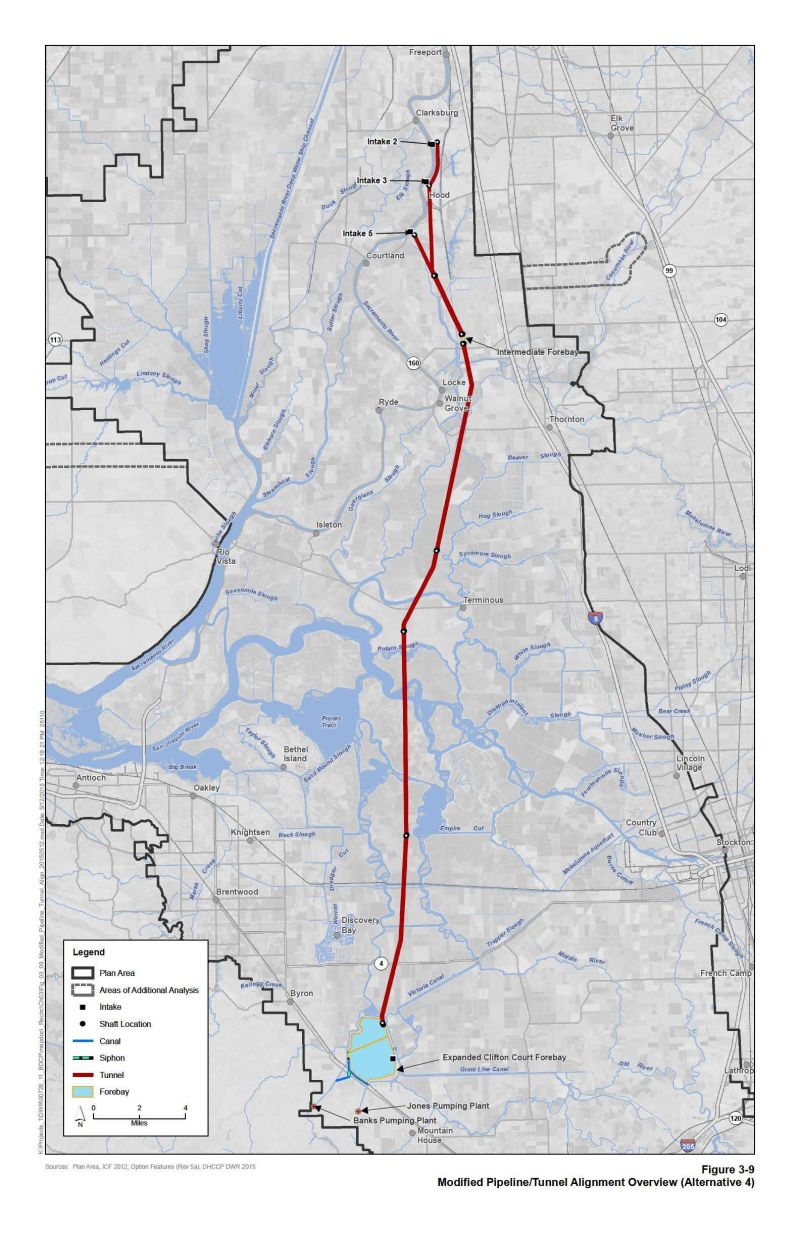
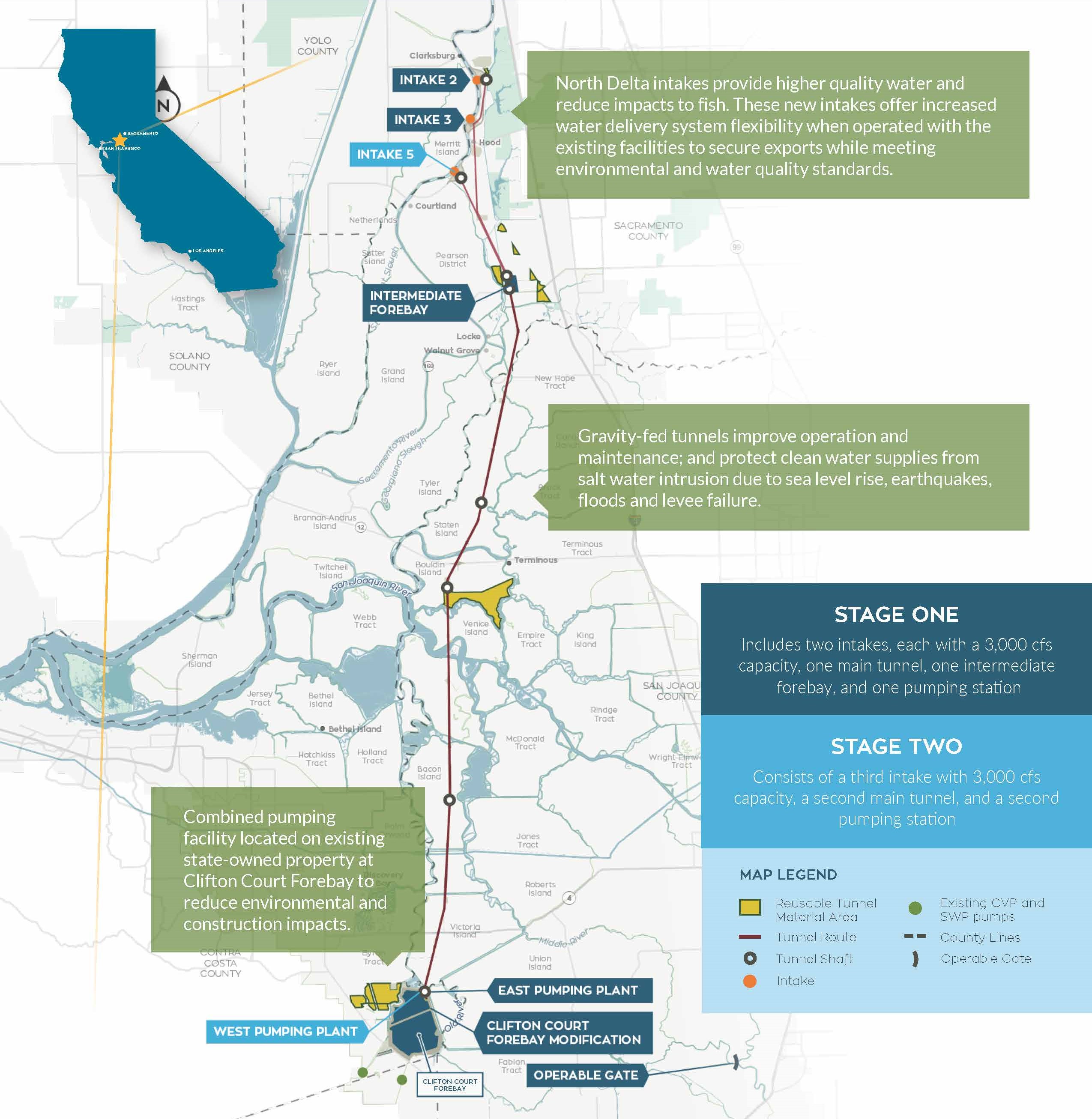
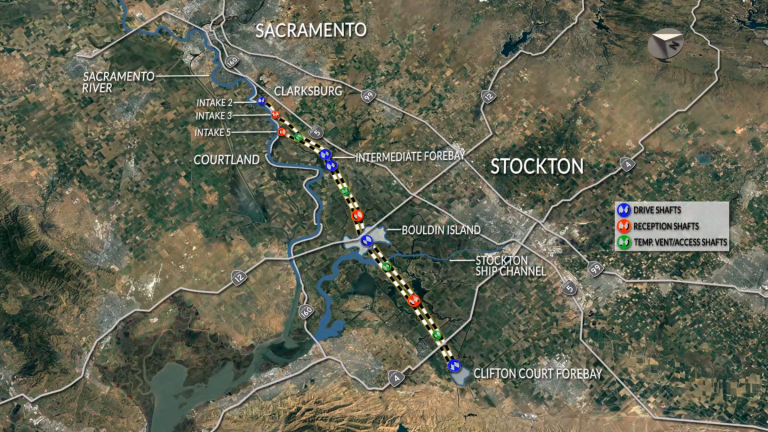
California WaterFix Delta bypass twin tunnels route map. From californiawaterfix.com.

SACRAMENTO – Assemblymember Jim Frazier (D-Discovery Bay) issued the following statement today after the Metropolitan Water District of Southern California’s Board of Directors voted to finance the majority of the proposed Delta twin tunnels plan, known as the California WaterFix:

“Californians deserve comprehensive 21st century water management solutions in light of climate change and more frequent and devastating droughts, not a decades old plan that creates no benefit and picks the pockets of hard-working people.

The vote by the Metropolitan Water District of Southern California shows that proponents of this project have been deceitful the whole time. There’s never been a “statewide” approach as they’ve claimed. It’s never been about sustainability but a foolhardy plan to overdraw the Delta to sell a limited and precious natural resource to the highest bidder.

This boondoggle uses antiquated methods for water delivery to degrade the water quality for all Californians and places greater burdens farmers in the Delta and Central Valley.

Just like the Colorado River Compact, this project is built on false pretenses of water availability. Met has already proven they are bad actors by overcharging San Diego for water many times. Given this history, my concern is Met may try to overcharge Central Valley farmers too.”

A press release issued Tuesday explaining their action, it stated, the board of directors of the Metropolitan Water District of Southern California voted today to provide the additional financing necessary to allow for the construction of the full California WaterFix project.

The board authorized $10.8 billion for the project to modernize the state’s aging water delivery system, making Metropolitan the primary investor in the project and more than doubling the agency’s initially planned investment to ensure the project is completed as originally proposed and studied.  “For decades, we have sought a solution to the problems of the Bay Delta, problems that put Southern California’s water supply at risk,” Metropolitan board Chairman Randy Record said. “We finally have that solution, California WaterFix. We simply could not jeopardize the opportunity to move this long-sought and much-needed project forward.”

WaterFix will be paid for by the people and businesses that use the water it helps deliver via the retail water agencies and cities that serve those customers. Metropolitan’s financing of the full project is expected to cost households on average up to $4.80 a month, though that average cost would be reduced as Metropolitan recoups some of its investments from the agricultural sector. Metropolitan will be selling or leasing capacity in the tunnels to allow water deliveries or exchanges for other parties.

About 30 percent of the water that flows out of taps in Southern California comes from Northern California via the Sacramento-San Joaquin Delta. But the Delta’s delivery system is badly outdated, its ecosystem is in decline and its 1,100-mile levee system is increasingly vulnerable to earthquakes, flooding, saltwater intrusion, sea level rise and environmental degradation.

Attempts to help the Delta have led to regulatory restrictions that have reduced water exports from the region. California WaterFix would modernize the state’s water delivery system by building three new water intakes in the northern Delta and two tunnels to carry the water under the Delta to the existing aqueduct systems in the southern Delta that deliver water to cities and farms.

In October 2017, Metropolitan’s board initially voted to participate in WaterFix and contribute up to 26 percent of its $17 billion cost, or about $4.3 billion.  But the majority of federal agricultural contractors who also import supplies via the Delta have yet to commit to investing in the project, leaving part of the project’s costs unfunded. In February, the state proposed building the project in stages instead–starting with two intakes and one tunnel, with a capacity of 6,000 cubic feet per second. An additional intake and tunnel would be added when funding allowed.

In today’s action, Metropolitan’s board chose between supporting this staged construction of the project or helping finance the full 9,000 cfs project all at once, with the hope of recouping the investment from agricultural interests once the project is completed. Staging the project also would result in potential permitting delays associated with the change in approach.

Under the staged approach, the cost of building one tunnel would be about $11.1 billion, with Metropolitan’s share of those capital costs coming in at $5.2 billion. The board ultimately voted to support building the full project all at once at an estimated cost of $16.7 billion, with Metropolitan’s investment at about  $10.8 billion in today’s dollars.

“Two tunnels better accomplishes WaterFix’s co-equal goals of improving the environment and securing supply reliability,” said Metropolitan General Manager Jeffrey Kightlinger. “With them, we’re better able to capture the high flows of big storms that climate change is expected to bring. We’ll better address the reverse flows that disrupt the Delta’s ecology. And we’ll have more flexibility to operate the water delivery system.”

Kightlinger added that investing in WaterFix does not change Metropolitan’s commitment to local supply development and conservation.

“This investment is just one part of ensuring Southern California and its $1.3 trillion economy has a reliable water supply in the age of climate change,” he said. “We need a diverse portfolio, including water recycling, storm-water capture, and increased conservation. We will continue to work hard and invest in those projects.”

The Metropolitan Water District of Southern California is a state-established cooperative of 26 cities and water agencies serving nearly 19 million people in six counties. The district imports water from the Colorado River and Northern California to supplement local supplies, and helps its members to develop increased water conservation, recycling, storage and other resource-management programs.

Filed Under: East County, Environment, News, The Delta, Water

Frazier: One Delta tunnel is a deception

February 11, 2018 By Publisher Leave a Comment

California WaterFix (i.e. Delta Twin Tunnels) route. From californiawaterfix.com

SACRAMENTO – Assemblymember Jim Frazier, D-Discovery Bay, issued a statement on Thursday, after the Department of Water Resources (DWR) announced it is significantly altering the proposed WaterFix project to construct one larger tunnel first and build a second tunnel later.

Assemblyman Jim Frazier

On Wednesday, the DWR sent a memo to the local public water agencies participating in the development and construction of California WaterFix and issued the following statement from DWR Director Karla Nemeth.

“WaterFix is a long-overdue infrastructure upgrade that will maintain a reliable water supply for 25 million Californians while also protecting the Delta ecosystem. With the current stated support of the participating public water agencies, the state is proposing to pursue WaterFix as planned, but also explore an option to implement construction in stages. This prudent approach aligns the urgent statewide need for action with the project’s current support. We are eager to move forward with WaterFix to protect the Delta and water supplies.”

The memo further states “The option for a first stage includes two intakes…one tunnel, one intermediate forebay, and one pumping station.”

Frazier responded with the following statement:

“The Department of Water Resources is trying to sell its latest WaterFix revision as a one-tunnel plan, but that is smoke and mirrors,” Frazier stated. “Their plan still calls for two tunnels. The new plan still poses the same threat to the Delta’s environment, agricultural economy and way of life. There still is no cost-benefit analysis or economic justification for the project.  The project still does not create a single ounce of new water.

DWR has shape-shifted the size of the tunnels. This is now an entirely new project. The process must start over from the beginning, with an entirely new Environmental Impact Report.  The proposed new and even larger tunnel will have even greater ecological and economic impacts on the Delta.

DWR can’t just amend the EIR and biological opinions and pass it off as legitimate. The size and scope of a project this size demands a thorough process and the ability for the people of the Delta to voice their concerns.

DWR’s method for estimating the cost of its revised plan is also curious. Instead of doing a comprehensive cost analysis for the revised proposal, they gave us lazy math. They just took $16.3 billion cost estimate they have been using and chopped it into thirds.

When I was a construction contractor, I couldn’t just change my building plans without bringing it back for review. DWR and the Administration should not be exempt from process that all building projects are subject to in California, especially on one of the biggest infrastructure projects in the state’s history.”

Filed Under: East County, Environment, News, Opinion, The Delta, Water

Restore the Delta prepares for litigation after DWR’s filing of WaterFix tunnels NOD

July 26, 2017 By Publisher Leave a Comment

Stockton, CA – As anticipated, the California Department of Water Resources issued the Notice of Determination (NOD) for CA WaterFix on Friday, July 21.

Executive Director for Restore the Delta Barbara Barrigan-Parrilla issued the following statement:

“We are not surprised that the Notice of Determination has been issued. The Brown Administration will celebrate this document as a type of victory regarding the advancement of CA WaterFix. But it’s not. The EIR and the plan for the tunnels are deeply flawed as the project will not create water supply reliability in a world with increased and prolonged droughts, but perhaps up to 75 years of debt to be paid back by water ratepayers as recently proposed by Goldman Sachs representatives.

“We, other environmental organizations, and other parties in the Delta are preparing for litigation. We will expand our fight in the court of public opinion. We are considering all possible legal and political options to stop the project.”

Supplementary Documents:

FINAL Mitigation Monitoring and Reporting Program for the California WaterFix

CEQA Findings of Fact and Statement of Overriding Considerations

DWR Notice of Determination Items

DWR Official Press Release

Filed Under: Environment, News, The Delta, Water

Frazier: Delta tunnels project must not proceed

July 26, 2017 By Publisher Leave a Comment

SACRAMENTO – Assemblymember Jim Frazier (D–Discovery Bay), co-chairman of the California Legislative Delta Caucus, released the following statement Friday, July 21 after reports Gov. Jerry Brown’s administration has given the green light to the proposed Delta tunnels project.

“I represent more of the Delta than any other member of the Assembly, and I will do everything in my power to stop this ill-conceived and destructive project,” Frazier stated. “The truth is, ultimately the disaster of an idea called the Delta tunnels would disrupt the Delta economy and significantly burden agricultural production, recreational activities, the natural migratory paths of endangered fish species and legacy communities.  The governor needs to explore real options that communities throughout the Delta can support to achieve the co-equal goals of restoring and protecting the Delta’s habitat, and providing clean and reliable water to Californians.  He must not green light the tunnels plan.”

Filed Under: East County, Environment, The Delta, Water

Delta tunnels project reaches key milestone as state environmental review is certified

July 22, 2017 By Publisher Leave a Comment

California WaterFix map

SACRAMENTO – Clearing another major milestone toward the modernization of the state’s water delivery system, the California Department of Water Resources (DWR) today certified the environmental analysis of the California WaterFix, also known as the Delta tunnels. Friday’s announcement follows recent federal biological opinions that confirm the project is consistent with environmental and wildlife protection standards. 

“Today, we have reached our next important benchmark in moving California towards a more reliable water supply,” said DWR Acting Director Cindy Messer. “With this certification, our state is now closer to modernizing our aging water delivery system in a way that improves reliability and protects the environment.”

The WaterFix will modernize a 50-year-old water delivery system that is increasingly vulnerable to disruption by natural disaster and climate change. With new intakes along the Sacramento River, the project also would give water project operators the flexibility to divert water at times of high flow when the risk to native fish at the new diversion facilities is minimal, thus better balancing water supply and environmental protection needs.

Friday’s certification comes after more than a decade of analysis, review, and public comment. State and federal water and wildlife agencies have been working since 2006 to find the best way to improve how the State Water Project and Central Valley Project obtain water from the channels of the Sacramento-San Joaquin Delta. Together, the projects supply 25 million Californians with some or all of their drinking water supply and help irrigate three million acres of farmland.  

The Notice of Determination and decision documents signed by Acting Director Messer approve WaterFix as the proposed project under the California Environmental Quality Act (CEQA). The project helps ensure stable water supplies for millions of Californians. CEQA requires state and local agencies to identify the significant environmental impacts of their actions and to avoid or mitigate those impacts, if feasible. See the Notice Of Determination, here: WaterFix Notice of Determination

DWR, which operates the State Water Project, screened more than 100 different proposals before analyzing 18 alternatives in depth in the final 50,000-page Environmental Impact Report (EIR) under CEQA. The combined public comment period on these environmental analyses lasted nearly a year.

The project was refined several times to shrink its footprint, minimize impacts to Delta landowners, and make other changes.

The CEQA certification, Notice of Determination, and decision documents put WaterFix a step closer to construction, which could begin as early as 2018. As both a modern and ambitious infrastructure project, WaterFix will require world-class engineering, efficient construction management, aggressive cost containment, and transparent business operations. 

In addition to the certification, DWR also filed a “validation action” today with the Sacramento County Superior Court to affirm the department’s authority to, among other things, issue revenue bonds to finance the planning, design, construction and other capital costs of California WaterFix. A validation action is necessary to provide assurances to the financial community for the sale of the California WaterFix revenue bonds. 

Meantime, DWR and the federal Bureau of Reclamation have completed a substantial portion of the proceedings before the State Water Resources Control Board to change the point of diversion for the state and federal water projects to allow operation of the WaterFix.

For more information, including fact sheets about project costs, cost allocation, project delivery and environmental benefits, visit www.californiawaterfix.com.

Filed Under: Environment, News, The Delta, Water

Payton Perspective: Officials must listen to the people and stop the Delta Tunnels

March 23, 2017 By Publisher Leave a Comment

After watching and listening to the variety of East County and Bay Area residents speak out against the Delta Tunnels at the meeting of the Delta Stewardship Council in Brentwood on Thursday, March 23, 2017, one thing is clear, we don’t want them. All they will do is damage the Delta and the region in which we live. So how is that good stewardship of the Delta?

The proposed tunnels are referred to as conveyances. Well we already have two water conveyances, they’re called the San Joaquin River which flows north into and through the Delta and the Sacramento River which flows south. The two natural, God created conveyances we call rivers, meet at Antioch whose current slogan is the “Gateway to the Delta.”

Plus, there’s another man-made conveyance, known as the California Aqueduct that’s been sending water from Northern California and the Central Valley to Southern California for decades.  We don’t need another two, huge water conveyances to move the water from, around or under the Delta to Southern California.

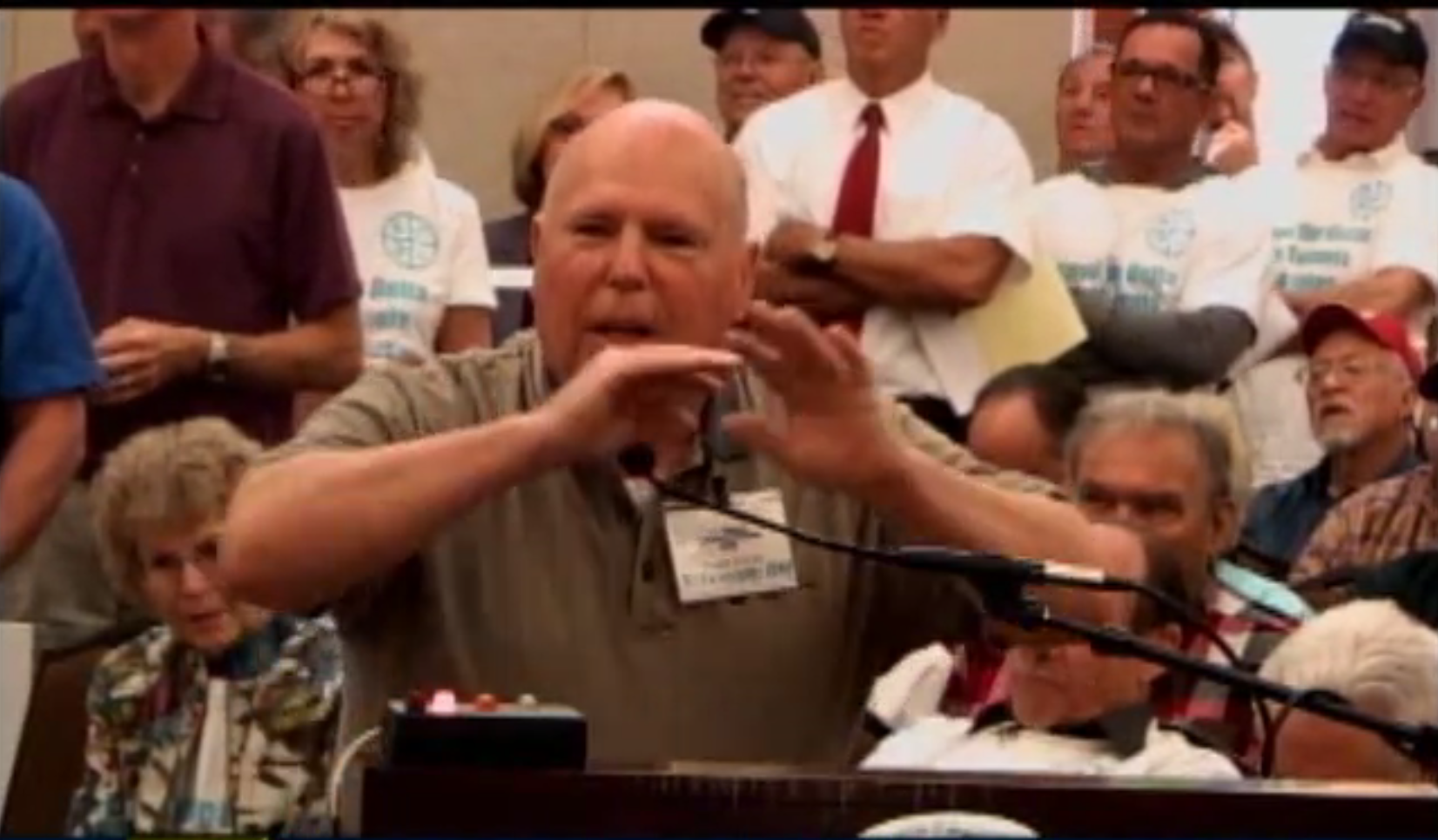
Speaker after speaker who stood in line in the standing room only meeting – from residents, to activists, to Realtors, to those who fish and others who earn a living off the Delta – opposed the tunnels as the solution to water supply in the state. Instead they suggested more storage, such as maximizing the use of existing reservoirs and building more, and desalination.

One speaker, who said he is a native Californian with three daughters, offered the definition of stewardship which includes “the responsible overseeing of something worth preserving.” Two more speakers challenged the council members on the meaning of stewardship, as well.

“Tell the governor the people in this room know the difference between fresh water and salt water,” said another speaker. “For every gallon of fresh water we divert south, a gallon of salt water comes up the Delta.”

Salt water has encroached all the way to and past Antioch, which has the lowest intakes on the Delta and last year had to purchase 95% of its raw water from the Contra Costa Water District. The city has pre-1914 rights to the river allowing it to pump pretty much whatever amount of water needed for use by residents and businesses in the city. But, during the drought, and it’s believed if the tunnels are built, those rights no longer mean anything as there was, and will no longer be, enough or any fresh water to pump. So, if the salt water has already reached Antioch before the tunnels have been built, it can easily reach other parts of the Delta, if they are.

Assemblyman Jim Frazier had a representative read a letter from him at the meeting, in opposition to the conveyance system, or tunnels.

His letter mentioned the 2009 Delta Reform Act which established co-equal goals of “providing a more reliable water supply for California and protecting, restoring, and enhancing the Delta ecosystem” and that the proposed conveyance system barely touches on protection of the Delta.

A former Orange County, CA resident said “do the right thing. We want to preserve the Delta for our children.”

One speaker at the meeting got a bit animated. Screenshot of Cal-Span.org website

The final speaker asked “does anyone in this room want the tunnels?”

“No” was the loud reply.

The Council hasn’t yet made their final recommendation on whether the twin tunnels will be the solution to the conveyance of our water. So, there’s still time for the public to give input.

You can provide your comments using the online form at http://deltacouncil.ca.gov/contact-us. All written submissions will be posted on the website at www.deltacouncil.ca.gov. If you were unable to watch or attend the Thursday meeting in Brentwood, the webcast will be available on the website, as well.

Meetings of the Delta Stewardship Council in Sacramento on April 27 and 28th will be the next opportunity to give live, in-person input to the Council and for them to review the progress on the process. It will be held at Park Tower Plaza, 980 Ninth Street, 2nd Floor Conference Center, Sacramento, CA 95814

As was said by council member and Solano County Supervisor Skip Thomson, the Council needs to hold their meetings for the public at night. They can also be held on a Saturday and in a larger venue, so more people can attend.

We must stand united and continue to fight the Delta Tunnels to keep them from being built and damaging the ecosystem of the Delta and the adjacent region where we call home. Hopefully those charged with the stewardship of the Delta will hear us and recommend against the tunnels.

Filed Under: East County, Opinion, The Delta

Group of state legislators from Delta Caucus release statement on alarming Oroville Dam situation

February 13, 2017 By Publisher Leave a Comment

(SACRAMENTO) – On Monday, February 13, 2017, members of the Delta Caucus of the California state legislature, including three representing Contra Costa County, released the following statement regarding the hazardous situation at Oroville Dam after news reports that previous concerns about the safety of the dam’s current infrastructure were ignored:

“We are concerned that a clear alarm raised 12 years ago about the state of the Oroville Dam’s emergency spillway was discounted. There has been more than enough time since then for upgrades and maintenance to the structure. Instead, nearly 185,000 people have been displaced, and there are still people in harm’s way. A catastrophic failure at Oroville would result in uncontrolled releases that do considerably more harm to the surrounding communities, and threaten those further downstream, including levee-protected communities in the Sacramento-San Joaquin Delta. For now, we have a collective responsibility to ensure that people are safe and that necessary steps are taken to prevent further compromise of the entire Oroville facility.  When the immediate threats have subsided, we need to clearly assess this disaster and its causes.  We have a duty to ensure California’s existing infrastructure is maintained and upgraded, and not sacrificed in favor of conveyance projects.”

Caucus Co-Chair Assemblymember Jim Frazier (D-Oakley) and Assemblymembers Tim Grayson (D-Concord) and Catharine Baker (R-San Ramon) are members of the Delta Caucus, a bipartisan group of legislators whose districts include portions of the Sacramento–San Joaquin River Delta. The caucus works to keep their colleagues updated on the latest scientific data, economic developments, and actions taken by the state agencies responsible for the Delta, including the State Water Resources Control Board, the Department of Water Resources, and the Delta Stewardship Council.

They and the following legislators issued the statement: Co-Chair Senator Bill Dodd (D-Napa), Senator Richard Pan (D-Sacramento) and Assemblymenbers  Susan Eggman (D-Stockton) and Jim Cooper (D-Elk Grove).

Filed Under: Environment, Government, News, The Delta, Weather

Guest Commentary: Single tunnel option not a quick fix for the Delta

December 27, 2016 By Publisher Leave a Comment

By Barbara Barrigan-Parrilla, Restore The Delta

These are not good times for Governor Brown’s Delta Tunnels (WaterFix) proposal.

The twin 40-foot-diameter, 30-mile-long tunnels would harvest Sacramento River water before it flows through the San Francisco Bay-Delta estuary. A vast majority of this water would be sent to Big Ag operations like The Wonderful Company in the Southern San Joaquin Valley. It will destroy the largest estuary on the West Coast of the Americas.

But as the San Francisco Chronicle recently editorialized, “The tunnel project, now marketed to Californians as WaterFix, lacks community trust and political will and is saddled with a $16 billion (and growing) price tag that appears much larger than water agencies are willing to pay.

“Water districts, rural users, and entire cities like San Diego and Santa Monica are starting to question the wisdom or affordability of such a big project that does not deliver one new drop of new water.

“This November, a coalition of conservation and public interest organizations sent a letter to the Obama administration asking them to terminate the proposal so his legacy isn’t dragged down by a financial and environmental nightmare. The groups explain how the next administration will blame the boondoggle on Obama. They will say:

“We inherited the WaterFix from the previous administration and presumed that they knew what they were doing and had fully evaluated the project in good faith when they determined it should go forward.”
As environmental and financial obstacles continue to mount for the proposal, California water policy wonks are now scrambling for a viable Plan B.

The influential Public Policy Institute of California recently took a step back from support for the Twin Tunnels and offered a scaled back, Plan B. In an op-ed for the Sacramento Bee they offer, A Grand Compromise for the Delta.

PPIC now proposes a smaller plan they believe can settle the water wars over the Bay-Delta. Their proposal includes one-tunnel, managing water flows for entire ecosystems not just specific species, strengthening Delta levees, and letting communities tap into tunnel water supplies where local water is salty.

Restore the Delta is certainly encouraged the Public Policy Institute of California has backed down from support for the highly destructive Twin Delta Tunnels proposal. But the scaled-back project the PPIC now proposes is a completely different and new project. Before it can be analyzed, we still need to figure out how much water the Delta needs to maintain ecological health for the communities who live there and the species who depend on a healthy estuary.

The State Water Board’s flow hearings for the San Joaquin and Sacramento rivers must be completed before any project can be analyzed.

Independent fishery experts now say that the San Joaquin River needs at least 50 percent unimpaired flows to stop extinction and achieve legally required doubling goals for salmon.

Any new tunnel proposal would, we hope, include a more comprehensive public scoping process so as to include Delta environmental justice communities, made up of hundreds of thousands of residents. We would also hope for a more transparent environmental and economic review process with better science and better public debate than what was put forth for the current Delta Tunnels proposal. CA WaterFix touts hundreds of meetings over the last ten years, but most were never properly noticed to Delta communities for meaningful participation.

If, indeed, support for the Big Twin Tunnels project is fading, let’s kill that proposal once and for all. Californians who voted in 1982 against the Peripheral Canal assumed we had made that decision long ago.

In an era of climate change and shrinking snowpack in the Sierra, less snowmelt means that by the time the expensive Twin Tunnels project would be finished, it may sit empty most of the time. The same may be true for one tunnel.  We don’t know yet.

Instead, we should invest in California’s water future. Southern California already taking the lead on the cutting edge of a water technology. Stormwater harvesting, conservation, water recycling, and groundwater recharging are reducing the need for imported water to the Southland. Many of these ideas can be found in a report titled A Sustainable Water Plan for California by the Environmental Water Caucus.

The Delta Tunnels, even a scaled back version, may not be the best use of limited funds. Let’s kill off the big Delta Tunnels plan once and for all. Then we can redirect those funds to create local jobs that build water sustainability by adding new water into the system. That is the path to provide real security for California’s future.

Originally published by KCET, December 19, 2016. Republished with permission. Commentaries are the opinions of their authors, and do not necessarily reflect the views of KCETLink.

Filed Under: Environment, Opinion, The Delta, Water

Delta tunnels opponents asked to speak out at Dec. 16th State Water Board meeting in Stockton

December 2, 2016 By Publisher Leave a Comment

speak-up-against-delta-tunnels

Restore the Delta, the organization fighting to stop the Delta tunnels is asking citizens also opposed to the tunnels, to speak out at the State Water Resources Control Board meeting on what’s now known as the California WaterFix. The meeting will be held in Stockton at the Civic Auditorium, 925 N. Center Street beginning at 9:00 a.m. on Friday, December 16th. The meeting could run until 8:00 p.m. – as long as there are comments from the public, the Board will hear them.

The opposition group issued the following call to action, last month:

Earlier this year, thousands of Restore the Delta supporters signed a petition urging the State Water Resources Control Board to update outdated water quality standards for the Bay-Delta region. Now we need your action in person.

This outdated 20-year-old Water Quality Control Plan allows more than half the water needed for the delta’s ecological health to be diverted away for unsustainable Big Agriculture on the west and south San Joaquin Valley.

The State Water Resources Control Board is currently in Phase I of updating the plan. We need to make sure that the State Water Board gets it right and is not influenced by special interests. New water quality standards that truly protect communities and species is a proactive step that helps ensure reliable water supplies for all water users of the Bay-Delta. Learn more about water quality here.

We need you to make your comments. The public comment process ends January 17, 2017, and all hearings conclude January 3, 2017. Please limit your oral public comment to three minutes in length.

Here are some important points to make:

1) A permanent reduction of exports must happen to protect the Delta. What is the true efficacy of this update to SJ flow standards if water exports from the Delta are not going to be dealt with? The San Joaquin River must reach Chipps Island in order to restore, protect, and preserve the entire estuary. If unsustainable water exports are not dealt with, we worry that water quality and quantity objectives for the Delta will never be met.

2) We do not want to see a weakening of salinity standards in the South Delta. Water quality standards must be protected for agriculture, drinking water, municipal discharge, fisheries, and ground water recharge.

3) The State Water Board must consider environmental justice communities in terms of drinking water and domestic use. Phase 1 Recirculated Draft SED fails to consider environmental justice communities in chapters 5 and 9 (hydrology/water quality and groundwater).

For other dates and locations, click here to see the State Water Board’s notice.

If you cannot make any of the dates, you can make a written comment by following these instructions:

SUBMISSION OF WRITTEN COMMENTS

The State Water Board will accept both written and oral comments on the proposed Plan Amendment and the SED. Written comments must be received no later than 12:00 noon on January 17, 2017, and addressed and submitted to:

Jeanine Townsend, Clerk to the Board
State Water Resources Control Board
1001 I Street, 24th Floor
Sacramento, CA 95814-0100

Comment letters may be submitted electronically, in pdf text format (if less than 15 megabytes in total size) to the Clerk to the Board via e-mail at commentletters@waterboards.ca.gov. Please indicate in the subject line: “Comment Letter – 2016 Bay-Delta Plan Amendment & SED.” You may also submit your comments by fax at (916) 341-5620. Electronic submission is preferred, but not required.

Couriers delivering comment letters must check in with lobby security personnel, who can contact Jeanine Townsend at (916) 341-5600.

Filed Under: Environment, Government, The Delta

  • « Previous Page
  • 1
  • 2
  • 3
  • 4
  • 5
  • Next Page »
Monica's-Riverview-Jan-2026
Liberty-Tax-Jan-Apr-2026
Deer-Valley-Chiro-06-22

Copyright © 2026 · Contra Costa Herald · Site by Clifton Creative Web