• Home
  • About The Herald
  • Local Agencies
  • Daily Email Update
  • Legal Notices
  • Classified Ads

Contra Costa Herald

News Of By and For The People of Contra Costa County, California

  • Arts & Entertainment
  • Business
  • Community
  • Crime
  • Dining
  • Education
  • Faith
  • Health
  • News
  • Politics & Elections
  • Real Estate

District 3 BART Board candidate Chew challenges incumbent, explains why he’s running

September 13, 2016 By Publisher 1 Comment

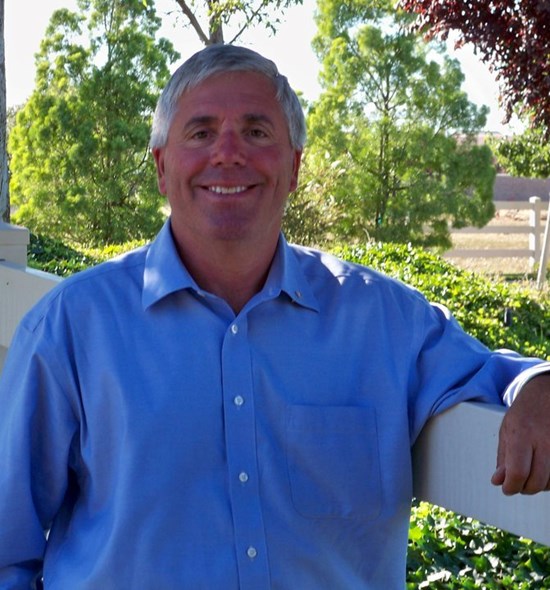
Ken Chew

Ken Chew

By Allen Payton

Former Moraga Mayor Ken Chew released his candidate’s statement early, so voters can know why he is running for BART Board in District 3. He is one of three challengers for incumbent Rebecca Saltzman, who is seeking reelection to her second term.

Following is his complete statement:

“We can make BART better. We can make BART safe, clean and run-on time. We can hold the BART Board fiscally responsible and accountable. I will work hard to make this happen.

With over 25 years’ experience as a transportation professional and having served three years on the Moraga Planning Commission before serving eight years as a councilmember, including two years as mayor, I have the expertise and public policy leadership experience to be your BART Director.

BART is an essential system in need of reform in many areas.  BART employees are our assets and integral to the success of the entire system under strong leadership with a sound plan.

My top priority is to make stations and trains safe and welcoming with adequate staffing and training to transform BART stations to be clean, service-oriented and vibrant.  I will pursue full staffing of BART police, and then push for smart technology solutions to force multiply their abilities on public safety effectiveness.   For the few stations that are key opportunity hubs for ‘smart village’ development, I will work with stakeholders to attract community investments to develop transit villages of the 21st century.

Reform requires new leadership characterized by common sense and shared vision.  With your votes, we can begin the process of getting BART back on track.”

Chew has the support of over 50 public officials, community leaders and business owners, including four of the five members of the Contra Costa County Supervisors, Candace Andersen, Federal Glover, Karen Mitchoff and Mary Piepho, as well a variety of mayors and council members. For a more extensive list of his endorsements visit www.electkenchew.com/endorsements.html.

District 3 includes the following BART Stations: Bay Fair, Downtown Berkeley, El Cerrito del Norte, El Cerrito Plaza, North Berkeley, Orinda, Rockridge, San Leandro; and all or portions of the following cities and communities: Albany, Ashland, Berkeley, Castro Valley, Cherryland, El Cerrito, Kensington, Lafayette, Moraga, Oakland, Orinda, Piedmont, San Lorenzo See map of District 3, here: www.bart.gov/sites/default/files/docs/bart_3.pdf

Chew is a long time resident of the San Francisco Bay Area. He is a professional engineer, is married and a father of two children. For more information about his campaign, visit www.electkenchew.com. The election is November 8.

Filed Under: Lamorinda, Politics & Elections

Assembly candidate Miller opposes Frazier’s gas tax increase proposal

August 18, 2016 By Publisher Leave a Comment

Dave Miller who is challenging incumbent Assemblyman Jim Frazier in his race for re-election issued a statement opposing Frazier’s proposal for an increase in the gas tax.

Following is Miller’s statement:

There are two undisputed facts that everyone should know: California has the highest Gas Prices of any state that is not an island.    There are a number of reasons for this and all of them originated in our legislature.

Gas and Diesel taxes hurt the working poor more than any other group.  The working poor are more likely to commute farther for work -that alone is enough of a burden, they have to drive more.  In addition to that, increasing the Diesel tax means that it costs more to deliver goods and services.  Businesses pass along the higher delivery cost to customers in the form of higher prices.  Which means our dollars don’t go as far as they used to.

Assemblyman Frazier, the chairman of the Transportation Committee, knows this.  He just doesn’t care.  He knows that the people that will be the most affected by this are too busy trying as hard as they can to eek out a living that they don’t have the time or money to pay attention.

Knowing that, yesterday Assemblyman Frazier joined with State Senator Jim Beall, according to the LA Times, to unveil their new gas tax plan.  Here are some highlights:

  • Additional 17 cent per gallon tax on gasoline.
  • Additional 30 cent per gallon tax on diesel.
  • $165 annual fee added to the registration fees for electric cars.

The creation of a new political bureaucracy – The Office of Transportation Inspector General. (I wonder how much of the new gas tax will have to be used to pay for that…)
Assemblyman Frazier is hoping that no one notices another key point of his tax plan.  It is designed to increase inflation annually thus triggering a higher tax on gasoline automatically.   Inflation is calculated by looking at the Consumer Price Index.  The more things cost – the higher inflation is.  So he is going to increase the costs of all goods and services by increasing the cost of fuel.  By tying his tax to inflation Assemblyman Frazier is taking his planned price increases for all goods and services -caused by his tax plan- and turning them into a self-fulfilling prophecy of ever increasing gas taxes and higher inflation.

This is not his first attempt to increase the tax on each gallon of gasoline. On January 6th of 2016 Assemblyman Frazier introduced AB-1591 which would have increased the tax on gasoline by 22.5 cents per gallon and 30 cents per gallon of diesel.  In addition to the new gas tax AB-1591 would have increased the cost of annual vehicle registration from $38 to $165 depending on your vehicle.  Like his current proposal AB-1591 would have also been tied to inflation and automatically increased annually.  AB-1591 died in committee.  But Assemblyman Frazier told the L.A. Times that he would try to push for a lame duck session to get his new bill passed.

The big issue with trying to force it though a lame duck session is that you may end up with enough legislators that lost their elections, or decided to retire, that might vote for something that their constituencies do not want since there is no political consequence.   What Assemblyman Frazier is doing here is putting politics before people.

As many of you know Jim has skipped out on 2 scheduled debates with me.  The most recent he had a fellow democrat try to come to his aide by saying that he was stuck in a committee hearing.  When the truth is that he had an hour and 45 minutes after the conclusion of his meeting to get just 35 miles.  Even if he hadn’t left the capitol for 30 minutes after his hearing AND got caught in traffic, and hit every red light,  he still would have been able to make it to the debate.

So, I have issued a challenge, anytime, anywhere. I will debate Mr. Frazier anytime, anywhere. But, he is too scared to debate a serious contender that knows the Assemblyman’s record better than the Assemblyman does, himself.

Frazier is seeking his third term in the Assembly. For more information about Miller, visit his website at www.electdavemiller.com. The election is on Tuesday, November 8.

Filed Under: Legislation, Politics & Elections, Transportation

Debora Allen announces strong bi-partisan support in campaign for BART Director

August 17, 2016 By Publisher Leave a Comment

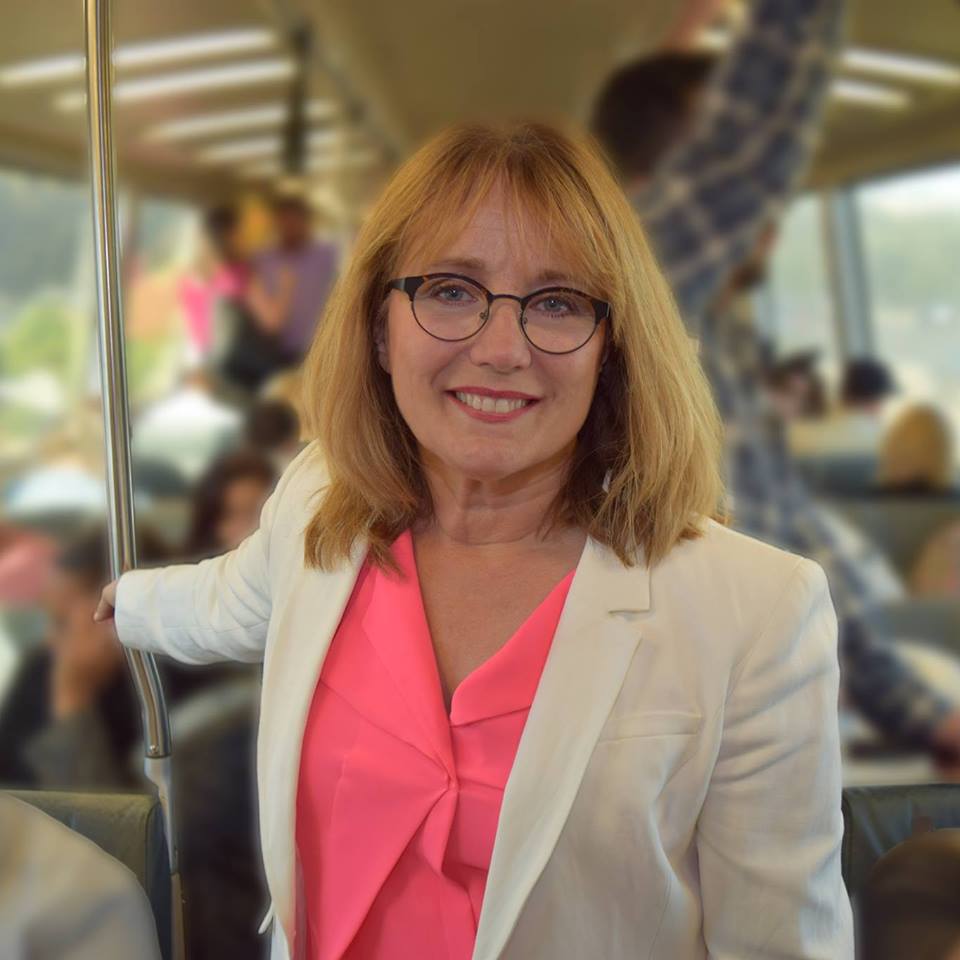
Debora Allen

Debora Allen

Challenging three-term incumbent Gail Murray

County pension board trustee Debora Allen announced, Wednesday morning, that she is running for District 1 BART Director, in the 2016 general election. The chief financial officer of East County Glass is challenging incumbent Gail Murray who is seeking her fourth term on the BART board. District 1 includes the Concord, Pleasant Hill/Contra Costa Centre, Walnut Creek and Lafayette BART stations, and the cities of Martinez, Lafayette, Walnut Creek, Concord, Danville, San Ramon and Clayton, as well as Alamo and Blackhawk.

“Over the last decade, the BART experience has deteriorated with increased crime, system delays, labor strikes, equipment malfunctions, fake security cameras, high fares, budget shortfalls and overall public dissatisfaction,” Allen said. “BART is so antiquated, their control system is from 1972 and they buy replacement parts on eBay.”

Allen’s campaign platform is focused on five primary objectives:

  • DEMAND accountability from management for the financial stability, affordability, and cost effectiveness of BART.
  • REBUILD the old infrastructure to provide a renewed, sustainable, and durable transportation system for future generations.
  • REPLACE obsolete, broken equipment with clean, innovative, modern replacements, and maintain them.
  • INTEGRATE the current system with our numerous other Bay Area transit systems to create greater accessibility and efficiency in our lives.
  • PROVIDE a better BART experience to the customer, the rider, and the workers.

In an email, last week, Allen stated “BART needs strong leadership that is willing to stand up for change and hold management accountable for its revitalization.”

Numerous, prominent East Bay leaders have joined in supporting Allen’s campaign, including California State Senator Steve Glazer, a Democrat who has been an outspoken critic of strikes by BART employees, as well as BART operations and finances.

“Debora Allen will bring an important voice and fiscally responsible vote into the BART boardroom.  She’s smart, she’s tough, and she’s a problem solver,” Glazer said. “She will stand up to special interests and management incompetence and fight to improve BART while protecting the interest of taxpayers.”

“Debora Allen brings a refreshing new energy and approach to getting BART’s fiscal house in order,” said Assemblywoman Catharine Baker, a Republican. “She will be a champion for the transit rider and taxpayer.”

President of the Association of Bay Area Governments (known as ABAG) and Vice Mayor of Clayton Julie Pierce also endorsed Allen, stating “Our BART system is incredibly important to the residents of Contra Costa County. I am confident that Debora Allen will be strong leadership on the Board of Directors and a loud voice for transparency and financial accountability to the stakeholders as we rebuild BART into a world class transportation system of which we can all be proud.”

Contra Costa County Supervisor Candace Andersen also offered her support.

“Debora Allen brings the business experience and financial acumen we need to lead BART in the right direction,” she stated.

Contra Costa County District Attorney Mark Peterson also endorsed Allen, stating “I trust Debora Allen to protect the taxpayers’ investment in BART, for the riders, the workers, and for the future of Bay Area living.”

Former California State Assemblywoman (1996-2002) Lynne Leach added her support.

“Debora Allen is a talented, trusted and experienced businesswoman,” Leach said. “Her background of working to stem the ever increasing growth of public pension costs prepares her well to serve on the BART Board.”

Also endorsing Allen are Mayor of Pittsburg Ben Johnson, Mayor of Clayton Howard Geller, Pittsburg City Council Member Sal Evola, Contra Costa Community College District Board President Vicki Gordon, Central Contra Costa Sanitary District Board Member and Past President Contra Costa Taxpayers Association Michael McGill, attorney and Contra Costa County Employees Retirement System Board Trustee Scott Gordon, Alamo Municipal Advisory Council Member Steve Mick, Former Mayor of Clayton Pete Laurence, former Walnut Creek School Board Member Dan Walden, and retired BART employee Robert Leach.

“I am an independent, thoughtful, outsider, willing to take on the challenges of the troubled BART system,” Allen said. “I have spent over 25 years in a career in various financial management and board level positions. I now want to use that experience and knowledge to help the BART stakeholders, the riders, the taxpayers, and the BART employees.”

This is Allen’s second run for public office. She ran for State Assembly in the 14th District in the June primary, but did not make the run-off, placing a close third in the race behind the top-two candidates. She has a college degree from Sac State in Business Administration with a concentration in Accounting, is married to Tim Allen and they have two adult sons. They live just outside of Clayton, next to Mt. Diablo State Park.

For more information visit www.deboraallen.com or www.facebook.com/deboraallenforbart, or email her at debora@fixourbart.com.

The election will be on Tuesday, November 8.

Allen Payton contributed to this report.

Filed Under: BART, Central County, Concord, Lamorinda, News, Politics & Elections, San Ramon Valley, Transportation

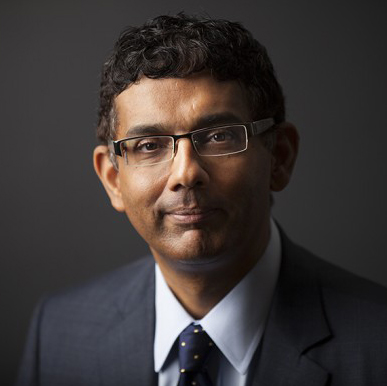
Author and producer of Obama, Hillary books and documentaries Dinesh D’Souza in East County, September 11

August 14, 2016 By Publisher Leave a Comment

HA Poster Final 72dpiJoin the Bay Area Republican Women Clubs in a lovely winery in East Contra Costa for an afternoon with noted documentary journalist and best-selling author Dinesh D’Souza as he details the impact of the Progressive movement in the USA. His new book Stealing America, was released in November, 2015 and has a rating of almost 90% on Amazon. D’Souza’s new documentary, Hillary’s America: The Secret History of the Democratic Party, is based on the book and was released in theaters, nationwide in July, 2016.

In 2010, D’Souza wrote The Roots of Obama’s Rage, described as the most influential political book of the year, set off a firestorm that ultimately led to D’Souza’s first film, 2016: Obama’s America which rose to the second highest grossing political documentary of all time.

In 2012, his second analysis of Obama, Obama’s America: Unmaking the American Dream, climbed to #1 on the New York Times bestseller list.

In D’Souza’s 2014 book, America: Imagine The World Without Her, became the #1 New York Times bestselling book and the movie by the same title was the sixth most successful political documentary of all time. Later that year, D’Souza found himself hauled into federal court for improperly donating money to a friend running for the Senate. He pleaded guilty, apologized, and was sentenced to eight months in a state-run confinement center near his home in San Diego.

Tickets

VIP $175 per person – 1:30 pm entry

Includes a personalized signed book, professional photo with Dinesh, wine from the venue, and preferred seating for the keynote.

General Admission $100 per person – 2:00 pm entry

Appetizers Served, No Host Bar

For Tickets contact: Liz Ritchie, President, East Contra Costa Republican Women Federated lizritchie@me.com or (925) 684-4995. For more information visit www.eastcontracostarepublicanwomen.org.

Dinesh D'Souza

Dinesh D’Souza

About Dinesh D’Souza

Born in Mumbai, India, Dinesh D’Souza came to the U.S. as an exchange student and graduated Phi Beta Kappa from Dartmouth College in 1983.

A former policy analyst in the Reagan White House, D’Souza also served as John M. Olin Fellow at the American Enterprise Instituteand the Robert and Karen Rishwain Fellow at the Hoover Institution at Stanford University. He served as the president of The King’s College in New York City from 2010 to 2012.

His first book ,Illiberal Education (1991), publicized the phenomenon of political correctness in America’s colleges and universities and became a New York Times bestseller for 15 weeks.

In 1995, D’Souza published The End of Racism, which became one of the most controversial books of the time and another national bestseller. His 1997 book, Ronald Reagan: How an Ordinary Man Became an Extraordinary Leader, was the first book to make the case for Reagan’s intellectual and political importance. D’Souza’s The Virtue of Prosperity (2000) explored the social and moral implications of wealth.

In 2002, D’Souza published his New York Times bestseller What’s So Great About America, which anticipated the case that would need to be made for American exceptionalism and was critically acclaimed for its thoughtful patriotism. His 2003 book, Letters to a Young Conservative, has become a handbook for a new generation of young conservatives inspired by D’Souza’s style and ideas.

In 2010, D’Souza wrote The Roots of Obama’s Rage, which was described as the most influential political book of the year, and set off a firestorm which ultimately led to D’Souza’s first film, 2016: Obama’s America. The film quickly rose to the second highest grossing political documentary of all time.

D’Souza’s second analysis of Obama came in his 2012 book, Obama’s America: Unmaking the American Dream, which climbed to #1 on the New York Times bestseller list.

His 2014 book, America: Imagine The World Without Her, became the #1 New York Times bestselling book and the movie by the same title was the sixth most successful political documentary of all time.

In the fall of 2014, D’Souza found himself hauled into federal court for improperly donating money to a friend who was running for the Senate. D’Souza pleaded guilty, apologized for his offense, and was sentenced to eight months in a state-run confinement center near his home in San Diego.

D’Souza’s latest book Stealing America, rose to #16 on Publisher’s Weekly.

Filed Under: East County, Politics & Elections

Burgis endorsed by DA Peterson, Sheriff Livingston, firefighters and deputy sheriffs in campaign for Supervisor

August 10, 2016 By Publisher Leave a Comment

Today, East Bay Regional Park District Director Diane Burgis, candidate for Contra Costa County Supervisor in District Three, earned the enthusiastic endorsement of the Contra Costa County Deputy Sheriffs Association, Antioch Police Officers Association, Sheriff-Coroner David Livingston and District Attorney Mark Peterson, as well as the endorsement recommendation of the Executive Board of the United Professional Firefighters of Contra Costa County, Local 1230.

“We need tough, principled leadership to tackle the long-standing problem of inadequate fire protection coverage in the county,” said Vince Wells, President of the United Professional Firefighters of Contra Costa County, Local 1230. “Diane Burgis is the only candidate for District Three we can trust to get the job done. She’s not just another politician – she has the proven competence and know-how necessary to improve fire protection services for every East County resident.”

Fire and emergency resources in East County are inadequate, leading to longer response times and lower quality fire and emergency services. Multiple district firehouses have closed due to a lack of proper funding.

“Diane Burgis is uniquely qualified to tackle the challenges our county faces,” said Shawn Welch, President of the Contra Costa County Deputy Sheriffs Association. “Under her watch, Oakley was recognized as one of the safest cities in the state. As a city councilmember, she supported police so that they could do their jobs fighting crime. As a park director, she partnered with law enforcement to make sure every tax dollar was spent wisely.  I and my fellow deputies are proud to stand with her this November.”

The Contra Costa Deputy Sheriffs Association is dedicated to the security and well-being of Contra Costa’s citizens and the protection of its 830+ employees. The United Professional Firefighters of Contra Costa County, Local 1230 includes over 450 firefighters from the Contra Costa County Fire Protection District, East Contra Costa County Fire District and various city fire departments. The Antioch Police Officers Association represents 120 police officers serving in the Antioch Police Department.

“Diane Burgis asks the right questions, listens closely to her constituents and then fights on their behalf,” said David Livingston, Contra Costa County Sheriff-Coroner. “I know I can count on her. She’s not one to pick political expediency over doing the right thing. She’s mastered the issues and demonstrated true skill as a leader, building coalitions and solving problems while putting a high priority on public safety.”

Diane Burgis currently serves as an East Bay Regional Parks District director and is the executive director of the Friends of Marsh Creek Watershed. Previously, she served as an Oakley city councilmember and spent over ten years as a small business owner. She highlights four priorities for her candidacy: improving public safety, attracting economic development, ensuring fiscal accountability and preserving the delta for future generations.

“Diane will work hard to develop the resources our police, firefighters and prosecutors need to keep us safe,” said Contra Costa County District Attorney Mark Peterson. “As a small business owner, nonprofit manager and public official, she has proven that she can balance a budget and defend taxpayers. I endorse her with no reservations – our county needs a real leader on the board.”

Diane Burgis is also endorsed by County Supervisor Mary Piepho, Assemblymember Joan Buchanan and a broad coalition of elected officials and leaders from every city and community in the district.

“I am honored by this extraordinary vote of confidence from our county’s bravest public servants,” said Diane Burgis, Candidate for Contra Costa County Supervisor in District Three. “I pledge to work collaboratively with our firefighters, sheriffs and every district resident to find effective solutions as we work together to improve public safety for all.”

Voters can learn more about her and her platform at www.dianeburgis.com.

Filed Under: District Attorney, East County, Politics & Elections, San Ramon Valley, Sheriff

Congressman DeSaulnier hosts town hall meetings in August

August 2, 2016 By Publisher Leave a Comment

Congressman Mark DeSaulnier (D, CA-11) will host five more town hall meetings in the communities of Danville, Orinda, Rossmoor, Concord and Pittsburg during the month of August. He held his first in Richmond on Monday night. One of DeSaulnier’s top priorities is to be accessible to his constituents. Since being elected to Congress in January 2015, Mark has hosted 23 town hall meetings and mobile district office hours throughout Contra Costa County.

“Hearing directly from the residents of Contra Costa County helps make me a better representative. It is my hope that these town hall meetings will serve as a place for constituents to share their thoughts and opinions on issues important to our community. I invite you to join me at a town hall meeting to listen to a Congressional update on key policy issues, learn about our legislative work in Congress, and discuss the broad range of services we can provide,” said Congressman DeSaulnier.

Danville Town Hall
Wednesday, August 3, 2016
7:00 p.m. – 8:30 p.m.
(Check-in begins at 6:30 p.m.)
Veterans Memorial Building
Community Hall
400 Hartz Avenue, Danville

Orinda Town Hall
Saturday, August 6, 2016
11:00 a.m. – 12:00 p.m.
(Check-in begins at 10:30 a.m.)
Orinda Library Auditorium
26 Orinda Way, Orinda

Rossmoor Town Hall
Saturday, August 6, 2016
1:00 p.m. to 2:00 p.m.
(Check-in begins at 12:30 p.m.)
Rossmoor, Fireside Room
1001 Golden Rain Road, Walnut Creek

Concord Town Hall
Monday, August 8, 2016
6:30 p.m. – 8:00 p.m.
(Check-in begins at 6:00 p.m.)
Concord City Council Chambers
1950 Parkside Drive, Concord

Pittsburg Town Hall
Wednesday, August 10, 2016
6:30 p.m. – 8:00 p.m.
(Check-in begins at 6:00 p.m.)
Pittsburg Senior Center
300 Presidio Lane, Pittsburg

For more information or to request ADA accommodations, please email CA11.RSVP@mail.house.gov or call (925) 933-2660

Filed Under: Government, Politics & Elections, San Ramon Valley

Contra Costa Transportation Authority adopts 30-year plan, places $2.9 billion sales tax measure on November ballot

July 28, 2016 By Publisher Leave a Comment

Half-cent sales tax in addition to Measure J

The Contra Costa Transportation Authority (CCTA) believes that the future success of Contra Costa County includes offering safe, reliable mobility for all. To provide funding for this goal, on Wednesday, July 20th, the Contra Costa Transportation Authority board – which includes representatives from all parts of the County – voted unanimously to put a tax measure on the November 8 ballot. If approved by voters, the ballot measure will fund transportation improvements throughout Contra Costa County, for the next 30 years. The details are outlined in CCTA’s Transportation Expenditure Plan. CCTA 2016 TEP for Ballot Measure

The measure, which will appear on the November 8 ballot, will ask Contra Costa voters to approve a new half-cent sales tax that will generate $2.9 billion in revenues over 30 years to continue to improve the transportation system in Contra Costa. The tax will be in addition to the current half-cent sales tax for transportation in the county.

The proposed Transportation Expenditure Plan (TEP) is the culmination of months of extensive public outreach, stakeholder engagement, and advocate input. The TEP has also been approved by all of Contra Costa’s 19 cities and towns, as well as the Contra Costa County Board of Supervisors. The plan focuses on innovative strategies and new technologies to promote a strong economy, protect the environment, and enhance the quality of life for all of Contra Costa’s diverse communities.

“The CCTA Board is incredibly proud of the TEP,” said Authority Board Special Meeting Chair Don Tatzin. “This is a transportation plan that reflects the values of our diverse region, has garnered broad support across the county, and will guide the next 30 years of transportation planning. If a super majority of voters approve the tax measure in November, the tax revenue will provide necessary funding for the transportation improvements included in the TEP.”
Contra Costa residents have made significant contributions to their transportation infrastructure since 1988, when voters passed Measure C, a half-cent sales tax dedicated to maintaining the ability of residents to travel safely and conveniently throughout the county. Measure C helped fund the BART extension to Pittsburg/Bay Point, built the Richmond Parkway, improved bicycle and pedestrian trails in the county, and invested more than $30 million in senior and disabled transit services.

In 2004, voters passed Measure J, which renewed the half-cent sales tax through 2034. Measure J has helped deliver the Fourth Bore of the Caldecott Tunnel, generated $1.3 billion dollars of investments to Highway 4 in Eastern Contra Costa County, including a BART extension to Antioch, and combined with Measure C has provided $286 million to Contra Costa’s cities and towns to maintain and repair local streets.

The TEP includes plans to reduce congestion and smooth traffic; improve BART, bus, ferry, and train service; and fix local streets and roads. It also dedicates unprecedented funding to new technologies and bicycle and pedestrian improvements in every part of the county, to give commuters viable alternatives to driving and in the process help get them out of traffic.

The TEP builds on CCTA’s strong record of fiscal responsibility and includes strong taxpayer protections and accountability. A public oversight committee will provide independent review of all funds raised and spent. It will ensure that funds are spent only in accordance with the voter-approved plan and only to benefit Contra Costa County.

“As we move into the future, Contra Costa’s economic strength is going to depend on people being able to travel quickly and conveniently throughout the county – to jobs, shopping and entertainment destinations, and everywhere else they need to go. This plan – and the measure that will fund the improvements it describes – helps make sure that is a reality in years to come,” said Tatzin.

To find out more information about the transportation improvements planned for the next 30 years – including projects in each of Contra Costa’s 19 cities and towns – and the tax measure, which will fund those plans if approved by voters on November 8, 2016, visit KeepContraCostaMoving.net.

About The Contra Costa Transportation Authority

The Contra Costa Transportation Authority (CCTA) is a public agency formed by Contra Costa voters in 1988 to manage the county’s transportation sales tax program and oversee countywide transportation planning efforts. CCTA is responsible for planning, funding and delivering critical transportation infrastructure projects and programs that connect our communities, foster a strong economy, increase sustainability, and safely and efficiently get people where they need to go. CCTA also serves as the county’s designated Congestion Management Agency, responsible for putting programs in place to keep traffic levels manageable. More information about CCTA is available at ccta.net.

Filed Under: News, Politics & Elections, Transportation

Contra Costa Deputy District Attorneys endorse Barr for Supervisor

July 14, 2016 By Publisher Leave a Comment

Steve Barr

Steve Barr

Today, Thursday, July 14, 2016, the Contra Costa County District Attorneys’ Association announced their endorsement of Steve Barr for County Supervisor in District 3.

The District Attorneys’ Association represents more than 75 Deputy DA’s who serve our community as prosecutors in the District Attorney’s office.

Aron DeFerrari, the group’s president, said the decision came down to Steve’s direct and open style, as well as his financial skills.

“Steve is very honest and tells you exactly how it is,” said DeFerrari. “We don’t always agree on everything. But we think his direct and open style is going to make him a great partner as we work on a lot of tough public safety issues.”

“Having a small business owner who understands finances and has a track record of using public money responsibly, was also very attractive to us,” DeFerrari continued. “We don’t have unlimited resources and need leaders who can make sure our public safety officers and prosecutors have enough money to do their jobs effectively. Steve Barr has our full trust.”

Barr said the endorsement was great news.

“Their vote of confidence means a lot and the role of prosecutors play in the county is vital,” he said. “I really look forward to working with them throughout this campaign and beyond.”

Barr, who was the top vote getter in the primary, is currently in the runoff election that will be held November 8th. As a Brentwood City Councilman he has made public safety a top priority, and his campaign already has the support of the Brentwood Police Officers’ Association.

Please visit www.SteveBarrForSupervisor.com for more information about the campaign and www.ContraCostaProsecutors.com for more information about the District Attorneys’ Assocation.

Filed Under: District Attorney, East County, Politics & Elections, San Ramon Valley

BART’s $3.5 billion bond measure for repair, maintenance and upgrades of system on November ballot

July 11, 2016 By Publisher Leave a Comment

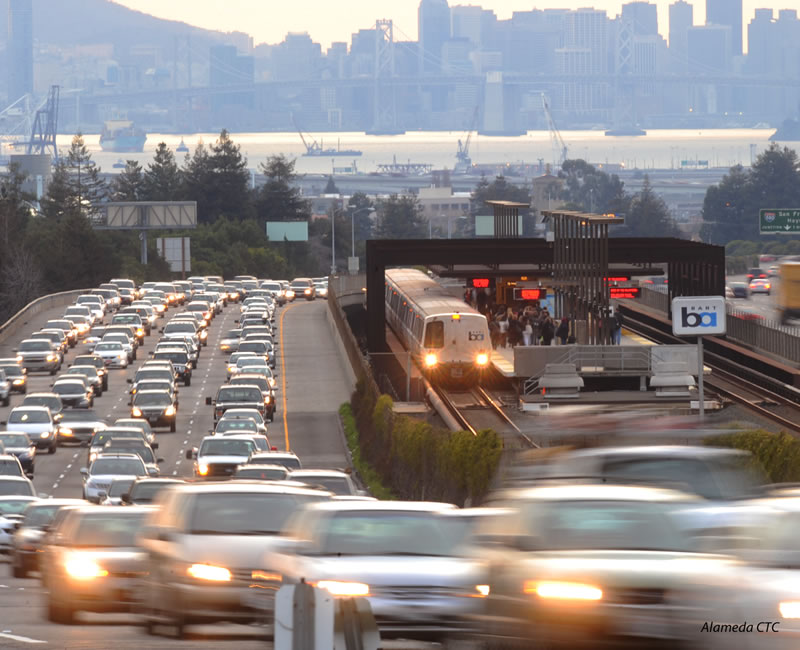
BART photo

By Allen Payton

In June, the BART Board voted 9-0 to place a $3.5 billion bond measure on the November ballot to provide funding for repair and maintenance of and upgrades to the existing system. The measure will appear on ballots in the three counties of Contra Costa, Alameda and San Francisco that make up the BART District, and requires a two-thirds vote to pass.

The system improvements will take 21 years to complete, according to the brochure about the measure. To see the brochure, click here: BetterBART_Brochure

“BART anticipates that the 2016 System Renewal Program Plan will be implemented over the course of twenty-one years, commencing in Fiscal Year 2017 and concluding in Fiscal Year 2038. Projects will be accelerated as practical to maximize the benefit of planned improvements as quickly as possible.”

However, the bonds will take as long as 50 years to pay off.

“We’re not likely to sell $3.5 billion of bonds in the first year or even the first 10 years,” stated BART Director Joel Keller, who represents Concord and Eastern Contra Costa County.  “There are laws that you spend bond proceeds before you issue more bonds. What we’ll do is sell the bonds in what’s called tranches. Let’s say the first tranche is $1 billion and it takes us five to 10 years to spend that money. That tranche will last 30 years. If we do that three or four times, that could take the final payment out years. That’s really an unknown. It could take 40 to 50 years. It will be 30 years after the last bond is sold.”

According to a BART press release, “Estimates show the bond will cost Alameda, Contra Costa and San Francisco county homeowners less than a pack of gum a week.” More specifically, the cost will increase the average property tax bill by $37.21 per year in Contra Costa County if the measure is approved, according to Keller.

The annual cost is based on the appraised of property values, both residential and similar to the BART earthquake retrofit bond measure, which is what property owners are currently paying on the property tax bills.

For the BART earthquake safety measure, which voters approved in 2004, the projected annual cost was between $4.85 and $12.65 per $100,000 of assessed value. However, the actually cost was $2.60 to $9 per $100,000 of assessed value.

“It’s an ad valorem tax with a fixed cost to pay off the bonds,” Keller explained. “So, if property values increase, the cost per $100,000 decrease.”

The 2016 bond measure is projected to cost $8.98 per $100,000 of assessed value. So a property in Contra Costa County with an average value of $414,399 will be assessed $37.21 per year.

Use of Bond Proceeds

The use of funds from the bond measure is split into two categories, according to the BART System Renewal Program Plan 2016.

Repair and Replace Critical Safety Infrastructure – $3.165 billion, 90.43%

“We want to upgrade our computer equipment from Pong-era technology to a modern train control system—which means less waiting for trains on crowded platforms and less frustration from delays. New maintenance facilities will keep the maximum number of cars out serving customers, so that fewer cars clog our congested highways,” from “The Plan” brochure about the measure.

This category is further divided into six sub-categories, with explanations in the brochure.

Renew Power System – $1.225 billion, 35%

Replacing Worn Track – $625 million, 17.85%

Waterproofing & Repairing Tunnels & Structures – $570 million, 16.29%

Modernizing & Replacing Train Control – $400 million, 11.43%

Renovating Stations – $210 million, 6%

Renewing Mechanical Infastructure – $135 million, 3.86%

Safer Station Access – $335 million, 9.57%

Design Future Projects to Reduce Crowding & Reduce Traffic Congestion – $200 million, 5.71%

Expand Opportunities to Safely Access Stations – $135 million, 3.86%

The bond measure brochure clearly states No general operating expenditures: The proceeds of the bond measure cannot be used to support BART’s general operating needs, but must be dedicated to the capital program outlined in this Program Plan.” Therefore none of the funds can be used for employee salaries or benefits.

According to a press release from BART:

The bond measure is a key funding component of BART’s plan to rebuild and renew its aging system, which faces increasing problems as various physical parts of the 44-year-old railway reach the end of their useful lives.  The plan replaces and repairs 90 miles of deteriorating tracks and other aging infrastructure in order to maintain BART’s excellent safety record and protects our environment by keeping thousands of cars off the road.

“This bond measure is practical; it’s dedicated to fixing what we have,” said Board President Tom Radulovich. “We have a responsibility to keep our system safe and reliable while getting the maximum value out of taxpayers’ investment.”

Over the past year, BART’s community outreach department has held over 230 community meetings with local stakeholders and civic groups to ensure widespread understanding of BART’s needs, and to hear the public’s thoughts about its capital reinvestment program.

Due to record-breaking ridership, BART has been able to find funding for many of the solutions needed to increase capacity, meet modern demand, relieve crowding, and upgrade the system.  That includes the newly arriving Fleet of the Future, the Hayward Maintenance Complex, and some of the groundwork for a cutting-edge train control system.

However, the cost of the capital projects needed to repair, fix, and replace worn rail, leaking tunnels, unreliable track circuitry, and failing power transmission equipment outpaces revenue growth.  BART’s plan is to dedicate funds from the bond measure solely to fixing what we have first – without earmarks, pet projects, or frills.

If voters choose to pass the measure in November, great care will be taken to ensure the public’s money is protected and spent wisely.  An independent audit committee will be commissioned to publish regular, transparent reports on how the money is being spent, with open, frequent and public meetings.

BART has proven itself to be a prudent and effective steward of public bond funds in the past, executing its 2004 Earthquake Safety and Retrofitting effort under budget with better and more robust results than expected.

Public transportation continues to be at the intersection of many of the great issues facing cities in the 21st century – and voters were wise in choosing to build such an extraordinary work as BART back in 1962.  Since then, BART has been a staple of this region’s culture, workforce, and values. As both riders and service providers, BART appreciates and is deeply grateful for the opportunity to connect residents to the people and places they care about.

Kerry Hamill, Government Relations Manager for BART offered additional comments regarding the cost and length of the bond measure, in response to an editorial by Dan Borenstein published in the East Bay Times:

The East Bay Times editorialist’s headline – that our bond measure will cost double what we are saying – is flatly incorrect, a conclusion drawn from a selective interpretation of our analysis. In order to assist BART’s Board of Directors in making an informed executive decision, a variety of scenarios were created with different variables relevant to particular presentations. The East Bay Times piece incorrectly appropriated data from these scenarios, resulting in an inaccurate characterization of the bond’s effects. BART has long taken care to illustrate the repayment structure of this bond in a standardized way; we have been doing so through all our exhibits and resolutions since the Board discussions began in earnest this past February.

The editorial also takes issue with how staff described the bond to the Board of Directors and the public, claiming we provided inaccurate information out of either incompetence or deceit – a charge which has absolutely no merit. Bonds are issued over time in subsets called tranches, each lasting 30 years (hence the name ’30-year bond’). This is done to coordinate the timing of bond issuance as closely as possible with construction progress payments, which minimizes interest costs and keeps the annual tax rates as low as possible – a prudent and responsible financial management practice. The editorialist was given this point of clarification multiple times as he repeatedly misrepresented the meaning of a ’30-year bond’ to mean the total span of time property owners would be paying – a false claim BART has never made. We were disappointed to see the author’s misunderstanding make the final printing, despite our best efforts.

The bond measure is projected to cost between $0.80 and $17.49 per $100,000 of a property’s assessed value, for a weighted average of $8.98 per $100,000 over the life of the bond – and for further explanation, that minimum and maximum range is based on the structure of BART’s projected debt service. The editorial’s repeated point that BART made a mathematical error in not compounding the increase in AV is also flatly incorrect, based on a misunderstanding of how the cost of bonds increase or decrease over time. The more the District’s assessed value increases (as housing supply, ownership changes, improvements increase), the lower the rate property owners would pay as the cost is spread over a larger base of assessed values. Furthermore, our models and estimates are built on the assumption of a 4% yearly increase in assessed value. $3.5B Scenario C Tax Rate At 4% AV Escalation

This is not our first bond – when the Earthquake Safety measure went before voters in 2004, the District projected that rates would vary between $4.85 to $12.79 per $100,000 of a property’s assessed value. Since approval, the actual annual cost has ranged between $2.60 (current year) and $9.00 per $100,000 of assessed value. Contrary to popular opinion, we have a proven track record of responsible fiscal stewardship. $3.5B Bond Financing

Concerned property owners are encouraged to do their own math for the sake of accuracy: $8.98 per $100,000 of assessed property value. When we provide averages for particular scenarios, we run the risk of appearing to conceal changes in amounts due to the many variables that can be introduced. Our goal is to provide people with a general understanding of a complex issue based on the best information available, which we have done and will continue to do. We are a transparent organization with deep ties to the community, and have held hundreds of meetings to ensure people understand what this bond is and how it will work. In that vein, we appreciate the opportunity to draw attention to our plan to rebuild the core of the BART system for improved safety, reliability, and traffic congestion relief.

Complete details of what is in the bond and how it relates to safety, reliability, and relief of traffic congestion can be found at bart.gov/betterbart.

Filed Under: BART, News, Politics & Elections

Voter fraud discovered in Contra Costa County, officials blame Secretary of State decision

July 9, 2016 By Publisher Leave a Comment

Elections Division officials discover 113 voters successfully cast two ballots in June election

As a result of an emergency accommodation to the California Secretary of State’s office, the Contra Costa County Elections Division has discovered that 113 registered voters voted twice and had both ballots counted during the June 7th Presidential Primary Election.

The Contra Costa Elections Division plans to send those voter fraud cases to the Contra Costa District Attorney’s office, Registrar of Voters Joe Canciamilla said.

Elections Division staff will also send recommendations to the Secretary of State’s office requesting a change in their practices for surrendering vote-by-mail ballots.

Contra Costa County’s long standing practice in administering state Election Code 3016 has been to issue provisional ballots to all vote-by-mail voters who surrender their ballots at a polling place. Part of the reason this practice is in place is to prevent voter fraud.

The process of surrendering a ballot as it is currently written does not provide a means of detecting or preventing this type of fraud until it is too late.

The County is urging Secretary of State Alex Padilla to seek urgency legislation or work with counties to eliminate this vulnerability in the election process for the November election.

Filed Under: News, Politics & Elections

  • « Previous Page
  • 1
  • …
  • 39
  • 40
  • 41
  • 42
  • 43
  • …
  • 46
  • Next Page »
Furniture-Clearance-02-26B
Celia's-3-26-A
Delta-RC-A
Deer-Valley-Chiro-06-22

Copyright © 2026 · Contra Costa Herald · Site by Clifton Creative Web