• Home
  • About The Herald
  • Local Agencies
  • Daily Email Update
  • Legal Notices
  • Classified Ads

Contra Costa Herald

News Of By and For The People of Contra Costa County, California

  • Arts & Entertainment
  • Business
  • Community
  • Crime
  • Dining
  • Education
  • Faith
  • Health
  • News
  • Politics & Elections
  • Real Estate

Los Angeles church, pastor win in court Friday, can continue indoor services judge rules

August 14, 2020 By Publisher 7 Comments

Temporary order defies L.A. County COVID-19 orders; full hearing on September 4; only applies to that church, for now

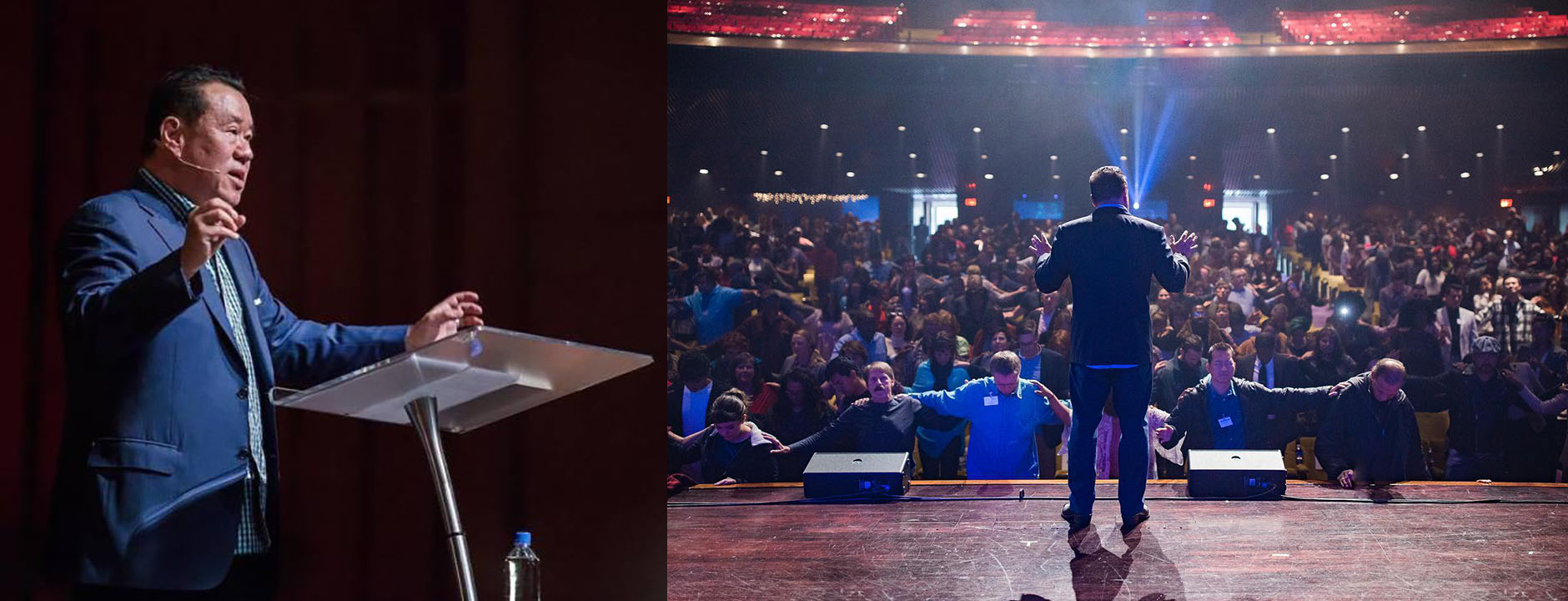
On Thursday, August 13, Thomas More Society Special Counsel Jenna Ellis and attorney Charles LiMandri filed suit in the Superior Court of the State of California County of Los Angeles on behalf of internationally known author and Pastor John MacArthur, and Grace Community Church against Governor Gavin Newsom, Attorney General Xavier Becerra, Los Angeles Mayor Eric Garcetti, and other California and Los Angeles County public health officials. (See complaint)

On Friday, the California Court vindicated Pastor MacArthur and the church’s stance that church is essential by recognizing the constitutionally protected right of churches to remain open and hold indoor services in their sanctuary.

Hours after Grace Community Church filed suit to invalidate Los Angeles County’s unconstitutional restrictions on churches, the County filed for a temporary restraining order to force the church to stop holding indoor services and comply with every unreasonable and over-broad demand. At hearing today (Friday, August 14, 2020) in Los Angeles Superior Court, Judge Chalfant denied almost all of the County’s requests, agreeing with Pastor MacArthur and the Church that it is the County’s burden to show why it should be permitted to infringe on the constitutionally protected rights of churches to freely exercise religion. The judge did also express concern for some safety protocols.

To address those concerns and after explaining that the County was being unreasonable in its demands, counsel for Grace Community Church offered to comply with mask wearing and social distancing indoors until the matter could be fully heard, rather than the County simply rushing to shut down the Church. The judge agreed this was reasonable, set the full hearing for September 4, 2020, and ordered the Church to have congregants wear masks and social distance between family groups indoors.

Pastor John MacArthur said of the ruling, “I am very grateful the Court has allowed us to meet inside and we are happy for a few weeks to comply and respect what the judge has asked of us because he is allowing us to meet. This vindicates our desire to stay open and serve our people. This also gives us an opportunity to show that we are not trying to be rebellious or unreasonable, but that we will stand firm to protect our church against unreasonable, unconstitutional restrictions.”

Attorney Ellis said, “This is a huge vindication for Pastor John and the Board of Elders at Grace Community Church, who have simply asked for their right to worship the Lord together in church to be acknowledged and protected. When I spoke with Pastor John after the hearing, he expressed sincere gratitude to the California Court and Judge Chalfant and said his congregation will be happy to comply with the judge’s temporary order. This is why John MacArthur is so deeply loved and respected by his congregation and all over the world. He is a gracious and firm leader, and his biblical stand for church being essential has now been rightly validated. We look forward to continuing to advocate on his behalf in asking the Court to protect the fundamental rights of churches.”

Legal counsel LiMandri said, “This result is indeed a great victory for all citizens’ constitutional right to freedom of religion. Pastor MacArthur’s love of God and country motivated him and all the GCC church elders to resist the unjust government shut-down orders targeting people of faith. Their devotion and patriotism has brought about a result that respects the legitimate interests of both the church and state. This result makes it possible for the thousands of congregants of GCC to continue to gather together in their church to worship, while at the same time honoring the court’s requirement that reasonable and temporary safety measures be observed. This court ruling should stay in effect at least until there can be a full court hearing in this case on September 4, 2020. Please continue to pray that the courts allow this enlightened judge’s decision to stand so that all Californians can soon resume the worship of God in their respective churches.”

“We are simply continuing to do today what we have done for the past 63 years, that Grace Community Church has been open to welcome the Los Angeles community and serve their spiritual needs,” the pastor said in a statement. “We will remain open and teach the Gospel of Jesus Christ to all who decide they want to come worship with us.”

The suit seeks to prohibit California from enforcing its unconstitutional and onerous coronavirus pandemic regulations against Grace Community Church and seeks a judgment that the health orders violate the California Constitution.

“Having irreparably damaged the confidence of Americans—and Californians especially—who now realize that the pandemic restrictions are neither necessary nor good, on Sunday, July 26, 2020, Grace Community Church decided to resume worship services—joining millions of Americans in deciding that enough is enough. With deaths from the ‘COVID-19 suicide pandemic’ exceeding those from the actual coronavirus pandemic, Grace Community Church decided that it would no longer sit by and watch its congregants and their children suffer from an absence of religious worship and instruction. Perhaps unsurprisingly—perhaps not—this led the County of Los Angeles to submit a demand letter to Grace Community Church, ordering it to comply with the restrictions that Los Angeles County deems unnecessary to enforce against so many others. Grace Community Church does not intend to comply.”

According to attorneys for the church, it is time for California to recognize that Christians are not second-class citizens, and the court must step in to do its job in applying the protections that the U.S. and California State constitutions provide to every individual equally and to churches in particular.

Pastor MacArthur opened the Sunday morning service on August 9, welcoming worshippers to “the Grace Community Church peaceful protest.” He was met with a standing ovation and extended applause from the congregation. Pastor MacArthur said of the lawsuit, “We are simply continuing to do today what we have done for the past 63 years, that Grace Community Church has been open to welcome the Los Angeles community and serve their spiritual needs. We will remain open and teach the Gospel of Jesus Christ to all who decide they want to come worship with us.”

Ellis said, “We hoped that Los Angeles County would see its error on its own, but after attempted negotiations with their counsel, California is still intent on targeting churches—specifically, Grace Community Church. Pastor MacArthur and the Board of Elders will stand firm in their leadership and resolve that church is essential, and California has no legitimate power to enforce such onerous and unconstitutional restrictions against the fundamentally protected right to freely participate in church. After Grace Community Church voluntarily complied with state orders for nearly six months, California’s edicts demanding an indefinite shut down have gone now far past rational or reasonable and are firmly in the territory of tyranny and discrimination. This isn’t about health. It’s about blatantly targeting churches.”

LiMandri stated, “It is unconstitutional for Governor Newsom and the State of California to discriminate against churches by treating them less favorably than other organizations and activities that are not protected by the First Amendment. Pastor MacArthur and his church, as well as all churches, are entitled to practice their religion without government interference. This is especially the case when the government has given free rein to protestors, and is not similarly restricting marijuana dispensaries, large retail outlets and factories, or abortion providers. The government orders are also unconstitutional because there is no compelling need for the onerous restrictions on the churches at this time. The hospitals are not overwhelmed and the percentage death rate from COVID-19 is now extremely small. It is time for Governor Newsom and Mayor Garcetti to recognize what President Trump has already proclaimed: churches are providing an ‘essential’ service to the people. Therefore, they must be allowed to serve the people in the manner in which God has called them.”

Read the Thomas More Society’s Complaint filed with the Superior Court for the State of California County of Los Angeles – in Grace Community Church and Pastor John MacArthur v. Gavin Newsome et al., on August 12, 2020, here.

Read the Demand Letter sent to Pastor John MacArthur by attorney Jason Tokoro, representing the County of Los Angeles in California, on July 29, 2020, here.

Filed Under: Faith, Health, Legal, News, State of California

Howard Jarvis Taxpayers Association sues CA Attorney General for deceptive ballot material

July 29, 2020 By Publisher 1 Comment

“This blatant manipulation of the ballot label as well as the title and summary is in direct contravention of the Attorney General’s fiduciary duty to prepare impartial ballot material.” – Jon Coupal, President of Howard Jarvis Taxpayers Association

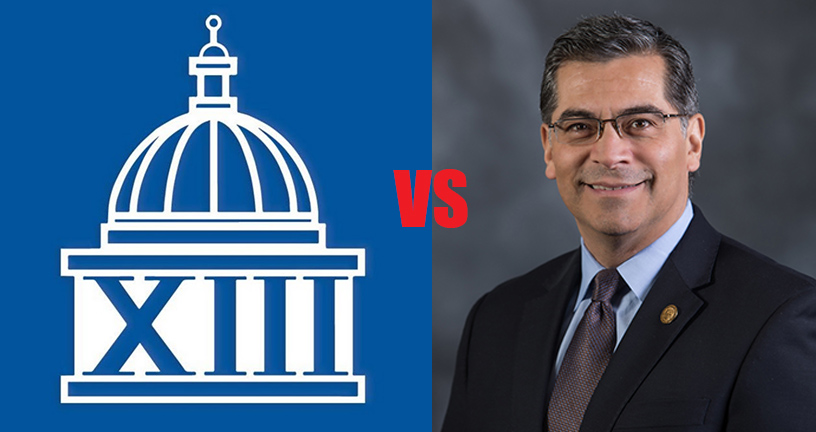
Today, July 29, 2020, the Howard Jarvis Taxpayers Association filed a lawsuit against California Attorney General Xavier Becerra for his abject failure to produce impartial ballot material related to Proposition 15, the “split roll” attack that seeks the partial repeal of Proposition 13.

Past criticism of Becerra’s bias has been vocal but has now reached a crescendo. Just this past week, editorial boards and columnists have lambasted Becerra. In fact, the specific deficiencies of Prop 15’s ballot label as well as the title and summary are well identified in the media reports themselves:

  • ​ ​“The ballot title on Prop. 15 begins by stating that it ‘increases funding sources for public schools, community colleges and local government services.’ It would do so, it states, by ‘changing tax assessment – not raisingtaxes-on commercial and industrial property.” (John Diaz, California attorney general loads language on 2 November measures, The S.F. Chronicle, July 26, 2020, https://www.sfchronicle.com/opinion/diaz/article/California-attorney-general-loads-language-on-2-15434094.php, emphasis in original.)
  • ​ ​“The title and summary of Proposition 15 are not only tilted toward one side,​ ​they are less than fully accurate. Property in California is not taxed on ‘purchase price.’ It’s taxed on fair market value at the time of purchase, adjusted annually, for inflation with increases capped at 2 percent per year… To say property is currently taxed on ‘purchase price’ conveys an impression that property taxes do not rise at all, which is misleading in a way that favors the measure’s proponents who seek to raise taxes. It’s also misleading, if not completely false, to state that​ ​Proposition 15 ‘increases funding sources.’ It doesn’t add new sources, it increases taxes on existing sources: businesses in California.” (The Editorial Board, Editorial: Biased ballot measure titles and summaries distort our democracy, Southern California News Group + Bay Area News Group, July 22, 2020, https://www.ocregister.com/2020/07/22/biased-ballot-measure-titles​-​and-summaries-distort-our-democracy/.)
  • ​  ​“California Attorney General Xavier Becerra has once again written a biased ballot title and summary, which deliberately misleads voters about Prop. 15…” “The attorney general contorts the English language to avoid using the word ‘tax.’ Unfortunately, he can’t call Prop 15 a revenue increase, since, as the nonpartisan Legislative Analyst’s Office says, some rural governments could lose money if Prop 15 passes.” (Katy Grimes, Prop. 15: Messy Title, Feud With Signer, and Ironic Zuckerberg Contributions, California Globe, July 27, 2020, https://californiaglobe.com/section-2/prop-15-messy-title-feud-with-signer-and-ironic-zuckerberg-contributions/.)
  • ​  ​“Rather than simply describe Proposition 15 for what it does, Becerra’s official title summarizes it this way: ‘Increases funding for public schools, community colleges, and local government services by changing tax assessment of commercial and industrial property.'” (Dan Walters, Becerra slants two ballot measure titles, CALmatters, July 27, 2020, “https://calmatters.org/commentary/dan-walters/2020/07/california-becerra-partisan-ballot-measure-titles/.)

“This blatant manipulation of the ballot label as well as the title and summary is in direct contravention of the Attorney General’s fiduciary duty to prepare impartial ballot material,” said Jon Coupal, President of Howard Jarvis Taxpayers Association.

California voters are entitled by law to “a true and impartial statement of the purpose of the measure in such language that the ballot title and summary shall neither be an argument, nor be likely to create prejudice, for or against the proposed measure.” Instead, Attorney General Becerra has bowed to the political power of special interests who seek to hide from the voters that the measure they have put on the ballot is the biggest property tax increase in California history.


Filed Under: Legal, News, Politics & Elections

Civil rights group sends formal legal letter to Contra Costa supervisors to ensure county stops violating churches’ constitutional rights

June 11, 2020 By Publisher Leave a Comment

Claims “Restricting Religious Gatherings to 12 Participants Unconstitutionally Violates Right to Equal Protection”

“…the County’s Order violates federal and state law while unashamedly discriminating against houses of worship.”

On Wednesday, June 10, 2020 a formal legal letter was by attorney Harmeet Dhillon, founder of the Center for American Liberty, to members of the Contra Costa County Board of Supervisors, to ensure county health services staff follows through with their commitment to change the requirement to a recommendation that places of worship gather names and contact information of those who attend services and provide it to the county upon request. (See related articles, here, here and here). In addition, the letter points out that the county’s health order limiting indoor services to 12 people also violates the Constitution. – 2020.06.10_HDhillon CAL Letter to Contra Costa County

June 10, 2020

Contra Costa County Board of Supervisors

651 Pine Street

Martinez, CA 94553

Re: Unconstitutional Contra Costa Health Services Order No. HO-COVID19-17, Specifically Regarding “Additional Businesses” (section 3 of Appendix C-1, Updated June 5, 2020)

Dear Board of Supervisors:

We write today, on behalf of clients in Contra Costa County, to demand the immediate rescission of Contra Costa Health Services Order NO. HO-COVID19-17 (the “Order”). The Order is concerning for two reasons: (1) Its requirement that houses of worship—and only houses of worship—keep and upon request disclose “a record of attendance” to Contra Costa Health Services violates both state and federally protected rights of associational privacy; (2) Restricting religious gatherings to no more than 12 participants violates First and Fourteenth Amendment protection. And while we appreciate the County’s recent announcement that it plans to revise its requirement that houses of worship keep and disclose attendance lists, until such plans manifest, we reiterate our objection over its current text.

  1. Restricting Religious Gatherings to 12 Participants Unconstitutionally Violates First Amendment Rights

The First Amendment to the U.S. Constitution prohibits government actors from enforcing any “law respecting an establishment of religion, or prohibiting the free exercise thereof.” U. S. Const. amend. I; see also Cantwell v. Connecticut, 310 U.S. 296, 303 (1940) (applying the First Amendment to the States through the Fourteenth Amendment). Under strict scrutiny, the government cannot burden religious activity unless it first establishes (1) a compelling interest for imposing such burdens, and (2) that the burdens are the “least restrictive means” necessary to further that compelling interest. Federal courts routinely enjoin the enforcement of laws and policies under this standard. See e.g., Church of the Lukumi Babalu Aye, Inc. v. City of Hialeah 508 U.S. 520, 524 (1993).

The County’s Order severely burdens religious expression. The Order’s restriction on indoor religious services—limiting the number of participants to 12 persons or 25% of the building’s capacity, whichever is less—does not survive exacting scrutiny in that it is not the least restrictive means to accomplish the County’s interest in public health. Simply put, there are better ways for the County to accomplish its interest in public health that do not burden religious expression as much. For example, restricting participation on a percentage basis only—with respect to facility seating capacity—is a better solution. Twelve people in a sanctuary that holds one thousand looks very different from twelve people in a sanctuary that holds one hundred people.

In other words, percentage-based restrictions accommodate larger houses of worship while satisfying the County’s interest in public health and social distancing.

  1. Restricting Religious Gatherings to 12 Participants Unconstitutionally Violates Right to Equal Protection

The Fourteenth Amendment of the Constitution provides that “[n]o State shall . . . deny to any person within its jurisdiction the equal protection of the laws.” U.S. Const. amend. XIV, § 1.

Equal protection requires the state to govern impartially—not draw arbitrary distinctions between

individuals based solely on differences that are irrelevant to a legitimate governmental objection. City of Cleburne, Tex. v. Cleburne Living Ctr., 473 U.S. 432, 446 (1985).

Here, the County’s 12-person limit on religious gatherings is nothing if not arbitrary. This is more restrictive than statewide health guidelines, according to the California Department of Health for places of worship, which currently limits attendance to 25% of building capacity or a maximum of 100 attendees, whichever is less; it is unclear where Contra Costa County’s “12 person” idea originates.

Additionally, no other establishment in Contra Costa County is subject to these more restrictive and draconian requirements. Costco, laundromats, marijuana dispensaries, and countless other purely secular entities are not burdened by this arbitrary, 12-person limitation.

On April 14, 2020, the United States Attorney General, William Barr, issued a statement addressing the disparate treatment being afforded to houses of worship.

As we explain in the Statement of Interest, where a state has not acted evenhandedly, it must have a compelling reason to impose restrictions on places of worship and must ensure that those restrictions are narrowly tailored to advance its compelling interest. While we believe that during this period there is a sufficient basis for the social distancing rules that have been put in place, the scope and justification of restrictions beyond that will have to be assessed based on the circumstances as they evolve.

Religion and religious worship continue to be central to the lives of millions of Americans. This is true more so than ever during this difficult time. The pandemic has changed the ways Americans live their lives. Religious communities have rallied to the critical need to protect the community from the spread of this disease by making services available online and in ways that otherwise comply with social distancing guidelines.

The County may not treat houses of worship as second class entities; at a minimum, it must treat them equitably with respect to secular counterpart. Contra Costa Health Services Order NO. HO-COVID19-17 does the opposite—it targets houses of worship with more burdensome restrictions.

III. The Order Infringes Upon Constitutionally Protected Right to Privacy Under State Law

The right to privacy is an inalienable right under California law.3 This privacy interest irrefutably extends to participation in religious gatherings.

In Church of Hakeem, Inc. v. Superior Court, Alameda County, 110 Cal. App. 3d 384 (Ct. App. 1980), the court expressly declined to mandate disclosure of member names and addresses, even after allegations of criminal activity or wrongdoing by the church. In City of Carmel-by-the-Sea v. Young, 2 Cal. 3d 259 (Ct. App. 1970), the court affirmed a list of freedoms afforded constitutional protections, such as the freedom of association and privacy in one’s associations, encompassing privacy of the membership lists of a constitutionally valid organization. In Pacific Union Club v. Superior Court, 232 Cal. App 3d 60 (Ct. App. 1991), the court provided a robust analysis of associational rights and ultimately upheld a private club’s right not to disclose member lists.

Applied here, Contra Costa County’s Order requiring houses of worship to create and preserve the names and contact information of those in attendance at a worship service or ceremony, and then disclose such information “immediately upon request” unconstitutionally violates privacy rights while chilling religious expression. Whether gathering for political, social, or religious reasons, the right of association is sacrosanct. Unfortunately, the County’s Order deprives Californians their right to pray, worship, repent, and seek spiritual guidance privately. Rather, the Order subjects their most intimate religious activities to potential publication.

3 “All people are by nature free and independent and have inalienable rights. Among these are enjoying and defending life and liberty, acquiring, possessing, and protecting property, and pursuing and obtaining safety, happiness, and privacy.” Cal. Const. Art. 1 § 1
  1. The Order Violates Right to Privacy Protected by Federal Law

The “Court has recognized the vital relationship between freedom to associate and privacy in one’s associations.” Nat’l Ass’n for Advancement of Colored People v. State of Ala. Ex rel. Patterson, 357 U.S. 449, 462 (1958). Citing American Communications Ass’n, C.I.O., v Douds, 339 U.S. 382, 402 (1950), the Court explained,

‘A requirement that adherents of particular religious faiths or political parties wear identifying arm-bands, for example, is obviously of this nature.’ Compelled disclosure of membership in an organization engaged in advocacy of particular beliefs is of the same order. Inviolability of privacy in group association may in many circumstances be indispensable to preservation of freedom of association, particular where a group espouses dissident beliefs.

Here, Contra Costa County’s Order tramples Californians’ right to privacy and in doing so, violates the Due Process Clause. Similar to the state of Alabama in NAACP v. Alabama, Contra County is requiring houses of worship to disclose the identities of congregants gathering to worship. And similar to the state of Alabama, this mandatory disclosure of religious expression “curtails the freedom to associate,” “denying “the ‘liberty’ assured by the Due Process Clause of the Fourteenth Amendment,” and is “subject to the closest scrutiny.” Id. at 460-61.

  1. Attendance Recordation Requirement Violates Equal Protection Protected by Federal Law.

By the Order’s express terms, the Order discriminates against places of worship by requiring places of worship to create and maintain attendee lists, yet the Order places no other such burdens on any other non-religious establishment whatsoever. As the United States Supreme Court has noted, “a law burdening religious practice that is not neutral or not of general application must undergo the most rigorous of scrutiny.” Church of the Lukumi Babalu Aye, Inc. v. Hialeah, 508 U.S. 520, 546 (1993). Further, “A law is not generally applicable if its prohibitions substantially under include non-religiously motivated conduct that might endanger the same governmental interest that the law is designed to protect.” Stormans, Inc. v. Wiesman, 794 F.3d 1064, 1079 (9th Cir. 2015) (citing Lukumi, 508 U.S. at 542–46). So, “In other words, if a law pursues the government’s interest ‘only against conduct motivated by religious belief,’ but fails to include in its prohibitions substantial, comparable secular conduct that would similarly threaten the government’s interest, then the law is not generally applicable.” Id.

The County fails this standard. Houses of worship are uniquely burdened by this public disclosure requirement. And again, no other entity appears to be subjected to this standard.

In conclusion, we believe the County’s Order violates federal and state law while unashamedly discriminating against houses of worship. For these reasons, the Center for American Liberty respectfully requests that Contra Costa Health Services Order NO. HO-COVID19-17, requiring houses of worship to record and disclosure attendance at religious services, be either rescinded or amended to cure its constitutional defects. We look forward to hearing your response.

Regards,

Harmeet K. Dhillon

cc: John Gioia, Candace Anderson, Diane Burgis, Karen Mitchoff, Federal D. Glover

Filed Under: Faith, Health, Legal, News, Supervisors

Civil rights organization issues legal statement on Contra Costa’s requirement churches gather worshippers’ information

June 9, 2020 By Publisher 1 Comment

May also challenge 12-person or 25% capacity limit for indoor services

Following is the statement from the Center for American Liberty’s Founder Harmeet K. Dhillon concerning the Contra Costa Health Services Order No. HO-COVID19-17. (See related article)

“The Center for American Liberty was contacted recently regarding the June 5, 2020 Order issued from Contra Costa Health Services (Order No. HO-COVID19-17). This Order was concerning for several reasons and we intend to formally reach out to Contra Costa County with an analysis of our concerns.

The June 5, 2020 Order, as presently written, specifically singles out places of worship by requiring that places of worship in Contra Costa County create and preserve a list of persons in attendance, and then disclose such attendance list upon request to the government – a burden that is notably not placed on other establishments in Contra Costa County. Such burden is unconstitutional and is discriminatory on its face.

The California Constitution provides certain inalienable rights, including the right to privacy, to freely assemble, and to enjoy one’s religion – Californians deserve to freely worship and assemble without fear that his or her name and address will end up in a government database. The Center for American Liberty welcomes any official change to this June 5, 2020 Order and will continue to be vigilant about any attempts to discriminate against houses of worship or people of faith in California.

Additionally, the June 5, 2020 Order currently limits houses of worship to a 12 person or 25% limit (whichever is fewer), which is arbitrary, and we will also be monitoring, and potentially challenging, this disparate burden on places of worship and people of faith in Contra Costa County.”

Filed Under: Health, Legal, News

Contra Costa County Superior courts to all close at noon on Friday due to “civic activities”

June 4, 2020 By Publisher 1 Comment

By Matt J. Malone, Public Information Officer, Superior Court of California, Contra Costa County

Due to anticipated civic activities in the area, the Contra Costa Superior Court will close at all locations at 12:00 p.m. on Friday, June 5.

Filed Under: Legal, News

Payton Perspective: Gov. Newsom isn’t really allowing places of worship to reopen, his guidelines are too restrictive

May 26, 2020 By Publisher 2 Comments

Some churches to participate in civil disobedience this Sunday and open for services.

“Simply put, there is no pandemic exception to the U.S. Constitution and its Bill of Rights”… “the Constitution calls for California to do more to accommodate religious worship” – 5/19/20 US DOJ letter to Gov. Newsom.

By Allen Payton

Yesterday, Monday, May 25, 2020 – Memorial Day, the day we honor and commemorate those who died for our freedoms, some of which are seriously limited, right now – California Governor Gavin Newsom issued guidelines for reopening places of worship. At first, I was hopeful that he was doing something good in response to President Trump’s directive to all the governors and the directive to California from U.S. Attorney General William Barr and the Department of Justice, last week.

But the guidelines don’t really allow most places of worship to reopen. Why? Because they’re too restrictive, limiting attendance to just 25% of building capacity or 100 people whichever is less. Plus, Newsom is leaving it up to each unelected county health officer to approve of the guidelines or not.

Now, it’s worse because they’re allowing more and more businesses to reopen – which is great – but not the churches. Our officials already considered all the vice serving businesses, including all the locations of the nation’s top abortion provider, Planned Parenthood, liquor stores, and marijuana dispensaries essential. But not the churches or other places of worship. And as of today, the governor said barber shops and hair salons can reopen.

Which part of “shall make no law…prohibiting the free exercise” of religion and the other First Amendment right of freedom of peaceful assembly, don’t our officials get?

Civil Disobedience

Following in the footsteps of the black Christian ministers who led the efforts during the civil rights movement, it appears some churches will be participating in some civil disobedience with the ministers leading the effort for their rights, when they hold services this next Sunday, May 31st in defiance of state and local orders. Those in attendance will probably only be issued citations and the maximum fine is $1,000, which they can collectively fight. Plus, with $0 bail, right now none of them will go to jail. Most likely only the ministers will be cited and fined. But who knows? The Lord does and we will see just how far the government officials will take this and just how much they want to continue this fight.

Time to Elect New Leaders

It’s definitely time we elected only those who agree that places of worship are essential, not only to those who attend, but society as a whole, and will actually uphold their oaths of office, in which they swore to defend the Constitution against all enemies foreign and domestic. Event the CDC recognized that in the statement for its Interim Guidance for Communities of Faith, unlike our governor in the statement included with his guidelines. The CDC wrote, “Millions of Americans embrace worship as an essential part of life. In addition, we note that while many types of gatherings are important for civic and economic well-being, religious worship has particularly profound significance to communities and individuals, including as a right protected by the First Amendment. State and local authorities are reminded to take this vital right into account when establishing their own re-opening plans.”

What did the governor include in the statement about his guidelines? Just more warnings about how public gatherings can cause more deaths. That statement includes, “There have been multiple outbreaks in a range of workplaces, indicating that workers are at risk of acquiring or transmitting COVID-19 infection. Examples of these workplaces include places of worship, long-term care facilities, prisons, food production, warehouses, meat processing plants, and grocery stores.”

“Further, it is strongly recommended that places of worship continue to facilitate remote services and other related activities for those who are vulnerable to COVID19 including older adults and those with co-morbidities. Even with adherence to physical distancing, convening in a congregational setting of multiple different households to practice a personal faith carries a relatively higher risk for widespread transmission of the COVID-19 virus, and may result in increased rates of infection, hospitalization, and death, especially among more vulnerable populations. In particular, activities such as singing and group recitation negate the risk-reduction achieved through six feet of physical distancing,” Newsom’s statement continues.

Nothing about our First Amendment rights which should be protected or that corporate worship or even churches being essential to at least some Californians or society as a whole.

Support Legal Efforts

We also need to support the legal efforts of those suing the state and governor to get the courts to force him to allow the churches to reopen. One way you can do that is by supporting the Center for American Liberty, based in San Francisco and led by my friend, attorney Harmeet Dhillon and her fellow attorney, Mark Meuser, a former Contra Costa resident. Read about their cases and make a contribution, here – https://libertycenter.org/pf/covid-19-litigation/.

Another lawsuit by churches in California against Newsom and the state, which was joined by Dhillon, lost last week at the 9th Circuit Court of Appeals on a 2-1 decision of a three-judge panel. Not surprising the judges who voted with the governor were appointed by Clinton and Obama, and the one judge that voted with the churches was appointed by Trump.

“These are emergency appeals,” Dhillon explained on Monday. “We filed for an appeal to the U.S. Supreme Court” in the recent case before the 9th Circuit.

“The DOJ sent a letter to the governor that his policies were discriminatory against churches,” she continued. “Today’s guidelines are still limiting. They’re totally arbitrary. There is no limit of 100 people for any retail establishment. Retail has a 50% capacity limit for some and none for others.”

“To tell people how they can worship, this is more unconstitutional and very problematic,” Dhillon added.

DOJ Letter to Newsom

In the DOJ letter to Newsom about “several civil rights concerns with the treatment of places of worship” due to the governor’s stay-at-home order, as well as “documents relating to the California Reopening Plan” it states “Simply put, there is no pandemic exception to the U.S. Constitution and its Bill of Rights.” USDOJ 5.19.20 Ltr. to Hon. Gavin Newson

“Laws that do not treat religious activities equally with comparable nonreligious activities are subject to heightened scrutiny under the Free Exercise Clause of the First Amendment,” the letter continues.

“Places of worship are not permitted to hold religious worship services until Stage 3” of Newsom’s reopening plan, the letter explains. “However, in Stage 2, schools, restaurants, factories, offices, shopping malls, swap meets and others are permitted to operate with social distancing. And as noted, ecommerce and entertainment industry activities are already permitted with social distancing. This constitutes precisely the kind of differential treatment the Supreme Court identified” in the decision of another case “in which the government is not willing to impose on certain activities the same restrictions it is willing to impose on constitutionally protected religious worship.”

“Religious gatherings may not be singled out for unequal treatment compared to other nonreligious gatherings that have the same effect on the government’s public health interest…” the letter states.

It then refers to the recent case before the 9th Circuit and states, “Other decisions around the country…make clear that reopening plans cannot unfairly burden religious services as California has done.”

“We believe…that the Constitution calls for California to do more to accommodate religious worship, including in Stage 2 of the Reopening Plan.”

An email has been sent to the DOJ asking for their views on Newsom’s guidelines and if they comply with the May 19th letter. (Please check back later for updates to this column.)

Time for Action

It’s time for action and to stop living in fear, my friends. The governor’s guidelines are too restrictive and continue to clearly violate our God-given – the meaning of “unalienable” – and constitutionally protected rights of both freedom of religion and assembly. Until Newsom complies with the directives from the federal government, churches should feel free to reopen within the guidelines applied to nonreligious activities and businesses.

As the DOJ letter states, “Religious communities have rallied to protect their communities from the spread of this disease by making services available online, in parking lots, or outdoors, by indoor services with a majority of pews empty, and in numerous other creative ways that otherwise comply with social distancing and sanitation guidelines.” Local churches can do the same. We shall see if any actions are taken against the ministers and those who attend this Sunday’s services.

DOJ Letter to Governor Newsom

U.S. Department of Justice

Civil Rights Division


____________________________________________________________________________________________

Office of the Assistant Attorney General                                               Washington, D.C. 20530

May 19, 2020


The Honorable Gavin Newsom

Governor of California

1303 10th Street, Suite 1173

Sacramento, CA 95814

Dear Governor Newsom:

We are writing to you to raise several civil rights concerns with the treatment of places of worship in Executive Orders N-33-20 and N-60-20 and documents relating to the California Reopening Plan.

Of course, we recognize the duty that you have to protect the health and safety of Californians in the face of a pandemic that is unprecedented in our lifetimes. You and other leaders around the country are called on to balance multiple competing interests and evaluate the constantly changing information available to you about COVID-19, and make your best judgment on courses of action.

Attorney General William P. Barr recently issued a statement on Religious Practice and Social Distancing, in conjunction with a Mississippi case in which the Department of Justice participated regarding restrictions on worship. In the statement, the Attorney General emphasized the need to practice social distancing to control the spread of COVID-19. He also noted that temporary restrictions that would be unacceptable in normal circumstances may be justified. But, “even in times of emergency, when reasonable and temporary restrictions are placed on rights, the First Amendment and federal statutory law prohibit discrimination against religious institutions and religious believers. Thus, government may not impose special restrictions on religious activity that do not also apply to similar nonreligious activity.” Simply put, there is no pandemic exception to the U.S. Constitution and its Bill of Rights.

Laws that do not treat religious activities equally with comparable nonreligious activities are subject to heightened scrutiny under the Free Exercise Clause of the First Amendment. Church of the Lukumi Babalu Aye v. City of Hialeah, 508 U.S. 520 (1993). Laws that are not both neutral toward religion and generally applicable are invalid unless the government can prove that they further a compelling interest and are pursued through the least restrictive means possible. Religious gatherings may not be singled out for unequal treatment compared to other nonreligious gatherings that have the same effect on the government’s public health interest, absent the most compelling reasons.

Executive Order N-33-20 (March 19, 2020) ordered Californians to remain at home except to engage in authorized necessary activities as laid out by the Public Health Officer at the time and as modified going forward. The Public Health Officer’s April 28 “essential workforce” list does not appear to treat religious activities and comparable nonreligious activities the same.

The list includes “faith-based services” but only if “provided through streaming or other technologies.” In-person religious services are thus apparently prohibited even if they adhere to social distancing standards.

The list of nonreligious workers who are not so restricted by the Executive Order and essential workforce list when telework “is not practical” is expansive. For example, the list includes “Workers supporting the entertainment industries, studios, and other related establishments, provided they follow covid-19 public health guidance around social distancing.” Likewise, “workers supporting ecommerce” are included as essential, regardless of whether the product they are selling and shipping are life-preserving products or not. This facially discriminates against religious exercise. California has not shown why interactions in offices and studios of the entertainment industry, and in-person operations to facilitate nonessential ecommerce, are included on the list as being allowed with social distancing where telework is not practical, while gatherings with social distancing for purposes of religious worship are forbidden, regardless of whether remote worship is practical or not.

Even more pronounced unequal treatment of faith communities is evident in California’s Reopening Plan, as set forth in Executive Order N-60-20 (May 4, 2020), and in the documents the California Department of Public Health produced pursuant to it, including the “Resilience Roadmap” (https://covid19.ca.gov/roadmap/) and “County Variance Attestations” (https://www.cdph.ca.gov/Programs/CID/DCDC/Pages/COVID-19/Local-Variance-Attestations.aspx). Places of worship are not permitted to hold religious worship services until Stage 3. However, in Stage 2, schools, restaurants, factories, offices, shopping malls, swap meets, and others are permitted to operate with social distancing. And as noted, ecommerce and entertainment industry activities are already permitted with social distancing. This constitutes precisely the kind of differential treatment the Supreme Court identified in the Lukumi decision in which the government is not willing to impose on certain activities the same restrictions it is willing to impose on constitutionally protected religious worship. While it is true that social distancing requirements applied to places of worship may inevitably result in much smaller congregations than some faith groups would like, in our experience with other controversies around the country, many places of worship are quite content to operate at 15-25% of capacity in a way that allows for social distancing between family groups.

The Department of Justice does not seek to dictate how States such as California determine what degree of activity and personal interaction should be allowed to protect the safety of their citizens. However, we are charged with upholding the Constitution and federal statutory protections for civil rights. Whichever level of restrictions you adopt, these civil rights protections mandate equal treatment of persons and activities of a secular and religious nature.

We recognize that three U.S. District Courts have denied Temporary Restraining Orders (TRO’s) sought by plaintiffs against Executive Order N-33-20, Abiding Place Ministries v. Wooten, No. 3:20-cv-00683 (S.D. Cal. April 10, 2020) (no written opinion); Gish v. Newsom, No. 5:20-CV-755 (C.D. Cal. Apr. 23, 2020); Cross Culture Christian Ctr. v. Newsom, No. 2:20-CV-00832 (E.D. Cal. May 5, 2020), and one denied a TRO against the Reopening Plan, which is now on appeal to the Ninth Circuit. South Bay United Pentecostal Church v. Newsom, No. 3:20-cv-865 (S.D. Cal. May 15, 2020) (oral transcript ruling). These TRO decisions do not justify California’s actions. The Abiding Place, Gish, and Cross Culture TRO decisions do not address the Stage 2 reopening, and South Bay United Pentecostal does not describe why worship services can be distinguished from schools, restaurants, factories or other places Stage 2 permits people to come together. Other decisions around the country have followed Lukumi to make clear that reopening plans cannot unfairly burden religious services as California has done. See, e.g., Robert v. Neace, No. 20-5465 (6th Cir. May 11, 2020).

Religion and religious worship continue to be central to the lives of millions of Americans. This is true now more than ever. Religious communities have rallied to protect their communities from the spread of this disease by making services available online, in parking lots, or outdoors, by indoor services with a majority of pews empty, and in numerous other creative ways that otherwise comply with social distancing and sanitation guidelines. We believe, for the reasons outlined above, that the Constitution calls for California to do more to accommodate religious worship, including in Stage 2 of the Reopening Plan.

Thank you for your prompt attention to this matter. Should you wish to discuss further, please contact United States Attorney for the Eastern District of California McGregor Scott at (916) 554-2730 or mcgregor.scott@usdoj.gov.

Sincerely,

           Eric S. Dreiband

                             Assistant Attorney General

                Civil Rights Division

McGregor W. Scott

United States Attorney

Eastern District of California

Nicola T. Hanna

United States Attorney

Central District of California

David L. Anderson

United States Attorney

Northern District of California

Robert S. Brewer

United States Attorney

Southern District of California

cc: The Honorable Xavier Becerra

Attorney General of California

Filed Under: Faith, Government, Health, Legal, Opinion

Contra Costa Superior Courts to reopen May 26

May 13, 2020 By Publisher Leave a Comment

ALL COURT LOCATIONS WILL REOPEN TO THE PUBLIC ON MAY 26, 2020 AT 8:00 A.M.

  • IF YOU ARE SICK, DO NOT COME TO THE COURT. NO ONE WHO IS SICK OR WHO IS EXHIBITING COVID-19 SYMPTOMS WILL BE PERMITTED TO ENTER ANY COURT FACILITY.
  • YOU MUST WEAR A MASK OR FACE COVERING TO ENTER ANY COURT FACILITY AND AT ALL TIMES WHILE INSIDE.
  • ANYONE ENTERING ANY COURT FACILITY WILL HAVE THEIR TEMPERATURE TAKEN. IF YOU HAVE A TEMPERATURE OF 100 DEGREES OR HIGHER, YOU WILL BE DENIED ENTRY FOR THAT DAY.
  • PLEASE EXPECT LONG LINES AND LONG WAIT TIMES. THE COURT WILL FOLLOW SOCIAL DISTANCING REQUIREMENTS AND BUILDING ACCESS WILL BE LIMITED. PLEASE OBEY ALL SIGNS. YOUR PATIENCE IS APPRECIATED.
  • CLERK’S OFFICES ARE OPEN 8:00 A.M. – 2:00 P.M., WITH PHONE HOURS FROM 10:00 A.M. – 2:00 P.M., UNTIL FURTHER NOTICE.
  • THE MARTINEZ COURT RECORDS OFFICE REMAINS CLOSED. SEE BELOW FOR INFORMATION CONCERNING RECORDS ACCESS.
  • PLEASE READ THE REMAINDER OF THIS RELEASE FOR INFORMATION ABOUT SPECIFIC OPERATIONS.

Entrances and Exits. All buildings will operate a single entry/exit point. Please follow all signs carefully. The Court Street entrance for the Wakefield Taylor building in Martinez will not be open; use the Main Street entrance only.

No Nonessential Parties. Due to social distancing limitations, individuals who are not essential to Court matters should not accompany parties to Court for any matter or case type.

Drop Box Filings. Drop boxes will still be available from 9 A.M. – 3 P.M. (one hour after clerk’s office closure). Because clerk’s offices will experience high demand and significant wait times, the Court encourages you to file items by drop box. Items placed in the drop box before 3:00 p.m. will be file-stamped that day. Drop box locations are:

  • Civil: Main Street entrance of the Wakefield Taylor Courthouse in Martinez.
  • Criminal: Main Street entrance of the Wakefield Taylor Courthouse in Martinez.
  • Family: Main entrance of Family Law building in Martinez.
  • Juvenile: Main entrance of the Walnut Creek Courthouse.
  • Probate: Main Street entrance of the Wakefield Taylor Courthouse in Martinez.
  • Pittsburg and Richmond courthouses: These drop boxes are available only for filings in case types heard at those locations.

Jury Service. Jury service will resume. Be assured that we are working with the County Health Department to ensure your safety. Those summoned must follow the rules above for access to the Court, including wearing masks. To obey social distancing requirements, jurors will be called in two-hour blocks. See your jury summons for call-in information. No more than 50 jurors will be present in a jury assembly room at any time. If you are sick, exhibiting COVID-19 symptoms, or are a high-risk individual (e.g., over 60 years of age, immunocompromised, etc.), the Court will excuse you from service upon proof. Please call 925-608-1000 and follow the prompts for Jury Services.

Emergency Local Rules. All Emergency Local Rules remain in effect unless otherwise noted or as superseded by effect of the Court’s reopening. Rules are available at: http://www.cc-courts.org/local-rules/local-rules.aspx

Filing Holidays. The Court is open for filing as of May 26, 2020. Filing holidays under this Court’s Implementation Orders and/or Emergency Local Rules expire as of the Court’s reopening. Judicial Council Emergency Rules of Court and/or orders of the Chief Justice, available on the Court’s website, may further extend filing holidays in certain cases. Review these carefully.

Records. The Court Records office in Martinez remains closed. The Court will only accept records requests and requests for background checks via drop box or mail, subject to all legal confidentiality exceptions. Do not wait in line or come to a clerk’s window with a records request.

Request forms may be downloaded from the appropriate Court Records webpage:

  • For Criminal matters and background checks: http://www.cc-courts.org/criminal/records.aspx. Submit by mail or use the Criminal drop box.
  • For any other matters: http://www.cc-courts.org/civil/records.aspx. Submit by mail or use the drop box for the appropriate case type.

Specific Matters

  • Restraining Orders. The Court continues to accept applications for domestic violence, civil harassment, and gun violence restraining orders. For civil restraining orders, please review the Civil Emergency Local Rules. For domestic violence restraining orders and emergency protective orders, please review the Family Emergency Local Rules.
  • Traffic. The Court is in the process of rescheduling all traffic matters and you will receive a notice of new dates. Read your notice carefully: The location of your matter may differ from your original notice. All traffic matters have been granted a 120-day extension which also applies to payment deadlines as well as deadlines for traffic school and community service completion.
  • Small Claims. The Court will reschedule all small claims matters and provide notice of new dates. Read your notice carefully: The location of your matter may differ from your original notice.
  • Unlawful Detainer. The Judicial Council’s Emergency Rules of Court prohibit the Court from issuing a summons on any new unlawful detainer complaints, with limited exceptions for urgent public health and safety matters. For matters involving violence, threats of violence, and/or health and safety issues, parties should provide documents with the filing, such as a declaration under oath, relating facts supporting the urgency on those grounds.
  • Civil Limited and Unlimited.
  1. Hearings and filings will proceed under the Civil Emergency Local Rules. Hearings from May 18, 2020 through May 27, 2020, will go forward on fully-briefed matters. Briefs for hearings on May 28, 2020, or thereafter must be filed under normal statutory timeframes even if that requires a filing during the closure period. Review the Civil Emergency Local Rules for further information.
  2. The CourtCall process in the Civil Emergency Local Rules will be used for all hearings until further notice. Do not come to Court for your hearings.
  3. Review the Complex Emergency Local Rules for procedures for Complex cases.
  • Probate. All matters should be submitted via drop box. The Probate File Examiner Office will not be open to accept ex parte submissions until further notice. Review the Probate Emergency Local Rules for information on hearings and use of remote technology. The Probate department will be providing additional guidance separately.
  • Criminal Virtual and Emergency Courtrooms. These courtrooms will close as of May 26, 2020, except by written stipulation of the parties approved by the Presiding Judge.

Filed Under: Legal, News

Orinda attorney Gina Dashman appointed Contra Costa Superior Court Commissioner

May 11, 2020 By Publisher 1 Comment

By Matt Malone, Public Information Officer, Superior Court of California, Contra Costa County

Gina Dashman. From her LinkedIn profile.

The Court is very pleased to announce the appointment of Gina Dashman as Commissioner. Commissioner Dashman will preside over Department 57, handling traffic, unlawful detainer, small claims, and restraining order matters with morning calendars at the Pittsburg courthouse and afternoon calendars at the Wakefield Taylor courthouse in Martinez. Commissioner Dashman assumed her role effective April 27, 2020.

The 60-year-old Orinda resident is an experienced and accomplished lawyer who, prior to her appointment, was an equity partner at Haapala, Thompson & Abern LLP since 2014, where she had also been an associate since 2009. Previously, she was of counsel at Stein, Rudser, Cohen & Magid from 2002-2009, an associate and partner at Buresh, Kaplan, Jang & Feller from 1988-2002, and an associate at Epstein, Becker & Green from 1986-1988.

Dashman served as President of Women Lawyers of Alameda County from 2018-2019 and on the Board of Directors of the Contra Costa County Bar Association from 2018-2020. She earned her Juris Doctor degree from George Washington University School of Law in 1986 and her Bachelor of Arts degree from U.C. Berkeley in 1983.

According to her LinkedIn profile, Dashman is also a published author of Neighbor Disputes-Law and Litigation, and United States Corporate Disinvestment from South Africa: The Financial Rand and Exchange Control.

Allen Payton contributed to this report.

Filed Under: Central County, Lamorinda, Legal, News

Government overreach and the Constitution

May 3, 2020 By Publisher Leave a Comment

Dear Editor:

I am not an attorney, nor do I play one on TV.  However, I do have 30 years of experience working on land-use legislation, litigation, politics, and policy at the local, state, and national level.   Based on those experiences, I want to share my opinion with you.

In March, all Americans including recreationists were asked to comply with temporary Covid-19 shelter-in-place (SIP) orders and mitigation measures to “Flatten the Curve” to avoid overcrowding our hospitals and reduce the number of projected deaths.

The American public responded to the government mandates by largely complying with those plans and mitigations.   Recreation leaders in the grassroots and industry sectors also responded with outreach and education programs to encourage compliance with those temporary orders.

Today, many in the general public are now questioning some states and local jurisdictions that appear to have politicized Covid-19 restrictions by extending hard SIP orders – without a strong rationale – that apply to residents and businesses.

Considering the above reality in some states, it should come as no surprise for the U.S. Supreme Court (SCOTUS) to weigh in on the matter when potential violations of the U.S. Constitution appear to be taking place.

On such case is in Pennsylvania where according to the article linked to below: “A group of Pennsylvania businesses petitioned the US Supreme Court Monday in their lawsuit seeking to overturn Governor Tom Wolf’s March 19 executive order closing “non-life-sustaining” business in response to the COVID-19 pandemic.”

SCOTUS has now weighed in by giving the PA Governor until May 4 to respond to a petition that accuses the commonwealth of violating the constitutional rights of its citizens.

Please see https://www.jurist.org/news/2020/05/supreme-court-orders-pennsylvania-to-respond-to-challenge-to-stay-at-home-order/

Folks in other states are also challenging extended SIP orders that appear to violate our constitutional rights.  The purpose of this opinion is not to start a debate about the veracity or effectiveness of Covid-19 mitigation measures but to simply highlight the growing concern about government overreach and potential violation of our constitutional rights.

Having SCOTUS step in on this issue may be the biggest news item in recent weeks.

Don Amador

Oakley, CA

Don Amador has been in the trail advocacy and recreation management profession for over 30 years. Don is President of Quiet Warrior Racing/Consulting. Don served as a contractor to the BlueRibbon Coalition from 1996 until June 2018. Don served as Chairman and member on the California Off-Highway Motor Vehicle Recreation Commission from 1994-2000. He has won numerous awards including being a 2016 Inductee into the Off-Road Motorsports Hall of Fame and the 2018 Friend of the AMA Award. Don currently serves as the government affairs lead for AMA District 36 in Northern California and also serves as the OHV representative on the BLM’s Central California Resource Advisory Committee.  Don is also a contributor to Dealernews Magazine

Filed Under: Health, Legal, Letters to the Editor, Opinion

Drive-in churches now legal in California thanks to lawsuit victory

April 17, 2020 By Publisher Leave a Comment

“But, it’s problematic because going to church still isn’t considered essential” – Attorney Harmeet Dhillon

By Allen Payton

A victory, Friday in a lawsuit on freedom of worship is forcing California to allow drive-in church services.

The lawsuit against the State of California naming Governor Gavin Newsom over his executive order, was filed by San Francisco attorney Harmeet Dhillon, founder of the non-profit Center for American Liberty and co-counsel Mark Meuser, on behalf of three southern California churches and one parishioner. (See related article)

According to twitter posts by Dhillon, a government brief filed late (Friday) morning claimed that “drive in” is a “technology” like streaming video, and now OK. In response to this executive order “clarification” by opposition brief, Riverside and San Bernardino Counties update(d) their health decrees to allow drive-in worship.

“This development is a partial victory in our lawsuit, but it still does not allow in-building services – meaning people seeking spiritual guidance and fellowship safely, are given no right to do so but the same people can visit wine, pot, food, laundry shops with a mask legally,” she tweeted.

“We continue to wait for ruling on TRO (temporary restraining order),” Dhillon continued. “People of faith may be treated no less favorably than any other people in California. Reporters, termite guys, tree trimmers, baristas, stir-fry chefs, grocery workers, and customers of all have rights – so do religious leaders & followers!”

She was asked why this applies to the entire state, when she was only representing the three churches and one parishioner in Southern California.

“But I sued the State of California over the statewide order, and the counties,” she explained.

The place where the so-called policy changes were announced are hidden in the ruling, with the state agreeing that “of course drive-in churches are a technology like streaming video,” Dhillon shared. “You and I both know that’s absurd. But, it’s problematic, because going to church still isn’t considered essential.”

There’s no requirement for the state to publicize the court’s decision.

“It’s sneaky,” she said.

Asked about her clients Dhillon said, “I’m only representing those who are socially responsible, like anyone else.”

According to their website, “The Center for American Liberty defends the Free Speech rights and Civil Liberties of Americans.”

“The non-profit hired my firm to represent the plaintiffs,” she explained.

The decision was handed down by the U.S. District Court for the Central District of California in Los Angeles, which also includes Riverside and San Bernardino Counties.

“I’m glad we were able to do this. This is a small thing,” Dhillon added. “You’re probably not going to see a lot of drive-in churches in the next week or two. But, it’s better than nothing, dressing up, driving in and seeing your friends.”

Filed Under: Faith, Health, Legal, News

  • « Previous Page
  • 1
  • …
  • 5
  • 6
  • 7
  • 8
  • Next Page »
Monica's-Riverview-Jan-2026
Liberty-Tax-Jan-Apr-2026
Deer-Valley-Chiro-06-22

Copyright © 2026 · Contra Costa Herald · Site by Clifton Creative Web