• Home
  • About The Herald
  • Local Agencies
  • Daily Email Update
  • Legal Notices
  • Classified Ads

Contra Costa Herald

News Of By and For The People of Contra Costa County, California

  • Arts & Entertainment
  • Business
  • Community
  • Crime
  • Dining
  • Education
  • Faith
  • Health
  • News
  • Politics & Elections
  • Real Estate

Glazer, coalition oppose legal challenge to his bill limiting special interest contributions to candidates

March 7, 2023 By Publisher Leave a Comment

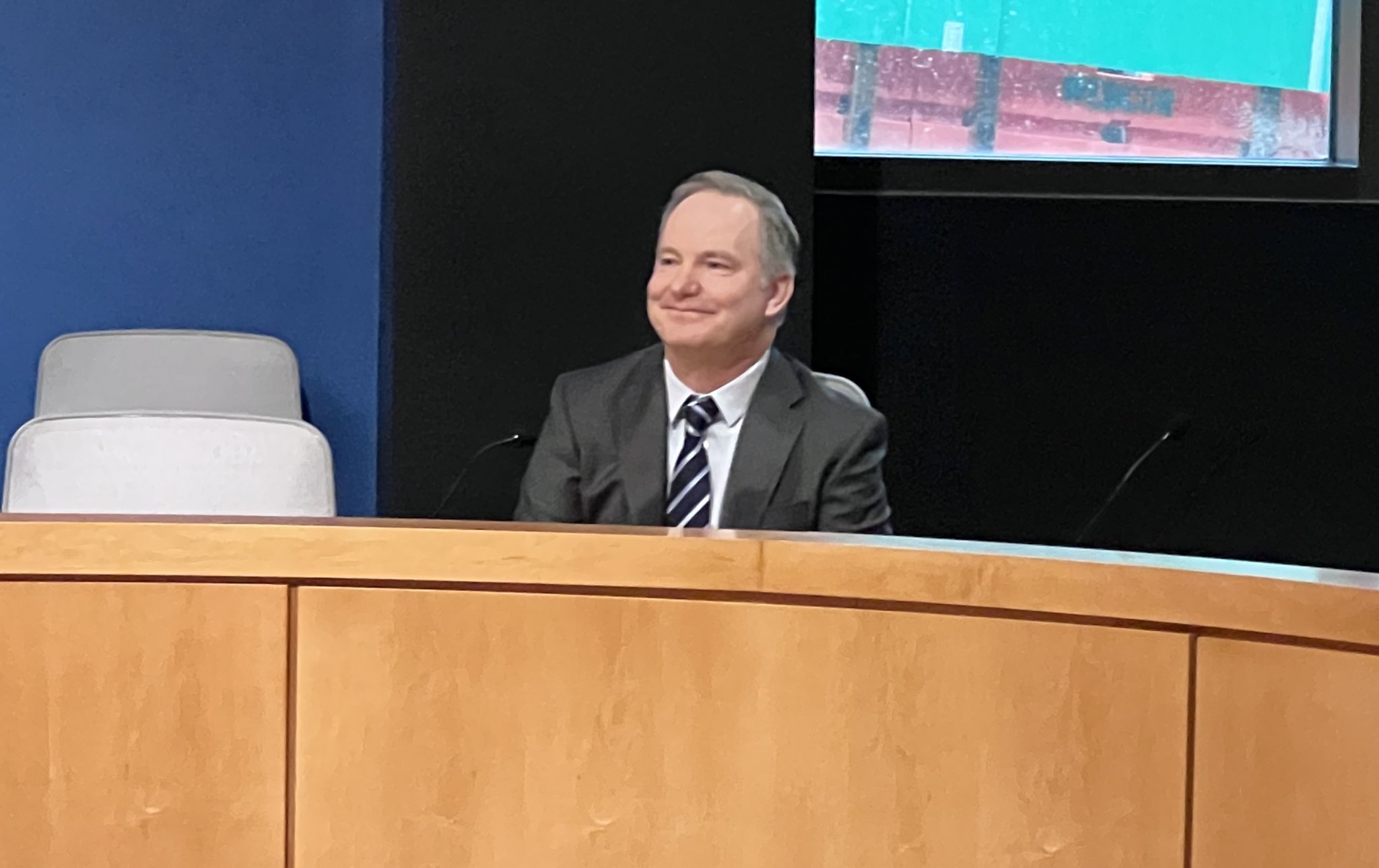
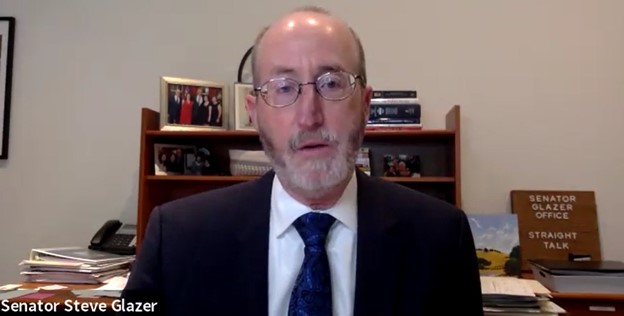
State Senator Steve Glazer speaks on the legal challenge to SB1349 during a virtual media briefing on Monday, March 6, 2023. Video screenshot

Joined by Common Cause, Consumer Watchdog for media briefing on “what’s at stake if big money wins lawsuit to terminate anti-corruption law”

On Monday, March 6, 2023, a coalition of policy experts, including representatives from Common Cause and Consumer Watchdog, joined State Senator Steve Glazer (SD7, D-Contra Costa) held a briefing on the special interest lawsuit to terminate SB 1439, what they refer to as “a common sense anti-corruption law that would help end the cycle of scandals caused by special interests’ massive campaign contributions to the local officials they have business before.”

Authored by Contra Costa State Senator Steve Glazer and signed into last year, SB1439 prohibits a local elected official from voting on a matter if they have received a contribution from the party to the matter or their agent of more than $250 during the 12 months prior to the date a final decision is made on the matter. It also prohibits local officials from receiving a contribution of more than $250 in the 12 months after the proceeding from party to the matter or the party’s agent. But the bill also allows an official to return a contribution to avoid violating the new law and still vote on the matter.

According to Common Cause which proposed the bill, California law prohibited anyone seeking a contract, permit, or license from the government from making a campaign contribution of more than $250 to the officials responsible for decisions about that contract, permit, or license. The limitation applied while the contract, permit, or license was pending and for three months after. But local elected officials were exempted from the law. The bill extended the prohibitions from three to 12 months and included local elected officials.

The panel of policy and democracy experts warned the public of the high-stakes consequences of the special interest lawsuit, by eight trade associations and two Sacramento area local elected officials, to terminate SB 1439 at a virtual press conference. The legislation, signed into law last year, is a common-sense, anti-corruption law that would help end the cycle of scandals caused by special interests’ massive campaign contributions to local officials they have business before.

The panel discussed the urgent need to uphold the lawful, long-overdue legislation that holds local leaders accountable to the people they serve, not to special interests. Local stakeholders illustrated how special interests meddling in local politics hinders democracy and harms our communities.

Regarding the urgent need to protect SB 1439:

“We have become numb to the legal corruption that has enveloped our democracy. Pay-to-play is antithetical to an honest and ethical government, and it should be rooted out and killed like a cancer that has affected the body politic,” said Glazer.

“The influence-peddling community wants the opposite – greasy contributions that taint decisions that should be exclusively in the public’s interest. The status quo is shameful, and it is bigger than the corruption we are trying to root out – it is the confidence of our citizenry in whether people can have faith in our democracy,” he added.

Regarding the importance of expanding our anti-corruption laws: 

“California’s local governments have been plagued by scandals in which special interest entities pump campaign cash to the local government officials who determine their fate on licenses, permits, and contracts. The examples are endless – SB 1439 is a common sense, narrowly tailored solution to an acute and documented problem to protect our communities,” said Jonathan Mehta Stein, Executive Director of California Common Cause. “It has been tried in other states and in a long list of California cities, and it has never been knocked down because of legal challenges. We trust SB 1439 will succeed in the courts.” 

Regarding how SB 1439 expands the Political Reform Act: 

“SB 1439 is one of the most significant pieces of legislation in the last 10 years. It gets right to the heart of the corruption problem – people think that elected officials are acting in the best interest of their contributors, not in the public interest. This law expands the purposes of the Political Reform Act and is a major effort to correct this problem and public perception, thus the law should be upheld by the courts,” said Bob Stern, policy expert and principal co-author of the Political Reform Act of 1974.

Regarding how big money in our local politics hurts our communities: 

“Supporting SB 1439 as a bill was an easy choice for us – we see and feel regularly the impact of corporate money in the Inland Empire. Increasingly, it’s felt that regardless of how loudly residents and voters push back against certain kinds of local projects, developer money will always drown out our voice,” said Sky Allen, Executive Director of Inland Empire United. “Over the past 20 years, the Inland Empire has become the largest logistics hub in the world – so instead of green space and local businesses, we’re surrounded by massive warehouses and, as a result, we breathe some of the worst air and are offered fewer quality jobs. Laws like AB 1439 give us hope that moving forward, the scales will be more balanced.” 

Regarding how big money in our local politics hurts consumers: 

“Local politicians have tremendous influence and direct impact on the policies that impact consumers the most, like zoning laws, environmental regulations, and business licensing. When corporations and wealthy individuals use their financial resources to influence local elections and create favor with local elected officials, they successfully steer public policy in ways that are sympathetic to their own interests at the expense of consumers as a whole,” said Ben Powell, Staff Attorney for Consumer Watchdog. “Laws like SB 1439 address this by ensuring that local politicians are working in favor of the public interest, not bids for re-election or trading favors with wealthy donors.”

“It’s imperative that we ensure local elections stay equitable for everyone. When big money comes into play, socioeconomic barriers are strengthened and the community is ultimately the one who loses,” said Emmanuel Estrada, Mayor of Baldwin Park. “In Baldwin Park, we enacted a local ordinance barring city contractors from directly donating to candidates and adding stricter contribution limits. When we sent it to the voters to reinforce the ordinance, over 80 percent were in favor, illustrating the massive desire to remove the influence of big money from our local politics.”

California Fair Political Practices Commission Chair, Richard C. Miadich, who was unable to attend the briefing said, “We’re disappointed to learn a lawsuit has been filed regarding SB 1439 after the Commission voted unanimously to support it and months after it unanimously passed the legislature and was signed by the Governor.”

“It also comes months after we’ve begun issuing guidance, gathering public input and crafting regulations to implement the law. We’ll continue doing just that and will continue to enforce the law unless and until a court ruling says otherwise,” he added.

To watch the full briefing, click here. 

Allen D. Payton contributed to this report.



Filed Under: Government, Legal, News, Politics & Elections

Contra Costa seeks volunteers for oversight of Martinez refinery release investigation

January 18, 2023 By Publisher Leave a Comment

Source: Martinez Refining Company

Contra Costa County seeks community volunteers for a committee to oversee an independent investigation and risk assessment of the Nov. 24-25 release of heavy metals into the surrounding community by Martinez Refining Company (MRC). (See related article)

The oversight committee will advise the Contra Costa Board of Supervisors and Contra Costa Health’s (CCH) Hazardous Materials Program on the hiring of contractors to probe the cause of the release, and separately the impact that it had on community health and the environment. The committee will review and direct the work as it proceeds and is ultimately reported to the Board and the public.

The Ad Hoc Committee for the Industrial Safety Ordinance and Community Warning System, a subcommittee of the Board of Supervisors, directed CCH at its Jan. 12 meeting to lead the community-involved investigation and risk assessment, parallel to the investigation MRC is legally required to conduct.

The nine-member oversight committee will be chaired by a Hazardous Materials Program staff member and include representatives from the City of Martinez, MRC, the labor organizations representing MRC workers, and five at-large members from Martinez, Pacheco, or other communities near the refinery.

From about 9:30 p.m. Nov. 24, 2022, to the early hours of Nov. 25, MRC inadvertently showered surrounding neighborhoods with more than 20 tons of spent catalyst, a dust-like substance that CCH later determined to contain elevated levels of aluminum, barium, chromium, nickel, vanadium and zinc.

MRC did not report the release via the county Community Warning System or directly to CCH as required by the county’s notification policy, preventing an immediate regulatory response or prompt safety messaging to affected neighbors. CCH has referred that matter to the Contra Costa District Attorney’s Office for consideration of legal action.

To apply for an at-large seat on the committee, fill out the online form at cchealth.org/hazmat or send an email to hazmat.arpteam@cchealth.org including your name, address, and a brief statement about why you wish to participate, or phone 925-655-3200 for assistance.

Community members who are 18 or older and who live near Martinez, Pacheco, and surrounding unincorporated areas will be considered. Committee members will be selected by Supervisor Federal Glover’s office. The deadline to apply is Friday, Jan. 27.


Filed Under: Health, Legal, News

Seeno’s attorneys request new trial following Save Mount Diablo legal victory against Faria project in Pittsburg hills

March 3, 2022 By Publisher 2 Comments

The Pittsburg hills where the Faria project has been approved for construction, as seen from the San Marco neighborhood in Pittsburg. Photo: Scott Hein

607-acre, 1,650-home development next to planned Thurgood Marshall Regional Park

SMD leader says motion for new trial “should be denied”

By Allen D. Payton

Last Friday, Feb. 25, 2022, attorneys representing Discovery Builders and their Faria new home development requested a new trial for the lawsuit by Save Mount Diablo, following a judge’s decision in favor of the environmental group to stop the project. As previously reported, on March 30, 2021, Save Mount Diablo filed a lawsuit challenging the City of Pittsburg’s approval of the 1,650-unit Faria project, on the ridgeline between Pittsburg and Concord. According to the agenda item documents, the master plan overlay district encompasses approximately 607 acres of land. (See related article)

The motion for a new trial was filed “on the basis that the Court’s decision is not supported by the evidence and controlling legal authorities. Specifically…that there were several portions of this Court’s February 10, 2022, Statement of Decision that may not have fully considered evidence in the administrative record.” In addition, the motion asks that the “Court vacate its Statement of Decision and enter a new decision denying SMD’s motion” and “conduct a new hearing”. Faria project Motion for New Trial Parsons Dec. ISO Mot for New Trial      Raskin Dec. ISO Mot for New Trial    Faria project new trial Proof of Service

A hearing date on the motion for a new trial has been set for April 14, 2022.

The now named Thurgood Marshall Regional Park is directly adjacent to the Pittsburg City Council approved Faria project. Herald file graphic. Credit: Save Mount Diablo/Google Earth.

On the day of the decision, Save Mount Diablo issued the following press release about their legal victory:

“On February 10, 2022, the Contra Costa County Superior Court handed Save Mount Diablo a major victory in its legal challenge to the City of Pittsburg’s approval of the 1,650-unit Faria/Southwest Hills Project.

According to the ruling, the city’s environmental review was inadequate in numerous ways. Faria was proposed by Seeno companies/Discovery Builders, Inc./Faria Investors LLC on the spectacular and highly visible major ridgeline between Pittsburg and Concord and could include grading and houses visible across the ridge.

As a result, the City of Pittsburg is required to overturn approvals for the project and correct environmental review. The city and Seeno/Discovery Builders will also be required to pay Save Mount Diablo’s legal fees.

It remains to be seen whether the developers, Discovery Builders, Inc. and Faria Land Investors, LLC, or the City of Pittsburg will appeal the decision.

The Pittsburg City Council—then-Mayor Merl Craft; then–Vice Mayor Holland Barrett White; and Councilmembers Shanelle Scales-Preston, Juan Antonio Banales, and Jelani Killings—all voted to approve the proposal in February 2021. (The mayor and vice-mayor designations rotate among the councilmembers.) They ignored hundreds of letters and public comments that opposed the project. Save Mount Diablo filed a lawsuit challenging the project’s approval in March 2021.

If the project had moved forward, it would have meant the development of a major, new residential subdivision on 606 acres of ridgeline and hillside grazing land in what is currently unincorporated Contra Costa County, immediately south of the City of Pittsburg.

The biologically rich site supports sensitive wildlife species and rare plants and is in one of the most visible and most environmentally constrained areas of the county. The Faria project would have fragmented open space and damaged wildlife corridors.

The proposed housing development would have changed the beautiful green hills forever by annexing the property to the City of Pittsburg and locating 1,650 new residences far from jobs, transit, and services.

The Faria project would have also impacted the new East Bay Regional Park District (EBRPD) Thurgood Marshall Regional Park – Home of the Port Chicago 50 at the Faria site’s southwestern edge, formerly part of the Concord Naval Weapons Station. Save Mount Diablo and its partners advocated for the creation of this new park over many years. The Faria project would have been located directly above the new park on a ridgeline, degrading views from surrounding areas.

The Contra Costa Superior Court ruled that the City of Pittsburg’s environmental review of the project was inadequate in four major ways:

  1. It failed to analyze any impacts that would results from the 150 accessory dwelling units that were added by the City of Pittsburg at the last minute. This is important because the number of units affects every part of environmental review from traffic to water supply to schools, etc. and will make correcting the environmental review complicated;
  2. It failed to include a baseline description of biological resources that could be impacted by the project, specifically special-status plant species;
  3. It failed to consider the water supply impacts of adding 1,650 new housing units in the area, which is especially important given years of drought and increasing fire danger; and
  4. It failed to adequately disclose or mitigate the project’s air quality impacts, including greenhouse gas impacts, without which development will continue to make the climate crisis much worse.

“The court’s decision says to developers: ‘You don’t get to kick the can down the road. You have to do a thorough analysis of your project’s impacts before you lock in project approvals,’” said Winter King, Save Mount Diablo’s attorney from Shute, Mihaly & Weinberger. “The court got it right.”

The court’s ruling means that the City of Pittsburg’s approval of the project is null and void.

The court also noted that additional impacts—such as geologic hazard impacts resulting from grading and filling, and impacts on streams and agricultural lands—would need to be addressed in more detail.

Save Mount Diablo Executive Director Ted Clement said, “Throughout the East Bay, residents have worked hard to protect our ridges and views, flora and fauna, and to defend our parks. In this case that was just decided in our favor, Save Mount Diablo had to stand up against some very powerful interests to help further the work of protecting these treasured resources, which add so much to our collective quality of life.”

“Although I’ve worked for Save Mount Diablo on this issue, I’m also a Concord resident,” said Juan Pablo Galván Martínez, Save Mount Diablo’s Senior Land Use Manager. “This project infuriated me as an open-space lover, a wildlife enthusiast, and someone who is deeply worried and taking action to stop catastrophic climate change. Since this affects both cities, I want both city councils to work together to protect the hills and ridgeline.”

“This is a major victory for Pittsburg’s hills,” stated Save Mount Diablo Land Conservation Director Seth Adams. “Open space, habitat for wildlife, and the community’s scenic views have won the day, and poorly planned development will not go forward, for now. We are very happy with the court’s decision.”

“On the other hand,” said Adams, “while our victory is costly for the city and Seeno/Discovery Builders in time and money, it does not stop the project forever. After correcting environmental documents, the Pittsburg City Council can approve Seeno’s huge project again if they choose. But now they have a second chance to make it better by protecting the ridgeline and neighboring regional park. We don’t have to argue about protecting ridgelines in other cities. The Pittsburg City Council should do the right thing.”

Save Mount Diablo Says Motion for New Trial “Should Be Denied”

Asked about the motion for a new trial, Save Mount Diablo Executive Director, Ted Clement responded, “Regarding the Seeno companies/Pittsburg request for a new trial, the Court has already rejected their arguments for reasons fully set forth in its decision. Their Motion for New Trial does not question the adequacy of the administrative record on which the Court properly based its decision (and which the City itself prepared) or suggest there was any other irregularity or unfairness in the hearing. Instead, they seek a second bite of the apple.”

“Their Motion reargues issues that were fully briefed and addressed in the Court’s Decision,” he continued. “They also seek to introduce irrelevant and improper extra-record evidence, violating black letter law that CEQA actions must be decided on the record that was before the agency when it made its decision.”

“Because their Motion provides no basis for this Court to order a new trial solely on the issues decided adverse to them, it should be denied,” Clement concluded.

Filed Under: East County, Environment, Growth & Development, Legal, News

Ninth Circuit agrees to rehear lawsuit ruling Newsom unconstitutionally closed private schools during pandemic

December 10, 2021 By Publisher 1 Comment

Vacates court’s three judge panel ruling, will hear en banc

San Francisco — The Ninth Circuit Court of Appeals, at the request of Governor Gavin Newsom, agreed, on Wednesday, to vacate the court’s three judge panel ruling, earlier this year, in favor of the parents represented by the Center for American Liberty’s lawsuit Brach v. Newsom (#OpenCASchools), that Newsom’s COVID order barring private schools from in-person teaching, violated parents’ Due Process rights, and have the entire case reheard by the full Ninth Circuit Panel.

Click here to view and download the court’s order.

Click here to view and download the Ninth’s Circuit’s prior ruling

In the prior ruling for parents, the three-judge panel of the Ninth Circuit reasoned: “…the Supreme Court has long held that ‘the right of parents to make decisions concerning the care, custody, and control of their children is a fundamental liberty interested protected by the Due Process Clause,’ and that right includes ‘the right of parents to be free from state interference with their choice of the educational forum itself.’”

“It’s sad to see Governor Newsom so vigorously continue his assault on children’s education,” said Harmeet K. Dhillon, CEO of the Center for American Liberty. “The prior opinion from the Ninth Circuit was a clear victory for parents and students when the court correctly ruled that under the Constitution, parents – and not Gavin Newsom or faceless bureaucrats — have the right to decide how best to educate their children. I’m confident that the en banc panel will reaffirm that Governor Newsom’s anti-parent power grab was unconstitutional.”

“Although we believe that the original panel correctly held that Governor Newsom violated the Constitution when he closed private schools across the state, we look forward to making our case again to the en banc panel,” said Partner at Eimer Stahl LLP, Robert Dunn. “The school closure orders the Governor kept in place for nearly a year had a devastating impact on students throughout the state and plainly interfered with parents’ ability to control the education of their children. We are confident that the en banc panel will vindicate our clients’ fundamental rights and prevent the Governor from reinstituting such an order.”


Filed Under: Children & Families, Education, Government, Health, Legal, News, State of California

Superior Court upholds City of Lafayette’s approval of 315-unit Terraces apartment project

November 18, 2021 By Publisher 1 Comment

The planned Terraces of Lafayette apartment project that will overlook Highway 24. Source: O’Brien Land Company

By Suzanne Iarla, Communications Analyst, City of Lafayette

Terraces of Lafayette rendering. Source: O’Brien Land Company

On Friday, November 12, 2021, the Contra Costa Superior Court upheld the City of Lafayette’s approval of the Terraces of Lafayette project of the O’Brien Land Company. The project would build 315 apartments, including 63 affordable housing units, on a 22-acre parcel at the southwest corner of Deer Hill Road and Pleasant Hill Road. In its ruling, the Court rejected claims by Save Lafayette, a citizens group, and found that the City’s environmental review complied with the California Environmental Quality Act (CEQA) and that the Terraces project was consistent with the City’s General Plan.

The Terraces project has been in process for over ten years — the developer’s application dates back to March 2011.  Since then, the City has worked to address community and regional concerns, including by considering a proposed alternative 44 single-family home project with a community park. The City approved the alternative project in 2015. Save Lafayette initiated the referendum process to overturn that approval in 2018.

After the alternative project was rejected by the voters, the City resumed processing the original Terraces project application. In compliance with the strict requirements of State law, including the Housing Accountability Act, the City approved the Terraces project in August 2020.

Save Lafayette sued in September 2020 to overturn the approval, in an effort to stop the Terraces project on environmental and General Plan consistency issues.  After over a year of litigation, the Superior Court rejected Save Lafayette’s claims and affirmed that the City’s CEQA review and approval of the Project complied with the law. The Court’s ruling will become final unless Save Lafayette appeals within 60 days following the notice of entry of judgment.

Terraces of Lafayette Site Plan updated 2-11-20. Source: O’Brien Land Company.

Developer Calls Court Decision “Major Victory”

The developer issued their own press release announcing last Friday court’s decision:

In a major victory for housing rights, the Contra Costa Superior Court on Friday, Nov. 12 issued a ruling rejecting in full Save Lafayette’s lawsuit challenging the Terraces of Lafayette, a 315-unit apartment community by O’Brien Land Company.  After nearly 10 years of processing and 120 public hearings, the Lafayette City Council approved the project by a 4-1 vote in August 2020.

“We have had many local people reach out to us to ask when they can rent an apartment at the Terraces,” said Dennis O’Brien of O’Brien Land Company. “The need for this type of housing is apparent, and we look forward to no further delays so we can provide homes for those individuals and families.”

Terraces of Lafayette vicinity map. Source: O’Brien Land Company.

The project site is adjacent to Highway 24 and located one mile from the Lafayette BART station.  The Terraces is considered an affordable housing project under state housing law and will set aside 20%, or 63, of its dwelling units for lower income households.  This will substantially assist Lafayette in meeting its Regional Housing Needs Allocation (RHNA) for the lower income categories assigned to it by long-standing state law.

Despite the project’s robust legal protections under controlling state law, Save Lafayette has been opposing the project for years. The anti-development group also opposed a 44 single-family home compromise project by filing litigation and a ballot referendum that overturned the smaller project.  Once the voters rejected the smaller project, O’Brien and the City of Lafayette resumed processing the apartments.

Terraces of Lafayette clubhouse and pool area rendering.  Source: O’Brien Land Company.

Although the affordable housing development included a full Environmental Impact Report, Save Lafayette’s lawsuit claimed the City’s approval of the project violated the California Environmental Quality Act, a law frequently employed by anti-development groups to challenge new housing.  The lawsuit also claimed the project was not entitled to the protection of the Housing Accountability Act, which shields housing developments from changes in local land use laws after an application is deemed complete.  The Superior Court rejected Save Lafayette’s arguments and agreed that the City complied with the law.

“When people ask why we have a housing crisis in California, they should look no further than this project for answers,” Bay Area Council Senior Vice President Matt Regan emphasized. “Over 10 years of foot dragging, goalpost moving, ballot measures and lawsuits, finally the construction of these much- needed homes can now begin.  This saga highlights the need for more reforms to state law so that good housing projects no longer have to run this sort of gauntlet and can be approved swiftly and fairly.”

For more information on the project, visit www.lovelafayette.org/Terraces.

Allen Payton contributed to this report.
Filed Under: Growth & Development, Lamorinda, Legal, News

Contra Costa Coroner’s inquest jury determines 2019 in-custody death of Clayton man was an accident

September 23, 2021 By Publisher Leave a Comment

By Jimmy Lee, Director of Public Affairs, Contra Costa County Office of the Sheriff

Sheriff-Coroner David O. Livingston announces that a Coroner’s Jury has reached a finding in the August 18, 2019 death of 35-year-old Benito Stefano Carrasco of Clayton. The finding of the jury is that the death is an accident. (See related article)

Carrasco was arrested by the Clayton Police Department and booked into the Martinez Detention Facility (MDF) on August 15, 2019. He was being held on charges that include burglary, grand theft, possession of stolen goods, possession of burglary tools, shoplifting, and possession of drug paraphernalia. He was being held in lieu of $40,000 bail.

On Sunday, August 18, 2019, at about 11:20 PM, a Deputy Sheriff escorted a nurse to Carrasco’s cell. They discovered him unresponsive on his bed.

Medical aid was immediately rendered. Additional medical staff at the jail responded and continued life saving measures until the fire department arrived. Carrasco was later pronounced deceased at the scene and the in-custody death protocol was invoked.

The Coroner’s Jury reached the 10-0 verdict after hearing the testimony of witnesses called by the hearing officer, Matthew Guichard.

A Coroner’s Inquest, which Sheriff-Coroner Livingston convenes in all fatal incidents involving peace officers, is a public hearing during which a jury rules on the manner of a person’s death. Jury members can choose from the following four options when making their finding: Accident, Suicide, Natural Causes or At the hands of another person, other than by accident.

Filed Under: Central County, Coroner, Crime, Legal, News, Sheriff

Former Contra Costa Clerk-Recorder Joe Canciamilla pleads guilty to 9 counts

July 13, 2021 By Publisher Leave a Comment

Will serve one year in county jail

By Scott Alonso, Public Information Officer, Contra Costa County Office of the District Attorney

Joe Canciamilla

Martinez, Calif. – Yesterday, Monday, July 12, 2021, former Contra Costa County Clerk-Recorder Joe Canciamilla pled guilty to perjury and grand theft, totaling nine counts, for illegal activity tied to his multiple political campaign bank accounts. The District Attorney’s Office filed criminal charges against Canciamilla last year. Canciamilla resigned in 2019.

Canciamilla will serve 365 days in county jail per his guilty plea. Per the court, the Sheriff’s Office will determine how the custody time will be served. In addition, he was sentenced to two years formal probation by the Honorable Leslie G. Landu.  Due to his felony conviction, Canciamilla will not be able to act as an attorney and he will report his criminal conviction to the California State Bar. Further, he may no longer hold public office or any other elected office.

Canciamilla committed felony perjury for his misstatements on campaign disclosure statements (Form 460s). Canciamilla signed these campaign finance statements under the penalty of perjury. The illegal activity was conducted from 2010 to 2016. The grand theft counts against Canciamilla related to the use of campaign funds for his personal use.

The personal expenditures made by Canciamilla’s campaign committees for his own personal use were:

  • Personal vacation to Asia
  • Restaurants
  • Airfare via Southwest Airlines and American Airlines
  • Repayment of a Personal Loan
  • Transfers from his Campaign Bank Accounts to his Personal Accounts

In 2019, Canciamilla was fined $150,000 by the California Fair Political Practices Commission in a civil stipulation for his inaccurate campaign finance statements, which concealed the personal use of campaign funds for his own benefit.

The case was prosecuted by Deputy District Attorney Steven Bolen. DDA Bolen is assigned to our Office’s Public Corruption Unit.

Case information: People v. Joseph Canciamilla, Docket Number 01-193934-7.

Filed Under: Crime, District Attorney, Legal, News

California court rules in favor of churches, sets state-wide injunction against Newsom’s “discriminatory restrictions”

May 24, 2021 By Publisher Leave a Comment

Governor must pay $1.35 million to reimburse churches’ attorney’s fees and costs

Photo courtesy of Liberty Counsel.

By Liberty Counsel

On Monday, May 17, 2021 a California District Court entered an order approving Liberty Counsel’s settlement of the lawsuit on behalf of Harvest Rock Church and Harvest International Ministry against California Gov. Gavin Newsom. The full and final settlement was approved today the District Court and thus is the first state-wide permanent injunction in the country against COVID restrictions on churches and places of worship.

This is the first state-wide permanent injunction in the country against COVID restrictions on churches and places of worship. Under the agreed state-wide permanent injunction, all California churches may hold worship without discriminatory restrictions.

Under the settlement, California may no longer impose discriminatory restrictions upon houses of worship. The governor must also pay Liberty Counsel $1,350,000 to reimburse attorney’s fees and costs.

The settlement references several Supreme Court opinions, including Harvest Rock Church v. Newsom, that include a long list of similar nonreligious activity the High Court set forth as comparable gatherings. These include grocery stores, warehouses, big box stores, transportation, infrastructure, telecommunications, and much more. In other words, churches and places of worship may never again have discriminatory restrictions placed on them that are not equally applied to a long list of “critical infrastructure” or “essential services” as outlined in several Supreme Court precedents cited in the settlement agreement.

Pastor Ché Ahn, founder of Harvest Rock Church and Harvest International Ministry, received a letter from the Pasadena Criminal Prosecutor threating him, the staff, and anyone who attends church with daily criminal charges each up to one year in prison, and daily fines of $1,000. Despite this intense opposition, Pastor Ahn stood against these unconstitutional executive orders. He risked criminal charges and fines, as did those who worked for the church and those who attended. Thanks to his leadership, every church in California is now free.

Newsom originally imposed the most severe restrictions on churches and even home Bible studies and worship in the nation. Now after multiple reprimands from the U.S. Supreme Court, including two on behalf of Harvest Rock Church and Harvest International Ministry, Gov. Newsom will be the first governor in America to have a permanent injunction against him on behalf of houses of worship.

This case involved three emergency injunctions pending appeal at the Ninth Circuit Court of Appeals, two oral arguments before a panel of three judges, two orders from the U.S. Supreme Court, including an injunction pending appeal issued by the High Court on February 5, 2021.

The timeline for actions regarding California’s worship restrictions include:

March 19, 2020 – May 25, 2020: No Worship

May 26, 2020 – July 12, 2020: 25 percent capacity but no more than 100 people

July 13, 2020 – April 8, 2021: No worship for over 90 percent of California

April 9, 2021 – April 12, 2021: Restrictions on home Bible study lifted but not on singing and chanting

April 13, 2021 – May 9, 2021: Mandatory attendance limits are lifted

May 17, 2021 – and Forever: Discriminatory restrictions on churches permanently removed

Under the settlement agreement, discriminatory restrictions on worship and religious gatherings may no longer be applied to churches and places of worship.

Last year, the U.S. Supreme Court granted an emergency petition for an injunction pending appeal on behalf of New York City synagogues and Roman Catholic churches in Roman Catholic Diocese of Brooklyn v. Cuomo and Agudath Israel v. Cuomo. On December 3, 2020, the High Court granted the petition by Harvest Rock Church and Harvest International Ministry, setting aside all the lower court orders and directing them to follow its ruling in Roman Catholic Dioceses. When the lower courts refused to strike down California’s restrictions, the case returned to the Supreme Court.

On February 5, 2021, the U.S. Supreme Court ruled in favor of Harvest Rock Church and Harvest International Ministry by enjoining California’s total ban on indoor worship. This was the second time Liberty Counsel appealed to the High Court on behalf of these churches. The ruling also included South Bay United Pentecostal Church.

On April 9, the U.S. Supreme Court granted an emergency injunction pending appeal in Tandon v. Newsom and ruled that Gov. Newsom’s restrictions on home Bible study and worship violate the First Amendment.

Pastor Ché Ahn said, “This is a momentous day for churches in America! After nearly a yearlong battle defending our religious freedoms, our lawsuit has reached a permanent settlement in our favor. I am thrilled to see the complete reversal of the last discriminatory restrictions against churches in California, knowing this case will act as a precedent, not only in our state, but also in our nation. We are incredibly grateful to our attorney Mat Staver and to Liberty Counsel for their relentless support and fierce determination. Most of all, we give all the glory to God for moving mightily in this historic season!”

Liberty Counsel Founder and Chairman Mat Staver said, “Governor Gavin Newsom’s COVID restrictions intentionally discriminated against churches while providing preferential treatment to many secular businesses and gatherings. The Supreme Court intervened multiple times to provide relief. California may never again place discriminatory restrictions on churches and places of worship. Gov. Gavin Newsom has now been permanently quarantined and may not violate the First Amendment rights of churches and places of worship again. We are grateful for Pastor Ché Ahn, Harvest Rock Church, and Harvest International Ministry. Pastor Ahn’s leadership and courage has toppled the tyranny and freed every pastor and church in California.”


Filed Under: Faith, Government, Legal, News, State of California

Save Mount Diablo sues Discovery Builders over development on major ridgeline shared with new regional park

May 21, 2021 By Publisher 2 Comments

The new Concord Hills Regional Park is directly adjacent to the approved Faria project. Credit: Save Mount Diablo/Google Earth.

Developer’s attorney calls lawsuit “poorly drafted and baseless”; 1,650-home project requires LAFCO annexation approval

Save Mount Diablo issued a statement, Thursday, May 20, 2021 announcing they are suing the developer of the recently approved large housing project on the edge of Pittsburg’s southwest hills that abuts the future regional park on the Concord side of the ridge. The organization claims that Discovery Builders’ Faria project would damage the major ridgeline between east and central Contra Costa County, threaten views from throughout the region, and impact the new regional park.

The Pittsburg City Council voted 5-0 during a special meeting on Feb. 22, 2021 to approve the project, following approval by the city’s planning commission.

On March 30, 2021, Save Mount Diablo filed the lawsuit challenging the City of Pittsburg’s approval of the 1,650-unit Faria project, on the ridgeline between Pittsburg and Concord. According to the agenda item documents, the master plan overlay district encompasses approximately 607 acres of land. The district is generally bounded by Bailey Road and the approved but not yet constructed, “Bailey Estates” subdivision to the east; the Concord City Limits and recently closed Concord Naval Weapons Station (CNWS) property to the south and west; and the San Marco and Vista Del Mar residential subdivisions (substantially developed) along the northern boundary and other open space areas along the northeastern boundary.

Faria SW Hills Master Plan map. Source: City of Pittsburg

“Save Mount Diablo is simply trying to protect one of the East Bay’s most prominent and well-known ridgelines. The Pittsburg City Council approved Seeno-owned Discovery Builders’ Faria project.  If we do nothing, massive grading will take place; the project will be built; the ridge damaged; other natural resources, including scenic vistas, will be harmed; and the new regional park, which we advocated for over many years, will be negatively impacted,” said Ted Clement, Executive Director, Save Mount Diablo.

Asked why it took so long for the organization to respond to the project’s approval, Seth Adams, Land Conservation Director for Save Mount Diablo responded, “things take time.” Asked if they had a court date set, yet, he said, “No. We’re at the stage where we have a mandatory settlement conference and where the preparation of the administrative record, which includes all the public comments, etc. That’s what the whole trial is about.”

According to Save Mount Diablo, the Faria project violates Pittsburg’s General Plan, state planning and zoning law, and the California Environmental Quality Act (CEQA). CEQA requires legally adequate environmental review, consideration of appropriate alternatives, and implementation of mitigations to reduce impacts.

Save Mount Diablo’s lawsuit challenges the approval of the Faria project claiming the city council ignored hundreds of letters and public comments that opposed the project.

The Faria site is rugged, landslide prone, and badly suited for development, which will only be possible with massive grading, the environmental organization contends. The project as approved by the city authorizes the development of a major, new residential subdivision on 607 acres of ridgeline and hillside grazing land in what is currently unincorporated Contra Costa County, immediately south of the City of Pittsburg.

The biologically rich site supports sensitive wildlife species and rare plants and is in one of the most visible and most environmentally constrained areas of the county.

The Faria project would change the beautiful green hills forever by annexing the property to the City of Pittsburg and locating 1,650 new residences far from jobs, transit, and services, Save Mount Diablo claims. As a result, rare habitat for special status species would be lost. The extensive grading would increase landslide risks and degrade creeks and streams. Building in the wildland urban interface would create new wildfire risks and strain the City of Pittsburg’s existing firefighting services. Traffic on Bailey Road, San Marco Blvd., and Highway 4 would be made much worse.

The Pittsburg hills where the Faria project has been approved for construction, as seen from the San Marco neighborhood in Pittsburg. Photo: Scott Hein

Save Mount Diablo claims the Faria project would also impact the new Concord Hills Regional Park, which the East Bay Regional Park District (EBRPD) has long planned at the former Concord Naval Weapons Station at the Faria site’s southwestern edge. The Faria project would sit directly above the new park on a ridgeline, degrading views from surrounding areas. It would fragment open space and damage wildlife corridors.

The East Bay Regional Park District adopted the Land Use Plan for the new park last year on July 7, 2020. Discovery Builders and Faria Land Investors filed suit to stop the new regional park.

The Concord Hills Regional Park Land Use Plan provides for public access, preserves 95 percent of the area’s natural habitat, and honors the unique natural and human history of the land.

According to an August 21, 2020 media release by EBRPD: “This approval paved the way for the Park District to begin work on park and trail development of the 2,540-plus-acre regional park at the former Concord Naval Weapons Station and was the product of two decades of community advocacy and partnership amongst the Park District, U.S. Navy, National Park Service, City of Concord, with overwhelming support from the residents of Central Costa County.

“Despite a thorough environmental analysis of the new Regional Park’s plans, which include public access for recreation, permanent preservation of the land as natural habitat, and a joint visitor center with the National Park Services that will also honor the Black sailors who died in the massive Port Chicago explosion, Mr. Seeno’s Discovery Builders and Faria Land Investors filed suit to stop the new regional park. In their lawsuit, Mr. Seeno alleges that the Park, after a decades long collaborative planning efforts to protect and preserve open space, would cause undisclosed impacts on the environment and would impact their planned Faria residential development in Pittsburg on a 606-acre parcel adjacent to the ridgeline of the park,” stated the media release.

By comparison, next door and above the new park, Faria would include hundreds of acres of impacts, Save Mount Diablo claims. The City of Pittsburg prepared an Environmental Impact Report (EIR) that fell far short of CEQA’s requirements. Among other flaws, the EIR lacks adequate analysis of numerous impacts, including biological resources, water supply, wildfire, traffic, and land use. The EIR failed to provide an adequate project description, for example, by omitting information about the location of elements of the planned residential development and about related public services, such as water consumption rates. It also failed to discuss appropriate alternatives. And the mitigation adopted for many impacts is plainly inadequate or ineffective.

Save Mount Diablo is not opposed to all growth. Pittsburg has thousands of housing units already approved but not yet built, including units at Seeno’s San Marco, Sky Ranch II, Montreux, and Tuscany Meadows projects and now including Faria. A smaller or more compact Faria project could easily protect the beautiful ridge, expand the new regional park onto the Pittsburg side, and provide easy public access for Pittsburg residents.

According to Pittsburg’s Current Project Pipeline List, there are currently 5,853 housing units approved or under construction, 88 percent of them by Seeno’s Discovery Builders (5,141 housing units). Those units represent approximately 60,000 new car trips per day that will soon impact local roads and Highway 4, Save Mount Diablo claims.

According to Clement, “Throughout the East Bay, residents have worked hard to protect our ridges and views, and to defend our parks. Pittsburg residents deserve the same protections and quality of life.”

City of Pittsburg General Plan December 2011.

Developer’s Attorney Responds

In response, Discovery Builders’ attorney, Kristina Lawson, Managing Partner of Hanson Bridgett issued the following statement:

“The City of Pittsburg, as the lead agency, and the City’s environmental consultant have performed a comprehensive and extensive analysis of potential impacts of this project.  Their work was thorough and well done.  Following that analysis, planning and engineering staff at the City recommended approval of this project; the Pittsburg Planning Commission recommended approval of this project; and the City Council voted unanimously to approve this project.

Furthermore, Pittsburg voters approved this land to become part of the City of Pittsburg, and to be developed with much needed housing, consistent with the City’s General Plan which has long provided for this land to be developed for housing.

My client knows that the City Manager, City employees and City-appointed and elected officials all have the best interests of the City in mind and agrees with the many staff recommendations and City approvals for the project.  Given the City and their consultant diligently analyzed potential impacts of this project, my client is not concerned with this poorly drafted and baseless lawsuit filed solely for the purpose of delay.”

Allen Payton contributed to this report.
 

Filed Under: Central County, East County, Environment, Growth & Development, Legal, News

Contra Costa Supervisors defer action on Assessor Kramer’s $325K legal cost claim; sets stage for new court battle

April 28, 2021 By Publisher Leave a Comment

Approve $233 million Regional Action Plan for unsheltered homeless; $12.99 million Buchanan Field Terminal project; ban retractable dog leashes

Contra Costa County Assessor Gus Kramer.

By Daniel Borsuk

The Contra Costa County Board of Supervisors decided in closed session on Tuesday to take “no action” on Contra Costa County Assessor Gus Kramer’s claim to pay him $325,000 in legal fees stemming from a misconduct trial that was declared a mistrial in November in Superior Court.

“This is going to cost the county much more money,” commented Kramer, who was unaware of the supervisors’ executive session decision when contacted by the Contra Costa Herald.

The supervisors’ inaction on his claim means Kramer will appeal the executive session “no decision” to Superior Court.

In his claim, Kramer says former Contra Costa County Administrator David Twa had told him on several occasions that the attorney costs for the misconduct trial would be paid by the county.

“I took him (i.e., Twa) at his word,” the 70-year-old Kramer said. “He said this to me up to 10 different times. Just how does a person who was responsible for managing the county’s money can make promises like that and then the county does not come through with the money?”

Twa, who retired as Contra Costa County Administrator earlier this year and returned to his native Minnesota, continues to work as a consultant on the county’s redistricting that needs to be completed by the end of this year.

Supervisors honored Twa by dedicating the new 3 ½ story, 72,000 square foot administration building in Martinez in his name.

Supervisors did not comment on their executive session decision on Tuesday, especially District 5 Supervisor Federal Glover of Pittsburg, who when contacted by the Contra Costa Herald, refrained from issuing any remarks other than informing this reporter on the board’s executive board decision on the Kramer claim.

Supervisor Glover defeated Kramer in last November’s election for the supervisorial District 5 seat.  Glover is currently serving his sixth four-year term as a county supervisor, the longest tenure of any supervisor now on the board.

Supervisors Approved Regional Action Plan for Unsheltered Homeless

During their regular meeting on Tuesday, on a 5-0 vote, supervisors accepted an ambitious regional action plan, by All Home, that aims to shelter the homeless at a cost of about $223 million, partly covered by Measure X sales tax revenues over the next three years. If funded and properly implemented as planned it will reduce by 75 percent the unsheltered homeless population by 2024.

According to the presentation to the board, “All Home is a Bay Area organization advancing regional solutions that disrupt the cycle of poverty and homelessness, redress the disparities in outcomes as a result of race, and create more economic mobility opportunities for extremely low-income (ELI) individuals and families.”

The action plan is based on a statement by the Regional Impact Council that the Bay Area is a “Region in Crisis.”

Board Chair Burgis, who represents the county on the nonprofit’s board of directors, called the plan a “bold plan” several times in addressing the complex issue of homelessness in the county.

Supervisors Gioia of Richmond and Burgis admitted that any effort to adequately house the homeless will require spending Measure X dollars, a new source of sales tax revenue county officials is expecting to come into county coffers later this year.

“This is a great time of opportunity to get people off the streets by leveraging our tax dollars,” said Gioia. “Contra Costa County is a great leader.”

“I am really excited Contra Costa County is shining the light on this crisis (i.e., homelessness). This will be presented to the Mayors’ Council and the Measure X Committee,” added District II Supervisor Candace Andersen of Danville.

Buchanan Field Terminal Project Approved

Supervisors approved as a consent item the $12.99 million construction of a new Buchanan Field Terminal to replace the existing terminal at 181 John Glenn Dr. in Concord. Supervisors approved a construction contract submitted by W.E. Lyons Construction Co.

The Federal Aviation Administration will cover $6.1 million or 47 percent of the project’s cost.  CalTrans will provide $150,000 or 1 percent of the construction cost and the Airport Enterprise Fund will fund $6.74 million or 52 percent.

The new building will replace the existing terminal structure at the north end of John Glenn Drive.  The new terminal will include space for the Airports Divisions Administrative staff, Airport Rescue and Fire Fighting staff and equipment, public space to support scheduled and unscheduled air service providers, office space for aviation businesses, and general public meeting space.

The W.E. Lyons Construction Co. bid topped six other bids for the Buchanan airport project to be found to be responsive and in good faith.  The other six bids submitted for the project were:

Marcon Builders, $14,489,355; Zovich & Sons Inc., $14,559,000; Thompson Builders, $14,680,000; Patriot Contracting, $14,990,000; Rodam Builders, $15,315,000; and CWS Construction, $15,975,000.

Ordinance Bans Retractable Dog Leashes

With no public comment, supervisors approved a new Ordinance No. 2021-13, allowing community members to care for found dogs and cats and establishing new leash restrictions. Dog and cat leashes cannot be longer than six feet under the newly adopted ordinance.

Ordinance 2021-13 provides that a dog will be deemed to be “at large” if it is on a leash that is longer than six feet or that is extendable or retractable.  A long, retractable, or extendable leash allows a dog to get too far away from its handler, which does not allow for effective control of the dog.

Ensuring that a dog is walked on a leash that is six feet or less could reduce dog bites to children due to helping to ensure more effective control. According to a Consumer Reports and Consumer Union’s analysis of statistics collected in 2007, there were 16,564 hospital treated injuries associated with pet leashes, 10.5 percent of those injuries were to children less than 10 years old.

Antioch Library Closure

Supervisors approved the temporary closure of the Antioch Library to the public from April 21 through May 31 so that Public Works workers can paint the interior of the library and install new carpet and new shelving. The library is slated to reopen on Tuesday, June 1.

“Although initially planned to take place the prior fiscal year, the improvements were postponed for several months due to impacts of the COVID-19 pandemic,” said County Librarian Alison McKee. “Despite the initial delay, shelving has been purchased and scheduled for installation, and work requests have been submitted for Public Works for the paint and carpet work.”

During the closure, Antioch library staff will be temporarily reassigned to other libraries to fill vacant positions.  The book drop will not be open at the Antioch library, and holds will not be available for pickup. Those needing library services during the closure should visit the nearby Prewett or Oakley libraries or any other county library.

EHSD Language Line Contract

Supervisors approved a $1.1 million contract with Language Line Services, Inc. to provide interpretation and translation services for the Employment and Human Services Department from July 1, 2021 through June 30, 2022. Language Line Services provides telephone interpretation, on-site interpretation, and document translation services to the Employment and Human Services Department and to the clients serviced by the department.

Over One Million COVID-19 Vaccines Given in County

On the COVID-19 news front, Contra Costa Health Services Director Anna Roth announced the county has administered over one million vaccines, the second highest in the state.  That translates into 90,000 vaccines a week were administered, said Roth.

Persons 16 years old and older can now get the vaccine, said Roth.  “No appointment is necessary.”

“A million doses are amazing!” said board chair Diane Burgis of Brentwood. “I want to acknowledge the hard work.”

“I also want to acknowledge everyone in Public Health on one million vaccinations,” said District 1 Supervisor John Gioia of Richmond, a frequent critic of the department’s inability to adequately vaccinate minorities in underserved communities like Richmond, El Sobrante, Bay Point, Pittsburg, Antioch, and Oakley.

“County Equity Officer Gilbert Salinas has done a great job in closing the equity gap,” Gioia said.

Contra Costa County Health Officer Dr. Chris Farnitano said people will have a choice of vaccines when they report for their shots. Dr. Farnitano said last Friday the CDC and FDA had accepted the Advisory Committee on Immunization Practices recommendations to lift pausing on the Johnson & Johnson COVID-19 vaccine for all adults.  The region’s health officers agreed that the risk of developing the rare clotting disorder in females is extremely low.

“According to the CDC, to date there have been only 15 confirmed cases of the rare clotting event among nearly 8 million total doses administered in the United States, all in females, which translates to a risk less than 2 cases per million doses overall and 7 cases per million doses among women between 18 and 49 years of age,” a joint press release of Bay Area Health Officers states.


Filed Under: Animals & Pets, Legal, News, Supervisors

  • « Previous Page
  • 1
  • …
  • 4
  • 5
  • 6
  • 7
  • 8
  • 9
  • Next Page »
Monica's dinner 05-26 CCH
Celia's-05-26-A
Delta-RC-A (2)
Deer-Valley-Chiro-06-22

Copyright © 2026 · · Contra Costa Herald · All Rights Reserved