• Home
  • About The Herald
  • Local Agencies
  • Daily Email Update
  • Legal Notices
  • Classified Ads

Contra Costa Herald

News Of By and For The People of Contra Costa County, California

  • Arts & Entertainment
  • Business
  • Community
  • Crime
  • Dining
  • Education
  • Faith
  • Health
  • News
  • Politics & Elections
  • Real Estate

“Let’s Go Country” at the 2025 Contra Costa County Fair in Antioch May 15-18

May 8, 2025 By Publisher Leave a Comment

Miss Contra Costa County Fair to be chosen Thursday, May 17

Discounted Presale Tickets & Carnival Unlimited Ride Wristband pass on sale now

Fair Hours: 12:00 Noon-9:30pm Daily. (Gates Close at 9pm)

Midway of Fun Carnival Hours: Noon-10pm Daily except Saturday, Noon-11pm (Carnival will remain open after Fair Gates Close)

SPECIAL DAYS

Dollar Day – Thursday, May 15 at Noon – $1 Admission until 5pm Buy 1 Carnival Ride Wristband get 1 FREE until 6pm (Riders must be present at time of wristband purchase)

Senior Day – Friday, May 16 – $1 Admission for Seniors 62+.

Military & Law Enforcement Day – Saturday, May 17 – Military/Law Enforcement and their families with active ID will receive FREE Admission.

Fiesta Day – Sunday, May 18 – Hispanic Themed Stage and Grounds Entertainment.

See complete schedule of daily events.

SPECIAL EVENT

Miss Contra Costa County Fair Queen Pageant at 5PM – Estrella Pavilion Stage – Come watch and support these local girls competing for the title of Miss Contra Costa County Fair.

DAILY ATTRACTIONS

Barnyard Bash – Get ready to go Hog-Wild with this interactive music and dance, audience participation Hoe-Down stage show. Daily Performance 1:30pm, 3:30pm, & 5:30pm.

BC Characters – Keep your eye pealed for these fun and furry characters.

Camel Rides – Feeling a little adventurous, here is your chance to take a ride on a camel.

Chicken Rider – Be on the lookout for the Chicken Rider and his chicken, Salt & Pepper.

Cowgirl Tricks – Cowgirl Tricks is a tongue-in-cheek vaudeville-style comedic bonanza of trick roping, whip cracking, music, magic, audience participation and lots of kooky cowgirl shenanigans. Performing daily on the Estrella Pavilion State, 12:30pm, 2pm and 3:30pm, May 15 – 17.

Daily Parade – 5PM on the Midway

Fables of the West – Look out for these two just horsing around.

Little Rascals Kids Club – FREE interactive, hands-on kid’s activity zone, where parents can relax and let their kids be kids in this fun activity area.

Paradise Roller Skating Academy – Demonstrations Watch as some of these skaters show you their amazing Roller-Skating talents. Demonstrations Thursday, May 15th at 6pm, and Saturday, May 17th at 2pm in Paradise Skate Roller Rink.

Petting Zoo – Here is your opportunity to get up close and personable with all kinds of fun furry creatures.

Pony Rides – Be a Cowboy or Cowgirl and ride the ponies.

Roaming Railroad – Take a ride on this Fun Little Train.

Sarah Nep Cheese Carver – Watch as Sarah turns a block of cheese into a fabulous work of art. Daily demonstrations from 1pm to 6pm in the Arts Pavilion.

Wiener Dog Stampede – Come out and support local contestants and their Wiener Dogs compete for Grand Champion in the Wiener Dog Stampede. Saturday May 17th at 3pm.

Wooden Creations – Chainsaw Carving Demonstrations – Watch these chainsaw artists work their magic and turn a log into a work of art. Fairgoers will have the opportunity to purchase Chainsaw Carvings. Daily Demonstrations 2pm, 4pm, & 6pm.

Xtreme Sports Zone – A thrill for everyone young and old. Bungee, Rock Wall, Water Balls and more.

EXHIBITS

Agriculture Pavilion

Arts Pavilion

Fur & Feathers Pavilion

Livestock Pavilion (Closed Sunday, May 18th)

Home Arts, Fine Arts, Photography, Agriculture Exhibits, Floriculture, Horticulture, Ag Mechanics, Industrial Technology & Science. – Take a look at what the talented local community artists have created, from youth home arts to adult fine art and photography, as well as agriculture and horticulture exhibits and displays.

LIVESTOCK COMPETITIONS & AUCTIONS – Livestock Show Ring

Daily Goat Show followed by All Other Breeding Goat Show – 5:00PM

Boer Goat Show followed by Sheep Show – Friday, May 16, 4PM

Swine Show – Saturday, May 17, 8AM

Small Stock Master Showmanship – Saturday, May 17, 4PM

Large Livestock Showmanship – Saturday, May 17, 7PM

Junior Livestock Auction – Sunday, May 18, 9AM

LIVE MUSIC – Headliners

Gotcha Country is the band that can keep you “Boot Scootin” all night long! Daily shows are at 4pm, 6pm and 8pm – PG&E Midway Stage.

You Should Be Dancing – A Tribute to the Bee Gees – The San Francisco Bay Area’s premiere Bee Gees Tribute band. Experience non-stop dancing, soaring falsettos, and the most beautiful ballads of all time. Friday 7:30pm – Estrella Pavilion Stage.

Patton Leatha – Making Music that moves your mind body and Soul. Saturday 5:30pm & 7pm – Estrella Pavilion Stage.

Night Owls – Top 40 Cover Band, based out of San Francisco Saturday 8:30pm & 10pm – Estrella Pavilion Stage.

Sunday Hispanic Themed Entertainment to include: DJ Winners, Banda Katana, El Rifle, Komando De La Siera

MIDWAY OF FUN CARNIVAL

Brass Ring Amusements Midway of Fun is a family owned and operated carnival business which has served the California fair circuit since 1991. From the Ferris Wheel to the Zipper and the Merry Go Round to the Viper there is something for all ages to enjoy at the Midway of Fun Carnival. Don’t forget to try your luck at one of the fun carnival games.

ANTIOCH SPEEDWAY – Saturday Night Races

Get your adrenalin pumping as you prepare for racing action, Saturday, May 17th. Watch IMCA Modifieds, IMCA Sport Modifieds, IMCA Stock Cars, Pacific Coast Hobby Stocks, Mini Stocks & Figure 8. Gates open at 4pm. Racing starts at 5:30pm. Separate Ticket required for Races, visit www.antiochspeedway.com for details.

Tickets & More Info

Ticket Prices: Kids 5 and under FREE Youth 6 – 12, $9 at the Fair, $7 presale

Seniors 62 & Over, $9 at the Fair, $7 presale

Adults, $14 at the Fair, $10 presale

Youth Season Pass – $25

Adult Season Pass – $35

Unlimited Carnival Ride Wristbands at the Fair $40, presale $35 Daily

Parking – $10

Season Parking Pass Livestock Lot – $35

Livestock Exhibitor Carnival Wristband – $99

To buy tickets and for more information visit contracostafair.com or call (925) 757-4400.

Chaperone Policy

The safety of our guests is of the utmost importance to the Fair. To improve this safety the Contra Costa County Fair Board of Directors adopted and implemented a Chaperone Policy for the 2024 Fair and will continue the policy for the 2025 Fair.

All youth under the age of eighteen (18) are required to be accompanied by a parent/guardian (adult – age 25+) to be admitted into the Contra Costa County Fair. Any person entering may be asked to show a valid California Driver License or Identification Card or other government-issued ID. Each adult can only chaperone 4 youths at a time. Groups larger than 4 youths require an additional chaperone for every 4 youths. The chaperone (parent/adult) are required to remain on the facility with the youth during their time at the Fair. The youth must provide a telephone number of the attending parent/adult to a Fair Security representative upon request. Any and all misbehaving youth will be held and released to their chaperone (parent/adult). Any youth under the age of eighteen (18) not accompanied by an adult will not be admitted.

Location

The 2025 Contra Costa County Fair at the Contra Costa Event Park, 1201 W. 10th Street in Antioch. Parking off L Street and O Street entrances.

Source: CCCFair

Source: CCCFair

Filed Under: Agriculture, Animals & Pets, Arts & Entertainment, Children & Families, East County, Fairs & Festivals, Military, Police, Seniors, Sports, Veterans, Youth

Gov. Newsom proclaims State of Emergency in response to “Bird Flu” outbreak

December 18, 2024 By Publisher Leave a Comment

To further enhance state’s preparedness and accelerate ongoing cross-agency response efforts following spread of Avian influenza A (H5N1) in 16 states, including California and outside the Central Valley,

“To date, no person-to-person spread of Bird Flu has been detected in California and nearly all infected individuals had exposure to infected cattle.” – Office of the California Governor

Sacramento, California – December 18, 2024 – Governor Gavin Newsom today proclaimed a State of Emergency to streamline and expedite the state’s response to Avian influenza A (H5N1), commonly known as “Bird Flu.” This action comes as cases were detected in dairy cows on farms in Southern California, signaling the need to further expand monitoring and build on the coordinated statewide approach to contain and mitigate the spread of the virus. The virus has spread in 16 states among dairy cattle, following its first confirmed detection in Texas and Kansas in March 2024.

To date, no person-to-person spread of Bird Flu has been detected in California and nearly all infected individuals had exposure to infected cattle. California has already established the largest testing and monitoring system in the nation to respond to the outbreak.

This emergency proclamation will provide state and local agencies with additional flexibility around staffing, contracting, and other rules to support California’s evolving response.

“This proclamation is a targeted action to ensure government agencies have the resources and flexibility they need to respond quickly to this outbreak. Building on California’s testing and monitoring system — the largest in the nation — we are committed to further protecting public health, supporting our agriculture industry, and ensuring that Californians have access to accurate, up-to-date information. While the risk to the public remains low, we will continue to take all necessary steps to prevent the spread of this virus,” said Newsom.

Ongoing efforts to prevent spread and serious infection

California has mobilized a comprehensive cross-agency response to Bird Flu in dairy cattle and poultry farms to minimize farm worker exposures, reduce raw dairy product contamination, and mitigate the spread of the virus. The state has enlisted local, state, and federal government technical and operational expertise to support all facets of the response; worked to educate the public, health professionals, employers, and workers on prevention and control measures to reduce the risk of exposure to Bird Flu; provided comprehensive information for employers and workers on personal protective equipment (PPE) requirements; and distributed millions of pieces of PPE to high-risk workers at dairy farms.

Through coordinated public awareness efforts between the California Department of Public Health (CDPH), the California Department of Food and Agriculture (CDFA), California Office of Emergency Services (CalOES), and other agencies, the state is leading a cross-agency response that includes timely public updates, multilingual outreach to dairy and poultry workers, targeted social media efforts to promote preventive practices, online and printed resources for the public, and media interviews to keep Californians informed. Additionally, the state is ensuring that agriculture workers have access to additional doses of seasonal flu vaccine from the Centers for Disease Control and Prevention (CDC) to reduce concurrent flu risks.

Officials have also been working in close collaboration with the Centers for Disease Control, the U.S. Food and Drug Administration, the U.S.  Department of Agriculture, and local health and agricultural officials, as part of a whole-of-government effort to coordinate, implement, and ensure timely surveillance and investigation of potential cases of Bird Flu.

Bird flu in the United States

Bird Flu was first detected in the United States in the wild bird population in South Carolina in January 2022, and in the wild bird population in California in July 2022. On March 25, 2024, an outbreak of Bird Flu in dairy cows was first reported in Texas and Kansas, and CDFA took immediate action to monitor for Bird Flu infections in California herds. Since then, there have been 61 total reported confirmed cases of Bird Flu infection in humans across seven states, including 34 reported human cases in California.

On August 30, 2024, following its detection in 13 other states, Bird Flu was confirmed in a dairy cow in Central California, and the California Department of Public Health immediately activated its Medical Health Coordination Center.

See CA Gov Bird Flu State of Emergency Proclamation 12-18-24


Filed Under: Agriculture, Animals & Pets, Health, News, State of California

Working Lands Climate Corps to train future conservation and climate leaders on climate-smart agriculture

February 14, 2024 By Publisher Leave a Comment

Source: Working Lands Climate Corps

As part of President Biden’s American Climate Corps, USDA launches new program placing at least 100 young people in jobs across the country

Will also focus on equity and environmental justice

Webinars Feb. 15 & 20; deadline to apply is March 8

SAN DIEGO, Feb. 12, 2024 – The U.S. Department of Agriculture (USDA) announces a new effort to train the next generation of conservation and climate leaders. As part of President Biden’s historic American Climate Corps initiative, the Working Lands Climate Corps will provide technical training and career pathway opportunities for young people, helping them deliver economic benefits through climate-smart agriculture solutions for farmers and ranchers across the country, now and in the future. The Working Lands Climate Corps, in its first cohort, will aim to create service opportunities for more than 100 young people. USDA’s Natural Resources Conservation Service (NRCS) is working in partnership with AmeriCorps, The Corps Network and the National Association of Conservation Districts (NACD) in this effort. Deputy Secretary of Agriculture Xochitl Torres Small made the announcement at the National Association of Conservation Districts annual meeting in San Diego. To date, more than 50,000 people have expressed interest in joining the American Climate Corps – and over the past several weeks, 2,200 people have participated in American Climate Corps listening sessions.

“As part of President Biden’s historic American Climate Corps initiative, USDA’s new Working Lands Climate Corps will train a new generation of Americans to help tackle climate change in rural communities across the country,” said Deputy Secretary of Agriculture Xochitl Torres Small. “This program will provide a pathway to continue to build a workforce of people who understand these programs and their promise to support the delivery of billions of dollars in climate-smart agriculture funding made available through President Biden’s Inflation Reduction Act, putting them on a pathway into good paying careers at the US Department of Agriculture.”

“From the Heartland to the coasts, President Biden’s American Climate Corps is mobilizing the next generation of Americans to tackle the climate crisis while putting young people on pathways to good-paying careers,” said Ali Zaidi, President Biden’s National Climate Advisor. “USDA’s Working Lands Climate Corps demonstrates how the President’s historic initiative is on the frontlines of addressing some of the most urgent challenges facing our agricultural communities, ensuring that farmers and ranchers continue to play a central and growing role in developing innovative climate solutions. Through the President’s pathbreaking initiative, the Biden-Harris Administration will empower the next generation of climate-smart agriculture leaders while strengthening our commitment to working hand-in-hand with America’s rural and agricultural communities.”

“Born amid the Dust Bowl crisis of the 1930s, the Civilian Conservation Corps revitalized farmlands across the nation. Today, farmers are facing new a threat — climate change and droughts,” claims Michael D. Smith, CEO, AmeriCorps. “With equity at its core, President Biden’s American Climate Corps is addressing this new crisis by training a new generation for good-paying jobs in climate resilience and clean energy. AmeriCorps is proud to partner with USDA, The Corps Network, and the National Association of Conservation Districts to launch the Working Lands Climate Corps — a new American Climate Corps program — which will mobilize Americans across the country to restore soil health, promote sustainable farming practices, and tackle the disproportionate impacts that climate change has on the farming industry and our food.”

“Managing and protecting our natural resources is a shared responsibility. The work NRCS does in collaboration with partners to improve the resilience of private lands is increasingly important as we see the mounting effects of climate change,” claims Mary Ellen Sprenkel, President and CEO of The Corps Network. “Engaging young adults in this work through a Corps model offers a way to expand the reach of NRCS, train future workers in climate-smart agriculture practices, and develop a new generation of climate and community leaders. The Corps Network is proud to work with the Biden Administration to stand up the Working Lands Climate Corps, a new initiative through the American Climate Corps that will help deliver on critical workforce and climate priorities. From four decades of experience working at the intersection of conservation, service, and workforce development, we know this initiative has the potential to have an important impact on our lands and in developing the climate-ready workforce we need.”

“Conservation Districts have a long history of partnership with the USDA and original Civilian Conservation Corps that dates back to the Dust Bowl era,” said National Association of Conservation Districts President Kim LaFleur. “The new Working Lands Conservation Corps allows us to renew and strengthen this partnership, while offering important conservation career developmental opportunities to young adults across the country. We are thrilled to provide training that will support the voluntary, locally led conservation delivery system and supplement ‘boots on ground’ training programs.”

The Working Lands Climate Corps is part of the American Climate Corps, a workforce training and service initiative that is working to ensure more young people have access to the skills-based training needed for good paying careers in the clean energy and climate resilience economy.

The Corps Network, National Association of Conservation Districts, AmeriCorps, and USDA will hold webinars on Feb. 15 at 2 p.m. ET and Feb. 20 at 11 a.m. ET to provide additional information for organizations interested in applying. To learn more, visit www.corpsnetwork.org/WLCC.

The request for proposals is available at www.corpsnetwork.org/WLCC. The deadline to apply is Friday, March 8, 2024, at 5 p.m. ET.

The National Association of Conservation Districts will be a core partner in supporting the program, organizing and structuring trainings for the members of the Working Lands Climate Corps. This will include mentorship opportunities, on-the-job training, and job experience needed to prepare Working Lands Climate Corps members for careers in climate-smart agriculture and conservation.

The Corps Network is also announcing an initial investment for the Working Lands Climate Corps from the Platform for Agriculture and Climate Transformation and will continue to leverage additional and critical philanthropic funds.

More Information about the Working Lands Climate Corps

Members will receive technical skills training, education awards and career pathway opportunities. They will conduct outreach and education around the availability of climate-smart agriculture assistance and support conservation technical assistance and resilient planning activities for working farms and ranches.

Through the first cohort of members, more than 100 young people will serve with state and local host organizations across the country, receiving on-the ground experience and training with partners and organizations who conduct programming to support the adoption of climate-smart agriculture practices and systems.

Eligible host organizations, who can apply through the request for proposal, may include organizations that operate at the state and local level in cooperation with NRCS to provide conservation assistance and other climate-smart agriculture programs, including outreach and education to reach new farmers and ranchers across the country.

Projects proposed by organizations based in the communities they serve, as well as those in partnership with existing Service and Conservation Corps or Soil Conservation Districts, are encouraged to apply.

The Corps Network will review applications and will award subgrants to selected organizations to host the first class of Working Lands Climate Corps members across the country, who will also be part of the first class of the American Climate Corps.

The National Association of Conservation Districts will organize, and structure trainings provided to all Working Lands Climate Corps members, including information on climate-smart agriculture practices, conservation and resilience planning, environmental justice, outreach with farmers and rural communities, leadership development, and more. Trainings will be provided through a variety of forums including meetings, online resources and support through host organizations.

More Information About the American Climate Corps and the USDA

President Biden launched the American Climate Corps to train young people in high-demand skills for jobs in the clean energy economy. The American Climate Corps will put a new generation of Americans to work conserving our lands and waters, bolstering community resilience, advancing environmental justice, deploying clean energy, implementing energy efficient technologies, and tackling climate change. American Climate Corps members will gain the skills necessary to access good-paying jobs that are aligned with high-quality employment opportunities after they complete their paid training or service program.

USDA is one of the seven agencies that signed a memorandum of understanding to shape the American Climate Corps, which will serve as a blueprint for the multiagency program. The memorandum of understanding lays out the mission, goals, priorities, and next steps for implementing the American Climate Corps.

The American Climate Corps will also focus on equity and environmental justice – prioritizing communities traditionally left behind, including through outreach and climate-smart agriculture assistance, leveraging the talents of all members of our society and prioritizing projects that help meet the Administration’s Justice40 goal. The American Climate Corps also delivers on the President’s America the Beautiful Initiative by training the next generation of land and waters stewards.

Recent listening sessions highlighted the demand for American Climate Corps opportunities from young people across the country, including in climate-smart agriculture.

USDA touches the lives of all Americans each day in so many positive ways. Under the Biden-Harris administration, USDA is transforming America’s food system with a greater focus on more resilient local and regional food production, promoting competition and fairer markets for all producers, ensuring access to safe, healthy and nutritious food in all communities, building new markets and streams of income for farmers and producers using climate-smart food and forestry practices, making historic investments in infrastructure and clean energy capabilities in rural America, and committing to equity across USDA by removing systemic barriers and building a workforce more representative of the Nation. To learn more, visit www.usda.gov.

Filed Under: Agriculture, News

Oriental Fruit Flies detected near Brentwood and Oakley, quarantine to be announced

August 30, 2023 By Publisher Leave a Comment

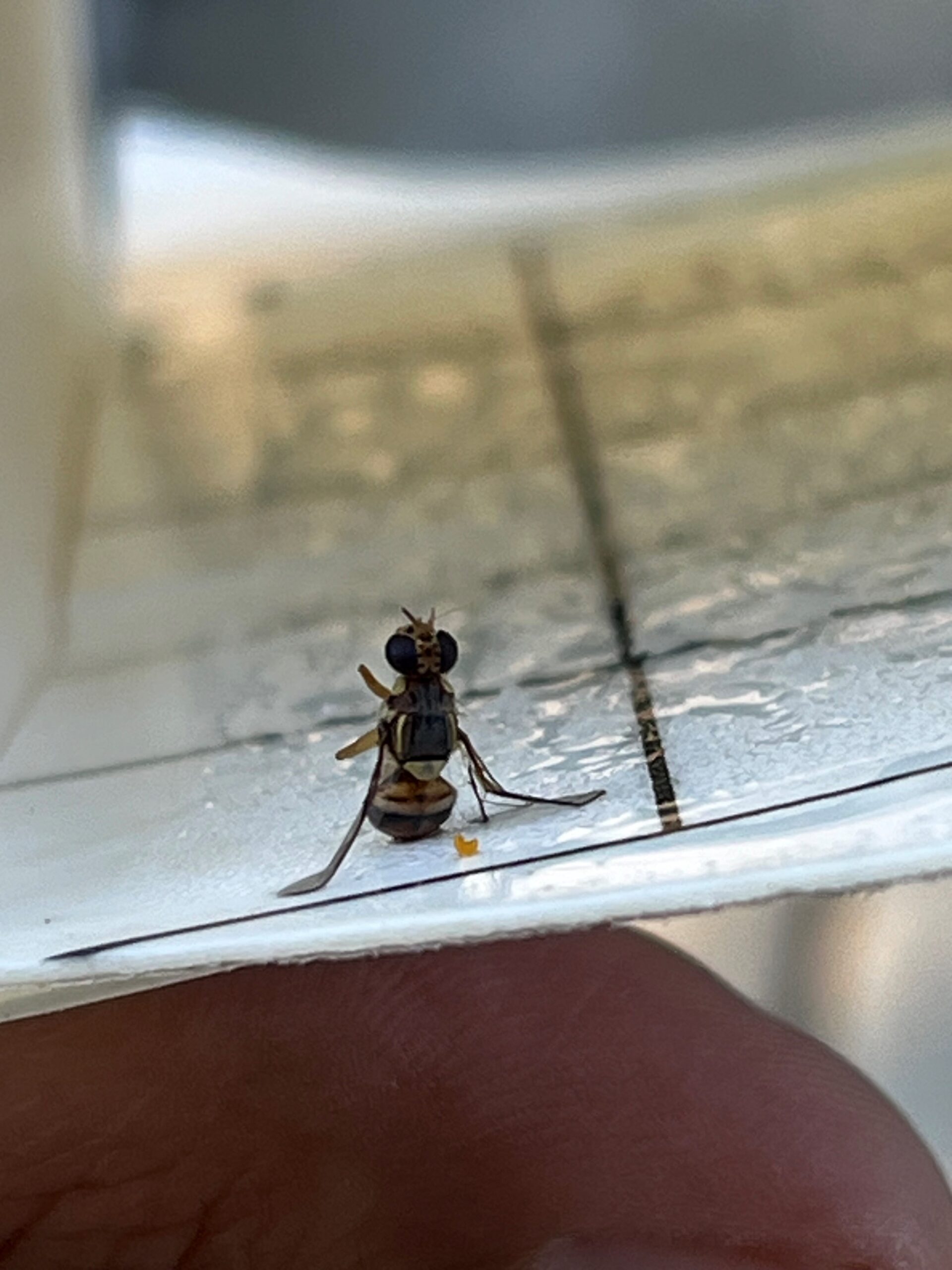
Oriental Fruit Fly. Source: Contra Costa County

The fly is known to target over 230 different fruit, vegetable, and plant commodities.

By Contra Costa County Office of Communications & Media

The Contra Costa County Agricultural Commissioner, in cooperation with the California Department of Food and Agriculture and the United States Department of Agriculture, has initiated an extensive survey and eradication plan in response to the detection of seven male oriental fruit flies, Bactrocera dorsalis, near the cities of Brentwood and Oakley in Contra Costa County.

The initial detection was confirmed on August 25, 2023. The detections were made as part of the department’s coordinated pest prevention system that protects the County’s agriculture and natural resources from invasive species with early detection as a key component to successfully eradicating an infestation before it can become established.

The extensive survey, also known as a delimitation survey, consists of multiple oriental fruit fly traps at prescribed densities placed in concentric circles going out 4.5 miles in each direction from the oriental fruit fly detection sites. Seven Oriental Fruit Flies will trigger a quarantine which will be announced shortly by the California Department of Food and Agriculture.

Following the principles of Integrated Pest Management (IPM), agricultural officials use “male attractant” technique as the mainstay of the eradication effort for this invasive species. This approach has successfully eliminated dozens of fruit fly infestations in California. Trained workers squirt a small patch of fruit fly attractant mixed with a very small dose of Spinosad, a natural pesticide made by soil bacterium and is approved for use on organic crops, approximately 8-10 feet off the ground on street trees and similar surfaces; male fruit flies are attracted to the mixture and perish after consuming it. The male attractant treatment program is being carried out over an area that extends 1.5 miles from each site where the oriental fruit flies were trapped.

While fruit flies and other invasive species that threaten California’s crops and natural environment are sometimes detected in agricultural areas, the vast majority are found in urban and suburban communities. The most common pathway for these pests to enter the state is by “hitchhiking” in fruits and vegetables brought back illegally by travelers as they return from infested regions of the world or from packages of home grown produce sent to California. Help protect California’s agricultural and natural resources; please Don’t Pack a Pest (www.dontpackapest.com) when traveling or mailing packages.

“Invasive non-native fruit flies are serious pests for California’s agricultural industry and backyard gardens,” said Contra Costa County Agricultural Commissioner Matt Slattengren. “These recent detections remind us that we need to remain vigilant in protecting our agricultural and natural resources. When traveling abroad or mailing packages to California, we urge the public not to bring back or ship fruits and vegetables as they are pathways for oriental fruit flies and other invasive species entering our state.”

The oriental fruit fly is known to target over 230 different fruit, vegetable, and plant commodities. Important California crops at risk include grapes, pome, stone fruits, citrus, dates, avocados, and many vegetables, particularly tomatoes and peppers. Damage occurs when the female fruit fly lays her eggs inside the fruit. The eggs hatch into maggots, which tunnel through the flesh of the fruit, making it unfit for consumption.

The oriental fruit fly is widespread throughout much of the mainland of southern Asia and neighboring islands, including Sri Lanka and Taiwan, and it has invaded other areas, most notably Africa and Hawaii.

Federal, state, and county agricultural officials work year-round, 365 days a year, to prevent, deter, detect, and eliminate the threat of invasive species and diseases that can damage or destroy our agricultural products and natural environment. The efforts are aimed at keeping California’s natural environment and food supply plentiful, safe, and pest-free.

Residents with questions about the project may call the Contra Costa County Agricultural Commissioner’s office at 925-608-6600 or the California Department of Food and Agriculture’s Pest Hotline at 1-800-491-1899.


Filed Under: Agriculture, East County, News

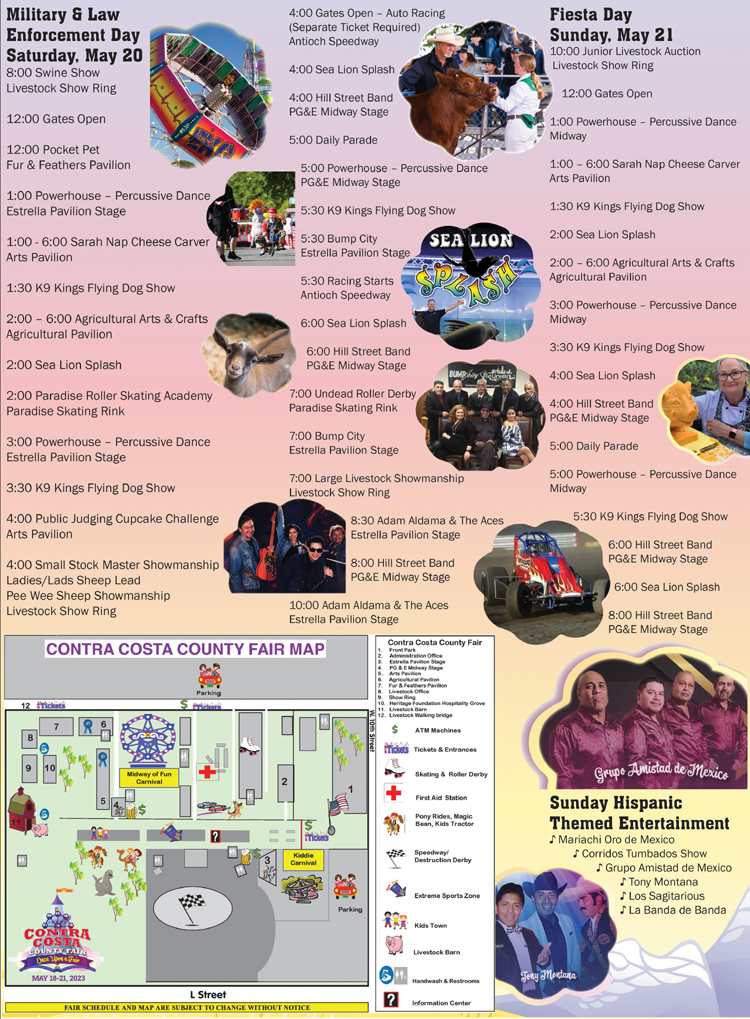
2023 Contra Costa County Fair opens May 18-21 – schedule of events and activities

May 15, 2023 By Publisher Leave a Comment

See more at Contra Costa County Fair 2023 (contracostafair.com).

Filed Under: Agriculture, Arts & Entertainment, East County, Fairs & Festivals

Tickets still available for Contra Costa County Fair Heritage Foundation annual fundraising dinner Saturday, Oct. 15

October 14, 2022 By Publisher Leave a Comment

For tickets click, here – 2022 Heritage Foundation Dinner | Contra Costa County (cccfheritagefoundation.com).

Filed Under: Agriculture, Community, Dining, East County

USDA Food & Nutrition Service Western Region says “Thank a Farmer” on National Ag Day March 22

March 22, 2022 By Publisher Leave a Comment

A recognition during National Ag Week – March 20-26, 2022

By Julie Yee, Public Affairs, USDA Food & Nutrition Service Western Region

SAN FRANCISCO, March 22, 2022 – Today, the USDA Food and Nutrition Service’s (FNS) Western Region (Alaska, American Samoa, California, Guam, Hawaii, Idaho, Nevada, Northern Mariana Islands, Oregon, and Washington) joins millions of Americans in celebrating National Ag Day. The special recognition encourages every American to understand how food and fiber products are produced, value the essential role of agriculture in maintaining a strong economy, and appreciate the role agriculture plays in providing safe, abundant and affordable products. This day also provides an opportunity to show appreciation to hard-working farmers who provide delicious and nutritious food for families across the region.

“National Ag Day provides us an annual opportunity to say “Thank You” to countless farmers and ranchers across the Western Region who work hard each day so that we have healthy and nutritious food on our plates,” said FNS Western Regional Administrator Jesus Mendoza, Jr. “Over the last year, the agriculture sector has stepped up to ensure we have a stable food supply in the face of incredible challenges due to the COVID-19 pandemic.”

Farmers provide consumers with fresh, affordable, convenient, and healthy products. With support from USDA, farmers can offer customers the opportunity to make purchases with the Supplemental Nutrition Assistance Program (SNAP); the Special Supplemental Nutrition Program for Women, Infants, and Children (WIC); and the Senior Farmers’ Market Nutrition Program.

America’s Direct Marketing Farmers and Farmers’ Markets (DMFs/FMs) are great sources of fresh fruits, vegetables, and other healthy foods. FNS is committed to expanding access to these foods by SNAP recipients while supporting economic opportunities for farmers and producers. Use the interactive map to locate participating DMFs/FMs and other retailers in the west and all across the nation.

In the western region, 230 DMFs and 722 FMs were authorized by USDA in fiscal year 2020. This is an increase of 66.67 percent and 12.64 percent respectively over the previous year. These farmers and farmers markets are authorized to accept SNAP Electronic Benefits Transfer (EBT), which enables SNAP recipients to use their benefits to purchase eligible food. Farmers and farmers’ markets in the western region redeemed more than $9.5 million in EBT benefits in fiscal year 2020.

A top FNS priority for 2022 is continuing USDA’s focus on nutrition security, not just for the duration of the pandemic, but well into the future to make sure the many nutrition programs USDA offers are providing access to nutritious food for all those in need. FNS delivers science-based information and guidance that is pivotal in ensuring Americans have a nutritious, safe, affordable and abundant food supply. USDA will make full use of flexibilities to support governors, school districts, food banks and others while deploying food assistance to struggling families, seniors and people with disabilities.

Learn More

USDA touches the lives of all Americans each day in so many positive ways. In the Biden-Harris Administration, USDA is transforming America’s food system with a greater focus on more resilient local and regional food production, fairer markets for all producers, ensuring access to safe, healthy, and nutritious food in all communities, building new markets and streams of income for farmers and producers using climate smart food and forestry practices, making historic investments in infrastructure and clean energy capabilities in rural America, and committing to equity across the Department by removing systemic barriers and building a workforce more representative of America. To learn more, visit  

www.usda.gov. USDA is an equal opportunity provider, employer, and lender.


Filed Under: Agriculture, News

Governor signs Senator Glazer’s three key local proposals

October 8, 2021 By Publisher 1 Comment

Small wineries can open two off-site tasting rooms     

Local governments gain new tools for overseeing short-term rentals

Thousands of acres of East Bay wilderness to be preserved

By Steven Harmon, Policy Analyst/Communications, Office of Sen. Steve Glazer

State Senator Steve Glazer (D-7-Orinda)

Governor Gavin Newsom has signed three long-standing proposals advanced by Senator Steve Glazer, (D-SD7), that will have a direct impact on residents of Contra Costa and Alameda counties.

“It’s very gratifying to see important legislative priorities for my district signed into law,” Senator Glazer said. “These are bills and proposals that I’ve been working on with partners, in some cases, for years. I’m thankful to Governor Newsom for ushering them across the finish line with his signature, a nice reward for all the hard work put in by key allies and friends.”

The three proposals that Gov. Newsom signed were:

Winegrowers: Offsite Tasting Rooms (SB 19)

SB 19 will allow licensed winegrowers or brandy manufacturers to operate two off-site tasting rooms under their winegrower licenses. This bill will particularly help small and family-owned wineries to operate as California continues to recover from the Pandemic.

Approximately 55 wineries are located in Senator Glazer’s district, including in Livermore, Oakley, Brentwood, Byron and Moraga.

“Small and family-owned wineries have struggled the most among wineries, because they rely heavily on visitors and direct sales,” said Senator Glazer. “With tourism taking a terrible hit from the pandemic and consequences of the wildfires, I’m glad that Governor Newsom recognized that these wineries are in need of that additional outlet to provide tastings and sales to their customers.”

Prior to the current tasting room closures caused by the COVID-19 pandemic, many wineries viewed additional off-site tasting rooms as a significant benefit. This was even more pressing for many small wineries looking to expand business opportunities, especially those wineries that produce their wine in an agreement to use the facility and equipment of a second (usually larger) winery.

Steven Kent Mirassou, owner and winemaker of Steven Kent winery, part of the Livermore Valley Wine Country Association, said SB 19 will make a difference to the industry, but also to wine enthusiasts.

“The ability to take care of people – which is the true center of hospitality and wine – is important at all times,” Kent Mirassou said. “It is especially crucial during the pandemic when we are all striving to maintain connections with our larger circle of friends and patrons, that small wineries remain open and thriving. I am so appreciative of the hard work and perseverance that Senator Glazer and his staff have shown in helping us continue to add joy and richness to peoples’ lives.”

With the COVID-19 pandemic, tasting rooms have been required to either close or significantly alter their operations for tastings, but can continue to operate sales for curbside pickup or delivery. Tourism has become almost nonexistent and is not expected to recover for several years. As a result, the impact from COVID-19 to the wine industry is estimated to be $5.9 billon, with a $3 billion loss in tasting room sales.

In addition, the 2020 wildfires had a substantial impact on the wine industry. According to the Wine Institute, the estimate of damage from 2020 wildfires amounts to $3.7 billion, including a loss of $41 million in tasting room sales and $57.6 million in lost winery structures.

Allows Increased Fines on Short Term Rental Violations – to Rein in House Parties (SB 60)

Under SB 60, cities and counties can now impose increased penalties on short-term rental hosts who violate local property rental laws – an attempt to rein in house parties, sometimes violent, that have been occurring at short term rentals because of lax oversight of these properties. SB 60, which took effect immediately, authorizes localities to impose fines up to $5,000 for a violation of a short-term ordinance.

“These large gatherings have made some short-term rental properties the sites of underage drinking, brawls, noise complaints, and violence,” Senator Glazer said. “I’m grateful to Governor Newsom for signing this bill so that local governments have the tools to ensure the safety of those who want to continue to use short-term rentals, and of our residents who live nearby these properties.”

The legislation was sparked by a spate of violence at short-term rental properties, most notably a mass shooting in Orinda, where five people were killed. Other abuses at short-term rentals occurred in Los Angeles and other locales in Northern California, including a party at a Sunnyvale rental where a teenager was shot and killed in August after violence erupted at the gathering. (See related articles, here, here, here and here)

Smaller fines were proving to be ineffective in deterring violations. Hosts were able to charge so much rent for big houses that the fines, if they occurred, were just seen as a cost of doing business.

“Violence and destructive behavior at short term rentals has become a true public safety issue in cities throughout California, as residents of Orinda know all too well,” Orinda Mayor Amy Worth said. “I am thankful that mayors like me will now have the ability to impose fines at a level high enough to get the attention of property owners who operate short term rentals to ensure the safety of our residents. Senator Glazer has been a true champion of this issue, and we are thankful for his hard work on making this California law.”

The use of short-term rentals has skyrocketed by 105 percent over just the past three years, according to vacation rental data compiled by AirDNA. Though short-term rentals offer a way to improve tourism and earn owners some extra money, their recent proliferation has allowed bad actors to use the platform to advertise and secure homes for large parties, oftentimes in violation of local ordinances.

The Covid-19 pandemic led to an increase in people using short-term rentals to evade public health restrictions on large public gatherings. Noise complaints as a result of parties have tripled since the start of the pandemic, according to Host Compliance, which tracks legal compliance among short-term rentals for 350 cities and counties in the U.S.

In the last half of 2019, 42 people were shot inside or just outside a short-term rental property nationwide and 17 people died.

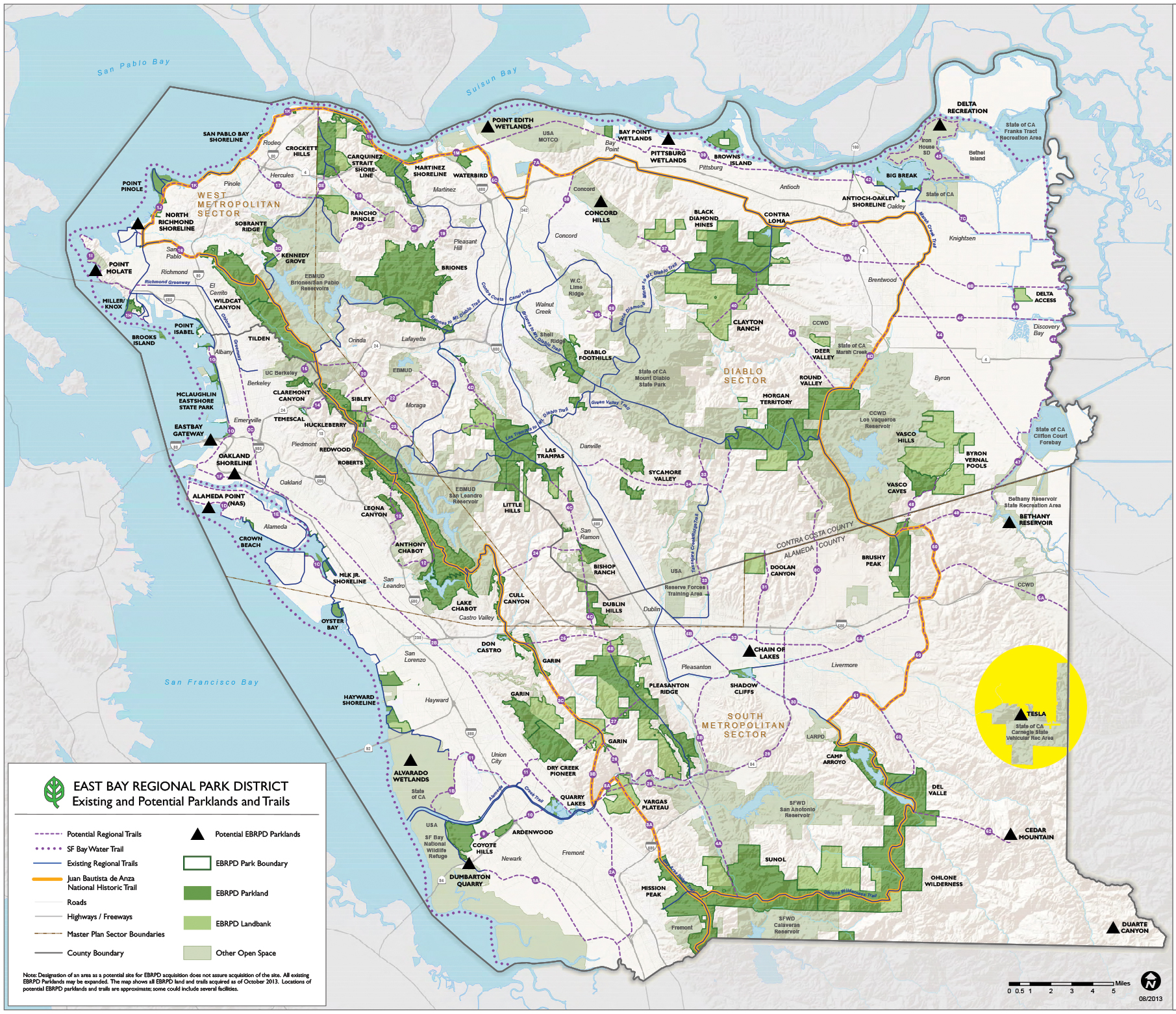
East Bay Regional Park District 2013 Master Plan Map designating Tesla site (yellow area) as a potential regional preserve. Source: EBRPD

Tesla Land Preservation (Budget)

Thousands of acres of East Bay wilderness threatened by the expansion of an off-highway vehicle park will instead be preserved. (See related article)

The legislation, approved in the Governor’s recent budget bills and took effect immediately, ends plans to expand the Carnegie State Vehicular Recreation Area into the 3,100-acre Tesla parcel in the southeast corner of Alameda County, which scientists have described as a biologically unique habitat and Native Americans have long considered to be a sensitive historical site.

That land will now become a new state park closed to motorized recreation. The state will reimburse the Off-Highway Vehicle fund for the purchase price of the land, its appreciation in value, and the money spent planning the expansion, which was opposed from the start 20 years ago by nearby residents and public agencies. That money will go toward the purchase and development of an off-road park at another location.

“Our community and region will preserve this natural and cultural treasure, leaving it pristine for future generations to enjoy,” Senator Glazer said. “Meanwhile, off-road enthusiasts will be able to keep their current park and receive funding to develop another park on land that’s more suitable to that kind of recreation. I appreciate the hard work that so many key individuals played in moving this critical environmental and cultural issue to the Governor’s desk, and, of course, for the Governor to work with all the players to sign this important agreement.”

Senator Glazer partnered with Assembly member Rebecca Bauer-Kahan, the Sierra Club, Friends of Tesla Park and other environmental organizations and individuals in getting the final approval from the governor’s office. Earlier, former Assembly member Catharine Baker worked with Senator Glazer on the same issue.

Nancy Rodrigue, a leading member of the Friends of Tesla Park steering committee and Livermore resident, said she was proud that years of hard work and persistence paid off.

“A very special thank you goes to Senator Glazer and Assembly member Rebecca Bauer-Kahan for the many years of work on this special project,” Rodrigue said. “Tesla Park will now be a reserve with no motorized recreation. Instead, the future holds Tesla as a protected native landscape for hikers, history buffs, nature lovers, researchers and educators.

“Saving Tesla Park has been a long, difficult, and now a rewarding journey, and we are grateful for the tremendous work of so many for saving Tesla as a legacy for future generations,” Rodrigue continued. “We are looking forward to planning the next phase of Tesla Park as a nature and cultural preserve, providing passive recreation and education to the community of the Bay area, the San Joaquin Valley, and Northern California.”


Filed Under: Agriculture, Business, Legislation, News, Parks

Supervisors reverse Planning Commission decision on East Contra Costa cannabis micro plant farm

March 25, 2021 By Publisher 1 Comment

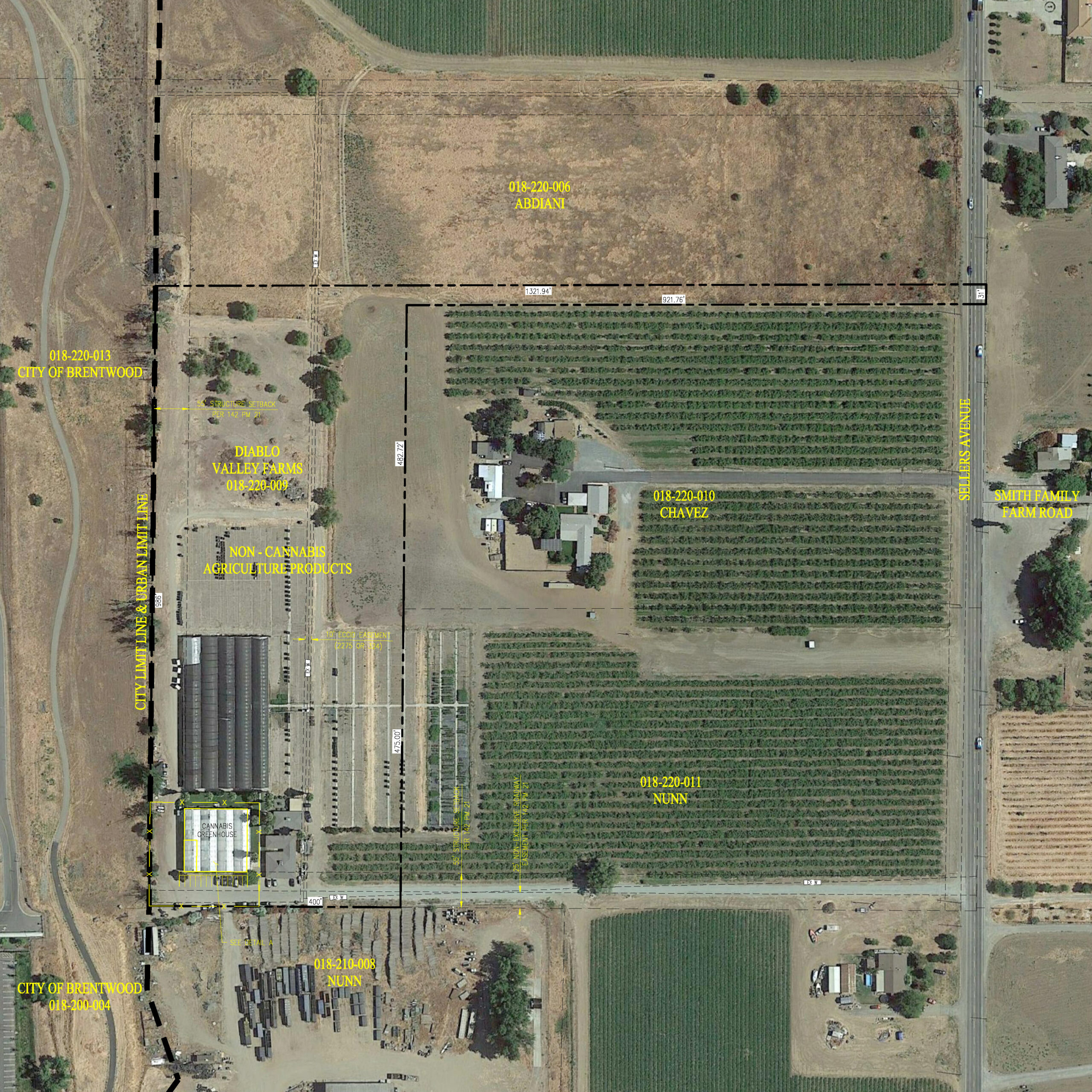
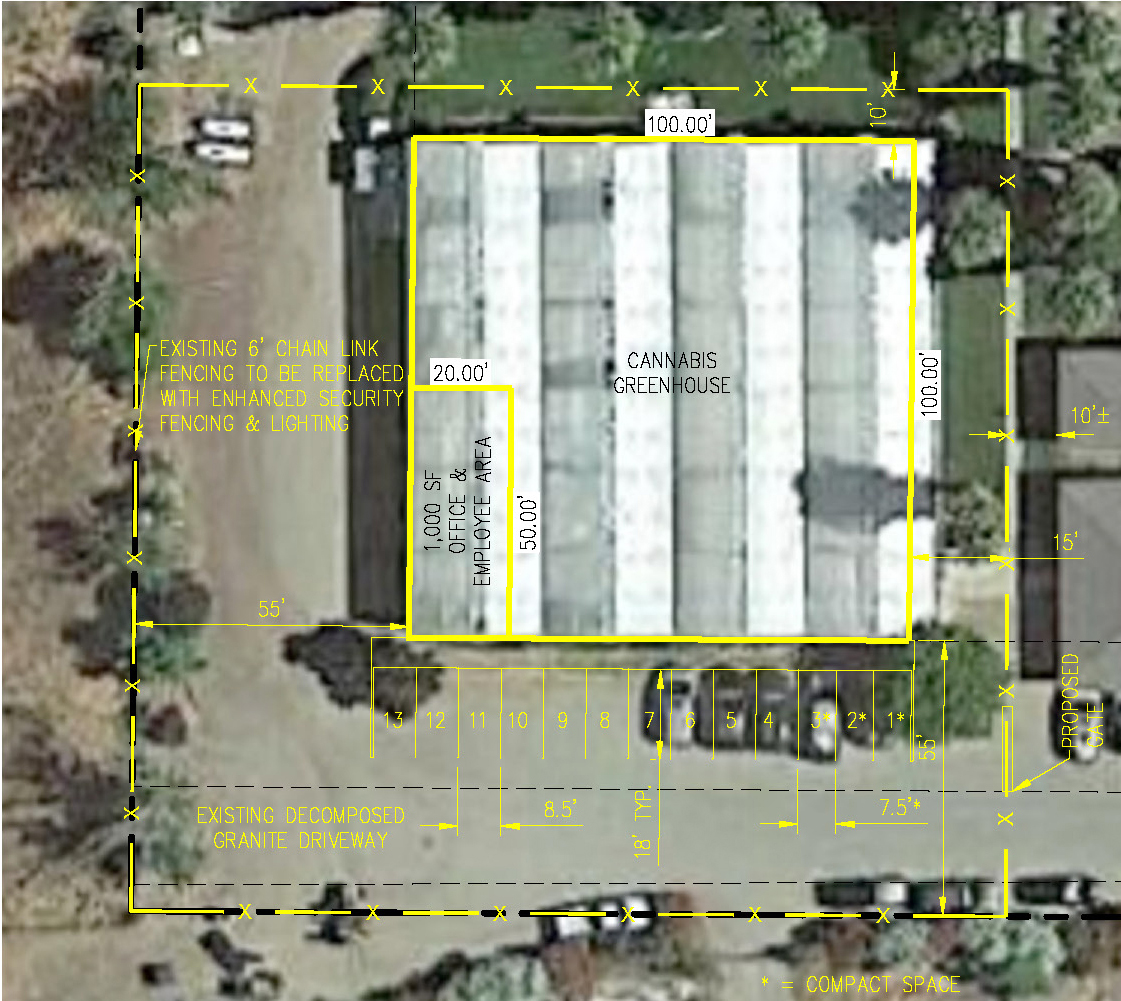
Diablo Valley Farms indoor cannabis cultivation site plan.

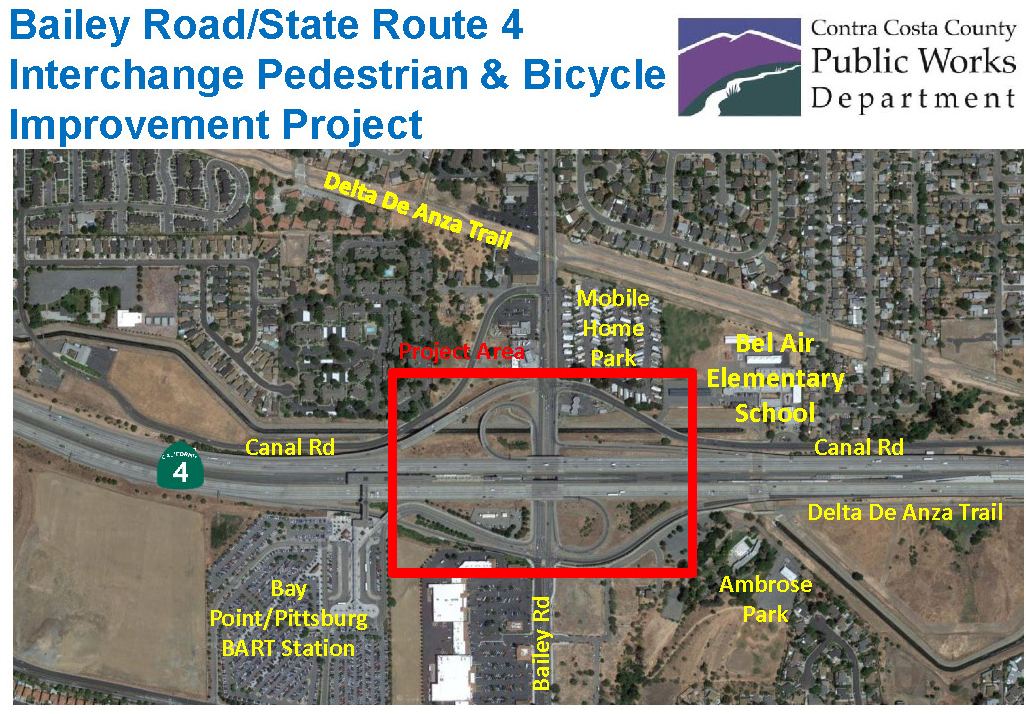
Bay Point Pedestrian and Bicycle Improvement Project moves forward

By Daniel Borsuk

Closeup view of greenhouses.

The Contra Costa County Board of Supervisors voted 5-0 to permit longtime Brentwood grower Bob Nunn and land planner Lisa Borba, who also serves as a Contra Costa Water District commissioner, to proceed and develop two 10,000 square foot cannabis greenhouses at 4425 Sellers Avenue over the objections of residents. DVF Business Proposal

According to the conditions of approval, the use “permit is for the commercial cultivation of cannabis micro plants only” and “no mature cannabis plants are permitted on the site at any time.” DVF Findings & Modified COAs 03152021

The supervisors’ action reverses a January 27th county planning commission decision that had negated an earlier approval of the proposed cannabis development in Eastern Contra Costa County that had proposed only one 10,000 square foot greenhouse.

During the hearing, supervisors listened to six unidentified speakers oppose the proposed Diablo Valley Farms project on grounds it is nearby a youth center and it will breed crime, noise and odor problems into the environment.

In a Feb. 8th letter from attorney Shawn J. Zovod, the developers Robert Nunn and Borba, and addressed to Contra Costa County Planner Joseph Lawlor, Zovod wrote: DVF SZovod Appeal Letter 02082021   SZovod 030521 Letter to JLawlor Project Planner

“The owner of DVF, Robert Nunn, and the applicant, Lisa Borba (collectively “Applicant”) appeals the CPC decision on the following grounds:

  1. The CPC decision to deny the Permit was based on an erroneous finding that Sunset Park is a “youth center.” This finding is not supported by the evidence and provides grounds for appeal under Code Section 26-2.2404c (3) Sunset Park is a park and is not a youth center within the meaning of the Cannabis Regulation and Section 11353.1 of the California Health and Safety Code…The CPC’s finding that Sunset Park is a “youth center” and thereby a Protected Use is not satisfied by evidence and is a gross misinterpretation of the Cannabis Regulation.
  2. “…. Denial of the permit based on an inaccurate and inconsistently applied reading of the requirements of the Cannabis Regulation is denial of equal protection. The CBO cannot turn its back on the laws that it adopted after years of careful consideration. Appellant has invested significant time and tens of thousands of dollars in reliance on the county’s application of its standards on a fair and equitable basis.

Appellant requests the Board of Supervisors uphold this appeal of the CPS, reinstate the Permit as approved by the Zoning Administrator, and decline to add any additional conditions requested by the City of Brentwood to the Permit.”

While supervisors heard from six unidentified Brentwood residents about concerns that the proposed Diablo Valley Farms project will produce crime, odor and noise, Brentwood Police Chief Tom Hansen said the proposed development will bring more “serious crime” to the city and his “officers will be in grave danger.” The police chief recommended that supervisors keep the county planning commission’s January decision intact.

Board Chair Diane Burgis of Brentwood turned the table when she recommended that supervisors reverse the county planning commission’s January action and to approve the Robert Nunn/Borba project.

“They have made it clear there will be no plants of value,” said Burgis. “There will be security. There will be no cash on site. The permit will be valid for five years.”

Supervisors approved the permit on a 5-0 vote.

Approve Engineering Contract for Bay Point Pedestrian and Bicycle Improvement Project

Supervisors approved a $590,000 contract with MNS Engineers, Inc. to provide consulting services with the county Public Works Department for construction management services for the Bailey Road/State Route 4 Interchange Pedestrian and Bicycle Improvement Project for the period March 23, 2021 to June 30, 2022 in the Bay Point area.

The project consists of constructing a retaining wall, widening the State Route 4 westbound diagonal off-ramp, installation and modification of traffic signals, removal of the SR4 westbound loop off-ramp, storm drain modifications, and installation of sidewalk along Bailey Road.

Funding for the project is from the Active Transportation Program (ATP), Bay Point Area of Benefit, Navy Mitigation Funds, Contra Costa County Measure J transportation half-cent sales tax, and the state gas tax.

Recognize 2021 Poetry Out Loud Winners

Supervisors passed a resolution honoring Pinole Valley High School Senior Jermaine Gitana who won first place honors in the Contra Costa County Poetry Out Loud 2021 Competition. Gitana topped second place winner Esmeralda Noyola, a junior at Antioch’s Deer Valley High School, and third place winner Tessa Brubaker, a junior at San Ramon High School in Danville. (See related article)

Initiated by the National Endowment for the Arts and run by the California Arts Council in the state and locally by the Arts and Culture Commission of Contra Costa County, the program, now in its 14th year, engages high school students in the presentation of poetry through memorization and performance.

Almost 1,000 viewers watched the students’ recitations that were viewed at the Virtual Screening and Awards Ceremony Facebook Live event.

Recognize Melody Hung-Fan and Eric Moe for Years of County Service

Supervisors passed two resolutions recognizing the years of service for Melody Hung-Fan, director of the Contra Costa County Public Health Laboratory, and Eric H. Moe, a 35-year Contra Costa County Treasurer-Tax Collector’s Office expert in automation and streamlining workflow of default-tax procedures.

Ms. Hung started her career at CCCPH in 1988 as a public health microbiologist and rose through the ranks to become director of the Public Health Laboratory in January 2013 where she has spent the last eight years planning, evaluating, organizing, and directing all activities and staff of the CCCPH.

She became a licensed Public Health Microbiologist (PHM) through the California Department of Public Health in July of 1988 after receiving a Bachelor of Science in Nutritional Services and a Master of Public Health, both from the University of California at Berkeley.

Ms. Hung has been recognized for her background in research through the publication of various abstracts and journal articles, the most recent including articles published by the American Society for Microbiology, entitled: “A Population-Based Surveillance Study of Shared Genotypes of Escherichia coli Isolates from Retail Meat and Suspected Cases of Urinary Tract Infections.”

Her work has been credited in all phases of creating, running, and evaluating testing procedures for a variety of public health issues including HIV, West Nile virus, Zika virus, Influenza, SARS-CoV-2 and other diseases.

Moe is retiring from a long career in the Treasurer-Tax Collector’s Officer where he became an expert in defaulted=tax collections, bankruptcy claims, and the annual sale of properties subject to the Tax Collectors Power to Sell. He began his career with the county in 1986 as a Clerk-Beginner. He rose up the ranks and his major accomplishment include automating and streamlining workflow of default-tax procedures to more accurately and expeditiously address and manage the many accounts that transfer to the Redemption or delinquent Secured tax roll annually, and the documenting and re-organizing of standard operating procedures of the tax-default program into a comprehensive electronic manual.  Moe has also been helpful in assisting the California State Controller’s Office with review and feedback to the “Annual Pre-Notice Guide”, the “Review and Taxation Code,” and “The County Tax Collectors’ Reference Manual.”

County Awards Contract to Labor Attorney Kramer

Supervisors awarded a contract with labor attorney Karen Kramer, who is not related to Contra Costa County Assessor Gus Kramer, for workplace investigation and workplace legal advice.  Ms. Kramer specializes in employment law and litigation. She will be of assistance to the County Counsel in the county’s workplace investigations.

Kramer Workplace Investigations will bill the county at an hourly rate of $325 for legal and investigatory services and $400 per hour for testimony.

She is not related to Assessor Kramer, who last November had misconduct charges dropped against him by Superior Court Judge John Cope for accusations of making sexual comments to employees and at least one ethnic slur to a co-worker.

Approve Property Cleanup Cases in Oakley, Martinez and El Sobrante

Supervisors approved three abatement cases. No public speakers were heard on the cases.

The biggest case totaling $38,056.20 was charged to the owners of 2600 Dutch Slough Road in Oakley. The residential property is jointly owned by Darlene Joy Gargulia, Nguyen Ha and Long Hoang Le.

Another residential abatement action costing $4,306.70 occurred at 5321 Alhambra Valley Road in Martinez.  The property is owned by Carol M. Gainey.

Supervisors approved abatement action totaling $4,296.70 at 3870 Valley Lane in El Sobrante. Greg Fremont Livermore is owner of the property.

Filed Under: Agriculture, Business, East County, Infrastructure, News, Poetry, Transportation

New Name. Same Game. Delta Conveyance Project – tunnel moves forward – Part 2: Stakeholders & Opposition

July 20, 2020 By Publisher 3 Comments

From California Water Resilience Portfolio 2019 Final.

County residents opposed to project work to limit impact and secure benefits if it is built

“We want to make sure they don’t screw anything up,” – David Gloski, Stakeholders Engagement Committee Member

By Allen Payton

What was planned as two tunnels beneath the California Delta to divert fresh water from north of the Delta to areas south, is now a single tunnel plan that is referred to as the Delta Conveyance Project (DCP). The effort is being led by the Delta Conveyance Design and Construction Authority (DCA) which was formed by and makes recommendation to the California Department of Water Resources (DWR).

In the first part of this two-part series, you read about the background and latest efforts to move the project forward. In this part, you will hear from local voices who serve on the Stakeholders Engagement Committee (SEC) and what they are doing to both fight the tunnel, and if it is built to limit its impact and to secure any benefits for our county and the Delta.

Stakeholders Engagement Committee – Local Voices

Because Contra Costa County and the water districts in the county either oppose or are neutral on the Delta tunnel project, no agency from the county is part of the DCA. But there are three people who live and one who works in Contra Costa County and serve on the Stakeholder Engagement Committee. They are Bethel Island resident and retired engineer David Gloski, Discovery Bay resident and real estate appraiser Karen Mann, Antioch resident Jim Cox, a retired fishing boat captain, and Oakland resident Michael Moran, who works for the East Bay Regional Park District as Supervising Naturalist at Big Break Regional Shoreline Visitor Center at the Delta in Oakley.

David Gloski, The Engineer – At Large Member

“I don’t want to understate that I’m against it and I appreciate the people fighting it,” said Gloski, who volunteered to be part of the SEC at the urging of others who also oppose the tunnel. “But I, having a home on the water and having an engineering background – and this DCA SEC group is more engineering focused – we want to make sure they don’t screw anything up.”

“The majority of the people on the stakeholder committee are probably against the tunnel,” he stated. “It includes the lady (Barbara Barrigan-Parrilla) from Restore the Delta. We’ve been effective in preventing them from doing things that don’t make sense and would negatively affect people in Contra Costa.”

“To me, they walk and chew gum at the same time. They’re working on designs and plans without having the permits. They have to do some of it or they don’t know what they’re asking to permit,” Gloski explained. “Similarly, we aren’t doing ourselves any benefit by just opposing it. Because if it does go through, we can get a lot of things done, like new roads, and parks. But you have to participate.”

“I’ve raised my hand to say, ‘if you’re going to build it, let’s get good things out of it, and make sure they don’t screw things up,” he reiterated. “I think the county is mistaken for not being more involved. The DCA made changes because of our inputs. Unfortunately, I’m not sure the inputs are the best from the county’s perspective. For example, an original plan included road and bridge improvements which were eliminated when we were successful in having a maintenance shaft moved further away from Discover Bay. So, you might have won the battle but lost the war.”

“I think we might benefit from more representatives. But right now, the county is just fighting it,” Gloski added.

To give your input to David Gloski, you can join his Facebook page, David Gloski DCA Stakeholder.

Mann expressed her concerns for the location and proximity to Discovery Bay of one potential Maintenance Shaft. From DCA 2020-05-27-UpdatedMapBooks.

Karen Mann – South Delta Local Business

Mann, an appraiser in Discovery Bay, is another member of the stakeholders committee who opposes the tunnel, as the issue literally hits close to home for her like Gloski.

“I’m fighting for our Delta,” she said. “As I’m talking to you my grandchildren are loading the boat, because that’s what we do as a family. We spend time on the Delta.”

“I’m an active boater. I skipper my own 37-foot boat. I’m a very able-bodied skipper. My dad had me at the helm since I was 9 or 10 years old in San Pablo Bay,” Mann explained. “So, I’ve described to this group the terror that I had when I encountered a barge in the middle of Old River. That left me about 25’ (to get by it). My boat is 12-feet-wide. I could feel the propellers of the tugboat drawing me toward that barge. My boat weighs 22,000 lbs. Imagine if that was a ski boat with inexperienced skiers or a family with a father and his kids on board.”

“The number of barges every day that they were talking about loading, I told them ‘you better think twice. You will have lives of families and boaters on your hands,’” she continued.

From 2020-04-22-SECMeetingPresentation.

Effort to Postpone Meetings & Work Due to COVID-19 Unsuccessful

“Through this whole pandemic thing, myself and a bunch of others have said ‘let’s hold off on these meetings’ because we can’t meet with our people,” Mann stated. “The chief engineer said, ‘we’re going to move forward, and we hate to leave you behind. But that’s how it goes. Governor Newsom wants this going.’”

“I piped up and said ‘it appears to me Gov. Newsom his been very busy with this pandemic thing and his three-hour-long press conferences each day, and the Delta tunnel is probably not at the forefront of his thinking,” she shared.  “For us to be told, ‘no, that’s out of the question, we’re on a timeline’, this is just not right.”

According to a report by the Sacramento News & Review, the effort to postpone the committee meetings and the work got a Sacramento County Supervisor and the Delta Protection Commission involved.

“The dust-up has caused Sacramento County Supervisor Don Nottoli to challenge one state official about transparency, while the Delta Protection Commission has officially asked California planners to halt their work on the tunnel during the virus outbreak. So far, that hasn’t happened,” reported the SN&R.

Contra Costa County Supervisor Diane Burgis serves on the Delta Protection Commission, which  “is supposed to safeguard the environmental and community health of the estuary as part of California’s landmark 1992 Delta Protection Act.”

But the committee meetings are continuing, just online for now, as most if not all other government meetings are currently throughout the state.

No Project Funding or Route, Yet

“I asked them where are we getting the money from? Apparently, there’s no checkbook. There’s no limit. There’s no talk about expenses. It’s like carte blanch. Money is no object,” Mann stated. “There isn’t an official route, yet. Because they’re trying to decide if there is going to be a central corridor which would be within 600 feet of the Discovery Bay water treatment plan and homes on the golf course.”

“That’s not the best of it,” she continued. “The best of it is they’re using their maps of that central location they would have taken that tunnel underneath the only waste treatment plant in the area.”

“They would also be going through our artesian wells,” Mann added.

“If there were any problems, “they would shut off the water and waste treatment for Discovery Bay. How could we live here? We’re not a third world country,” she said with a laugh.

“I’ve been very passionate about those two items,” Mann stated.

She, Cox and Moran all expressed concerns about trucks on Highway 4 east of Discovery Bay and how the committee’s efforts got that stopped.

“There was also going to be a maintenance shaft near Discovery Bay which would require truck traffic on Highway 4. Heavy duty trucks carrying the muck and dirt. Those bridges are old and couldn’t handle it,” she explained.

“Now they’re talking about using the eastern corridor closer to Stockton. But they told us ‘don’t get too excited. Nothing is decided. We’ll take your recommendations, but we will make our own decisions.’” That didn’t sit well with Mann.

“Is this how government is supposed to work?” she asked. “I will say they did listen on the barge issue. I think health and safety got them.”

From 2020-04-22-SECMeetingPresentation.

Fire Marshal, DB Town Manager Shocked

“We took that information to the fire marshal and Discovery Bay Town Manager and they were shocked,” Mann shared. “Neither one of them knew about any of it. They both wrote impassioned letters. We have three fire stations that serve 128 square miles. The engineers thought we had nine stations.”

“So, who’s going to handle the issues…with a project like this?” she asked. “Someone’s going to get hurt and they’re going to need EMT’s. I guarantee you one of their trucks will have an accident and block traffic for hours, if not kill someone.”

“I’ve been sending the chief engineer photos of truck accidents and concerns that we have for our health and safety,” she continued. They had no idea of traffic count. They’re using traffic counts from five years ago from San Joaquin County and they don’t keep track of traffic on Highway 4 and the bridges in our county. So, their traffic counts are completely inaccurate.

“So, I’m wondering who’s really in charge here,” Mann said. “We’re supposed to trust them with building a tunnel 150 feet under ground? If they don’t have this basic information how can they handle the bigger issues?”

“The Delta has been something in my family since I was a child,” she shared. “It’s a way to keep families together. So, when you say Delta you’re talking about families. This life is too short, and you have to enjoy it while it lasts.”

Mann is both a residential and commercial appraiser, which is why she represents the business community on the committee.

She’s also the president of Save the California Delta Alliance.

“We have an attorney that got them to back out of the other tunnel project,” Mann shared.

“It’s just a bunch of homeowners. This is our home. The waterway is our backyard. Our playground. Don’t mess with it,” she concluded before heading out into the Delta for the weekend on the family boat.

From 2020-04-22-SECMeetingPresentation.

“Same Old Song and Dance” on Fish Protections Says a Frustrated Jim Cox – Sports Fishing

Antioch resident Jim Cox ran a six-pack, sport fishing charter boat for 23 years and has been in the Delta since the early 1980’s and is now retired.

“I’m there representing fishing interests,” he shared. “It’s been a very frustrating thing to be involved in. They want us to come back with input from our constituents. The most common thing I hear is ‘what’s going to happen with Clifton Court?’”

The Clifton Court Forebay is where the water is collected south of the Delta before being pumped further south.

Delta Smelt. Photo from DCA SEC.

“When the current is flowing in there, it’s so strong the fish can’t get out,” Cox explained. “The screens on the pumps are not designed that well. Estimates are anywhere from 15-50,000 striped bass that are trapped in there. They’re only 8 or 9 inches but they’re fully matured fish.”

“They say Clifton Court Forebay is a separate project,” he continued. “I’ve had conversations with Terry Buckman from DWR. The Delta Improvement Act of 2009 has the two goals of habitat restoration and less reliance for water supply. They’re definitely focused on the water supply.”

“They call it EcoRestore, which is part of DWR and the ironic thing is they say ‘we’re not working on that for another year or so.’ This committee will be disbanded before then,” Cox stated.

“This is the same song and dance that fishermen have been told for the past 25 years,” he complained. “In 1994 there was the CalFed agreement. The water contractors were supposed to build state of the art screens across Clifton Court so fish couldn’t get in. But it’s still never been built. “

‘Most of these DWR folks are in their 40’s so they weren’t around…and they’re taking the word for it from others at DWR,” said Cox.

“The real problem is predation (preying of one animal on another), primarily for striped bass,” he continued. “It is a problem because the current flows in there, year-round, 24 hours a day. Larger fish just stick around at the entrance and pick off the smaller fish. They try to make it sound like it’s the striped bass. It’s not. It’s the fact they never built the screens.”

“We were told Fish and Game have plans to remove predators. They have no plans for any such thing. They say it’s a useless idea. Once you get rid of one predator another species will move in,” Cox shared. “Then they said the problem is the outer screens. There aren’t any outer screens. It consists of rabbit wire fence to keep boats and floating logs out of Clifton Court. It has nothing to do with fish.”

“They won’t say anything of how they’re going to make it better. This is why it’s becoming a frustrating endeavor for me,” he stated. “On the one hand they are being responsive to some complaints. But it all revolves around building the tunnel.”

From 2020-04-22-SECMeetingPresentation.

“They won’t even listen to the fishermen. I’ve been tempted to resign a couple times over this. But, if I’m not there who’s going to bring this up?” Cox asked, rhetorically. “First, they talked about having the committee a year. But now they’re talking about extending it.”

“It’s very frustrating trying to get them to listen,” he added.

On finances Cox said “we get told things in bits and pieces. The plan is for all of this to be paid for by the water users, the water contractors. The fine print is they’ve agreed to this in theory, but not in reality. They’re not going to agree to anything until they see the final plan. Over the last year, they’ve been trying to do what took them three years originally on the twin tunnels, to finalize this plan, to be able to move forward.”

“When this COVID thing hit, they said everyone wants to continue to work on this. That’s BS,” he said echoing Karen Mann’s comments. “No one wanted to continue to do this. But they kept pushing on this because they have financing deadlines. So, nope. They’re going to keep on going.”

“I feel in a lot of ways this committee is just going through the motions. I’m starting to feel like a pawn in a chess game,” he said with a chuckle.

Another financial issue Cox shared about was the pay for the DCA’s executive director Kathryn Mallon, who is earning $47,000 per month in her role. That’s in spite of the $54 billion deficit the state is projecting due to the impacts of the COVID-19 pandemic.

Another report by the Sacramento News & Review covers that issue and the opposition from the water agencies that are expected to reimburse the state for her compensation.

Proximity of proposed sites to existing recreation facilities. Arrow points to Big Break in Oakley. From 2020-04-22-SECMeetingPresentation.

Parks District Employee Offers Different Perspective: Mike Moran – Ex-Officio

Mike Moran, although an Oakland resident, represents Contra Costa County interests on the SEC, having worked in Eastern Contra Costa County for 26 years, as of August 1st. He works for the East Bay Regional Park District at the Big Break Regional Shoreline in Oakley.

“Big Break was an asparagus farm that flooded in 1927,” he shared. It’s a 1,688 acre park that’s mostly under water. The East County trail runs through there. Plus, they have a 1,200 square foot model of the Delta on the ground.

“In my position at the park commission and the SEC, we don’t take a pro or a con on this issue. We try to interpret this thing and why it’s being proposed, why it’s being opposed, and not just build it or don’t build it,” Moran explained. “I’m an ex-officio giving folks’ perspective from the East Bay Regional Parks point of view. There’s not a direct correlation on the tunnel.”

“We have land out here and we have folks paying taxes to get access to that land. So, what does this mean? What is the impact going to be where our constituents live?” he asked.

Proposed new Southern Forebay adjacent to Clifton Court Forebay. From 2019-12-11-DeltaConveyanceSystemOverview.

Moran also studied fisheries in grad school. Asked about the fish and Clifton Court Forebay that Jim Cox is concerned about, he said, “It’s part of the state water project, right now. The new forebay would be right next to Clifton Court, built to the west.”

However, Cox responded with, “The fact is that they still intend to use Clifton Court fifty-percent of the time. If the tunnel water was the only water heading into the canal then it would be fine, but that is not the case. Clifton Court will still be part of the water system and that is why I feel improvements to it should be part of the project, not a separate project.”

“The Harvey Banks Pumping Plant is part of the State Water Project. That water is sent through the California Aqueduct and the South Bay Aqueduct serving Alameda and Santa Clara Counties,” Moran explained.

“The feds will require an Environmental Impact Study on the project because it affects federal waters. That’s the Jones Pumping Plant, which is part of the federal water project. That water is pumped through the Delta Mendota Canal,” he shared.

“At the Clifton Court Forebay, as the water is drawn in, there’s a screen that screens out the fish. But it’s old school. It’s an old screen,” Moran explained. “Jim’s saying if we’re going to put in these high-tech screens north of the Delta, let’s do it at Clifton Court.”

Proposed intakes near Hood. From 2020-04-22-SECMeetingPresentation.

“The screening for the proposed tunnel will be located in Hood (north of Elk Grove) on the eastern side of the Sacramento River. There will be three intakes and those would have brand new, top of the line fish screens,” he continued. “So, no fish will be put in that tunnel beyond those screens.”

“That’s one of the selling points for this whole project,” Moran stated. “What we have now, is the diversion is over the surface across the Delta. So, we’re bringing in both water and fish.”

He provided some history to the diversion of Delta water.

“The idea of diverting water, moving water from the north and east, through the Delta is from the 1910’s,” Moran shared. “A lot of the facilities we have now, are not the same thing, but they’re based on Robert Marshall’s plans. He ran the national parks and was pushing this big project of moving water around California. So, that’s part of the rationale of what we have, now.”

Proposed South Delta Facilities. From 2020-04-22-SECMeetingPresentation.

He also shared that “Antioch sued upstream water users in 1921 because of too much saltwater. So, this is nothing new.”

“Antioch is way ahead of the game putting in a brackish water plant. That’s a big, bold move,” Moran state. “But what are we going to do with saltwater intrusion up to CCWD?” (See related article)

Asked how the tunnel is a solution to the saltwater intrusion he answered, “It’s coming. If we divert or not, saltwater is coming. How do we prepare for that? In Antioch we build a desal plant. For those south of the Delta it’s a tunnel.”

“The way we’re doing things now, is water flows from the Sacramento River to the rest of the Delta. The pumps in Byron then pump it south,” Moran continued. “This water used to flow down the river and out into the Bay. Sometimes during the year, we have reverse flow, with the water from both the Sacramento and San Joaquin Rivers. When folks started taking water out in the Central Valley, less water comes out of the San Joaquin River. It was dry for 60 miles as recently as 1994. That was rectified through a court case.”

Proposed South Delta Conveyance Facilities Site Plan. From 2020-04-22-SECMeetingPresentation.

Because the San Joaquin River is diverted before it reaches and “punches through the Delta”, farmers in the Delta have been relying on Sacramento River water.

“The Sacramento River, high quality, great water, it’s pulled down to the pumps. Not all the water, it’s less than half,” he said. “That goes against the natural flow and messes up the ecology.”

“We’ve gotten a lot of benefit over the past 100 years,” with the current system, Moran shared.

“So, if we don’t do something, if saltwater comes up, or if a levee breaks or a beaver chews through, that’s going to stop the flow of water.”

Rendering of proposed Pumping Plant Site Plan at the Southern Forebay. From 2020-04-22-SECMeetingPresentation.

“Much of the land in the Delta is under sea level because of that peat soil, which is great for farming,” he explained. “But because of decisions made over 100 years ago, because people in the Delta communities and economies, and their way of life, it’s not sustainable.”

“We’re only taking water out when there’s enough to come through,” said Moran. “Like we’re doing, now when there’s Delta Smelt at the pumps, and we have water quality going down the tubes, the feds tell them to stop pumping.”

“It’s these local folks who are members of the committee saying, ‘wait a minute, we have lives that will be affected, too,’” he shared about his fellow SEC members. “The premise is let’s pretend this is getting built. If that’s the case, all you folks around the Delta who have this local experience and expertise, to advise the experts from the DWR.”

“So, that the water can be used all year round. That’s the point of it,” Moran continued. “Is there enough storage south of the Delta? If you’re going to pump water out of the Delta where are you going to store it? There’s the San Luis Reservoir, are we going to raise the height?”

Rendering of proposed Pumping Plant at the Southern Forebay. From 2020-04-22-SECMeetingPresentation.

“Every governor has dealt with it, but Newsom is getting more traction,” he shared. “They have this portfolio plan which includes storage, moving water and ground water restoration. Not just sticking straws in the Delta and sucking it.”

“When it’s a common pool and we all have to drink out of the Delta and we all have to be responsible for it including maintaining the levees, and agriculture in the Delta,” Moran concluded.

No Committee Member Supports the Tunnel

Asked about the members of the stakeholders committee and how they were chosen, Nazli Parvizi, the Stakeholder Engagement lead for the DCA, said, “There is not a single member on the committee who supports this project. That’s based on what they wrote in their applications and others, what they’ve said over and over during the meetings.”

“It was an individual application. Not everybody represents their area of work. The requirement was if you live, work or recreate in the Delta in certain categories,” she explained. “If you have an ag person you balance it out with an environmental person. So, I think we have a good broad representation.”

“What we’re excited about Karen…she’s as reliable a source on waterways and boating as Jim Cox would be,” Parvizi shared.

“It’s not a voting body. We don’t make decisions as the DCA,” she explained. “We try to come up with the best engineering and design, the concepts and drawings and give them to Department of Water and it’s up to them.”

“We’re doing our best to take into account the Delta as place,” Parvizi continued. “So, they don’t just make sense from an engineering standpoint, but also as Delta as place. The folks who lead the DCA are representatives from DWR and the agencies that are members of the DCA. Kathryn Mallon, the Executive Director of the DCA is listening and took into consideration the Delta as place. The SEC is the result of that.”

About the committee members’ involvement, she said, “It’s trying to make the best of the worst, while at the same time trying to make sure it doesn’t happen. Karen has done a great job for Discovery Bay and boaters.”

“So, fight on your own time, protest, sue us, whatever and we’re OK with that and several are suing us,” said Parvizi. “We do want to make sure we are respectful of what you care about. They give us incredibly valuable feedback.”

“They fight their war, but on the battles they’re very collaborative,” she stated. “We give them all this information, being transparent as possible and half of them send it to their lawyers, which is fine. But they tell us which is better, A, B or C, and we make our recommendations to DWR.”

“We haven’t seen two groups fight it out,” Parvizi said, and explained how the members of the SEC work collaboratively. “If you move it (the tunnel) this way, it’s good for fish, but if you move it here, it’s good for birds. Or it’s good for animals. But if you put it here, it’s good for business.”

“We can come up with the pros and cons and I think that’s very valuable,” she added.

Opposition Efforts Continue

Efforts continue to stop the new Delta tunnel by groups such as Restore the Delta that have been fighting since the twin tunnels plan was first proposed. They along with Contra Costa County and the other members of the Delta Counties Coalition, Delta residents, Delta business owners, tribal representatives, fishing and non-governmental organizations and other Delta community-based organizations have all asked the Department of Water Resources (DWR) to pause Delta tunnel planning processes that require public participation due to the impact of the coronavirus pandemic. The Department of Water Resources has refused.

Contra Costa is represented on the DCC by County Supervisor Karen Mitchoff.

In their letter dated April 7, 2020, the DCC wrote California Natural Resources Agency Secretary Wade Crowfoot, “The Delta Counties Coalition (DCC) respectfully requests that you direct the Department of Water Resources (DWR) to pause all Delta Conveyance Project planning and engineering design processes that require Delta stakeholder engagement during the COVID-19 crisis, until the public can fully participate. We request that you ask the Delta Conveyance Design and Construction Authority (DCA) to pause its processes that require public participation, including Stakeholder Engagement Committee meetings, so that the Delta tunnel engineering design can be informed by meaningful public input. We also ask that you direct DWR and other resource agencies to extend public comment periods by at least 45 days beyond the end of the declared emergency.” 2020-04-07-Delta Counties Coalition-Letter-to-Secty-Crowfoot-re-Stay

The Secretary Crowfoot and the Department of Water Resources has refused, but have instead allowed the DCA and SEC to hold their meetings online.

Upcoming Meetings

The next meeting of the 20-member DCA Stakeholder Engagement Committee will be held on Wednesday, July 22, 2020 from 3-6 PM. Topics are expected to include: Scoping Update (DWR), Rehabilitation of construction impacted land, Final temporary and permanent boundaries, and Intakes Update (*subject to change). Ring Central Video Conference. Information Join from PC, Mac, Linux, iOS or Android: https://meetings.ringcentral.com/j/1489140415;  iPhone one-tap: US: +1(916)2627278,,1489140415#; or Telephone: US: +1(623)4049000 Meeting ID: 148 914 0415.

Ways to Stay Informed

To stay informed of plans and progress on the Delta Conveyance Project visit https://water.ca.gov/Programs/State-Water-Project/Delta-Conveyance; Twitter @CA_DWR; email DeltaConveyance@water.ca.gov; or call the Project Hotline at 866.924.9955.

Filed Under: Agriculture, Business, East County, Environment, News, Recreation, The Delta

  • 1
  • 2
  • Next Page »
Monicas-11-25
Deer-Valley-Chiro-06-22

Copyright © 2026 · Contra Costa Herald · Site by Clifton Creative Web