• Home
  • About The Herald
  • Local Agencies
  • Daily Email Update
  • Legal Notices
  • Classified Ads

Contra Costa Herald

News Of By and For The People of Contra Costa County, California

  • Arts & Entertainment
  • Business
  • Community
  • Crime
  • Dining
  • Education
  • Faith
  • Health
  • News
  • Politics & Elections
  • Real Estate

Los Vaqueros Reservoir expansion project seeks $400 million in state funding

August 16, 2017 By Publisher Leave a Comment

For Ecosystem Improvement and Emergency Response Benefits  

With $2.7 billion available in state funding available for water storage projects, Contra Costa Water District (CCWD) is working with partners to secure over $400 million to pay for public benefits of expanding the Los Vaqueros Reservoir.  State funding could help build storage and other facilities that would provide substantial ecosystem and water supply reliability benefits.

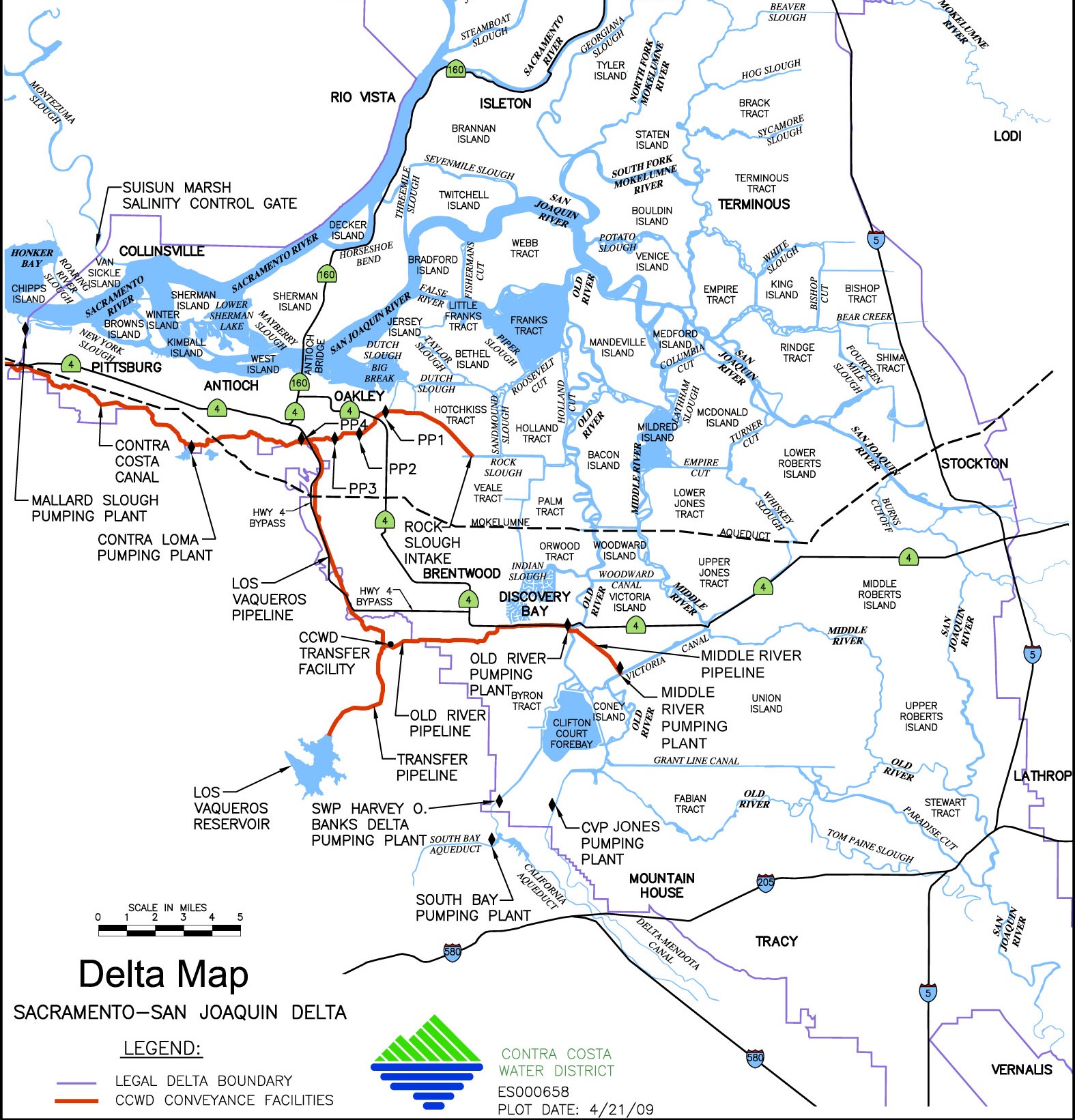
Los Vaqueros Reservoir, in Brentwood, is owned and operated by CCWD.  Efforts have been underway, with potential partners, to evaluate a Phase 2 expansion of Los Vaqueros from 160,000 acre-feet to 275,000 acre-feet. An expanded reservoir could provide varying levels of benefits for local partnering agencies, while maintaining all the existing benefits in which CCWD’s customers already invested.

“CCWD and its customers benefitted greatly from Los Vaqueros in the last drought and continuously benefit from the improved water quality the reservoir provides,” said CCWD Board President, Lisa Borba.  “The potential expansion of Los Vaqueros into a regional facility presents a significant opportunity for our customers, the environment and local agency partners.”

More storage capacity and additional pipes to move water directly to partners could bolster preparedness for droughts, increase water deliveries to wildlife refuges, and provide additional Delta ecosystem improvements.

Potential beneficiaries include local water agencies and Central Valley wildlife refuges.  While an expansion cannot meet every water service need for all agencies, it would give partners an additional tool to help deal with droughts and other challenges.  An expansion will depend on a combination of local, state and federal investments – state funding is one component.

State funding for water storage projects will be administered by the California Water Commission.  Only public benefits can qualify for the state funding approved by voters when Proposition 1 passed in 2014.  CCWD has submitted an application on behalf of the potential partners for $434 million to fund the public benefits of the $914 million expansion project (estimated in 2015 dollars).

The majority of the public benefits would come by way of reliable water supplies for wildlife refuges that provide critical habitat for migratory birds and many other species dependent on the last remaining wetlands in the Central Valley.  Additional public benefits include emergency response, fisheries protection, and recreation associated with an expanded reservoir.

The California Water Commission will be reviewing all applications for the Proposition 1 funding, with a preliminary eligibility and funding decision scheduled for June 2018.

For further information about the project and application, or to provide comments, please visit: www.ccwater.com/lvstudies.

Filed Under: East County, News, Water

Supervisors back state funding of Los Vaqueros Reservoir expansion

August 11, 2017 By Publisher 1 Comment

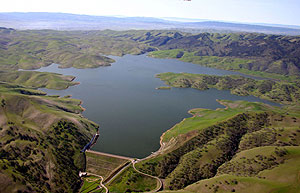
Los Vaqueros Reservoir. Photo by Aerial Photographer Dick Jones. Courtesy of CCWater.com

By Daniel Borsuk

The first shovel may not plunge into the ground for the expansion of the Los Vaqueros Reservoir until 2022, but the Contra Costa County Board of Supervisors have signed on to back state financing of the Contra Costa Water District’s reservoir project.

With District 2 Supervisor Candace Andersen and District 1 Supervisor John Gioia absent Tuesday, supervisors voted 3-0 as a consent item to send a letter of support for the reservoir to the California Water Commission to tap into 2014 voter approved $2.7 billion of state Proposition 1 funds so that the Contra Costa Water District can enlarge the reservoir’s capacity from 160,000-acre feet to 270,000-acre feet.

The Proposition 1 funding would pay 50 percent, or about $450 million of the estimated $900 million price tag with the CCWD and other participating water agencies and their customers picking up the construction price tag.

Although supervisors did not hear either opposition or support concerning their letter, the supervisors’ letter did acknowledge the reservoir project could present an environmental problem unless the CCWD takes action to address it.

Supervisors expect the CCWD to resolve an issue about a proposed alignment of the Transfer-Bethany Pipeline that could upset the environment to a portion of 13,000 acres to the East Contra Costa County Habitat Conservation Plan, a state funded part of the Natural Community Conservation Plan.  Contra Costa County and the cities of Brentwood, Clayton, Oakley and Pittsburg adopted the ECCC habitat conservation plan in 2007.

“Nothing has been decided on the pipeline’s alignment, “said CCWD Public Affairs Director Jennifer Allen. “We still have a lot of steps to go through including the pipeline alignment.”

“With this being a big rain year, I think this is a great thing to move forward on,” said Supervisor Diane Burgis of Brentwood, whose District 3 encompasses much of Los Vaqueros Reservoir.  “If we’re going to spend this kind of money, it’s better to build something that stores water during the rainy years.”

“This is an opportunity to invest against future droughts by adding to our water storage,” said board chair Federal Glover.

Supervisors Adopt New Cardroom License Ordinance

Supervisors also approved a cardroom ordinance that lays out a procedure to ensure that business operations are not interrupted following “an unforeseen event” including the death of the current licensee.

Under the new ordinance, the Sheriff’s Office is designated as the department responsible for licensing gambling establishments locally, is to be notified of the event within 10 days of the event occurrence and identify the appropriate party that should obtain a license. The successor party is required to obtain a license within 30 days of the event.

In Contra Costa County, the California Grand Casino at 5988 Pacheco Blvd. in Pacheco and the 19th Hole Casino and Lounge at 2746 W. Tregallas Road in Antioch are the only licensed cardrooms, according to the State Attorney General’s Office.

In other business, supervisors gave the green light for the Contra Costa County Office of the Sheriff to 21 Lehr Automated License Plate Readers for $225,000 for use in unincorporated Alamo to help curb property crimes.

Automated License Plate Readers

Installation of the Lehr ALPRs will begin at the end of August and should be completed in September, said Sheriff Lt. Jason Haynes of the Alamo Sheriff Office.  The ALPRs will be installed at seven intersections.

Sheriff David Livingston said while a review of crime statistics in the Alamo area does not show a significant increase in reported crime over the last several years, “there was an increase in property crime and residential burglaries specifically in the Contra Costa central 680 corridor.”

The county will not pick a dime on the acquisition of the ALRs because the funds are donated through three private sources.  One unnamed contributor donated $95,000.  Members of the Alamo Police Services Advisory Committee are providing $50,000 and P-6 Alamo-Las Trampas has contributed $80,500.

Alamo will join Danville, Orinda, Lafayette, Clayton and Pittsburg that have Lehr ALPRs installed on city street intersections, Lt. Haynes said.

Lt. Haynes said the license plate readers have proven to work effectively in solving especially property crimes.  He said the Sheriff’s Department has made 25 arrests in connection with Danville stolen vehicle heists over a 12-month period.

Filed Under: Central County, East County, News, Supervisors, Water

Restore the Delta prepares for litigation after DWR’s filing of WaterFix tunnels NOD

July 26, 2017 By Publisher Leave a Comment

Stockton, CA – As anticipated, the California Department of Water Resources issued the Notice of Determination (NOD) for CA WaterFix on Friday, July 21.

Executive Director for Restore the Delta Barbara Barrigan-Parrilla issued the following statement:

“We are not surprised that the Notice of Determination has been issued. The Brown Administration will celebrate this document as a type of victory regarding the advancement of CA WaterFix. But it’s not. The EIR and the plan for the tunnels are deeply flawed as the project will not create water supply reliability in a world with increased and prolonged droughts, but perhaps up to 75 years of debt to be paid back by water ratepayers as recently proposed by Goldman Sachs representatives.

“We, other environmental organizations, and other parties in the Delta are preparing for litigation. We will expand our fight in the court of public opinion. We are considering all possible legal and political options to stop the project.”

Supplementary Documents:

FINAL Mitigation Monitoring and Reporting Program for the California WaterFix

CEQA Findings of Fact and Statement of Overriding Considerations

DWR Notice of Determination Items

DWR Official Press Release

Filed Under: Environment, News, The Delta, Water

Frazier: Delta tunnels project must not proceed

July 26, 2017 By Publisher Leave a Comment

SACRAMENTO – Assemblymember Jim Frazier (D–Discovery Bay), co-chairman of the California Legislative Delta Caucus, released the following statement Friday, July 21 after reports Gov. Jerry Brown’s administration has given the green light to the proposed Delta tunnels project.

“I represent more of the Delta than any other member of the Assembly, and I will do everything in my power to stop this ill-conceived and destructive project,” Frazier stated. “The truth is, ultimately the disaster of an idea called the Delta tunnels would disrupt the Delta economy and significantly burden agricultural production, recreational activities, the natural migratory paths of endangered fish species and legacy communities.  The governor needs to explore real options that communities throughout the Delta can support to achieve the co-equal goals of restoring and protecting the Delta’s habitat, and providing clean and reliable water to Californians.  He must not green light the tunnels plan.”

Filed Under: East County, Environment, The Delta, Water

Delta tunnels project reaches key milestone as state environmental review is certified

July 22, 2017 By Publisher Leave a Comment

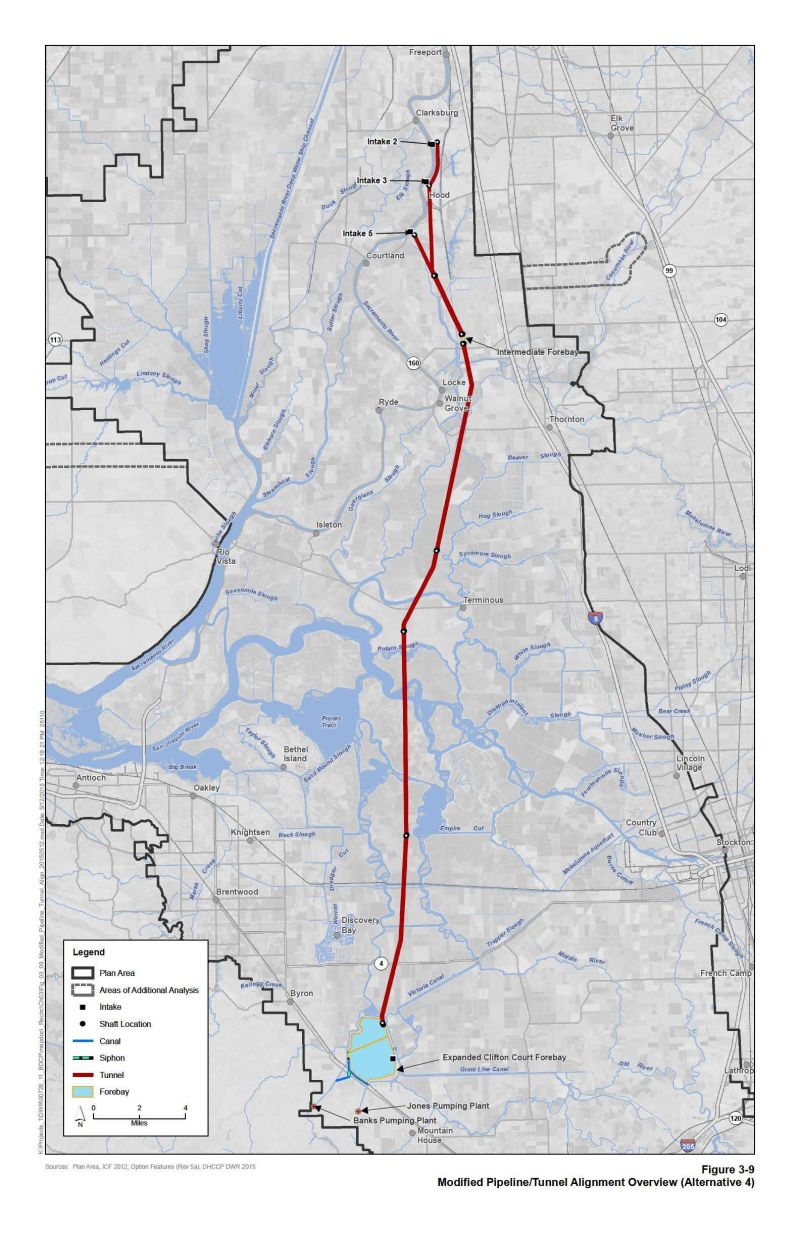
California WaterFix map

SACRAMENTO – Clearing another major milestone toward the modernization of the state’s water delivery system, the California Department of Water Resources (DWR) today certified the environmental analysis of the California WaterFix, also known as the Delta tunnels. Friday’s announcement follows recent federal biological opinions that confirm the project is consistent with environmental and wildlife protection standards. 

“Today, we have reached our next important benchmark in moving California towards a more reliable water supply,” said DWR Acting Director Cindy Messer. “With this certification, our state is now closer to modernizing our aging water delivery system in a way that improves reliability and protects the environment.”

The WaterFix will modernize a 50-year-old water delivery system that is increasingly vulnerable to disruption by natural disaster and climate change. With new intakes along the Sacramento River, the project also would give water project operators the flexibility to divert water at times of high flow when the risk to native fish at the new diversion facilities is minimal, thus better balancing water supply and environmental protection needs.

Friday’s certification comes after more than a decade of analysis, review, and public comment. State and federal water and wildlife agencies have been working since 2006 to find the best way to improve how the State Water Project and Central Valley Project obtain water from the channels of the Sacramento-San Joaquin Delta. Together, the projects supply 25 million Californians with some or all of their drinking water supply and help irrigate three million acres of farmland.  

The Notice of Determination and decision documents signed by Acting Director Messer approve WaterFix as the proposed project under the California Environmental Quality Act (CEQA). The project helps ensure stable water supplies for millions of Californians. CEQA requires state and local agencies to identify the significant environmental impacts of their actions and to avoid or mitigate those impacts, if feasible. See the Notice Of Determination, here: WaterFix Notice of Determination

DWR, which operates the State Water Project, screened more than 100 different proposals before analyzing 18 alternatives in depth in the final 50,000-page Environmental Impact Report (EIR) under CEQA. The combined public comment period on these environmental analyses lasted nearly a year.

The project was refined several times to shrink its footprint, minimize impacts to Delta landowners, and make other changes.

The CEQA certification, Notice of Determination, and decision documents put WaterFix a step closer to construction, which could begin as early as 2018. As both a modern and ambitious infrastructure project, WaterFix will require world-class engineering, efficient construction management, aggressive cost containment, and transparent business operations. 

In addition to the certification, DWR also filed a “validation action” today with the Sacramento County Superior Court to affirm the department’s authority to, among other things, issue revenue bonds to finance the planning, design, construction and other capital costs of California WaterFix. A validation action is necessary to provide assurances to the financial community for the sale of the California WaterFix revenue bonds. 

Meantime, DWR and the federal Bureau of Reclamation have completed a substantial portion of the proceedings before the State Water Resources Control Board to change the point of diversion for the state and federal water projects to allow operation of the WaterFix.

For more information, including fact sheets about project costs, cost allocation, project delivery and environmental benefits, visit www.californiawaterfix.com.

Filed Under: Environment, News, The Delta, Water

Potentially harmful blue-green algae blooms detected in Discovery Bay

July 20, 2017 By Publisher Leave a Comment

Contra Costa health officials and the Central Valley Regional Water Quality Control Board advise people and pets in the Discovery Bay community to avoid contact with local bodies of water because of blue-green algae blooms.

Contra Costa Health Services Environmental Health Division (CCEH) received results this week for several water samples taken in late June from the southwestern section of Discovery Bay. Results found elevated levels of a natural toxin produced by blue-green algae blooms.

“We are advising residents to stay out of the water and keep their pets out of the water in the southwestern portion of Discovery Bay,” said CCEH Director, Dr. Marilyn C Underwood, “However, water circulates throughout the community, so the algae can also move and spread and therefore it is prudent to be cautious and to stay out of the water if you see scum or algae blooms.”

Exposure to the toxin can cause rashes, skin and eye irritation, allergic reactions, gastrointestinal upset and other symptoms.

“It’s important to know that dogs are especially vulnerable to getting sick from this toxin. There have been reports from past incidents of dogs dying after drinking the water or licking algae from their fur after swimming in water with blue-green algae blooms.  If your pet gets ill after swimming in water with an algae bloom, take them to the vet immediately,” said Christine Joab, Cyanobacteria Coordinator for the Central Valley Water Board.

For a fact sheet to help veterinarians diagnose illness related blue-green algae exposure, visit www.mywaterquality.ca.gov/habs/what/vet_habs_factsheet.pdf

Blooms of blue-green algae, also known as cyanobacteria, can look like green, blue-green, white or brown foam or scum floating on top of water, or suspended in the water. Warm water temperatures and nutrients contribute to blooms, but these will eventually subside under cooler conditions.

CCEH will regularly test bodies of water throughout Discovery Bay and update the community while these conditions persist.

“Anyone who had contact with blue-green algae and has now developed symptoms or believes they may have consumed contaminated water should contact their healthcare provider immediately or call California Poison Control at 1-800-222-1222,” said Underwood.

No illnesses linked to Discovery Bay algae blooms have been reported in 2017. A child became sick after swimming in Discovery Bay during a similar event in 2016. Only recreational water areas are affected. Tap water in Discovery Bay is unaffected by the algal bloom.

FAQs

Is it safe for me to go in the water in Discovery Bay?

It depends where you are and if there are advisories posted in the area.

A CAUTION sign means:

Do not swim or wade near algae or scum

Keep your children away from algae in the water or on the shore

Do not drink the water or use it for cooking

Do not let pets or livestock go into or drink the water or eat scum on the shoreline

Do not eat shellfish from the water

A WARNING sign means:

No swimming

Stay away from scum, and cloudy or discolored water

Do not use these waters for drinking or cooking

Do not let pets or livestock go into or drink the water, or go near the scum

Do not eat shellfish from these waters

For fish caught here, throw away guts and clean fillets with tap water or bottled water before cooking

A DANGER sign means:

Stay out of the water until further notice. Do not touch scum in the water or on shore.

Do not let pets or livestock drink or go into the water or go near the scum

Do not eat fish or shellfish from these waters

Do not use the water for drinking or cooking. Boiling or filtering will not make the water safe.

Exposure to blue-green algae can cause rashes, skin and eye irritation, allergic reactions, gastrointestinal upset, and other effects. At high levels, exposure can result in serious illness or death, according to the California Department of Public Health.

What about my pets?

Keep pets out of water with blue-green algae blooms. Dogs are especially vulnerable to getting sick and there have been reports through the years of dogs dying following exposure associated with drinking the water and licking algae from their fur after wading/swimming in water with blue-green algae blooms.

Is there an issue with drinking water?

No, contamination only affects recreational water areas, not drinking water from the tap in Discovery Bay.

Who should I contact if I swam in the water and now have symptoms?

If you think you or someone else is displaying symptoms of blue-green algae poisoning, contact your health care provider or the California Poison Center Help Hotline at 1-800-222-1222.

What can I do to get rid of blue-green algae in Discovery Bay?

We do not recommend attempting to treat or remove the algae. Blue-green algae blooms are natural to the environment’s food chain, and eventually dissipate on their own. Chemical treatment is often ineffective and can result in more toxins being released into the water as algae cells die, as well as unintended effects on other species in the area.

Algae blooms result from changes in water conditions that encourage sudden growth of the species. The best way to reduce and prevent blooms is to reduce water pollution, particularly from runoff containing fertilizers or pesticides. Pick up trash dumped in waterways, and make sure all household sewer systems are working properly.

Treating aquariums with a hydrogen peroxide solution is a common way to get rid of some kinds of algae. But the Delta is not a closed system like an aquarium, so the results would be unpredictable, both in terms of efficacy and impact on the environment.

For updates, detailed explanations of posted advisories, a map of sampling sites and other information, visit cchealth.org/eh/blue-green-algae.

Filed Under: East County, Environment, Health, News, Water

Los Vaqueros Reservoir expansion draft documents available; public meetings in July

July 20, 2017 By Publisher Leave a Comment

Los Vaqueros Reservoir. Photo by Aerial Photographer Dick Jones. Courtesy of CCWater.com

Next meeting Tuesday in Brentwood

The Contra Costa Water District (CCWD) and the Bureau of Reclamation (Reclamation) have taken the next step necessary in evaluating the Phase 2 expansion of Los Vaqueros Reservoir from 160,000 acre-feet up to 275,000 acre-feet at an estimated cost of $800 million. Interested stakeholders can now review the draft document, and provide comments in writing or at a public meeting scheduled in July. (See Fact Sheet, here: http://www.ccwater.com/DocumentCenter/View/4033)

Los Vaqueros Reservoir, south of Brentwood, is owned and operated by CCWD.  CCWD and Reclamation have been working on a joint evaluation of expanding Los Vaqueros Reservoir to develop water supplies for environmental management for fish and habitats, increase water supply reliability, and improve the quality of water deliveries.  In 2012, the first phase of the expansion increasing capacity from 100,000 acre-feet to 160,000 acre-feet was completed by CCWD and provides customers with drought supply and water supply reliability benefits. 

With the State’s announcement of availability of Proposition 1 funding for storage projects, a group of 11 water agencies entered into agreements with CCWD to prepare a funding application and necessary environmental documents for a Phase 2 Expansion of Los Vaqueros Reservoir from 160,000 acre-feet up to 275,000 acre-feet. 

The next step in evaluating that further expansion is releasing the Draft Supplement to the Final Environmental Impact Statement / Environmental Impact Report (EIS/EIR) for public review.  The Final EIS/EIR was certified in 2010 by CCWD – the Draft Supplement to the Final EIS/EIR updates that document with new information available. See the draft documents, here: http://www.ccwater.com/709/Expansion-Documents.

CCWD is currently working with the Bureau of Reclamation and local partners to evaluate project alternatives, facilities and operations. Upcoming key milestones include a funding application due to the California Water Commission in August 2017 and completion of the Final Federal Feasibility Report in November 2018. Construction could begin as early as 2022.

The potential local partners include:

o Alameda County Water District

o Bay Area Water Supply and Conservation Agency

o Byron Bethany Irrigation District

o City of Brentwood

o East Bay Municipal Utility District

o East Contra Costa Irrigation District

o Grassland Water District

o Santa Clara Valley Water District

o San Francisco Public Utilities Commission

o San Luis & Delta-Mendota Water Authority

o Zone 7 Water Agency

Interested stakeholders can participate in six public meetings to learn more about the Phase 2 Expansion and provide comments.  Meeting locations allow for attendance by customers of the water agencies considering project participation.  All meetings will start with an open house and presentation in the first hour, followed by a public hearing for the second hour.  Remaining meeting details are as follows:

Brentwood: Tuesday, July 25, 2017, 6:30 – 8:30 p.m., Brentwood Community Center, 35 Oak Street

Los Banos: Thursday, July 27, 2017, 1:30 – 3:30 p.m., San Luis National Wildlife Refuge Complex Headquarters and Visitors Center, 7376 S. Wolfsen Road

For further information about the Draft Supplement to the Final EIS/EIR, public meetings and how to comment, please visit: www.ccwater.com/lvstudies and http://www.ccwater.com/832/Los-Vaqueros-FAQ.

Filed Under: Central County, East County, Environment, News, Water

Rep. McNerney unveils new comprehensive water bill

July 18, 2017 By Publisher Leave a Comment

Rep. McNerney introduces other officials at a press conference on his new water bill in Stockton on Wed., July 17, 2017. Screenshot of YouTube video.

As the debate continues over how best to address California’s water needs, Congressman Jerry McNerney (CA-09), during a press conference in Stockton on Monday, July 17, 2017 announced the introduction of new, comprehensive legislation that would provide a long-term plan to improve water sustainability in California and across the country.

The Water and Energy Sustainability through Technology Act (WEST Act) includes provisions that support innovative technologies and infrastructure for urban and agricultural areas, as well as efforts to improve efficiency.

“Our water infrastructure is declining and in need of repair,” said Congressman McNerney. “Water supply in California, and across the nation, is a serious challenge, but we’ve only been presented with short-sighted and ill-conceived plans that rely on the shipment of water from one area to another. Instead, we should be focusing on creating water sustainability through conservation, recycling, and capture.”

Currently, the United States uses approximately 80 billion gallons of fresh groundwater per day. Under the WEST Act, reimbursements would be authorized for recycling and reuse projects that create new water, and regional self-sufficiency would be improved through the encouragement of storm water capture and increased water storage. It would also require a study on ways to improve leak detection location, mapping, and communications for pipeline systems and provide grants to implement these solutions.

“It’s time to change the narrative and focus on practical, forward-thinking solutions instead of high-cost, short-term fixes,” said Congressman McNerney. “California has long been a leading innovator in energy and technology and we now have the opportunity to apply that type of ingenuity to modernizing our water systems.”

The WEST Act would also establish a U.S. Bureau of Reclamation groundwater information system and groundwater management technical assistance, in addition to a smart energy and water efficiency program to support innovative technology solutions for agricultural use and to improve efficiency at federal buildings.

“This bill is the result of extensive engagement with a diverse group of stakeholders – including farmers, technology innovators, industry and community leaders,” Congressman McNerney stated. “These are tangible, commonsense approaches that we can accomplish in the short-term that will benefit all of us in the long-term.”

To launch the legislation, Congressman McNerney hosted a press conference yesterday, featuring local leaders and advocates who voiced their support for this legislation.

To view the full press conference, click here.

Rep. Jerry McNerney proudly serves the constituents of California’s 9th Congressional District that includes portions of San Joaquin, Contra Costa, and Sacramento Counties. For more information on Rep. McNerney’s work, follow him on Facebook and on Twitter @RepMcNerney

Filed Under: Environment, News, Water

Antioch files claim with state water department demanding reimbursement for costs during times of high salinity

May 1, 2017 By Publisher Leave a Comment

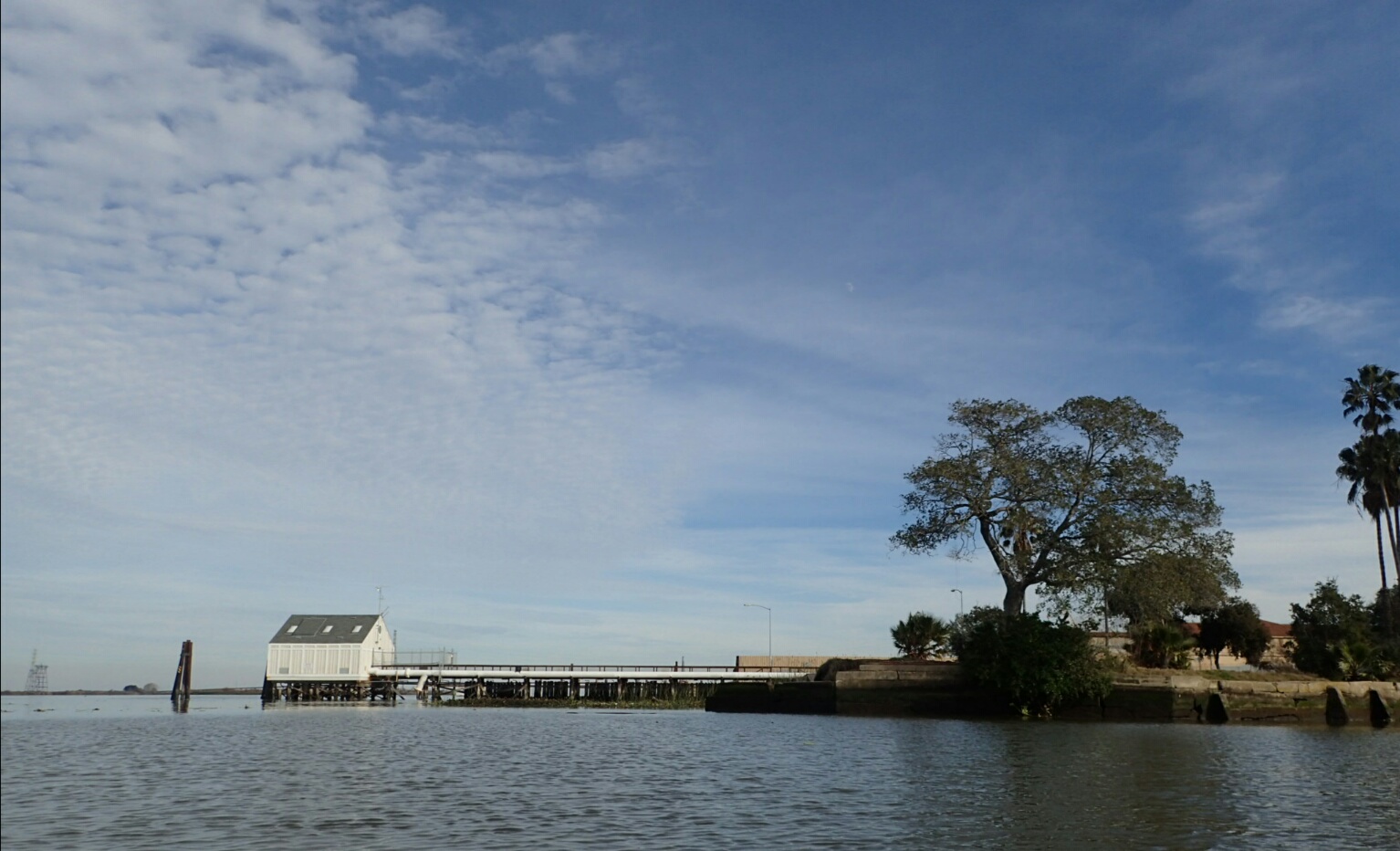
Antioch’s water pump station on the river. Photo courtesy of Kathy Bunton, http://kayakingcaldelta.blogspot.com/

Dating back to 1968 Agreement, due to rerouting of water to the State Water Project

By Allen Payton

On Friday, the City of Antioch announced it has filed a claim with the State of California seeking relief for the Department of Water Resources’ (“DWR”) failure to perform specific key terms of an agreement between the State and Antioch dating from 1968 commonly referred to as the “1968 Agreement”.  The purpose of the 1968 Agreement is to mitigate the impacts of the State Water Project (“SWP”) on the City’s water supply.  The 1968 Agreement requires the DWR to reimburse the City a portion of Antioch’s cost to purchase substitute water when high salinity resulting from the SWP adversely impacts the City’s own water rights.

The key term of the 1968 Agreement at issue in the City’s claim is a clause that requires the DWR to grant Antioch substantially the same terms granted by the DWR to any other entity in the Delta.  This clause is commonly referred to as the “me-too” clause.

In March of 2016, the DWR entered into an Agreement with Contra Costa Water District (“CCWD”) to replace an existing 1967 agreement between the parties similar to the City’s 1968 Agreement.  Antioch contends that this new 2016 agreement grants CCWD substantially more favorable terms than those granted by DWR to Antioch under its present 1968 Agreement triggering the application of the me-too clause.  To date, the DWR has refused to perform the me-too clause granting Antioch terms substantially similar to those it granted to CCWD in 2016.

Additionally, analysis performed both by Antioch and the DWR indicates that the operation of the 2016 Agreement between CCWD and the DWR could potentially result in worsening water quality at Antioch.  These new potential impacts on the City’s water supply are not mitigated by the City’s 1968 Agreement. The DWR has so far refused to negotiate new terms to protect the City from these additional impacts resulting from the new CCWD agreement.  The City’s claim against the DWR includes a demand to mitigate or eliminate any such new adverse impacts to the City’s water supply.

Before city staff treats the water that it sends to customers, it usually pumps the raw water directly from the river. However, in 2015 and 2016 the city was forced to purchase 95% of its raw water from CCWD, because the salt water from the bay had intruded passed the Antioch’s intake water pumps along the river, off of Fulton Shipyard Road, next to the old boat launch. Antioch pays nothing for the water it pumps from the river, according to its pre-1914 riparian rights.

Filed Under: East County, News, Water

Water level at Los Vaqueros Reservoir rises to a new high

February 3, 2017 By Publisher Leave a Comment

Los Vaqueros Reservoir. courtesy of CCWD

After leaning on Los Vaqueros Reservoir for supply during the drought, the Contra Costa Water District (CCWD) is pleased to announce that the reservoir is now holding more water than it ever has for its customers.  The reservoir is doing its job and the filling underway is good news for serving customers now and into the future.

This week, the reservoir’s storage level rose above 133,000 acre-feet, surpassing the high reached in 2013.  CCWD will continue to fill while conditions are favorable, depending on Delta water quality and energy costs.

“Los Vaqueros continues to serve CCWD customers well, especially during this drought,” said CCWD Board President Lisa M. Borba. “Customers responded tremendously to the call for conservation, and we were able to save conserved water in the reservoir, positioning us well if dry years continued. Now we are adding to our water saving account.”

CCWD owns and operates Los Vaqueros Reservoir primarily to manage water quality for the 500,000 residents of central and eastern Contra Costa County.  Water from the Delta is pumped into the reservoir when water quality is good and then is used to keep water quality delivered to its customers high when salinity levels rise in the Delta.  The off-stream reservoir located near Brentwood was originally constructed in 1998 with the ability to store up to 100,000 acre-feet of water.

An expansion of the reservoir was completed in 2012 increasing the capacity to 160,000 acre-feet.  Stores of water in the off-stream reservoir reached a then high of 132,900 acre-feet in 2013 and was then drawn upon, as designed, to meet water supply demands during the past few years of drought.

With strong and steady storms this winter supplying fresh water to the Delta, CCWD has turned on its pumps to move high quality water into Los Vaqueros for future use.

Learn more about CCWD and Los Vaqueros Reservoir at www.ccwater.com.

Filed Under: East County, Environment, News, Water, Weather

  • « Previous Page
  • 1
  • 2
  • 3
  • 4
  • 5
  • Next Page »
Furniture-Clearance-02-26B
Celia's-3-26-A
Delta-RC-A
Deer-Valley-Chiro-06-22

Copyright © 2026 · Contra Costa Herald · Site by Clifton Creative Web