• Home
  • About The Herald
  • Local Agencies
  • Daily Email Update
  • Legal Notices
  • Classified Ads

Contra Costa Herald

News Of By and For The People of Contra Costa County, California

  • Arts & Entertainment
  • Business
  • Community
  • Crime
  • Dining
  • Education
  • Faith
  • Health
  • News
  • Politics & Elections
  • Real Estate

Supervisors consider cannabis industry tax measure, approve $3.5 billion 2018-19 budget

May 10, 2018 By Publisher Leave a Comment

$400 million increase over current year’s budget

By Dan Borsuk

Contra Costa voters could see a cannabis industry tax measure on the November 6 ballot after supervisors on Tuesday thrashed through statistics and ideas on what route to take in complying with the 2016 passage of state Proposition 64.

Determined to assemble a cannabis tax ordinance by an August 10 deadline in order to file a tax measure ballot for the November election, supervisors, under the guidance of Julie Enea of the County Administrator’s Office, presented a cannabis business tax levy proposal assembled by HdL, the Crescent City-based consulting firm hired by the county to assist the county in developing an ordinance in the aftermath of the passage of Proposition 64, the 2016 state initiative that legalized the sale of recreational marijuana.

The proposed cannabis business tax levy sets initial and maximum rates for eight license types.  Those proposed rates are:

  • Cultivator: Indoor, artificial lighting:  7/ft. initial rate, $10/ft. maximum rate.
  • Cultivator: Greenhouse, mixed lighting:  $4/ft initial rate, $7/ft. maximum rate.
  • Cultivator: Outdoor, natural light:  $2 ft. initial rate, $4 ft. maximum rate.
  • Cultivator Nursery: $1/ft. initial rate:  $2/ft. maximum rates.
  • Manufacturer/Non-retail microbusiness: 2.5 % of gross receipts initial rate, 4% of gross receipts maximum rate.
  • Testing: Not Available; initial rate:  2.5% percent of gross receipts maximum rate.
  • Distribution: 2% of gross receipts initial rate; percent maximum rate.
  • Retailer/Retail microbusiness: 4% of gross receipts initial rate and 6% of gross receipts maximum rate.

The supervisors’ cannabis tax ordinance proposal still requires a public hearing slated for July 10 when supervisors are expected to take official action on the tax ordinance proposal as well as the cannabis health ordinance.  The cannabis health ordinance will not appear on the November ballot.

During the supervisor’s proceedings on Tuesday, citizens and supervisors alike were concerned the amount of money the county would raise from a cannabis tax might fall short of the mark in adequately enforcing the law, especially the health ordinance.

Since enactment of Proposition 64 beginning this year, the state has collected only $34 million in tax revenue of the anticipated $175 million.  The state is considering shelving a plan to cut the excise tax from 15 percent to 11 percent even though cannabis sales are not as brisk as anticipated.

Board chair Karen Mitchoff of Pleasant Hill said the board should model the tax ordinance measure so that it requires a two-thirds majority voter approval, have an oversight committee and be reviewed yearly for adjustments based on the consumer price index.

“We’re going to impose this tax to cover our costs,” said District 2 Supervisor Candace Andersen of Danville, who represents a district where a number of citizens have aired widespread opposition to Proposition 64’s implementation.

Shawn Casey of First 5, a pro children’s organization, proposed that the county create with cannabis revenues a fund to aid children harmed by the effects of cannabis.

“I’m in favor of reasonable regulation,” said Vickie Norris of Friends of Proposition 64.  “I’m in favor of a tax.”  Norris noted Contra Costa’s tax proposal that HdL prepared won’t price out businesses like what occurred in Berkeley which had to scale back its retail sales tax which was 35%.

“The legal market is taking a piece out of the black market,” said HdL’s Mark Lovelace.  “Thirty percent of the marijuana remains in the black market.”

Supervisors OK 2018-2019 Budget Proposal

In speedy action, supervisors voted 5-0 in approving a $3.5 billion 2018-2019 recommended budget without public fanfare.  Supervisors will officially adopt the budget in September.  The spending plan is an increase from $3.1 billion for the current 2017-2018 fiscal year.

482,055 Square Foot North Richmond Warehouse Approved

Without hearing any opposition, supervisors unanimously approved a 482,055 square foot warehouse-distribution project that could create up to 800 jobs in the North Richmond.  Construction of the proposed Panattoni Warehouse project at 500 Pittsburg Ave. could get underway in the first quarter of 2019.

District 1 Supervisor John Gioia, who represents the North Richmond development site owned by Redus EL LLC, said the Panattoni Warehouse project is the first of at least two other similar warehouse distribution projects that are in the pipeline that will come before the supervisors in the near future.

Gioia refused to provide details about the other two warehouse-distribution projects.

“This is just not a warehouse,” the supervisor said.  Upon commenting how the North Richmond area is in a stage of transition from residential to warehouse, the supervisor said, “North Richmond has become ground zero for the fulltime warehouse area that is patterned after AMAZON, the type of company the gets products out sooner.”

In approving the project at Pittsburg Avenue and Richmond Parkway, supervisors approved a number of “traffic calming measures” in order to minimize the environmental impacts from more than 100 truck trips during peak period AM and PM periods.  Those traffic calming measures include “chokers and bulbouts.”

The developer will install solar power and plant 200 trees to replace 21 old trees that need to removed from the project site.  A 1.3-acre area site has been designated for a gas station with a mini-mart that will be constructed sometime after the warehouse-distribution building is constructed.

Filed Under: Finances, News, Supervisors, Taxes

Supervisors order probe of possible nuclear waste at Keller Canyon Landfill in Pittsburg

May 4, 2018 By Publisher 1 Comment

Keller Canyon Landfill. Photo courtesy of Comanco.

By Daniel Borsuk

Contra Costa County Supervisors unanimously launched on Tuesday a full-scale probe into whether radioactive tainted soil was illegally dumped at the Keller Canyon Landfill near Pittsburg.

At the request of District 5 Supervisor Federal Glover of Pittsburg, who had initially learned about the allegations after reading a San Francisco Chronicle newspaper article about how Hunters Point Naval Shipyard contractor, Tetra Tech’s radioactive debris removal practices dating back to 2011 may have wound up at the Contra Costa County landfill and other state landfills not designated for nuclear waste.  Supervisors requested that the Navy investigate the allegations and report back to the supervisors in 30 days.

Having the Navy come back in and investigate the Tetra Tech contract is the priority item supervisors have in mind, but board chair Karen Mitchoff of Pleasant Hill said in order to quickly get the attention of the Navy to act on this issue the county also needs the political clout of state and federal legislators.  She also requested that Tetra Tech pick up any costs associated with soil testing at Keller Canyon Landfill.

In the meantime, supervisors requested the county hire a soils specialist to detect if the landfill contains radioactive materials that could have been illegally deposited by Tetra Tech.  The soils consultant contract does not require supervisors’ approval if it is less than $50,000.

District 3 Supervisor Diane Burgis of Brentwood wanted to hear from Tetra Tech, which did not send a representative to the supervisors’ meeting, over a number of incidents when radiation monitors at the entrance of the Pittsburg landfill have reportedly been triggered.

“I want to put a hold on Tetra Tech and Hunters Point deliveries to Keller Canyon,” Burgis demanded.

Keller Canyon Landfill General Manager Rick King informed supervisors Republic has stopped accepting truck loads from Tetra Tec since the news coverage broke on April 22.

“We’re doing everything we can,” said King in preventing nuclear tainted material from winding up at the landfill.  He explained how the radiation monitors work, the 24-hour security, and other security procedures Republic Services uses to block truckloads of illegal material from entering and unloading debris at the landfill.

With the Hunters Point project, Keller Canyon Landfill has 13 different profiles, King said.  “Every truck load needs a manifest or it won’t be allowed to enter the landfill.  Then it has to pass our radiation monitors,” he said.

From 2011 to 2017, Keller Canyon received 223,000 tons of waste from Hunters Points Shipyard, according to county Health Department records.  On two occasions, June 2014 and February 2015 soil and material had to be returned to Hunters Point, according to Marilyn Underwood, Director of Environmental Health for the Contra Costa County Department of Health Services.  The details on the contents of those two loads were not released.

“You should have appointed the city of Pittsburg as the lead enforcement agency,” warned former Pittsburg City Councilmember Nancy Parent.  Parent said the county has not been able to properly monitor the landfill, especially now that it is a Grade 2 landfill capable of accepting dirt from Hunters Point.  “It’s all about money” Parent said.

At one point, Board Chair Mitchoff entertained the idea of whether the county should cease being the lead enforcement agency of Keller Canyon, but none of her board colleagues supported that idea.

“This is a complicated issue. We need to get the right people at the table.  We don’t have the expertise.  We need to have a report back in 30 days,” Mitchoff ordered.

“I really do appreciate my colleagues for the enthusiastic support in involving the Navy, getting our state and federal legislators involved and making sure that our constituents know that the county serves as the lead enforcement agency on this matter,” said Glover.

Pasadena-based company Tetra Tech Chief Executive Office Dan Barach said in a statement:

“In light of the barrage of recent and misleading media reports, Tetra Tech is compelled to defend itself and its work at Hunters Point.

“Our company has sought to follow all the required standards and protections and to operate in a thorough, honest and professional manner to provide testing and clean-up services as required by our contract.  We are proud of our high standards and professionalism on this contact, and all the work we perform for clients.  Equally important, we have worked to make this site, and all sites where Tetra Tech works, safe for community members and residents.

$454,772 Sheriff-Coroner Livescan Contract OK’d

Supervisors voted 5-0 in approving a five-year $454,772 contract with Gemalto Cogent to maintain the Sheriff-Coroner Office’s Livescan fingerprint system.  The contract is in effect from Jan. 1, 2018 through Dec. 3, 2022.  The Sheriff-Coroner Office Livescan is used identify persons involved in motor vehicle crimes.  Supervisors approved the contract as a consent agenda item.

Filed Under: East County, Health, News, Supervisors

Supervisor Glover wants investigation into possible radioactive materials deposited at Keller Canyon Landfill

April 27, 2018 By Publisher Leave a Comment

Keller Canyon Landfill. Photo courtesy of Comanco.

Matter to be heard at next Tuesday’s Board meeting

Supervisor Federal Glover has directed Contra Costa County Staff at next Tuesday’s Board of Supervisors meeting to provide the Board with an update concerning the allegations of malfeasance by Tetra Tech EC Inc. at the Hunters Point Naval Shipyard. The allegations concern possible radioactive materials being deposited at landfills across the state including possible contaminated material that might have been sent to the Keller Canyon Landfill.
“I am very concerned about these allegations and want a full report from staff on this issue,” Glover stated.  Healso said that he expects County staff to follow up with further review of the issue after the Board meeting next Tuesday.

“I want staff to thoroughly investigate these allegations and determine whether or not the Keller Landfill was sent contaminated material,” Glover continued. “I want to make sure the residents of Contra Costa County are protected and that this matter is fully addressed.”

He said that the matter will be heard in front of the Board of Supervisors during its regularly scheduled session starting at 9:30 AM on May 1, 2018 in the Board Chambers at 651 Pine St., Martinez.


Filed Under: East County, Environment, News, Supervisors

Despite opposition Supervisors move forward on marijuana ordinance, voters to have final say

April 26, 2018 By Publisher Leave a Comment

Extend moving contract by $3.5 million without any questions

By Daniel Borsuk

Contra Costa County supervisors moved closer to adopting in June a commercial marijuana ordinance on Tuesday, and unanimously increased a three-year moving contract without raising a single question.

The officials approved a $3.5 million contract extension for Metropolitan Van and Storage to provide moving services countywide through the end of its three-year contract that expires on May 31, 2019.  The supervisors’ approval boosts the overall payment limit to Metropolitan from $4 million to $7.5 million.

Placed on the agenda as a consent item, none of the five supervisors had asked to have Item No. 31 pulled from the agenda for discussion and action at a meeting where the elected officials were clearly more focused on a progress report from the county Conservation and Development Department on a draft cannabis ordinance, an agenda item that drew 53 speakers.

When asked about the moving contract agenda item, board chairperson Karen Mitchoff said she was unaware of the Metropolitan contract item being on the consent agenda.

“I am informed about what consent items are to be pulled for discussion by my staff,” Mitchoff said. “This item was not brought to my attention by staff.”

County Administrator David Twa said he had reviewed the Metropolitan contract increase and found no irregularities.

The county needs to add $3.5 million to the Metropolitan Van and Storage contract in order to complete the three-year contract that expires in May 2019, newly appointed Public Works Directors Brian Balbas said.

While admitting the spending of the initial $4 million “came as a bit of a surprise” to him, Balbas said about 50 percent of the 2,266 invoices Metropolitan Moving submitted for 1,429 jobs came from, three major county departments – Assessors Department, Employment and Human Services Department and Health Department.

In addition to moving furniture and other material, Balbas said Metropolitan Moving also takes down and erects cubicles in county department offices.

When asked if the extra $3.5 million will cover the next 12 months of the contract, Balbas responded, “I sure hope so.”

Supervisors Aim for June 26 Marijuana Ordinance Adoption

Supervisors set the stage to adopt a cannabis zoning ordinance on June 26 after listening to long list of speakers, mostly opponents to the legalization of recreational marijuana.  On July 10, supervisors are scheduled to consider adopting health and tax measure ordinances that will go before the voters, perhaps in November.

After nearly two hours of public testimony coming mostly from residents in Supervisor Candace Andersen’s District 2, a district widely opposed to the sale and cultivation of recreational marijuana, the supervisor commented, “In a perfect world, I’m for a moratorium.”  The supervisor hinted she might vote against the county ordinance because of the overwhelming opposition from her constituency, even though the county Department of Conservation and Development has spent hundreds of manhours and attended 27 community meetings around the county to inform the public about the county’s proposed marijuana ordinance.

District 5 Supervisor Federal Glover of Pittsburg, who had earlier observed most of the proposed cannabis zoning is located in his district along Highway 4, remarked, “We need to make sure the safety measures are put in place and that won’t occur unless a tax is passed by the voters.  Until that happens this ordinance will not be enforced.”

When Dr. Phillip Drum, a marijuana legalization opponent, listed butane explosions and a number of other reasons why supervisors should stop developing a marijuana ordinance even though 61% of Contra Costans approved Proposition 64 in 2016, Board Chair Mitchoff pointed out the Contra Costa ordinance will prohibit the use of butane to extract oil from marijuana plants.

The proposed ordinance will feature zones for commercial cultivation, retail storefront, delivery only, manufacturing/processing, distribution and testing.

For personal cultivation, the county is proposing six or less plants for indoor, private cultivation and not more than three plants that are more than five feet in height for outdoor cultivation.

Filed Under: Government, News, Supervisors

County Supervisors to adopt $3.5 billion budget for 2018-19 at May 8 Board meeting

April 26, 2018 By Publisher Leave a Comment

On Tuesday, April 17 the Contra Costa County Board of Supervisors heard budget proposals from the County Administrator and a number of County Departments on the proposed budget.

Contra Costa County Administrator, David Twa, has proposed a $3.5 Billion ($1.6 Billion General Fund) Budget for FY 2018-19 that is balanced and will provide critical services to the residents of Contra Costa County. Twa said that “the proposed spending plan includes funding increases to community service providers, allows the County to continue building its financial reserves, provides funding for new capital projects including a new Emergency Operations Center, and supports the county workforce of over 9,500 Employees.”

Chair of the County Board, Karen Mitchoff, said that “while the County is well positioned going into the next fiscal year, there continues to be storm clouds on the horizon.” She pointed out that “State and Federal funding combined with the County’s limited discretionary revenues will continue to fall short of the rising costs necessary to provide critical services to County residents.”

While the Budget includes $13 million in additional funding for Public Works projects as a result of the Gas Tax passed last year by the Legislature, (SB 1) there is a proposed repeal effort that may be on the November election ballot. Chair Mitchoff said that “If repealed, this would substantially reduce the ability of the County to meet necessary road and bridge repair projects.”

The Board of Supervisors is scheduled to adopt the Budget for 2018-19 during its regularly scheduled session on May 8, 2018 in the Board Chambers at 651 Pine St., Martinez.

Filed Under: Finances, Government, News, Supervisors

Contra Costa Supervisors examine $3.5 billion 2018-19 budget

April 19, 2018 By Publisher 1 Comment

In era of federal funding uncertainty

By Daniel Borsuk

Contra Costa County Supervisors are poised to approve on May 8 a $3.5 billion 2018-19 budget realizing that during the upcoming budget year there is the likelihood significant funding cuts out of Washington might especially hit human services programs.

“The current administration in Washington is likely to reduce funding to states and counties,” county administrator David Twa warned supervisors at Tuesday’s board budget hearing.

Even with that caution, supervisors did not blink an eye and proceeded to listen to six budget presentations from department chiefs about what is in store for the upcoming 2018-2019 fiscal year.  Supervisors did not comment about the prospects of federal or state cuts next fiscal year at the hearing, but neither did any of the meager number of persons who showed up to speak about the proposed 2018-19 spending plan.

The Employment & Human Services Department is subject to perhaps the most significant funding cuts from Washington, EHSD Director Kathy Gallagher told supervisors.  Since 2017, funding for the department’s CalFresh and CalWorks programs that deliver food and job training for 65,000 residents has had federal funding trimmed from $101.5 million in 2016 to $90.4 million to 2018.  More cuts are expected for the two programs in the upcoming 2018-19 fiscal year, she said.

Gallagher painted a bleak federal funding fiscal picture showing a watch list of human service programs that could potentially be hit with steep federal funding cuts.  Some of those programs include Medicaid, Community Service Block Grants, Child Welfare Services, and the Older American Act, which includes Meals on Wheels.

Federal funding uncertainty also hovers over County Health Services, but not as severely as what EHSD faces, Contra Costa County Health Director Anna M. Roth told supervisors, in presenting her department’s proposed $1.8 billion budget for 2018-19.  Next year’s budget includes $100 million in general funds.

Roth noted that expansion of the Contra Costa Health Plan with more than 200,000 members provides the county financial support, especially when there is financial uncertainty coming out of Washington.

Addressing only the $241,271,160 in general funds proposed for 2018-19, Contra Costa Undersheriff Michael Casten, who filled in for Sheriff David O. Livingston who was out of town, said a $5.6 million vacancy factor makes it “a very difficult for the Office of the Sheriff-Coroner to operate”.

Casten said the funding deficit means for 2018019 the Sheriff-Coroner will not fill 10 deputy sheriff slots worth $2.6 million, three mental health evaluation team deputies openings worth a combined $781,000, 7 patrol deputies worth $1.82 million and six sergeants worth $1.77 million.  The Sheriff-Coroner’s request for 15 recruit positions valued at $1.21 million was approved for the upcoming fiscal year.

For Diana Becton, the Interim Contra Costa County District Attorney appointed by the board of supervisors last year who is up for election June 5, budget priorities for 2018-19 include enforcement of Proposition 64 (2016 voter approval for the legalization of the sale of marijuana in California), hiring of additional clerical staff, the implementation of a case management system and pay parity.

For 2018-19, Becton wants to add 14 full-time staff worth $1 million.  Those positions include five mainline prosecution assistant district attorneys, five mainline prosecution clerks, two senior inspectors and one forensic accountant.

District attorney Becton wants to also distribute resources for bail reform, the East County Anti-Violence Coalition, the West County Anti-Violence Coalition, the Safe Streets Task Force and anti-truancy initiatives.

Public Defender Robin Lipetzky plans to hire 8 staff members to her department next fiscal year.  She plans to hire two attorneys, one investigator, pretrial attorneys, and clerical staff.  A new juvenile office in Walnut Creek will open in the next month, she informed supervisors.  Last year the public defender handled 501 juvenile cases.  Her department last year also handled 3,545 felony cases.

For 2018-19, Contra Costa Public Works will be busy filling 15 positions, Brian Balbas, Public Works Director said.  The department will need the additional staff as Balbas needs more staff to oversee a big increase in capital improvement projects, including the construction of a new $110 million county administration building and emergency communication center.

New West County Health Center Expansion Project Approved

On a consent item, supervisors awarded a $12.45 million design-build contract to C. Overaa & Co. for the design and construction of the West County Health Center Expansion Project at 13585 San Pablo Ave., in San Pablo.

When the project is completed, the new two-story, 20,000 square foot building will house the Behavioral Health Department, which will be relocated from a leased building.  The new building will qualify for a LEED Silver rating from the Green Building Council.

Other construction firms competing for the design-build contract were Vila Construction and Boldt Co.

College District – Sheriff-Coroner Contract OK’d

Supervisors also approved the $497,250 contract between the Sheriff-Coroner and Contra Costa Community College District to provide educational course construction at the Law Enforcement Training Center at Los Medanos College for the period July 1, 2018 through June 30, 2019.

Filed Under: Finances, Government, News, Supervisors

Supervisors approve major Buchanan Airport mixed-use project, more airport projects planned

April 11, 2018 By Publisher Leave a Comment

Sheriff-Coroner awarded $400,000 in grants

By Daniel Borsuk

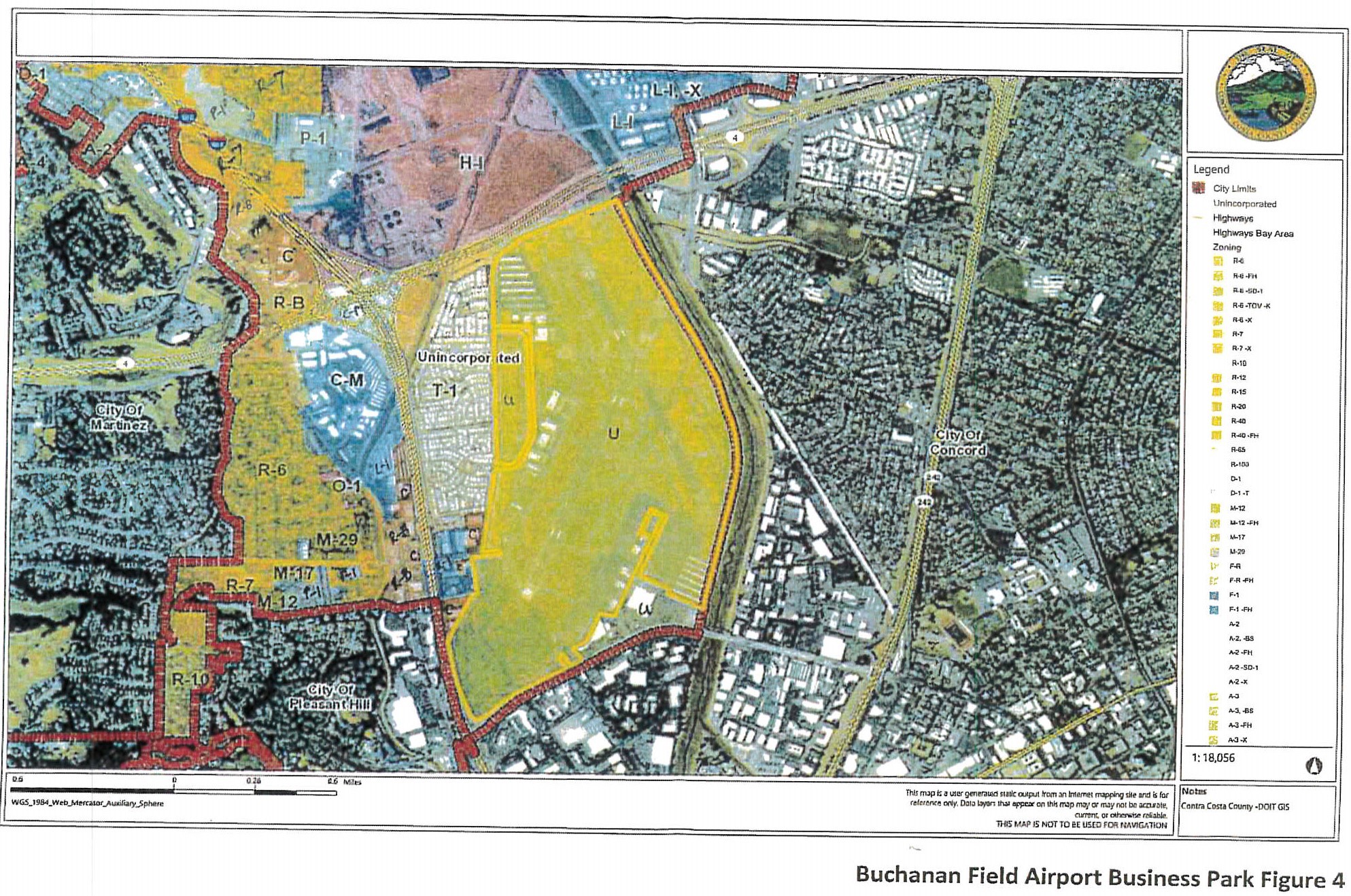
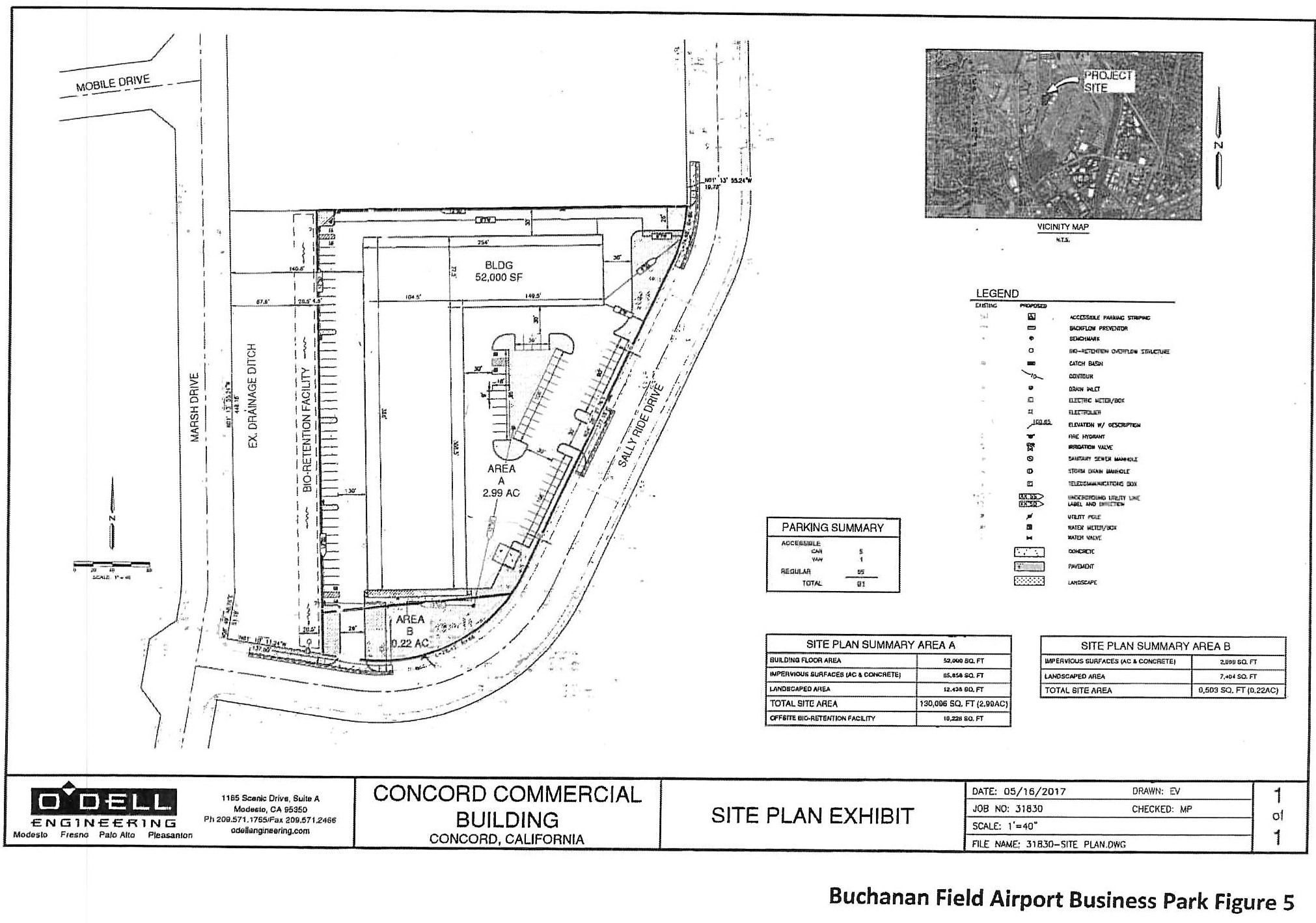
Contra Costa Supervisors flashed the green light on Tuesday for county airport officials to ink a long-term lease with a Southern California developer to build a 52,000 square foot, single story mixed-use building at 550 Sally Ride Drive near Buchanan Field Airport in Concord.

The supervisors’ 4-0 action serves as a signal that more commercial and aviation related developments are in the pipeline on county owned property adjacent to the county’s two airports – Buchanan Field Airport and Byron Airport.

District 3 Supervisor Diane Burgis was not in attendance because she was at a business meeting representing the supervisors.

The supervisors’ action on the consent agenda item means that Airports Director Keith Freitas can proceed to execute a long-term lease with Montecito Commercial Group, LLC for the lease of about 3.21 acres of unimproved county-owned property at the south end of Sally Ride Drive.

As part of the supervisors’ action, the developer will receive a mitigated negative declaration attached to the project’s environmental impact report.  During the EIR procedure, the Contra Costa Water District submitted a letter about the developer’s water usage and an easement issue.  Both issues were resolved according to the CCWD.

The county can expect to cash in on the proposed single-story office-warehouse-distribution building.  During the two-year construction period, the county will be paid $1,000 per month, but once construction is completed monthly rent will increase to $4,247 and will be adjusted every year on April 1 based on the Consumer Price Index.

The Montecito lease calls the one-year period beginning April 1, 2022, 2023, 2024, 2025, 2026 any adjustment will not be greater than 75 percent of the CPI factor.  For the one period beginning on April 1, 2028, throughout the lease term, any adjustment to ground rent based on CPI may not be more than 4 percent of ground rent then in effect.

The Montecito development serves as an indication more projects near the county’s two airports are on their way for future supervisors’ review and action, Assistant Airports Director Beth Lee said.  Supervisors are expected to soon consider two large developments proposed for the Byron Airport.  One is a proposed building for aviation use and the other building is for non-aviation use, Lee said.

Lee noted the developer has yet to complete design and other procedural work before the Montecito project can get underway.

Before the Montecito -Buchanan Field development, the last development constructed on county airport property occurred in 2012 at the Byron Airport when the Patriot Jet Team building was constructed, said Lee.

When asked if real estate developers are finally recognizing how county airport projects can generate ideal real estate deals, Lee responded: “We sure hope so. This could mean a major new source of revenue for the county.”

Two State Grants Approved for Sheriff-Coroner

Supervisors approved two major state grants for the Sheriff-Coroner’s Office.

A $300,000 grant from the California Division of Boating and Waterways was awarded to the Sheriff-Coroner for the removal of abandoned vessels and the vessel turn-in program on county waterways.  The grant goes into effect beginning Oct. 1, 2018 and remains in effect when grant funding runs out.  Ninety percent of the funding comes from the state and 10 percent is an in-kind match.

Supervisors also approved a $97,100 grant for the Sheriff-Coroner from the Office of the Attorney General, California Department of Justice, Division of Law Enforcement Tobacco Law Enforcement Grant Program.  The grant will be used from June 1, 2018 through June 30, 2020 to decrease juvenile access and use of tobacco products.

Both grants were approved as consent items.

Filed Under: Central County, News, Supervisors

Voters shrink East Contra Costa Fire board from 9 to 5 in special election

March 29, 2018 By Publisher Leave a Comment

Low-income housing in the county “stagnates”

By Daniel Borsuk

Voters in the financially challenged East Contra Costa Fire Protection District convincingly decided in a mail ballot election concluded on March 6, to shrink the number of board members from nine appointed directors to five elected directors.

Contra Costa County Board of Supervisors certified the election results as presented by Contra Costa County Clerk-Recorder and Registrar of Voters Joseph Canciamilla as a consent item at Tuesday’s supervisors meeting.

Of the 64,351 ballots mailed to registered voters residing in the ECCFPD, county election officials received and tallied 11,772 ballots or 18.29 percent of the total ballots mailed.

Of those ballots returned and counted, 90.46 percent or 10,605 votes were in favor of changing the board from nine chosen board members to five elected directors.  Only 1,119 votes or 9.54 percent of the of the ballots returned wanted to retain the present setup of nine appointed ECCFPD board directors.

Results of the special election means those wanting to serve on the ECCFPD board of directors will have to run for office in the November 6 general election.  Winners will be sworn into office on December 3.

The ECCFPD board presently has four directors appointed by the Brentwood City Council, three directors appointed by the Oakley City Council and two appointed by the Contra Costa County Board of Supervisors.

By transitioning to an elected board of five directors, the ECCFPD will be in step with other policymaking boards like the city councils of Brentwood and Oakley and special districts such as park, water and irrigation districts, said ECCFPD Fire Chief Brian Helmick, who oversees the $15 million a year fire district that operates three fire stations and a Marsh Creek station under contract with CalFire from November through April.

There are plans for the fire district to operate as many as nine fire stations.

Historically, the ECCFPD has been hammered with financial mismanagement issues that have hampered its fire effectiveness due to the closure of fire stations and the departure of seasoned firefighters who join fire districts offering better pay and benefit packages.

Under a five-person elected board, Chief Helmick says the district can convey a more consistent and solid financial picture about the ECCPFD than under the current nine member appointed board.

“The election results will bring efficiencies and more effective communications to the general public about the district’s direction,” Helmick told the Herald.  The fire chief said a newly elected board of directors will play a key role in the roll out of the fire district’s new strategic plan.  A consultant is slated to present a mockup of an ECCFPD strategic plan at an April 9 meeting, Helmick said.

“I am excited to see that voters supported the East Contra Costa County Fire Protection District’s plan to move from nine members to five,” said District 3 Board of Supervisor Diane Burgis of Brentwood.  “Nearly 12,000 people cast ballots and over 90 percent of them voted for the district’s initiative.  That level of engagement and confidence shows that the district’s efforts to communicate more actively with residents and to be transparent about the district’s challenges are paying off.  Chief Helmick and the board are making their case to residents and building the right foundation for the future.”

Report:  County Housing for Low and Very Low-Income Residents “Stagnates”

Contra Costa County’s production of new housing units built for families in low-and very low-income categories continues to “stagnate” while permits issued for the construction of above-moderate income housing units continues to soar, a new housing report approved by the Board of Supervisors reveals. CoCoCo 2017 Annual Housing Report

In order to be in compliance with annual housing regulations set by the Association of Bay Area Governments, California Department of Housing and Community Development, and California Office of Planning Research, the Contra Costa County Conservation and Development Department’s annual report prepared by Christine Louie reported, “While the county has made significant progress in achieving gross housing production goals, production of new housing units available to households in low-and-very low income categories continues to stagnate.”

Last year, the report states, the county issued three permits for new units available to low-and very-low income households.  Through the first three years of the current housing cycle only 11 such permits have been issued, constituting 1.2 percent of the total building permits issued for new units.

Discrimination, high land acquisition and construction/development costs are key factors for the county’s low housing production for low and very low-income households.

“Through the first three years of the current housing cycle, the total number of units for which the county has issued building permits is 856 units, which includes 11 low-income units, 14 moderate income units and 721 above-moderate income units,” the county housing report stated.

Last year, the county sponsored a number of subsidized housing programs designed to increase affordable housing.  Among the housing programs the county sponsored were:

  • The issuance $19.5 million in tax-exempt bonds for the rehabilitation of 114 units in unincorporated Bay Point and the city of Richmond.
  • The release of $146.8 million in tax-exempt bonds for construction of 376 new units in the unincorporated community of North Richmond and the cities of El Cerrito and Richmond.
  • The issuance of $100,000 in Community Development Block Grant funds for an 82-unit senior housing project in the city of Pleasant Hill.
  • Providing $625,000 of HOME funds to support rehabilitation of a 14-unit apartment complex in Bay Point.

Neither the supervisors nor general public commented on the annual housing report that was approved as a consent item on the supervisors’ agenda.

Filed Under: East County, Fire, News, Supervisors

Supervisors move forward ban on second-hand smoke in apartments, hotels, motels

March 1, 2018 By Publisher Leave a Comment

By Daniel Borsuk

With the health consequences of second-hand smoke to children and the elderly well-documented, Contra Costa County is on the verge of becoming the 42nd jurisdiction in the state to ban smoking in dwelling units of apartment buildings, hotels, and motels once supervisors approve the ordinance that’s slated for the board’s March 13th meeting.

In a lopsided meeting where supervisors did not hear any opposition against the proposed ordinance, District 1 Supervisor John Gioia of Richmond asked Contra Costa County Public Health Director Dan Peddycord whether the proposed ordinance will also apply to short-term rentals.  Short-term rents have become a hot button issue in most part of the county and have impacted the county’s housing crisis.

Peddycord answered that the proposed ordinance will not apply to short-term rental units.

The full impact of the proposed county ordinance will require apartment owners and hotel and motel operators to post no smoking signs in dwelling units and to apply measures designed to eliminate second smoke from drifting into dwelling units where children and the elderly reside and are most susceptible to the respiratory effects of tobacco smoke.

The cities of Danville, El Cerrito, Richmond and Walnut Creek and the counties of Sonoma, San Mateo and Santa Clara are some of the jurisdictions that have already adopted second hand smoke prohibition laws.

In the county Public Health Department’s research on the proposed ordinance, officials garnered the full support from the California Apartment Association.  Health department officials drew a 50 percent endorsement from four major homeowners’ associations in the county.

In the department’s research, officials learned four major hotels in the county are already in compliance with the proposed law by posting no smoking signs in guest rooms and common areas.  Those hotels are the Burlington Hotel in Port Costa, the Crowne Plaza in Concord, Embassy Suites, and the Renaissance Hotel in Walnut Creek.

In Contra Costa County there are approximately 10,000 individual dwelling units that would be affected by the new ordinance supervisors will very likely approve at the March 13 meeting.

According to the Public Health Department, a majority of the 120 second hand smoke complaints received by the department’s Tobacco Prevention Program over the last three years continue to emanate from multi-family housing residents.  During that period, 96 complaints were filed concerning unit-to-unit and outside-to-unit drifting smoke during that period.

“We are very happy to support this ordinance,” said Randy Uang of Breathe California, a San Francisco-based non-profit health organization.  “This ordinance will help in reducing chronic breathing and lung ailments, especially among children in Contra Costa County.”

Stephanie Robbins, an apartment dweller in unincorporated Walnut Creek, told supervisors the proposed ordinance will help people like her who lives in an upstairs apartment unit and has to constantly endure second-hand smoke from a downstairs neighbor.  “I’ve already spent $2,000 in hiring an attorney,” Robbins said.  “I endorse this ordinance because it will help me and my child fight against second hand smoke.”

The ordinance will go into effect July 1, 2019 after Public Health Department officials have educated and trained apartment owners.  The program will be funded by state Propositions 99 and 56.

Round Hill Police District Tax Hike Election Approved – A 150% Increase

The 1,296 registered voters in the unincorporated Round Hill area of Alamo, will have the opportunity to vote on whether the county should hike their property taxes from $330 per parcel to $812 per parcel in order to maintain two county sheriff’s deputies and a patrol car.

With no one speaking during the public speaking portion, supervisors approved on a 4-0 vote to have Round Hill residents vote in the June 5 election on whether to boost taxes on 739 parcels in order to raise $596,820 in tax revenue to cover increased patrol expenses on a yearly basis.

The measure will require two-thirds voter approval to pass during the June election.

Supervisors also approved, on a 4-0 vote, the acquisition of up to $2 million of solar panels to be installed over the 651 Pine Street parking lot for a 10-year period, Feb. 27, 2018 through Feb. 28, 2028.  The county will buy the solar panels from ENGIE Services U.S. Inc.  ENGIE Services will also install the solar panels.

Filed Under: Health, News, Supervisors

Five East County communities to be excluded from proposed farm animal ordinance

February 7, 2018 By Publisher Leave a Comment

Courtesy of edgecombe.ces.ncsu.edu

By Daniel Borsuk

Reacting to complaints from constituents in five of her rural-oriented District 3 communities, Supervisor Diane Burgis may have scored a political victory for voters in the communities of Bethel Island, Byron, Diablo, Discovery Bay, and Knightsen. Supervisors voted 5-0 to not include the five communities in her district as part of the ordinance that would, for the first time, lay down regulations on the raising and keeping of farm animals and bees in residential districts and the keeping of roosters in agricultural zoning districts.

Supervisors have yet to officially adopt the ordinance; that could occur on April 9, provided the county planning commission signs off on the alterations to the proposed law.

“The issue I have is who is going to enforce this in District 3?,” Burgis asked at Tuesday’s Contra Costa County Board of Supervisors meeting. “You’re going to have to deal with bad actors.”

The county is inadequately equipped to enforce the proposed ordinance in District 3, she maintains, because her district encompasses 165,000 acres, and is by far, the largest.  The next largest district has 53,000 acres.

District 3 has two county animal control officers and one county code enforcement inspector assigned to cover the entire area for violations, county officials said.

“It’s not a good idea to exclude an entire district from an ordinance,” Board Chair and District 4 Supervisor Karen Mitchoff of Pleasant Hill, at one point cautioned Burgis in an effort to have the supervisor identify the communities that should be excluded from the ordinance.  “You need to be specific which communities you want to exclude from the ordinance.”

Initially proposed last year by District 1 Supervisor John Gioia of Richmond, the ordinance was designed to insert land use controls as the county’s expanding housing market, especially in unincorporated rural areas, permits homeowners to own and maintain livestock or bees in residentially zoned areas that must meet lot size requirements.

For instance, a home with 40,000 square feet can have eight beehives.  A house with 20,000 square feet but less than 40,000 square feet can have six beehives.  A house with less than 6,000 square feet can have four beehives.

The proposed ordinance would permit a homeowner to have a maximum of two head of livestock for every 40,000 square feet.

A homeowner can keep one rooster provided the proprietor has a minimum lot size of five acres, according to the proposed ordinance.

Countywide Redevelopment Successor Agency in the Works

Supervisors were also informed that beginning July 1 the state mandated Countywide Redevelopment Successor Agency Oversight Board (CRSAOB) goes into effect.

The seven-member agency will assume all decisions previously taken by 17 municipal redevelopment boards and the county redevelopment board, Maureen Tomes of the Contra Costa County Conservation and Development Department informed supervisors.

The state legislature enacted AB X1-26; that legislation dissolved all redevelopment agencies in the state in 2012 as part of a move by Gov. Jerry Brown as a move to save the state money.

The CRSAOB will consist of one representative from the county board of supervisors, one from the city selection committee, one from an independent special district, one from the Contra Costa County Superintendent of Education, one from the Contra Costa County Community College District, a representative of the largest labor organization in the county, and a member of the public picked by the board of supervisors.

So far, Contra Costa County Community College Board trustee Vicki Gordon has been selected by her peers to serve on the CRSAOB.

The CRSAOB will be staffed by the Contra Costa County Auditor-Controller with assistance from the Contra Costa County Conservation and Development Department.

Filed Under: Animals & Pets, East County, News, Supervisors

  • « Previous Page
  • 1
  • …
  • 17
  • 18
  • 19
  • 20
  • 21
  • …
  • 23
  • Next Page »
Liberty-Tax-Jan-Apr-2026
Deer-Valley-Chiro-06-22

Copyright © 2026 · Contra Costa Herald · Site by Clifton Creative Web