• Home
  • About The Herald
  • Local Agencies
  • Daily Email Update
  • Legal Notices
  • Classified Ads

Contra Costa Herald

News Of By and For The People of Contra Costa County, California

  • Arts & Entertainment
  • Business
  • Community
  • Crime
  • Dining
  • Education
  • Faith
  • Health
  • News
  • Politics & Elections
  • Real Estate

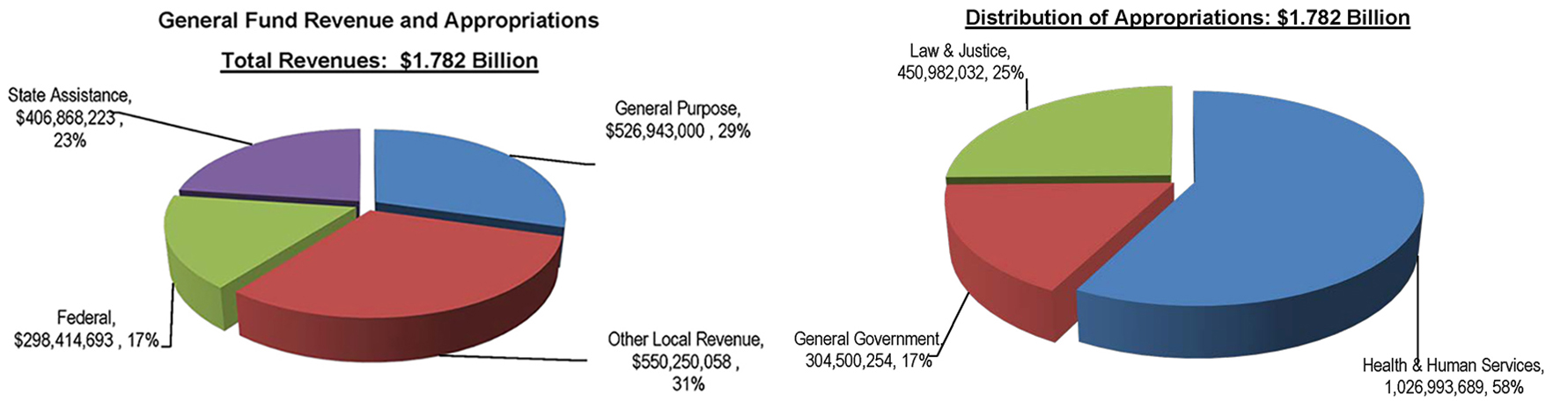
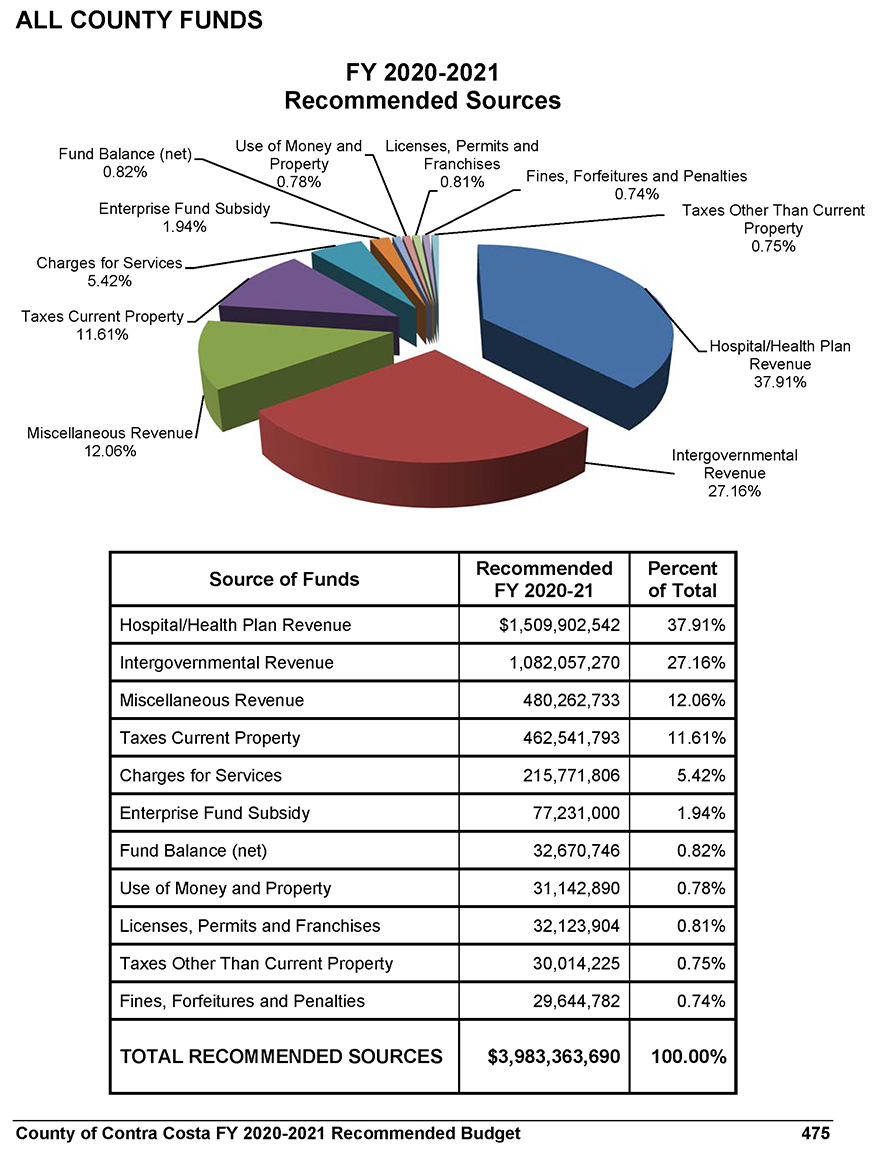
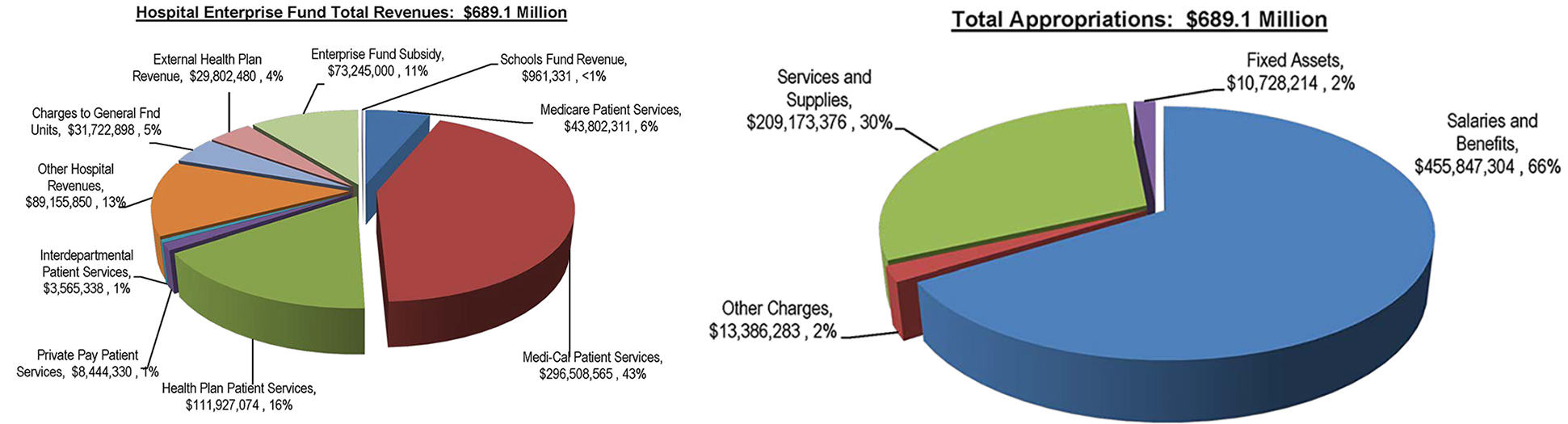
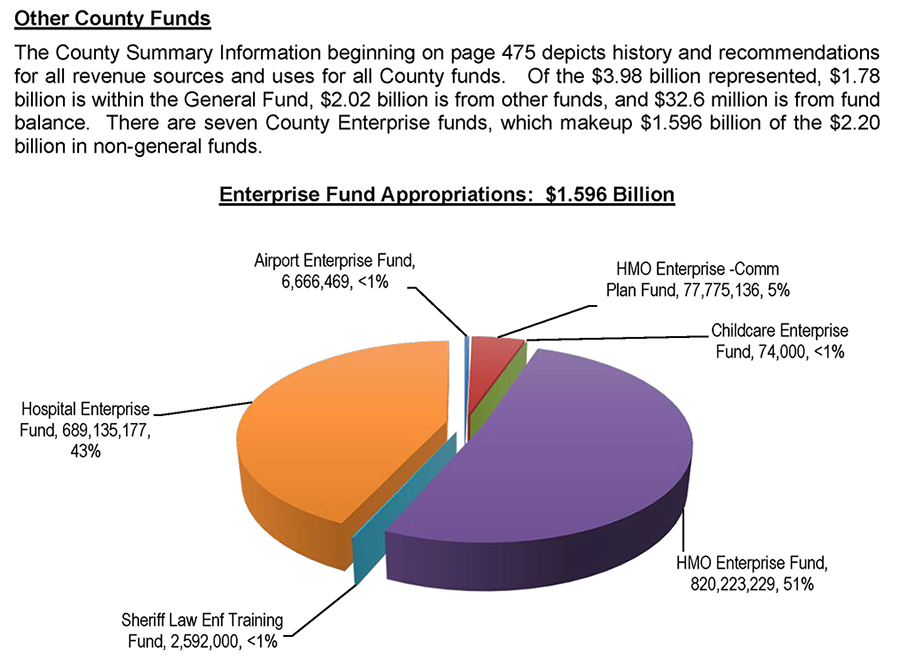
Election costs rise as Contra Costa Supervisors OK $3.6 billion 2020-2021 budget

September 16, 2020 By Publisher Leave a Comment

Source: CoCoCo

Gioia makes his support conditional on reviewing county jail facilities for closure

Includes funding for the Sheriff’s Office to hire 24 deputies for mental health duties at  Martinez jail

By Daniel Borsuk

On the same day Contra Costa County taxpayers were pinched with a new $3.6 billion 2020-2021 fiscal year budget, supervisors also unanimously approved on Tuesday  a County Clerk-Recorder’s request to boost 2021 election ballot printing and mailing costs an additional $1.8 million to a new payment limit of $6 million.

“This is going to be the costliest election year that I have experienced in my 25 year -career,” Assistant Registrar of Voters Scott O. Konopasek said in reference to the upcoming Presidential election and how the county’s contract extension with K&H Printers-Lithographers, Inc. to print and mail ballots and election pamphlets will alarmingly rise again by $8 million for elections held in 2021.

Konopasek said Governor Gavin Newsom’s Emergency Order instructing California counties election officials to mail ballots to every registered voter for the November election means an additional 160,000 Contra Costa voters, or 25 percent of all registered voters, will receive ballots in the mail thereby driving up costs linked to printing and mailing.   That Emergency Order applies to any and all elections conducted in 2021.

While supervisors ignored the Registrar of Voters expense item, they unanimously approved the $3.6 billion 2020-2021 budget that garnered the support of all the supervisors, including Supervisor John Gioia of Richmond, who several weeks ago had said he would vote against the budget when it was ready for formal adoption.  He said he now supports the budget provided supervisors study the closure of the Marsh Creek detention facility, and to have a study conducted on the future of the Orin Allen Youth Rehabilitation Facility in Byron and Juvenile Hall in Martinez.

When Supervisor Karen Mitchoff of Pleasant Hill questioned Gioia why he switched his initial negative vote on the budget, Gioia responded, “I support the county budget as a whole that is over $3 billion and as long as these three issues – Marsh Creek, Orin Allen Youth Rehabilitation Facility and Juvenile Hall are studied and come back to the supervisors for consideration.”

County Administrator David Twa said supervisors can expect Covid-19 related costs to continue to increase over the next 12 to 24 months.  The county spent $131 million overall in Covid-19 connected expenses because it operates a hospital, health services for the homeless, provides Covid-19 testing and numerous other public health services.

Twa said operating costs will increase $28.4 million because of the newly opened County Administration Building and the Emergency Operations Center/Public Safety Building, both located in Martinez.

Supervisors provided funding for the Sheriff’s Office request to hire 24 deputies for the Martinez jail to handle mental health duties, a budget item that met public criticism especially in the summer aftermath of the George Floyd murder case.

Because of rising expenses, the county has placed on the November ballot a half-cent sales tax measure, Proposition X, that county officials counts on to generate new revenues, some $81 million a year for 20 years to fund hospitals, health centers, childhood services, and other community services.

Filed Under: Finances, Government, News, Supervisors

Supervisors discuss closing Orin Allen Youth Rehab Center, tentatively place half-cent sales tax increase on November ballot on split votes

August 5, 2020 By Publisher Leave a Comment

D.A. Becton proposes closing Juvenile Hall, Supes indicate backing Sheriff’s staffing request of 25 more deputies; discuss also closing Marsh Creek Detention Facility

County will apply for $69 million in state Homekey Program funds for homeless sites in Richmond and Pittsburg

By Daniel Borsuk

Orin Allen Youth Rehabilitation Facility. Photo from website.

The Contra Costa County Board of Supervisors voted on Tuesday against keeping open the once popular Orin Allen Rehabilitation Youth Rehabilitation Center in Byron. That signaled Sheriff David Livingston’s 2021-2022 budget request to hire 25 deputies will be approved when supervisors act on the county’s proposed $3.9 billion 2020-2021 budget on Sept. 15. The motion failed on a 2-3 vote of the board.

“Every department has taken some sort of reduction,” said County Administrator David Twa, in his presentation. “There are no additional furloughs or layoffs planned.”

In addition to closing the Orin Allen Rehabilitation Center, supervisors acted to keep closed the now shuttered Marsh Creek Detention Facility on a 4-1 vote with Chair Candace Andersen vote against the motion.

In another action, supervisors placed a half-cent sales tax proposal on the November ballot with the caveat that unless the State legislature does not pass Senate Bill 1349 in the next 17 days, the supervisors will meet at a special meeting on Friday, August 21 to pull the ballot measure from the November ballot. SB 1349 would provide the $100,000 to print the ballots for the county.

Over a wave of citizen comments opposing any increased hiring at the Sheriff’s Office, Supervisors John Gioia of Richmond and Federal Glover of Pittsburg voted to keep the 60-year old Orin Allen Rehabilitation Youth Center open for at least another year so that a newly formed Reimagine Youth Justice Task Force by Contra Costa County District Attorney Diana Becton can develop its findings. She announced the formation of the task force and her desire to close the center in a press release on Tuesday.

“We have seen a lot of success at the ranch,” said Supervisor Glover. “We should think outside of the box. Ninety-nine percent of the graduates are probably successful today.”

But newly appointed Probation Department Officer Esa Ehmen Krause recommended that Orin Allen be closed, and 15 Probation Department positions be eliminated. She also recommended that the 15 youths currently housed at the facility be transferred to juvenile hall in Martinez

Krause said the decision to close the facility in far East County is tied to a declining population, better use of the existing Tamalpais Unit in Martinez, and $10 million to bring the ranch up to code.

With the average cost per incarcerated child in Contra Costa Juvenile Hall skyrocketing to over $473,000 a year, District Attorney Beckton said in a press release, “ The Reimagine Youth Justice Task Force will make explicit recommendations for financial investment in community-based services for youth instead of investing in youth prisons which have proven to result in worse outcomes for our children and families. Such an approach will aallow for critical re-investments in basic needs such as housing, mental health services, and workforce development as well as support and creation of alternatives to incarcerating children in locked facilities.”

The formation of the Reimagine Youth Justice Task Force did not sit well with several supervisors who viewed it as political intervention on the part of the District Attorney.  They felt the DA was intervening in a matter the board of supervisors should be in charge of.

DA Becton assigned her Assistant DA Venus Johnson to address the supervisors.

“I am concerned about the District Attorney’s support to close Orin Allen,” board chair Candace Andersen of Danville said.

“This is a slap in the face to probation to have this go out in a press release,” Supervisor Karen Mitchoff of Pleasant Hill said.

Throughout the 12-hour long supervisors meeting, supervisors heard from a steady stream of citizens opposed to increased funding for Sheriff Livingston’s department and heard from numerous speakers in support of keeping Orin Allen in operation.

Sheila Barnard questioned supervisors “Are you representing the best interest of our youth?”

“Do not increase funding for the sheriff,” demanded Rev. Leland Takhasi. “Look for alternatives to incarcerating our youth.”

“Because Orin Allen Ranch is an open-air environment absent of guard towers it allows the youth to change their lives, “said Walnut Creek resident Ron Brisco.

Vote 4-1 to Tentatively Place Half Cent Sales Tax Measure on November Ballot

In other action, supervisors voted 4-1 to place a half cent sales tax measure on the Nov. 3 ballot. Board Chair Andersen voted against the proposal without comment. (See related article)

The tax measure is dependent on whether the California State Legislature passes Senate Bill 1349 and Gov. Gavin Newsome signs it by August 21.  If the legislation is not passed by the legislature and signed by the governor August 21, the supervisors will have to hold a special meeting on that date to withdraw the tax measure from the Nov. 3 ballot.

County Will Apply for $69 Million of State Homekey Program Funds for Homeless Sites in Richmond and Pittsburg

Supervisors also approved a resolution  authorizing County Administrator Twa to apply for and accept up to $68,776,000 in Homekey Program grant funds from the California Department of Housing and Community Development to be used to buy property located at 3150 Garrity Way in Richmond and property at 2101 Loveridge Road in Pittsburg to provide supportive housing and support services to persons experience homelessness.

Pinole Animal Shelter Closed, 3 Fewer Animal Control Officers, ConFire Revenue Down

In other budget items, supervisors learned from Animal Services Director Beth Ward that the under-utilized Pinole shelter was closed as of July 20. Two full-time positions were eliminated because of the closure.

Ward also reported that the number of animals at the Martinez facility is down considerably.  As of July 20, the shelter had 45 dogs and 34 cats compared to 176 dogs and 190 cats that were at the shelter on the same date in 2019.

The number of animal control officers has been cut from 13 to 10, Ward said. The length of stays for an animal has decreased 60 percent, she said.

Contra Costa County Fire Protection District Chief Louis Brouchard III said EMS Fire Transport has experienced a “significant drop in revenue since March 17, 2020” because of COVID-19.

“The fiscal year 2020-2021 recommended budget anticipated $56 million in transport revenue,” he said.

In other action, supervisors voted to authorize the County Public Works Director to execute an amendment to the sublease with the State of California Employment Development Department to extend the term through January 31, 2023 for about 6,622 square feet of office space at 4071 Port Chicago Highway, Suite 250, Concord at a monthly rate of $13,112 as requested by the Employment and Human Services Department.

Allen Payton contributed to this report.


Filed Under: Animals & Pets, East County, News, Politics & Elections, Sheriff, Supervisors, Taxes

In spite of public opposition Supervisors approve COVID-19 violation ordinance, fines

July 29, 2020 By Publisher Leave a Comment

“You are not being inconvenienced that much.” – Supervisor Karen Mitchoff

  • Half-Cent Sales Tax Ballot Measure Plans Hung Up in Sacramento

  • Sheriff Continues Cooperation with ICE

By Daniel Borsuk

Over citizen objections, the Contra Costa County Board of Supervisors voted 5-0, Tuesday to approve fines for non-commercial and commercial public health violations in connection with the COVID-19 pandemic.

The new ordinance that goes into effect immediately requires citizens to wear face masks in the public and in commercial settings or one can be subject to a fine, or multiple fines.

Contra Costa County Health Services Director Anna Roth told supervisors the county needs an ordinance setting down fines because as of Tuesday the county’s COVID-19 caseload is still rising with 7,304 cases. In the county there have been 108 COVID-19 related deaths, she reported, of which 70 percent occurred in long term care facilities. County health officials have observed a sharp rise in COVID-19 cases since May. Roth pointed out the county is on the state’s COVID-19 Monitoring List.

Deputy County Health Director Randy Sawyer explained there is an “urgent need” for county supervisors to adopt an ordinance establishing fees so that county health enforcement officers can enforce public health orders especially during the current pandemic.  Citizens are not wearing masks and are not practicing social distancing, Sawyer said.

Sawyer said there are about 200 businesses that the county has ongoing public health complaint issues with the department.

Similar ordinances have recently been adopted in Marin and Napa counties, and the Contra Costa County ordinance requires persons to wear masks when engaged in noncommercial and commercial activities.  In Contra Costa, for the first noncommercial violation the fine is $100, $200 for the second violation and $500 for each additional violation within one year of the initial violation.

For commercial activity violations, the fine for the first violation is $250, $500 for a second violation, and $1,000 for each additional violation within one year of the initial violation. “If a violation continues to more than one day, each day is a separate violation,” the ordinance states.

Public Opposition to Mask Ordinance & Fines

Speakers opposing the ordinance said requiring persons to wear masks violates their Constitutional rights. “I oppose this ordinance because it violates our liberties, “said Dave Sutton. “It restricts our liberties.”

Similarly, Deborah Thompson said, “I oppose the ordinance because it is an abridgement of our liberties.”

Comments like those sparked District One Supervisor John Gioia of Richmond to say, “I am shocked by the lack of literacy and scant knowledge that people have.”

The supervisor said some people don’t understand that this virus is causing a public health crisis where this county “may soon run out of ICU beds and two thirds of the people who have died in the county lived in congregant living facilities.”

“We are out to get these numbers down,” Supervisor Karen Mitchoff of Pleasant Hill said in reference to the rising number of COVID-19 cases in the county. “A health order will do that. You are not being inconvenienced that much.”

Mitchoff, who noted Contra Costa County’s fines are less than other Bay Area county fines, said  the new ordinance will mean persons will now be required to wear a mask when they out of their house, even when they go to the fast-food drive thru. “If you don’t want to wear a mask then get used to wearing a ventilator,” the supervisor warned.

Richmond resident Edith Alderman supported the ordinance commenting,” I’m 100 percent in favor of the ordinance.  This can help get a handle on this disease.”

Speaking on behalf of the board, Chair Candace Andersen of Danville said “Many people are following the Health Order, but we need to increase our efforts together to slow the spread of COVID-19 in our community. To further our progress, to protect lives and reopen more local businesses and activities, we need a tool to send a fair message that everyone has to adhere to health orders to prevent the spread of the virus.”

“With a 14 percent unemployment rate, this is not the time for a sales tax hike”

– Board Chair Candace Andersen

Half-Cent Sales Tax Ballot Measure Plans Hung Up in Sacramento

With the legislative clock ticking in Sacramento, the supervisors plan to meet at a special teleconferenced meeting next Tuesday in order to get a status report to waive the second reading on the supervisors’ resolution calling for a Nov. 3 half cent sales tax ballot proposal.

The special meeting was called because state legislators have not convened to act on proposed legislation, especially Contra Costa County State Senator Steve Glazer’s Senate Bill 1349, a transactions and use tax law, that the supervisors need the state Legislature to pass and Governor Gavin Newsom to sign by August 18 or the supervisors’ half cent sales proposal will not appear on the November ballot.

Deputy County Administrator Tim Ewell explained without passage of SB 1349, the county will  lose $800,000 to $1 million in state revenue to cover printing costs tied to the ballot measure, but the clock is ticking and the supervisors need to have SB 1349 passed in the legislature and signed by the governor by August 18.

“I want those funds,” said supervisor Mitchoff, “but it will only move forward if the legislature acts.”

Supervisors voted 4-1, with Chair Candace Andersen of Danville casting the lone opposing vote, to move forward to meet next Tuesday.

“I will not support it” said Andersen, who also opposed the tax increase proposal at the board’s July 14 meeting.  “With a 14 percent unemployment rate, this is not the time for a sales tax hike with such high unemployment rate.”

One of the few speakers opposing the proposal Tom Townsend of El Cerrito, said, “I am taxed to the limit and I oppose the half cent sales tax.”

“I am unsure if this ballot measure will pass,” warned District 3 Supervisor Mitchoff, but she voted in favor of it anyway.

Tax proponent Supervisor Gioia said a county resident would typically pay $60 to $80 a year should the tax measure pass in November.

The proposed language for the county tax measure reads:

“To keep Contra Costa’s regional hospital open and staffed; fund community health centers; provide timely fire and emergency response; support crucial safety-net services; invest in early childhood services, shall the Contra Costa County measure levying a ½ cent sales tax, exempting food sales, providing an estimated $81,000,000 annually for 20 years that the state cannot take, requiring fiscal accountability, with funds benefitting county residents, be adopted?”

Sheriff Continues Cooperation With ICE

Sheriff David Livingston ran into criticism from the public about how the Sheriff’s Office works with the United States Immigration and Customs Enforcement (ICE) but is not expected to change his policies.

“The Sheriff continues to respond to ICE notification requests,” said Melanie Kim, a staff attorney for Advance Justice – Asian Law Caucus. “These practices are especially cruel given that COVID-19 is running rampant inside ICE facilities.  People in ICE custody are vulnerable to grave illness or death.”

The sheriff told supervisors that because of the COVID-19 hygiene practices that his officers and the inmates use at the West Contra Costa facility in Richmond and Martinez jail, there have been no reported COVID-19 cases.

The sheriff reported that in the past year his office detained for ICE enforcement purposes, 72 were Hispanic prisoners, 18 were Asian prisoners, one was a Black prisoner, three were white prisoners, and two “other” prisoners.

Sheriff Livingston said of the 95 prisoners reported to ICE, 71 were charged for miscellaneous felonies, four for penal or murder, five for robbery, two for car jackings, and for 11 for assaults with deadly weapons.

While there were a number of critics of the Sheriff’s Office asking that the Board of Supervisors to reduce funding for the upcoming 2020-2021 fiscal year, Karen Clarkson was one of few backers of Sheriff Livingston’s department requesting that funding remain unchanged. “I support the Sheriff,” she said. “It is an unsafe practice to defund the Sheriff.”

“This county should be safe for everyone, whether they are documented or undocumented,” said Anisha Walker, who requested that supervisors cut funds to the Sheriff’s Office.

“I have no sympathy for those who break the law and are violent criminals, “said Supervisor Mitchoff. “I support the sheriff. And I support social justice and equality at a time we are in a COVID -19 pandemic.”

Filed Under: Crime, Health, News, Sheriff, Supervisors, Taxes

Contra Costa Supervisors approve fines of up to $500 and $1,000 for health order violations

July 28, 2020 By Publisher 1 Comment

Non-commercial activities: $100, $200 and $500 fines

Commercial activities: $250, $500 and $1,000 fines.

If a violation continues for more than one day, each day is a separate violation. 

By Susan Shiu, Director, Office of Communications and Media, Contra Costa County

(Martinez, CA) – On July 28, 2020, the Contra Costa County Board of Supervisors used its emergency powers under state law to pass Urgency Ordinance No. 2020-21 that establishes administrative fines for violations of public health orders pertaining to the COVID-19 pandemic.

The Board unanimously determined the ordinance, effective immediately, is necessary to provide an alternative to criminal enforcement of public health orders that will augment the ability of the County and other local agencies to ensure compliance with public health orders and combat the spread of COVID-19.

“Many people are following the Health Orders, but we need to increase our efforts together to slow the spread of COVID-19 in our community,” said Board Chair, Supervisor Candace Andersen. “To further our progress to protect lives and reopen more local businesses and activities, we need a tool to send a fair message that everyone has to adhere to health orders to prevent the spread of the virus.”

For health order violations involving non-commercial activities, the amount of the fine is $100 for a first violation, $200 for a second violation, and $500 for each additional violation within one year of the initial violation. For violations involving commercial activity, the amount of the fine is $250 for a first violation, $500 for a second violation, and $1,000 for each additional violation within one year of the initial violation. If a violation continues for more than one day, each day is a separate violation.

Throughout this pandemic, Contra Costa leaders and law enforcement have encouraged “educational enforcement” before issuing penalties. Before issuing a Notice of Fine, an enforcement officer can first issue a Notice of Violation, which gives a person or business up to two days to correct a violation. In cases where the enforcement officer determines that issuing a Notice of Violation is unnecessary or ineffective, the enforcement officer can immediately issue a Notice of Fine.

Because Public Health Officer orders apply countywide, this ordinance also applies countywide under Government Code section 8634. The ordinance may be enforced in cities and special districts by officials designated by those agencies to enforce the ordinance.

For more information, read Ordinance No. 2020-21 (PDF) available on the County website.

Filed Under: Crime, Health, News, Supervisors

Contra Costa Supervisors to consider extending rent, eviction moratorium during special meeting Tuesday

July 13, 2020 By Publisher Leave a Comment

By Allen Payton

In response to Gov. Newsom’s order on June 30 giving counties and cities the authority to extend their moratoriums on rent payments and evictions to Sept. 30, the Contra Costa County Board of Supervisors will consider extending the county’s moratorium during their meeting on Tuesday, July 14. The current moratorium expires on Wednesday, July 15. (See agenda item D9)

The proposed ordinance offers a variety of reasons for extending the moratorium, including:

“The COVID-19 pandemic and associated public health orders have resulted in the closure of many local small businesses, and have imposed extreme restrictions on other local small businesses.

The COVID-19 pandemic and associated public health orders are expected to result in a loss of income to a widespread portion of the local population that depend on wages or business income to pay rent and result in medical expenses for certain Contra Costa County residents.

Contra Costa County and the cities within the County are also experiencing a housing affordability crisis, which is driving homelessness and displacement of residents.

Many County residents are experiencing or will experience losses of income as a result of the local emergency and shelter-in-place orders, hindering their ability to pay rent and leaving them vulnerable to eviction.

Many of the County’s renters are rent-burdened, paying over 30 percent of their income on rent, and some renters are severely rent-burdened, paying over 50 percent of their income on rent, which leaves less money for families to spend on other necessities like food, healthcare, transportation, and education.

Without local protection, eviction notices, including notices for failure to pay rent, are likely to surge as residents and businesses are unable to earn income due to the COVID19 pandemic, or are forced to pay medical expenses associated with the COVID-19 pandemic; and

Housing displacement due to rent increases and evictions occurring during the local emergency would hinder individuals from complying with state and local directives to shelter at home, and would lead to increased spread of COVID-19, overburdening the healthcare delivery system and potentially resulting in greater loss of life.”

If the board members vote to extend the moratorium, they will have to choose which date, up to September 30th, they want it extended.

The meeting begins at 8:30 a.m. and can be viewed live on Comcast Cable 27, ATT/U-Verse Channel 99, and WAVE Channel 32, and can be seen live online at www.contracosta.ca.gov.

Those who wish to address the board during public comment or with respect to any item that is on the agenda may call in during the meeting by dialing 888-251-2949 followed by the access code 1672589#. To indicate you wish to speak on an agenda item, please push “#2” on your phone.

Filed Under: Finances, Government, News, Supervisors

Supervisors, protesters overlook Grand Jury report calling for increased Sheriff, police staffing in Contra Costa

June 27, 2020 By Publisher Leave a Comment

Supes close to forming Office on Racial Justice and Equity; hear from County Clerk-Registrar of Voters urging vote-by-mail for November Election

By Daniel Borsuk

While critics of Contra Costa County Sheriff David Livingston and his department again blasted the Contra Costa County Board of Supervisors with complaints over the $2.8 million in proposed increased funding for the 2020-2021 fiscal year at their meeting Tuesday, no one paid any attention to an important Grand Jury report on “Police Department Staffing” that supervisors unanimously approved as a consent item during the same meeting.

In other action, Supervisors Federal Glover of Pittsburg and John Gioia of Richmond announced the potential formation of a County Office of Racial Justice and Equity for the upcoming 2020-2021 fiscal year. The board also received a progress report on the 2020 November election from Contra Costa County Clerk-Recorder Debi Cooper that heavily endorsed voters to mail ballots.

Grand Jury Report on Police Staffing

“The Grand Jury found that relatively low authorized sworn officer levels and ongoing unfilled officer positions contribute to mandatory officer overtime, reduced level of police services such as traffic enforcement and school resource officers, and longer response times,” the Grand Jury report stated.

The Grand Jury report found that the Sheriff’s Office and 15 municipal police departments have difficulty recruiting, hiring and retaining officers. “Fewer applicants than in the past are applying to law enforcement due to different career expectations, the availability of less dangerous jobs, and negative perceptions of policing,” the report stated.

The Contra Costa Herald contacted Sheriff Livingston’s office for comment about the Grand Jury’s findings, but there was no comment from the Sheriff’s Office by deadline

“Accountability is needed,” demanded Pittsburg resident Don Hernandez. “You guys (i.e., the Board of Supervisors) need to be part of the solution rather than part of the problem.”

Hernandez was one of more than 18 speakers opposing increased funding for the Sheriff’s Office, but one unidentified caller supported extra funding for the sheriff saying without extra resources sheriff deputies will not be able to properly respond to emergencies when they arise.

County worker Christopher Brown said “Racism is systemic. Something needs to change. Mental health is a huge issue. Mental health deserves to be a bigger part of the budget, not the sheriff.”

“We need a criminal justice system that does not go backwards. We need a system that solves problems.” said Walnut Creek resident Karen Perkins. “I urge you to drive away funds from the Sheriff’s Office and form a racial justice commission.”

Based on 2019-2020 data, the Sheriff’s Office and 15 cities are below the state ratio of 1.48 patrol officers per 1,000 residents. Only the cities of El Cerrito with a 1.77 ratio and San Pablo with a 1.85 ratio were above the state average. The Sheriff’s Office had a 1.06 ratio.

The report also found that every police department except Clayton, Moraga, Oakley and Walnut Creek had unfilled positions mainly as a result of retirements, officers on leave, lateral transfers of the department and resignations.

The Sheriff’s Office had the most number of unfilled positions due to resignations at 65, with Richmond having 15 unfilled positions, Antioch 10 unfilled positions, Martinez and Concord each six unfilled positions, El Cerrito 5 unfilled positions, Brentwood and San Ramon each 4 unfilled positions, Pleasant Hill 3 unfilled positions, San Pablo 2 unfilled positions, and Pinole, Pittsburg, Lafayette and Danville with 1 unfilled position each.

Even then, supervisors received a number of complaints from citizens that the sheriff does not deserve a proposed $2.8 million increase in 2020-21 funding, even though later on during the meeting County Administrator David Twa forecast that the Sheriff’s Office might lose $13 million in state Proposition 72 funds later this year.

“The sheriff will have less money next year,” said Twa, who gave a gloomy fiscal forecast. The District Attorney Office’s budget might be down $6.2 million, he predicted. The county hospital is losing $60 million in revenue and earlier this month the county laid off 30 library workers.

Yet, with all this gloomy financial news, Twa announced that after two years of labor negotiations, the county and the 9,000 members of the In-Home Supportive Services Public Authority and SEIU Local 2015 have agreed to a new labor pact that ends in 2022.

Proposed Office of Racial Justice and Equity Moves Forward

After listening an hour-long presentation from supporters for the formation of a County Office of Racial Justice and Equity, Supervisor Federal Glover of Pittsburg and John Gioia of Richmond said they plan to soon present to the full Board a new Office on Racial Justice and Equity.

Both supervisors serve on the Public Protection Committee where the proposal to form an Office on Racial Justice and Equity Is taking shape.

“One thing we will bring is the discussion of the formation of an Office of Racial Justice and Equity. Your voice has been heard. We plan to bring this proposal before the Board in the near future,” said Glover.

Gioia said it is possible supervisors can consider a proposed office at its next board meeting on July 14. “It’s a matter of listening to the community in Contra Costa County. There should be a community process on how it should be done. There will be a lot more community input.”

In what is shaping up to be a difficult fiscal year, proponents of an Office of Racial Justice and Equity called on Supervisors to defund the Sheriff’s Office and transfer those funds to the new office to assist residents of color with a 14.5 percent unemployment rate in Contra Costa County on April 2020 compared to 3.1 percent on February 2020.

Additionally, 45 percent of African Americans, 57 percent of Latinx, 26 percent Asian/Pacific Islanders, 29 percent Native Americans and 20 percent White households were financially precarious before the pandemic, according to an Insight Center study.

County Recorder-Registrar of Voters Urges Vote by Mail

Contra Costa County Recorder-Registrar of Voters Debi Cooper informed supervisors it is untrue that voting by mail promotes fraud. “Despite what you hear, voting my mail does not increase fraud, she said. Outreach and education to vote by mail has been increased. The postage is free.”

Cooper described how the department she leads that will have 45 drop boxes and six polling locations throughout the County on Nov. 3. She said voting by mail will be the safest way to vote because COVID-19 will still be present.

Cooper expected to mail 700,000 ballots and more than 500,000 ballots will be returned by voters.

“I find it unacceptable to have six polling locations in the county,” said supervisor Gioia of Richmond. “I would reevaluate churches. Churches would be willing to be polling locations and to have equipment on locations for four days.

County elections officials expect about 150,000 voters will show up at the polls to cast ballots. There were 85,000 voters at the polls in the March election.

Bowling Alleys, Bars, Hotels to Open July 1 – Possibly

With word that the Contra Costa County Department of Public Health reported 34 new COVID-19 cases last week, department director Anna Roth said the county is still moving ahead to open hotels, bowling alleys and bars on July 1 and starting on July 15 movie theaters, card rooms and banks will open.

But the news was not all that great. The county is on the state watch list because of a spike in cases. Last week the county reported 34 new COVID-19 cases bringing the county’s grand total to 2,454 cases. There have been 52 deaths in the county. “Clearly there’s been an increase,” said Roth, who attributed the rise to persons in low income communities and living in long term care facilities.

Deputy County Health Director Dr. Sarah Levine said there has been an increase in the number of young patients being diagnosed positive with COVID-19 mainly because they do not practice the main hygiene principles – constantly washing hands, covering mouths, social distance, and staying home.

However, based on the announcement by the Contra Costa Health Services on Friday, that date for those activities is in doubt. (Please see related article).

Filed Under: Government, News, Supervisors

Supervisors hear protests over proposed $2.8 million Sheriff’s Office increase, layoff librarians, reduce library hours

June 17, 2020 By Publisher Leave a Comment

OK spending $10,000 on sales tax poll

By Daniel Borsuk

The Contra Costa County Board of Supervisors got an earful of complaints on Tuesday from citizens upset over a proposal to award Sheriff David O. Livingston’s department a $2.8 million pay raise up and a department request to buy a $275,000 LDV Custom Specialty Vehicle at a time library hours are being slashed and librarians are getting pink slips.

At the last minute, a proposal to layoff up 16 Department of Child Support Services workers was scuttled from the agenda when county officials learned that the Governor’s Office has proposed state funding that could keep the child support services positions on the payroll. County officials were unaware of the new state funding source before Tuesday’s meeting and details were not provided at Tuesday’s meeting.

In the Black Lives Matter era, supervisors listened via teleconference how speakers objected to the county’s proposal to give Sheriff Livingston, who has been the target of numerous complaints from citizens about how his deputies abuse the rights of male and female prisoners of color, should not receive a $2.8 million increase for fiscal year 2020/2021 when many other county services like libraries are taking funding cuts.

County Administrator David Twa said because of the uncertainty of the state’s fiscal situation due to COVID-19, the supervisors will not get around to passing a 2020-2021 budget until August, not June.

Speakers also opposed Sheriff Livingston’s request to use a $275,000 2017-2018 State Homeland Security Grant Program to buy a 2019 or 2020 Ford F550 Logistics Support Vehicle.

“Now is not the time to increase the Sheriff’s budget,” protested Harry Baker of Pleasant Hill, who had demonstrated a day earlier in front of Sheriff Livingston’s Danville home. Speaking to supervisors’ telephone, Baker said. “Keep the libraries open. Police brutality is on the rise. Don’t increase the sheriff’s budget.”

“You should not increase the sheriff’s budget when you’re making cuts in the library and child support services,” complained Francisco Torrez of Pittsburg. “Libraries are part of our democratic process. Hospitals are needed in West county   Talk about militarization. We don’t have any faith in our Sheriff.”

“I oppose increasing the Sheriff’s budget,” protested Rachel Cohen of Danville. “He has proven to be a racist. Juvenile Hall should be closed. Fund social programs, public housing, libraries. Look at Minneapolis, San Francisco, Portland, Oregon, at what police should look like.”

Several speakers like Raymond Hutchins called on supervisors Diane Burgis of Brentwood, Karen Mitchoff of Pleasant Hill and Federal Glover of Pittsburg for accepting collectively $22,500 in campaign funds from the Contra Costa County Sheriff’s Association.

None of the three supervisors addressed the charge about accepting sheriff’s association campaign funds, especially Glover who faces a runoff election this November against county assessor Gus Kramer.

Neither the sheriff nor a spokesman was available to comment about the protestor’s statements at Tuesday’s meeting.

Concerning the sheriff’s request for a $275,000 LDV Custom Specialty Vehicle, speakers questioned why the Sheriff’s Office needs an armored vehicle for search and rescue purposes and other speakers thought the vehicle will be improperly used by deputies to patrol peaceful BLM demonstrations.

“This truck will used to respond to wildfires,” said Supervisor Mitchoff. “This is an armored vehicle. Its main use is for support.”

Supervisors unanimously approved the state grant for the sheriff to buy the CSV.

Libraries Reduce Hours, Cut Staff

County librarian Melinda Cervantes relayed the bad news to supervisors that because of the dwindling revenues, several cities have to cutback operating hours to the county’s mandatory 35 hours per week schedule. As a result of the reduced operating hours, the library is laying off 32 librarians, mostly library assistant -journey level employees.

The Brentwood library will cut hours per week from 56 to 35, Clayton from 56 to 35 hours, Concord from 52 to 48 hours, Danville from 60 to 56 hours, El Cerrito from 50 to 46 hours, Hercules from 43 to 39 hours, Lafayette from 58 to 54 hours, Moraga from 39 hours to 35 hours, Orinda from 60 per week to 56, San Pablo will reduce hours from 47 to 35, and San Ramon from 58 hours to 54 hours.

County Administrator Twa said the librarians will be offered positions elsewhere in the county, most likely clerical positions.

Supervisors voted 5-0 in approving the reduction in library operations and staffing.

Agree to Spend $10,000 on Sales Tax Poll

In the county’s quest to draw additional funds to support public services, the supervisors agreed on a 4-1 vote to spend $10,000 for a polling firm to test prospective voters whether a tax increase could muster voter approval this November.

Board chair Candace Andersen of Danville cast the lone dissenting vote on the proposal suggested by District 1 Supervisor John Gioia of Richmond. Some $21,000 has already been raised to conduct a poll from labor unions and other organizations.

Certain features of the 75-word poll would test the public’s opinion about the pandemic, willingness to pay more in taxes in the areas of hospitals, sheriff services, abuse, senior services, mental health, youth services, and criticism in the community.

Hair Salons, Barber Shops Allowed to Open

Supervisors were informed from Deputy Public Health Officer Dr. Tom Warren that the county is taking another step toward alignment with the state’s guidance on opening businesses and activities, while recommending that residents stay home as much as possible and take steps to protect themselves and each other when leaving the house.

Dr. Warren told supervisors the county’s health order now allows hair salons and barber shops to reopen for business beginning Wednesday morning. They must follow state health guidance to reduce the risk of spreading COVID-19.

The new order also increases the number of swimmers who may share a pool to 1 person per 75 square feet, as allowed by the state. The social distancing order also allows as many as 100 persons to attend a funeral or other religious service at an indoor place of worship, in line with the state health guidance.

Planning Review to Begin on Walnut Creek Area Senior Development

The Contra Costa County Conservation & Development Department got the green light to begin general plan amendment study of Spieker Senior Development Partner’s congregate care/senior housing development (CCSHD) in unincorporated Walnut Creek, at the end of Seven Hills Ranch Road.

The project is regulated by the State of California Department of Social Services to provide lifetime occupancy and support services, instead of ownership interests.

The development consists of two independent living units providing about 351 total units and a health care center with 100 total units – 50 units for skilled nursing, 20 units for memory care and 30 units for assisted living.

The proposed development would provide a clubhouse, recreation building, parking, and maintenance buildings.

Filed Under: Finances, Library, News, Sheriff, Supervisors

Civil rights group sends formal legal letter to Contra Costa supervisors to ensure county stops violating churches’ constitutional rights

June 11, 2020 By Publisher Leave a Comment

Claims “Restricting Religious Gatherings to 12 Participants Unconstitutionally Violates Right to Equal Protection”

“…the County’s Order violates federal and state law while unashamedly discriminating against houses of worship.”

On Wednesday, June 10, 2020 a formal legal letter was by attorney Harmeet Dhillon, founder of the Center for American Liberty, to members of the Contra Costa County Board of Supervisors, to ensure county health services staff follows through with their commitment to change the requirement to a recommendation that places of worship gather names and contact information of those who attend services and provide it to the county upon request. (See related articles, here, here and here). In addition, the letter points out that the county’s health order limiting indoor services to 12 people also violates the Constitution. – 2020.06.10_HDhillon CAL Letter to Contra Costa County

June 10, 2020

Contra Costa County Board of Supervisors

651 Pine Street

Martinez, CA 94553

Re: Unconstitutional Contra Costa Health Services Order No. HO-COVID19-17, Specifically Regarding “Additional Businesses” (section 3 of Appendix C-1, Updated June 5, 2020)

Dear Board of Supervisors:

We write today, on behalf of clients in Contra Costa County, to demand the immediate rescission of Contra Costa Health Services Order NO. HO-COVID19-17 (the “Order”). The Order is concerning for two reasons: (1) Its requirement that houses of worship—and only houses of worship—keep and upon request disclose “a record of attendance” to Contra Costa Health Services violates both state and federally protected rights of associational privacy; (2) Restricting religious gatherings to no more than 12 participants violates First and Fourteenth Amendment protection. And while we appreciate the County’s recent announcement that it plans to revise its requirement that houses of worship keep and disclose attendance lists, until such plans manifest, we reiterate our objection over its current text.

  1. Restricting Religious Gatherings to 12 Participants Unconstitutionally Violates First Amendment Rights

The First Amendment to the U.S. Constitution prohibits government actors from enforcing any “law respecting an establishment of religion, or prohibiting the free exercise thereof.” U. S. Const. amend. I; see also Cantwell v. Connecticut, 310 U.S. 296, 303 (1940) (applying the First Amendment to the States through the Fourteenth Amendment). Under strict scrutiny, the government cannot burden religious activity unless it first establishes (1) a compelling interest for imposing such burdens, and (2) that the burdens are the “least restrictive means” necessary to further that compelling interest. Federal courts routinely enjoin the enforcement of laws and policies under this standard. See e.g., Church of the Lukumi Babalu Aye, Inc. v. City of Hialeah 508 U.S. 520, 524 (1993).

The County’s Order severely burdens religious expression. The Order’s restriction on indoor religious services—limiting the number of participants to 12 persons or 25% of the building’s capacity, whichever is less—does not survive exacting scrutiny in that it is not the least restrictive means to accomplish the County’s interest in public health. Simply put, there are better ways for the County to accomplish its interest in public health that do not burden religious expression as much. For example, restricting participation on a percentage basis only—with respect to facility seating capacity—is a better solution. Twelve people in a sanctuary that holds one thousand looks very different from twelve people in a sanctuary that holds one hundred people.

In other words, percentage-based restrictions accommodate larger houses of worship while satisfying the County’s interest in public health and social distancing.

  1. Restricting Religious Gatherings to 12 Participants Unconstitutionally Violates Right to Equal Protection

The Fourteenth Amendment of the Constitution provides that “[n]o State shall . . . deny to any person within its jurisdiction the equal protection of the laws.” U.S. Const. amend. XIV, § 1.

Equal protection requires the state to govern impartially—not draw arbitrary distinctions between

individuals based solely on differences that are irrelevant to a legitimate governmental objection. City of Cleburne, Tex. v. Cleburne Living Ctr., 473 U.S. 432, 446 (1985).

Here, the County’s 12-person limit on religious gatherings is nothing if not arbitrary. This is more restrictive than statewide health guidelines, according to the California Department of Health for places of worship, which currently limits attendance to 25% of building capacity or a maximum of 100 attendees, whichever is less; it is unclear where Contra Costa County’s “12 person” idea originates.

Additionally, no other establishment in Contra Costa County is subject to these more restrictive and draconian requirements. Costco, laundromats, marijuana dispensaries, and countless other purely secular entities are not burdened by this arbitrary, 12-person limitation.

On April 14, 2020, the United States Attorney General, William Barr, issued a statement addressing the disparate treatment being afforded to houses of worship.

As we explain in the Statement of Interest, where a state has not acted evenhandedly, it must have a compelling reason to impose restrictions on places of worship and must ensure that those restrictions are narrowly tailored to advance its compelling interest. While we believe that during this period there is a sufficient basis for the social distancing rules that have been put in place, the scope and justification of restrictions beyond that will have to be assessed based on the circumstances as they evolve.

Religion and religious worship continue to be central to the lives of millions of Americans. This is true more so than ever during this difficult time. The pandemic has changed the ways Americans live their lives. Religious communities have rallied to the critical need to protect the community from the spread of this disease by making services available online and in ways that otherwise comply with social distancing guidelines.

The County may not treat houses of worship as second class entities; at a minimum, it must treat them equitably with respect to secular counterpart. Contra Costa Health Services Order NO. HO-COVID19-17 does the opposite—it targets houses of worship with more burdensome restrictions.

III. The Order Infringes Upon Constitutionally Protected Right to Privacy Under State Law

The right to privacy is an inalienable right under California law.3 This privacy interest irrefutably extends to participation in religious gatherings.

In Church of Hakeem, Inc. v. Superior Court, Alameda County, 110 Cal. App. 3d 384 (Ct. App. 1980), the court expressly declined to mandate disclosure of member names and addresses, even after allegations of criminal activity or wrongdoing by the church. In City of Carmel-by-the-Sea v. Young, 2 Cal. 3d 259 (Ct. App. 1970), the court affirmed a list of freedoms afforded constitutional protections, such as the freedom of association and privacy in one’s associations, encompassing privacy of the membership lists of a constitutionally valid organization. In Pacific Union Club v. Superior Court, 232 Cal. App 3d 60 (Ct. App. 1991), the court provided a robust analysis of associational rights and ultimately upheld a private club’s right not to disclose member lists.

Applied here, Contra Costa County’s Order requiring houses of worship to create and preserve the names and contact information of those in attendance at a worship service or ceremony, and then disclose such information “immediately upon request” unconstitutionally violates privacy rights while chilling religious expression. Whether gathering for political, social, or religious reasons, the right of association is sacrosanct. Unfortunately, the County’s Order deprives Californians their right to pray, worship, repent, and seek spiritual guidance privately. Rather, the Order subjects their most intimate religious activities to potential publication.

3 “All people are by nature free and independent and have inalienable rights. Among these are enjoying and defending life and liberty, acquiring, possessing, and protecting property, and pursuing and obtaining safety, happiness, and privacy.” Cal. Const. Art. 1 § 1
  1. The Order Violates Right to Privacy Protected by Federal Law

The “Court has recognized the vital relationship between freedom to associate and privacy in one’s associations.” Nat’l Ass’n for Advancement of Colored People v. State of Ala. Ex rel. Patterson, 357 U.S. 449, 462 (1958). Citing American Communications Ass’n, C.I.O., v Douds, 339 U.S. 382, 402 (1950), the Court explained,

‘A requirement that adherents of particular religious faiths or political parties wear identifying arm-bands, for example, is obviously of this nature.’ Compelled disclosure of membership in an organization engaged in advocacy of particular beliefs is of the same order. Inviolability of privacy in group association may in many circumstances be indispensable to preservation of freedom of association, particular where a group espouses dissident beliefs.

Here, Contra Costa County’s Order tramples Californians’ right to privacy and in doing so, violates the Due Process Clause. Similar to the state of Alabama in NAACP v. Alabama, Contra County is requiring houses of worship to disclose the identities of congregants gathering to worship. And similar to the state of Alabama, this mandatory disclosure of religious expression “curtails the freedom to associate,” “denying “the ‘liberty’ assured by the Due Process Clause of the Fourteenth Amendment,” and is “subject to the closest scrutiny.” Id. at 460-61.

  1. Attendance Recordation Requirement Violates Equal Protection Protected by Federal Law.

By the Order’s express terms, the Order discriminates against places of worship by requiring places of worship to create and maintain attendee lists, yet the Order places no other such burdens on any other non-religious establishment whatsoever. As the United States Supreme Court has noted, “a law burdening religious practice that is not neutral or not of general application must undergo the most rigorous of scrutiny.” Church of the Lukumi Babalu Aye, Inc. v. Hialeah, 508 U.S. 520, 546 (1993). Further, “A law is not generally applicable if its prohibitions substantially under include non-religiously motivated conduct that might endanger the same governmental interest that the law is designed to protect.” Stormans, Inc. v. Wiesman, 794 F.3d 1064, 1079 (9th Cir. 2015) (citing Lukumi, 508 U.S. at 542–46). So, “In other words, if a law pursues the government’s interest ‘only against conduct motivated by religious belief,’ but fails to include in its prohibitions substantial, comparable secular conduct that would similarly threaten the government’s interest, then the law is not generally applicable.” Id.

The County fails this standard. Houses of worship are uniquely burdened by this public disclosure requirement. And again, no other entity appears to be subjected to this standard.

In conclusion, we believe the County’s Order violates federal and state law while unashamedly discriminating against houses of worship. For these reasons, the Center for American Liberty respectfully requests that Contra Costa Health Services Order NO. HO-COVID19-17, requiring houses of worship to record and disclosure attendance at religious services, be either rescinded or amended to cure its constitutional defects. We look forward to hearing your response.

Regards,

Harmeet K. Dhillon

cc: John Gioia, Candace Anderson, Diane Burgis, Karen Mitchoff, Federal D. Glover

Filed Under: Faith, Health, Legal, News, Supervisors

New Contra Costa health order requires churches gather names and contact info of all worship service attendees and give it to county upon demand

June 6, 2020 By Publisher 41 Comments

By Allen Payton

In his Friday, June 5, 2020 order, Contra Costa County Health Officer Dr. Chris Farnitano now allows religious services to hold outdoor worship services of up to 100 people and indoor worship services of up to 12 people. (See related article)

However, buried deep within the order, in Section 3, Subsection B3 of “Appendix C1 – Additional Businesses” the order requires “A record of attendance, including the names and contact information for each attendee at a service or ceremony, must be created and preserved by the Place of Worship for a minimum of 14 days, and provided to Contra Costa Health Services immediately upon request in the event that a COVID-19 case is linked to the event.”

An email was sent to all five members of the County Board of Supervisors and county health services communications staff, in an attempt to reach Dr. Farnitano, Saturday evening with the following questions.

  • Are you also requiring protest organizers to provide a list of those who attend them?
  • Or restaurants to provide you a list of diners who enjoy outdoor dining at their locations?
  • How would anyone know a COVID-19 case was linked to an outdoor worship service of up to 100 people or an indoor one of up to 12 people?
  • Don’t you think you’ve infringed on the First Amendment rights of people of faith in our county enough already?
  • Don’t you think this goes way too far?
  • Was the county counsel consulted before this was included in the order?

Four of the members of the board were also sent text messages asking them to check their emails for the message.

Supervisor John Gioia, who was an attorney before being elected to the board in 1998, responded first via text message with, “Yes. It’s to keep track of people who are in contact with someone who tests positive. For contact tracing. And have them isolate for 14 days if they test positive.”

When asked again if protesters are required to give their names and information and what about restaurants that serve outdoor diners, he simply responded, “It’s a fine balance. I understand the arguments on both sides.”

Board Chair Candace Andersen responded by email with, “Karen (Mitchoff) and I chair at COVID Ad Hoc Committee each Thursday at 1:30 pm (available to all via Zoom). This week we had Dr. Farnitano explain this provision at our meeting. It’s simply there so that if there is a COVID outbreak, a church could make the names of attendees available so that they could be traced/tracked and notified that they may have been exposed. The only time these names would be requested is if there was, in fact, someone who came down with COVID in the congregation.”

“In a workplace or at a school the Health Department would also request the names of everyone who was present and exposed to someone who tested positive for COVID. In those settings the names would already be available because of the nature of the business,” she continued. “I will ask our Health Team to put an FAQ up so that its purpose can be clarified.”

In response, another email was sent to Andersen, Mitchoff, and the county health services communications staff, asking for answers to the questions from the first email that were not answered by Andersen.

The requirement from the June 5th order was shared on social media and almost all the comments about it were negative such as, “Do businesses with thousands of people going in and out need to record all of this? I go to many businesses and my name is never recorded, unless it is a dentist or something,” and “That is so crazy…are we still in the USA? Or is this a bad dream?”

Another commenter asked, “How about the names of the thousands of…protestors before they go out and the looters too?” Another comment reads, “I’ve wondered how they are tracking all the people at Walmart, Target and Home Depot. They don’t take attendance there.”

“Ridiculous! Control! Why not other businesses? Only churches?” asked another commenter. “I won’t attend until that changes. My name isn’t going on any list,” wrote another.

One pastor wrote, “That’s too far” and another wrote, “I’m not doing that. They don’t do that with Walmart, Home Depot, etc.”

The Bill of Rights are limitations on the power of government. It can be argued that the requirement in the county’s health order violates both the First and Fourth Amendment rights religion, peaceful assembly and privacy, of both the worship service attendees and those of the places of worship.

The First Amendment mentions religion first in the list of rights, because that is the first reason our nation was founded, going back to the Pilgrims in 1620. It reads “Congress shall make no law respecting an establishment of religion, or prohibiting the free exercise thereof; or abridging the freedom of speech, or of the press; or the right of the people peaceably to assemble, and to petition the Government for a redress of grievances.” That applies to any state law, county or city ordinance, regulation or order, as well.

The Fourth Amendment refers to what is described as the right to privacy. It reads, “The right of the people to be secure in their persons, houses, papers, and effects, against unreasonable searches and seizures, shall not be violated, and no Warrants shall issue, but upon probable cause, supported by Oath or affirmation, and particularly describing the place to be searched, and the persons or things to be seized.” So, a church or other place of worship could require the county to provide a warrant to obtain the information the order requires.

6/7/20 UPDATE: Chair Andersen Responds

In an email received by the Herald on Sunday afternoon, June 7, Board of Supervisors Chair Candace Andersen offered the following responses to some of the questions posed to her and the rest of the board members and Dr. Farnitano:

“How would anyone know a COVID-19 case was linked to an outdoor worship service of up to 100 people or an indoor one of up to 12 people? That’s why we have contract tracing in place. We would track/trace people at both venues to make sure others who were exposed are tested, thus preventing a serious outbreak.

Don’t you think you’ve infringed on the First Amendment rights of people of faith in our county enough already? In a worldwide pandemic of this scope we are continually balancing the health of the community versus any limitations we need to impose upon the public. I really miss going to church. For my entire life I have gone every single Sunday unless I was home sick. However, I can see how it is for the greater good to NOT have live church services where we could potentially be exposing each other to a horrible virus. And, I continue to worship at home with my family, with fellow church members via Zoom and YouTube, through reading scriptures, listening to uplifting music, and finding new ways to connect spiritually. Yes, it’s different than it was, but I also know it is only temporary. More importantly, “the State” is not telling me how or who I should be worshipping, only that it is unsafe to gather as a congregation right now. As you know, the State Supreme Court has agreed that in this emergency we’re in, this is an acceptable limitation.

Don’t you think this goes way too far? Was the county counsel consulted before this was included in the order? All Health Orders have County Counsel’s review before they are implemented. I would be concerned if churches were mandated to report attendance each week, but they’re not. No one is reviewing the attendance or calling out who is or is not there. Churches are just being asked to be in a position to identify who was present at a service so that if there is an outbreak, the affected people can be notified and tested.”

However, the recent ruling in the case before the Supreme Court had nothing to do with government requiring places of worship to collect the names and contact information of those who attend worship services and provide it upon request.

A more complete question was sent to her and Dr. Farnitano asking, “how would anyone know a COVID-19 case was linked to an outdoor worship service of up to 100 people or an indoor one of up to 12 people if that same attendee participated in a number of other activities, both indoor and outdoor, during the week?

Possible legal action can be expected against the county in the very near future.

Please check back later for any updates to this report.

Filed Under: Faith, Health, News, Supervisors

County Supervisors pass local emergency proclamation and countywide curfew order beginning tonight at 8 p.m. due to civil unrest

June 2, 2020 By Publisher 1 Comment

Applies to everyone; but cities can have more stringent terms and stricter time limits

By Susan Shiu, Director, Office of Communications and Media, Contra Costa County

The Contra Costa County Board of Supervisors unanimously passed a proclamation of local emergency, Tuesday morning, June 2, 2020, in response to civil disturbances after peaceful protests in the county following George Floyd’s death in Minneapolis. The Board also adopted an order imposing a curfew in Contra Costa County due to civil unrest to begin Tuesday, June 2, 2020 at 8:00 pm. The curfew requires people in the county to stay indoors from 8:00 pm until 5:00 am the following day, until further notice.

“These are challenging times. The sorrow and pain that have filled our hearts here in our Bay Area home cannot be denied. The need and right to protest and be heard are ones that we all support,” said Supervisor Candace Andersen, chair of the county Board of Supervisors. “Today’s emergency proclamation and curfew order will help the county respond to looting, vandalism and any violence that should not be part of peaceful protests. That we do not support, as they only hurt our communities. We want peaceful protests, and we want all members of the public to be safe.”

The proclamation states that “Conditions of disaster or extreme peril to the safety of persons and property, including to public facilities, have arisen within the County, caused by civil unrest, commencing in the County on or about May 31, 2020. Civil unrest in the form of riots and looting have arisen from protests in response to the tragic death of an unarmed man, George Floyd, in Minneapolis, Minnesota, while being detained by a police officer. The majority of protestors have acted peacefully and lawfully. But some protests throughout the nation, including in cities such as Walnut Creek, San Francisco, Oakland, and San Jose, have given rise to injuries, looting, and property destruction.”

“Mr. Floyd tragically died just over a week ago. We recognize the importance of peaceful protests,” said County Administrator David J. Twa, who serves as the Administrator of Emergency Services. “We also want to emphasize the need for residents to stay home in the evenings and at night to stay safe. Our job is to protect lives, all lives. We want all people to stay safe during these difficult times.”

In response to a question about the jurisdiction of the order and whether it only applies to unincorporated areas in the county outside city limits, Shiu responded, “The Order provides that, ‘In the event that the terms of the County’s curfew order are more stringent (e.g. that the start time is earlier or the end time is later) than any city’s curfew order within the County, the County’s curfew order will apply within that city and supersede the city’s order to that extent.’ And if a city’s order on time is stricter, the city’s stricter curfew time will be in place.”

See Emergency Order of Curfew.

EMERGENCY ORDER IMPOSING A CURFEW WITHIN THE COUNTY OF CONTRA COSTA DUE TO CIVIL UNREST

WHEREAS, on June 2, 2020, the Board of Supervisors of the County of Contra Costa proclaimed, pursuant to Government Code section 8630 and Contra Costa County Ordinance Code Chapter 42-2, the existence of a local emergency because the County of Contra Costa (“County”) is affected or likely to be affected by a public calamity due to conditions of disaster or of extreme peril to the safety of persons and property arising as a result of civil unrest in the County.

WHEREAS, Government Code Section 8634 authorizes the Board of Supervisors to promulgate orders and regulations necessary to provide for the protection of life or property during a local emergency, including imposing a curfew where necessary to preserve the public order and safety.

WHEREAS, there exists imminent danger to life and property during the hours of darkness, and it is especially difficult to preserve public safety during these hours.

WHEREAS, a curfew is necessary to preserve the public order and safety in the County.

NOW, THEREFORE, IT IS HEREBY ORDERED THAT:

  1. A curfew is imposed Countywide, within the unincorporated and incorporated areas of the County.
  2. The hours of curfew are between 8:00 p.m. and 5:00 a.m. of the following day.
  3. No person, except as set forth in Section 4, below, shall be upon a public street, avenue, boulevard, place, walkway, alley, park or any public area or unimproved private property within the boundaries of the County between 8:00 p.m. and 5:00 a.m. of the following day.
  4. This Order shall not apply to peace officers, firefighters, and National Guard deployed to the area, individuals traveling to and from work, people experiencing homelessness and without access to a viable shelter, and individuals seeking medical treatment.
  5. This Order shall be effective immediately as of June 2, 2020, commencing at 8:00 p.m. and extending until the termination of this Order. The County Administrator is authorized to amend and terminate this Order in accordance with Government Code Section 8634.

Any violation of this Order is a misdemeanor as provided by Government Code section 8665 and any applicable state or local law, and violators may be subject to immediate arrest.     In the event that the terms of the County’s curfew order are more stringent (e.g., that the start time is earlier or the end time is later) than any city’s curfew order within the County, the County’s curfew order will apply within that city and supersede the city’s order to that extent.

Dated: June 2, 2020

See Proclamation of Local Emergency (Resolution No. 2020/155).

BOARD OF SUPERVISORS RESOLUTION PROCLAIMING EXISTENCE OF A LOCAL EMERGENCY Resolution No. 2020/155

IN THE MATTER OF Proclaiming the Existence of a Local Emergency (Gov. Code, § 8630)

The Board of Supervisors of Contra Costa County RESOLVES as follows:

Contra Costa County Ordinance Code Chapter 42-2 empowers the Board of Supervisors to proclaim the existence or threatened existence of a local emergency when the County is affected or likely to be affected by a public calamity.

The Board of Supervisors has been requested by the Director of Emergency Services of the County to proclaim the existence of a local emergency therein.

The Board of Supervisors finds as follows:

  1. Conditions of disaster or extreme peril to the safety of persons and property, including to public facilities, have arisen within the County, caused by civil unrest, commencing in the County on or about May 31, 2020. Civil unrest in the form of riots and looting have arisen from protests in response to the tragic death of an unarmed man, George Floyd, in Minneapolis, Minnesota, while being detained by a police officer. The majority of protestors have acted peacefully and lawfully. But some protests throughout the nation, including in cities such as Walnut Creek, San Francisco, Oakland, and San Jose, have given rise to injuries, looting, and property destruction.
  2. These conditions, by reason of their magnitude, are or are likely to be beyond the control of the services, personnel, equipment, and facilities of this County, and will require the combined forces of other political subdivisions to combat.
  3. These conditions fit the circumstances described in Government Code section 8558.

NOW, THEREFORE, IT IS HEREBY PROCLAIMED that a local emergency now exists throughout the County; and

IT IS FURTHER PROCLAIMED AND ORDERED that, during the existence of the local emergency, the powers, functions, and duties of the emergency organization of this County shall be those prescribed by state law, and by ordinances and resolutions of this County, and by the County of Contra Costa Emergency Operations Plan, as approved by the Board of Supervisors on June 16, 2015.

PASSED on June 2, 2020, on a unanimous 5-0 vote.

ATTEST: David J. Twa, Clerk of the Board of Supervisors and County Administrator

Allen Payton contributed to this report.

Filed Under: News, Sheriff, Supervisors

  • « Previous Page
  • 1
  • …
  • 9
  • 10
  • 11
  • 12
  • 13
  • …
  • 24
  • Next Page »
RepublicServices-Antioch-ad (1)
Monica's dinner 05-26 CCH
Delta-RC-B 07-26
Deer-Valley-Chiro-06-22

Copyright © 2026 · · Contra Costa Herald · All Rights Reserved