• Home
  • About The Herald
  • Local Agencies
  • Daily Email Update
  • Legal Notices
  • Classified Ads

Contra Costa Herald

News Of By and For The People of Contra Costa County, California

  • Arts & Entertainment
  • Business
  • Community
  • Crime
  • Dining
  • Education
  • Faith
  • Health
  • News
  • Politics & Elections
  • Real Estate

Contra Costa Taxpayers Association: vote no on Measure J transportation sales tax increase

February 8, 2020 By Publisher Leave a Comment

Dear Editor:

The chief selling point to Measure J on the March 3 ballot is to “reduce congestion”, a laughably empty promise. The 75 words on the ballot create a smokescreen for a 1/2% sales tax increase.

Measure J allots $148 million to BART, who has their own mega-budget and a long history of wastefulness. Only Contra Costa would shoulder the additional tax to be handed over to BART with no assurance that Contra Costa would benefit.

This measure contains hiring restrictions that will drive up costs of taxpayer-funded projects. It requires that all apprenticeship labor must come from certain politically favored sources, rather than the largest qualified pool of applicants. Construction labor short supply due to recent wildfire rebuilding efforts. As a result, projects everywhere are currently facing massive cost overruns. This is the wrong time to impose even further hiring restrictions.

Residents may see signs on the highway referencing Measure J for current projects. This refers to a Measure J generously passed by voters in 2004. The suspicious letter designation is confusing, but clearly this is not the same. This is an additional increase for 35 years.

We encourage a no vote on Measure J.

Susan L Pricco

President, Contra Costa Taxpayers Association

Filed Under: Letters to the Editor, Opinion, Politics & Elections, Transportation

Writer shares reasons to re-elect Diane Burgis supervisor

February 3, 2020 By Publisher Leave a Comment

Dear Editor:

Political tribalism is a growing danger to our country. People select their Party/tribe and can then retreat into in a bubble where they believe that their Party is right about everything and the other Party is universally wrong. That mentality leads to elections where candidates often stop trying to win votes from around half the population to have a chance at victory. Those officials who legitimately try to represent everyone, and who work each day to improve the lives of all of their constituents regardless of Party are rare and valuable. Supervisor Diane Burgis is one of those precious public servants.

I’ve had the pleasure to be a constituent and a nearby neighbor of Supervisor Burgis for years, and I have found her accessible, accountable, and devoted to her community. She doesn’t pay lip service to the ideals of non-partisanship, hard work, and of legitimately wanting to serve her community: she lives those ideals. Supervisor Burgis puts the needs of her constituents over the desires of her Party. And most importantly, she is committed to serving every person in her district regardless of whether that person voted for her in the past or is likely to vote for her now; she will never sell us out in order to stay in office. Personally I know that if I make Supervisor Burgis aware that I need her help, she’ll be there for me, and I know that I have someone in my corner fighting for me, and not because I’m a Democrat, but because I’m her constituent, her neighbor, and a human being.

All of that is why I support electing Diane Burgis to another term as Supervisor of Contra Costa District 3, why I supported her in the past, and why I will continue to support her in the future.

Heath Lenoble

Oakley

Filed Under: East County, Letters to the Editor, Opinion, Supervisors

OP/ED: PG&E blackout is blackmail

October 12, 2019 By Publisher Leave a Comment

By Greg Palast

OCTOBER 11, 2019

The PG&E Blackout Con is all about threatening the judge in the PG&E bankruptcy case. The victims have joined with the bondholders to eliminate the equity of the stockholders who deserve nothing. So in desperation, the power company pigs are turning off your lights. Hopefully, the judge will not be intimidated.

Leaving hospitals, schools and 1 million homes without power — and that means without water — in California is the endgame of deregulation mania.

Jerry Brown, Bill Clinton and other deregulation snake-oil salesmen, and the PG&E greedster bosses, should be imprisoned for the people already burned to death.

Where is the California utility commission?

I’ve written a book published by the United Nations called, Democracy and Regulation, about how to avoid such piggery. When I wrote the book, it was meant only for Third World nations — apparently, Northern California is the third world of electricity.

Public utilities must be publicly owned. Decades back, I investigated power company racketeering for the Justice Department.

As an expert, I can tell you, PG&E is a criminal enterprise parading as a power company. Shut them down — not us.

Palast, a Puffin Foundation fellow in investigative reporting, is the author of the New York Times bestseller, The Best Democracy Money Can Buy, now a feature documentary. www.GregPalast.com

Filed Under: Opinion

Payton Perspective: If Brentwood voters don’t approve Measure L Antioch should annex the land and approve the homes

October 8, 2019 By Publisher 16 Comments

Area map showing the land for the planned development highlighted in gold that the passage of Measure L would annex to Brentwood. From the planning documents for the proposed Vineyards at Deer Creek development.

In November, Brentwood voters will have the opportunity to do what Antioch voters did in 2005 and that was to approve a new housing development and undo what the five members of the Board of Supervisors did to a few landowners and the plans by Antioch and Brentwood. On the ballot is Measure L, which will annex about 800 acres and approve 2,400 new, upscale homes, 80% of which will be for seniors.

The land in the Measure L plan has been inside both the City of Antioch’s and City of Brentwood’s planning areas for decades. However, it’s not been in either city’s sphere of influence or city limits. It was also inside the voter-approved Urban Limit Line, until the County Supervisors played political games and moved it out, in 2003. That included the land that was planned for the Roddy Ranch housing development surrounding the former Roddy Ranch golf course, as well as all the land north of the ridge line that runs on the south side of the former golf course and continues into Brentwood behind Heritage High School and Adams Middle School. So, it makes sense the land is moved back inside the Urban Limit Line and the homes built.

1998 was my final of four years serving on the Antioch City Council, the Contra Costa Transportation Authority, and the State Route 4 Bypass Authority. That year, while serving as chairman of the Bypass Authority, we bought the right-of-way for the extension to Highway 4 from Lone Tree Way to Balfour Road for four lanes of traffic and two lines of transit, down the center.

The plans and funding for the Highway 4 widening and bypass/extension, as well as the major roadways in Antioch, included those homes. In fact, a total of 12,000 homes were included in the planning for the regional roads in East County. Now, the plans in Antioch include only 4,000 homes, and the 700 homes at Roddy will never be built because that land was sold to the East Bay Regional Park District and is permanent open space.

The homes in Measure L will not create urban sprawl as some opponents are claiming. I laugh when I hear that about growth in Contra Costa County. I grew up in Southern California and was a chauffeur while attending college in Riverside, driving clients into Orange County and Los Angeles where I saw the results of urban sprawl. But, in our county, the Urban Limit Line protects about 65% of the land in the county from subdivision development. This land is inside the 35% of the land that the voters said could be built on. That’s why the land was purchased by developers years ago – before the Supervisors arbitrarily moved the line in.

It’s time either Brentwood or Antioch voters corrected their action.

If Brentwood doesn’t want them, those are the kind of homes Antioch wants and needs for our housing mix, especially now that Roddy Ranch is permanent open space and the homes planned for the western Sand Creek area might never be built.

Filed Under: East County, Growth & Development, Opinion

OPINION: Contra Costa College president, interim VP’s being placed on administrative leave in May called “racist public lynching” by staff

August 17, 2019 By Publisher 1 Comment

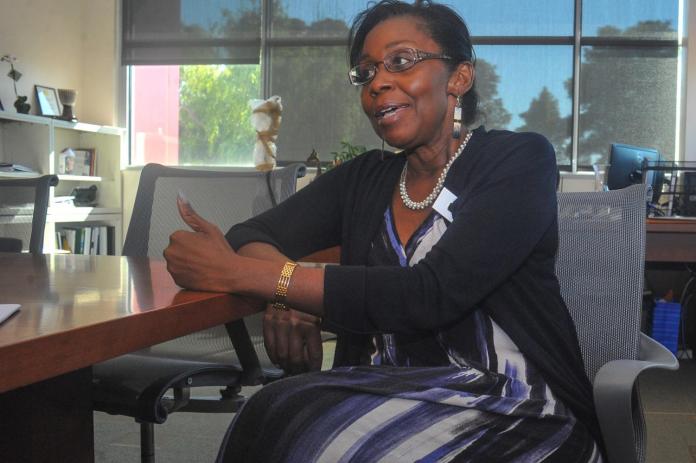
Dr. Katrina-VanderWoude in her new Contra Costa College office in August, 2018. Photo by Denis Perez The Advocate

By the African American Staff Association (AASA) of Contra Costa College

District Chancellor Fred E. Wood has spearheaded a brazen “racist public lynching” of Dr. Katrina VanderWoude. On May 28, 2019, Chancellor Wood placed Dr. VanderWoude, president of Contra Costa College (CCC), and two interim vice presidents, Susan Kincade and Carsbia Anderson, on administrative leave pending investigations concerning a suspicious complaint.

Chancellor Wood and his Contra Costa Community College District (4CD) office advisors violated district and state policies in pursuit of their campaign to remove the last two Black upper level managers at CCC. The chancellor has sought to make a public example of President VanderWoude for not going along with the continued racial gentrification of the college, which began a new phase in 2017. He assumed that VanderWoude, who is African American, would simply be window dressing to placate the AASA, which had raised concerns about the complete omission of new Black hires, among other issues.

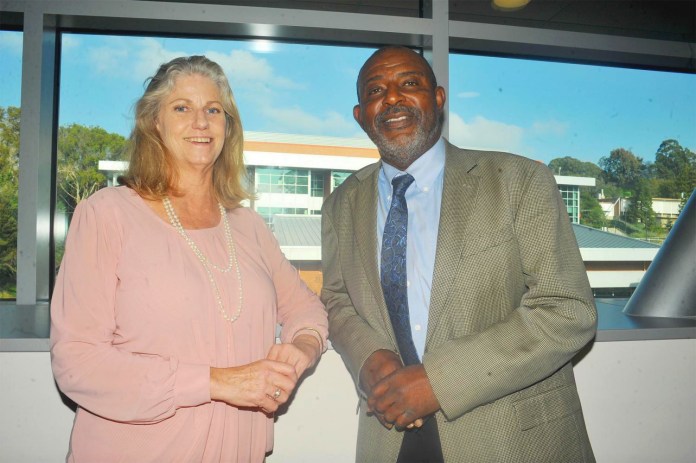
Contra Costa College interim Vice President of Academic Affairs Susan Kincade and interim Vice President of Student Services Carsbia Anderson.

Here is a timeline of events:

During the 2017-2018 academic year, the AASA began documenting and reporting on the systematic actions to reduce Black faculty and shrink the class offerings in their departments, particularly the social sciences and ethnic studies departments. AASA also raised issues about the new alarming direction of racial gentrification, with the CCC administration hiring 28 people, none of whom were Black.

On Jan. 30, 2018, the AASA and Black community leaders met with then President Mojdeh Medizadeh to address “Six Areas of Concerns” facing Black people at CCC. Instead of addressing these issues, Chancellor Wood removed Mehdizadeh in the middle of the semester and appointed an interim president. Wood’s reckless decision spun the campus into turmoil, while the nationwide search for a new president was underway.

On April 11, 2018, the AASA presented the six concerns directly to Chancellor Wood and identified managers who openly talked about introducing a “culture change” at CCC and were responsible for new gentrification policies, specifically detrimental to Black employees and students. Wood made promises but did very little to address these concerns.

On May 31, 2018, Chancellor Wood said in a press release that new President “Dr. VanderWoude’s … dedication to diversity, inclusion and equity prepare her very well for this important leadership role.”

In Fall 2018, President VanderWoude began her tenure with bringing back shared governance, instituting a more reasonable student-focused enrollment management plan, addressing the low campus morale issue and promoting racial equity in hiring. CCC was moving in the right direction.

In October-November 2018, the racist public flogging of Dr. VanderWoude began when it was learned that four of the five finalists for the vice president of student services (VPSS) position were African American. The credibility of two of the candidates was attacked by campus employees who used Google searches to find unvetted internet materials, dating back to 1997, to condemn these Black men without a trial.

These employees criticized VanderWoude for the hiring controversy, although she was barely two months on the job and was following district hiring procedures. Meanwhile, Wood remained silent and never explained that the district Human Resources Department (HR), headed by Diogenes Shipp, approved this entire hiring process. The misplacement of blame gave this small employee group an angle to criticize VanderWoude’s leadership of the college.

In March 2019, a trumped-up employee complaint was filed, charging VanderWoude with reverse racism, age discrimination and retaliation. There was no effort by Wood to address these allegations and resolve the concerns, as required by California Code of Regulations, Title 5.

On May 2, 2019, Chancellor Wood emailed an evaluation survey to various constituency groups as per the Management Manual (Section 6.2), and this two-week survey was to close on May 16th. However, there was a tiny group of VanderWoude’s opponents who complained about not being included in the survey, and therefore Wood obliged them.

On May 14, 2019, Chancellor Wood publicly joined the campaign to attack VanderWoude by emailing a second evaluation survey campus-wide to manufacture the written evidence to justify firing her. This was an open violation of 4CD HR Procedure 2030.13 and was a rogue action to allow the protest group to attack VanderWoude with the final written assault.

Wood’s deviation from the evaluation procedures is inherently biased and unjustified. The two overlapping active surveys is a completely unique process and has not been done for any other 4CD college president.

On May 28, 2019, Chancellor Wood executed the public political lynching of President VanderWoude by putting her and the two interim vice presidents on administrative leave without any prior effort to resolve the alleged issues in the March complaint. The interim vice president for student services removed by Wood is an African American man, and in Wood’s administration “diversity, inclusion and equity” evidently do not include top management positions for African Americans at CCC.

Wood’s goal is to fire VanderWoude, but there is now an unexpected public standoff with her supporters.

On July 17, 2019, amid the racial turmoil at CCC, Chancellor Wood made the sudden announcement that he will retire in March 2020. In reality, Wood is being pushed out because of, as he stated, “my belief that the district is ready for new leadership.”

A failed administrator

It is well documented that Chancellor Fred Wood is a failed administrator, who was a central member of the administrative team responsible for the infamous pepper spraying of students incident at UC Davis on Nov. 18, 2011, when he was the vice chancellor of student affairs. He then wrote an article, “Weary of Blame,” in the college newspaper California Aggie (Nov. 29, 2011) to deflect from his justly earned criticism for the shocking violation of these students. In May 2019, he has again earned well-deserved blame for the reckless removal of CCC administrators, with disastrous affects that are unmatched in the college’s history.

Finally, the public silence of Chancellor Wood in the midst of multiple incidences of racist hate graffiti at our sister campus, Diablo Valley College (DVC), in Spring 2019 gives some insight into how he and his district office cohorts view Black lives.

On March 6, 2019, in the men’s bathroom of the Engineering Technology Building, someone scrawled on the wall a racist threat of a noose with a hanging stick figure, along with the words, “No niggers working in trades.” When AASA President Manu Ampim called on Wood to be consistent and issue a district office statement to show a commitment to support Black students, as was done with other students, his response was simply, “If I say something I get criticized, and if I don’t say anything I get criticized.” This type of weak leadership is unacceptable and demonstrates Wood’s inability to lead a racially diverse college district.

Resolutions presented to the Contra Costa Community College District in July:

  1. Reverse the premature administrative leave action on May 28, 2019, which has crippled the college, and restore President VanderWoude and the two interim vice presidents to their positions.
  2. Immediately reassign to another campus the senior dean who has been in the center of conflict since she was hired in 2017 and began implementing a toxic “culture change” based on gentrification.

When reached for comment, Michele Jackson of the AASA said, “There’s no diversity at Contra Costa College in a very diverse community” and that “Wood and all of the district leadership need to go. They have no ties to the community.”

When reminded that Wood has announced he will retire next year, she responded, “We were instrumental in that.”

The African American Staff Association (AASA) of Contra Costa College, 2600 Mission Bell Drive, San Pablo, CA 94806, can be reached at AAStaffAssociation@gmail.com or 510-688-8806.

Allen Payton contributed to this report.

Filed Under: Education, News, Opinion, West County

Please tell CCTA: East County needs freeway from Brentwood to Tracy for long term economic growth

August 5, 2019 By Publisher 2 Comments

The Contra Costa Transportation Authority is holding Telephone Town Hall Meetings to inform the public of the Initial Draft 2020 Transportation Expenditure Plan (TEP) and get their input before finalizing the plan and placing another tax measure on the March 2020 ballot to fund it. The meeting for East County will be held on Wednesday, Aug. 8 (see previous post on this website, below)

The plan (www.ccta.net/theplan) currently has a total price tag of $3.061 billion and the tax is in addition to the county’s current half-cent sales tax for transportation from Measure J, which voters approved in 2004 and expires in 2034. The new tax would last until 2050. The CCTA attempted to pass a similar additional half-cent sales tax in 2016, known as Measure X, but it failed. The only new section of roadway in the entire county in that plan was the $117 million “limited access” connector   between Vasco Road and the Byron Highway, next to the Byron Airport. Voters overwhelmingly voted against the measure and it failed.

Fortunately, that project was included in the Regional Measure 3 expenditure plan which did pass. But, RM3 didn’t include the long-planned Route 239, the proposed four-lane freeway between Brentwood and Tracy, which will connect East County to Interstate 5, the economic lifeblood artery of the state.

That road has been on the books for over 60 years. But, planning for it only began in 2013 as part of what was known as the TriLink Project, as it crossed the three counties of Contra Costa, San Joaquin and a sliver of Alameda, and was to also include two lines of transit down the middle, connecting the end of the BART line in East County to Tracy.

However, the TriLink Project website is no longer active and neither the four-lane freeway nor the transit lines are included in Contra Costa County’s plans for the next 30 years.

Yet, it’s Route 239 that will ensure East County’s long-term economic viability, allowing current businesses, including agriculture, to get their products to market quicker. Plus, it will open up our area for greater local job creation, and complete what I refer to as the beltway around Mt. Diablo, eliminating the cul-de-sac effect with the three two-lane roads connecting us to the east and south.

Antioch and East County have the freight rail connecting us to the east and west, plus the river connecting us to the world, to move goods. But we only have Highway 4 and BART connecting us to the west for moving people and goods.

Central County folks oppose Route 239 saying it will “induce growth in East County.” But they’ve been saying that for almost 50 years about every new road improvement, including the Hwy 4 Bypass/extension, which we had to fight for over four years from 1994-98 to just get approvals, not any money. In fact, it was that same mindset that prevented Hwy 24 from being extended to East County back in the 1970’s and the result is a surface road with the three names of Ygnacio Valley Road, Kirker Pass and Railroad Avenue, today.

I grew up in Walnut Creek and moved to Antioch because it was more affordable. In fact out of all us who attended the 35th reunion of the Northgate High School Class of ’81 in 2016, only four classmates still lived in Walnut Creek. Where did many move to? East County. So, as I said to my fellow elected officials when I was on a panel during a transportation conference back in the late 1990’s when I was serving on the Antioch City Council and Contra Costa Transportation Authority, don’t blame us for the growth. They had kids and we needed somewhere to live that we could afford. That was when East County was pushing for funding and approvals for Highway 4 widening and the Highway 4 bypass/extension. We received it and those projects are now completed.

It’s time we completed the transportation infrastructure in East County and Route 239 is a key part of it.

Besides, that road won’t induce residential growth. We have the Urban Limit Line to control that. But it will induce economic growth with more local jobs, which is what East County needs.

We need both Route 239 and the transit link between Antioch and Tracy. But, for now, let’s push for funds for the freeway to be included in the county’s new plan. Estimates are it will cost an additional $1 billion. I say add it to the total and let the voters decide.

We need bold leadership from our local elected officials and the voice of “we the people” to make it happen.

Filed Under: East County, Opinion, Transportation

OP/ED: State must keep financial assistance for low-income California dialysis patients

July 9, 2019 By Publisher Leave a Comment

Joel Levin

By Joel Levin

I am a local public schoolteacher working with special education students from elementary age through young adults, and I am a dialysis patient who has suffered kidney disease for decades.

I’ve dedicated my career to helping those less fortunate in need. That’s why I’m disappointed that insurance companies are behind legislation that would cut off the charitable financial assistance I need to pay for the dialysis that keeps me alive.

Legislators will soon be voting on Assembly Bill 290, which would eliminate financial assistance that the non-profit American Kidney Fund provides charitably to more than 3,700 qualifying California dialysis patients like me.

AB 290 requires AKF to disclose confidential patient information in violation of the federal regulations governing the program. Because of these unreasonable requirements, AB 290 would force AKF to stop helping California patients altogether.

The losers are patients like me who depend on the financial assistance AKF provides to pay for the dialysis that we need to stay alive. The winners are insurance companies whose profits would go up if it passes.

Even as a kidney patient who must undergo the rigorous dialysis treatment process to stay alive, I feel like one of the fortunate ones. Most people on dialysis can’t work because of the exhausting process of dialysis. Thankfully I can continue working as a teacher while still receiving this time-consuming treatment three times a week for three to four hours at a time, after my workday.

It is not easy, of course. And for dialysis patients who require between 9-12 hours a week of dialysis treatments, our health care coverage is expensive. Although I’m on Medicare, it only covers 80 percent of my health care costs and Medicare also requires monthly insurance premiums. I also have copays for doctor visits and copays for my numerous medications because of my kidney disease.

On top of that, I must get an additional insurance policy, with additional monthly premiums, to cover the 20 percent “gap” that isn’t paid for by Medicare.

As a public schoolteacher, I’m certainly not rich. I have a finite amount of funds. Without the AKF’s assistance program, I’m not sure how I’d be able to afford these payments.

Only a small number of Californians on dialysis, about 5 percent, use financial assistance from a third-party, non-profit charitable organization like the American Kidney Fund to help pay their health insurance premiums. AKF has made premium assistance available for more than 20 years.

I’m extremely thankful they’re in existence and grateful for the help they provide me. For me, the program offers peace of mind that I can pay my expenses and receive the healthcare that I need. I can’t even imagine what would happen to dialysis patients who can’t work. How will they survive?

At its core, AB 290 is about increasing insurance company profits.

Lawmakers who are aligning with insurance companies and supporting the measure are not seeing how it would impact the patients in the long run.

I urge legislators to reject this insurance company scheme and vote no on AB 290.

Joel Levin is a dialysis patient and resident of Danville.

Filed Under: Health, Legislation, Opinion

Letter writer: Democrats in Congress need to forget impeachment, focus on important issues

May 20, 2019 By Publisher Leave a Comment

Dear Editor:

Even liberal Bill Maher says, “Enough already. Either move to impeach Trump or shut up about it”.  He’s right on, it’s time the Democrats stop wasting their time and the president’s, too trying to take the president down.

It’s time for them to concentrate on things they were elected to do, important issues confronting the country, like the southern invasion of illegal aliens, China trade issues, Iran, etc.  Instead they keep calling for silly investigations.

Calling for Trump’s financial and tax returns has nothing to do with running the country.  Most people don’t give a whit about them either.

Pelosi is a weak leader.  The real leaders in the House today are a Jew hating woman and a Congresswoman from New York whose IQ is less than her age.

The country is split, and the Democrats are fueling it.  Instead they should calm down and help bring the nation together.

Ken Hambrick

Walnut Creek

Filed Under: Letters to the Editor, Opinion

Letters: PCHETA improves care and lowers Medicaid costs

January 30, 2019 By Publisher Leave a Comment

Dear Editor:

Palliative (pronounced pal-lee-uh-tiv) and hospice care—with a focus on managing and easing symptoms, reducing pain and stress, and increasing comfort—can improve both the quality of care and quality of life for those with advanced dementia. Palliative and hospice care are provided by a specially-trained team – doctors, nurses and other specialists – who work closely with a patient’s other doctors.

One in every five seniors has a primary hospice diagnosis of Alzheimer’s or another dementia. 19,000 Contra Costa County residents live with Alzheimer’s and statewide, over 650,000 people over 65 and older have Alzheimer’s.  It’s the third leading cause of death in California. Over twenty percent of emergency hospital visits deal with hospital readmission of dementia patients.

PCHETA will provide people with Alzheimer’s and other dementias with improved quality of care while lowering the impact on Medicaid. Please join me in asking Congressman Jerry McNerney to sponsor The Palliative Care and Hospice Education and Training Act (PCHETA) (H.R.647) that was re-introduced to the 116th session of Congress.

Pam Jarvie

Discovery Bay

Filed Under: Letters to the Editor, Opinion, Seniors

Payton Perspective: Re-elect Joel Keller to BART Board

November 3, 2018 By Publisher Leave a Comment

Joel Keller at Antioch BART Station opening 5-25-18. Photo by Allen Payton

Usually, I don’t recommend elected officials serving in the same office for 24 years, such as Joel Keller, who was elected to the BART Board on the same night in November 1994 that I was elected to the Antioch City Council. That’s because elected representatives tend to become complacent or arrogant in office and stop listening to their constituents, and end up doing the bidding of the powerful, special interests who support them and contribute to their re-election campaigns.

However, Joel is different. Having served on the Contra Costa Transportation Authority and three of the four transportation boards in East County, including as Chairman of the Bypass Authority in 1998 when we purchased the right-of-way for the State Route 4 extension (aka The Bypass) from Lone Tree Way to Balfour Road, I’ve learned the difficult lesson that infrastructure projects can take a long time. Too much time for most all of our liking. But, that’s another issue. My point is, it’s taken that time for Joel to get BART extended to Antioch.

Although it’s not full or “real” BART, as we Antioch residents would have preferred, the bottom line is Joel was able to wade through the funding limitations from BART and the federal government, as well as the opposition by other regions in the BART District and directors who represent those regions and make his promise and commitment a reality. Antioch has a BART station. During his next four years, if re-elected, I believe Joel will be able to help deliver further extensions in East County, first to Laurel Road – which will benefit Antioch’s economic development area for job creation and serve the residents of Oakley – then to Brentwood near Sand Creek Road.

Joel has done what he said he would do, and he listens to his constituents. Most recently, Joel heard the complaints about safety on the BART system. In order to ensure the rest of the board members heard the complaints from the people in his district who can’t attend their normal day time meetings in Oakland, had the board hold a night time meeting in Pittsburg. Then, due to the overwhelming response by riders to the opening of the Antioch BART Station, Joel heard the outcry for more parking spaces, and he delivered by getting the other BART Board Members to join him in voting to fund 800 more spaces.

I believe Joel has earned one more term on the BART Board, which most likely will be his last, and recommend we re-elect him.

Filed Under: BART, Opinion, Politics & Elections

  • « Previous Page
  • 1
  • …
  • 9
  • 10
  • 11
  • 12
  • 13
  • …
  • 22
  • Next Page »
Liberty-Tax-Jan-Apr-2026
Deer-Valley-Chiro-06-22

Copyright © 2026 · Contra Costa Herald · Site by Clifton Creative Web