• Home
  • About The Herald
  • Local Agencies
  • Daily Email Update
  • Legal Notices
  • Classified Ads

Contra Costa Herald

News Of By and For The People of Contra Costa County, California

  • Arts & Entertainment
  • Business
  • Community
  • Crime
  • Dining
  • Education
  • Faith
  • Health
  • News
  • Politics & Elections
  • Real Estate

Brentwood Councilwoman issues statement on murder of George Floyd, violence and policing

June 7, 2020 By Publisher 35 Comments

From Karen Rarey – Brentwood City Council Facebook page, June 6, 2020

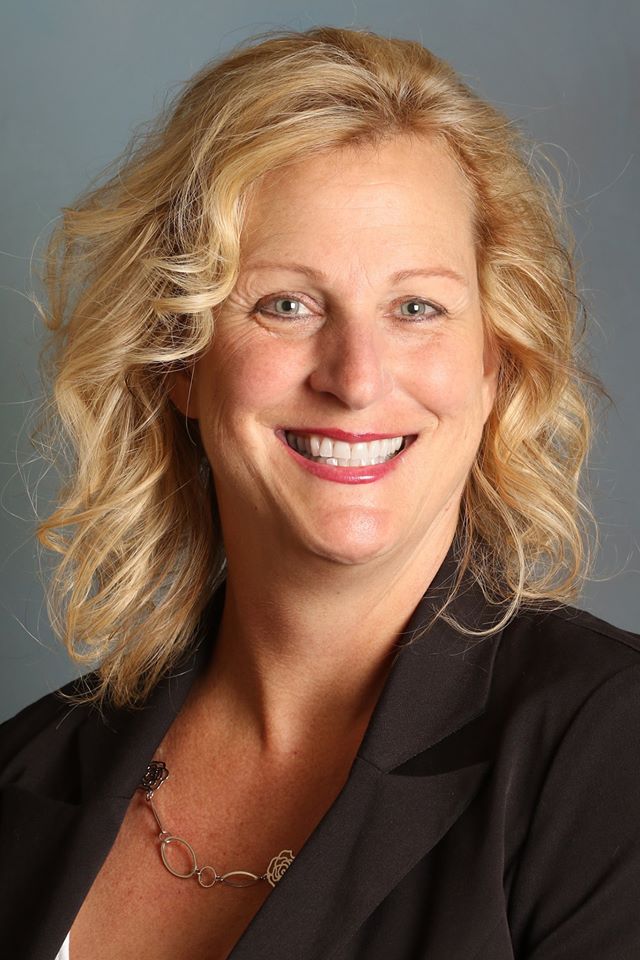
Brentwood Councilwoman Karen Rarey. From her City Council Facebook page.

REVISED 6/10/20 – To honor the request of my daughter-in-law, a small portion of my statement has been edited to keep private matters private.

MY SINCEREST MESSAGE TO OUR COMMUNITY:

As a White woman, I can tell you that I will never fully understand the pain, fear, anger and sadness that a Black person may encounter in their lifetime. Emotions as a human being, equal to all others, that NO PERSON should EVER have to go through.

What I can share with you is that along with the love I have for my son and his wife, a beautiful Black woman, and my two beautiful granddaughters, I also experience fear and worry for them. Why? Because there are people in the world who can’t look past the color of someone’s skin.

I’ve feared and worried for them when they’ve talk about moving to a new town, as not all towns are accepting of African Americans or of an interracial couple. They have been fortunate to find one that is, but that is not true for everyone.

I want the world, or at least I’d like to start with Brentwood and help to make it more inclusive, not just for my daughter-in-law and my grandchildren, but for every person, no matter the color of their skin.

On Friday, at my League of California Cities Public Safety Policy Committee, we all agreed it was vital for us, as the Public Safety Policy Committee, to make a statement relative to combating violence, condemning the murder of George Floyd and actionable measures for cities moving forward.

We spent several hours crafting a statement, which is being forwarded to the League Board for consideration at its next meeting.

Whether the League Board publicly issues this statement, or some form of it, as the person who seconded the motion on the original statement, I feel it is important to share the six main principles of our message:

  • We condemn the murder of George Floyd as horrific, tragic and unacceptable, not only in Minneapolis, but in any community in this country.
  • We denounce violence in all its forms; including against people and property, but recognize the urgency and significance of this moment, and call for special attention to be given to violence against black lives, and call on all cities and communities in California to create spaces dedicated to listening to and taking the action steps necessary to address the concerns raised by citizen-based movements, such as Black Lives Matter.
  • Cities must lead by working toward structural reforms that build public trust for law enforcement by focusing on the action steps that will ensure black, brown, indigenous, and other communities of color are safe and equal members of society.
  • Call on all cities to advance policies that promote the hiring of officers who reflect the communities they serve.
  • Provide greater access, transparency, and community oversight to issues of police misconduct as a means of building trust and restoring justice to impacted communities.
  • Ask all cities to adopt the pillars of 21st Century Policing and to support review of existing policies and practices to ensure the equitable protection of the freedoms and rights of all citizens.

Back between 2002-2012, Brentwood had a Diversity Committee, formed to foster racial harmony within our community. The co-chair of the committee has already reached out to our Police Chief to let him know that he has been reactivating members to help spur discussions as to what needs to change.

I spoke with our City Manager this week and told him that I too wanted to be part of that group.

I think it’s important to say that I believe the members of the Brentwood Police Department are professionals and they do a phenomenal job, something I’ve experienced firsthand during ride-a-longs, in the police station and out in public.

Does that mean that there aren’t changes that need to take place? The answer is no, there is ALWAYS room to improve the way we do things.

After the incident in Minneapolis, our PD’s Defensive Tactics Instructor Cadre viewed the incident as an opportunity to revisit relevant aspects of the department’s Use of Force policy and to review appropriate tactics for controlling a prone, handcuffed suspect.

Your voice is important to me – If you feel there is change that needs to take place here in Brentwood, I want to hear from you. I can be reached at krarey@brentwoodca.gov.

For now, I will pray for healing and acceptance in our nation, but especially for healing and acceptance in our community.

Yours Sincerely,

Karen Rarey

Council Member

City of Brentwood

#blacklivesmatter #wecandobetterinbrentwood


Filed Under: Community, Crime, East County, News, Opinion, Police

OP-ED: Antioch councilman is fed up, comments about recent unrest

June 2, 2020 By Publisher 1 Comment

Quotes Dr. Martin Luther King – “A riot is the language of the unheard.”

By Lamar Thorpe

I was a nine-year-old when I saw Rodney King viciously assaulted on Univision 34 in Los Angeles. I remember everyone seemed to be in disbelief, but I wasn’t sure why.

For a little over a year, the Rodney King beating and subsequent trial became part of our daily lives. As the days and weeks progressed, I was confused by the public’s outrage regarding the King beating. Having grown up in a Mexican foster home, discrimination towards Black people wasn’t always apparent to me. After seeing the video over and over on TV, I personally felt the police were just doing their job. Some of my peers expressed different sentiments, while others were indifferent.

After the verdict, my city literally went up in flames. School was cancelled. Some businesses closed. It snowed ash. We lived under a strict curfew. I can distinctly remember the smell of burnt charcoal, like what many Americans cities are experiencing today.

While my immediate family felt differently, how my community seemed to feel about Black people was clear. We talked about Black people like they were the scum of the earth — except those who entertained us on TV. As we saw it, Black folks were just lazy, living on government handouts, and prone to criminality. Therefore, as a young child, I believed Rodney King, nor I, deserved to be treated with dignity.

My lack of empathy stemmed from my deep seeded hatred for Black people. Obviously, retrospectively, I hated Black people because I always felt abandoned by Black people. I did not have Black parents, Black siblings, Black friends, or Black neighbors. Growing up in East LA, all I had was “la raza.” As a result, I was embarrassed to be Black, I hated being Black, and I certainly didn’t feel Black.

After I moved to New England, the world started to box me into Blackness, whether I liked it or not. I could feel people looking at me with suspicion. I could feel my senior chief in the Navy look at me as undeserving and lazy. I could feel white people’s discomfort in elevators. I could feel I did not belong in certain places, especially predominantly white establishments. This feeling is so overwhelming, you internalize it and move through life avoiding it.

It is not to say these forms of discrimination did not happen in East LA, but no one imagined I spoke Spanish; I was able to make them feel uncomfortable and turn it into a joke. The world outside of my sheltered East LA existence, however, was very different. And no matter how hard I wished away my Blackness, to the world, I was just another suspicious Black man. I bought a U.S. Navy license plate holder for my car in the event I would get pulled over by the police. I thought maybe just maybe they will see me as anything other than Black. It never failed but once.

To say the least, race in America is complicated. So, I’m not going to write pointless political platitudes that mean nothing to those seeking change and make white people feel comfortable. Instead, let’s be honest with ourselves. From peaceful protests and demonstrations to looting and violence, the consciousness of America is on full display all across this Nation. The fabric of this collective consciousness is laced with race as a concept, racism as an institution, and racist people. As a result, today, that conscious is angry, sad, disappointed, grieving, complicit, sorrowful, mad, enraged, willing to look the other way, unable to look the other way, and God only knows what else.

It’s the story of America, and it’s not always pretty. It can be downright stank.

Today, I’m 39 years old and a proud Black American. Three decades have passed since I first saw a “brotha” get brutally beaten at the hands of police. In those 3 decades, it hasn’t stopped. Here we are today, bearing witness to another unnecessary, cold blooded murder of George Floyd by police, Ahmad Aubery by wannabe police and so on. Dr. Martin Luther King Jr. once lamented, “A riot is the language of the unheard.” For three decades people have gone unheard. We’ve allowed this to fester in our consciousness long enough.

And now, our collective consciousness is being manifested by our young people in the streets of many cities throughout this country. They are fed up. I am fed up. You should be fed up. And, we all should be willing to acknowledge that the racist ideas we’ve been raised to believe created this moment.

As we move through this time, I’ll be expanding the focus of my “Community Conversations” to include youth voices and topics related to the current unrest. Join me in figuring out how we realize our aspirations of wanting to be a full just and fair society.

Filed Under: Opinion

Contra Costa District Attorney Diana Becton issues statement on murder of George Floyd

June 2, 2020 By Publisher 4 Comments

By Scott Alonso, Public Information Officer, Contra Costa District Attorney

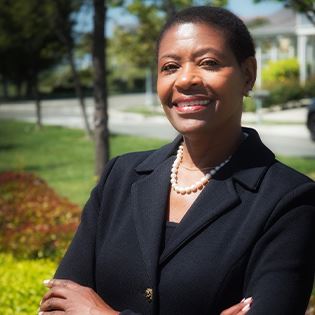
Contra Costa District Attorney Diana Becton. From CCC website.

Today, Contra Costa County District Attorney Diana Becton issued a statement regarding the murder of George Floyd:

“I am heartbroken and horrified by the murder of George Floyd and the other unjust deaths of Black men and women in this country. As the chief law enforcement official of Contra Costa, I took an oath to ensure justice for everyone under the law. The fight for justice does not end at the borders of our County or in our communities. We all have a responsibility to speak out against and eradicate injustices wherever we find them. The officers responsible for the murder of George Floyd must be held accountable.

The right to peacefully assemble and protest are a vital part of the fabric of this nation, and the majority of participants have been peaceful and even inspiring. I am disappointed that the righteous marches and gatherings are being infiltrated and hijacked by a small minority of people with other agendas. The individuals who are exploiting the pain, and the cause of so many in our community by committing acts of violence and destruction will be held accountable. We must not let the acts of the detractors deter us from the issue at hand. We must never stop working to eradicate racism and bring about systematic change throughout all systems, especially in our criminal justice system. I will continue to fight for criminal justice reform not only just in Contra Costa but throughout this nation.”

Filed Under: Crime, District Attorney, News, Opinion

Contra Costa District Attorney, others want to prevent police unions from contributing to DA candidates during elections

June 1, 2020 By Publisher 2 Comments

Call on state bar to create a new ethics rule claiming it “would help restore the independence, integrity, and trust of elected prosecutors by preventing them from taking donations from police unions.”

“They’re trying to hamper pro-law enforcement candidates who will run against them” – law enforcement official (who chose to remain anonymous)

Contra Costa District Attorney Diana Becton. From CCC website.

SAN FRANCISCO – Today, Monday, June 1, 2020, in the wake of mass protests following the killing of George Floyd by a Minneapolis police officer, a coalition of current and former elected prosecutors representing millions of Californians in diverse counties banded together to call on the California State Bar to cure the conflict of interest created by police unions’ outsized influence in local elections.  The new rule would explicitly preclude elected prosecutors – or prosecutors seeking election – from seeking or accepting political or financial support from law enforcement unions. (Read letter, here).

“The legal representation of an accused officer is generally financed by their law enforcement union,” said Contra Costa District Attorney Diana Becton.  “It is illogical that the rules prohibit prosecutors from soliciting and benefiting from financial and political support from an accused officer’s advocate in court, while enabling the prosecutor to benefit financially and politically from the accused’s advocate in public.”

“District Attorneys will undoubtedly review use of force incidents involving police officers,” said San Francisco District Attorney Chesa Boudin. “When they do, the financial and political support of these unions should not be allowed to influence that decision making.”

“When videos emerge like the one depicting the killing of George Floyd or Ahmaud Arbery, the damage it does to the entire criminal justice system cannot be overstated,” said former San Francisco District Attorney George Gascón. “That damage, however, is further compounded by delays in the condemnation, arrest, and charging of the involved law enforcement officers. These feelings, these protests, and the pain we’re seeing, would not be as raw and widespread if we had seen police held accountable by local prosecutors quickly and with regularity.  An important step in curing this pain is curing the conflict of interest that gives, at minimum, the appearance that police do not face consequences swiftly – or at all – due to the proximity and political influence of their union.”

“We have a tremendous amount of work ahead of us to restore trust in our profession, but trust must be earned, it cannot be demanded,” said San Joaquin County District Attorney Tori Verber Salazar.  “The first step to earning that trust back is ensuring the independence of county prosecutors is beyond reproach.”

Prosecutors are in a unique position of having to work closely with law enforcement and simultaneously evaluate whether crimes have been committed by these same officers.  Recent events involving police misconduct in which prosecutors either delayed or failed to file charges have shined a light on the importance of prosecutors making decisions regarding law enforcement officers’ conduct without any undue influence or bias.  Yet when prosecutors initiate an investigation or prosecution of an officer, the law enforcement unions often finance the legal representation of the accused officer. Prosecutors who have received an endorsement from the entity that is funding the defense of the officers being investigated or prosecuted creates, at a minimum, the appearance of a conflict of interest for elected prosecutors.

By precluding elected prosecutors—or prosecutors seeking election—from seeking or accepting political or financial support from law enforcement unions, the State Bar will reduce the presence of conflicts of interest and ensure independence on the part of elected prosecutors.  This proposal also aspires to help reestablish community trust in the integrity of prosecutors at a time when national events have damaged that trust.

For more information, follow #CureTheConflict.

In response, the following questions were sent to Becton’s public information officer, Scott Alonso:

“Is she saying that currently a prosecutor cannot solicit and benefit from financial and political support from an attorney representing a police officer accused of a crime while in court or during the court case? But the police officer’s attorney can support the prosecutor financially and politically when not in court or during the court case?

Please clarify who the accused is in her comment about the ‘accused’s advocate’. I assume it’s the same accused officer she refers to twice before in her comment. But, not sure.

Also, are she and the rest of the DA’s willing to forgo any financial contributions from criminal defense attorneys and public defenders? How about no financial support from any organization and only from individuals who live within their counties? How far should this go to ensure fairness in prosecutions? Isn’t this really one-sided? Also, if the police unions have so much influence in our county and they all backed Becton’s opponent in the last election how did she still win? Isn’t she in effect attempting to violate the free speech rights – which political campaign contributions have been defined as by the courts – of the police unions?

June 2 UPDATE: Alonso responded with, “Any questions about political contributions I cannot answer as a public employee. You would need to direct those to DA Becton’s campaign.”

This reporter then emailed him, “Please pass on my questions to DA Becton. I’m not asking you to answer them. I’m asking for her to.”

Alonso responded, “Her statement speaks for itself. Not sure what else to provide. Her reference to the advocate is the law enforcement union.”

A further email was sent to him with, “Her statement and the effort is clearly one sided and doesn’t answer my questions that I emailed you. Did you pass on my questions to her?  If not can you, please? I really don’t want to have to write that she’s refusing to answer them. Surely neither you nor she expects the media to just run press releases on controversial matters unchallenged and without question.

Thanks for the partial answer to my one question. But it still doesn’t clarify what she’s saying in that quote. How would a prosecutor solicit and benefit from financial and political support of a law enforcement union in court? I seriously don’t understand that.

I really need to hear back from her on the questions I sent. I don’t want to just write she refused to respond.”

Alonso responded with, “With all respect we do answer your questions. Your comment that this ‘effort is one side’ is odd. Not sure what you mean by that. There are standards in place for prosecutors in terms of receiving or benefitting from opposing defense counsel. This is outlined in the letter that you were provided. In terms of any questions on donations I cannot answer that as I have said.”

This reporter further responded by email with, “Yes, in the past you’ve answered my questions and I appreciate that. But I’m talking about this press release on a very controversial, political issue, which is rare if not the only one I recall ever receiving from you.

About the effort being one sided, that’s because all the DA’s and former DA quoted in the press release are attempting to silence one side in the political battle for who should be elected DA. Diana wasn’t backed by any of the police unions in the county, if I recall. They backed her opponent, DDA Paul Graves. Now she’s trying to prevent police unions from contributing to her potential opponents in future elections in effectively silencing their voice during a political campaign. Yet, I don’t see anything in the press release in which she or the other DA’s call for limiting the contributions to candidates from those on the criminal defense side.

Again, I’m not asking you to answer my questions. I’m asking you to pass along my questions to DA Becton, who as an elected official can answer them and should. You sent out on official CCDA letterhead a press release about a political matter. Frankly, that should have gone out on her campaign letterhead if you or she aren’t going to answer questions about it.

Now, please quit being a gatekeeper for her and pass on my questions to her. Another day has passed since you sent me the press release and I still don’t have but one question answered.

I’m trying not to go around you. I do have her cell phone number and have called her before when it was after hours. But I am avoiding calling her. I guess I’ll have to if I can’t get you to simply forward my questions to her.

So, let’s please stop the back and forth. I’m not asking you any questions about a political matter. I’m asking her.”

No response to that email was received.

When reached for comment, Becton said she was in a meeting and to “send questions to Scott.”

Please check back later for any updates to this report and responses from the DA.

Filed Under: District Attorney, News, Opinion, Politics & Elections

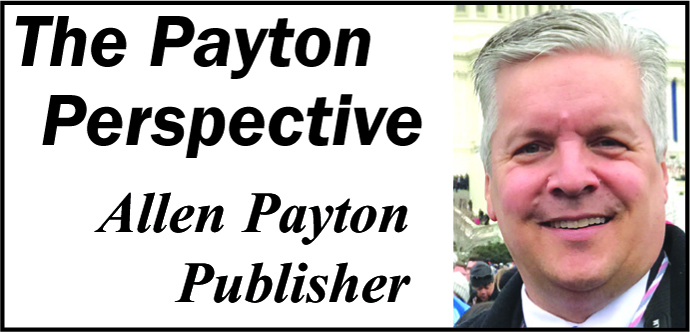
Payton Perspective: Gov. Newsom isn’t really allowing places of worship to reopen, his guidelines are too restrictive

May 26, 2020 By Publisher 2 Comments

Some churches to participate in civil disobedience this Sunday and open for services.

“Simply put, there is no pandemic exception to the U.S. Constitution and its Bill of Rights”… “the Constitution calls for California to do more to accommodate religious worship” – 5/19/20 US DOJ letter to Gov. Newsom.

By Allen Payton

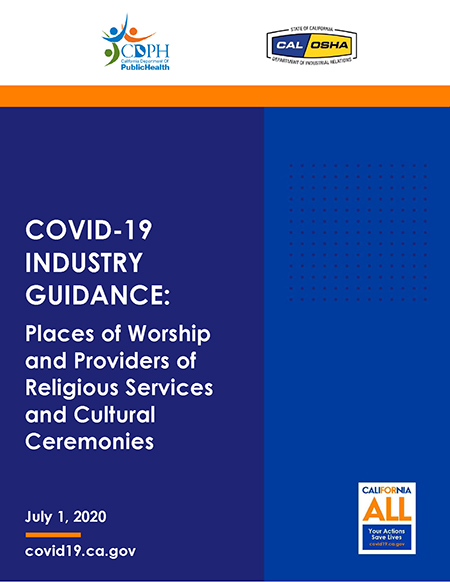
Yesterday, Monday, May 25, 2020 – Memorial Day, the day we honor and commemorate those who died for our freedoms, some of which are seriously limited, right now – California Governor Gavin Newsom issued guidelines for reopening places of worship. At first, I was hopeful that he was doing something good in response to President Trump’s directive to all the governors and the directive to California from U.S. Attorney General William Barr and the Department of Justice, last week.

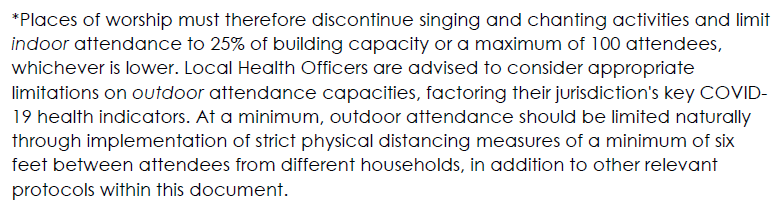
But the guidelines don’t really allow most places of worship to reopen. Why? Because they’re too restrictive, limiting attendance to just 25% of building capacity or 100 people whichever is less. Plus, Newsom is leaving it up to each unelected county health officer to approve of the guidelines or not.

Now, it’s worse because they’re allowing more and more businesses to reopen – which is great – but not the churches. Our officials already considered all the vice serving businesses, including all the locations of the nation’s top abortion provider, Planned Parenthood, liquor stores, and marijuana dispensaries essential. But not the churches or other places of worship. And as of today, the governor said barber shops and hair salons can reopen.

Which part of “shall make no law…prohibiting the free exercise” of religion and the other First Amendment right of freedom of peaceful assembly, don’t our officials get?

Civil Disobedience

Following in the footsteps of the black Christian ministers who led the efforts during the civil rights movement, it appears some churches will be participating in some civil disobedience with the ministers leading the effort for their rights, when they hold services this next Sunday, May 31st in defiance of state and local orders. Those in attendance will probably only be issued citations and the maximum fine is $1,000, which they can collectively fight. Plus, with $0 bail, right now none of them will go to jail. Most likely only the ministers will be cited and fined. But who knows? The Lord does and we will see just how far the government officials will take this and just how much they want to continue this fight.

Time to Elect New Leaders

It’s definitely time we elected only those who agree that places of worship are essential, not only to those who attend, but society as a whole, and will actually uphold their oaths of office, in which they swore to defend the Constitution against all enemies foreign and domestic. Event the CDC recognized that in the statement for its Interim Guidance for Communities of Faith, unlike our governor in the statement included with his guidelines. The CDC wrote, “Millions of Americans embrace worship as an essential part of life. In addition, we note that while many types of gatherings are important for civic and economic well-being, religious worship has particularly profound significance to communities and individuals, including as a right protected by the First Amendment. State and local authorities are reminded to take this vital right into account when establishing their own re-opening plans.”

What did the governor include in the statement about his guidelines? Just more warnings about how public gatherings can cause more deaths. That statement includes, “There have been multiple outbreaks in a range of workplaces, indicating that workers are at risk of acquiring or transmitting COVID-19 infection. Examples of these workplaces include places of worship, long-term care facilities, prisons, food production, warehouses, meat processing plants, and grocery stores.”

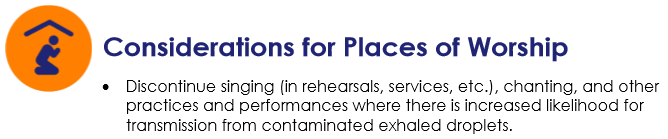
“Further, it is strongly recommended that places of worship continue to facilitate remote services and other related activities for those who are vulnerable to COVID19 including older adults and those with co-morbidities. Even with adherence to physical distancing, convening in a congregational setting of multiple different households to practice a personal faith carries a relatively higher risk for widespread transmission of the COVID-19 virus, and may result in increased rates of infection, hospitalization, and death, especially among more vulnerable populations. In particular, activities such as singing and group recitation negate the risk-reduction achieved through six feet of physical distancing,” Newsom’s statement continues.

Nothing about our First Amendment rights which should be protected or that corporate worship or even churches being essential to at least some Californians or society as a whole.

Support Legal Efforts

We also need to support the legal efforts of those suing the state and governor to get the courts to force him to allow the churches to reopen. One way you can do that is by supporting the Center for American Liberty, based in San Francisco and led by my friend, attorney Harmeet Dhillon and her fellow attorney, Mark Meuser, a former Contra Costa resident. Read about their cases and make a contribution, here – https://libertycenter.org/pf/covid-19-litigation/.

Another lawsuit by churches in California against Newsom and the state, which was joined by Dhillon, lost last week at the 9th Circuit Court of Appeals on a 2-1 decision of a three-judge panel. Not surprising the judges who voted with the governor were appointed by Clinton and Obama, and the one judge that voted with the churches was appointed by Trump.

“These are emergency appeals,” Dhillon explained on Monday. “We filed for an appeal to the U.S. Supreme Court” in the recent case before the 9th Circuit.

“The DOJ sent a letter to the governor that his policies were discriminatory against churches,” she continued. “Today’s guidelines are still limiting. They’re totally arbitrary. There is no limit of 100 people for any retail establishment. Retail has a 50% capacity limit for some and none for others.”

“To tell people how they can worship, this is more unconstitutional and very problematic,” Dhillon added.

DOJ Letter to Newsom

In the DOJ letter to Newsom about “several civil rights concerns with the treatment of places of worship” due to the governor’s stay-at-home order, as well as “documents relating to the California Reopening Plan” it states “Simply put, there is no pandemic exception to the U.S. Constitution and its Bill of Rights.” USDOJ 5.19.20 Ltr. to Hon. Gavin Newson

“Laws that do not treat religious activities equally with comparable nonreligious activities are subject to heightened scrutiny under the Free Exercise Clause of the First Amendment,” the letter continues.

“Places of worship are not permitted to hold religious worship services until Stage 3” of Newsom’s reopening plan, the letter explains. “However, in Stage 2, schools, restaurants, factories, offices, shopping malls, swap meets and others are permitted to operate with social distancing. And as noted, ecommerce and entertainment industry activities are already permitted with social distancing. This constitutes precisely the kind of differential treatment the Supreme Court identified” in the decision of another case “in which the government is not willing to impose on certain activities the same restrictions it is willing to impose on constitutionally protected religious worship.”

“Religious gatherings may not be singled out for unequal treatment compared to other nonreligious gatherings that have the same effect on the government’s public health interest…” the letter states.

It then refers to the recent case before the 9th Circuit and states, “Other decisions around the country…make clear that reopening plans cannot unfairly burden religious services as California has done.”

“We believe…that the Constitution calls for California to do more to accommodate religious worship, including in Stage 2 of the Reopening Plan.”

An email has been sent to the DOJ asking for their views on Newsom’s guidelines and if they comply with the May 19th letter. (Please check back later for updates to this column.)

Time for Action

It’s time for action and to stop living in fear, my friends. The governor’s guidelines are too restrictive and continue to clearly violate our God-given – the meaning of “unalienable” – and constitutionally protected rights of both freedom of religion and assembly. Until Newsom complies with the directives from the federal government, churches should feel free to reopen within the guidelines applied to nonreligious activities and businesses.

As the DOJ letter states, “Religious communities have rallied to protect their communities from the spread of this disease by making services available online, in parking lots, or outdoors, by indoor services with a majority of pews empty, and in numerous other creative ways that otherwise comply with social distancing and sanitation guidelines.” Local churches can do the same. We shall see if any actions are taken against the ministers and those who attend this Sunday’s services.

DOJ Letter to Governor Newsom

U.S. Department of Justice

Civil Rights Division


____________________________________________________________________________________________

Office of the Assistant Attorney General                                               Washington, D.C. 20530

May 19, 2020


The Honorable Gavin Newsom

Governor of California

1303 10th Street, Suite 1173

Sacramento, CA 95814

Dear Governor Newsom:

We are writing to you to raise several civil rights concerns with the treatment of places of worship in Executive Orders N-33-20 and N-60-20 and documents relating to the California Reopening Plan.

Of course, we recognize the duty that you have to protect the health and safety of Californians in the face of a pandemic that is unprecedented in our lifetimes. You and other leaders around the country are called on to balance multiple competing interests and evaluate the constantly changing information available to you about COVID-19, and make your best judgment on courses of action.

Attorney General William P. Barr recently issued a statement on Religious Practice and Social Distancing, in conjunction with a Mississippi case in which the Department of Justice participated regarding restrictions on worship. In the statement, the Attorney General emphasized the need to practice social distancing to control the spread of COVID-19. He also noted that temporary restrictions that would be unacceptable in normal circumstances may be justified. But, “even in times of emergency, when reasonable and temporary restrictions are placed on rights, the First Amendment and federal statutory law prohibit discrimination against religious institutions and religious believers. Thus, government may not impose special restrictions on religious activity that do not also apply to similar nonreligious activity.” Simply put, there is no pandemic exception to the U.S. Constitution and its Bill of Rights.

Laws that do not treat religious activities equally with comparable nonreligious activities are subject to heightened scrutiny under the Free Exercise Clause of the First Amendment. Church of the Lukumi Babalu Aye v. City of Hialeah, 508 U.S. 520 (1993). Laws that are not both neutral toward religion and generally applicable are invalid unless the government can prove that they further a compelling interest and are pursued through the least restrictive means possible. Religious gatherings may not be singled out for unequal treatment compared to other nonreligious gatherings that have the same effect on the government’s public health interest, absent the most compelling reasons.

Executive Order N-33-20 (March 19, 2020) ordered Californians to remain at home except to engage in authorized necessary activities as laid out by the Public Health Officer at the time and as modified going forward. The Public Health Officer’s April 28 “essential workforce” list does not appear to treat religious activities and comparable nonreligious activities the same.

The list includes “faith-based services” but only if “provided through streaming or other technologies.” In-person religious services are thus apparently prohibited even if they adhere to social distancing standards.

The list of nonreligious workers who are not so restricted by the Executive Order and essential workforce list when telework “is not practical” is expansive. For example, the list includes “Workers supporting the entertainment industries, studios, and other related establishments, provided they follow covid-19 public health guidance around social distancing.” Likewise, “workers supporting ecommerce” are included as essential, regardless of whether the product they are selling and shipping are life-preserving products or not. This facially discriminates against religious exercise. California has not shown why interactions in offices and studios of the entertainment industry, and in-person operations to facilitate nonessential ecommerce, are included on the list as being allowed with social distancing where telework is not practical, while gatherings with social distancing for purposes of religious worship are forbidden, regardless of whether remote worship is practical or not.

Even more pronounced unequal treatment of faith communities is evident in California’s Reopening Plan, as set forth in Executive Order N-60-20 (May 4, 2020), and in the documents the California Department of Public Health produced pursuant to it, including the “Resilience Roadmap” (https://covid19.ca.gov/roadmap/) and “County Variance Attestations” (https://www.cdph.ca.gov/Programs/CID/DCDC/Pages/COVID-19/Local-Variance-Attestations.aspx). Places of worship are not permitted to hold religious worship services until Stage 3. However, in Stage 2, schools, restaurants, factories, offices, shopping malls, swap meets, and others are permitted to operate with social distancing. And as noted, ecommerce and entertainment industry activities are already permitted with social distancing. This constitutes precisely the kind of differential treatment the Supreme Court identified in the Lukumi decision in which the government is not willing to impose on certain activities the same restrictions it is willing to impose on constitutionally protected religious worship. While it is true that social distancing requirements applied to places of worship may inevitably result in much smaller congregations than some faith groups would like, in our experience with other controversies around the country, many places of worship are quite content to operate at 15-25% of capacity in a way that allows for social distancing between family groups.

The Department of Justice does not seek to dictate how States such as California determine what degree of activity and personal interaction should be allowed to protect the safety of their citizens. However, we are charged with upholding the Constitution and federal statutory protections for civil rights. Whichever level of restrictions you adopt, these civil rights protections mandate equal treatment of persons and activities of a secular and religious nature.

We recognize that three U.S. District Courts have denied Temporary Restraining Orders (TRO’s) sought by plaintiffs against Executive Order N-33-20, Abiding Place Ministries v. Wooten, No. 3:20-cv-00683 (S.D. Cal. April 10, 2020) (no written opinion); Gish v. Newsom, No. 5:20-CV-755 (C.D. Cal. Apr. 23, 2020); Cross Culture Christian Ctr. v. Newsom, No. 2:20-CV-00832 (E.D. Cal. May 5, 2020), and one denied a TRO against the Reopening Plan, which is now on appeal to the Ninth Circuit. South Bay United Pentecostal Church v. Newsom, No. 3:20-cv-865 (S.D. Cal. May 15, 2020) (oral transcript ruling). These TRO decisions do not justify California’s actions. The Abiding Place, Gish, and Cross Culture TRO decisions do not address the Stage 2 reopening, and South Bay United Pentecostal does not describe why worship services can be distinguished from schools, restaurants, factories or other places Stage 2 permits people to come together. Other decisions around the country have followed Lukumi to make clear that reopening plans cannot unfairly burden religious services as California has done. See, e.g., Robert v. Neace, No. 20-5465 (6th Cir. May 11, 2020).

Religion and religious worship continue to be central to the lives of millions of Americans. This is true now more than ever. Religious communities have rallied to protect their communities from the spread of this disease by making services available online, in parking lots, or outdoors, by indoor services with a majority of pews empty, and in numerous other creative ways that otherwise comply with social distancing and sanitation guidelines. We believe, for the reasons outlined above, that the Constitution calls for California to do more to accommodate religious worship, including in Stage 2 of the Reopening Plan.

Thank you for your prompt attention to this matter. Should you wish to discuss further, please contact United States Attorney for the Eastern District of California McGregor Scott at (916) 554-2730 or mcgregor.scott@usdoj.gov.

Sincerely,

           Eric S. Dreiband

                             Assistant Attorney General

                Civil Rights Division

McGregor W. Scott

United States Attorney

Eastern District of California

Nicola T. Hanna

United States Attorney

Central District of California

David L. Anderson

United States Attorney

Northern District of California

Robert S. Brewer

United States Attorney

Southern District of California

cc: The Honorable Xavier Becerra

Attorney General of California

Filed Under: Faith, Government, Health, Legal, Opinion

Writer complains about waiting 7 hours for out of state phone service to schedule free COVID-19 test, not having comment read during Supervisors meeting

May 13, 2020 By Publisher Leave a Comment

Dear Editor:

Please run this scathing letter that I wrote about my terrible experience in not getting a COVID-19 test late last week.

But the other part of the story is that it was not read into the record during Tuesday’s Board of Supervisors meeting. Instead it will be “shared” with the supervisors, according to Jami Napier, Chief Assistant Clerk to the BOS.

In an email response she wrote, “This email will be shared with the Board of Supervisors. We are not reading emails into the record at this time.”

I responded, “Shame on you!  The agenda states that written comments will be accepted before and during the meeting.  I feel that I am being marginalized by the county. I feel cheapened. I cannot even get a Covid test; and then you do this to me.  Written comments should also be read into the record. Bad!”

Board of Supervisors Chair Andersen:

The county is playing with the lives of citizens, especially seniors when the county announces free COVID-19 testing for anyone regardless of one’s health, and the county’s out of state telephone message service is unable to properly handle the avalanche of incoming calls. Shame on the county and the telephone service!

Thankfully neither I nor my wife have COVID_19 symptoms, but last Friday I was on the phone 7 hours futilely waiting to make an appointment to line up appointments for free COVID-19 tests.  No one answered my call.  Incredible!

Later that day I talked to Supervisor Federal Glover who confirmed with that the health department is swamped with calls and is working to resolve the issue. That’s all that he could do for me and my wife. What a bummer!

The problem is, what if someone like myself or my wife, really has COVID-19 symptoms?  What do they do then if they cannot make an appointment like I attempted to do?  I suppose the answers to those questions is, wait for one’s maker, death!

This situation is unacceptable. The county and supervisors should be held accountable and correct this problem now!

Sincerely,

Daniel & Leslie Borsuk  

Pittsburg

Filed Under: East County, Health, Letters to the Editor, Opinion

Government overreach and the Constitution

May 3, 2020 By Publisher Leave a Comment

Dear Editor:

I am not an attorney, nor do I play one on TV.  However, I do have 30 years of experience working on land-use legislation, litigation, politics, and policy at the local, state, and national level.   Based on those experiences, I want to share my opinion with you.

In March, all Americans including recreationists were asked to comply with temporary Covid-19 shelter-in-place (SIP) orders and mitigation measures to “Flatten the Curve” to avoid overcrowding our hospitals and reduce the number of projected deaths.

The American public responded to the government mandates by largely complying with those plans and mitigations.   Recreation leaders in the grassroots and industry sectors also responded with outreach and education programs to encourage compliance with those temporary orders.

Today, many in the general public are now questioning some states and local jurisdictions that appear to have politicized Covid-19 restrictions by extending hard SIP orders – without a strong rationale – that apply to residents and businesses.

Considering the above reality in some states, it should come as no surprise for the U.S. Supreme Court (SCOTUS) to weigh in on the matter when potential violations of the U.S. Constitution appear to be taking place.

On such case is in Pennsylvania where according to the article linked to below: “A group of Pennsylvania businesses petitioned the US Supreme Court Monday in their lawsuit seeking to overturn Governor Tom Wolf’s March 19 executive order closing “non-life-sustaining” business in response to the COVID-19 pandemic.”

SCOTUS has now weighed in by giving the PA Governor until May 4 to respond to a petition that accuses the commonwealth of violating the constitutional rights of its citizens.

Please see https://www.jurist.org/news/2020/05/supreme-court-orders-pennsylvania-to-respond-to-challenge-to-stay-at-home-order/

Folks in other states are also challenging extended SIP orders that appear to violate our constitutional rights.  The purpose of this opinion is not to start a debate about the veracity or effectiveness of Covid-19 mitigation measures but to simply highlight the growing concern about government overreach and potential violation of our constitutional rights.

Having SCOTUS step in on this issue may be the biggest news item in recent weeks.

Don Amador

Oakley, CA

Don Amador has been in the trail advocacy and recreation management profession for over 30 years. Don is President of Quiet Warrior Racing/Consulting. Don served as a contractor to the BlueRibbon Coalition from 1996 until June 2018. Don served as Chairman and member on the California Off-Highway Motor Vehicle Recreation Commission from 1994-2000. He has won numerous awards including being a 2016 Inductee into the Off-Road Motorsports Hall of Fame and the 2018 Friend of the AMA Award. Don currently serves as the government affairs lead for AMA District 36 in Northern California and also serves as the OHV representative on the BLM’s Central California Resource Advisory Committee.  Don is also a contributor to Dealernews Magazine

Filed Under: Health, Legal, Letters to the Editor, Opinion

Contra Costa County: Compassion and Community in Action

April 28, 2020 By Publisher 1 Comment

Messsage from the County Health Director

Contra Costa County Health Services Director Anna Roth, RN, MS, MPH. Photo: CCHealth.org.

For all of us caught in the midst of this unprecedented pandemic, life has changed fundamentally. How we socialize, learn, exercise, dine and work has been reshaped entirely in the course of just a few weeks. That level of change, combined with the inherent health concerns related to COVID-19, has created levels of stress and anxiety typical of war zones. Combine all that with the frustration of not knowing when this might end, how we will all be impacted and what a post-COVID-19 world will look like and you might expect fractures in our community.

But we’re not breaking apart. In fact, as I look around, I see a community that is pulling together in many different and powerful ways. Yes, we’re all under immense stress, but Contra Costa County has risen to the challenge, showing a level of respect, cooperation and involvement that is simply remarkable. It’s too early to predict the future, but one thing I do foresee is Contra Costa County emerging from all this with pride for modeling a remarkable level of civility and leadership.

It’s these increased acts of community participation that make it possible for Contra Costa County Health Services to respond in a coordinated, science-based and thoughtful manner to this crisis. The health department’s purpose is to protect and preserve life. We prepare and practice for mass emergencies on a regular basis—earthquakes, fires, disease outbreaks and other disasters. It is our obligation to be prepared even for a once-in-a-century pandemic. And now, with COVID-19, our purpose inspires and drives us to balance the need for extreme caution with a respect for your need to live as normal a life as possible in the face of this crisis.

As one of the first states to see COVID-19 cases, California could well have faced the same catastrophic impacts that other states are now experiencing. However, because of the courage and foresight of health and government officials in Contra Costa County and the entire Bay Area, we took strong and immediate action. Issuing one of the nation’s first region-wide shelter in place orders, the Bay Area slowed the spread of this unprecedented threat to prevent the crushing demand on hospital resources, which prevented illness and death. None of this is possible without the understanding and cooperation of all of you. Your willingness to alter your lives in ways we know are disruptive is vital for the health and well-being of the entire community as well as the safety of our essential workers.

Part of what’s made our response effective thus far has been the cooperation and coordination of the entire county government apparatus. From our Board of Supervisors and County Administration to the multiple different county departments, we are seeing an unprecedented level of alignment and action. Separate departments are sharing resources, staff expertise and contacts to make sure that the county’s response is as comprehensive and coordinated as possible. By the same respect, the county’s 19 cities are partnering closely with all of these efforts to magnify our reach, impact and efficiency. This has been a true example of a whole government response to support and protect the people of Contra Costa County.

Rightly so, there has been a lot of focus on the amazing individuals on the front lines of this epidemic – our healthcare workers, medics, police, fire and many more. As the county’s health director, I have never been more inspired in my entire career than to work with doctors, nurses, clinicians, lab workers, disease investigators, community health workers, registration, administration and custodial staff and countless other essential workers who have never once questioned their responsibility. Instead, they come to work every day dedicated to protecting and preserving lives in our county. It is humbling to witness this level of commitment to others. And for every worker that is responding on the multiple front lines of this pandemic, there’s a team of support staff working to make sure they have the materials, protection, data, information, and expertise they need so they can focus their attention on the work of helping people get and stay well.

The other day, I was on my way to a field health care site we have prepared. As I was driving, I saw a gathering of people at a local school. With masks and gloves on, dozens of volunteers had shown up to distribute food to their neighbors, friends and strangers who are feeling some of the greatest economic impact of this pandemic. As I passed the group I was filled with gratitude. I believe this deep sense of community and connection is part of what makes us resilient and will take us forward to greet the days ahead.

Many thanks for all the ideas, feedback and information so many of you have shared with Contra Costa County Health Services. Your input is helping us to improve each day. Thank you for your continued support of our health department and each other.

Wishing you all safety, health and wellness

Anna Roth, RN, MS, MPH

Filed Under: Health, Opinion

OP-ED: Statewide lockdowns and the law

April 4, 2020 By Publisher 2 Comments

Hasty infringements on individual rights at a time of coronavirus.

By John You, Harmeet K. Dhillon

As losses mount throughout the economy due to the coronavirus quarantines, President Trump suggested that he wants the nation “to be opened up and just raring to go by Easter.”  He has since stepped away from that proposal and issued guidelines that lockdowns stay in place until the end of April.  But Trump still seems to be more optimistic than many state governors in his hope that the U.S. will return to normal economic activity sooner rather than later.

But even if Trump were to issue a declaration re-opening American businesses, a nationwide compliance would remain beyond his power.  The Constitution’s system of federalism reserves the authority to lift the quarantine orders in the same people who issued them in the first place: the state governors.

Because state government sits closer to the people, we can and should demand more immediate transparency and accountability of our officials for these draconian, potentially devastating policies.  They may impede the spread of the disease, but we cannot tell if this comes at an acceptable cost because neither governors Gavin Newsom nor Andrew Cuomo have explained how they made the cost-benefit trade-off involved.  They risk judicial intervention or, ultimately, popular rejection, should they continue to keep shutting down their economies without justified benefits.

Richard Epstein, a Hoover scholar and friend, has come under fire for his claim that public health officials have overestimated the rate of infection and the lethality of the coronavirus.  Regardless of Epstein’s theory of why the spread of the virus will slow, the underlying truth of his argument remains: stopping the spread of disease balances lives potentially saved against the economic losses from the lockdowns.

Here is a quick, back-of-the-envelope calculation for a single state, California. The U.S. economy generates approximately $24 trillion a year in GDP, or $2 trillion a month.  California is about 15 percent of that total, for about $300 billion per month.  Suppose that the lockdown causes economic activity to drop by 75 percent in California (it may well be worse).  Is it worth immediate losses of $225 billion per month, in just one state, with potentially longer-lasting recessionary effects, to reduce (but not eliminate) the lives lost to the coronavirus?

It depends on how we estimate the number of lives saved from the lockdowns.  Take California as an example.  At last count, California has 4,643 confirmed cases and 101 deaths from the virus.  We have to balance the lockdowns not against those lives, but against the reduction in the expected harms of an outbreak (which is the probability of an outbreak times the estimated number of deaths).  Some experts, such as doctors at Stanford Medical School, argue that current estimates are inflated, due to the lack of good data from China and Italy and the propensity to test those already infected. Instead, they calculate that the U.S. population may suffer an infection rate of about 2.2 percent, which translates into about 7.7 million infected Americans, or 924,000 Californians.

If the mortality rate from the coronavirus ranges from 1-2 percent, as doctors estimate, then the number of lives that would be lost in an epidemic in California would be 18,500. Suppose that there were a 50 percent chance of that happening without any aggressive government measures, and that the lockdown instead dropped the chances of an outbreak to 10 percent.  By shutting down most economic activity within its borders, California would be spending millions to save a single life, without taking into account less intrusive alternative measures, such as protecting the elderly and placing quarantine orders on those with high probability of testing positive for the disease.

That same money would otherwise allow millions of families – many of them in the lowest income brackets – to pay the rent, put food on the table, and afford health care.  Our states do not shut down their economies every winter to stop the flu, which can kill 60,000 a year nationwide.  Even if the deaths from the coronavirus extend to a higher estimate of 200,000 deaths nationwide, or 24,000 deaths in California, we are still forgoing millions in economic activity to save each life.  While each life is precious, our society chooses not to stop all economic activity to stop other illnesses, such as the flu, or to forgo certain valuable freedoms such as driving to reduce auto accidents.  As the Great Recession showed, massive economic losses can cost lives too by reducing incomes, decreasing longevity, and increases in death by suicide and drug overdoses.

Our state officials should explain whether they could have implemented other policies that could have reduced the spread of the disease without incurring such massive economic destruction.  Did state officials consider less intrusive measures, such as quarantining the identified infected and safeguarding the elderly, who are most vulnerable to the illness, instead of imposing a shutdown of the state’s economy? Was any consideration given to the human health effects of the mandatory stay-at-home order, including exacerbation of mental health issues such as depression and anxiety; a predicted increase in domestic violence; suicides by business owners facing debt and ruin? We simply don’t know.

These are tough decisions. California cannot spend whatever it takes to save every life.  In the 2017-18 flu season, the CDC estimates that 61,000 Americans died of influenza; but we do not impose the types of economic lockdowns and social distancing we see today to stop the flu.  We elect officials to state government to make these policy decisions for us, in a responsible and informed manner.  If they do not explain how and why they arrived at their decision, they risk popular discontent.  If the lockdown continues for weeks on end, and it appears that our leaders imposed statewide quarantines without sufficient proof that the numbers of lives saved would justify the heavy, widespread cost, they even risk civil disobedience where Americans will simply ignore the bans on social and economic activity.  No state has enough manpower to control an unwilling American population.

Lockdown critics might also point to the fact that the states imposing the most draconian suspensions of civil liberties – the rights to travel, congregate, or use property, enjoy due process before the loss of your business or livelihood – have a mixed record when it comes to public safety. California has the highest homeless population in the nation, with over 100,000 living on the streets in squalid conditions that lend themselves to disease outbreaks, including hepatitis, typhus, and others. A lack of public trust as to the consistency of the government’s public health intervention may undermine confidence in the current orders.

This is a good area where the law can step in.  Lawsuits could challenge the government to explain itself and to even compensate business losses for panicked decisions. The Takings Clause of the Constitution, for example, requires just compensation when the state takes private property for public purposes.  If Newsom or Cuomo commandeer hotel rooms to convert into makeshift hospital rooms, the states would have to pay the market rate.  On the other hand, if the state has to close restaurants that fail health and safety codes, they do not.

Statewide lockdowns test these principles and would demand that state governors explain themselves.  A restaurant or nail salon shut down by the lockdown orders is not inherently a threat to public health or safety.  It is as if the governors commandeered all of these private spaces because people might congregate there and – they believe – spread the virus.  If the state forbids private property owners from using their land for a reasonable, lawful purpose, it must compensate the owners for sacrificing for the public good.

In this crisis, property and business owners could claim that the state cannot force them to bear alone the costs for achieving a social goal.  And at the very least, such lawsuits would force state government to explain why the benefits shutdowns exceed their costs, when compared to less intrusive approaches such as quarantines, monitoring, and testing. Our Declaration of Independence recognized the natural law principle that the consent of the governed is needed for that government to have enduring legitimacy – and hasty infringements on individual rights will soon test that consent.

John Yoo is Heller professor of law at the UC Berkeley School of Law, a visiting fellow at the American Enterprise Institute, and a visiting scholar at Stanford University’s Hoover Institution. From 2001 to 2003 he served as Deputy Assistant Attorney General in the Office of Legal Counsel in the Justice Department of President George W. Bush. Harmeet K. Dhillon is a trial lawyer and a partner in the Dhillon Law Group in San Francisco. She is the founder of the Center for American Liberty, a civil rights nonprofit organization.

Filed Under: Health, Legal, Opinion

Payton Perspective: How did we allow unelected officials to make decisions affecting millions of Americans?

April 2, 2020 By Publisher 1 Comment

As most Californians and Americans shelter in place, the children are being homeschooled with online learning, high school and sports tournaments and championships have been cancelled, professional sporting events postponed, movie theaters closed and churches holding online services, the question that comes to mind is how did we allow unelected officials to make these decisions that are not only negatively affecting millions of Americans, but limiting our God-given, constitutionally-guaranteed, First and Second Amendment rights of freedom of religion and assembly, and the right to bear arms. Plus, their decisions are creating potentially long-term devastating effects to our economy.

There have been some positive results and responses to our current situation, from the outpouring of generosity and hospitality from Americans both old and young, rich and poor, as well as the quick response by many in the American business sector to retool their manufacturing capabilities to meet the demands of the healthcare industry.

Yet, it’s the county health officers, not the elected members of the county Board of Supervisors who issued the shelter in place orders. It was the state health officer who, a few days later, issued the statewide stay at home order, which our elected governor announced and issued an executive order to support. It wasn’t our elected school board members who closed the schools, but our superintendents who – I was surprised to learn – have that authority and exercised it.

So far, 10 million Americans who have been thrown out of work as a result, have filed for unemployment, because millions of businesses are closed. That means they can’t pay their employees, their rent to their landlords, nor pay their suppliers, who in turn can’t pay their employees or bills.

Now, we have a conflict over which businesses and workers are considered essential, among the county, state and federal governments. Can residential construction continue or not? Are Realtors essential or not? That depends on which county you live in based on the determination of that county’s health officer. Should that be the way it’s decided and who should be deciding it, and affecting two of the major industries in our nation?

The statistics show most people won’t contract the virus, because most of us are generally healthy. Most of those who do won’t need to be hospitalized and the ultimate fact is very few of those who are hospitalized will die from it. Plus, many who have died had other, underlying health challenges.

Add to that the fact there are conflicting projections of how many people will actually be affected by or die from the Wuhan/coronavirus/COVID-19. Also, it’s not affecting each county, state or even each nation, the same.

The bottom line is, too much power has been placed in the hands of those with no accountability to “we the people” and all of them who have made such decisions have a guaranteed, government salary and benefits. So, their decisions of closing businesses and ordering most of us to shelter in place aren’t affecting their ability to earn a living and pay their bills.

This is a democratic republic, a government of law with elected representatives who pass and implement those laws. Once this is over, and it needs to happen sooner rather than later, we the people need our elected representatives to take back control of our county, state and nation, and change who gets to make these decisions in the future. We need our elected officials to make the common sense, balanced decisions, and protect our collective interests, instead of abdicating their rightful leadership roles to non-elected officials.

In our country and with our form of government, non-elected officials are supposed to make recommendations to our elected officials who answer to “we the people”. Then it’s the elected official’s responsibility to make the final decisions. 

Yes, good health is number one. But being able to provide for ourselves and our families, now and for the long-term, is a close and possibly equal second. There must be a balance between protecting the public health with the ability for individuals to meet their own needs and those of their families.

Here’s what we need our elected leaders to do as soon as possible, to get us back to our lives: require those who are vulnerable, over age 70 or with health challenges, to self-isolate and shelter in place, while the rest of us get back to work, while being careful to wash our hands, sneeze and cough into our elbow bends, social distance as much as possible, wear masks, and wipe down surfaces, etc.

Elected officials, it’s time to step up and take back control of the government we elected you to lead.


Filed Under: Opinion

  • « Previous Page
  • 1
  • …
  • 8
  • 9
  • 10
  • 11
  • 12
  • …
  • 22
  • Next Page »
Furniture-Clearance-02-26B
Liberty-Tax-Jan-Apr-2026
Deer-Valley-Chiro-06-22

Copyright © 2026 · Contra Costa Herald · Site by Clifton Creative Web