• Home
  • About The Herald
  • Local Agencies
  • Daily Email Update
  • Legal Notices
  • Classified Ads

Contra Costa Herald

News Of By and For The People of Contra Costa County, California

  • Arts & Entertainment
  • Business
  • Community
  • Crime
  • Dining
  • Education
  • Faith
  • Health
  • News
  • Politics & Elections
  • Real Estate

U.S. Attorney General Barr issues statement on Religious Practice and Social Distancing

April 17, 2020 By Publisher Leave a Comment

Department of Justice files Statement of Interest in Mississippi church case

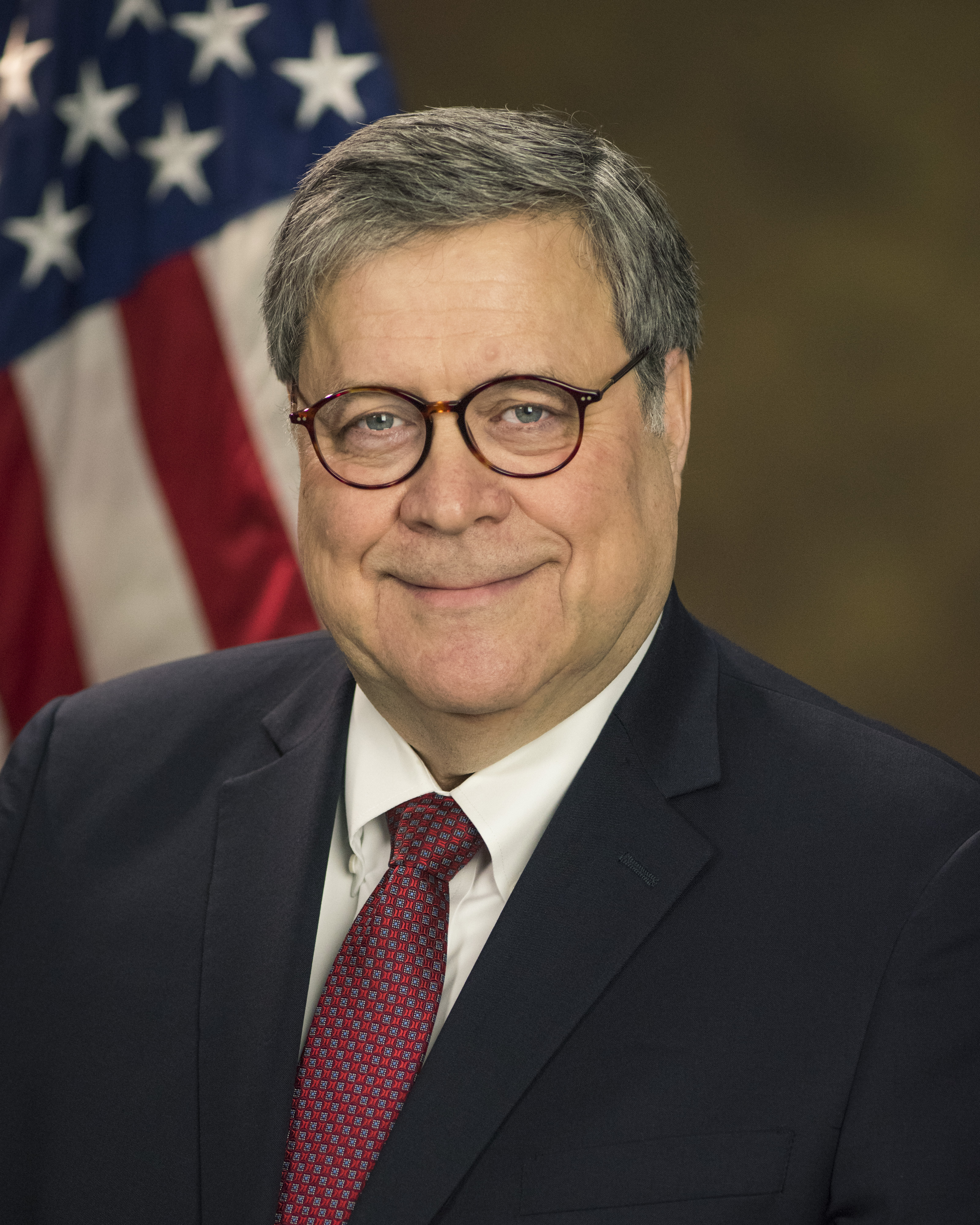
U.S. Attorney General William Barr. Official portrait by DOJ.

On Tuesday, April 14, 2020, United States Attorney General William P. Barr, the nation’s top law enforcement officer, issued the following statement:

“In light of the COVID-19 pandemic, the President has issued guidelines calling on all Americans to do their part to slow the spread of a dangerous and highly contagious virus.  Those measures are important because the virus is transmitted so easily from person to person, and because it all too often has life-threatening consequences for its victims, it has the potential to overwhelm health care systems when it surges.

To contain the virus and protect the most vulnerable among us, Americans have been asked, for a limited period of time, to practice rigorous social distancing.  The President has also asked Americans to listen to and follow directions issued by state and local authorities regarding social distancing.  Social distancing, while difficult and unfamiliar for a nation that has long prided itself on the strength of its voluntary associations, has the potential to save hundreds of thousands of American lives from an imminent threat.  Scrupulously observing these guidelines is the best path to swiftly ending COVID-19’s profound disruptions to our national life and resuming the normal economic life of our country.  Citizens who seek to do otherwise are not merely assuming risk with respect to themselves, but are exposing others to danger.  In exigent circumstances, when the community as a whole faces an impending harm of this magnitude, and where the measures are tailored to meeting the imminent danger, the constitution does allow some temporary restriction on our liberties that would not be tolerated in normal circumstances.

But even in times of emergency, when reasonable and temporary restrictions are placed on rights, the First Amendment and federal statutory law prohibit discrimination against religious institutions and religious believers.  Thus, government may not impose special restrictions on religious activity that do not also apply to similar nonreligious activity. For example, if a government allows movie theaters, restaurants, concert halls, and other comparable places of assembly to remain open and unrestricted, it may not order houses of worship to close, limit their congregation size, or otherwise impede religious gatherings.  Religious institutions must not be singled out for special burdens.

Today, the Department filed a Statement of Interest in support of a church in Mississippi that allegedly sought to hold parking lot worship services, in which congregants listened to their pastor preach over their car radios, while sitting in their cars in the church parking lot with their windows rolled up.  The City of Greenville fined congregants $500 per person for attending these parking lot services – while permitting citizens to attend nearby drive-in restaurants, even with their windows open.[1]  The City appears to have thereby singled churches out as the only essential service (as designated by the state of Mississippi) that may not operate despite following all CDC and state recommendations regarding social distancing.

As we explain in the Statement of Interest, where a state has not acted evenhandedly, it must have a compelling reason to impose restrictions on places of worship and must ensure that those restrictions are narrowly tailored to advance its compelling interest.  While we believe that during this period there is a sufficient basis for the social distancing rules that have been put in place, the scope and justification of restrictions beyond that will have to be assessed based on the circumstances as they evolve.

Religion and religious worship continue to be central to the lives of millions of Americans.  This is true more so than ever during this difficult time.  The pandemic has changed the ways Americans live their lives.  Religious communities have rallied to the critical need to protect the community from the spread of this disease by making services available online and in ways that otherwise comply with social distancing guidelines.

The United States Department of Justice will continue to ensure that religious freedom remains protected if any state or local government, in their response to COVID-19, singles out, targets, or discriminates against any house of worship for special restrictions.”


Filed Under: Faith, Legal, News, U S Attorney

California Judicial Council adopts new rules to lower jail population, sets bail at $0, suspends evictions and foreclosures

April 7, 2020 By Publisher 1 Comment

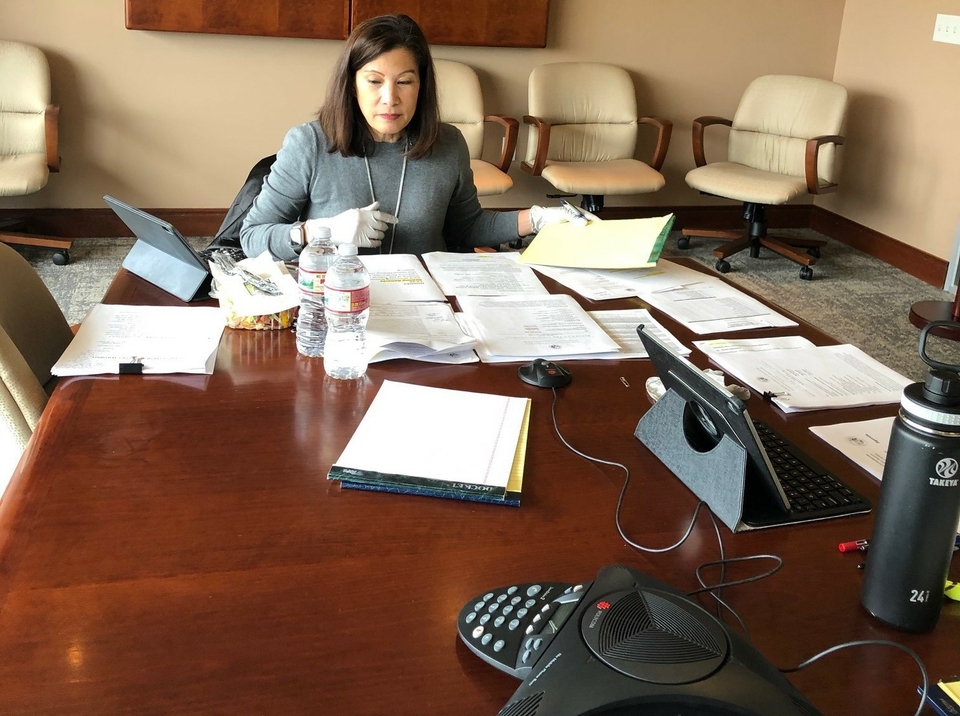
Judicial Council Chair, Chief Justice Tani G. Cantil-Sakauye ran the teleconference call from the council’s office in Sacramento on Monday. Photo by JCC.

11 temporary emergency rules include $0 statewide bail for misdemeanors and lower-level felonies during COVID-19 pandemic to “safely reduce jail populations”

By Blaine Corren, Senior Communications and Public Affairs Analyst, California Judicial Council

VIA TELECONFERENCE—At its meeting on Monday, April 6, 2020, the Judicial Council of California approved 11 temporary emergency rules, including setting bail statewide at $0 for misdemeanors and lower-level felonies to “safely reduce jail populations” and staying eviction and foreclosure proceedings to protect Californians from losing their homes during the COVID-19 pandemic.

This was the second emergency council meeting of court and branch leaders from around the state to consider further measures to ensure California courts—which remain open as “essential services” under Gov. Newsom’s stay-home executive order—can meet stringent health directives while also providing due process and access to justice.

“We are at this point truly with no guidance in history, law, or precedent,” said Chief Justice Tani Cantil-Sakauye, chair of the council. “And to say that there is no playbook is a gross understatement of the situation. In developing these rules, we listened to suggestions from our justice system partners, the public, and the courts, and we greatly appreciate all of the input. Working with our court stakeholders, I’m confident we can preserve the rule of law and protect the rights of victims, the accused, litigants, families and children, and all who seek justice. It’s truly a team effort.”

Members of the Judicial Council of California. Photo from 2018 by JCC.

The council received and considered more than 100 written comments on the new rules from judges, public defenders, district attorneys, law enforcement, legal aid and advocacy groups, unions, attorneys, court reporters, interpreters, and other justice system partners.

Among the actions the council approved, to go into effect immediately:

  • Suspend the entry of defaults in eviction cases;
  • Suspend judicial foreclosures;
  • Allow courts to require judicial proceedings and court operations be conducted remotely, with the defendant’s consent in criminal proceedings;
  • Adopt a statewide emergency bail schedule that sets bail at $0 for most misdemeanor and lower-level felony offenses;
  • Allow defendants to appear via counsel or remote technologies for pretrial criminal hearings;
  • Prioritize hearings and orders in juvenile justice proceedings and set a structure for remote hearings and continuances
  • Extend the timeframes for specified temporary restraining orders;
  • Extend the statutes of limitations governing civil actions; and
  • Allow electronic depositions in civil cases.

The council previously approved a number of temporary measures at its first emergency meeting Mar. 28 to give courts flexibility to continue to provide essential services to the public while protecting health and safety during the pandemic.

For a complete list of emergency orders taken by the California court system in response to the COVID-19 pandemic, see the California Courts Newsroom.

About the Judicial Council

Under the leadership of the Chief Justice and in accordance with the California Constitution, the council is responsible for ensuring the consistent, independent, impartial, and accessible administration of justice. Judicial Council staff implements the council’s policies.

Filed Under: Crime, Health, Legal, News, State of California

OP-ED: Statewide lockdowns and the law

April 4, 2020 By Publisher 2 Comments

Hasty infringements on individual rights at a time of coronavirus.

By John You, Harmeet K. Dhillon

As losses mount throughout the economy due to the coronavirus quarantines, President Trump suggested that he wants the nation “to be opened up and just raring to go by Easter.”  He has since stepped away from that proposal and issued guidelines that lockdowns stay in place until the end of April.  But Trump still seems to be more optimistic than many state governors in his hope that the U.S. will return to normal economic activity sooner rather than later.

But even if Trump were to issue a declaration re-opening American businesses, a nationwide compliance would remain beyond his power.  The Constitution’s system of federalism reserves the authority to lift the quarantine orders in the same people who issued them in the first place: the state governors.

Because state government sits closer to the people, we can and should demand more immediate transparency and accountability of our officials for these draconian, potentially devastating policies.  They may impede the spread of the disease, but we cannot tell if this comes at an acceptable cost because neither governors Gavin Newsom nor Andrew Cuomo have explained how they made the cost-benefit trade-off involved.  They risk judicial intervention or, ultimately, popular rejection, should they continue to keep shutting down their economies without justified benefits.

Richard Epstein, a Hoover scholar and friend, has come under fire for his claim that public health officials have overestimated the rate of infection and the lethality of the coronavirus.  Regardless of Epstein’s theory of why the spread of the virus will slow, the underlying truth of his argument remains: stopping the spread of disease balances lives potentially saved against the economic losses from the lockdowns.

Here is a quick, back-of-the-envelope calculation for a single state, California. The U.S. economy generates approximately $24 trillion a year in GDP, or $2 trillion a month.  California is about 15 percent of that total, for about $300 billion per month.  Suppose that the lockdown causes economic activity to drop by 75 percent in California (it may well be worse).  Is it worth immediate losses of $225 billion per month, in just one state, with potentially longer-lasting recessionary effects, to reduce (but not eliminate) the lives lost to the coronavirus?

It depends on how we estimate the number of lives saved from the lockdowns.  Take California as an example.  At last count, California has 4,643 confirmed cases and 101 deaths from the virus.  We have to balance the lockdowns not against those lives, but against the reduction in the expected harms of an outbreak (which is the probability of an outbreak times the estimated number of deaths).  Some experts, such as doctors at Stanford Medical School, argue that current estimates are inflated, due to the lack of good data from China and Italy and the propensity to test those already infected. Instead, they calculate that the U.S. population may suffer an infection rate of about 2.2 percent, which translates into about 7.7 million infected Americans, or 924,000 Californians.

If the mortality rate from the coronavirus ranges from 1-2 percent, as doctors estimate, then the number of lives that would be lost in an epidemic in California would be 18,500. Suppose that there were a 50 percent chance of that happening without any aggressive government measures, and that the lockdown instead dropped the chances of an outbreak to 10 percent.  By shutting down most economic activity within its borders, California would be spending millions to save a single life, without taking into account less intrusive alternative measures, such as protecting the elderly and placing quarantine orders on those with high probability of testing positive for the disease.

That same money would otherwise allow millions of families – many of them in the lowest income brackets – to pay the rent, put food on the table, and afford health care.  Our states do not shut down their economies every winter to stop the flu, which can kill 60,000 a year nationwide.  Even if the deaths from the coronavirus extend to a higher estimate of 200,000 deaths nationwide, or 24,000 deaths in California, we are still forgoing millions in economic activity to save each life.  While each life is precious, our society chooses not to stop all economic activity to stop other illnesses, such as the flu, or to forgo certain valuable freedoms such as driving to reduce auto accidents.  As the Great Recession showed, massive economic losses can cost lives too by reducing incomes, decreasing longevity, and increases in death by suicide and drug overdoses.

Our state officials should explain whether they could have implemented other policies that could have reduced the spread of the disease without incurring such massive economic destruction.  Did state officials consider less intrusive measures, such as quarantining the identified infected and safeguarding the elderly, who are most vulnerable to the illness, instead of imposing a shutdown of the state’s economy? Was any consideration given to the human health effects of the mandatory stay-at-home order, including exacerbation of mental health issues such as depression and anxiety; a predicted increase in domestic violence; suicides by business owners facing debt and ruin? We simply don’t know.

These are tough decisions. California cannot spend whatever it takes to save every life.  In the 2017-18 flu season, the CDC estimates that 61,000 Americans died of influenza; but we do not impose the types of economic lockdowns and social distancing we see today to stop the flu.  We elect officials to state government to make these policy decisions for us, in a responsible and informed manner.  If they do not explain how and why they arrived at their decision, they risk popular discontent.  If the lockdown continues for weeks on end, and it appears that our leaders imposed statewide quarantines without sufficient proof that the numbers of lives saved would justify the heavy, widespread cost, they even risk civil disobedience where Americans will simply ignore the bans on social and economic activity.  No state has enough manpower to control an unwilling American population.

Lockdown critics might also point to the fact that the states imposing the most draconian suspensions of civil liberties – the rights to travel, congregate, or use property, enjoy due process before the loss of your business or livelihood – have a mixed record when it comes to public safety. California has the highest homeless population in the nation, with over 100,000 living on the streets in squalid conditions that lend themselves to disease outbreaks, including hepatitis, typhus, and others. A lack of public trust as to the consistency of the government’s public health intervention may undermine confidence in the current orders.

This is a good area where the law can step in.  Lawsuits could challenge the government to explain itself and to even compensate business losses for panicked decisions. The Takings Clause of the Constitution, for example, requires just compensation when the state takes private property for public purposes.  If Newsom or Cuomo commandeer hotel rooms to convert into makeshift hospital rooms, the states would have to pay the market rate.  On the other hand, if the state has to close restaurants that fail health and safety codes, they do not.

Statewide lockdowns test these principles and would demand that state governors explain themselves.  A restaurant or nail salon shut down by the lockdown orders is not inherently a threat to public health or safety.  It is as if the governors commandeered all of these private spaces because people might congregate there and – they believe – spread the virus.  If the state forbids private property owners from using their land for a reasonable, lawful purpose, it must compensate the owners for sacrificing for the public good.

In this crisis, property and business owners could claim that the state cannot force them to bear alone the costs for achieving a social goal.  And at the very least, such lawsuits would force state government to explain why the benefits shutdowns exceed their costs, when compared to less intrusive approaches such as quarantines, monitoring, and testing. Our Declaration of Independence recognized the natural law principle that the consent of the governed is needed for that government to have enduring legitimacy – and hasty infringements on individual rights will soon test that consent.

John Yoo is Heller professor of law at the UC Berkeley School of Law, a visiting fellow at the American Enterprise Institute, and a visiting scholar at Stanford University’s Hoover Institution. From 2001 to 2003 he served as Deputy Assistant Attorney General in the Office of Legal Counsel in the Justice Department of President George W. Bush. Harmeet K. Dhillon is a trial lawyer and a partner in the Dhillon Law Group in San Francisco. She is the founder of the Center for American Liberty, a civil rights nonprofit organization.

Filed Under: Health, Legal, Opinion

Contra Costa Superior Court remains closed through April 30, update on acceptance of filings

March 28, 2020 By Publisher 1 Comment

By Matt J. Malone, Public Information Officer, Superior Court of California, County of Contra Costa

The Court has requested authorization from the Chief Justice to continue its closure through April 30, 2020 and will issue a further release with details as to what Court operations will resume during any extended closure period.

While Court offices and facilities remain closed, the Court will begin accepting certain urgent filings as follows:

• Emergency Criminal and Juvenile Matters. The Court will accept filings for emergency criminal and juvenile matters only beginning March 30, 2020.

o Criminal filings will be accepted via a drop box placed at the Main Street entrance of the Wakefield Taylor Courthouse in Martinez.

o Juvenile filings will be accepted via a drop box at the Walnut Creek Courthouse.

o “Emergency matters” will be specifically defined in Emergency Local Rules which will be posted on the Court’s website as soon as possible.

• All other matters EXCEPT Traffic and Unlawful Detainer matters. The Court will begin accepting certain filings for these matters on April 6, 2020. Emergency Local Rules governing these filings will be posted to the Court’s website by April 1, 2020.

o Civil and Family filings will be accepted at a drop box placed at the Main Street entrance of the Wakefield Taylor Courthouse in Martinez.

o Family filings only will also be accepted via a drop box at the front of the Family Law building in Martinez.

• Unlawful Detainer matters may not be filed at this time.

• Traffic matters will not be handled at this time. If you seek to pay or challenge a traffic ticket, the Court remains closed. Please contact the Court upon reopening. No Court penalties or fines accrue during the closure.

• Additional drop boxes available at branch courts. Beginning April 6, drop boxes will also be made available at both the Pittsburg and Richmond branch courts only for filings in case types heard at those locations.

• Acceptance of filings by mail/delivery. The Court will accept approved filings, as defined by the case-type Emergency Local Rules, by mail or other delivery such as FedEx. Couriers will not have access to Court facilities, only to the drop boxes.

The Court will not schedule hearings or reset hearings that were scheduled during the closure period until the Court reopens, with the exception of urgent matters described above and those to be set forth in Emergency Local Rules. The Court will inform you of the rescheduled hearing date. Please do not call the Court asking for a date.

The Court will be closed completely on March 31, 2020, in observance of the Cesar Chavez holiday.

As with its initial closure, the Court’s request for a continued emergency order and limited closure is not in response to a specific notice of exposure at any Court facility or to any Court staff.

Filed Under: Legal, News

OP-ED: Gov. Newsom’s Executive Order for 40 million Californians to Shelter In Place is not an order, it’s a recommendation

March 21, 2020 By Publisher 6 Comments

By Mark Meuser

Thursday, Governor Gavin Newsom issued Executive Order N-33-20. The Office of the Governor of California’s official Twitter account said that “Governor Gavin Newsom issued a stay at home order to protect the health and well-being of all Californians and to establish consistency across the state in order to slow the spread of COVID19.”

However, a more careful look at the Governor’s Executive Order shows that he actually made no such order. (https://covid19.ca.gov/img/N-33-20.pdf). The Executive Order reads “To preserve the public health and safety, and to ensure the healthcare delivery system is capable of serving all, and prioritizing those at the highest risk and vulnerability, all residents are directed to immediately heed the current State public health directives, which I ordered the Department of Public Health to develop for the current statewide status of COVID-19.”

The word “heed” is the important word in this order. According to Merriam-Webster’s dictionary, the word “heed” means “to give consideration or attention to”. As such, Governor Newsom has not actually ordered the people of California to obey the Public Health Officials but instead ordered “all residents are directed to immediately [give consideration to] the current State public health directives.”

While the Governor of California has broad powers to suspend laws and regulations while the state of California is under a State of Emergency, he does not have the power to abolish citizens constitutional rights. (Gov. Code § 8571).

California Constitution Article 1, Section 1 states “All people are by nature free and independent and have inalienable rights. Among these are enjoying and defending life and liberty, acquiring, possessing, and protecting property, and pursuing and obtaining safety, happiness, and privacy.

California Constitution Article 1, Section 7 reads “A person may not be deprived of life, liberty, or property without due process of law or denied equal protection of the laws …”.

The problem for Governor Newsom is that the Public Health Officials do not have the authority to quarantine someone who has not been infected. This violates Californians’ Constitutional Rights. The California Courts have held that people have a right of liberty from being quarantined unless the public health official has probably cause that they are infected. In Ex parte Arata, the California Court of Appeals ruled that “A mere suspicion, unsupported by facts giving rise to reasonable or probable cause, will not justify depriving a person of his liberty under an order of quarantine.”

Furthermore, in the case of In re Shepard the California Court of Appeals ruled that “Mere suspicion that an individual is afflicted with an isolable disease was not sufficient to give a health officer ‘reason to believe’ that such person was so afflicted, … making it the duty of health officers to protect the public against spread of such disease from persons whom such officers have ‘reason to believe’ were afflicted with such diseases.”

Public Health Officials do have the authority to quarantine someone who they have reason to believe has been infected by the virus. California law actually permits the Public Health Officials to quarantine such individuals without a court order. In Ex parte Johnson the California Court of Appeals ruled that “One infected with a contagious disease … might be subjected to quarantine regulations by the health commissioner of a city, without its first being judicially established by some proceeding in court that he or she was so infected.”

The reality of the situation in California is that Gavin Newsom has ordered the Department of Public Health to develop a policy for how to deal with the Corona Virus. However, the recommendations by the Department of Public Health are unconstitutional. Rather than ask the Department of Public Health to go back and rewrite the policies, Gavin Newsom tells everyone that he is ordering them to obey the directives of the Department of Public Health. However, regardless of what Gavin Newsom says with his mouth in press conferences or says on his social media accounts, the actual text of his Executive Orders are the laws. (Gov. Code § 8567).

The text of Gavin Newsom’s most recent Executive Order is merely a suggestion that the people of California obey the unconstitutional directive being published by the Department of Public Health. Whether or not it is advisable for people to stay home is not the question, the Department of Public Health does not have the authority to pass such a law, and Gavin Newsom does not have the authority to suspend Californians’ Constitutional Rights just because California is in a State of Emergency.

Meuser is a Constitution and elections law California attorney with the Dhillon Law Group. He is a former resident of Contra Costa County and 2018 candidate for California Secretary of State. You can follow him on Facebook.

Filed Under: Health, Legal, Opinion

Contra Costa Superior Courts to close until April 1 beginning Monday due to Coronavirus (COVID-19) – no fooling

March 15, 2020 By Publisher Leave a Comment

In response to the unique and continuing public safety challenge presented by the coronavirus (COVID-19) and the numerous public health orders suggesting or requiring that public gatherings be limited:

The Contra Costa County Superior Court will be closed at all locations for approximately two weeks beginning Monday, March 16, 2020. Court locations hope to re-open at 8:00 a.m. on Wednesday, April 1st, 2020. Please check the Court website – http://www.cc-courts.org – for updates.

While the courts will be closed for most court cases starting on March 16, jurors who have been ordered to appear in court for criminal trials on Monday, March 16, must report to the court as ordered. At that time, the judges in those cases will provide guidance as to any further proceedings.

The Court appreciates the careful balance that must be maintained between the timely administration of justice and the protection of public health and safety. At the Court’s request and as permitted under Government Code section 68115, the Chief Justice of the California Supreme Court has issued an emergency order providing that, at least until April 1, 2020, the court closure will have the effect of being a public holiday as far as statutory or other timelines are concerned.

• If you have a hearing scheduled during this period, it will be reset to a later date. Notice of the new hearing date will be mailed to you or your attorney.

• If you are scheduled for jury service during this period, your service will be rescheduled. Notice of the rescheduled date will be mailed to you.

• Any in custody arraignments will be handled in Martinez, but all courthouses are closed to the public. Juvenile in custody arraignments will be handled in Martinez though closed to the public. Counsel will be permitted at all arraignments.

• If you need to seek an emergency protective order and/or a temporary guardianship, please contact your local police agency who will seek an appropriate order on your behalf.

• If you need to contact the juvenile or criminal arraignment departments, please call 925-608-1199.

Importantly, this closure is not in response to a specific notice of exposure at any Court facility or to any Court staff. Instead, it is in an abundance of caution to help limit the spread of the virus and the potential for future exposure.

Filed Under: Health, Legal, News

Contra Costa Health Services prohibits mass gatherings of 100+ people through end of March

March 14, 2020 By Publisher Leave a Comment

Violation of or failure to comply is a misdemeanor punishable by fine or imprisonment in the county jail, or both. 25 cases currently in the county. 

By Allen Payton

Contra Costa Health Services (CCHS) has announced a mandatory order prohibiting public and private mass gatherings of 100 or more people. A new order from CCHS Health Officer, Dr. Chris Farnitano, posted at cchealth.org/coronavirus states, “Under the authority of Sections 101040 and 120175 of the California Health and Safety code, the Health Officer of the County of Contra Costa (“Health Officer”) orders effective as of 12:01 am on Sunday, March 15, 2020, and continuing through Tuesday, March 31, 2020, mass gatherings…defined as an event or convening that brings together 100 or more individuals at the same time in a single room or single confined or enclosed space, including but not limited to an auditorium, theater, stadium, arena, event center, meeting hall, conference center, cafeteria, or any confined indoor space of confined outdoor space.”

“Violation of or failure to comply with this is Order is a misdemeanor punishable by fine or imprisonment in the County jail, or both. (California Health & Saf. Code, § 120295.),” the announcement also states. (See the complete order, here – HO-COVID19-01-Prohibiting-Mass-Gatherings-of-100-or-more )

Furthermore, in a Facebook Live video with Contra Costa Health Director Ana Roth (which can be viewed on YouTube), Dr. Ori Tsveieli, Contra Costa Deputy and Acting Health Officer said, “We are strongly urging what are called social distancing strategies. No gatherings of people, because the virus can spread when people gather together. So, we want to limit gatherings of people. Our strong urging is to cancel or postpone gatherings of 50 or more people coming together. People who are especially vulnerable, who are the elderly or people with chronic medical conditions, really try to stay away from gatherings of people, even as small as 10 people together can elevate your risks.”

“If you are sick do not go to work or school,” he also stated. “Work from home if you can.”

“This is a key time,” Dr. Tsveieli continued. “We are trying to flatten the curve. Which means slow the spread down so that our healthcare infrastructure in our community can handle it.”

According to Contra Costa Health Services, as of Friday, March 13, 2020 at 9:30 a.m., in Contra Costa County there are 25 cases of residents with coronavirus/COVID-19 with zero deaths.

A press conference scheduled for 1:00 p.m. today. Speakers will include Contra Costa Board of Supervisors Chair Candace Andersen and Contra Costa health officials. The health officer’s goal is to firmly establish the critical need to reduce the spread of COVID-19 by eliminating crowds.

For the latest update from Contra Costa Health Services, visit https://www.coronavirus.cchealth.org/.

Expect more information to be added to this report. Please check back later.

Filed Under: Health, Legal, News

Contra Costa Superior Court issues coronavirus (COVID-19) related information on court appearances

March 10, 2020 By Publisher 5 Comments

By Matt J. Malone, Public Information Officer, Superior Court of California, Contra Costa County

Recognizing the severity of the coronavirus (COVID-19), the Contra Costa County Superior Court is taking active steps to control its spread within the community and reduce infections.

Parties, attorneys, and jurors who are experiencing coughing, fever, or shortness of breath should not come to Court.

• Individuals who have received a summons for jury duty may reschedule their service either online at http://www.cc-courts.org/jury/jury.aspx or by calling 925-608-1000 to speak to the Court’s jury services department.

• Parties or attorneys should contact the individual departments handling their matters for rescheduling.

The public is encouraged to refer to the Centers for Disease Control & Prevention website for up-to-date information about COVID-19 symptoms: https://www.cdc.gov/coronavirus/2019-ncov/about/symptoms.html.

Those who come to Court without presenting these symptoms should still practice excellent personal hygiene, such as frequent handwashing, avoiding touching the face, and coughing or sneezing into the elbow. The Court is taking extra effort to sanitize public access areas, including doors, elevators, stair rails, and other frequently-touched surfaces.

The Court’s services and business hours otherwise remain unchanged.

These instructions may be updated as additional information becomes available.

Filed Under: Health, Legal, News

San Ramon’s California High School wins county Mock Trial for third year in a row

February 26, 2020 By Publisher Leave a Comment

Winners of the 2020 Contra Costa Mock Trial, the California High School Mock Trial Team, led by teacher coach Brian Barr and attorney coaches Larry Lowe, and Ken Mifsud represented Contra Costa County at the 39th Annual California State Mock Trial last March in Orange County, CA. Photo courtesy of CCC Office of Education.

The California High School Mock Trial Team from San Ramon, led by teacher coach Brian Barr, and attorney coaches Larry Lowe and Ken Mifsud, has won Contra Costa County’s annual competition for the third year in a row. The Grizzlies bested Acalanes, who took second place in the final round, and third place Miramonte beat Monte Vista which took fourth place in the Consolation round. (See the complete Mock Trial competition results).

The Cal High team will represent the county at the 39th Annual California State Mock Trial Finals on March 20-22 in Los Angeles, CA.

Mock Trial Overview

The Mock Trial Program is sponsored by the Constitutional Rights Foundation (CRF). Each year CRF creates a mock trial that addresses serious matters facing young people today.

Each team works with teacher and attorney coaches to prepare their version of the criminal case, both from the prosecution and defense perspective. Students assume the roles of trial attorneys, pretrial motion attorneys, witnesses, clerks, and bailiffs. Through these role-playing techniques, students learn about the content and processes of law in an exciting and vibrant way. Also, by studying the case and preparing strategies and arguments for trial, students increase their public speaking skills, analytical ability and team cooperation.

Some high schools offer the Mock Trial Program as a class rather than an extra-curricular activity.

At the State Finals, the winning teams from 36 counties will present People v. Matsumoto, the trial of Bailey Matsumoto. Bailey is the founder of a technology start-up that develops autonomous (self-driving) trucks. Bailey is charged with murder, which is the unlawful killing of another human being with malice afterthought. The pretrial issue involves the Fourth Amendment protection against unreasonable searches and seizures.

Courtroom Art Contest

Students also had the opportunity to compete as courtroom artists by participating in the Courtroom Art Contest, a companion program to Mock Trials. As courtroom artists, students accompany their Mock Trial teams and sketch courtroom scenes that are later judged by a team of art judges. Download artist rules and registration information. The winner, Reese Whipple of Miramonte High, will represent Contra Costa County at the state finals.

The court drawing by the Outstanding Artist Reese Whipple of Miramonte High. Photo courtesy of CCC Office of Education.

Courtroom Journalism Contest

Students were given an opportunity to report on a Mock Trial from the perspective of a journalist. As courtroom reporters, students will accompany their school’s Mock Trial teams to the preliminary rounds of the competition. Courtroom reporters will then write and submit one 500-word news article on the trial they attended. Articles were judged by a panel of specialists. The winner, Christine Oh of California High, will represent Contra Costa County at the state finals.

List of Winners

Following is the list of major award winners during the 2020 Contra Costa County competition:

TOP OVERALL WINNING TEAMS

1st Place – California

2nd Place – Acalanes

3rd Place – Miramonte

4th Place – Monte Vista

NEW THIS YEAR!

TEAM SPORTSMANSHIP AWARD

Las Lomas

Awarded to the team that exhibited a high degree of ethics, respect, fair play and good attitude (win or not).

Outstanding Artist

Reese Whipple, Miramonte

Outstanding Journalist

Christine Oh, California

Judges’ Choice Award Winners (with 2 votes each)

Acalanes Jane Gundacker

Alhambra Simarpreet Kaur

Carondelet Nicole Abudayeh

De Anza Elena Martinez

Kennedy Geselle Alvarado

Richmond Andrea Lopez and Eric Martinez

Judges’ Choice Honorable Mention

Acalanes Jamie Lattin, Adam Machajewski and Yicheng Yao

Alhambra Nivia Buttar and Tess Kempner

California Daniela Kuthy-Cervantes and Sarah Zhang

Campolindo Sarah Downing, Madeleine Landau, Nina Naffziger, Maia West and Danielle Whisnant

Carondelet Laura Bocek

De Anza Kilty Huskisson, Irene Kou and Tyler Quijada

Deer Valley Janae Burks, Katherine Muster, Caitlin Todd and SavannahTurnage

Dougherty Valley Elijah Bradford, Pradyun Singh, Neha Vasagiri and Gayathri Viswanth

El Cerrito Audrey Dowling, Zayn Martaza and Simone Parisi

Hercules Kevin Gill

Heritage Jacki Fortner, Lexi Ojeda and Tori Renner

Kennedy Emani Mason and Viridiana Ayala

Las Lomas Annalise Anderson, Dina Mirmotalebisohi and Cameron Pitzak

Miramonte Adrian Nibley, Preston Nibley, Sarah Svahn, Eva Winter and Chaya Tong

Monte Vista Cameron Boles, Valeria Caveroegusquiza, Liam Crowley and Hannah Nance

Richmond John Olivarez and Jahzeel Perez

See the list of all 2020 award winners here.

Filed Under: Education, Legal, News

  • « Previous Page
  • 1
  • …
  • 6
  • 7
  • 8
Monica's-Riverview-Jan-2026
Liberty-Tax-Jan-Apr-2026
Deer-Valley-Chiro-06-22

Copyright © 2026 · Contra Costa Herald · Site by Clifton Creative Web