• Home
  • About The Herald
  • Local Agencies
  • Daily Email Update
  • Legal Notices
  • Classified Ads

Contra Costa Herald

News Of By and For The People of Contra Costa County, California

  • Arts & Entertainment
  • Business
  • Community
  • Crime
  • Dining
  • Education
  • Faith
  • Health
  • News
  • Politics & Elections
  • Real Estate

New report, agency chart course for tackling Bay Area’s chronic housing shortage and affordability problems

February 25, 2021 By Publisher Leave a Comment

Source: MTC & ABAG

MTC, ABAG launch Bay Area Housing Finance Authority and the Expanded Regional Housing Portfolio; possible future nine-county tax measure

The Metropolitan Transportation Commission (MTC) and the Association of Bay Area Governments (ABAG) today issued a detailed new report, entitled Momentum for Lasting Solutions, to serve as a roadmap for private investors as well as federal, state and local governments to combine forces in a comprehensive regional effort to deliver housing availability and affordability throughout the nine-county Bay Area.

Specific strategies identified in the report include securing billions of dollars in dedicated funding; fortifying cities’ and counties’ capacity to produce and preserve housing while also protecting residents from displacement; and launching new pilot programs to prevent homelessness, spur the preservation of existing housing, bolster rental and mortgage assistance, create a single regional platform for affordable housing applications, and establish a regional database to monitor the “pipeline” of new projects in the planning, permitting, financing and construction phases. Near-term actions proposed in the report are designed to lay a foundation for the Bay Area to efficiently and effectively deploy future capital resources, including funds from a potential nine-county ballot measure.

“The Bay Area’s housing crisis has been growing for decades,” noted Berkeley mayor and ABAG Executive Board president Jesse Arreguin, “The roots of the problem are deep and tangled, and they reach into every one of our communities. ABAG and MTC have been organizing a coordinated regional approach because the problem is too big for any one city or county to solve separately.”

One of the cornerstones of ABAG’s and MTC’s expanded regional housing portfolio is the Bay Area Housing Finance Authority. Established in 2019 by state Assembly Bill 1487, BAHFA is the first regional housing finance authority in California and gives the Bay Area a new set of tools that can be used in new ways in all nine Bay Area counties and in each of the region’s 101 cities. While BAHFA is comprised of the same membership as MTC, its procedures also are managed by the ABAG Executive Board; and both boards must approve any decision to put a regional housing finance measure on a future ballot.

Napa County Supervisor Alfredo Pedroza, who also serves as Chair of both MTC and BAHFA, acknowledges that meeting the Bay Area’s interrelated housing challenges will require the investment of dollars that are not currently available.
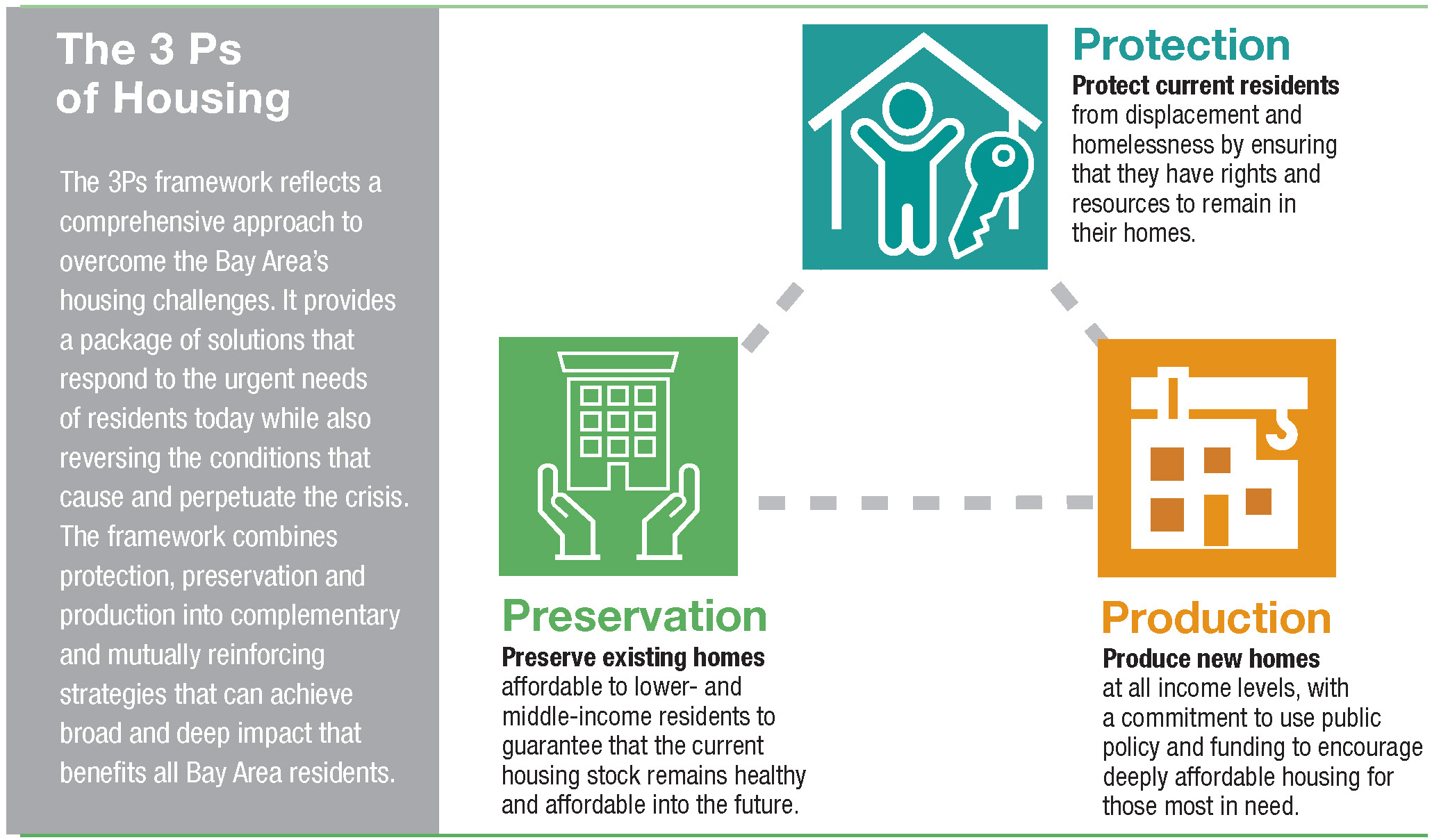
“As a result of the COVID-19 pandemic and the economic upheaval that followed, MTC and ABAG elected not to put a measure on the November 2020 ballot. But we have kept working on the ‘Three Ps’ to boost housing production, encourage the preservation of existing housing and protect vulnerable residents from displacement,” he said. “We’re building partnerships with Bay Area companies and foundations, and also working to secure state and federal dollars that can be used as seed money to kickstart the regional approach outlined by AB 1487 and the Momentum for Lasting Solutions report. And we will continue to evaluate the next viable opportunity to put a regional housing measure on the ballot. The bottom line is that the Bay Area has to deliver stable and affordable housing on a massive scale and with equitable outcomes — now more than ever.”

San Francisco Assembly Member David Chiu, who authored AB 1487, explained in 2020 that, “BAHFA is more than just a vehicle for voters to support affordable housing. It’s also a vehicle for collectively addressing our housing crisis, embracing bold ideas, testing innovative approaches, strengthening the partnership between ABAG and MTC through shared decision-making, and fostering new funding partnerships with foundations and the private sector.”

View the complete Momentum for Lasting Solutions report on the ABAG website.

MTC is the transportation planning, financing and coordinating agency for the nine-county San Francisco Bay Area. ABAG is the council of governments and the regional planning agency for the 101 cities and towns, and nine counties of the Bay Area.
Filed Under: Growth & Development, Homeless, News

Contra Costa County appears to be overpaying for Pittsburg motel for homeless by more than $5 million, releases appraisal

October 27, 2020 By Publisher 2 Comments

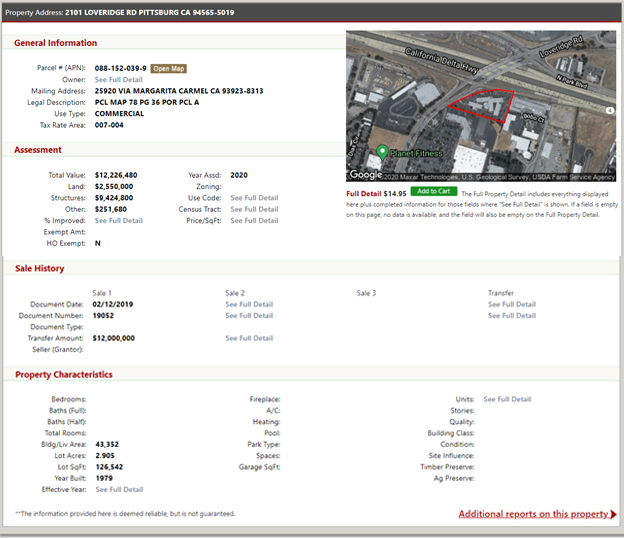
Assessor’s Parcel information for Motel 6 in Pittsburg. From ParcelQuest Lite website.

“In the interests of transparency” – Chief Assistant County Administrator Eric Angstadt

“The difference is primarily due to the below market purchase price” – from the appraisal

“This is a classic example of a gift of public funds” – County Assessor Gus Kramer

By Allen Payton

After learning that the county’s outside appraisal for the Motel 6 in Pittsburg was $16.7 million, and the purchase price offered by the Board of Supervisors of $17.4 million, was only 4.2% higher, it was learned today that the same motel sold for just $12 million in February 2019. In addition, it was assessed on January 1st, this year slightly higher at $12,226,480. After requesting a copy of the appraisal since last week, the County Counsel’s office released it, today “in the interests of transparency.” The appraisal shows last year’s “purchase price was modified to $13,200,000.” (See related article)

Asked for copies of what was believed to be both internal and outside contract appraisals from the Public Works Department Real Estate Division, Chief Assistant County Administrator Eric Angstadt responded, “I’m only aware of one appraisal. It was contracted out. I can give you what the topline is, but the appraisal is not available until after escrow closes.”

“The appraised value is $16.7 million at $96,000 per room,” he stated. “It’s 4.2% above the appraised value.”

Asked if the appraisal was done internally or contracted out, Angstadt said, “We always contract out appraisals. We have staff with real estate licenses. But I don’t believe we have any licensed appraisers on staff.”

“The state was very public about how much they were willing to pay, at $100,000 per room,” he continued. “So, it didn’t leave us with much room to negotiate.”

“We have not signed the purchase and sale agreement, yet. That will happen once we finish the due diligence. We are working our way through all of it. It’s scheduled to close escrow on November 10th,” Angstadt added.

However, Angstadt released the appraisal to the Herald, today after obtaining permission from the County Counsel’s office. It was done by West Hollywood-based HVS Consulting & Valuation, a Division of TS Worldwide, LLC which, according to their website, provides highly credible hotel valuations and appraisals.” (See page 13) HVS Appraisal – FINAL – Motel 6 – Pittsburg CA – 09

The sale price for the 41-year-old motel was $68,000 per room, last year.

In a search of the Assessor’s Parcel number for the property, which is 088-152-039 on the ParcelQuest Lite website, a link to which can be found on the Contra Costa County Treasurer-Tax Collector’s webpage and which any member of the public, county staff, Board of Supervisors and any appraiser can do, it provides the details of last year’s sale and this year’s valuation.

The closest comparable sale was the Ramada Inn, now Comfort Inn, in Antioch which sold in March 2017 for $50,000 per room. That’s a much higher end hotel than the Motel 6. Another comparable property, the Marina Bay Inn & Suites on Cutting Blvd. in Richmond near Pt. Richmond sold in August 2017 for $80,000 per room, and that’s in an area considered nicer than where the Motel 6 is located in Pittsburg.

“The real comparable sale is the property itself,” said County Assessor Gus Kramer, who has been an outspoken critic of the county’s purchase of the motel. (See related article)

“Did the appraiser back into the state’s and county’s number?” he asked. “How can the appraiser say the value of the motel increased in the last year by 45%? No property in the county has increased in value that much during that time.”

Asked when the property was assessed this year, Kramer said his staff did that on January 1st.

“This is a classic example of a gift of public funds,” he stated. “Just because the state is giving us this amount of money doesn’t mean we need to spend that much.”

“This is why local government is in trouble,” Kramer continued. “It’s not that they don’t have enough money it’s that they don’t manage what they have, well.”

An email was sent to all members of the Board of Supervisors, County Administrator David Twa and Angstadt asking them why there is such a difference in the value arrived at by the county’s contract appraiser as well as the offer price, and last year’s sale price and this year’s assessed valuation. They were also asked to confirm that the property in the online search was in fact the Motel 6, since it has the same address and the photo of it appears to be the motel. In addition, they were asked why the appraiser didn’t take into account the sale and assessed value for the motel and if they will now seek a second appraisal.

Text messages were also sent to Supervisors Federal Glover, in whose district the motel is located, Diane Burgis and Board Chair Candace Andersen informing them of the difference in appraised value and assessed valuation and to please check their emails.

The Board was holding a special closed session meeting, today beginning at 9 a.m. to discuss both Kramer’s lawsuit against the Board over allegations of violations of the state’s Brown Act open meeting law, as well as potential candidates to replace Twa who is retiring, this year.

The email and texts were sent between 11:08 and 11:10 AM Wednesday morning and the recipients were given a deadline of 1:00 p.m. to respond.

Angstadt responded with, “The appraisal does include a discussion and analysis of the past sale of the property and the reasoning, changes and circumstances that led to the appraiser assigning the valuation they did.  As I said in our earlier discussion Government Code Section 6254(H) exempts release of the contents of an appraisal before the acquisition of the property is complete.  Therefore I can’t directly answer your question about how they justified the higher value, but I can assure you they did discuss the issues you raised and their methods of determining the higher value they assigned to the property.

However, California Government Code § 6254 (2017) reads “Except as provided in Sections 6254.7 and 6254.13, this chapter does not require the disclosure of any of the following records:

(h) The contents of real estate appraisals or engineering or feasibility estimates and evaluations made for or by the state or local agency relative to the acquisition of property, or to prospective public supply and construction contracts, until all of the property has been acquired or all of the contract agreement obtained.”

A further question was asked if the county is prohibited from releasing the appraisal or just not required to and if they can release it to please provide it, as has been requested since last week.

In response Angstadt wrote, “I spoke with County Counsel and they said they we could disclose the appraisal at this time in the interests of transparency.  A number of the issues you raised are discussed starting on page 13.”

Appraisal Explanation for Higher Value Than 2019 Sale Price

On that page, the appraisal provides the reason for part of the higher price. It reads, “The ‘as is’ market value opinion in this appraisal is approximately 27% higher than the February 2019 purchase price. The difference is primarily due to the below market purchase price, as described throughout this report.”

Please check back later for any responses from the Supervisors and any other updates.

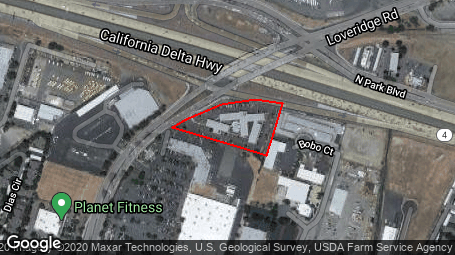
Below is the information from the ParcelQuest Lite property search of the Motel 6 property located at 2101 Loveridge Road in Pittsburg.

Russell V. Watts , County Treasurer-Tax Collector

Property Address: 2101 LOVERIDGE RD PITTSBURG CA 94565-5019

Google Map of Motel 6 site. From ParcelQuest Lite.

Full Detail $14.95  The Full Property Detail includes everything displayed here plus completed information for those fields where “See Full Detail” is shown. If a field is empty on this page, no data is available, and the field will also be empty on the Full Property Detail.

Property Address: 2101 LOVERIDGE RD PITTSBURG CA 94565-5019

General Information

Parcel # (APN): 088-152-039-9 
Owner: See Full Detail
Mailing Address: 25920 VIA MARGARITA CARMEL CA 93923-8313
Legal Description: PCL MAP 78 PG 36 POR PCL A
Use Type: COMMERCIAL
Tax Rate Area: 007-004

Assessment

Total Value: $12,226,480 Year Assd: 2020
Land: $2,550,000 Zoning:
Structures: $9,424,800 Use Code: See Full Detail
Other: $251,680 Census Tract: See Full Detail
% Improved: See Full Detail Price/SqFt: See Full Detail
Exempt Amt:
HO Exempt: N

Sale History

Sale 1 Sale 2 Sale 3 Transfer
Document Date: 02/12/2019 See Full Detail See Full Detail
Document Number: 19052 See Full Detail See Full Detail
Document Type:
Transfer Amount: $12,000,000 See Full Detail
Seller (Grantor):

Property Characteristics

Bedrooms: Fireplace: Units: See Full Detail
Baths (Full): A/C: Stories:
Baths (Half): Heating: Quality:
Total Rooms: Pool: Building Class:
Bldg/Liv Area: 43,352 Park Type: Condition:
Lot Acres: 2.905 Spaces: Site Influence:
Lot SqFt: 126,542 Garage SqFt: Timber Preserve:
Year Built: 1979 Ag Preserve:
Effective Year: See Full Detail
**The information provided here is deemed reliable, but is not guaranteed.


Filed Under: East County, Homeless, News, Real Estate, Supervisors

Contra Costa Supervisors approve $17.4 million purchase of Motel 6 in Pittsburg as transitional housing for homeless

October 22, 2020 By Publisher 22 Comments

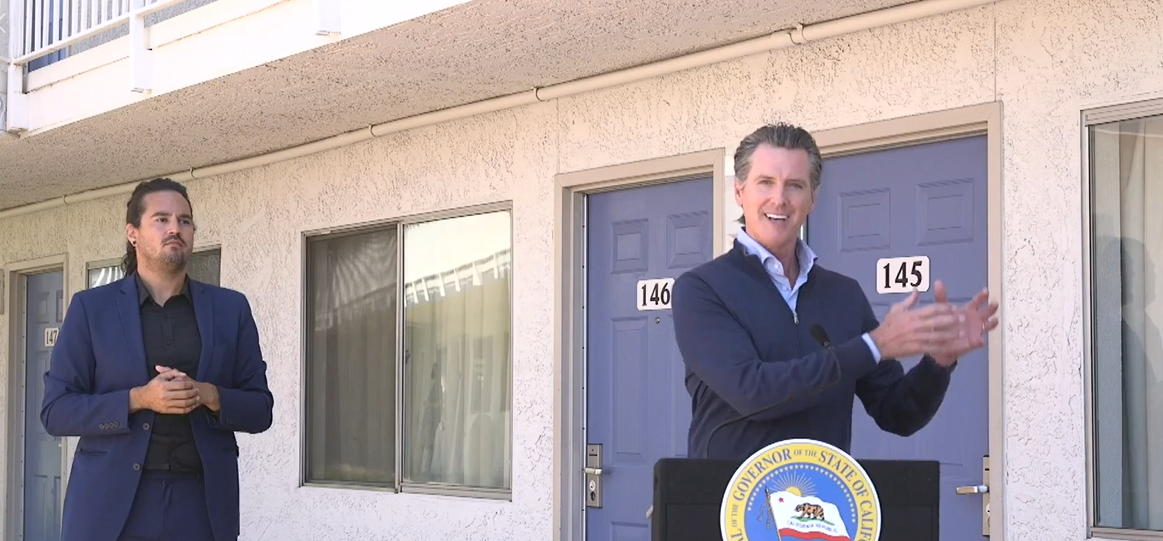
Gov Newsom speaks at Motel 6 in Pittsburg to announce the state’s new Homekey program on Tuesday, June 30, 2020. Screenshot from press conference video.

$21.6 million total for program; approved as a consent calendar item and the last item on the agenda without discussion; no appraisals included; Glover, Kramer split on issue; appraises for $16.7 million.

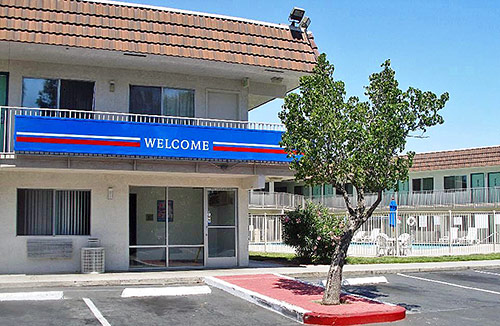
Motel 6 in Pittsburg. Photo by Motel 6.

By Daniel Borsuk

The light will be left on for homeless, now at the Motel 6 in Pittsburg. Contra Costa County Board of Supervisors may have quietly went about unanimously approving $21.6 million for the purchase of the motel and almost two years of operations, as part of the state’s Homekey program to help the homeless find shelter, food, jobs and get social services, but the Board’s consent action on Tuesday also demonstrates how far apart two political candidates – longtime District 5 Supervisor Federal Glover and challenger Contra Costa County Assessor Gus Kramer – are on the issue of homelessness.

The agenda item was quietly acted on as a consent item, and the last on the agenda. There was no discussion on the item, nor were copies of the two appraisals by the county’s Public Works Real Estate Division included with the agenda. Attempts to obtain the appraised value for the property from members of the Board, County Administrator David Twa, and the Public Works Real Estate Division were unsuccessful prior to publication time. However, Supervisors Federal Glover, in whose district the motel is located, as well as Candace Andersen and Diane Burgis said they would work to provide the information.

Located at 2101 Loveridge Road in Pittsburg, the County, with the state’s financial assistance decided that acquisition of the Motel 6 will increase the number of shelter beds permanently available in East County from 20 beds to 174 beds, a 770 percent increase.  In addition to providing shelter, the program, funded under the state’s Home Key Program, would provide health care, behavioral health and other services to residents.

Contra Costa, along with the counties of San Francisco, Alameda and Santa Clara have now drawn state Homekey funds in the fight to solve homeless issues.

“This will be a great opportunity to get people off the street,” said Supervisor Glover who faces Kramer in a November 3rd face-off election because neither candidate drew enough votes to surpass 50 percent threshold of the total votes in the March election.  In that March election, the District 5 Board Seat had three candidates competing for the District 5 seat covering the communities of Antioch, Alhambra Valley, Clyde, Crockett, Hercules, Martinez, Mountain View, Pacheco, Pittsburg, Port Costa, and Rodeo – Glover, Kramer and Martinez businessman Sean Trambley – and no candidate had mustered votes exceeding 50 percent of the votes counted.  As a result, Glover and Kramer are in a run-off election on November 3.

The Contra Costa County Behavioral Department will operate the county’s Homekey program.

County Assessor Kramer, who must appear in Superior Court Judge John Cope’s court room on today, for a jury trial on civil “corrupt or willful misconduct” charges took a different view on the Board of Supervisors’ action to acquire the 174-room motel from OKC of Pittsburg for use as a homeless  facility.

Kramer lashed out at his political opponent Glover and other supervisors for spending $21 million.  “It’s a great program, but it is a waste of resources,” he said. “What a horrible investment.  Shame on the Board and Federal.”

Kramer did offer a potential solution to the homeless problem in the county and perhaps the state by creating camps like what occurred during the Great Depression where job, health and other public services would also be provided to individuals.

10/27/20 UPDATE: Asked for copies of the appraisal, Chief Assistant County Administrator Eric Angstadt responded, “I’m only aware of one appraisal. It was contracted out. I can give you what the topline is, but the appraisal is not available until after escrow closes.”

“The appraised value is $16.7 million at $96,000 per room,” he stated. “It’s 4.2% above the appraised value.”

Asked if the appraisal was done internally or contracted out, Angstadt said, “We always contract out appraisals. We have staff with real estate licenses. But I don’t believe we have any licensed appraisers on staff.”

“The state was very public about how much they were willing to pay at $100,000 per room,” he continued. “So, it didn’t leave us with much room to negotiate.”

“We have not signed the purchase and sale agreement, yet. That will happen once we finish the due diligence. We are working our way through all of it. It’s scheduled to close escrow on November 10th,” Angstadt added.

Orange COVID-19 Metric Next Week?’ 

Supervisors were informed that by next Tuesday the county should transition into the orange COVID-19 criteria, Contra Costa County Health Services Director Anna Roth said.  “We should meet the orange metric next week,” she said.  A move to an orange metric would mean the removal of further restrictions on some businesses.

Since the County declared a State of Emergency because of COVID-19 in March, there have been 18,214 cases and 236 deaths, Roth reported.

The health director encouraged the public to continue to wash hands, keep their distance, and stay home from work or school if they felt ill.

Four Abatement Actions

Supervisors acted on four abatement actions at the recommendations of the Conservation and Development Department.

Properties the Supervisors took action on were:

Property at 2738 Dutch Slough Road, Oakley, owned by Elmo G. Wurts, for $8,141.20; property at 0 Stone Road, Bethel Island, owned by Thanh Ngyyen for $6,964;  property at 4603 Gateway Road, Bethel Island, owned by Franks Marina for $5,591.20; and property at 3901 La Colina Road, El Sobrante, owned by Rudolph N. Webbe for $3,256.70.

Supervisors did not hear any comments from either property owners or the public on the abatement items.

Please check back later for any updates to this report.

Allen Payton contributed to this report.


Filed Under: East County, Homeless, News, Real Estate, Supervisors

News photographer, videographer shares heartbreaking story of young homeless woman living in tunnel below Highway 4 in Pittsburg

October 12, 2020 By Publisher 1 Comment

Homeless woman walking barefoot, with firefighters who were there to extinguish the fire in the tunnel beneath Hwy 4. Photos by Art Ray.

Firefighters extinguish fire in tunnel where she’s been living.

By Art Ray

It’s starting to get cooler at night if you have a place to sleep, you can thank God.

I responded to. a working fire in the underpass beneath Highway 4 at Century Blvd. in Pittsburg. When I got there, I saw a young, homeless woman, and I do mean young. She was laying down on a nasty mattress behind some metal bars. The arriving firemen grabbed a saw and cut the gate open so they could put a hose on the fire.

What got me was that the young woman remained on the mattress with smoke pouring out of the tunnel. She didn’t have the capacity to get away from the smoke or fire. Finally, she walked out of the tunnel bare foot stepping on glass, rocks and all kinds of dangerous things. As she passed by me, I asked “where are your shoes?” to which she replied she didn’t have any.

The point of this story is not that I went and got her a pair of shoes from the store but that she has some demons that has her early, 20-year-old self, homeless and living under a highway. She didn’t even have the mental capacity to follow my directions and to walk the one block down to the store to meet me to get the new shoes.

Homeless woman painting her lighter with nail polish, the mattress where she slept surrounded by garbage in the tunnel, and a firefighter at the gated entrance to one side of the tunnel below Hwy 4. Photos by Art Ray.

I had to go driving around to find her. When I did find her, she was sitting on the ground painting a cigarette lighter with fingernail polish. When I walked up to her with the shoe bag she never even looked up to me when I gave her the new blue shoes she was fixated on the nail polish and lighter. That’s when I realized that’s there are bigger issues than being homeless. There are thousands of homeless people that are not thinking straight.

After dropping off the shoes I went to meet with the county’s homeless advocate to see if they could help the young sister. He told me he would leave his office and go find her as soon as he got done checking in another homeless person into the newly opened homeless residence the state just bought from Motel 6.

I’m saying all of this to encourage everyone to find a way they can help another human being instead of just complaining about the homeless problem.

Most police departments and counties have resources you can plug into. Maybe you have a warm coat or shoes you don’t wear anymore. Be a part of the homeless solution not a person that finds pleasure in complaining about the homeless. Trust this. Many of the homeless have issues they are battling in their heads. It’s getting cold out. Are you willing to find a way to get involved? Perhaps it’s through your church. Like they say, it takes a village. We are all our brother’s, or in this case, our sister’s keeper.

This is a story that I needed to photograph and tell. I included a picture of the nasty mattress in the filth someone’s daughter or sister was laying on when I arrived. Notice I didn’t include her face so she could retain some kind of dignity.

Art Ray is owner of Bay News Video providing video footage to Bay Area news stations and online media.

Filed Under: East County, Fire, Homeless

State grants $21.5 million for County to buy Pittsburg motel for homeless transitional care center

September 17, 2020 By Publisher 1 Comment

Gov Newsom speaks at Motel 6 in Pittsburg to announce the state’s new Homekey program on Tuesday, June 30, 2020. Screenshot from press conference video.

Motel 6 to be repurposed through a California Homekey Grant; site of Gov. Newsom’s press conference about Project Roomkey in June

A 174-room motel in Pittsburg now sheltering homeless Contra Costa residents at high risk from COVID-19 will become a permanent service hub to help county residents transition into stable living situations, thanks to a $21.5 million state grant.

Contra Costa Health Services (CCHS) rented rooms at the Motel 6 at 2101 Loveridge Road in Pittsburg to provide temporary housing through the state’s Project Roomkey program, which funded hotel rooms for residents who could not effectively isolate themselves during the COVID-19 pandemic because they had lost their housing. Gov. Newsom held a press conference at the motel about the program on June 30th. (See related article)

Homekey, the state’s follow-up program, will commit $17.4 million toward the county’s purchase and renovation of the motel, for a cost of $100,000 per room. The state will provide another $4.17 million toward staffing and operating the former motel as temporary housing for county residents experiencing homelessness, with on-site healthcare and behavioral health services, meals and assistance connecting with the services they need to regain housing.

“We are proud to partner with California in our work to provide safe, sustainable services for vulnerable members of our community,” said Candace Andersen, chair of the Contra Costa County Board of Supervisors.

There were only 20 shelter beds available in East County for more than 500 people living outside there in January 2020, most in Antioch and Pittsburg. The county’s most recent homeless point-in-time count showed that 33 percent of residents living outside in Contra Costa were in East County, compared to 27 percent recorded there during the 2019 count.

CCHS will add the new East County CARE Center and interim housing program to its network of homeless service centers, shelters and outreach programs, helping to address an acute shortage of those services in the area.

“This is a great start toward the building services and resources East County needs to address homelessness,” said Contra Costa Supervisor Federal Glover, whose district includes the site. “There is a critical need for this project in our community.”

The grant includes funding for case management, housing navigation services, meals and a robust peer support program, among other services.

“The funding allows us to accelerate our efforts to provide shelter for people living without housing in the eastern region of our county,” said Lavonna Martin, CCHS’s Director of Heath, Housing and Homeless Services. “This project creates a new interim housing option that allows for a greater degree of privacy and flexibility in household configurations we can serve, with the critical services and supports they need to regain permanent housing.”

Motel 6 was one of four in Contra Costa contracted to shelter vulnerable residents who had no housing early in the COVID-19 pandemic, partially funded by California’s Project Roomkey. CCHS is now renting 494 rooms at these motels to house people experiencing homelessness, including more than 200 people at Motel 6 who will continue to receive services and progress toward self-sufficiency under Homekey.

Visit cchealth.org/h3 for recent data about homelessness in Contra Costa County. Annual point-in-time count information is available in the Data Reports section.

Allen Payton contributed to this report.


Filed Under: East County, Homeless, News

Free food distribution in Pittsburg Friday, Aug. 28

August 26, 2020 By Publisher Leave a Comment

Filed Under: Children & Families, Community, East County, Faith, Food, Homeless

Governor Newsom visits Project Roomkey motel in Pittsburg to announce “Homekey,” the next phase in state’s COVID-19 response to protect homeless Californians

June 30, 2020 By Publisher 3 Comments

Gov Newsom speaks at Motel 6 in Pittsburg to announce the state’s new Homekey program, with a sign language interpreter nearby, on Tuesday, June 30, 2020. Screenshot from press conference video.

  • State and counties will spend upwards of $1 billion to purchase hotels, motels, vacant apartment buildings and tiny homes and provide services to the homeless
  • State effort has served an estimated 14,200 individuals in three months
  • 15,679 hotel and motel rooms and 1,345 trailers for extremely vulnerable individuals experiencing homelessness to help flatten the curve & preserve hospital capacity

PITTSBURG (June 30, 2020) – Today, Governor Gavin Newsom visited a Project Roomkey motel in Pittsburg, Contra Costa County to highlight progress that the state and counties have made in providing safe isolation capacity to protect people experiencing homelessness from COVID-19 and to launch Homekey, the next phase in the state’s effort to protect vulnerable homeless Californians from the pandemic.

Homekey, backed by $1.3 billion in newly available and eligible funding through the budget the Governor signed yesterday, will allow for the largest expansion of housing for people experiencing homelessness in recent history, while addressing the continuing health and social service needs of this vulnerable population.

Under the Homekey program, counties will partner with the state to acquire and rehabilitate a variety of housing types: hotels, motels, vacant apartment buildings, residential care facilities, and other tiny homes. All these new placements will serve people experiencing homelessness.

Counties and cities across the state will identify which buildings they intend to purchase and apply to the state for $550 million in grant funding dedicated to this purpose. Once acquired, the local governments will plan for the long-term social services and subsidy needs of the Homekey buildings, with access to $50 million in dedicated Homekey support and an additional $300 million in general local homelessness support which can be used for Homekey, among other priorities.

In addition to these fund sources, counties and cities can access billions more in additional federal stimulus funding which, while available for a variety of purposes, is eligible to be used to provide safe shelter for homeless individuals during the pandemic.

The Governor also announced $45 million in philanthropic support – $25 million from Kaiser Permanente and $20 million from Blue Shield of California – for a new services subsidy fund directed at counties that are implementing Homekey. These contributions, originally announced in January as part of the Governor’s proposed Access to Housing Fund, were redirected by the companies to support the Homekey effort.

Acquisitions and conversions undertaken as part of Homekey will benefit from new legislation that the Governor signed yesterday, providing a CEQA exemption and automatic zoning compliance to new homeless housing utilizing newly available state and federal funding.

“We’ve long dreamed about scooping up thousands of motel rooms and converting them into housing for our homeless neighbors,” said Governor Gavin Newsom. “The terrible pandemic we’re facing has given us a once-in-a-lifetime opportunity to buy all these vacant properties, and we’re using federal stimulus money to do it. Hand in hand with our county partners, we are on the precipice of the most meaningful expansion of homeless housing in decades.”

The Homekey initiative builds upon the state’s current COVID-19 response effort, Project Roomkey, which has directly led to 15,678 hotel and motel rooms statewide being made available for this extremely vulnerable group of Californians. Over 14,200 people have been served by Project Roomkey motels since the epidemic began, according to estimates from the California Department of Social Services.

These Project Roomkey placements are spread across 52 counties and 293 hotels. The counties are responsible for identifying which individuals need a Project Roomkey placement, and then moving those individuals into the rooms.

See below for video of the governor’s press conference, today. It begins at approximately the 4:00 minute mark.

Governor Gavin Newsom provides an update on the state’s initiative to secure hotel & motel rooms to protect homeless individuals from #COVID19.

Posted by California Governor on Tuesday, June 30, 2020

In April, Governor Newsom announced a reimbursement partnership with FEMA, whereby local, state, and tribal governments are eligible to 75 percent cost-share for Project Roomkey activities, including hotel and motel rooms and wraparound supports such as meals, security, and custodial services.

These emergency protective measures are protecting public health by isolating the medically-vulnerable, thinning out the shelter population for social distancing, slowing the rate of spread of COVID-19 and, in turn, flattening the curve.

Homeless policy leaders and local elected officials have long called for hotel/motel conversion as a strategy to bring housing for the homeless online quickly and cost effectively.

Nan Roman, President & CEO, National Alliance to End Homelessness: “The National Alliance to End Homelessness commends Governor Newsom and the State for their innovative and unwavering commitment to reduce homelessness via Homekey. Homekey is the logical and much-needed next step to Project Roomkey, California’s smart strategy to protect people experiencing homelessness in the COVID-19 pandemic. Homekey recognizes that homelessness is a public health AND a housing crisis and seizes the opportunity of the moment to increase the state’s affordable housing stock and target new units to those most in need.”

Philip Mangano, former Director of the U.S. Interagency Council on Homelessness for Presidents Obama and Bush: “Today Governor Newsom backs up his priority on homelessness with a $600 million investment to move homeless people off the streets and beyond shelters to starter homes. In his focus on housing through hotel/motel conversions the Governor is building on an initiative that reduced exposure to the virus and now offers a statewide strategic approach to produce more units faster and cheaper. That’s good for the taxpayer and good for homeless people.”

San Jose Mayor Sam Liccardo, Chair of the Big City Mayors Coalition: “California’s big cities feel the crisis of homelessness most acutely. On behalf of my dozen colleagues in the Big City Mayors Coalition, I express deep appreciation to Governor Gavin Newsom and Legislative leadership for creating the Homekey program, demonstrating their commitment to partner with our cities to confront the urgent needs of our unhoused residents. In unprecedented and uncertain times, we are grateful for the strong commitment of our state elected leaders to supporting cities on the front line working to end homelessness and human suffering.”

Heidi Marston, Executive Director of the Los Angeles Homeless Services Authority (LAHSA): “We’re grateful to Governor Newsom for his leadership and support of Project Roomkey. As a result of his quick and decisive actions, we were able to shelter more than 4,000 people most vulnerable to contracting COVID-19, providing not only a roof over their heads but a safe space to isolate. Through this endeavor, we’ve proven we can bring people indoors quickly through strong partnerships between government, business, and community leaders. We have built momentum that we will hope will help us move folks from Project Roomkey into permanent housing.”

Tomiquia Moss, Founder & Chief Executive, All Home California: “California’s homelessness crisis preceded the COVID-19 pandemic. The State was creative in its response with the Project Roomkey initiative ensuring a safe housing response during this public health crisis. Recognizing the opportunity to purchase hotels and motels and provide housing options for people experiencing homelessness, California continues to demonstrate leadership in responding to this crisis. This approach will secure thousands of units statewide working in partnership with cities and counties and community based organizations. It will take strategies like these during this economic and public health crisis to ensure our most vulnerable residents aren’t left behind.”

PITTSBURG (June 30, 2020) – Today, Governor Gavin Newsom visited a Project Roomkey motel in Pittsburg, Contra Costa County to highlight progress that the state and counties have made in providing safe isolation capacity to protect people experiencing homelessness from COVID-19 and to launch Homekey, the next phase in the state’s effort to protect vulnerable homeless Californians from the pandemic.

Homekey, backed by $1.3 billion in newly available and eligible funding through the budget the Governor signed yesterday, will allow for the largest expansion of housing for people experiencing homelessness in recent history, while addressing the continuing health and social service needs of this vulnerable population.

Under the Homekey program, counties will partner with the state to acquire and rehabilitate a variety of housing types: hotels, motels, vacant apartment buildings, residential care facilities, and other tiny homes. All these new placements will serve people experiencing homelessness.

Counties and cities across the state will identify which buildings they intend to purchase and apply to the state for $550 million in grant funding dedicated to this purpose. Once acquired, the local governments will plan for the long-term social services and subsidy needs of the Homekey buildings, with access to $50 million in dedicated Homekey support and an additional $300 million in general local homelessness support which can be used for Homekey, among other priorities.

In addition to these fund sources, counties and cities can access billions more in additional federal stimulus funding which, while available for a variety of purposes, is eligible to be used to provide safe shelter for homeless individuals during the pandemic.

The Governor also announced $45 million in philanthropic support – $25 million from Kaiser Permanente and $20 million from Blue Shield of California – for a new services subsidy fund directed at counties that are implementing Homekey. These contributions, originally announced in January as part of the Governor’s proposed Access to Housing Fund, were redirected by the companies to support the Homekey effort.

Acquisitions and conversions undertaken as part of Homekey will benefit from new legislation that the Governor signed yesterday, providing a CEQA exemption and automatic zoning compliance to new homeless housing utilizing newly available state and federal funding.

“We’ve long dreamed about scooping up thousands of motel rooms and converting them into housing for our homeless neighbors,” said Governor Gavin Newsom. “The terrible pandemic we’re facing has given us a once-in-a-lifetime opportunity to buy all these vacant properties, and we’re using federal stimulus money to do it. Hand in hand with our county partners, we are on the precipice of the most meaningful expansion of homeless housing in decades.”

The Homekey initiative builds upon the state’s current COVID-19 response effort, Project Roomkey, which has directly led to 15,678 hotel and motel rooms statewide being made available for this extremely vulnerable group of Californians. Over 14,200 people have been served by Project Roomkey motels since the epidemic began, according to estimates from the California Department of Social Services.

These Project Roomkey placements are spread across 52 counties and 293 hotels. The counties are responsible for identifying which individuals need a Project Roomkey placement, and then moving those individuals into the rooms.

In April, Governor Newsom announced a reimbursement partnership with FEMA, whereby local, state, and tribal governments are eligible to 75 percent cost-share for Project Roomkey activities, including hotel and motel rooms and wraparound supports such as meals, security, and custodial services.

These emergency protective measures are protecting public health by isolating the medically-vulnerable, thinning out the shelter population for social distancing, slowing the rate of spread of COVID-19 and, in turn, flattening the curve.

Homeless policy leaders and local elected officials have long called for hotel/motel conversion as a strategy to bring housing for the homeless online quickly and cost effectively.

Nan Roman, President & CEO, National Alliance to End Homelessness: “The National Alliance to End Homelessness commends Governor Newsom and the State for their innovative and unwavering commitment to reduce homelessness via Homekey. Homekey is the logical and much-needed next step to Project Roomkey, California’s smart strategy to protect people experiencing homelessness in the COVID-19 pandemic. Homekey recognizes that homelessness is a public health AND a housing crisis and seizes the opportunity of the moment to increase the state’s affordable housing stock and target new units to those most in need.”

Philip Mangano, former Director of the U.S. Interagency Council on Homelessness for Presidents Obama and Bush: “Today Governor Newsom backs up his priority on homelessness with a $600 million investment to move homeless people off the streets and beyond shelters to starter homes. In his focus on housing through hotel/motel conversions the Governor is building on an initiative that reduced exposure to the virus and now offers a statewide strategic approach to produce more units faster and cheaper. That’s good for the taxpayer and good for homeless people.”

San Jose Mayor Sam Liccardo, Chair of the Big City Mayors Coalition: “California’s big cities feel the crisis of homelessness most acutely. On behalf of my dozen colleagues in the Big City Mayors Coalition, I express deep appreciation to Governor Gavin Newsom and Legislative leadership for creating the Homekey program, demonstrating their commitment to partner with our cities to confront the urgent needs of our unhoused residents. In unprecedented and uncertain times, we are grateful for the strong commitment of our state elected leaders to supporting cities on the front line working to end homelessness and human suffering.”

Heidi Marston, Executive Director of the Los Angeles Homeless Services Authority (LAHSA): “We’re grateful to Governor Newsom for his leadership and support of Project Roomkey. As a result of his quick and decisive actions, we were able to shelter more than 4,000 people most vulnerable to contracting COVID-19, providing not only a roof over their heads but a safe space to isolate. Through this endeavor, we’ve proven we can bring people indoors quickly through strong partnerships between government, business, and community leaders. We have built momentum that we will hope will help us move folks from Project Roomkey into permanent housing.”

Tomiquia Moss, Founder & Chief Executive, All Home California: “California’s homelessness crisis preceded the COVID-19 pandemic. The State was creative in its response with the Project Roomkey initiative ensuring a safe housing response during this public health crisis. Recognizing the opportunity to purchase hotels and motels and provide housing options for people experiencing homelessness, California continues to demonstrate leadership in responding to this crisis. This approach will secure thousands of units statewide working in partnership with cities and counties and community based organizations. It will take strategies like these during this economic and public health crisis to ensure our most vulnerable residents aren’t left behind.”

Filed Under: East County, Homeless, News

Martinez leaders launch Homeless Action Coalition to ‘fill the gaps’ in essential services, address housing crisis

June 16, 2020 By Publisher Leave a Comment

Non-profit will also assist local response to COVID-19 in city’s homeless encampments

Today, Tuesday, June 16, 2020 the Martinez Homelessness Task Force, led by City Councilmember Noralea Gipner and a coalition of community and faith leaders, announced the next phase of its work with the launch of the independent Homeless Action Coalition (HAC), a 501(c)(3) nonprofit community benefit organization.

“Most of us take the basics for granted. But many of our neighbors don’t have that luxury,” said Gipner, President and CEO of the HAC. “Imagine not being able to wash your hands, have a warm dinner or fall asleep feeling safe each night. That stress takes a toll and can make it a challenge to heal trauma and enter the workforce. Our coalition is going to ensure all of Martinez’s unhoused residents can land on their feet and transition into housing.”

With more than 150 unhoused residents living in encampments, embankments and parking lots, Martinez has one of the highest per capita homelessness rates in Contra Costa County. With such great need, Martinez leaders were compelled to act.

Over the past year, community groups and the Martinez Homelessness Task Force have partnered to address urgent needs, most recently operating a weekly homeless service center at the Martinez Waterfront Park. There, the Bay Church and other faith partners offered showers, laundry service and toiletries. The Martinez Police Department and Contra Costa C.O.R.E. connected people to shelters and other public resources, while Contra Costa Health Services provided a free mobile clinic. Community volunteers offered haircuts and organized a clothing exchange program. Prior to COVID-19, 30-40 individuals participated in these services every week.

Moving forward, the Homeless Action Coalition will serve as a hub for these resources, coordinating strategy and funding within Martinez and its adjacent communities.

Since officially incorporating as the successor organization to the Martinez Chamber Development Corporation this past Winter, the HAC has built an internal infrastructure with a Board of Directors, a Faith Community Advisory Committee and an effective fundraising apparatus, raising nearly $30,000 from individual donors, faith organizations and labor groups prior to its formal launch today.

In response to the COVID-19 pandemic, the HAC has already deployed four sanitation stations throughout the city to provide residents with safe and reliable access to bathrooms. It has also organized essential services for the city’s waterfront encampment, providing food, clothing, tents and other supplies to residents who agree to abide by county health rules and self-govern the area to ensure resident safety.

Once the pandemic subsides, weekly group services will return and the HAC will embark on a series of innovative projects to help unhoused residents start new careers, access affordable housing and connect with mental health services.

“By listening to the people we serve, staying nimble and recruiting our neighbors to help out, we believe we’ll be able to have a real impact,” said Jonathan Bash, Chair of the HAC board of directors. “Our region’s housing crisis is complicated, as are the structural roots of poverty. We can’t do this alone. We need people to get involved in the way that works best for them: donate, volunteer or advocate for those who need a voice.”

Residents, business owners and community leaders who wish to get involved can learn more by visiting www.homelessactioncoalition.org.

Filed Under: Central County, Homeless, News

Con Fire and Concord Police arrest transient woman for Concord RV fire

June 11, 2020 By Publisher 1 Comment

Emergency crews extinguish RV fire on Port Chicago Highway under the Hwy 242 overpass. Suspect Jade McCoy, a Concord transient was arrested. Photos courtesy of ConFire.

By Steve Hill, Public Information Officer, Con Fire

Contra Costa County Fire Protection District (Con Fire) announced today the arrest of a suspect in the recreational vehicle (RV) fire that burned under Highway 4 in Concord earlier this week.

The fire in question took place June 8, 2020 with the first call coming in at 3:27 p.m. An investigation was immediately conducted by the District’s Fire Investigations Unit, and Concord Police with a suspect identified and arrest made without incident on June 8 just after 5 p.m.

Arrested was Jade McCoy, a Concord-area transient, date of birth April 22, 1993.  McCoy, who was on probation from a previous arson conviction for setting an exterior fire in 2019, was arrested after investigation by FIU and Concord PD revealed she intentionally set the fire in the RV. McCoy and her boyfriend had been living in the RV parked on Port Chicago Highway under Highway 4. The arson occurred after a verbal altercation between the two parties. Her possible involvement in other recent fires in the area is currently under investigation.

McCoy is in custody in the Contra Costa County Sheriff’s Detention Center in Martinez.  Concord Police filed the case with the District Attorney on June 9 and action is pending.

Investigation revealed a woman seen at the scene around the time of the fire to be the likely responsible party. A short while later, around 5 p.m., Concord Police located the suspect in the vicinity near Olivera Road and Esperanza Drive. Con Fire FIU investigators responded to that scene, interviewed the suspect and determined she was responsible for the blaze, placing her under arrest. She was handcuffed and transported to the Martinez Detention Facility by Concord Police where she was again interviewed by FIU.

The RV fire was initially reported by several parties beginning just before 3:30 p.m. on June 8. Arriving on scene moments later at 3:41, Con Fire’s Battalion Chief 2 reported a fully involved RV on fire under the highway.

In all, 21 fire personnel from Con Fire and the Military Ocean Terminal, Concord’s Federal Fire Department responded to the fire with two Type 1 fire engines, three Type 3 fire engines, two ambulances, a medical supervisor and a fire investigator. Concord Police and the California Highway Patrol also responded to the scene. At 3:42 p.m., the incident commander reported the fire under control.

There were no injuries to responding personnel or civilians.

Filed Under: Central County, Concord, Crime, Fire, Homeless, News, Police

County health officer suspends intakes, orders social distancing at homeless shelters

April 14, 2020 By Publisher Leave a Comment

ORDER OF THE HEALTH OFFICER OF THE COUNTY OF CONTRA COSTA

No. HO-COVID19-07

SUSPENDING INTAKES AT HOMELESS SHELTERS

SOCIAL DISTANCING AT HOMELESS SHELTERS

DATE OF ORDER: April 14, 2020   Please read this Order carefully. Violation of or failure to comply with this Order is a misdemeanor punishable by fine, imprisonment, or both. (California Health and Safety Code, § 120295.)

SUMMARY OF THE ORDER California is in a State of Emergency because of the Coronavirus Disease 2019 (COVID-19) pandemic. The spread of the novel coronavirus that causes COVID-19 is a substantial danger to the health of the public within the County of Contra Costa (“County”). COVID-19 can easily spread between people who are in close contact with one another. This Order is issued based on scientific evidence and best practices as currently known and available to protect vulnerable members of the public from avoidable risk of serious illness or death resulting from exposure to COVID-19. The age, condition, and health of a significant portion of the population of the County place it at risk for serious health complications, including death, from COVID-19. There is growing evidence of transmission risk from infected persons before the onset of symptoms. Thus, all individuals who contract COVID-19, regardless of their level of symptoms (none, mild or severe), may place other vulnerable members of the public at significant risk. Currently, there is no vaccine available to protect against COVID-19 and no specific treatment. The Health Officer of the County of Contra Costa has determined that there is an increased risk of COVID-19 among persons living in large homeless shelters, and that the shelters must be depopulated temporarily to help slow COVID-19’s spread and prevent the healthcare system in the County from being overwhelmed. On April 14, 2020, the depopulation of Bay Area Rescue Mission located at 200 Macdonald Avenue, Richmond CA 94801 (“the Shelter”), will commence.

UNDER THE AUTHORITY OF SECTIONS 101040 AND 120175 OF THE CALIFORNIA HEALTH AND SAFETY CODE, THE HEALTH OFFICER OF THE COUNTY OF CONTRA COSTA (“HEALTH OFFICER”) ORDERS:

  1. Commencing on April 14, 2020 at 2:00 p.m., the owner and operator of the Shelter (collectively “Shelter Operator”) and all staff members and volunteers who work in the Shelter shall suspend the intake of persons to reside at the Shelter, including but not limited to accepting applications, conducting interviews and background checks, or otherwise authorizing any person to stay overnight at the Shelter if the person is not a resident of the Shelter as of the time and date set forth above.
  2. To the extent that the Shelter Operator currently provides or arranges for services to be provided to residents of the Shelter or other homeless persons, other than providing space for overnight stays, those services may continue to be offered, but only on the condition that all participants practice social distancing as set forth in Paragraph 3.
  3. All residents of and other persons who enter the Shelter shall practice social distancing by remaining at least 6 feet away from all other persons while in the Shelter.
  4. This Order shall become effective at 2:00 p.m. on April 14, 2020 and will continue to be in effect until it is extended, rescinded, superseded, or amended in writing by the Health Officer.
  5. Copies of this Order shall promptly be: (1) made available at the Office of the Director of Contra Costa Health Services, 1220 Morello Avenue, Suite 200, Martinez, CA 94553; (2) posted on the Contra Costa Health Services website (https://www.cchealth.org); and (3) provided to any member of the public requesting a copy.
  6. If any provision of this Order or its application to any person or circumstance is held to be invalid, then the reminder of the Order, including the application of such part or provision to other persons or circumstances, shall not be affected and shall continue in full force and effect. To this end, the provisions of this Order are severable.
  7. Questions or comments regarding this Order may be directed to Contra Costa Health Services at (844) 729-8410.

IT IS SO ORDERED:

Chris Farnitano, M.D. Health Officer of the County of Contra Costa   Dated: April 14, 2020

Filed Under: Government, Health, Homeless, News

  • « Previous Page
  • 1
  • 2
  • 3
  • 4
  • Next Page »
Deer-Valley-Chiro-06-22

Copyright © 2026 · · Contra Costa Herald · All Rights Reserved