• Home
  • About The Herald
  • Local Agencies
  • Daily Email Update
  • Legal Notices
  • Classified Ads

Contra Costa Herald

News Of By and For The People of Contra Costa County, California

  • Arts & Entertainment
  • Business
  • Community
  • Crime
  • Dining
  • Education
  • Faith
  • Health
  • News
  • Politics & Elections
  • Real Estate

Supervisors want to increase enforcement of ban on flavored tobacco product sales to youth

June 23, 2017 By Publisher Leave a Comment

Will only affect 93 retailers in unincorporated parts of the county

By Daniel Borsuk

Expect Contra Costa County Supervisors to have on the agenda at either their July 11 or July 18 meeting an ordinance that will further prevent the sale of flavored tobacco products to customers under the age of 21 at 93 licensed tobacco retailers located in unincorporated parts of the county.

The proposed ordinance aims to increase enforcement of current state law that prohibits the sale of tobacco products especially flavored products to anyone under the age of 21.  Although county officials claim three- to four percent of the 93 retailers in unincorporated Contra Costa County illegally sell flavored tobacco products to underage customers, District 1 Supervisor John Gioia of Richmond claims that figure could be as high as 10 percent.

The proposed Contra Costa County ordinance requires “identification from a person who reasonably appears to be under the age of 27 years without first examining the identification of the recipient to confirm that the recipient is at least the minimum age under state law to purchase the tobacco product or tobacco paraphernalia.”

The county has no plans of increasing the $287 a year retailer licensing fee should supervisors approve the ordinance, said County Public Health Director William Walker, who recommended that supervisors adopt the proposed regulation.

Should supervisors adopt the proposed ordinance next month, the county will join Yolo and Santa Clara counties and the cities of El Cerrito and Los Gatos to have passed ordinances enforcing the ban.  Yolo and Santa Clara counties and Los Gatos have gone the extra mile to ban the sale of menthol flavored cigarettes that are a leading contributor to heart and lung disease related deaths, especially among African Americans.

Supervisors balked at acting on a proposed ordinance aimed to protect youth under the age of 21 from buying flavored tobacco products including e-cigarettes, vape pens, e-liquids, snuff, chewing tobacco, little cigars, cigarillos, hookah tobacco, and vapor solutions for electronic smoking mainly because they could not agree on some technical issues. Those included whether a retailer selling these products should be 500 feet or 1,000 feet from either a school, library, park, or playground.

County records show 48 of the 93 licensed tobacco retailers in unincorporated Contra Costa County are within 1,000 feet of a school, park, playground or library.  Some 57 retailers are located within 500 feet of another tobacco retailer and 13 of these 57 stores are also within 1,000 feet of a school.

Saying she prefers setting a 500-foot distance, District 4 Supervisor Karen Mitchoff of Pleasant Hill said it is important for the board to draft an ordinance that supervisors can be satisfied with, so that elected officials on city councils in the county will be potentially interested in adopting similar anti-flavored tobacco product ordinances.

Supervisors heard more than 50 speakers including students, parents, and community organization leaders urge supervisors adopt the ordinance in order to protect the health of children.

“Smoking is a pediatric disease, “said Dr. Walker.  “It is a leading factor for why this county spends $334 million a year in medical costs per year.  Flavored tobacco products are the gateway products to being a habitual smoker.”

Ninety percent of United States smokers began to smoke on average by age 18, he said.

Walker estimates the county receives $30 million in all tobacco sales tax revenue a year, a figure that includes tax revenue from flavored tobacco product sales in the county.

Dr. Phillip Gardener of the University of California San Francisco encouraged the board to adopt the ordinance noting how menthol flavored tobacco products are a major contributing factor for a high death toll in African American community.  “Menthol flavored tobacco products are starter products for our youth,” he said.

“While store employees try to keep these products out of the hands of youth, the reality of the problem is that these products do get into the hands of our youth,” said Rachel Lazarus of the Contra Costa Tolerance Prevention Coalition.  “This ordinance will control this problem.”

With the prospect the tobacco industry might file a lawsuit to block the county from enacting the ordinance, Jag Sing, a board member representing 12 Contra Costa County 7-11 Stores, opposed the proposed ordinance saying “No retailer wants to sell to minors.  Let’s work together.”

East Richmond Heights MAC Formed

In other action, supervisors approved the creation of the East Richmond Heights Municipal Advisory Council.  The council will consist of five members and two alternates to advise District 1 Supervisor John Gioia on community issues.  The MAC will cost $3,000 for administrative expenses per year.

Filed Under: Health, News, Youth

New bill to combat understaffing in California dialysis clinics, 15 in Contra Costa County

February 16, 2017 By Publisher Leave a Comment

By Sean Wherley

State Sen. Ricardo Lara (D-Bell Gardens) introduced legislation, on Wednesday, to improve staffing at more than 550 dialysis clinics in California.

SB 349, the Dialysis Patient Safety Act, would mandate annual inspections of dialysis clinics and safer staffing levels. Current law requires inspections of dialysis clinics every six years, while nursing homes in California must be inspected every year, and hospitals every two years.

This legislation would affect 15 dialysis clinics in Contra Costa County: three each in Antioch and Walnut Creek; two each in Pittsburg and San Pablo; and one each in Brentwood, Concord, El Cerrito, Pleasant Hill and Richmond.

“Dialysis patients are grandparents, children and siblings not numbers on a balance sheet,” said Lara. “It’s time to fix the dialysis industry and improve patient care for the more than 63,000 Californians who rely on this life-saving treatment in clinics daily.”

Dialysis is necessary for people with kidney failure, who must have their blood removed, cleaned, and put back into their bodies. A typical treatment lasts three hours, and must be conducted three days a week for the rest of the patient’s life.

The two largest dialysis corporations – DaVita and Fresenius – make $2.9 billion a year in profits from their dialysis operations in the United States, but workers say the companies pocket the money rather than improve patient care or provide adequate staffing in their clinics.

Dialysis workers regularly report staffing levels so low that it threatens patient care. One worker cited an incident last March at a dialysis clinic in Anaheim, Calif. in which a patient collapsed in the parking lot. The worker said it could have been prevented if more staff were onsite at the time. Seven states already have minimum staffing levels in dialysis clinics: Georgia, Maryland, Massachusetts, Oregon, South Carolina, Texas and Utah.

Dialysis workers in California have been organizing into a union, SEIU-United Healthcare Workers West (SEIU-UHW), for safer working conditions and stronger worker and patient protections. To learn more about the campaign, visit www.morethannumbers.org.

Wherley is the Media Relations Specialist with SEIU-United Healthcare Workers West.

Filed Under: Health, Legislation, News

BART to pay $1.275 million settlement in environmental prosecution case by DA’s of three counties

February 1, 2017 By Publisher Leave a Comment

Transit agency failed to implement plans notifying first responders of the presence of large quantities of hazardous materials at its facilities throughout the Bay Area

Martinez, , CA – The Contra Costa County Office of the District Attorney, along with District Attorneys from Alameda County and San Mateo County, announced today that Alameda County Superior Court Judge Morris Jacobson has ordered San Francisco Bay Area Rapid Transit District (BART) to pay $1.275 million as part of a settlement of a civil environmental prosecution alleging that the transit agency failed to implement hazardous materials business plans at facilities throughout the three counties as well as violating aboveground storage tank, underground storage tank, and hazardous waste laws.

The judgment agreed to by BART, resolves allegations made in a civil enforcement lawsuit filed January 31, 2017 in Alameda County and covers environmental violations dating back to January 2010.  The lawsuit claimed that at over 30 of BART’s 190 facilities throughout Alameda, Contra Costa, and San Mateo Counties, BART unlawfully failed to establish and implement a hazardous materials business plan for emergency response to a release or threatened release of hazardous materials.  These hazardous materials included large quantities of diesel fuel, petroleum, sulfuric acid contained in industrial batteries, and fire extinguishing chemicals.  The lawsuit further alleged that at these and other facilities, BART violated its environmental obligations related to its aboveground storage and underground storage of petroleum, and its hazardous waste.

“The protection of the public and the environment from dangerous hazardous materials through the enforcement of environmental protection laws is and always will be a high priority,” say District Attorney, Mark A. Peterson. “I am committed to ensuring both private and public entities comply with environmental laws enacted to protect our community and environment.”

In January of 2014, during routine compliance inspections, hazardous materials inspectors from the Alameda County Department of Environmental Health observed large aboveground storage tanks containing diesel at BART facilities in East Dublin/Pleasanton, West Dublin, and Castro Valley. These tanks, which contained 500 to over 1,700 gallons of diesel, fueled backup generators and were located in close proximity to areas accessed by thousands of BART commuters each day.  Despite the presence of large quantities of hazardous materials, BART had never implemented a hazardous materials business plan for any of these facilities as required by law.  These plans contain critical emergency response information for first responders, such as firefighters, and BART employees, should there be a release or threatened release of hazardous materials into the environment.  These hazardous materials business plans are designed to ensure the protection of the public and the environment in the event of a hazardous materials spill.

The violations were brought to the attention of the Alameda County District Attorney’s Office Environmental Protection Division who then conducted a follow up investigation with the District Attorney’s Offices’ Environmental Protection Units of Contra Costa County and San Mateo County.  The Contra Costa Health Services Hazardous Materials Program and San Mateo County Environmental Health Division also conducted inspections of all BART facilities in their respective Counties.  The follow up investigations revealed that BART’s failure to implement hazardous materials business plans was more widespread and covered over 30 BART facilities in the three counties.  The investigation also revealed that, at numerous other BART facilities, BART was committing violations of California’s aboveground storage tank, underground storage tank, and hazardous waste laws.

BART was cooperative throughout the investigation and worked hard to bring their agency into substantial environmental compliance.  During the investigation, BART hired an third party to conduct an audit of its environmental management programs and the audit identified areas of improvement related to hazardous materials, aboveground storage tanks, and hazardous waste. As part of the settlement, BART agreed to implement the recommendations from this audit.

Under the settlement, BART must pay $675,000 in civil penalties paid out, according to statute, to other government agencies, and $300,000 to reimburse the costs of the investigation.  As part of the settlement, BART must also commit $300,000 to an additional environmental compliance position, for a total of two such positions for the next two years.  BART will also be bound under the terms of a permanent injunction prohibiting similar future violations of law.

Filed Under: BART, District Attorney, Environment, Health, News

County Health Officials order halt to deliveries at Richmond composting facility due to public nuisance

January 30, 2017 By Publisher Leave a Comment

Contra Costa Health Services’ Environmental Health division (CCEH), acting for CalRecycle as the Local Enforcement Agency (LEA), has issued a cease-and-desist order to a Richmond composting facility to stop them from accepting new green-waste, food waste or other compostable material until it changes business practices that increase fire danger and cause foul odors in the surrounding community.

The cease-and-desist order was issued on January 24, 2017 after repeated inspections showed that West Contra Costa Sanitary Landfill’s Organic Materials Processing Facility accepted more compostable waste than permitted and unsafely operated the biological manufacturing operation (composting).

“Since September 2016, there have been more than 400 complaints from the surrounding community about odors coming from the facility. Although the odors are not imminently dangerous they do cause a public nuisance and some reports indicated having headache, nausea, throat irritation and breathing problems,” said Dr. Marilyn Underwood, CCEH Director.

CCEH will meet with CalRecyle and the compost facility to ensure the cease-and-desist is done in a manner that does not a create public health nuisance.

Inspectors have repeatedly cited too-high piles of composting material and volumes of material greater than permitted at the facility, and in October 2016 issued an order requiring the operator to stop releasing noxious odors off site. The facility did not comply and was fined $45,000.

“We have been in regular communication with the facility regarding its waste management practices,” Dr. Marilyn Underwood said. “We are not satisfied that the facility operators are doing all that it should to prevent fires or the release of strong odors into the community. We encourage composting but it must be done correctly. ”

Since March 2014, seven fires have been documented in the composting area of the facility on Parr Boulevard, resulting from improperly managed concentrations of organic material.

CCEH has ordered the facility to submit a written plan detailing how it will change its business practices by February 1, and to remove material identified as causing off-site odors to a permitted facility.

Failure to comply with the order may result in additional fines and the permanent loss of the facility’s permit.

The order will not prevent private individuals from bringing waste materials to the facility.

To make a complaint about air pollution or industrial odors in Contra Costa County, call the Bay Area Air Quality Management District at 1-800-344-ODOR (6367).

Filed Under: Environment, Health, News, West County

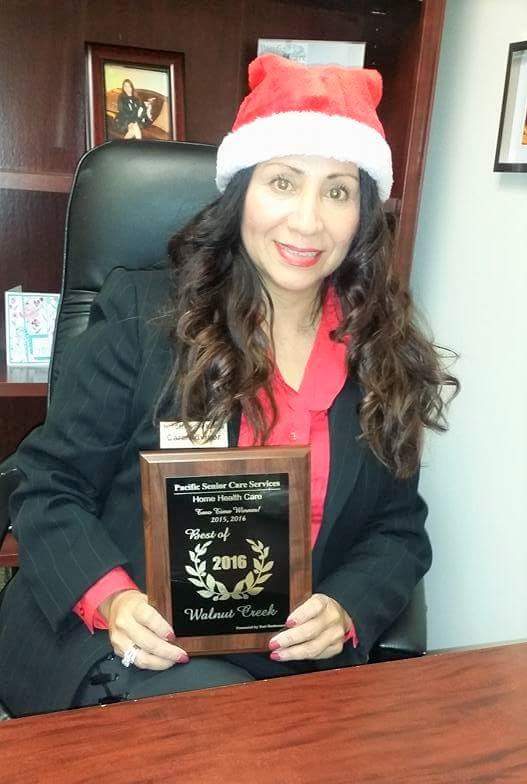
Pacific Senior Care Services receives 2016 Best Businesses of Walnut Creek Awards

December 30, 2016 By Publisher Leave a Comment

Fifth award during three years in business

Pacific Senior Care Services owner Kelly Gonzales with the 2016 award from Best Businesses of Walnut Creek.

By Allen Payton

Pacific Senior Care Services, LLC owned by Antioch resident Kelly Gonzales, has been selected for the 2016 Best Businesses of Walnut Creek Award in the Home Health Care and Senior Services organizations categories by the Best Businesses of Walnut Creek Award Program. This is the second time since 2014 that Pacific Senior Care Services has been selected for the awards.

Each year, the Best Businesses of Walnut Creek Award Program identifies companies that the organization believes have achieved exceptional marketing success in their local community and business category. These are local companies that enhance the positive image of small business through service to their customers and our community. These exceptional companies help make the Walnut Creek area a great place to live, work and play.

Various sources of information were gathered and analyzed to choose the winners in each category. The 2016 Best Businesses of Walnut Creek Award Program focuses on quality, not  quantity. Winners are determined based on the information gathered both internally by the Best Businesses of Walnut Creek Award Program and data provided by third parties.

“I’m honored to receive these awards, in just our third year of business,” said Gonzales. “We strive to meet elder needs with love and compassion, as our slogan states.”

They place seniors and others in care homes and senior facilities, offer senior care referral services, as well as senior insurance services through their affiliated company.

This is Pacific Senior Care Services fifth award since she formed her business in April, 2014. They also received the 2016 City Beat News Spectrum Award bestowed on companies for their excellence in customer service.

About the Best Businesses of Walnut Creek Award Program

The Best Businesses of Walnut Creek Award Program is an annual awards program honoring the achievements and accomplishments of local businesses throughout the Walnut Creek area. Recognition is given to those companies that have shown the ability to use their best practices and implemented programs to generate competitive advantages and long-term value.

Filed Under: Business, Central County, East County, Health, Seniors

Cause of Thanksgiving foodborne illness outbreak in Antioch identified

December 20, 2016 By Publisher Leave a Comment

By Allen Payton

Contra Costa County Health Services announced, today, Tuesday, December 20, 2016, that the cause of the foodborne illness outbreak reported after a Thanksgiving Day charity event in Antioch has been identified. It was caused by the bacteria Clostridium perfringens.

A laboratory at the U.S. Centers for Disease Control & Prevention (CDC) confirmed the presence of the bacteria in stool samples taken from people sickened by food served at the Nov. 24 holiday celebration, held by Golden Hills Community Church of Brentwood and Antioch, at Antioch’s American Legion hall.

“Clostridium perfringens is one of the most common foodborne illnesses in the U.S. It can be found in the human intestine without hurting us, but eating food containing large amounts of this bacteria can cause illness and in some cases death,” said Dr. Louise McNitt, deputy health officer for Contra Costa Health Services (CCHS).

CCHS’ Public Health and Environmental Health divisions investigated 25 related reports of foodborne illness after the event, including three people who died.

“Our investigation was not able to determine exactly what people ate that made them sick. But after extensive interviews we found most of the ill people ate turkey and mashed potatoes and they all ate around the same time. Some dishes served at the event, including cooked turkey, were brought to the site after they were prepared in private homes,” said Dr. Marilyn Underwood, CCHS Environmental Health director.

Underwood said proper food handling is essential to prevent foodborne illness, including cooking foods to proper temperatures, cooling and storing them appropriately if they are not going to be eaten right away, separating raw meats from foods that won’t be cooked, storing food properly and washing hands and cooking surfaces often.

“We’re saddened for the families that suffered losses this holiday season. We encourage anyone planning charity events where food will be served to the public to contact us to understand the permitting process and to learn about food safety,” said Underwood.

All of the reported illnesses occurred within 24 hours of the patients consuming food from the event.

“We at Golden Hills are mindful of all the people who were affected,” said Senior Pastor Larry Adams. “We will continue to cooperate with local health officials and are encouraged by the county’s speedy investigation.”

“This is a difficult season for all involved. We as a Christian community will continue to pray for those who are ill and the families of those who have died,” he added.

For more information about preventing foodborne illness or about C. perfringens, visit cchealth.org.

Filed Under: East County, Faith, Health, News

John Muir Health, Stanford Children’s Health continue growing partnership, services in the county

December 13, 2016 By Publisher Leave a Comment

jmh-schJohn Muir Health and Stanford Children’s Health are continuing to expand access to children’s specialty care services in Contra Costa County through an innovative partnership launched just a few years ago. Local families now have access to nearly 50 pediatric specialist physicians and nurse practitioners in 14 different specialties, including cardiology, gastroenterology, orthopedics and sports medicine, pulmonology, urology and more.

“We listened and responded to the requests from our community and general pediatricians to enhance and expand the availability of children’s specialty services in our community so families could access and receive the care they need close to home,” said Jane Willemsen, president and CAO of John Muir Health’s Walnut Creek medical center. “Our partnership is exceeding what we originally envisioned and continues to grow, all for the benefit of our community and young patients and their families.”

“Stanford Children’s Health has long been committed to successful community partnerships with Bay Area health care providers,” said Christopher G. Dawes, president and CEO of Stanford Children’s Health. “Our strong partnership with John Muir Health increases access and convenience to world-class pediatric specialty care and is a very successful example of how our combined strengths can benefit the community.”

The partnership includes outpatient, inpatient, neonatal and emergency care, which enables children with conditions ranging from allergies to more complex illnesses to see specialists locally through John Muir Health. In April 2015, John Muir Health and Stanford Children’s Health jointly opened a state-of-the art pediatric intensive care unit (PICU) at John Muir Medical Center, Walnut Creek — the only one of its kind in Contra Costa County. The PICU is complemented by a 16-bed child and adolescent unit and 35-bed Neonatal Intensive Care Unit (NICU) also at the Walnut Creek medical center.

In just 18 months, the PICU team of Stanford Children’s Health physicians and John Muir Health nurses and staff has cared for 450 critically ill children. The PICU offers leading-edge medical technology, and a broad complement of pediatric specialists, including pediatric-trained nursing staff, pediatric anesthesiologists, radiologists, neurologists, surgeons, gastroenterologists, orthopedists, oncologists, and hematologists, among others. John Muir Health and Stanford Children’s Health are also in the process of finalizing all necessary steps to have the PICU certified by California Children’s Services (CCS), a rigorous and exclusive certification program for the treatment of children with complex medical conditions.

“Pediatric specialists are rare. In partnership with Stanford Children’s Health, we have broadened our services so we can care for children and families close to home, right here in Contra Costa County,” said Budi Wiryawan, M.D. medical director, John Muir Health PICU, and clinical associate professor of pediatric critical care medicine at Stanford University School of Medicine. “It’s a privilege to work with a team of professionals so dedicated to working with children and families, a team that consistently goes above and beyond to deliver top quality care for children with critical needs.”

The need for PICU and other specialty services in Contra Costa County has been proven many times in the past few years. “My son had a near drowning experience last year, when he was four years old. We performed CPR on site and he was brought to John Muir Medical Center in Walnut Creek where he was treated by the team in the PICU. The doctor was concerned about the 24-48 hour window post resuscitation, as my son could have had a fatal injury to his brain and lungs,” said Sadie Hannah, parent of a former John Muir Health PICU patient.

“I remember walking into the unit and seeing the kindness in the team’s eyes, as if they knew exactly how we felt and knew exactly what to do. I knew immediately we were in the right place for healing. The atmosphere was quiet and serene, it seemed we had 100 percent of the staff’s attention. We had caring, honest discussions with the medical team. We are grateful to John Muir Health for its quality care, good communication, quiet comfort, and its location close to home. Thankfully my son is fine. He returned to swim lessons five days after being in the PICU and started kindergarten this year.”

“It’s heartwarming to hear the stories of children who we have cared for and to meet their grateful parents,” said Willemsen. “We’ve always been here for our patients and the community, but now we can treat and care for children of all ages.”

For more information about the specialty services available at John Muir Health through the Stanford Children’s Health partnership, please visit www.johnmuirhealth.com/services/childrens-services.

About John Muir Health

John Muir Health is a nationally recognized, not-for-profit health care organization east of San Francisco serving patients in Contra Costa, eastern Alameda and southern Solano Counties. It includes a network of more than 1,000 primary care and specialty physicians, nearly 6,000 employees, medical centers in Concord and Walnut Creek, including Contra Costa County’s only trauma center, and a Behavioral Health Center. John Muir Health also has partnerships with Tenet Healthcare/San Ramon Regional Medical Center, UCSF Medical Center and Stanford Children’s Health to expand its capabilities, increase access to services and better serve patients. The health system offers a full-range of medical services, including primary care, outpatient and imaging services, and is widely recognized as a leader in many specialties – neurosciences, orthopedic, cancer, cardiovascular, trauma, emergency, pediatrics and high-risk obstetrics care.

Follow JMH: John Muir Health.com | Facebook.com/JMH | Twitter.com/JMH | YouTube.com/JMH

About Stanford Children’s Health

Stanford Children’s Health is the largest Bay Area health care enterprise exclusively dedicated to children and expectant mothers. At the heart of our network is the renowned Lucile Packard Children’s Hospital Stanford in Palo Alto. Together with our Stanford Medicine physicians, nurses, and staff, we can be accessed within 10 miles of most Bay Area homes through partnerships, collaborations, outreach, specialty clinics and primary care practices at more than 60 locations across Northern California and 100 locations in the U.S. western region. We are a leader in world-class, nurturing care and extraordinary outcomes in every pediatric and obstetric specialty, with care ranging from the routine to rare, regardless of a family’s ability to pay. As a non-profit, we are committed to supporting our community – from caring for uninsured or underinsured kids, homeless teens and pregnant moms, to helping re-establish school nurse positions in local schools. Learn more at stanfordchildrens.org and on our Healthier, Happy Lives blog. Join us on Facebook, Twitter, LinkedIn and YouTube.

Filed Under: Health, News

DeSaulnier, White House laud House bipartisan vote for 21st Century Cures Act, amid bipartisan opposition

December 1, 2016 By Publisher Leave a Comment

Accusations it includes fraud, bribery, corruption; requires Senate passage during lame duck session

By Allen Payton

On Wednesday, November 30, the U.S. House of Representatives passed the 21st Century Cures Act (H.R. 34) on an overwhelmingly bipartisan vote of 392-26. The almost 1,000-page bill is designed for medical innovation, additional funding for cancer research, and to combat the nation’s growing opioid and heroin epidemic. But opponents say what the bill includes continues and advances corruption. Plus, they don’t like the fact it’s being considered and voted on by a lame-duck Congress, some of whose members weren’t re-elected in November and will be leaving, soon.

Congressman DeSaulnier (D, CA-11), who represents most of Contra Costa County and voted for the bill, issued the following statement lauding its passage.

“This legislation will help ensure the National Institutes of Health (NIH) have the resources needed to continue important work improving biomedical research and developing innovative treatments. Included in the bill is funding for the Vice President’s Cancer Moonshot, which is essential to continuing the program under the new Administration, as well as funds to combat the growing opioid and heroin epidemic facing our country. While this bill is not perfect, it provides $4.8 billion in new funding to ensure NIH is able to further its work for patients and families relying on research, treatment and recovery options. As a survivor of cancer and a beneficiary of the remarkable progress this country has made in treatment and research, I know all too well the value of these investments and how many lives can be saved as a result.”

According to other news reports, the legislation was introduced by Rep. Fred Upton, R-Michigan and Rep. Diana DeGette, D-Colo., “in hopes of speeding up the discovery, development and delivery of life-saving drugs and devices for diseases such as cancer, Alzheimer’s and diabetes. It passed the House 344-77 in July, but later stalled in the Senate. A reworked version was released last weekend.”

Congressman DeSaulnier offered an amendment to the bill, which would have helped improve doctor-patient communication when patients are diagnosed and receiving treatment for severe or chronic diseases. No amendments were included in the final version of the bill. He will continue to work on these important issues.

White House Supports

The bill will now go to the Senate for a final vote and if passed the White House has indicated President Obama will sign it. In a statement, issued Wednesday, White House Press Secretary Josh Earnest praised the passage of the bill.

“This critically important legislation will get states the resources they need to fight the heroin and prescription opioid epidemic. It invests the $1 billion the President has repeatedly said is necessary to help communities that have seen far too many overdoses. It also responds to the Vice President’s call for a Moonshot in cancer research by investing $1.8 billion in new resources to transform cancer research and accelerate discoveries. Plus, it invests nearly $3 billion to continue the President’s signature biomedical research initiatives, the BRAIN and Precision Medicine Initiatives, over the next decade to tackle diseases like Alzheimer’s and create new research models to find cures and better target treatments.

H.R. 34 also takes important steps to improve mental health, including provisions that build on the work of the President’s Mental Health and Substance Use Disorder Parity Task Force. It further advances the drug approval process by taking steps like modernizing clinical trial design and better incorporating patients’ voices into FDA’s decision-making processes. Like all comprehensive legislation, the bill is not perfect, and there are provisions the Administration would prefer were improved, but the legislation offers advances in health that far outweigh these concerns. The Senate should promptly pass this bill so that the President can sign it.”

Liberal Opposition

However, not everyone in the Senate is supportive of the bill, including DeSaulnier’s fellow Democrat, Senator Elizabeth Warren (D-Mass). She has been generally supportive of the legislation, but will now work against its passage, blasting it for being favorable to the pharmaceutical industry, saying “there’s a lot of bad stuff” in the bill, and called it extortion, and includes “special favors for campaign donors and giveaways to the richest drug companies in the world.”

In a floor statement on Monday night, which can be viewed here, she said that “Big Pharma hijack(ed) the Cures bill. This final deal has only a tiny fig leaf of funding, for NIH and for the opioid crisis. And most of that fig leaf isn’t even real. Most of the money won’t really be there unless future Congresses passes future bills in future years to spend those dollars.”

Warren continued, saying “In the closing days of this Congress, Big Pharma has its hand out for a bunch of special giveaways and favors that are packed together in something called the 21st Century Cures bill.

And when American voters say Congress is owned by big companies, this bill is exactly what they are talking about. Now, we face a choice. Will this Congress say that yes, we’re bought and paid for, or will we stand up and work for the American people?

Medical breakthroughs come from increasing investments in basic research. Right now, Congress is choking off investments in the NIH. Adjusted for inflation, federal spending on medical research over the past dozen years has been cut by 20%. Those cuts take the legs out from under future medical innovation in America. We can name a piece of legislation the “cures” bill, but if it doesn’t include meaningful funding for the National Institutes of Health and the Food and Drug Administration, it won’t cure anything.”

Her reasons for opposing the bill include her argument that “this funding is political cover for huge giveaways to giant drug companies.” She stated it would “legalize fraud” and “cover up bribery,” and, in her usual practice of partisan attacks, also said it would “hand out dangerous, special deals to Republican campaign contributors.”

Warren said that “this Cures bill that would shoot holes in the anti-fraud law. Make it easier for drug companies to get away with fraud.”

Another accusation she made is “the Cures act offers to sell government favors. It delivers a special deal so people can sell…treatments without meeting the FDA gold standards for protecting patient safety and making sure these drugs do some good.”

Warren gave a list of other reasons she opposed it.

“The Cures Act – a bill that was supposed to be about medical innovation – has a giveaway to the gun lobby,” she said. “The bill cuts Medicare funding. It raids money from the Affordable Care Act. It takes health care dollars that should have gone to Puerto Rico. It makes it harder for people with disabilities to get Medicaid services. There’s a lot of bad stuff here.”

“It is time for Democrats – Democrats and Republicans who should be ashamed by this kind of corruption -to make it clear who exactly they work for. Does the Senate work for big pharma that hires the lobbyists and makes the campaign contributions or does the Senate work for American people who actually sent us here,” Warren concluded.

Conservative Opposition

Some conservatives are also opposed to the bill, but not all for the same reasons as Warren’s. The conservative Heritage Foundation gave four reasons they oppose the bill, calling it a “Christmas Tree, loaded with handouts for special interests.”

On their website, they wrote, “Congress has taken this legislation, which was initially a 300 page bill, and turned it into an almost 1,000 page omnibus health care spending bill. The negotiators have added pieces of a mental health bill, makes changes to Medicare Part A and B, another bill making significant changes to the federal foster care system, a “cancer moonshot” requested by Vice President Biden, additional funding for opioid abuse prevention, etc., in addition to the NIH funding and the FDA funding, for a grand total of over $6.3 billion dollars. In Washington terms, backroom negotiators have turned the Cures bill into a Christmas Tree, loaded with handouts for special interests, all at the expense of the taxpayer.  Therefore, conservatives should oppose the 21st Century Cures Bill for four main reasons.

First, the bill’s “pay-fors” rely on budget gimmicks, and even worse, the new spending is not subject to the budget caps. Second, NIH and FDA do not need additional funding. Instead, they need to spend the money they already have on critical research instead of wasteful projects. Third, Congress has no business considering an almost 1,000 page omnibus health care spending bill during the lame duck session. Fourth, and finally, the process has been questionable and the bill will likely be closed to amendments.

An email to DeSaulnier’s office asking for his comments on Warren’s statements opposing the bill was not responded to before publication time. Please check back later for any updates.

A vote by the Senate on the bill is expected to take place early next week. For the complete text of the bill, please click here.

Filed Under: Health, Legislation, News

Golden Hills Community Church issues updated statement on possible dinner related illness and deaths

November 30, 2016 By Publisher Leave a Comment

According to Larry Adams, Senior Pastor of Golden Hills Community Church in Brentwood and Antioch, the following updated statement about the Thanksgiving dinner they served in Antioch, last Thursday, and the possibly linked illnesses and three deaths, was posted on the church’s website on Tuesday night:

This past week we were alerted to an outbreak of illness in our community that could have been related to our annual Thanksgiving meal served in Antioch. Golden Hills Community Church has been seeking to help meet this need in the community for over 30 years with meals served to many thousands of people. As the week unfolded, we met with Contra Costa Health officials seeking to assist them in any way possible to determine the source of the illness. The preliminary evidence seemed to point away from the food that we served to over 800 people that day.

Our greatest concern has been twofold. First and foremost we are grieving for those who have lost precious loved ones and for those who have endured this illness. The loss of life is a human tragedy that no amount of investigation can undo. While we do not, even now, know who these individuals are, this has not stopped us from grieving and praying diligently for these families.

Secondly, we have wanted to hear from the Health Department their  determination of the real cause of this illness, regardless of our connection. Truth will help prevent future occurrences of this type of illness and perhaps keep others from having this horrible experience.

We still do not have any conclusive word from County Officials regarding this matter. We continue to do what we can to help with the investigation that is ongoing. Evidence that once pointed away from the meal that we provided to so many, now seems to point back that direction. We will continue to await the final findings, to pray for all those affected, and offer to do what we can to help those who are hurting. We thank those who have joined us in prayer and ask you to continue in your efforts.

The church’s website is www.goldenhills.org.


Filed Under: East County, Faith, Health, Seniors

County Health Services claim nine more people possibly got sick at Antioch Thanksgiving meal served by church

November 30, 2016 By Publisher Leave a Comment

The American Legion Hall and Veterans Memorial Building on West 6th Street in Antioch where the Thanksgiving dinner was served, last Thursday, November 24, 2016.

The American Legion Hall and Veterans Memorial Building on West 6th Street in Antioch where the Thanksgiving dinner was served, last Thursday, November 24, 2016.

By Allen Payton

The Costa Health Services (CCHS) announced on Tuesday, they are investigating several new cases that are likely related to a foodborne illness outbreak reported in Antioch over the weekend. CCHS investigators on Tuesday contacted an additional eight people who were likely sickened by food or drink from the same event. None of those patients are currently hospitalized.

During a second press conference on the matter in Martinez on Tuesday afternoon, Environmental Health Director Marilyn Underwood and Dr. Louise McNitt, Communicable Disease Medical Director, stated there is now a ninth additional person who was reported to also become sick due to eating at the same dinner. That brings the total number of people who claim to be sickened by the meal served by Golden Hills Community Church to 17.

Eight cases of possible foodborne illness connected to the incident, including three that resulted in death, were reported to Public Health on Nov. 25 by Sutter Delta Medical Center in Antioch. All of the eight patients reported by Sutter Delta ate food from the holiday event.

It is now reported that all eight were residents of three different senior care, assisted living, group home facilities of four in Antioch owned by the same couple. Calls to the administrator and licensee of the homes, asking them why some of their staff and residents, as well as they and their family attended the Thanksgiving meal intended for the homeless, low-income residents and those who didn’t want to be alone on the holiday, were not returned before publication time.

In an attempt to clarify information about where the food was prepared, that was served at the Antioch event organizer Jeff Oransky explained that, “some of the food is prepared in people’s homes like the turkey, ham, and some of the stuffing, and then brought to the hall. The only things prepared on site are instant mashed potatoes, stuffing, corn and green beans.”

He mentioned the small size of the kitchen at the hall as the reason. Asked about how he can control the quality of the food being prepared and brought in, he replied, “We’ve had discussions about that” since last Thursday. “We’ve never had a problem before.”

“We’re pretty careful,” Oransky explained. “Every year we buy 600 disposable gloves and we  run out of every one of them. We generally don’t touch the food, even with the gloves. We use the ladles and utensils, and we keep everything heated. Nothing just sits out.”

“The other issue is the to-go meals,” he continued. “Some people come in and take a to-go meal to take home. Others eat there and also take a meal home. As far as I know they haven’t determined if these people (who got sick) did one or the other, or both.”

Asked if there were delivery of prepared meals from the hall, Oransky said, “No, not that I know of. We don’t deliver them. I don’t have enough people to do that.”

“We have Meals On Wheels deliveries. But they have nothing to do with the food at the hall,” he clarified. “Those meals are all professionally prepared and delivered to people’s homes, who are Meals On Wheels clients. But Meals On Wheels doesn’t deliver on Thanksgiving, so we take it over and deliver for them. But, we don’t deliver food prepared from the hall.”

Asked about serving the Thanksgiving Day meals in the future, Golden Hills Community Church Executive Pastor Phil Hill, said “the county health services told us in the future we would have to get a permit and that means that all food would have to be prepared in an approved commercial facility.”

Asked if that will be required even if it’s determined that the church is not at fault, he responded, “Correct.”

An email asking for the name of the group distributing prepared meals outside of the hall, to people standing in line waiting to get in for the Thanksgiving meal was sent to Vicky Balladares, Communications Officer for Contra Costa Health Services.

She replied, “Our Environmental Health folks are trying to get the name. As far as I know they have not been able to get a name yet.”

Anyone who ate food from the Thanksgiving Day event at the Antioch American Legion Hall and Veterans Memorial Building at 403 West Sixth Street, and is now feeling ill should immediately contact their medical provider. Anyone who is not ill, but has food or drink from the event, should throw it away. The general public can call (925) 313-6700 for more information.

County health investigators are in the process of collecting biological samples from the reported cases for testing at county and state public health laboratories.

Filed Under: Community, East County, Faith, Health, News

  • « Previous Page
  • 1
  • …
  • 49
  • 50
  • 51
  • 52
  • Next Page »
Monicas-11-25
Deer-Valley-Chiro-06-22

Copyright © 2026 · Contra Costa Herald · Site by Clifton Creative Web