• Home
  • About The Herald
  • Local Agencies
  • Daily Email Update
  • Legal Notices
  • Classified Ads

Contra Costa Herald

News Of By and For The People of Contra Costa County, California

  • Arts & Entertainment
  • Business
  • Community
  • Crime
  • Dining
  • Education
  • Faith
  • Health
  • News
  • Politics & Elections
  • Real Estate

Contra Costa Health Services and cities launch community Behavioral Health Crisis Response Initiative

November 20, 2020 By Publisher Leave a Comment

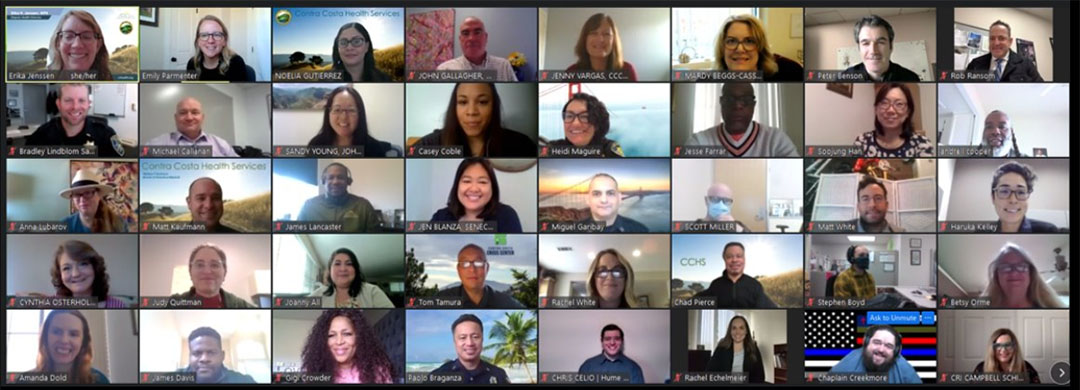
Contra Costa Crisis Response Team including all 19 city managers in the county.

To connect residents with the most appropriate resources

Working in partnership with cities across Contra Costa County, Contra Costa Health Services (CCHS) has launched a comprehensive review of existing behavioral health crisis response services to develop a vision for how to connect residents with the most appropriate resources where and when they are needed.

In close collaboration with city leaders through the Contra Costa Public Managers Association, community stakeholders, service providers and staff from across the county participated in a multi-day workshop to identify current resources and next steps. Workshop participants included those working in crisis response, community-based organizations, schools, police and dispatch, as well as clinicians and persons and family members with lived experiences. The team spent the past two weeks observing, analyzing and interviewing subject matter experts and looking at data about the current state of crisis response in Contra Costa County to develop a vision for the future and identify areas for improvement.

Statistics

  • Behavioral health issues are widespread
    • About one in five adults are currently experiencing behavioral health issues
    • About 13% of all EMS calls address mental health issues
    • There are between 10,000 and 11,000 involuntary psychiatric holds (5150s) in our county each year

Existing Resources

  • CCHS provides a variety of behavioral health services. A limited number provide crisis response, however none provide emergent response like 911.
    • Crisis Intervention Training (CIT)
    • Homeless Services (H3 & HCH)
    • Alcohol & Other Drug Services
    • Medical and Psychiatric Emergency Services
    • Behavioral Health Crisis Teams
  • Existing crisis response resources serve a small number of residents
    • Mental Health Evaluation Team (MHET) serves 293 people annually at a cost of $2 million
      • Designed to reduce law enforcement repeat calls for service and violent encounters, reduce visits to Psychiatric Emergency Services, increase community and police safety, and increase appropriate use of mental health services.
    • Mobile Crisis Team (MCRT) takes about 1,600 calls per year at a cost of $2 million, serves adults only
      • MCRT is designed to have mental health providers respond in the field to de-escalate crisis, provide stabilization, and prevent psychiatric hospitalization. If the situation cannot be de-escalated in the field, the MCRT will assess for 5150 criteria and, if criteria are met, the Mental Health Clinical Specialist can initiate a 72-hour 5150 involuntary hold.
      • In addition to responding in the community to the immediate situation that led to calling the MCRT, the team provides a 30-day period of follow up during which they focus on linking individuals to a variety of services to help them stabilize and prevent ongoing crisis experiences.
    • Mobile Response Team (MRT) receives about 1,000 calls from youth each year, budget is $2.2 million
  • MRT provides risk/safety assessments, crisis intervention, follow up services, collaboration with existing treatment team members and linkage for youth in their natural settings. The CCC MRT aims to provide same day services and/or services as close to 24 hours of immediate crisis.
  • We have researched models from other communities
    • Regardless of what model we choose, the key to success is alignment with our cities and community partners across the county.


Contra Costa Crisis Response Team Timeline.

The public is invited to hear the key findings and recommendations during a public report to be shown on Contra Costa Television (CCTV) on Saturday, November 21 at noon and 7 p.m., and Sunday, November 22 at 9 a.m. and 6 p.m. The event can also be seen online at contracostatv.org during those scheduled times.

The process prioritized these areas of focus for the next steps:

  • Identifying a single number to call for behavioral health crisis response
  • Establishing a mobile crisis 24/7 response
  • Evaluating non-police mobile crisis team composition
  • Identifying alternate destinations for those experiencing a behavioral health crisis

Using the Lean Process Improvement Model, the team will spend the next several months planning for rapid improvement workshops to test potential strategies based on the four areas of focus. Results of this process will be presented to the Contra Costa Mayors Conference in February 2021.

For more information on CCHS Community Crisis Response, visit cchealth.org/bhs/crisis-response.

Filed Under: Health, News

CHP Commissioner asks Californians to “self-regulate” during governor’s curfew order

November 19, 2020 By Publisher Leave a Comment

By Fran Clader, Director of Communications, California Highway Patrol

California Highway Patrol Commissioner Amanda Ray today issued the following statement regarding the Governor’s limited stay at home order: 

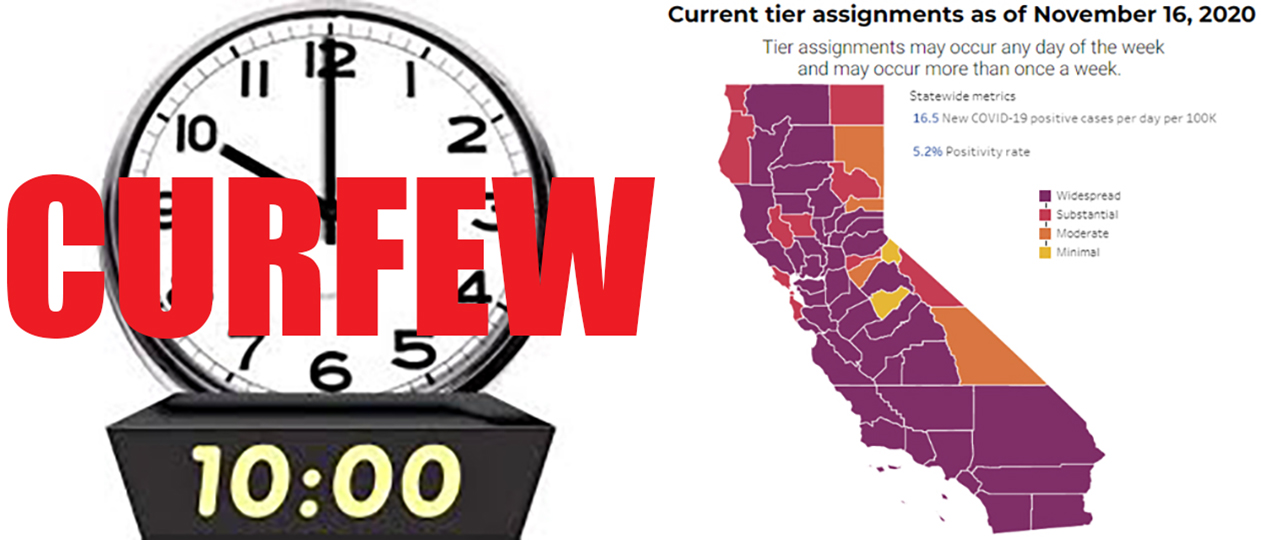
“The health and safety of our employees and the public we serve is our highest priority. In an effort to preserve public health and safety of all Californians and stop the surge of COVID-19 cases, the Governor has instituted a limited stay at home order from 10 p.m. to 5 a.m. with the goal that people will self-regulate their behavior, protect themselves, and go about only the ‘essential’ activities during those hours.

“The mission of the CHP is unchanged.  CHP officers will continue to patrol throughout California and use their sound professional judgment to conduct enforcement stops for violations of the law based upon probable cause.  The CHP does not make arrests based on race, ethnicity, gender, political affiliation, sexual orientation, religious beliefs, or for any reason other than violations of the law based on probable cause.  As always, CHP officers will have the discretion to take appropriate action when a violation is observed.”


Filed Under: CHP, Health, News, State of California

Gov. Newsom issues statewide curfew beginning Saturday, Nov. 21 to slow spread of COVID-19

November 19, 2020 By Publisher Leave a Comment

For counties in Purple Tier like Contra Costa, non-essential businesses and personal gatherings are prohibited between 10 PM and 5 AM

Unless you’re eating dinner with the governor at a fancy restaurant. Just kidding! – The Herald

SACRAMENTO – In light of an unprecedented, rapid rise in COVID-19 cases across California, Governor Gavin Newsom and the California Department of Public Health (CDPH) today announced a limited Stay at Home Order requiring generally that non-essential work, movement and gatherings stop between 10 PM and 5 AM in counties in the purple tier. The order will take effect at 10 PM Saturday, November 21 and remain in effect until 5 AM December 21. This is the same as the March Stay at Home Order, but applied only between 10 PM and 5 AM and only in purple tier counties that are seeing the highest rates of positive cases and hospitalizations.

“The virus is spreading at a pace we haven’t seen since the start of this pandemic and the next several days and weeks will be critical to stop the surge. We are sounding the alarm,” said Governor Newsom. “It is crucial that we act to decrease transmission and slow hospitalizations before the death count surges. We’ve done it before and we must do it again.”

This limited Stay at Home Order is designed to reduce opportunities for disease transmission. Activities conducted during 10 PM to 5 AM are often non-essential and more likely related to social activities and gatherings that have a higher likelihood of leading to reduced inhibition and reduced likelihood for adherence to safety measures like wearing a face covering and maintaining physical distance.

“We know from our stay at home order this spring, which flattened the curve in California, that reducing the movement and mixing of individuals dramatically decreases COVID-19 spread, hospitalizations, and deaths,” said California Health and Human Services Secretary Dr. Mark Ghaly. “We may need to take more stringent actions if we are unable to flatten the curve quickly. Taking these hard, temporary actions now could help prevent future shutdowns.”

“We are asking Californians to change their personal behaviors to stop the surge. We must be strong together and make tough decisions to stay socially connected but physically distanced during this critical time. Letting our guard down could put thousands of lives in danger and cripple our health care system,” said Dr. Erica Pan, the state’s acting Public Health Officer. “It is especially important that we band together to protect those most vulnerable around us as well as essential workers who are continuing their critical work amidst this next wave of widespread community transmission across the state. Together we prevented a public health crisis in the spring and together we can do it again.”

COVID-19 case rates increased by approximately 50 percent in California during the first week of November. As a result, Governor Newsom and California’s public health officials have announced a list of measures to protect Californians and the state’s health care system, which could experience an unprecedented surge if cases continue their steep climb.

On Monday, the state pulled an emergency brake in the Blueprint for a Safer Economy putting more than 94 percent of California’s population in the most restrictive tier. The state will reassess data continuously and move more counties back into a more restrictive tier, if necessary. California is also strengthening its face covering guidance to require individuals to wear a mask whenever outside their home, with limited exceptions.

Late last week, the state issued a travel advisory, along with Oregon and Washington, urging people entering the state or returning home from travel outside the state to self-quarantine to slow the spread of the virus. The travel advisory urges against non-essential out-of-state travel, asks people to self-quarantine for 14 days after arriving from another state or country, and encourages residents to stay local.


Filed Under: Government, Health, News, State of California

Contra Costa one of three California counties to win Gateways for Growth Challenge Award

November 19, 2020 By Publisher Leave a Comment

Contra Costa County is among 19 Localities to Join a Network Deploying Economic Research and Multi-sector Welcoming Plans for Promoting Inclusion and Economic Opportunity for All

By Tish Gallegos, Community/Media Relations Director, Contra Costa County Employment & Human Services Department (EHSD)

Contra Costa County Employment and Human Services Department (EHSD) and Contra Costa Health Services (CCHS) are pleased to announce that New American Economy (NAE) and Welcoming America selected Contra Costa County to receive a Gateways for Growth (G4G) Technical Assistance award as part of the fourth cohort of a nationwide initiative. G4G is a competitive opportunity for localities to receive research support and/or technical assistance to improve immigrant inclusion in their communities. Contra Costa County and this year’s awardees join 71 other recipients since the 2016 launch of the initiative.

In light of the scale and severity of the COVID-19 pandemic, the Gateways for Growth Challenge this year prioritized localities that demonstrated a public-private commitment to better integrating immigrants into recovery efforts and emergency management systems.

“The Gateways for Growth Award is a timely boost to Contra Costa County’s efforts of welcoming and immigrant inclusion, and we greatly appreciate the opportunity to enhance our work,” said Candace Andersen, Chair of the Contra Costa County Board of Supervisors.

The immigrant community in Contra Costa is wide and diverse, representing 25 percent of the county’s population. The partners involved in the Gateways for Growth effort will include both new arrivals and longtime residents, and a number of previously unengaged groups. In addition to seeking out language minority and immigrant communities, the County will bring in more small community-based and faith-based organizations to support this work.

As the country looks to rebuild and set a more inclusive path forward nationally, Contra Costa County, as part of the G4G 2020 cohort, will lay the groundwork and build the infrastructure for economic, civic, and social inclusion at the local level.

“We recognize the inequities that persist and are exacerbated by the COVID pandemic in our systems, and we are committed to advancing further inclusion and fairness in everything we do,” explained Erika Jenssen, Contra Costa Health Services Department. “As a result, plans to establish a County Office of Racial Equity and Social Justice are underway.” Technical assistance and research provided through the award will support the planning process for the new office.

“Respecting diversity by honoring individual differences is a core value for EHSD that echoes that of Contra Costa as a welcoming county,” said EHSD Director Kathy Gallagher. “Our County has strongly opposed federal rule changes that limited the scope of benefits under the public charge rule and affected immigrants on their path to citizenship. We remain committed to the continuation of the DACA program, and to supporting ongoing inclusion and long-term economic and social integration of newcomers to our community.”

“We are thrilled to see the Gateways for Growth Challenge expand to another set of localities that reflect the diversity of our nation,” said Christina Pope, Senior Network Director at Welcoming America. “With each cohort, there is an opportunity to support and connect local leaders making their communities more welcoming and resilient places where everyone, including immigrants, can prosper and belong.”

As in previous years, G4G awardees will receive a combination of:

  • Customized quantitative research reports from NAE on the demographic and economic contributions immigrants make in their communities; and/or
  • Tailored technical assistancefrom NAE and Welcoming America to help communities draft, execute, and communicate a multi-sector immigrant inclusion strategy.

In addition to Contra Costa County, this year’s awardees are:

  • Dayton, Ohio
  • Cleveland, Ohio
  • Columbus, Ohio
  • Erie, Pennsylvania
  • Gainesville, Florida
  • Lancaster County, Nebraska
  • Los Angeles, California
  • Mercer County, New Jersey
  • Miami-Dade County, Florida
  • Minneapolis, Minnesota
  • Ottawa County, Michigan
  • Passaic County, New Jersey
  • Reno/Washoe County, Nevada
  • Saint Paul, Minnesota
  • San Mateo County, California
  • Southwest Kansas
  • Spokane, Washington
  • Washtenaw County,Michigan

Year-round, NAE and Welcoming America maintain an interactive map at gatewaysforgrowth.org that serves as a clearinghouse for the successes of all current and prior G4G awardees.

Contra Costa County Employment & Human Services (EHSD)

Employment & Human Services partners with the community to deliver quality services to ensure access to resources that support, protect, and empower individuals and families to achieve self-sufficiency.  Based on the core values of delivering an exceptional customer experience, encouraging open communication, embracing change, practicing ethical behavior, and embracing diversity, EHSD envisions Contra Costa County will continue to be a thriving community where all individuals and families can be healthy, safe, secure and self-sufficient.  More information about EHSD is available at www.ehsd.org.

Contra Costa Health Services (CCHS)

Contra Costa Health Services (CCHS) is an integrated system of healthcare services, community health improvement and environmental protection. We are the largest department of county government, including a 166-bed full-service public hospital with eight satellite health centers, public health, behavioral health and homeless services, environmental health, a federally-qualified HMO serving more than 190,000 people and a hazardous materials response unit. We are also the county’s emergency medical response agency.

CCHS provides high-quality services with respect and responsiveness for all. Our mission is to care for and improve the health of all people in Contra Costa County, with special attention to those who are most vulnerable to health problems. Learn more at cchealth.org.

New American Economy

New American Economy (NAE) is a bipartisan research and advocacy organization founded to educate, empower and support policymakers, influencers, and citizens across the country that see the economic and social benefits of a smart approach to immigration reform. NAE has created a coalition of civic, business, and cultural leaders who span the political spectrum and represent all 50 states. NAE makes the case for smart immigration reform in four ways:

  1. We generate and usepowerful research to demonstrate how immigration impacts our economy;
  1. We organize champions at the grassroots and influencer levels to build support for immigration;
  2. We partner with state and local leaders to advocate for policies that recognize the value immigrants add locally; and
  3. We show immigrant contributions to American culture through film, food, art, sports, comedy, and more.

Visit NewAmericanEconomy.org to learn more.

Welcoming America

Welcoming America leads a movement of inclusive communities from across the world in becoming more prosperous by making everyone feel like they belong. Through a membership network of 200+ local governments and nonprofits, Welcoming America connects and supports place-based initiatives that work to reduce divisions and support greater civic, social, and economic participation among new and longtime residents alike. Through the Welcoming Network, participating members access peer learning opportunities, technical assistance, tools, and training to help transform their communities into more welcoming places. Visit WelcomingAmerica.org to learn more.


Filed Under: Health, Immigration

Contra Costa Supervisors extend moratorium for renters, landlords, small business owners due to COVID-19 restrictions

November 18, 2020 By Publisher Leave a Comment

Clash over $80,000 marketing outreach budget

By Daniel Borsuk

In response to the state moving Contra Costa County back into the most restrictive COVID-19 Purple Tier, the Board of Supervisors on Tuesday acted to deliver financial assistance in the struggling tenant, landlord and small business sectors.

Earlier Supervisors had learned that Contra Costa’s new daily COVID-19 case rate had risen to 11.4 per 100,000 with a 3.7 percent positivity rate.  As of Tuesday, 41 counties, including Contra Costa, were in the Purple tier.

Supervisors approved an amendment to the County’s Fiscal Year 2019-2020 Community Development Block Grant Action Plan to spend  an additional $4.29 million in CDBG-Coronavirus or CV3 funds under the Coronavirus Aid, Relief, and Economic Security (CARES) Act of 2020 to provide emergency rental assistance and tenant/landlord counseling and related legal services.

Supervisors allotted $3.2 million from a Federal CARES Grant for an emergency rental assistance program to Hayward-based ECHO Housing that would provide tenant-landlord counseling and related legal services to persons meeting eligible income requirements for the program.

Concord-based Shelter, Inc. will work with ECHO in providing rental assistance services in Antioch, Pittsburg, Concord, and Walnut Creek.

At one point, Supervisor Federal Glover of Pittsburg and Supervisor Diane Burgis of Brentwood clashed over the program’s $80,000 marketing/outreach budget that Glover supported, but Burgis preferred to cut by 50 percent. “I like to do outreach,” said Burgis, “but there is so much need and urgency out there right now.”

Despite the disagreement over the outreach money, supervisors kept intact the $80,000 for outreach.

One of the conditions to the federal program is that the county needs to spend the CARES funds by Jan. 31, 2021.

“Obviously, families are struggling to make ends meet, and some of my students have found themselves having to take some economic responsibility to make families’ ends meet,” said Luis Chacon, a West Contra Costa Unified School District teacher.

In other action, supervisors voted 5-0 to pass an urgency ordinance to continue the temporary prohibition on evictions of certain small business commercial tenants financially impacted by COVID-19.  The protection continues through Jan. 31.

“The county must act quickly to assist residents, both tenants and landlords, who are or will be in the crisis due to the COVID-19 pandemic,” said Board Chair Candace Andersen of Danville.  “Providing direct rental payments to landlords on behalf of tenants is critical, and staff will work with community organizations to reach out to those in need, particularly low-income households and neighborhoods severely impacted by economic and housing instability at this difficult time.”

Contra Costa County’s Urgency Ordinance 2020-29 provides protections pursuant to Governor Gavin Newsom’s Executive Order N-80-20, which extends, through March 31, 2021, the authority of local jurisdictions to suspend the evictions of commercial tenants for the non-payment of rent if the non-payment was a result of the COVID-19 pandemic.

“The Board of Supervisors recognizes that the already struggling business environment has become even more challenging with the recent rise of COVID-19 cases,” said Board Chair Andersen. “As we follow public health orders and guidance intended to protect lives, we have to support businesses however we can.”

Supervisors voted 5-0 to impose a 45-day moratorium ordinance on industrial hemp cultivation so that the county Agriculture Commission can establish cultivation and location regulations on the crop harvested in East county.

East County resident John Cisneros, who lives nearby a hemp operation with armed guards, urged supervisors to adopt an ordinance.  “How would you like to live near a hep farm with a security force, that might turn into a cannabis operation?  Not a safe thing,” he said.  “I am not against hemp, but this is not a suitable place.”

Pittsburg Motel 6 Homeless Program Action

In a consent action, supervisors approved a lease with Azad Rahman, Riffat Rahman an Zahin Rahman, who had managed the Motel 6 at 2101 Loveridge Road, Pittsburg  that the county has agreed to buy through the state’s Homekey Program to provide housing for the homeless and social services.

The county agreed to purchase the motel for $17.4 million even though there is a question whether the county properly appraised the property that may have been over appraised by $5 million. (See related article) The county approved a lease with the Rahmans at $600 a month.


Filed Under: Business, Health, News, Supervisors

State moves Contra Costa to most restrictive COVID-19 Purple Tier

November 16, 2020 By Publisher Leave a Comment

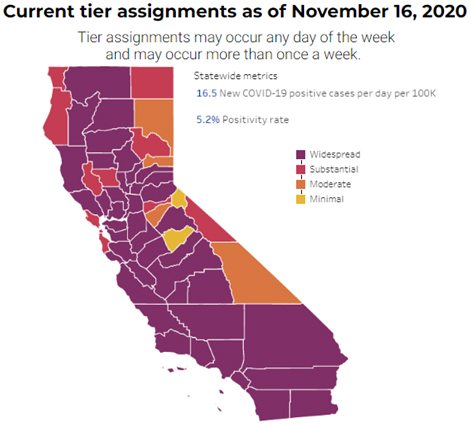
From https://covid19.ca.gov/safer-economy/.

With new COVID-19 cases and hospitalizations surging across California, the state today restored safety measures in Contra Costa and many other counties that are needed to protect the public and save lives during the pandemic.

The return to the purple tier of California’s Blueprint for a Safer Economy comes with some additional requirements for businesses and community activities not imposed in Contra Costa since summer. But the change also reflects an approaching danger that health experts see in recent COVID-19 data, in the U.S., California and Contra Costa County.

The adjusted average daily number of new COVID-19 cases in Contra Costa has doubled in recent weeks, rising from 4.3 per 100,000 population on Oct. 16 to 9.2 on Nov. 16.

The average daily percentage of COVID-19 tests that return positive in Contra Costa has also increased sharply, from 1.9% on Oct. 16 to 3.6% on Nov. 16.

Health officials are also closely monitoring the number of people hospitalized in Contra Costa because of COVID-19, as a large surge in patients could overwhelm the local healthcare system. There were 21 hospitalized COVID-19 patients in Contra Costa on Oct. 16, compared to 48 on Nov. 16.

To prevent unnecessary illness and death in our community, Contra Costa Health Services (CCHS) urges residents to take the safety requirements seriously and consider what they can do to reduce the risk of infection to themselves and their families – such as wearing face coverings whenever they leave home.

From https://covid19.ca.gov/safer-economy/.

Growing evidence shows that simple cloth face coverings reduce the spread of COVID-19, providing some protection to the wearer and, more importantly, protecting people near a wearer who is infectious but does not yet know they are sick.

“The most simple, effective way to prevent the spread of COVID-19 is to wear a face covering whenever you leave home or are around people who do not live with you,” said Dr. Chris Farnitano, county health officer. “This may also be a time to consider a remote holiday gathering. We all want to see each other, but it is important to carefully consider the risks before meeting in person with our loved ones.”

Contra Costa, previously in the red tier, already enacted local health orders last week that added additional safety requirements beyond what the state had mandated, including a moratorium on indoor dining and operation of indoor gyms and fitness centers.

Contra Costa moved into the red tier just last week from the orange tier. The state today changed its guidelines to expedite movement of counties into more restrictive tiers in response to the growing public health crisis. More information is expected to be posted at the state’s web page.

Changes caused by the state’s action today will include:

  • Social gatherings involving people from different households are permitted outdoors only, with a maximum of three households and 25 people, preferably for less than two hours.
  • K-12 schools may not reopen for in-person instruction unless they have already begun to do so.
  • Worship services and cultural ceremonies must now be held outdoors only.
  • Higher education institutions must move indoor lectures and student gatherings outdoors only.
  • Movie theaters may operate outdoors only.
  • Museums and exhibit spaces may open outdoors only.

Visit covid19.ca.gov for more information about the state health guidelines, and state data regarding COVID-19.

For Contra Costa data and COVID-19 health information, visit cchealth.org/coronavirus.


Filed Under: Health, News

Contra Costa to close indoor dining, fitness centers, movie theater concessions Tuesday to contain spread of COVID-19

November 13, 2020 By Publisher Leave a Comment

In coordination with other Bay Ara counties

If the current restrictions don’t work “we are prepared for further restrictions” – Dr. Chris Farnitano, Contra Costa Health Officer during Friday afternoon press conference

On Thursday, California reached the unfortunate milestone of 1 million COVID cases statewide. With transmission and hospitalizations on the rise, health officers representing counties across the Bay Area are tightening local rules for high-risk indoor activities where the virus can spread more easily.

Contra Costa Health Services today issued an order to close, effective Tuesday, Nov. 17 at 8 a.m.:

  • Indoor dining
  • Indoor fitness centers
  • Concession stands at movie theaters

Dine-in restaurant and gyms reopened at reduced capacities when the county entered the state’s red tier in late September. But recent increases in COVID cases and hospitalizations make the closures necessary to help contain spread of the virus.

“Indoor interactions at restaurants, movie theaters, and indoor gyms and fitness centers are high-risk activities,” said Dr. Chris Farnitano, Contra Costa County Health Officer. “And given what we’re seeing happen across the country and the region, we must act now.”

Diners at restaurants remove their masks to eat or drink, as do movie patrons when snacking on food from concession stands. People also breathe heavily while they exercise at indoor gyms, increasing the risk of droplet and aerosol transmission of COVID-19, which can be only partially reduced by wearing a face covering.

Contra Costa recently moved from the state’s orange tier to the more restrictive red tier because of an increasing number of cases in the county. Meanwhile, hospitalizations in Contra Costa have returned to levels not seen in several weeks. On Nov. 11, 50 people with COVID were hospitalized in the county – the highest number since September.

“I’ve said this many times before, but it’s so important I can’t repeat it enough: The best way to protect against COVID-19 is to wear a face covering whenever you are near people who do not live with you, and whenever you go in a building that is not your home,” said Dr. Farnitano.

Health officials are especially worried about people gathering indoors with the holidays coming up and may consider other closures in the days and weeks ahead. Contra Costa County, which is now in the red tier, could move into the state’s most restrictive tier, the purple tier, within the coming weeks. If the county moves into the purple tier, schools that haven’t reopened will have to remain closed until the county moves back into the red tier or until they receive a waiver from the state.

“Our hope is that this new health order will slow down the spread of COVID so schools will have a better chance to reopen,” Dr. Farnitano said.

Screenshot of Dr. Chris Farnitano during press conference on Friday, Nov. 13, 2020

Dr. Farnitano Press Conference

During a Zoom press conference Friday afternoon Farnitano was asked by the Herald, “Is this decision based on what’s actually happening in our county, or what’s happening in other Bay Area counties and elsewhere?” he responded, “We’re really looking at all of it.”

Where people are getting COVID, “many if not most cannot pinpoint any specific locations,” Farnitano explained. “But where we can identify, restaurants, gyms we are imposing restrictions.”

“Why can’t we just protect the vulnerable and allow the rest of us get back to living our lives?” the Herald asked.

“That would be an ideal strategy if it can work. But it can’t. The vulnerable can’t live in a bubble,” Farnitano stated. “We see it in our nursing homes. Those who work there go home, go shopping, and are with their families where they can be exposed.”

“To protect the most vulnerable in our society we need to keep the overall transmission to a minimum,” he added.

“What is the basis for closing indoor fitness centers and not other indoor activities,” he was asked.

“We have seen looking across the country and across the state there have been outbreaks in gyms and fitness centers,” Farnitano said during a press conference Friday afternoon. “People can exercise outside or at home. Outdoor fitness operations are still allowed. This current order doesn’t have an endpoint. When our hospital case rates come down…then we can reconsider these orders.

“Masks does not provide the same level of protection when youre around someone breathing heavily and exercising,” he added.

The actions are “due to the rapidly rising of rates in our community,” Farnitano explained.

One person asked about the county “moving the goal posts instead of enforcing existing rules”.

“The enforcement efforts have not proven sufficient,” Farnitano responded. “The more we can wear our masks and stay away from others outside of our households the sooner we can get past this upsurge.”

“Our case rate in the past seven days are already in the Purple Tier. We are testing at higher levels than state averages. Our adjusted case rate is even in the Purple Tier,” he said. “We have seen the case rate increase in the last several days in our hospitals.”

The county is issuing these orders, now so, “We can hope to blunt that wave, blunt that surge…to get us through a winter surge quicker and with less harm to the community as far as illness and death,” Farnitano explained.

“Are church services impacted further,” he was asked.

“Not at this point,” Farnitano responded. “We implemented restrictions on churches last week for the Red Tier. We are prepared to add additional restrictions in the future if our hospitalizations rise, in advance of state restrictions.”

“We are looking at all of our health care systems and how we can get through the latest wave,” he explained.

“Will it be enough? I am not sure. We will have to watch the data and see,” said Farnitano. “We all have to do our part, wear our masks, six feet of social distancing.

“But if it doesn’t we are prepared for further restrictions,” Farnitano added. “The state could move us into Purple the day after Thanksgiving.”

“Why don’t you believe in herd immunity,” he was asked.

“Herd immunity would take an enormous toll on the community and lead to enormous deaths, more than we’ve seen,” Farnitano responded. “We would need 70 to 80% levels of herd immunity. It would take uncontrollable disease for months and months and months and that would be too high of a toll for the community.”

Allen Payton contributed to this report.


Filed Under: Business, Dining, Health, News

Kaiser Permanente Richmond recognized for excellence by American College of Surgeons

November 13, 2020 By Publisher Leave a Comment

Hospital Receives Meritorious Recognition for Surgical Care

By Kerri Leedy, PR and Media Relations Manager, Kaiser Permanente Northern California

Kaiser Permanente Richmond has been recognized with the highest rankings possible by the American College of Surgeons National Surgical Quality Improvement Program (ACS NSQIP®). The organization awards the rankings based on the outcomes of inpatient and outpatient surgical procedures.

“We appreciate the support and recognition of the ACS NSQIP as we continuously strive for higher levels of quality excellence,” said Judith Park, MD, physician-in-chief, Kaiser Permanente East Bay. “These stellar outcomes speak to not only to the outstanding leadership and commitment of so many dedicated physicians, nurses and staff,  but to the systems we can put in place through the power of  our partnership and  integrated healthcare model.”

The ACS NSQIP recognition program recognizes a select group of hospitals each year. Scores are awarded in both the “All Cases” category and the “High Risk” category, which includes only high-risk cases. For each category, eight clinical factors are considered and scored. They are:

  • Mortality
  • Cardiac: cardiac arrest and myocardial infarction
  • Pneumonia
  • Unplanned Intubation
  • Ventilator > 48 hours
  • Renal Failure
  • SSI: superficial incisional SSI, deep incisional SSI, and organ/space SSI
  • UTI: urinary tract infection

Kaiser Permanente Richmond received Meritorious scores in the “All Cases” categories.

“I’m so proud of our surgical teams here in the East Bay. This is the collective effort of many to achieve these results,” said Ed Chan, senior vice-president and area manager for the Kaiser Permanente East Bay Service Area, which includes the Richmond Medical Center. “Being recognized by the National Surgical Quality Improvement Program is a testament to the high-quality care we provide our members and patients.”

Kaiser Permanente Richmond Surgical services encompass procedures that are urgent, elective, routine, and specialized. Risk-adjusted data from the July 2020 ACS NSQIP Semiannual Report, which presents data from the 2019 calendar year, were used to determine which hospitals demonstrated meritorious outcomes.

“The deep commitment by many providers in multiple disciplines allows for this success and recognition,” said Aaron Baggs, MD, Regional Bariatric Subchief, Surgical Quality Lead for Kaiser Permanente’s Richmond Medical Center. “It takes a shared vision and a team approach to get these excellent outcomes.”

ACS NSQIP is the only nationally validated quality improvement program that measures and enhances the care of surgical patients. The goal of ACS NSQIP is to reduce surgical morbidity (infection or illness related to a surgical procedure) and surgical mortality (death related to a surgical procedure) and to provide a firm foundation for surgeons to apply what is known as the “best scientific evidence” to the practice of surgery. Furthermore, when adverse effects from surgical procedures are reduced and/or eliminated, a reduction in health care costs follows.

About the American College of Surgeons

The American College of Surgeons is a scientific and educational organization of surgeons that was founded in 1913 to raise the standards of surgical practice and improve the quality of care for surgical patients. The College is dedicated to the ethical and competent practice of surgery. Its achievements have significantly influenced the course of scientific surgery in America and have established it as an important advocate for all surgical patients. The College has more than 82,000 members and is the largest organization of surgeons in the world. For more information, visit www.facs.org.

About Kaiser Permanente

For 75 years, Kaiser Permanente has been committed to shaping the future of health and health care — and helping our members, patients, and communities experience more healthy years. We are recognized as one of America’s leading health care providers and not-for-profit health plans. Since July 21, 1945, Kaiser Permanente’s mission has been to provide high-quality, affordable health care services and to improve the health of our members and the communities we serve. We currently serve 12.4 million members in eight states and the District of Columbia. Care for members and patients is focused on their total health and guided by their personal Permanente Medical Group physicians, specialists and team of caregivers. Our expert and caring medical teams are empowered and supported by industry-leading technology advances and tools for health promotion, disease prevention, state-of-the-art care delivery and world-class chronic disease management. Kaiser Permanente is dedicated to care innovations, clinical research, health education, and the support of community health. http://about.kaiserpermanente.org

Filed Under: Health, News, West County

Glazer names Walnut Creek-based Trinity Center 7th Senate District 2020 Nonprofit of the Year

November 13, 2020 By Publisher Leave a Comment

Trinity Center’s new home, part of the St. Paul’s Commons Community in Walnut Creek, California. Photo: Trinity Center website.

State Senator to honor group for its work welcoming vulnerable populations during COVID-19 on Wed., Nov. 18

Senator Steve Glazer, (D-7, Orinda), has chosen Walnut Creek-based Trinity Center as the 2020 California Nonprofit of the Year for his Senate district. Senator Glazer will recognize the nonprofit group in a livestream presentation on Wednesday, November 18.

The livestream will take place on Senator Glazer’s website: https://sd07.senate.ca.gov/ at 1:30 p.m. Wednesday, November 18.

During the COVID-19 pandemic, Trinity Center has provided a welcoming space for homeless and very low-income individuals at a level not seen before: It served 970 unique individuals and provided more than 56,000 services in 2019-2020.

Trinity Center, located at 1888 Trinity Avenue in Walnut Creek, is a place where vulnerable people can feel physically and emotionally safe, supported in their recovery, and part of a caring group that is focused on helping them escape the challenges of poverty.   Trinity Center operates during the day and offers services such as: meals, showers, laundry, clothing, and mail & telephone access, coupled with case management for benefits, housing, employment, and substance use counseling.

“I am proud to honor Trinity Center for its vital work in keeping people safe and providing them with much needed services during this trying time of the Coronavirus pandemic,” said Glazer. “Trinity Center’s work is a lifeline for people who otherwise might not make it. Nonprofit organizations like Trinity are doing heroic work that cannot be undervalued.”

As a contracted Coordinated Assessment Referral and Engagement (CARE) Center since 2018, Trinity Center is an integral part of Contra Costa’s system of care for persons experiencing or at-risk of homelessness, providing for basic, immediate needs, and linking people with resources to regain stability and housing.

This is the fifth year of the California Nonprofit of the Year initiative, and with nonprofits doing more than ever to help their communities weather this COVID-19 crisis, their work should rightfully be celebrated.

“Nonprofits are often hidden in plain sight,” said Jan Masaoka, CEO of the California Association of Nonprofits (CalNonprofits). “With one in every 14 California jobs being at a nonprofit, honoring a California Nonprofit of the Year shows that elected officials recognize and celebrate the good work they see nonprofits doing in their districts. We urge everyone to appreciate the collective impact of nonprofits in our communities.”

About Trinity Center

Trinity Center is a non-residential program serving homeless and working poor adult men and women in Walnut Creek and Central Contra Costa County. We are a membership community that offers hope and support. We invite everyone to participate in our mission. For more information or to volunteer visit https://trinitycenterwc.org or call (925) 949-8712.


Filed Under: Central County, Community, Health, News

Contra Costa Supervisors approve creation of Office of Racial Equity and Social Justice

November 13, 2020 By Publisher Leave a Comment

“Racism exists in our county and in our county department” – Supervisor Federal Glover

“Racism is a public health crisis” – Contra Costa Health Department Director Anna Roth

County COVID-19 ranking lowered to Red Tier as health officials warn about holiday season upsurge 

By Daniel Borsuk

The Contra Costa County Board of Supervisors on Tuesday, Nov. 10, 2020 unanimously passed a proposal to create a county funded Office of Racial Equity and Social Justice to address increasing concerns about rising issues of racial inequality and social injustice especially in how the county delivers health services to people of color.

The nonprofit San Francisco Foundation will provide the biggest donation of $75,000 to help launch the formation of the new office.  Other organizations providing funding are the Contra Costa Regional Health Foundation, $20,000; East Bay Community Foundation, $10,000; John Muir Community Benefits, $10,000; Dean and Margaret Lesher Foundation, $25,000; Public Health Advocates, $25,000; Republic Services, $25,000; Richmond Community Foundation, $5,000: The California Endowment, $25,000 and Y&H Soda Foundation, $25,000.

Before supervisors voted to start the planning process to potentially launch a county Office of Racial Equity and Social Justice, supervisors had unanimously approved a resolution Declaring Racism as a Public Health Crisis.  Some of the resolution’s 12 clauses were:

“WHEREAS, disproportionately higher rates of chronic disease, shorter life expectancy, maternal and infant mortality, and health inequities for Black/African Americans and other racial groups are widely recognized and documented, yet continue in particular as well as other communities of color; and

“WHEREAS the COVID-19 pandemic has exacerbated racial and social inequities by disproportionately impacting the Latinx community as well as other communities of color; and

“WHEREAS Contra Costa Health Services cares for and improves the health of all people in Contra Costa County, and yet as a system has perpetuated racism and anti-black racism; and

“WHEREAS the Contra Costa Health Services cares for and improves the health of all people in Contra Costa County, and yet as a system has perpetuated racism and anti-black racism.”

If Contra Costa County moves ahead in to create in the 2021-2022 fiscal year an Office of Racial Equity and Social Justice, the county will join San Francisco and Oakland that had both established similar offices in 2019.

“Racism exists in our county and in our county department,” said Supervisor Federal Glover of Pittsburg, who along with Gioia pushed for the formation of the new county office.

“I have always attacked the health disparities, particularly when it impacts our low income communities,” said the supervisor who was reelected last week to a seventh  four-year term in a runoff election last week against Contra Costa County Assessor Gus Kramer.

“Racism is a public health crisis,” concurred Contra Costa Health Department Director Anna Roth. Roth said there exist ethnic-economic-racial-social inequities in health care throughout Contra Costa County.

“This is a major issue no matter if it is intentional or unintentional,” said District 1 Supervisor John Gioia of Richmond. “We have seen it all in our own county.”

“I support the eventuality of a Contra Costa County Office of Racial Equity,” said Supervisor Karen Mitchoff of Pleasant Hill, who at one point disputed with Gioia over how to fund the operation of the proposed new office if it reaches that point by next May. Both supervisors agreed to not bring up the funding issue until May when supervisors will review the 2021—2022 budget.

County Returns to COVID-19 Red Tier With More Restrictions 

The 2020 holiday season is around the corner and Contra Costa County Public Health officials are sparing no time in ramping up efforts to advise residents to wear face coverings, maintain social distances, use disposable dining ware and stay outdoors instead of indoors during the upcoming Thanksgiving holiday, Contra Costa County Board of Supervisors were informed Tuesday. County health officials announced the public safety measure as the county’s COVID-19 tier ranking was lowered Tuesday from purple tier to red tier.

County health officials saw a 200 percent boost in the number of COVID-19 cases during the past two weeks, Contra Costa Health Department Director Anna Roth said. Even with news on Monday that Pfizer Inc. has developed a vaccine that has notched a 90 percent safety record, Roth said the county reported an increase in COVID-19 cases over the past two weeks, 20,166 cases and 46 deaths.

“With the holiday season approaching, we recommend, keep it small, keep it outside with no more than 13 persons and lasting no more than three hours,” Roth said. In addition, Roth said persons should wash hands and faces frequently, remain outside as much as possible, wear face coverings, and maintain six-feet separations.

Roth reported that a county sponsored COVID-19 test event held in San Pablo on Saturday, Nov. 7 was a success because 673 persons were tested. Eighty-five percent of the test takers were first-time participants. A majority of those participating in the free tests were residents of Latinx descent.

Count health officer Dr. Chris Farnitano said the county is prepared to store the Pfizer vaccine that has been reported to be 90 percent effective but requires extreme cold refrigeration. “The county has purchased the ultra-cold storage capability to story up to 70,000 doses,” Dr. Farnitano informed supervisors. The storage unit can keep the vaccine cold at 70 degrees below zero.


Filed Under: Health, News, Supervisors

  • « Previous Page
  • 1
  • …
  • 27
  • 28
  • 29
  • 30
  • 31
  • …
  • 53
  • Next Page »
Liberty-Tax-Jan-Apr-2026
Deer-Valley-Chiro-06-22

Copyright © 2026 · Contra Costa Herald · Site by Clifton Creative Web