• Home
  • About The Herald
  • Local Agencies
  • Daily Email Update
  • Legal Notices
  • Classified Ads

Contra Costa Herald

News Of By and For The People of Contra Costa County, California

  • Arts & Entertainment
  • Business
  • Community
  • Crime
  • Dining
  • Education
  • Faith
  • Health
  • News
  • Politics & Elections
  • Real Estate

College District posts videos of public forums for CCC president finalists, extends time for public comment

May 6, 2021 By Publisher 2 Comments

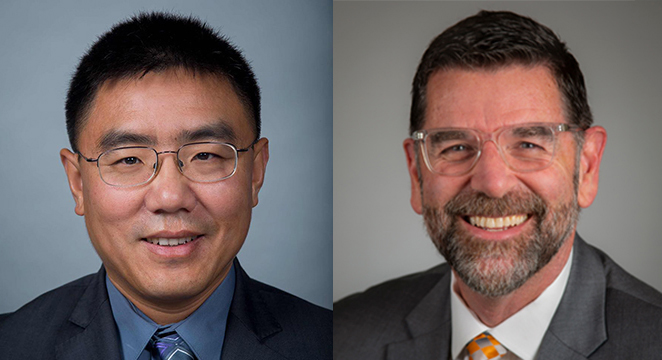
Dr. Tina Vasconcellos, Dr. Tia Robinson-Cooper and Dr. Damon Bell during their online forums. Video screenshots

The recordings of the forums for the three finalists for president of Contra Costa College are now available to students, faculty, staff and the public to review and offer comment. In response to a challenge by the Herald of the brief amount of time previously allotted, the public review and comment period was extended until Wednesday, May 12 instead of ending tonight, Thursday, May 6. (See related article)

The community is encouraged to view the three separate forums for finalists Damon A. Bell, Ed.D., Tia Robinson-Cooper, Ed.D., and Tina Vasconcellos, Ph.D. and submit comments, which will be shared with Chancellor Bryan Reece for consideration.

Dr. Tina Vasconcellos Feedback:


Click here to submit comments for this candidate.

Forum Recording:


Click here to view recording.

     
Dr. Tia Robinson-Cooper Feedback:


Click here to submit comments for this candidate.

Forum Recording:


Click here to view recording.

     
Dr. Damon A. Bell Feedback:


Click here to submit comments for this candidate.

Forum Recording:


Click here to view recording.


The community will be able to view the recordings and submit feedback until Wednesday, May 12, 2021, at midnight. Additional details related to the forums, finalists and process can be found on the District website at https://www.4cd.edu/career/ccc-president/index.html.

Following the comment period, Reece will then review and make his recommendation to the 4CD Board who will vote on which candidate to hire for the position.


Filed Under: Education, News, West County

Three finalists announced for Contra Costa College president

May 4, 2021 By Publisher 2 Comments

Dr. Damon Bell, Dr. Tia Robinson-Cooper and Dr. Tina Vasconcellos. Photos: 4CD

Announced Monday, public input forums held Tuesday; videos will be posted and available for public viewing and input through Thursday night

By Erin Brooks, Marketing & Communications Coordinator, 4CD

The Contra Costa Community College District (District) has announced the selection of three finalists for the position of President of Contra Costa College in San Pablo. The finalists are: Damon A. Bell, Ed.D., Tia Robinson-Cooper, Ed.D., and Tina Vasconcellos, Ph.D.

Three separate public forums were scheduled for Tuesday, May 4th. (Publisher’s note: the Herald did not receive the press release announcing the three finalists and forums until Monday night, May 3rd and the subject line did not mention Tuesday’s forums).

For those who were unable to participate in the May 4th public forums, links to all three recorded Zoom sessions will be made available on the District website. Access to the recordings and comment box will be available until midnight on Thursday, May 6, 2021.  (For more information click here)

Following the public forums, Chancellor Bryan Reece will conduct final interviews of the candidates on Wednesday, May 5, 2021, and is expected to announce the selection of a candidate soon thereafter. The permanent CCC President will begin July 1, 2021.

Contra Costa College General Education Building.

Dr. Damon A. Bell has been serving as the Interim President for Contra Costa College since last fall. He has nearly 30 years of higher education experience in the community college and California State University systems. Prior to working at Contra Costa College, Dr. Bell served as Interim President at Ventura College and as Vice President for Student Services at Olympic, San Bernardino Valley, and San Diego Mesa colleges.

He is very dedicated to working in the community. He is a Rotarian and a life member of the NAACP and have served on several foundation boards. He spent four years serving in various leadership positions including president for the Washington State Student Services Commission.  He has served on multiple state-wide committees and taskforces.  Also, he served as a Guided Pathways Change Facilitator for the Washington State Board for Community and Technical Colleges.

Dr. Bell completed an associate degree from Los Angeles Harbor College and went on to earn a bachelor’s in Philosophy from the UC San Diego, a master’s in Student Personnel in Higher Education from the University of Georgia, and a doctorate in Educational Leadership with an emphasis in Community College Leadership from CSU Fullerton. He is a true product of the California higher education system.

Dr. Tia Robinson-Cooper currently serves as the provost and vice-president of academic affairs/chief academic officer at Inver Hills Community College, a campus of Minnesota State Colleges and Universities. As provost, she launched the “PERC Promise”, a comprehensive plan to: (re)image student success and advance diversity, equity and inclusion; increase student persistence, retention, graduation and transfer; closing equity gaps; and cultivating an environment that embraces diverse perspectives.

Prior to her appointment, she served as the vice-president of academic affairs at East Central College. She was instrumental in in increasing student enrollment and retention; advancing early college programs; improving student success outcomes and fostering a holistic student experience; and establishing partnerships with nonprofit and business leaders. Before Dr. Robinson-Cooper’s tenure at East Central, she served in numerous positions including dean of teaching and learning (Rock Valley College); associate dean and dean of instruction (Olive-Harvey College); dean of academic affairs (Northwestern College); and adjunct faculty appointments (City Colleges of Chicago and University of Phoenix).

Dr. Robinson-Cooper earned her A.S. in Business from Kishwaukee College, a B.S. in Speech-Language Pathology from Northern Illinois University, an MBA and M.S. in Managerial Leadership & Organizational Development both from National Louis University, and an Ed.D. in Counseling & Adult Higher Education from Northern Illinois University.

Dr. Tina Vasconcellos is a passionate educator who believes in the transformative impact community colleges have on students and communities. She is a leader who is deeply committed to equity, racial and social justice.

Her commitment is grounded in her Hispanic heritage where her families immigrated to America as farm workers to create opportunities for their children. Dr. Vasconcellos attributes her strong sense of family, community and a commitment to giving back and helping others succeed to her ancestors. She is a first generation college graduate who like many community college students initially lacked the cultural capital to successfully navigate the academy.

Dr. Vasconcellos earned a Ph.D. focused on community college leadership from a national perspective from Colorado State University and a Master’s degree in counseling psychology with an emphasis in multicultural and holistic counseling from John F. Kennedy University. Her degrees along with more than 20 years as a community college educator serve as her foundation. Dr. Vasconcellos has a reputation of being inclusive, transparent, coalition building and cultivating academic excellence.

Dr. Vasconcellos is an experienced executive leader and is in her fifth year serving as the Vice President of Student Services and Accreditation Liaison Officer at College of Alameda where she has infused the Division with a commitment to cultural humility and inclusiveness in support of employee development and student success. She is honored to have served in both instruction and student services throughout her tenure as a community college educator, providing her with a unique lens of the college and most importantly the student experience. As tenured faculty, she taught and counseled students and developed two career education-transfer programs designed to support student self-sufficiency, education and career goal achievement. Dr. Vasconcellos served as Dean of Academic and Student affairs at Laney College and Merritt College where her portfolio included career education, liberal arts and student services departments. She is adept at leading college and district wide initiatives. Dr. Vasconcellos successfully led Educational Master Planning processes, a district wide mission statement review and affirmation and is currently leading the College of Alameda Institutional Self Evaluation Process. Dr. Vasconcellos has excellent fiscal acumen with experience managing general and categorical funds, Federal, State, and local grants and providing oversight for Capital projects and parcel tax initiatives.

Dr. Vasconcellos served as a Chief Student Services Officers (CSSO) state-wide representative for several years advocating for the diverse needs of community college students. She served as the CSSO representative on the CCCO Basic Skills Advisory Committee for two terms, was appointed to the CCCO IEPI Executive Committee and is currently the CSSO Executive Board Region 3 Representative where she leads the New CSSO Virtual Pre-Conference. Dr. Vasconcellos is an active member of ACCCA and is a mentor for community college professionals with goals of serving as an administrator.

Dr. Vasconcellos has a rich history of community service. She recently received a commendation for her partnership with the Eat.Learn.Play Foundation and World Central Kitchen, leveraging over $900,000 to address food insecurities for students and the community. She is committed to working with justice impacted communities and serves as education lead for the Alameda County Re-entry Strategic Plan implementation. Dr. Vasconcellos also serves as a Board Member for the Diversity in Health Training Institute (DHTI) empowering immigrants and refugees from all countries in continuing their education and employment in the health profession and to improve healthcare in Alameda and Contra Costa by making the workforce more diverse.

In the About section of her LinkedIn profile, where she lists her pronouns as “She, her, hers”, Vasconcellos quotes Nelson Mandella who said, “It is better to lead from behind and to put others in front, especially when you celebrate victory when nice things occur. You take the front line when there is danger. Then people will appreciate your leadership.”

About the District 

The Contra Costa Community College District (4CD) is one of the largest multi-college community college districts in California. The 4CD serves a population of 1,019,640 people, and its boundaries encompass all but 48 of the 734-square-mile land area of Contra Costa County. 4CD is home to Contra Costa College in San Pablo, Diablo Valley College in Pleasant Hill, Los Medanos College in Pittsburg, as well as educational centers in Brentwood and San Ramon. The District headquarters is located in downtown Martinez. For more information visit www.4cd.edu.

Allen Payton contributed to this report.

Filed Under: Education, News

Sex ed transparency bill resurrected to be heard Wednesday after being rejected by Senate Education Committee

April 27, 2021 By Publisher 1 Comment

Contra Costa’s Glazer is a committee member

By Greg Burt

This Wednesday, April 28, the Senate Education Committee is again considering approval of a bill to require school districts to put their sex education material online for easy parental access. The same bill, SB 217, failed in March, even with the support of the committee chair Senator Connie Leyva (D-San Bernardino). The author Senator Brian Dahle (R-Redding) is hoping that removing the requirement that sex education lessons be translated into various languages, will guarantee passage this time. Senator Steve Glazer is a member of the committee.

The President of the California Family Council Jonathan Keller commended Senator Dahle for working hard to resurrect the commonsense proposal. “Whether they vote Democrat or Republican, all parents believe in government transparency, especially regarding the education of their children,” Keller said. “We urge elected officials on both sides of the aisle to set aside partisan politics and support these reasonable protections for kids and families.”

Senator Dahle believes the need for the bill has increased because of the pandemic. “Given the new structure of our schooling system as changed due to COVID-19, we should encourage that parents actively participate in their child’s development and instruction,” Dahle wrote. “The shift to internet-based and technology heavy education has forced schools to prevent parents from physically accessing the school campus during the pandemic. … As such, we need to ensure that parents and students have access to all of the material and curriculum being taught by the school.”

The idea for this bill came from a Bay Area mother named Denise Pursche several years ago when her elementary school resisted showing her the new sex education curriculum to be used for her twin 5th graders. After being sent on detours, and then asking again and again, Denise finally got a chance to look at the actual lessons being used, but she could only review them at the school district office for a limited period of time. Once she saw the graphic, age-inappropriate content, Denise realized why school personnel tried to hide the curriculum from her.

It is common practice for school officials to require parents to come to the school or district offices during school hours if they want to review the sex-ed lessons, a difficult prospect for single parents or homes with two working parents.

With the help of the California Family Council, she got former Senator Mike Morrell to introduce SB 637, a bill not only required sex education materials to be translated into various languages and put online, but required schools to get parental permission before teaching comprehensive sex education to children in elementary school. Currently, parents can opt their children out of classes, but they must initiate the process.

The Senate Education Committee heard Morrell’s bill, SB 673, in January of 2020, but it died along party lines. The committee chair Senator Leyva said at the time she supported the transparency part of the bill, but not the opt-in procedure. So this year, Senator Dahle took Leyva at her word and introduced SB 217 that only included the transparency part of the bill, plus the costly provision that required the curriculum to be translated for parents who didn’t read English. Unfortunately, the bill died 3 – 3, with Senator Richard Pan not voting.

Hopefully, with the cost-prohibitive translation provision removed, at least one of the four Democrats on the education committee, Senators Richard Pan, Dave Cortese, Steven Glazer, or Mike McGuire, will change their minds and vote for the bill. SB 217 is scheduled for a hearing in the Senate Education Committee on the morning of Wednesday, April 28.

Take Action

CALL your State Senator and tell them to vote “Yes” on SB 217!

Burt is the Director of Capitol Engagement at the California Family Council.

Filed Under: Education, Legislation, News, State of California

Summer and Fall 2021 plans for Contra Costa community colleges announced

April 6, 2021 By Publisher Leave a Comment

Registration for Summer has begun, Fall registration begins April 26

By Timothy Leong, Public Information Officer, 4CD

Campuses of the Contra Costa Community College District (4CD) – Contra Costa College, Diablo Valley College-Pleasant Hill Campus and San Ramon Campus, and Los Medanos College-Pittsburg Campus and the Brentwood Center – will continue offering predominantly online courses and student services for the summer 2021 term, in accordance with Contra Costa County (County) public health and safety guidelines. A limited number of students and staff will be permitted on campus to attend hard-to-convert courses, labs, student services, and special programs by following enhanced health and safety protocols.

4CD is also planning a fall 2021 schedule with significant increases of in-person offerings that maximize student opportunities for safe learning experiences and support. Course offerings will include a balance of in-person classes, hybrid, and fully online. Work also continues on assessing and making improvements to college facilities to ensure a safe learning environment.

“Our faculty, classified professionals, and managers are excited to welcome back our students and offer the quality college experience they have been missing during this pandemic,” said Chancellor Bryan Reece. “Following County public health and safety guidelines, we will be ready to increase the safe delivery of face-to-face quality instruction and support services that many of our students need to be successful.”

Registration for summer 2021 courses begin on April 5 and depends on a student’s priority status. To view what classes may be offered, students should visit their InSite account or the college website of their choice for specific details. Registration for the fall 2021 semester begins on April 26 and will also depend on a student’s priority status.

About 4CD

The Contra Costa Community College District (4CD) is one of the largest multi-college community college districts in California. The 4CD serves a population of 1,019,640 people, and its boundaries encompass all but 48 of the 734-square-mile land area of Contra Costa County. 4CD is home to Contra Costa College in San Pablo, Diablo Valley College in Pleasant Hill, Los Medanos College in Pittsburg, as well as educational centers in Brentwood and San Ramon. The District headquarters is located in downtown Martinez. For more information visit www.4cd.edu.


Filed Under: Education, News

Congressman DeSaulnier to host Coronavirus and Education Town Hall with state, county superintendents March 30

March 29, 2021 By Publisher Leave a Comment

Rep. DeSaulnier, Tony Thurmond, Lynn Mackey and Dr. Petra Steinbuchel. (Official photos)

He will be joined by California Superintendent of Public Instruction Tony Thurmond, Contra Costa Superintendent of Schools Lynn Mackey and UCSF child psychiatry expert Dr. Petra Steinbuchel

Representative Mark DeSaulnier (D, CA-11) will host a town hall on Tuesday, March 30th from 1:00 to 2:00 p.m. PT on the impact of coronavirus on students and getting back to school. The event will be held live on Zoom and on DeSaulnier’s official Facebook page.

DeSaulnier will be joined by a panel of experts to discuss school safety, learning loss, and mental and behavioral health support, including:

  • Tony Thurmond, California Superintendent of Public Instruction;
  • Lynn Mackey, Contra Costa Superintendent of Schools; and
  • Dr. Petra Steinbuchel, Director of the UCSF Child and Adolescent Psychiatry Portal.

This will be the Congressman’s 128th town hall and mobile district office hour since coming to Congress. Contra Costa residents will have an opportunity to submit questions before the event and live during the town hall.

Coronavirus and Education Virtual Town Hall
Tuesday, March 30th
1:00 p.m. to 2:00 p.m. PT

This event is open to the public and press.

To RSVP, submit a question, or request special accommodations, visit https://desaulnier.house.gov/town-hall-rsvp or call (925) 933-2660.


Filed Under: Education, Health

Four Pittsburg residents earn degrees from WGU

March 15, 2021 By Publisher Leave a Comment

SALT LAKE CITY (Grassroots Newswire) March 15, 2021 – The following Pittsburg residents have earned a degree from Western Governors University (WGU). The online, nonprofit university has graduated over 218,000 students from across the country since its inception in 1997.

  • Marcus Cisneros of Pittsburg, CA earned a Bachelor of Science, Nursing.
  • Kathleen Ellison of Pittsburg, CA earned a Bachelor of Arts, Educational Studies.
  • Kien Luu of Pittsburg, CA earned a Master of Health Leadership.
  • Michael Nott of Pittsburg, CA earned a Bachelor of Science, Business – Healthcare Management.

WGU has recognized 14,146 undergraduate and 15,640 graduate degree recipients, who have completed their degrees since July 2, 2020. Their areas of study include business, K-12 education, information technology, and health professions, including nursing. The average time to graduation for those earning a bachelor’s degree was 2 years, 3 months, while the average time to degree for graduate programs was 1 year, 4 months. The average age for those who graduated is 37 years old.

WGU pioneered competency-based education, which measures learning rather than time spent in class. Designed to meet the needs of working adults, students study and learn on their own schedules with individualized, one-to-one faculty support. They complete courses as soon as they demonstrate that they have mastered the subject matter; allowing them to move quickly through material they already know so they can allocate time for what they still need to learn. As a result, many WGU students are able to accelerate their studies, saving both time and money.
About WGU

Established in 1997 by 19 U.S. governors with a mission to expand access to high-quality, affordable higher education, online, nonprofit WGU now serves more than 131,000 students nationwide and has more than 218,000 graduates in all 50 states. Driving innovation as the nation’s leading competency-based university, WGU has been recognized by the White House, state leaders, employers, and students as a model that works in postsecondary education. In just 24 years, the university has become a leading influence in changing the lives of individuals and families, and preparing the workforce needed in today’s rapidly evolving economy. WGU is accredited by the Northwest Commission on Colleges and Universities, has been named one of Fast Company’s Most Innovative Companies, and was featured on NPR, NBC Nightly News, CNN, and in The New York Times. Learn more at www.wgu.edu.

Filed Under: East County, Education, News

Antioch, West Contra Costa schools to receive $20,000 state mini grants for COVID-19 challenges

March 14, 2021 By Publisher Leave a Comment

State Superintendent Tony Thurmond announces $240,000 in grants to address inequities that deepened during pandemic

SACRAMENTO—State Superintendent of Public Instruction Tony Thurmond announced Thursday that the California Department of Education (CDE) has selected 12 recipients of mini grants, totaling more than $240,000, that will fund local efforts across the state to address equity and opportunity gaps through supporting educator and student needs in distance learning, in-person instruction, and hybrid models. The Antioch Unified School District will receive $20,000 of the grant funds.

Since the applications were announced in December 2020 as part of CDE’s ongoing efforts to address the COVID-19 pandemic’s continued impact on students, more than 400 schools and districts across California applied for the grants, which are funded by contributions from philanthropic partners. The funds must be used to advance equity and close opportunity and access gaps. The grantees are given discretion to decide how they will address the topic of equity. The list of grantees is at the end of this press release.

“It’s been an unprecedented, unpredictable year for our schools, and California’s educators have been looking for resources and support to ensure that students can still attend class, access a great education, and learn and achieve during the pandemic,” Thurmond said. “Congratulations to these school districts for showing their communities that they’re committed to recognizing and addressing opportunity gaps during the pandemic and providing targeted supports to students and families who have been struggling.”

Issues addressed by the grant funds include transportation, internet connectivity, modifying spaces to serve as family resource centers, one-on-one academic intervention, mentorship for students struggling with distance learning and asynchronous instruction, small group tutoring, home visits, professional development for educators needing assistance with technology, and a variety of other family engagement activities.

Since last spring, the State Superintendent and the CDE have maintained an ongoing and urgent focus on addressing the numerous access and opportunity gaps that impact student learning—gaps that, in many cases, have deepened and become newly exposed during the pandemic. During the past year, the CDE has secured hundreds of thousands of computing devices for students, pressured internet service providers to expand access, bolstered mental health and counseling resources, made it easier for schools to provide meals, and provided guidance and dozens of training opportunities for educators to strengthen distance learning for California’s highest-need students.

As the state continues to battle COVID-19, CDE will continue to support efforts to protect the health and safety of school communities while providing the custom supports needed to ensure learning continues and improves.

The Equity Mini Grant recipients and intended uses of funds are:

  • Antioch Unified School District: $20,000 to implement home-visit teams to gain engagement from students and provide support to students and families that are currently not showing high engagement/attendance.
  • West Contra Costa Unified School District: $20,000 to expand capacity to provide outreach and mentorship to students by hiring a full-time mentor through the Peacemaker program.
  • Castaic High School: $20,000 to pay for district buses to pick up students from a central location in an underserved neighborhood.
  • Colusa Unified School District: $20,000 for transitioning the current Colusa High School Library to serve as a student and parent resource center.
  • Imperial Unified School District: $20,000 to support internet connectivity for our students who live in an underserved area.
  • Kern High School District: $20,000 to provide one-to-one academic intervention and support for students with unique needs who have failed multiple classes.
  • Lakeside Union School District: $20,000 to provide mentor support to students who continue to struggle with engagement in asynchronous instruction.
  • Riverside County Special Education: $20,000 to purchase book bags, books (English/Spanish sets), educational materials/manipulatives for arts and crafts, and staff mileage reimbursement for the home delivery of weekly literacy bags.
  • San Ysidro School District: $20,000 to provide support services to students and families to address the academic and technological needs of students and families.
  • Sundale Union Elementary School District: $20,000 to strengthen family connection with parents by having students on campus in small cohorts during non-school days/intercessions.
  • Tehachapi Unified School District: $21,352.32 to provide additional opportunities for credit recovery for seniors who are at risk of not graduating.
  • Twin Rivers Unified School District: $20,000 to train and provide support to teachers displaying the highest needs for support during distance learning.

Filed Under: East County, Education, News, State of California, West County

Contra Costa Community College District bond sale, refinance saves property tax payers $1.7 million

March 4, 2021 By Publisher Leave a Comment

By Timothy Leong, Public Information Officer, 4CD

On November 10, 2020, the Contra Costa Community College District (District) sold $110 million of new Measure E bonds and refinanced $35 million of previously sold general obligation bonds originally issued in 2014 following approval of voters by 57.58%.  Due in part to favorable Moody’s and S&P ratings, the refinancing collectively saves Contra Costa County property owners over $1.7 million through 2040, and savings will be passed on in the form of lower property taxes. Voters will see this change reflected in their 2020-21 property tax bills, with annual total savings for our taxpayers of over $150,000.

The new Brentwood Center and new Kinesiology and Student Union Complex at the LMC-Pittsburg campus were the first major District projects completed using Measure E funds. The $110 million sale of new Measure E bonds will help continue the transformation of additional facilities at District sites. These projects include the new Science Center and renovation of the PE/Kinesiology Complex at Contra Costa College, the Arts Complex and PE/Kinesiology Complex at Diablo Valley College (DVC)-Pleasant Hill Campus, and the new Library and Learning Center at the DVC-San Ramon Campus.

“This is the fourth time the District has refinanced previously sold bonds to reduce debt service for our taxpayers,” said Chancellor Bryan Reece. “We will continue to focus on our fiduciary responsibility of managing public funds and want to thank Contra Costa County voters for allowing us to make these critical investments in the community.”

The sales and refinancing transactions were handled by Morgan Stanley.  KNN Public Finance was the District’s financial advisor, and Orrick Herrington & Sutcliffe performed as bond counsel.

The Contra Costa Community College District (District) is one of the largest multi-college community college districts in California. The District serves a population of 1,019,640 people, and its boundaries encompass all but 48 of the 734-square-mile land area of Contra Costa County. The District is home to Contra Costa College in San Pablo, Diablo Valley College in Pleasant Hill, Los Medanos College in Pittsburg, as well as educational centers in Brentwood and San Ramon.  The District headquarters is located in downtown Martinez.


Filed Under: Education, Finances, News, Taxes

Newsom, state leaders agree to reopen schools by end of month, offer incentives, penalties

March 2, 2021 By Publisher Leave a Comment

Governor, Senate Pro Tem Atkins and Assembly Speaker Rendon highlight new $6.6 billion package to reopen schools and deepen student supports

SACRAMENTO – Governor Gavin Newsom, Senate President pro Tempore Toni G. Atkins and Assembly Speaker Anthony Rendon today highlighted an agreement on a $6.6 billion budget package to accelerate the safe return to in-person instruction across California and empower schools to immediately expand academic, mental health and social-emotional supports, including over the summer.

“Since the height of the winter surge, we have successfully shifted the conversation from whether to reopen schools to when,” said Governor Newsom. “Now, our collective charge is to build on that momentum and local leadership, and – just as critically – do whatever it takes to meet the mental health and academic needs of our students, including over the summer.”

The Governor was joined by Senate President pro Tempore Toni G. Atkins, Assembly Speaker Anthony Rendon and other legislative leaders at Franklin Elementary School in the Elk Grove Unified School District. The state’s fifth largest public school district was among the first to close for in-person instruction last year. Last week, based on deep partnership between school staff and leaders, the district announced plans to reopen grades K-6 in mid-March and grades 7-12 in early April.

Elk Grove Unified and public schools throughout the state will be allocated $6.6 billion under the proposed budget package. $2 billion would fund safety measures to support in-person instruction, such as personal protective equipment, ventilation upgrades and COVID-19 testing. $4.6 billion would fund expanded learning opportunities, such as summer school, tutoring and mental health services. Together, the funds empower schools to develop and execute comprehensive strategies to both reopen and expand programs to address the social-emotional, mental health and academic needs of students.

All public schools would be required to offer in-person instruction to grades K-2 for all students and for high-needs students in all grades by the end of the month, losing 1 percent of eligible funds every day thereafter if they do not. Schools in the state’s Red Tier or better would be required to offer in-person instruction to all students in all elementary grades and at least one middle or high school grade, or risk the same penalty. Together, these requirements help ensure schools begin to reopen as soon as possible, in order to build trust and confidence to continue phased reopenings.

As students return to in-person instruction, all public schools would also be empowered to meet the needs of the whole child. The Expanded Learning Opportunities Grants allocate $4.6 billion to local educational agencies based on the equity-based Local Control Funding Formula, with an additional $1,000 for each homeless student. These funds would be for supplemental instruction and support for social and emotional well-being. Schools would be able to use the funds for providing more instructional time, such as summer school, and accelerating progress to close learning gaps through tutoring, learning recovery programs, mental health services, access to school meal programs, programs to address pupil trauma and social-emotional learning, supports for credit-deficient students and more.

The package would also codify multiple successful state programs to support safe school reopenings:

  • Vaccine Prioritization for K-12 School Staff. The package codifies the Governor’s commitment to set aside 10 percent of vaccines for education workers. This commitment ensures that the state prioritization of school staff, in place since January, is made real in all 58 counties. Since the Governor’s announcement two weeks ago, the state has collaborated with county health departments, the Biden Administration and providers such as Kaiser Permanente to accelerate vaccine access for K-12 school staff starting March 1.
  • Data Reporting. The package codifies data reporting requirements, including requirements for schools to report reopening status and COVID-19 safety measures. These statutory requirements will help build on efforts to increase transparency, including interactive geospatial maps displayed on the Safe Schools Hub.
  • State Safe Schools Team. The package also allocates $25 million to the State Safe Schools Team, which serves to provide technical assistance, oversight and accountability to the over 10,000 public schools in the state. The capacity will enhance the Team’s reach, and the Team will conduct a safety review of any school with two or more COVID-19 outbreaks.

The budget package is the result of months of work by the Governor’s Office, Senate and Assembly. The Governor, Senate Pro Tem Atkins and Assembly Speaker Rendon also thanked Senators Nancy Skinner (D-Berkeley), John Laird (D-Santa Cruz) and Connie Leyva (D-Chino), along with Assemblymembers Phil Ting (D-San Francisco) Patrick O’Donnell (D-Long Beach) and Kevin McCarty (D-Sacramento) for their tireless work and leadership on this effort.

The state’s efforts to accelerate safe school reopenings to date include delivery of three months of PPE and safety supplies to all schools at no cost, direct support to over 1,000 schools in 41 counties to implement COVID-19 testing and direct technical assistance to over 300 school districts.

For more information, please visit: https://schools.covid19.ca.gov/.


Filed Under: Education, Government, News, State of California

OpEd: Who will speak for me? Reflections of a classroom teacher during a pandemic

February 27, 2021 By Publisher Leave a Comment

By Elizabeth Terry, Antioch High School science teacher

My day starts early, and I do mean early. Stumbling into my kitchen, groggily grinding the beans, trying to clear the leftover fog of sleep, I begin to think about the day ahead. It’s 3:30 am when that god touched ichor finally hits and I’m thinking clearly enough to do my daily crosswords. I find the Washington Post’s crossword extremely difficult, but the NY Times’ puzzle fairly mundane. At 4 I’m ready to get myself ready for the day, have breakfast, then make the 30 second commute across the hall to my digital school room readying myself for the day’s lessons. It is now 5:30. As I power up my computer, the new one which I purchased to meet the moment of this odd teaching year, I’m reminded of an earlier time when I would get to school at 6 am ready to prepare the day’s labs, and I again wonder at how drastically different, yet still similar this school year has been. I click on Facebook and begin to again read the hateful comments on our local “news” outlet about how lazy teachers are being. Despite an overwhelming sense of crushing depression, I snap out of it and begin the day’s grades, with the news on in the background.

My ears perk up when the anchors are talking again about school closures. The anchors are railing against teachers, and I sit stunned, when the guests on the program again echo the anchor’s sentiments. The familiar anger takes over and I wonder who will speak for us. Who will advocate for our lives? After all, I remember a few short months ago at the end of last year when my profession was lauded and celebrated. Now, I feel spat on daily, hesitant to declare that I’m a teacher. The depressing part is that this is oftentimes coming from our friends and our families. I question how a profession who has one of the lowest ratios of education to salary could possibly be the cornerstone of society, as if somehow the fate of western society rests on our underpaid shoulders. I, like many of us are angry, burnt out, and frustrated because no one in power, not in the government, not in the CDC, nor in the current administration is actually sticking up for our lives. Instead, we are being vilified, crucified on the altar of the economy. Our efforts over the last year aren’t even seen let alone recognized. It’s enough to make a person quit.

They say we aren’t working. These comments are made by folks who took what happened last year as their measure of what is happening this year in our virtual classrooms. But what many people don’t know is that teachers have actually very little voice in the decisions that county health and school board make. During the March lockdowns, we were told that we couldn’t teach any new concepts, instead it was review only. More importantly, the students were told that they would pass regardless of their activity. And as teenagers often do, they did nothing. There was no incentive to do anything other than that. As a classroom teacher, I worked very hard to put together lessons that would inspire my students, even in a pandemic, I created digital lessons which were fun and engaging. Lesson that few students even showed up for. This included my AP kids. We were told to offer grace, which we did, and we did what teachers always do, we made it work. This was, of course, not ideal, but we made it work with what we had. I look back and think of all the glowing praise of our efforts and smile. It felt good to finally be recognized for the hard work we were putting in. But as a veteran teacher of 17 years, I knew the public good will wouldn’t last.

During the summer, myself and several colleagues and friends trouble shot the new program that we would be working on. We learned entirely new platforms, we taught ourselves how to use the district tools that were provided (without training I might add). We then taught our colleagues their uses as well. We waited anxiously to know how, when, and in what form we would start school again – we were quite literally, the last to know. The school board decided to delay opening, which meant the following year we would not have much of a summer, but what the board wants, the board gets.

The start of school saw a steep learning curve. As our students had never had technology before, we are in a title-1 school district after all, they had zero knowledge on how a PC operates. It was a brand-new digital world for them. We taught them how to use their computers. Soon they were using Word, PowerPoint, chatting in Teams, saving, and using the new programs. It was a struggle, but we made it through. We had to create all of our lessons over again, this time figuring out how to make it work in a digital environment. I teach 3 laboratory sciences. I had to completely redo all of my documents so that students could use excel to graph their data. Then I had to teach them how to use excel. Though frustrated at the drastically slower pace of learning, our students were learning and progressing through our curricula. This was hard, but we did it.

On top of our teaching duties, we had to reach out to students who were not coming. We had to figure out a way to get them into the classroom. We had to simultaneously offer grace, while holding high expectations. We had to speak for our students and watch out for their mental health, while no one was watching ours. And still, we did it. My students have tracked horse evolution through 65 million years, they have learned how to calculate carrying capacity, they have made survivorship curves using gravestone data and compared it to covid numbers. My biotech students have done Gel electrophoresis, learned how to use a spectrophotometer and have done macromolecule assays. All online, all virtual. However, if you read the public comments, we are lazy, the students aren’t learning anything, and we should take our slothful butts back into work or quit.

It’s now 8 am. I’m done entering grades, and I need to set up the electrophoresis chamber for the lab I’ll be doing in 1st period. On tap today is a DNA fingerprinting lab for first, and we will be doing a case study in my ecology class on competitive exclusion of bullfrogs. At 8:40 I am in class. I teach for an hour, going back and forth between my kitchen/lab, to my office/classroom. At 9:40, I finish up my attendance logs, and take a break between classes. At 9:50 am I get an email about a student who won’t attend today because she’s feeling blue. I call her and we chat for a few minutes in between classes. At 10:20 its time for class number two, followed by a short lunch break. During my break, I catch up on emails and grade the class warm-ups that were submitted by the first two classes. At 12:30, I teach my last class of the day. But I’m not done yet. I have office hours in the afternoon where I tutor struggling students. I send chats to those whose homework I’m missing, in the vain hope that at least some in my fourth period will turn in their work. And then I make the mistake of checking my Facebook.

“DISBAND the CTA (California Teachers Union)” I see in emblazoned headlines across my news feed. I know I shouldn’t but I click it anyway. Apparently, as a teacher I am do-nothing, morally bankrupt individual who just doesn’t want to work. Huh, I think, I wonder what I’ve been doing all day? I’m so tired of this. What the petitioner doesn’t understand is that teachers have little voice in the decisions to go back to school. This is a decision run by school boards. Additionally, it isn’t the school board’s decision either, rather the decision is made by the county health department. The county decides whether or not we can open based on the case data. The parents should be pointing the fingers at themselves. If they want the school to open, they should be wearing masks, using social distancing measures to drive down the cases.

The originator of the petition stated that “there has been no instances of Covid being transmitted from children.” You see I know, according to the Covid Monitoring project, that there ARE cases of high school students not only acquiring covid, but also transmitting it to their families in an asymptomatic way. As of this writing, 657,667 cases of students and staff have acquired Covid . Locally, I have 3 high school kids who are positive, and one was very sick. I also know that as a person who is on the older side, with an autoimmune disorder, I’m likely to die from this disease. If any of those three had come into school we would have all been on quarantine. In my house, which frankly I don’t go out from, I have zero chance of picking up COVID. Going back into the classroom increases my risk by 100%. Teachers are merely asking for two things before going back. One, to be vaccinated, have people in their households vaccinated and to have the safety items in place. I think to myself I didn’t sign up to be killed at work. Also, as stated, we don’t have anything to do with the decision to lock down anyway, but the public, frustrated, have no one else to blame but us. I’m just so tired, and I think, who will speak for us?

Teachers don’t want to be out of the classroom. We desperately want to see our students. However, we also don’t want to potentially die from our employment. Other professions have safety standards, why can’t we? Many of us work in dilapidated conditions, left behind from years of little to no improvements, left behind for getting equipment we need to do our jobs. As a science teacher I routinely spend at least 1000 dollars every year on supplies. No other profession is asked to pay for their supplies. Imagine telling a firefighter that she has to purchase her own hose…yet that is what we tell teachers to do. I had to purchase all the equipment I use to do my job. Why? Because the district laptops have 8gbs of ram, and the program we use, Teams require 8gbs, so you can’t have anything else running on your laptop, otherwise the whole computer crashes. Along with that computer, I bought two monitors, a webcam, and more. Yet, I’m being greedy and lazy, according to the authors of this asinine petition.

The CDC says teachers can go back to school, without being vaccinated IF proper mitigation is in effect. That IF is important, I can’t open my windows in my classroom, and neither can my friends because the one window pole we had has been lost. Therefore, no-one in my hall can actually open their windows. We are lucky that we HAVE windows as some of my colleagues teach in an interior classroom. Our school won’t have the “proper mitigation” any time soon. The good news is that the vaccines are starting to roll out. But it takes a minute to get an immune response. By the time our teachers are vaccinated, and we would have gotten immunity, there will literally be a month and a half left in the year. It is my suggestion to just ride it out. I think this for two reasons. First, the students are now used to the routine. If we came now, it would be a huge disruption, and if we went into quarantine due to a case, that would be worse. Secondly, hybrid offers us 1 day of instruction. I’m barely covering enough curriculum on 2 days per week, I can’t even imagine how little I will get through with one day of instruction.

I am sick of people, including folks in the Biden administration saying teachers should go back because “this is who they are.” As if we are all Mother Teressa. Um no, this is my profession. This is what I was trained to do, this is my art and my craft. But more importantly, this is my job. This job pays for my house, my children, my car, etc. I don’t work for free, and it is unfair to expect me to. We don’t expect doctors to work for free because its “who they are.” The only reason it happens to us teachers is because, in my opinion, teaching is viewed as “women’s work.” I guarantee if this profession was dominated by males, our salaries and our respect would rise dramatically.

Finally, I would ask the public to understand that unions, those that are meant to protect the health and well-being of our sector are made up of people. Men and women who sacrifice their sleep, their money, and their time to the education of your children. We are the people who make up the “union” and deserve some small measure of the respect that we are due. For all the days that we work during our unpaid summers, to the endless nights that we stay up grading papers, for the donated time we put in making phone calls to struggling students. Because if we don’t get that respect, if we are not recognized for the value that we bring to society, if we are not paid a fair wage that recognizes our talent and contributions, you may just find your students being educated by google – and that would be a tragedy.

It’s 5:25 I finally log out of my computer. That’s a 12-hour shift.

According to her LinkedIn profile, Terry is the Antioch High School Science Department Co-chair, Biology Chairwoman, Biotech program Lead, teaching AP Biology, Lab-Based Ecology and repeater Biology. She’s been a teacher at the school since August 2009. According to her teacher profile Terry’s education includes a Teaching Certification – 2003; BA Biological Sciences – 2001 and AA – Liberal Arts 1998 – Foothill College; AA – Liberal Arts 1998 – De Anza College; and an EMT Certification – San Francisco Community College 1992.

Filed Under: East County, Education, Letters to the Editor, Opinion

  • « Previous Page
  • 1
  • …
  • 16
  • 17
  • 18
  • 19
  • 20
  • …
  • 34
  • Next Page »
The Lemon Tree generic
RepublicServices-Antioch-ad (1)
Furn-Clrnc-Outlet-06-26B web
Monica's dinner 05-26 CCH
Celia's-07-26
Delta-RC-B 07-26
Deer-Valley-Chiro-06-22

Copyright © 2026 · · Contra Costa Herald · All Rights Reserved