• Home
  • About The Herald
  • Local Agencies
  • Daily Email Update
  • Legal Notices
  • Classified Ads

Contra Costa Herald

News Of By and For The People of Contra Costa County, California

  • Arts & Entertainment
  • Business
  • Community
  • Crime
  • Dining
  • Education
  • Faith
  • Health
  • News
  • Politics & Elections
  • Real Estate

League of Women Voters endorses $12 billion property tax increase Prop. 15, to host one sided panel discussion Sept. 16

September 4, 2020 By Publisher Leave a Comment

Only includes panelists who support it, doesn’t include rep from Contra Costa Taxpayers Association or other opponents; continues false “loophole” claim

By Allen Payton
Proposition 15, the Schools and Communities First initiative, on the California November ballot will increase taxes by as much as $12 billion on commercial and industrial properties in California.  On Wednesday, September 16 from 7:00- 8:30 p.m., three panelists will explain how it will affect you and your community in an online discussion.

The panel will only include three who support the measure and no one opposing, it such as a representative from the Contra Costa Taxpayers Association (CoCoTax) which opposes the measure. (See their positions on the issues, here). Nor does the panel include a representative from the coalition members of the campaign to defeat Prop. 15. The reason for that is the League has endorsed Prop. 15 and supports its passage.

According to Suzan Requa, President of the League of Women Voters of Diablo Valley (LWVDV), “The League is a non -partisan organization in that we do not support or oppose candidates or parties; we do though take positions on issues after extensive study by our members, and both the state League as well as our local League have taken a support position on Prop. 15.”

We are hosting the panel to provide information and commentary on the positive impacts we believe will occur throughout the state as a result of the passage of Prop 15.  Arguments for and against Prop 15 and the other statewide ballot measures will be on our impartial electronic voter tool www.Votersedge.org.”

When informed of the event, Susan Pricco, President of CoCoTax responded, “I wouldn’t consider this much of a ‘forum’. I expect it will be more of a sales pitch.”

No “Loophole” in Prop. 13

The League’s announcement for the online discussion makes the claim, “Proposition 15 will close the corporate property tax loophole in Proposition 13.” However, there was no “loophole” for commercial and industrial properties in the 1978 measure passed overwhelmingly by voters. The property tax protection language in the ballot measure covered all properties in the state, including residential, commercial and industrial.

In a 2018 commentary co-authored by Jon Coupal, president of the Howard Jarvis Taxpayers Association, named for the anti-tax advocate who led the fight to pass Prop. 13, he wrote, “For decades, California progressives have complained about a ‘loophole’ in Proposition 13 that unfairly benefits the owners of commercial real estate to the detriment of homeowners. This characterization has been widely accepted by the mainstream media with little critical analysis. There is no loophole in Prop. 13.”

The League’s Event Announcement

The LWVDV has invited three panelists to discuss why they are supporting Prop. 15:

  • Contra Costa County Supervisor John Gioia
  • Contra Costa County Superintendent of Schools Lynn Mackey
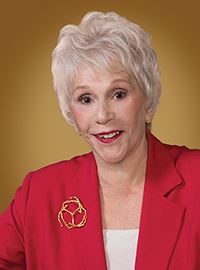
  • League of Women Voters of California President Carol Moon Goldberg

Proposition 15 will close the corporate property tax loophole in Proposition 13.  It will continue to protect residential and agricultural properties and will not change their taxes.  It also includes protections for small businesses. If passed, it will bring $348 million annually back to Contra Costa County.

Register in advance for this meeting.  Space is limited to 100 guests.

https://us02web.zoom.us/meeting/register/tZcvdeyhqzsoG9yhPqXYS-koJKN3mf-oh7v4

After registering, you will receive a confirmation email containing information about joining the meeting.

Questions for panelists should be submitted in advance to prop15@lwvdv.org.

For more information, contact info@LWVDV.org

Opposition to Prop. 15

According to the website for the campaign to defeat Prop. 15 explaining the reason for the 1978 Prop. 13, “In the 1970s, families, seniors, farmers and businessowners were being forced from their homes, farms, and properties because they couldn’t afford to pay 50-100% increases in their property taxes every year. Property tax bills skyrocketed, often beyond the owners’ ability to pay.

It was nearly impossible to predict the next property tax bill, leaving many families and small businesses unable to plan for the future. In some cases, small businesses were left with no choice but to lay off employees or raise prices on their customers.

This led to bipartisan support for property tax reform.

On June 6, 1978, nearly two-thirds of California voters passed Prop 13 to cap property tax increases for residential and business properties and provide certainty so that they will be able to afford their property tax bills in the future.

Specifically, Prop 13:

  1. Calculates general property taxes for residential and business properties based on one percent of their purchase price
  2. Caps annual increases in property taxes at two percent per year, which prevents sharp increases in property taxes, especially when property values rise quickly

Most small businesses rent the property on which they operate, and their lease agreements require they pay the property tax. Without Prop 13’s protections, small businesses will face soaring rents at a time when federal and state government is trying to provide small businesses with relief to keep their doors open.

Unless defeated by voters, Prop 15’s higher property taxes will ultimately get passed on to consumers with higher costs on just about everything we buy and use, like groceries, fuel, utilities, day care and health care.”

Attorney General’s Title & Analysis of Prop. 15

According to the California Secretary of State’s website, the title and of the measure by state Attorney General Xavier Becerra reads, “INCREASES FUNDING FOR PUBLIC SCHOOLS, COMMUNITY COLLEGES, AND LOCAL GOVERNMENT SERVICES BY CHANGING TAX ASSESSMENT OF COMMERCIAL AND INDUSTRIAL PROPERTY. INITIATIVE CONSTITUTIONAL AMENDMENT.” (Emphasis in original). His analysis states Prop. 15 “Increases funding for K-12 public schools, community colleges, and local governments by requiring that commercial and industrial real property be taxed based on current market value. Exempts from this change: residential properties; agricultural properties; and owners of commercial and industrial properties with combined value of $3 million or less. Increased education funding will supplement existing school funding guarantees. Exempts small businesses from personal property tax; for other businesses, exempts $500,000 worth of personal property. Summary of estimate by Legislative Analyst and Director of Finance of fiscal impact on state and local governments: Net increase in annual property tax revenues of $7.5 billion to $12 billion in most years, depending on the strength of real estate markets. After backfilling state income tax losses related to the measure and paying for county administrative costs, the remaining $6.5 billion to $11.5 billion would be allocated to schools (40 percent) and other local governments (60 percent).” (Emphasis on original).

Lawsuits Filed Against Attorney General Becerra for Biased Title and Analysis

The measure is referred to as a split roll, as it would treat residential properties different than commercial and industrial properties on the tax rolls.

According to a report on CalMatters.org, “Becerra has been sued by both business groups and anti-tax advocates over his description of the measure, which emphasizes that it “increases funding sources for public schools’ without specifically including the phrase ‘tax increase.’

On July 29 the Howard Jarvis Taxpayers Association sued California Attorney General Xavier Becerra “for his abject failure to produce impartial ballot material related to Proposition 15, the ‘split roll’ attack that seeks the partial repeal of Proposition 13.”

Past criticism of Becerra’s bias has been vocal but has now reached a crescendo…editorial boards and columnists have lambasted Becerra. In fact, the specific deficiencies of Prop 15’s ballot label as well as the title and summary are well identified in the media reports themselves.”
The tax fighting organization listed many examples of Becerra’s impartiality, including, “The ballot title on Prop. 15 begins by stating that it ‘increases funding sources for public schools, community colleges and local government services.’ It would do so, it states, by ‘changing tax assessment’—not raising taxes—on commercial and industrial property.” (John Diaz, California attorney general loads language on 2 November measures, The S.F. Chronicle, July 26, 2020, https://www.sfchronicle.com/opinion/diaz/article/California-attorney-general-loads-language-on-2-15434094.php, emphasis in original.)”; and

“The title and summary of Proposition 15 are not only tilted toward one side, they are less than fully accurate. Property in California is not taxed on ‘purchase price.’ It’s taxed on fair market value at the time of purchase, adjusted annually, for inflation with increases capped at 2 percent per year…”

“This blatant manipulation of the ballot label as well as the title and summary is in direct contravention of the Attorney General’s fiduciary duty to prepare impartial ballot material,” said Coupal.

However, also according to CalMatters.org, “In response to the petition from Jon Coupal, president of the Howard Jarvis Taxpayers Association, which opposes Prop. 15, (Sacramento County Superior Court Judge Laurie) Earl wrote that while one portion of the title ‘may be somewhat misleading, the Court is not convinced the sentence is so misleading that it justifies judicial intervention.’” Earl extensively cited an appellate court ruling in a previous case, “that ballot descriptions ‘prepared by the Attorney General must be upheld because all legitimate presumptions should be indulged in favor of the propriety of the attorney-general’s actions.’”

So, the ballot title and description for Prop. 15 by Becerra remains unchanged.

Big Backing by Zuckerbergs

According to Ballotpedia, the measure is backed by Chan Zuckerberg Advocacy, formed by Facebook founder Mark Zuckerberg and his wife Priscilla Chan, who according to the California Globe, contributed $1.9 million to the effort, through their Chan Zuckerberg Initiative. They believe it’s unfair for Disneyland to pay a lower property tax rate than their company is paying on its property.

The election is on November 3.

Filed Under: News, Politics & Elections

Travis Credit Union hosting virtual Back-to-School Rally Sept. 16

September 4, 2020 By Publisher Leave a Comment

Online event to celebrate the start of 2020-2021 School Year for local youth

Travis Credit Union invites students and their families to attend a free virtual ‘Back-to-School Rally,’ scheduled for Wednesday, September 16 from 4-5 p.m. The Zoom event is also the culmination of TCU’s month-long ‘Back to School Challenge,’ where students who complete the weekly online financial education activities are entered into a drawing to win the grand prize, a new laptop.

“Starting a new school year is an exciting time. Since this year is unlike any other, we are proud to introduce a digital financial education program to compliment distance learning to help families and guardians,” said Damian Alarcon, Director of Community Relations for Travis Credit Union. “The Back-to-School rally is our way of helping to bring youth together to celebrate financial education and all the new opportunities that this school year will bring.”

The rally will feature guest speakers from across the 12 counties served by TCU, including:

  • Edgar Lampkin, Superintendent of the Williams Unified School District, will provide a welcome to students.
  • Youth leaders from the Woodland Teen Advisory Board, the San Pablo Youth Commission, RYSE Center (in Richmond) and the Fairfield Police Activities League will share teen projects they are launching to support the return to schools.
  • The grand prize winner of the Back-to-School Challenge will be announced live

Woodland Teen Advisory Board, https://woodlandpubliclibrary.com

City of San Pablo Youth Commission, https://www.sanpabloca.gov/881/Youth-Commission

Fairfield Police Activities League, https://www.fairfield.ca.gov/gov/depts/police/pal_matt_garcia_youth_center/

RYSE Center, https://rysecenter.org

Williams Unified School District, http://www.williamsusd.net

To register for this free event, click here

Youth aged 13 to 18 have until September 9 to complete the contest requirements to be eligible for the giveaway. More information is available at traviscu.org/back-to-school.

Headquartered in Vacaville, California, Travis Credit Union is a not-for-profit cooperative financial institution serving those who live, work, worship, or attend school in Alameda, Colusa, Contra Costa, Merced, Napa, Placer, Sacramento, San Joaquin, Solano, Sonoma, Stanislaus, and Yolo Counties. Currently, Travis Credit Union is the 13th largest credit union in California with more than 214,000 members and more than $3.9 billion in assets. As one of the leading financial institutions in Solano, Contra Costa, Napa, Yolo and Merced Counties, Travis Credit Union’s strength lies in its faithful commitment to its members and the community; its solid, secure history; and its long-standing track record of dedicated service.


Filed Under: Business, Education, News

Commentary: Doctor says get the health care you need during COVID-19

September 4, 2020 By Publisher Leave a Comment

By Dr. Jeffrey McManus, Desert Pacific Regional Vice President for Health Services, Humana

Dr. Jeffrey McManus. From his LinkedIn profile.

Contra Costa County residents have been turning to medical virtual visits, also known as telemedicine, more than ever during the coronavirus pandemic.  While telemedicine companies have been around for years, the pandemic has led to a dramatic increase in virtual visits as primary care doctors, specialists and hospitals began offering the service as a way to help keep patients safe.

Now that most medical offices and hospitals are accepting patients for in-person visits and elective procedures, you may be wondering if you should go to your doctor’s office or stick to a virtual visit.  Rest assured, your health care providers can help you decide what’s best as they work to ensure safe care for patients and staff. This includes changing the ways they deliver care like screening patients ahead of time to help determine if it’s best to go to a medical office or stay at home.

In-person Visits

If it’s determined that an in-person visit is best for you, you’ll find that to reduce the risk of COVID-19 transmission, many facilities are taking the following steps:

  • Screening arriving patients for COVID-19 symptoms and providing a mask and hand hygiene supplies before entering the center.
  • Screening every employee for COVID-19 every shift and requiring them to wear masks at all times and appropriate personal protective equipment.
  • Treating suspected and symptomatic COVID-19 patients in designated areas only.
  • Promoting physical distancing with new clinic layouts.
  • Cleaning and disinfecting exam rooms between each patient visit, and regularly disinfecting high-traffic and high-touch areas.

Virtual Visits

If you don’t require in-person attention, a virtual visit is still a good option. Many people are choosing virtual visits in non-emergency situations for routine follow-ups and non-life-threatening conditions. This option allows you to consult your doctor or other health care providers in your network via a secure video or phone appointment, all in the comfort of your home. Before your telehealth visits:

  • Make a list of all the medications – prescription and over-the-counter – that you take and include the name, address and phone number of your pharmacy.
  • Write down details about your symptoms, concerns, pain and feelings.
  • Take digital photos of any injury, rash or other visible concern.
  • Have your insurance ID card available.
  • Use a phone, tablet or computer that’s connected to the internet. If you’ve never video-chatted before, consider a practice run with a friend or family member to work out the process and check the microphone and speakers. Headphones or ear buds provide better sound quality and more privacy.
  • Have your home thermometer, bathroom scale, glucometer or blood-pressure monitor nearby.

Many area medical offices like John Muir Health, which serves Contra Costa County, offer both virtual and in-person visits.  John Muir Health has enhanced safety protocols for patients receiving care onsite, such as a universal mask policy, temperature and symptom screening and increased cleaning and disinfection.

Whether you choose a virtual or in-person visit, check with your health insurance provider to see if they’ve taken steps to help ease the burden during the health crisis. For example, Humana is waiving cost sharing (including copays, coinsurance and deductibles) for in-network primary care, outpatient behavioral health and virtual visits for our Medicare Advantage members for the remainder of the calendar year.

Getting the care you need is always important. Consider these options to stay safe and healthy. And remember, for life-threatening emergencies, such as chest pain, difficulty breathing, or suicidal thoughts, always call 9-1-1 or go to the nearest emergency room.

Bottom line, don’t delay care because you are worried about contracting COVID-19.


Filed Under: Health, Opinion

Bette Boatmun to close out 46 years on CCWD Board of Directors

September 4, 2020 By Publisher Leave a Comment

Bette Boatmun. From CCWD website.

Concord – During the Contra Costa Water District’s (CCWD’s) Board meeting Wednesday night, Director Bette Boatmun shared publicly that she has decided not to seek re-election for the seat she has represented for over 46 years.

Director Boatmun was appointed to the CCWD Board in July 1974 and has served in that seat representing Division 4 for over 46 years. In her tenure, she has made countless contributions to CCWD, the community and beyond.

“I initially decided to apply for this position in the interest of bringing more women into the water industry and have been honored to represent our community on many important decisions,” said Director Boatmun. “This Board works together constructively and collaboratively and CCWD’s workforce is strong – I know that our community will continue to be well represented and served.”

A trailblazer for women in leadership in the community, water agencies and special districts, Director Boatmun served as President of CCWD from 1990-1992, President of the Association of California Water Agencies from 2002-2004 and Chair of the Contra Costa Special Districts Association.

Under her leadership, CCWD has implemented many significant projects and programs including: building Randall-Bold Water Treatment Plant; fencing the Contra Costa Canal; constructing Los Vaqueros Reservoir; providing a conservation program and demonstration garden; upgrading Bollman Water Treatment Plant; providing a low-income assistance program; building the Multi-Purpose Pipeline; building two new Delta intakes; and expanding Los Vaqueros Reservoir, just to name a few.

Director Boatmun always has had an eagle-eye on CCWD’s finances to ensure fiscal responsibility and transparency for customers.

“Bette has been a relentless advocate for customers by supporting water education, water use efficiency, financial responsibility and giving back to the community,” said CCWD Board President, Lisa Borba. “We will greatly miss her wit and wisdom at our Board meetings, but we expect that she will check in as a customer from time to time.”

Selection of the new Division 4 Director will be on the November 3, 2020 ballot. Division 4 covers parts of Concord, Pittsburg and Antioch.


Filed Under: Central County, News, People

Glazer, Skinner, Bauer-Kahan, Wicks vote to eliminate requirement of mandatory sex offender registration for sex with minors 14 years or older

September 3, 2020 By Publisher Leave a Comment

“if the person was not more than ten years older than the minor at the time of the offense” – Assembly analysis of bill

State Senator Steve Glazer (D-7, Orinda)

Frazier, Grayson didn’t vote.

By Allen Payton

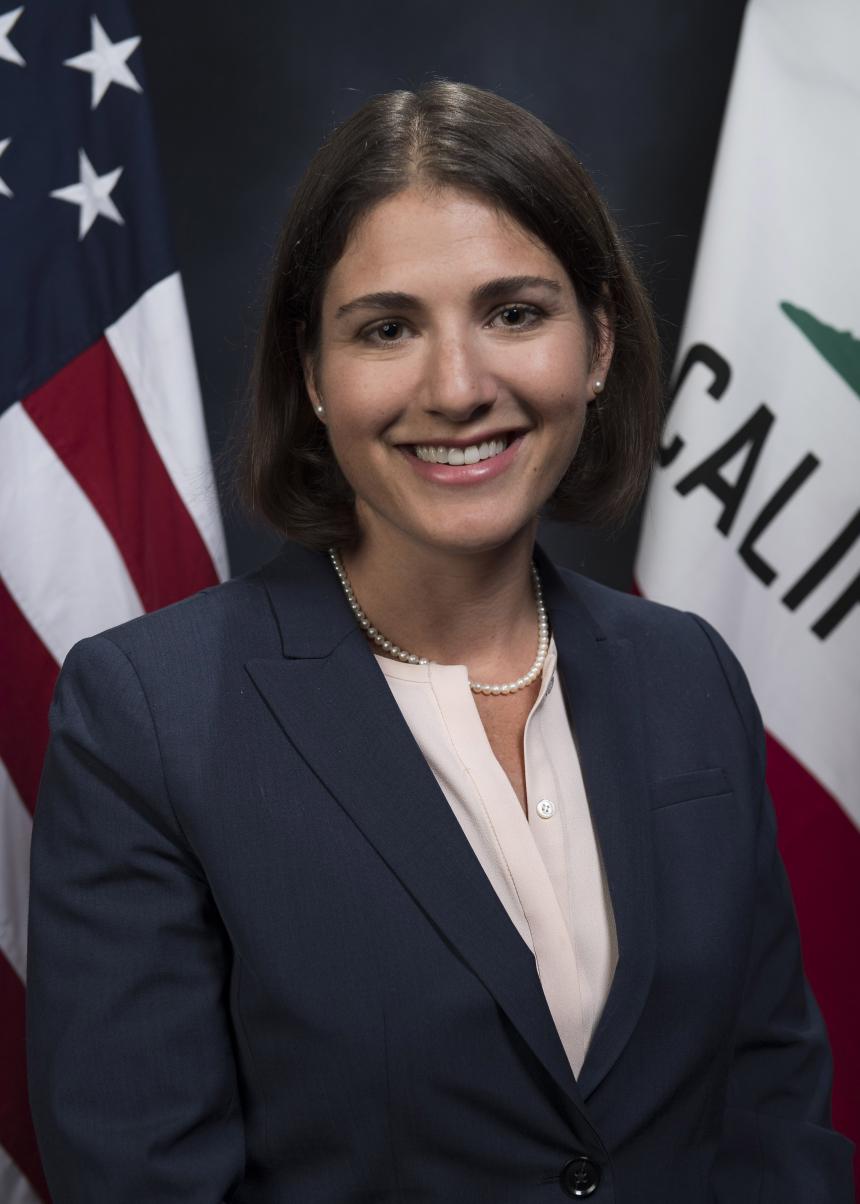
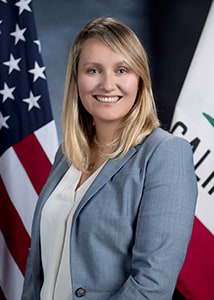
On Monday, the California State Senate and Assembly passed SB-145 Sex offenders: registration, authored by Sen. Scott Wiener, (D-11, San Francisco), exempts defendants convicted of specified, non-forcible sex offenses involving minors from mandatory registration as a sex offender. State Senators Steve Glazer (D-7, Orinda) and Nancy Skinner (D-9, Oakland) were joined by Assemblymembers Rebecca Bauer-Kahan (D-16, San Ramon) and Buffy Wicks (D-15, Oakland) who all represent portions of Contra Costa County in voting for it.

The bill passed in the 40-member Senate by a vote of 23-10 and in the 80-member Assembly by the minimum votes required of 41-25. Seven Senators and 13 Assemblymembers, including Jim Frazier (D-11, Discovery Bay) and Tim Grayson (D-14, Concord), who also represent portions of the county, did not vote on the bill.

Wiener said about his bill, “if a young person has voluntary sexual intercourse with a minor then the offense is not automatically registerable if they are within 10 years of age of the minor and the minor is 14 years or older.”

State Senator Nancy Skinner (D-9, Oakland)

Assembly amendments removed provisions of the bill that would have mandated that specified offenders would still have to comply with provisions of Megan’s Law, despite the fact that they would no longer be registered sex offenders.

According to the state’s Legislative Information website, this bill:

1) Exempts a person convicted of non-forcible sodomy with a minor, oral copulation with a minor, or sexual penetration with a minor, as specified, from having to automatically register as a sex offender under the Sex Offender Registry Act if the person was not more than 10 years older than the minor at the time of the offense, and the conviction is the only one requiring the person to register.

2) Specifies that a person convicted of one of those specified offenses may still be ordered to register in the discretion of the court, if the court finds at the time of conviction or sentencing that the person committed the offense as a result of sexual compulsion or for purposes of sexual gratification.

(WARNING: Graphic language) A report in the San Francisco Examiner reads, “Currently, while consensual sex between 15- to 17-year-olds and a partner within 10 years of age is illegal, vaginal intercourse between the two does not require an offender to register as a sex offender. Other forms of intercourse such as oral and anal intercourse require sex offender registration.”

Assemblymember Rebecca Bauer-Kahan (D16, San Ramon)

The Washington Examiner reports, “Adults less than 10 years older than the minor they are convicted of engaging in oral or anal sex with are not automatically added to the sex-offender registry. The decision whether or not to add them is left up to a judge under the new bill, referred to as SB145. Under current state law, judges are given discretion to keep teenagers off the sex-offender registry for having sex with someone close to their own age, but it only applies to “penile-vaginal” intercourse, and gay and transgender rights advocates argue this discriminates against gay teenagers.”

But the bill does not just cover minors as the offender can be 10 years older than the younger partner who must be at least age 14.

According to attorney Samuel Dordulian, who represents sexual assault victims, “The goal of SB 145, according to the bill’s language, is to ‘exempt from mandatory registration under the (Sex Offender Registration) act a person convicted of certain offenses involving minors if the person is not more than 10 years older than the minor and if that offense is the only one requiring the person to register.’ But rather than amend existing law to include vaginal intercourse with a minor as an act that requires mandatory sex offender registration – which would in effect remedy what Senator Wiener apparently views as discrimination – the bill aims to make all criminal sex acts with a minor over 14 equal by providing offenders with an opportunity to evade said mandatory registration. Doing so would be a disservice to survivors of those sex offenders, to communities, and to law enforcement officials.”

Assemblymember Buffy Wicks (D-15, Oakland)

“Communities would be forced to accept that sex offenders could now potentially live anonymously among law-abiding citizens,” Dordulian added.

The result of the legislation, if signed by Governor Gavin Newsom, a person 24 to 27 years old can have any kind of intercourse with a child as young as 14 and judges would no longer be required to mandate the older of the two register as a sex offender.

“I cannot in my mind as a mother understand how sex between a 24-year-old and a 14-year-old could ever be consensual, how it could ever not be a registrable offense,” said Assemblywoman Lorena Gonzalez (D-80, San Diego), one of only 10 Democrats to vote against the bill. “We should never give up on this idea that children should be in no way subject to a predator.”

A question to Glazer’s aide, Susannah Meyer was sent late Wednesday asking why he voted for the bill.

UPDATE: In response Glazer said, “I voted for SB 145 after consulting with law enforcement, including the California District Attorneys Association and the California Police Chiefs Association, which supported this bill.

This bill simply clarifies that in cases of statutory rape involving non-forcible sexual contact, the same sentences and the same registration requirements should apply no matter what kind of sexual interaction leads to the charges.

In all such cases, the perpetrator will still be required to register as a sex offender if the judge determines that this is necessary to protect public safety.”

The bill next goes to Newsom who has until the end of September to either sign or veto it.

Filed Under: Legislation, News, Youth

DA issues policy requiring prosecutors consider reason for looting during state of emergency before charging with crime

September 2, 2020 By Publisher 9 Comments

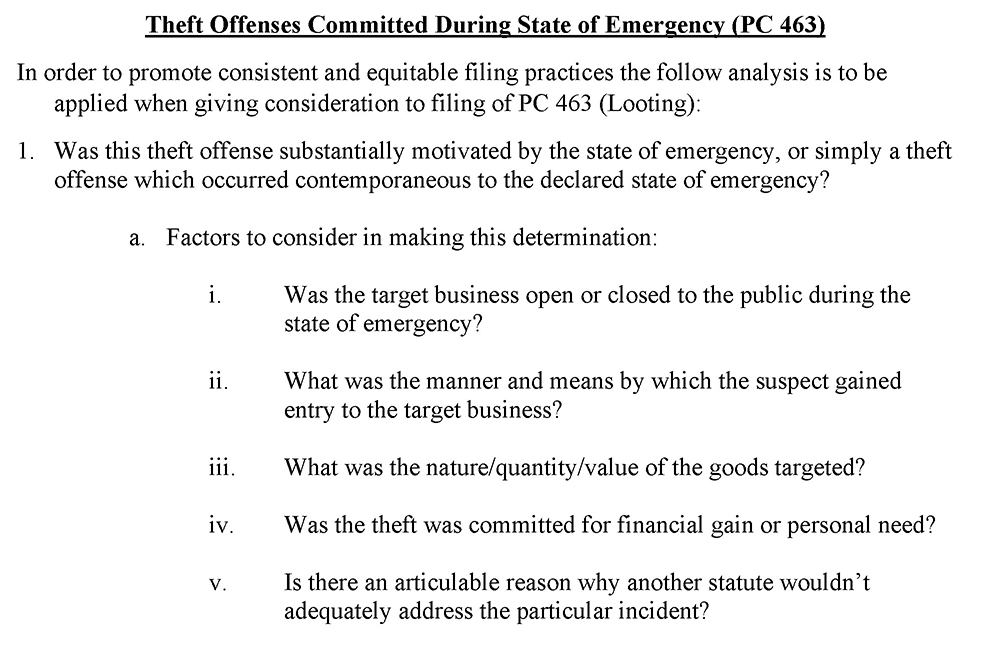
Policy issued by Contra Costa DA Diana Becton to Deputy DA’s. Courtesy of CCCDA.

Antioch Mayor “disturbed” by and doesn’t “agree with this approach”; theft by 3 of $20,000 of alcohol in San Pablo not charged as looting; more cases affected by policy

By Allen Payton

Contra Costa County District Attorney Diana Becton issued a policy in June, that recently went public, requiring her Deputy DA’s assess the reason someone was looting during a state of emergency before filing charges against them. However, the policy doesn’t prevent police officers from arresting the looter, according to DA’s office spokesman, Scott Alonso. CCDA Looting Guidelines

In the document obtained by Red State News, and shared with the Herald, today, reads:

“Theft Offenses Committed During State of Emergency (PC 463)

In order to promote consistent and equitable filing practices the following analysis is to be applied when giving consideration to filing of PC 463 (Looting):

1. Was this theft offense substantially motivated by the state of emergency, or simply a theft offense which occurred contemporaneous to the declared state of emergency?

a. Factors to consider in making this determination:

i. Was the target business open or closed to the public during the state of emergency?
ii. What was the manner and means by which the suspect gained entry to the business?

iii. What was the nature/quantity/value of the goods targeted?

iv. Was the theft committed for financial gain or personal need?

v. Is there an articulable reason why another statute wouldn’t adequately address the particular incident?”

“I am not sure how they obtained the policy. But it is our policy,” Alonso confirmed. The policy is true but the article in Red State is highly misleading and frankly wrong.”

He then shared a link to an analysis of the policy and articles about it by Red State and other publications on the Snopes website devoted to fact checking, which has some of it’s own controversial history in getting things wrong, at times.

Alonso then clarified matters by writing, “Nothing in the guidelines prohibits the police from arresting someone for a crime. It is really important to underscore these guidelines are because of the COVID-19 shelter in place given Governor Newsom’s statewide order to declare a state of emergency. We look at if the theft is because there is a state of emergency – or is this simply an offense contemporaneous to the state of emergency. We wanted to ensure consistency across the Office in considering any criminal charges for alleged violations of PC 463. Historically, prior to COVID-19 – we could find no recent evidence that our Office had filed looting charges during a state of emergency.”

“As you know, when evaluating any criminal case our prosecutors look at the circumstances surrounding the incident,” he continued. “These guidelines are consistent with how we evaluate criminal cases. The policy does not say we won’t file these types of cases. The Red State article is incredibly misleading and frankly written from a slanted point of view. The author of the piece did not reach out to us prior to publication. I appreciate you reaching out in advance of publishing anything.”

Section 463 of the California Penal Code states that a person convicted of second-degree burglary or grand theft during a state of emergency is guilty of the crime of looting, which can be punishable by imprisonment in county jail for one year. However, alternative sentencing for someone on probation can be issued for 180 days in jail and 240 hours of community service. The crime of petty theft during a state of emergency is increased to a misdemeanor punishable by six months in county jail or 90 days in jail and 80 hours of community service.

Antioch Mayor Responds

In an email sent from his re-election campaign account on Monday, Antioch Mayor Sean Wright wrote to Antioch residents with the subject line, “Unbelievable what our District Attorney just did.”

“I am disturbed by our Contra Costa County District Attorney’s announcement that our police officers must consider if looters ‘needed’ stolen property before they can charge them with looting,” he wrote. “Our DA is the first and only DA in the nation urging this kind of guidance.”

“Looting that takes place in times of emergency, such as we are going through, is against the law,” Wright continued. “According to our DA, if the looters ‘need’ an item in a retail shop, for example, it is OK for them to take that item without being charged. I don’t agree with this approach – do you? Please feel free to share your thoughts on this by clicking here to send me an email.”

He then provided a link to an article about the matter on The Daily Wire.

3 Arrested for $20,000 Theft of Alcohol Not Charged With Looting

One of the cases already affected by the policy includes three people arrested during the COVID-19 pandemic for stealing $20,000 from a beverage store in San Pablo but not charged with looting. Another case affected by the policy involved a woman attempting to break into an ATM during the pandemic, who was also not charged with looting.

The Contra Costa Deputy Sheriffs Association and police officers’ associations in the county are expected to issue a response to the policy, soon.

Filed Under: Crime, District Attorney, News, Police

Mother and son from San Ramon convicted of $2 million insurance and tax fraud scheme

September 2, 2020 By Publisher Leave a Comment

Husband and father is wanted and believed to be in India; owners of defense contractor companies

By Scott Alonso, Public Information Officer, Office of the District Attorney, Contra Costa County

Martinez, Calif. – Selina Singh (57-years-old) and Kabir Singh (30-years-old), a mother and son from San Ramon, pled guilty to conspiracy to commit insurance premium fraud and related felonies today, Wednesday, Sept. 2, 2020. Both defendants also admitted an aggravated white-collar crime enhancement for a loss exceeding $500,000 through a pattern of criminal activity. The crimes were committed through two businesses they owned and operated that did contract work for the U.S. Department of Defense.

The husband and father, Majinder Paul “MP” Singh, age 59, was vice president of the family business, and was also charged in November 2018 with multiple counts of workers’ compensation fraud, insurance fraud, laundering $1.5 million, as well as conspiracy. He has a warrant out for his arrest and the Contra Costa District Attorney’s office believes he is in India.

Workers compensation coverage to protect employees from injury is mandatory in the State of California. Premium fraud creates unfair competition in dangerous industries, as law-abiding business owners are outbid by competitors that unlawfully evade the cost of coverage at the expense of their workers. Such fraud can also result in harm to public if it exposes the person or entity hiring the contractor to liability for the injury, or even to the unsuspecting employees themselves, as an injured worker may encounter a claim denial or delay in obtaining coverage for needed medical care if the employer’s false reporting of company operations causes the insurance company to question and investigate the employee’s claim of injury.

The investigation of this case started after an employee severed his thumb while working on a Bara Infoware, Inc. construction jobsite at Fort Hunter Liggett. The injured employee and his site safety supervisor reported to Monterey County District Attorney investigators that Selina Singh directed them to lie about the injury occurring on a Bara Infoware, Inc. jobsite and report it occurred while working for the family’s other company, Federal Solutions Group.

The Monterey County District Attorney’s Office determined the companies were headquartered in San Ramon, California and started a joint investigation with the relevant local and State agencies. Investigators determined that the defendants obtained government contracts, including construction contracts that required compliance with workers compensation laws. Defendants then used their companies hire, employ, and pay construction laborers, carpenters, painters, and other workers in order to complete construction work, even as they fraudulently misrepresented the construction payroll to insurance carriers in less dangerous industries such as clerical, and consulting, in order to lower their insurance rates.

Investigators located another injured employee that reported that Kabir Singh asked him not to report his injury and offered to pay his medical expenses instead of reporting the injury to company’s insurance and located a third company, Eagle Solutions, that was used first to move money between Bara Infoware, Inc. and Federal Solutions Group, and then eventually directly to obtain workers compensation policies for non-construction payroll while running construction jobsites. An audit by a forensic accountant at the Contra Costa District Attorney’s Office concluded that the scheme evaded over $2 million dollars of insurance premiums that law abiding competitors would have had to pay in seven years, in addition to over $200,000 of evaded payroll tax owed to the State of California.

Selina Singh pled guilty to conspiracy to commit insurance fraud, insurance premium fraud, payroll tax fraud, and a white-collar crime enhancement. The maximum sentence for those charges is eleven years and eight months.

Kabir Singh pled guilty to conspiracy to commit insurance fraud, insurance premium fraud, and a white-collar crime enhancement. The maximum sentence for those charges is eleven years and eight months.

The Honorable Laurel Brady accepted the pleas. Sentencing is scheduled for November 19 at 1:30 p.m. in Department 31 of the Contra Costa County Superior Court.

This case resulted from a joint investigation by the Monterey County District Attorney’s Office, Contra Costa County District Attorney’s Office, California Department of Insurance, Fraud Division and Employment Development Department, Criminal Investigation Division and was prosecuted by DDA Jeremy L. Seymour. DDA Seymour is the Supervising Attorney in the Workers’ Compensation Unit for the DA’s Office.

Anyone with information about possible insurance fraud can report that information to the District Attorney’s Office via email at DA-ReportFraud@contracostada.org.

Read more about the case, here.

Allen Payton contributed to this report.

Filed Under: Crime, District Attorney, News, San Ramon Valley

Contra Costa DA issues joint statement on 11 criminal justice reform commitments

September 2, 2020 By Publisher 1 Comment

“…change needed to upend a system rooted in slavery.” – District Attorney Diana Becton

By Allen Payton

Contra Costa District Attorney Diana Becton. From CCC website.

In a joint commentary published on Politico.com last week, Contra Costa County District Attorney Diana Becton and four other district attorneys from across the country, issued a statement on 11 criminal justice reform commitments. However, the commentary states they want to transform and no longer reform the system. The commentary was not sent to local media which covers Contra Costa County.

One of the points reiterates what Becton promoted in June, with other prosecutors in California, which is to ban political contributions from police unions to candidates for district attorney. However, questions to her about that issue, including asking if Becton would also support banning contributions from criminal defense attorneys, were never responded to.

The commentary begins with the claim, “Our criminal legal system was constructed to control Black people and people of color. Its injustices are not new but are deeply rooted in our country’s shameful history of slavery and legacy of racial violence. The system is acting exactly as it was intended to, and that is the problem. We should know: We’re Black, we’re female, and we’re prosecutors. We work as the gatekeepers in this flawed system.”

In that commentary, the five elected prosecutors also wrote, “Each level of the legal system reflects a level of inherent bias, and unless we stop trying to reform the system and instead work to transform it, we will never achieve the kind of change needed to upend a system rooted in slavery. Working from within, we have begun the steps to rectify past wrongs. We are implementing policies that include declining to prosecute minor offenses, overturning wrongful convictions, refusing to take cases from officers with a history of racial bias and expunging marijuana convictions.”

“Now we are pushing even further. We have decided to make the following 11 commitments, and we urge our fellow prosecutors to join us:

  1. Do not prosecute peaceful protesters. Citizens have a right to protest, and prosecutions can antagonize marginalized communities.
  2. Do not accept any funding from police unions. This will ensure our offices’ independence, and the ability to hold police accountable for injustice and misconduct.
  3. Require the review of all available evidence — including body-worn camera and other video footage — in cases that rest solely on the testimony of an officer. One officer’s perspective cannot guarantee the full truth, and therefore all available evidence must be reviewed for the cases that come across our desks.
  4. Ban “No Knock” warrants and reexamine our policies for issuing warrants. “No Knock” warrants are a violation of individual rights and represent an overreach of police power. They often result in unnecessary and tragic fatalities, as we saw in the case of Breonna Taylor.
  5. Hold police accountable by pursuing criminal charges against officers unlawfully using excessive force and other forms of state-sanctioned violence.Each member of law enforcement must do their part to hold officers accountable for unlawful practices and misconduct to ensure the safety of every person who comes in contact with the legal system.
  6. Expand our office policies on declining low-level offenses to cover decisions regarding charging and issuing warrants. By increasing our efforts to decline to prosecute certain low-level offenses, we can work to reverse the disproportionate impact the legal system has on Black people and low-income communities.
  7. Financially support and advocate for increases in funding to community-led and community-defined responses, restorative justice and violence prevention programs. Investing in community-led programs is crucial to addressing the racist origins of our legal system.
  8. Commit to using our office’s power and platform to advance discussions of divestment from the criminal legal system and toward community-led and community-defined responses to harm. Strong community support, restorative justice practices and diversion practices are key to dismantling the current legal system and shifting its focus from punishment toward justice.
  9. Develop grant-based community reinvestment programs to be administered in partnership with community-based partners. Community programs have proved to lessen recidivism and keep people out of contact with the criminal legal system, while keeping communities safer, overall.
  10. Solicit feedback from Black and brown community groups we were elected to serve through public, virtual forums in the next two weeks. Only by listening to the most impacted communities and advocates and bringing them to the table, will we truly understand their greatest needs and biggest challenges. Then, we will work together to rectify them.
  11. Commit to budget transparency.A budget is a moral document, and our constituents have the right to see how we allocate our budget and what we are funding to invest in community supports and safety.

To read the entire commentary on Politico, click here.

Filed Under: Crime, District Attorney, Legal, News

Air Mail 100 Centennial Flight to stop at Concord’s Buchanan Field Airport

September 1, 2020 By Publisher 2 Comments

Commemorating and retracing the 100th Anniversary of the launch of U.S. Transcontinental Air Mail Service

By Kelly Kalfsbeek, Public Information Officer, Contra Costa County Public Works Department

Concord, CA – Contra Costa County’s Buchanan Field Airport in Concord is expecting an increase in air traffic on September 11, 2020 due to their participation in a historic event. Air Mail 100 Centennial Flight will commemorate the 100th anniversary of the U.S. Post Office’s Transcontinental Air Mail Service, will make a stop at Buchanan Field on its route to the final destination in San Francisco.

Starting on September 8, 2020, a light airplane will take off from Farmingdale, New York’s Republic Airport to begin a 2,560-mile relay across the United States, to retrace the original air mail route from Long Island to San Francisco. More than a dozen private pilots, flying their own aircraft, will carry sacks filled with commemorative postcards and letters, destined for San Francisco.

Air mail pilot Wild Bill Hopson (colorized). From AirMail100.com

Like the air mail pilots in 1920, the volunteers will exchange mail sacks between planes, each flying one leg of the continent-spanning route. Between September 8th and September 11th, the pilots will land at several airports across the nation to hand-off the mail sacks, ultimately landing at Buchanan Field Airport on the morning of September 11, 2020. From there, the mail will be formally handed over to the Postmaster on Marina Green in San Francisco.

According to the Air Mail 100 website, “On September 8, 1920, a DH-4 biplane lifted off in the early morning from a grass air strip east of New York City on Long Island, beginning a grand experiment to carry mail from the East Coast to the West in a series of hops across New Jersey, Pennsylvania, Ohio and points west. Regional air mail service had commenced two years earlier linking New York and Washington, D.C. By 1919, 400 HP deHavillands where regularly carrying mail sacks between Omaha and Chicago, but the September flight that now pointed its nose towards the distant Hudson would link an entire continent, but not without financial cost and human sacrifice. Those first pilots called themselves ‘The Suicide Club.’

Air Mail 100 will commemorate that historic event, which led within the decade to the commencement of commercial passenger air service. With the encouragement of several of the nation’s leading general aviation organizations, we have organized a series of volunteer flights linking the sixteen original transfer points, only seven of which continue today as active airports. The other nine have been “lost” to sands of progress, hidden under golf courses, urban shopping centers, hospital parking lots, and poetically, wind-swept grass fields again.”

Airmail routes, January 1, 1926 A 2,680-mile long transcontinental airmail route linking New York with San Francisco was completed in 1920. Initially, mail was flown by day and carried on trains at night. One coast-to-coast trip took about 3 ½ days, which was nearly a day quicker than the all-rail time. Regular service with night flying began in 1924, reducing the trip to about 33 hours. Airmail routes from Seattle to Victoria, British Columbia, and from New Orleans to Pilottown, Louisana, were foreign airmail routes, operated under contract — they expedited mail delivery to foreign-bound steamships. Map from USPS.com. See more air mail maps, here.

The reason for the stop in Concord is because San Francisco’s “Marina Green is no longer available for aircraft operations.”

The San Francisco Marina Green airmail field. Photo from AirMail100.com.

Also, according to the Air Mail 100 website, “The curious thing about the Marina airmail field in San Francisco is it is still there: a long, narrow grassy strip 1,700 feet long. If it were a modern paved runway its ends would be marked by compass headings of 8 and 26, shorthand for 80 and 260 degrees. It lies just two miles east of the Golden Gate Bridge on the shores of San Francisco Bay. A DH-4 mail plane could still land there today, but it would be dangerous, not to mention illegal, yet it was the original Pacific coast terminus of a nearly 2,700-mile route. Ironically, it was also the shortest leg, less than 100 miles. Since Marina Green is no longer available for aircraft operations, in consultation with various area EAA (Experimental Aircraft Association) chapters, we will use Buchanan Airport at the city of Concord, CA.”

Airport staff is providing advance notice of this historic event as it may result in an increase in air traffic on or around September 11, 2020.

Allen Payton contributed to this report.

Filed Under: Airports, Central County, Concord, History, News

More Contra Costa businesses open following updated state recommendations

August 31, 2020 By Publisher Leave a Comment

Includes hair salons & barber shops indoors, gyms & fitness centers outdoors, and indoor shopping malls at 25% capacity

By Contra Costa Health Services

The California Department of Public Health on Friday announced new statewide guidelines to make regulations and community re-openings more standardized throughout the state. Contra Costa and most other counties are now in the purple (most restrictive) tier.

According to these new state rules, hair salons and barber shops can now operate indoors in Contra Costa County with safety guidelines in place. Indoor shopping malls may also reopen at 25% maximum occupancy as long as public congregation points and food courts are closed and the mall has approved a COVID-19 safety plan from Contra Costa Health Services (CCHS). Gyms and fitness centers may begin operating outdoors in accordance with their own state guidelines and checklist.

These new state rules do not change the restrictions on in-person education, or the state’s school waiver process in Contra Costa.

We continue to evaluate the State’s new framework and its impact on our county, and we will provide additional information as it becomes available.

CCHS encourages businesses to adjust reopening plans as needed in response to changes in air quality in the county from Northern California wildfires. The county has issued a health advisory about smoke, encouraging all residents to stay inside when possible with doors and windows shut. For air quality updates and forecasts, visit the Bay Area Air Quality Management District website. Contra Costa Health Services urges residents to continue wearing face coverings when they go out or are near people outside their households, observe physical distancing, stay home from work or school when they do not feel well and wash their hands thoroughly and often.


Filed Under: Business, Health, News

  • « Previous Page
  • 1
  • …
  • 285
  • 286
  • 287
  • 288
  • 289
  • …
  • 488
  • Next Page »
Liberty-Tax-Jan-Apr-2026
Deer-Valley-Chiro-06-22

Copyright © 2026 · Contra Costa Herald · Site by Clifton Creative Web