• Home
  • About The Herald
  • Local Agencies
  • Daily Email Update
  • Legal Notices
  • Classified Ads

Contra Costa Herald

News Of By and For The People of Contra Costa County, California

  • Arts & Entertainment
  • Business
  • Community
  • Crime
  • Dining
  • Education
  • Faith
  • Health
  • News
  • Politics & Elections
  • Real Estate

Contra Costa Supervisors open 1964 time capsule, create new one to be opened in 2072

October 7, 2022 By Publisher Leave a Comment

The members of the Contra Costa County Board of Supervisors hold Items for the new time capsule to be opened in 50 years. Photo: Contra Costa County

Copy of Antioch Herald, other local newspapers included in new time capsule placed in vault at new county Administration Building

By Contra Costa County Office of Communications & Media

The front cover of the Antioch Herald Feb. 2022 issue included in the new time capsule.

Martinez, CA – On October 4, 2022, the Contra Costa County Board of Supervisors opened a 58-year-old time capsule that was buried on September 26, 1964, under the prior Administration Building at 651 Pine Street in Martinez.

“We were excited to see what items were preserved in the old time capsule and to accept materials from all five Board Members as well as County departments for the new Administration Building time capsule,” said Board Chair Supervisor Karen Mitchoff. “The new time capsule will be placed in a vault at 1025 Escobar Street and opened in 2072.”

The 1964 capsule contained a diverse collection of artifacts. Some of the unearthed items included the County’s 1964 annual report, predictions from the City of Martinez, emergency numbers for fire, police, and the County, a picture of the building maintenance staff, a County office telephone directory, directions on how to operate a push-button telephone, a photo of the first Contra Costa Courthouse built in 1855 and demolished in 1903, a copy of the special edition dedication of the Administration Building published in the Morning News-Gazette on September 25, 1964, and a letter from the 1960s County Administrator Joseph P. McBrien. The items will be placed on a history wall in the new Administration Building at 1025 Escobar Street.

At the October 4, 2022, Board of Supervisors meeting, the County Board of Supervisors and departments also included items for the new time capsule to be opened in 50 years.

District 3 Supervisor Diane Burgis said, “This is a moment where you get to talk to people in the future, and it made me philosophical and introspective. The capsule that we are opening today was set up a year before I was born, and so much turbulence was going on in the world at that time, and as much as things have changed, they haven’t.”

She included a letter addressing the current situation in District 3, the County, and the world, background on District 3 and far east County, and the priorities and issues in 2022. Supervisor Burgis added, “I closed the letter with a message to my future loved ones and encouraged people to continue to give and serve to make the world a better place. We must be optimistic and look forward to the progress that has gone on in the world.”

She also included a bio, a photo with her staff, and information from Antioch, Bethel Island, Brentwood, Byron, Discovery Bay, Knightsen, and Oakley. Recent editions of local newspapers including the February 2022 copy of the Antioch Herald which featured the City of Antioch’s yearlong Sesquicentennial Celebration of its 150th anniversary of cityhood, plus brochures of the Future of the Diablo Valley Conference, and the Delta Counties Coalition memorabilia were also included.

Board Vice Chair and District 5 Supervisor Federal Glover said, “This is an opportunity to reflect where the County has been in the last several decades. So, I included some history in terms of myself, in that I am the first African American to be a part of the Board of Supervisors.”

Some items that he included were pins from the cities, brochures, and information on the widening of Highway 4, BART coming into the county system, eBART, community colleges, refineries, the Zero Tolerance initiative against Domestic Violence, electrifying of housing through the Sustainability Committee, the Office of Racial Equity and Social Justice, and the Youth Summits.

District 4 Supervisor Mitchoff included a letter highlighting the significant impacts of the pandemic and commenting: “My hope and wish are that 50 years from now, we will have returned to a time when people are respectful, more courteous, and more understanding of different points of view.” Her letter also identified major issues affecting Contra Costa County including the Delta, transportation, housing, and public service.

Mitchoff included letters from each city in her district and photos of their council members. All cities provided pins, Clayton provided a pen, and Pleasant Hill provided a stamp from this year’s library opening.

District 1 Supervisor John Gioia’s letter to the future indicated, “We faced enormous challenges. We persevered. We had faith in our young people and future leaders to protect and fight for our future. We know you will have the wisdom and the will to continue the fight for our planet and our communities.”

He included a CD about the Contra Costa Historical Society, a COVID home test kit, an N-95 mask, a San Francisco Bay Trail Map with a note hoping the trail would be fully built, a T-Shirt from the 5th annual Richmond Indigenous Peoples Walk to show respect for our native inhabitants, a T-Shirt from a recent Coastal Clean-Up Day, a “Racism is a Public Health Crisis” lapel pin, and a lapel pin of the original El Cerrito High School which Gioia attended.

District 2 Supervisor Candace Andersen’s items included letters from Danville, Lafayette, Moraga, Orinda and San Ramon. She also wrote a letter describing her role as County Supervisor, as well as the priorities and issues confronting District 2. Supervisor Andersen included a Blackhawk Bulletin, photos of the Alamo Municipal Advisory Council, and a PowerPoint presentation about District 2.

“I also included our holiday card, which is a picture of my staff because they are an integral part of what we do in serving the community,” she added.

To see all the items the Board of Supervisors placed in the new time capsule and opened from the 58-year-old time capsule, visit  www.contracosta.ca.gov/8735/Contra-Costa-County-Time-Capsule. The new time capsule is scheduled to be buried at 1025 Escobar Street and opened in 2072. Watch the video of the presentation and ceremony. For more information, you can visit www.contracosta.ca.gov.

Filed Under: History, News, Supervisors

Op-Ed: Help America’s universities keep transforming the world

October 7, 2022 By Publisher Leave a Comment

Bayh-Dole Act results. Source: Speedsprint.com

Bayh-Dole Act for intellectual property licensing designed to stimulate economic growth under attack

By Lita Nelsen

Lita Nelson. Source: LinkedIn

When I was a student at the Massachusetts Institute of Technology decades ago, Cambridge’s Kendall Square was a grubby, run-down warehouse district. Today, it’s known as the most innovative square mile on the planet.

The secret? The Bayh-Dole Act, or Trademark Law Amendments Act, a landmark piece of legislation passed in 1980 that allowed universities to keep the patents to any inventions they made. That meant that they could license these inventions to private companies, who would turn the new scientific knowledge into innovative products.

That one forward-looking law attracted hundreds of biotechnology companies to MIT’s backyard, helping to breathe new life into Kendall Square and revitalize Massachusetts’s economy. Cambridge, Mass., of course, wasn’t the only university community to thrive because of Bayh-Dole. Cities and towns surrounding hundreds of universities have prospered as a result.

Nevertheless, Bayh-Dole has recently come under attack by lawmakers who want to use the law as a mechanism to cut drug prices. Their goal of lowering drug prices for patients is admirable — but twisting the Bayh-Dole Act to use it as a price control tool would have disastrous consequences for America’s research universities, as well as U.S. consumers and patients, who will suffer as a result of any reduced investment in life sciences.

In a recent letter in support of this idea, lawmakers urged administrators at the Department of Health and Human Services to use Bayh-Dole to “march-in” and take away drug companies’ licenses to certain patents that stemmed from taxpayer-funded research. HHS could then relicense those drug patents to generic pharmaceutical companies that could create cheaper versions of the medicines.

That’s certain to make biotech investors and companies less willing to invest in university research. Why would any firm — small companies and startups especially — assume the risk of developing a new drug when the government could seize its patent rights if federal officials don’t like the price of the final product?

Lawmakers would do well to remember that Bayh-Dole fundamentally changed the research and development landscape in the United States for the better.

I should know. As the head of MIT’s Technology Licensing Office for almost three decades, I helped license thousands of technologies to the innovative companies that sprung up around campus.

Before Bayh-Dole, the government retained patent rights to any academic discoveries supported by public money and licensed just 5% of the nearly 30,000 patents it held. Consequently, while this pre-Bayh-Dole system worked to advance basic research, it failed to turn scientific advancement into usable, commercial products.

Bayh-Dole shifted that paradigm, providing a mechanism to translate academic research results into new technologies ranging from high-definition television and the page-rank algorithm that would become Google to FluMist® and CAR T-cell therapy. Companies exploiting Bayh-Dole inventions have contributed up to $1.9 trillion to the U.S. gross industrial output and up to $1 trillion to our GDP. They have supported nearly 6.5 million jobs and led to the creation of over 15,000 startups.

The bipartisan Bayh-Dole Act, as its authors clearly stated, was never meant to be a price-control mechanism. The law outlines four clearly defined instances where its march-in provisions can be exercised. Controlling prices is not one of them.

What today’s lawmakers don’t seem to grasp is that the unintended consequences of meddling with Bayh-Dole will outweigh any wished-for benefits.

Lita Nelsen retired from the Technology Licensing Office at the Massachusetts Institute of Technology after 30 years in the office. She was director of MIT TLO from 1992 to 2016. This op-ed originally ran in the Boston Herald.

Filed Under: Opinion

NAACP to host candidate forums for Pittsburg, Antioch council races tonight, Thursday, school board races Oct. 19, 20

October 5, 2022 By Publisher Leave a Comment

The East County Branch would like to invite you to its Candidate Forums in October. The Pittsburg City Council Candidate Forum will be held, tonight, Wednesday, Oct. 5 from 6-8 p.m. in the East County Branch office at 186 E. Leland Road, Pittsburg. The Antioch City Council Districts 1 and 4 Candidate Forum will be held Thursday, Oct. 6 from 6-8 p.m. in the Antioch Council Chambers at 200 H Street.

Please join us either in person or virtually where you will have the opportunity to meet the candidates and hear their positions on vital issues affecting our community. The format includes the opportunity for the candidates to ask each other questions and offer rebuttals to their answers.

Additional forums are scheduled for Pittsburg and Antioch school board candidates on Oct. 19 and 20, respectively.

For more information contact info@eastcountynaacp.org or (925) 439-5099 or visit us at www.eastcountynaacp.org

Filed Under: East County, Politics & Elections

OPINION: Congressional Data Privacy Bill would unjustly enrich trial lawyers 

October 4, 2022 By Publisher Leave a Comment

By Timothy Lee

Several Members of Congress recently introduced legislation that aims to protect consumer data from misuse and abuse.

Unfortunately, the “American Data Privacy and Protection Act” (H.R.1852) contains significant defects unrelated to much-needed privacy protections for consumers or businesses.

Instead of simply safeguarding the personal information of ordinary Americans and simplifying legal obligations for companies, the bill would uncork a torrent of counterproductive lawsuits that would damage job creators and enrich trial lawyers.

There’s no question America needs a federal data privacy law. Due to the lack of a uniform federal standard, data privacy is governed by a patchwork of state laws and regulations. Consequently, American firms may needlessly spend up to $1 trillion over the next decade trying to navigate that legal maze and comply with the varying statutes — with $200 billion of that burden falling on small businesses.

A single, streamlined federal law would help reassure consumers that their data remains secure, regardless of where they live or where a company is located.

The legislation under consideration, however, contains two massive flaws that would unleash endless class-action litigation over minor or technical violations, allowing lawyers to reap millions while class members receive just a few dollars or, in many cases, nothing at all.

First, the proposed legislation includes a ban on class-action waivers in arbitration agreements, which could prohibit companies and consumers from having their disputes resolved on an individual basis. Arbitration offers a more efficient alternative to court litigation, relying on independent third parties to mediate conflicts. Essentially, the parties in dispute take their issues to a neutral party, present their respective arguments, and agree to abide by whatever the arbitrator decides.

Although trial lawyers are understandably loath to admit it, arbitration is generally better for consumers than traditional court litigation. It is typically cheaper, quicker, and less complicated than formal lawsuits. Consumers prevail 41% of the time in arbitration, versus 29% in court. Additionally, awards in cases decided by arbitration actually exceed courtroom awards — $80,000 versus $71,000, respectively. Arbitration cases are also resolved 27% more quickly on average, and there’s often no need to involve — and thus pay — a lawyer.

However, those benefits present big problems from trial lawyers’ perspective. They prefer huge, class-action lawsuits that, according to a 2015 study by the Consumer Financial Protection Bureau, net consumers an average of $32 while lawyers earn close to $1 million.

The bill’s second massive flaw would create a “private right of action,” which allows individuals to sue to enforce the law no matter how trivial the violation. When numerous individuals can file the same complaint, plaintiffs’ lawyers try to lump them all together in one big lawsuit against a business — even if most of the people in the class are unaware they’re part of a lawsuit. It’s perfectly clear how that benefits lawyers. But it’s uncertain how it would advance consumer privacy and data protection.

Data security and privacy remain serious, complex issues, and Congress should absolutely pursue a uniform national policy. People who steal our data, and businesses that fail to adequately protect it, must be held accountable.

As currently drafted, however, the American Data Privacy and Protection Act contains unacceptable provisions that would enable rich trial lawyers to get even richer while delivering scant benefits to ordinary Americans whose interests they claim to represent.

Timothy H. Lee is senior vice president of legal and public affairs at the Center for Individual Freedom. This piece was originally published by Inside Sources.

Filed Under: Legislation, Opinion

DeSaulnier announces House passage of Mental Health Matters Act

September 30, 2022 By Publisher Leave a Comment

A comprehensive package to address concerns of students, families, educators

Rep. Mark DeSaulnier

Washington, D.C. – Yesterday, Thursday, Sept. 29, 2022, Congressman Mark DeSaulnier (D, CA-11), Chairman of the House Education and Labor Committee’s Subcommittee on Health, Employment, Labor, and Pensions, and Education and Labor Committee Chairman Robert C. “Bobby” Scott (VA-03) announced House passage of the Mental Health Matters Act (H.R. 7780), legislation they authored to help confront the mental health crisis by increasing access to support, services, and resources for children, students, workers, and families. The bill passed the U.S. House of Representatives by a vote of 220-to-205 with all Democrats and one Republican voting in favor.

“From children and young adults experiencing an uptick in mental health challenges to educator burnout, our country is experiencing a mental health and substance abuse crisis. As someone who lost their father by suicide, I am proud to have led this comprehensive approach to strengthen mental health resources for students, educators, and workers with Chairman Scott,” said DeSaulnier. “I urge the Senate to pass this legislation so we can combat the mental health crisis in this county and ensure everyone has the resources they need to live happy, healthy, and fulfilling lives.”

“The COVID-19 pandemic exacerbated the mental health crisis among students, workers, and families. As a result, educators have been forced to play an outsized role in supporting and responding to students’ mental health needs, leading to increased depression and trauma among educators. Moreover, nearly half of the U.S. workforce now suffers from mental health issues since the COVID-19 pandemic began. In response to the national mental health crisis, I am proud to stand in strong support of the Mental Health Matters Act led by Congressman Mark DeSaulnier. The Mental Health Matters Act delivers the resources that students, workers, and families need to improve their well-being,” said Chairman Scott.

The Mental Health Matters Act takes comprehensive steps to address our nation’s mental health and substance abuse crises by strengthening school-based behavioral health care, bolstering mental health parity protections, and ensuring access to mental health and substance use disorder benefits for workers and families.

Specifically, this bill would:

  • Increase the number of mental health professionals serving in high-need schools and help to build a pipeline of school-based mental health services providers;
  • Help state educational agencies recruit and retain school-based mental health services providers at high-need public schools;
  • Require institutions of higher education to increase transparency around the accommodations process and allow incoming students with existing documentation of a disability to access disability accommodations;
  • Increase students’ access to evidence-based trauma support and mental health services through innovation by linking schools and districts with local trauma-informed support and mental health systems;
  • Require the Department of Health and Human Services to identify evidence-based interventions to improve the health of children and staff in Head Start programs, and help Head Start agencies implement these interventions;
  • Strengthen the capacity of the Department of Labor to ensure that private, employer-sponsored group health plans provide mental health and substance use disorder benefits under the Mental Health Parity and Addiction Equity Act (MHPAEA) and the Employee Retirement Income Security Act (ERISA); and
  • Strengthen the ability of people with private, employer-sponsored health and retirement plans to hold plan sponsors accountable when they are improperly denied mental health and substance use disorder benefits.

DeSaulnier represents most of Contra Costa County in the U.S. House of Representatives.

Filed Under: Health, Legislation, News

Take a tour of the Vasco Caves Regional Preserve in October

September 30, 2022 By Publisher Leave a Comment

Filed Under: East County, Parks, Recreation

Bay Area transportation agency adopts landmark policy to promote housing, commercial development near transit stations

September 29, 2022 By Publisher Leave a Comment

TOD projects adjacent to a BART station. Source: MTC. Credit: Karl Nielsen

The Metropolitan Transportation Commission (MTC), yesterday, Wednesday, Sept. 28, 2022, adopted a new Transit-Oriented Communities (TOC) Policy designed to boost the overall housing supply and increase residential densities in transit-rich areas throughout the Bay Area; spur more commercial development near transit hubs served by multiple agencies; promote bus transit, walking, biking and shared mobility in transit-rich areas; and foster partnerships to create transit-oriented communities where people of all income levels, racial and ethnic backgrounds, ages and ability levels can live, work and thrive. The newly adopted policy applies specifically to transit priority areas within a half-mile of BART, Caltrain, SMART, Capitol Corridor and ACE stations; Muni and VTA light-rail stations; Muni and AC Transit bus rapid transit stops; and ferry terminals.

Studies show people are more likely to ride transit if they live within half a mile of a rail station, ferry terminal or bus line. And jobs that are within a quarter-mile of transit often are more attractive to the Bay Area’s workforce.

The TOC Policy is the update to MTC’s 2005 Transit-Oriented Development (TOD) Policy. That set minimums for the average number of housing units (both existing and/or permitted housing units) within a half-mile of each new rail station funded through Regional Measure 2. However, according to MTC spokesperson Rebecca Long the new policy applies to any all existing and future transit priority areas.

“The Transit-Oriented Communities Policy is truly groundbreaking,” explained MTC Chair and Napa County Supervisor Alfredo Pedroza. “Using transportation funds as an incentive, the policy encourages cities and counties to upzone transit-rich areas so transit, walking and biking can be viable travel choices for more people, and so we can generate maximum value from the billions of taxpayer dollars that have been invested in our transit network over the years as well as new transit lines that will be built in the years to come. The policy specifically encourages the development of affordable housing and protects current residents from being displaced by new development.”

The TOC Policy links all four of the themes — transportation, housing, the economy and the environment — of Plan Bay Area 2050, the long-range transportation plan and sustainable communities strategy adopted by MTC and the Association of Bay Area Governments in 2021. Minimum residential density requirements range from 25 units per acre for locations within a half-mile of ferry terminals; SMART, ACE and Capitol Corridor stations; and Caltrains stations south of San Jose’s Tamien station up to 100 units per acre within a half-mile of BART stations in downtown San Francisco and Oakland, and within a half-mile of San Jose’s Diridon Station. The policy also eliminates minimum parking requirements in many transit-rich areas, allows for shared parking between residential and commercial uses, and mandates at least one secure bike parking space for each new dwelling unit.

MTC is the regional transportation planning, financing and coordinating agency for the nine-county San Francisco Bay Area.

Allen D. Payton contributed to this report.


Filed Under: BART, Growth & Development, Jobs & Economic Development, News, Transportation

Former Antioch High football QB and female partner in custody for Brentwood armed robberies

September 23, 2022 By Publisher Leave a Comment

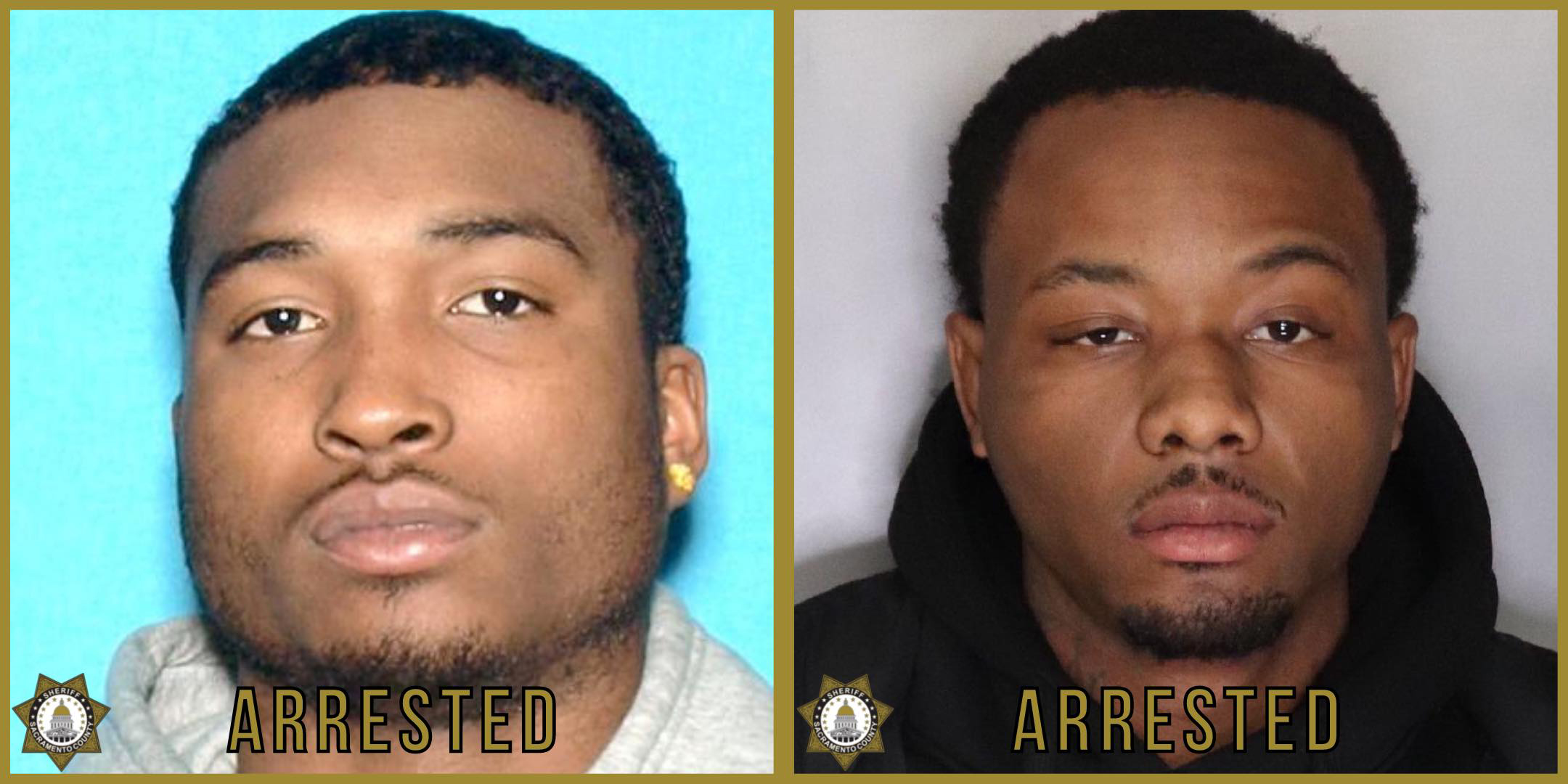
Delvon Hasain Hasan & Dioni Tamira Patton. Photos by Brentwood PD.

Identified, arrested with assistance from Concord PD, Antioch PD

By Brentwood Police Department

On Tuesday, Sept. 20 at approximately 3:25 PM, Brentwood Police officers responded to the Bank of America located at 6261 Lone Tree Way for a robbery that just occurred. The victim reported that after exiting the bank, she was approached by one suspect who attempted to grab her purse. A struggle ensued with the suspect while a second suspect was waiting close by in a getaway vehicle. The victim’s wallet and purse, containing an undisclosed amount cash was stolen during the struggle. Both suspects fled the scene in the getaway vehicle, described as a black four-door sedan was seen traveling eastbound on Lone Tree Way.

The victim sustained minor injuries and it was determined a second minor victim was on scene but did not sustain any injuries.

Our investigators quickly performed follow-up and with the help of Concord PD and Antioch PD, identified and arrested 18-year-old Dioni Tamira Patton and 20-year-old Delvon Hasain Hasan both from Antioch. Our investigators also recovered two firearms, other related evidence and two vehicles associated with the robbery. Additionally, it was determined through surveillance footage, these suspects were responsible for a similar robbery that occurred at the same location on Sept.16, 2022, at approximately 2:25 p.m.

Guns confiscated by Brentwood police and Delvon Hasan perp walk.

According to MaxPreps Hasan is a 2021 graduate of Antioch High School where he played baseball and football. According to hudl.com he wore jersey #5 and played quarterback and tight end in 2019.

Through collaboration and partnership, we were able to safely take both suspects into custody. A special thank you to Concord PD and Antioch PD for their assistance.

Please remain vigilant at all times and aware of your surroundings. If you see something suspicious immediately report it to the police.

If you have any information related to this crime, please contact Detective Sares at 925-809-7733. Callers may remain anonymous.

Allen D. Payton contributed to this report.

Filed Under: Crime, East County, News, Police, Youth

Contra Costa TV to broadcast Election Preview voter education forums starting tonight

September 21, 2022 By Publisher Leave a Comment

Contra Costa County voters can watch the local “Election Preview” voter education forums starting Wednesday, September 21, 2022. This programming offers Contra Costa voters a chance to become informed about candidates before casting their ballots. Moderators for the roundtables are Claudine Wong, KTVU anchor and reporter, Bob Butler, KCBS reporter, and Alan Wang, Public Information Officer with the County and former ABC7 News anchor and reporter.

“Election Preview voter education has been airing on Contra Costa Television for more than 22 years to help inform and engage residents,” said Board Chair, Supervisor Karen Mitchoff. “Through television and online access, County residents can become more informed ahead of the November 8th Election. Be sure to vote and make your voice heard.”

The voter education forums available via broadcast and online, include the following: (for detailed schedule visit www.contracosta.ca.gov/8632/Election-Preview)

  • Antioch City Council District 1
  • Antioch City Council District 4
  • Concord City Council District 1
  • Concord City Council District 5
  • Contra Costa County Supervisor District 4
  • El Cerrito City Council
  • Martinez Mayor
  • Pinole City Council
  • Pittsburg City Council
  • Pleasant Hill City Council
  • Rodeo-Hercules Fire Protection District
  • San Ramon Mayor
  • Walnut Creek City Council

The Election Preview’s pre-recorded discussions will air on community TV channels throughout Contra Costa County. Watch Contra Costa Television (CCTV) on Comcast Channel 27, AT&T U-Verse Channel 99, and Astound Channels 32 and 1027. In East Contra Costa County, tune into Delta TV. In Central Contra Costa County, watch Concord TV, City Channel, Walnut Creek (WCTV), and CATV. In West Contra Costa, watch KCRT, Pinole TV, and Hercules TV. Check your local cable channel lineup. For dates and times, see the TV schedule: www.contracosta.ca.gov/7626. The Election Preview videos will also be available online on the Contra Costa Television YouTube channel.

Contra Costa County Elections Division is partnering with the County’s Office of Communications & Media and Contra Costa Television, the League of Women Voters of Diablo Valley, and the League of Women Voters of West Contra Costa. Contra Costa Television is also receiving production assistance from the cities of Walnut Creek, Concord, and Richmond.

Residents who wish to view the Election Preview forums and learn more about the upcoming General Election on November 8, 2022, can go to the Elections Division website cocovote.us for the most up-to-date and accurate information on local elections.

All eligible Contra Costa voters will receive a Vote by Mail Ballot for the November 8th General Election.  County Voter Information Guides will be mailed out to voters by September 29th, and ballots will be mailed by October 10th.  You can register to vote or check your registration status at the Elections Division website cocovote.us. Voters can track their ballots through the election process at wheresmyballot.sos.ca.gov.

For more information about Election Preview programming, visit the County website at https://www.contracosta.ca.gov/8632/Election-Preview.


Filed Under: Politics & Elections

Celebrate National Hispanic Heritage Month through Oct. 15

September 21, 2022 By Publisher Leave a Comment

National Hispanic Heritage Month is observed annually from September 15 to October 15. It is a time to appreciate and celebrate the colorful cultures, rich histories, and diversity of the American Latino community and contributions of Hispanic-Americans — specifically, those whose ancestors came from Spain, Mexico, the Caribbean, and Central and South America.

Learn more at https://nationaltoday.com/hispanic-heritage-month/

Filed Under: History

  • « Previous Page
  • 1
  • …
  • 181
  • 182
  • 183
  • 184
  • 185
  • …
  • 484
  • Next Page »
Monica's-Riverview-Jan-2026
Liberty-Tax-Jan-Apr-2026
Deer-Valley-Chiro-06-22

Copyright © 2026 · Contra Costa Herald · Site by Clifton Creative Web