• Home
  • About The Herald
  • Local Agencies
  • Daily Email Update
  • Legal Notices
  • Classified Ads

Contra Costa Herald

News Of By and For The People of Contra Costa County, California

  • Arts & Entertainment
  • Business
  • Community
  • Crime
  • Dining
  • Education
  • Faith
  • Health
  • News
  • Politics & Elections
  • Real Estate

Supervisors to consider paying Public Defenders same as Deputy D.A.’s

September 15, 2018 By Publisher Leave a Comment

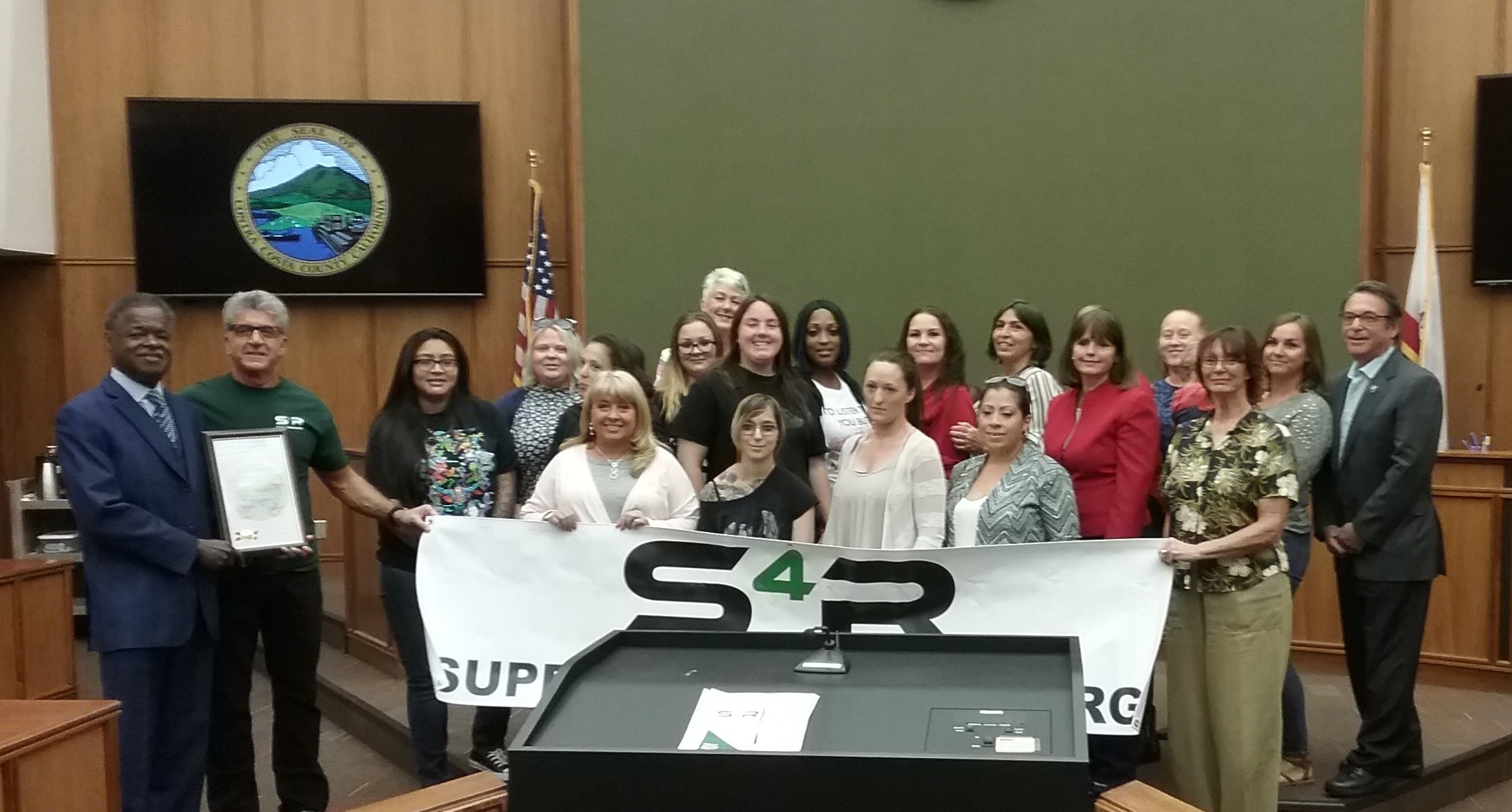
Contra Costa County supervisors on Tuesday proclaimed September 2018 as National Recovery Month, the 11th consecutive year supervisors have recognized the accomplishments of federal, state, county and local nonprofit organizations like Support 4 Recovery for work in the prevention, treatment and recovery of mental and substance use disorders. During the presentation, Supervisor Federal Glover of Pittsburg , left, presented the proclaimation to Tom Aswad, president and co-founder of the non-profit organization Support 4 Recovery, along with other supervisors and S4R supporters. Supervisors also paid tribute to S4R backer Harold Eugene Parsley of Concord, who died last April. Photo by Daniel Borsuk.

County to take over West Contra Costa Healthcare District

By Daniel Borsuk

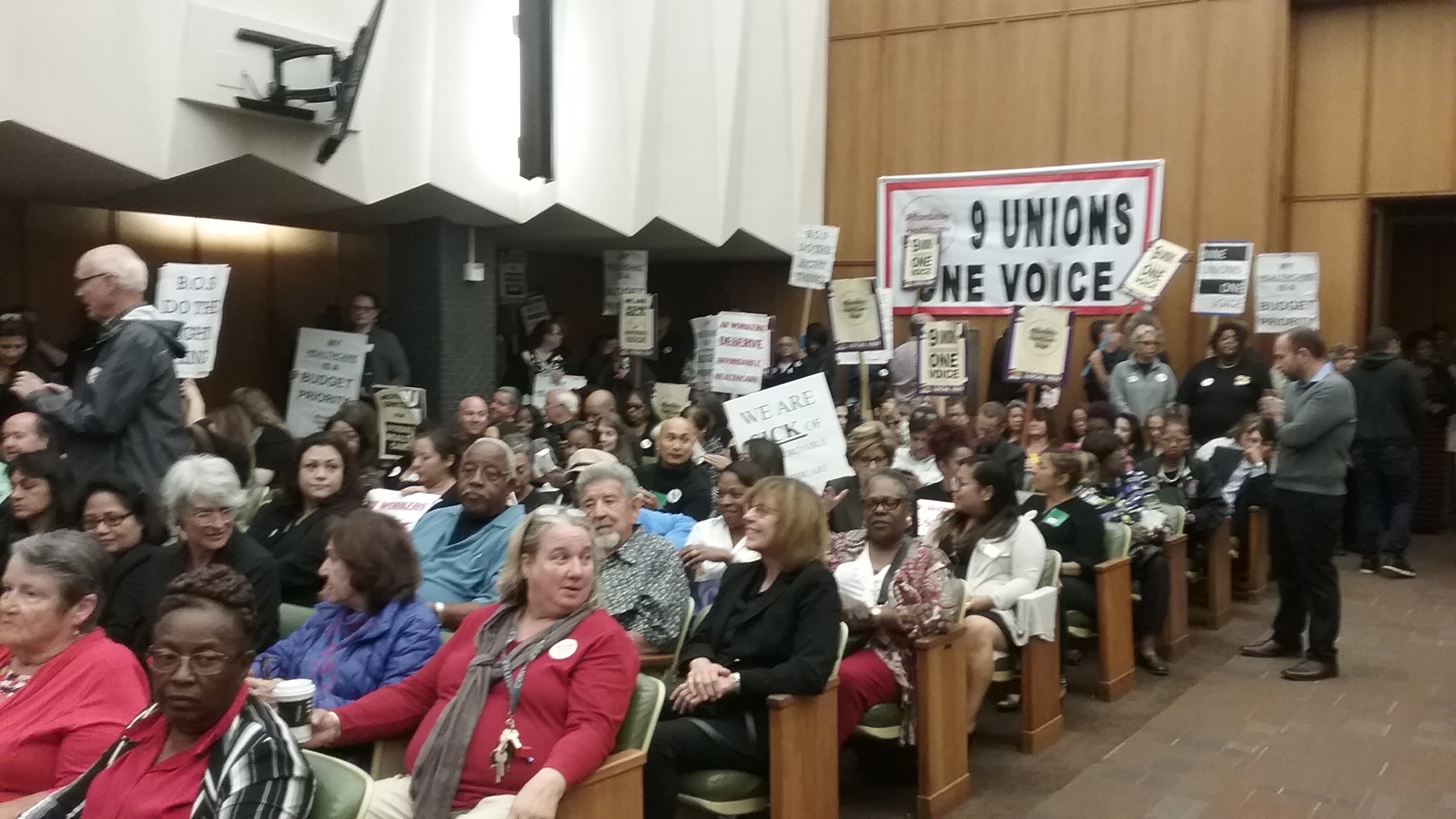
After listening to a large delegation of financially disgruntled but professionally principled Contra Costa Public Defenders describe the woefully inadequate health benefits and salary conditions they endure in comparison to what attorneys in the District Attorney’s Office earn, County Board Supervisors said on Tuesday they will discuss the compensation parity issue as a closed session item.

“We are going into closed session and we’re are going to discuss this issue with our negotiator,” Board Chair Karen Mitchoff of Pleasant Hill announced in a board chamber with more than 50 public defenders in attendance, voicing protests on how entry level Public Defenders attorneys are underpaid 20 percent less than their district attorney counterparts.

“We know there is a disparity,” Supervisor John Gioia of Richmond acknowledged.  Gioia said talks will begin for a wage increase for the Public Defender’s Office where the current one-year wait on health coverage will be on the negotiation table.

While newly hired DA attorneys instantly receive health benefits, Public Defender attorney’s, who represent the indigent, the uneducated and clients who are mainly black or Hispanic, must wait one year and pay $7,632 in annual health insurance premiums.  A Public Defender’s starting salary of $71,100 is 20 percent less than that of a beginning District Attorney’s salary, $89,088.

“The issue is true equity,” Brandon Banks, President of the Public Defenders Association said. “There is need to end the one-year wait for health benefits.”

Because of the pay inequity, entry level Public Defender attorney Blanca Hernandez said supervisors are “devaluing people of color.”  Furthermore, Hernandez said, “With low pay, no health insurance, and untenable workloads you are hemorrhaging Public Defenders.  It’s really harmful for our clients.  The vast majority are Black or Latino, and many have been profiled, so providing a solid legal defense is a racial justice issue.”

At Contra Costa Herald press time, supervisors were still in negotiations with the Public Defenders Association.

Hearing Set to Cut Airport Rental Fees

Supervisors set an October 16th hearing to adjust rental fees at the county’s two airports – Buchanan Field Airport and Byron Airport – to reduce rental costs for new and existing services in order to make the fees for county-managed hangars and tie-downs competitive with other airports in the region.  The rental fee reduction will result in a $65,514 a year decrease to the Airport Enterprise Fund.

The rates and charges for the county airports were last adopted on May 24, 1994, over 24 years ago.   At that time, the rates only applied to Buchanan Field Airport and included rental fees for tie-down locations plus itinerant landing fees for non-based aircraft and for two services that are no longer provided.

Burgis Requests Countywide Illegal Dumping Report

Supervisor Diane Burgis of Brentwood has requested a report on what the county can do to turn around the illegal dumping problem in the county.  “The Illegal Dumping Forum we held in April made clear that this is a problem affecting county residents and multiple county departments.  I’ m pleased that our departments have come together to determine what they can do collectively to address the issue and I look forward to their report.”

Following the April forum, an Illegal Dumping “Think Tank,” consisting of county experts on the problem was formed to foster discussion about illegal dumping in far East County.  The five county departments represented on the Illegal Dumping “Think Tank” include the Sheriff’s Office, the District Attorney’s Office, the Department of Public Works, the Health Services Department’s Environmental Health Division and the Department of Conservation of Development.

Supervisors to Take Over West Contra Costa Healthcare District

Without public opposition or public support, the Board of Supervisors unanimously voted to take over the governance duties of the financially troubled West Contra Costa Healthcare District.  Commencing Jan. 1, 2019, the existing locally elected five-member Board of Directors of the WCCHD will dissolve and the Board of Supervisors will assume the duties of overseeing the governance duties of the financially troubled district.

Under Senate Bill 522, authored by State Senator Steve Glazer (D-Orinda) and signed by Gov. Jerry Brown on August 18, Supervisors had the option to serve as Board of Directors of the WCCHD or to appoint a Board of Directors.  The Supervisors chose to take on the duties themselves.  The Health District had initially declared bankruptcy in 2006, but was never able to fully recover.  The District had to permanently close its doors and filed a second Chapter 9 bankruptcy petition in 2016.

By replacing the locally elected districted board with the Board of Supervisors, the goal is to reduce administrative costs, increase operational efficiencies, and maximize the use of health care funding though collaboration with the county, which is the only other public health agency provider in the district.

Supervisors Endorse Safe Schools for All Initiative

Supervisors unanimously endorsed and supported schools and the Contra Costa County Office of Education’s three-year partnership in Safe Schools for All initiative and active partnership with the Sandy Hook Promise.  SHP works on preventing gun violence before it occurs by educating and mobilizing youth and mental health and wellness programs that identify, intervene and help at-risk individuals

The supervisors will promote and support the success of the Sandy Hook Promise no-cost “Know the Signs” programs in high schools and middle schools throughout the county.

Filed Under: News, Supervisors

County Assessor Kramer responds to censure by Supervisors

August 20, 2018 By Publisher 1 Comment

Gus Kramer from his website.

By Allen Payton

In a brief interview while he is out of town on vacation, Contra Costa County Assessor Gus Kramer responded to the censure against him by the Board of Supervisors at their meeting on Tuesday, August 14 over sexual misconduct allegations. (See related article).

The conversations and text between assessor Kramer and complainants were mutual and consensual, he explained.

“In fact, most were initiated and or sent by one of the complainants,” Kramer stated. “No inappropriate physical behavior was claimed at all. No touching or asking out on dates of any kind.”

It was only after the two women were not chosen in civil service competition for a supervising appraiser’s position in the Assessor’s Office in 2014, were the complaints made.

“Only then did the conversations become unwelcome,” he said.

Upon being advised of their complaint, Kramer said he stopped all communication with both of the complainants, and they were advised of all of their options.

“None were pursued,” he pointed out.

The independent investigator, hired by the county in 2018, who is a female attorney in Oakland, determined there was no sexual harassment on Kramer’s part. The investigation was not conducted until this year, over three years later, when he was facing re-election.

According to Kramer, during that same time, and at least five years prior, one of the complainants had been lobbying members of the Board of Supervisors to be appointed to the position of County Assessor, should he retire or leave office midterm.

“She didn’t want to stand for election because she did not want to spend the money on a public campaign,” Kramer stated.

He ran unopposed in the June primary and won re-election for another four years.

The Board’s action occurred when neither Board Chair John Gioia nor Kramer could attend the meeting and defend himself or offer his point of view before the vote. He is considering suing the county.

Filed Under: News, Supervisors

County Supervisors honor 2018 Veterans Initiative in the Arts ABOUTFACE Program

August 16, 2018 By Publisher Leave a Comment

“I had a complete meltdown with PTSD (post traumatic stress disorder). I thought I was losing my mind. I’d never been out of control before, and it was hard to admit I needed help, but I wanted my old self back. I’ve gotten that and more. I’m strong. I’m healthy. I have tools, I have knowledge, and I have strength and courage to deal with it. I’m doing just fine.” RON WHITCOMB SGT US ARMY 1968 – 1969 SQUAD LEADER, VIETNAM

The Contra Costa County Board of Supervisors recognized the 2018 Veterans Initiative in the Arts ABOUTFACE Program at their meeting on August 14th.  The ABOUTFACE: Self-Understanding through Self-Portraits Workshops offered visual arts activities that helped motivate veterans and their families to explore self-understanding, to think creatively, to be innovative and to improve their quality of life.

The teaching team of the recent ABOUTFACE, which consisted of:  Coordinator, Ryan Berg (U.S. Marine Corps Veteran); Facilitator, Felisa Gaffney, Ph.D., (U.S. Air Force – Retired); and Artist, Victoria Bianco, Ph.D., were honored by the Board.

The 2018 ABOUTFACE participants in the six workshops were from across the County and represented a cross section of military service and age groups.  All of the participants said they would recommend ABOUTFACE to other veterans and over half said they are looking forward to exhibiting their self-portraits for the public to see and understand.

The Arts and Culture Commission of Contra Costa County (AC5) worked with the County Veterans Service Department, the County Office of Communications & Media and the County Library to help select locations, distribute project information and to identify potential participants.  AC5 Commissioner Anderson was the Project Director, and the other AC5 Commissioners all contributed to the success of this outstanding program.  AC5 would like to thank the Contra Costa County Board of Supervisors and the California Arts Commission for the funding that made this program possible.

To learn more about this program or to interview the honorees making a difference for veterans, please contact Roger Renn, AC5 Executive Director, at (925) 646-2278.

Filed Under: News, Supervisors, Veterans

Supervisors censure County Assessor Gus Kramer for sexual misconduct; he might sue

August 15, 2018 By Publisher 2 Comments

Kramer, Board Chair Gioia unable to attend meeting

Gus Kramer from the County Assessor’s webpage.

By Daniel Borsuk

Contra Costa County Assessr Gus Kramer was censured on sexual misconduct charges by the County Board of Supervisors on a 4-0 vote Tuesday, paving the way for a potential lawsuit by the longtime elected official. Board Vice Chair John Gioia was absent at the meeting because he was touring the tar sands of British Columbia as part of a joint tour for serving as a Board Director on both the California Air Resources Board and the Bay Area Air Quality Management District.

Elected to the county assessor post since 1994, Kramer was represented by his attorney Bruce Zelis of Walnut Creek. He warned supervisors before taking action that the assessor had sought a continuance on the board censure item because of Kramer’s inability to attend the meeting and because of questions that arose about whether the supervisors had violated the Ralph M. Brown Act, the state public meeting law.

Kramer’s attorney also questioned whether the board can discipline an elected official for actions he allegedly committed three years ago and there have been no similar charges leveled against him since then.

Zelis also questioned whether the board can discipline a countywide elected official, which conflicts with the board’s resolution recommendation that states:

“There are six county departments that are managed by elected department heads: the Assessor, Auditor, Clerk-Recorder, District Attorney, Sheriff, and Treasurer-Tax Collector. These elected officials are responsible for managing the county employees who work in their departments. The Board of Supervisors does not have the power to discipline elected officials when their conduct fails to meet the standards of behavior expected of all other county department heads.”

Obviously, supervisors went against the resolution recommendation and moved to censure the county assessor, who last year earned $221,946.80 before benefits.

Zelis refused to comment further with the Contra Costa Herald about the Brown Act violation allegations or other issues about Kramer’s case, but Board Chair Karen Mitchoff of Pleasant Hill said there were no Brown Act violations when she and vice chair Gioia consulted over the proposed Kramer censure resolution prior to the meeting.

“We did not confer with our colleagues,” Mitchoff said.

This may not be the end of line for County Assessor Kramer case. The Contra Costa County Civil Grand Jury will now be handed the case to determine if the allegations involving the assessor and two female employees merit additional investigation.

Supervisors acted on a 2018 outside independent attorney investigation on two charges of sexual harassment dating back to 2015 by two initially unidentified Assessor Department female employees, one of whom has since been identified as associate assessor Margaret Eychner, a resident of Walnut Creek.

“The investigator found that, prior to mid-2015 it is more likely than not that Mr. Kramer made certain comments and engaged in conduct that two individuals who worked in his department considered to be offensive and inappropriate in the workplace.” a board report stated.

In the board’s resolution, the supervisors found “there was sufficient evidence to prove Assessor Kramer had engaged in the following conduct in 2014 and 2015:

  • Kramer frequently visited the complainant’s cubicle on the first floor and the complainant frequently visited Mr. Kramer’s office during 2014 and up to March 2015.  During these visits they discussed work related and nonwork-related matters.
  • On one occasion Mr. Kramer told her that he had given a vibrator to a woman (not a county employee) as a gift. She thought that this was inappropriate and offensive.
  • Mr. Kramer sent her two text messages in 2014 that she believed suggested a romantic/sexual interest in her. She considered the texts to be inappropriate an unwelcome.
  • In May 2014, he offered her a rose, which she interpreted to be a romantic gesture.
  • As to the second employee/witness, there was sufficient evidence to indicate that Mr. Kramer made a comment in her presence in 2008 and told a story in her presence in 2013 concerning his social interactions with women that she thought were inappropriate and offensive; and that on one occasion in 2015 he made a comment to her that she believed was intended to be sexually suggestive and considered inappropriate, offensive and unwelcome.”

The independent attorney investigator found that evidence did not show Assessor Kramer, who earned $221,946.80 in salary only in 2017, had retaliated against the two employees or had acted to “negatively impact their careers.”  In addition, the investigator’s evidence did show the assessor stopped making inappropriate and offense comments of a sexual nature to both employees after he learned of their complaints in 2015.  No further harassment complaints from the two employees or other employees have been lodged against the Assessor Kramer since June 2015.

“This is not a witch hunt and perhaps there wasn’t any retaliation,” said Supervisor Candace Andersen of Danville, “but you have to remember the county had to pay $1 million in a sexual related case involving the assessor in 2009.”  Andersen was referring to a $1 million settlement paid to Assessor department employee Bernice Peoples in 2009 that Kramer had sexually retaliated against her.

“I want all our employees to feel safe and comfortable,” said Supervisor Diane Burgis of Brentwood after voting in favor of the censure resolution.

Supervisor Federal Glover of Pittsburg did not comment on this item.

Sandy Hook Promise Impresses Supervisors

A Contra Costa County Office of Education presentation on the nationally acclaimed Sandy Hood Promise, a non-profit organization designed to prevent gun violence on K-12 school campuses, won endorsements from all four supervisors in attendance.  Supervisors plan to place a resolution of endorsement on its next board meeting agenda slated for Sept. 11.

Sandy Hook Promise and the county office of education and eventually 18 public K12 school districts in the county are expected to work with the no-cost program that Sandy Hook Promise Vice President of Field Operations Paula Fynboh says is based on a heavy emphasis on student mental wellness.

“You brought us a great gift,” remarked Supervisor Burgis.  “You have my personal support.”

County Real Estate Fraud Unit Reviewed 71 Cases in 2017/2018

Supervisors also approved without comment the District Attorney Office’s annual real estate fraud report for the 2017/2018 fiscal year during which time the Real Estate Fraud Unit reviewed 71 real estate fraud cases, an increase from 64 cases that were reviewed during the 2016/2017 fiscal year.

“Within the last year, our office has secured felony convictions in 3 different cases and has conducted preliminary hearings against another 7 defendants in complex white-collar fraud cases, involving over 2 million dollars in stolen assets,” wrote Deputy District Attorney Adam Wilks, who leads the Special Operations-Real Estate Fraud.

Because real estate fraud is a sophisticated crime targeting especially senior citizens, Wilks wrote: “Within the last year, the Real Estate Fraud Unit restored title to the home of an elderly woman after the home was fraudulently slated for foreclosure auction.  This unit is currently working with federal prosecutors to help elderly victims of a foreclosure scam in operating around the Bay Area.”

Wilks reported that in the 2016/2017 fiscal year the Real Estate Fraud Unit tracked international cases as far away as Nigeria.  “These investigations involve rental fraud, forgery, embezzlement, foreclosure consultancy fraud, short sale fraud and elder abuse,” he reported.

Established in July 1996 by the board of supervisors, the DA’s Real Estate Fraud Prosecution unit is staffed with one deputy district attorney, one senior inspector and one legal assistant.  Last fiscal year, the unit spent $399,705 for salaries, benefits, travel and necessary services.

Resolution Boosts Two County Airports Economic Assets 

Supervisors unanimously gave the county’s two airports – Buchanan Field Airport in Concord and Byron Airport – an economic boost in the form of a resolution recognizing the contributions of the two airports to the aeronautical community and economic growth of the county.

The resolution materializes when the airports, especially Buchanan Field Airport, has drawn increased development interest.  The City of Concord has made overtures to annex the airfield, but Board Chair Mitchoff, whose District 4 covers the Concord air field, said, “There is no way, no how that the city of Concord will annex the air field. It is an economic asset for the county.” Both airports are self-sufficient and do not need to use county general fund money to cover expenses. Instead both airports are moneymakers contributing about $2.77 million to the county general fund, $1.2 million to local schools, and $273,216 to other public entities from associated possessory interest and sales tax.

The supervisors’ resolution boasts how the two airports provides a base of operation to over 600 aircraft, generated about $106 million in total direct and indirect annual economic output in 2016, which includes the creation of 828 jobs, $8 million in state and local revenue and $10.2 million in federal tax revenue.

Filed Under: News, Supervisors

County Cannabis Health Ordinance gets final OK sans comments from public, Supervisors

August 10, 2018 By Publisher Leave a Comment

By Daniel Borsuk

Acting on a consent item, Contra Costa County supervisors passed on a 4-0 vote a commercial cannabis health ordinance that drew zero comments from either the public or supervisors at Tuesday’s one-hour meeting.  Supervisor Candace Andersen of San Ramon was absent.

The fact that the commercial cannabis health ordinance drew no attention was perhaps of secondary importance, given the fact supervisors had set the stage last month to have Contra Costa County voters consider a tax measure on the Nov. 6 ballot that would fund the enforcement of the commercial cannabis health ordinance.

Provided voters pass the tax measure in November, the tax on commercial cannabis from retail, distribution, and manufacturing enterprises could generate anywhere from $1.7 million to $4.4 million a year in revenue for the county to regulate the cannabis industry, protect public resources, and help fund public safety, health, and vital public services.

Some of the standards included in the newly adopted health ordinance are the following:

  • Every commercial cannabis activity with a health permit must comply with all state and local laws; maintain a valid State License, County Land Use Permit and County Business Permit.
  • Every commercial cannabis activity with a Health Permit must remain closed between 9:00 p.m. and 8:00 a.m. the following day.
  • No cannabis or cannabis product may be smoked, ingested, or consumed on the premises of a commercial cannabis activity.
  • The ordinance also includes standards that apply specifically to manufacturing, such as the use of volatile solvents is prohibited and retail sales delivery employees are required to examine government-issued identification cards upon delivery of products to customers.
  • For retail establishments, the ordinance establishes waiting areas regulations.
  • Inside each retail establishment, the permittee will display a sign including the following statement in bold print: “GOVERNMENT WARNING:  CANNABIS IS A SCHEDULE  1 CONTROLLED SUBSTANCE.  KEEP OUT OF REACH OF CHILDREN AND ANIMALS.  CANNABIS MAY ONLY BE POSSESSED OR CONSUMED BY PERSONS 21 YEARS OF AGE OR OLDER UNLESS THE PERSON IS A QUALIFIED PATIENT. THE INTOXICATING EFFECTS OF CANNABIS MAY BE DELAYED UP TO TWO HOURS.  CANNABIS USE WHILE PREGNANT OR BREASTFEEDING MAY BE HARMFUL.  CONSUMPTION OF CANNABIS IMPAIRS YOUR ABILITY TO DRIVE AND OPERATE MACHINERY.  PLEASE USE EXTREME CAUTION.”

Six areas of the county are off limits to the commercial cannabis ordinance.  Those areas include Acalanes Ridge, Alamo, Bethel Island, Contra Costa Centre, Sandamond Slough, and Saranap.

In the event voters pass the tax measure in November, the commercial cannabis ordinance and health ordinance would go into effect in January 2019.

Supervisors Endorse Diesel Free by ’33 Resolution

Concerned over the human health effects and environmental impacts caused by the emission of greenhouse gasses including carbon dioxide and black carbon, or diesel fuel, the board of supervisors unanimously endorsed a diesel free “33 States of Purpose” reflecting a goal of eliminating diesel pollution by December 31, 2033.  The Bay Area Air Quality Management District, that Board Chair Karen Mitchoff and Vice Chair John Gioia serve on, has established a challenge to other public agencies, especially transit districts, to cut down diesel emission.

The California Environmental Protection Agency’s Office of Environmental Health Hazard Assessment has determined that exposure to diesel exhaust can have significant health effects, including damage to lung tissue and increased risk of cancer.

It is estimated that 54 percent of the state’s total black carbon emissions come from on-road and off-road mobile sources powered by diesel engines, according to the California Air Resources Board.

80 Organizations, County Library Awarded Keller Canyon Foundation Grants

Supervisors allocated $1.5 million of Keller Canyon Mitigation Fund grants to 80 nonprofit organizations including a one-year $100,000 grant to the Mt. Diablo Unified School District to provide a modular public bathroom for the public library at Riverview Middle School in Bay Point for one year, July 1, 2018 through July 30, 2019.  Before installation of the modular public bathroom Riverview public library patrons had to use the school restroom facilities when the school was in session.

Nonprofit organizations receiving $10,000 awards each were:  Antioch Rotary Club, All Start Cheer Reaction, Inc., Contra Costa Family Justice Alliance, Craft Community Care Center, Inc., First Baptist Church of Pittsburg, Health Hearts Institute, Loaves and Fishes of Contra Costa, National Council of the United States Society of St. Vincent DePaul, Opportunity Junction, Inc., People Who Care Children Association, Pittsburg Senior and Handicapped Residential Community, Inc., Renaissance Entrepreneurship Center, Singing Eagle Foundation, Soroptimist International of the Americas, Inc., and CCHS Public Health Clinic Services.

Filed Under: News, Supervisors

During eight-hour meeting, Supervisors learn Sheriff released 63 illegal immigrant prisoners to ICE in 2017

July 27, 2018 By Publisher Leave a Comment

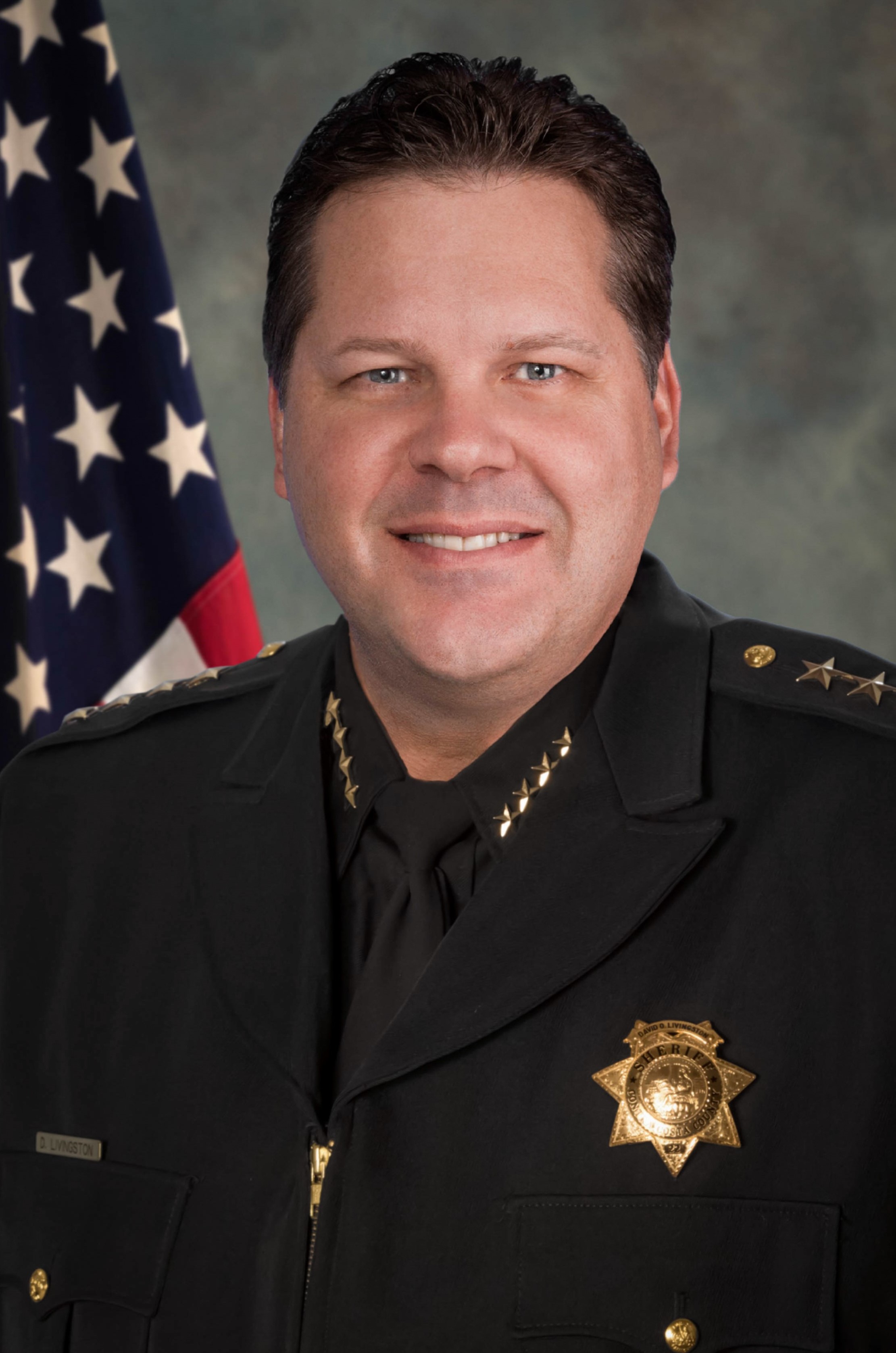
Sheriff David O. Livingston

Spend $1.5 million in AB109 funds on Sheriff patrols; send cannabis tax measure to November ballot; approve Racial Justice Task Force report on split vote

By Daniel Borsuk

The dust may have settled as Contra Costa Sheriff-Coroner David Livingston’s decision (July 10) to sever department contractual ties with the United States Immigration and Customs Enforcement (ICE) to house undocumented prisoners at the West County Detention Facility, but Contra Costa County Supervisors still had to leap over two significant hurdles at Tuesday’s meeting.

Spend AB109 Funds on Sheriff Patrols, Advocates Not Happy

First, on a 5-0 vote, supervisors instructed that $1.5 million in unspent Assembly Bill 109 funds initially designated for undocumented immigrants imprisoned at the Richmond detention facility to be detoured for sheriff’s patrol services in unincorporated communities like Pacheco, North Richmond, Bay Point, and Byron.  Sixty-four community organization advocates protested; supervisors should have allocated state AB109 money for nonprofit human service organizations that assist undocumented immigrants and others find housing, jobs and other services upon release from county jail facilities.

On the AB 109 issue, Richmond City Councilman Melvin Willis asked supervisors to spend leftover AB 109 funds for community support services.  “We need these services to keep people out of incarceration,” he said.

“People feel betrayed” said Dominic Ware of Richmond, who added that most in the community services field contend AB 109 funds should go to human service nonprofit organizations rather than law enforcement.  “This is a win without a victory.”

County Administrator David Twa said 40 percent of the funds from AB 109 go to community organizations, but he also added it is also appropriate for the county to spend the money to shore up sheriff patrols.

“I have to protect a very large area and that requires more patrols.  This one-time allocation will provide those patrols,” said District 3 Supervisor Diane Burgis of Brentwood.

“This is a move to assure that patrols are in those communities of Crockett, North Richmond, Bay Point, and Byron,” said District 5 Supervisor Federal Glover of Pittsburg.  “I think this is a popular move.”

Sheriff Released 63 Prisoners to ICE

Second, supervisors and most of the citizens attending a mandated ICE Access Forum learned that in 2017 of the 284 ICE information requests that the Sheriff’s Office had received, 63 undocumented immigrants held at the West County Detention facility were released to ICE agents in 2017.

Sheriff Livingston defended his activities adding, “We follow the law,” he said.

Community speakers criticized the way the sheriff operates the detention facility and had cooperated with ICE during a three-hour TRUTH (Transparent Review of Unjust Transfers and Holds) Act Community Forum that the supervisors were required to conduct for the first time this year to be in compliance with state law.

The sheriff confirmed ICE had requested 63prisoners at the West County Detention Facility to be released to ICE agents for interviews in the parking lot or to be detained and transported elsewhere.  Livingston said in 2017 ICE would give two to three hours advance notice to contact a prisoner.

“The rounding up of people by ICE leads up to the question ‘who is next?’” asked Peter Cray of Richmond.

Cannabis Business Tax on Nov. Ballot, Commercial Cannabis Health Ordinance Unveiled

With no public comment, supervisors unanimously passed a cannabis business tax ordinance that will appear on the Nov. 6 ballot.  The general tax measure will appear on the ballot for all county voters, whether they reside in the unincorporated or incorporated (city) areas of the county.  They will vote on:  The tax on commercial cannabis cultivation will be based on the square footage of a permitted canopy.  The ordinance will establish initial tax rates and maximum tax rates, with automatic inflation adjustments of the maximum tax rates and permit the board of supervisors to make annual adjustments to the tax rates.  The ordinance will include penalties for delinquent payments.  The tax and appeals will be administered by the Treasure-Tax Collector.

Staff estimates that potential annual general fund revenues and county costs in the $1.7 million to $4.4 million range.

In a separate consent action, supervisors set the stage for the August 7 formal adoption of the Cannabis Health Ordinance.  Provided voters approve the cannabis business tax measure, the Commercial Cannabis Health Permit Ordinance would go into effect on Jan. 1, 2019.  The health permit ordinance would set business hours by being closed between 9 p.m. to 8 a.m., controlling odors, prohibit the sale or delivery of flavored cannabis products for which the primary use is to be smoked or used in electronic smoking devices.

Supervisors Narrowly Approve Racial Justice Task Force Report – 2018 FINAL CCC-RJTF_Report

Even though the final Racial Justice Task Force (RJTF) report won widespread public support, supervisors Candace Andersen of Danville and Diane Burgis of Brentwood cast dissenting votes saying the two-year study basically did not dig deep enough into the racial justice issues in the county.

“I just think that the report barely scratched the surface,” said Andersen.

With a finding that Black adults were more than three times more likely to be arrested than adults from any other racial or ethnic group, and Black youth were more than seven times more likely to be arrested than youth from any other racial or ethnic group, the 17-member RJTF recommended that Board of Supervisors appoint a Racial Justice Oversight Body to oversee the implementation of the recommendations by the task force.

Other task force recommendations include:

  • Diversion – With a goal of reducing racial disparities in the Contra Costa County criminal justice system, form a committee to recommend countrywide criteria and protocols for formal and informal diversion.
  • Data – All Contra Costa County criminal justice agencies and local law enforcement agencies shall collect individual-level data on all individual encounters with criminal juvenile justice systems and processes.
  • County support for local agencies – The county shall work with local enforcement agencies to seek funds that support the integration of de-escalation and behavioral health intervention trainings into local enforcement agency regional academy and/or department orientations.
  • Community Engagement and Services – County criminal justice agencies shall establish formal partnership with community-based organizations to provide greater capacity for diversion, re-entry programs, alternatives to detention, and pretrial services, in custody programming.
  • Practices Related to Trial and Adjudication Processes – Encourage the Superior Court to return to the process of jury selection where jurors are called to service to their local branch court for misdemeanor trials.
  • Confinement – Expand eligibility for pre-trial services staffing, with a focus on reducing racial disparities and replacing the money bail system.

The board voted 3-2 to approve the final report.

To view the entire board meeting agenda, click here.

Filed Under: Immigration, News, Supervisors

County Sheriff cancels contract with ICE at West County Detention Facility

July 10, 2018 By Publisher Leave a Comment

The West County Detention Facility in Richmond. File photo

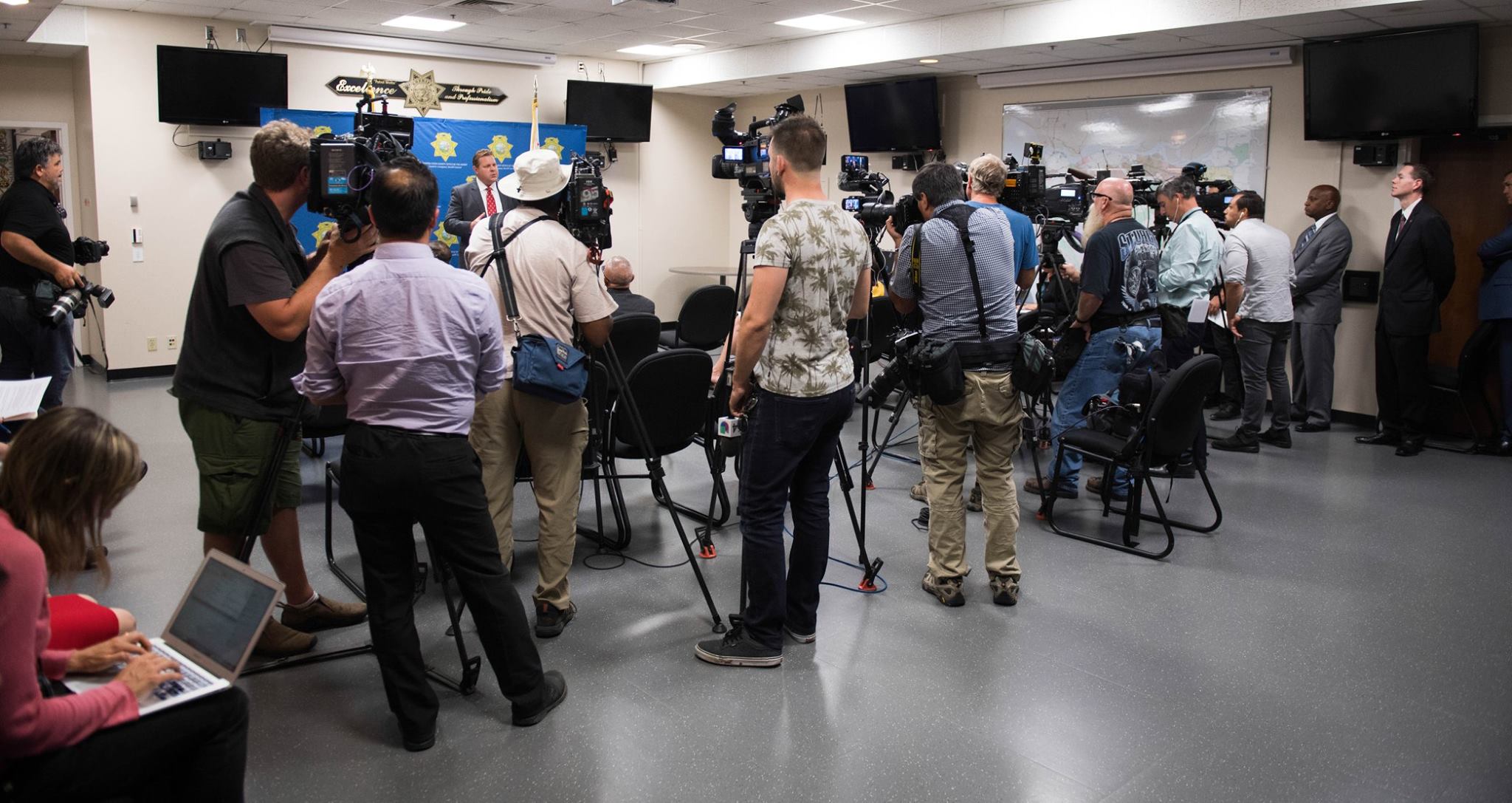
Contra Costa County Sheriff David Livingston announced, today the end to the county’s contract to hold Immigration and Customs Enforcement (ICE) detainees at the West County Detention Facility in Richmond. He was joined at a press conference by Board of Supervisors Chair Karen Mitchoff and Vice Chair John Gioia, in whose district the facility is located.

Following is the Sheriff’s complete statement:

“Today I am announcing that I am ending the contract with ICE to hold detainees at our dormitory buildings on our Richmond jail facility,” he said. “I recently notified ICE of this decision and asked them to begin the process of removing their detainees in a safe and orderly manner. The contract requires 120-day notice and they have told me they will try to resolve as many open-ended immigration cases as they can during this period of transition.

To be clear, the Sheriff’s Office does not do immigration enforcement. In fact, our policy prohibits it. These detainees are not arrested for immigration violations by us or any other law enforcement organization or agency in the county. They were instead persons ICE brought to us under the terms of the contract from all over Northern California and beyond.

There is not one single over riding issue that causes the termination of this contract. Instead there are many. And I am not here to comment on ICE’s enforcement policies or any of their federal partners’ policies. Instead I want to explain the reasons why we are cancelling the contract.

First, we have held an average of about 200 adult detainees a day. And that has generated about $2.5 – 3 million dollars in annual revenue. That revenue varies year to year. Losing it would likely result in the lay-off of Deputy Sheriffs and that was something I was unwilling to do. Instead, working closely with the Chair and Vice-Chair of the Board, and ultimately with the full board, we have found a solution that will backfill the expected budget deficit going forward including the use of state funds to minimize the impact on local taxpayers.

Second, the number of detainees constantly fluctuates. We cannot rely on budget projections and ICE could always decide to move their detainees to another facility.

Third, county employee and operating costs have risen over the years, But the reimbursement rate has not. Long term the contract is just not sustainable.

Finally, the outstanding work by the over 1,000 employees of the Office of the Sheriff have been overshadowed by the attention that the ICE contract brings, even though immigration is a matter of federal law. Managing protests in Richmond have become expensive and time-consuming for our staff.

And to be very fair, one must acknowledge a growing chorus of community groups and individuals from both within and outside the county, that have focused on undocumented immigrants’ issues. And they raise important concerns.
Obviously, this action today does not address the larger and more complex issue of federal immigration enforcement. Most of us have compassion for those to come here seeking a better life but we are a nation of laws. And to be sure, those who come here undocumented who commit new crimes while here will be arrested and processed into our jails as they are currently. That will not change.

My number one priority remains and will continue to be keeping Contra Costa County safe.”

Photo by Contra Costa County Sheriff.

Gioia, who has long publicly opposed the contract, spoke forcefully about why the policy was harmful to families and eroded trust with immigrant communities. He thanked both Sheriff David Livingston for ending the contract and the thousands of residents across Contra Costa who joined in calling for an end to the ICE contract.  According to an ABC7 News report “The West County facility currently houses 169 ICE detainees, part of a longstanding agreement that netted the county up to $3 million per year.” 

“This is an historic day in Contra Costa County,” said Gioia. “Sheriff Livingston’s decision to cancel his Federal contract to hold ICE detainees at the West County Detention Facility is an important and positive step to build greater trust with our hard-working immigrant families here in Contra Costa.”

“I appreciate and thank Sheriff Livingston for making this decision,” Gioia continued. I know that thousands of Contra Costa residents countywide also thank Sheriff Livingston for this action.  To the thousands of our county’s residents who have passionately advocated for an end to the detention of immigrants at the West County Jail, thank you. Thank you for your consistent and loud advocacy. Your actions do make a difference. The Sheriff’s decision was based on a number of factors. Your voices were one of those factors. I thank Sheriff Livingston for listening to the opinion of the large number of sincere and passionate residents who believe that our County should not use our local jail to house ICE detainees.”

However, according to the ABC7 report, “Mitchoff opposes canceling the ICE contract, primarily out of concern about where current and future Bay Area detainees might be sent. ‘I’m sorry to be losing the contract,’ Mitchoff explained. ‘Unfortunately, with the closure of this facility, those individuals that ICE is not able to release through the normal process will be sent to other places throughout the United States.’”

“We don’t know ultimately what ICE will do with these detainees,” Livingston said.

Congressman Mark DeSaulnier (D-CA11) issued the following statement after the Sheriff’s announcement.

“Having called for the termination of the contract, I support the Board of Supervisors’ decision and look forward to working with them on making sure the concerns of the community and clients are addressed,” he said.

Following multiple and varying allegations of abuse by ICE agents at the West County Detention Facility, DeSaulnier called for the termination of the County’s ICE contract in March of this year, and he urged U.S. Attorney General Jeff Sessions and California Attorney General Javier Becerra to conduct a third-party investigation of the West County Detention Facility. Contra Costa County is the only of the nine Bay Area counties that has a contract ICE.

Following accusations of mistreatment of ICE detainees, DeSaulnier and Livingston toured the facility, last November and the Sheriff’s investigation found the claims to be unfounded.

Please check back later for updates.

Allen Payton contributed to this report.

Filed Under: Crime, Immigration, News, Sheriff, Supervisors, West County

Supervisors OK commercial cannabis ordinance, requires voters pass tax measure in November

June 27, 2018 By Publisher Leave a Comment

Mitchoff calls for calm over proposed Concord detention center

By Daniel Borsuk

Contra Costa County voters will get a crack at voting on a tax measure in November on how much the county should tax commercial cannabis enterprises, now that the board of supervisors unanimously approved an ordinance establishing zoning regulations for the cultivation, distribution and selling of recreational marijuana in most of unincorporated Contra Costa County.

Six areas where cannabis enterprises would be prohibited from setting up shop include Bethel Island, Sandamound Slough, Contra Costa Centre, Acalanes Ridge, Saranap and Alamo.  During the proposed ordinance’s public hearing process there was community protests especially from Alamo residents opposed to the establishment of commercial cannabis enterprises in their community mostly for public safety concerns.

Supervisors will consider proposed tax and health ordinances linked to the commercial cannabis ordinance at their July 10 meeting.

While the commercial cannabis ordinance charts regulations established in the Framework for Regulating Cannabis in the Unincorporated Area of Contra Costa County that supervisors approved in April, at Tuesday’s meeting supervisors were more focused on how the cannabis growers can conserve water, especially underground water, for a crop known to require high volumes of water to grow at a time California seems to permanently undergo drought conditions.

As a last-minute change, supervisors were handed an alternative water service plan provided by county planner Ruben Hernandez.  This water service alternative earned the stamp of approval from supervisors and establishes rules on how commercial cannabis cultivation operations can use groundwater but must comply with regulations aimed at conserving groundwater.  For instance, a commercial cultivation business could pump groundwater when “the retail water supplier does not provide retail water service at all times during the year.”

All five supervisors signed on and supported the water service alternative even though one prospective cannabis cultivator, Israel Martinez, a Brentwood farmer, said the county’s proposed groundwater revised rules are “too restrictive” and he said he supported the earlier Planning Commission’s groundwater rules because “cannabis uses a minor amount of water.”

“I don’t support any water alternative.” said East county rancher Eric Thomas.  “I’d like to see a cap on cannabis cultivation.  This does not use any water recapture.  Why not truck in water? You can recapture as much as 90 percent of the water used,” Thomas said.

All five supervisors approved the groundwater use alternative presented by the Department of Conservation and Development and therefore they unanimously approved the commercial cannabis ordinance.

“This is not the gold rush or green rush, but there is a significant investment that’s involved in establishing these types of businesses.” remarked Supervisor Diane Burgis whose rural oriented District 3 in East County, would be a big beneficiary of the potential new cannabis ordinance should it go into effect.

Supervisor Federal Glover of Pittsburg, Supervisor Candance Andersen of Alamo, and Supervisor John Gioia of Richmond were willing to move forward on approving the commercial cannabis ordinance and accept the Department of Conservation and Development’s last-minute groundwater use proposal.

Board chair Karen Mitchoff also joined the other supervisors even though initially she preferred to wait and find out what state legislators were going to do about proposed legislation that would change the way county tax measures are passed either by a two-thirds vote or a majority vote.

Glover Unveils Keller Canyon Landfill Investigation Funding Source

Supervisor Glover announced that he has identified funds in the Keller Canyon Mitigation Fund, a fund used for an assortment of community activities in the Pittsburg and Bay Point area, to be spent for the county’s investigation into findings that there have been illegal deliveries and deposits of radioactive debris from the Hunters Point Naval Shipyard.  A price tag has not yet been disclosed for the investigation.

The mitigation fund that landfill operator Republic Services finances will spend the money associated with covering costs of hiring a specialist to conduct an independent investigation into whether there were more than two documented cases where debris from the Hunters Point Naval Shipyard wound up at the landfill off of Baily Road.

Mitchoff Calls For Calm Over Concord Naval Weapons Station Use

Board Chair Mitchoff urged citizens to refrain from protesting at the Concord Naval Weapons Station, a site that the Trump Administration plans to house detained immigrants.  Should the President’s plans materialize at the closed weapons base, the government plans to spend as much as $233 million to construct housing for detained immigrants, U.S. Congressman Mark DeSaulnier (D-Concord) first disclosed the Administration’s plans last week.

The Navy has refused to disclose whether there are any plans to house as many as 47,000 detained immigrants at the closed military base.

“I specifically ask that no one march or protest,” Mitchoff said. “This may convey the wrong message to the Administration in Washington.”

Other than a protest planned in El Cerrito later this week, no protests have yet been planned at the shuttered weapons station.

$300,000 Contract Awarded from Animal Benefit Fund

On a 5-0 vote, supervisors approved a $300,000 contract to Unconditional Dog to provide animal enrichment services to dogs at the Pinole and Martinez animal shelters, but supervisors pulled the consent item for discussion because of concern over the Oakland-based company’s practices and whether County Animal Services will be accountable.

“I do support Ms. (Beth) Ward’s efforts, but the point is we need accountability,” said Dee Good.  “There should be some accountability.”

Another animal shelter observer, Carol Mason, also said the Unconditional Dog contract lacks accountability. “What kind of accountability is there at the shelters? Accountability is still important.”

Ward told supervisors her department awarded a three-month contract to Unconditional Dog in April to see if the company’s animal enrichment program does a better job in taming difficult dogs and thereby driving up the animal adoption rate at shelters.  Ward said the trial program showed some progress.

The Animal Benefit Fund will cover the contract costs.  No public funds are involved in the contract.

Supervisors asked that Ward give a report on the Unconditional Dog program in March 2019.

Filed Under: News, Supervisors

Pittsburg Law Library closed, Richmond Law Library could be next to be shuttered

May 23, 2018 By Publisher Leave a Comment

Pittsburg Superior Courthouse where the law library was housed. Photo by cc-courts.org

Supervisors reject anti-sanctuary state petition, distribute $500,000 in Keller Canyon funds

By Daniel Borsuk

With a lack of adequate funding from civil lawsuit filing fees, the Pittsburg Superior Court Law Library has been shuttered since September, and now there is the possibility the Richmond Superior Court Law Library could follow suit, Law Library Director Carey Rowan told the Contra Costa Herald.

In her annual report to the Contra Costa County Board of Supervisors, Rowan informed supervisors the law library at the Pittsburg Superior Court was closed in September due to a lack of funding.

“For several years I have been warning supervisors and state legislators that the law libraries need new funding legislation or they will face closure. No one stepped forward and that day arrived last September when the Pittsburg library was closed,” Rowan said.

Rowan’s 2016-2017 report was approved without comment by supervisors as a consent item on Tuesday.

Ninety-three percent of the law library’s revenue comes from civil case filing fees, but since 2007, passage of Senate Bill 1407 has slapped a moratorium on increasing civil filing fees.  With the moratorium on increasing civil filing fees still in place, law library administrators have been unable to raise enough funds to acquire new legal materials that have risen in cost on average 10 to 15 percent per year, said Rowan.

While acknowledging there will be a hardship, especially for the disabled and senior citizens in East County to travel farther to the main law library in Martinez, Rowan said the Pittsburg courthouse library was chosen for closure based on the fewer number of gate count visits during the 2016-2017 fiscal year than the gate count visits at the Richmond court house library.  During that period, the Pittsburg library drew 2,136 visits, the Richmond library attracted 3,713 visits, and the main library in Martinez had 32,790 visits.

“Without any support from the supervisors or state legislators, the future of law libraries is bleak.  I’d have to say the Richmond library might be the next library we might have to close,” Rowan said.

Supervisors Reject Alamo Couple’s Anti-Sanctuary State Petition

Even though Contra Costa supervisors rejected on Tuesday an appeal from Ray and Tamara Bryant to sign their petition opposing the Sanctuary State bill, Senate Bill 54, and advocate for its repeal, the Alamo couple plan to press on with their petition drive in the county.

As of Wednesday, 26 persons had signed their petition.  The Bryant’s petition is similar to other anti-SB 54 petition drives that have been successfully passed by county supervisors in San Diego and Orange Counties.

In criticizing SB 54, that was passed by the state legislature and signed by Gov. Edmund G. Brown last year, the petition to the Contra Costa County Board of Supervisors states:

“We, THE UNDERSIGNED, HEREBY PETITION the Contra Costa County to the growing number of California Counties and cities who oppose Senate Bill 54 (the “Sanctuary State “) and who advocate its repeal.

1) That U.S. citizens residing in Contra Costa County need protection against the flood of undocumented felons overwhelming the borders of our state and county.

2) That the Contra Costa County Board of Supervisors, by the authority granted to them must guard our state and federal resources allocated for law enforcement, fire services, educational, medical and social services for U.S. citizens resident in Contra Costa County.  Currently, the foreign nationals and illegal aliens are being pushed to the head of the line for priority, for example, in receiving acceptance into the courses offered by our county’s three Community Colleges, with the result that our children as citizens are turned away.

3) That our police departments and incarceration facilities are being overwhelmed by the large number of illegal immigrants.  They line the streets of cities and counties shooting up in plain sight on the sidewalks and in public and private bathrooms, threatening our youth, and making it very difficult to keep a small restaurant business, for example, profitable.  Many restaurant owners and workers are afraid to deny access to non-customers for fear of being cited, fined or shut down for ‘racial discrimination.’

That our Law Enforcement agencies hands are tied with regard to prosecuting the law against the many thousands of illegal immigrants.  These individuals, consequently, have great disdain for our government and no respect for our legal system.  This in turn encourages both newly arrived immigrants as well as our own citizens to illegal acts because they see their own government afraid to do its job and make arrests.

That the Contra Costa County Law Enforcement agencies should operate in compliance with federal immigration laws to hold criminals until they can be turned over to Federal Immigration authorities to be deported.  We further petition our county agencies to publicize the names of all undocumented immigrants a minimum of 3 days before their release so that ICE can pick them up and process them for deportation.

That the Contra Costa County Board of Supervisors should join the Federal lawsuits against the unconstitutional Senate Bill 54.

Supervisors mostly withheld comment except for board chair Karen Mitchoff who informed the petition authors that the Sheriff-Coroner Office posts on its website on a daily basis the names of persons who have been released from county jails.  This warns ICE officers who they can arrest when persons are released from county jails.

Supervisor John Gioia of Richmond ripped the petition calling it as part of “a lot of scare tactics.”

Supervisors Accept 2017 Kindergarten Readiness Report

Despite criticism from District 5 Supervisor Federal Glover over a finding in the 2017 Kindergarten Readiness Assessment, supervisors accepted the report 5-0.

The Supervisor from Pittsburg took exception from the report’s finding that 40 percent of pre-school children in the Pittsburg Unified School District are not school ready as compared to a high wealth community like San Ramon where 8 percent of 5-year-old children are not school ready.

Supervisor Glover told assessment author First 5 Executive Director Sean Casey “What are we doing to close the gap?  This information is no good.  It is not acceptable. It is not a good report.”

Casey informed supervisors First 5 acquired a building on Leland Avenue in Pittsburg last month where it will replace its Bay Point site and will offer an expanded array of pre-kindergarten educational services to children in the Pittsburg and Bay Point communities.

Casey said First 5 has also trained more than 200 providers to expand its Help Me Grow campaign throughout the county.

$578,934 Keller Canyon Mitigation Trust Fund Grants Approved

Supervisors approved five Keller Canyon Mitigation Trust Fund grants worth $578,934 to be spent by the Sheriff-Coroner in the Bay Point community for the upcoming 2018-2019 fiscal year.  Grants approved include:

*$278,217 to fund one Deputy Sheriff position for the Bay Point Resident Deputy program with a focus on crime prevention enforcement, participation in the National Crime Free Housing Program, acts as a liaison to local businesses and works with the school resource officer to implement and participate in youth crime prevention programs.

*$276,217 to fund the Bay Point School Resource Officer Program and to assist resident deputies in organizing and planning the yearly Christmas and Holiday Heroes programs and annual Bike Rodeo and bicycle giveaway.

*$9,000 to host a free community Christmas party and toy giveaway for the residents of Bay Point.

*$8,000 for a gang intervention program involving movie nights at the local schools, an after-school sports program, fishing trips in the Delta and trips to Oakland A’s baseball games and other activities during the year.

*$5,000 for the removal of litter dumps and removal of graffiti in the Bay Point area.

*$4,500 for the Bay Points Bicycle Safety Rodeo in partnership with the Street Smarts Program to provide bicycle helmets, bicycle repairs, an instructional class on safety and bicycle raffles.


Filed Under: East County, News, Supervisors

Contra Costa County sues opioid manufacturers and distributors for creating epidemic

May 10, 2018 By Publisher Leave a Comment

Graphic courtesy of wach.com.

Contra Costa County is one of 30 California counties that have filed litigation against opioid manufacturers and distributors for creating an opioid epidemic in this state. These 30 counties represent approximately 10.5 million residents. All 30 counties are filing suit in federal court and expect their cases to be transferred to the Multi-District Litigation in Ohio, where more than 500 public entities have filed similar suits.

The lawsuit seeks reimbursement of taxpayer funds that already have been spent responding to the opioid epidemic in Contra Costa County; for ongoing costs of continuing the fight, including emergency response, prevention, monitoring and treatment; and for prospective relief to help the County undo some of the widespread damage that these drug manufacturers and distributors have caused.

 “This litigation is an important tool to help us recover the taxpayer funds currently being used and desperately needed to intervene and try to counteract the opioid epidemic,” noted Chair of the Board of Supervisors, Karen Mitchoff.

According to the County’s complaint on file with the U.S. District Court, Northern District of California, Case No. 3:18-cv-02705, many of the nation’s largest drug manufacturers misinformed doctors about the addictiveness and efficacy of opioids. The manufacturer defendants include Purdue Pharma; Teva Ltd.; Janssen Pharmaceuticals, Inc. (a wholly-owned subsidiary of Johnson & Johnson); Endo Health Solutions, Inc.; Allergan PLC; and Mallinckrodt. Drugs manufactured by these companies include, but are not limited to: OxyContin, Actiq, Fentora, Duragesic, Nucynta, Nucynta ER, Opana/Opana ER, Percodan, Percocet, Zydone, Kadian and Norco. In addition to the wrongdoing by drug manufacturers, the lawsuit asserts that the nation’s largest drug distributors – including Cardinal Health, AmerisourceBergen, and McKesson Corp. – failed to monitor, identify and report “suspicious” opioid shipments to pharmacies, in violation of the federal Controlled Substances Act.

The County Counsel’s Office and following six law firms comprise the County’s legal team: Baron & Budd; Levin, Papantonio, Thomas, Mitchell, Rafferty & Proctor; Powell & Majestro; Greene, Ketchum, Farrell, Bailey & Tweel; Hill, Peterson, Carper, Bee & Deitzler; and McHugh Fuller Law Group. These firms currently represent over 300 cities and counties throughout the United States.

Filed Under: Health, News, Supervisors

  • « Previous Page
  • 1
  • …
  • 16
  • 17
  • 18
  • 19
  • 20
  • …
  • 23
  • Next Page »
Liberty-Tax-Jan-Apr-2026
Deer-Valley-Chiro-06-22

Copyright © 2026 · Contra Costa Herald · Site by Clifton Creative Web