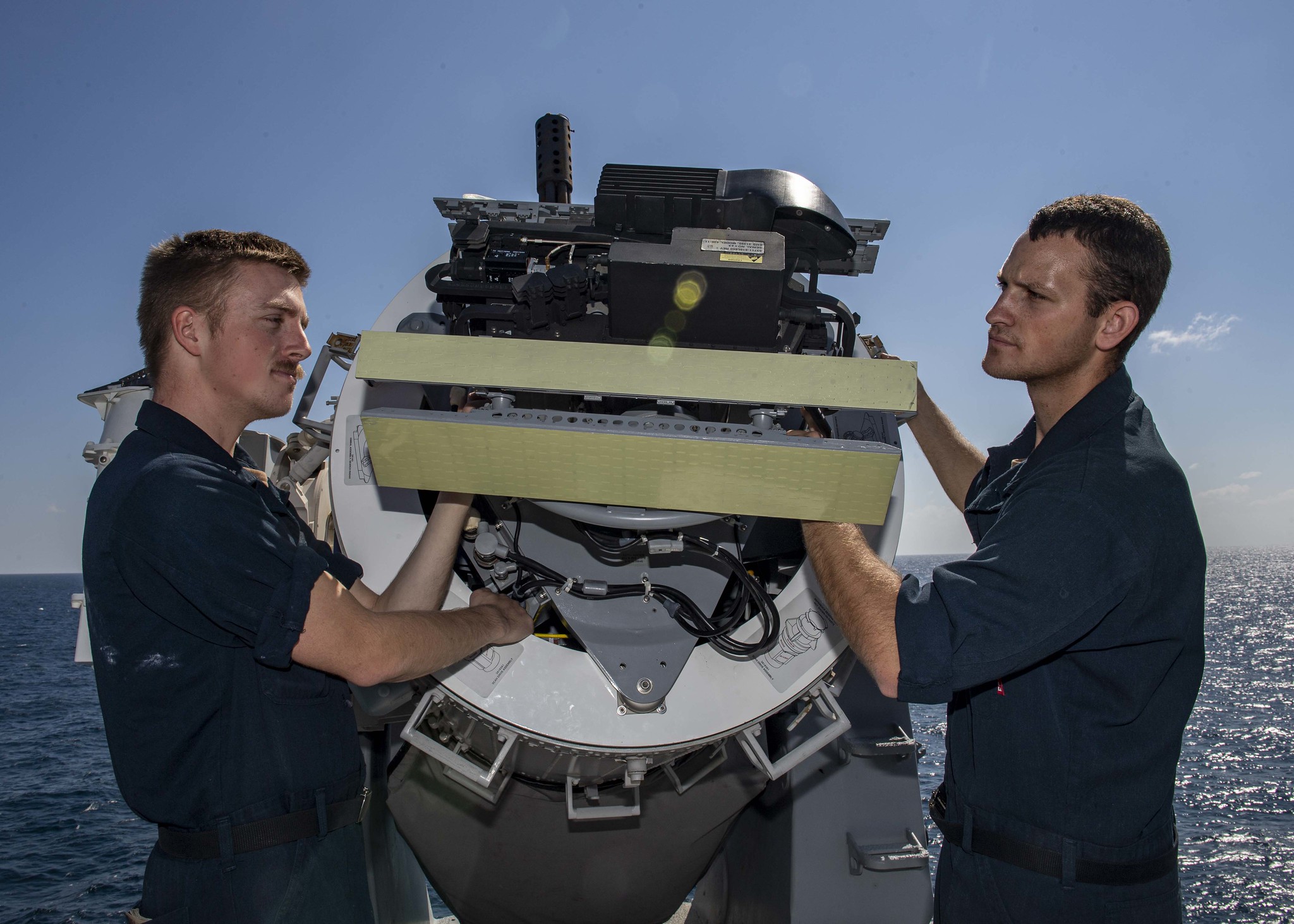
GULF OF ADEN (Jan. 3, 2020) Fire Controlman 2nd Class Michael Read, left, from Walnut Creek, Calif., and Fire Controlman 3rd Class Justin Janssen, from Crofton, Neb., perform a routine inspection on the surge antenna of the starboard close-in weapon system aboard the guided-missile cruiser USS Normandy (CG 60). The Normandy is part of the Harry S. Truman Carrier Strike Group and is deployed to the U.S. 5th Fleet area of operations in support of naval operations to ensure maritime stability and security in the Central Region, connecting the Mediterranean and Pacific through the western Indian Ocean and three strategic choke points.
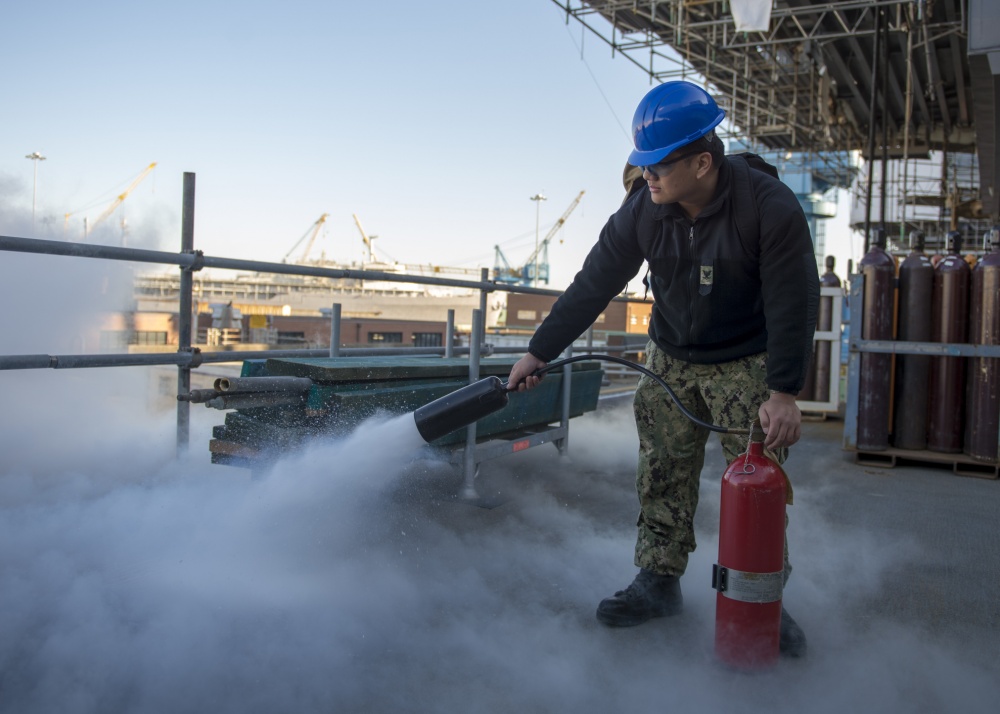
Concord sailor serves aboard U.S. Navy aircraft carrier USS George H.W. Bush

PORTSMOUTH, Va. (Dec. 20, 2019) Culinary Specialist 3rd Class Rodolfo De Castro III, from Concord, California, discharges a fire extinguisher aboard the aircraft carrier USS George H.W. Bush (CVN 77). GHWB is currently in Norfolk Naval Shipyard for its Docking Planned Incremental Availability (DPIA). (U.S. Navy Photo by Mass Communication Specialist 3rd Class Michael Joseph Flesch)
Navy recognizes sailor from Alamo as a Recruiter of the Year

SAN ANTONIO – (Dec. 12, 2019) Lt. Jeffrey Underwood (center), of Alamo, Calif., assigned to Navy Recruiting District (NRD) San Antonio was recognized as the NRD’s Active Officer Recruiter of the Year during an annual awards banquet held at the Embassy Suites Landmark. Presenting the awards were (left to right) NRD Command Master Chief Francisco Valdovinos, NRD Commanding Officer Cmdr. Nicholas Gamiz, NRD Chief Recruiter Master Chief Navy Counselor Matthew Maduemesi, and NRD Executive Officer Cmdr. Michael Files. For his meritorious service, Underwood was awarded the Navy and Marine Corps Achievement Medal. NRDs area of responsibility includes more than 34 Navy Recruiting Stations and Navy Officer Recruiting Stations spread throughout 144,000 square miles of Central and South Texas territory. (U.S. Navy Photo by Burrell Parmer, Navy Recruiting District San Antonio/Released)
Seaman from Pittsburg serving aboard the USS Theodore Roosevelt

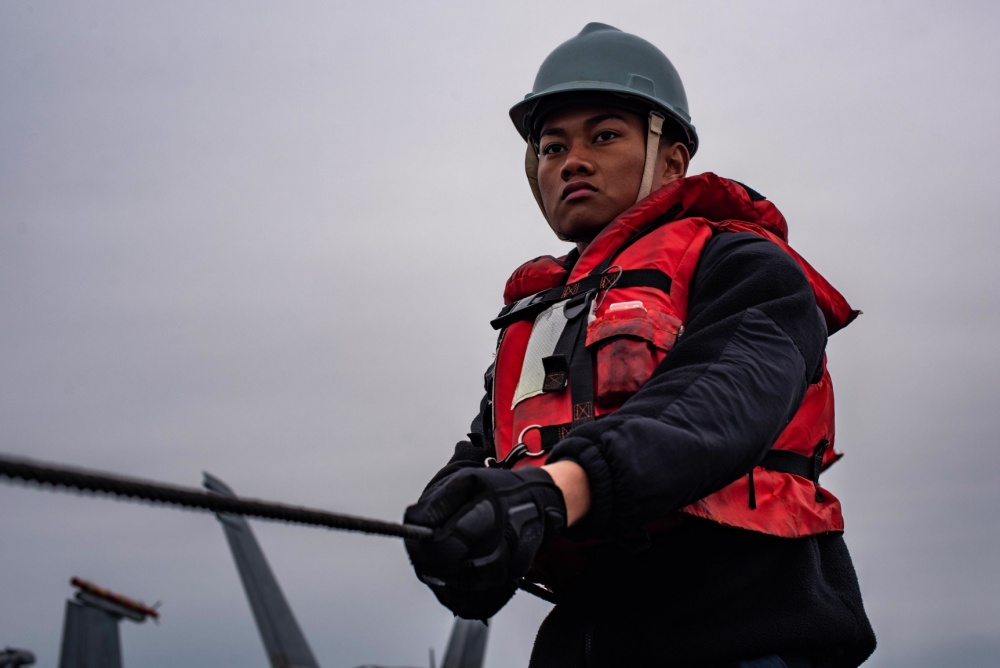
PACIFIC OCEAN (Dec 3, 2019) Seaman Isaiah Peralta, from Pittsburg, Calif., holds the phone and distance line on the flight deck of the aircraft carrier USS Theodore Roosevelt (CVN 71) during a replenishment-at-sea Dec. 3, 2019. Theodore Roosevelt is underway conducting routine training in the Eastern Pacific Ocean. (U.S. Navy photo by Airman D.J. Schwartz)
Blue Star Moms to hold Concord 5000 5K Run/Walk fundraiser Sunday, Nov. 10
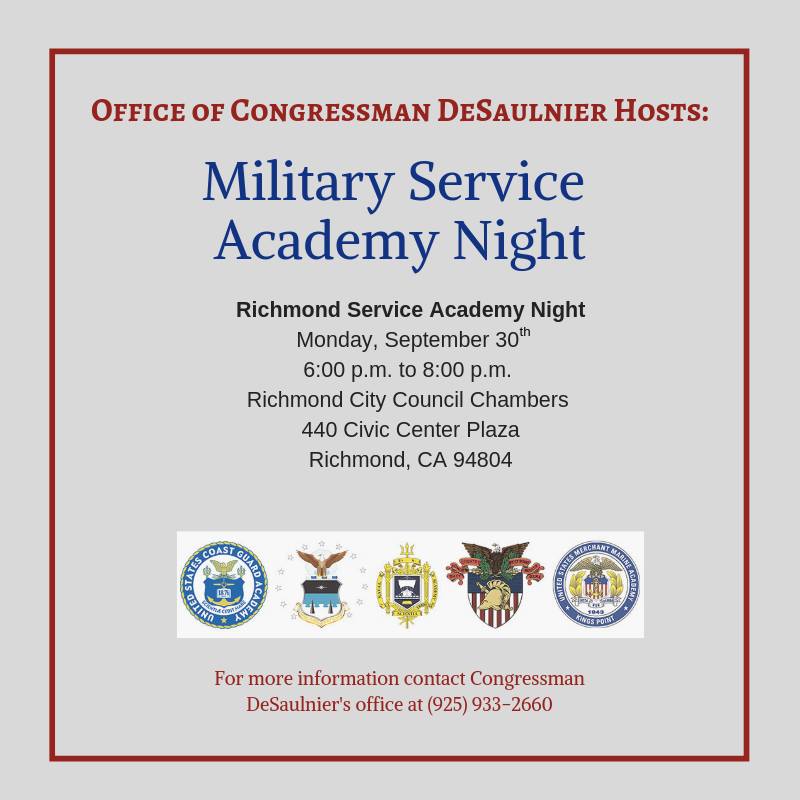
Rep. DeSaulnier to hold Military Service Academy Night Monday in Richmond
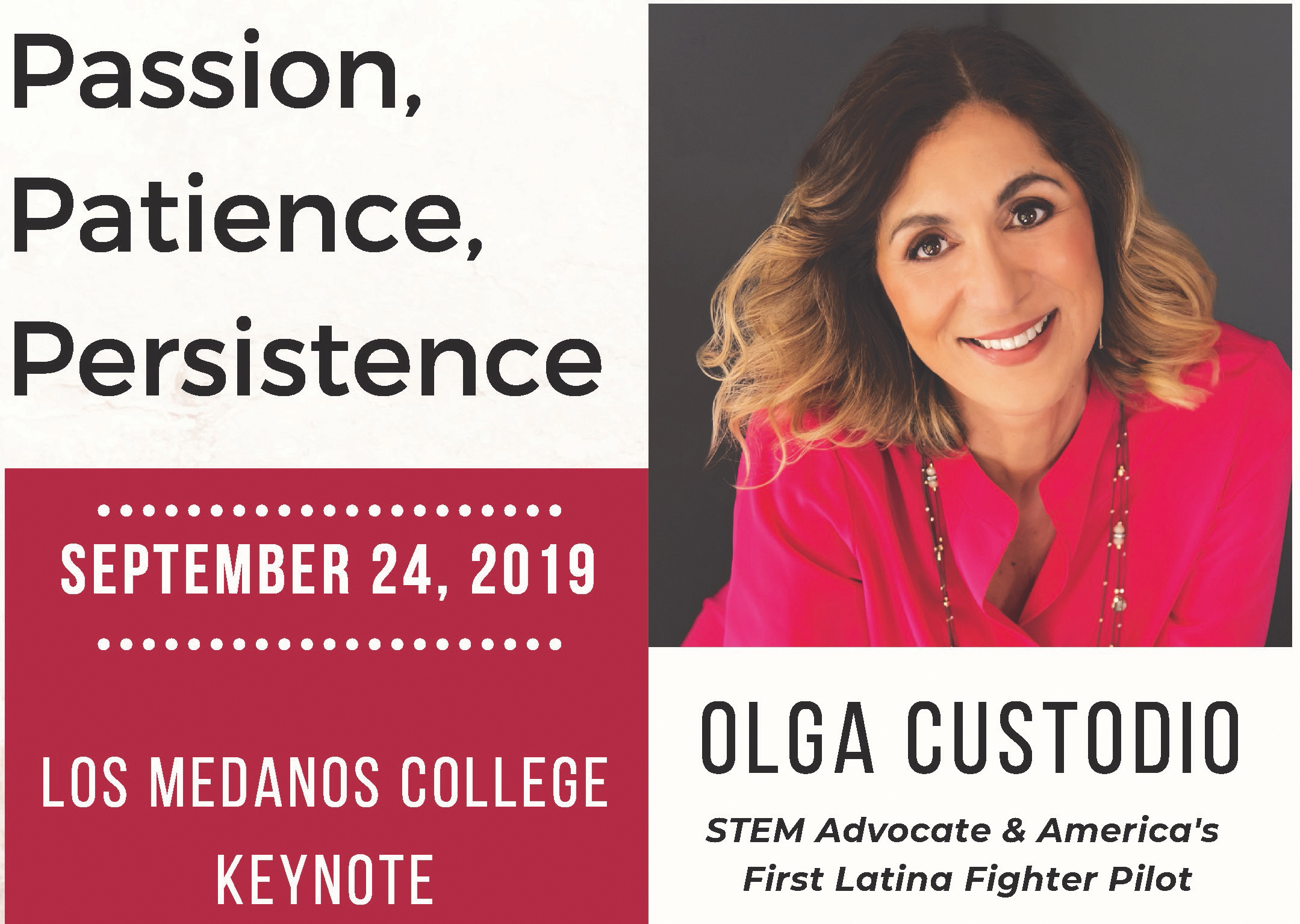
Los Medanos College partners with JFK University to host Olga Custodio, the first Latina U.S. Air Force fighter pilot Tuesday, Sept. 24
Los Medanos College (LMC) is partnering with John F. Kennedy University (JFKU) to host Olga Custodio, the first Latina to serve as a fighter pilot in the United States Air Force. The event will be held on Tuesday, September 24, at LMC’s Pittsburg Campus in Room SC-136 (Science Building, first floor); Lt. Col. Custodio’s presentation will be held 4:00 – 5:00 p.m., followed by a reception. The campus is located at 2700 East Leland Road in Pittsburg. There is no charge to attend, and guests are asked to RSVP online.
The event, which is part of LMC’s fourth annual Equity Speaker Series, will feature Retired Lt. Colonel Olga Custodio sharing her story of “Passion, Patience & Persistence.” Custodio was the first Latina to complete military pilot training in the United States Air Force (USAF), graduating in the top five percent of her class, and the first to become a USAF fighter pilot. She went on to break even more barriers as the first female flight instructor at two major USAF bases, and later as the first Latina commercial pilot for American Airlines. Living by the mantra, “querer es poder” – loosely translated to “where there’s a will, there’s a way” – Custodio’s perseverance, fighting spirit, leadership abilities, and passion for flying took her where few women have gone before. Now retired, Lt. Col. Custodio continues to lead and inspire, championing Science, Technology, Engineering, and Math (STEM) and motivating women and girls to pursue aviation and male-dominated professions. She is involved with a number of professional and service organizations, including: Women Military Aviators Association, as an active charter member; Women in Aviation International, as executive director and treasurer of the Alamo City Chapter; the Hispanic Association of Aviation and Aerospace Professionals, as vice president; the Order of Daedalians; and the Daedalian Foundation, as a Trustee. With her dedication to attracting more women and young people to aviation and STEM careers, she also serves as a mentor with the Aviation Explorers organization in San Antonio and with the School of Aeronautics of the Inter American University in Puerto Rico.
Collaborating on this event expands LMC’s existing partnership with JFKU. The two institutions have previously partnered on a Student Wellness Program that provides mental health counseling to students at LMC. In addition to marking Hispanic-Serving Institutions (HSIs) Week and National Hispanic Heritage Month, the event with Lt. Col. Custodio reflects the shared commitment of LMC and JFKU – both Hispanic-Serving Institutions (HSIs), with undergraduate student enrollment that is at least 25% Hispanic – to providing opportunities and support toward degree completion for Latino/a and minoritized students. Lt. Col. Custodio’s visit comes on the heels of LMC celebrating its 10-year anniversary of participating in the Mathematics, Engineering, Science & Achievement (MESA) Program, which focuses on helping underserved and underrepresented students achieve success in the STEM workforce.
Questions about this event may be directed to Dr. Sabrina T. Kwist at skwist@losmedanos.edu or (925) 473-7314.
For more information about all of LMC’s Office of Equity & Inclusion, visit https://www.losmedanos.edu/equity.
San Ramon native, Cal High grad exemplifies “We Build, We Fight” legacy of U.S. Navy Seabees

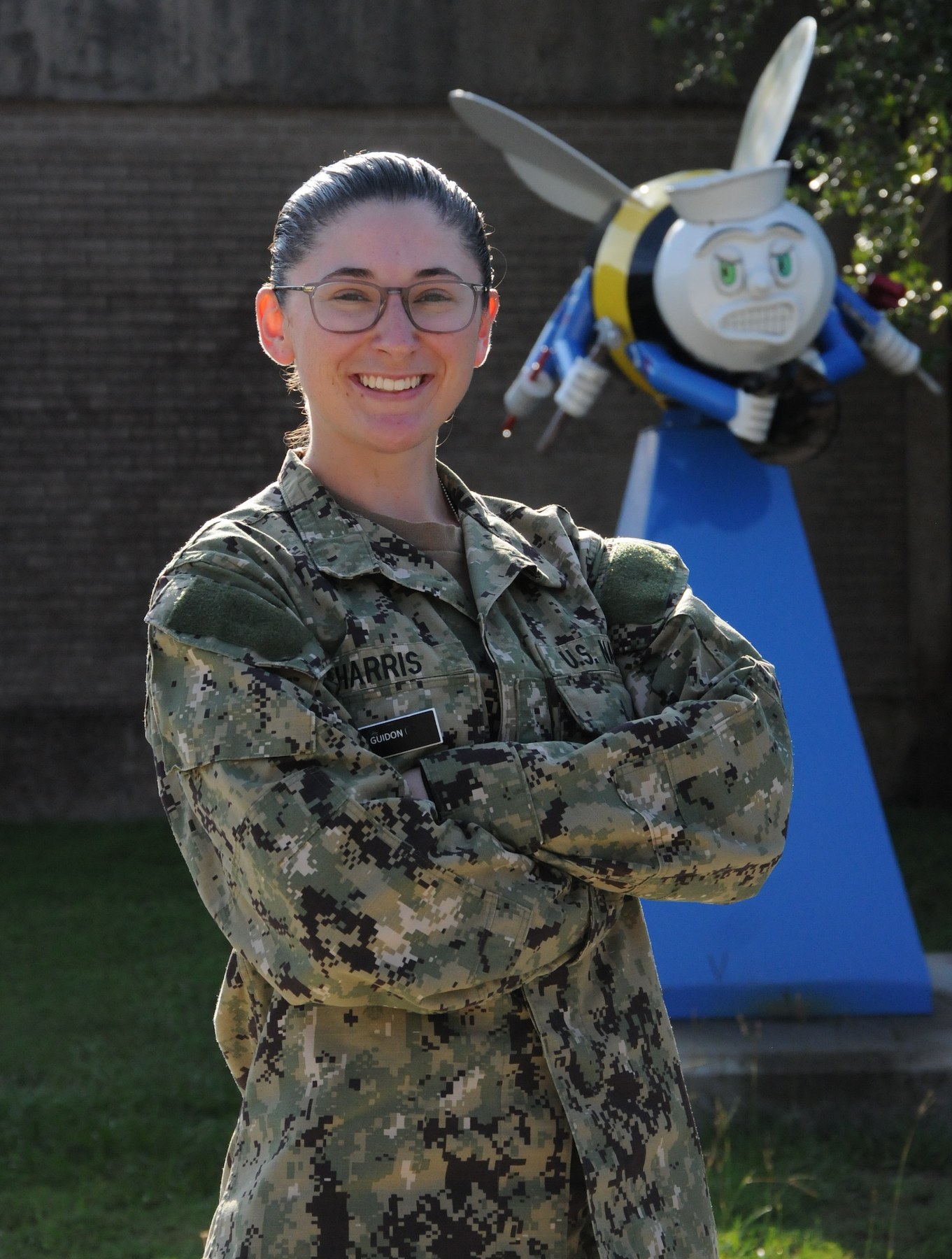
Constructionman Apprentice Sara Harris, U.S. Navy Seabees. Photo by Mass Communication Specialist 2nd Class Bradley Gee
By Alvin Plexico, Navy Office of Community Outreach
GULFPORT, Ms. – “We Build, We Fight” has been the motto of the U. S. Navy’s Construction Force, known as the “Seabees,” for more than 75 years. Constructionman Apprentice Sara Harris, a 2017 California High School graduate and native of San Ramon, California, builds and fights around the world as a member of naval construction battalion center located in Gulfport, Mississippi.
Harris is serving as a Navy builder, who is responsible for building and repairing wood structures, working with masonry and concrete, and installing interior finish work.
Harris credits success in the Navy to many of the lessons learned growing up in San Ramon.
“Growing up San Ramon, I learned how to build things from my dad,” said Harris.
Building in austere environments can be a challenge. Fighting in harsh conditions can also be a challenge. Building in austere environments while fighting in harsh conditions takes a special kind of person with a great deal of perseverance and determination. These are the kinds of people serving here at Gulfport, the home of the Atlantic Fleet Seabees. These are the people who provide crucial support to Seabee units deployed around the world.
The jobs of many of today’s Seabees remained unchanged since World War II, when the Seabees paved the 10,000-mile road to victory for the allies in the Pacific and in Europe, according to Lara Godbille, director of the U. S. Navy Seabee Museum.
For more than 75 years Seabees have served in all American conflicts. They have also supported humanitarian efforts using their construction skills to help communities around the world. They aid following earthquakes, hurricanes and other natural disasters.
Harris is playing an important part in America’s focus on rebuilding military readiness, strengthening alliances and reforming business practices in support of the National Defense Strategy.
A key element of the Navy the Nation needs is tied to the fact that America is a maritime nation, according to Navy officials, and that the nation’s prosperity is tied to the ability to operate freely on the world’s oceans. More than 70 percent of the Earth’s surface is covered by water; 80 percent of the world’s population lives close to a coast; and 90 percent of all global trade by volume travels by sea.
“Our priorities center on people, capabilities and processes, and will be achieved by our focus on speed, value, results and partnerships,” said Secretary of the Navy Richard V. Spencer. “Readiness, lethality and modernization are the requirements driving these priorities.”
Though there are many ways for sailors to earn distinction in their command, community and career, Harris is most proud of graduating boot camp.
“It’s the most important accomplishment I’ve had so far,” said Harris.
As a member of one of the U.S. Navy’s most relied upon assets, Harris and other sailors know they are part of a legacy that will last beyond their lifetimes providing the Navy the nation needs.
“It’s exciting to start this career,” added Harris. “I’m having a lot of fun!”
Oakley native, 2015 Freedom High graduate trains to be a U.S. Navy warfighter
By Mass Communication Specialist 1st Class Jerry Jimenez, Navy Office of Community Outreach
GREAT LAKES, Ill. – Sailors are some of the most highly-trained people on the planet, according to Navy officials, and at Recruit Training Command, otherwise known as “boot camp,” these skills are taught by hard-charging, Navy professionals who transforms civilians into disciplined, qualified U.S Navy sailors.
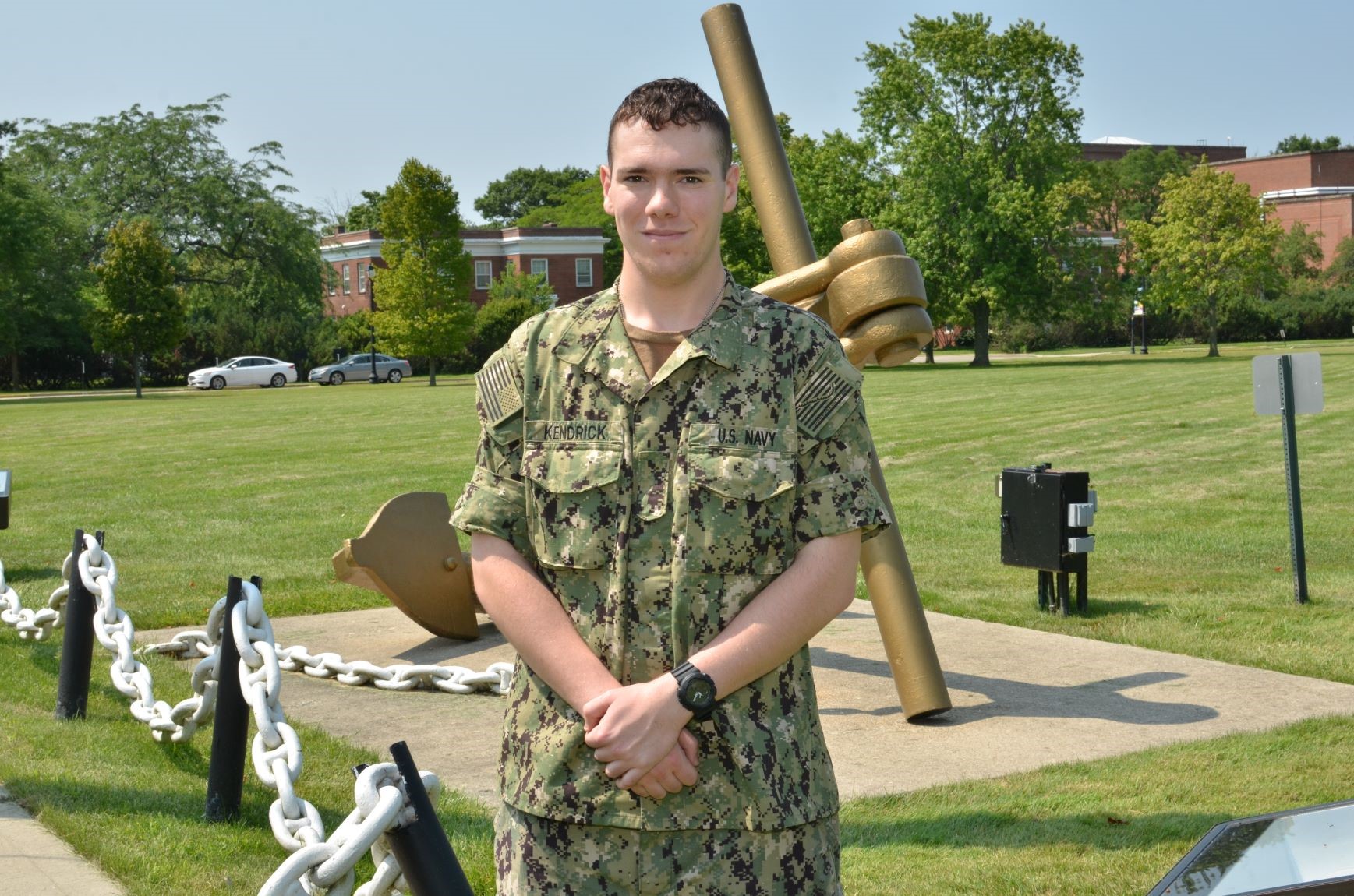
Seaman Ian Kendrick, a native of Oakley, California, recently graduated from RTC, and will be learning the necessary skills needed to be a logistics specialist.
A logistics specialist is responsible for providing fresh supplies, food and other necessities to sailors in the fleet.
After “boot camp,” students attend advanced technical schools where they are taught the basic technical knowledge and skills required to be successful in their new careers.
Kendrick, a 2015 graduate of Freedom High School, credits success in the Navy to many of the lessons learned growing up in Oakley.
“I learned from my parents, family members, friends, schoolteachers and coaches about responsibility, integrity and the importance of teamwork and dedication,” Kendrick said. “These traits have served me well in my new Navy life.”
In 1994, RTC Great Lakes became the Navy’s only recruit training facility. The mission of RTC is to transform civilians into smartly disciplined, physically fit, basically trained Sailors who are ready for follow-on training and service to the fleet while instilling in them the highest standards of Honor, Courage, and Commitment.
Recruit training involves a change in the mental and physical capacity of the new recruit, according to Navy officials. From the first day at RTC through graduation day when new sailors board the bus to depart, recruits find themselves in a whirl of activity. Every recruit entering the Navy today will remember RTC as their introduction to Navy life.
Boot camp is approximately eight weeks and all enlistees into the U.S. Navy begin their careers at the command. Their basic training curriculum is comprised of five core competencies: firefighting & damage control, seamanship, watch standing, and physical fitness. Through a hands-on learning approach, recruits ‘train how they fight’ and receive critical warfighting skills during the sailor development process. The command consists of more than 1,100 staff members, with an average of 6,000 recruits in training at any time.
A key element of the Navy the nation needs is tied to the fact that America is a maritime nation, and that the nation’s prosperity is tied to the ability to operate freely on the world’s oceans. More than 70 percent of the Earth’s surface is covered by water; 80 percent of the world’s population lives close to a coast; and 90 percent of all global trade by volume travels by sea.
Kendrick plays a crucial role in America’s focus on rebuilding military readiness, strengthening alliances and reforming business practices in support of National Defense Strategy.
“Our priorities center on people, capabilities and processes, and will be achieved by our focus on speed, value, results and partnerships,” said Secretary of the Navy Richard V. Spencer. “Readiness, lethality and modernization are the requirements driving these priorities.”
Serving in the Navy is a continuing tradition of military service for Kendrick, who has military ties with family members who have previously served. Kendrick is honored to carry on the family tradition.
“My great-grandfather on my mother’s side, fought in WWII while serving in the Navy after immigrating from Cuba,” Kendrick said. “My grandfather was a Marine and served in the Vietnam War and my uncle, Scott, was also in the Navy. I have a sense of pride carrying the family torch serving our country.”
As a member of one of the U.S. Navy’s most relied-upon assets, Kendrick and other sailors know they are part of a legacy that will last beyond their lifetimes providing the Navy the nation needs.
“Serving in the Navy is the highest honor and one of the best jobs I can think about doing,” Kendrick said. “It means not only serving my country but also serving the world.”
Concord native serves aboard U.S. Navy Guided-Missile Destroyer in Pearl Harbor

Petty Officer 3rd Class Aries Socrates. U.S. Navy photo by Mass Communication Specialist 1st Class David Finley.
By Lt. Courtney Prizer, Navy Office of Community Outreach
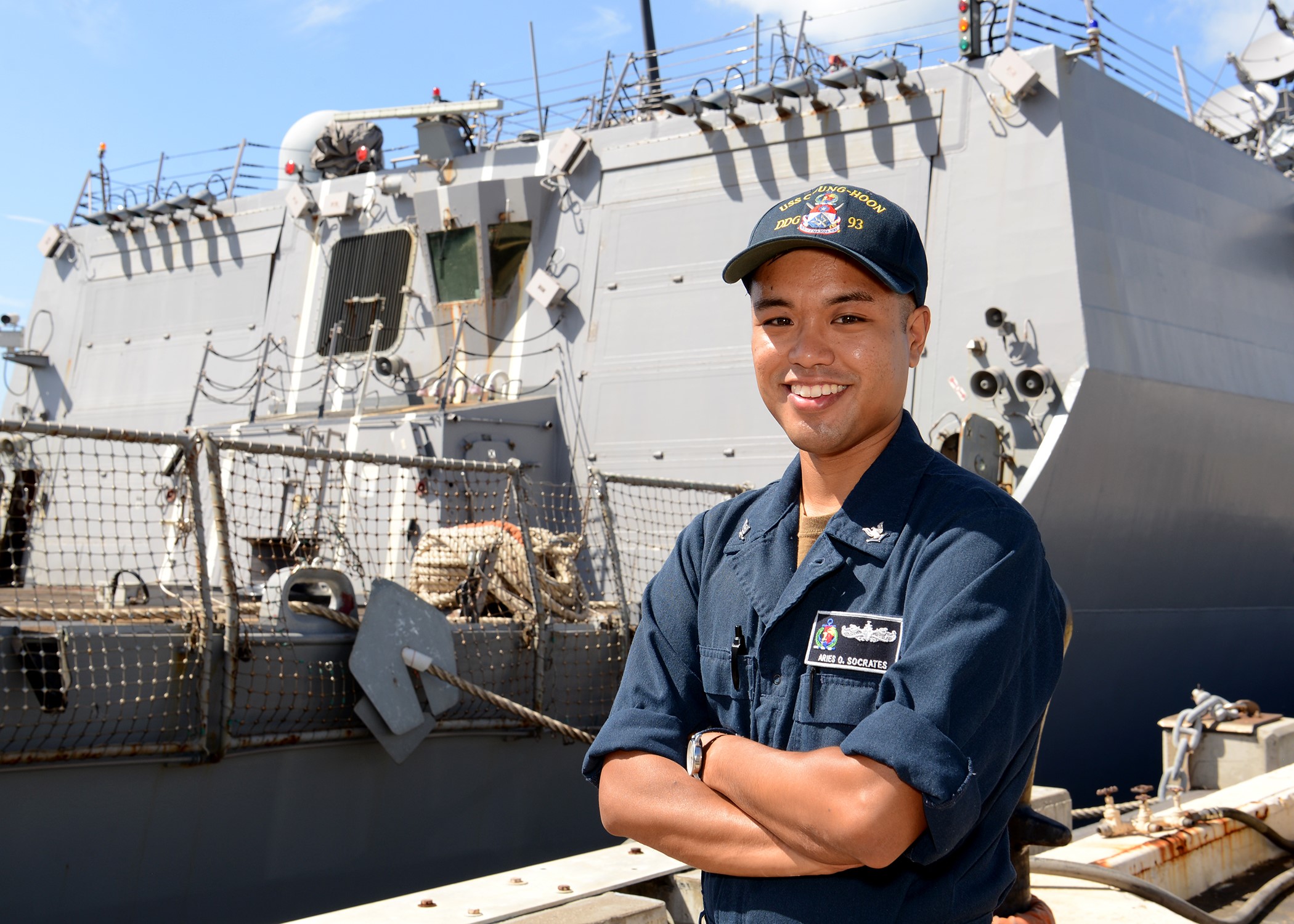
JOINT BASE PEARL HARBOR-HICKAM, Hawaii – A 2006 Contra Costa Christian High School graduate, 2013 Diablo Valley College graduate and Concord, California, native is serving in the U.S. Navy aboard the guided-missile destroyer, USS Chung-Hoon.
Petty Officer 3rd Class Aries Socrates works as a Navy fire controlman AEGIS aboard the forward-deployed Arleigh Burke-class guided-missile destroyer operating out of Joint Base Pearl Harbor-Hickam, Hawaii.
Socrates credits success in the Navy to many of the lessons learned in Concord.
“My hometown taught me the value of hard work and patience,” said Socrates, “Also, that the same day you plant the seed is not the same day that you will eat the fruit.”
Chung-Hoon measures approximately 500 feet and is powered by four gas turbines that allow the destroyer to achieve more than 30 mph in open seas.
Approximately 30 officers and 300 enlisted men and women make up the ship’s company. Their jobs are highly specialized and keep each part of the cruiser running smoothly, according to Navy officials. The jobs range from maintaining engines and handling weaponry to washing dishes and preparing meals.
As a Navy fire controlman AEGIS, Socrates is responsible for the computers and servers that provide the ship’s overall navigation and combat picture.
According to Navy officials, destroyers are tactical multi-mission surface combatants capable of conducting anti-air warfare, anti-submarine warfare and anti-surface warfare, as well as humanitarian assistance. Fast, maneuverable, and technically advanced, destroyers provide the required war-fighting expertise and operational flexibility to execute any tasking overseas.
Being stationed in Pearl Harbor, often referred to as the gateway to the Pacific in defense circles, means Socrates is serving in a part of the world taking on a new importance in America’s focus on rebuilding military readiness, strengthening alliances, and reforming business practices in support of the National Defense Strategy.
“Our priorities center on people, capabilities and processes, and will be achieved by our focus on speed, value, results and partnerships,” said Secretary of the Navy Richard V. Spencer. “Readiness, lethality and modernization are the requirements driving these priorities.”
Though there are many ways for sailors to earn distinction in their command, community, and career, Socrates is most proud of graduating from boot camp and technical school and now serving on a ship stationed in Hawaii.
“Dedication and persistence to my personal goals and family helped to push me through to reach where I am now,” said Socrates.
As a member of one of the U.S. Navy’s most relied upon assets, Socrates and other sailors know they are part of a legacy that will last beyond their lifetimes, one that will provide a critical component of the Navy the nation needs.
“Serving the Navy means working on and reflecting on myself and my goals,” added Socrates. “Through various obstacles presented on the job, I am constantly being tested, allowing me to build myself up in some way. I have been growing in patience, resilience, and physical strength, as well as taking more initiative.”
- « Previous Page
- 1
- …
- 4
- 5
- 6
- 7
- Next Page »