• Home
  • About The Herald
  • Local Agencies
  • Daily Email Update
  • Legal Notices
  • Classified Ads

Contra Costa Herald

News Of By and For The People of Contra Costa County, California

  • Arts & Entertainment
  • Business
  • Community
  • Crime
  • Dining
  • Education
  • Faith
  • Health
  • News
  • Politics & Elections
  • Real Estate

Antioch council members sign resolution apologizing for city’s past anti-Chinese hate during public ceremony

June 17, 2021 By Publisher Leave a Comment

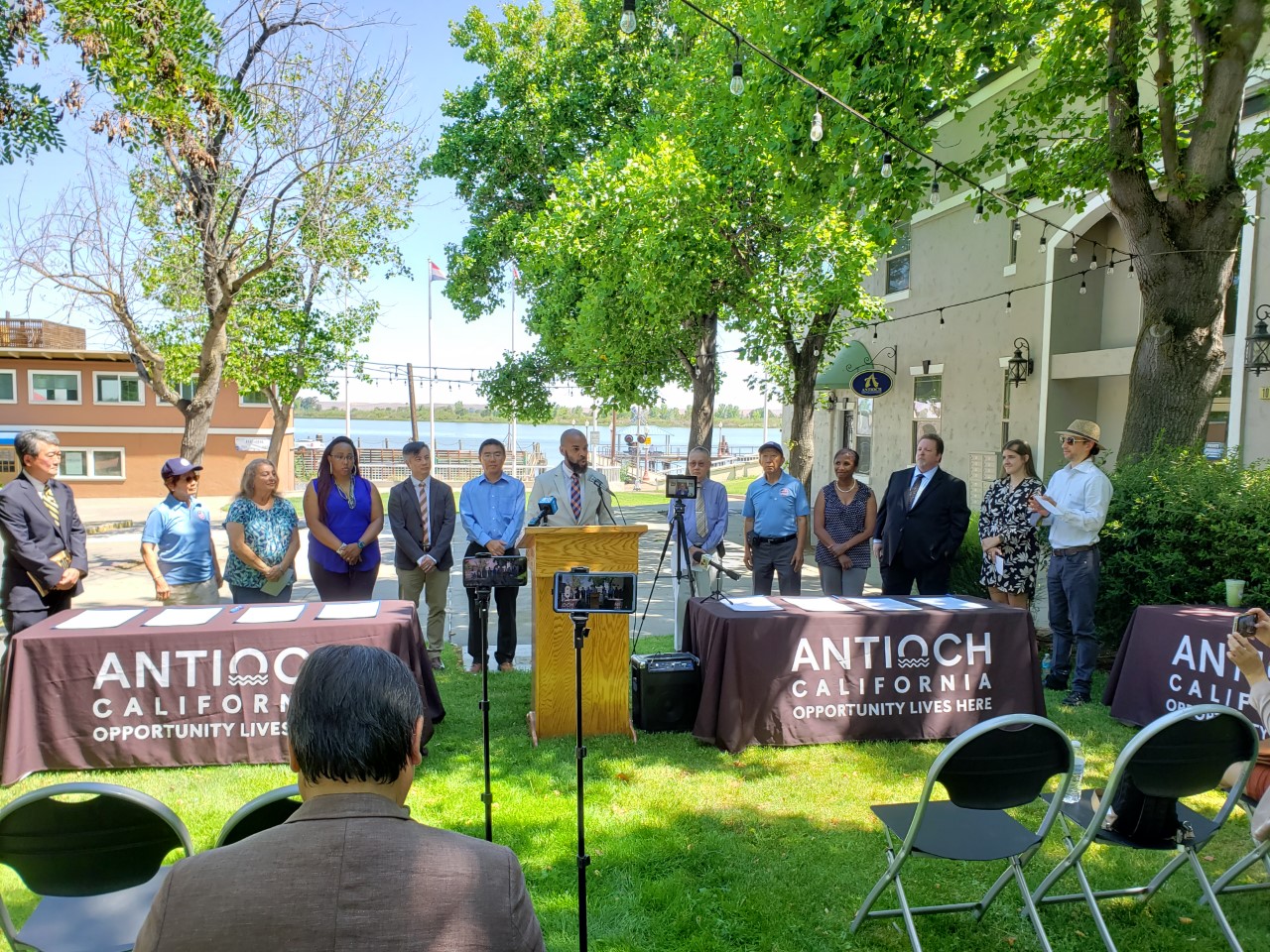
Antioch Mayor Lamar Thorpe is joined by fellow council members, representatives of Bay Area Chinese and Asian American organizations, and State Controller Betty Yee via Zoom, for the Wednesday morning resolution signing ceremony in Waldie Plaza, where the city’s Chinatown once was.

Joined by representatives of Chinese and Asian American organizations in Bay Area, State Controller Yee; APAPA donates $10,000 for exhibit at Antioch Historical Society museum

“It took 145 years to come to this day, to come to this reconciliation.” – Betty Yee, California State Controller

By Allen Payton

During a ceremony in what was once the location of Antioch’s Chinatown, Wednesday morning, June 17, 2021, Mayor Lamar Thorpe and council members signed the resolution they adopted in May, apologizing for the city’s residents for their racism against Chinese immigrants in the late 1800’s. That included the burning down of the city’s Chinatown in 1876.

During the May 18, 2021 meeting, the council voted 5-0 to pass the resolution entitled “Resolution of the city council of the City of Antioch apologizing to early Chinese immigrants and their descendants for acts of fundamental injustice, seeking forgiveness and committing to rectification of past misdeeds.” (See related articles here and here)

The council members were joined by representatives of Bay Area Chinese and Asian American organizations, as well as State Controller Betty Yee who participated by Zoom. The signed resolutions were presented to each.
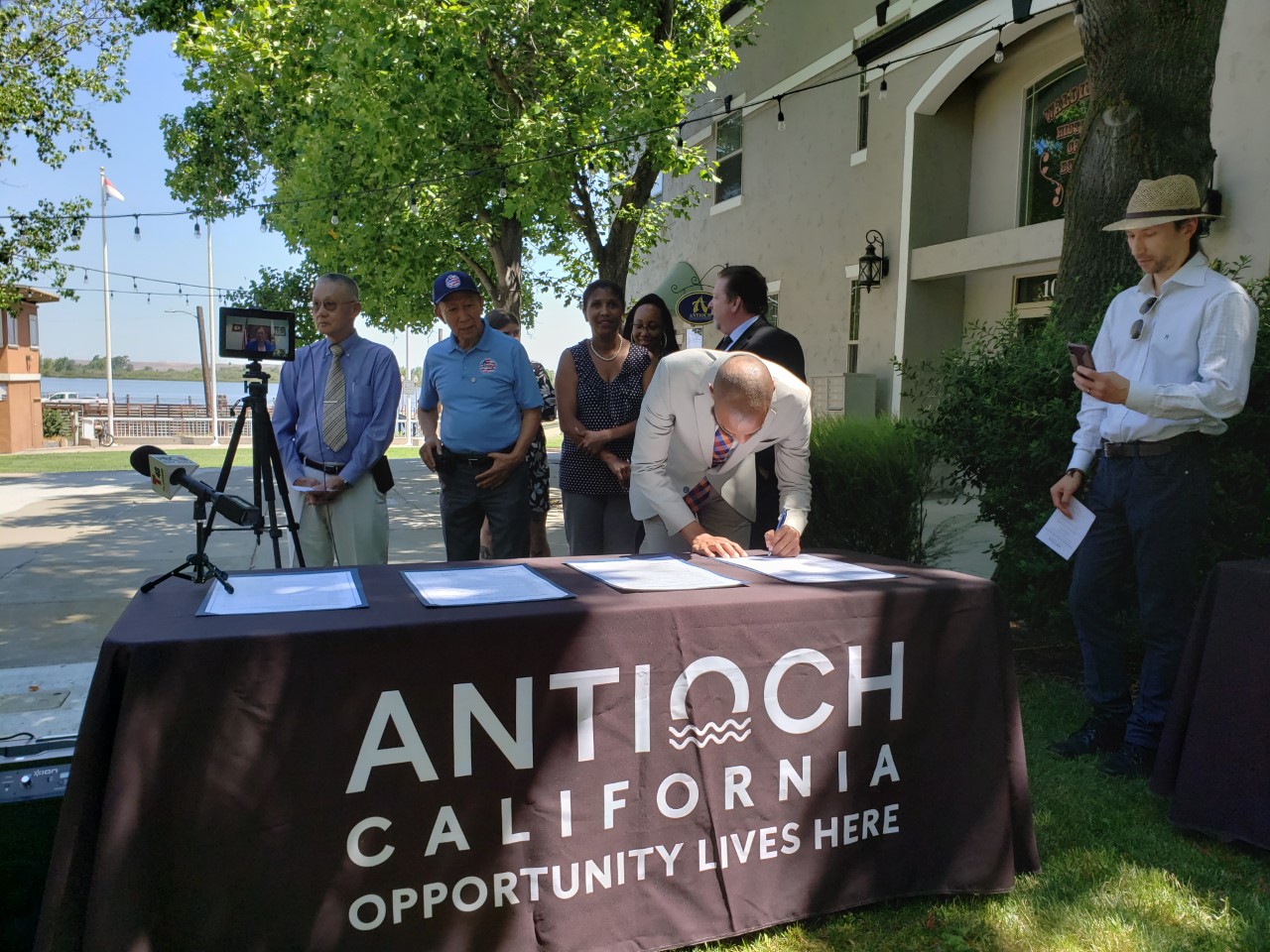
Antioch Mayor Lamar Thorpe signs the council adopted resolution as other council members and representatives of Chinese and Asian American organizations look on, during the ceremony, Wednesday morning, June 17, 2021.

Yee was the keynote speaker, noting the fact that her parents are from the same Guangdong Province in China as were many of Antioch’s Chinese residents of the 1800’s.

Thorpe welcomed those in attendance “to the new Antioch, where opportunity lives for all of the world’s people, cultures, and more.”

“I know for some cultures and ethnic groups Antioch hasn’t always been a place of opportunity, hasn’t always been a place of open arms, and hasn’t always been a place of acceptance. And, we still fight through some of those issues today,” he continued. “But as we mature as a city, we gain perspective, build understanding, and, most importantly, increase our capacity to seek forgiveness.”

“Today, we ceremoniously begin that process of reconciliation with our early Chinese American residents, their descendants, and the larger AAPI community for our past misdeeds that helped build a culture in our country that led to the rise in hate crimes stemming from the COVID 19 pandemic,” Thorpe stated. “Like the ending of the pandemic, today, we, the City of Antioch, take our dose of humility by acknowledging our troubled past and seeking forgiveness.”

“I recognize there are many groups in our community who are just as deserving of an apology from their local, state and national government. I know, I am a member of such groups,” the mayor shared. “However, given the national awakening that has spun out of anti-Asian American and Pacific Islander hate, it’s critically important that we do this, now.”

Contra Costa Community College District Board President Andy Li, the first Asian American elected to the board, spoke next, thanking the mayor and council for their action “to make Antioch the first to apologize to early Chinese immigrants. Today is an historic day…for the resolution to be signed. I hope our ancestors in heaven can now rest in peace.”

“It sends a very clear message to the people of the United States that this is a country for all,” he continued. “145 years have passed, and the lives of Chinese Americans have improved. But today…we are told to go back to our country. Let’s be clear. This is my country.”

Li then cited the pledge of allegiance.

Edward Tepporn of the Angel Island Immigration Station Foundation said, “what happened in Antioch happened in other cities across the country.”

He spoke of how Chinese immigrants were treated differently than other immigrants, with many having to strip naked and answer hundreds of questions.

“Today, we add Mayor Lamar Thorpe and the City of Antioch to the list of those shining bright and standing shoulder to shoulder in solidarity,” Tepporn added.

Thorpe, who was joined by Mayor Pro Tem Monica Wilson, District 1 Councilwoman Tamisha Torres-Walker and District 2 Councilman Mike Barbanica, then said, “I thought I would have the other council members who voted for the resolution sign it.”

He shared that District 3 Councilwoman “Lori Ogorchock couldn’t be here. Her grandson is visiting so, her time is tied up.”

“We have made commitments to fund the Antioch Historical Society and to designate this area as Antioch’ historic Chinatown,” Thorpe shared, speaking of Waldie Plaza in the city’s historic Rivertown District, where the ceremony was held.
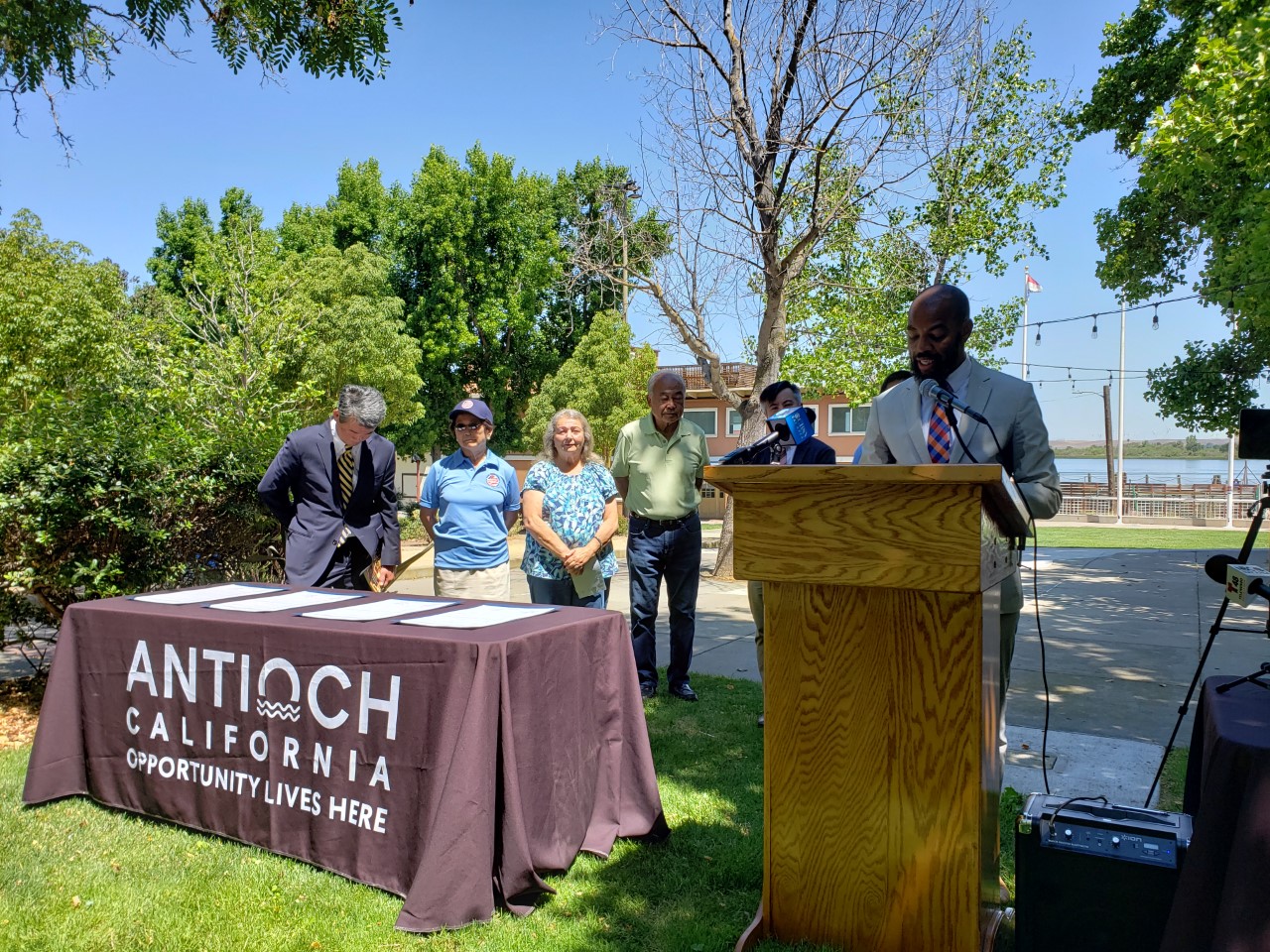
As Thorpe reads the resolution, Douglas Hsia of the Locke Foundation in the California Delta bowed his head as a sign of reverence and respect.

Thorpe Reads Resolution, Representative Bows

As Thorpe read the resolution, Douglas Hsia of the Locke Foundation in the California Delta bowed his head in a sign of reverence and respect.

RESOLUTION OF THE CITY COUNCIL OF THE CITY OF ANTIOCH APOLOGIZING TO EARLY CHINESE IMMIGRANTS AND THEIR DESCENDANTS FOR ACTS OF FUNDAMENTIAL INJUSTICE, SEEKING FORGIVENESS AND COMMITTING TO RECTIFICATION OF PAST MISDEEDS

WHEREAS, on January 24, 1848, gold was discovered in Alta California, Mex(ico) and by 1849, people were coming to the region from all over the world to look for gold;

WHEREAS, the Gold Rush caused a huge increase in the population by migrants from the eastern United States and other parts of the world including China;

WHEREAS, between 1849 and 1853 about 24,000 young Chinese men immigrated to Alta California, Mex(ico) (which in 1850 became the United States, State of California) and by 1870 there were an estimated 63,000 Chinese in the United States, 77% of whom resided in California;

WHEREAS, many Chinese immigrants were met with racism, scapegoating and anti-Chinese sentiment also known as xenophobia, which was at its highest between 1850 and 1870;

WHEREAS, Antioch in its early years was not exempt from xenophobia;

WHEREAS, this period in Antioch’s history, like in most of America, is now known as the “The Driving Out” with forced removals of Chinese immigrants;

WHEREAS, during “The Driving Out” period, Antioch officially became a “Sundown Town” when it banned Chinese residents from walking city streets after sunset;

WHEREAS, in order to get from their jobs to their homes each evening, these Chinese residents built a series of tunnels connecting the business district to where I Street met the waterfront;

WHEREAS, in 1876 Chinese residents were told by white mobs that they had until 3 p.m. to leave Antioch— no exceptions;

WHEREAS, after Chinese residents were forced out, Chinatown was burned to the ground and Antioch made headline news: “The Caucasian torch,” wrote the Sacramento Bee, “lighted the way of the heathen out of the wilderness,” and “The actions of the citizens of this place will, without doubt, meet with the hearty approval of every man, woman and child on the Pacific coast” wrote the San Francisco Chronicle;

WHEREAS, Antioch’s early period helped negatively contribute to the Nation’s xenophobic discourse, which led to legal discrimination in public policy with the establishment of the Chinese Exclusion Act;

WHEREAS, the system of “The Driving Out” and the visceral racism against persons of Chinese descent upon which it depended became entrenched in the City’s, the State’s and the Nation’s social fabric;

WHEREAS, the story of Chinese immigrants and the dehumanizing atrocities committed against them should not be purged from or minimized in the telling of Antioch’s history;

WHEREAS, the City of Antioch must acknowledge that the legacy of early Chinese immigrants and Xenophobia are part of our collective consciousness that helps contribute to the current anti-Asian American and Pacific Islander hate;

WHEREAS, a genuine apology and seeking forgiveness are an important and necessary first step in the process of racial reconciliation;

WHEREAS, an apology for dehumanization and injustices cannot erase the past, but admission of the wrongs committed can speed racial healing and reconciliation and help confront the ghosts of the City’s past;

NOW, THEREFORE, BE IT RESOLVED that the City Council of the City of Antioch:

1) Apologizes to all early Chinese immigrants and their descendants who came to Antioch and were unwelcome;

2) Seeks forgiveness for acts of fundamental injustice, terror, cruelty, and brutality; and

3) Expresses its commitment to rectify the lingering consequences of the misdeeds committed against early Chinese immigrant under, before and during “The Driving Out.”

* * * * * * * * *

I HEREBY CERTIFY that the foregoing resolution was passed and adopted by the City Council of the City of Antioch at a special meeting thereof, held on the 18th day of May, 2021 by the following vote:

AYES: 5

NOES: 0

ABSTAIN: 0

ABSENT: 0

Mayor Pro Tem Monica Wilson and Councilmembers Tamisha Torres-Walker and Mike Barbanica sign copies of the resolution as representatives of the Chinese and Asian American organizations look on.

Council Members Sign Copies of Resolution

The mayor and council members then signed eight copies of the resolution which were presented to representatives of each of the organizations in attendance, including Tepporn, Hsia, Justin Hoover, Executive Director of the Chinese Historical Society of America, C.C. and Regina Yin, and Joel Wong of the Asian Pacific Islander American Public Affairs Association (APAPA), as well as Hans Ho and Linda Walgren of the Antioch Historical Society.

“I just want to say how important it is to have solidarity with other groups…to be with this amazing event today to honor those who were wronged,” Hoover shared. He then thanked the mayor and council for the resolution.
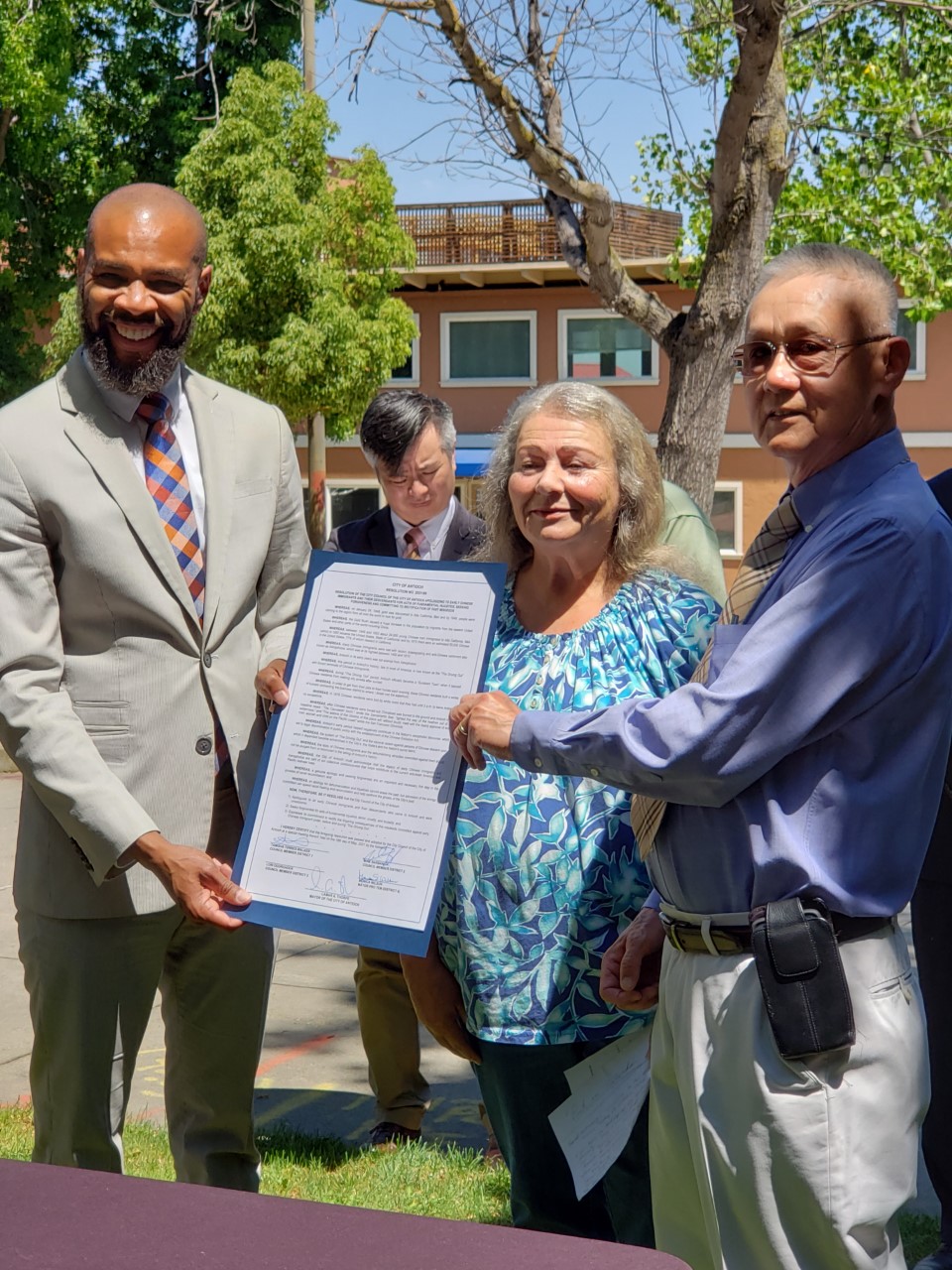
Mayor Thorpe presents a copy of the signed resolution to Antioch Historical Society representatives Linda Walgren and Hans Ho.

Walgren, Secretary of the Board of Directors on behalf of president Dwayne Eubanks spoke next saying, We are interested in all the people’s history in Antioch.”

“I want to thank the mayor and city council for an extremely brave act in signing this proclamation” Ho said as he got choked up and had tears come to his eyes.” It is an uncomfortable part of our history.”

Hsia said he was glad to be part of the ceremony and thought it appropriate his organization was represented since “San Francisco marked the beginning and Locke marks the beginning of the end of the Chinese immigration.”

“I thank Mayor Thorpe,” Hsia continued.” His actions today, have made America better for everyone.”

Yee offered her keynote address for the ceremony saying, “This is such an important, historic day. It is a personally meaningful day for me. I have to harken back to some of the sentiments of the day…which was the anti-Asian sentiment. We are standing locked arm in arm fighting this virus of hate.”

“Today, we’re recognizing the stains of Antioch…and look at how we are going to model reconciliation…so our community can heal from all the dark chapters of the Chinese American experience,” she continued. “The Asian hate, today, has its roots in what happened, here in Antioch.”
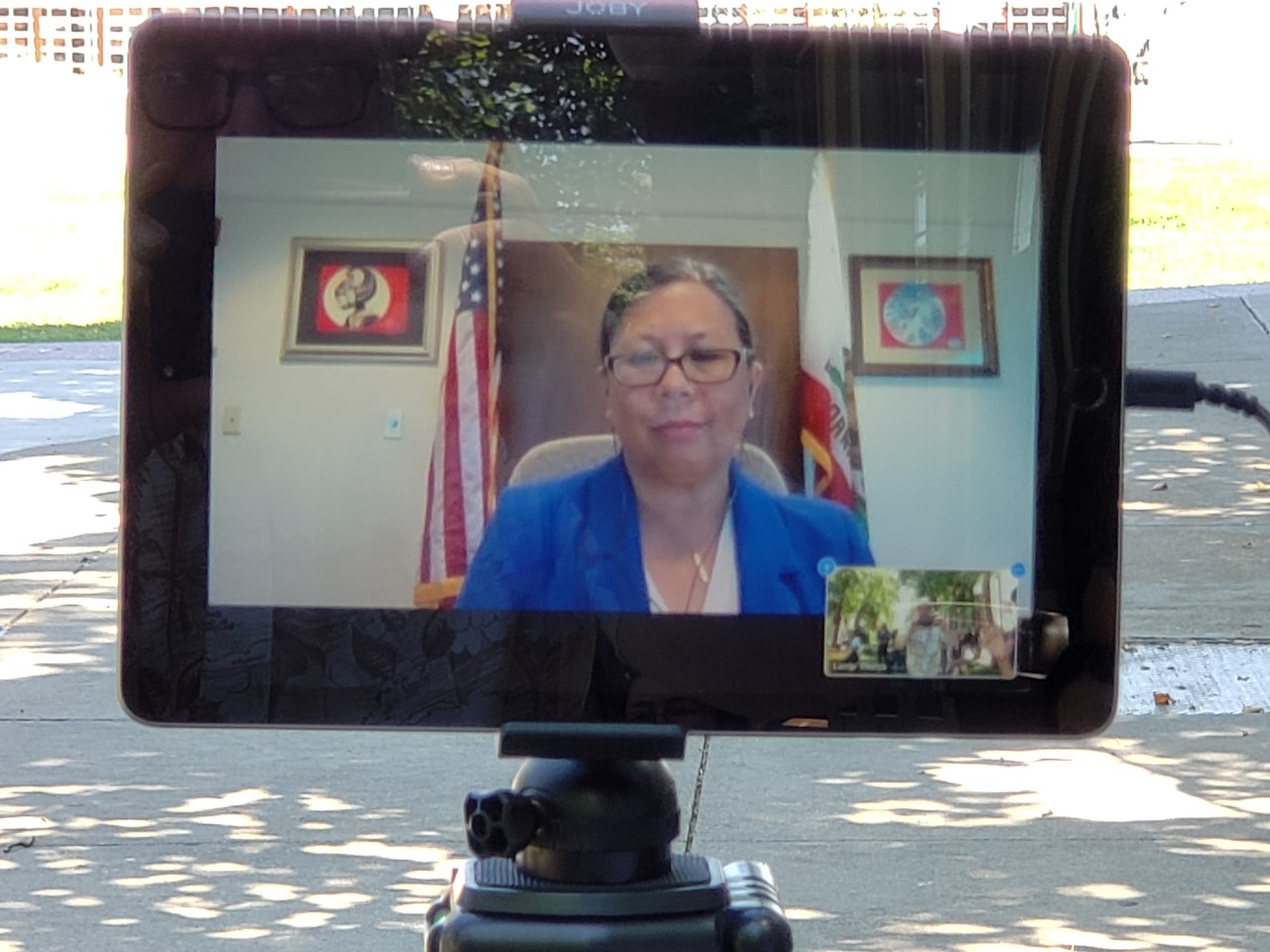
State Controller Betty Yee participated via Zoom.

“I want to thank the City of Antioch for not just making this a one-day occasion…but that we will be reminded of it in our museums. It’s only through understanding that we truly understand our place in time, today,” Yee stated. “It took 145 years to come to this day, to come to this reconciliation. The number of the resolution, 88 is a very important number in Chinese culture…of good fortune.”

“This is a day of celebration, but a day to remember our work is not done,” she said. “It is so significant when it happens in cities like Antioch. It’s so easy to sweep it under the rug. We know this is a hopeful day of a new chapter of relations.”

“I’m so thankful to be part of this historic day,” said Antioch School Board President Ellie Householder, who served as Mistress of Ceremonies for the event.

APAPA founder C.C. Yin said, “this is a very important historic moment. The first time in California history for a city to stand up.”
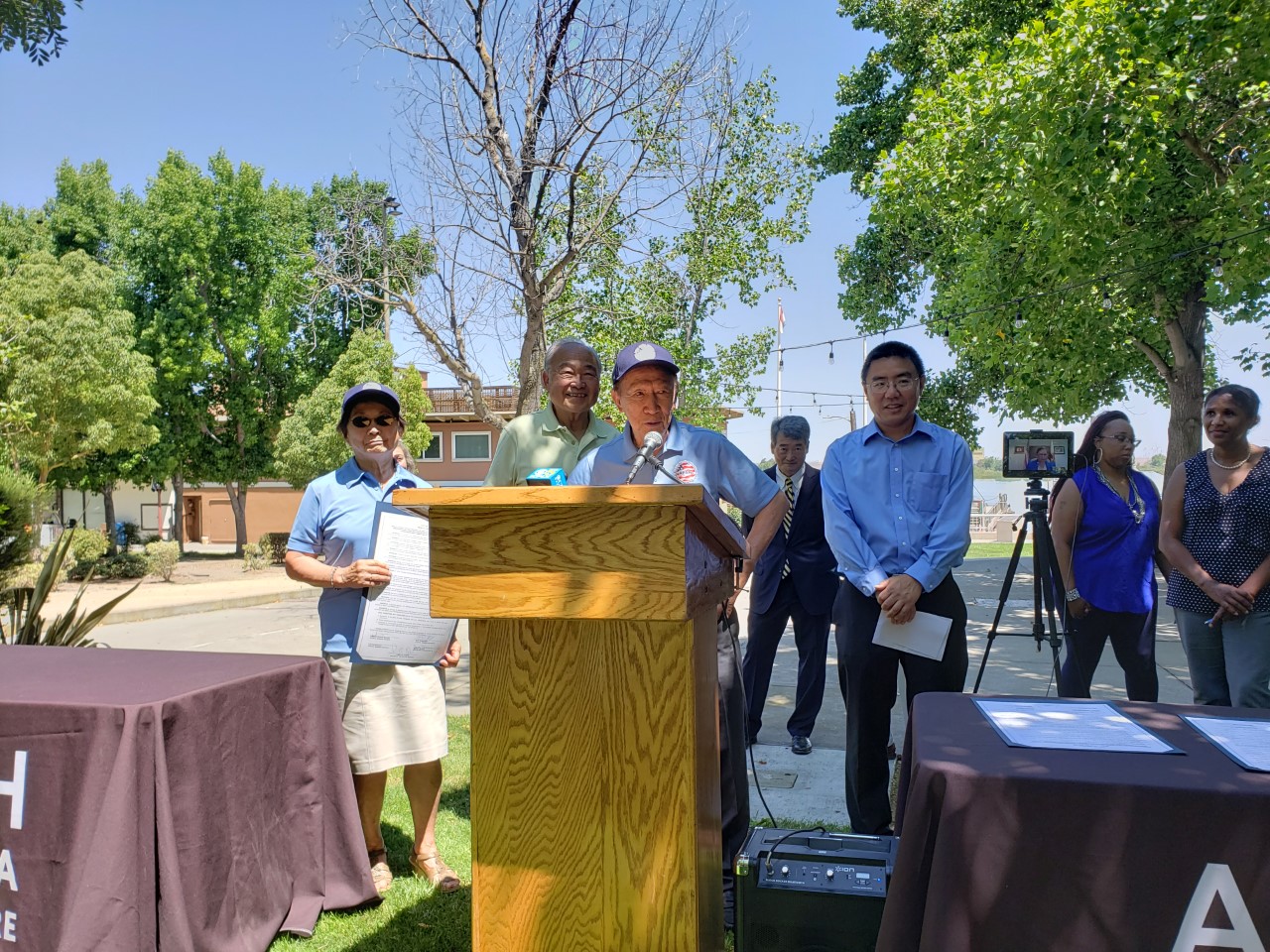
C.C. Yin, founder of APAPA speaks, as his wife, Regina (left) Joel Wong, Edward Tepporn, Andy Li, Councilwoman Torres-Walker and Mayor Pro Tem Wilson listen.

He presented the mayor and council members with APAPA logo shirts as gifts, as well as McDonald’s logo hats from he and his wife’s franchise.

He shared that “Regina Yin is donating $10,000 from the APAPA foundation to the City of Antioch.”

“Andy told us to do that,” she said with a smile.

Build a better city like Antioch, a better state, a better America.

“I was very moved by the mayor’s comments,” Regina Yin stated. “This country gave C.C. and me the opportunity to open a McDonald’s franchise. I have had the opportunity to open a business and to give back.”

She thanked the mayor for “A sincere apology.”

“Sixty years ago I came as an immigrant,” C.C. Yin stated. “This is our country. We love it. We have fulfilled our dreams ten times. The past is learning for tomorrow. We have double responsibility to build a better country, a better government. Antioch…this is what I call American spirit.”

Street Renaming and Reparations

Asked about the idea of renaming First Street to Chinatown Way, as proposed by a Rivertown business owner, Thorpe said he was not familiar with that but the council would consider it.

Asked about reparations for the descendants of the property owners who were burned out, and if there had been any research done  on that,  yet, he said “we are working with City Manager Ron Bernal and the historical society in the process of securing a consultant.”

Filed Under: East County, History, News

New Regional Park at former Concord Naval Weapons Station named after first Black Supreme Court Justice Thurgood Marshall

June 6, 2021 By Publisher Leave a Comment

Proposed sign design for the new Thurgood Marshall Regional Park name. (Source: unknown)

Also honors “Port Chicago 50” Black sailors he defended against court martial

By Dave Mason, Public Information Supervisor, East Bay Regional Park District

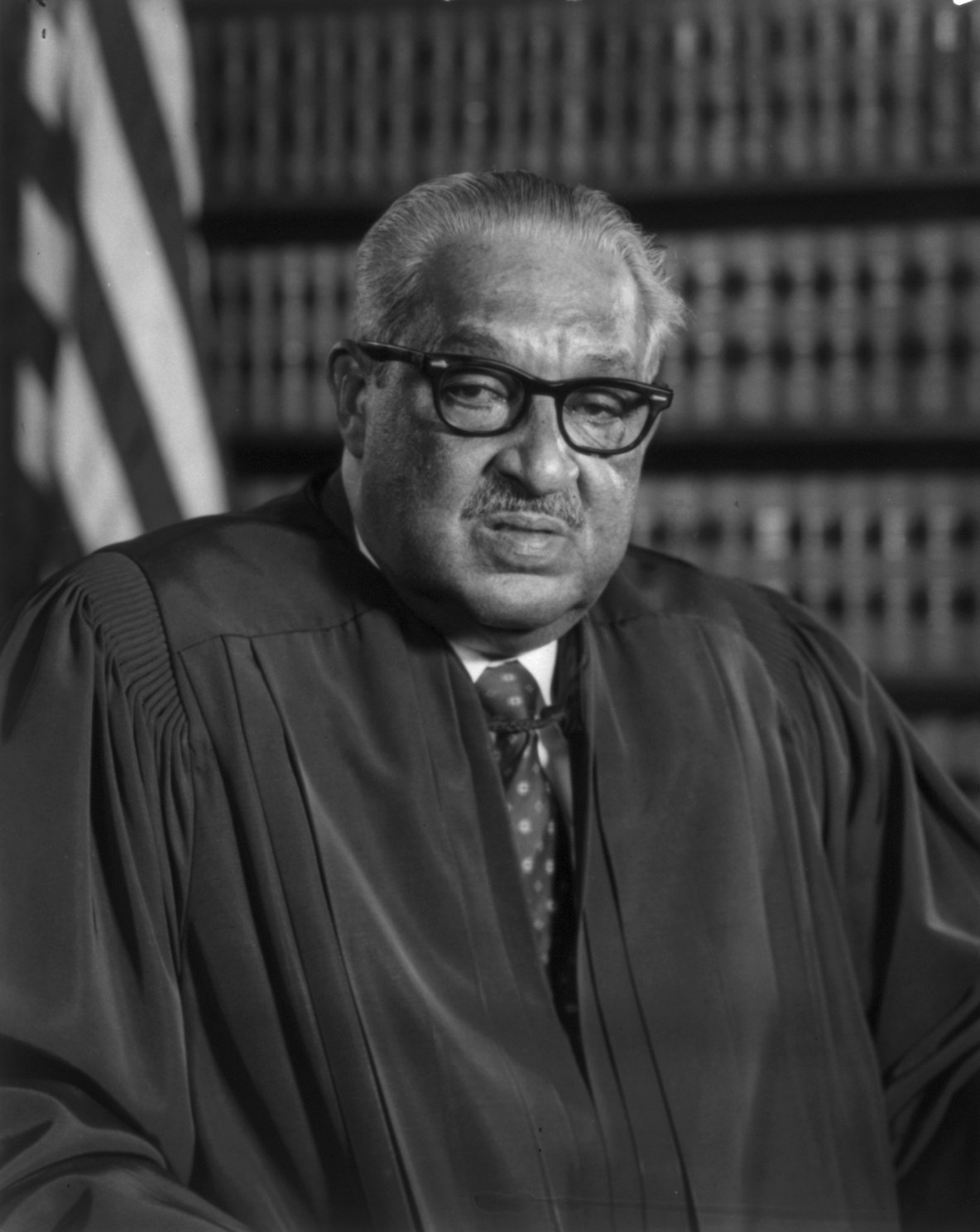
Justice Thurgood Marshall. Official portrait 1976

On Tuesday, June 1, 2021, the East Bay Regional Park District Board of Directors unanimously voted to name the new regional park at the former Concord Naval Weapons Station “Thurgood Marshall Regional Park – Home of the Port Chicago 50.”

The name “Thurgood Marshall Regional Park – Home of the Port Chicago 50” recognizes the service of young African American sailors who served their country, both by serving in the US Military during WWII, and also by standing up to the US Military’s racially discriminatory policies of the day.

Their courage, and the advocacy of NAACP attorney Thurgood Marshall on their behalf, ultimately led to desegregation of the military and changed the course of history.

This naming itself is historic, as this is the first regional park in Contra Costa County to be named after an African American.

“The Thurgood Marshall Regional Park – Home of the Port Chicago 50 park name acknowledges this important Black American history and social justice significance,” said East Bay Regional Park District Board Director Beverley Lane who has represented Concord on the East Bay Regional Park District Board since 1994. “Thurgood Marshall brought national attention to the case that prompted the U.S. Secretary of the Navy to order desegregation of the U.S. Navy in 1946,” added Lane.

Several community organizations, including the NAACP and Friends of Port Chicago National Memorial support the naming of the park in honor of Thurgood Marshall and the Port Chicago 50. The Park District’s citizen-led Parks Advisory Committee unanimously supported the name at its meeting on May 24. The City of Concord unanimously endorsed the park name at its May 29 City Council meeting.

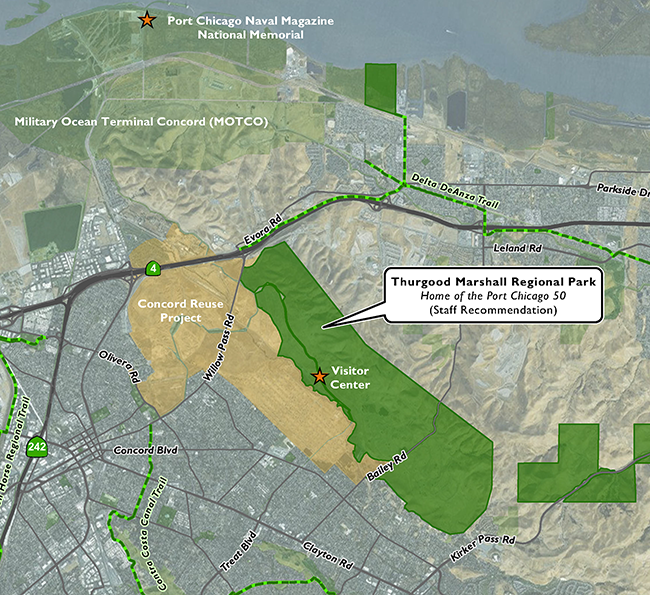
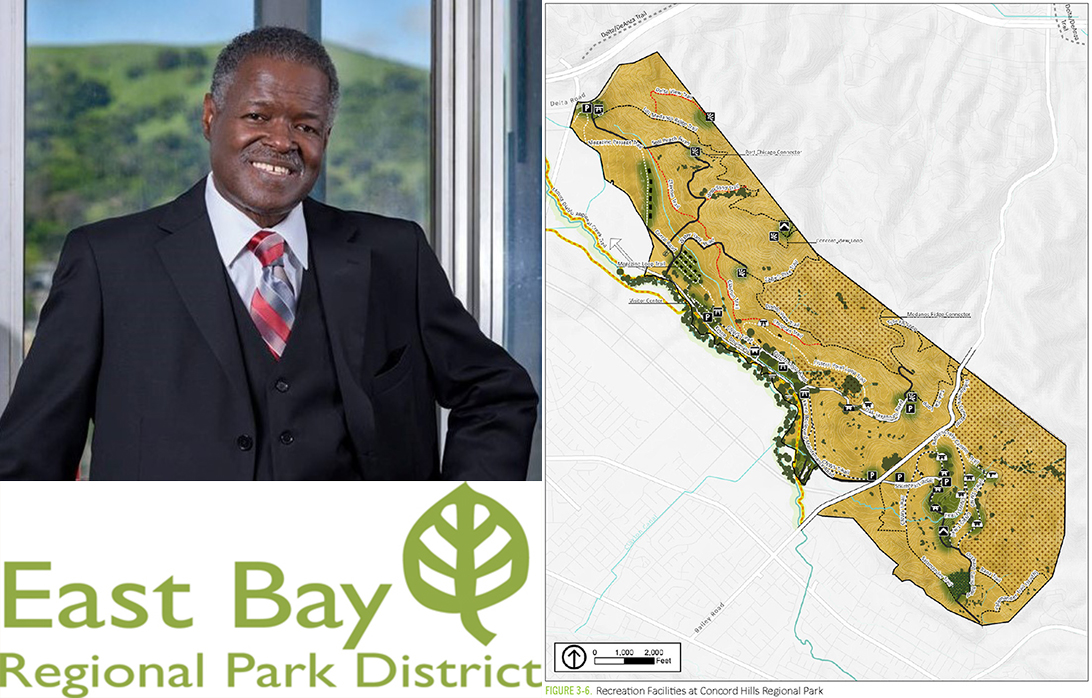
Concord regional park site map. EBRPD

“The new Thurgood Marshall Regional Park – Home of the Port Chicago 50 park name has both historical and representational significance,” said Congressman Mark DeSaulnier. “As a defender of the Port Chicago 50 in their historic fight against discrimination and wrongful conviction, Thurgood Marshall played an important role in their story. The trial, and Marshall’s role in it, helped to play a role in the desegregation of the Armed Forces. As the first African American Supreme Court justice, Marshall is more than deserving of this honor.”

The plan for the newly named “Thurgood Marshall Regional Park – Home of the Port Chicago 50” includes a joint visitor center with the National Park Service highlighting the history of the Port Chicago Naval Magazine National Memorial and the Diablo Valley, along with staging areas, and several miles of recreational trails for hiking, biking, and nature viewing. The Park District is partnering with the National Park Service on the future visitor center where this story can be told, along with all of the stories of this land, including its military history, agricultural history, natural history and restoration, and the stories of the Chupcan people who lived here.

“We appreciate all of the community’s input and engagement on this naming process, and we hope the support will continue as we work with our partners and elected officials to raise the funding needed to build a world-class visitor center in the park to tell these important stories,” said Park District General Manager Sabrina Landreth.

The Park District is currently designing road improvements and plans to open a portion of the expansive park south of Bailey Road within the next two to three years.  The U.S. Navy and National Park Service officially transferred the 2,500 acres of open space to the Park District in 2019 after a two-decade process brought about by the decommissioning of the Concord Naval Weapons Station in the 1990s.

The East Bay Regional Park District is a system of beautiful public parks and trails in Alameda and Contra Costa counties east of San Francisco Bay, established in 1934. The system comprises 121,000 acres in 73 parks including over1,250 miles of trails for hiking, biking, horseback riding and nature learning.

Filed Under: Central County, Concord, History, News, Parks

East Bay parks board to consider naming new Concord regional park for Thurgood Marshall Tuesday

May 27, 2021 By Publisher Leave a Comment

Concord regional park site map. EBRPD

Recommended by staff, advanced by district’s executive committee, and supported by Concord City Council

Proposed sign for Thurgood Marshall Regional Park name. 

By Allen Payton

The Board of Directors for the East Bay Regional Park District will vote Tuesday, June 1 on the proposed name of Thurgood Marshall Regional Park Home of the Port Chicago 50, at the site of the former Concord Naval Weapons Station. The staff recommended the name, following a proposal made during public comments at the Sept. 3 board meeting, last year because there are no regional parks in Contra Costa County named after African Americans, and a subsequent petition signed by over 800 people to date.

However, there was little public outreach to gather input on a proposed name and only one news article about the naming it for Marshall was published last year. It wasn’t until Antioch Mayor Lamar Thorpe posted on his official Facebook page his support for the proposed name, earlier this month, that the Herald was made aware of it and other news reports were then published.

When asked about a public outreach effort on the naming of the park Director Colin Coffey mentioned the district’s website page dedicated to the matter. He also shared, “Director Dee Rosario told me that the Thurgood Marshall name arose from the initial surveys and was discussed by the executive committee at a meeting last year. He remembers himself suggesting that it could be a good name. So, this isn’t a new dynamic introduced all that recently.”

According to the district on the park’s webpage, “NAACP civil rights lawyer and former U.S. Supreme Court Justice, Thurgood Marshall, helped defend the fifty black sailors accused of mutiny after the devasting Port Chicago Naval Magazine blast that killed 320 men, mostly African American, and injured 390 more, on July 17, 1944. It was the largest Homefront disaster of World War II. The military trial took place on Treasure Island in nearby San Francisco Bay from September 14 to October 24, 1944. Although the fifty sailors were found guilty and sentenced to 15 years in prison, Thurgood Marshall’s high-profile appeal paved the way for the desegregation of the entire U.S. military. Marshall went on to argue the landmark case Brown v. Board of Education (1954), which led to school desegregation nationwide, and became the first black U.S. Supreme Court Justice in 1967. The new park land formerly known as the Concord Naval Weapons Station, part of the larger Port Chicago military complex, has been referred to as ‘Concord Hills Regional Park’ during the planning process until a permanent park name is chosen.”

Until this past year, the name being considered for the park was Chupcan Territories Regional Park after the Bay Miwok tribe that occupied the area during the 1700’s. District staff created a video about the history for the naming of the park for Justice Marshall.

The future Regional Park is in the Los Medanos Hills between Concord and Pittsburg. The 2,500-acre site, along with undeveloped land along this border, forms a greenbelt between the municipalities. The Regional Park site is divided into two sections north and south of Bailey Road.

Both the district’s Executive Committee and the Concord City Council, also acting as the Local Reuse Authority for the former naval base, have expressed their support for naming the park for Marshall. During their meeting Tuesday night May 25, the council voted to send a letter to the park district offering their official endorsement.

In a post on her Twitter feed Wednesday morning, Councilwoman Carlyn Obringer wrote, “Thrilled that my Concord City Council colleagues joined me in officially supporting the naming of the new East Bay Regional Park District here in Concord as the Thurgood Marshall Regional Park – Home of the Port Chicago 50.”

Site History and Timeline

The Concord Naval Weapons Station (CNWS) accommodated the changing needs of its inhabitants and settlers for centuries, including indigenous people, miners, ranchers, and the United State Navy, as well as local wildlife species from grizzly bears to California red-legged frogs. For the last six decades, the property has been used exclusively by the military, limiting public access as well as private development. The CNWS emerged as a prominent part of the East Bay landscape, offering striking grassland and hillside views while contributing to a substantial network of undeveloped open space. CNWS was approved for closure by the Base Realignment and Closure Commission (BRAC) in 2005. In 2012, the Concord City Council adopted the Concord Reuse Project Area Plan and designated the western slopes of the Los Medanos Hills and the adjacent area as the future regional park site. In July 2020, the East Bay Regional Park District adopted a Land Use Plan and an Environmental Impact Report to begin the process of building a future regional park on over 2,500 acres, in partnership with the National Park Service, to serve generations of current and future East Bay residents.

Timeline

  • 2021: Board considers permanent name for the future parks at the former Concord Naval Weapons Station
  • 2020: EBRPD adopted Concord Hills Land Use Plan – guiding future park development
  • 2019: EBRPD accepted possession of future Regional Park site.
  • 2010: Pres. Obama established Port Chicago Naval Magazine National Memorial Legislation authorized Jointly operated EBRPD/NPS Visitor Center highlighting Port Chicago history
  • 2010: Reuse Plan adopted designating ~2,540 acres of new Regional Park + 12k new homes, 6m sq. ft of commercial, etc.
  • 2006: Concord Reuse Project initiated to evaluate reuse of 5,200-acre Inland Area

Board Meeting Information

The June 1st board meeting begins at 1:00 p.m. and the  public has the opportunity to offer comments on the naming of the park.

Members of the public can listen and view the meeting in the following way: Via the Park District’s live video stream which can be found at https://youtu.be/dE2RtF1gYqc

Public comments may be submitted one of three ways:

  1. Via email to Yolande Barial Knight, Clerk of the Board, at ybarial@ebparks.org. Email must contain in the subject line public comments – not on the agenda or public comments – agenda item #. It is preferred that these written comments be submitted by Monday, May 17, 2021 at 3:00 pm.
  2. Via voicemail at (510) 544-2016. The caller must start the message by stating public comments – not on the agenda or public comments – agenda item # followed by their name and place of residence, followed by their comments. It is preferred that these voicemail comments be submitted by Monday, May 17, 2021 at 3:00 pm.
  3. Live via zoom. If you would like to make a live public comment during the meeting this option is available through the virtual meeting platform: *Note: this virtual meeting platform link will let you into the https://zoom.us/j/98708891830 virtual meeting for the purpose of providing a public comment. If you do not intend to make a public comment please use the YouTube link at: https://youtu.be/dE2RtF1gYqc to observe the meeting. It is preferred that those requesting to speak during the meeting contact the Clerk of the Board at ybarial@ebparks.org by 3:00 pm on Monday, May 17, 2021 via email or voicemail (510) 544-2016 to provide name and the subject of the public comment or item to be addressed.

Comments received during the meeting and up until the public comment period on the relevant agenda item is closed, will be provided in writing to the Board of Directors, included transcribed voicemails. All comments received by the close of the public comment period will be available after the meeting as supplemental materials and will become part of the official meeting record. If you have any questions please contact Yolande Barial Knight, Clerk of the Board, at ybarial@ebparks.org or (510) 544-2021.

Filed Under: Central County, Concord, History, News, Parks

Antioch Council officially apologizes for racism against Chinese immigrants in 1870’s, makes national news

May 22, 2021 By Publisher Leave a Comment

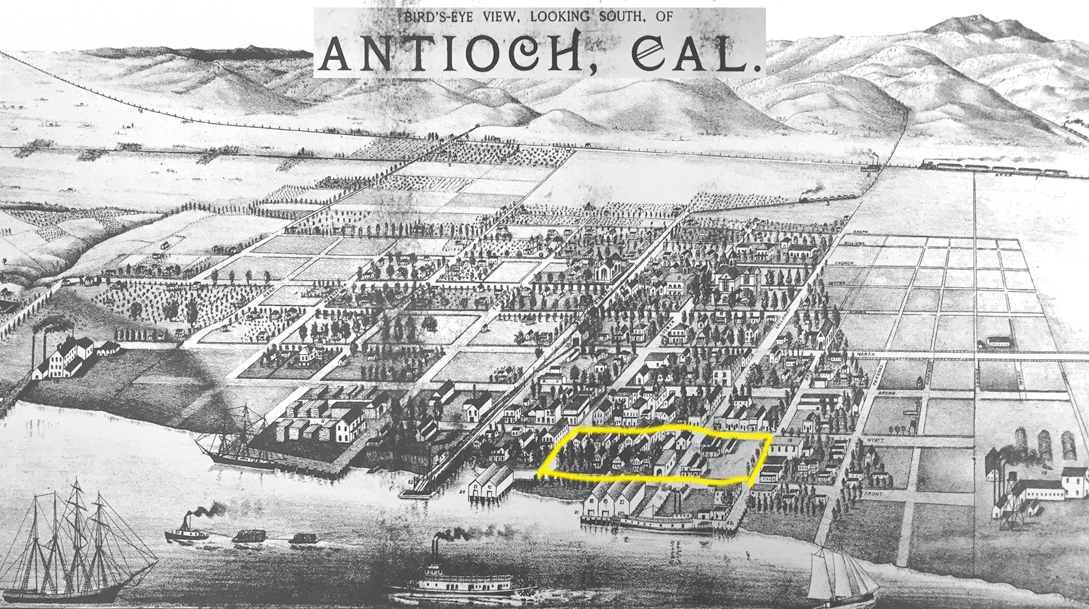
Early map of Antioch showing the area where Chinatown was located in the 1870’s. Source: Oak View Memorial Park

Supports plans to establish Chinese historic district in downtown, museum exhibit, but no discussion yet on reparations to descendants for land City now owns; no apologies for last year’s effort to devalue without compensation current Chinese American landowners’ property in Antioch 

By Allen Payton

During their special meeting on Tuesday, May 18, 2021, the Antioch City Council unanimously passed a resolution officially apologizing for the acts of racism against Chinese residents in the 1870’s, including the burning down of the city’s Chinatown in 1876. In addition, the council agreed to pursue establishing a Chinese historic district along Antioch’s waterfront from G Street to I Street, north of W. 2nd Street where Chinatown was located. The council also agreed to pursue funding for the planning and design of potential Asian museum exhibits and murals.

The council’s actions made national news with the New York Times publishing an article about it on Thursday. Mayor Lamar Thorpe posted a link to the article on his official Facebook page, writing, “We don’t always make headlines news in The New York Times but we did today. On Tuesday, Antioch became the only known city in the US to officially apologize for the historic mistreatment of early Chinese immigrants starting in the 1840s.” However, that is incorrect, since the town wasn’t founded until 1849 as Smith’s Landing by the twin Christian reverend Smith brothers and wasn’t until December 24, that year that they each broke ground for the construction of their homes.

Also in his Facebook post, the mayor announced he is planning a public signing ceremony of the resolution, “with CA Comptroller Betty Yee in the coming weeks.” She was unable to attend Thorpe’s April 14th press conference on the matter.

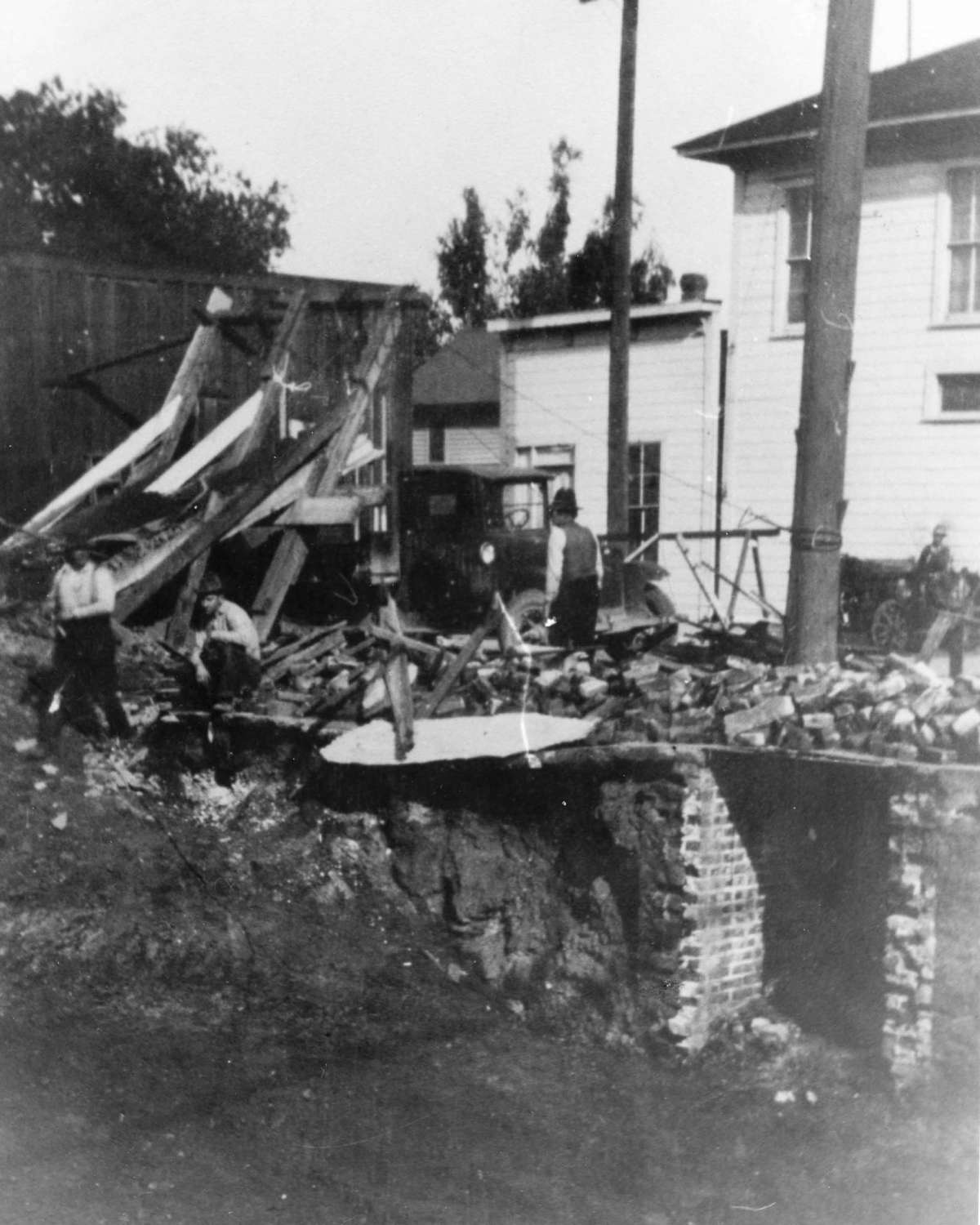
Demolition of the Palace Hotel revealed some of the Chinese tunnels beneath Antioch’s downtown. Source: Antioch Historical Society

According to an article by the Antioch Historical Society, “When Chinese groups arrived at the City of Antioch a small ‘Chinatown’ was established consisting of homes and stores on both sides of Second and First Street. In May 1876 the anti-Chinese sentiments of the Antioch community reached a boiling point. The Chinese were asked to leave and a resistance led to Chinatown being destroyed which was chronicled (May 2nd) in the Sacramento Bee and the Daily Evening Express.

Today, the only remnants remaining of Antioch’s Chinatown are the tunnels beneath downtown Antioch. The Palace Hotel demolition in 1926, to make room for the El Campanil Theatre, uncovered a large section of the Chinese tunnel.

An 1851 county law prohibited Chinese from appearing on the streets after dusk. The tunnels are said to have been used by Chinese service workers to travel to work without walking the streets. The use of the tunnels is one of the examples of the patience and endurance of the Chinese people to persevere and overcome challenges.”

There was no discussion on reparations for the descendants of the Chinese owners of the property, most of which is now owned by the City, including two parking lots and the Waldie Plaza park, to compensate them. A similar action is underway by the state to return Bruce’s Beach property in Manhattan  Beach, California to the descendants of Black owners it was taken  from 97 years ago. During his April 14 press conference about the matter, Thorpe said he would ask Antioch Historical Society President Dwayne Eubanks to include that in the organization’s research. Following Tuesday’s actions, asked if he was still open to considering reparations, Thorpe did not respond. When reached for comment Eubanks said, “We’ve done some research. We have some artifacts from that time period.” But his board has to decide on both hosting the display at the museum and any further research, he shared. (Please check back later for any updates to this report).

There was also no apology for last year’s actions by three of the current council members and a majority of Antioch voters for their attempt to devalue by over 97% the property owned by current Chinese American landowners in Antioch and without compensation, when they endorsed and passed Measure T. (See related editorial)

One idea for the location of the Chinese museum exhibit was proposed by a Rivertown business owner, following the council’s vote, and that was to use the Hard House on First Street. Another idea was to rename First Street, where the Hard House, Lynn House Gallery and Amtrak Station are located, to Chinatown Way.

Mayor Pro Tem Monica Wilson and District 1 Councilwoman Tamisha Torres-Walker were appointed to a council subcommittee to pursue the matters of establishing the historic district, exhibit and murals.

Following is the resolution:

RESOLUTION OF THE CITY COUNCIL OF THE CITY OF ANTIOCH APOLOGIZING TO EARLY CHINESE IMMIGRANTS AND THEIR DESCENDANTS FOR ACTS OF FUNDAMENTIAL INJUSTICE, SEEKING FORGIVENESS AND COMMITTING TO RECTIFICATION OF PAST MISDEEDS

WHEREAS, on January 24, 1848, gold was discovered in Alta California, Mex(ico) and by 1849, people were coming to the region from all over the world to look for gold;

WHEREAS, the Gold Rush caused a huge increase in the population by migrants from the eastern United States and other parts of the world including China;

WHEREAS, between 1849 and 1853 about 24,000 young Chinese men immigrated to Alta California, Mex(ico) (which in 1850 became the United States, State of California) and by 1870 there were an estimated 63,000 Chinese in the United States, 77% of whom resided in California;

WHEREAS, many Chinese immigrants were met with racism, scapegoating and anti-Chinese sentiment also known as xenophobia, which was at its highest between 1850 and 1870;

WHEREAS, Antioch in its early years was not exempt from xenophobia;

WHEREAS, this period in Antioch’s history, like in most of America, is now known as the “The Driving Out” with forced removals of Chinese immigrants;

WHEREAS, during “The Driving Out” period, Antioch officially became a “Sundown Town” when it banned Chinese residents from walking city streets after sunset;

WHEREAS, in order to get from their jobs to their homes each evening, these Chinese residents built a series of tunnels connecting the business district to where I Street met the waterfront;

WHEREAS, in 1876 Chinese residents were told by white mobs that they had until 3 p.m. to leave Antioch— no exceptions;

WHEREAS, after Chinese residents were forced out, Chinatown was burned to the ground and Antioch made headline news: “The Caucasian torch,” wrote the Sacramento Bee, “lighted the way of the heathen out of the wilderness,” and “The actions of the citizens of this place will, without doubt, meet with the hearty approval of every man, woman and child on the Pacific coast” wrote the San Francisco Chronicle;

WHEREAS, Antioch’s early period helped negatively contribute to the Nation’s xenophobic discourse, which led to legal discrimination in public policy with the establishment of the Chinese Exclusion Act;

WHEREAS, the system of “The Driving Out” and the visceral racism against persons of Chinese descent upon which it depended became entrenched in the City’s, the State’s and the Nation’s social fabric;

WHEREAS, the story of Chinese immigrants and the dehumanizing atrocities committed against them should not be purged from or minimized in the telling of Antioch’s history;

WHEREAS, the City of Antioch must acknowledge that the legacy of early Chinese immigrants and Xenophobia are part of our collective consciousness that helps contribute to the current anti-Asian American and Pacific Islander hate;

WHEREAS, a genuine apology and seeking forgiveness are an important and necessary first step in the process of racial reconciliation;

WHEREAS, an apology for dehumanization and injustices cannot erase the past, but admission of the wrongs committed can speed racial healing and reconciliation and help confront the ghosts of the City’s past;

NOW, THEREFORE, BE IT RESOLVED that the City Council of the City of Antioch:

1) Apologizes to all early Chinese immigrants and their descendants who came to Antioch and were unwelcome;

2) Seeks forgiveness for acts of fundamental injustice, terror, cruelty, and brutality; and

3) Expresses its commitment to rectify the lingering consequences of the misdeeds committed against early Chinese immigrant under, before and during “The Driving Out.”

* * * * * * * * *

I HEREBY CERTIFY that the foregoing resolution was passed and adopted by the City Council of the City of Antioch at a special meeting thereof, held on the 18th day of May, 2021 by the following vote:

AYES: 5

NOES: 0

ABSTAIN: 0

ABSENT: 0

___________________________________

ELIZABETH HOUSEHOLDER

CITY CLERK OF THE CITY OF ANTIOCH

___________________________________

LAMAR A. THORPE

MAYOR OF THE CITY OF ANTIOCH

Filed Under: East County, History, News

East Bay Parks, local officials cut ribbon to open new coal mine exhibit at Black Diamond Mines in Antioch

May 21, 2021 By Publisher Leave a Comment

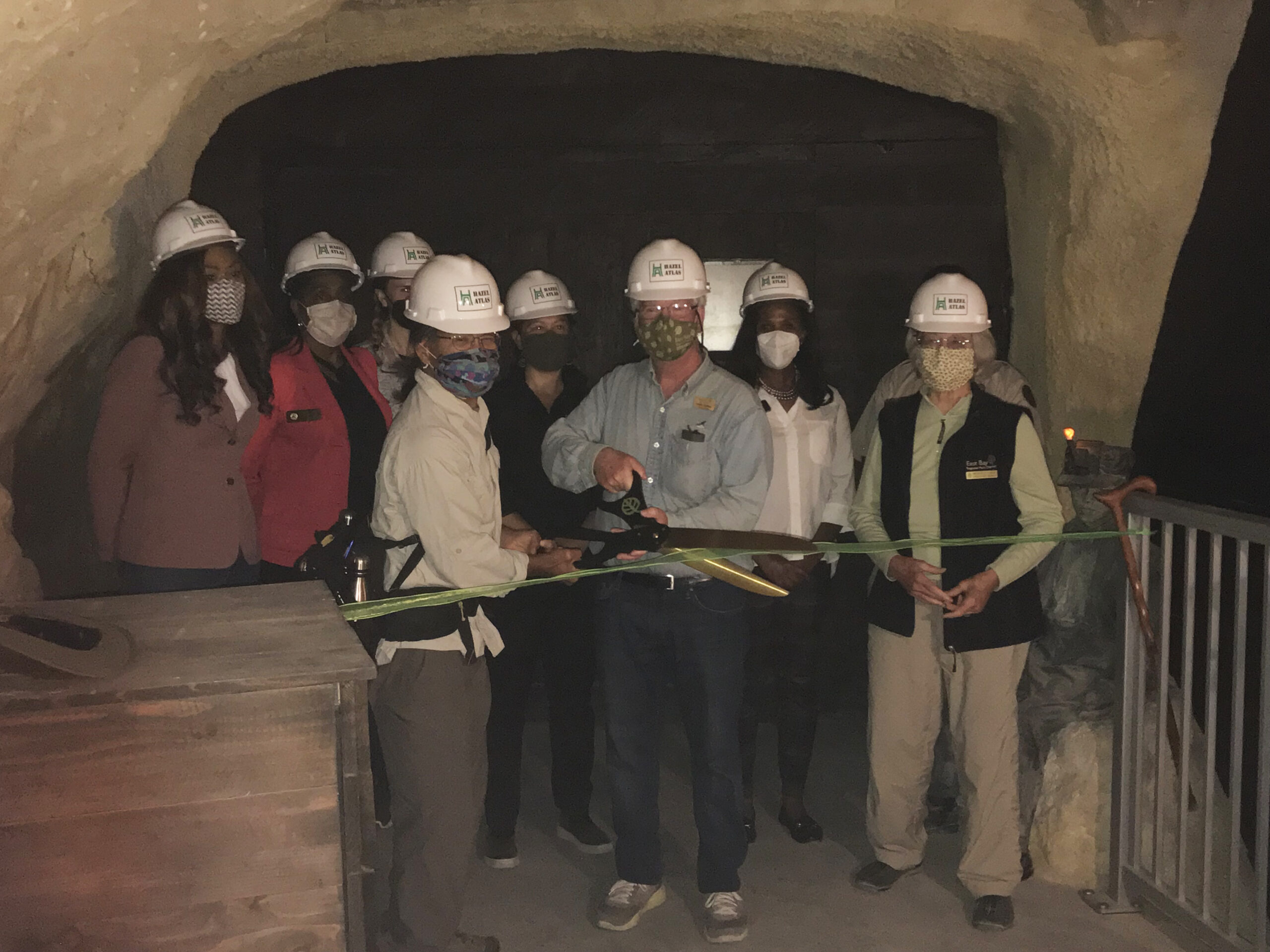
Parks District Board V.P. Colin Coffey (center) and President Dee Rosario (left) prepare to cut the ribbon for the new coal mine exhibit. They were joined by Pittsburg Councilwoman Shanelle Scales-Preston (far left) G.M. Sabrina Landreth (between Rosario and Coffey), Antioch Mayor Pro Tem Monica Wilson, Director Beverly Lane and representatives of Congressman Mark DeSaulnier and Assemblyman Tim Grayson.

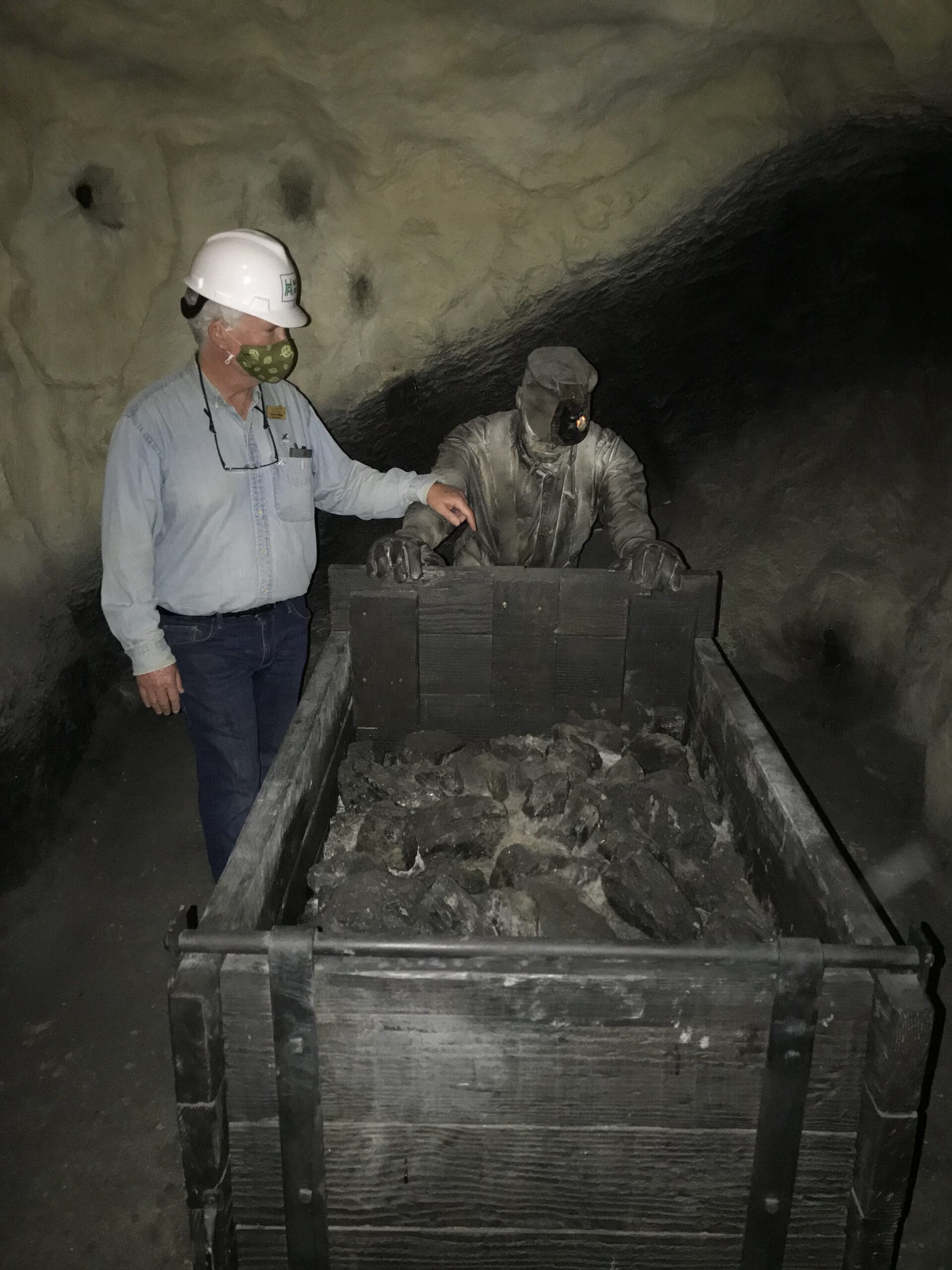
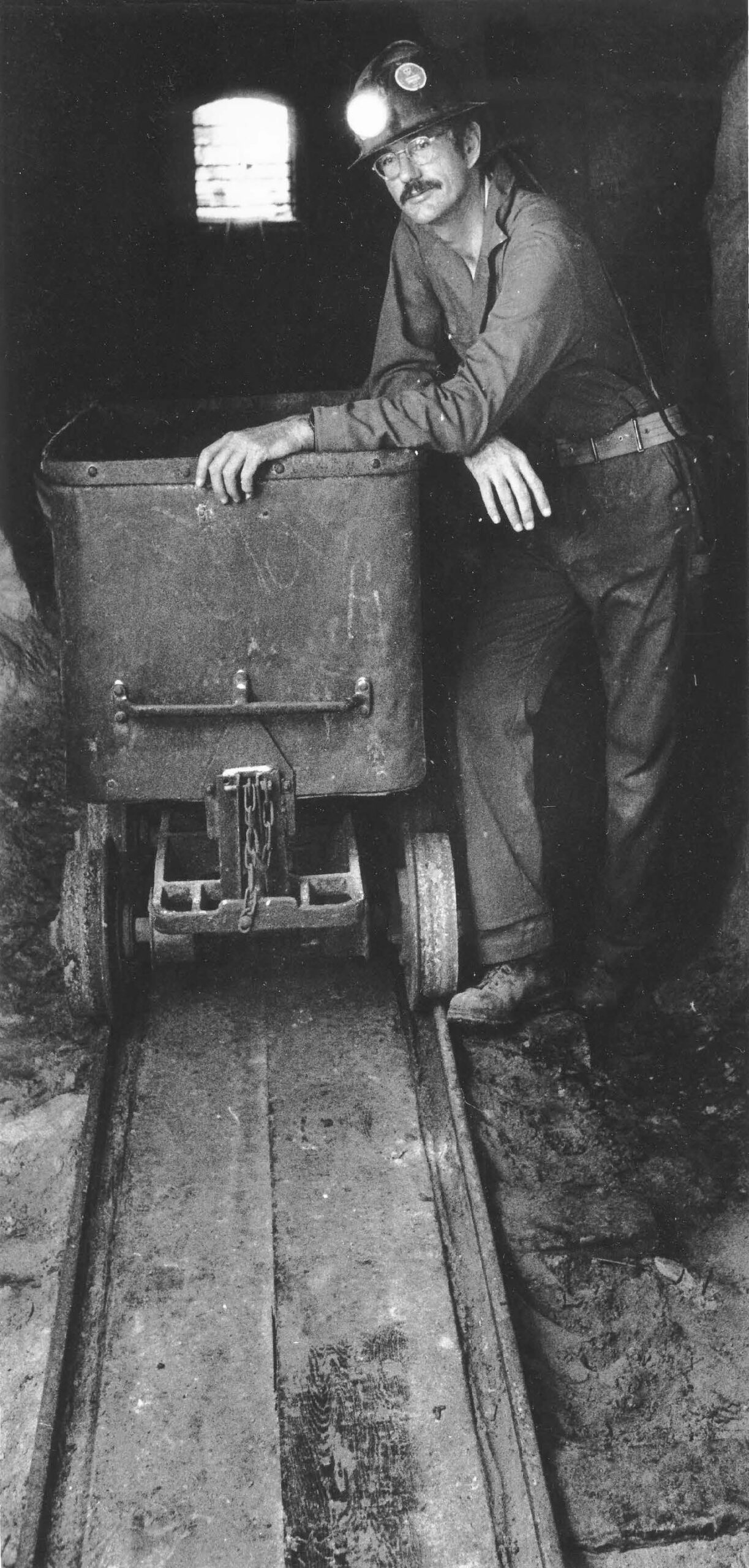
Director Colin Coffey next to the coal car and miner inside the exhibit.

Opens Saturday for weekend tours

By Allen Payton

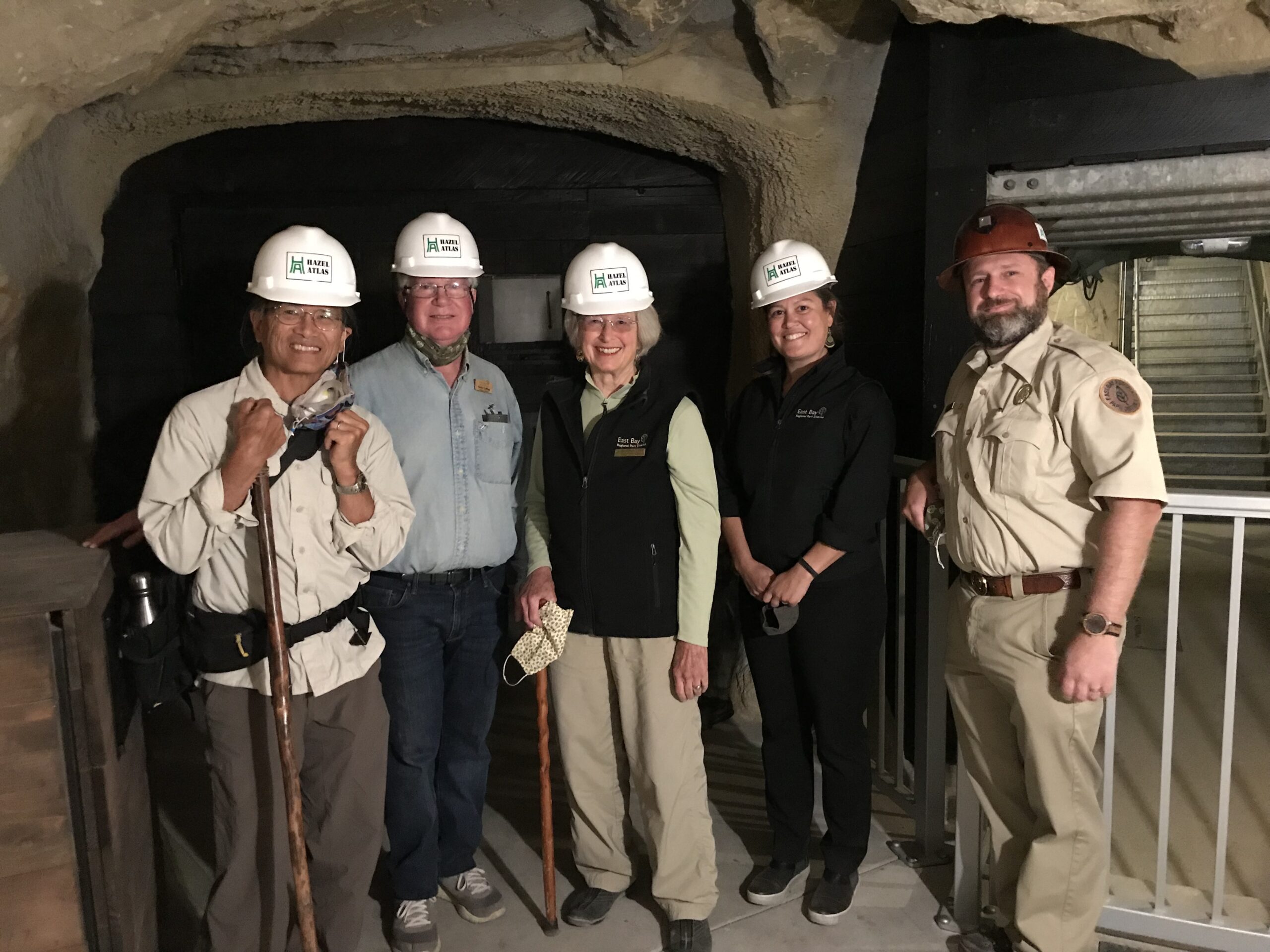
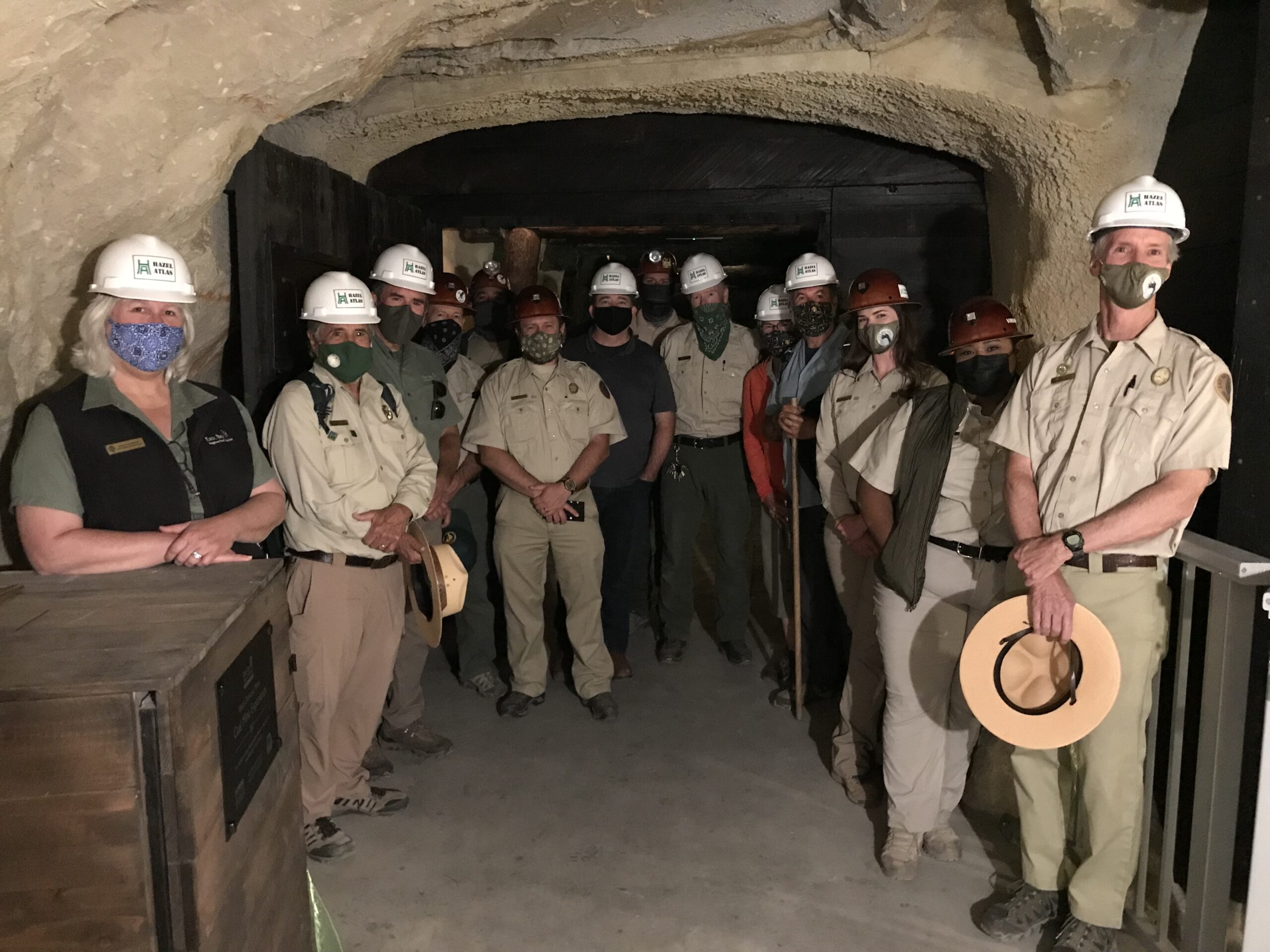
On Thursday, May 20, 2021 officials and staff of the East Bay Regional Parks District (EBRPD) were joined by local officials to celebrate the opening of the new coal mine exhibit at the Black Diamond Mines Regional Preserve. Following speeches of gratitude and congratulations they held a ribbon cutting inside the sand mine in front of the entrance to the new exhibit.

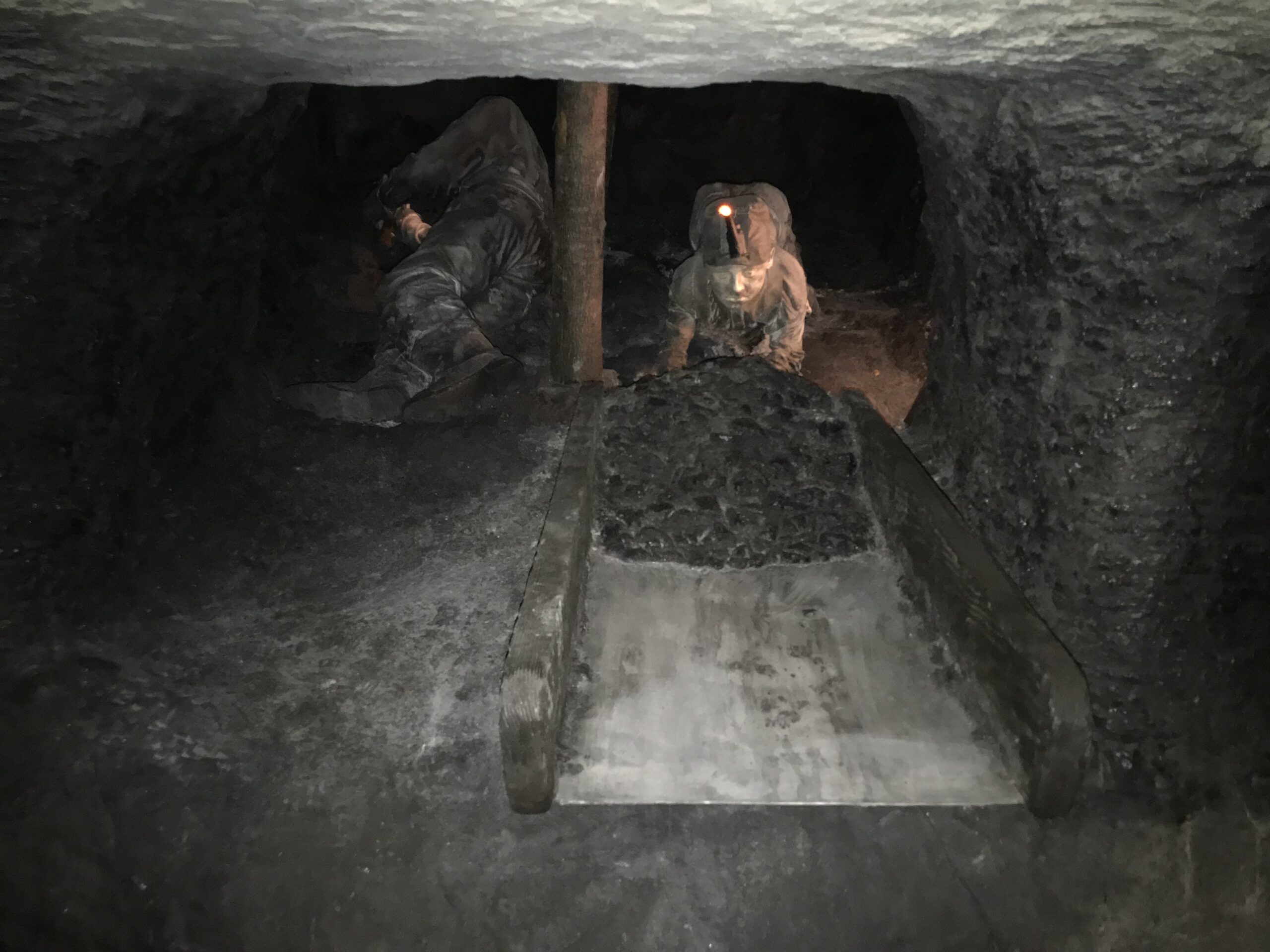
It will take visitors back in time to a realistic 1870’s-era coal mine, complete with sights and sounds. The immersive educational experience will allow for greater understanding and appreciation of the area’s coal mining past.

Ira Bletz, Regional Manager, Interpretive & Recreation Services for EBRPD said the whole effort took two years, including carving out the area inside the mine and the development of the display. While the mine was being worked on to make room for the exhibit, the display was being developed at another location. It was then disassembled, brought to the mine and reassembled for the exhibit. The fake rock was bolted to the real rock.

New district general manager, Sabrina Landreth said, about her staff, “it’s a joy to see the fruits of their labor”.

“The parks district has delivered wonderful amenities to the people of East Contra Costa County,” she added.

Board of Directors Vice President Colin Coffey, who represents East County, said, “the exhibit shows what it was like working in the mine in the early 20th Century.”

“You are the first public visitors in the mine since 2019,” he stated. “As of today, Black Diamond Mines is happy to welcome guests, here.”

Coffey spoke of and thanked the Wayne and Gladys Valley Foundation which contributed $1 million to the Regional Parks Foundation for five visitor center projects, including the coal mine exhibit.

EBRPD Directors, General Manager Sabrina Landreth and Kevin Damstra (right) Supervising Naturalist in charge of the exhibit and park.

Director Beverly Lane and Board president, Dee Rosario were also in attendance for the event.

Antioch Mayor Pro Tem Monica Wilson and Councilwoman Lori Ogorchock, as well as city manager Ron Bernal, and Parks & Rec Commission Chair Marie Arce attended.

Wilson spoke, recognizing “the East Bay Regional Parks District for their commitment to the community” and thanked them for keeping parks open during COVID-19.

“Thank you for sharing our history and stories of our rich heritage,” she added. “I’m really happy this is going to be available to our residents, our youth.”

During her remarks, Pittsburg Councilwoman Shanelle Scales-Preston shared the fact that “Pittsburg was first named Black Diamond because of the coal mines.”

Representatives from Congressman Mark DeSaulnier and Assemblyman Tim Grayson read letters from them and Assemblyman Jim Frazier, congratulating the parks district for the opening of the exhibit.

EBRPD staff with former General Manager Bob Doyle (blue shirt, right) at the entrance of the new exhibit.

Former General Manager Bob Doyle spoke about the background of the new exhibit and his own experience in one of the now closed coal mines.

“It was John Waters’ vision. He came up with this idea,” Doyle stated.

According to the display inside the mine, “the Hazel-Atlas Mining Museum and Greathouse Visitor Center are two of the many accomplishments of Waters,” who “began his career with the East Bay Regional Park District in 1968 as a Park Ranger. Later, as Resource Analyst, he designed Black Diamond’s parking lot, picnic areas and water system. John eventually became Black Diamond Park Supervisor, and later served as the Preserve’s first Mine Manager, a position he held until his retirement in 2006.”

John Waters. Photo: EBRPD

“I was privileged in 1977 to actually go into the last open coal mine…in Nortonville,” Doyle shared. “The exhibit has the photos from the actual coal miners. No one had been in there for 110 years. It had the corral for the animals that were used to haul the coal. The middle of the track was worn out from the animals pulling the coal mine.”

“Our gas meters went off and we took as many photos, and got out. That has been permanently closed off. Four boys snuck in and died about four years, later,” he continued. “It’s important we recognize the safety by the parks district and the hard, hard life the early workers had, here.”

“This is an incredibly huge, 6,000-acre park and someday there will be an entrance from the Nortonville side, which was the largest town in the area,” Doyle added

“It’s a history that’s often hidden and one we take great pleasure in sharing with you,” said Kevin Damstra, Supervising Naturalist in charge of both the exhibit and the Black Diamond Mines park.

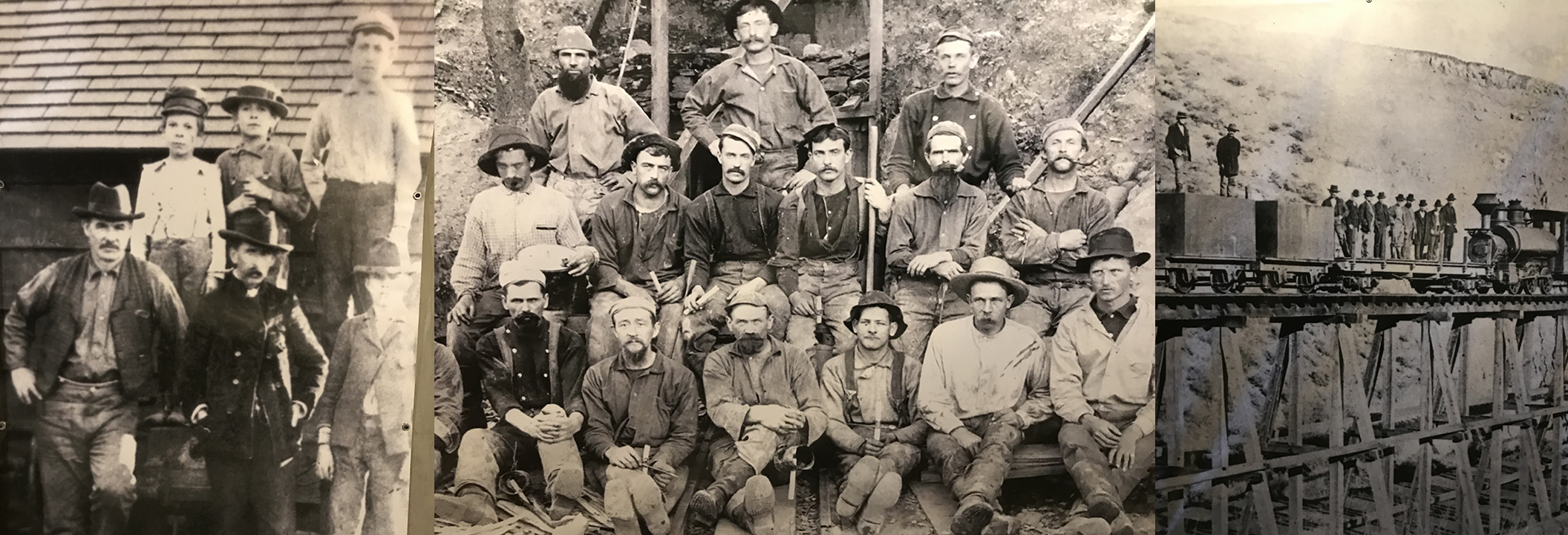
“The exhibit includes background noise of coal mining including voices of Welsh and Welsh accented English,” he shared. “There were also Irish, Italian and Chinese miners, out here, for a while.”

The coal mining lasted from 1865 to 1908 and then the sand mining from 1920 to 1945,” Damstra shared.

A few photos of the coal miners who were as young as eight years old, coal train and trestle inside the exhibit.

The Black Diamond Mines Hazel Atlas Mine is located at the south end of the Somersville Road in Antioch. The exhibit is open for four tours each Saturday and Sunday beginning tomorrow, May 22. To schedule yours contact the parks district at (510) 544-2750 or Toll Free: 888-EBPARKS (888-327-2757), option 3, extension 4506, or visit www.ebparks.org/parks/black_diamond/. The sand mine will not be open until June. It’s cold inside the mine and wearing something warm is recommended.

Filed Under: East County, History, News, Parks

Payton Perspective: Name new regional park in Concord for Federal Glover or Bay Miwok Chupcan tribe who lived there

May 8, 2021 By Publisher Leave a Comment

Contra Costa County Supervisor Federal Glover and map of new regional park in Concord.

Effort to name it Thurgood Marshall Regional Park – Home of the Port Chicago 50 to honor “contributions made by Contra Costa’s African American community”; district staff recommends it without any general public outreach

Naming it for Supervisor Glover would better fulfill that goal

Or choose the historical name of Bay Miwok Chupcan Regional Park

District Board Executive Committee will discuss matter during Tuesday, May 11 meeting

Also name Antioch’s new park Roddy Ranch Regional Park

Justice Thurgood Marshall. Official portrait 1976

By Allen Payton, Publisher

An effort, launched last fall, is underway asking the East Bay Regional Park District (EBRPD) Board of Directors to name their newest park, in Concord, after the late U.S. Supreme Court Justice Thurgood Marshall rather than for the Chupcan tribe of the Bay Miwok, who inhabited the area in the 1700’s, as had been planned. This past week, Antioch Mayor Lamar Thorpe announced his support for the effort.

Now, district staff is recommending that name without any general public outreach to seek input on possible names, other than comments made during board meetings. The board’s Executive Committee will consider the matter during their meeting this next Tuesday, May 11. (See agenda item #3 and process for public comment at the end of this editorial)

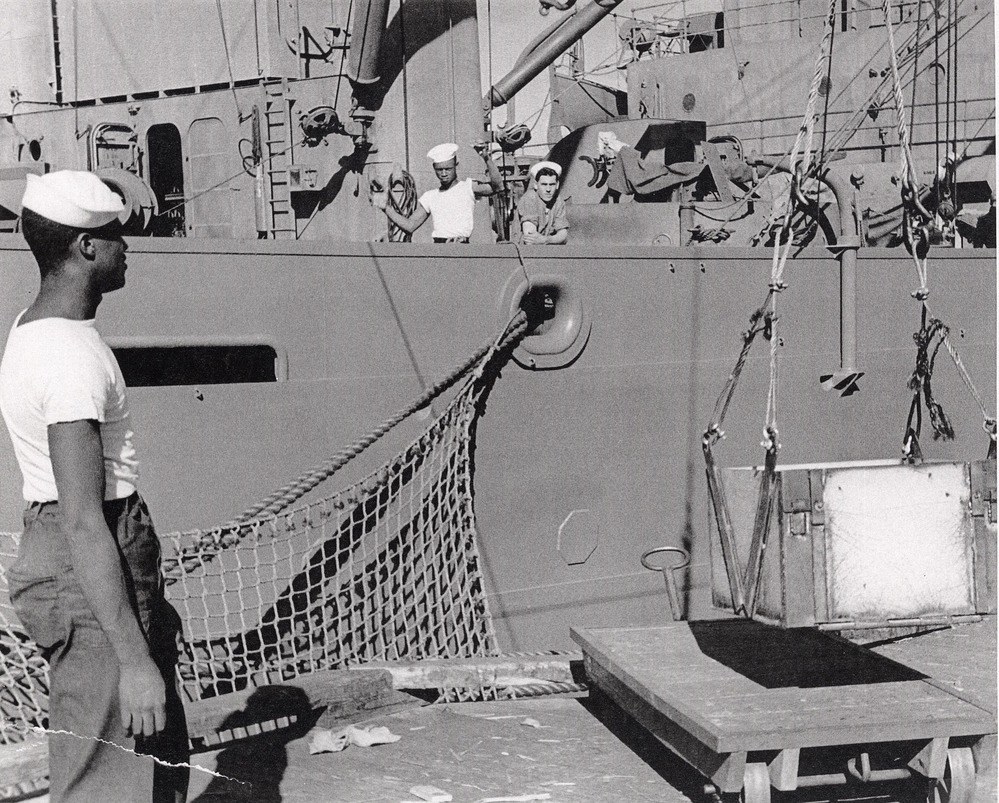
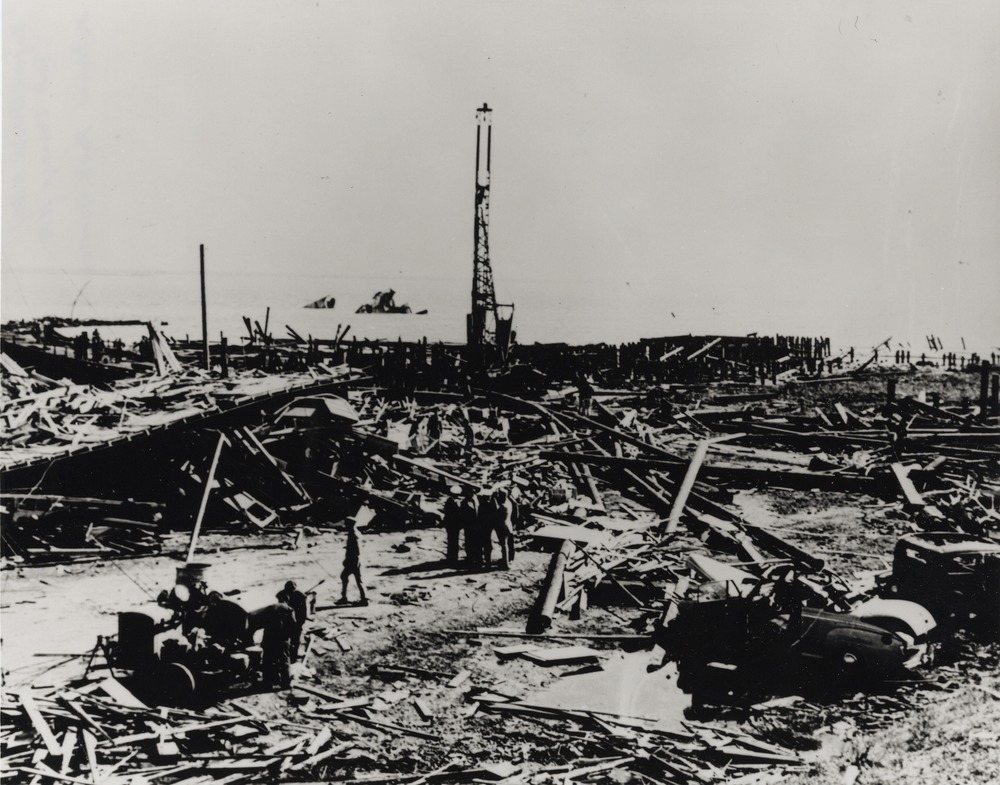
The 2,540-acre, temporarily named Concord Hills Regional Park, located on the south side of Highway 4 and encompassing most of the former Concord Naval Weapons Station land, was slated to be named Chupcan Territories Regional Park. But last year, during a Sept. 3 EBRPD Board meeting public comment, Lewis Thrower, a spokesman for Citizens for Historical Equity proposed naming it for Justice Marshall because there are no regional parks in Contra Costa County named after African Americans. Marshall’s local connection is, as an attorney, due to his representation of the Port Chicago 50, the name given to the 50 Black sailors, although unsuccessfully, during their mutiny trial. They defied orders of their Navy commanders to return to work after the disaster that took the lives of 320 sailors and civilians and injuring 390 others on July 17, 1944 during World  War II. That occurred while the stevedors were loading 5,000 tons of ammunition onto ships. The 50 sailors refused to return to work until safety measures had been put in place. They were each convicted on the charge of mutiny and given a sentence of up to 15 years imprisonment and dishonorable discharge from the Navy.

Port Chicago stevedores. Source: NPS

According to a NY Times report, almost all the sailors were released at the end of the war, including “47 who were paroled to active duty aboard Navy vessels in the Pacific Theater. Two of the 50 prisoners remained in the prison’s hospital for additional months recuperating from injuries, and one was not released because of a bad conduct record. Those of the 50 who had not committed later offenses were given a general discharge from the Navy ‘under honorable conditions’.”

According to the EBRPD Board meeting minutes, several other members of the public spoke in support of the naming proposal including Royle Roberts of Black Democrats, Willie Mims of the Black Political Association and Mable Minney of the Martin Luther King Jr. Freedom Center. A white paper and an addendum on Thurgood Marshall, and a petition with over 700 signatures were cited, as well.

Thorpe wrote on his mayor’s Facebook page on Thursday, May 6, “he has endorsed naming Contra Costa’s newest regional park– Thurgood Marshall Regional Park-Home of the Port Chicago 50.” The reason he gave is because, “the proposed name would be a major step towards expanding a county narrative that includes the contributions made by Contra Costa’s African American community.” He claimed that there were now 880 signatures of people in support of the effort.

Port Chicago disaster damage. Source: NPS

Thrower and Citizens for Historical Equity recommended one or more neighboring parks be named Chupcan Territories Regional Park, instead. Thorpe reiterated that in a comment below his Facebook post, which has since been deleted.

During the meeting, Diana McDaniel from the Friends of the Port Chicago National Memorial suggested the name be Port Chicago Memorial Regional Park so people don’t forget.

However, as the name of her organization demonstrates, there already is recognition with the Port Chicago Naval Magazine National Memorial which was established in 1994 at the site and on the 50th anniversary of the disaster to honor those who lost their lives. Then, in 2019, on the 75th anniversary of the tragedy, Representatives Mark DeSaulnier and Barbara Lee reintroduced a resolution, HR 49, which states its purpose in the first paragraph as, “Recognizing the victims of the Port Chicago explosion of July 17, 1944, the 75th anniversary of the greatest homeland loss of life of World War II, and exonerating the 50 African-American sailors unjustly court-martialed by the Navy.” It passed the House in December 2019 as part of the National Defense Authorization Act (S.1790) listed in Sec. 540N as “Sense of Congress on the Port Chicago 50”. But the exoneration of the sailors was removed by the Senate before it was signed into law by President Trump on Dec. 20.

Port Chicago National Memorial. Source: National Parks Service

According to the memorial’s Wikipedia page, “the Port Chicago Committee is working to expand the current memorial to encompass 250 acres of the former Port Chicago waterfront.” Recognition of the Port Chicago 50 and Justice Marshall could be included there.

Bay Miwok Chupcan Tribe

According to ConcordHistory.com, “a small tribelet of Chupcan (Bay Miwok) Indians composed the first inhabitants of our valley. Dominated by a great mountain to their south, the Chupcan lived along the valley’s streams which flowed north to the wide tule marshes on the edge of the Bay.”

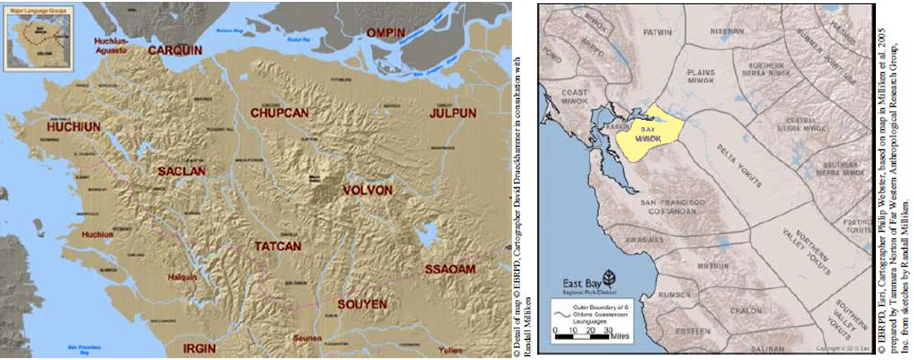
According to the Bay Miwok Content by Beverly R. Ortiz, Ph.D. on the EBRPD website, there were about 1,800 to 2,000 Bay Miwoks living in the area in six different tribes before 1770. According to the Museum of the San Ramon Valley, “One of those tribes, or tribelets as scholars call them, were the Chupcan of Diablo Valley.”

Bay Miwok tribes map and SF Bay Area tribe maps. Source: EBRPD

While Marshall was the first Black U.S. Supreme Court Justice and represented the Port Chicago 50 while an attorney, he wasn’t from Contra Costa County. To honor him by naming a regional park for justice would not expand “a county narrative that includes the contributions made by Contra Costa’s African American community.”

A more appropriate place to honor the Port Chicago 50 would be at the national memorial by adding each of the sailors’ names, now that they’ve been exonerated. Justice Marshall’s name could be added to it, as well for his efforts in defending them at trial. Their names should be listed on the National Parks Service website for the memorial, as well.

Federal Glover or Bay Miwok Chupcan Regional Park

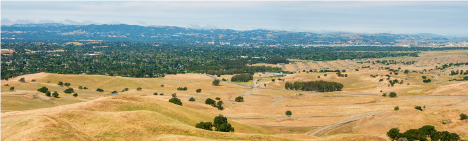
Concord Hills Regional Park. Photo by Stephen Joseph Fine Art Photography. Courtesy of EBRPD.

If the goal is to honor contributions made by Contra Costa’s African American community, then I think a more appropriate name would be the Federal Glover Regional Park, for the first African American to serve our county on the Board of Supervisors and who has done so for over 20 years. In addition, he served the City of Pittsburg, East County and the county on transportation boards while a council member, prior to that. I would say Federal is the African American who has contributed more to our county than any other and should be recognized instead of the former justice who had a fleeting connection.

If not, then it should be named for the historic tribe that inhabited that part of our county. Since it’s doubtful that even those familiar with the history of the native peoples of Contra Costa would recognize the tribal name of Chupcan – it was news to me – Bay Miwok should be included in the name. If that’s the direction, then the new park should be named the Bay Miwok Chupcan Regional Park.

Roddy Ranch Regional Park

Also, while the Board is considering names for the district’s regional parks, instead of Deer Valley Regional Park, the newest one planned for East County, on the land owned and sold to the district by long-time rancher Jack Roddy, it should instead be named the Roddy Ranch Regional Park to keep the historical significance.

Public Comments

Members of the public can listen to and view the EBRPD Board Executive Committee meeting on Tuesday, May 11 in the following way: Via the Park District’s live video stream, on the Park District’s YouTube channel, which can be found at: https://youtu.be/pvK6M5XWBPI (The YouTube link may not function properly when using Internet Explorer. The optimal browser for viewing the live stream of the meeting is Chrome.)

Public comments may be submitted:

  1. Live via Zoom. If you would like to make a live public comment during the meeting this option is available through the virtual meeting platform: https://ebparks.zoom.us/j/94499652339. Note that this virtual meeting platform link will let you into the virtual meeting for the purpose of providing a public comment. If you do not intend to make a public comment please use the Youtube link above to observe the meeting. It is preferred that those requesting to speak during the meeting contact Becky Pheng at bpheng@ebparks.org by 5:00 pm on Monday, May 10, 2021 via email or voicemail at 510-544-2005 to provide their name and subject of the public comment or item to be addressed.
  2. Via Email to Becky Pheng at bpheng@ebparks.org by 5:00 pm on Monday, May 10, 2021. Email must contain in the subject line “Public Comments – not on the agenda” or “Public Comments – agenda item #”.
  3. Via Voicemail at 510-544-2005. The caller must start the message by stating “Public Comments – not on the agenda” or “Public Comments – agenda item #” followed by their name and place of residence, followed by their comments.

Filed Under: Concord, History, News, Opinion, Parks

DeSaulnier, Lee introduce Confronting and Correcting Historical Injustices Act

February 23, 2021 By Publisher Leave a Comment

Bill will “establish commission for Review and Correction of Historical Injustices, and for other purposes.”

The Congressman hopes to address the unfair treatment of the Port Chicago 50 during World War II

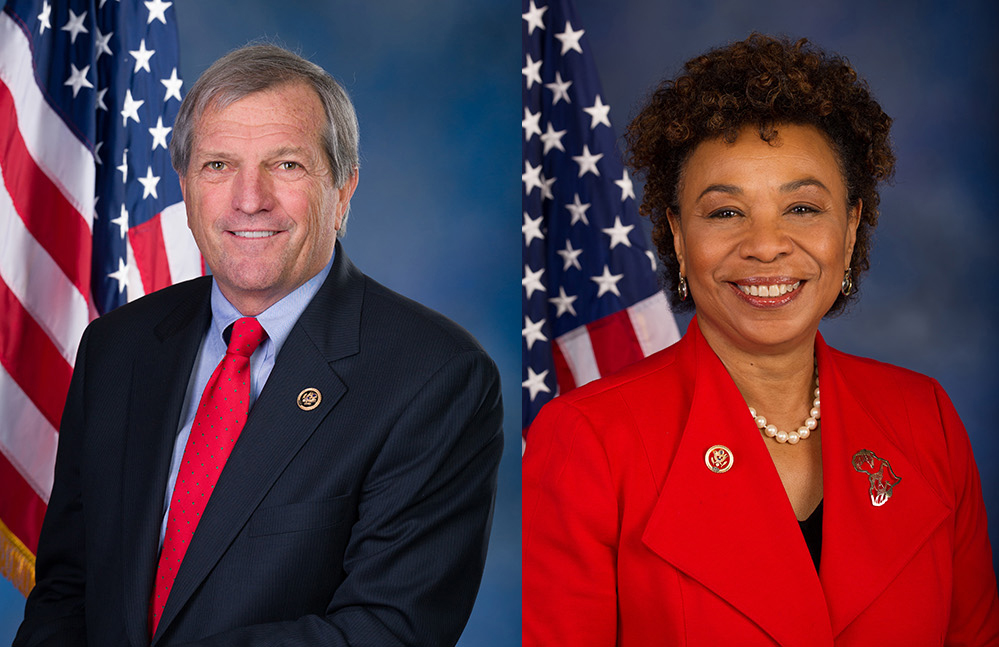
Reps DeSaulnier and Lee. Official photos.

Washington, DC – Today, Tuesday, Feb. 23, 2021, Congressman Mark DeSaulnier (D, CA-11) and Congresswoman Barbara Lee (D, CA-13) announced the introduction of the Confronting and Correcting Historical Injustices Act (H.R. 1196), a bill that would establish a commission to recognize and remedy the discrimination suffered by individuals and groups at the hands of the federal government.

The bill would create the Commission for Review and Correction of Historical Injustices, an independent commission responsible for reviewing and investigating federal cases in which individuals and groups have been unjustly discriminated against by federal agencies or entities. Cases eligible for consideration experienced discrimination based on race, color, religion, sex, national origin, physical or mental disability, or sexual orientation, and where the original act of discrimination led to a charge, conviction, discharge, or dismissal. The Commission would also be responsible for recommending legislative or executive action to adequately make whole those who experienced discrimination.

The proposed bill does not yet include any text, according to the Congressional legislation website.

“Now more than ever, we need to come together as a nation to dismantle the systems that were built to disadvantage people of color and other marginalized groups. To do that, we must confront and correct the injustices the federal government has perpetrated that were based on bias, discrimination, and hate,” said DeSaulnier. “I can think of no better way to celebrate Black History Month than publicly acknowledging those injustices and setting them right. Only by addressing the past can we begin healing the stark divides that continue to exist in our country. I am grateful to lead this effort with a civil rights champion like Congresswoman Lee.”

The bill is in addition to Rep. Sheila Jackson Lee’s (D, TX-18) Commission to Study and Develop Reparation Proposals for African Americans Act (H.R. 40), that she reintroduced, last month.

“For too long, the federal government has played a central role in creating unjust policies across the United States, from redlining and mortgage discrimination to the systemic racism in our public health system that persists today,” said Lee. “It’s past time that we recognize the legacy of racial inequality in our institutions and call on the federal government to address these historical injustices. The Confronting and Correcting Historical Injustices Act is a critical step in demanding accountability and action from the federal government in order to move forward. I thank Congressman DeSaulnier for his leadership on this issue.”

Port Chicago 50 book cover.

One example that inspired this legislation is the case of the Port Chicago 50. On July 17, 1944 at the Port Chicago Naval Magazine in DeSaulnier’s district and hometown of Concord, California, 435 African American munitions sailors, who were not properly trained or supported by the Navy, were killed or injured when a cargo vessel exploded as they were loading munitions. When 50 of these men refused to return to the unsafe working conditions that killed their fellow sailors without additional supports or training, they were discriminately charged and convicted of mutiny. Without a process like the one the bill creates in place, the families of the Port Chicago 50 have been unable to have their loved ones exonerated.

“Wow! I’m so grateful to Congressman DeSaulnier and Congresswoman Lee for this bill to establish a Commission for Review and Correction of Historical Injustices. It has been long overdue. There has been a painful legacy of injustices in this country and I am hopeful it will help in the exoneration of the Port Chicago 50 who were found guilty of mutiny and severely sentenced even though no mutinous acts occurred. The Friends of Port Chicago National Memorial would like their names to be cleared and the convictions removed,” said Rev. Diana McDaniel of the Friends of Port Chicago National Memorial.

Filed Under: History, Legislation, News

Pearl Harbor veterans to be honored in virtual “Eye of Diablo” Beacon-Lighting Ceremony December 7

November 28, 2020 By Publisher Leave a Comment

Mount Diablo Beacon. Photo by Stephen Joseph.

Commemorative Pictorial Postmark Announced

By Laura Kindsvater, Communications Manager, Save Mount Diablo

This December 7th, National Pearl Harbor Remembrance Day, three local survivors of World War II’s “Day of Infamy”—the attack on Pearl Harbor in 1941—will share their stories as part of a virtual ceremony filmed primarily atop Mount Diablo.

Sponsors of the yearly event, including local land trust Save Mount Diablo, California State Parks, Sons and Daughters of Pearl Harbor Survivors Chapter 5, and California State University– East Bay, are proud to present a virtual celebration this year beginning at 4:30 p.m. Pacific Standard Time on Monday, December 7th.

In a 45-minute video, three local East Bay survivors of the Pearl Harbor attack will recount their experiences that fateful day. Speakers will then pay tribute to those who sacrificed their lives and honor those yet living, “Lest We Forget” the tragedy that befell the country nearly six decades ago and the way we came together after the attack.

Three Pearl Harbor survivors and the crowd celebrating the Beacon being lit and looking up to the Summit of Mount Diablo from the California State University–East Bay Concord Campus on December 7, 2018. Photo by Richard Usinger.

“When that beacon light is turned on, that’s a tribute to those individuals who lost their lives at Pearl Harbor,” said Pearl Harbor survivor Earl “Chuck” Kohler from Concord.

Save Mount Diablo’s Executive Director Ted Clement noted, “This year it is especially important that we come together as a nation to honor National Pearl Harbor Remembrance Day and those who served. Reflecting on that day and the aftermath reminds us of the strength of our nation when we come together even amidst great adversity. Our December 7th virtual event will enable more people to come together on this important day.”

Eddie Guaracha, California State Parks Diablo Range District Superintendent, stated, “As we reflect on this historic event, it is not only critical to remember the many lives that were lost, but also to remember the selfless acts undertaken by many on this fateful day. This is the spirit of our country in critical times. It is an honor to represent California State Parks on this momentous occasion, and I hope we can all remember to radiate kindness toward one another, as we remember those who gave all on this day.”

“As we pass through difficult, often divisive times ourselves, the sacrifices borne by the American people following that fateful morning some 79 years ago should give us all an enormous sense of pride, and most importantly, hope for the future. Cal State East Bay is honored to once again participate in this annual act of remembrance,” said Robert Phelps, Director of the California State University–East Bay (Concord Campus).

The U.S. Postal Service, in commemoration of this year’s National Pearl Harbor Remembrance Day, is issuing a special pictorial postmark. The postmark can be obtained by following the instructions here.

Those interested in witnessing this year’s virtual Pearl Harbor Remembrance Day Ceremony can find the video link on Save Mount Diablo’s home page at 4:30 PM on December 7th at www.savemountdiablo.org.

Background

Every year since 1964, the Pearl Harbor survivors and their families have memorialized Pearl Harbor Day by relighting the historic Beacon atop Mount Diablo’s summit.

The Beacon was originally lit by Charles Lindbergh in 1928 to assist in the early days of commercial aviation. The Beacon shone from the summit of Mount Diablo each night until December 8, 1941, the day after the attack on Pearl Harbor.

It was not relit until December 7, 1964, when Fleet Admiral Chester Nimitz, Commander in Chief of Pacific Forces during World War II, attended a ceremony on Mount Diablo’s summit in commemoration of the survivors of Pearl Harbor. He suggested that the Beacon be lit every December 7th to honor those who served and sacrificed.

Save Mount Diablo, California State Parks, the Sons and Daughters of Pearl Harbor Survivors Chapter 5, California State University–East Bay (Concord Campus), and others organize the annual lighting ceremony of the Beacon every December 7th in honor of the National Pearl Harbor Remembrance Day.

One of the bright lights provided to the San Francisco Bay Area during this pandemic is the Mount Diablo Beacon, which Save Mount Diablo staff and volunteers light every Sunday night after sunset so that the Beacon can shine brightly through the darkness until it is rested after sunrise on Monday.

Save Mount Diablo’s lighting of the Beacon every week is a way to thank our heroes in these troubling times, to help our communities come together, and to remind people to lift their eyes to the light and nature.

Save Mount Diablo began this weekly lighting of the Beacon on Sunday, April 12th, Easter Sunday. However, the Beacon will not be lit on Sunday, November 29th and Sunday, December 6th to build anticipation for and honor the coming National Pearl Harbor Remembrance Day. After the December 7th ceremonial lighting of the Beacon, Save Mount Diablo will resume the weekly lighting of the Beacon for as long as the pandemic rages here.

Commemorative Pictorial Postmark Announced

As a community service, the U.S. Postal Service™ offers pictorial postmarks to commemorate local events celebrated in communities throughout the nation.

Those who wish to obtain the postmark may submit a mail order request. Requests must be postmarked no later than 30 days following the requested pictorial postmark date.

All requests must include a stamped envelope or postcard bearing at least the minimum First-Class Mail® postage. Items submitted for postmark may not include postage issued after the date of the requested postmark. Such items will be returned unserviced.

Customers wishing to obtain a postmark must affix stamps to any envelope or postcard of their choice, address the envelope or postcard to themselves or others, insert a card of postcard thickness in envelopes for sturdiness, and tuck in the flap. Place the envelope or postcard in a larger envelope and address it to: Pictorial Postmarks, followed by the Name of the Station, Address, City, State, ZIP+4® Code, as listed next to the postmark.

Customers can also send stamped envelopes and postcards without addresses for postmark, as long as they supply a larger envelope with adequate postage and their return address. After applying the pictorial postmark, the Postal Service returns the items (with or without addresses) under addressed protective cover.

About Sons and Daughters of Pearl Harbor Survivors

It is the mission of the SDPHS to create programs that inspire youth and adults to learn and document the history of the beginning of WWII and the days that followed from people who experienced it and from their ancestors. Learn more at www.sdphs.org.

About Save Mount Diablo

SMD is a nationally accredited, nonprofit land trust founded in 1971 with a mission to preserve Mount Diablo’s peaks, surrounding foothills, and watersheds through land acquisition and preservation strategies designed to protect the mountain’s natural beauty, biological diversity, and historic and agricultural heritage; enhance our area’s quality of life; and provide recreational opportunities consistent with the protection of natural resources. Learn more at www.savemountdiablo.org.

About California State Parks

To provide for the health, inspiration, and education of the people of California by helping to preserve the state’s extraordinary biological diversity, protecting its most valued natural and cultural resources, and creating opportunities for high-quality outdoor recreation. Learn more at www.parks.ca.gov.

About California State University–East Bay

Cal State East Bay welcomes and supports a diverse student body with academically rich, culturally relevant learning experiences that prepare students to apply their education to meaningful lifework, and to be socially responsible contributors to society. Through its educational programs and activities, the university strives to meet the educational needs and to contribute to the vitality of the East Bay, the state, the nation, and global communities. Learn more at www.csueastbay.edu.

Filed Under: Central County, Community, History, News, Veterans

President Trump issues Thanksgiving 2020 Proclamation honoring 400th Anniversary of Pilgrims’ arrival

November 26, 2020 By Publisher 1 Comment

PROCLAMATIONS

The White House

Proclamation on Thanksgiving Day, 2020

Issued on: November 25, 2020

On Thanksgiving Day, we thank God for the abundant blessings in our lives.  As we gather with family and friends to celebrate this season of generosity, hope, and gratitude, we commemorate America’s founding traditions of faith, family, and friendship, and give thanks for the principles of freedom, liberty, and democracy that make our country exceptional in the history of the world.

This November marks 400 years since the Mayflower and its passengers faced the unknown and set sail across the Atlantic Ocean.  Propelled by hope for a brighter future, these intrepid men and women endured two long months at sea, tired and hungry, to arrive in a new world full of potential.  In the winter weather that greeted their arrival, they lost nearly half of their fellow travelers to exposure, disease, and starvation.  Despite unimaginable hardships, these first Americans nevertheless remained firm in their faith and unwavering in their commitment to their dreams.  They forged friendships with the Wampanoag Tribe, fostered a spirit of common purpose among themselves, and trusted in God to provide for them.  The following year, they celebrated a successful harvest alongside their Native American neighbors — the first Thanksgiving.  This seminal event in the history of our Nation is a continual reminder of the power of faith, love, perseverance, prayer, and fellowship.

The Mayflower’s arrival to the New World in 1620 also marks the arrival of the first seeds of democracy to our land.  Absent the rule of a monarch in an uncharted wilderness, these early settlers resolved to create their own government through what is known as the Mayflower Compact.  Defined by majority rule through elected leaders responsible for creating “just and equal laws,” the Mayflower Compact represents the first chapter in the long tradition of self-determination and rule of law in America.  One hundred and fifty-six years later, our Nation’s Founding Fathers resolved to break free from England, building upon the Mayflower Compact to establish an enduring government whose authority came solely “from the consent of the governed.”

This year, as our Nation continues to combat the coronavirus pandemic, we have once again joined together to overcome the challenges facing us.  In the midst of suffering and loss, we are witnessing the remarkable courage and boundless generosity of the American people as they come to the aid of those in need, reflecting the spirit of those first settlers who worked together to meet the needs of their community.  First responders, medical professionals, essential workers, neighbors, and countless other patriots have served and sacrificed for their fellow Americans, and the prayers of our people have once again lifted up our Nation, providing comfort, healing, and strength during times of uncertainty.  Despite unprecedented challenges, we have not faltered in the face of adversity.  To the contrary, we have leveraged our strengths to make significant breakthroughs that will end this crisis, rebuilding our stockpiles, revamping our manufacturing capabilities, and developing groundbreaking therapeutics and life-saving vaccines on record-shattering timeframes.

During this season of gratitude, we also acknowledge those who cannot be with their families.  This includes the brave American patriots of our Armed Forces who selflessly defend our sacred liberty at home and abroad.  And we pause to remember the sacrifices of our law enforcement personnel and first responders.  We are deeply grateful for all those who remain on watch over the holidays and keep us safe as we celebrate and give thanks for the blessings in our lives.

This Thanksgiving, we reaffirm our everlasting gratitude for all that we enjoy, and we commemorate the legacy of generosity bestowed upon us by our forbearers.  Although challenges remain, we will never yield in our quest to live up to the promise of our heritage.  As we gather with our loved ones, we resolve with abiding faith and patriotism to celebrate the joys of freedom and cherish the hope and peace of a brighter future ahead.

NOW, THEREFORE, I, DONALD J. TRUMP, President of the United States of America, by virtue of the authority vested in me by the Constitution and the laws of the United States, do hereby proclaim Thursday, November 26, 2020, as a National Day of Thanksgiving.  I encourage all Americans to gather, in homes and places of worship, to offer a prayer of thanks to God for our many blessings.

IN WITNESS WHEREOF, I have hereunto set my hand this twenty-fifth day of November, in the year of our Lord two thousand twenty, and of the Independence of the United States of America the two hundred and forty-fifth.


DONALD J. TRUMP

Filed Under: History, Holiday, News

Air Mail 100 Centennial Flight to stop at Concord’s Buchanan Field Airport

September 1, 2020 By Publisher 2 Comments

Commemorating and retracing the 100th Anniversary of the launch of U.S. Transcontinental Air Mail Service

By Kelly Kalfsbeek, Public Information Officer, Contra Costa County Public Works Department

Concord, CA – Contra Costa County’s Buchanan Field Airport in Concord is expecting an increase in air traffic on September 11, 2020 due to their participation in a historic event. Air Mail 100 Centennial Flight will commemorate the 100th anniversary of the U.S. Post Office’s Transcontinental Air Mail Service, will make a stop at Buchanan Field on its route to the final destination in San Francisco.

Starting on September 8, 2020, a light airplane will take off from Farmingdale, New York’s Republic Airport to begin a 2,560-mile relay across the United States, to retrace the original air mail route from Long Island to San Francisco. More than a dozen private pilots, flying their own aircraft, will carry sacks filled with commemorative postcards and letters, destined for San Francisco.

Air mail pilot Wild Bill Hopson (colorized). From AirMail100.com

Like the air mail pilots in 1920, the volunteers will exchange mail sacks between planes, each flying one leg of the continent-spanning route. Between September 8th and September 11th, the pilots will land at several airports across the nation to hand-off the mail sacks, ultimately landing at Buchanan Field Airport on the morning of September 11, 2020. From there, the mail will be formally handed over to the Postmaster on Marina Green in San Francisco.

According to the Air Mail 100 website, “On September 8, 1920, a DH-4 biplane lifted off in the early morning from a grass air strip east of New York City on Long Island, beginning a grand experiment to carry mail from the East Coast to the West in a series of hops across New Jersey, Pennsylvania, Ohio and points west. Regional air mail service had commenced two years earlier linking New York and Washington, D.C. By 1919, 400 HP deHavillands where regularly carrying mail sacks between Omaha and Chicago, but the September flight that now pointed its nose towards the distant Hudson would link an entire continent, but not without financial cost and human sacrifice. Those first pilots called themselves ‘The Suicide Club.’

Air Mail 100 will commemorate that historic event, which led within the decade to the commencement of commercial passenger air service. With the encouragement of several of the nation’s leading general aviation organizations, we have organized a series of volunteer flights linking the sixteen original transfer points, only seven of which continue today as active airports. The other nine have been “lost” to sands of progress, hidden under golf courses, urban shopping centers, hospital parking lots, and poetically, wind-swept grass fields again.”

Airmail routes, January 1, 1926 A 2,680-mile long transcontinental airmail route linking New York with San Francisco was completed in 1920. Initially, mail was flown by day and carried on trains at night. One coast-to-coast trip took about 3 ½ days, which was nearly a day quicker than the all-rail time. Regular service with night flying began in 1924, reducing the trip to about 33 hours. Airmail routes from Seattle to Victoria, British Columbia, and from New Orleans to Pilottown, Louisana, were foreign airmail routes, operated under contract — they expedited mail delivery to foreign-bound steamships. Map from USPS.com. See more air mail maps, here.

The reason for the stop in Concord is because San Francisco’s “Marina Green is no longer available for aircraft operations.”

The San Francisco Marina Green airmail field. Photo from AirMail100.com.

Also, according to the Air Mail 100 website, “The curious thing about the Marina airmail field in San Francisco is it is still there: a long, narrow grassy strip 1,700 feet long. If it were a modern paved runway its ends would be marked by compass headings of 8 and 26, shorthand for 80 and 260 degrees. It lies just two miles east of the Golden Gate Bridge on the shores of San Francisco Bay. A DH-4 mail plane could still land there today, but it would be dangerous, not to mention illegal, yet it was the original Pacific coast terminus of a nearly 2,700-mile route. Ironically, it was also the shortest leg, less than 100 miles. Since Marina Green is no longer available for aircraft operations, in consultation with various area EAA (Experimental Aircraft Association) chapters, we will use Buchanan Airport at the city of Concord, CA.”

Airport staff is providing advance notice of this historic event as it may result in an increase in air traffic on or around September 11, 2020.

Allen Payton contributed to this report.

Filed Under: Airports, Central County, Concord, History, News

  • « Previous Page
  • 1
  • …
  • 7
  • 8
  • 9
  • 10
  • 11
  • 12
  • Next Page »
Deer-Valley-Chiro-06-22

Copyright © 2026 · · Contra Costa Herald · All Rights Reserved