• Home
  • About The Herald
  • Local Agencies
  • Daily Email Update
  • Legal Notices
  • Classified Ads

Contra Costa Herald

News Of By and For The People of Contra Costa County, California

  • Arts & Entertainment
  • Business
  • Community
  • Crime
  • Dining
  • Education
  • Faith
  • Health
  • News
  • Politics & Elections
  • Real Estate

Contra Costa Hazardous Materials Commission seeks applicants 

September 15, 2020 By Publisher Leave a Comment

WHAT: The Contra Costa County Hazardous Materials Commission seeks applicants for four open seats.

The commission is a voluntary body appointed by the Contra Costa Board of Supervisors that makes policy recommendations to the board and county staff regarding hazardous materials and hazardous waste.

WHO: The commission’s 14 members and alternates serve four-year terms and include representatives of industry, labor, civic groups, environmental organizations, environmental engineers, the public and the Contra Costa Mayors Conference.

The current openings are for a representative from an environmental organization and one alternate, and the Environmental Justice seat, for a member of a county community disproportionately impacted by hazardous materials releases, and one alternate.

All candidates must live or work in Contra Costa County, have a demonstrated interest in hazardous materials issues and an understanding and commitment to the principles of environmental justice as defined in county policy. Candidates must be able to commit to one to two meetings per month, or to fill in as needed for alternates.

Candidates for the Environmental seat must be nominated by an environmental organization.

WHEN: Mail completed applications to the Clerk of the Contra Costa Board of Supervisors, 651 Pine St., First Floor, Martinez, CA 94553. Applications must be received by September 30.

Interviews for qualified applicants will take place from 10 a.m. to 2 p.m. on October 9, by Zoom or telephone.

HOW: For an application form or more information, contact Michael Kent, the executive assistant to the commission at 925-250-3227. Applications are also available online or from the Clerk of the Contra Costa Board of Supervisors, 651 Pine Street, First Floor, in Martinez.


Filed Under: Government, Health

Contra Costa updates health order to match state’s COVID-19 Blueprint – nail salons, massage can reopen indoors

September 14, 2020 By Publisher Leave a Comment

Even card rooms can open, again – outdoors, but not piercing, tattooing or non-medical electrolysis (you’ll still have to keep plucking out those hairs, yourself!)

Contra Costa County today aligned its COVID-19 social distancing health order with California’s Blueprint for a Safer Economy, so the county no longer has different reopening rules for businesses and activities beyond what the state requires or allows.

The change, effective at 8 a.m. Wednesday, Sept. 16, simplifies the plan for reducing the spread of COVID-19 in Contra Costa so that residents and local businesses can better understand and identify the steps we all need to take to keep ourselves, our families, workers and customers safer during the pandemic.

The update to Contra Costa’s health order does allow some additional businesses to reopen, following the state health guidelines for their industries:

  • Personal care services that involve close contact with the face may begin operating outdoors, except for tattooing, piercing and nonmedical electrolysis
  • Racetracks and cardrooms may operate outdoors
  • Music, television and film production may resume
  • Professional sports without live audiences may resume

These changes are consistent with Contra Costa’s placement in the purple tier of the state’s blueprint, indicating that COVID-19 is widespread in the county. When the data tracked by the state show sustained improvement for two weeks, the county will move into the red tier, allowing more businesses and activities to reopen.

Information about the state’s blueprint, including health guidelines for businesses and activities, which business sectors are not currently safe to operate in Contra Costa, and how the guidelines will change as the county makes progress against COVID-19, are all available at covid19.ca.gov/safer-economy.

Contra Costa’s current health orders retain health guidelines for social bubbles and structured contact between people from different households, face coverings and physical distancing. The FAQ and Safer Social Interactions pages at cchealth.org/coronavirus have information about keeping safer during the pandemic.

Contra Costa Health Services (CCHS) continues to monitor data that show how the virus is spreading through our community, including hospitalizations and how the pandemic is impacting the county’s healthcare system. If there is a sudden surge in COVID-19 transmission in the future, the county may need to temporarily impose more restrictions to protect the public health.

One way Contra Costans can help keep our county’s healthcare system running smoothly is to get a flu vaccine – talk to your health provider about getting one. CCHS is also planning community vaccination clinics beginning in October.

Anyone who lives or works in Contra Costa can help make the county safer from COVID-19 and reopen more quickly is to get a fast, free COVID-19 test at a community testing site. The state has reduced the requirements for moving into less restrictive tiers for counties that test many people every day, and other Bay Area counties have already qualified for this benefit.

Make a COVID-19 testing appointment today by calling 1-844-421-0804 or booking online at cchealth.org/coronavirus – hit the “Get Tested” button. This site is also an official source for local information regarding the COVID-19 pandemic.


Filed Under: Business, Economy, Health, News

Virtual Grand Opening ceremony for Richmond residential treatment, detox program Monday

September 12, 2020 By Publisher Leave a Comment

25 bed facility for people with substance use disorders 

WHAT: County leaders and health officials will hold a virtual ribbon cutting ceremony on Sept. 14 for the opening of the new Richmond Health & Wellness Center, a residential treatment and detox center for people with substance use disorders.

The Health & Wellness Center will primarily serve Medi-Cal eligible patients who live in Contra Costa County.

The facility, which is funded by Contra Costa Health Services through state and federal dollars and the implementation of the Drug Medi-Cal Organized Delivery System, will have 10 detox beds dedicated to safe withdrawal from alcohol or drugs, as well as 15 residential beds for longer-term treatment. It will be operated by Westcare, a private nonprofit organization and it has been made possible through the advocacy of the Alcohol and Other Drugs Advisory Board and people in recovery.

WHEN: The ribbon cutting and a virtual tour of the site will be held on Monday, Sept. 14 at 10 a.m. The center will open to clients on Sept. 16.

WHERE: The public can view the event online at WestCare’s YouTube channel. The facility itself is located at 208 23rd Street in Richmond.

Filed Under: Health, News, West County

Gov. Newsom signs statewide COVID-19 tenant and landlord protection legislation, extended through Jan. 31, 2021

September 4, 2020 By Publisher Leave a Comment

New law includes targeted protections for tenants to shield them from evictions due to COVID-19-related back rent through February 1, 2021 

Extends anti-foreclosure protections in the Homeowner Bill of Rights to small landlords

SACRAMENTO — Governor Gavin Newsom on Monday announced that he had signed legislation to protect millions of tenants from eviction and property owners from foreclosure due to the economic impacts of COVID-19. These protections apply to tenants who declare an inability to pay all or part of the rent due to a COVID-related reason.

Under the legislation, no tenant can be evicted before February 1, 2021 as a result of rent owed due to a COVID-19 related hardship accrued between March 4 – August 31, 2020, if the tenant provides a declaration of hardship according to the legislation’s timelines. For a COVID-19 related hardship that accrues between September 1, 2020 – January 31, 2021, tenants must also pay at least 25 percent of the rent due to avoid eviction.

“COVID-19 has impacted everyone in California – but some bear much more of the burden than others, especially tenants struggling to stitch together the monthly rent, and they deserve protection from eviction,” said Governor Newsom. “This new law protects tenants from eviction for non-payment of rent and helps keep homeowners out of foreclosure as a result of economic hardship caused by this terrible pandemic. California is stepping up to protect those most at-risk because of COVID-related nonpayment, but it’s just a bridge to a more permanent solution once the federal government finally recognizes its role in stabilizing the housing market. We need a real, federal commitment of significant new funding to assist struggling tenants and homeowners in California and across the nation.”

On Friday, the Governor, Senate President pro Tempore Toni G. Atkins and Assembly Speaker Anthony Rendon announced an agreement on the legislation, AB 3088, co-authored by Assemblymembers David Chiu (D-San Francisco) and Monique Limón (D-Santa Barbara) and Senators Steven Bradford (D-Gardena) and Anna Caballero (D-Salinas).

Tenants are still responsible for paying unpaid amounts to landlords, but those unpaid amounts cannot be the basis for an eviction. Landlords may begin to recover this debt on March 1, 2021, and small claims court jurisdiction is temporarily expanded to allow landlords to recover these amounts. Landlords who do not follow the court evictions process will face increased penalties under the Act.

The legislation also extends anti-foreclosure protections in the Homeowner Bill of Rights to small landlords; provides new accountability and transparency provisions to protect small landlord borrowers who request CARES-compliant forbearance; and provides the borrower who is harmed by a material violation with a cause of action.

Additional legal and financial protections for tenants include:

  • Extending the notice period for nonpayment of rent from 3 to 15 days to provide tenant additional time to respond to landlord’s notice to pay rent or quit.
  • Requiring landlords to provide hardship declaration forms in a different language if rental agreement was negotiated in a different language.
  • Providing tenants a backstop if they have a good reason for failing to return the hardship declaration within 15 days.
  • Requiring landlords to provide tenants a notice detailing their rights under the Act.
  • Limiting public disclosure of eviction cases involving nonpayment of rent between March 4, 2020 – January 31, 2021.
  • Protecting tenants against being evicted for “just cause” if the landlord is shown to be really evicting the tenant for COVID-19-related nonpayment of rent.

Existing local ordinances can generally remain in place until they expire and future local action cannot undermine this Act’s framework. Nothing in the legislation affects a local jurisdiction’s ability to adopt an ordinance that requires just cause, provided it does not affect rental payments before January 31, 2021.

The legislation builds on the state’s strongest-in-the-nation rent cap and eviction protections passed by the Legislature and signed into law by the Governor last year. The Governor also signed major legislation last year to boost housing production, remove barriers to construction of accessory dwelling units and create an ongoing source of funding for borrower relief and legal aid to vulnerable homeowners and renters. Last year’s budget made a historic $1.75 billion investment in new housing and created major incentives – both sticks and carrots – to incentivize cities to approve new home construction. In the first weeks of his administration, Governor Newsom signed an executive order that created an inventory of all excess state land and has launched partnerships with California cities to develop affordable housing on that land. This year, the Governor prioritized $550 million in federal stimulus funding to purchase and rehabilitate thousands of motels around the state for use as permanent housing for people experiencing homelessness and provided an additional $350 million in general fund support to California’s cities and counties for homeless services and housing.

Local leaders and advocates welcomed the signing of the Act:

Los Angeles Mayor Eric Garcetti: “No one should lose their home due to this public health crisis — and while cities like Los Angeles have strong tenant protections in place, there is no substitute for a clear, statewide framework that keeps hard-hit Californians under a roof. With the state legislature’s action and Governor Newsom’s signature, tenants and landlords can rest easier tonight, but the fight continues for every dollar in federal assistance to help struggling families survive the choppy waters of COVID-19 and navigate the economic destruction left in its wake.”

Sacramento Mayor Darrell Steinberg: “The COVID-19 pandemic has devastated low-income families across the state and right here in the City of Sacramento. The eviction protections signed into law today will protect some of the most vulnerable – those who have lost income or suffered other unimaginable hardships in these past few months — from falling into homelessness. I appreciate the work of the Legislature and the Governor to provide this meaningful relief.”

San Francisco Mayor London Breed: “Protecting people from eviction has been critical from Day One of the COVID crisis, when it became clear that this pandemic was going to threaten our residents and our economies like nothing we have ever seen. People are living in fear of losing their homes because they have lost their jobs, seen their wages cut, or have been forced to close their businesses. I want to thank Governor Newsom for working with our Legislative leaders to pass AB 3088, especially our own Assemblymember David Chiu who has been an early and tireless fighter for tenants on this issue.”

UC, Berkeley Terner Center Faculty Director Carol Galante: “California is taking a big step forward today to protect the most vulnerable tenants at this moment of acute crisis. As our research has shown, more than one million California renters households have experienced job loss during COVID-19, and this directly impacts their housing security. While today’s new laws are necessary, more must be done – and this means the Congress and the President stepping into their rightful role as provider of a meaningful renter relief package as part of the next stimulus. California deserves credit for acting, and now we must demand the Federal government follow suit.”

The Governor also announced that he has signed the following bills:

  • AB 2782 by Assemblymember Mark Stone (D-Scotts Valley) – Mobilehome parks: change of use: rent control.
  • AB 3364 by the Committee on Judiciary – Judiciary omnibus.

Additional information on the Tenant, Homeowner, and Small Landlord Relief and Stabilization Act can be found here. For full text of the bills signed today, visit: http://leginfo.legislature.ca.gov


Filed Under: Government, Health, Legislation, News

Commentary: Doctor says get the health care you need during COVID-19

September 4, 2020 By Publisher Leave a Comment

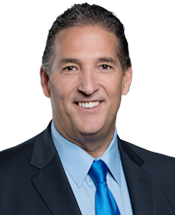
By Dr. Jeffrey McManus, Desert Pacific Regional Vice President for Health Services, Humana

Dr. Jeffrey McManus. From his LinkedIn profile.

Contra Costa County residents have been turning to medical virtual visits, also known as telemedicine, more than ever during the coronavirus pandemic.  While telemedicine companies have been around for years, the pandemic has led to a dramatic increase in virtual visits as primary care doctors, specialists and hospitals began offering the service as a way to help keep patients safe.

Now that most medical offices and hospitals are accepting patients for in-person visits and elective procedures, you may be wondering if you should go to your doctor’s office or stick to a virtual visit.  Rest assured, your health care providers can help you decide what’s best as they work to ensure safe care for patients and staff. This includes changing the ways they deliver care like screening patients ahead of time to help determine if it’s best to go to a medical office or stay at home.

In-person Visits

If it’s determined that an in-person visit is best for you, you’ll find that to reduce the risk of COVID-19 transmission, many facilities are taking the following steps:

  • Screening arriving patients for COVID-19 symptoms and providing a mask and hand hygiene supplies before entering the center.
  • Screening every employee for COVID-19 every shift and requiring them to wear masks at all times and appropriate personal protective equipment.
  • Treating suspected and symptomatic COVID-19 patients in designated areas only.
  • Promoting physical distancing with new clinic layouts.
  • Cleaning and disinfecting exam rooms between each patient visit, and regularly disinfecting high-traffic and high-touch areas.

Virtual Visits

If you don’t require in-person attention, a virtual visit is still a good option. Many people are choosing virtual visits in non-emergency situations for routine follow-ups and non-life-threatening conditions. This option allows you to consult your doctor or other health care providers in your network via a secure video or phone appointment, all in the comfort of your home. Before your telehealth visits:

  • Make a list of all the medications – prescription and over-the-counter – that you take and include the name, address and phone number of your pharmacy.
  • Write down details about your symptoms, concerns, pain and feelings.
  • Take digital photos of any injury, rash or other visible concern.
  • Have your insurance ID card available.
  • Use a phone, tablet or computer that’s connected to the internet. If you’ve never video-chatted before, consider a practice run with a friend or family member to work out the process and check the microphone and speakers. Headphones or ear buds provide better sound quality and more privacy.
  • Have your home thermometer, bathroom scale, glucometer or blood-pressure monitor nearby.

Many area medical offices like John Muir Health, which serves Contra Costa County, offer both virtual and in-person visits.  John Muir Health has enhanced safety protocols for patients receiving care onsite, such as a universal mask policy, temperature and symptom screening and increased cleaning and disinfection.

Whether you choose a virtual or in-person visit, check with your health insurance provider to see if they’ve taken steps to help ease the burden during the health crisis. For example, Humana is waiving cost sharing (including copays, coinsurance and deductibles) for in-network primary care, outpatient behavioral health and virtual visits for our Medicare Advantage members for the remainder of the calendar year.

Getting the care you need is always important. Consider these options to stay safe and healthy. And remember, for life-threatening emergencies, such as chest pain, difficulty breathing, or suicidal thoughts, always call 9-1-1 or go to the nearest emergency room.

Bottom line, don’t delay care because you are worried about contracting COVID-19.


Filed Under: Health, Opinion

More Contra Costa businesses open following updated state recommendations

August 31, 2020 By Publisher Leave a Comment

Includes hair salons & barber shops indoors, gyms & fitness centers outdoors, and indoor shopping malls at 25% capacity

By Contra Costa Health Services

The California Department of Public Health on Friday announced new statewide guidelines to make regulations and community re-openings more standardized throughout the state. Contra Costa and most other counties are now in the purple (most restrictive) tier.

According to these new state rules, hair salons and barber shops can now operate indoors in Contra Costa County with safety guidelines in place. Indoor shopping malls may also reopen at 25% maximum occupancy as long as public congregation points and food courts are closed and the mall has approved a COVID-19 safety plan from Contra Costa Health Services (CCHS). Gyms and fitness centers may begin operating outdoors in accordance with their own state guidelines and checklist.

These new state rules do not change the restrictions on in-person education, or the state’s school waiver process in Contra Costa.

We continue to evaluate the State’s new framework and its impact on our county, and we will provide additional information as it becomes available.

CCHS encourages businesses to adjust reopening plans as needed in response to changes in air quality in the county from Northern California wildfires. The county has issued a health advisory about smoke, encouraging all residents to stay inside when possible with doors and windows shut. For air quality updates and forecasts, visit the Bay Area Air Quality Management District website. Contra Costa Health Services urges residents to continue wearing face coverings when they go out or are near people outside their households, observe physical distancing, stay home from work or school when they do not feel well and wash their hands thoroughly and often.


Filed Under: Business, Health, News

Leveling of COVID-19 transmission in Contra Costa allows some businesses to reopen Friday

August 26, 2020 By Publisher Leave a Comment

Hair salons, gyms, fitness centers may begin operating outdoors, hotels and short-term rentals may open

From Contra Costa Health Services, Office of the Director

Daily hospitalizations due to COVID-19 and the percentage of COVID-19 tests returning positive remained steady or fell slightly in Contra Costa County during early August, reflecting recent local progress in slowing the spread of a deadly virus. The seven-day rolling average number of patients hospitalized with COVID-19 in Contra Costa dropped slightly, from 103 on Aug. 5 to 96 on Aug. 24. The average percentage of tests administered in the county that come back positive, meanwhile, has fallen from 8.8% on Aug. 6 to 7.4% on Aug. 24.

These key data indicators for the pandemic remain at dangerously high levels in Contra Costa, which remains on the California Department of Public Health’s county monitoring list, but are not currently increasing as they did in June and July.

Given the improvement, Contra Costa County today makes small changes to its social distancing health order to allow certain business sectors to begin operating again outdoors. The changes align Contra Costa’s policy with recently updated state health guidelines:

— Personal care services that do not involve close contact with the face, such as nail salons and massage, may begin operating outdoors in accordance with the state-issued industry guidelines and checklist.

— Gyms and fitness centers may begin operating outdoors in accordance with their own state guidelines and checklist.

— Hotels and short-term rentals in the county may open for personal or recreational travel, not just for essential business purposes.

These updates to the health order are effective Friday, August 28. Hair salons and barbers have already been permitted to perform limited work outdoors in the county, with no reported outbreaks.

Contra Costa Health Services (CCHS) does encourage businesses to adjust reopening plans because of poor air quality in the county from Northern California wildfires. The county has issued a health advisory about smoke, encouraging all residents to stay inside when possible with doors and windows shut. For air quality updates and forecasts, visit the Bay Area Air Quality Management District.

While recent issues at the state level skewed local testing data in late July and early August, Contra Costa Health Services (CCHS) has confidence in data related to hospitalization and number of new positive cases because they are directly reported to the county by local health providers and clinics.

“Based on what we are able to see, we can be cautiously optimistic that there is a gradual downward trend in county cases, testing positivity rates and hospitalizations,” said Dr. Chris Farnitano, county health officer. “We need everyone to understand this is a reason to keep up what we are doing and not let down our guards.”

Previous health orders remain in effect. Contra Costa Health Services urges residents to continue wearing face coverings when they go out or are near people outside their households, observe physical distancing, stay home from work or school when they do not feel well and wash their hands thoroughly and often.

Details of the update, including the full text of the order, are available at cchealth.org/coronavirus.

Filed Under: Business, Health, News

New COVID-19 Community Testing Hub opens Wednesday in Richmond

August 25, 2020 By Publisher Leave a Comment

West Contra Costa residents looking for fast, free COVID-19 testing will have a convenient new option beginning Wednesday, when Contra Costa Health Services (CCHS) opens a new community testing hub at Richmond’s Civic Center Plaza.

The new testing site, in a parking lot with the entrance at the corner of 25th Street and Nevin Avenue, accepts appointments and walk-in patients. In September CCHS will add drive-through service, allowing the location to test as many as 400 people per day.

“Our testing program has already shown that communities of color, and specifically some neighborhoods in West County, are disproportionately affected by the COVID-19 pandemic,” said Dr. Chris Farnitano, Contra Costa County Health Officer. “Accessible, timely testing is critical to reduce transmission of the virus and protect the community.”

Contra Costa offers COVID-19 testing to anyone who lives or works in the county, regardless of insurance, ability to pay or whether they have symptoms or not.

Drive-through appointments continue to be available at West County Health Center in San Pablo, and at a site near the corner of Second Street and Ruby Avenue in North Richmond, where no-appointment, walk-in testing is available Tuesday and Friday afternoons.

The Civic Center site replaces a smaller county testing location at Kennedy High School in south Richmond, opened over the summer in partnership with West Contra Costa Unified School District.

The expansion of public testing service in West County coincides with an increase in laboratory testing capacity and improved turnaround time in Contra Costa, where many patients this summer waited two weeks or longer for their results due to a national shortage of reagents needed to process specimens.

The primary private laboratory contracted by Contra Costa to process tests was reporting a turnaround time of two to five days as of Monday. The county has also contracted with additional labs, which are now preparing to process county specimens, and its Public Health Laboratory this month received new equipment from the state allowing it to process hundreds more tests in-house daily. Turnaround times at the county’s in-house lab average two to three days.

CCHS now operates nine free community testing sites, and the state runs another three in Contra Costa County. Testing appointments are available for all county sites by calling 1-844-421-0804 (8 a.m. to 3:30 p.m. daily) or visiting coronavirus.cchealth.org/get-tested to schedule online. The new site also accepts walk-in patients without appointments. (Note: Testing clinics operated by Contra Costa County may close during the afternoon this week depending on current air quality.)

While you don’t need symptoms to get tested, symptoms that may warrant a test include cough, shortness of breath, fever, chills, fatigue, muscle ache, sore throat, headache, vomiting, nausea, diarrhea, recent loss of taste or smell, or confusion, particularly in older adults.

There is no up-front cost for testing and patients do not need medical insurance or government-issued identification to get tested. However, if you have health insurance, your insurance will be billed.

CCHS does request identification during appointment registration as part of its process to receive federal reimbursement for testing, but ID is not required to receive a test. Patient information is confidential and not shared with law enforcement or other government agencies.

Patients receive their test results via secure text, or in the mail if they cannot receive texts. Patients who test positive for COVID-19 also will be contacted by Contra Costa Public Health with important next steps, including information to help prevent spreading the virus to others.

Visit coronavirus.cchealth.org/get-tested for details about community testing, including site locations.


Filed Under: Health, News, West County

Contra Costa now accepting applications for in-person elementary school classes

August 24, 2020 By Publisher 2 Comments

Public and private elementary schools (TK – 6th grade) in Contra Costa County can now submit applications to allow in-person instruction at their campuses. In accordance with state guidelines, waivers may be granted “when requested by a local superintendent (or equivalent for charter or private schools), in consultation with labor, parent and community organizations. Local health officers must review local community epidemiological data, consider other public health interventions, and consult with the California Department of Public Health when considering a waiver request.

School districts will be asked to detail how they would safely conduct in-person classes and prevent the spread of COVID-19. Applications will go to the Contra Costa County Office of Education for an initial review before being sent to Contra Costa Health Services (CCHS) for further analysis.

CCHS and the County Office of Education have developed a checklist with safety measures schools must take in order to reopen. These measures include:

  • A plan for testing of students and staff with COVID symptoms. Schools must also show they have a plan for periodically testing asymptomatic staff members.
  • Each school must identify a person to help CCHS with contact tracing efforts if there is a positive case
  • Showing how shared surfaces will be regularly cleaned and disinfected and how use of shared items will be minimized.
  • Proper use of face coverings
  • How students will be kept in small, stable, groups with fixed membership that stay together for all activities (e.g., instruction, lunch, recess) and minimize/avoid contact with other groups

Review by local and state officials will take approximately ten days. The state will make the final decision to approve or deny requests. Schools in counties such as Contra Costa that are on the state’s COVID-19 monitoring list can’t reopen unless granted a waiver by local and state health officials.

“We feel like we’ve reached a point where it makes sense to consider requests from elementary schools to reopen,” said Dr. Chris Farnitano, health officer for Contra Costa County. “Our role will be to ensure that schools have a solid plan in place to protect their students and staff and show us how they will work with the health department when there is a case to prevent further spread of the virus.

The state outlined the waiver process for elementary schools two weeks ago. CCHS did not immediately begin accepting waiver applications because of the increasing prevalence of COVID-19 in our community at the time.

Since then, the situation has stabilized enough to begin reviewing school-waiver applications, said Dr. Farnitano. Case rates and COVID-related hospitalizations, for instance, have leveled off in August after spiking in July.

While school districts are invited to apply, waiver requests may not be granted if the plan does not meet state or local health requirements, or if data show worsening conditions in the community. Some districts may choose not to submit an application if they cannot meet the requirements outlined in local and state guidelines. Middle schools and high schools are not eligible for waivers.

Filed Under: Education, Health, News

Los Angeles church, pastor win in court Friday, can continue indoor services judge rules

August 14, 2020 By Publisher 7 Comments

Temporary order defies L.A. County COVID-19 orders; full hearing on September 4; only applies to that church, for now

On Thursday, August 13, Thomas More Society Special Counsel Jenna Ellis and attorney Charles LiMandri filed suit in the Superior Court of the State of California County of Los Angeles on behalf of internationally known author and Pastor John MacArthur, and Grace Community Church against Governor Gavin Newsom, Attorney General Xavier Becerra, Los Angeles Mayor Eric Garcetti, and other California and Los Angeles County public health officials. (See complaint)

On Friday, the California Court vindicated Pastor MacArthur and the church’s stance that church is essential by recognizing the constitutionally protected right of churches to remain open and hold indoor services in their sanctuary.

Hours after Grace Community Church filed suit to invalidate Los Angeles County’s unconstitutional restrictions on churches, the County filed for a temporary restraining order to force the church to stop holding indoor services and comply with every unreasonable and over-broad demand. At hearing today (Friday, August 14, 2020) in Los Angeles Superior Court, Judge Chalfant denied almost all of the County’s requests, agreeing with Pastor MacArthur and the Church that it is the County’s burden to show why it should be permitted to infringe on the constitutionally protected rights of churches to freely exercise religion. The judge did also express concern for some safety protocols.

To address those concerns and after explaining that the County was being unreasonable in its demands, counsel for Grace Community Church offered to comply with mask wearing and social distancing indoors until the matter could be fully heard, rather than the County simply rushing to shut down the Church. The judge agreed this was reasonable, set the full hearing for September 4, 2020, and ordered the Church to have congregants wear masks and social distance between family groups indoors.

Pastor John MacArthur said of the ruling, “I am very grateful the Court has allowed us to meet inside and we are happy for a few weeks to comply and respect what the judge has asked of us because he is allowing us to meet. This vindicates our desire to stay open and serve our people. This also gives us an opportunity to show that we are not trying to be rebellious or unreasonable, but that we will stand firm to protect our church against unreasonable, unconstitutional restrictions.”

Attorney Ellis said, “This is a huge vindication for Pastor John and the Board of Elders at Grace Community Church, who have simply asked for their right to worship the Lord together in church to be acknowledged and protected. When I spoke with Pastor John after the hearing, he expressed sincere gratitude to the California Court and Judge Chalfant and said his congregation will be happy to comply with the judge’s temporary order. This is why John MacArthur is so deeply loved and respected by his congregation and all over the world. He is a gracious and firm leader, and his biblical stand for church being essential has now been rightly validated. We look forward to continuing to advocate on his behalf in asking the Court to protect the fundamental rights of churches.”

Legal counsel LiMandri said, “This result is indeed a great victory for all citizens’ constitutional right to freedom of religion. Pastor MacArthur’s love of God and country motivated him and all the GCC church elders to resist the unjust government shut-down orders targeting people of faith. Their devotion and patriotism has brought about a result that respects the legitimate interests of both the church and state. This result makes it possible for the thousands of congregants of GCC to continue to gather together in their church to worship, while at the same time honoring the court’s requirement that reasonable and temporary safety measures be observed. This court ruling should stay in effect at least until there can be a full court hearing in this case on September 4, 2020. Please continue to pray that the courts allow this enlightened judge’s decision to stand so that all Californians can soon resume the worship of God in their respective churches.”

“We are simply continuing to do today what we have done for the past 63 years, that Grace Community Church has been open to welcome the Los Angeles community and serve their spiritual needs,” the pastor said in a statement. “We will remain open and teach the Gospel of Jesus Christ to all who decide they want to come worship with us.”

The suit seeks to prohibit California from enforcing its unconstitutional and onerous coronavirus pandemic regulations against Grace Community Church and seeks a judgment that the health orders violate the California Constitution.

“Having irreparably damaged the confidence of Americans—and Californians especially—who now realize that the pandemic restrictions are neither necessary nor good, on Sunday, July 26, 2020, Grace Community Church decided to resume worship services—joining millions of Americans in deciding that enough is enough. With deaths from the ‘COVID-19 suicide pandemic’ exceeding those from the actual coronavirus pandemic, Grace Community Church decided that it would no longer sit by and watch its congregants and their children suffer from an absence of religious worship and instruction. Perhaps unsurprisingly—perhaps not—this led the County of Los Angeles to submit a demand letter to Grace Community Church, ordering it to comply with the restrictions that Los Angeles County deems unnecessary to enforce against so many others. Grace Community Church does not intend to comply.”

According to attorneys for the church, it is time for California to recognize that Christians are not second-class citizens, and the court must step in to do its job in applying the protections that the U.S. and California State constitutions provide to every individual equally and to churches in particular.

Pastor MacArthur opened the Sunday morning service on August 9, welcoming worshippers to “the Grace Community Church peaceful protest.” He was met with a standing ovation and extended applause from the congregation. Pastor MacArthur said of the lawsuit, “We are simply continuing to do today what we have done for the past 63 years, that Grace Community Church has been open to welcome the Los Angeles community and serve their spiritual needs. We will remain open and teach the Gospel of Jesus Christ to all who decide they want to come worship with us.”

Ellis said, “We hoped that Los Angeles County would see its error on its own, but after attempted negotiations with their counsel, California is still intent on targeting churches—specifically, Grace Community Church. Pastor MacArthur and the Board of Elders will stand firm in their leadership and resolve that church is essential, and California has no legitimate power to enforce such onerous and unconstitutional restrictions against the fundamentally protected right to freely participate in church. After Grace Community Church voluntarily complied with state orders for nearly six months, California’s edicts demanding an indefinite shut down have gone now far past rational or reasonable and are firmly in the territory of tyranny and discrimination. This isn’t about health. It’s about blatantly targeting churches.”

LiMandri stated, “It is unconstitutional for Governor Newsom and the State of California to discriminate against churches by treating them less favorably than other organizations and activities that are not protected by the First Amendment. Pastor MacArthur and his church, as well as all churches, are entitled to practice their religion without government interference. This is especially the case when the government has given free rein to protestors, and is not similarly restricting marijuana dispensaries, large retail outlets and factories, or abortion providers. The government orders are also unconstitutional because there is no compelling need for the onerous restrictions on the churches at this time. The hospitals are not overwhelmed and the percentage death rate from COVID-19 is now extremely small. It is time for Governor Newsom and Mayor Garcetti to recognize what President Trump has already proclaimed: churches are providing an ‘essential’ service to the people. Therefore, they must be allowed to serve the people in the manner in which God has called them.”

Read the Thomas More Society’s Complaint filed with the Superior Court for the State of California County of Los Angeles – in Grace Community Church and Pastor John MacArthur v. Gavin Newsome et al., on August 12, 2020, here.

Read the Demand Letter sent to Pastor John MacArthur by attorney Jason Tokoro, representing the County of Los Angeles in California, on July 29, 2020, here.

Filed Under: Faith, Health, Legal, News, State of California

  • « Previous Page
  • 1
  • …
  • 30
  • 31
  • 32
  • 33
  • 34
  • …
  • 53
  • Next Page »
RepublicServices-Antioch-ad (1)
Furniture-Clrnc-Outlet-0626
Monica's dinner 05-26 CCH
Celia's-06-26
Delta-RC-A (2)
Deer-Valley-Chiro-06-22

Copyright © 2026 · · Contra Costa Herald · All Rights Reserved