California school choice initiative for Nov. 2022 ballot filed with Attorney General
Would allow creation of “Education Savings Account” for each K-12 student; organizers will need to gather signatures of one million voters
Labor Day is the traditional end of the summer and the beginning of fall. Before government created the perpetual school year, Labor Day also marked the beginning of the school year. This year, Labor Day marked the beginning of what will be a decisive and tumultuous year. Californians will have the opportunity to establish true educational freedom in our wonderful Golden State.
School Choice Initiative Filed with Attorney General
In August, key leaders of the California School Choice Foundation joined other Californians to formally present a school choice initiative to the California Attorney General’s office for what is known as “Title and Summary.” We expect to receive that summary no later than October 12, 2021. Once that happens, we can then begin to gather the 1.0 million valid signatures necessary to place it on the November 2022 ballot. Just to make sure, we plan to gather 1.5 million signatures.
Empowers Parents and Revolutionizes Education in California
The key four points of the initiative are these:
Educational Freedom Act
- An Education Savings Account (“ESA”) will be established for each K-12 child in California on request.
- Each year, that account will be credited with the student’s share of what are known as Prop 98 funds. That share will begin at $14,000 per year per student.
- The parent will be able to direct the ESA trust funds to a participating, accredited private or parochial school. The money will follow the student not the politicians.
- Any unspent funds will accumulate and can be spent on college, vocational training or other qualified educational expense.
This plan is both simple and revolutionary. Once passed, California will become the first state to enact universal school choice. More important, it will be the first state to recognize that It’s Your Kids, Your Money and Your Choice!
Get Ready and Get Involved NOW!
I need not tell you that school choice is the hottest issue in the country. It was the linchpin of at least two candidates in the recall election: Larry Elder and Kevin Kiley. Each endorsed our school choice initiative. You can understand why this is initiative is already driving bureaucrats and social engineers insane. No matter what happened in the recall election, school choice is not going anywhere. Thousands of supporters are now mobilizing to get it on the ballot and pass it. Scores of candidates for statewide and local offices will make school choice the focal point of their campaigns.
This is why you need to get involved right now. We don’t have a moment to lose.
Super Sunday – Happy Halloween! Trick or Treat?
As I mentioned above, we are not standing still for a moment. We know we will be able to start gathering signatures a month from now. We have been organizing and advocating for the last three years.
We want to hit the ground running. That’s why we are pre-planning a major event for October 30-31. Whether you call it Super Sunday or Halloween, you need to let us know what church or other venue you will be covering on that weekend. Our goal is to calendar at least 1,000 events statewide. Nothing will send a more powerful message than this. Friends and foes alike will know we are serious about our freedom and the future of our children.
This campaign will run for the next 13 months, ending in victory on Tuesday, November 8, 2022.
The following was provided by Stephen Smith:
Q1. What about California’s public education system led to this grassroots effort for the initiative?
The reasons are legion.
- California schools can hardly be called an “education” system. Despite spending $20,000 per student per year – – that’s an average of $500,000 per classroom of 25 – – California schools rank near the bottom of the nation at 48th place. This has happened even though per pupil spending has almost doubled in the last decade.
- Increasingly, California schools preferred to indoctrinate rather than educate. In the face of vigorous parental opposition, social engineers (*1) disguised as “educators” continue their efforts to implement critical race theory. They also have frustrated efforts of parents to opt out of equally controversial “sex-ed” programs. (*2)
- Parents are outraged by the closure of the schools and mask mandates. Eighteen months after the start of the Covid panic, schools are still not fully reopened.
- Parents are frustrated by being ignored by school boards, teachers’ unions and politicians. They feel strongly – – and correctly – – that they are the parents and should be making basic decisions about the health, education and formation of their children. This is a basic human right that is frustrated daily by a leviathan system that cares little for them for their children. (*3)
(*1) https://freebeacon.com/coronavirus/la-teachers-union-president-there-is-no-such-thing-as-learning-loss/ “There is no such thing as learning loss,” the union president told Los Angeles Magazine. “Our kids didn’t lose anything. It’s OK that our babies may not have learned all their times tables. They learned resilience. They learned survival. They learned critical thinking skills. They know the difference between a riot and a protest. They know the words insurrection and coup.” Cecily Myart-Cruz, president of the United Teachers Los Angeles (UTLA)
(*2) https://capitolresource.org/ca-sex-education/
(*3) CPC report and polling data https://californiapolicycenter.org/new-polling-shows-covid-19-shifted-california-voters-opinions-on-schools-2/
Q2. How will the state provide the $14K per student?
- The principal source will be Proposition 98 tax revenues which, in the coming school year, will average approximately $14,000 per student. In fact, as noted above, the State spends approximately $20,000 per student per year.
- Ultimately, of course, parents, like every other taxpayer in California, will pay dearly for their own K-12 education as well as that of their children. Politicians and other advocates of centralized, inefficient, and incompetent government schools, never let on that under proposition 98, 40% of California state tax revenues are earmarked for what they are pleased to call “education.” As a practical matter, therefore, everyone in California will pay for K-12 education their entire lives. The only question is whether they get the education they pay for. Therefore, we say: It’s Your Kids, Your Money, and Your Choice.
Q3. Why do students and families need school choice?
- It should be recognized that what we call “school choice” is another way of describing parental choice. As discussed above, California schools, dominated by corrupt teachers’ unions and politicians have utterly failed to educate our children. This system particularly affects poor and minority communities who have no ability to escape the system. Therefore, they have no opportunity to escape the cycle of poverty and ignorance that so often characterizes our inner cities.
- It is not only that they need school choice. It benefits all of us. In California, indeed in America itself, real progress depends upon economic, social, and political mobility. The foundation of this mobility is a decent education without which our poorest citizens cannot hope to participate fully in our complex economy and our form of government. The current government school monopoly both creates and sustains a permanent underclass. This system is not only immoral, but also dangerous. Therefore, our school choice initiative must first be understood as a preferential option for the poor.
- School choice is wildly popular among parents and citizens at large. There are several polls showing that approximately 70% of black and Latino Democrat parents desire some form of school choice.
- Another example is homeschooling. It is estimated that there were only 73,000 homeschooled children in 1973. In the wake of school closures and the rapid decline in education, that number has swollen to as much as 5 million. These parents are tired of arguing with the teacher unions and politicians.
Q4. Is this the first ballot initiative of its kind in the U.S.?
- This is not the first time that Californians have tried to get some form of school choice. There was an initiative on the ballot in the early 90’s and again in 2000. Both failed. That said, there are several states that have various forms of school choice that often include the ability of parents to choose a public school to attend but only within the system. Other state programs do allow limited funds to attend a private school or provide funds for certain educational expenses procured outside the system. Arizona and Florida are examples of each. Some states have put Education Savings Accounts into place to implement parental choice.
- The Educational Freedom Act initiative goes further than any other proposal of which we are aware. It grants the right of any parent to request the creation and funding of an Education Savings Account that they can use to enroll their child in any accredited school of their choice and save anything left over for college or vocational training. It is both simple and revolutionary.
Q5. Why does it need to happen through a voter referendum instead of the state legislature?
- This is simple. The politicians, special interests and the teachers’ unions have a monopoly on what millions of Californians say, think and do. They also control for their own benefit 40% — over $100 billion – of the California budget. They will not give up this power willingly. We anticipate that the enemies of educational freedom will spend $100 – 200 million to defeat parents’ rights.
Q6. What is most important for people to know?
- The most important thing for people to know is that help is on the way. For the first time:
- Parents, not politicians, bureaucrats or zip codes, will determine how and where their children will be education.
- Because all schools, both public and private, will have to compete for students, ALL schools will get better.
- Because of competition, all schools will have to deal respectfully with parents who will be customers with a choice.
- Parents, including homeschoolers, will be able to shape their children’s education in a way best suited to their needs and talents, not the government’s.
- Because educational funding will now follow the student and empower parents, California will experience unprecedented innovation in education. California will once again lead the nation in educational innovation and excellence.
For more information visit www.CaliforniaSchoolChoice.org or our Facebook page.
Michael Alexander is President and Chairman of the Board and Stephen Smith is Vice President of Californians for School Choice.
Allen Payton contributed to this report.
Contra Costa County 2021-22 Teacher of the Year finalists to be honored Thursday night
All 21 TOYs will be honored at the annual Teacher of the Year Gala, this year being broadcast virtually
On the evening of Thursday, September 23, 2021, all 21 TOYs from each school and college district in the county will be honored at the annual Teacher of the Year Gala, this year being broadcast virtually on the Contra Costa County Office of Education (CCCOE) website, on YouTube and on edTV (Comcast Cable Channel 32). This will be followed by the four finalists giving their three- to five-minute speeches (same speeches given in July). The excitement-filled evening will come to a dramatic close with the announcement of the 2021-2022 Contra Costa County Teachers of the Year.
The four finalists were announced by Superintendent of Schools Lynn Mackey in June: Alisha Douglass, a ceramics teacher at Liberty High School in Brentwood; Kristen Plant, an English teacher at Miramonte High School in Orinda; Michelle Wilson, an English teacher at Dougherty Valley High School in San Ramon; and Christina Zenzano, an English teacher at Rancho Medanos Junior High School in Pittsburg. They were selected from the 21 Teacher of the Year winners within 15 school districts of Contra Costa County, Contra Costa Community College District and Contra Costa County Office of Education.
“It is my pleasure to congratulate the four finalists on the honor of being named one of the county’s top teachers,” Superintendent Mackey said. “All of the professional educators who are being considered for this prestigious award are to be commended and thanked for their professionalism and leadership, especially throughout this pandemic. These four are prominent examples of the great work teachers throughout the county have done over the last year.”
The newly honored teachers are recognized for their outstanding education achievements and represent the approximately 8,597 teachers educating close to 178,000 students in Contra Costa County’s public schools.
Alisha Douglass
Alisha Douglass, a Ceramics teacher and Public Art and Design Academy Coordinator at Liberty High School, is the Teacher of the Year for the Liberty Union High School District. Douglass began her career as a teacher in Texas in 2006 before moving to Liberty High School in 2012. During her 15-year career as a teacher, she has helped students create public works of art for the City of Brentwood and helped students thrive, even during the pandemic.
“As a parent of a student in her Ceramics class, I am continually inspired by Alisha’s ability to transcend the ordinary. Her ability to transform a “hands-on” Ceramics course into a thriving distance-learning course has defied all odds,” Stacy Rivera, a parent of a student in Douglass’ class, wrote in a letter of recommendation. “Her students also recognize her efforts, as my daughter frequently mentions how much she enjoys her Ceramics class and her teacher. One of my daughter’s favorite things about Alisha is her compassion for helping students despite the difficulties presented by distance learning.”
Kristen Plant
Acalanes Union High School District Teacher of the Year Kristen Plant teaches English and Leadership at Miramonte High School, where she also coaches the award-winning speech and debate team. With 19 years of teaching experience, Plant began her career in education as a substitute teacher and instructional assistant. She then taught English and Literacy at Las Lomas High School before moving to Miramonte High School in 2006. Since that time, she has been selected as the 2016 California High School Speech Association Coach of the Year and led several school-wide and department teams.
“From spending her summer in diversity, equity, and inclusion meetings to devoting a class period to pursuing equity in our school, Ms. Plant has been an incredible ally to marginalized student groups,” Miramonte High School junior Isabelle Bennette wrote in her letter recommending Plant for the award. “Throughout the school year, our equity leadership class has created educational content for the entire student body, collaborated with other schools and administration to plan events, and worked to make Miramonte a safe, supportive learning environment for all students. None of this work would have been possible without Ms. Plant’s leadership, selflessness, and humility. Ms. Plant creates an atmosphere of empowerment, trust, and hope for all her students to grow and strive in.”
Michelle Wilson
As San Ramon Valley Unified School District’s Secondary Teacher of the Year, Michelle Wilson is an English teacher at Dougherty Valley High School where she also teaches Advanced Placement Language and Composition. Wilson began her career as an educator 20 years ago as a high school English teacher in Manteca. From there, she taught in Stockton before moving to Campolindo High School in 2005. In 2010, she began teaching at Dougherty Valley High School. Wilson received the Yale University Educator Award in 2013 and has been a presenter at several professional development sessions for her colleagues.
“Within minutes of meeting Michelle, it is abundantly clear that you are in the presence of someone who is warm, excited, eager, and passionate. She exudes this energy around students as well, so it is no wonder that kids lucky enough to land on her roster find themselves falling in love with English class and leaving with a deeper understanding of themselves as readers, writers, critical thinkers, and individuals within society,” Fellow Dougherty Valley High School English teacher Rachael Hernandez said in a letter of support for Wilson. “While there are so many wonderful qualities about Michelle, one of my favorites is her creativity. Though Michelle’s job on paper says that she is an English teacher, students in her class know that they will get far more than mere English curriculum out of a year-long experience with Mrs. Wilson. She pushes students to think outside the box, to make meaningful connections to what concepts she is teaching with what is going on in the real world, regularly helping students see that what they learn in school often has far-reaching effects beyond the four walls of a school building.”
Christina Zenzano
Pittsburg Unified School District Teacher of the Year Christina Zenzano teaches English Language Arts at Rancho Medanos Junior High School. Zenzano, who has been teaching for 16 years, began her career as an educator at the now closed Central Junior High School in 2005. From 2008 to 2020, she taught English Language Arts for 7th graders, moving to 8th grade in 2021. She received the Rancho Medanos Silver Assessment Award for three consecutive years for her students earning the highest middle school CAASP scores in the district for ELA.
“Her supportive energy extends to everyone, from the students, to the staff, to the parents. She is always willing to go above and beyond her call of duty. From staying late to design elaborate lesson plans to keep student engagement, to mentoring new teachers, to after school tutoring, and conferences with parents she never bats an eye or sees it as an extra burden,” colleague Sarah Jimison wrote in her letter of recommendation for Zenzano. “Her goal has always been to create a classroom that holds her students to high expectations while still creating an environment where her students feel respected, safe, and happy, and she does this every day. For many teachers distance learning has come as a great challenge, but for Mrs. Zenzano it has come as an opportunity to show her creativity in developing interesting and engaging lessons and curriculum. Mrs. Zenzano has kept the students engaged in the material while making fun activities, interactive slideshows, and even escape rooms.”
2021-22 Contra Costa County Teachers of the Year Candidates
- Kristen Plant, Acalanes Union High School District, Miramonte High School
- Crystal Van Dyke, Antioch Unified School District, Mission Elementary School
- Scott McCurdy, Brentwood Union School District, Adams Middle School
- Louise Colbert, Byron Union School District, Excelsior Middle School
- Nicholaus Garcia, Contra Costa Community College District, Los Medanos College
- Sarah Buhre, Contra Costa County Office of Education, East County Student Programs
- Eden Kennedy-Hoffmann, John Swett Unified School District, Carquinez Middle School
- Ann Ajimura, Knightsen Elementary School District, Old River Elementary School
- Casey Bowles, Lafayette School District, Springhill Elementary School
- Alisha Douglass, Liberty Union High School District, Liberty High School
- Ryan Hussey, Martinez Unified School District, Alhambra High School
- Clare Fallon, Moraga School District, Moraga Elementary School
- Chelsea Ridenour, Mt. Diablo Unified School District, Diablo View Middle School
- Elizabeth McDonagh, Mt. Diablo Unified School District, Prospect High School
- Shauna Yeager, Orinda Union School District, Wagner Rach Elementary School
- Christina Zenzano, Pittsburg Unified School District, Rancho Medanos Junior High School
- Michelle Wilson, San Ramon Valley Unified School District, Dougherty Valley High School
- Patricia Facteau, San Ramon Valley Unified School District, Golden View Elementary School
- Susan Sisson, Walnut Creek School District, Buena Vista Elementary School
- Carlo Juntilla, West Contra Costa Unified School District, Richmond High School
- Christina Ferry, West Contra Costa Unified School District, Lovonya DeJean Middle School
Note regarding eligible participants: 16 of the 18 Contra Costa County school districts are represented. Each year, one instructor from Contra Costa Community College District is submitted to the program for their outstanding work with their designated college. Due to the larger number of students and teachers in their districts, West Contra Costa Unified School District, Mt. Diablo Unified School District, and San Ramon Valley Unified School District are allowed to submit two Teacher of the Year candidates.
TOY Selection Process
The county’s TOY program is directed by the CCCOE. With such a high caliber of teaching professionals to draw from, the CCCOE’s TOY program uses a three-stage selection process, with a point and percentage system to determine the final candidate as follows:
I Application Screening:
In April/May, a committee representing the county’s education, business, and public-sector partners will meticulously review the applications submitted by the school districts. This committee independently rates each application. After the application screening and scoring are completed, four teachers will be selected to advance to the next phase as semifinalists.
II Classroom Observation and Interview:
In May, a committee of former County Teachers of the Year will observe the semifinalists interacting with their students. Immediately following, the committee interviews the candidates, discussing topics such as their teaching philosophy and techniques. The results of the two screening processes are then combined to determine the four finalists.
III Speech Presentation:
In July, the four TOY finalists will each give a three- to five-minute speech to another panel of a dozen educators, business, and public-sector representatives who will judge the finalists on their speech and presentation skills.
List of past Contra Costa County Teacher of the Year Representatives from 1977 to present (PDF)
The County representatives are announced at the awards dinner gala affair. Local business and community organizations generously donate classroom grants, services and other items to each of the district winners. (See list of donors, here)
History of the TOY Program
In 1972, California began recognizing outstanding teachers, establishing the Teachers of the Year Program. This program is open to all teachers in public schools who teach pre-kindergarten through college. Contra Costa County has participated in the program since its beginning, when Joseph E. Davis, Jr., of the Acalanes Union High School District, was named the county’s first representative.
Since that time, eight teachers from this county have been State finalists: Janet Neill, San Ramon Valley Unified (1975); David Eakin, John Swett Unified (1981); William Thomas, Mt. Diablo Unified (1982); Janice Bergamini, Mt. Diablo Unified (1991); Shauna Hawes, Mt. Diablo Unified (2017); and Kelly Perkins (Mt. Diablo Unified (2019). The County has had four State winners: Mary Allan, Antioch Unified (2001); Janet Gower, Mt. Diablo Unified (2002); and William Pence, San Ramon Valley Unified (1999); and Rosie Reid, Mt. Diablo Unified (2019). Both William Pence and Rosie Reid were selected to represent California at the National Teacher of the Year level.
Follow Contra Costa County’s Teacher of the Year program on Twitter and Instagram at @CoCoSchools and through the hashtag #cocotoy.
Contra Costa college board places chancellor on paid administrative leave on split vote
After less than one year in the position; hired before new board members elected; passed on 3-0-1 vote with one trustee absent; no details provided; appoints Executive Vice Chancellor of Education and Technology as acting chancellor
By Allen Payton
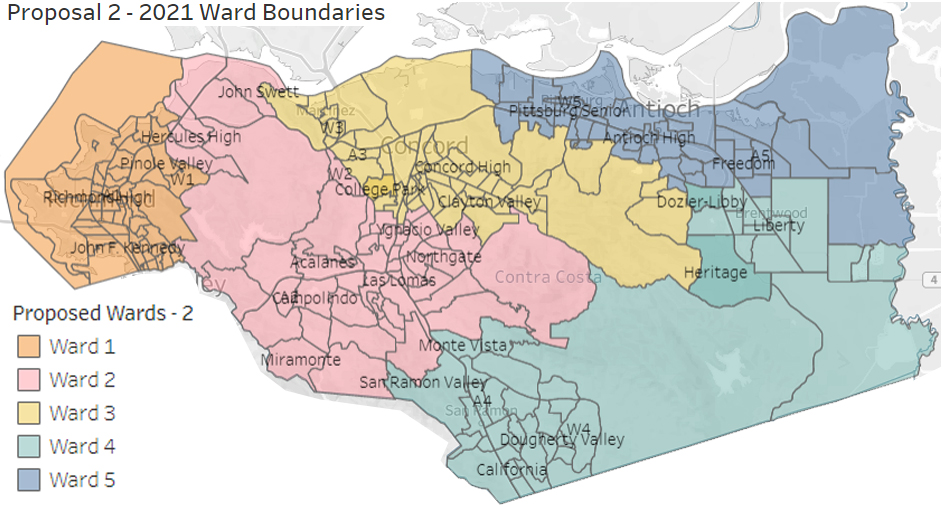
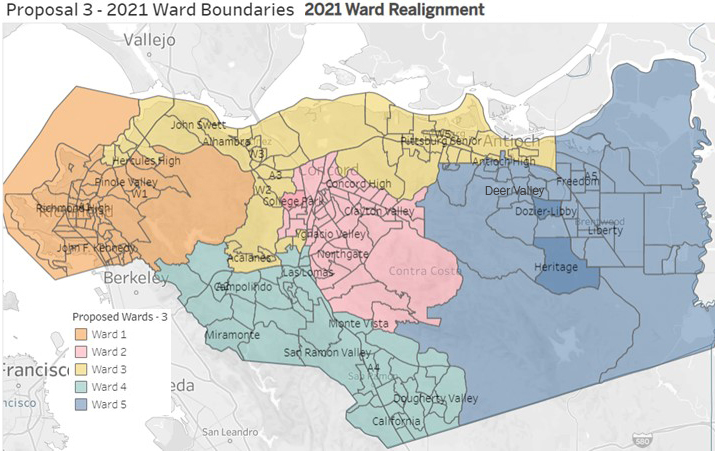
After less than a year in his new position, Contra Costa Community College District chancellor, Dr. Bryan Reece was placed on paid administrative leave effective immediately by a 3-0-1 vote of the governing board, during their special meeting Tuesday night. Ward 1 Trustee John Márquez voted to abstain, and Ward 5 Trustee Fernando Sandoval was absent, as he was out of town on vacation.
Reece started on Nov. 1, 2020 after he was chosen by the board in September, not long before two new trustees were elected, including Sandoval and Board Vice President and Ward 2 Trustee Dr. Judy Walters, the latter of whom voted for Tuesday’s board action. The board approved his contract last October, which includes a base annual salary of $315,000, with performance-based incentives. Later that month, three new trustees were elected to the board, two of whom voted for in support of the action. (See related articles here and here)
The decision was made in closed session under the subject “Public employee discipline / dismissal / release / complaint (Government Code Section 54957)” that began at 5:05 p.m. and lasted for four hours.
According to the minutes of the meeting, “Mr. Li reconvened the public session at 9:05 p.m. Mr. Li reported out on motion of Dr. Walters, seconded by himself, with one aye vote from Ms. Barrett, one abstention from Mr. Márquez, and Mr. Sandoval was absent for the vote, the GB (governing board) approved paid administrative leave for the Chancellor, effective immediately. Mr. Li then adjourned the meeting at 9:06 p.m. The next regular meeting of the GB will be held on Wednesday, October 13, 2021, at 6:00 p.m.”
However, when reached for comment, Board President and Ward 3 Trustee Andy Li said, “we didn’t say anything during open session because it was a personnel matter. I made the statement, reporting out of closed session, since I’m the board president, informing the public of the decision.”
“Then a letter was sent out to the district employees, this morning,” he added.
In that letter, Li announced the action against Reece and the appointment of Mojdeh Mehdizadeh, who currently serves as Executive Vice Chancellor of Education and Technology for the college district, as acting chancellor. (See related article)
Li’s Letter to District Staff
The following letter from Li was to district staff via email:
“This message is being forwarded on behalf of Governing Board President Andy Li
Begin forwarded message:
From: “Li, Andy” <ali@4cd.edu>
Subject: Governing Board Decision
Date: September 15, 2021 at 8:14:15 AM PDT
To: “Li, Andy” <ali@4cd.edu>
Dear 4CD Community,
At our special meeting last night, the Governing Board placed Chancellor Bryan Reece on administrative leave with pay due to personnel matters. The Governing Board has appointed Mojdeh Mehdizadeh to serve as Acting Chancellor until further notice.
We ask for your support of Mojdeh during this time.
Thank you.
Andy Li
ALi@4cd.edu
(860) 263-9540
President, Contra Costa Community College District Governing Board”
————–
Please check back later for any updates to this report.
Contra Costa college district announces four finalists, public forums for Associate Vice Chancellor-CFO

Contra Costa Community College District Associate Vice Chancellor-Chief Financial Officer candidate finalists Mazie L. Brewington, Phyllis A. Carter, Micaela Ochoa, Ed.D. and Peter A. “Tony” Wold, Ed.D. Photos from 4CD.
By Erin Brooks, Marketing & Communications Coordinator, 4CD
The Contra Costa Community College District has announced the selection of four finalists for the position of Associate Vice Chancellor, Chief Financial Officer. The finalists are: Mazie L. Brewington, Phyllis A. Carter, Micaela Ochoa, Ed.D., and Peter A. “Tony” Wold, Ed.D.
Four separate public forums have been scheduled for Thursday, June 24, 2021. The public forums will begin at 9:00 a.m. and last 60 minutes. At each forum, the finalist will make statements and answer questions. The forums are open to the broad community, students, faculty and staff and will be held remotely via Zoom. A detailed public forum schedule, including Zoom links to the public forums is available on the District website at https://www.4cd.edu/career/jobs/avccfo/index.html.
Mazie L. Brewington
Mazie L. Brewington began her career in 1999 with the California Community College System as the Business Manager for Laney College. In 2006, she accepted her first Chief Business Official Position (CBO) as the Vice President of Administrative and Business Services for the Solano Community College District. And most recently, she served as the Vice Chancellor of Administrative Services in the Yuba Community College District. Throughout her 22-year career in higher education she has received many recognitions and awards. One of the most notable is when she was named for Excellence in Community Colleges by the Chief Association of Business Officials (CASBO) in 2004.
Ms. Brewington has served on the Board of Directors for the Association of California Community College Administrators (ACCCA), the Cities of Lancaster, Palmdale and Yuba Successor Oversight agencies and participated with other professional organizations including the Association of Chief Business Officials (ACBO), and the California Community College Internal Auditors (CCIA). She is past chair of the Armed Forces Emergency Services (AFES), American Red Cross Bay Area Chapter; Service Delivery Chair, American Red Cross Bay Area Chapter (ARBAC); Solano County Council, and a Board Member, Solano County Transportation Authority (STA). She has co-presented at the Association of Chief Business Officials (ACBO) Institute on the topic of Budget and Resource Allocation.
Ms. Brewington has served on three accreditation teams, starting with the Fashion Institute of Design and Merchandising (FIDM), West Los Angeles College (WLAC) and Kapi’olani Community College in Hawaii.
Ms. Brewington holds an MBA in Business Administration from Troy State University, a BA in Business Administration with an emphasis in Management from Columbia College, and an AA in General Studies from Columbia College.
Phyllis A. Carter
Phyllis Carter has more than 30 years of experience leading education, nonprofit and corporate organizations to greater financial health, efficiency, and sustainability. At institutions of higher learning where she has served for more than 10 years, she has been a thought leader who provides strategic, financial, and operational business advice to governing boards, presidents, chancellors, administrators, faculty, staff, and students.
Ms. Carter recently served as Interim Vice President of Strategy, Innovation and Operations and Chief Operating Officer at Samuel Merritt University, a premier Health Sciences institution with four campuses located in Oakland, San Mateo, Sacramento, and Fresno. Prior to this position, she served as Vice President and Chief Financial Officer of Administration and Finance at San Francisco State University (SFSU), a top tier institution within the California State University System.
Before her role at SFSU, she served as Chief Business Officer and held the title of Director of Business and Administrative Services at Laney College, supporting the success of community college students in downtown Oakland. At Laney College, she was a member of the president’s executive cabinet and she had oversight of all campus administrative functions. Prior to this position, Ms. Carter was Chief Financial and Administrative Officer at Mathematical Sciences Research Institute (MSRI), an international post-doctoral research organization located on the UC-Berkeley Campus. MSRI is an independent nonprofit and primarily funded by National Science Foundation, National Security Agency, academic sponsorships, endowment, and other philanthropic donations. In addition, Ms. Carter was an adjunct faculty member teaching general and financial accounting at Merritt College. As an adjunct faculty and to encourage student career development, she developed and implemented an in-class instructional program representing an accounting speakers’ series with professionals across various industries and government.
Ms. Carter’s previous corporate career included management positions in telecommunications, pharmaceuticals, corporate venture capital and various technology companies.
Ms. Carter earned a Master of Business Administration (MBA) from Washington University Olin Business School and an Advanced Certificate in International Affairs from Washington University. She earned a Bachelor of Science (BS) in Accountancy from the University of Missouri. She is a Certified Public Accountant (CPA not licensed) and the certificate was awarded by the Kansas Board of Accountancy. She is a Fellow of the Executive Leadership Academy at the Center for Studies in Higher Education on the University of California, Berkeley campus.
Ms. Carter has a passion for serving and contributing to institutions which provide access, equity, and social justice. Her mission is to enable students to achieve their educational goals and her efforts extend beyond her professional life to her community. She is an active board member on the Diablo Valley College Foundation, reader in Oakland Public Schools and she has served in international humanitarian organizations providing education and support.
Micaela Ochoa, Ed.D.
Dr. Micaela Ochoa has 25 years of experience working at federal, state, and local levels of government, and in the private sector. She is an experienced leader in higher education and K-12 public school districts with equity at the forefront of her decision making. Her expertise includes over 17 years of senior cabinet level experience responsible for business and administrative services and operations, financial management, policy review and analysis, strategic planning, and business process re-engineering. Dr. Ochoa provides systemic strategic leadership that is collaborative, results-oriented, transparent, and student equity focused.
Currently, Dr. Ochoa is the Vice President of Administrative Services (VPA) at the College of San Mateo (CSM). During her time at CSM, she has served in dual roles as VPA and Vice President of Student Services overseeing multiple areas including Admissions and Records; the Wellness Center; Financial Aid; Veterans Program; Response and Evaluation of Students (CARES) team; and Student Disciplinary Officer.
Prior to her current role at CSM, she was the Chief Business Official/Assistant Superintendent of Business Services in K-12 school districts in Alameda, San Mateo, and Santa Clara Counties. Dr. Ochoa has also taught in higher education at Notre Dame de Namur University.
Prior to her work in K-12, Dr. Ochoa served as an administrator in higher education at Stanford University and UC Berkeley. She also worked as a management consultant for KPMG Consulting, and Fiscal and Policy Analyst for the Legislative Analyst’s Office.
Dr. Ochoa earned her Doctorate Degree from UC Berkeley’s Graduate School of Education, Master of Science Degree from Carnegie Mellon University, and her Bachelor’s Degree from University of California, Berkeley.
Peter A. “Tony” Wold, Ed.D.
Dr. Tony Wold brings over 30 years of education experience to the District, including the past two years as the Associate Superintendent, Business Services of the West Contra Costa Unified School District where he served as both Chief Business Official and Chief Labor Negotiator and helped lead the District from a significant financial crisis to a positive budget certification while supporting all of the District’s operations during the pandemic. Prior to that he served as Assistant Superintendent, Business in the Westminster School District for four years and was responsible for budget development and staffing in Santa Ana Unified for seven years serving there during the great recession.
Dr. Wold brings an extraordinary amount of educational experience both in and outside of the classroom having also served as a teacher, site administrator, educational services director, and football coach in his educational career. Dr. Wold has a strong sense of the K-14 finance world and has been active in the California School Business Officials Association (CASBO), Coalition of Adequate School Housing (CASH), and serving as a mentor for aspiring Chief Business Officials.
Dr. Wold most recently served as Associate Superintendent, Business Services in West Contra Costa Unified School District, where he oversaw the daily operations and management of accounting, budget, purchasing, payroll, employee benefits, labor relations, school operations, athletics, safety, warehouse, transportation, nutrition services and risk management. Dr. Wold was also responsible for managing the WCCUSD’s $420 million budget. He was instrumental in the passing of the $575 million Measure R Bond in March 2020 while navigating a $49.9 million structural deficit to restore the District to a positive budget certification in collaboration with the District’s 5 labor associations.
A native of Redwood City, Dr. Wold received his bachelors of science in Business Administration from the Marshall School of Business at the University of Southern California (USC). He subsequently completed both his School Business Management Certification and a Doctorate in Educational Leadership from the Rossier School of Education at USC. Dr. Wold and his wife Lisa, have been married for over 25 years and have one daughter who is a senior who will be graduating from the University of San Francisco in December in preparation to join the educational system as a teacher.
Contra Costa College Foundation pays off debt of 2021 graduates through Finish Line Fund
Benefits 60 students
As part of its commitment to help students through the Covid-19 pandemic, the Contra Costa College (CCC) Foundation just erased all debt leftover from its May 2021 graduating class, wiping away outstanding fees owed to the college. The Finish Line Fund will help ensure that no student graduating in May 2021 is denied a diploma due to money owed to the school.
“Imagine the sigh of relief these students are taking right now. The Finish Line Fund is another example of how the Foundation is stepping up for our students during this difficult pandemic,” said CCC Interim President Damon A. Bell. “By erasing this debt for over 60 students, the Foundation is empowering students to move forward, whether it’s onto their continued educational journeys or meaningful careers.”
The COVID-19 pandemic has placed an even steeper financial burden on community college students like those at CCC, where 85% are low- or middle-low income and where 39% are first in their family to go to college. The Foundation’s Finish Line Fund, which covers an average debt of $214 per student, is a student support tool added to a toolkit including wrap-around emergency funding, technology/internet access support and scholarships.
Newsweek reports, Eric Zell, the president of the foundation, told ABC15, “We effectively, without even telling them, paid off every graduating student’s debt. The finish line fund was able to enable students to graduate because they had anywhere from, could have been as simple as $100. That might not sound like a lot to many people but it’s significant to many of these students.”
About Contra Costa College
Contra Costa College is a public community college that has served the diverse communities of West Contra Costa County and all others seeking a quality education since 1949. The College offers associates degrees and certificates in an extensive list of program majors, including for students looking to transfer to four-year institutions. It also offers excellent vocational and training programs through its Career Technical Education program. To learn more, visit www.contracosta.edu.
About the Contra Costa College Foundation
Established in 1967, the Contra Costa College Foundation is a nonprofit 501(c)3 organization. Funds raised by the Foundation provide key support for student success initiatives such as the Wrap-Around Fund, scholarships, program enhancements and more. For more information on the Contra Costa College Foundation, visit www.contracosta.edu/foundation
District board to vote on chancellor’s recommendation for Contra Costa College president Tuesday
The Contra Costa Community College District chancellor (4CD) has selected Dr. Tia Robinson-Cooper as the 14th permanent president of Contra Costa College (CCC). 4CD’s Governing Board will vote on ratification of her contract at their Tuesday, May 26, 2021, meeting. The announcement was made following a search that began in December 2020.
She was chosen from three candidates proposed by a district committee, following public interviews and review by Chancellor Bryan Reece who recommended Robinson-Cooper to the board. (See related articles here and here)
“We are excited to welcome Dr. Tia Robinson-Cooper to 4CD as the next president of CCC” said Reece. “She has a proven commitment to increasing student success outcomes and fostering an environment of equity and inclusion. We look forward to her leadership.”
Dr. Robinson-Cooper brings with her a lengthy, distinguished career in higher education, most recently serving as the provost and vice-president of academic affairs/chief academic officer at Inver Hills Community College, a campus of the Minnesota State Colleges and Universities. Dr. Robinson-Cooper earned her A.S. degree in Business from Kishwaukee College, a B.S. degree in Speech-Language Pathology from Northern Illinois University, a M.B.A. degree and a M.S. degree in Managerial Leadership and Organizational Development both from National Louis University, and an Ed.D in Counseling and Adult Higher Education from Northern Illinois University.
4CD thanks Dr. Damon A. Bell, who held the CCC interim president position for the past 18 months. During this time, Dr. Bell successfully led the college during the pandemic as it transitioned to remote instruction and services, contributed to the college’s recent accreditation reaffirmation, and rebuilt the college’s leadership team.
The Contra Costa Community College District (4CD) is one of the largest multi-college community college districts in California. The 4CD serves a population of 1,019,640 people, and its boundaries encompass all but 48 of the 734-square-mile land area of Contra Costa County. 4CD is home to Contra Costa College in San Pablo, Diablo Valley College in Pleasant Hill, Los Medanos College in Pittsburg, as well as educational centers in Brentwood and San Ramon. The District headquarters is located in downtown Martinez. For more information visit www.4cd.edu.
Struggle at LMC: Black professor questions her Black studies class being taught by non-Black professor
Addresses other matter of Black students being told which colleges they should and shouldn’t apply to
Important issues of concern for the Black community
By Iris Archuleta, J.D.
Following are the extended remarks of a statement I made during the Los Medanos College Academic Senate meeting on March 22, 2021. (Publisher’s note: This was received for publication in the publisher’s personal email, that day and was not seen until, today. However, the issue is ongoing and still timely).
First, I want to thank Willie Mims and NAACP President Victoria Adams for attending LMC Academic and Curriculum Committee meetings and making powerful statements about this madness.
At a time when the fight for equity and social justice should be embraced, and even as the new Contra Costa Community College District (CCCCD) Chancellor, Dr. Bryan Reece, is promoting and instituting serious strategies for equity and inclusion and is a strong advocate for anti-racist policies and behaviors throughout the district, a disturbing attack is underway by a non-Black faculty member and her so-called “Ethnic Studies Council” to take over a highly successful class I have been teaching since 2015, and have a non-Black professor, herself, teach it this fall.
I am an Adjunct Professor in Social Science at Los Medanos College. Since 2014, I have taught several courses, including American Government, Social Justice, and Issues Facing African Americans. In fact, in 2015, because of my background and experience, I was asked to teach, Issues Facing African Americans (SOCSC 045), when the professor teaching it unexpectedly did not show up for class on the first day.
I developed the curriculum and study materials and have been teaching the course every semester since then. In my classes, I have a no-cost textbook policy to save students money, and instead, my students are able to access the study materials that I have developed through research and that I provide through PowerPoints and links to free material. In addition, my students are taught to do their own research and provide presentations to the entire class to enhance student learning.
My students are empowered, and as a Black professor, I infuse in them a sense and level of pride and teach them about the resilience and power of Black people in this society. I have stayed in contact with many students over the years and helped them attain goals they never believed they could. I get a message almost every day from former students who thank me for awakening their thirst for knowledge and for the truths they learned about the struggles and successes of Black people in America.
I also make it a point to bring in guest speakers with expertise and experiences in a range of struggles and concerns facing African Americans. For example, my husband, Keith Archuleta, who is Black and Chicano, is a community leader in his own right, with several degrees, including African and African American studies with honors from Stanford University, is a guest lecturer on several subjects during each semester.
Not only that, but my husband and I have encouraged Black students to apply for their colleges of choice and not to shy away even from schools such as Stanford. In our class, Keith is able to share with them that as a student at Stanford, not only was he “accepted,” but he started the Black Media Institute and the Black Community Services Center. He and thousands of other Black students over the years have made Stanford a better place.
We are attempting to counteract what many Black students are being told, by this professor and others who are attacking me, that Stanford is a “white” school where they would not be accepted, so don’t even try to apply.
I recently sent out a link to faculty celebrating the graduation of over 60 Black Harvard Law School students this year, and I did not even get a comment from this professor to indicate anything had changed about her low expectations of Black students going to some of the best universities in the country.
I have received excellent performance reviews in all the courses I teach, and have earned preference, a designation meaning first choice when scheduling classes among adjuncts.
I work continually to improve my teaching methods and bring in new research, data, and issues to keep the course fresh, relevant, contextual, and interdisciplinary.
So, last year, when the new full-time professor in Social Justice, who is not a Black professor, asked to meet with me to discuss updating the curriculum for the Issues Facing African Americans course, I was happy to meet with her. We worked together to do a few updates, with the bulk of the curriculum that I created over time remaining intact.
She said she wanted to change the name of the course to Introduction to Black Studies. I saw no problem with that. However, she failed to mention at the time that not only did she plan to change the name, but that she was planning to take over teaching the course and discontinue my teaching of the course.
So, until fairly recently, I believed that in the fall semester I would be teaching the same course I am teaching this semester, Issues Facing African Americans, just updated and retitled Introduction to Black Studies, with the curriculum that I created.
However, just a few weeks ago, that professor approached me and asked if I would teach an additional class, Race and Ethnicity (SOCSC 150). Since I and other Black faculty and others had written the curriculum for Race and Ethnicity, that made sense. So, then I thought if I accepted the Race and Ethnicity class, that in the fall I would be teaching that course and Introduction to Black Studies.
However, later she informed me that she would be teaching Intro to Black Studies because the course now requires someone with a degree in Ethnic Studies to teach it. She feels she is more qualified because of her full-time status and her Doctorate in Chicana Studies. She is not, nor does she claim to be African American or Black.
It is ironic that in the name of Ethnic Studies, a class taught by a Black woman would be eliminated and the same course, now under a different title, would be set up to be taught by someone who is not Black.
When I think of racism it reminds me of our history of dealing with people who feel they are superior to others and have the inherent right to take from those they designate as inferior, which in this case happens to be me.
This is not acceptable. It is not acceptable to me; it is not acceptable to Black students; and in fact, it is not acceptable to any students of all backgrounds who have taken this course or plan to take it in the future. It should not be acceptable to the college.
Furthermore, her claim that only someone with a degree in Ethnic Studies is qualified to teach Intro to Black Studies makes no sense and in fact makes a mockery of the CCCCD Anti-Racism Pledge, which says, in part:
“Resolved, that the Academic Senates of the CCCCD encourage all CCCCD employees to commit to professional development, hiring practices, and/or curricular changes that work to dismantle structural racism.”
By excluding a Black professor from teaching a course she has been qualified to teach for over five years and allowing a non-Black professor to take over a course called Intro to Black Studies, would actually be strengthening structural racism.
Black in the context of Black Studies is a socio-political term defined as: “the collective struggle/experience of people of African descent to gain power and influence in the processes and institutions of government as a way of securing and protecting a diverse array of issues as American citizens.” Black Studies is typically associated with politics and law in the fight against racism.
Just as my background, training, and life experiences have more than qualified me to teach Issues Facing African Americans, my Political Science degree with honors and my Juris Doctorate (Law) degree with honors more than qualify me to teach Intro to Black Studies.
It has been courageous Black leaders such as Charles Houston, Thurgood Marshall, and other world-changing Black lawyers, such as Bryan Stevenson – the attorney responsible for getting more than 100 wrongly convicted African American and other prisoners off death row – that continue to inspire my life’s work and drove me to earn a degree in Political Science and an advanced degree in Law in the first place.
To rub salt into the wound, as this affront has been allowed to continue, this professor and her committee have doubled down on personal attacks and insults toward me and others at the college who support my position; and are now adding more false justifications for taking the course from me.
One of the things that they are promoting is what they refer to as “engagement in the African American community” as a prerequisite along with an Ethnic Studies degree for teaching Intro to Black Studies, implying that this is another requirement that would bar me from teaching this course.
Not many others at LMC have had anywhere near my experience in Black community engagement. First of all, my very life is rooted in the Black community and the solid relationships I have built in Eastern Contra Costa County and the Bay Area. I’ve really been blessed to grow up in San Francisco where I lived in a home that welcomed SNCC organizers and Black Panthers.
My husband and I are the founders of Emerald HPC International, LLC, a consulting company active, locally and globally, in community and economic development consulting, specializing in the design and implementation of systems change strategies and outcomes-based collaborative efforts through our trademarked, High Performing Communities Framework (HPC).
We invested our own funds and organized the Youth Intervention Network that served Antioch youth and families, with a 92% reduction in police calls for service, an 83% reduction in truancy, and an improvement in student GPA by an average of two grade points. Ninety-six percent of the students participating in YIN graduated from high school. Of these, 99% went on to postsecondary education. YIN was featured as one of three global best practices and a model urban anti-violence and peace building initiative at the 2012 opening celebration of the United Nations Peace University at The Hague and recognized by Attorney General Eric Holder during the Barack Obama administration with the U.S. Justice Department’s National Best Community Involvement Award.
We have also worked with Hispanic leaders on important projects such as Brentwood’s One Day at a Time (ODAT) and sponsored youth, including LMC students, to attend the international Corrymeela Peace and Reconciliation Center in Northern Ireland, to study racial and ethnic struggles worldwide.
We are currently working with Dr. Clay Carson, the Director of the Martin Luther King, Jr. Research & Education Institute, who has been entrusted with the original writings, letters and speeches of Martin and Coretta King, to continue the study of the unfinished work of the Civil Rights Movement and the on-going racist backlash to the anti-racist movement and the successes of the Black struggle for freedom.
We brought Rev. Jesse Jackson to Antioch for a talk with officials and citizens about social and economic justice. We have worked with Keith’s fellow Stanford BSU leader, Steve Phillips to launch PowerPac and Vote Hope that supported Barack Obama’s 2008 Presidential campaign, and we brought California and Bay Area Black clergy to Antioch to organize their support for that campaign and Black voter registration.
We don’t have space enough here to talk about most of our work locally and the myriad of local leaders, artists, and activists who are engaged in making life better not only for Black residents and young people, but all people here in Eastern Contra Costa County, especially those most impacted by racism and inequity. Students in my classes have access to these and other local, national, and international Black community leaders, who have been and still are on the frontline of the struggles facing Black people.
Before I close, let me show you how absurd this situation is by giving you the following scenario:
What if I, a Black woman, had majored in Ethnic Studies, and was recently hired at a community college as the new full-time professor to head up the Ethnic Studies department, that has no other full-time professors. I find out that a Chicana has been teaching a course in that department called Issues Facing Mexican Americans for five years as a part-time adjunct professor.
What if I, with all of my power as a full-time professor who is the nominal head of the department, then decided to change the name of the course to Intro to Latinx Studies, and because I have an Ethnic Studies degree, I am now automatically more qualified than a professor who is Chicana and has both a J.D. and a Political Science degree? What if I made this unilateral decision with no accountability either to that college or that community?
Still, I need to make sure you know this:
Even if I do not teach this class, it is important that someone else be hired who has the appropriate qualifications to teach Intro to Black Studies. It is my hope that LMC will recognize other brilliant brothers and sisters, especially the younger ones, with doctorates in African American studies and who are Black. If I am not to teach this class, I want LMC to respectfully hold off on posting this course until someone qualified is hired.
Finally, I appreciate all those who are willing to speak up, speak out, and distribute this information. I also appreciate all those who are making sure this information gets out to the community, including Laurie Huffman, my colleague and ally, who has also spoken out against this issue.
Please feel free to voice your concerns to:
- Nikki Moultrie, LMC Dean of Career Education & Social Sciences: NMoultrie@losmedanos.edu
- James Noel, Chair of LMC Academic Senate: JNoel@losmedanos.edu
Academic Senate meeting dates: https://www.losmedanos.edu/intra-out/as/
- Name, Chair Curriculum Committee: mlynn@losmedanos.edu
Curriculum Committee meeting dates: https://www.losmedanos.edu/intra-out/cur/meetings.aspx
Thank you all for your support and your time and attention.
Iris Archuleta is Vice President of Community Engagement for Emerald HPC International, LLC and Adjunct Professor in Social Science at LMC.
College District posts videos of public forums for CCC president finalists, extends time for public comment

Dr. Tina Vasconcellos, Dr. Tia Robinson-Cooper and Dr. Damon Bell during their online forums. Video screenshots
The recordings of the forums for the three finalists for president of Contra Costa College are now available to students, faculty, staff and the public to review and offer comment. In response to a challenge by the Herald of the brief amount of time previously allotted, the public review and comment period was extended until Wednesday, May 12 instead of ending tonight, Thursday, May 6. (See related article)
The community is encouraged to view the three separate forums for finalists Damon A. Bell, Ed.D., Tia Robinson-Cooper, Ed.D., and Tina Vasconcellos, Ph.D. and submit comments, which will be shared with Chancellor Bryan Reece for consideration.
| Dr. Tina Vasconcellos | Feedback:
|
Forum Recording:
|
| Dr. Tia Robinson-Cooper | Feedback:
|
Forum Recording:
|
| Dr. Damon A. Bell | Feedback:
|
Forum Recording:
|
The community will be able to view the recordings and submit feedback until Wednesday, May 12, 2021, at midnight. Additional details related to the forums, finalists and process can be found on the District website at https://www.4cd.edu/career/ccc-president/index.html.
Following the comment period, Reece will then review and make his recommendation to the 4CD Board who will vote on which candidate to hire for the position.
Three finalists announced for Contra Costa College president
Announced Monday, public input forums held Tuesday; videos will be posted and available for public viewing and input through Thursday night
By Erin Brooks, Marketing & Communications Coordinator, 4CD
The Contra Costa Community College District (District) has announced the selection of three finalists for the position of President of Contra Costa College in San Pablo. The finalists are: Damon A. Bell, Ed.D., Tia Robinson-Cooper, Ed.D., and Tina Vasconcellos, Ph.D.
Three separate public forums were scheduled for Tuesday, May 4th. (Publisher’s note: the Herald did not receive the press release announcing the three finalists and forums until Monday night, May 3rd and the subject line did not mention Tuesday’s forums).
For those who were unable to participate in the May 4th public forums, links to all three recorded Zoom sessions will be made available on the District website. Access to the recordings and comment box will be available until midnight on Thursday, May 6, 2021. (For more information click here)
Following the public forums, Chancellor Bryan Reece will conduct final interviews of the candidates on Wednesday, May 5, 2021, and is expected to announce the selection of a candidate soon thereafter. The permanent CCC President will begin July 1, 2021.
Dr. Damon A. Bell has been serving as the Interim President for Contra Costa College since last fall. He has nearly 30 years of higher education experience in the community college and California State University systems. Prior to working at Contra Costa College, Dr. Bell served as Interim President at Ventura College and as Vice President for Student Services at Olympic, San Bernardino Valley, and San Diego Mesa colleges.
He is very dedicated to working in the community. He is a Rotarian and a life member of the NAACP and have served on several foundation boards. He spent four years serving in various leadership positions including president for the Washington State Student Services Commission. He has served on multiple state-wide committees and taskforces. Also, he served as a Guided Pathways Change Facilitator for the Washington State Board for Community and Technical Colleges.
Dr. Bell completed an associate degree from Los Angeles Harbor College and went on to earn a bachelor’s in Philosophy from the UC San Diego, a master’s in Student Personnel in Higher Education from the University of Georgia, and a doctorate in Educational Leadership with an emphasis in Community College Leadership from CSU Fullerton. He is a true product of the California higher education system.
Dr. Tia Robinson-Cooper currently serves as the provost and vice-president of academic affairs/chief academic officer at Inver Hills Community College, a campus of Minnesota State Colleges and Universities. As provost, she launched the “PERC Promise”, a comprehensive plan to: (re)image student success and advance diversity, equity and inclusion; increase student persistence, retention, graduation and transfer; closing equity gaps; and cultivating an environment that embraces diverse perspectives.
Prior to her appointment, she served as the vice-president of academic affairs at East Central College. She was instrumental in in increasing student enrollment and retention; advancing early college programs; improving student success outcomes and fostering a holistic student experience; and establishing partnerships with nonprofit and business leaders. Before Dr. Robinson-Cooper’s tenure at East Central, she served in numerous positions including dean of teaching and learning (Rock Valley College); associate dean and dean of instruction (Olive-Harvey College); dean of academic affairs (Northwestern College); and adjunct faculty appointments (City Colleges of Chicago and University of Phoenix).
Dr. Robinson-Cooper earned her A.S. in Business from Kishwaukee College, a B.S. in Speech-Language Pathology from Northern Illinois University, an MBA and M.S. in Managerial Leadership & Organizational Development both from National Louis University, and an Ed.D. in Counseling & Adult Higher Education from Northern Illinois University.
Dr. Tina Vasconcellos is a passionate educator who believes in the transformative impact community colleges have on students and communities. She is a leader who is deeply committed to equity, racial and social justice.
Her commitment is grounded in her Hispanic heritage where her families immigrated to America as farm workers to create opportunities for their children. Dr. Vasconcellos attributes her strong sense of family, community and a commitment to giving back and helping others succeed to her ancestors. She is a first generation college graduate who like many community college students initially lacked the cultural capital to successfully navigate the academy.
Dr. Vasconcellos earned a Ph.D. focused on community college leadership from a national perspective from Colorado State University and a Master’s degree in counseling psychology with an emphasis in multicultural and holistic counseling from John F. Kennedy University. Her degrees along with more than 20 years as a community college educator serve as her foundation. Dr. Vasconcellos has a reputation of being inclusive, transparent, coalition building and cultivating academic excellence.
Dr. Vasconcellos is an experienced executive leader and is in her fifth year serving as the Vice President of Student Services and Accreditation Liaison Officer at College of Alameda where she has infused the Division with a commitment to cultural humility and inclusiveness in support of employee development and student success. She is honored to have served in both instruction and student services throughout her tenure as a community college educator, providing her with a unique lens of the college and most importantly the student experience. As tenured faculty, she taught and counseled students and developed two career education-transfer programs designed to support student self-sufficiency, education and career goal achievement. Dr. Vasconcellos served as Dean of Academic and Student affairs at Laney College and Merritt College where her portfolio included career education, liberal arts and student services departments. She is adept at leading college and district wide initiatives. Dr. Vasconcellos successfully led Educational Master Planning processes, a district wide mission statement review and affirmation and is currently leading the College of Alameda Institutional Self Evaluation Process. Dr. Vasconcellos has excellent fiscal acumen with experience managing general and categorical funds, Federal, State, and local grants and providing oversight for Capital projects and parcel tax initiatives.
Dr. Vasconcellos served as a Chief Student Services Officers (CSSO) state-wide representative for several years advocating for the diverse needs of community college students. She served as the CSSO representative on the CCCO Basic Skills Advisory Committee for two terms, was appointed to the CCCO IEPI Executive Committee and is currently the CSSO Executive Board Region 3 Representative where she leads the New CSSO Virtual Pre-Conference. Dr. Vasconcellos is an active member of ACCCA and is a mentor for community college professionals with goals of serving as an administrator.
Dr. Vasconcellos has a rich history of community service. She recently received a commendation for her partnership with the Eat.Learn.Play Foundation and World Central Kitchen, leveraging over $900,000 to address food insecurities for students and the community. She is committed to working with justice impacted communities and serves as education lead for the Alameda County Re-entry Strategic Plan implementation. Dr. Vasconcellos also serves as a Board Member for the Diversity in Health Training Institute (DHTI) empowering immigrants and refugees from all countries in continuing their education and employment in the health profession and to improve healthcare in Alameda and Contra Costa by making the workforce more diverse.
In the About section of her LinkedIn profile, where she lists her pronouns as “She, her, hers”, Vasconcellos quotes Nelson Mandella who said, “It is better to lead from behind and to put others in front, especially when you celebrate victory when nice things occur. You take the front line when there is danger. Then people will appreciate your leadership.”
About the District
The Contra Costa Community College District (4CD) is one of the largest multi-college community college districts in California. The 4CD serves a population of 1,019,640 people, and its boundaries encompass all but 48 of the 734-square-mile land area of Contra Costa County. 4CD is home to Contra Costa College in San Pablo, Diablo Valley College in Pleasant Hill, Los Medanos College in Pittsburg, as well as educational centers in Brentwood and San Ramon. The District headquarters is located in downtown Martinez. For more information visit www.4cd.edu.
Allen Payton contributed to this report.
- « Previous Page
- 1
- …
- 12
- 13
- 14
- 15
- 16
- …
- 31
- Next Page »