• Home
  • About The Herald
  • Local Agencies
  • Daily Email Update
  • Legal Notices
  • Classified Ads

Contra Costa Herald

News Of By and For The People of Contra Costa County, California

  • Arts & Entertainment
  • Business
  • Community
  • Crime
  • Dining
  • Education
  • Faith
  • Health
  • News
  • Politics & Elections
  • Real Estate

NorCal K9 owner sentenced to two years in state prison for animal cruelty

July 13, 2020 By Publisher 3 Comments

By Scott Alonso, Public Information Officer, Contra Costa District Attorney

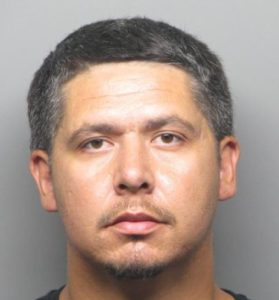
Garry Reynolds.

On July 10, the Honorable Patricia Scanlon sentenced the owner of NorCal K 9 Garry Reynolds (39-years-old) to two years in state prison. Earlier this year, a jury found Reynolds guilty of four felonies – all counts of animal cruelty for each dog under the care and supervision of NorCal K9, a dog training business. The jury found Reynolds was criminally negligent in the care of four animals under his company’s care in Antioch. (See related article)

Reynolds was remanded into custody immediately after he was sentenced. Judge Scanlon also denied a motion by Reynolds’ attorney to reduce the charges to misdemeanors and the motion for a new trial. Deputy District Attorney Arsh Singh prosecuted the case on behalf of the People. DDA Singh is assigned to the Felony Trial Team.

“I am satisfied the defendant will serve time in state prison due to his extreme negligence and disregard for the animals under his company’s care,” DDA Singh stated. “This case should serve as a wakeup call for any dog training company in our community. Animals deserve to be protected and treated well. Our Office will not tolerate the abuse of any animal.”

The City of Antioch started an investigation into the house where the dogs were located at 5200 Lone Tree Way. The investigation started as a code enforcement matter but progressed to a criminal investigation led by the Antioch Police Department due to a dog’s death. Two dogs were eventually euthanized due to the injuries the dogs suffered.

The investigation also led police to Devon Ashby, an employee of NorCal K9. Ashby was charged by the DA’s Office for his involvement in this case and he pleaded guilty to a misdemeanor count of animal cruelty.

The following dogs were associated with the jury’s earlier guilty verdict:

  • Gunner, Doberman
  • Favor, Cane Corso
  • Zeus, German Shepherd
  • Rambo (Bo), Labro-Poodle

Case information: People v. Garry Reynolds, Docket Number 05-191200-5

 

Filed Under: Animals & Pets, Crime, District Attorney, East County, News

Two Martinez residents charged with hate crime for defacing Black lives matter street mural

July 7, 2020 By Publisher 1 Comment

White couple paints over Black Lives Matter street mural

An unidentified white couple was recorded painting over a Black Lives Matter street mural located in front of a Bay Area courthouse.

Posted by Corey L. Teague on Sunday, July 5, 2020

By Scott Alonso, Public Information Officer, Contra Costa District Attorney

Martinez, Calif. – Today, Tuesday, July 7, 2020, the Contra Costa County District Attorney’s Office charged Martinez residents Nichole Anderson (42-years old) and David Nelson (53-years-old) with three misdemeanor counts, including a hate crime, for their alleged actions on Saturday, July 4, when defendant Anderson covered up a mural with the words BLACK LIVES MATTER in all capitals, with black paint. Nelson directly aided in the alleged criminal conduct. The incident was captured on video by witnesses.

On July 1, a local Martinez resident applied for a permit to paint a Black lives matter temporary mural on Court Street in downtown Martinez in front of the Wakefield Taylor Courthouse. The permit was approved by the City of Martinez and it was painted on July 4.

Nelson and Anderson arrived at the scene of the mural after it was completed with paint supplies. Anderson started to paint over the yellow letters “B” and “L” in the word “BLACK.” She used black paint and a large paint roller to do so. The video has been shared widely by witnesses and shared on social media.

“We must address the root and byproduct of systemic racism in our country. The Black lives matter movement is an important civil rights cause that deserves all of our attention,” stated Contra Costa County District Attorney Diana Becton. “The mural completed last weekend was a peaceful and powerful way to communicate the importance of Black lives in Contra Costa County and the country. We must continue to elevate discussions and actually listen to one another in an effort to heal our community and country.”

In total, both defendants are charged for the following alleged offenses:

  • Violation of Civil Rights, PC 422.6(b)
  • Vandalism Under $400, PC 594(a)
  • Possession of Tools to Commit Vandalism or Graffiti, PC 594.2(a)

If convicted, both defendants face up to a year in county jail. The alleged offenses are exempt from a specific bail amount due to the current county bail schedule in light of the COVID-19 pandemic.

Case information: People v. Nicole Claudia Anderson and David Richard Nelson, Docket Number 01-194031-1


Filed Under: Central County, Crime, District Attorney, News

Secretary of State Padilla assigns numbers to November ballot measures, invites ballot arguments

July 6, 2020 By Publisher Leave a Comment

Two tax increases included in Props 15 and 19; Prop 18 lowers voting age to 17

SACRAMENTO, CA – Secretary of State Alex Padilla on Wednesday, July 1, assigned proposition numbers to the legislative, initiative, and referendum measures set to appear on the November 3, 2020 General Election ballot. Secretary Padilla also invited interested Californians to submit arguments to be considered for inclusion in the Official Voter Information Guide. The guide is mailed to every voting household in California and posted on the Secretary of State’s website.

The propositions are listed below, along with the Legislative Counsel’s digest or the Attorney General’s official circulating title and summary.

Proposition 14

AUTHORIZES BONDS TO CONTINUE FUNDING STEM CELL AND OTHER MEDICAL RESEARCH. INITIATIVE STATUTE. Authorizes $5.5 billion in state general obligation bonds to fund grants from the California Institute of Regenerative Medicine to educational, non-profit, and private entities for: (1) stem cell and other medical research, therapy development, and therapy delivery; (2) medical training; and (3) construction of research facilities. Dedicates $1.5 billion to fund research and therapy for Alzheimer’s, Parkinson’s, stroke, epilepsy, and other brain and central nervous system diseases and conditions. Limits bond issuance to $540 million annually. Appropriates money from General Fund to repay bond debt, but postpones repayment for first five years. Summary of estimate by Legislative Analyst and Director of Finance of fiscal impact on state and local governments: State costs of $7.8 billion to pay off principal ($5.5 billion) and interest ($2.3 billion) on the bonds. Associated average annual debt payments of about $310 million for 25 years. The costs could be higher or lower than these estimates depending on factors such as the interest rate and the period of time over which the bonds are repaid. The state General Fund would pay most of the costs, with a relatively small amount of interest repaid by bond proceeds. (19-0022A1.)

Proposition 15

INCREASES FUNDING FOR PUBLIC SCHOOLS, COMMUNITY COLLEGES, AND LOCAL GOVERNMENT SERVICES BY CHANGING TAX ASSESSMENT OF COMMERCIAL AND INDUSTRIAL PROPERTY. INITIATIVE CONSTITUTIONAL AMENDMENT. Increases funding for K-12 public schools, community colleges, and local governments by requiring that commercial and industrial real property be taxed based on current market value. Exempts from this change: residential properties; agricultural properties; and owners of commercial and industrial properties with combined value of $3 million or less. Increased education funding will supplement existing school funding guarantees. Exempts small businesses from personal property tax; for other businesses, exempts $500,000 worth of personal property. Summary of estimate by Legislative Analyst and Director of Finance of fiscal impact on state and local governments: Net increase in annual property tax revenues of $7.5 billion to $12 billion in most years, depending on the strength of real estate markets. After backfilling state income tax losses related to the measure and paying for county administrative costs, the remaining $6.5 billion to $11.5 billion would be allocated to schools (40 percent) and other local governments (60 percent). (19-0008.)

Proposition 16

ACA 5 (Resolution Chapter 23), Weber. Government preferences.

The California Constitution, pursuant to provisions enacted by the initiative Proposition 209 in 1996, prohibits the state from discriminating against, or granting preferential treatment to, any individual or group on the basis of race, sex, color, ethnicity, or national origin in the operation of public employment, public education, or public contracting. The California Constitution defines the state for these purposes to include the state, any city, county, public university system, community college district, school district, special district, or any other political subdivision or governmental instrumentality of, or within, the state.

This measure would repeal these provisions. The measure would also make a statement of legislative findings in this regard.

WHEREAS, Equal opportunity is deeply rooted in the American ideals of fairness, justice, and equality. Programs to meet the goals of equal opportunity seek to realize these basic values. Equal opportunity not only helps individuals, but also helps communities in need and benefits our larger society. California’s equal opportunity program was upended by the passage of Proposition 209 in 1996; and

WHEREAS, Proposition 209, entitled the California Civil Rights Initiative, amended Article I of the California Constitution to prohibit race- and gender-conscious remedies to rectify the underutilization of women and people of color in public employment, as well as public contracting and education; and

WHEREAS, Proposition 209 invalidated a series of laws that had been enacted by the California Legislature over the 20 years prior to it that required state agencies to eliminate traditional patterns of segregation and exclusion in the workforce, to increase the representation of women and minorities in the state service by identifying jobs for which their employment was underrepresented due to discrimination, and to develop action plans to remedy such underrepresentation without effectuating quota systems; and

WHEREAS, Proposition 209 also overshadowed other landmark civil rights and antidiscrimination laws. In 1959, after a 37-year campaign by labor and civil rights groups, the Unruh Civil Rights Act was passed, which was the forerunner of the Civil Rights Act of 1964; and

WHEREAS, As a result of the passage of Proposition 209, women and people of color continue to face discrimination and disparity in opportunities to participate in numerous forms of association and work that are crucial to the development of talents and capabilities that enable people to contribute meaningfully to, and benefit from, the collective possibilities of national life; and

WHEREAS, The State of California has provided employment opportunities for people of color and women of all races. However, lingering, and even increasing, disparity still exists, particularly for Asian Americans, Pacific Islanders, Black Americans, Latino Americans, Native Americans, and women, and should be rectified; and

WHEREAS, Proposition 209 has impeded California’s continuing interest in supporting the equal participation of women in the workforce and in public works projects, in addressing the historical and present manifestations of gender bias, and in promulgating policies to enforce antidiscrimination in the workplace and on public projects; and

WHEREAS, In the wake of Proposition 209, California saw stark workforce diversity reductions for people of color and women in public contracting and in public education. Studies show that more diverse workforces perform better financially and are significantly more productive and focused; and

WHEREAS, Since the passage of Proposition 209, the state’s minority-owned and women-owned business enterprise programs have been decimated. A 2016 study conservatively estimates that the implementation of Proposition 209 cost women and people of color over $1,000,000,000 annually in lost contract awards. Most procurement and subcontracting processes remain effectively closed to these groups due to the changes brought on by Proposition 209; and

WHEREAS, Women are vastly underrepresented among firms receiving public contracts and the dollars awarded to certified women-owned business enterprises fell by roughly 40 percent, compared to levels before Proposition 209. In addition, only one-third of certified minority business enterprises in California’s transportation construction industry are still in operation today, compared to 20 years ago; and

WHEREAS, Women, particularly women of color, continue to face unequal pay for equal work. White women are paid 80 cents to every dollar paid to white men doing the same work. Black women are paid 60 cents for every dollar paid to white men doing the same work and would theoretically have to work an extra seven months every year to overcome that differential. This persistent gender wage gap continues to harm women, their families, and communities; and

WHEREAS, Despite a booming economy with almost full employment, a persistent racial wealth gap remains rooted in income inequality. Improving minority access to educational and labor market opportunity reduces the wealth gap and strengthens the economy; and

WHEREAS, Proposition 209 has had a devastating impact on minority equal opportunity and access to California’s publicly funded institutions of higher education. This violates the spirit of the California Master Plan for Higher Education by making it more difficult for many students to obtain an affordable and accessible high quality public education. While federal law allows schools to use race as a factor when making admissions decisions, California universities are prohibited by Proposition 209 from engaging in targeted outreach and extra efforts to matriculate high-performing minority students. This reduces .the graduation rates of students of color and, in turn, contributes to the diminution of the “pipeline” of candidates of color for faculty positions; and

WHEREAS, Since the passage of Proposition 209, diversity within public educational institutions has been stymied. Proposition 209 instigated a dramatic change in admissions policy at the University of California, with underrepresented group enrollment at the Berkeley and Los Angeles campuses of the University of California immediately falling by more than 60 percent and systemwide underrepresented group enrollment falling by at least 12 percent. Underrepresented group high school graduates faced substantial long-term declines in educational and employment outcomes as a result of these changes; and

WHEREAS, Among California high school graduates who apply to the University of California, passage of Proposition 209 has led to a decreased likelihood of earning a college degree within six years, a decreased likelihood of ever earning a graduate degree, and long-run declines in average wages and the likelihood of earning high wages measured by California standards. The University of California has never recovered the same level of diversity that it had before the loss of affirmative action nearly 20 years ago, a level that, at the time, was widely considered to be inadequate to meet the needs of the state and its young people because it did not achieve parity with the state’s ethnic demographics; and

WHEREAS, The importance of diversity in educational settings cannot be overstated. The Supreme Court of the United States outlined the benefits that arise from diversity, as follows, “the destruction of stereotypes, the promotion of cross-racial understanding, the preparation of a student body for an increasingly diverse workforce and society, and the cultivation of a set of leaders with legitimacy in the eyes of the citizenry”; and

WHEREAS, Federal courts continue to reaffirm the value of diversity in favor of race conscious admissions, as exemplified by United States District Judge Allison D. Burroughs who stated, “race conscious admissions programs that survive strict scrutiny have an important place in society and help ensure that colleges and universities can offer a diverse atmosphere that fosters learning, improves scholarship, and encourages mutual respect and understanding. Further, Judge Burroughs recognized that there are no race-neutral alternatives that would allow a university to achieve an adequately diverse student body while still perpetuating its standards for academic and other forms of excellence; and

WHEREAS, It is the intent of the Legislature that California remedy discrimination against, and underrepresentation of, certain disadvantaged groups in a manner consistent with the United States Constitution and allow gender, racial, and ethnic diversity to be considered among the factors used to decide college admissions and hiring and contracting by government institutions; and

WHEREAS, It is further the intent of the Legislature that California transcend a legacy of unequal treatment of marginalized groups and promote fairness and equal citizenship by affording the members of marginalized groups a fair and full opportunity to be integrated into state public institutions that advance upward mobility, pay equity, and racial wealth gap reduction; now, therefore, be it Resolved by the Assembly, the Senate concurring, That the Legislature of the State of California at its 2019-20 Regular Session commencing on the third day of December 2018, two-thirds of the membership of each house concurring, hereby proposes to the people of the State of California, that the Constitution of the State be amended as follows:

That Section 31 of Article I thereof is repealed.

Proposition 17

ACA 6 (Resolution Chapter 24), McCarty. Elections: disqualification of electors.

The California Constitution requires the Legislature to provide for the disqualification of electors while mentally incompetent or imprisoned or on parole for the conviction of a felony. Existing statutory law, for purposes of determining who is entitled to register to vote, defines imprisoned as currently serving a state or federal prison sentence.

This measure would instead direct the Legislature to provide for the disqualification of electors who are serving a state or federal prison sentence for the conviction of a felony. This measure would also delete the requirement that the Legislature provide for the disqualification of electors while on parole for the conviction of a felony. The measure would provide for the restoration of voting rights upon completion of the prison term.

Resolved by the Assembly, the Senate concurring, That the Legislature of the State of California at its 2019-20 Regular Session commencing on the third day of December 2018, two-thirds of the membership of each house concurring, hereby proposes to the people of the State of California, that the Constitution of the State be amended as follows:

First-That Section 2 of Article II thereof is amended to read:

SEC. 2. (a) A United States citizen 18 years of age and resident in this State may vote.

(b) An elector disqualified from voting while serving a state or federal prison term, as described in Section 4, shall have their right to vote restored upon the completion of their prison term.

Second-That Section 4 of Article II thereof is amended to read:

SEC. 4. The Legislature shall prohibit improper practices that affect elections and shall provide for the disqualification of electors while mentally incompetent or serving a state or federal prison term for the conviction of a felony.

Proposition 18

ACA 4 (Resolution Chapter 30), Mullin. Elections: voting age.

The California Constitution authorizes any person who is a United States citizen, at least 18 years of age, and a resident of the state to vote.

This measure, in addition, would authorize a United States citizen who is 17 years of age, is a resident of the state, and will be at least 18 years of age at the time of the next general election to vote in any primary or special election that occurs before the next general election in which the citizen would be eligible to vote if at least 18 years of age.

Proposition 19

ACA 11 (Resolution Chapter 31), Mullin. The Home Protection for Seniors, Severely Disabled, Families, and Victims of Wildfire or Natural Disasters Act.

The California Constitution limits the amount of ad valorem taxes on real property to 1% of the full cash value of that property, defined as the county assessor’s valuation of real property as shown on the 1975–76 tax bill and, thereafter, the appraised value of the property when purchased, newly constructed, or a change in ownership occurs after the 1975 assessment, subject to an annual inflation adjustment not to exceed 2%. The California Constitution authorizes the Legislature to authorize a person over 55 years of age or any severely and permanently disabled person residing in property eligible for the homeowner’s exemption to transfer the base year value of that property to a replacement dwelling of equal or lesser value located in the same county, or another county that has adopted an ordinance allowing base years value transfers from other counties, as provided. The California Constitution also provides that the purchase or transfer of the principal residence, and the first $1,000,000 of other real property, of a transferor in the case of a transfer between parents and their children, or between grandparents and their grandchildren if all the parents of those grandchildren are deceased, is not a “purchase” or “change in ownership” for purposes of determining the “full cash value” of property for taxation.

This measure, beginning on and after April 1, 2021, would authorize an owner of a primary residence who is over 55 years of age, severely disabled, or a victim of a wildfire or natural disaster, as defined, to transfer the taxable value, defined as the base year value plus inflation adjustments, of their primary residence to a replacement primary residence located anywhere in the state, regardless of the location or value of the replacement primary residence, that is purchased or newly constructed as that person’s principal residence within 2 years of the sale of the original primary residence. The measure would limit a person who is over 55 years of age or severely disabled to 3 transfers under these provisions.

The measure, beginning on and after February 16, 2021, would exclude from the terms “purchase” and “change in ownership” for purposes of determining the “full cash value” of property the purchase or transfer of a family home or family farm, as those terms are defined, of the transferor in the case of a transfer between parents and their children, or between grandparents and their grandchildren if all the parents of those grandchildren are deceased. In the case of a transfer of a family home, the measure would require that the property continue as the family home of the transferee. The measure would require that the taxable value of the property be determined as provided. In the case of property tax benefits provided to a family home under these provisions, the bill would require the transferee to claim the homeowner’s or disabled veteran’s exemption within one year of the transfer. The measure would specify that the above-described provisions relating to transfers between parents or grandparents and children or grandchildren would apply to transfers occurring on or before February 15, 2021.

The measure would establish the California Fire Response Fund in the State Treasury. The measure would require the Controller to annually transfer a specified amount, based on calculations by the Director of Finance, of the additional revenues and savings that accrued to the state from the implementation of this measure’s provisions from the General Fund to that fund. However, the measure would provide that, if the amount required to be transferred to the California Fire Response Fund exceeds the amount transferred for the previous fiscal year by more than 10%, that excess amount would not be transferred to the California Fire Response Fund. The measure would require the Legislature to appropriate moneys in the fund solely for the purpose of funding fire suppression staffing by the Department of Forestry and Fire Protection and underfunded special districts that provide fire protection services, as provided.

The measure would also establish the County Revenue Protection Fund and continuously appropriate moneys in that fund for the purpose of reimbursing eligible local agencies, as provided. The measure would require the Controller to annually transfer a specified amount, based on the above-described calculations by the Director of Finance, from the General Fund to that fund. The measure would require each county to annually determine the gain of the county and any local agency within the county resulting from the implementation of this measure and, if that amount of gain is negative, provide that specified eligible local agencies may receive a reimbursement from the County Revenue Protection Fund. The measure would require the California Department of Tax and Fee Administration to provide a reimbursement to each eligible local agency that has a negative gain, determined every 3 years based on the aggregate gain of the eligible local agency, as provided, and require the Controller to transfer any remaining balance in the County Revenue Protection Fund to the General Fund at the end of each 3-year period, to be available for appropriation for any purpose.

Proposition 20

RESTRICTS PAROLE FOR NON-VIOLENT OFFENDERS. AUTHORIZES FELONY SENTENCES FOR CERTAIN OFFENSES CURRENTLY TREATED ONLY AS MISDEMEANORS. INITIATIVE STATUTE. Imposes restrictions on parole program for non-violent offenders who have completed the full term for their primary offense. Expands list of offenses that disqualify an inmate from this parole program. Changes standards and requirements governing parole decisions under this program. Authorizes felony charges for specified theft crimes currently chargeable only as misdemeanors, including some theft crimes where the value is between $250 and $950. Requires persons convicted of specified misdemeanors to submit to collection of DNA samples for state database. Summary of estimate by Legislative Analyst and Director of Finance of fiscal impact on state and local government: Increased state and local correctional costs likely in the tens of millions of dollars annually, primarily related to increases in penalties for certain theft-related crimes and the changes to the nonviolent offender release consideration process. Increased state and local court-related costs of around a few million dollars annually related to processing probation revocations and additional felony theft filings. Increased state and local law enforcement costs not likely to exceed a couple million dollars annually related to collecting and processing DNA samples from additional offenders. (17-0044.)

Proposition 21

EXPANDS LOCAL GOVERNMENTS’ AUTHORITY TO ENACT RENT CONTROL ON RESIDENTIAL PROPERTY. INITIATIVE STATUTE. Amends state law to allow local governments to establish rent control on residential properties over 15 years old. Allows rent increases on rent-controlled properties of up to 15 percent over three years from previous tenant’s rent above any increase allowed by local ordinance. Exempts individuals who own no more than two homes from new rent-control policies. In accordance with California law, provides that rent-control policies may not violate landlords’ right to a fair financial return on their property. Summary of estimate by Legislative Analyst and Director of Finance of fiscal impact on state and local governments: Potential reduction in state and local revenues of tens of millions of dollars per year in the long term. Depending on actions by local communities, revenue losses could be less or more. (19-0001.)

Proposition 22

CHANGES EMPLOYMENT CLASSIFICATION RULES FOR APP-BASED TRANSPORTATION AND DELIVERY DRIVERS. INITIATIVE STATUTE. Establishes different criteria for determining whether app-based transportation (rideshare) and delivery drivers are “employees” or “independent contractors.” Independent contractors are not entitled to certain state-law protections afforded employees—including minimum wage, overtime, unemployment insurance, and workers’ compensation. Instead, companies with independent contractor drivers will be required to provide specified alternative benefits, including: minimum compensation and healthcare subsidies based on engaged driving time, vehicle insurance, safety training, and sexual harassment policies. Restricts local regulation of app-based drivers; criminalizes impersonation of such drivers; requires background checks. Summary of estimate by Legislative Analyst and Director of Finance of fiscal impact on state and local governments: Increase in state personal income tax revenue of an unknown amount. (19-0026A1)

Proposition 23

AUTHORIZES STATE REGULATION OF KIDNEY DIALYSIS CLINICS. ESTABLISHES MINIMUM STAFFING AND OTHER REQUIREMENTS. INITIATIVE STATUTE. Requires at least one licensed physician on site during treatment at outpatientkidney dialysis clinics; authorizes Department of Public Health to exempt clinics from thisrequirement due to shortages of qualified licensed physicians if at least one nurse practitioner orphysician assistant is on site. Requires clinics to report dialysis-related infection data to state andfederal governments. Requires state approval for clinics to close or reduce services. Prohibitsclinics from discriminating against patients based on the source of payment for care. Summaryof estimate by Legislative Analyst and Director of Finance of fiscal impact on state and local governments: Increased state and local health care costs, likely in the low tens of millions of dollars annually, resulting from increased dialysis treatment costs. (19-0025A1.)

Proposition 24

AMENDS CONSUMER PRIVACY LAWS. INITIATIVE STATUTE. Permits consumers to: (1) prevent businesses from sharing personal information; (2) correct inaccurate personal information; and (3) limit businesses’ use of “sensitive personal information”—such as precise geolocation; race; ethnicity; religion; genetic data; union membership; private communications; and certain sexual orientation, health, and biometric information. Changes criteria for which businesses must comply with these laws. Prohibits businesses’ retention of personal information for longer than reasonably necessary. Triples maximum penalties for violations concerning consumers under age 16. Establishes California Privacy Protection Agency to enforce and implement consumer privacy laws, and impose administrative fines. Requires adoption of substantive regulations. Summary of estimate by Legislative Analyst and Director of Finance of fiscal impact on state and local governments: Increased annual state costs of roughly $10 million for a new state agency to monitor compliance and enforcement of consumer privacy laws. Increased state costs, potentially reaching the low millions of dollars annually, from increased workload to DOJ and the state courts, some or all of which would be offset by penalty revenues. Unknown impact on state and local tax revenues due to economic effects resulting from new requirements on businesses to protect consumer information. (19-0021A1.)

Proposition 25

REFERENDUM TO OVERTURN A 2018 LAW THAT REPLACED MONEY BAIL SYSTEM WITH A SYSTEM BASED ON PUBLIC SAFETY RISK. If this petition is signed by the required number of registered voters and timely filed, a referendum will be placed on the next statewide ballot requiring a majority of voters to approve a 2018 state law before it can take effect. The 2018 law replaces the money bail system with a system for pretrial release from jail based on a determination of public safety or flight risk, and limits pretrial detention for most misdemeanors. (18-0009.)

Ballot Arguments

Arguments may be submitted for or against the measures. Arguments selected for the Official Voter Information Guide will be on public display between July 21 and August 10. If multiple arguments are submitted for a proposition, state law gives first priority to arguments written by legislators in the case of legislative measures and to proponents of an initiative or referendum; subsequent priority goes to bona fide citizen associations and then to individuals. No more than three signers are allowed to appear on an argument or rebuttal to an argument.

Ballot arguments cannot exceed 500 words and rebuttals to ballot arguments cannot exceed 250 words. All submissions should be typed and double-spaced.  Arguments may be hand-delivered to the Secretary of State’s Elections Division at 1500 11th Street, 5th Floor, Sacramento, California 95814; faxed to (916) 653-3214; or emailed to VIGarguments@sos.ca.gov. If faxed or emailed, the original documents must be received within 72 hours.  The deadline to submit ballot arguments is July 7 by 5:00 p.m. The deadline to submit rebuttals to the ballot arguments is July 16 by 5:00 p.m.

Candidate Statements in the County Voter Information Guide

Candidates for the United States House of Representatives, California State Senate, and California State Assembly have until August 7 to submit candidate statements to their county elections official for the local sample ballot in the county or counties in which the district lies.

For more information on ballot measures, candidate filing requirements, and election deadlines, please visit: https://www.sos.ca.gov/elections/upcoming-elections/general-election-november-3-2020/


Filed Under: Crime, Education, Finances, Government, News, Politics & Elections, Seniors, Taxes

Two pedestrians struck, killed in separate collisions in Bay Point, Rodeo Saturday night

July 5, 2020 By Publisher Leave a Comment

Driver arrested for DUI in Bay Point fatality

By CHP – Contra Costa

Yesterday, July 4, 2020 at about 9:55pm, Contra Costa CHP was advised of a collision involving a vehicle versus a pedestrian at Seaview Drive and Shore Road in Bay Point. An Audi sedan struck a pedestrian in the roadway while traveling at a high rate of speed, tragically killing the pedestrian, and then fled the scene into the city of Pittsburg. The pedestrian was pronounced deceased at the scene and the driver of the Audi was later located and arrested on multiple felony charges. The Contra Costa County Sheriff’s Coroner’s Office will be handling the release of identity of the deceased pedestrian.

In our initial investigation, it appears the driver of the Audi was traveling at a high rate of speed on the residential street of Seaview and approaching Shore Road, while the pedestrian was in the roadway with fireworks. The driver of the Audi struck the pedestrian, causing the pedestrian to be thrown into a parked vehicle on Seaview and subsequently killing the pedestrian. And then the driver of the Audi fled the scene. That driver was later found at a location in Pittsburg (from statements and witness tips) and arrested. The driver was also suspected of being under the influence/impaired and arrested and booked for the following charges: -23153(a)VC-DUI causing major injury or death, and -191.5 PC Gross Vehicular Manslaughter while intoxicated.

This incident is still under investigation. If anyone witnessed this collision or the events leading up to it, please contact Contra Costa CHP in Martinez at (925) 646-4980. Thank you.

Rodeo Pedestrian Fatality

Early this morning at about 12:20am, Contra Costa CHP was advised of a collision involving a vehicle versus pedestrian on I-80 westbound, just east of Willow Avenue. The driver of a Dodge Ram collided with a Buick sedan stopped in the #1 lane on I-80, with the driver out of the Buick and standing within the road, subsequently killing the pedestrian. The driver of the Dodge was transported to John Muir Hospital in Walnut Creek for moderate injuries. The Contra Costa County Sheriff’s Coroner’s Office will be handling the release of identity of the deceased pedestrian.

It is still unclear as to why the driver of the Buick was stopped within the #1 lane of I-80.
At this time, it is unknown if alcohol or drugs were a contributing factor, but this incident is still under investigation. If anyone witnessed this collision or the events leading up to it, please contact Contra Costa CHP in Martinez at (925) 646-4980.

Filed Under: CHP, Crime, East County, News, West County

Martinez hit and run causes major injuries to 7-year-old boy, CHP asks for public’s help

July 5, 2020 By Publisher Leave a Comment

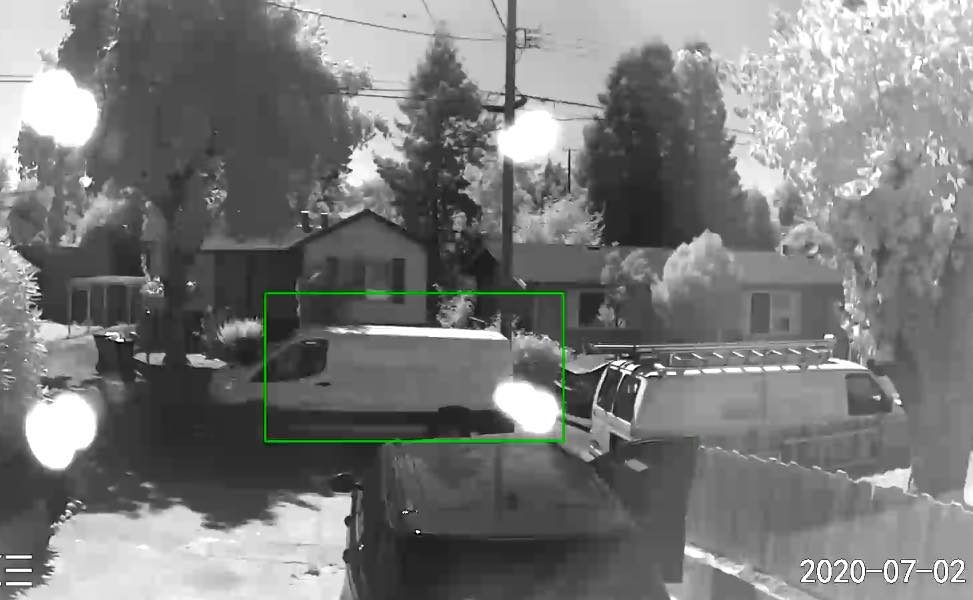
White van is vehicle of suspect in Martinez hit and run, Thursday. Photos by CHP.

By CHP – Contra Costa

Late Thursday afternoon, July 2, 2020 at approximately 4:09pm, Contra Costa CHP was advised of a hit and run with major injuries to a 7-year-old child that was riding his scooter. This occurred on Vine Avenue between Leslie Avenue and Merle Avenue in the city of Martinez, sometime between 3:48pm-3:56pm. This white van (in black and white photo) was captured on home surveillance traveling south on Vine Avenue, struck the boy on the scooter, and fled the scene. The boy was airlifted by helicopter to Oakland Children’s Hospital and we’ve learned although he suffered major injuries, thankfully he is in stable condition.

Security camera screenshot of suspect’s van.

The black and white photo is the actual suspect vehicle caught on surveillance and the second color photo is a very similar looking van also captured on surveillance video within the area.

We are seeking the public’s assistance with information regarding this incident. If anyone witnessed this event, or the suspect vehicle in the area or vicinity during the time of the incident, please contact Contra Costa CHP at (925)646-4980 and leave your information for investigating Officer Garduno. Or if after hours, please DM (direct message) our FB page here with your contact info.

Filed Under: Central County, CHP, Crime, News

Contra Costa fire, law enforcement officials warn of dangers of illegal fireworks during Independence Day holiday weekend

July 3, 2020 By Publisher 1 Comment

Illegal Fireworks Use Poses Extreme Risk of Grievous Bodily Harm and Catastrophic Wildfires During; Current Period of Critically High Fire Danger

“We have a zero-tolerance policy; if you are caught with illegal fireworks, expect a $1000 fine, or a trip to jail.” – Pittsburg Police Chief Brian Addington

Contra Costa County Fire Protection District (Con Fire) and local law enforcement agencies across the county, this week warned citizens about the extreme dangers of illegal fireworks during the days leading up to the Independence Day holiday.

Fire and law enforcement leaders reminded residents and visitors that all fireworks, regardless of type or labeling, are illegal everywhere in the county. There are no “Safe & Sane” fireworks, regardless of labeling. Additionally, the potential for grievous bodily harm posed by these illegal devices and the risk of causing catastrophic wildfires during this time of extremely high fire danger is great.

With prolonged warm, dry and windy weather leading up to the Independence Day holiday, fire danger is unusually high making fireworks an even greater threat to our communities than in recent wetter and cooler years. Because of these conditions, in the month of June alone, communities across the District have experienced a nearly fourfold increase in grass and vegetation fires. More than a dozen of these were started by illegal fireworks; many have threatened homes and businesses.

“The only safe and sane approach to fireworks in Contra Costa County is to simply not use them,” said Fire Chief Lewis T. Broschard III, Contra Costa County Fire Protection District. “They are uncontrollable and dangerous, illegal, and their use poses the very real possibility of causing wildland fires that could easily destroy homes and threaten lives in this time of critically high fire risk.”

“This year, we have seen a tremendous increase in fireworks-related complaints and calls for service compared to previous years,” said Chief Tammany Brooks, Antioch Police Department. “I want to remind everyone that all fireworks are illegal in Antioch as well as all of Contra Costa County. In addition to the possible $1,000 criminal fine, fireworks pose an extreme fire danger and can cause traumatic injuries.”

“Fireworks aren’t just illegal, they’re dangerous. We want you to keep that and your community in mind as we approach the holiday weekend,” said Concord Police Chief Mark Bustillos. “We wish everyone a happy and safe 4th of July!”

“Already several weeks into what promises to be a high-risk fire season, we want to remind residents of the very real dangers involved with illegal fireworks,” said Lafayette Police Chief Ben Alldritt. “We owe it to our friends, families, and neighbors to be safe and avoid fireworks risks this Fourth of July holiday — the City of Lafayette wants everyone to be safe and avoid fireworks-related accidents and fires.”

“While Independence Day is a time for celebrating, and we wish you all the best on this holiday, the Martinez Police Department remains steadfast in our commitment to public safety,” said Chief Manjit Sappal. “As such, we wish to make it clear that fireworks are illegal and unsafe; they can cause injury and devastating fire-related damage. Please commit to the safety of your family, friends, and neighbors by not using any fireworks.”

“The Fourth of July is a great time to spend with family and friends, but illegal fireworks continue to be a problem in our community,” said Chief Brian Addington, Pittsburg Police Department. “We have already had more than 350 calls reporting illegal fireworks. We have a zero-tolerance policy; if you are caught with illegal fireworks, expect a $1000 fine, or a trip to jail.”

“We know how disappointed people are by the cancellation of the traditional fireworks shows due to COVID-19, but using illegal fireworks instead is not a safe solution. They pose serious danger to those using them, and to the surrounding community, as well,” said Pleasant Hill Police Chief Bryan Hill. “This year, we are encouraging everyone to celebrate at their place of residence, and to celebrate safely.”

“The pyrotechnic powder in most fireworks is extremely sensitive to heat, shock and friction, and in certain circumstances can explode even when you don’t want or expect them to,” said acting Lt. Anthony Mangini, Walnut Creek Police Bomb Squad. “The fire and injury danger from illegal fireworks poses extreme risks for civilians, and also for first responders and our hazardous devices technicians who must dispose of them.”

While public fireworks events around the county have been cancelled this year due to the COVID-19 pandemic, officials strongly discourage residents from attempting to replace these events with illegal consumer fireworks use. Instead, residents are encouraged to watch a fireworks display on television or online video, use safe and readily available glow-stick products, or many other ways of celebrating.

Fire and law officials urge residents to protect their homes, families and neighborhoods by reporting all use of illegal fireworks immediately to their local law enforcement agency’s non-emergency phone line. In cases where immediate risk to life or property exists, 911 should be called.

In addition to fire danger, there are significant risks of serious injury or death. On July 5th, 2018, an Antioch resident was severely injured handling a supposedly “Safe & Sane” firework discarded at his place of business. Nationwide, thousands are injured annually, more than half are under 15.

Last year, illegal fireworks use in the County sparked preventable vegetation fires threatening lives and structures and straining emergency resources needed for higher priority fire and medical emergencies.

For more on protecting homes and businesses from wildfires, visit www.cccfpd.org/wildfireprep.

About Contra Costa County Fire Protection District (Con Fire) — A recognized fire service leader — Con Fire provides fire and emergency medical services to more than a million people across its 304 square-mile District area, and through mutual aid, in and around the 20 cities and unincorporated communities of Contra Costa County, California. With few exceptions, county emergency ambulance transport services are provided by Con Fire through its unique sub-contractor Alliance model. In 2019, the District responded to nearly 78,000 fire and EMS emergencies and dispatched some 95,000 ambulances, providing exert medical care on more than 74,000 ambulance transports. The District, with 26 fire stations and more than 400 employees, is dedicated to preserving life, property and the environment.

Filed Under: Crime, Fire, News

Sheriff, Marshals Service seek San Pablo man identified for April murder in Rodeo

July 1, 2020 By Publisher Leave a Comment

By Jimmy Lee, Director of Public Affairs, Contra Costa County, Office of the Sheriff

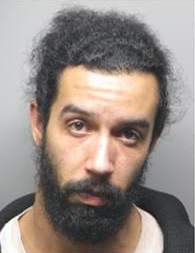
Angelo Ramirez. Photo by CCC Sheriff.

The Contra Costa County Office of the Sheriff has identified 30-year-old Angelo Ramirez of San Pablo as the suspect in a fatal shooting in Rodeo, California. (See related article).

On April 24, 2020, at about 7:52 PM, Bay Station Deputy Sheriffs were dispatched to a report that someone was shot at the 1000 block of Mariposa Avenue. Deputies arrived finding a man on the street suffering from a gunshot wound. The fire department and an ambulance responded. The man was later pronounced deceased at the scene. The victim was identified as 24-year-old Olajawon Walker of San Pablo.

Detectives investigating the case later identified Ramirez as the suspect. The case was presented to the Contra Costa County District Attorney’s Office which charged him with murder. A warrant was issued for Ramirez’s arrest.

It is believed that Ramirez fled the area after the murder. He is currently being sought by the Sheriff’s Office and the U.S. Marshals Service. It is believed Ramirez may be receiving assistance in avoiding apprehension. Anyone associated with harboring Ramirez may be arrested for being an accessory to murder after the fact.

Ramirez should be considered armed and dangerous and should not be approached by the public. If he is seen, please call 911 immediately. Anyone with any information on this case is asked to contact Sheriff’s Office Dispatch at (925) 646-2441 or the Investigation Division at (925) 313-2600. For any tips, email: tips@so.cccounty.us or call (866) 846-3592 to leave an anonymous voice message.

Filed Under: Crime, News, Sheriff, West County

Pleasant Hill man sentenced to 25 years in prison for producing child pornography

July 1, 2020 By Publisher Leave a Comment

Daniel Joseph Feliciano. Photo by CCDA.

OAKLAND – Daniel Joseph Feliciano was sentenced today to 25 years in prison for producing child pornography, announced United States Attorney David L. Anderson and Homeland Security Investigations (HSI) Special Agent in Charge Tatum King.  The sentence was handed down by the Honorable Jeffrey S. White, U.S. District Judge.

Feliciano, 30, of Pleasant Hill, pleaded guilty to the charge on March 3, 2020.  According to his plea agreement, Feliciano admitted that he recorded a video of a 9-year-old minor in a sexually explicit act and produced an image of a 5-year-old seated on a bed with the minor’s genitalia visible.  Feliciano knew the two victims were minors and he created the images using his cellular phone.

In addition, Feliciano admitted that he possessed approximately 205 images or videos of minors engaged in sexually explicit conduct.  The government filed additional papers arguing that Feliciano possessed more than 21,000 images of child pornography, including images of sexual abuse of a toddler-aged child and other children younger than 7 years old. (Please see related article)

A federal grand jury indicted Feliciano on December 19, 2019, charging him with two counts of producing and possessing child pornography, in violation of 18 U.S.C. § 2251(a) and 18 U.S.C. § 2252(a)(4)(B).  Feliciano pleaded guilty to both counts.

In addition to the prison term, Judge White also sentenced the defendant to a 10-year period of supervised release and scheduled a hearing for September 22, 2020, at 1:00 p.m. to resolve issues concerning restitution. The defendant will begin serving the sentence immediately.

This prosecution arose from a Cybertip on October 4, 2019, to the National Center for Missing and Exploited Children (NCMEC) related to the discovery of potential exploitation material being stored in a cloud storage account later traced to Feliciano.

Assistant U.S. Attorney Jonathan U. Lee is prosecuting the case with the assistance of Jessica Rodriguez Gonzalez, Kay Konopaske, and Kathleen Turner.  The prosecution is the result of an investigation by HSI, the Silicon Valley Internet Crimes Against Children Task Force, and the Pleasant Hill Police Department.


Filed Under: Central County, Crime, News, U S Attorney

Golden State Killer Joseph James DeAngelo Jr. pleads guilty to 13 murders, 13 kidnappings, dozens more uncharged crimes

June 30, 2020 By Publisher 1 Comment

Joseph James DeAngelo, Jr. pleads guilty during his hearing on Monday, June 29, 2020. YouTube video screenshot. Arrest photo by Sacramento County Sheriff.

Four crimes in Contra Costa County; avoids death penalty, to be sentenced to life without possibility of parole

SACRAMENTO, CA – Joseph James DeAngelo Jr., 74, pleaded guilty today to 13 felony counts of first-degree murder and 13 felony counts of kidnapping to commit robbery during a 13-year multicounty crime spree that terrorized much of California during the 1970s and 1980s. DeAngelo was identified through Investigative Genetic Genealogy (IGG) in 2018, more than three decades after he raped and murdered his last victim in 1986. (Watch DeAngelo plead guilty and confess to his crimes).

Known as the Golden State Killer and East Area Rapist, DeAngelo also admitted to 161 uncharged crimes related to 61 uncharged victims, including attempted murder, kidnapping to commit robbery, rape, robbery, first-degree burglary, false imprisonment and criminal threats. The uncharged crimes occurred in Alameda, Sacramento, San Joaquin, Santa Clara, Stanislaus, Tulare and Yolo counties.

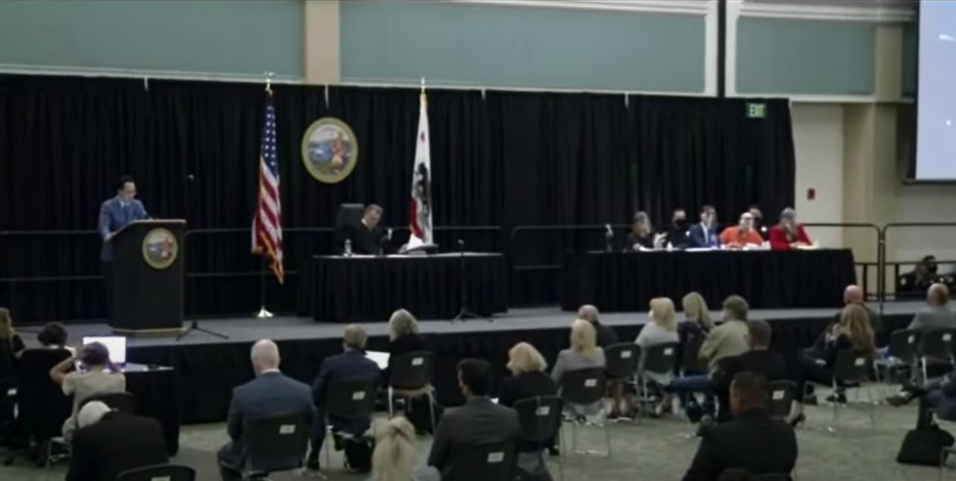
DeAngelo’s hearing was held in the Sac State ballroom to accommodate the victims and their families, and reporters. YouTube video screenshot.

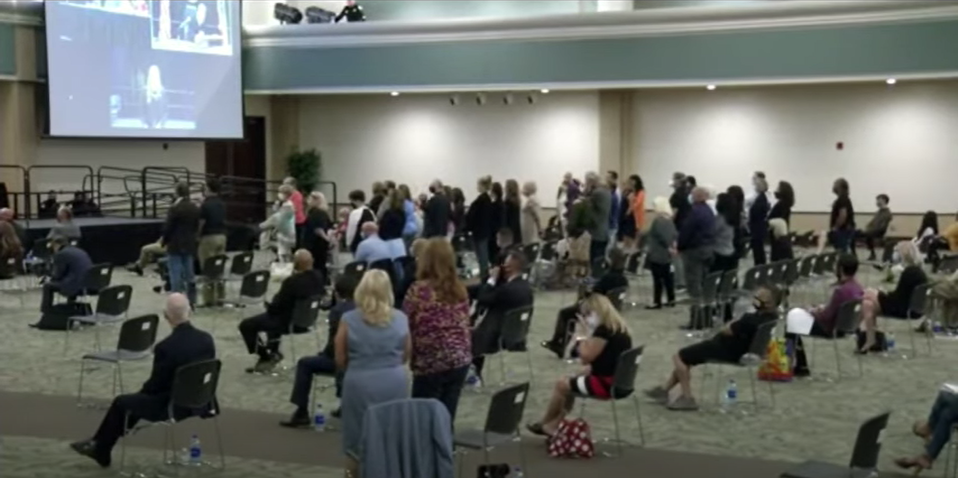
Monday’s hearing was relocated to the Sacramento State Ballroom to accommodate the large number of victims and their family members in attendance and to ensure social distancing in light of the current COVID-19 pandemic.

DeAngelo is being jointly prosecuted by the district attorneys of Contra Costa, Orange, Sacramento, Santa Barbara, Tulare and Ventura counties.

“He committed multiple heinous acts in Contra Costa County. Four of those cases we were able to charge,” Contra Costa County District Attorney Diana Becton stated. “While we were not able to file the other cases, we are very fortunate that today DeAngelo pled to all of the cases, both those that were charged and uncharged.”

The decision by prosecutors to accept DeAngelo’s offer to plead guilty to the 26 charged crimes and admit the uncharged crimes was made in consultation with the victims and their family members. The totality of the circumstances, including the age of the victims, the age of witnesses and the death of other key witnesses, and the age of the defendant, were taken into consideration.

The massive scope of this case, which involved more than 1.3 million pages of discovery, would have unduly burdened the victims with a lengthy prosecution that was anticipated to take as many as ten years.  The plea provided the victims and their families who were terrorized by DeAngelo the opportunity to hear him admit his crimes and they will have an opportunity to provide victim impact statements beginning August 17, 2020.

This six-county joint prosecution resulted in a guilty plea of:

  • 13 counts of first-degree murder with special circumstances allegations of multiple murders and murder during the commission of rape, robbery, and burglary.
  • 13 felony counts of kidnapping to commit robbery with sentencing enhancements for personal use of a firearm and personal use of a knife during the commission of the offenses.
  • DeAngelo admitted murdering:

o Claude Snelling – September 11, 1975 – Tulare County

o Katie and Brian Maggiore – February 2, 1978 – Sacramento County

o Debra Alexandria Manning – December 30, 1979 – Santa Barbara County

o Robert Offerman – December 30, 1979 – Santa Barbara County

o Cheri Domingo – July 27, 1981 – Santa Barbara County

o Greg Sanchez – July 27, 1981 – Santa Barbara County

o Charlene and Lyman Smith – on or about March 13, 1980– Ventura County

o Keith and Patrice Harrington – August 21, 1980 – Orange County

o Manuela Witthuhn – February 6, 1981 – Orange County

o Janelle Cruz – May 5, 1986 – Orange County

DeAngelo also admitted to the uncharged crimes of:

  • Attempted murder, kidnapping to commit robbery, rape, robbery, first-degree burglary, false imprisonment and criminal threats.

(Read the details of the charges).

DeAngelo’s victims and their families stand during the hearing. YouTube video screenshot.

DeAngelo’s crime spree began in 1975 when he was working as a police officer with the Exeter Police Department. The crimes, which continued long after he was fired from the Auburn Police Department in 1979, escalated from peeping through windows to stalking to rape and serial murder.

His crimes earned him the nicknames of the Visalia Ransacker, the East Area Rapist, the Original Night Stalker, and the Golden State Killer. It was not until April 2018 that Sacramento authorities announced that Investigative Genetic Genealogy had identified DeAngelo as the person responsible.

Joseph DeAngelo will be sentenced to life in state prison without the possibility of parole. The sentence will run consecutive and concurrent to his sentence for the first-degree murders to which he has pled.  His sentencing hearing will commence on August 17, 2020. Victims will be given the opportunity to deliver victim impact statements prior to DeAngelo’s sentencing on August 21, 2020.  The sentencing hearing location will be announced at a later date.

The identification, arrest, and prosecution of DeAngelo is the result of decades of work by law enforcement agencies across California.

“Today’s court proceeding brings us one step closer to ending the horrific saga of Joseph DeAngelo and his decades long crime spree,” said Contra Costa DA Becton. “The crimes he committed in Contra Costa County, and throughout the state of California, have left a lifetime of scars and pain for our victims and their families. In this case justice did not move swiftly, it was a long time coming. However, our victims remained steadfast and brave throughout this entire process. Today is about remembering all of the victims in this case and finally holding DeAngelo responsible for these crimes.”

See video of District Attorneys’ press conference following the hearing. Hear from one of his victims in Contra Costa County in a KTVU FOX2 news report.

“I am an ardent supporter of the death penalty when appropriate. There are crimes that are so heinous and so depraved that death is the only appropriate punishment. This is one of those cases, and that is why all six District Attorneys prosecuting this case decided unanimously to seek the death penalty,” said Orange County District Attorney Todd Spitzer. “The ability of victims to confront the person who terrorized them and robbed them of a lifetime of memories with their loved ones is an unequivocal right. I carefully consulted with all of the families of the Orange County victims and had the former district attorney who filed the charges fully briefed on the defendant’s offer to plead guilty. Given the totality of the circumstances including the advanced age of the victims, the advanced age and deaths of key witnesses, and the lengthy capital case process ahead, the decision in Orange County to accept the defendant’s offer was unanimous. Today’s plea will never bring the loved ones back or restore the sense of security that was shattered, but today, after 40 years of uncertainty, dozens of victims and a nation heard the person responsible for this reign of terror finally admit that he – and only he – is responsible.”

“The investigation, identification and prosecution of the East Area Rapist/Golden State Killer has been a long journey for justice – a journey marked by passion, persistence and sheer determination,” said Sacramento County District Attorney Anne Marie Schubert. “Through the revolutionary tool of Investigative Genetic Genealogy, this serial rapist and murderer was not only identified and brought to justice but will spend the rest of his life in prison.  It is my sincere hope that today brings healing to victims, their families and communities harmed by the atrocious crimes committed by Joseph DeAngelo.”

“Today, in the eyes of the victims, and the loved ones of those murdered by this vicious defendant, I saw the exception to the rule: justice delayed is justice denied,” said Santa Barbara County District Attorney Joyce Dudley. “Today I saw justice and it was brought to all of us by the tenacity of Sacramento DA Anne Marie Schubert and her extraordinary team.”

“The crimes committed by the defendant in Tulare County were never eligible for the death penalty based on the law in 1975. It is important to note that he will be sentenced to the maximum for those crimes,” said Tulare County District Attorney Tim Ward. “It would be incorrect to describe today’s events as ‘closure.’  The countless victims in this case will still feel the pain of tragic loss – loss of family, loss of innocence, loss of ever feeling safe again – because of the terror inflicted by the defendant. I am proud to stand with these victims, whether they are from Tulare County or elsewhere, to see justice move forward.”

“Today’s hearing marks a tremendous moment in the lives of dozens, if not hundreds, of California citizens who were direct or collateral victims of this defendant’s crimes. This resolution, brought about by the work of six District Attorneys’ offices, demonstrates the work of law enforcement at its finest,” said Ventura County District Attorney Greg Totten. “In 1980, Ventura County was rocked by the brutal murders of Lyman and Charlene Smith. Initially, evidence was thin and leads proved fruitless. However, for over forty years, law enforcement never gave up. Using the best technology and legal tools available, teams of investigators linked the Smiths’ murders to other murders and rapes around the state, and we put together a rock-solid case against this defendant. This case, to us, is not just the 26 counts we could charge, but also the myriad other crimes this defendant committed where the statute of limitations had run. We left no lead uninvestigated, and we left no victim forgotten. We wish we could have found him sooner. But we are pleased to be able to say today to our Ventura County community and to Joseph DeAngelo’s victims, you no longer have to wonder who did these horrible crimes. He has not just been arrested and charged; he has now admitted he is guilty. His plea today ensures he will spend the rest of his life in prison, and he will die a convicted rapist and murderer.”

Additional background information about People v. Joseph James DeAngelo, including the factual basis for each plea, can be found at www.peopleversusjosephdeangelopressmaterials.com.

Filed Under: Crime, District Attorney, News

Texas man charged with defrauding Operating Engineers Local Union No. 3 of $4.5 million

June 27, 2020 By Publisher Leave a Comment

Scheme allegedly involved kickbacks paid in bricks of cash wrapped in silver bags

OAKLAND – Scott A. Wilson was arrested today in connection with a complaint unsealed in Oakland alleging that he defrauded the Operating Engineers Local Union No. 3, based in Alameda, California, of approximately $4.5 million, announced United States Attorney David L. Anderson, Federal Bureau of Investigation Special Agent in Charge John L. Bennett, and U.S. Department of Labor Office of Inspector General Special Agent in Charge Quentin Heiden.

According to the complaint, Wilson, 52, of Corsicana, Texas, was the director of the union’s information technology department, where he had authority to purchase goods and services.  While working for the union, Wilson allegedly set up a front company called OST.  Using the alias, “John Lasson,” Wilson allegedly used OST to receive funds from the union, at first directly and then through two other front companies set up by a friend and a relative under Wilson’s direction.  Between 2011 and 2017, Wilson allegedly used these front companies to fraudulently invoice the union for IT-related goods and services that were never to be delivered, taking some funds directly through OST, and others through kickbacks paid by his friend and relative.  Wilson also allegedly used the front companies to conceal payments made with union funds to his own family members, primarily for work that was never done.  At one point, according to the complaint, Wilson arranged for the union funds to be withdrawn from the front companies’ accounts and delivered to him at various restaurants around the Bay Area in the form of cash, wrapped in the shape of bricks and placed in silver bags.

The complaint alleges that over the course of six years, in total Wilson fraudulently directed approximately $4.5 million to the front companies, of which $2.5 million was kicked directly back to Wilson in various ways.  The complaint further alleges that Wilson used the allegedly embezzled funds to, among other things, purchase land in Corsicana, Texas, and build himself a house there.

According to the complaint, the scheme was discovered when the union’s finance department learned that Wilson had concealed that he was the principal behind one of the front companies with which his IT department was conducting business.

Wilson was arrested on June 26, 2020, in Corsicana, Texas, and made an appearance in federal court in Dallas this afternoon.   He was ordered to appear in federal court in Oakland on July 13, 2020.

A complaint merely alleges that crimes have been committed, and all defendants are presumed innocent until proven guilty beyond a reasonable doubt. If convicted, the defendant faces a maximum sentence of 20 years in prison, and a fine of up to $250,000, along with potential restitution and forfeiture.  However, any sentence following conviction would be imposed by the court after consideration of the U.S. Sentencing Guidelines and the federal statute governing the imposition of a sentence, 18 U.S.C. § 3553.

The case is being prosecuted by the Special Prosecutions Section of the U.S. Attorney’s Office for the Northern District of California.  The prosecution is the result of an investigation by the Federal Bureau of Investigation, and the Department of Labor’s Office of Inspector General and Office of Labor Management Standards.


Filed Under: Crime, Labor & Unions, News, U S Attorney

  • « Previous Page
  • 1
  • …
  • 78
  • 79
  • 80
  • 81
  • 82
  • …
  • 129
  • Next Page »
Furniture-Clearance-02-26B
Celia's-3-26-A
Delta-RC-A
Deer-Valley-Chiro-06-22

Copyright © 2026 · Contra Costa Herald · Site by Clifton Creative Web