





Source: MTC & ABAG
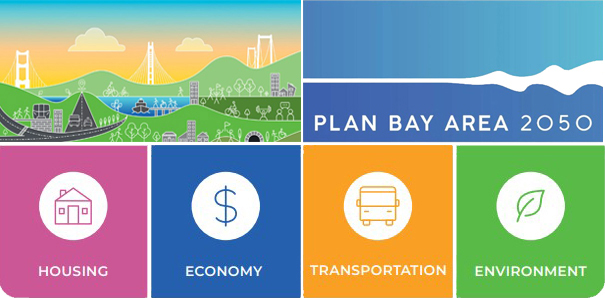
“Demonstrates continued progress toward key plan goals” of housing, transportation, economy and environment in the nine counties including “a gradual shift away from the use of single-occupancy cars and trucks.”
Includes over $1.2 trillion to maintain existing transportation system, build and buy affordable housing, “Provide an income-based monthly payment to all Bay Area households” and to “Adapt to Sea Level Rise.”
Also working on parallel Transit 2050+ plan
Public input opportunities
By MTC & ABAG staff
The Metropolitan Transportation Commission (MTC)’s and the Association of Bay Area Governments (ABAG)’s newly released Plan Bay Area 2050+ Draft Blueprint analysis outlines how the nine-county region can advance an affordable, connected, diverse, healthy and vibrant Bay Area for all residents by the year 2050.
The Blueprint is essentially a draft version of the plan. It is a foundational framework for a future vision of the Bay Area that includes:
- Forecasts and Assumptionsabout the Bay Area’s future (population, jobs, financial needs and revenues, sea level rise, etc.);
- Strategiesfor public investment and policy reform; and
- Geographieswhere future housing and/or job growth can be focused under the plan’s Strategies.
The Blueprint is then analyzed through computer-generated models and simulations to measure how successful the strategies are in achieving shared goals for the future, such as housing affordability, reduced greenhouse gas emissions and much more.
As the first draft of the Bay Area’s next long-range plan, the Draft Blueprint demonstrates significant progress toward reaching key goals for housing affordability, post-pandemic economic recovery and environmental health and sustainability. This includes the addition of 840,000 affordable homes, with a total of nearly 1 million permanently affordable homes regionwide by 2050; a 17 percent increase in the number of lower-income households living within a half-mile of transit service; and a gradual shift away from the use of single-occupancy cars and trucks. MTC and ABAG planning staff stress that the expected progress would only come about if all the strategies to be detailed in Plan Bay Area 2050+ are implemented.
Source: MTC & ABAG
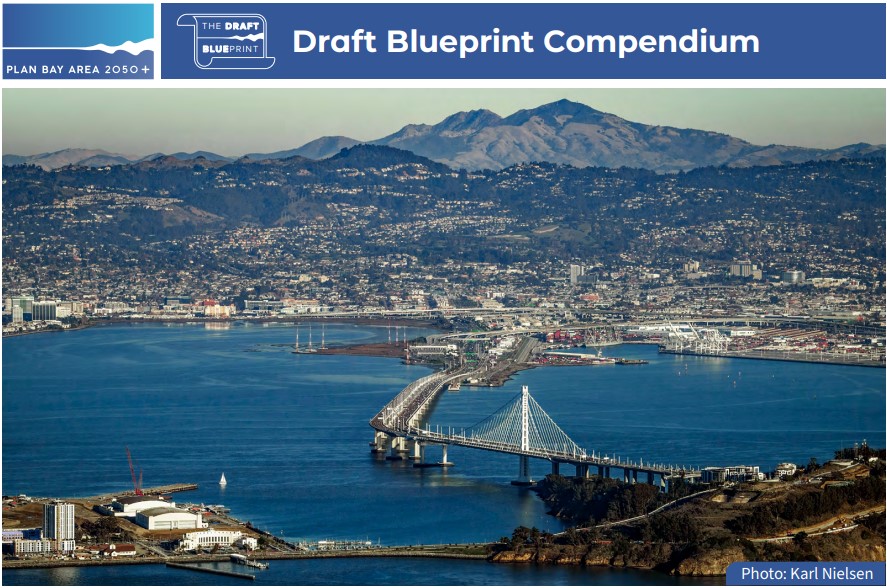
The full range of performance and equity outcomes from the Plan Bay Area 2050+ Draft Blueprint analysis may be found in the Draft Blueprint Compendium, which also demonstrates how the Bay Area can accommodate some 1.3 million additional jobs and nearly 1 million new households by the year 2050.
The Compendium shows the following proposed budget highlights for three of the Plan’s categories:
Transportation Strategies
$382 billion for T1 – Operate and Maintain the Existing System. Commit to operate and maintain the Bay Area’s roads and transit infrastructure while transitioning to zero-emission transit vehicles.
Housing Strategies
$250 billion for H2 – Preserve Existing Affordable Housing. Acquire homes currently affordable to low- and middle-income residents for preservation as permanently deed-restricted affordable housing, including opportunities for resident ownership.
$302 billion for H4 – Build Adequate Affordable Housing to Ensure Homes for All. Construct enough deed-restricted affordable homes to fill the existing gap in housing for the unhoused community and to meet the needs of low-income households.
Economic Strategies
$205 billion for EC1 – Implement a Statewide Guaranteed Income. Provide an income-based monthly payment to all Bay Area households to improve family stability, promote economic mobility and increase consumer spending.
Environment Strategies
$94 billion for EN1 – Adapt to Sea Level Rise. Adapt shoreline communities, infrastructure and ecosystems affected by sea level rise.
These outcomes were first presented at the May meeting of MTC’s Policy Advisory Council, and then at the June 14 joint meeting of the MTC Planning Committee and the ABAG Administrative Committee.
The Draft Blueprint also identifies challenges that will have to be addressed as part of the Final Blueprint process over the coming months. More work is needed to reduce greenhouse gas emissions as well as to identify transportation investment priorities for the plan’s fiscally constrained transportation project list. The Draft Blueprint does not include significant transportation expansion or enhancement investments, as these will be identified through Transit 2050+ and the Final Blueprint process.
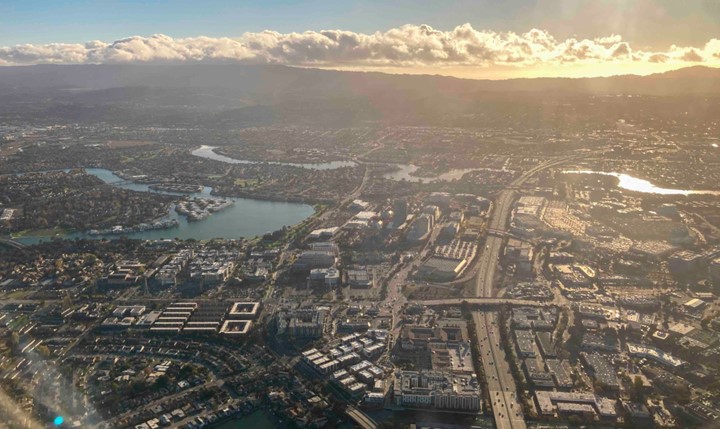
Photo source: MTC. Credit: Joey Kotfica
What’s Next?
In light of the pandemic’s lasting impact to public transportation, MTC is collaborating with the region’s transit operators on Transit 2050+ , a parallel planning effort to re-envision the future of public transit in the nine-county Bay Area. Two key updates in this process will be released in July: the Draft Project Performance Assessment and the Transit 2050+ Draft Network. It will be a comprehensive overhaul of the six transit-related strategies included in Plan Bay Area 2050.
The Draft Project Performance Assessment will analyze the costs and benefits of major capacity-increasing projects being considered for inclusion in Plan Bay Area 2050+, the vast majority of which are transit projects. These investments, including those adopted in Plan Bay Area 2050, now face a significantly reduced projected revenue stream. This is due largely to slow post-pandemic transit ridership recovery and other economic changes.
The Transit 2050+ Draft Network will identify strategies and investments (capital and operating) envisioned through 2035 and over the long term through 2050. Development of the Draft Network has been guided in part by public engagement conducted in summer 2023, when nearly 3,000 Bay Area residents provided input on the future of Bay Area transit. The Draft Network also is being informed by an existing needs and gaps assessment conducted in partnership with local transit agencies, the Draft Project Performance Assessment, local priorities and improvements to transit network connectivity and customer experience.

Source: MTC & ABAG
Summer 2024 Public Engagement
Beginning in August, MTC staff will conduct a second round of public engagement for Plan Bay Area 2050+, the content of which will focus on:
- Sharing both the Draft Blueprint outcomes and the Transit 2050+ Draft Network
- Gathering feedback to inform the development of the Final Blueprint and address identified Draft Blueprint challenges
- Identifying early priorities for implementing Plan Bay Area 2050+
There will be a variety of in-person and virtual opportunities for the public to participate. Stay up-to-date on upcoming engagement activities in your community by subscribing to the Plan Bay Area 2050+ mailing list. There also will be dedicated engagement opportunities for technical partners and stakeholders, which will be publicized on the Plan Bay Area website’s Partner Engagement page.
Following an analysis of public input, the Commission and the ABAG Executive Board are expected to consider approval of the Final Blueprint in late 2024.
Allen D. Payton contributed to this report.
Read More
Swim facilities, shoreline regional parks remain open
By Jen Vaya, Public Information Specialist, East Bay Regional Park District
Parks previously closed by the East Bay Regional Park District will remain closed through Saturday and will reopen Sunday morning. Some hill and inland East Bay Regional Parks were closed on Tuesday, July 2, due to extreme fire conditions and excessive heat.
Park status is subject to change depending on conditions. Check www.ebparks.org before heading to a park.
The National Weather Service-Bay Area has extended its Red Flag through Saturday, July 6, with Level 2 restrictions in effect DISTRICT WIDE. A Red Flag Warning means that dry and windy conditions are expected, leading to extreme fire weather risks.
Level 2 Extreme Fire Danger Restrictions Include:
- No smoking. Smoking is prohibited in all regional parks, trails, and shorelines. (Prohibited year-round)
- NO fireworks. Fireworks are not permitted in any Regional Parks. (Prohibited year-round)
- No open fires or barbecues of any type. Only gas-fueled stoves are allowed.
- Drive only on designated roadways – no off-road driving. Do not drive or park on dry grass, as heat from a vehicle’s undercarriage can start a fire.
- Secure all tow chains – dragging tow chains can spark fires.
Parks Closed and Reopening Sunday:
| • Anthony Chabot
• Bishop Ranch • Black Diamond Mines • Briones • Brushy Peak • Carquinez/Crockett Hills • Claremont Canyon • Contra Loma |
• Deer Valley
• Dry Creek • Diablo Foothills (trails closed) • Dublin Hills • Five Canyons • Garin • Huckleberry • Las Trampas |
• Leona Canyon
• Mission Peak • Morgan Territory • Ohlone • Pleasanton Ridge • Round Valley • Sibley • Sobrante Ridge |
• Sunol
• Sycamore Valley • Tilden (trails closed) • Vargas Plateau • Vasco Caves • Vasco Hills • Waterbird • Wildcat Canyon |
Anthony Chabot Campground will remain closed through Sunday, July 7. Please check www.ebparks.org/alerts-closures for the most updated information.
Swim facilities and Shoreline Regional Parks will remain open. Follow these safety tips:
- Avoid the hottest part of the day. If you do visit, go in the morning or early evening when it is cooler.
- Drink plenty of fluids to stay hydrated.
- Wear sunscreen and lightweight, light-colored clothing.
- Avoid drinking alcohol and caffeine, which can worsen the heat’s effects on your body.
- Don’t forget your pets! Carry water for them.
The East Bay Regional Park District is the largest regional park system in the nation, comprising 73 parks, 55 miles of shoreline, and over 1,330 miles of trails for hiking, biking, horseback riding, and environmental education. The Park District receives an estimated 30 million visits annually throughout Alameda and Contra Costa counties in the San Francisco Bay Area.
Read More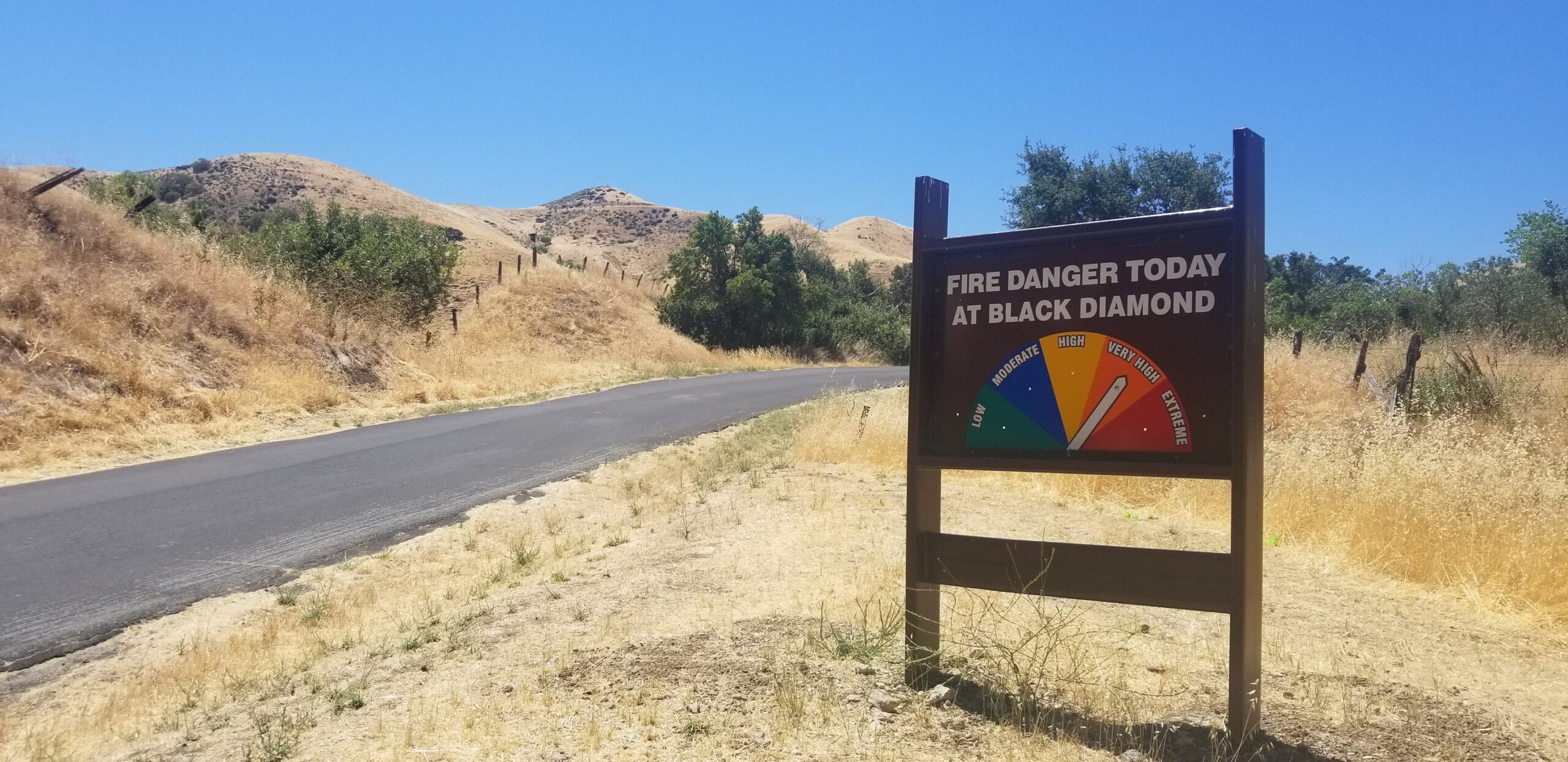
Photo: EBRPD
Reopening Sunday, July 7 (subject to change).
By East Bay Regional Park District
Due to high temperatures and extreme fire danger, Black Diamond Mines in Antioch will be closed Saturday, July 6. Dry and windy conditions are expected, which can lead to extreme fire weather risks.
When the park is open again, please still take precautions when hiking in the heat. Here are some safety tips:
- Avoid the hottest part of the day. If you do visit, go in the morning or early evening when it is cooler.
- Drink plenty of fluids to stay hydrated.
- Wear sunscreen and lightweight, light-colored clothing.
- Avoid drinking alcohol and caffeine, which can worsen the heat’s effects on your body.
- Don’t forget your pets! Carry water for them.
- No smoking. Smoking is prohibited in all regional trails, parks, and shorelines.
- No open fires or barbecues of any type. Gas-fueled stoves are permitted.
- Stay on designated roads – no off-road driving. Heat from a vehicle’s undercarriage can start a fire.
- Secure all tow chains – dragging tow chains can spark fires.
To learn more about East Bay Regional Park closures visit www.ebparks.org/alerts-closures.
Stay safe, everyone!
Read More
The Flock Safety camera system technology was used to ID the shooting suspect’s vehicle. He was stopped, arrested and his gun, ammunition and drugs were confiscated. Photos (left & center) by Flock Safety, (right) by CHP
Bay Bridge road-rage shooting suspect from San Pablo identified, arrested by Contra Costa Sheriff’s Deputies
6’7″ felon charged with attempted murder, multiple gun crimes
By Jaime Coffee, Director of Communications, CHP Office of Media Relations
A freeway shooting suspect is in custody and a firearm has been recovered after a road rage incident on the San Francisco – Oakland Bay Bridge (SFOBB) early Monday morning, July 1, 2024. The suspect was identified through one of the newly installed high-tech “Flock” cameras, which provide law enforcement with real-time information and alerts to identify and locate vehicles associated with criminal activity. California Governor Gavin Newsom announced the purchase of the cameras as part of the state’s ongoing public safety investments and work in the East Bay to combat criminal activity and freeway violence.
“Through new state-of-the-art technology and the deployment of officers, California is doubling down in our efforts to keep our communities safe. I thank the California Highway Patrol and allied agencies for their persistent work to secure accountability in this case and help ensure that Californians are safe and secure,” said Governor Gavin Newsom.
“The CHP is excited to have this new technology located on freeways in the Bay Area,” said Commissioner Sean Duryee. “Our investigators will utilize this technology to identify and apprehend those who engage in criminal activity and put California’s motorists at risk.”
On Monday, July 1, 2024, at approximately 6:40 a.m., officers assigned to the CHP’s San Francisco Area office were dispatched to a call of a freeway shooting on westbound Interstate-80, just west of the Treasure Island on-ramp. Officers were advised, the victim in the incident was not struck by the bullet; however, she received lacerations from flying glass inside the vehicle. The victim was able to safely exit the freeway, into the city of San Francisco, where he was met by officers and paramedics.
Detectives from the CHP’s Golden Gate Division Special Investigations Unit (SIU) responded to the scene and spoke with the victim, who mentioned the shooting took place following a merging conflict on the Treasure Island on ramp. A description of the suspect vehicle was obtained, allowing detectives to begin a review of Flock camera data. Detectives quickly identified the suspect vehicle and obtained a license plate number, which allowed them to issue a “Be on the lookout” (BOLO) broadcast to Bay Area law enforcement agencies.
At approximately 10:20 a.m., Contra Costa County Sheriff’s deputies located the vehicle traveling on 7th Street near Pennsylvania Avenue in Richmond and conducted an enforcement stop. The driver, 42-year-old Adrian Martinez Emerson of San Pablo, Calif., was detained and turned over to SIU detectives for questioning. A search of Emerson’s 2016 Honda Accord resulted in the recovery of a pistol believed to have been used in the shooting.
Emerson was subsequently booked into San Francisco County Jail on felony charges of attempted murder, assault with a firearm, and discharging a firearm from a vehicle.
According to localcrimenews.com, the six-foot, seven-inch, 170-pound Emerson is Black and was previously arrested by Richmond Police in 2014 on felony parole violation while he was an Antioch resident. No additional information could be located from an online search about Emerson’s previous conviction.
According to the San Francisco Sheriff’s Office, he is being held on no bail and is also include discharge of a firearm at an inhabited enclosure or vehicle, possession of firearm with prior conviction and by a felon, assault with a semi-automatic firearm, carrying a loaded firearm when not the registered owner, possession of ammunition, having a concealed firearm in a vehicle and carrying a loaded firearm. His court date has not yet been set.
The mission of the CHP is to provide the highest level of Safety, Service, and Security.
Allen D. Payton contributed to this report.
Read More
Swim facilities, shoreline regional parks remain open
Some hills and inland East Bay Regional Parks closed due to extreme fire conditions and excessive heat
Weather Service extends Red Flag , Excessive Heat Warnings through Saturday, July 6
By Dave Mason, Public Information Supervisor, Public Affairs, East Bay Regional Park District
Parks closed Tuesday by the East Bay Regional Park District will remain closed during this week’s increased temperatures and extreme fire danger (subject to change). The National Weather Service extended a Red Flag Warning and Excessive Heat Warning through Saturday, July 6. The Park District will reassess conditions and provide additional information Friday evening.
A Red Flag Warning means that dry and windy conditions are expected, leading to extreme fire weather risks. The Park District closed the following parks/areas below on July 2.
Park Closures:
| • Anthony Chabot
• Bishop Ranch • Black Diamond Mines • Briones • Brushy Peak • Carquinez/Crockett Hills • Claremont Canyon |
• Contra Loma
• Deer Valley • Dry Creek • Diablo Foothills (trails closed) • Dublin Hills • Five Canyons • Garin • Huckleberry |
• Las Trampas
• Leona Canyon • Mission Peak • Morgan Territory • Ohlone • Pleasanton Ridge • Round Valley • Sibley • Sobrante Ridge |
• Sunol
• Sycamore Valley • Tilden (trails closed) • Vargas Plateau • Vasco Caves • Vasco Hills • Waterbird • Wildcat Canyon |
Also, Anthony Chabot Campground will be closed through the weekend. Please check www.ebparks.org/alerts-closures for the most updated information.
Swim facilities and Shoreline Regional Parks will remain open. Follow these safety rules and tips:
- Avoid the hottest part of the day. If you do visit, go in the morning or early evening when it is cooler.
- Drink plenty of fluids to stay hydrated.
- Wear sunscreen and lightweight, light-colored clothing.
- Avoid drinking alcohol and caffeine, which can worsen the heat’s effects on your body.
- Don’t forget your pets! Carry water for them.
- No smoking. Smoking is prohibited in all regional trails, parks, and shorelines.
- No open fires or barbecues of any type. Gas-fueled stoves are permitted.
- Stay on designated roads – no off-road driving. Heat from a vehicle’s undercarriage can start a fire.
- Secure all tow chains – dragging tow chains can spark fires.
The East Bay Regional Park District is the largest regional park system in the nation, comprising 73 parks, 55 miles of shoreline, and over 1,330 miles of trails for hiking, biking, horseback riding, and environmental education. The Park District receives an estimated 30 million visits annually throughout Alameda and Contra Costa counties in the San Francisco Bay Area.
Read More
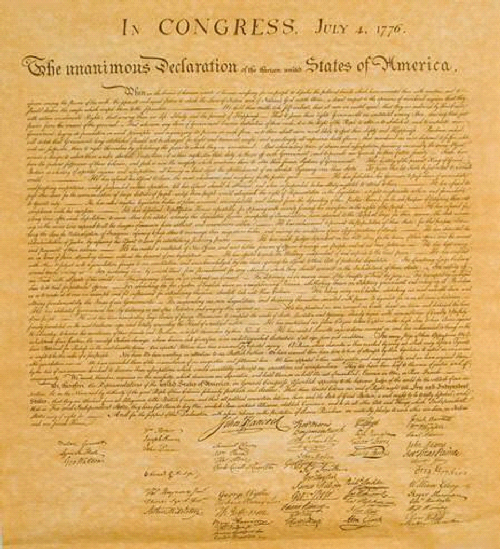
A copy of the Declaration of Independence. Source: National Archives
Following is the text of the Declaration of Independence in celebration of Independence Day, July 4th, 2024:
IN CONGRESS, July 4, 1776.
The unanimous Declaration of the thirteen united States of America,
When in the Course of human events, it becomes necessary for one people to dissolve the political bands which have connected them with another, and to assume among the powers of the earth, the separate and equal station to which the Laws of Nature and of Nature’s God entitle them, a decent respect to the opinions of mankind requires that they should declare the causes which impel them to the separation.
We hold these truths to be self-evident, that all men are created equal, that they are endowed by their Creator with certain unalienable Rights, that among these are Life, Liberty and the pursuit of Happiness.–That to secure these rights, Governments are instituted among Men, deriving their just powers from the consent of the governed, –That whenever any Form of Government becomes destructive of these ends, it is the Right of the People to alter or to abolish it, and to institute new Government, laying its foundation on such principles and organizing its powers in such form, as to them shall seem most likely to effect their Safety and Happiness. Prudence, indeed, will dictate that Governments long established should not be changed for light and transient causes; and accordingly all experience hath shewn, that mankind are more disposed to suffer, while evils are sufferable, than to right themselves by abolishing the forms to which they are accustomed. But when a long train of abuses and usurpations, pursuing invariably the same Object evinces a design to reduce them under absolute Despotism, it is their right, it is their duty, to throw off such Government, and to provide new Guards for their future security.–Such has been the patient sufferance of these Colonies; and such is now the necessity which constrains them to alter their former Systems of Government. The history of the present King of Great Britain is a history of repeated injuries and usurpations, all having in direct object the establishment of an absolute Tyranny over these States. To prove this, let Facts be submitted to a candid world.
He has refused his Assent to Laws, the most wholesome and necessary for the public good.
He has forbidden his Governors to pass Laws of immediate and pressing importance, unless suspended in their operation till his Assent should be obtained; and when so suspended, he has utterly neglected to attend to them.
He has refused to pass other Laws for the accommodation of large districts of people, unless those people would relinquish the right of Representation in the Legislature, a right inestimable to them and formidable to tyrants only.
He has called together legislative bodies at places unusual, uncomfortable, and distant from the depository of their public Records, for the sole purpose of fatiguing them into compliance with his measures.
He has dissolved Representative Houses repeatedly, for opposing with manly firmness his invasions on the rights of the people.
He has refused for a long time, after such dissolutions, to cause others to be elected; whereby the Legislative powers, incapable of Annihilation, have returned to the People at large for their exercise; the State remaining in the mean time exposed to all the dangers of invasion from without, and convulsions within.
He has endeavoured to prevent the population of these States; for that purpose obstructing the Laws for Naturalization of Foreigners; refusing to pass others to encourage their migrations hither, and raising the conditions of new Appropriations of Lands.
He has obstructed the Administration of Justice, by refusing his Assent to Laws for establishing Judiciary powers.
He has made Judges dependent on his Will alone, for the tenure of their offices, and the amount and payment of their salaries.
He has erected a multitude of New Offices, and sent hither swarms of Officers to harrass our people, and eat out their substance.
He has kept among us, in times of peace, Standing Armies without the Consent of our legislatures.
He has affected to render the Military independent of and superior to the Civil power.
He has combined with others to subject us to a jurisdiction foreign to our constitution, and unacknowledged by our laws; giving his Assent to their Acts of pretended Legislation:
For Quartering large bodies of armed troops among us:
For protecting them, by a mock Trial, from punishment for any Murders which they should commit on the Inhabitants of these States:
For cutting off our Trade with all parts of the world:
For imposing Taxes on us without our Consent:
For depriving us in many cases, of the benefits of Trial by Jury:
For transporting us beyond Seas to be tried for pretended offences
For abolishing the free System of English Laws in a neighbouring Province, establishing therein an Arbitrary government, and enlarging its Boundaries so as to render it at once an example and fit instrument for introducing the same absolute rule into these Colonies:
For taking away our Charters, abolishing our most valuable Laws, and altering fundamentally the Forms of our Governments:
For suspending our own Legislatures, and declaring themselves invested with power to legislate for us in all cases whatsoever.
He has abdicated Government here, by declaring us out of his Protection and waging War against us.
He has plundered our seas, ravaged our Coasts, burnt our towns, and destroyed the lives of our people.
He is at this time transporting large Armies of foreign Mercenaries to compleat the works of death, desolation and tyranny, already begun with circumstances of Cruelty & perfidy scarcely paralleled in the most barbarous ages, and totally unworthy the Head of a civilized nation.
He has constrained our fellow Citizens taken Captive on the high Seas to bear Arms against their Country, to become the executioners of their friends and Brethren, or to fall themselves by their Hands.
He has excited domestic insurrections amongst us, and has endeavoured to bring on the inhabitants of our frontiers, the merciless Indian Savages, whose known rule of warfare, is an undistinguished destruction of all ages, sexes and conditions.
In every stage of these Oppressions We have Petitioned for Redress in the most humble terms: Our repeated Petitions have been answered only by repeated injury. A Prince whose character is thus marked by every act which may define a Tyrant, is unfit to be the ruler of a free people.
Nor have We been wanting in attentions to our Brittish brethren. We have warned them from time to time of attempts by their legislature to extend an unwarrantable jurisdiction over us. We have reminded them of the circumstances of our emigration and settlement here. We have appealed to their native justice and magnanimity, and we have conjured them by the ties of our common kindred to disavow these usurpations, which, would inevitably interrupt our connections and correspondence. They too have been deaf to the voice of justice and of consanguinity. We must, therefore, acquiesce in the necessity, which denounces our Separation, and hold them, as we hold the rest of mankind, Enemies in War, in Peace Friends.
We, therefore, the Representatives of the united States of America, in General Congress, Assembled, appealing to the Supreme Judge of the world for the rectitude of our intentions, do, in the Name, and by Authority of the good People of these Colonies, solemnly publish and declare, That these United Colonies are, and of Right ought to be Free and Independent States; that they are Absolved from all Allegiance to the British Crown, and that all political connection between them and the State of Great Britain, is and ought to be totally dissolved; and that as Free and Independent States, they have full Power to levy War, conclude Peace, contract Alliances, establish Commerce, and to do all other Acts and Things which Independent States may of right do. And for the support of this Declaration, with a firm reliance on the protection of divine Providence, we mutually pledge to each other our Lives, our Fortunes and our sacred Honor.
The Declaration was adopted on July 4th, but most historians agree it was not signed until August 2nd, with five members of Congress signing the document over the next few weeks.
The 56 signatures on the Declaration appear in the positions indicated:
Column 1
Georgia:
Button Gwinnett
Lyman Hall
George Walton
Column 2
North Carolina:
William Hooper
Joseph Hewes
John Penn
South Carolina:
Edward Rutledge
Thomas Heyward, Jr.
Thomas Lynch, Jr.
Arthur Middleton
Column 3
Massachusetts:
John Hancock
Maryland:
Samuel Chase
William Paca
Thomas Stone
Charles Carroll of Carrollton
Virginia:
George Wythe
Richard Henry Lee
Thomas Jefferson
Benjamin Harrison
Thomas Nelson, Jr.
Francis Lightfoot Lee
Carter Braxton
Column 4
Pennsylvania:
Robert Morris
Benjamin Rush
Benjamin Franklin
John Morton
George Clymer
James Smith
George Taylor
James Wilson
George Ross
Delaware:
Caesar Rodney
George Read
Thomas McKean
Column 5
New York:
William Floyd
Philip Livingston
Francis Lewis
Lewis Morris
New Jersey:
Richard Stockton
John Witherspoon
Francis Hopkinson
John Hart
Abraham Clark
Column 6
New Hampshire:
Josiah Bartlett
William Whipple
Massachusetts:
Samuel Adams
John Adams
Robert Treat Paine
Elbridge Gerry
Rhode Island:
Stephen Hopkins
William Ellery
Connecticut:
Roger Sherman
Samuel Huntington
William Williams
Oliver Wolcott
New Hampshire:
Matthew Thornton
From the website: www.archives.gov/exhibits/charters/declaration.html
Happy Independence Day from the Contra Costa Herald!
Read More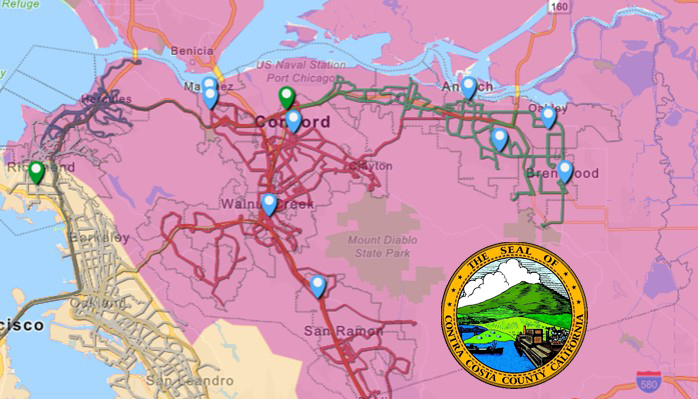
Locations of places to cool and cooling centers throughout the county on Thursday, July 4th, 2024. Source: Contra Costa County
(Martinez, Calif.) – The National Weather Service has issued an Excessive Heat Warning for Contra Costa County through Tuesday, July 9, and Contra Costa Health has issued a public health advisory. Residents seeking relief from the dangerously hot conditions can find resources and information by visiting the County website: contracosta.ca.gov.
The County site includes an interactive map of places to cool and cooling centers, including several that are open through the July 4th holiday (see below list). The County is updating these locations on an ongoing basis.
The site also provides health safety tips, transportation information, and additional resources and links to help County residents get through the next several days of well-above-normal temperatures that may lead to compounding effects.

Anyone concerned about heat-related illness should contact their healthcare providers or, if it’s an emergency, call 911.
People who are experiencing homelessness and need help can call 211 from anywhere in Contra Costa County to be connected to services. All Contra Costa can also call 211 for information about transportation to places to cool.
In addition to updates on contracosta.ca.gov, residents can follow Contra Costa County social media sites on X at @CCCounty and Nextdoor at https://nextdoor.com/agency-detail/ca/contra-costa-county/contra-costa-county/.
Read More
No fireworks in the parks, feedback needed on Briones Pilot Project, campfire, state bat-related activities, save the date for National Night out
For information regarding recent park closures due to increased wildfire risk, visit www.ebparks.org/about-us/whats-new/news/swim-facilities-and-shoreline-regional-parks-remain-open-through-heat-event.
By Dave Mason, Public Information Supervisor, Public Affairs, East Bay Regional Park District
Fire Safety Advisory – Fireworks are not allowed in East Bay Regional Parks. July is a special month full of sunny days and warm summer nights. It’s also a time to take extra precautions due to the increased risk of wildfires in Regional Parks and neighboring communities. With July 4th celebrations coming up this week, remember that fireworks are not allowed in Regional Parks or shorelines.
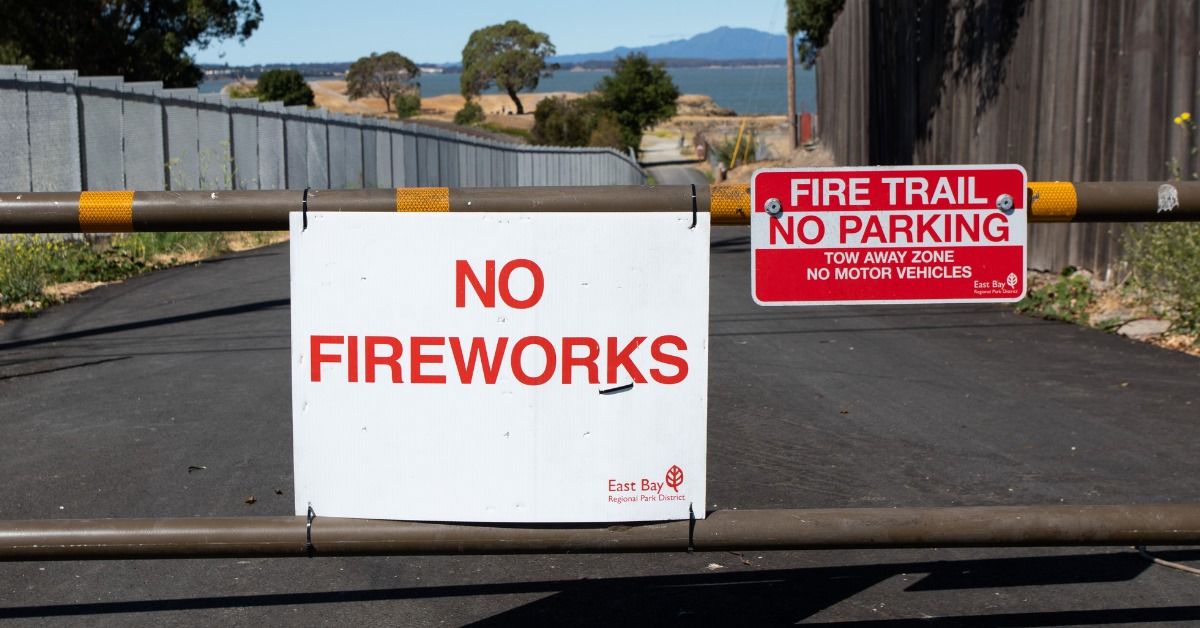
Photo: EBRPD
Wildfire safety remains one of the East Bay Regional Park District’s top priorities. Be fire smart and aware of fire danger levels, red flag warnings, and fire safety. The Park District urges all visitors to enjoy their Regional Parks safely and responsibly. Be prepared for the upcoming wildfire season – visit www.ebparks.org and search for “Fire Safety Tips.”
Lakeside Laps on July 20 at Lake Chabot Regional Park. Lakeside Laps is a trail running and walking event hosted by the Regional Parks Foundation in partnership with Brazen Racing Sports & Community. In celebration of the East Bay Regional Park District’s 90th Anniversary, Lakeside Laps proceeds will benefit the Regional Parks Foundation and its mission to connect youth with nature and expand access to parks.
Register today for the family-friendly Trout Trot 5K, 10K, or half marathon – all fitness levels are welcome! The Finish Line Festival will feature snacks, vendors, photo walls, awards, and more. Food and beverages provided by Equator Coffee, Harmless Harvest, and Drake’s Brewing Company. For registration info, start times, and general event information, visit www.brazenracing.com/lakesidelaps.
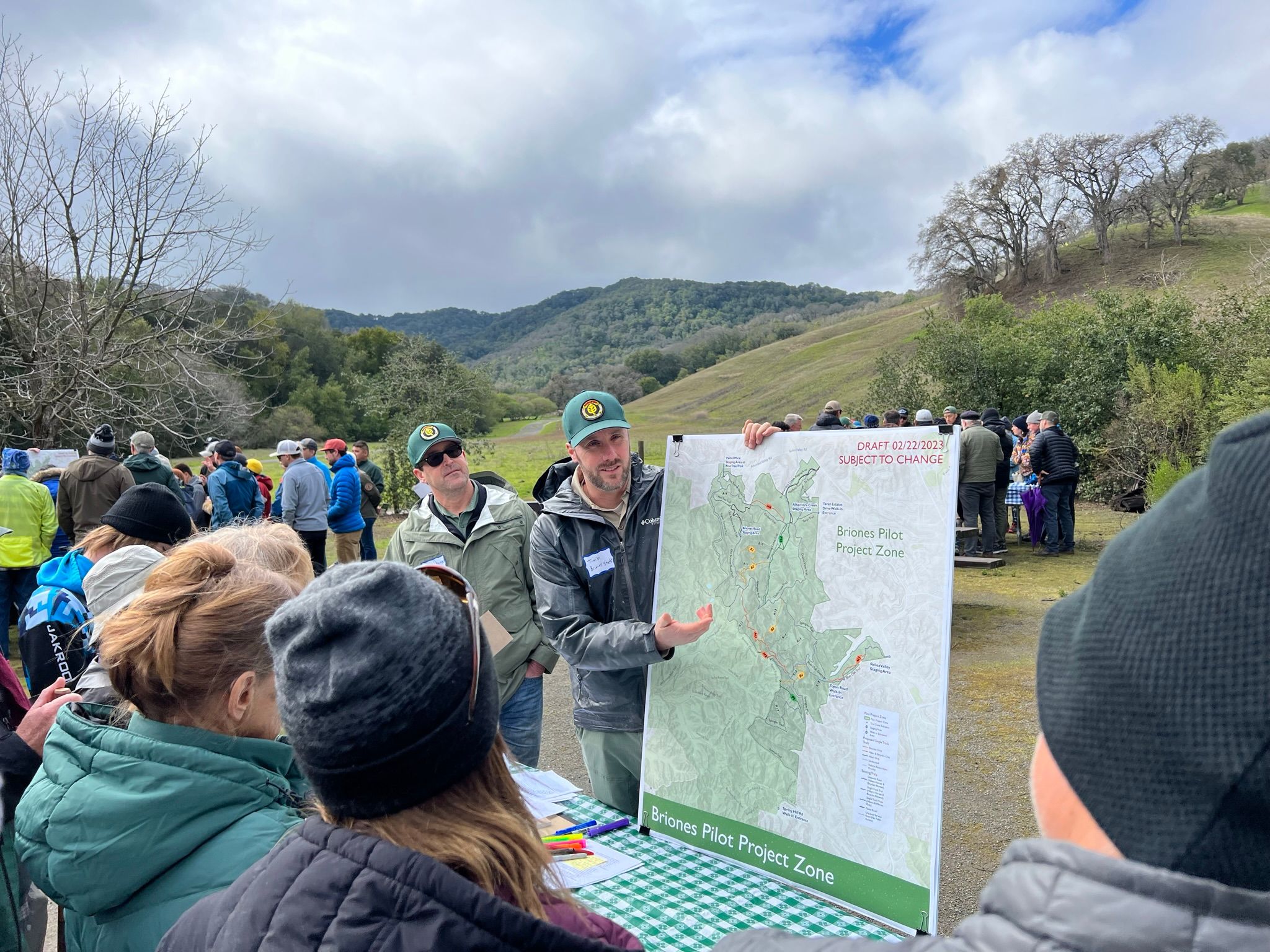
Photo by Jen Vanya. Source: EBRPD
Feedback Needed on the Briones Pilot Project. The Briones Pilot Project was launched in April 2023 in a portion of Briones Regional Park to test new ways to safely share trails, improve the trail experience, and protect habitat, wildlife, and watersheds. At the recent Briones Pilot Project Community check-in meeting, about 75 community members – hikers, cyclists, and equestrians – joined the East Bay Regional Park District staff to discuss the first year of the pilot project and provide their feedback on what has improved and where challenges remain. Feedback is needed! Visit the project webpage to fill out an online survey or drop a comment on the interactive map at www.ebparks.org/BPP.

National Night Out Aug. 6 at Lake Chabot. Photo by Carl La Rue. Source: EBRPD
Save the Date: National Night Out on August 6 at Lake Chabot. An exciting evening of community bonding and fun at Lake Chabot awaits! The East Bay Regional Park District is hosting its second annual National Night Out on August 6 from 4-7 p.m. at Lake Chabot Regional Park, where parkgoers are invited to come together to celebrate and strengthen community ties. Meet the Park District’s public safety officers, firefighters, lifeguards, and park rangers who are instrumental in keeping the community safe. Visit with Park District naturalists at the Mobile Visitor Center and learn about the nature exhibits on display. Stroll around Lake Chabot and enjoy the lake’s serene beauty. All are welcome to this FREE event. For more information, visit www.ebparks.org/nno.

Family campfire with co-op group at Lake Del Valle. Photo: EBRPD
Campfire gatherings first became popular in the United States around the turn of the last century, with growth in the National Park system. At the time, there was an incentive to get more children out of urban cities and into the nature of these new National Parks, and the result was the emergence of summer camps and campfire programs. By the 1920s, more than 1,000 summer camps were offering outdoor activities such as canoeing, archery, hiking, arts and crafts, and fire-making. These camps also developed new traditions like campfires, s’mores, and sing-a-longs. Today, this tradition continues throughout the East Bay Regional Park District.
Experience unforgettable evenings under the stars with captivating campfire programs at Del Valle Regional Park, Big Break Regional Shoreline, Dumbarton Quarry Campground on the Bay, and Anthony Chabot Campground. These family-friendly events offer nature education, storytelling, and stargazing, while fostering a deep appreciation for the outdoors. Engage in hands-on activities, learn about local wildlife, and connect with the community around the warmth of the fire with naturalist-led campfire programs. Go to www.ebparks.org/calendar and search for “campfire.” Campfire programs are subject to change due to Park District fire restrictions and National Weather Services-Bay Area Fire Advisories and Red Flag Warnings.

CA State Bat golden-haired pallid bat. Photo: EBRPD
Did you know that California has a state bat? The pallid bat was designated as the California state bat in October 2023. Its golden fur, diverse range of habitats, and positive effects on the environment fit in well with the rest of the Golden State’s symbols. These golden-haired pallid bats, as well as other bat species, are found at parks throughout East Bay Regional Park District. Join Park District naturalists for bat-related activities all summer long! Go to www.ebparks.org/calendar and search for “bats.” Learn more about the bats of the East Bay at www.ebparks.org/programs/digital-learning/naturalist-videos/plants-animals/bats.
The East Bay Regional Park District is the largest regional park system in the nation, comprising 73 parks, 55 miles of shoreline, and over 1,330 miles of trails for hiking, biking, horseback riding, and environmental education. The Park District receives an estimated 30 million visits annually throughout Alameda and Contra Costa counties in the San Francisco Bay Area.
Read More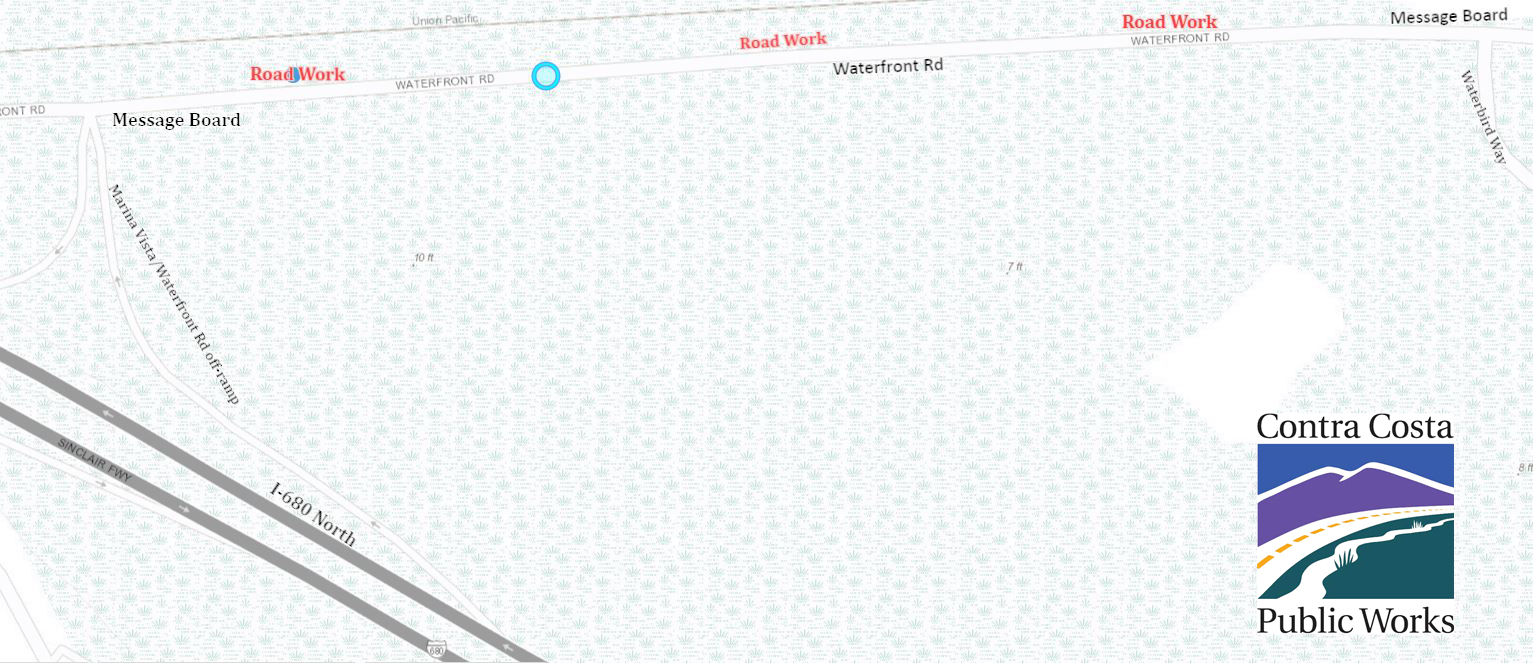
Source: CCC Public Works Dept
Expect delays 7:00 am-4:30 pm
By Kelly Kalfsbeek, Community & Media Relations Coordinator, PIO, Contra Costa County Public Works Department
Unincorporated Contra Costa County, CA- The Contra Costa County Public Works Department will perform pavement repair work on Waterfront Road, between the Northbound I-680 offramp and Waterbird Way, beginning on Monday, July 8, 2024, through Monday, July 15, 2024, barring unforeseen circumstances. The work will take place from 7:00 a.m. through 4:30 p.m., Monday through Thursday, weather permitting. Traffic control will be used. Road users can expect delays of 15-20 minutes. Electronic message boards will be placed in advance to alert drivers to work and advise of expected delays.
About Contra Costa County Public Works Department:
Contra Costa County Public Works Department (CCCPWD) maintains over 660 miles of roads, 150 miles of streams, channels, and other drainage, and over 150 County buildings throughout Contra Costa County. CCCPWD provides services such as Parks and Recreation, Sandbag Distribution, and Flood Control throughout unincorporated areas of Contra Costa County. CCCPWD operates two airports, Buchanan Field Airport in Concord, and Byron Airport in Byron. For more information about CCCPWD, please visit us at: www.cccpublicworks.org
Read More
How to report illegal fireworks
By Lt. Mike Aguiar, Brentwood Police Department
BRENTWOOD, CA – As we approach the 4th of July, the Brentwood Police Department wants to remind its residents about the dangers associated with fireworks and the use of firearms when celebrating our country’s Independence Day.
Contra Costa County (and City) is a “fireworks-free-zone”; therefore, the possession or use of fireworks of all types and sizes (including Safe and Sane fireworks) are banned in the county and City of Brentwood (County Ordinance 44-2.002 and Brentwood Municipal Code 8.48.020). Possession of dangerous fireworks that leave the ground or explode may constitute a felony and could result in fines of up to $5,000 and imprisonment.
Additionally, the firing of firearms into the air is against the law. Bullets fired into the air return at some point and descend at approximately 300 to 400 feet per second, which poses a high danger because it can penetrate roofs and cause damage to property and unwary residents. Statistics show that fireworks and celebratory gunfire seriously injure thousands of people annually. The Brentwood Police Department will be taking a zero tolerance approach when dealing with these violations.
It’s important to also keep in mind dry conditions create some additional safety concerns. High weeds and water-stricken lawns are extremely vulnerable to stray embers or sparks caused by fireworks. Please avoid the temptation of putting yourself and your neighbors at risk.
On July 4th, the Police Department will be assigning additional officers to patrol residential neighborhoods and proactively enforce fireworks violations. Instead of setting off fireworks, the Police Department encourages people to consider free July 4th fireworks displays in nearby cities. For more information and locations visit: https://sf.funcheap.com/category/event/event-types/holidays/4th-of-july/
Reporting Illegal Fireworks
Holidays like the 4th of July result in a significant, higher caller volume each year. Should you need to contact Police for a firework related call please use appropriate numbers and be patient with call takers.
- Injuries or fire related calls dial 9-1-1
- Knowledge of exact location of where fireworks are being set off in real time, call 925-809-7911
Please be prepared to answer questions from the call-taker such as the location of where the incident is occurring and if anyone is injured.
Please do not report noise complaints unless you can provide the exact location of the fireworks being set off. Additionally, please do not report incidents on social media as the sites are not monitored regularly.
If you witness a violation, please contact our 24-hour Dispatch Center at 925-809-7911.
The City of Brentwood wishes everyone a fun and safe 4th of July holiday!
Read More










Source: MTC & ABAG
“Demonstrates continued progress toward key plan goals” of housing, transportation, economy and environment in the nine counties including “a gradual shift away from the use of single-occupancy cars and trucks.”
Includes over $1.2 trillion to maintain existing transportation system, build and buy affordable housing, “Provide an income-based monthly payment to all Bay Area households” and to “Adapt to Sea Level Rise.”
Also working on parallel Transit 2050+ plan
Public input opportunities
By MTC & ABAG staff
The Metropolitan Transportation Commission (MTC)’s and the Association of Bay Area Governments (ABAG)’s newly released Plan Bay Area 2050+ Draft Blueprint analysis outlines how the nine-county region can advance an affordable, connected, diverse, healthy and vibrant Bay Area for all residents by the year 2050.
The Blueprint is essentially a draft version of the plan. It is a foundational framework for a future vision of the Bay Area that includes:
- Forecasts and Assumptionsabout the Bay Area’s future (population, jobs, financial needs and revenues, sea level rise, etc.);
- Strategiesfor public investment and policy reform; and
- Geographieswhere future housing and/or job growth can be focused under the plan’s Strategies.
The Blueprint is then analyzed through computer-generated models and simulations to measure how successful the strategies are in achieving shared goals for the future, such as housing affordability, reduced greenhouse gas emissions and much more.
As the first draft of the Bay Area’s next long-range plan, the Draft Blueprint demonstrates significant progress toward reaching key goals for housing affordability, post-pandemic economic recovery and environmental health and sustainability. This includes the addition of 840,000 affordable homes, with a total of nearly 1 million permanently affordable homes regionwide by 2050; a 17 percent increase in the number of lower-income households living within a half-mile of transit service; and a gradual shift away from the use of single-occupancy cars and trucks. MTC and ABAG planning staff stress that the expected progress would only come about if all the strategies to be detailed in Plan Bay Area 2050+ are implemented.
Source: MTC & ABAG
The full range of performance and equity outcomes from the Plan Bay Area 2050+ Draft Blueprint analysis may be found in the Draft Blueprint Compendium, which also demonstrates how the Bay Area can accommodate some 1.3 million additional jobs and nearly 1 million new households by the year 2050.
The Compendium shows the following proposed budget highlights for three of the Plan’s categories:
Transportation Strategies
$382 billion for T1 – Operate and Maintain the Existing System. Commit to operate and maintain the Bay Area’s roads and transit infrastructure while transitioning to zero-emission transit vehicles.
Housing Strategies
$250 billion for H2 – Preserve Existing Affordable Housing. Acquire homes currently affordable to low- and middle-income residents for preservation as permanently deed-restricted affordable housing, including opportunities for resident ownership.
$302 billion for H4 – Build Adequate Affordable Housing to Ensure Homes for All. Construct enough deed-restricted affordable homes to fill the existing gap in housing for the unhoused community and to meet the needs of low-income households.
Economic Strategies
$205 billion for EC1 – Implement a Statewide Guaranteed Income. Provide an income-based monthly payment to all Bay Area households to improve family stability, promote economic mobility and increase consumer spending.
Environment Strategies
$94 billion for EN1 – Adapt to Sea Level Rise. Adapt shoreline communities, infrastructure and ecosystems affected by sea level rise.
These outcomes were first presented at the May meeting of MTC’s Policy Advisory Council, and then at the June 14 joint meeting of the MTC Planning Committee and the ABAG Administrative Committee.
The Draft Blueprint also identifies challenges that will have to be addressed as part of the Final Blueprint process over the coming months. More work is needed to reduce greenhouse gas emissions as well as to identify transportation investment priorities for the plan’s fiscally constrained transportation project list. The Draft Blueprint does not include significant transportation expansion or enhancement investments, as these will be identified through Transit 2050+ and the Final Blueprint process.
Photo source: MTC. Credit: Joey Kotfica
What’s Next?
In light of the pandemic’s lasting impact to public transportation, MTC is collaborating with the region’s transit operators on Transit 2050+ , a parallel planning effort to re-envision the future of public transit in the nine-county Bay Area. Two key updates in this process will be released in July: the Draft Project Performance Assessment and the Transit 2050+ Draft Network. It will be a comprehensive overhaul of the six transit-related strategies included in Plan Bay Area 2050.
The Draft Project Performance Assessment will analyze the costs and benefits of major capacity-increasing projects being considered for inclusion in Plan Bay Area 2050+, the vast majority of which are transit projects. These investments, including those adopted in Plan Bay Area 2050, now face a significantly reduced projected revenue stream. This is due largely to slow post-pandemic transit ridership recovery and other economic changes.
The Transit 2050+ Draft Network will identify strategies and investments (capital and operating) envisioned through 2035 and over the long term through 2050. Development of the Draft Network has been guided in part by public engagement conducted in summer 2023, when nearly 3,000 Bay Area residents provided input on the future of Bay Area transit. The Draft Network also is being informed by an existing needs and gaps assessment conducted in partnership with local transit agencies, the Draft Project Performance Assessment, local priorities and improvements to transit network connectivity and customer experience.
Source: MTC & ABAG
Summer 2024 Public Engagement
Beginning in August, MTC staff will conduct a second round of public engagement for Plan Bay Area 2050+, the content of which will focus on:
- Sharing both the Draft Blueprint outcomes and the Transit 2050+ Draft Network
- Gathering feedback to inform the development of the Final Blueprint and address identified Draft Blueprint challenges
- Identifying early priorities for implementing Plan Bay Area 2050+
There will be a variety of in-person and virtual opportunities for the public to participate. Stay up-to-date on upcoming engagement activities in your community by subscribing to the Plan Bay Area 2050+ mailing list. There also will be dedicated engagement opportunities for technical partners and stakeholders, which will be publicized on the Plan Bay Area website’s Partner Engagement page.
Following an analysis of public input, the Commission and the ABAG Executive Board are expected to consider approval of the Final Blueprint in late 2024.
Allen D. Payton contributed to this report.
Read More
Swim facilities, shoreline regional parks remain open
By Jen Vaya, Public Information Specialist, East Bay Regional Park District
Parks previously closed by the East Bay Regional Park District will remain closed through Saturday and will reopen Sunday morning. Some hill and inland East Bay Regional Parks were closed on Tuesday, July 2, due to extreme fire conditions and excessive heat.
Park status is subject to change depending on conditions. Check www.ebparks.org before heading to a park.
The National Weather Service-Bay Area has extended its Red Flag through Saturday, July 6, with Level 2 restrictions in effect DISTRICT WIDE. A Red Flag Warning means that dry and windy conditions are expected, leading to extreme fire weather risks.
Level 2 Extreme Fire Danger Restrictions Include:
- No smoking. Smoking is prohibited in all regional parks, trails, and shorelines. (Prohibited year-round)
- NO fireworks. Fireworks are not permitted in any Regional Parks. (Prohibited year-round)
- No open fires or barbecues of any type. Only gas-fueled stoves are allowed.
- Drive only on designated roadways – no off-road driving. Do not drive or park on dry grass, as heat from a vehicle’s undercarriage can start a fire.
- Secure all tow chains – dragging tow chains can spark fires.
Parks Closed and Reopening Sunday:
| • Anthony Chabot
• Bishop Ranch • Black Diamond Mines • Briones • Brushy Peak • Carquinez/Crockett Hills • Claremont Canyon • Contra Loma |
• Deer Valley
• Dry Creek • Diablo Foothills (trails closed) • Dublin Hills • Five Canyons • Garin • Huckleberry • Las Trampas |
• Leona Canyon
• Mission Peak • Morgan Territory • Ohlone • Pleasanton Ridge • Round Valley • Sibley • Sobrante Ridge |
• Sunol
• Sycamore Valley • Tilden (trails closed) • Vargas Plateau • Vasco Caves • Vasco Hills • Waterbird • Wildcat Canyon |
Anthony Chabot Campground will remain closed through Sunday, July 7. Please check www.ebparks.org/alerts-closures for the most updated information.
Swim facilities and Shoreline Regional Parks will remain open. Follow these safety tips:
- Avoid the hottest part of the day. If you do visit, go in the morning or early evening when it is cooler.
- Drink plenty of fluids to stay hydrated.
- Wear sunscreen and lightweight, light-colored clothing.
- Avoid drinking alcohol and caffeine, which can worsen the heat’s effects on your body.
- Don’t forget your pets! Carry water for them.
The East Bay Regional Park District is the largest regional park system in the nation, comprising 73 parks, 55 miles of shoreline, and over 1,330 miles of trails for hiking, biking, horseback riding, and environmental education. The Park District receives an estimated 30 million visits annually throughout Alameda and Contra Costa counties in the San Francisco Bay Area.
Read MorePhoto: EBRPD
Reopening Sunday, July 7 (subject to change).
By East Bay Regional Park District
Due to high temperatures and extreme fire danger, Black Diamond Mines in Antioch will be closed Saturday, July 6. Dry and windy conditions are expected, which can lead to extreme fire weather risks.
When the park is open again, please still take precautions when hiking in the heat. Here are some safety tips:
- Avoid the hottest part of the day. If you do visit, go in the morning or early evening when it is cooler.
- Drink plenty of fluids to stay hydrated.
- Wear sunscreen and lightweight, light-colored clothing.
- Avoid drinking alcohol and caffeine, which can worsen the heat’s effects on your body.
- Don’t forget your pets! Carry water for them.
- No smoking. Smoking is prohibited in all regional trails, parks, and shorelines.
- No open fires or barbecues of any type. Gas-fueled stoves are permitted.
- Stay on designated roads – no off-road driving. Heat from a vehicle’s undercarriage can start a fire.
- Secure all tow chains – dragging tow chains can spark fires.
To learn more about East Bay Regional Park closures visit www.ebparks.org/alerts-closures.
Stay safe, everyone!
Read MoreThe Flock Safety camera system technology was used to ID the shooting suspect’s vehicle. He was stopped, arrested and his gun, ammunition and drugs were confiscated. Photos (left & center) by Flock Safety, (right) by CHP
Bay Bridge road-rage shooting suspect from San Pablo identified, arrested by Contra Costa Sheriff’s Deputies
6’7″ felon charged with attempted murder, multiple gun crimes
By Jaime Coffee, Director of Communications, CHP Office of Media Relations
A freeway shooting suspect is in custody and a firearm has been recovered after a road rage incident on the San Francisco – Oakland Bay Bridge (SFOBB) early Monday morning, July 1, 2024. The suspect was identified through one of the newly installed high-tech “Flock” cameras, which provide law enforcement with real-time information and alerts to identify and locate vehicles associated with criminal activity. California Governor Gavin Newsom announced the purchase of the cameras as part of the state’s ongoing public safety investments and work in the East Bay to combat criminal activity and freeway violence.
“Through new state-of-the-art technology and the deployment of officers, California is doubling down in our efforts to keep our communities safe. I thank the California Highway Patrol and allied agencies for their persistent work to secure accountability in this case and help ensure that Californians are safe and secure,” said Governor Gavin Newsom.
“The CHP is excited to have this new technology located on freeways in the Bay Area,” said Commissioner Sean Duryee. “Our investigators will utilize this technology to identify and apprehend those who engage in criminal activity and put California’s motorists at risk.”
On Monday, July 1, 2024, at approximately 6:40 a.m., officers assigned to the CHP’s San Francisco Area office were dispatched to a call of a freeway shooting on westbound Interstate-80, just west of the Treasure Island on-ramp. Officers were advised, the victim in the incident was not struck by the bullet; however, she received lacerations from flying glass inside the vehicle. The victim was able to safely exit the freeway, into the city of San Francisco, where he was met by officers and paramedics.
Detectives from the CHP’s Golden Gate Division Special Investigations Unit (SIU) responded to the scene and spoke with the victim, who mentioned the shooting took place following a merging conflict on the Treasure Island on ramp. A description of the suspect vehicle was obtained, allowing detectives to begin a review of Flock camera data. Detectives quickly identified the suspect vehicle and obtained a license plate number, which allowed them to issue a “Be on the lookout” (BOLO) broadcast to Bay Area law enforcement agencies.
At approximately 10:20 a.m., Contra Costa County Sheriff’s deputies located the vehicle traveling on 7th Street near Pennsylvania Avenue in Richmond and conducted an enforcement stop. The driver, 42-year-old Adrian Martinez Emerson of San Pablo, Calif., was detained and turned over to SIU detectives for questioning. A search of Emerson’s 2016 Honda Accord resulted in the recovery of a pistol believed to have been used in the shooting.
Emerson was subsequently booked into San Francisco County Jail on felony charges of attempted murder, assault with a firearm, and discharging a firearm from a vehicle.
According to localcrimenews.com, the six-foot, seven-inch, 170-pound Emerson is Black and was previously arrested by Richmond Police in 2014 on felony parole violation while he was an Antioch resident. No additional information could be located from an online search about Emerson’s previous conviction.
According to the San Francisco Sheriff’s Office, he is being held on no bail and is also include discharge of a firearm at an inhabited enclosure or vehicle, possession of firearm with prior conviction and by a felon, assault with a semi-automatic firearm, carrying a loaded firearm when not the registered owner, possession of ammunition, having a concealed firearm in a vehicle and carrying a loaded firearm. His court date has not yet been set.
The mission of the CHP is to provide the highest level of Safety, Service, and Security.
Allen D. Payton contributed to this report.
Read MoreSwim facilities, shoreline regional parks remain open
Some hills and inland East Bay Regional Parks closed due to extreme fire conditions and excessive heat
Weather Service extends Red Flag , Excessive Heat Warnings through Saturday, July 6
By Dave Mason, Public Information Supervisor, Public Affairs, East Bay Regional Park District
Parks closed Tuesday by the East Bay Regional Park District will remain closed during this week’s increased temperatures and extreme fire danger (subject to change). The National Weather Service extended a Red Flag Warning and Excessive Heat Warning through Saturday, July 6. The Park District will reassess conditions and provide additional information Friday evening.
A Red Flag Warning means that dry and windy conditions are expected, leading to extreme fire weather risks. The Park District closed the following parks/areas below on July 2.
Park Closures:
| • Anthony Chabot
• Bishop Ranch • Black Diamond Mines • Briones • Brushy Peak • Carquinez/Crockett Hills • Claremont Canyon |
• Contra Loma
• Deer Valley • Dry Creek • Diablo Foothills (trails closed) • Dublin Hills • Five Canyons • Garin • Huckleberry |
• Las Trampas
• Leona Canyon • Mission Peak • Morgan Territory • Ohlone • Pleasanton Ridge • Round Valley • Sibley • Sobrante Ridge |
• Sunol
• Sycamore Valley • Tilden (trails closed) • Vargas Plateau • Vasco Caves • Vasco Hills • Waterbird • Wildcat Canyon |
Also, Anthony Chabot Campground will be closed through the weekend. Please check www.ebparks.org/alerts-closures for the most updated information.
Swim facilities and Shoreline Regional Parks will remain open. Follow these safety rules and tips:
- Avoid the hottest part of the day. If you do visit, go in the morning or early evening when it is cooler.
- Drink plenty of fluids to stay hydrated.
- Wear sunscreen and lightweight, light-colored clothing.
- Avoid drinking alcohol and caffeine, which can worsen the heat’s effects on your body.
- Don’t forget your pets! Carry water for them.
- No smoking. Smoking is prohibited in all regional trails, parks, and shorelines.
- No open fires or barbecues of any type. Gas-fueled stoves are permitted.
- Stay on designated roads – no off-road driving. Heat from a vehicle’s undercarriage can start a fire.
- Secure all tow chains – dragging tow chains can spark fires.
The East Bay Regional Park District is the largest regional park system in the nation, comprising 73 parks, 55 miles of shoreline, and over 1,330 miles of trails for hiking, biking, horseback riding, and environmental education. The Park District receives an estimated 30 million visits annually throughout Alameda and Contra Costa counties in the San Francisco Bay Area.
Read More
A copy of the Declaration of Independence. Source: National Archives
Following is the text of the Declaration of Independence in celebration of Independence Day, July 4th, 2024:
IN CONGRESS, July 4, 1776.
The unanimous Declaration of the thirteen united States of America,
When in the Course of human events, it becomes necessary for one people to dissolve the political bands which have connected them with another, and to assume among the powers of the earth, the separate and equal station to which the Laws of Nature and of Nature’s God entitle them, a decent respect to the opinions of mankind requires that they should declare the causes which impel them to the separation.
We hold these truths to be self-evident, that all men are created equal, that they are endowed by their Creator with certain unalienable Rights, that among these are Life, Liberty and the pursuit of Happiness.–That to secure these rights, Governments are instituted among Men, deriving their just powers from the consent of the governed, –That whenever any Form of Government becomes destructive of these ends, it is the Right of the People to alter or to abolish it, and to institute new Government, laying its foundation on such principles and organizing its powers in such form, as to them shall seem most likely to effect their Safety and Happiness. Prudence, indeed, will dictate that Governments long established should not be changed for light and transient causes; and accordingly all experience hath shewn, that mankind are more disposed to suffer, while evils are sufferable, than to right themselves by abolishing the forms to which they are accustomed. But when a long train of abuses and usurpations, pursuing invariably the same Object evinces a design to reduce them under absolute Despotism, it is their right, it is their duty, to throw off such Government, and to provide new Guards for their future security.–Such has been the patient sufferance of these Colonies; and such is now the necessity which constrains them to alter their former Systems of Government. The history of the present King of Great Britain is a history of repeated injuries and usurpations, all having in direct object the establishment of an absolute Tyranny over these States. To prove this, let Facts be submitted to a candid world.
He has refused his Assent to Laws, the most wholesome and necessary for the public good.
He has forbidden his Governors to pass Laws of immediate and pressing importance, unless suspended in their operation till his Assent should be obtained; and when so suspended, he has utterly neglected to attend to them.
He has refused to pass other Laws for the accommodation of large districts of people, unless those people would relinquish the right of Representation in the Legislature, a right inestimable to them and formidable to tyrants only.
He has called together legislative bodies at places unusual, uncomfortable, and distant from the depository of their public Records, for the sole purpose of fatiguing them into compliance with his measures.
He has dissolved Representative Houses repeatedly, for opposing with manly firmness his invasions on the rights of the people.
He has refused for a long time, after such dissolutions, to cause others to be elected; whereby the Legislative powers, incapable of Annihilation, have returned to the People at large for their exercise; the State remaining in the mean time exposed to all the dangers of invasion from without, and convulsions within.
He has endeavoured to prevent the population of these States; for that purpose obstructing the Laws for Naturalization of Foreigners; refusing to pass others to encourage their migrations hither, and raising the conditions of new Appropriations of Lands.
He has obstructed the Administration of Justice, by refusing his Assent to Laws for establishing Judiciary powers.
He has made Judges dependent on his Will alone, for the tenure of their offices, and the amount and payment of their salaries.
He has erected a multitude of New Offices, and sent hither swarms of Officers to harrass our people, and eat out their substance.
He has kept among us, in times of peace, Standing Armies without the Consent of our legislatures.
He has affected to render the Military independent of and superior to the Civil power.
He has combined with others to subject us to a jurisdiction foreign to our constitution, and unacknowledged by our laws; giving his Assent to their Acts of pretended Legislation:
For Quartering large bodies of armed troops among us:
For protecting them, by a mock Trial, from punishment for any Murders which they should commit on the Inhabitants of these States:
For cutting off our Trade with all parts of the world:
For imposing Taxes on us without our Consent:
For depriving us in many cases, of the benefits of Trial by Jury:
For transporting us beyond Seas to be tried for pretended offences
For abolishing the free System of English Laws in a neighbouring Province, establishing therein an Arbitrary government, and enlarging its Boundaries so as to render it at once an example and fit instrument for introducing the same absolute rule into these Colonies:
For taking away our Charters, abolishing our most valuable Laws, and altering fundamentally the Forms of our Governments:
For suspending our own Legislatures, and declaring themselves invested with power to legislate for us in all cases whatsoever.
He has abdicated Government here, by declaring us out of his Protection and waging War against us.
He has plundered our seas, ravaged our Coasts, burnt our towns, and destroyed the lives of our people.
He is at this time transporting large Armies of foreign Mercenaries to compleat the works of death, desolation and tyranny, already begun with circumstances of Cruelty & perfidy scarcely paralleled in the most barbarous ages, and totally unworthy the Head of a civilized nation.
He has constrained our fellow Citizens taken Captive on the high Seas to bear Arms against their Country, to become the executioners of their friends and Brethren, or to fall themselves by their Hands.
He has excited domestic insurrections amongst us, and has endeavoured to bring on the inhabitants of our frontiers, the merciless Indian Savages, whose known rule of warfare, is an undistinguished destruction of all ages, sexes and conditions.
In every stage of these Oppressions We have Petitioned for Redress in the most humble terms: Our repeated Petitions have been answered only by repeated injury. A Prince whose character is thus marked by every act which may define a Tyrant, is unfit to be the ruler of a free people.
Nor have We been wanting in attentions to our Brittish brethren. We have warned them from time to time of attempts by their legislature to extend an unwarrantable jurisdiction over us. We have reminded them of the circumstances of our emigration and settlement here. We have appealed to their native justice and magnanimity, and we have conjured them by the ties of our common kindred to disavow these usurpations, which, would inevitably interrupt our connections and correspondence. They too have been deaf to the voice of justice and of consanguinity. We must, therefore, acquiesce in the necessity, which denounces our Separation, and hold them, as we hold the rest of mankind, Enemies in War, in Peace Friends.
We, therefore, the Representatives of the united States of America, in General Congress, Assembled, appealing to the Supreme Judge of the world for the rectitude of our intentions, do, in the Name, and by Authority of the good People of these Colonies, solemnly publish and declare, That these United Colonies are, and of Right ought to be Free and Independent States; that they are Absolved from all Allegiance to the British Crown, and that all political connection between them and the State of Great Britain, is and ought to be totally dissolved; and that as Free and Independent States, they have full Power to levy War, conclude Peace, contract Alliances, establish Commerce, and to do all other Acts and Things which Independent States may of right do. And for the support of this Declaration, with a firm reliance on the protection of divine Providence, we mutually pledge to each other our Lives, our Fortunes and our sacred Honor.
The Declaration was adopted on July 4th, but most historians agree it was not signed until August 2nd, with five members of Congress signing the document over the next few weeks.
The 56 signatures on the Declaration appear in the positions indicated:
Column 1
Georgia:
Button Gwinnett
Lyman Hall
George Walton
Column 2
North Carolina:
William Hooper
Joseph Hewes
John Penn
South Carolina:
Edward Rutledge
Thomas Heyward, Jr.
Thomas Lynch, Jr.
Arthur Middleton
Column 3
Massachusetts:
John Hancock
Maryland:
Samuel Chase
William Paca
Thomas Stone
Charles Carroll of Carrollton
Virginia:
George Wythe
Richard Henry Lee
Thomas Jefferson
Benjamin Harrison
Thomas Nelson, Jr.
Francis Lightfoot Lee
Carter Braxton
Column 4
Pennsylvania:
Robert Morris
Benjamin Rush
Benjamin Franklin
John Morton
George Clymer
James Smith
George Taylor
James Wilson
George Ross
Delaware:
Caesar Rodney
George Read
Thomas McKean
Column 5
New York:
William Floyd
Philip Livingston
Francis Lewis
Lewis Morris
New Jersey:
Richard Stockton
John Witherspoon
Francis Hopkinson
John Hart
Abraham Clark
Column 6
New Hampshire:
Josiah Bartlett
William Whipple
Massachusetts:
Samuel Adams
John Adams
Robert Treat Paine
Elbridge Gerry
Rhode Island:
Stephen Hopkins
William Ellery
Connecticut:
Roger Sherman
Samuel Huntington
William Williams
Oliver Wolcott
New Hampshire:
Matthew Thornton
From the website: www.archives.gov/exhibits/charters/declaration.html
Happy Independence Day from the Contra Costa Herald!
Read MoreLocations of places to cool and cooling centers throughout the county on Thursday, July 4th, 2024. Source: Contra Costa County
(Martinez, Calif.) – The National Weather Service has issued an Excessive Heat Warning for Contra Costa County through Tuesday, July 9, and Contra Costa Health has issued a public health advisory. Residents seeking relief from the dangerously hot conditions can find resources and information by visiting the County website: contracosta.ca.gov.
The County site includes an interactive map of places to cool and cooling centers, including several that are open through the July 4th holiday (see below list). The County is updating these locations on an ongoing basis.
The site also provides health safety tips, transportation information, and additional resources and links to help County residents get through the next several days of well-above-normal temperatures that may lead to compounding effects.
Anyone concerned about heat-related illness should contact their healthcare providers or, if it’s an emergency, call 911.
People who are experiencing homelessness and need help can call 211 from anywhere in Contra Costa County to be connected to services. All Contra Costa can also call 211 for information about transportation to places to cool.
In addition to updates on contracosta.ca.gov, residents can follow Contra Costa County social media sites on X at @CCCounty and Nextdoor at https://nextdoor.com/agency-detail/ca/contra-costa-county/contra-costa-county/.
Read More
No fireworks in the parks, feedback needed on Briones Pilot Project, campfire, state bat-related activities, save the date for National Night out
For information regarding recent park closures due to increased wildfire risk, visit www.ebparks.org/about-us/whats-new/news/swim-facilities-and-shoreline-regional-parks-remain-open-through-heat-event.
By Dave Mason, Public Information Supervisor, Public Affairs, East Bay Regional Park District
Fire Safety Advisory – Fireworks are not allowed in East Bay Regional Parks. July is a special month full of sunny days and warm summer nights. It’s also a time to take extra precautions due to the increased risk of wildfires in Regional Parks and neighboring communities. With July 4th celebrations coming up this week, remember that fireworks are not allowed in Regional Parks or shorelines.
Photo: EBRPD
Wildfire safety remains one of the East Bay Regional Park District’s top priorities. Be fire smart and aware of fire danger levels, red flag warnings, and fire safety. The Park District urges all visitors to enjoy their Regional Parks safely and responsibly. Be prepared for the upcoming wildfire season – visit www.ebparks.org and search for “Fire Safety Tips.”
Lakeside Laps on July 20 at Lake Chabot Regional Park. Lakeside Laps is a trail running and walking event hosted by the Regional Parks Foundation in partnership with Brazen Racing Sports & Community. In celebration of the East Bay Regional Park District’s 90th Anniversary, Lakeside Laps proceeds will benefit the Regional Parks Foundation and its mission to connect youth with nature and expand access to parks.
Register today for the family-friendly Trout Trot 5K, 10K, or half marathon – all fitness levels are welcome! The Finish Line Festival will feature snacks, vendors, photo walls, awards, and more. Food and beverages provided by Equator Coffee, Harmless Harvest, and Drake’s Brewing Company. For registration info, start times, and general event information, visit www.brazenracing.com/lakesidelaps.
Photo by Jen Vanya. Source: EBRPD
Feedback Needed on the Briones Pilot Project. The Briones Pilot Project was launched in April 2023 in a portion of Briones Regional Park to test new ways to safely share trails, improve the trail experience, and protect habitat, wildlife, and watersheds. At the recent Briones Pilot Project Community check-in meeting, about 75 community members – hikers, cyclists, and equestrians – joined the East Bay Regional Park District staff to discuss the first year of the pilot project and provide their feedback on what has improved and where challenges remain. Feedback is needed! Visit the project webpage to fill out an online survey or drop a comment on the interactive map at www.ebparks.org/BPP.
National Night Out Aug. 6 at Lake Chabot. Photo by Carl La Rue. Source: EBRPD
Save the Date: National Night Out on August 6 at Lake Chabot. An exciting evening of community bonding and fun at Lake Chabot awaits! The East Bay Regional Park District is hosting its second annual National Night Out on August 6 from 4-7 p.m. at Lake Chabot Regional Park, where parkgoers are invited to come together to celebrate and strengthen community ties. Meet the Park District’s public safety officers, firefighters, lifeguards, and park rangers who are instrumental in keeping the community safe. Visit with Park District naturalists at the Mobile Visitor Center and learn about the nature exhibits on display. Stroll around Lake Chabot and enjoy the lake’s serene beauty. All are welcome to this FREE event. For more information, visit www.ebparks.org/nno.
Family campfire with co-op group at Lake Del Valle. Photo: EBRPD
Campfire gatherings first became popular in the United States around the turn of the last century, with growth in the National Park system. At the time, there was an incentive to get more children out of urban cities and into the nature of these new National Parks, and the result was the emergence of summer camps and campfire programs. By the 1920s, more than 1,000 summer camps were offering outdoor activities such as canoeing, archery, hiking, arts and crafts, and fire-making. These camps also developed new traditions like campfires, s’mores, and sing-a-longs. Today, this tradition continues throughout the East Bay Regional Park District.
Experience unforgettable evenings under the stars with captivating campfire programs at Del Valle Regional Park, Big Break Regional Shoreline, Dumbarton Quarry Campground on the Bay, and Anthony Chabot Campground. These family-friendly events offer nature education, storytelling, and stargazing, while fostering a deep appreciation for the outdoors. Engage in hands-on activities, learn about local wildlife, and connect with the community around the warmth of the fire with naturalist-led campfire programs. Go to www.ebparks.org/calendar and search for “campfire.” Campfire programs are subject to change due to Park District fire restrictions and National Weather Services-Bay Area Fire Advisories and Red Flag Warnings.
CA State Bat golden-haired pallid bat. Photo: EBRPD
Did you know that California has a state bat? The pallid bat was designated as the California state bat in October 2023. Its golden fur, diverse range of habitats, and positive effects on the environment fit in well with the rest of the Golden State’s symbols. These golden-haired pallid bats, as well as other bat species, are found at parks throughout East Bay Regional Park District. Join Park District naturalists for bat-related activities all summer long! Go to www.ebparks.org/calendar and search for “bats.” Learn more about the bats of the East Bay at www.ebparks.org/programs/digital-learning/naturalist-videos/plants-animals/bats.
The East Bay Regional Park District is the largest regional park system in the nation, comprising 73 parks, 55 miles of shoreline, and over 1,330 miles of trails for hiking, biking, horseback riding, and environmental education. The Park District receives an estimated 30 million visits annually throughout Alameda and Contra Costa counties in the San Francisco Bay Area.
Read MoreSource: CCC Public Works Dept
Expect delays 7:00 am-4:30 pm
By Kelly Kalfsbeek, Community & Media Relations Coordinator, PIO, Contra Costa County Public Works Department
Unincorporated Contra Costa County, CA- The Contra Costa County Public Works Department will perform pavement repair work on Waterfront Road, between the Northbound I-680 offramp and Waterbird Way, beginning on Monday, July 8, 2024, through Monday, July 15, 2024, barring unforeseen circumstances. The work will take place from 7:00 a.m. through 4:30 p.m., Monday through Thursday, weather permitting. Traffic control will be used. Road users can expect delays of 15-20 minutes. Electronic message boards will be placed in advance to alert drivers to work and advise of expected delays.
About Contra Costa County Public Works Department:
Contra Costa County Public Works Department (CCCPWD) maintains over 660 miles of roads, 150 miles of streams, channels, and other drainage, and over 150 County buildings throughout Contra Costa County. CCCPWD provides services such as Parks and Recreation, Sandbag Distribution, and Flood Control throughout unincorporated areas of Contra Costa County. CCCPWD operates two airports, Buchanan Field Airport in Concord, and Byron Airport in Byron. For more information about CCCPWD, please visit us at: www.cccpublicworks.org
Read More
How to report illegal fireworks
By Lt. Mike Aguiar, Brentwood Police Department
BRENTWOOD, CA – As we approach the 4th of July, the Brentwood Police Department wants to remind its residents about the dangers associated with fireworks and the use of firearms when celebrating our country’s Independence Day.
Contra Costa County (and City) is a “fireworks-free-zone”; therefore, the possession or use of fireworks of all types and sizes (including Safe and Sane fireworks) are banned in the county and City of Brentwood (County Ordinance 44-2.002 and Brentwood Municipal Code 8.48.020). Possession of dangerous fireworks that leave the ground or explode may constitute a felony and could result in fines of up to $5,000 and imprisonment.
Additionally, the firing of firearms into the air is against the law. Bullets fired into the air return at some point and descend at approximately 300 to 400 feet per second, which poses a high danger because it can penetrate roofs and cause damage to property and unwary residents. Statistics show that fireworks and celebratory gunfire seriously injure thousands of people annually. The Brentwood Police Department will be taking a zero tolerance approach when dealing with these violations.
It’s important to also keep in mind dry conditions create some additional safety concerns. High weeds and water-stricken lawns are extremely vulnerable to stray embers or sparks caused by fireworks. Please avoid the temptation of putting yourself and your neighbors at risk.
On July 4th, the Police Department will be assigning additional officers to patrol residential neighborhoods and proactively enforce fireworks violations. Instead of setting off fireworks, the Police Department encourages people to consider free July 4th fireworks displays in nearby cities. For more information and locations visit: https://sf.funcheap.com/category/event/event-types/holidays/4th-of-july/
Reporting Illegal Fireworks
Holidays like the 4th of July result in a significant, higher caller volume each year. Should you need to contact Police for a firework related call please use appropriate numbers and be patient with call takers.
- Injuries or fire related calls dial 9-1-1
- Knowledge of exact location of where fireworks are being set off in real time, call 925-809-7911
Please be prepared to answer questions from the call-taker such as the location of where the incident is occurring and if anyone is injured.
Please do not report noise complaints unless you can provide the exact location of the fireworks being set off. Additionally, please do not report incidents on social media as the sites are not monitored regularly.
If you witness a violation, please contact our 24-hour Dispatch Center at 925-809-7911.
The City of Brentwood wishes everyone a fun and safe 4th of July holiday!
Read More