






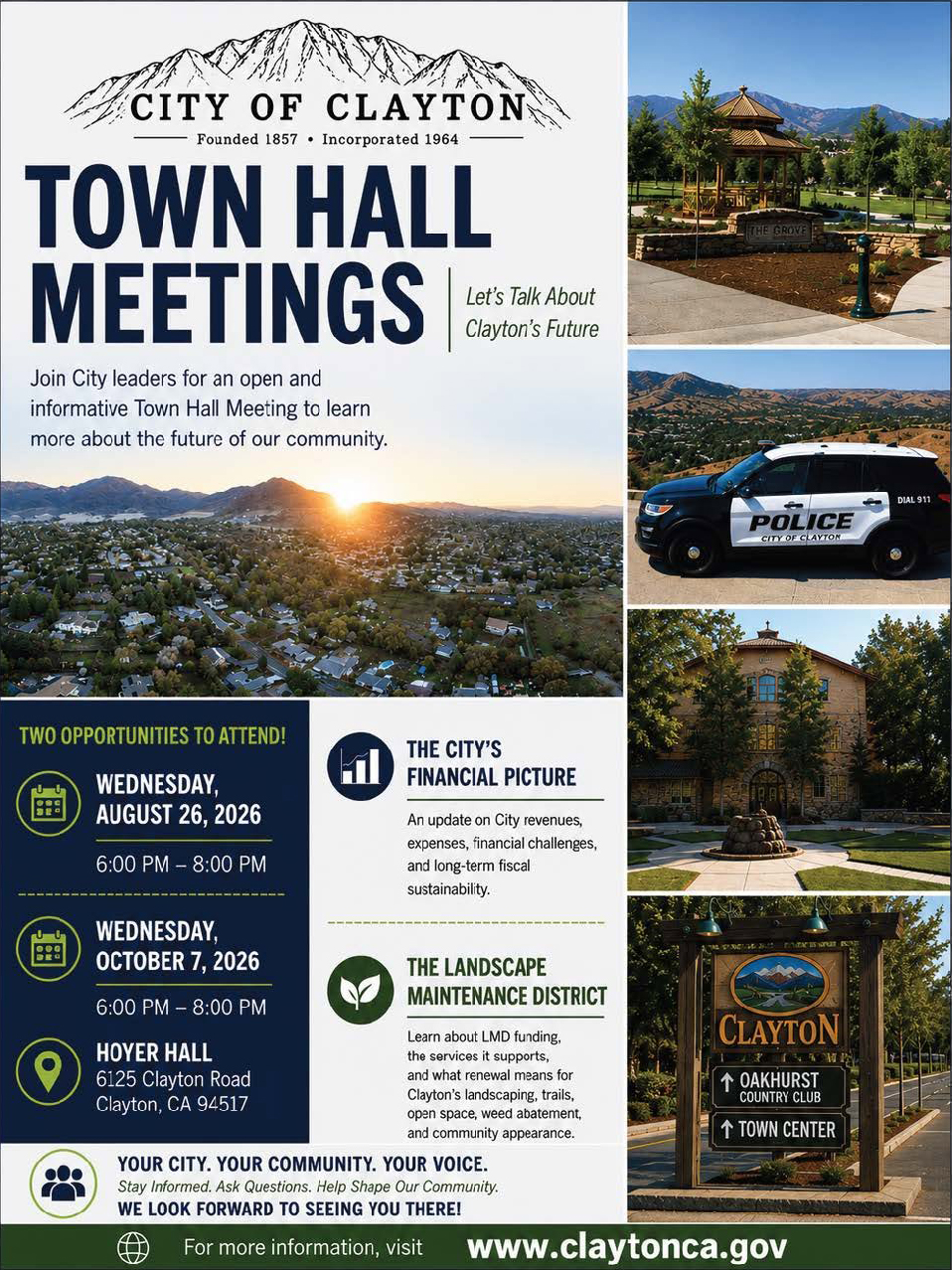
Source: City of Clayton
To learn about City finances, Landscape and Maintenance District
After council placed one-percent sales tax, landscape maintenance assessment measures on November ballot
By City of Clayton
The City of Clayton invites residents to “Come participate in our next Town Hall! This Wednesday, Oct. 7, 2026, from 6:00 to 8:00 PM at Hoyer Hall, come learn more about the City. Join City leaders for an open and informative Town Hall Meeting to learn more about the future of our community.”
The City’s Financial Picture: An update on City revenues, expenses, financial challenges, and long-term fiscal sustainability.
The Landscape Maintenance District: Learn about LMD funding, the services it supports, and what renewal means for Clayton’s landscaping, trails, open space, weed abatement, and community appearance.
Measure M – 1% Local Sales Tax Measure
In June, the Clayton City Council voted unanimously to place a one percent (1%) local sales tax measure on the November ballot as Measure M.
The language reads, “CITY OF CLAYTON SALES TAX MEASURE. To provide local funding to maintain City of Clayton programs, services, and facilities, including: police services, traffic enforcement and road safety, road and sidewalk improvements, enhance library and recreation opportunities, park maintenance, recruitment and retention of city employees and other city services, shall the City of Clayton levy a 1% sales tax until ended by voters generating approximately $1,000,000 annually, subject to public review, the annual audit and all funds benefitting Clayton?”
Measure N – Renewal of the Landscape and Maintenance District
On July 7, the Council voted unanimously to also place on the November ballot a renewal of the Landscape and Maintenance District as Measure N. The language reads: “CITYWIDE LANDSCAPE MAINTENANCE EXTENSION AND ALTERATION OF RATE OF EXISTING SPECIAL TAX. Shall the measure to fund on-going trail system operations and maintenance, roadway landscaping, open space weed abatement, and related services of the Clayton Community Facility District No. 2007-1 (Citywide Landscape Maintenance) by extending the special tax for ten years and amending its rate and method of apportionment of the special tax to $354.54/year per residential and $354.54/acre per non-residential parcels, for FYs 2027-2037, including annual inflationary adjustments to the special tax rates not to exceed 3% per year, and subject to continued citizen’s committee oversight, be approved?”
In City Manager Kris Loftus’ August Newsletter he wrote, “Like many California communities, Clayton faces rising costs, aging infrastructure, increasing service demands, and limited revenue growth. These challenges require responsible financial decisions and careful stewardship of public resources. Our focus remains on maintaining essential services, investing in infrastructure, and ensuring the City’s long-term financial sustainability.”
Hoyer Hall is located at 6125 Clayton Road.
More details on the City’s website at Calendar • Town Hall.
Read More
Rescued produce sorted at White Pony Express before delivery to community partners in Contra Costa County. Source: WPE
Guest Commentary
By Tyler McCarthy, Outreach Associate, White Pony Express
On Friday afternoon, for a student who eats breakfast and lunch at school, the dismissal bell does more than end the school day. It starts a 68-hour clock. The last dependable school meal of the week has just been served. The next one won’t arrive until Monday morning.
We hear from our school partners what those hours can mean. As one parent liaison put it: “My thinking was that if I can give them a meal for Saturday, then they only have to get through Sunday. That lessens the need.”
California has done something remarkable. In 2022–23, it became the first state in the nation to guarantee every public school student access to free breakfast and lunch, regardless of family income. Nearly 3.5 billion school meals have been served since the program began.
It works. And at a time when changes to federal nutrition programs are putting additional pressure on some California families, it’s an achievement we must protect.
But hunger doesn’t follow a school calendar.
California’s universal meals program feeds children during the school day. Children still need to eat Friday night, Saturday, Sunday, holidays and school breaks. California has also embraced summer grocery benefits for eligible families, another important piece of the solution. But summer assistance does not solve the gap that arrives every week between Friday afternoon and Monday morning.
For a family already choosing between rent, utilities, transportation, and groceries, those aren’t simply gaps in a schedule. They can be the days the refrigerator runs empty. That’s where White Pony Express makes an enormous difference.
Every day, White Pony Express drivers collect surplus food from grocers, farms, wholesalers, and restaurants – high-quality food that is perfectly good but has nowhere to go. We sort it for quality the same day and deliver it, free of charge, to neighbors throughout Contra Costa County. Of the 135,000 people White Pony Express serves each year, nearly one-third – about 40,300 – are children.

Photo: WPE
Our School Pantry Program brings fresh groceries directly into 23 school communities where 80 percent or more of students qualify for free or reduced-price meals. Families shop at no cost, with no forms and no questions asked.
One pantry coordinator remembers a young mother raising three children alone after losing her husband. She came to the pantry for groceries, including peanut butter and chicken.
“She doesn’t have money to buy much,” the coordinator told us, “but she told me it’s a blessing to have White Pony Express helping us.”
Since the School Pantry Program began in 2015, White Pony Express has delivered more than three million pounds of food to school communities – the equivalent of roughly 2.5 million meals.
The model works because it connects two resources that already exist: good food that would otherwise go unused and trusted neighborhood schools where families already gather.
It also demonstrates something larger. Public programs and community organizations do not have to compete with one another. They can complete one another.
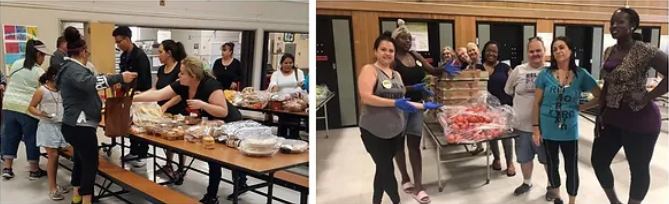
Photos: WPE
California has shown what is possible when we make a public commitment to feed children at school and then build a system capable of doing it at an extraordinary scale. Now we need to look just as honestly at the hours the school cafeteria cannot cover.
More than two million California children still lack reliable access to healthy food. For them, the problem doesn’t begin Monday morning. It begins Friday afternoon, when the bell rings. And that is a gap communities like ours can – and must – close.
To volunteer, donate food, or support the School Pantry Program, visit whiteponyexpress.org.
Read More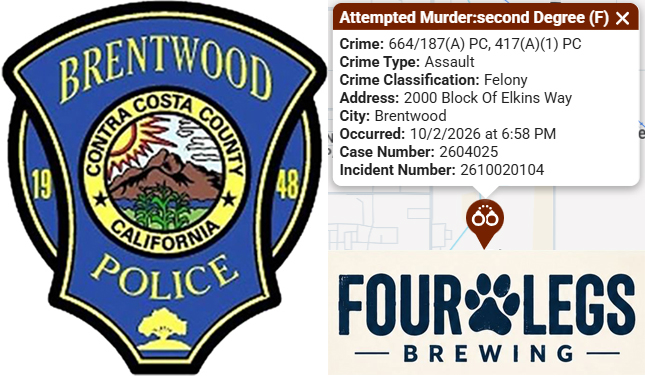
Screenshot from the Brentwood PD CitizenRIMS Crime map. Source: Brentwood PD.
At brewhouse that issued statement they’re “heartbroken by the incident”
Suspect charged with attempted murder, faces up to 9 years in state prison
By Chris Bollinger, Community Engagement Officer, Brentwood Police Department
On Friday, October 2, 2026, at approximately 7:58PM, Brentwood officers were dispatched to the 2000 block of Elkins Way for a report of a stabbing. The address is the location of Four Leg Brewing which issued a statement about the incident Saturday morning.
When officers arrived, they quickly located the suspect, an adult male, 53 years old out of Tallahassee, Florida still on scene. The suspect was taken into custody without incident. They also located an adult male victim with several stab wounds to his lower torso. Officers immediately began to provide medical aid to the victim until medical personnel arrived on scene. The victim was then transported to a local hospital for further treatment.
The male, who is being treated, is expected to survive. All evidence indicates this was an isolated incident.
This investigation is ongoing and we will not be releasing any further information at this time. If you have any additional information regarding this incident, you can call the Brentwood Police Department Dispatch line at (925) 809-7911.
Four Legs Brewing Issues Statement
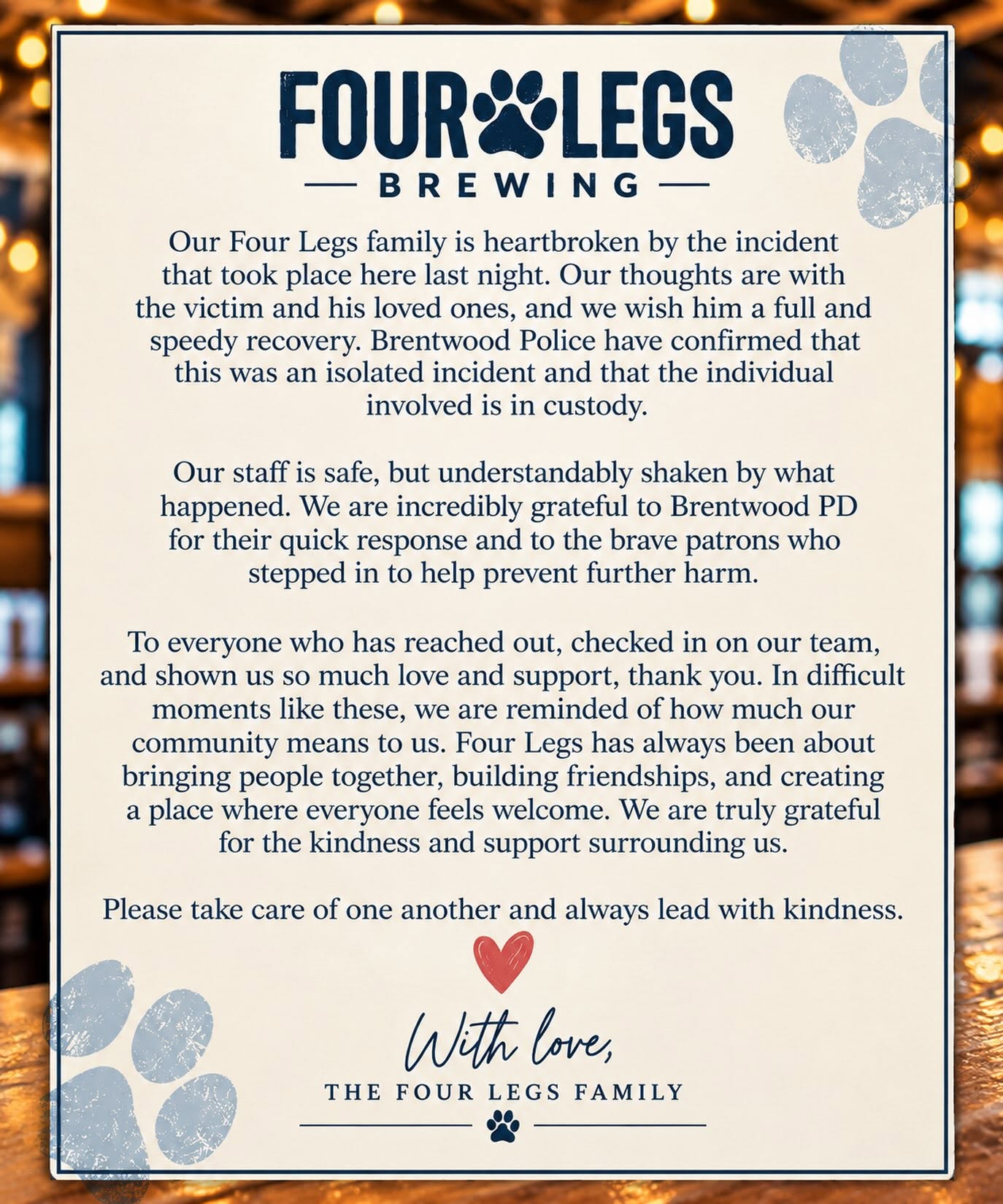
Statement by Four Legs Brewing posted on their Facebook page Saturday morning, Oct. 3, 2026.
In a post on their Facebook page Saturday morning, Oct. 3rd, Four Legs Brewing issued the following statement: “Our Four Leggs family is heartbroken by the incident that took place here last night. Our thoughts are with the victim and his loved ones, and we wish him a full and speedy recovery. Brentwood Police have confirmed that this was an isolated incident and that the involved is in custody.
“Our staff is safe, but understandably shaken by what happened. We are incredibly grateful to Brentwood PD for their quick response and to the brave patrons who stepped in to help prevent further harm.
“To everyone who has reached out, checked in on our team, and shown us much love and support, thank you. In difficult moments like these, we are reminded of how much our community means to us. Four Legs has always been about bringing people together, building friendships, and creating a place where everyone feels welcome. We are truly grateful for the kindness and support surrounding us.
“Please take care of one another and always lead with kindness.
“With love, The Four Legs Family.”
The brewhouse also changed their hours for Saturday in a later Facebook post which reads, “Due to the incident that occurred last night we are open today 12pm-6pm. Thank you for understanding” and “We apologize for any inconveniences this may cause, but thank you for your understanding.”
The department’s CitizenRIMS Crime map shows the incident is listed as an assault and felony second degree attempted murder. However, the website’s list of arrests has not yet been updated since Thursday, Oct. 1st and the website’s Media Bulletins have not been updated since Sept. 29th.
The suspect is charged with 664/187(A) PC, attempted second-degree murder which is punishable by 5, 7 or 9 years in state prison, and 417(A)(1) PC, described as, “Every person who, except in self-defense, in the presence of any other person, draws or exhibits any deadly weapon whatsoever, other than a firearm, in a rude, angry, or threatening manner, or who in any manner, unlawfully uses a deadly weapon other than a firearm in any fight or quarrel is guilty of a misdemeanor, punishable by imprisonment in a county jail for not less than 30 days.” Case Number: 2604025 Incident Number: 2610020104
Bollinger was asked for information about the victim and reiterated, “He is a male.” But that is all he could share at this time, pending notification of family.
Allen D. Payton contributed to this report.
Read More
Prevents former ICE agents with history of misconduct from becoming law enforcement officers in California
Claims participating in ICE operations during Trump’s 2nd term “demonstrates an immorality”
Could be challenged in court, deemed unconstitutional
By Allen D. Payton
On Tuesday, Sept. 29, 2026, Governor Gavin Newsom signed into law AB 1627, the Misconduct Ends Law-enforcement Trust Act of 2026 (MELT ICE) by Assemblywoman Anamarie Ávila Farías (D-Martinez), which disqualifies officers employed by U.S. Immigration and Customs Enforcement (ICE) from being employed as a peace officer in California, if they “engaged in serious misconduct that would have resulted in their certification being revoked…if employed as a peace officer in this state.”
The Assemblywoman represents portions of Contra Costa County in the State Assembly’s 15th District.
While the law makes clear that existing police hiring rules covering serious misconduct by former law enforcement officers now, also apply to officers involved in immigration enforcement, it applies even if the ICE officer was not found guilty of misconduct in their current or previous position.
However, the soon to be new law could be challenged in court because of possible violation of federal labor law and deemed unconstitutional in part due to the “immorality” clause. That clause reads, “Participating in the operations of United States Immigration and Customs Enforcement on or after January 20, 2025, demonstrates an immorality that California cannot afford to have in its ranks of peace officer.”
On August 30th, the bill passed the state Senate on 29 to 10 party-line vote, and the Assembly by 57 to 16 also on a party-line vote. It was enrolled and presented to the Governor on Sept. 9th at 1 p.m.
Part of Package of Federal Immigration Enforcement Related Bills Signed by Governor
According to a press release from the governor’s office that day, “Governor Newsom signed 21 bills earlier today cementing California’s longstanding efforts to support immigrant communities and reflecting on the state’s response to an intensified federal immigration enforcement environment.”
“Newsom…signed a package of bills related to federal immigration enforcement in California to expand oversight of federal immigration enforcement in California.
“This action builds on years of work by Governor Newsom and the Legislature to support (illegal) immigrant families, protect communities and the economy from reckless immigration actions, strengthen transparency and oversight of detention facilities, and ensure that state resources are focused on public safety and the needs of Californians.
The governor’s office claims the package of bills, “Prohibits ICE officers who have committed serious misconduct on the job from becoming peace officers or public employees in California.”
Included in the bills was AB 1627 by Ávila Farías, described as “Public employment: disqualifications”, and known as the MELT ICE Act.
Legislative Counsel’s Digest of AB 1627
According to the Legislative Counsel’s Digest, “Existing (state) law specifies circumstances that disqualify a person from holding office or being employed as a peace officer, including, among other things, any person previously employed in law enforcement in any state or United States territory or by the federal government whose name is listed in any of specified indexes whose certification as a law enforcement officer in that jurisdiction was revoked for misconduct or who, while employed as a law enforcement officer, engaged in serious misconduct that would have resulted in their certification being revoked by the commission if employed as a peace officer in this state.
“This bill would specify that, for purposes of the disqualification circumstances described above, the terms ‘employed in law enforcement’ and ‘law enforcement officer’ include a law enforcement officer employed in any state or United States territory or by the federal government who engages in immigration enforcement, as provided.”
Bill Text Claims Participating in ICE Operations During Trump’s Second Term “Demonstrates an Immorality”
According to the Bill Text in, “SECTION 1. The Legislature finds and declares all of the following:
“(a) Beginning in 2025, United States Immigration and Customs Enforcement officers have terrorized California residents, United States citizens and noncitizens alike, through untargeted arrests and brutality based on nothing more than a person’s racial appearance, language spoken, means of earning a living, or exercise of First Amendment-protected expression.
“(b) Beginning in 2025, the United States Department of Homeland Security has recruited peace officers to United States Immigration and Customs Enforcement with the promise of being unrestrained in the manner in which officers engage with civilians or by the laws of the State of California.
“(c) Participating in the operations of United States Immigration and Customs Enforcement on or after January 20, 2025, demonstrates an immorality that California cannot afford to have in its ranks of peace officers whose duties include interacting with the public.”
Further according to the Bill Text, “…except as provided in subparagraph (B), any person previously employed as a sworn law enforcement officer or individual contractor, and personally engaged in immigration enforcement,” is “disqualified from holding office as a peace officer or being employed as a peace officer of the state, county, city, city and county, or other political subdivision, whether with or without compensation, and is disqualified from any office or employment by the state, county, city, city and county, or other political subdivision, whether with or without compensation, which confers upon the holder or employee the powers and duties of a peace officer.”
Subparagraph B (ii) reads, “‘Immigration enforcement’ includes any and all efforts to investigate, enforce, or assist in the investigation or enforcement of any federal civil immigration law, and also includes any and all efforts to investigate, enforce, or assist in the investigation or enforcement of any federal criminal immigration law that penalizes a person’s presence in, entry, or reentry to, or employment in, the United States.”
However, the bill “does not prohibit or restrict any governmental entity or official from sending to, or receiving from, federal immigration authorities information regarding the citizenship or immigration status, lawful or unlawful, of an individual, or from requesting from federal immigration authorities immigration status information, lawful or unlawful, of any individual, or from maintaining or exchanging that information with any other federal, state, or local governmental entity.” That means existing law enforcement officers can cooperate with ICE within limits of California’s sanctuary state laws.
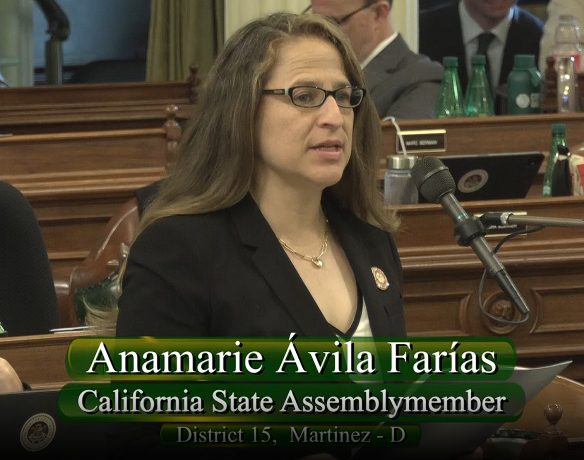
Assemblywoman Ávila Farías speaks about her bill, AB1627 on the Assembly Floor On May 27, 2026. Video screenshot source: CalMatters
Ávila Farías Comments About Bill, Signing by Governor
A press release issued earlier this year, after the State Assembly passed her bill, reads, “On the Assembly Floor, Assemblymember Ávila Farías emphasized that ICE enforcement has created fear across California—impacting both citizens and immigrants alike—and legislation is needed to proactively safeguard our communities and critical spaces.”
She is further quoted in a FOX11 Los Angeles report as saying in a statement, “California’s peace officers…must be guardians of constitutional rights, not participants in their erosion.” and “argued that participating in ICE operations during this period ‘demonstrates an immorality that California cannot afford to have in its ranks.’”
In her brief speech on the Assembly Floor on May 27th, Avila Farias said, “Communities are safer when we are policed by people who are committed to protecting the public rather than kidnapping them.”
During a presentation before the Assembly Standing Committee on Public Safety in April, she said, “Frankly, I don’t want my kids or anyone else’s counting on people who flaunt the rule of the law.” Ávila Farías also claimed, “this bill, does not have any legal issues, and challenges, because we’re simply doing a modest expansion of existing law in a way to protect our community members and holding the highest regard of what our law enforcement professionals. It also is not honing into the individuals that are doing their jobs to the letter of the law. This is protecting vulnerable community populations…”
She repeated her remarks before the state Senate Standing Committee on Public Safety in June saying, “AB 1627 ensures that immigration enforcement personnel are disqualified from becoming a peace officer in California if they have committed misconduct in their prior roles. This bill is about restoring public trust and holding federal law enforcement to the same standards as any other peace officer in California.”
About the governor signing her bill Ávila Farías said, “Our kids deserve role models in uniform, not individuals tied to fear and intimidation. AB 1627 is about accountability, integrity, and reducing harm before it happens. With the signing of the MELT ICE Act of 2026, California sends a clear message: Federal agents who have disregarded constitutional rights are not to be entrusted with peace enforcement roles in our state. Thank you, Governor Newsom, for your commitment to upholding the rule of law and protecting our communities.”
Ávila Farías’ office issued a press release about the bill’s signing.
“Today, Governor Gavin Newsom signed my bill to prevent former ICE employees with documented histories of misconduct from becoming peace officers in California.
“AB 1627, the Misconduct Ends Law-Enforcement Trust Act of 2026, started with people in my community speaking up. One year ago, at a No Kings Rally in Concord, our community came together and spoke out about the fear many immigrant families were experiencing. That community activism helped inspire this legislation, and I am proud that their voices helped lead to meaningful change.
“AB 1627 was not written overnight. It was the result of many conversations, a lot of listening, and working with people who care deeply about public safety and accountability.
“At the heart of this bill is a simple principle: if someone has a documented history of misconduct, they should not be able to leave one agency and simply put on another uniform without accountability.
“I am honored and humbled to have played a part in creating one more barrier to prevent individuals who have abused their authority from becoming peace officers in California. This is about protecting public trust and making sure the people entrusted with a badge are held to a high standard.
“I want to thank Governor Newsom, my legislative colleagues, the community partners who stood with me, and the law-enforcement professionals who worked with us throughout this process. “This is what people power looks like. A community raised its voice, we listened, we worked together, and we turned that vision into law.
“AB 1627 takes effect January 1, 2027.”
Opposed by Statewide Police Organization
According to a report on MSN.com, “The Peace Officers Research Association of California (PORAC) has voiced opposition to the bill. ‘This bill is unnecessary, duplicative and it jeopardizes qualified immunity for California employees,’ stated David Mastagni on behalf of PORAC.
The report further claims, “Critics argue the measure represents ‘guilty by association’ and could worsen existing staffing shortages in California’s police departments and schools. According to data from PORAC, law enforcement agencies throughout California have lost over 3,300 sworn officers since 2020, with an average of 10% of policing roles remaining unfilled.”
Could Be Challenged in Court, Deemed Unconstitutional
However, the new law could be ruled unconstitutional if challenged in court as questions have arisen whether the state can legally enforce a lifetime ban on a specific class of former federal employees without violating federal labor protections or constitutional due process.
According to a report by iHeart Radio in February, “Legal experts question whether California can legally enforce a lifetime ban on a specific class of federal employees without violating federal labor protections or constitutional due process rights.”
Inclusion of the “immorality” clause could give further basis for a court challenge.
Read More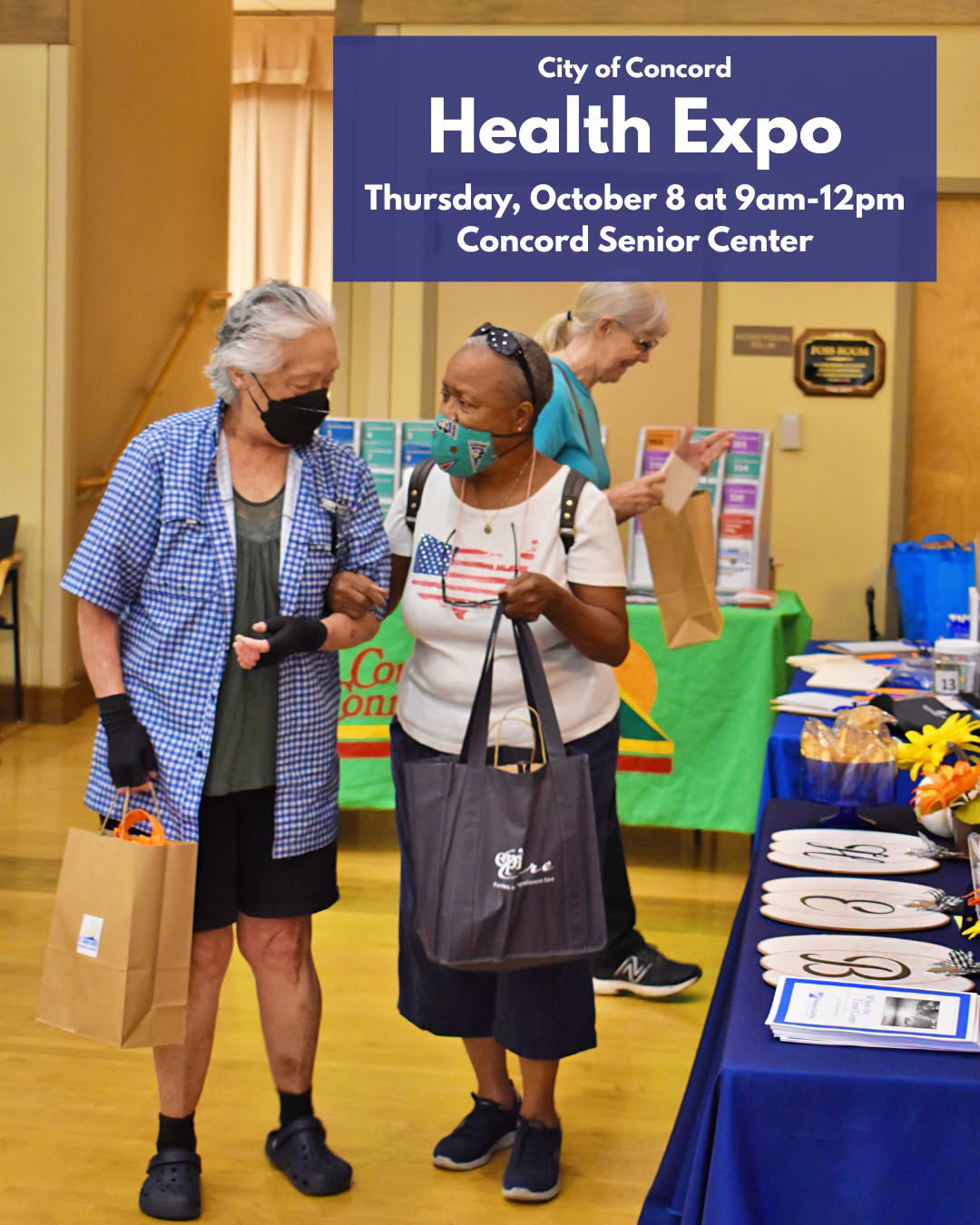
Photo: City of Concord
At Senior Center
By Colleen Awad, Community Relations Manager, City of Concord
Concord, CA — The City of Concord is proud to present the 11th Annual Health Expo, a free community event, on Thursday, October 8, 2026, from 9:00 a.m. to 12:00 p.m. at the Concord Senior Center (2727 Parkside Circle). This free event brings together local organizations, healthcare providers, and community resources to help seniors, families, and caregivers connect with information and services that support healthy living and well-being. No reservations are required.
While we offer health and wellness resources for all ages, many focus on seniors and caregivers, including information on Medicare, transportation, assisted living, nutrition, fitness, and more. The event will also feature free haircuts, along with opportunities to speak directly with local healthcare providers, nonprofit organizations, and community partners.
Whether you are looking for resources for yourself, supporting a loved one, or simply interested in learning more about healthy aging and wellness, the Health Expo provides an opportunity to discover local services and connect with organizations serving the Concord community.
The Health Expo reflects the City of Concord’s commitment to providing accessible resources and creating opportunities for residents to stay informed, connected, and engaged in their health and well-being.
For more information about the Health Expo, please visit www.cityofconcord.org/SCEvents, call 925-671-3320, or email concordsc@cityofconcord.org.
Read More
Rendering of the planned District 3 Youth Center in Brentwood. Source: CCCounty
A Space to Call Their Own: Investing in the Future of Our Youth Ages 12-18 in Brentwood, Oakley, Antioch, Bethel Island, Knightsen, Byron and Discovery Bay
For Creative Expression, Community & Connection, Holistic Wellness
By Diane Burgis, District 3 Supervisor, Contra Costa County
Across all neighborhoods in District 3, our youth have needed a space built specifically around their lived experiences, creative interests, and physical and mental health needs.
The project behind this long-held vision is officially underway with the support of Measure X funding. At the corner of Lone Tree Way and Windy Springs Lane in Brentwood, Contra Costa County is developing the District 3 Youth Center on a 4.68-acre County-owned parcel planned to also hold Fire Station 90.
This planned single-story, 15,000-square-foot, state-of-the-art flagship campus designed entirely for local youth ages 12 to 18 who live in the cities of Antioch, Brentwood and Oakley, and the unincorporated areas of Bethel Island, Byron, Discovery Bay and Knightsen and is scheduled to open in 2029. More than a standard municipal facility, the center’s preliminary blueprint reflects a home-like, collaborative atmosphere:
- Creative Expression: Architectural plans feature a full music and media recording studio, instructional classrooms, and quiet study nooks designed for academic support and creative exploration.
- Community & Connection: A central living room and lobby welcome visitors, anchored by multipurpose activity rooms, a community teaching kitchen, and open outdoor recreation areas.
- Holistic Wellness: Recognizing the unique pressures facing teens today, the facility includes dedicated wellness zones and private consultation rooms for youth therapy, mental health guidance, and peer support.
Quick Facts
- Estimated Construction Budget: $23,000,000
- Anticipated Construction Start: Winter 2027
- Estimated Project Completion: Summer 2029
As the Youth Center and Fire Station 90 are planned to be constructed by the same Design-Build team on the same parcel, the planning approval process of the Fire Station will ultimately affect the construction time for the Youth Center. It is currently on track for an opening in late Summer 2029.
Second of Three Youth Centers
The District 3 Youth Center is the second of three Youth Centers planned in the County. The District 4 Youth Center opened in 2025 at 2241 Galaxy Court in Concord. The District 5 Youth Center will be located in a new building to be constructed on the County-owned Los Medanos (former hospital) site in Pittsburg, which is currently home to a County-operated health clinic off Loveridge Road.
New Project Dashboard
The County has launched a new project dashboard where you can bring yourself up to speed on all of the current happenings at the site.
Follow the dashboard and messaging for exciting project updates and news for the District 3 Youth Center: www.contracosta.ca.gov/10697/District-3-Youth-Center.
Programming for the District 3 Youth Center falls under the Employment and Human Services Department, Workforce Development Board. More information on the Youth Centers Initiative and interim services is available at their website: Youth Centers Initiative | Workforce Development Board of Contra Costa County
Allen D. Payton contributed to this report.
Read More
Photos: Gold Runner
By Harlo Pippenger, Consultant, Gold Runner & Ahdel Ahmed, Public Relations Manager, San Joaquin Joint Powers Authority
Stockton, CA – More than 100 years ago, Allensworth, CA was founded as a bold vision of freedom, opportunity, and self-determination. Gold Runner invites you to honor that vision at the Allensworth Rededication on Saturday, October 10 from 11:00 AM to 4:00 PM. In partnership, Amtrak’s Gold Runner has scheduled a special stop at the park for multiple trains, bookable at exclusive half-price “Allensworth fares”.
Gold Runner will offer special-priced train tickets to the event from stations across its corridor, which connects the Bay Area and Sacramento to Bakersfield, with bus connections to Southern California. Trains will make a stop at the Allensworth station (CNL), which is normally a whistle stop for pre-booked groups. Riders can combine the event fare with Gold Runner’s standard discounts for children, seniors, veterans, and riders with disabilities, listed on the Deals webpage.
Hosted by California State Parks, the Annual Rededication of Col. Allensworth State Historic Park honors the park’s original dedication in 1976. Join us for historical re-enactments, tours of historic buildings, square dancing, arts and crafts, and food vendors.
Founded in 1908 by Colonel Allen Allensworth, a formerly enslaved man, the town was designed to be a self-sustaining community where African Americans could live, work, and thrive. Today, visitors can see the legacy of this trailblazing community come alive through re-enactments, storytelling, and tours of the lovingly restored and reconstructed early 20th century buildings. Step into the Colonel’s house, walk through the halls of the historic schoolhouse, and explore the church and library for an inspiring journey through a pivotal moment in history.
“The Annual Rededication celebration is a chance to reflect on what Colonel Allensworth and the town’s founders built here, and to make sure that story keeps reaching new people,” said Lori Wear, California State Parks. “We’re glad to be working with Gold Runner again this year. With the cost of driving going up, the train gives families an affordable way to get here, and that matters for a park that belongs to all Californians.”
The southbound trains running for the event include trains 702 (11:41 am arrival), 710 (12:41pm arrival). Northbound trains include 713 (9:40 arrival), 715 (11:39 arrival), 717 (2:46 arrival). Riders must select “Col Allensworth State Park, CA (CNL)” when purchasing train tickets. A discount will automatically be applied, and if eligible, riders can then combine this reduced ticket with additional savings regularly available which include:
- Infants under 2 years of age ride for free
- Children 2-12 years old ride half-price every day
- Seniors (62+ years of age) receive 15% off
- Veterans & active military members receive 15% off
- Disabled riders save 15% off
- View deals
Visitors attending the Rededication Celebration via the Gold Runner trains will arrive at the Allensworth station (CNL), which will serve as a special stop for this event. Upon arrival, two complimentary 29-passenger shuttles provided by Tulare County Area Transit will transport riders between the train platform and the historic schoolhouse. Typically, a whistle stop available only to pre-booked groups, the Allensworth station (CNL) will be fully activated for travelers on October 10, offering a rare and seamless opportunity to experience this historic park by rail.
Train tickets to Colonel Allensworth State Historic Park can be booked online at the Colonel Allensworth landing page or contact Carmen Setness, community outreach coordinator for San Joaquin Regional Rail Commission (SJRRC), at csetness@sjrrc.com.
About Allensworth State Historic Park
The town of Allensworth is located in the heart of the Central Valley, about 30 miles north of Bakersfield. Boasting a rich history that is of interest to students, families, history buffs, minority community organizations, and anyone else looking to spend a fun day exploring the historic community and its restored buildings. In 1908, Allensworth was established as a town founded, financed and governed by African Americans. There were a series of challenges impeding the town’s long-term survival, but it is celebrated as a key historical icon. In 1974 California State Parks purchased the land in order to maintain it as a site for visitors to learn and explore the Colonel’s house, historic schoolhouse, Baptist church and library. For more information visit Colonel Allensworth State Historic Park.
About the San Joaquin Joint Powers Authority (SJJPA)
Since July 2015, SJJPA has been responsible for the management and administration of Gold Runner, previously Amtrak San Joaquins. SJJPA is governed by Board Members representing each of the ten (10) Member Agencies along the 365-mile Gold Runner Corridor. For more information on SJJPA see www.sjjpa.com. Gold Runner is Amtrak’s 6th busiest route with 18 train stations throughout the Central Valley and Bay Area, providing a safe, comfortable and reliable way to travel throughout California. Gold Runner is currently running six daily round-trips. In addition to the train service, Gold Runner Thruway buses provide connecting service to 135 destinations in California and Nevada including Los Angeles, Santa Barbara, San Diego, Napa Valley, Las Vegas and Reno.
Read More
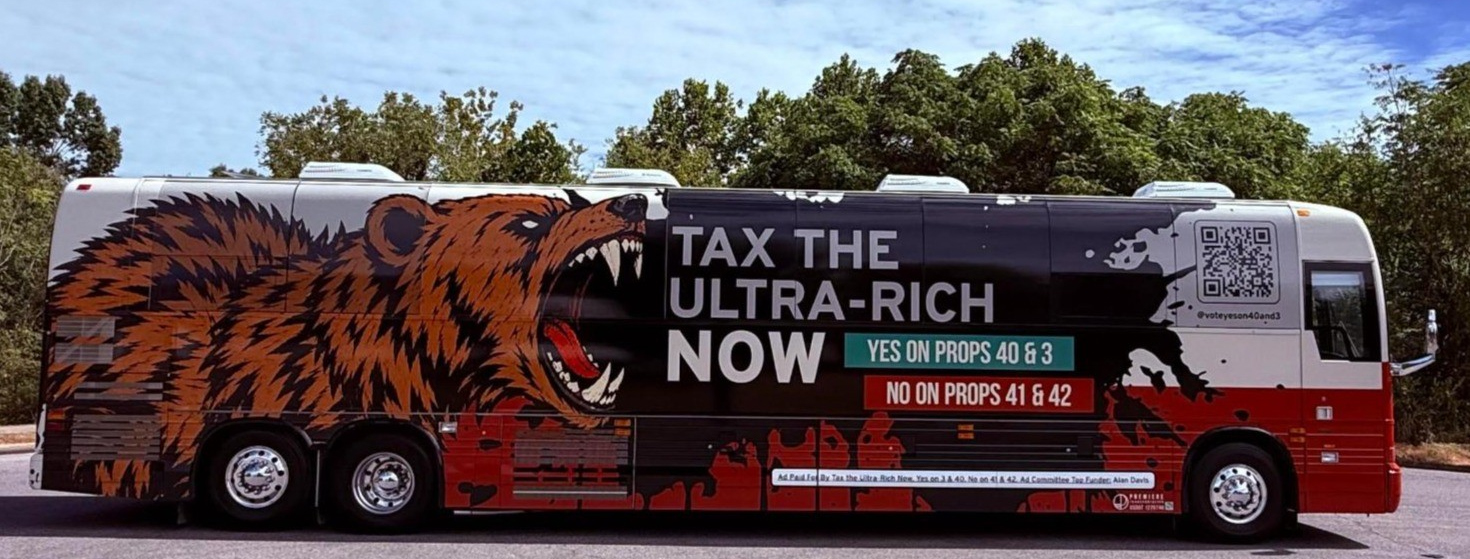
The Tax the Ultra-Rich Now campaign bus will start its week-long tour on Saturday, Sept. 3, 2026. Photo: TURN
Kicks off at Bernie Sanders rally in SF on Saturday, Oct. 3, with stops in Oakland, Berkeley, Bakersfield and LA
Week-long tour makes the case for reducing the wealth and power of the ultra-wealthy through a wealth tax
By Ryan Thomas, Tax the Ultra-Rich Now, Yes on 3 & 40, No on 41 & 42
 SAN FRANCISCO — Tax the Ultra-Rich Now (TURN) kicks off a week-long, statewide bus tour tomorrow in support of Proposition 40 and Proposition 3, hosting events with advocates, experts, and policymakers across California. Running from October 3 to October 11, the tour builds on TURN’s six-figure campaign to rein in the outsized wealth and power California’s billionaires hold over working families, the economy, and our democracy.
On November 3, 2026, California voters will vote on Proposition 40, a one-time 5 percent tax on the net worth of billionaires who were California residents on January 1, 2026. Ninety percent of the revenue would fund health care programs, with the remainder for food assistance and education. This analysis examines how the Forbes-estimated wealth of 22 billionaires who have publicly opposed the measure has changed since January 2025 and compares that growth with the measure’s tax rate.
Prop 3 permanently protects roughly $15 billion a year in school and health care funding by again extending an existing high-income tax.
The tour comes at a time when Americans clearly see unchecked billionaire wealth as an existential threat to democratic governance. A new poll released by Tax the Greedy Billionaires showed that 79 percent of Americans say billionaires have more power than they should in a democracy, while seven in ten Americans also favor increased tax enforcement on the wealthiest households.
The tour launches with a rally hosted by Senator Bernie Sanders and Congressman Ro Khanna in San Francisco on October 3, and closes with a comedy show hosted by Heather Gardner featuring Franchesca Ramsey, Kylie Vincent, and Moses Storm in Los Angeles on October 11. Stops include:
- October 3: Rally with Sen. Bernie Sanders in San Francisco
- October 4: Canvas Kickoff in Livermore with Rep. Aisha Wahab
- October 6: “Server for an Hour” in Oakland with Local Electeds
- October 7: AI Roundtable in San Francisco
- October 8: Media Avail, On-Campus Organizing at UC-Berkeley
- October 9: Media Avail, On-Campus Organizing at CSU-Bakersfield
- October 10: Canvas Kickoffs with UTLA and Angela Gonzales-Torres in Los Angeles
- October 11: Comedy Show in Los Angeles

Source: TURN website
The tour will connect some of the most important issues to California voters—from health care and education to wages and affordable housing—into a single statewide campaign supporting Props 40 and 3 while building political momentum toward a national conversation about billionaire power. Partners joining TURN on the road include:
- California Working Families Party
- Courage California
- One Fair Wage/One Fair Wage Action
- People’s Action
- United Healthcare Workers West (UHW)
- Senator Bernie Sanders
- Reps. Ro Khanna and Aisha Wahab
- Congressional candidate Angela Gonzales-Torres
- Oakland School Board Members Valarie Bachelor and Patrice Berry
- City Councilmembers Igor Tregub (Berkeley) and Kalimah Priforce (Emeryville)
“For far too long, the ultra-wealthy have gotten wealthier while working families pay the price—in higher health care costs, crowded classrooms, and skyrocketing rent. We believe working families should determine our future, not a handful of billionaires exploiting unchecked power built from fortunes that grow year after year,” said Igor Volsky, TURN’s Campaign Manager. “The vast majority of California voters understand what’s at stake. That’s why we’re taking the fight against billionaire greed and power directly to the people impacted most. From the Bay to the Valley, we’re building a movement that will show California and the rest of the country what’s possible when we tax wealth and invest in working people.”
In addition to rallying support for Props 40 and 3, TURN is actively organizing against Props 41 and 42—two billionaire-backed measures on the ballot this November that would nullify Prop 40 if either receives more “yes” votes. So far, despite the poison bills and the ultra-wealthy spending more than $150 million into outright deceiving voters, recent polling shows that 52 percent of likely voters support Prop 40 while 58 percent of likely voters support Prop 3.
About TURN
TURN (Tax the Ultra-Rich Now) is a coalition of working families, health care workers, educators, and everyday Californians fighting to shrink the power billionaires hold over our economy, our democracy, and our future. Taxation is our tool: It funds our schools, health care, and communities while cutting excessive wealth down to size so the rest of us can thrive.
Allen D. Payton contributed to this report.
Read More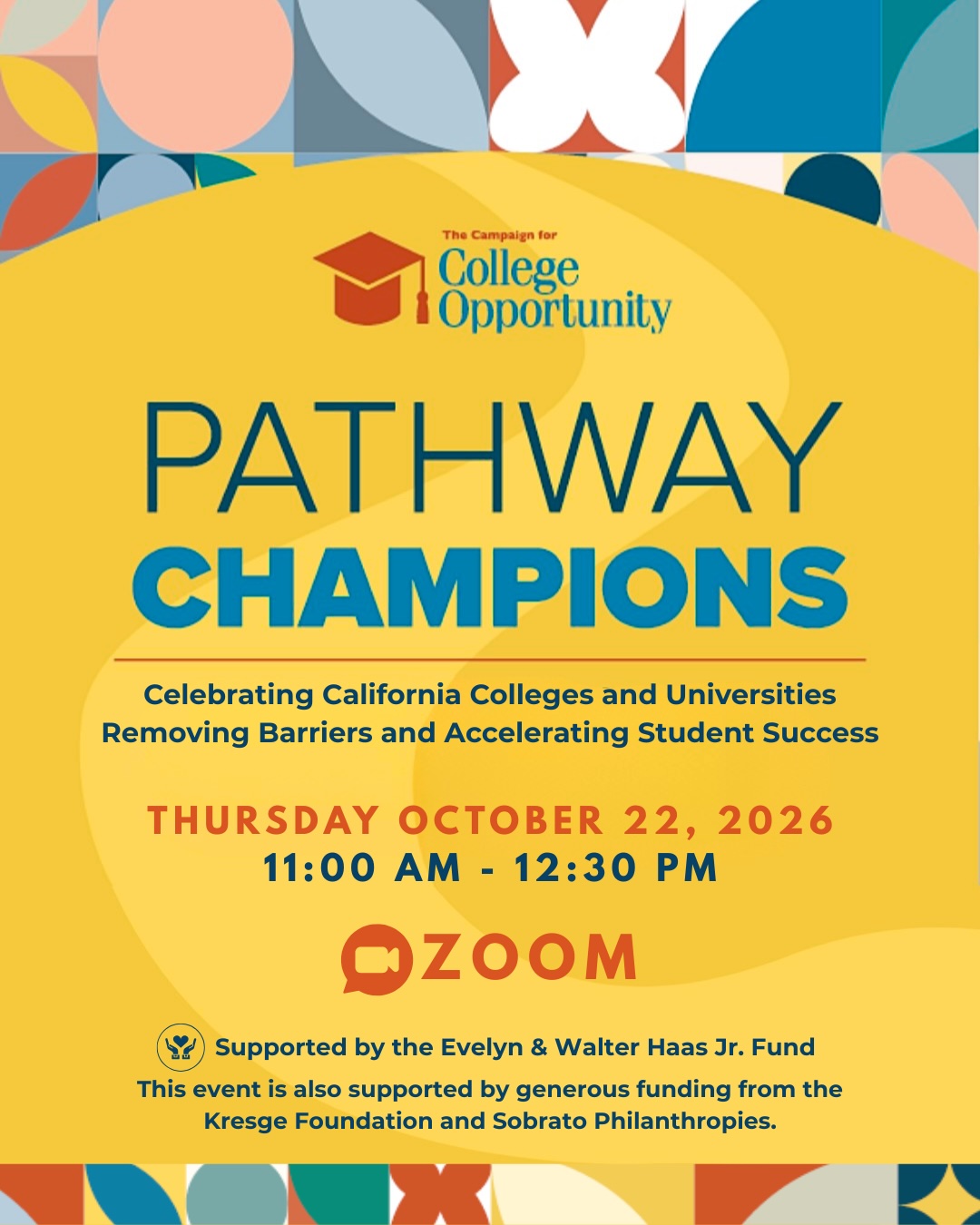
LMC Latino students excel
Online celebration Oct. 22
By Juliet V. Casey, Director of Marketing and Media Design, Los Medanos College and Loni Swain, Director of Communications, Campaign for College Opportunity
Pittsburg, Calif. – The Campaign for College Opportunity named Los Medanos College a 2026 Pathway Champion of Placement for its Latino Student Success in English. This award recognizes colleges where Latino students are completing transfer-level English at the highest rates, with particular attention to closing racial equity gaps.
“We commend your institution’s commitment to advancing equitable student success and strengthening California’s transfer pathway,” said Jessie Ryan, president of The Campaign for College Opportunity. “This achievement underscores the extraordinary efforts of your faculty and staff to ensure all students, especially those historically underrepresented, have the opportunity to succeed.”
Ryan added that LMC is leading the way, showing what is possible “when equity and excellence go hand in hand.”
LMC will be recognized during the Pathway Champions: Celebrating Colleges Building Seamless Paths to Student Success virtual celebration on Thursday, October 22, 2026, from 11 a.m. to 12:30 p.m., during National Transfer Week.
“Los Medanos College is a culturally rich institution, where more than 45% of the student population identifies as Latinx,” LMC President Ralston said. “We are honored and proud of this recognition.”
Ralston said that as a federally designated Hispanic-Serving Institution, LMC prioritizes improving transfer-level English completion for this population but has not done so in isolation. The college’s Student Equity Plan includes strategies designed to address shared and intersecting barriers to completion of all students, she said.
Morgan Lynn, chair of LMC’s English Department, faculty members have been making student-centered, holistic, and innovative changes to our programming and pedagogy.
“This award is a testament to all of our committed faculty, who have dedicated themselves to truly putting students first,” she said.
LMC Vice President of Instruction A’kilah Smith applauded the English Department for their notable work.
“I’m especially proud of our English faculty and colleagues who have embraced the opportunity to rethink how we support students, remove barriers, and create pathways to early success in college-level English,” Smith said.
Marisa Johnson, director of policy impact for The Campaign for College Opportunity, said LMC’s approach stands out. During the 2023-2024 academic year, LMC’s overall transfer-level English completion rate within one year of initial enrollment was 69.4% and 65.1% among Latino students, below the threshold to qualify for the award. After implementing its equity plan, which includes targeted initiatives, services, guidance and resources, LMC’s completion rate overall and for Latino students both rose to 72%.
“So, this award really represents closing the equity gap for last year’s English gateway courses,” Johnson said.
Rachel Anicetti, LMC dean of Liberal Arts and Sciences, said the award also reflects LMC’s commitment to equity.
“I am incredibly proud for our English faculty and their collaborative investment in professional development, learning communities, and equitable teaching practices,” she said.
Pathway Champion awards honor campuses advancing landmark reforms in equitable placement (AB 705 and 1705, Irwin), which maximize student success in transfer level-courses, and the Associate Degree for Transfer (ADT), which streamlines transfer between community colleges and CSUs. Since the passage of AB 705 and AB 1705 (Irwin), California Community Colleges have made historic progress in ensuring students are placed directly into transfer-level courses.
The Campaign for College Opportunity is recognizing 40 Pathway Champions this year. The 40 honorees include California Community Colleges and CSU campuses.
Source: The Campaign for College Opportunity
About Los Medanos College (LMC): LMC is one of three colleges in the Contra Costa Community College District serving the East Contra Costa County community. Established in 1974, LMC has earned federal designations as a Minority-Serving and Hispanic-Serving institution. It offers award-winning transfer and career-technical programs, support services, and diverse academic opportunities in an inclusive learning environment. With exceptional educators, innovative curriculum, growing degree and certificate offerings, and state-of-the-art facilities, the college prepares students to succeed in their educational pursuits, in the workforce, and beyond. LMC’s Pittsburg Campus is located on 120 acres bordering Antioch, with an additional education center in Brentwood. For more information visit www.losmedanos.edu.
About the Campaign for College Opportunity: The Campaign for College Opportunity is a coalition representing business, labor, civil rights, religious groups and civic organizations working to ensure that California keeps the promise of college opportunity to California’s next generation of students. The coalition is dedicated to ensuring every Californian can attend and succeed in college, building a stronger future for California’s communities and the students who power them.
Read More
3- to 4-bedroom 2,000+ s.f. single family residences. Sale price $262,750 to $377,00 with up to $70,000 in additional homebuyer assistance financial subsidies
By Walter Zhovreboff, Administrative Director, Bay Area Affordable Home Ownership Alliance
The City of Walnut Creek is providing a very rare and highly beneficial opportunity for very low to low income first time homebuyers to secure home ownership of newly constructed three and four-bedroom single family homes. The price for these homes will range from $262,750 to $377,000. These newly constructed large two-level homes are part of the City of Walnut Creek’s Below Market Rate (BMR) home ownership program. The same market-rate residences in the premier communities are for sale at prices ranging from $1,100,000 to $1,300,000
State and City ordinances enable developers building new homes in Walnut Creek to secure advantageous density bonuses by designating a percentage of their newly built inventory for very low to moderate income households. Eligibility for these low-income BMR homes is restricted to first-time homebuyer households with a minimum household size of three to four persons. Furthermore, the household’s combined gross income may not exceed the maximum thresholds outlined in the schedule below.
| Household size | 3 | 4 | 5 | 6 | 7 | 8 |
| Maximum income allowance | $122,200 | $135,750 | $146,650 | $157,500 | $168,350 | $179,200 |
*To qualify as a first-time homebuyer, no household member may have owned or held an ownership interest in a residential property within the past three years.
The City of Walnut Creeks Below Market Rate homebuyer program is administered by the Bay Area Affordable Homeownership Alliance (BAAHA), a 501c3 non-profit organization. BAAHA and the City are also partnering with the Richmond Community Housing Development Corporation (CHDC) to help provide access to essential first-time homebuyer education and counseling. Furthermore, this collaboration, alongside support from Mechanics Bank, provides access for up to $70,000 in additional down payment assistance subsidies for qualifying buyers. One of the loan subsidies provides up to $32,800 which is forgiven after five years of ownership.
To review the eligibility criteria, application process, and submission requirements for the currently available $262,750 four-bedroom very low-income home, please visit the BAAHA Abigail Place website at: https://myhomegateway.org/walnut-creek-bmr—abigail-place.html. Households interested in purchasing the Walnut Creek BMR will be required to submit an application to BAAHA to participate in a lottery. The two remaining affordable Below Market Rate (BMR) units are scheduled to be released to the market shortly.
The City of Walnut Creek, BAAHA, and CHCD invite interested households to attend a virtual BMR program informational workshop scheduled for 6:00PM on October 21, 2026. Topics covered at the workshop will focus on: BMR program purchase eligibility guidelines and requirements; gaining access to BMR Programs; required HUD education and valuable homebuyer counseling services; next steps households should take to apply to an upcoming BMR lottery. To get additional information and make a reservation for the virtual workshop please visit BAAHA’s website at https://myhomegateway.org/wc-bmrworkshop.html
Read More












Source: City of Clayton
To learn about City finances, Landscape and Maintenance District
After council placed one-percent sales tax, landscape maintenance assessment measures on November ballot
By City of Clayton
The City of Clayton invites residents to “Come participate in our next Town Hall! This Wednesday, Oct. 7, 2026, from 6:00 to 8:00 PM at Hoyer Hall, come learn more about the City. Join City leaders for an open and informative Town Hall Meeting to learn more about the future of our community.”
The City’s Financial Picture: An update on City revenues, expenses, financial challenges, and long-term fiscal sustainability.
The Landscape Maintenance District: Learn about LMD funding, the services it supports, and what renewal means for Clayton’s landscaping, trails, open space, weed abatement, and community appearance.
Measure M – 1% Local Sales Tax Measure
In June, the Clayton City Council voted unanimously to place a one percent (1%) local sales tax measure on the November ballot as Measure M.
The language reads, “CITY OF CLAYTON SALES TAX MEASURE. To provide local funding to maintain City of Clayton programs, services, and facilities, including: police services, traffic enforcement and road safety, road and sidewalk improvements, enhance library and recreation opportunities, park maintenance, recruitment and retention of city employees and other city services, shall the City of Clayton levy a 1% sales tax until ended by voters generating approximately $1,000,000 annually, subject to public review, the annual audit and all funds benefitting Clayton?”
Measure N – Renewal of the Landscape and Maintenance District
On July 7, the Council voted unanimously to also place on the November ballot a renewal of the Landscape and Maintenance District as Measure N. The language reads: “CITYWIDE LANDSCAPE MAINTENANCE EXTENSION AND ALTERATION OF RATE OF EXISTING SPECIAL TAX. Shall the measure to fund on-going trail system operations and maintenance, roadway landscaping, open space weed abatement, and related services of the Clayton Community Facility District No. 2007-1 (Citywide Landscape Maintenance) by extending the special tax for ten years and amending its rate and method of apportionment of the special tax to $354.54/year per residential and $354.54/acre per non-residential parcels, for FYs 2027-2037, including annual inflationary adjustments to the special tax rates not to exceed 3% per year, and subject to continued citizen’s committee oversight, be approved?”
In City Manager Kris Loftus’ August Newsletter he wrote, “Like many California communities, Clayton faces rising costs, aging infrastructure, increasing service demands, and limited revenue growth. These challenges require responsible financial decisions and careful stewardship of public resources. Our focus remains on maintaining essential services, investing in infrastructure, and ensuring the City’s long-term financial sustainability.”
Hoyer Hall is located at 6125 Clayton Road.
More details on the City’s website at Calendar • Town Hall.
Read MoreRescued produce sorted at White Pony Express before delivery to community partners in Contra Costa County. Source: WPE
Guest Commentary
By Tyler McCarthy, Outreach Associate, White Pony Express
On Friday afternoon, for a student who eats breakfast and lunch at school, the dismissal bell does more than end the school day. It starts a 68-hour clock. The last dependable school meal of the week has just been served. The next one won’t arrive until Monday morning.
We hear from our school partners what those hours can mean. As one parent liaison put it: “My thinking was that if I can give them a meal for Saturday, then they only have to get through Sunday. That lessens the need.”
California has done something remarkable. In 2022–23, it became the first state in the nation to guarantee every public school student access to free breakfast and lunch, regardless of family income. Nearly 3.5 billion school meals have been served since the program began.
It works. And at a time when changes to federal nutrition programs are putting additional pressure on some California families, it’s an achievement we must protect.
But hunger doesn’t follow a school calendar.
California’s universal meals program feeds children during the school day. Children still need to eat Friday night, Saturday, Sunday, holidays and school breaks. California has also embraced summer grocery benefits for eligible families, another important piece of the solution. But summer assistance does not solve the gap that arrives every week between Friday afternoon and Monday morning.
For a family already choosing between rent, utilities, transportation, and groceries, those aren’t simply gaps in a schedule. They can be the days the refrigerator runs empty. That’s where White Pony Express makes an enormous difference.
Every day, White Pony Express drivers collect surplus food from grocers, farms, wholesalers, and restaurants – high-quality food that is perfectly good but has nowhere to go. We sort it for quality the same day and deliver it, free of charge, to neighbors throughout Contra Costa County. Of the 135,000 people White Pony Express serves each year, nearly one-third – about 40,300 – are children.
Photo: WPE
Our School Pantry Program brings fresh groceries directly into 23 school communities where 80 percent or more of students qualify for free or reduced-price meals. Families shop at no cost, with no forms and no questions asked.
One pantry coordinator remembers a young mother raising three children alone after losing her husband. She came to the pantry for groceries, including peanut butter and chicken.
“She doesn’t have money to buy much,” the coordinator told us, “but she told me it’s a blessing to have White Pony Express helping us.”
Since the School Pantry Program began in 2015, White Pony Express has delivered more than three million pounds of food to school communities – the equivalent of roughly 2.5 million meals.
The model works because it connects two resources that already exist: good food that would otherwise go unused and trusted neighborhood schools where families already gather.
It also demonstrates something larger. Public programs and community organizations do not have to compete with one another. They can complete one another.
Photos: WPE
California has shown what is possible when we make a public commitment to feed children at school and then build a system capable of doing it at an extraordinary scale. Now we need to look just as honestly at the hours the school cafeteria cannot cover.
More than two million California children still lack reliable access to healthy food. For them, the problem doesn’t begin Monday morning. It begins Friday afternoon, when the bell rings. And that is a gap communities like ours can – and must – close.
To volunteer, donate food, or support the School Pantry Program, visit whiteponyexpress.org.
Read MoreScreenshot from the Brentwood PD CitizenRIMS Crime map. Source: Brentwood PD.
At brewhouse that issued statement they’re “heartbroken by the incident”
Suspect charged with attempted murder, faces up to 9 years in state prison
By Chris Bollinger, Community Engagement Officer, Brentwood Police Department
On Friday, October 2, 2026, at approximately 7:58PM, Brentwood officers were dispatched to the 2000 block of Elkins Way for a report of a stabbing. The address is the location of Four Leg Brewing which issued a statement about the incident Saturday morning.
When officers arrived, they quickly located the suspect, an adult male, 53 years old out of Tallahassee, Florida still on scene. The suspect was taken into custody without incident. They also located an adult male victim with several stab wounds to his lower torso. Officers immediately began to provide medical aid to the victim until medical personnel arrived on scene. The victim was then transported to a local hospital for further treatment.
The male, who is being treated, is expected to survive. All evidence indicates this was an isolated incident.
This investigation is ongoing and we will not be releasing any further information at this time. If you have any additional information regarding this incident, you can call the Brentwood Police Department Dispatch line at (925) 809-7911.
Four Legs Brewing Issues Statement
Statement by Four Legs Brewing posted on their Facebook page Saturday morning, Oct. 3, 2026.
In a post on their Facebook page Saturday morning, Oct. 3rd, Four Legs Brewing issued the following statement: “Our Four Leggs family is heartbroken by the incident that took place here last night. Our thoughts are with the victim and his loved ones, and we wish him a full and speedy recovery. Brentwood Police have confirmed that this was an isolated incident and that the involved is in custody.
“Our staff is safe, but understandably shaken by what happened. We are incredibly grateful to Brentwood PD for their quick response and to the brave patrons who stepped in to help prevent further harm.
“To everyone who has reached out, checked in on our team, and shown us much love and support, thank you. In difficult moments like these, we are reminded of how much our community means to us. Four Legs has always been about bringing people together, building friendships, and creating a place where everyone feels welcome. We are truly grateful for the kindness and support surrounding us.
“Please take care of one another and always lead with kindness.
“With love, The Four Legs Family.”
The brewhouse also changed their hours for Saturday in a later Facebook post which reads, “Due to the incident that occurred last night we are open today 12pm-6pm. Thank you for understanding” and “We apologize for any inconveniences this may cause, but thank you for your understanding.”
The department’s CitizenRIMS Crime map shows the incident is listed as an assault and felony second degree attempted murder. However, the website’s list of arrests has not yet been updated since Thursday, Oct. 1st and the website’s Media Bulletins have not been updated since Sept. 29th.
The suspect is charged with 664/187(A) PC, attempted second-degree murder which is punishable by 5, 7 or 9 years in state prison, and 417(A)(1) PC, described as, “Every person who, except in self-defense, in the presence of any other person, draws or exhibits any deadly weapon whatsoever, other than a firearm, in a rude, angry, or threatening manner, or who in any manner, unlawfully uses a deadly weapon other than a firearm in any fight or quarrel is guilty of a misdemeanor, punishable by imprisonment in a county jail for not less than 30 days.” Case Number: 2604025 Incident Number: 2610020104
Bollinger was asked for information about the victim and reiterated, “He is a male.” But that is all he could share at this time, pending notification of family.
Allen D. Payton contributed to this report.
Read More
Prevents former ICE agents with history of misconduct from becoming law enforcement officers in California
Claims participating in ICE operations during Trump’s 2nd term “demonstrates an immorality”
Could be challenged in court, deemed unconstitutional
By Allen D. Payton
On Tuesday, Sept. 29, 2026, Governor Gavin Newsom signed into law AB 1627, the Misconduct Ends Law-enforcement Trust Act of 2026 (MELT ICE) by Assemblywoman Anamarie Ávila Farías (D-Martinez), which disqualifies officers employed by U.S. Immigration and Customs Enforcement (ICE) from being employed as a peace officer in California, if they “engaged in serious misconduct that would have resulted in their certification being revoked…if employed as a peace officer in this state.”
The Assemblywoman represents portions of Contra Costa County in the State Assembly’s 15th District.
While the law makes clear that existing police hiring rules covering serious misconduct by former law enforcement officers now, also apply to officers involved in immigration enforcement, it applies even if the ICE officer was not found guilty of misconduct in their current or previous position.
However, the soon to be new law could be challenged in court because of possible violation of federal labor law and deemed unconstitutional in part due to the “immorality” clause. That clause reads, “Participating in the operations of United States Immigration and Customs Enforcement on or after January 20, 2025, demonstrates an immorality that California cannot afford to have in its ranks of peace officer.”
On August 30th, the bill passed the state Senate on 29 to 10 party-line vote, and the Assembly by 57 to 16 also on a party-line vote. It was enrolled and presented to the Governor on Sept. 9th at 1 p.m.
Part of Package of Federal Immigration Enforcement Related Bills Signed by Governor
According to a press release from the governor’s office that day, “Governor Newsom signed 21 bills earlier today cementing California’s longstanding efforts to support immigrant communities and reflecting on the state’s response to an intensified federal immigration enforcement environment.”
“Newsom…signed a package of bills related to federal immigration enforcement in California to expand oversight of federal immigration enforcement in California.
“This action builds on years of work by Governor Newsom and the Legislature to support (illegal) immigrant families, protect communities and the economy from reckless immigration actions, strengthen transparency and oversight of detention facilities, and ensure that state resources are focused on public safety and the needs of Californians.
The governor’s office claims the package of bills, “Prohibits ICE officers who have committed serious misconduct on the job from becoming peace officers or public employees in California.”
Included in the bills was AB 1627 by Ávila Farías, described as “Public employment: disqualifications”, and known as the MELT ICE Act.
Legislative Counsel’s Digest of AB 1627
According to the Legislative Counsel’s Digest, “Existing (state) law specifies circumstances that disqualify a person from holding office or being employed as a peace officer, including, among other things, any person previously employed in law enforcement in any state or United States territory or by the federal government whose name is listed in any of specified indexes whose certification as a law enforcement officer in that jurisdiction was revoked for misconduct or who, while employed as a law enforcement officer, engaged in serious misconduct that would have resulted in their certification being revoked by the commission if employed as a peace officer in this state.
“This bill would specify that, for purposes of the disqualification circumstances described above, the terms ‘employed in law enforcement’ and ‘law enforcement officer’ include a law enforcement officer employed in any state or United States territory or by the federal government who engages in immigration enforcement, as provided.”
Bill Text Claims Participating in ICE Operations During Trump’s Second Term “Demonstrates an Immorality”
According to the Bill Text in, “SECTION 1. The Legislature finds and declares all of the following:
“(a) Beginning in 2025, United States Immigration and Customs Enforcement officers have terrorized California residents, United States citizens and noncitizens alike, through untargeted arrests and brutality based on nothing more than a person’s racial appearance, language spoken, means of earning a living, or exercise of First Amendment-protected expression.
“(b) Beginning in 2025, the United States Department of Homeland Security has recruited peace officers to United States Immigration and Customs Enforcement with the promise of being unrestrained in the manner in which officers engage with civilians or by the laws of the State of California.
“(c) Participating in the operations of United States Immigration and Customs Enforcement on or after January 20, 2025, demonstrates an immorality that California cannot afford to have in its ranks of peace officers whose duties include interacting with the public.”
Further according to the Bill Text, “…except as provided in subparagraph (B), any person previously employed as a sworn law enforcement officer or individual contractor, and personally engaged in immigration enforcement,” is “disqualified from holding office as a peace officer or being employed as a peace officer of the state, county, city, city and county, or other political subdivision, whether with or without compensation, and is disqualified from any office or employment by the state, county, city, city and county, or other political subdivision, whether with or without compensation, which confers upon the holder or employee the powers and duties of a peace officer.”
Subparagraph B (ii) reads, “‘Immigration enforcement’ includes any and all efforts to investigate, enforce, or assist in the investigation or enforcement of any federal civil immigration law, and also includes any and all efforts to investigate, enforce, or assist in the investigation or enforcement of any federal criminal immigration law that penalizes a person’s presence in, entry, or reentry to, or employment in, the United States.”
However, the bill “does not prohibit or restrict any governmental entity or official from sending to, or receiving from, federal immigration authorities information regarding the citizenship or immigration status, lawful or unlawful, of an individual, or from requesting from federal immigration authorities immigration status information, lawful or unlawful, of any individual, or from maintaining or exchanging that information with any other federal, state, or local governmental entity.” That means existing law enforcement officers can cooperate with ICE within limits of California’s sanctuary state laws.
Assemblywoman Ávila Farías speaks about her bill, AB1627 on the Assembly Floor On May 27, 2026. Video screenshot source: CalMatters
Ávila Farías Comments About Bill, Signing by Governor
A press release issued earlier this year, after the State Assembly passed her bill, reads, “On the Assembly Floor, Assemblymember Ávila Farías emphasized that ICE enforcement has created fear across California—impacting both citizens and immigrants alike—and legislation is needed to proactively safeguard our communities and critical spaces.”
She is further quoted in a FOX11 Los Angeles report as saying in a statement, “California’s peace officers…must be guardians of constitutional rights, not participants in their erosion.” and “argued that participating in ICE operations during this period ‘demonstrates an immorality that California cannot afford to have in its ranks.’”
In her brief speech on the Assembly Floor on May 27th, Avila Farias said, “Communities are safer when we are policed by people who are committed to protecting the public rather than kidnapping them.”
During a presentation before the Assembly Standing Committee on Public Safety in April, she said, “Frankly, I don’t want my kids or anyone else’s counting on people who flaunt the rule of the law.” Ávila Farías also claimed, “this bill, does not have any legal issues, and challenges, because we’re simply doing a modest expansion of existing law in a way to protect our community members and holding the highest regard of what our law enforcement professionals. It also is not honing into the individuals that are doing their jobs to the letter of the law. This is protecting vulnerable community populations…”
She repeated her remarks before the state Senate Standing Committee on Public Safety in June saying, “AB 1627 ensures that immigration enforcement personnel are disqualified from becoming a peace officer in California if they have committed misconduct in their prior roles. This bill is about restoring public trust and holding federal law enforcement to the same standards as any other peace officer in California.”
About the governor signing her bill Ávila Farías said, “Our kids deserve role models in uniform, not individuals tied to fear and intimidation. AB 1627 is about accountability, integrity, and reducing harm before it happens. With the signing of the MELT ICE Act of 2026, California sends a clear message: Federal agents who have disregarded constitutional rights are not to be entrusted with peace enforcement roles in our state. Thank you, Governor Newsom, for your commitment to upholding the rule of law and protecting our communities.”
Ávila Farías’ office issued a press release about the bill’s signing.
“Today, Governor Gavin Newsom signed my bill to prevent former ICE employees with documented histories of misconduct from becoming peace officers in California.
“AB 1627, the Misconduct Ends Law-Enforcement Trust Act of 2026, started with people in my community speaking up. One year ago, at a No Kings Rally in Concord, our community came together and spoke out about the fear many immigrant families were experiencing. That community activism helped inspire this legislation, and I am proud that their voices helped lead to meaningful change.
“AB 1627 was not written overnight. It was the result of many conversations, a lot of listening, and working with people who care deeply about public safety and accountability.
“At the heart of this bill is a simple principle: if someone has a documented history of misconduct, they should not be able to leave one agency and simply put on another uniform without accountability.
“I am honored and humbled to have played a part in creating one more barrier to prevent individuals who have abused their authority from becoming peace officers in California. This is about protecting public trust and making sure the people entrusted with a badge are held to a high standard.
“I want to thank Governor Newsom, my legislative colleagues, the community partners who stood with me, and the law-enforcement professionals who worked with us throughout this process. “This is what people power looks like. A community raised its voice, we listened, we worked together, and we turned that vision into law.
“AB 1627 takes effect January 1, 2027.”
Opposed by Statewide Police Organization
According to a report on MSN.com, “The Peace Officers Research Association of California (PORAC) has voiced opposition to the bill. ‘This bill is unnecessary, duplicative and it jeopardizes qualified immunity for California employees,’ stated David Mastagni on behalf of PORAC.
The report further claims, “Critics argue the measure represents ‘guilty by association’ and could worsen existing staffing shortages in California’s police departments and schools. According to data from PORAC, law enforcement agencies throughout California have lost over 3,300 sworn officers since 2020, with an average of 10% of policing roles remaining unfilled.”
Could Be Challenged in Court, Deemed Unconstitutional
However, the new law could be ruled unconstitutional if challenged in court as questions have arisen whether the state can legally enforce a lifetime ban on a specific class of former federal employees without violating federal labor protections or constitutional due process.
According to a report by iHeart Radio in February, “Legal experts question whether California can legally enforce a lifetime ban on a specific class of federal employees without violating federal labor protections or constitutional due process rights.”
Inclusion of the “immorality” clause could give further basis for a court challenge.
Read MorePhoto: City of Concord
At Senior Center
By Colleen Awad, Community Relations Manager, City of Concord
Concord, CA — The City of Concord is proud to present the 11th Annual Health Expo, a free community event, on Thursday, October 8, 2026, from 9:00 a.m. to 12:00 p.m. at the Concord Senior Center (2727 Parkside Circle). This free event brings together local organizations, healthcare providers, and community resources to help seniors, families, and caregivers connect with information and services that support healthy living and well-being. No reservations are required.
While we offer health and wellness resources for all ages, many focus on seniors and caregivers, including information on Medicare, transportation, assisted living, nutrition, fitness, and more. The event will also feature free haircuts, along with opportunities to speak directly with local healthcare providers, nonprofit organizations, and community partners.
Whether you are looking for resources for yourself, supporting a loved one, or simply interested in learning more about healthy aging and wellness, the Health Expo provides an opportunity to discover local services and connect with organizations serving the Concord community.
The Health Expo reflects the City of Concord’s commitment to providing accessible resources and creating opportunities for residents to stay informed, connected, and engaged in their health and well-being.
For more information about the Health Expo, please visit www.cityofconcord.org/SCEvents, call 925-671-3320, or email concordsc@cityofconcord.org.
Read MoreRendering of the planned District 3 Youth Center in Brentwood. Source: CCCounty
A Space to Call Their Own: Investing in the Future of Our Youth Ages 12-18 in Brentwood, Oakley, Antioch, Bethel Island, Knightsen, Byron and Discovery Bay
For Creative Expression, Community & Connection, Holistic Wellness
By Diane Burgis, District 3 Supervisor, Contra Costa County
Across all neighborhoods in District 3, our youth have needed a space built specifically around their lived experiences, creative interests, and physical and mental health needs.
The project behind this long-held vision is officially underway with the support of Measure X funding. At the corner of Lone Tree Way and Windy Springs Lane in Brentwood, Contra Costa County is developing the District 3 Youth Center on a 4.68-acre County-owned parcel planned to also hold Fire Station 90.
This planned single-story, 15,000-square-foot, state-of-the-art flagship campus designed entirely for local youth ages 12 to 18 who live in the cities of Antioch, Brentwood and Oakley, and the unincorporated areas of Bethel Island, Byron, Discovery Bay and Knightsen and is scheduled to open in 2029. More than a standard municipal facility, the center’s preliminary blueprint reflects a home-like, collaborative atmosphere:
- Creative Expression: Architectural plans feature a full music and media recording studio, instructional classrooms, and quiet study nooks designed for academic support and creative exploration.
- Community & Connection: A central living room and lobby welcome visitors, anchored by multipurpose activity rooms, a community teaching kitchen, and open outdoor recreation areas.
- Holistic Wellness: Recognizing the unique pressures facing teens today, the facility includes dedicated wellness zones and private consultation rooms for youth therapy, mental health guidance, and peer support.
Quick Facts
- Estimated Construction Budget: $23,000,000
- Anticipated Construction Start: Winter 2027
- Estimated Project Completion: Summer 2029
As the Youth Center and Fire Station 90 are planned to be constructed by the same Design-Build team on the same parcel, the planning approval process of the Fire Station will ultimately affect the construction time for the Youth Center. It is currently on track for an opening in late Summer 2029.
Second of Three Youth Centers
The District 3 Youth Center is the second of three Youth Centers planned in the County. The District 4 Youth Center opened in 2025 at 2241 Galaxy Court in Concord. The District 5 Youth Center will be located in a new building to be constructed on the County-owned Los Medanos (former hospital) site in Pittsburg, which is currently home to a County-operated health clinic off Loveridge Road.
New Project Dashboard
The County has launched a new project dashboard where you can bring yourself up to speed on all of the current happenings at the site.
Follow the dashboard and messaging for exciting project updates and news for the District 3 Youth Center: www.contracosta.ca.gov/10697/District-3-Youth-Center.
Programming for the District 3 Youth Center falls under the Employment and Human Services Department, Workforce Development Board. More information on the Youth Centers Initiative and interim services is available at their website: Youth Centers Initiative | Workforce Development Board of Contra Costa County
Allen D. Payton contributed to this report.
Read MorePhotos: Gold Runner
By Harlo Pippenger, Consultant, Gold Runner & Ahdel Ahmed, Public Relations Manager, San Joaquin Joint Powers Authority
Stockton, CA – More than 100 years ago, Allensworth, CA was founded as a bold vision of freedom, opportunity, and self-determination. Gold Runner invites you to honor that vision at the Allensworth Rededication on Saturday, October 10 from 11:00 AM to 4:00 PM. In partnership, Amtrak’s Gold Runner has scheduled a special stop at the park for multiple trains, bookable at exclusive half-price “Allensworth fares”.
Gold Runner will offer special-priced train tickets to the event from stations across its corridor, which connects the Bay Area and Sacramento to Bakersfield, with bus connections to Southern California. Trains will make a stop at the Allensworth station (CNL), which is normally a whistle stop for pre-booked groups. Riders can combine the event fare with Gold Runner’s standard discounts for children, seniors, veterans, and riders with disabilities, listed on the Deals webpage.
Hosted by California State Parks, the Annual Rededication of Col. Allensworth State Historic Park honors the park’s original dedication in 1976. Join us for historical re-enactments, tours of historic buildings, square dancing, arts and crafts, and food vendors.
Founded in 1908 by Colonel Allen Allensworth, a formerly enslaved man, the town was designed to be a self-sustaining community where African Americans could live, work, and thrive. Today, visitors can see the legacy of this trailblazing community come alive through re-enactments, storytelling, and tours of the lovingly restored and reconstructed early 20th century buildings. Step into the Colonel’s house, walk through the halls of the historic schoolhouse, and explore the church and library for an inspiring journey through a pivotal moment in history.
“The Annual Rededication celebration is a chance to reflect on what Colonel Allensworth and the town’s founders built here, and to make sure that story keeps reaching new people,” said Lori Wear, California State Parks. “We’re glad to be working with Gold Runner again this year. With the cost of driving going up, the train gives families an affordable way to get here, and that matters for a park that belongs to all Californians.”
The southbound trains running for the event include trains 702 (11:41 am arrival), 710 (12:41pm arrival). Northbound trains include 713 (9:40 arrival), 715 (11:39 arrival), 717 (2:46 arrival). Riders must select “Col Allensworth State Park, CA (CNL)” when purchasing train tickets. A discount will automatically be applied, and if eligible, riders can then combine this reduced ticket with additional savings regularly available which include:
- Infants under 2 years of age ride for free
- Children 2-12 years old ride half-price every day
- Seniors (62+ years of age) receive 15% off
- Veterans & active military members receive 15% off
- Disabled riders save 15% off
- View deals
Visitors attending the Rededication Celebration via the Gold Runner trains will arrive at the Allensworth station (CNL), which will serve as a special stop for this event. Upon arrival, two complimentary 29-passenger shuttles provided by Tulare County Area Transit will transport riders between the train platform and the historic schoolhouse. Typically, a whistle stop available only to pre-booked groups, the Allensworth station (CNL) will be fully activated for travelers on October 10, offering a rare and seamless opportunity to experience this historic park by rail.
Train tickets to Colonel Allensworth State Historic Park can be booked online at the Colonel Allensworth landing page or contact Carmen Setness, community outreach coordinator for San Joaquin Regional Rail Commission (SJRRC), at csetness@sjrrc.com.
About Allensworth State Historic Park
The town of Allensworth is located in the heart of the Central Valley, about 30 miles north of Bakersfield. Boasting a rich history that is of interest to students, families, history buffs, minority community organizations, and anyone else looking to spend a fun day exploring the historic community and its restored buildings. In 1908, Allensworth was established as a town founded, financed and governed by African Americans. There were a series of challenges impeding the town’s long-term survival, but it is celebrated as a key historical icon. In 1974 California State Parks purchased the land in order to maintain it as a site for visitors to learn and explore the Colonel’s house, historic schoolhouse, Baptist church and library. For more information visit Colonel Allensworth State Historic Park.
About the San Joaquin Joint Powers Authority (SJJPA)
Since July 2015, SJJPA has been responsible for the management and administration of Gold Runner, previously Amtrak San Joaquins. SJJPA is governed by Board Members representing each of the ten (10) Member Agencies along the 365-mile Gold Runner Corridor. For more information on SJJPA see www.sjjpa.com. Gold Runner is Amtrak’s 6th busiest route with 18 train stations throughout the Central Valley and Bay Area, providing a safe, comfortable and reliable way to travel throughout California. Gold Runner is currently running six daily round-trips. In addition to the train service, Gold Runner Thruway buses provide connecting service to 135 destinations in California and Nevada including Los Angeles, Santa Barbara, San Diego, Napa Valley, Las Vegas and Reno.
Read More
The Tax the Ultra-Rich Now campaign bus will start its week-long tour on Saturday, Sept. 3, 2026. Photo: TURN
Kicks off at Bernie Sanders rally in SF on Saturday, Oct. 3, with stops in Oakland, Berkeley, Bakersfield and LA
Week-long tour makes the case for reducing the wealth and power of the ultra-wealthy through a wealth tax
By Ryan Thomas, Tax the Ultra-Rich Now, Yes on 3 & 40, No on 41 & 42
SAN FRANCISCO — Tax the Ultra-Rich Now (TURN) kicks off a week-long, statewide bus tour tomorrow in support of Proposition 40 and Proposition 3, hosting events with advocates, experts, and policymakers across California. Running from October 3 to October 11, the tour builds on TURN’s six-figure campaign to rein in the outsized wealth and power California’s billionaires hold over working families, the economy, and our democracy.
On November 3, 2026, California voters will vote on Proposition 40, a one-time 5 percent tax on the net worth of billionaires who were California residents on January 1, 2026. Ninety percent of the revenue would fund health care programs, with the remainder for food assistance and education. This analysis examines how the Forbes-estimated wealth of 22 billionaires who have publicly opposed the measure has changed since January 2025 and compares that growth with the measure’s tax rate.
Prop 3 permanently protects roughly $15 billion a year in school and health care funding by again extending an existing high-income tax.
The tour comes at a time when Americans clearly see unchecked billionaire wealth as an existential threat to democratic governance. A new poll released by Tax the Greedy Billionaires showed that 79 percent of Americans say billionaires have more power than they should in a democracy, while seven in ten Americans also favor increased tax enforcement on the wealthiest households.
The tour launches with a rally hosted by Senator Bernie Sanders and Congressman Ro Khanna in San Francisco on October 3, and closes with a comedy show hosted by Heather Gardner featuring Franchesca Ramsey, Kylie Vincent, and Moses Storm in Los Angeles on October 11. Stops include:
- October 3: Rally with Sen. Bernie Sanders in San Francisco
- October 4: Canvas Kickoff in Livermore with Rep. Aisha Wahab
- October 6: “Server for an Hour” in Oakland with Local Electeds
- October 7: AI Roundtable in San Francisco
- October 8: Media Avail, On-Campus Organizing at UC-Berkeley
- October 9: Media Avail, On-Campus Organizing at CSU-Bakersfield
- October 10: Canvas Kickoffs with UTLA and Angela Gonzales-Torres in Los Angeles
- October 11: Comedy Show in Los Angeles
Source: TURN website
The tour will connect some of the most important issues to California voters—from health care and education to wages and affordable housing—into a single statewide campaign supporting Props 40 and 3 while building political momentum toward a national conversation about billionaire power. Partners joining TURN on the road include:
- California Working Families Party
- Courage California
- One Fair Wage/One Fair Wage Action
- People’s Action
- United Healthcare Workers West (UHW)
- Senator Bernie Sanders
- Reps. Ro Khanna and Aisha Wahab
- Congressional candidate Angela Gonzales-Torres
- Oakland School Board Members Valarie Bachelor and Patrice Berry
- City Councilmembers Igor Tregub (Berkeley) and Kalimah Priforce (Emeryville)
“For far too long, the ultra-wealthy have gotten wealthier while working families pay the price—in higher health care costs, crowded classrooms, and skyrocketing rent. We believe working families should determine our future, not a handful of billionaires exploiting unchecked power built from fortunes that grow year after year,” said Igor Volsky, TURN’s Campaign Manager. “The vast majority of California voters understand what’s at stake. That’s why we’re taking the fight against billionaire greed and power directly to the people impacted most. From the Bay to the Valley, we’re building a movement that will show California and the rest of the country what’s possible when we tax wealth and invest in working people.”
In addition to rallying support for Props 40 and 3, TURN is actively organizing against Props 41 and 42—two billionaire-backed measures on the ballot this November that would nullify Prop 40 if either receives more “yes” votes. So far, despite the poison bills and the ultra-wealthy spending more than $150 million into outright deceiving voters, recent polling shows that 52 percent of likely voters support Prop 40 while 58 percent of likely voters support Prop 3.
About TURN
TURN (Tax the Ultra-Rich Now) is a coalition of working families, health care workers, educators, and everyday Californians fighting to shrink the power billionaires hold over our economy, our democracy, and our future. Taxation is our tool: It funds our schools, health care, and communities while cutting excessive wealth down to size so the rest of us can thrive.
Allen D. Payton contributed to this report.
Read More
LMC Latino students excel
Online celebration Oct. 22
By Juliet V. Casey, Director of Marketing and Media Design, Los Medanos College and Loni Swain, Director of Communications, Campaign for College Opportunity
Pittsburg, Calif. – The Campaign for College Opportunity named Los Medanos College a 2026 Pathway Champion of Placement for its Latino Student Success in English. This award recognizes colleges where Latino students are completing transfer-level English at the highest rates, with particular attention to closing racial equity gaps.
“We commend your institution’s commitment to advancing equitable student success and strengthening California’s transfer pathway,” said Jessie Ryan, president of The Campaign for College Opportunity. “This achievement underscores the extraordinary efforts of your faculty and staff to ensure all students, especially those historically underrepresented, have the opportunity to succeed.”
Ryan added that LMC is leading the way, showing what is possible “when equity and excellence go hand in hand.”
LMC will be recognized during the Pathway Champions: Celebrating Colleges Building Seamless Paths to Student Success virtual celebration on Thursday, October 22, 2026, from 11 a.m. to 12:30 p.m., during National Transfer Week.
“Los Medanos College is a culturally rich institution, where more than 45% of the student population identifies as Latinx,” LMC President Ralston said. “We are honored and proud of this recognition.”
Ralston said that as a federally designated Hispanic-Serving Institution, LMC prioritizes improving transfer-level English completion for this population but has not done so in isolation. The college’s Student Equity Plan includes strategies designed to address shared and intersecting barriers to completion of all students, she said.
Morgan Lynn, chair of LMC’s English Department, faculty members have been making student-centered, holistic, and innovative changes to our programming and pedagogy.
“This award is a testament to all of our committed faculty, who have dedicated themselves to truly putting students first,” she said.
LMC Vice President of Instruction A’kilah Smith applauded the English Department for their notable work.
“I’m especially proud of our English faculty and colleagues who have embraced the opportunity to rethink how we support students, remove barriers, and create pathways to early success in college-level English,” Smith said.
Marisa Johnson, director of policy impact for The Campaign for College Opportunity, said LMC’s approach stands out. During the 2023-2024 academic year, LMC’s overall transfer-level English completion rate within one year of initial enrollment was 69.4% and 65.1% among Latino students, below the threshold to qualify for the award. After implementing its equity plan, which includes targeted initiatives, services, guidance and resources, LMC’s completion rate overall and for Latino students both rose to 72%.
“So, this award really represents closing the equity gap for last year’s English gateway courses,” Johnson said.
Rachel Anicetti, LMC dean of Liberal Arts and Sciences, said the award also reflects LMC’s commitment to equity.
“I am incredibly proud for our English faculty and their collaborative investment in professional development, learning communities, and equitable teaching practices,” she said.
Pathway Champion awards honor campuses advancing landmark reforms in equitable placement (AB 705 and 1705, Irwin), which maximize student success in transfer level-courses, and the Associate Degree for Transfer (ADT), which streamlines transfer between community colleges and CSUs. Since the passage of AB 705 and AB 1705 (Irwin), California Community Colleges have made historic progress in ensuring students are placed directly into transfer-level courses.
The Campaign for College Opportunity is recognizing 40 Pathway Champions this year. The 40 honorees include California Community Colleges and CSU campuses.
Source: The Campaign for College Opportunity
About Los Medanos College (LMC): LMC is one of three colleges in the Contra Costa Community College District serving the East Contra Costa County community. Established in 1974, LMC has earned federal designations as a Minority-Serving and Hispanic-Serving institution. It offers award-winning transfer and career-technical programs, support services, and diverse academic opportunities in an inclusive learning environment. With exceptional educators, innovative curriculum, growing degree and certificate offerings, and state-of-the-art facilities, the college prepares students to succeed in their educational pursuits, in the workforce, and beyond. LMC’s Pittsburg Campus is located on 120 acres bordering Antioch, with an additional education center in Brentwood. For more information visit www.losmedanos.edu.
About the Campaign for College Opportunity: The Campaign for College Opportunity is a coalition representing business, labor, civil rights, religious groups and civic organizations working to ensure that California keeps the promise of college opportunity to California’s next generation of students. The coalition is dedicated to ensuring every Californian can attend and succeed in college, building a stronger future for California’s communities and the students who power them.
Read More
3- to 4-bedroom 2,000+ s.f. single family residences. Sale price $262,750 to $377,00 with up to $70,000 in additional homebuyer assistance financial subsidies
By Walter Zhovreboff, Administrative Director, Bay Area Affordable Home Ownership Alliance
The City of Walnut Creek is providing a very rare and highly beneficial opportunity for very low to low income first time homebuyers to secure home ownership of newly constructed three and four-bedroom single family homes. The price for these homes will range from $262,750 to $377,000. These newly constructed large two-level homes are part of the City of Walnut Creek’s Below Market Rate (BMR) home ownership program. The same market-rate residences in the premier communities are for sale at prices ranging from $1,100,000 to $1,300,000
State and City ordinances enable developers building new homes in Walnut Creek to secure advantageous density bonuses by designating a percentage of their newly built inventory for very low to moderate income households. Eligibility for these low-income BMR homes is restricted to first-time homebuyer households with a minimum household size of three to four persons. Furthermore, the household’s combined gross income may not exceed the maximum thresholds outlined in the schedule below.
| Household size | 3 | 4 | 5 | 6 | 7 | 8 |
| Maximum income allowance | $122,200 | $135,750 | $146,650 | $157,500 | $168,350 | $179,200 |
*To qualify as a first-time homebuyer, no household member may have owned or held an ownership interest in a residential property within the past three years.
The City of Walnut Creeks Below Market Rate homebuyer program is administered by the Bay Area Affordable Homeownership Alliance (BAAHA), a 501c3 non-profit organization. BAAHA and the City are also partnering with the Richmond Community Housing Development Corporation (CHDC) to help provide access to essential first-time homebuyer education and counseling. Furthermore, this collaboration, alongside support from Mechanics Bank, provides access for up to $70,000 in additional down payment assistance subsidies for qualifying buyers. One of the loan subsidies provides up to $32,800 which is forgiven after five years of ownership.
To review the eligibility criteria, application process, and submission requirements for the currently available $262,750 four-bedroom very low-income home, please visit the BAAHA Abigail Place website at: https://myhomegateway.org/walnut-creek-bmr—abigail-place.html. Households interested in purchasing the Walnut Creek BMR will be required to submit an application to BAAHA to participate in a lottery. The two remaining affordable Below Market Rate (BMR) units are scheduled to be released to the market shortly.
The City of Walnut Creek, BAAHA, and CHCD invite interested households to attend a virtual BMR program informational workshop scheduled for 6:00PM on October 21, 2026. Topics covered at the workshop will focus on: BMR program purchase eligibility guidelines and requirements; gaining access to BMR Programs; required HUD education and valuable homebuyer counseling services; next steps households should take to apply to an upcoming BMR lottery. To get additional information and make a reservation for the virtual workshop please visit BAAHA’s website at https://myhomegateway.org/wc-bmrworkshop.html
Read More