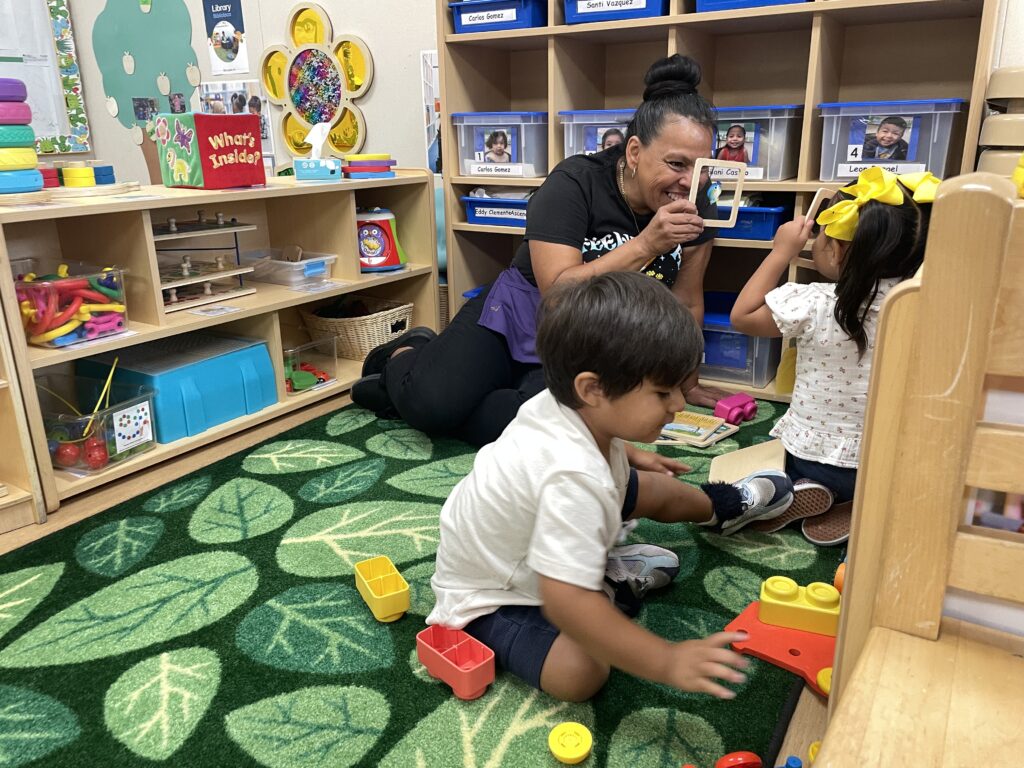
Bright Starts Center, a Head Start site in south Los Angeles, provides learning opportunities via play, meals and dual language instruction. Photos credit: Betty Márquez Rosales
Top Takeaways
- Current regulations aim to ensure consistency across Head Start sites regardless of geographical location or other local factors.
- The proposed changes would cut over 100 pages of regulations down to about 10 pages.
- Federal officials say program quality would not be jeopardized; proposal’s critics say Head Start’s standards are what make it high quality.
By Betty Márquez Rosales, EdSource, republished with permission
On a recent Thursday morning, 12 preschoolers at Bright Starts Center in south Los Angeles moved between Spanish and English as they cleaned up after painting and playing with blocks. They stretched before outdoor play and reviewed how to stay safe on the slide, at the water station and while riding bikes.
A teacher and assistant stayed with the children throughout the morning. A third adult prepared meals in the kitchen — mini banana loaf with apple, homestyle cheese pizza with mixed veggies and apple chips with a colby jack cheese stick.
The routines at Bright Starts illustrate the holistic approach toward educating children while caring for them that has defined Head Start for more than six decades. Federal rules set standards for staffing, nutrition, physical activity and services for children who are learning English, among other areas, with the goal of providing low-income children and their families with education as well as behavioral screenings, parent engagement opportunities and other support.
Now, the Trump administration seeks to dramatically reduce those federal regulations with a shorter set of rules, and give states and local programs more authority over how Head Start operates.
The proposal’s critics say it would cut down present regulations, over 100 pages long, to about 10 pages, and fundamentally change Head Start as it’s known now. The changes, if approved, would eliminate regulatory requirements governing classroom ratios, group sizes and services for children who speak languages other than English. It would also require English-only instruction.
The changes could theoretically add, according to federal officials, over 200,000 slots for children nationwide while reducing administrative costs. Federal officials say the changes would reduce administrative burdens, give programs greater flexibility and could allow Head Start to serve more children. Critics say the proposed changes could lead to lower quality and considerable variation from program to program, even within states.
Federal officials disagree. Lizbeth Casco White, director of the federal Office of Head Start, said in announcing the proposed changes that they would not “create a patchwork of standards” or compromise quality.
“Head Start would still exist, but it would not be Head Start as we know it and love it today,” said Melanee Cottrill, executive director of Head Start California.
“One-size-fits-all mandates from Washington cannot fully account for the realities facing more than 1,600 local grantees serving vastly different communities across America,” Casco White said. Her remarks echoed statements from Alex Adams, who leads the federal Administration for Children and Families that controls billions in childcare and preschool funding.
The proposed changes are subject to a 60-day public comment period. Hundreds of comments have already been submitted, and the administration must review public feedback before deciding whether to finalize the changes.
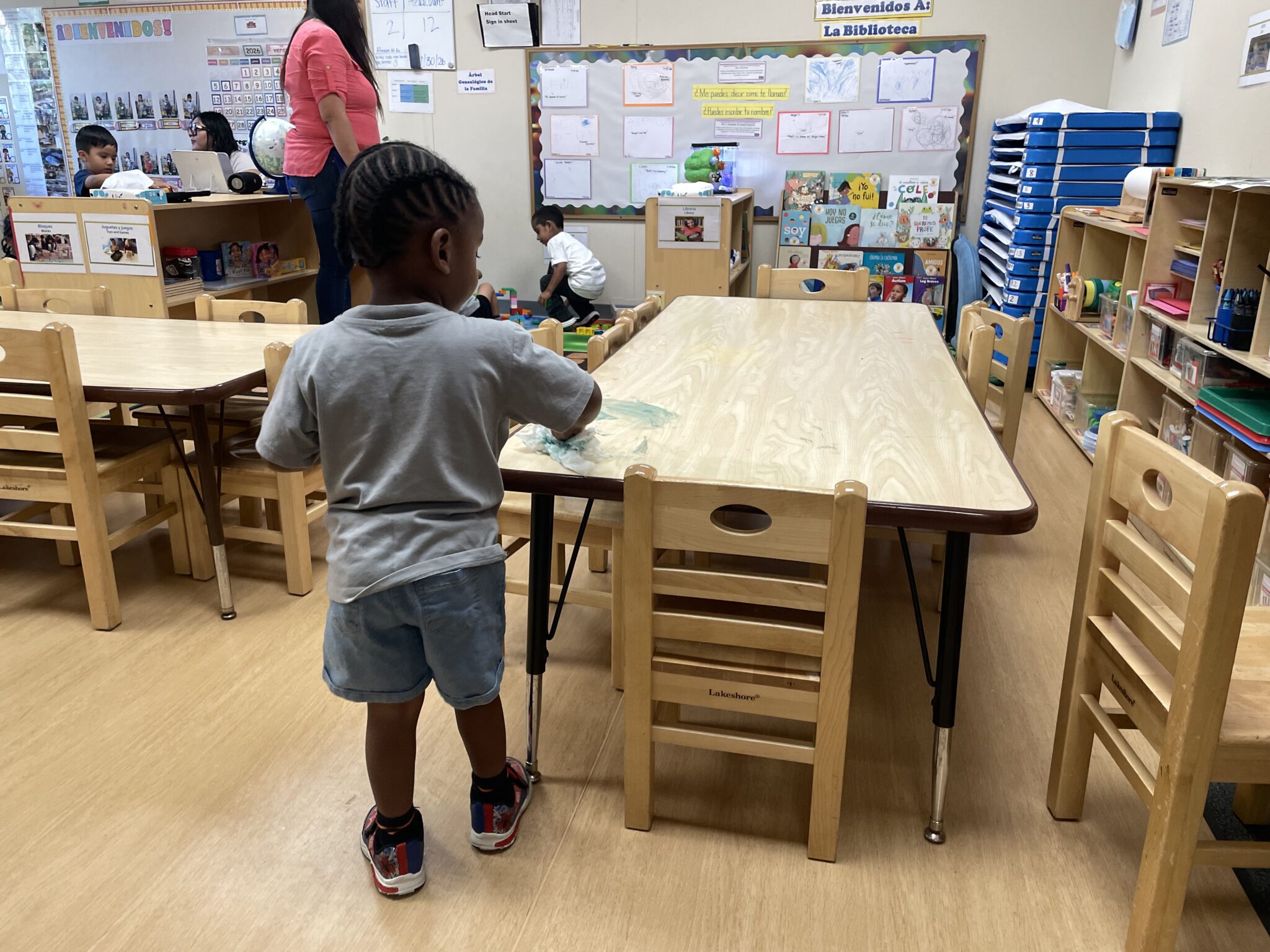
A child enrolled in Head Start at Bright Starts Center cleans his workstation after finishing a painting.
Critics say Head Start would fundamentally change
Federal officials have said that lower administrative burden and greater flexibility for local programs are, in part, why the regulatory changes must be made.
Luis Bautista, executive director of the Head Start and Early Learning Division at the Los Angeles County Office of Education, said reducing some administrative requirements could allow programs to spend more resources on children and families — but only if they do not risk quality.
“I think all of us who are in the program will welcome the opportunity to reduce any unnecessary administrative burden, especially when those changes allow us to spend more time serving children and families,” Bautista said. “But flexibility should never come at the expense of quality or safety or equitable access. And some of these proposed changes are going to actually impact all of those things.”
The L.A. County education office is the state’s largest Head Start grantee — teaching thousands of babies, toddlers and young children — and works with the Mexican American Opportunity Foundation, the nonprofit that oversees the Bright Starts Center.
While federal officials say the changes would give local programs flexibility, critics question how much discretion programs would have in practice if federal funding does not increase.
Head Start programs receive federal grants, and their budgets are tied to the number of children they are funded to serve, and the requirements attached to those grants. Cottrill, of Head Start California, said that could limit how much flexibility programs actually have.
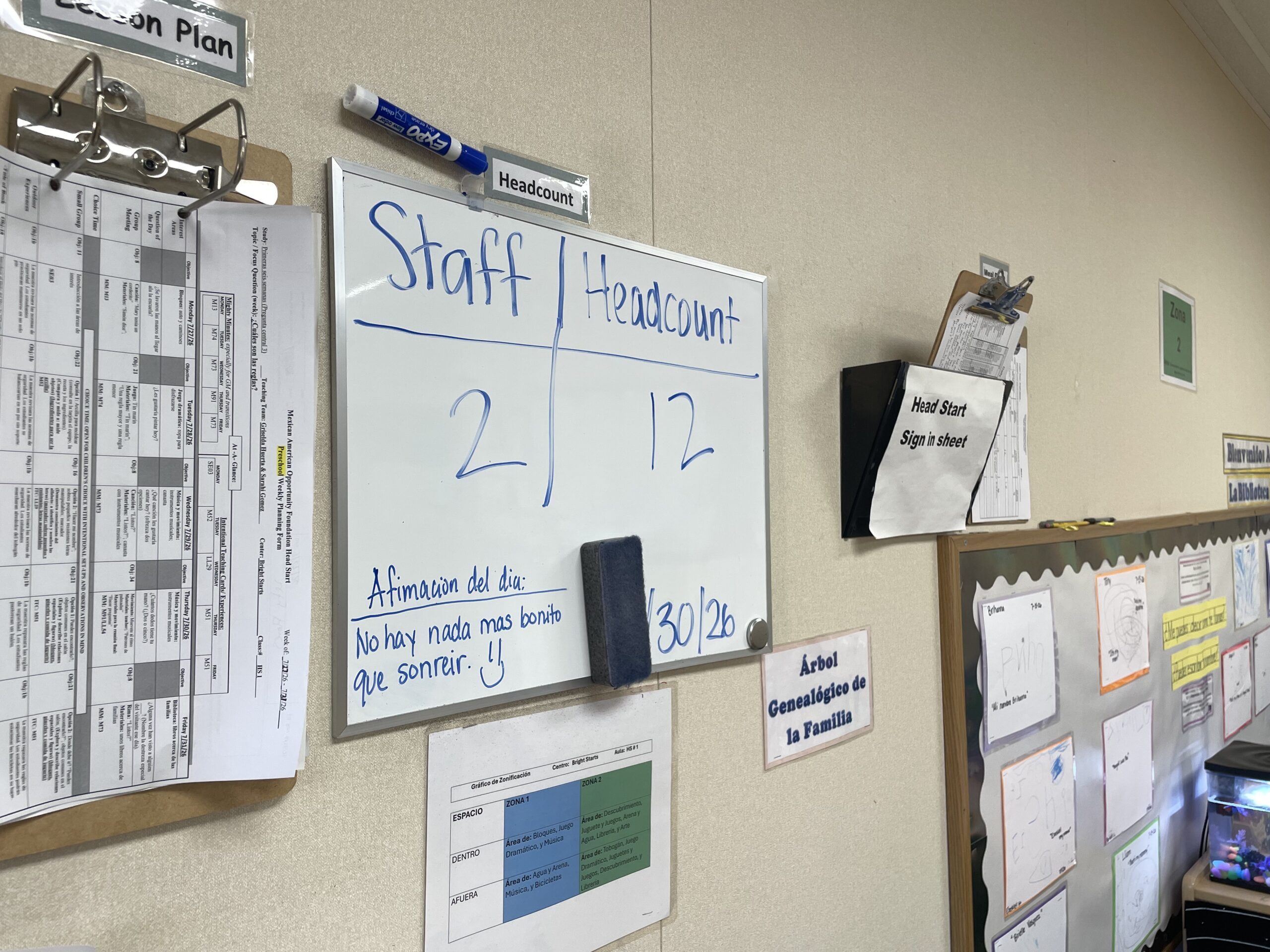
Head Start programs are currently required to meet specific staff-to-child ratios.
“When we ask for that grant, we have to justify it. We can pay that many teachers because we’re required to. While the Office of Head Start is saying ‘you’ll have flexibility,’ they still have the ultimate say on those grants,” she said.
Cottrill said she fears that if the federal office requests local programs to serve more children without increased funding, the proposed changes could lead to reduced staffing or services to accommodate the additional enrollment.
“How do you do that? Well, you hire people who are less qualified. You give them more children. You cut services like toothbrushing and monitors on buses and all those wraparound things that make Head Start such a unique program that really creates positive results for those kids,” said Cottrill.
The Office of Head Start did not immediately respond to a request for comment.
Casco White of the federal Office of Head Start has said federal regulations are not what solely drive early education services like Head Start.
“Federal regulations establish minimum requirements. They do not define the ceiling of excellence,” she said in announcing the proposed regulatory changes.
The proposed changes come after months of uncertainty for Head Start, including a federal budget proposal that called for eliminating funding altogether. After opposition from Head Start’s advocates, Congress ultimately restored funding to roughly its previous level. Some local Head Start programs temporarily shut down because furloughed federal staff were not able to process grants during last year’s historic federal shutdown.
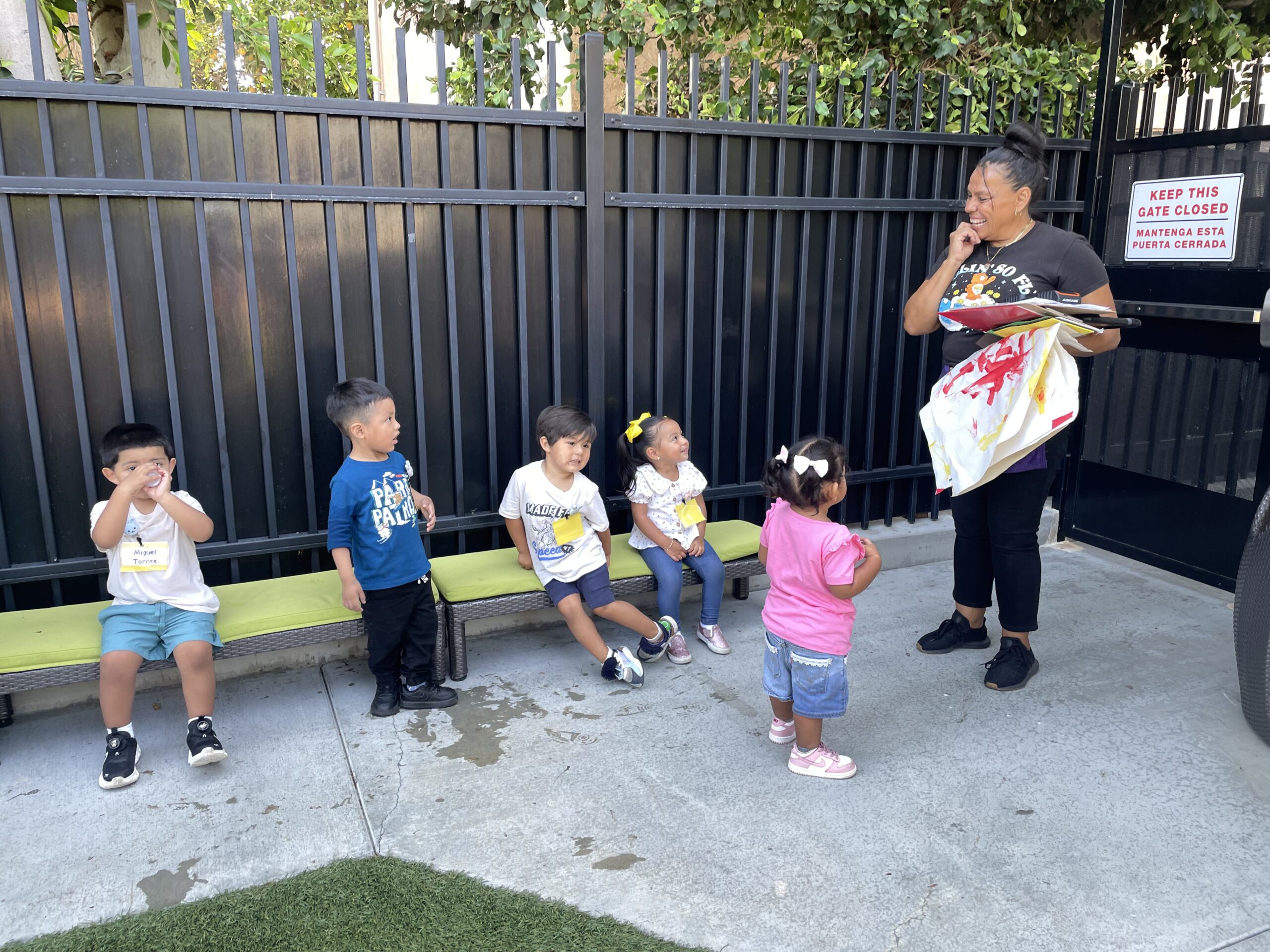
Five 2-year-olds enrolled at Bright Starts Center in Los Angeles at the end of outdoor activity time.
The Trump administration has pursued other changes to the program as well. In May, federal officials proposed removing certain wage and benefits requirements for Head Start staff, saying the move would “restore needed flexibility and autonomy to local programs” while reducing paperwork.
Most recently, in June, right-wing think tank The Heritage Foundation published a report outlining why Head Start should be deregulated “until officials end it.”
Back at Bright Starts, the children returned to their classroom after outdoor play, moving between Spanish and English as they settled into their next activity.
For now, the routines that shape their day remain in place — two adults in the classroom, time for physical activity, meals and snacks, and opportunities for children to learn English while maintaining their home language.
Whether those practices remain federal standards or are left to states and local programs to decide could depend on what happens next. If the changes are approved, legal challenges are likely, particularly in response to new requirements such as English-only instruction.
Bautista said the outcome should ultimately be measured by what happens to children in classrooms like Bright Starts.
“Will these changes improve outcomes for children?” he said. “I think we have to stay rooted in that.”
Betty Márquez Rosales is based in Los Angeles and covers juvenile justice, youth homelessness and other education topics.
Leave a Reply