• Home
  • About The Herald
  • Local Agencies
  • Daily Email Update
  • Legal Notices
  • Classified Ads

Contra Costa Herald

News Of By and For The People of Contra Costa County, California

  • Arts & Entertainment
  • Business
  • Community
  • Crime
  • Dining
  • Education
  • Faith
  • Health
  • News
  • Politics & Elections
  • Real Estate

Masks once again required on BART

April 28, 2022 By Publisher Leave a Comment

After judge in Florida tossed out federal mask mandate for public transit systems and airlines

The BART Board of Directors at its meeting today, Thursday, April 28, 2022, approved a temporary amendment to the District’s Code of Conduct to require riders to wear masks in paid areas of the system with limited exceptions. This requirement applies to trains and all portions of stations beyond the fare gates. Children ages two and under as well as people with medical conditions that prevent them from wearing masks are exempt from the mandate. The rule is effective until July 18, 2022, unless it is extended by the BART Board.

“I strongly support requiring a mask to ride BART to keep all our riders safe,” said BART Board President Rebecca Saltzman. “I’m especially concerned for our riders who are immunocompromised, people with underlying health conditions, and children under the age of five who are not yet eligible for vaccination.”

The update to the Code of Conduct comes after a federal judge in Florida earlier this month tossed out a federal mask mandate for public transit systems and airlines. Like other Bay Area transit agencies, BART’s previous mask mandate had been based on the now former TSA directive.

“It is essential the BART Board take action to protect our riders and employees after the surprising ruling that threw out the federal mandate,” said BART Board Vice President Janice Li. “Wearing masks helps to protect everyone, which is especially important now as COVID cases rise in the Bay Area.”

Free masks are available at station agent booths and from all safety staff for those who need one. As with the previous federal mandate, BART PD will continue its education-based enforcement of the mask requirement by offering free masks to anyone who needs one before taking any enforcement action which could include a citation up to $75 or being ejected from the paid area.

Throughout the pandemic BART has prioritized the safety of riders. BART has installed MERV 14 (Minimum Efficiency Reporting Value) air filters on all train cars new and old. These filters are dense enough to trap the virus and provide an extra layer of protection to our riders. Air is replaced every 70 seconds onboard cars mixing filtered air with fresh air. That means the circulation on BART train cars is better than most offices. In addition, all BART employees are fully vaccinated.

Filed Under: BART, Health, News

Kaiser Permanente Northern California honored with the 2021 Eisenberg Patient Safety and Quality Award

April 19, 2022 By Publisher Leave a Comment

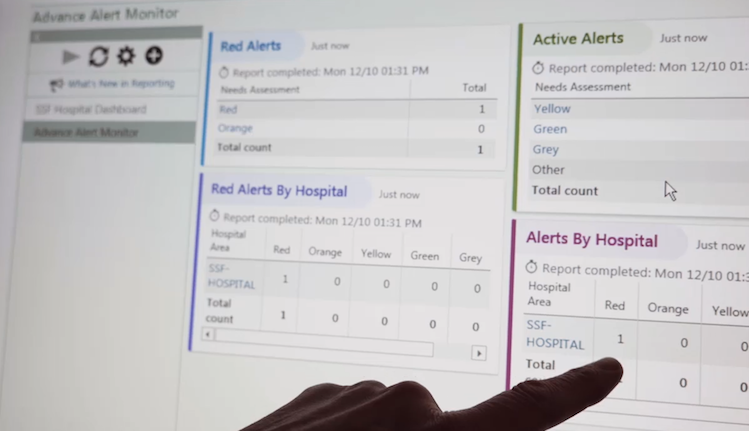
Kaiser Permanente Advance Alert Monitor. Source: doctorsatkaisertpmg.com

By The Joint Commission, National Quality Forum (NQF) for KP Nor Cal’s Advance Alert Monitor program for predicting risk, saving lives among hospitalized patients

By Antonia Ehlers, PR and Media Relations, Kaiser Permanente Northern California

KP Monitor screen. Source: spotlight.kaiserpermanente.org

OAKLAND, Calif., April 19, 2022 – Kaiser Permanente Northern California’s life-saving Advance Alert Monitor (AAM) program – an early detection system that helps care teams predict when hospitalized patients are at risk for clinical deterioration – has been recognized by The Joint Commission and National Quality Forum (NQF).

The program has been honored with the 2021 John M. Eisenberg Award for Local Level Innovation in Patient Safety and Quality. The prestigious national award recognizes those initiatives that improve patient safety and overall quality of care.

AAM uses a predictive algorithm developed by physician researchers at the Kaiser Permanente Division of Research that scans almost 100 elements from patient health records hourly at 21 hospitals in Northern California, giving clinicians a 12-hour lead time prior to clinical deterioration, permitting early detection and intervention.

“Advance Alert Monitor is another example of how our physicians and staff maximize our extensive clinical and operational expertise, our technologically advanced systems, and our integrated care delivery model to provide exceptional care to our patients,” says Richard Isaacs, MD, FACS, who is the CEO and Executive Director of The Permanente Medical Group. “By combining the groundbreaking use of predictive analytics with clinical workflows, we’ve created a Northern California virtual center that is saving lives by helping us identify patients in medical-surgical and transitional care units who may need expedited care.”

The output of the algorithm is monitored remotely by clinical staff who virtually observe all Kaiser Permanente Northern California hospitals, and who immediately contact the patient’s local care team in the event of an alert, enabling physicians and nurses to provide critical and potentially life-saving treatment more quickly.

A recent analysis of the program by the physician researchers who developed it, published in the New England Journal of Medicine, found the system was responsible for preventing on average 520 deaths per year over a 3-and-a-half-year study period. It also showed a lower incidence of ICU admissions and shorter hospital stays.

“This award is a testament to the ongoing work of Kaiser Permanente Northern California to provide our clinical care teams cutting edge technology that enables them to predict and prevent serious complications before they happen,” said Carrie Owen Plietz, FACHE, president of Kaiser Permanente’s Northern California region. “Our staff is intervening early and swiftly, providing the appropriate medical attention to keep patients safe with improved outcomes.”

Last year, Kaiser Permanente Northern California was recognized by the International Hospital Foundation with the Autsco Excellence Award for Quality and Patient Safety for the AAM program, which is in place at all 21 Kaiser Permanente Northern California hospitals, with nurses handling more than 16,000 alerts a year.

How it works

AAM predicts the probability that hospitalized patients are likely to decline, require transfer to the intensive care unit or emergency resuscitation, and benefit from interventions. Early warnings could be helpful for patients at risk of deterioration where intervention may improve outcomes.


To do this, AAM analyzes electronic hospital patient data to identify those at risk of deteriorating and alerts a specialized team of Virtual Quality Nurse Consultants who determine if on-site intervention is needed. The virtual nurses contact the Rapid Response Team of nurses, which performs an assessment, and then works with the supportive-care team and the patient and/or family to develop a patient-centered treatment plan.

“Analytics tools allow us to use complex patient data to improve our care in real-time,” said Vincent Liu, MD, MS, a research scientist with the Division of Research, whose advanced analytics group developed the algorithm that underpins AAM. “They support clinicians’ practice by finding signals hidden within the electronic health record,” added Liu, whose advanced analytics group developed the algorithm with leadership from retired DOR investigator Gabriel Escobar, MD.

Nurses confirm AAM’s value

Vincent Emeziem, an ICU nurse at Kaiser Permanente Antioch Medical Center, is part of the Advance Alert Monitor team at the hospital. He said he’s seen firsthand how the program saves lives, including a recent case where a hospitalized patient was declining rapidly and because of early intervention was rushed into surgery for a life-threatening aneurism.

“This program has been very useful, and a lot of patients have benefited,” said Emeziem, a Kaiser Permanente nurse for 18 years. “These patients are getting the care they need very fast.”

The success of the Advance Alert Monitor program is attributed to the integration of care, collaboration between the clinical care teams, and the early intervention provided to patients, said Dr. Vanessa Martinez, DNP, MHA, RN, director of Virtual Nursing Care at Kaiser Permanente Northern California. “This advance technology and the expertise of our clinical care teams is allowing us to help those patients who are at most risk for severe complications and provide the necessary treatment to improve patient outcomes,” she said.

About Kaiser Permanente

Kaiser Permanente is committed to helping shape the future of health care. We are recognized as one of America’s leading health care providers and not-for-profit health plans. Founded in 1945, Kaiser Permanente has a mission to provide high-quality, affordable health care services and to improve the health of our members and the communities we serve. We currently serve almost 12.5 million members in 8 states and the District of Columbia. Care for members and patients is focused on their total health and guided by their personal Permanente Medical Group physicians, specialists, and team of caregivers. Our expert and caring medical teams are empowered and supported by industry-leading technology advances and tools for health promotion, disease prevention, state-of-the-art care delivery, and world-class chronic disease management. Kaiser Permanente is dedicated to care innovations, clinical research, health education, and the support of community health. http://about.kaiserpermanente.org

Filed Under: Health, News

Kaiser Permanente behavioral health professionals mentor students at Antioch’s Dozier-Libbey Medical High School

April 14, 2022 By Publisher Leave a Comment

Dozier-Libbey students (from right) Emma Mauri, Syncere Jordan, Saniya Maka, Arena Armin. Source: Kaiser Permanente

To inspire, educate and impart life skills to future mental health professionals

By Alex Madison, Content Marketing Writer III, Kaiser Permanente

Like many high schoolers, students at Dozier-Libbey Medical High School in Antioch, California, are unsure about their career moves post-graduation. With the help of a mentorship program led by Kaiser Permanente Northern California’s Mental Health Training Program, these students are getting a window into the behavioral health medical profession.

“Everyone has a different path in life, and my mentor allowed me to see the huge variety of pathways available to me,” said 18-year-old Syncere Jordan. “She told me what it took to get where she is today and what the day-to-day responsibilities of a health care worker are.”

Kaiser Permanente Northern California partnered with the 800-student high school last year to create a mentorship program in which 12 students meet virtually every week for 30 minutes with a mental health provider to talk about career pathways, resumes, college, and the realities of working as a mental health professional.

“I really appreciate the diversity the program allows,” said 16-year-old Emma Mauri. “My mentor and I have talked about everything from life skills, to education, to just telling stories. She’s inspired me to stop being so nervous about the decisions I’m facing about the future of my career.”

Giving back to student and mentor

Reflecting Kaiser Permanente’s core commitment to support mental health and wellness in the communities it serves, every mental health trainee of the Mental Health Training Program is required to complete over 30 hours of community outreach. The outreach focuses on improving the mental health of the local community in some important respect, beyond treating Kaiser Permanente members.

The mentors said educating young people on the importance of mental health and helping guide their future has been very fulfilling.

“My mentor and I have talked about everything from life skills, to education, to just telling stories. She’s inspired me to stop being so nervous about the decisions I’m facing about the future of my career.” – Emma Mauri

“As a first-generation Mexican American and first in my family to graduate college, I’m incredibly passionate about supporting these young people and creating awareness around the complex experiences of being a first-generation student,” said Irais Castro, PhD, a psychology postdoctoral resident at Kaiser Permanente Antioch.

“It’s important to foster these student’s interest in mental health or whichever field they are interested in,” said Nicole Wilberding, PhD, a psychology postdoctoral resident at Kaiser Permanente Walnut Creek. “We encourage them to talk about their concerns and fears so they don’t feel overwhelmed about their future.”

Increasing awareness of mental health care

A goal of the 8-week mentorship program is to increase awareness about the field of clinical psychology and mental health among diverse youth populations. Kaiser Permanente shares in the U.S. challenge to meet the demand for mental health care that has been greatly exacerbated by the national shortage of trained mental health professionals.

Although many of the students involved in the mentorship program had not considered a career in mental health, some of them said they are now interested in learning more about the profession as a possible career choice.

Kathryn Wetzler, PsyD, regional director of Mental Health Training Programs, said, “It’s really valuable to identify the young people who are interested in mental health as a career and provide them with the understanding of what being a mental health professional is all about.”

Castro explained that it’s a vital time to educate people about the importance of mental health as a profession.

“We need more clinicians of color and diverse populations in the field, so I am grateful to have the opportunity to create awareness of the need.”

For Jordan, who is 3 months away from graduating high school, her relationship with her mentor is a “bond I will never forget and hope to continue after I graduate.”

Learn more about the Northern California Mental Health Training Program.


Filed Under: East County, Education, Health, News, Youth

April is Alcohol Awareness Month – learn about Alcohol Use Disorder and ways to get help

April 6, 2022 By Publisher 1 Comment

What is a Standard Drink? Although the drinks pictured here are different sizes, each contains approximately the same amount of alcohol and counts as one U.S. standard drink or one alcoholic drink-equivalent. Source: NIAAA

This year’s theme is “Connecting the Dots: Opportunity for Recovery.”

How aware are you?

If you are not aware of what one “drink” means it could be any of the following: 12 oz. of beer, 8 oz. of malt liquor, 5 oz. of table wine, 5 oz. of 80 proof liquor or 1.5 ounces of distilled spirits

By AlcoholAwareness.org

While you may not know, April is Alcohol Awareness Month, a good time to reflect on our drinking patterns and the role that alcohol plays in our lives.

This is a tradition that started as a way to increase awareness about a disease many Americans suffer from. The idea is to spread information locally, statewide, and overall nationwide. Alcohol has touched almost all of our lives in one way or another. The general goal of this month is to create some sort of catalyst for change and awareness.

According to the National Institute on Alcohol Abuse and Alcoholism, “Most adults in the United States who drink alcohol drink moderately and without complications. At the same time, alcohol-related problems are among the most significant public health issues in the country. Alcohol use disorder (AUD) affects about 15 million adults in the United States, and an estimated 88,000 people die from alcohol-related causes annually, making alcohol the third leading preventable cause of death in the nation.”

In 2018, the World Health Organization reported that alcohol contributed to more than 200 diseases and injury-related health conditions, ranging from liver diseases, road injuries, and violence, to cancers, cardiovascular diseases, suicides, tuberculosis, and HIV/AIDS. The National Institutes of Health (NIH) offers additional facts and statistics about alcohol misuse in the United States.

Connecting the Dots: Opportunity for Recovery

This year’s theme is “Connecting the Dots: Opportunity for Recovery.” This year’s efforts are being directed towards young individuals. These are the people that can be easily influenced by alcohol and drugs if not informed. As a parent the best thing you can do for your child is interfere. While you may want to let your kids grow and learn on their own, it is your job to actively educate them. A whopping 50% of children are less likely to use drugs and alcohol that have conversations with their parents about the risks, than those who do not.

Whether we drink, or have been surrounded by those who do drink, alcohol is a huge part of the lives of Americans.  At a time in our lives when we are being molded, the use of substances can change our lives forever. The use of alcohol at a young age opens the possibility of developing substance abuse issues later in life. As a parent every effort to help your children “connect the dots” will make a world of difference.

A huge part of Alcohol Awareness Month is Alcohol-Free Weekend which takes the first weekend in April. The aim of this weekend is to go 72 hours without drinking a single drop of alcohol. This may seem like a small task to some, but to others it could be almost impossible. That is the reason this weekend is so important. If it allows even one person to come to realization that they can’t go even 72 hours without alcohol, maybe that will inspire them to get some help.

The origins of Alcohol Awareness Month

Alcohol awareness month was started in 1987 by the National Council on Alcoholism and Drug Dependence (NCADD). It was started as a way to get the word out and possibly draw attention to those who suffer from alcohol use disorder. Most of us associate this disease as alcoholism.

The National Council on Alcoholism and Drug Dependence, originally called the National Committee for Education on Alcoholism, was founded by Marty Mann in 1944.

Once an alcoholic herself, she knew that there were many others going through the same struggles she had to, without anyone there to help. There was a stigmatism surrounding alcoholism. It wasn’t looked at as a disease like it is today. She wanted to reach out and share her experiences with others to help aid in their recovery.

The three creeds of the National Council on Alcoholism and Drug Dependence are:

  1. Alcoholism is a disease, and the alcoholic is a sick person;
  2. The alcoholic can be helped, and is worth helping;
  3. Alcoholism is a public health problem, and therefore a public responsibility.

Mann traveled the country educating individuals on the effects of alcohol. She needed people to understand the consequences drinking had on the body. Though she died before alcohol awareness month was created, she was the inspiration for it.

Alcohol Use Disorder

To understand why there is an alcohol awareness month, you must first understand the disease itself. A lot of us have heard of the term alcoholism and assume that this is the only form of alcohol abuse that occurs. Many are not aware that alcohol abuse can come in several different forms. The true term for alcohol abuse is Alcohol Use Disorder. This can still include alcoholism but is not limited to only that.

Alcohol Use Disorder is an affliction that can be observed if you use alcohol to the point where it becomes an issue. If you cannot control your urges and continue to use it even though it causes problems, you could be suffering from this. You may also start to notice withdrawal symptoms if you stop drinking and an increase in your tolerance.

Binge drinking is another type of Alcohol Use Disorder. This is the consumption of excessive alcohol in a short period of time. For women this means consuming 4 drinks within 2 hours, for men, 5 drinks. This can have long term and short term effects on your health. This is not an obvious form of alcohol abuse, mostly because it can occur as little as once a week. However, this is the most common form of Alcohol Use Disorder.

The NIH defines a standard drink as having about 14 grams of pure alcohol. If you are not aware of what one “drink” means it could be any of the following:

  • 12 oz. of beer, which is usually about 5% alcohol
  • 8 oz. of malt liquor, which is about 7% alcohol
  • 5 oz. of table wine, which is typically about 12% alcohol
  • 5 oz. of 80 proof liquor, which is about 40-50% alcohol
  • 1.5 ounces of distilled spirits, which is about 40% alcohol

What is moderate drinking?

The Dietary Guidelines for Americans recommends that adults of legal drinking age can choose not to drink, or to drink in moderation by limiting intake to two drinks or less in a day for men or one drink or less in a day for women, on days when alcohol is consumed. The Guidelines also do not recommend that individuals who do not drink alcohol start drinking for any reason and that if adults of legal drinking age choose to drink alcoholic beverages, drinking less is better for health than drinking more.

What signs to look for

There are many different signs to look for when determining if someone suffers from alcohol use disorder. Some are very apparent while others require you to take notice. If you are experiencing hangovers often accompanied by nausea, shakiness, sweating, and trouble sleeping; these are short term symptoms. Many people try to fight off these symptoms by drinking more. While these may seem like minor consequences, if this becomes a pattern that is sign there may be a problem. If you try to stop drinking and are unable to because you constantly crave alcohol this is a clear sign it is time to ask for help.

Drinking can cause a lot of conflict in your life aside from your health. If you start missing out on daily activities like work or outside interests due to hangovers than your life is being affected by drinking. Keep an eye out for family and friends. They may not consciously realize what they are doing. When drinking creates problems with friends or family it is a clear sign that you may have an addiction. Ask yourself how is my drinking affecting myself and those I care about?

Organizations Fighting Alcohol Use Disorder

Taking that first step toward recovery may seem daunting. Though we have already mentioned the National Council on Alcoholism and Drug Dependence, many organizations and groups have been developed and funded to help aid in the recovery of alcohol use disorder:

Alcoholics Anonymous- The first and most common would be AA or Alcoholics Anonymous. The reason this group has gained so much popularity is because it is run by a community of recovering alcoholics. They too have been where you are now and will understand better than anyone what you need to her. They have free meetings in almost every city or town around the country. Their 12 step process will give you an optimistic, driven path to follow on the road to recovery.

National Institute on Alcohol Abuse and Alcoholism (NIAAA)- This is an organization that publishes material to help you stay informed. They stay up to date with alcohol and treatment research so that you always have a place to find the answers. If you have questions about the effects of alcohol and other consequences this is the organization to reach out to. Rethinking Drinking is a resource that can help you assess your drinking habits and provide valuable, research-based information to help you cut back or stop drinking if needed. It is available online as an interactive tool at https://www.rethinkingdrinking.niaaa.nih.gov and as a brochure that can be downloaded at https://pubs.niaaa.nih.gov/publications/RethinkingDrinking/Rethinking_Drinking.pdf.

National Institute on Drug Abuse (NIDA)- If you have questions about the science behind alcohol abuse, this is the organization to check out. They release data that shows the long term and short-term effects of alcohol use. They also may help lead you to a correct diagnosis; if you are unsure of how severe the problem is that you or someone you care about is struggling with.

Al-Anon and Alateen- There are a lot of resources available to those on the path to recovery. However, they are not the only ones that need help. If you know someone struggling with this disease you may not know how to help them or deal with the stress that accompanies supporting someone through this tough time. This is group you can reach out to in person or over the phone when things seem to be getting too hard. They will show you how to be both encouraging and understanding.

While these are only a few of the groups that you can reach out to, there are many more ready and willing to help. Check your area to find groups that are specific to your local and may be able to help.

What resources can you use?

Once you are ready to address the problem, seeking out treatment is a good next step. Since this is already a hard step to take; you do not want to have to worry about how costly it can be too. Private rehab centers can be very expensive. But they are not the only choice. There are a lot of options that don’t put a drain on your finances.

Two less expensive avenues you can take are government funded treatment and non-profit treatment. While the two rely on very different funding support, both can help assist you in a less costly matter.  If you are not ready to take that extreme of a step, there are countless helplines that you can call. Just having the opportunity to talk to someone anonymously can make a difference.

Impact of Alcohol Awareness Month

What can on month do for the lives of so many alcoholics? The important of awareness is more critical now than ever. A 2014 study from the CDC revealed that excessive alcohol consumption was responsible for the death of almost 1 in 10 U.S. adults between the ages of 20 and 64. This means that approximately 88,000 lives are a lost to excessive alcohol use every year. What this accounts for is roughly 2.5 million years of potential life lost every year. These are a result of a combination of long term and short-term effects.

This is why it is so important to raise awareness on a local, state, and national scale. There are about 20 million individuals and their family members who are living in recovery. This proves that anything is possible.

Spread the word

While a month is not enough time to educate and help everyone recover, it at least gets the public talking. Do what you can in your community. Create pamphlets, or newsletters and distribute them around your neighborhood town. Host an event and invite everyone around the community to learn and spread alcohol awareness. Host a fundraiser to donate money to a local non-profit treatment facility.

The most important thing we can do as a society is to recognize that there is a problem. With that realization only then can we move forward. There are many people still in the dark about this disease. There are those who struggle with the disease or some who may know, but not recognize someone who is suffering. Maybe this month is an opportunity for us to fix that.

Allen D. Payton contributed to this report.


Filed Under: Health, News

TreVista in Antioch named Agemark Senior Living’s Rising Star Community

March 28, 2022 By Publisher Leave a Comment

The TreVista Antioch Team. Pictured left to right: Ifrana Nisha, Erika Mendez, Teresa Glenn, Ali Haddadi, Alberto Maldonado, Jeanette Marquez, Ana Munoz, Elena Patchin, Connie Madrigal. (Not pictured: Tamsen Meierdierck). Photo by Agemark

The community’s first honor under Executive Director Alberto Maldonado

Antioch, CA – Agemark Senior Living recently recognized several of the company’s senior living communities as well as individuals from those communities in a company-wide virtual awards ceremony held February 10. TreVista Senior Living and Memory Care in Antioch was recognized as the company’s Rising Star Community of the Year. This award is given to the Agemark community that has shown tremendous improvement and future promise.

Agemark Founder and Managing Partner Richard Westin is impressed with the team at TreVista in Antioch.

“After undergoing a multimillion-dollar renovation, the community has filled nearly all of its available apartments, thanks to the excellent efforts of the entire TreVista team,” he said. “We are so thankful for their commitment to providing excellent care, love and support to all residents of the community.”

TreVista Senior Living and Memory Care in Antioch is under the direction of Executive Director Alberto Maldonado. He began leading the community in August 2020 and says the team is honored to be recognized by Agemark.

“Our community and incredible team embody the values of Agemark proudly and I believe that they are the reason for our tremendous growth, particularly over the last year,” Maldonado stated. “Agemark empowers its leaders and team members to operate as a family, and that’s another reason for our success. We are so thankful for Agemark’s belief in what we do, and we are proud to be the Rising Star recipients.”

TreVista in Antioch offers both Assisted Living and Memory Care in one comfortable and homelike community. Located at 3950 Lone Tree Way in Antioch, the community was acquired by Agemark Senior Living in fall 2017, with management takeover shortly thereafter. In 2020, the community completed an extensive remodel, which improved all common areas and added a bistro, theatre room, in[1]house beauty salon and manicure station, among other improvements for residents to enjoy. The in-house memory care community, The Villa, was completely redone, and made into a more homelike and comfortable environment for those who live with dementia, including Alzheimer’s disease.

A sister community, TreVista in Concord, is also managed by Agemark Senior Living. To learn more about TreVista, visit trevistaseniorliving.com.

Filed Under: Business, East County, Health, News

National Colorectal Cancer Awareness Month sheds light on new screening guidelines

March 22, 2022 By Publisher Leave a Comment

Source: Kaiser

By Antonia Ehlers, PR and Media Relations, Kaiser Permanente Northern California

Colorectal cancer is the second leading cause of cancer deaths in the United States among men and women combined. With March being Colorectal Cancer Awareness Month, it’s a good time to remind those in your life about the importance of regular screening.

Following recently updated federal guidelines, Kaiser Permanente Northern California is now recommending screening to adults ages 45 to 49. Previously, the recommended screening age was 50 for adults who are at average risk for colorectal cancer.

“These new guidelines are important because younger people are getting colon cancer more often,” said Theodore Levin, MD, a gastroenterologist at the Kaiser Permanente Walnut Creek Medical Center. “Today, we have more options. A patient can have a colonoscopy or the at-home fecal immunochemical test.”

According to Levin, the increase in cases in younger patients has been linked to obesity, antibiotic use, and sweetened sodas and sports drinks.

Kaiser Permanente is expanding its easy to use, at-home colorectal cancer screening program to members age 45 and older following a nationwide increase in deaths of people under age 50. The fecal immunochemical test (FIT) for colon and rectal cancer is mailed annually to members’ homes, free of charge. 

Colorectal cancer symptoms include rectal bleeding, abdominal pain, a change in bowel habits and unexplained weight loss. The FIT test checks for hidden blood in a patient’s stool, which could be a sign of cancer or benign colorectal polyps.

If a test is positive, a colonoscopy is ordered to examine the inner lining of the colon and rectum for signs of cancerous or pre-cancerous growths.

According to Jeffrey Fox, MD, chair of Gastroenterology for The Permanente Medical Group in Northern California, Kaiser Permanente’s home screening test has lowered colorectal cancer deaths by 50 percent among its members during the past two decades.

“We estimate that our members have a 30 percent less risk of death from colorectal cancer than non-members in part because of this testing program,” he said.

Dr. Fox also noted that in addition to reducing deaths through use of the test among all members, Kaiser Permanente Northern California also has drastically reduced the rate of colorectal cancer among Black members. Targeted testing outreach over the last 10 years has brought the rate down from 54.2 per 100,000 to 21 per 100,000, which now is the same rate as white members.


Filed Under: Health, News

Los Medanos Healthcare District dissolved as of Wednesday eliminating Antioch mayor’s $150K exec director job

March 11, 2022 By Publisher 2 Comments

The Los Medanos Community Healthcare District building, formerly Los Medanos Hospital. Photo from the LMCHD Facebook page.

State Supreme Court denies district’s appeal, finalizes Supervisors’ 2017 unanimous vote and LAFCO’s 2018 dissolution decision; county will now receive the funds; Glover believes employees being paid through end of March

By Allen D. Payton

According to a Thursday, March 10, 2022, press release from Contra Costa County, the California Supreme Court denied an appeal by the Los Medanos Community Healthcare District (District), which resulted in the dissolution of the District effective Wednesday afternoon, March 9. The court decision does not affect the operation of the Pittsburg Health Center, which is operated by the Contra Costa County Health Services department and remains open with no changes to regular, ongoing services for patient care.

The County’s efforts to dissolve the district have been ongoing since November 2017 when the Board of Supervisors voted 5-0 in favor of dissolution. (See related article)

Then in 2018, following Contra Costa County Civil Grand Jury recommendations, the Supervisors requested the Local Agency Formation Commission (LAFCO), which is responsible, in part, for evaluating ways to reorganize, simplify and streamline the structure of governmental entities in California, to dissolve the District and transfer all of its assets and liabilities to the County. The court decision finalizes LAFCO’s dissolution decision that was originally approved in September 2018.

“The court action means we can lower overhead costs significantly and increase grant funding for the benefit of residents’ healthcare priorities and needs in the former District area,” said Supervisor Federal Glover, whose District 5 represents the communities. “We will be able to make a bigger difference for our residents.”

“This has been a thoughtful process to ensure that the community’s needs and concerns are addressed. The County will allocate 90% of funds to health-related programs and establish a reserve fund to help ensure that programs are sustainable moving forward,” stated Board Chair, Supervisor Karen Mitchoff.

The Board of Supervisors has established the Los Medanos Healthcare Advisory Committee in July 2018, as part of the plan to dissolve the District, increasing funding available for healthcare programming in the Pittsburg/Bay Point areas. The Committee has been charged with development of an area health plan to determine specific health needs of the community, identify priorities to address those needs and facilitate a request for proposals process to make funding recommendations for health programs in the community to the Board of Supervisors. The Committee includes representatives from the local community and medical practitioners, making this a unique opportunity for collaboration. It is anticipated that the Committee will hold its inaugural meeting in late Spring 2022.

The committee is responsible for making recommendations for grant funding to meet healthcare priorities of residents in the former District area.

The Advisory Committee will be composed of seven (7) members, with the majority being community members (5) who work or live in the Los Medanos area and two (2) healthcare professionals. As appointed by the Board of Supervisors, the Committee includes:

  • (2) Representatives recommended by the City of Pittsburg;
  • (2) Representatives recommended by the Bay Point Municipal Advisory Committee;
  • Representative from the County’s Public Health Division;
  • Representative from the County’s Behavioral Health Division; and
  • At-Large representative who lives or works in the Pittsburg/Bay Point area as recommended by the Board’s Internal Operations Committee.

The benefits of including medical professionals on the Committee are to support impactful grant-making, collaboration, and leveraging of efforts with other healthcare programs and services in the County. An area health plan will be developed that will identify major health disparities to inform funding priorities for consideration by the Board of Supervisors.

“The targeted, coordinated approach to how we focus funding will help us do more for residents in the former District area to improve their health and how they receive healthcare,” added Glover.

No Impact to Pittsburg Health Center Services

Patient care and services at the Pittsburg Health Center are not impacted. Patients should continue to schedule their medical appointments and seek services at the Pittsburg Health Center as they normally do.

The Pittsburg Health Center is the largest clinic in the County’s 10 clinic healthcare delivery system. The County has operated the health center for over 20 years since the bankruptcy of the District in the 1990s and has been responsible for capital improvements since that time. The County most recently completed a multi-million-dollar renovation of the Adult Primary Care area within the facility as well as a comprehensive elevator replacement project.

District Spent $1.3 Million on Staff, Community Garden, Reading Program, Grants

As previously reported by the Herald, the Los Medanos Hospital closed in 1994 but the district, covering Pittsburg and Bay Point, had continued to exist, collecting property tax dollars and using the funds to pay for staff and provide grants to local organizations, direct service programs including a community garden and district sponsored programs including REading ADvantage for early literacy. The district’s 2020-21 Fiscal Year budget projects $1.13 million in tax revenue and $1.3 million in expenses.

Jobs of Antioch Mayor, 2020 Antioch Council Candidate Eliminated, Can’t Talk About It

Former LMCHD executive director and Antioch Mayor Lamar Thorpe.

The result of the dissolution of the district eliminated the executive director job of Antioch Mayor Lamar Thorpe, who was given a pay raise last July, from $96,000 to $150,000 per year. In addition, another Antioch resident, homeless advocate and 2020 District 3 council candidate Nichole Gardner, had been his administrative assistant, and may have also lost her job. But she said she could not speak about it.

An attempt last year by former State Assemblyman Jim Frazier to eliminate the healthcare district through a bill co-sponsored by Assemblyman Tim Grayson (D-Concord) was unsuccessful. While it passed the Assembly on a 70-0 vote, it failed to pass out of the State Senate Governance and Finance Committee. (See related articles here, here and here)

Questions were emailed to Thorpe late Thursday night, asking, “What are your plans as a result of the district being dissolved and your job being eliminated? Have you been offered another position within the county government? Did the county give you a severance package or a month or more of compensation to give you time to find another position? Or have you already been pursuing something else and the Supreme Court’s decision was expected?

Also, what about the rest of your staff, including Nichole Gardner? Have they been offered other positions within the county government? How many staff were employed by the district? Do you have any other comments as the outgoing executive director of the district?”

Similar to Gardner, Thorpe simply responded, “I can’t comment about that.”

Website Removed, Phone Number Still Works, Questions Left on Voicemail

A search on Thursday for the hospital district’s website, https://www.lmchd.org resulted in the message, “Unrecognized domain name”. However, the phone number, (925) 432-2200 still works and a message was left with questions about staff still being paid and for any other details that can be shared about the dissolution. No response was received as of Friday morning at 10:45 a.m.

Questions for Glover, County Staff

Questions were also emailed late Thursday night to Susan Shiu the county’s Public Information Officer and Director of the Office of Communications and Media for Contra Costa County, who issued the press release, asking, “What is happening with the district’s staff, including former executive director Lamar Thorpe? Have they been offered other positions within the county government? Were they offered severance packages, or a month or two of compensation to give them time to find other jobs?” But her automatic response message shows she’s out of the office on Friday, March 11.

Efforts to obtain answers from the County Office of Communications and County Health Department’s communications staff about the district’s former employees, Friday were unsuccessful prior to publication time. They and Glover were also asked, “now that the LMCHD website has been taken down, what happened to all the board meeting agendas, related documents and minutes? Who took the website down and why? Shouldn’t it have been archived?”

County Health Department spokesman Karl Fischer responded, “The County Administrator’s Office is the one handling that situation. The CAO said they would get in touch with their PIO to coordinate. They should be able to help.”

Glover Responds, Believes Employees Being Paid Through End of March

Glover responded, “The healthcare district is paying them through the month of March. But I’m not sure about all the details. This had been an active thing. The panel of judges made a decision and the district appealed it to the Supreme Court which denied even hearing it.”

Asked about the website and records of meetings, agendas and minutes he replied, “those are the things we need to see what’s going on. Because that’s all information and documentation that the county has to have. It’s all public records and we will have to make sure they’re available.”

Please check back later for any updates to this report, once Shiu has returned to her office on Monday.

Filed Under: East County, Health, News

Kaiser Permanente launches Ukrainian relief giving campaign

March 4, 2022 By Publisher Leave a Comment

Will match $200,000 in employee and physician donations raised in just two days

Calls on other health care organizations to join the effort

By Antonia Ehlers, PR and Media Relations, Kaiser Permanente Northern California

Kaiser Permanente has launched an employee and physician giving campaign to help with the urgent Ukrainian refugee crisis for physicians and employees who wish to personally support organizations helping with the relief effort, providing refugees with food, shelter, warm clothing, medical care, and supplies. Employees and physicians can choose to support these efforts by donating to any of 3 organizations selected by Kaiser Permanente, and the nonprofit integrated health care organization will match individual donations dollar for dollar, up to a total of $200,000.

The program was announced March 1, and in less than two days employees and physicians donated more than $200,000 in relief funds, ensuring the organization will contribute at least $400,000 for Ukraine relief. Donations continue to come in to support the three nonprofit relief organizations included in this matching effort, who are all providing direct aid: Direct Relief, Global Empowerment Mission, and World Central Kitchen. They were chosen based on a successful track record in disaster situations, and all three are on the ground in the region working to assist the refugees.

“Kaiser Permanente’s mission compels us to take action in response to the events unfolding in Eastern Europe. We are deeply saddened for the people in Ukraine, and for the loss of lives, destruction of communities, and displacement of families,” said Greg A. Adams, chair and chief executive officer, Kaiser Permanente. “This worsening humanitarian crisis merits our immediate response. We ask that you join us with your donations and solidarity for the people in Ukraine. This is a moment and cause that connects us regardless of our background or ethnicity. This is a time for unity, and for us to stand together as an industry and as a nation.”

The war in Ukraine already has caused more than 1 million refugees to leave the country and stream into neighboring nations. The United Nations estimates a total of 4 million people will eventually leave the country in the coming weeks. The scale of the humanitarian crisis is expanding significantly, and disaster relief agencies are struggling to meet the needs. While neighboring countries are welcoming the refugees, they are overwhelmed by their numbers.

The damage caused by this conflict continues to change every day. Kaiser Permanente will continue to closely monitor the situation as it continues to develop.

Kaiser Permanente has physicians and employees who have ties to Ukraine, Russia, and other countries in the region. Many of the people in the communities we serve also have connections to those affected by the war. This diversity is a source of strength and provides an opportunity to seek mutual understanding, offer support, and work together for a better future.

About Kaiser Permanente

Kaiser Permanente is committed to helping shape the future of health care. We are recognized as one of America’s leading health care providers and nonprofit health plans. Founded in 1945, Kaiser Permanente has a mission to provide high-quality, affordable health care services and to improve the health of our members and the communities we serve. We currently serve 12.5 million members in 8 states and the District of Columbia. Care for members and patients is focused on their total health and guided by their personal Permanente Medical Group physicians, specialists, and team of caregivers. Our expert and caring medical teams are empowered and supported by industry-leading technology advances and tools for health promotion, disease prevention, state-of-the-art care delivery and world-class chronic disease management. Kaiser Permanente is dedicated to care innovations, clinical research, health education, and the support of community health. For more information, go to about.kp.org.


Filed Under: Community, Health, News

Gov. Newsom lifts mask mandate for unvaccinated indoors March 1, schools March 12

February 28, 2022 By Publisher Leave a Comment

Still required on public transit

Joined by governors of Oregon, Washington to offer more updated health guidance for the three western states

SACRAMENTO – With declining case rates and hospitalizations across the West, California, Oregon and Washington are moving together to update their masking guidance. After 11:59 p.m. on March 11, California, Oregon and Washington will adopt new indoor mask policies and move from mask requirements to mask recommendations in schools.

State policies do not change federal requirements, which still include masks on public transit.

Statement from California Governor Gavin Newsom: “California continues to adjust our policies based on the latest data and science, applying what we’ve learned over the past two years to guide our response to the pandemic. Masks are an effective tool to minimize spread of the virus and future variants, especially when transmission rates are high. We cannot predict the future of the virus, but we are better prepared for it and will continue to take measures rooted in science to keep California moving forward.”

In California, starting March 1, masks will no longer be required for unvaccinated individuals, but will be strongly recommended for all individuals in most indoor settings. After March 11, in schools and childcare facilities, masks will not be required but will be strongly recommended. Masks will still be required for everyone in high transmission settings like public transit, emergency shelters, health care settings, correctional facilities, homeless shelters and long-term care facilities. As always, local jurisdictions may have additional requirements beyond the state guidance.

Newsom also presented his COVID SMARTER Plan introduced on Feb. 17, which stands for Shots, Masks, Awareness, Readiness, Testing, Education and Rx.

Statement from Oregon Governor Kate Brown: “Two years ago today, we identified Oregon’s first case of COVID-19. As has been made clear time and again over the last two years, COVID-19 does not stop at state borders or county lines. On the West Coast, our communities and economies are linked. Together, as we continue to recover from the Omicron surge, we will build resiliency and prepare for the next variant and the next pandemic. As we learn to live with this virus, we must remain vigilant to protect each other and prevent disruption to our schools, businesses, and communities––with a focus on protecting our most vulnerable and the people and communities that have been disproportionately impacted by COVID-19.”

In Oregon, the Oregon Health Authority rules requiring masks in indoor public places and schools will be lifted after 11:59 p.m. on March 11. Other state and federal requirements, such as those for health care settings, public transit, and other specialized settings, will remain in place for a period of time.

Statement from Washington Governor Jay Inslee: “We’ve continued to monitor data from our state Department of Health, and have determined we are able to adjust the timing of our statewide mask requirement. While this represents another step forward for Washingtonians, we must still be mindful that many within our communities remain vulnerable. Many businesses and families will continue choosing to wear masks, because we’ve learned how effective they are at keeping one another safe. As we transition to this next phase, we will continue to move forward together carefully and cautiously.”

In Washington, indoor mask requirements will be lifted as of 11:59 p.m. on March 11. This new date does not change any other aspect of the updated mask requirements Inslee announced last week. Masks will still be required in certain settings including health care, corrections facilities and long-term care facilities. The Washington State Department of Health will be issuing new guidance for K-12 schools next week so schools can prepare to implement updated safety protocols.

Allen D. Payton contributed to this report.


Filed Under: Education, Health, News, State of California

Study shows increased screen time during COVID leading to mental health issues for children

February 25, 2022 By Publisher Leave a Comment

Source: healthychildren.org

Screen Time Use Among U.S. Adolescents During the COVID-19 Pandemic Findings From the Adolescent Brain Cognitive Development (ABCD) Study

By Antonia Ehlers, PR and Media Relations, Kaiser Permanente Northern California

In today’s world, it’s not uncommon for children to be connected to their phones and laptops. Some sneak devices on their laps under the dinner table, while others are slow to respond to real conversations when they’re texting their friends. It’s a whole new world, but increased screen time might be leading to more mental health issues, according to the “Screen Time Use Among U.S. Adolescents During the COVID-19 Pandemic Findings From the Adolescent Brain Cognitive Development (ABCD) Study” published in the Journal of the American Medical Association-Pediatrics (JAMA-Pediatrics).

“During the COVID-19 pandemic, many children increased screen time use due to online school, stay-at-home orders and general social isolation,” said Richard Freed, Ph.D., a clinical psychologist at Kaiser Permanente Antioch Medical Center. “JAMA-Pediatrics recently reported that children nearly doubled their screen time use during the pandemic. Unfortunately, this increase is posing mental health risks for kids because it displaces the activities we know are helpful to children and adolescents, including quality time with family, physical activity, and engaging with their teachers and school communities.”

The cumulative effect of excessive screen time is leading to ongoing mental health issues for children.

“Children are experiencing anxiousness and stress in part because screen time has remained elevated even as pandemic restrictions are lifted,” Freed added. “It’s important for parents to understand how too much screen time can negatively impact children’s mental health, and there are ways parents can help reduce the amount of time their children spend on screens.”

Below are some tips for helping your child cut back on his or her screen time use:

  • Help children and adolescents engage with the activities we know support their mental health, including time with family and physical activity, as that leaves less time for screens.
  • Kids might need parent support and structure to get back into school routines, such as shutting down screens and completing homework.
  • Cutting back on screen time use does not mean no screen time at all. Try setting some limits on children’s usage and work on a plan to limit the amount of time per day they are on their screens.
  • Don’t allow children to have use of their screens before bedtime, which can disrupt sleep. Encourage them to read books or play quiet games instead.
  • Model good behavior. Put your own screens away and show children the importance of finding other activities to occupy their time.
  • Encourage children to play outdoors or take up a new hobby. Find ways to expand their in-person social interactions, such as joining a club or an after-school activity.
  • Go on walks, have family game nights, start a family book club, or work on puzzles. Find other ways to keep your children occupied and engaged.
  • Talk to your children about the importance of staying engaged with others and how screens prohibit them from developing the social skills they need to be successful.
  • If your child continues to withdraw or seems anxious or stressed, talk about what might be happening and offer solutions to help.
  • The American Academy of Pediatrics has a tool at healthychildren.org/MediaUsePlan to help you create a plan for screen time.

Filed Under: Children & Families, Health, News

  • « Previous Page
  • 1
  • …
  • 15
  • 16
  • 17
  • 18
  • 19
  • …
  • 52
  • Next Page »
Monica's-Riverview-Jan-2026
Liberty-Tax-Jan-Apr-2026
Deer-Valley-Chiro-06-22

Copyright © 2026 · Contra Costa Herald · Site by Clifton Creative Web