





By Bryan Scott
The announcement of the recent discovery of $6.2 million of taxpayer money by the East Contra Costa Fire Protection District (ECCFPD) is yet another indication of the structural under-funding problem that has plagued the fire district for years.
Over six million dollars of operating funds, enough to run two fire stations for a year each, simply fell through the cracks of the fire district’s bookkeeping efforts.
The underlying cause of this calamity is that the ECCFPD, both management and Board of Directors, failed to competently run a fire district. The fire district failed to keep track of the public’s money.
It is clear that appropriate accounting oversight has not been in place. It is not enough that the volunteer firefighter-turned-Fire Chief took on these chores, helped by an Administrative Assistant and a volunteer Board of Directors Finance Committee.
With the closing of fire stations, the increasing visibility of unfunded liabilities to retirees, and the cutting back on services to the public, the fire district management and oversight Board funneled all available funds towards firefighters. They failed to realize that it takes more than firefighters to run a fire district.
It takes someone to keep track of a very complex set of accounting books, too.
And, to add insult to injury, the public was treated to an August 11 article in the Brentwood Press entitled, “Unanswered fire calls increase in July,” emphasizing the failure of government leadership.
According to the story, the residents of the ECCFPD service area were without a responsive fire department for 15 hours during July. During this time thirty-one 9-1-1 calls received no response from ECCFPD.
The residents of Brentwood, Oakley, Discovery Bay, Knightsen, Bethel Island and the surrounding areas have an increased likelihood of death and injury, and homes and property are at increased risk, because of government’s failure.
The Grand Jury of Contra Costa County states this fact in its June Report 1706, “Funding the East Contra Costa Fire Protection District.”
As far back as 2015, two years ago, a government task force called the fire and emergency medical services level “inadequate.”
The Fire Chief needs to declare a “Local Emergency” under the California Emergency Services Act. Our California Legislature wrote this law as a tool for public servants when they find themselves is a situation where they are unable to provide adequate public services.
An area of 249 square-miles of Eastern Contra Costa County is clearly in a “Local Emergency” situation, experiencing conditions of extreme peril to the safety of persons and property. These conditions are beyond the control of the services, personnel, equipment, and facilities of ECCFPD, and require the forces of other government agencies.
In addition to this elevated risk to life and property, area property owners are beginning to be hit with increased insurance premiums. Some homeowners are seeing insurance premiums increase by 200% from just a few years ago.
It is time our Sacramento legislative representatives, Assembly Member Jim Frazier and State Senator Steve Glazer, change the property tax allocation rate so that East County fire services are funded at a rate that’s comparable to other parts of the county.
Call or email Assembly Member Frazier and State Senator Glazer and tell them to fix this problem.
Adequate funding for fire and emergency services needs to be provided before more people die, and more homes burn down.
Brentwood resident Bryan Scott is Co-Chair of East County Voters for Equal Protection, a non-partisan citizens action committee striving to improve funding for the ECCFPD. He can be reached at scott.bryan@comcast.net, or 925-418-4428. The group’s Facebook page is https://www.facebook.com/EastCountyVoters/.
Read More
Learn about role of the DA’s Office and ask questions of the candidates
The Contra Costa Board of Supervisors has the responsibility under state law to appoint an interim District Attorney (DA) to fill the vacancy left by the resignation of former DA Mark Peterson.
The Board of Supervisors will interview the five finalist candidates at its September 12 public meeting, which starts at 9 a.m. A final decision may be made that day, or at the following board meeting on September 19, 2017. The public is invited to provide input at the board meetings.
This Saturday, a coalition of community organizations (see flyer above) is sponsoring a community forum to hear from the five interim DA candidates with an opportunity for the public to ask questions. District 1 Supervisor John Gioia will be speaking at the forum and providing his comments about the importance of the appointment.
“This is an important appointment,” said Gioia who represents Richmond and much of West County on the Board. “The DA is a major stakeholder in our County’s justice system and makes the final determination about who is prosecuted.”
“I strongly believe that the new DA must bring values of integrity, equity, empathy and fairness to the office,” he continued. “The new DA should understand the importance of justice reform and commit to support the work of the Racial Justice Task Force in addressing the disproportionate involvement of people of color in our justice system.”
WHAT: Community Forum to hear from Contra Costa Interim DA candidates and ask questions
WHEN: Saturday, September 9, 1 pm to 3 pm
WHERE: Miracle Temple, 2425 Cutting Blvd, Richmond
MORE: There will be a presentation on the role and importance of the DA followed by presentations from the candidates and questions to them.
For more information, contact tamisha@safereturnproject.org or (925) 335-6738.
Read More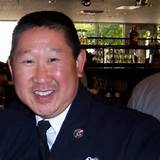
Richard Chew from his former LinkedIn profile.
Multiple agencies assisted in investigation
On Wednesday, Lafayette police officers arrested 58-year-old Richard Chew of Lafayette. An arrest warrant had been issued for Chew.
On August 19, 2017, the Contra Costa Internet Crimes Against Children (ICAC) Task Force launched an investigation into Chew. Agencies involved in this investigation include the Office of the Sheriff, District Attorney’s Office, and Lafayette and Concord Police Departments.
During the investigation, a search warrant was served on Chew’s home on Harper Court in Lafayette and work location. Child pornography was found on Chew’s computer and other storage devices.
Chew was booked into the Martinez Detention Facility for possession of child pornography. He is currently being held in lieu of $200,000 bail. The DA’s Office has already filed formal charges against Chew.
According to his Linkedin profile, which has since been removed, Chew stated that he is a Captain Of Fire for the Oakland Fire Department since 1989 until now and that he’s “Just a regular fire guy living the dream!”
ICAC is a multi-agency task force managed by the San Jose Police Department. In Contra Costa County, detectives and investigators from the Walnut Creek, Antioch, Martinez, San Ramon, Concord, and Moraga police departments, the Office of the Sheriff, County Probation Department, and District Attorney’s Office participate in the task force.
Anyone with any information about this case can contact Deputy District Attorney Jordan Sanders at (925) 957-8602.
Allen Payton contributed to this report.
Read More
Michelle Obama. from her Twitter account
By Allen Payton
Rumors circulating through Antioch over the weekend have been confirmed, today that former First Lady Michelle Obama has been invited to speak at the Mary Allan Fellows Awards Dinner in Antioch on Sept. 19. The annual event hosted by the Antioch Schools Education Foundation will be held at the Lone Tree Golf & Event Center. Tickets are completely sold out.
In an email from Antioch School Board President Walter Ruehlig, he wrote that he had “heard from one other person that Michelle was invited by keynote guest speaker (National Counselor of the Year), who apparently knows her.”
The ad for the event states that it features “2017 National Counselor of the Year Terry Tchorzynski and Special Guest.” That special guest is presumed to be Mrs. Obama.
Ruehlig also wrote, “Incidentally, still unconfirmed that Michelle is actually coming; nothing yet in writing.”
Although the ad for the event has the Antioch Unified School District’s logo on it, they are not a sponsor of the event. They are a recipient of funds raised by the foundation, Ruehlig explained.
However, none of the board members of the foundation are allowed to speak about it, due to security concerns, according to someone else who did not want to be identified. That person said to call Antioch Police Chief Tammany Brooks.
It was also rumored that President Barack Obama was also invited, but that was not confirmed.
The four teachers who will be honored as Fellows the event are Tammy Ely-Kofford, 11th Grade Social Science teacher at Deer Valley High School; Jacey Renfroe, 5th Grade teacher at Marsh Elementary; Italo Rossi, 11th/12th Grade Human Anatomy & Physiology and AP Biology teacher at Antioch High School; and Frank Zrinski, Seventh Grade Science teacher at Antioch Middle School.
When reached for comment, Velma Wilson, chairman of the foundation board said about Tchorzynski’s connection to Obama, “She was awarded by Michelle as First Lady at her last speech.”
According to a Time Magazine article, “In 2015, Obama began a tradition of honoring the school counselor of the year as part of her Reach Higher initiative to encourage post-secondary education—an issue she has said she will continue to work on after leaving the White House.”
Regarding the tickets which sell out early every year, Wilson said, “The tickets have been sold out for two weeks. We give teachers first priority, every year.”
“We will be honoring all 35 counselors in the district for the first time ever,” she added as another reason the tickets sold out so quickly.
Attempts to reach Chief Brooks for this article were also unsuccessful.
Please check back later for any updates.
Read More

Dear Editor:
The Alzheimer’s Association estimates there are more than five million Americans living with Alzheimer’s disease and more than 15 million Alzheimer’s caregivers. As an Alzheimer’s Ambassador, it is my honor to represent them to our elected officials – Congressman Jerry McNerney and Assemblyman Jim Frazier.
In California, over 630,000 people live with Alzheimer’s dementia, over 19,000 in Contra Costa County. Since 2000, deaths from Alzheimer’s dementia have increased 186%, making it the fifth leading cause of death in the state. And, we’re spending $3.464B in Medicaid caring for people with Alzheimer’s and other dementias. Today, Alzheimer’s dementia is the only disease that we can’t prevent, cure or even slow its progression.
Gladys Jarvie, my mother-in-law, suffered for years with Alzheimer’s dementia. This funny, sharp, loving woman was oh-so-slowly consumed by Alzheimer’s dementia and eventually lost her life.
The Alzheimer’s Association’s most recent study predicts that by 2025, 840,000 Californians 65 and older will have Alzheimer’s dementia – that’s a 33% increase. Plus, the report predicts that Medicaid costs will increase even faster at 47%.
We need to support research to find a cure. That’s why I am urging Congressman Jerry McNerney to support a $414 million increase for federal Alzheimer’s research funding for FY2018.
It is only through adequate funding and a strong implementation of the National Plan to Address Alzheimer’s Disease that we will meet our goal of preventing and effectively treating Alzheimer’s by 2025.
To learn more about this disease and how you can help combat it, please visit alz.org.
Pamela Jarvie
Discovery Bay
Read More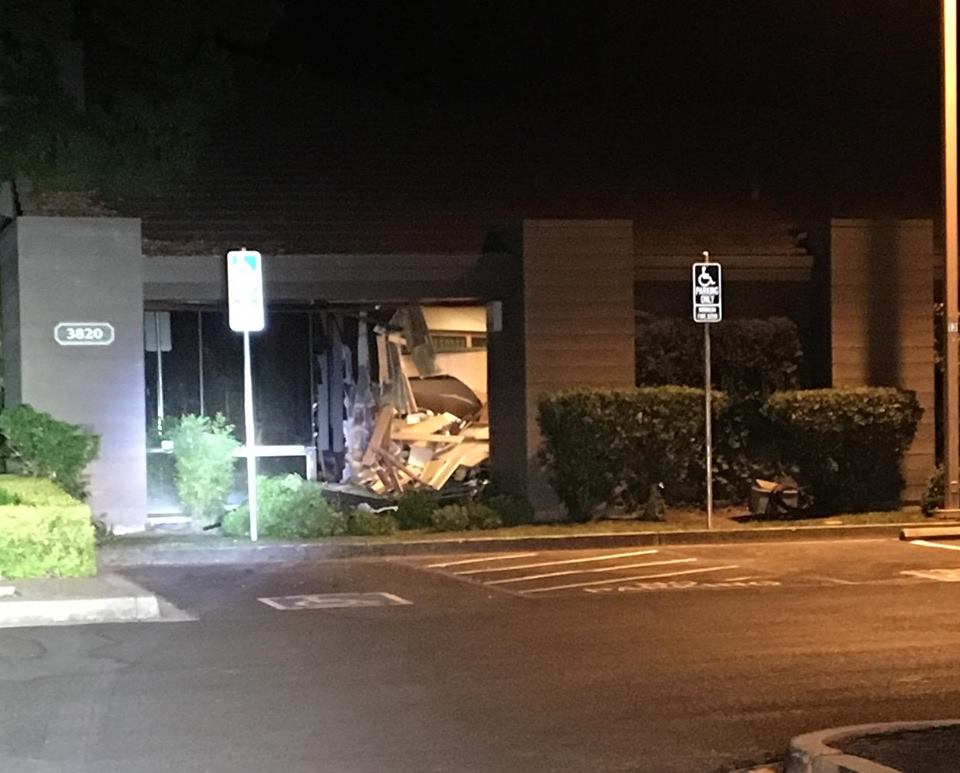
Damage from vehicle crash into building in Blackhawk on August 18, 2017. photos courtesy of CCSheriff
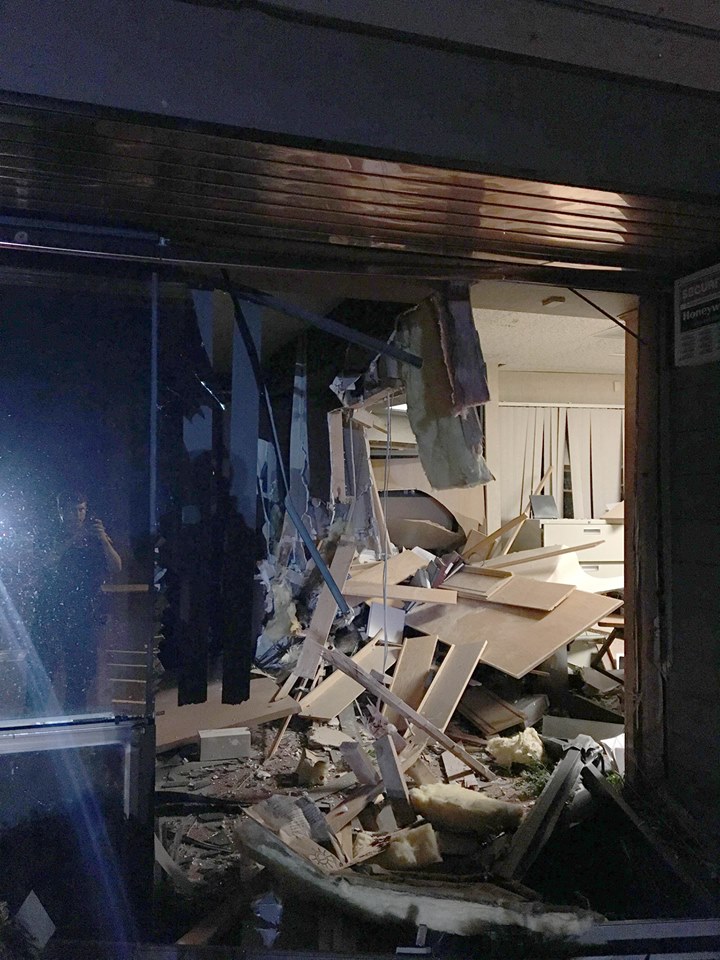 On Friday, August 18, 2017 at around 10 PM, a black, newer-model Land Rover with paper plates was involved in a hit and run collision into an office building in the Blackhawk Executive Center, directly across from the Blackhawk Plaza. The vehicle fled and then crashed into two parked cars on Center Way near the Chevron Station in the Town of Danville. There was major damage to the office building.
The Land Rover was driven by a white male described as being in his early 50’s wearing a floral Hawaiian shirt. There was also a white female passenger possibly named “Gloria”. According to witnesses, the Land Rover was later towed from the corner of Indian Rice Road and Goldenrod Lane in Danville.
The male driver was last seen waving down cars on Crow Canyon Road.
If anyone has any information about the vehicle (which should have sustained major damage), its occupants, or the name of the tow truck company, please contact the Blackhawk Police Department at (925) 736-1018. You can also call the anonymous tip line at (866) 846-3592. Tips can also be emailed to: tips@so.cccounty.us.
Read More
As a precaution against potential rail movement, BART will be reducing speeds between noon and 8 p.m. on most outdoor parts of the system for the duration of this regional heat wave. Riders should anticipate travel time increases of 10 to 20 minutes.
BART is taking this unusual step in response to the extreme temperatures forecast for the Bay Area over the next several days. BART rail is heat-treated prior to installation, which allows for thermal expansion and contraction of the rail in the Bay Area’s widely varying temperatures.
However, when actual temperature variations reach extreme levels, the thermal forces exerted on the rail increase, making it possible—though unlikely—that there could be some rail movement. Train speeds are being reduced in targeted parts of the system as a precautionary measure to give Train Operators more time to react to any observed abnormal rail conditions.
BART anticipates these reduced speeds to be in effect through at least Sunday, though the final decision on the duration of these changes will be based on weather forecasts and observed track conditions on the BART system.
As a reminder, BART crews will be rebuilding trackway in downtown Oakland during Labor Day weekend from the end of service on Friday through Monday, to make the system safer, quieter, and more reliable. No trains will run between 19th Street and Fruitvale stations or between West Oakland and Fruitvale stations and Lake Merritt station will be closed. Riders on the Warm Springs/So. Fremont, Dublin/Pleasanton, and Oakland Airport lines will be impacted.
BART crews cannot complete these critical trackway repairs during the overnight hours when we are normally closed for maintenance, which is why we require this extra time. For more information on the track closure, please visit: http://www.bart.gov/news/articles/2017/news20170814
Read More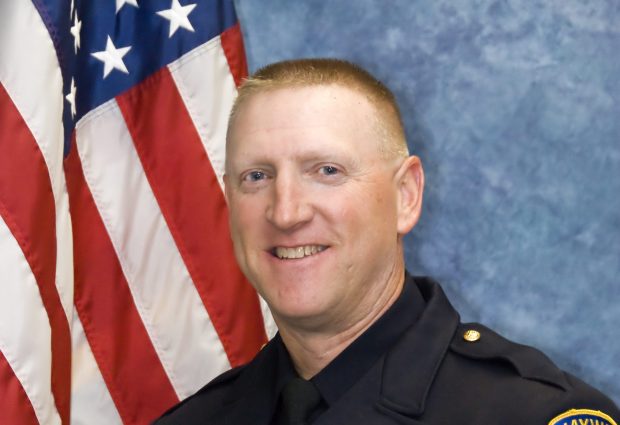
Sgt. Scott Lunger (Hayward Police Dept. photo)
SACRAMENTO – An Assembly Concurrent Resolution designating a portion of Highway 4 between Brentwood and Oakley in East Contra Costa County the “Police Sergeant Scott Lunger Memorial Highway” passed both houses of the Legislature and has been enacted.
ACR 49 was authored by Assemblymember Frazier (D-Discovery Bay). It designates the section of Highway 4 from Balfour Road in Brentwood to Laurel Road in Antioch in memory of Sgt. Lunger, a Brentwood resident who was shot and killed in the line of duty while serving with the Hayward Police Department in 2015.
“Sergeant Lunger was an exemplary peace officer who served with distinction and honor,” Frazier said. “His loss had a devastating impact on his family, his local community and the entire East Bay law enforcement community. Fortunately, the Legislature has a process that allows us to remember him by designating a portion of the state highway in his community to carry his name.”
Sgt. Scott Paul Lunger conducted a traffic stop with the assistance of a second unit in Hayward on July 23, 2015. As Lunger and the officer approached the vehicle, an occupant in the vehicle opened fire, striking and killing Sgt. Lunger. The officer with Lunger returned fire as the vehicle fled. The vehicle was found abandoned a short time later and the suspect, who was wounded, was taken into custody.
Sgt. Lunger was born in Hayward and raised in Dublin. He graduated from Dublin High and continued his studies, playing football at both Diablo Valley College and Chico State University. He followed in the footsteps of his father and brother by completing the International Brotherhood of Electrical Workers Local 595’s apprenticeship program and worked his way up to general foreman to become a partner in the family’s electrical business.
In 2000, Lunger fulfilled a longtime desire to serve in law enforcement when he was hired by the Contra Costa Sheriff’s Department. Following his graduation from the 109th Alameda County Sheriff’s Department Class of 2000, Lunger accepted a position with the Hayward Police Department in May 2001.
He had found his true calling as a police officer, where he served in many capacities including: Special Duty, the Gang Task Force, SWAT and as a Field Training Officer.
He was an avid Green Bay Packers and Oakland A’s fan and enjoyed attending games. He also served as the assistant coach for the Freedom High School softball team in Oakley.
Sgt. Lunger left behind two daughters, Ashton and Saralyn, and his fiancée Jennifer Lee and her two sons, Trevor and Ethan, with whom he was close.
“I am thankful he is being remembered in the community where he lived and where he spent his time off-duty,” said Ms. Lee, who helped decide which section of Highway 4 should be named for her fiancé. “Scott was passionate about coaching youth sports, especially the Freedom High School softball team, and I am grateful the signs designating his memorial highway will be seen daily by the many people whose lives he touched.”
ACR 49’s final passage clears the way for the Brentwood Police Activities League to raise funds to pay for the signage and work with Caltrans to have them installed. By law, state funds cannot be used to pay for and install memorial signs. All the funds must be raised privately.
According to Andrew Bird, Frazier’s Communications Director, “The designation does not in any way usurp or infringe upon on the John Marsh Heritage Highway, which is a different type of designation.”
Read More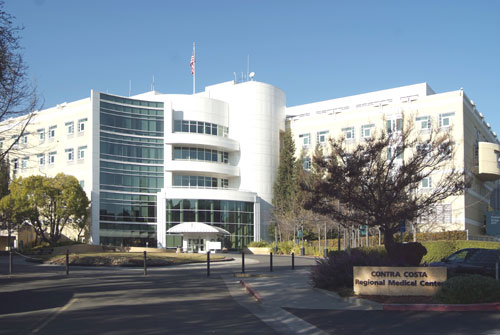
Photo courtesy of cchealth.org.
NRC Health has selected Contra Costa Regional Medical Center, of Martinez, California, as a recipient of its 2017 Excellence Award. Contra Costa Regional Medical Center was recognized at the 23rd Annual NRC Health Symposium for Patient-Centered Care in Boston on Sunday, August 6, 2017.
For nearly four decades, NRC Health has helped healthcare organizations illuminate and improve the moments that matter most to patients, residents, physicians, nurses, and staff. Today, NRC Health is honored to recognize top-performing hospitals and health systems that have exhibited an exceptional commitment to understanding each individual’s complete care journey. Their desire to better understand the people they care for, and their aspiration to design experiences that inspire loyalty, is the embodiment of the NRC Health mission of human understanding. The Excellence Awards recognize these elite organizations, which have received the highest ratings in overall satisfaction by patients and their families.
The winners were selected from the extensive database of NRC Health hospital clients for their performance over the last four quarters. Contra Costa Regional Medical Center (CCRMC) was selected as in the category of Most Improved Facility in the ranking of Overall Hospital Rating for medium-size hospitals.
“Each year our partners inspire us with their commitment to service,” says Helen Hrdy, Senior Vice President of Client Service at NRC Health. “The individuals at these organizations show a genuine understanding for their patients, which is revealed in their extraordinary, compassionate care. It is always a special pleasure for us to honor and recognize these efforts with the Excellence Award. We congratulate Contra Costa Regional Medical Center for embodying human understanding and demonstrating a commitment to patient-centered care.”
“We’re honored to receive this Excellence Award. We believe our system belongs to the patients. Their voices and perspectives are essential ingredients that can bring about powerful change when we work side by side,” Anna Roth, Chief Executive Officer, Contra Costa Regional Medical Center and Health Centers.
“We sincerely appreciate NRC Health for recognizing our accomplishments,” said Lynnette Watts, Health Service Administrator, Patient Family Advisory / Patient Experience at CCRMC. “Our goal is to provide an exceptional, welcoming care experience to everyone that enters the doors of our health care system.”
CCRMC’s Dr. James Rael added, “We recognize the inherit value of including the voices and shared experiences of patients, their family members and loved ones. Integrating the voices of patients and family members can influence organizational culture and improve the overall health care experience.”
About NRC Health
NRC Health (NASDAQ: NRCIA and NRCIB) has helped healthcare organizations illuminate and improve the moments that matter to patients, residents, physicians, nurses, and staff for 35 years. Our empathetic heritage, proprietary methods, and holistic approach enable our partners to better understand the people they care for and, in turn, design experiences that inspire loyalty and trust. For more information, call 800-388-4264, write to info@nrchealth.com, or visit www.nrchealth.com.
Read More










By Bryan Scott
The announcement of the recent discovery of $6.2 million of taxpayer money by the East Contra Costa Fire Protection District (ECCFPD) is yet another indication of the structural under-funding problem that has plagued the fire district for years.
Over six million dollars of operating funds, enough to run two fire stations for a year each, simply fell through the cracks of the fire district’s bookkeeping efforts.
The underlying cause of this calamity is that the ECCFPD, both management and Board of Directors, failed to competently run a fire district. The fire district failed to keep track of the public’s money.
It is clear that appropriate accounting oversight has not been in place. It is not enough that the volunteer firefighter-turned-Fire Chief took on these chores, helped by an Administrative Assistant and a volunteer Board of Directors Finance Committee.
With the closing of fire stations, the increasing visibility of unfunded liabilities to retirees, and the cutting back on services to the public, the fire district management and oversight Board funneled all available funds towards firefighters. They failed to realize that it takes more than firefighters to run a fire district.
It takes someone to keep track of a very complex set of accounting books, too.
And, to add insult to injury, the public was treated to an August 11 article in the Brentwood Press entitled, “Unanswered fire calls increase in July,” emphasizing the failure of government leadership.
According to the story, the residents of the ECCFPD service area were without a responsive fire department for 15 hours during July. During this time thirty-one 9-1-1 calls received no response from ECCFPD.
The residents of Brentwood, Oakley, Discovery Bay, Knightsen, Bethel Island and the surrounding areas have an increased likelihood of death and injury, and homes and property are at increased risk, because of government’s failure.
The Grand Jury of Contra Costa County states this fact in its June Report 1706, “Funding the East Contra Costa Fire Protection District.”
As far back as 2015, two years ago, a government task force called the fire and emergency medical services level “inadequate.”
The Fire Chief needs to declare a “Local Emergency” under the California Emergency Services Act. Our California Legislature wrote this law as a tool for public servants when they find themselves is a situation where they are unable to provide adequate public services.
An area of 249 square-miles of Eastern Contra Costa County is clearly in a “Local Emergency” situation, experiencing conditions of extreme peril to the safety of persons and property. These conditions are beyond the control of the services, personnel, equipment, and facilities of ECCFPD, and require the forces of other government agencies.
In addition to this elevated risk to life and property, area property owners are beginning to be hit with increased insurance premiums. Some homeowners are seeing insurance premiums increase by 200% from just a few years ago.
It is time our Sacramento legislative representatives, Assembly Member Jim Frazier and State Senator Steve Glazer, change the property tax allocation rate so that East County fire services are funded at a rate that’s comparable to other parts of the county.
Call or email Assembly Member Frazier and State Senator Glazer and tell them to fix this problem.
Adequate funding for fire and emergency services needs to be provided before more people die, and more homes burn down.
Brentwood resident Bryan Scott is Co-Chair of East County Voters for Equal Protection, a non-partisan citizens action committee striving to improve funding for the ECCFPD. He can be reached at scott.bryan@comcast.net, or 925-418-4428. The group’s Facebook page is https://www.facebook.com/EastCountyVoters/.
Read More
Learn about role of the DA’s Office and ask questions of the candidates
The Contra Costa Board of Supervisors has the responsibility under state law to appoint an interim District Attorney (DA) to fill the vacancy left by the resignation of former DA Mark Peterson.
The Board of Supervisors will interview the five finalist candidates at its September 12 public meeting, which starts at 9 a.m. A final decision may be made that day, or at the following board meeting on September 19, 2017. The public is invited to provide input at the board meetings.
This Saturday, a coalition of community organizations (see flyer above) is sponsoring a community forum to hear from the five interim DA candidates with an opportunity for the public to ask questions. District 1 Supervisor John Gioia will be speaking at the forum and providing his comments about the importance of the appointment.
“This is an important appointment,” said Gioia who represents Richmond and much of West County on the Board. “The DA is a major stakeholder in our County’s justice system and makes the final determination about who is prosecuted.”
“I strongly believe that the new DA must bring values of integrity, equity, empathy and fairness to the office,” he continued. “The new DA should understand the importance of justice reform and commit to support the work of the Racial Justice Task Force in addressing the disproportionate involvement of people of color in our justice system.”
WHAT: Community Forum to hear from Contra Costa Interim DA candidates and ask questions
WHEN: Saturday, September 9, 1 pm to 3 pm
WHERE: Miracle Temple, 2425 Cutting Blvd, Richmond
MORE: There will be a presentation on the role and importance of the DA followed by presentations from the candidates and questions to them.
For more information, contact tamisha@safereturnproject.org or (925) 335-6738.
Read MoreRichard Chew from his former LinkedIn profile.
Multiple agencies assisted in investigation
On Wednesday, Lafayette police officers arrested 58-year-old Richard Chew of Lafayette. An arrest warrant had been issued for Chew.
On August 19, 2017, the Contra Costa Internet Crimes Against Children (ICAC) Task Force launched an investigation into Chew. Agencies involved in this investigation include the Office of the Sheriff, District Attorney’s Office, and Lafayette and Concord Police Departments.
During the investigation, a search warrant was served on Chew’s home on Harper Court in Lafayette and work location. Child pornography was found on Chew’s computer and other storage devices.
Chew was booked into the Martinez Detention Facility for possession of child pornography. He is currently being held in lieu of $200,000 bail. The DA’s Office has already filed formal charges against Chew.
According to his Linkedin profile, which has since been removed, Chew stated that he is a Captain Of Fire for the Oakland Fire Department since 1989 until now and that he’s “Just a regular fire guy living the dream!”
ICAC is a multi-agency task force managed by the San Jose Police Department. In Contra Costa County, detectives and investigators from the Walnut Creek, Antioch, Martinez, San Ramon, Concord, and Moraga police departments, the Office of the Sheriff, County Probation Department, and District Attorney’s Office participate in the task force.
Anyone with any information about this case can contact Deputy District Attorney Jordan Sanders at (925) 957-8602.
Allen Payton contributed to this report.
Read MoreMichelle Obama. from her Twitter account
By Allen Payton
Rumors circulating through Antioch over the weekend have been confirmed, today that former First Lady Michelle Obama has been invited to speak at the Mary Allan Fellows Awards Dinner in Antioch on Sept. 19. The annual event hosted by the Antioch Schools Education Foundation will be held at the Lone Tree Golf & Event Center. Tickets are completely sold out.
In an email from Antioch School Board President Walter Ruehlig, he wrote that he had “heard from one other person that Michelle was invited by keynote guest speaker (National Counselor of the Year), who apparently knows her.”
The ad for the event states that it features “2017 National Counselor of the Year Terry Tchorzynski and Special Guest.” That special guest is presumed to be Mrs. Obama.
Ruehlig also wrote, “Incidentally, still unconfirmed that Michelle is actually coming; nothing yet in writing.”
Although the ad for the event has the Antioch Unified School District’s logo on it, they are not a sponsor of the event. They are a recipient of funds raised by the foundation, Ruehlig explained.
However, none of the board members of the foundation are allowed to speak about it, due to security concerns, according to someone else who did not want to be identified. That person said to call Antioch Police Chief Tammany Brooks.
It was also rumored that President Barack Obama was also invited, but that was not confirmed.
The four teachers who will be honored as Fellows the event are Tammy Ely-Kofford, 11th Grade Social Science teacher at Deer Valley High School; Jacey Renfroe, 5th Grade teacher at Marsh Elementary; Italo Rossi, 11th/12th Grade Human Anatomy & Physiology and AP Biology teacher at Antioch High School; and Frank Zrinski, Seventh Grade Science teacher at Antioch Middle School.
When reached for comment, Velma Wilson, chairman of the foundation board said about Tchorzynski’s connection to Obama, “She was awarded by Michelle as First Lady at her last speech.”
According to a Time Magazine article, “In 2015, Obama began a tradition of honoring the school counselor of the year as part of her Reach Higher initiative to encourage post-secondary education—an issue she has said she will continue to work on after leaving the White House.”
Regarding the tickets which sell out early every year, Wilson said, “The tickets have been sold out for two weeks. We give teachers first priority, every year.”
“We will be honoring all 35 counselors in the district for the first time ever,” she added as another reason the tickets sold out so quickly.
Attempts to reach Chief Brooks for this article were also unsuccessful.
Please check back later for any updates.
Read More
Dear Editor:
The Alzheimer’s Association estimates there are more than five million Americans living with Alzheimer’s disease and more than 15 million Alzheimer’s caregivers. As an Alzheimer’s Ambassador, it is my honor to represent them to our elected officials – Congressman Jerry McNerney and Assemblyman Jim Frazier.
In California, over 630,000 people live with Alzheimer’s dementia, over 19,000 in Contra Costa County. Since 2000, deaths from Alzheimer’s dementia have increased 186%, making it the fifth leading cause of death in the state. And, we’re spending $3.464B in Medicaid caring for people with Alzheimer’s and other dementias. Today, Alzheimer’s dementia is the only disease that we can’t prevent, cure or even slow its progression.
Gladys Jarvie, my mother-in-law, suffered for years with Alzheimer’s dementia. This funny, sharp, loving woman was oh-so-slowly consumed by Alzheimer’s dementia and eventually lost her life.
The Alzheimer’s Association’s most recent study predicts that by 2025, 840,000 Californians 65 and older will have Alzheimer’s dementia – that’s a 33% increase. Plus, the report predicts that Medicaid costs will increase even faster at 47%.
We need to support research to find a cure. That’s why I am urging Congressman Jerry McNerney to support a $414 million increase for federal Alzheimer’s research funding for FY2018.
It is only through adequate funding and a strong implementation of the National Plan to Address Alzheimer’s Disease that we will meet our goal of preventing and effectively treating Alzheimer’s by 2025.
To learn more about this disease and how you can help combat it, please visit alz.org.
Pamela Jarvie
Discovery Bay
Read MoreDamage from vehicle crash into building in Blackhawk on August 18, 2017. photos courtesy of CCSheriff
On Friday, August 18, 2017 at around 10 PM, a black, newer-model Land Rover with paper plates was involved in a hit and run collision into an office building in the Blackhawk Executive Center, directly across from the Blackhawk Plaza. The vehicle fled and then crashed into two parked cars on Center Way near the Chevron Station in the Town of Danville. There was major damage to the office building.
The Land Rover was driven by a white male described as being in his early 50’s wearing a floral Hawaiian shirt. There was also a white female passenger possibly named “Gloria”. According to witnesses, the Land Rover was later towed from the corner of Indian Rice Road and Goldenrod Lane in Danville.
The male driver was last seen waving down cars on Crow Canyon Road.
If anyone has any information about the vehicle (which should have sustained major damage), its occupants, or the name of the tow truck company, please contact the Blackhawk Police Department at (925) 736-1018. You can also call the anonymous tip line at (866) 846-3592. Tips can also be emailed to: tips@so.cccounty.us.
Read More
As a precaution against potential rail movement, BART will be reducing speeds between noon and 8 p.m. on most outdoor parts of the system for the duration of this regional heat wave. Riders should anticipate travel time increases of 10 to 20 minutes.
BART is taking this unusual step in response to the extreme temperatures forecast for the Bay Area over the next several days. BART rail is heat-treated prior to installation, which allows for thermal expansion and contraction of the rail in the Bay Area’s widely varying temperatures.
However, when actual temperature variations reach extreme levels, the thermal forces exerted on the rail increase, making it possible—though unlikely—that there could be some rail movement. Train speeds are being reduced in targeted parts of the system as a precautionary measure to give Train Operators more time to react to any observed abnormal rail conditions.
BART anticipates these reduced speeds to be in effect through at least Sunday, though the final decision on the duration of these changes will be based on weather forecasts and observed track conditions on the BART system.
As a reminder, BART crews will be rebuilding trackway in downtown Oakland during Labor Day weekend from the end of service on Friday through Monday, to make the system safer, quieter, and more reliable. No trains will run between 19th Street and Fruitvale stations or between West Oakland and Fruitvale stations and Lake Merritt station will be closed. Riders on the Warm Springs/So. Fremont, Dublin/Pleasanton, and Oakland Airport lines will be impacted.
BART crews cannot complete these critical trackway repairs during the overnight hours when we are normally closed for maintenance, which is why we require this extra time. For more information on the track closure, please visit: http://www.bart.gov/news/articles/2017/news20170814
Read MoreSgt. Scott Lunger (Hayward Police Dept. photo)
SACRAMENTO – An Assembly Concurrent Resolution designating a portion of Highway 4 between Brentwood and Oakley in East Contra Costa County the “Police Sergeant Scott Lunger Memorial Highway” passed both houses of the Legislature and has been enacted.
ACR 49 was authored by Assemblymember Frazier (D-Discovery Bay). It designates the section of Highway 4 from Balfour Road in Brentwood to Laurel Road in Antioch in memory of Sgt. Lunger, a Brentwood resident who was shot and killed in the line of duty while serving with the Hayward Police Department in 2015.
“Sergeant Lunger was an exemplary peace officer who served with distinction and honor,” Frazier said. “His loss had a devastating impact on his family, his local community and the entire East Bay law enforcement community. Fortunately, the Legislature has a process that allows us to remember him by designating a portion of the state highway in his community to carry his name.”
Sgt. Scott Paul Lunger conducted a traffic stop with the assistance of a second unit in Hayward on July 23, 2015. As Lunger and the officer approached the vehicle, an occupant in the vehicle opened fire, striking and killing Sgt. Lunger. The officer with Lunger returned fire as the vehicle fled. The vehicle was found abandoned a short time later and the suspect, who was wounded, was taken into custody.
Sgt. Lunger was born in Hayward and raised in Dublin. He graduated from Dublin High and continued his studies, playing football at both Diablo Valley College and Chico State University. He followed in the footsteps of his father and brother by completing the International Brotherhood of Electrical Workers Local 595’s apprenticeship program and worked his way up to general foreman to become a partner in the family’s electrical business.
In 2000, Lunger fulfilled a longtime desire to serve in law enforcement when he was hired by the Contra Costa Sheriff’s Department. Following his graduation from the 109th Alameda County Sheriff’s Department Class of 2000, Lunger accepted a position with the Hayward Police Department in May 2001.
He had found his true calling as a police officer, where he served in many capacities including: Special Duty, the Gang Task Force, SWAT and as a Field Training Officer.
He was an avid Green Bay Packers and Oakland A’s fan and enjoyed attending games. He also served as the assistant coach for the Freedom High School softball team in Oakley.
Sgt. Lunger left behind two daughters, Ashton and Saralyn, and his fiancée Jennifer Lee and her two sons, Trevor and Ethan, with whom he was close.
“I am thankful he is being remembered in the community where he lived and where he spent his time off-duty,” said Ms. Lee, who helped decide which section of Highway 4 should be named for her fiancé. “Scott was passionate about coaching youth sports, especially the Freedom High School softball team, and I am grateful the signs designating his memorial highway will be seen daily by the many people whose lives he touched.”
ACR 49’s final passage clears the way for the Brentwood Police Activities League to raise funds to pay for the signage and work with Caltrans to have them installed. By law, state funds cannot be used to pay for and install memorial signs. All the funds must be raised privately.
According to Andrew Bird, Frazier’s Communications Director, “The designation does not in any way usurp or infringe upon on the John Marsh Heritage Highway, which is a different type of designation.”
Read MorePhoto courtesy of cchealth.org.
NRC Health has selected Contra Costa Regional Medical Center, of Martinez, California, as a recipient of its 2017 Excellence Award. Contra Costa Regional Medical Center was recognized at the 23rd Annual NRC Health Symposium for Patient-Centered Care in Boston on Sunday, August 6, 2017.
For nearly four decades, NRC Health has helped healthcare organizations illuminate and improve the moments that matter most to patients, residents, physicians, nurses, and staff. Today, NRC Health is honored to recognize top-performing hospitals and health systems that have exhibited an exceptional commitment to understanding each individual’s complete care journey. Their desire to better understand the people they care for, and their aspiration to design experiences that inspire loyalty, is the embodiment of the NRC Health mission of human understanding. The Excellence Awards recognize these elite organizations, which have received the highest ratings in overall satisfaction by patients and their families.
The winners were selected from the extensive database of NRC Health hospital clients for their performance over the last four quarters. Contra Costa Regional Medical Center (CCRMC) was selected as in the category of Most Improved Facility in the ranking of Overall Hospital Rating for medium-size hospitals.
“Each year our partners inspire us with their commitment to service,” says Helen Hrdy, Senior Vice President of Client Service at NRC Health. “The individuals at these organizations show a genuine understanding for their patients, which is revealed in their extraordinary, compassionate care. It is always a special pleasure for us to honor and recognize these efforts with the Excellence Award. We congratulate Contra Costa Regional Medical Center for embodying human understanding and demonstrating a commitment to patient-centered care.”
“We’re honored to receive this Excellence Award. We believe our system belongs to the patients. Their voices and perspectives are essential ingredients that can bring about powerful change when we work side by side,” Anna Roth, Chief Executive Officer, Contra Costa Regional Medical Center and Health Centers.
“We sincerely appreciate NRC Health for recognizing our accomplishments,” said Lynnette Watts, Health Service Administrator, Patient Family Advisory / Patient Experience at CCRMC. “Our goal is to provide an exceptional, welcoming care experience to everyone that enters the doors of our health care system.”
CCRMC’s Dr. James Rael added, “We recognize the inherit value of including the voices and shared experiences of patients, their family members and loved ones. Integrating the voices of patients and family members can influence organizational culture and improve the overall health care experience.”
About NRC Health
NRC Health (NASDAQ: NRCIA and NRCIB) has helped healthcare organizations illuminate and improve the moments that matter to patients, residents, physicians, nurses, and staff for 35 years. Our empathetic heritage, proprietary methods, and holistic approach enable our partners to better understand the people they care for and, in turn, design experiences that inspire loyalty and trust. For more information, call 800-388-4264, write to info@nrchealth.com, or visit www.nrchealth.com.
Read More