







Graphic by State of California from Gov. Newsom’s Wear a Mask campaign.
Also includes Counties of Alameda, Marin, San Francisco, San Mateo, Santa Clara, and Sonoma, and the City of Berkeley; Napa and Solano Counties not included
With the COVID-19 Delta variant now infecting a small percentage of vaccinated people as well as many unvaccinated people, eight Bay Area health officers have issued health orders requiring masks indoors in public places.
The orders require all individuals, regardless of vaccination status, to wear face coverings when indoors in public settings, with limited exceptions, starting at 12:01 a.m. on Tuesday, August 3rd.
Vaccines remain the most powerful tool in the fight against COVID-19, including the Delta variant. Nonetheless, the Delta variant is infecting a small percentage of the vaccinated in the Bay Area — who still remain strongly protected against severe illness, hospitalization, and death. In those instances of infection in a vaccinated person, a face covering prevents further spread. Bay Area health officials urge all unvaccinated residents 12 and older to get vaccinated as soon as possible.
“We must act now to protect ourselves, our loved ones and our community. If you are eligible to get a COVID-19 vaccine and have not yet done so, please do not wait any longer,” said Dr. Chris Farnitano, health officer for Contra Costa. “During July the number of hospitalized COVID-19 patients in our county increased 400%. Four out of five of the COVID patients we see are not vaccinated, even though only one out of five Contra Costa adults are not vaccinated.”
These health orders aim to reduce community transmission of COVID-19 and protect everyone. Health officials are very concerned by the substantial levels of community transmission now found across the Bay Area, especially among unvaccinated people. In part, this is due to the widespread COVID-19 Delta variant, which is substantially more transmissible than previous forms of the virus. Recent information from the Centers for Disease Control and Prevention also indicates that even fully vaccinated individuals can in some cases spread the Delta variant to others, and so indoor use of face coverings provides an important added layer of protection.
The new Health Orders require wearing a well-fitting mask indoors in public settings. Indoor settings, whether public or private, are higher risk for COVID-19 transmission, especially when you are with people you do not live with. Health officials also recommend that all employers make face coverings available to individuals entering their businesses, and businesses are required to implement the indoor face covering order.
Today’s Health Orders are consistent with guidance from the Centers for Disease Control and Prevention and the California Department of Public Health, which recommend that fully vaccinated individuals wear masks while in indoor public settings. Bay Area Health Officers will continue to monitor data, including increasing vaccination throughout the region, to determine when the Orders can be adjusted or lifted.
For more information about COVID-19, and how to get a free vaccine near you, visit cchealth.org/coronavirus.
Read More

Kara Kohler and Maggie Steffens. Photos: Team USA
By Allen Payton
There are 87 Bay Area athletes competing in the Tokyo Olympics and two are from Contra Costa County. They are rowing team member Kara Kohler of Clayton and water polo team member Maggie Steffens of Danville.

Kara Kohler in a June 13, 2021 photo from her Facebook page.
Kara Kohler
2012 Bronze medal winner in quadruple sculls, Kara Kohler, whose hometown is Clayton where she was also born, is competing in Women’s Rowing in the Single Sculls event this year. She placed first in her heat on Friday and second in her semifinal race Sunday morning. Her next race is scheduled for Thursday morning, July 29.
According to Team USA, the 6’2” 30-year-old Kohler was a competitive swimmer throughout high school, at Clayton Valley in Concord, including at the 2008 Janet Evans Grand Prix Swim Meet at USC and the 2008 Pacific Swimming North America Cup Challenge. But during her senior year of high school, she was encouraged by a family friend to look into rowing collegiately, which led her down the path to becoming a recruited walk-on at UC Berkeley.
Kohler was named the Pac-10 Conference Newcomer of the Year in 2010 and won Cal’s Most Promising Freshman Award. She was also a four-time All-American.
After switching to the single sculls in 2018, Kohler won the bronze medal at the 2019 World Championships. That year, she was also named USRowing’s Female Athlete of the Year. Her hobbies include adventures with her dog Luna, camping, swimming, road biking and cooking.
According to her profile page on Tokyo 2020 Olympics website, Kohler’s parents are her greatest influence, her hero is U.S. rower Jill Costello and her philosophy is, “Enjoy the process a little more because no one’s perfect from the start.”

Maggie Steffens in action. Photo from her Instagram account.
Maggie Steffens
Steffens, who was born in San Ramon, is a two-time Gold medal winner at the 2012 and 2016 Olympics. At the 2016 games in Rio, she was named MVP, and tied the Olympic record for most goals scored at 21. The 5’8” 28-year-old athlete is the USA Women’s Water Polo Team Captain for the second time.
According to Team USA, she is a 2012 graduate of Monte Vista High School. Her sister Jessica is also a two-time Olympic medalist in water polo, first in 2008 and then on the same 2012 team Maggie played on. Steffens is the daughter of Carlos and Peggy Steffens, has one brother, Charlie, and another sister, Teresa.
She aided Stanford University to three NCAA titles (2014, 2015 and 2017) and was named FINA World Player of the Year in 2012 and 2014.
Growing up, Steffens competed in soccer, swimming, basketball and gymnastics.
She is the co-founder of 6-8 Sports, Inc., a platform connecting data and technology for youth athlete development currently focused on the sport of water polo.
Her hobbies include hiking, kayaking and canoeing, writing, singing, dancing and reading. Steffens is also fluent in Spanish.
According to her website, “Maggie was named to the Women’s National Team in 2009 and has represented the United States at every major international championship competition held annually since.”
She was honored as the NCAA Tournament MVP and received multiple Mountain Pacific Sports Federation Player of the Year and Association of Collegiate Water Polo Coaches Player of the Year honors.
She’s also scholar athlete, having earned “an undergraduate degree in Science, Technology & Society in 2017 and a Masters of Science in Management, Science and Engineering in 2018.”
See Steffens’ interview on NBC Bay Area and read more about her on the Tokyo 2020 Olympics website.
Photo: Team USA.
Read More

Shuts down westbound lanes for several hours; suspect flees scene
By CHP-Contra Costa
This evening at about 6:35pm, a freeway shooting occurred on State Route 4 westbound, just east of Port Chicago Highway in Concord. One victim succumbed to their injuries from gunshot wounds and another victim suffered moderate injuries due to gunshot wounds. The victims were in a black Toyota Camry. The unknown suspect vehicle fled the scene. As a result of the shooting, the victim vehicle crashed into the metal guard rail at the top of the Port Chicago offramp.
CHP has shut down all westbound lanes of HWY4 in the area for scene processing and collection of evidence. At this time, we do not have an estimated time of re-opening the freeway but expect it to be closed for at least a few hours. We will provide updates as soon as we can.
This is an ongoing investigation with Detectives assigned to CHP – Golden Gate Division Special Investigations Unit (SIU) who are actively investigating this shooting. Our detectives are requesting assistance from the public in gathering the details surrounding this incident. If you or anyone you know have any information that might be helpful, please call the CHP Investigative Tipline at 707-917-4491.
Read More
A day for the recognition of Ivermectin – “Covid is treatable with ivermectin and can end the pandemic”
By British Ivermectin Recommendation Development Group
An international coalition of medical professionals together with journalists, musicians, artists and others, have established World Ivermectin Day this Saturday 24 July 2021, with the aim of sharing the evidence-based message that the cheap, safe and easily-distributed medicine ivermectin can remove the fear of the covid pandemic to lives and economies. (See North America video)
According to the National Institutes of Health, Ivermectin is a Food and Drug Administration (FDA)-approved antiparasitic drug that is used to treat several neglected tropical diseases, including onchocerciasis, helminthiases, and scabies.
Reports from in vitro studies suggest that ivermectin acts by inhibiting the host importin alpha/beta-1 nuclear transport proteins, which are part of a key intracellular transport process that viruses hijack to enhance infection by suppressing the host’s antiviral response. In addition, ivermectin docking may interfere with the attachment of the severe acute respiratory syndrome coronavirus 2 (SARS-CoV-2) spike protein to the human cell membrane.
Some studies of ivermectin have also reported potential anti-inflammatory properties, which have been postulated to be beneficial in people with COVID-19.
Some observational cohorts and clinical trials have evaluated the use of ivermectin for the prevention and treatment of COVID-19. Data from some of these studies can be found here.
“We have an incredibly positive and uplifting message to share; Ivermectin treats and prevents covid and it is the key to unlocking the never-ending cycle of pandemic peaks and personal restrictions and will help restart economies.” states Dr. Tess Lawrie, UK-based founder of the Day and co-author of a recent peer-reviewed study that verified the efficacy of the medicine.
Created in just a few weeks by a team of volunteers, World Ivermectin Day features talks and discussions that will be available to millions online. The decentralized and grassroots nature of the day has inspired individuals to organize their own live meetings and activities across the globe from a growing list of countries including the UK, Canada, Kuala Lumpur and Japan.
The principle aim of the day is for people to encourage their own governments to join the 20 or so countries already deploying ivermectin and so help protect their nations’ health and do so at low cost.
Ahead of the day, the central website, worldivermectinday.org is filling up with written and filmed testimonials from people from all around the world; many of whom are celebrating their good health and even their lives thanks to ivermectin.
World Ivermectin Day has been endorsed by the British Ivermectin Recommendation Development (BIRD) Group and the Front Line COVID-19 Critical Care Alliance (FLCCC) in the USA, key players in campaigning for ivermectin approval.
About BIRD
The British Ivermectin Recommendation Development Group (BIRD) is a truly grassroots initiative bringing together clinicians, health researchers and patient representatives from all around the world to advocate for the use of ivermectin against covid-19. (See BIRD Affiliates)

BIRD Affiliates.
About FLCCC
The FLCCC Alliance was organized in March 2020 by a group of highly published, world renowned Critical Care physician/scholars – with the academic support of allied physicians from around the world – to research and develop lifesaving protocols for the prevention and treatment of COVID-19 in all stages of illness. Their MATH+ Hospital Treatment Protocol, introduced in March 2020, has saved thousands of patients who were critically ill with COVID-19. Now, the FLCCC’s new I-MASK+ Prophylaxis and Early At-Home Outpatient Treatment Protocol with Ivermectin has been released – and is a potential solution to the global pandemic.
The doctors and volunteers behind the event have designed the day to be organic, encouraging individuals and groups worldwide to organize their own activities to mark the day. There’s no financial interest in the medicine for any of them, but they are all resolutely unified by one aim – seeing ivermectin saving lives everywhere.

Graphic by BIRD.
About Ivermectin
You may not be aware that Covid can be prevented and treated with a simple low-cost, generic tablet called Ivermectin.
On World Ivermectin Day we want you, and everyone on the planet to know this so we all can look forward to a healthier, happier future and not one of fear and uncertainty.
We are joined by health professionals, lawyers, musicians and artists and people of all backgrounds and nations to spread the amazing news about ivermectin.
Ivermectin, has a successful history stretching back to 1975 with 5 billion doses given and an impeccable safety record. Its inventors even won a Nobel Prize.
Ivermectin is not even the only generic treatment for covid, but leads a number of safe, widely available medicines that are being successfully used around the world to beat covid.
Sharing Good Health Worldwide
World Ivermectin Day is encouraging all nations who haven’t yet adopted ivermectin as part of their Covid treatment plan to take a serious review of the mountain of robust clinical evidence so they too can improve their people’s health and economies.
They are sharing the good news of how it is being successfully used by thousands of doctors in multiple countries as the way to prevent, treat and beat covid and end the pandemic. It is even effective against variants.
For more information visit WorldIvermectinDay.org. A citizen-driven day of celebration supported by our allies in the field and on the frontlines.
Allen Payton contributed to this report.
Read MoreCondition improving for three others injured in early morning shooting
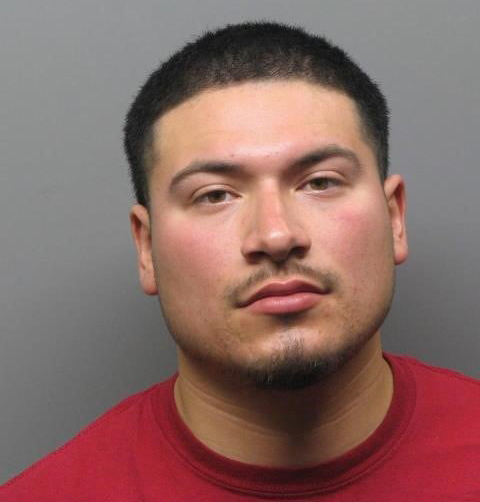
Suspect Jose Guillermo Casillas-Flores. Photo by WCPD
By Walnut Creek Police Department
Walnut Creek Police have made an arrest in connection with the homicide that took place in the early morning hours of Sunday, July 18. 22-year-old Jose Guillermo Casillas-Flores, of Brentwood, was arrested on Thursday during a traffic stop. A handgun and ammunition were taken following a search of his home. There are no additional outstanding suspects stemming from the death of Lutfi Abbushi. The 25-year-old victim was a resident of San Pablo.
Walnut Creek Police Department detectives are presented the case on Thursday for review with the District Attorney.
The incident occurred at approximately 01:37 am on SOS Drive near N. Main Street. Police received multiple 911 calls reporting shots fired. Officers arrived within two minutes to find four gunshot victims, with one deceased at the scene. The entire incident occurred on SOS Drive. (See related article)
At this time, the relationship between all involved parties is unknown. The identities of the involved subjects will not be released at this time due to the ongoing investigation. This was determined to be an isolated incident and there are no ongoing threats to the community. The condition of the other three victims is improving and none of their injuries are considered life threatening.
If anyone has information regarding this incident, please call Detective Coffin at 925-943-5844 x7656. Additional media inquiries may be directed to Lieutenant Holley Connors at connors@walnutcreekpd.com.
Read More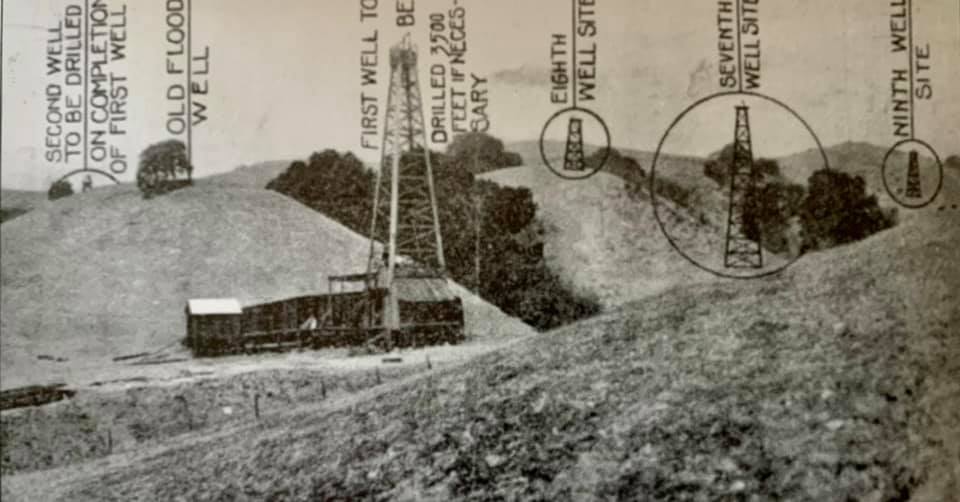
Extensive drilling occurred over a period of years in Happy Valley in order to locate oil. There were five more wells drilled in addition to the ones pictured here. Photos courtesy of Lafayette Historical Society.

Four workmen are to the left on the Edward Flood ranch in 1901. The man seated is Alexander Flood, and the woman is Evelyne Flood Baker, his sister.
By Laura Torkelson
It bubbled up from the ground. Edward and Anne Flood came from near Dublin, Ireland with his mother and eight children. They bought a farm in Happy Valley in 1889. Edward loved to take visitors to a section of his farm where oil seeped to the surface. He would light a match, and poof – quite a show. Once he got too close and singed his beard and eyelashes! The oil was said to be so pure that it could be used to light lamps.
In the early 1900’s, one of the Flood relatives thought that perhaps money could be made from the oil. He got investors, issued shares, drilled an oil well and made extensive plans for more. Unfortunately, no money was made on the one well. As a child, Genevieve Gallagher, born to the Flood family in 1918, remembers getting a pair of shoes with “oil money”. No fortune, and the venture was abandoned. (The Flood name might be familiar because their decedent, Nancy Flood, taught at Springhill for many years.)

Edward and Anne Flood
The oil was in the Los Arabis Drive area. That street, Timothy Lane, Rahara Drive, and Natasha Drive are all named for the Arabian horses that Dr. Leo Musser owned in the 1930s and 1940s. He reported that when it rained a lot, oily water covered his basement floor. Any Happy Valley residents still see oil? Let the Historical Society know. Come in and learn more amazing facts about Happy Valley.
Please consider becoming a member of the Lafayette Historical Society. It will help us keep our door open and lights on. To become a member or make a donation…https://lafayettehistory.org/contact-us/membership/ or follow us on our Facebook page.

Speculators formed companies, issued stock and drilled.
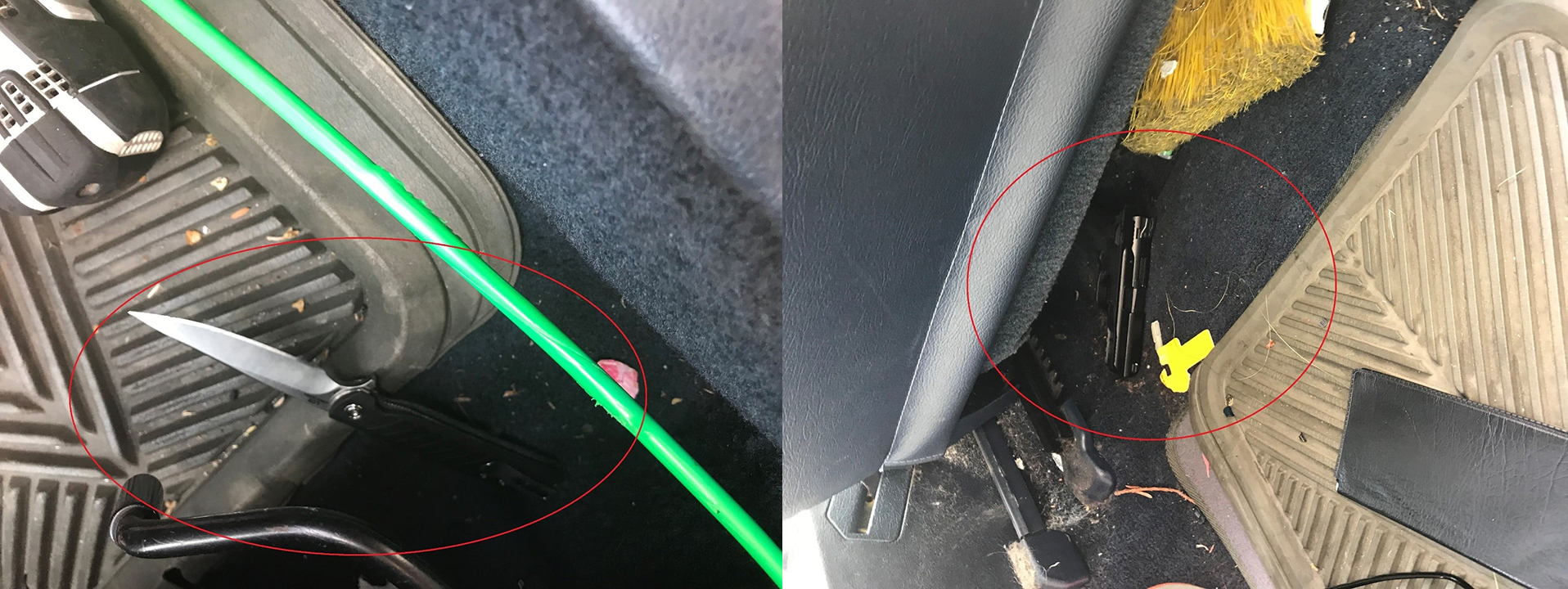
The suspect’s knife and gun in the floor board of the stolen car he was in on Sunday, July 18, 2021. Photos: OakleyPD
Found sitting in stolen car from San Leandro, with stolen gun from Livermore, other stolen property and drugs
By Oakley Police Department
On Sunday, July 18, 2021 at approximately 3:45 PM, officers were dispatched to a business in the 5500 block of Bridgehead Road. The reporting party advised that there appeared to be an adult male looking into vehicles, the business has had a recent history of thefts from vehicles. Upon their arrival, they located the suspect, Paul Muscat (M; 34; Richmond) seated in a vehicle.
A records check revealed that the vehicle Muscat was seated in was stolen out of San Leandro. Officers ordered him out of the vehicle, and he became combative, arming himself with a knife. Muscat was also reaching around inside the vehicle in an apparent search for something. Officers deployed their TASERs at Muscat and were able to safely take him into custody. He was taken for medical treatment and eventually booked into the Martinez Detention Facility.
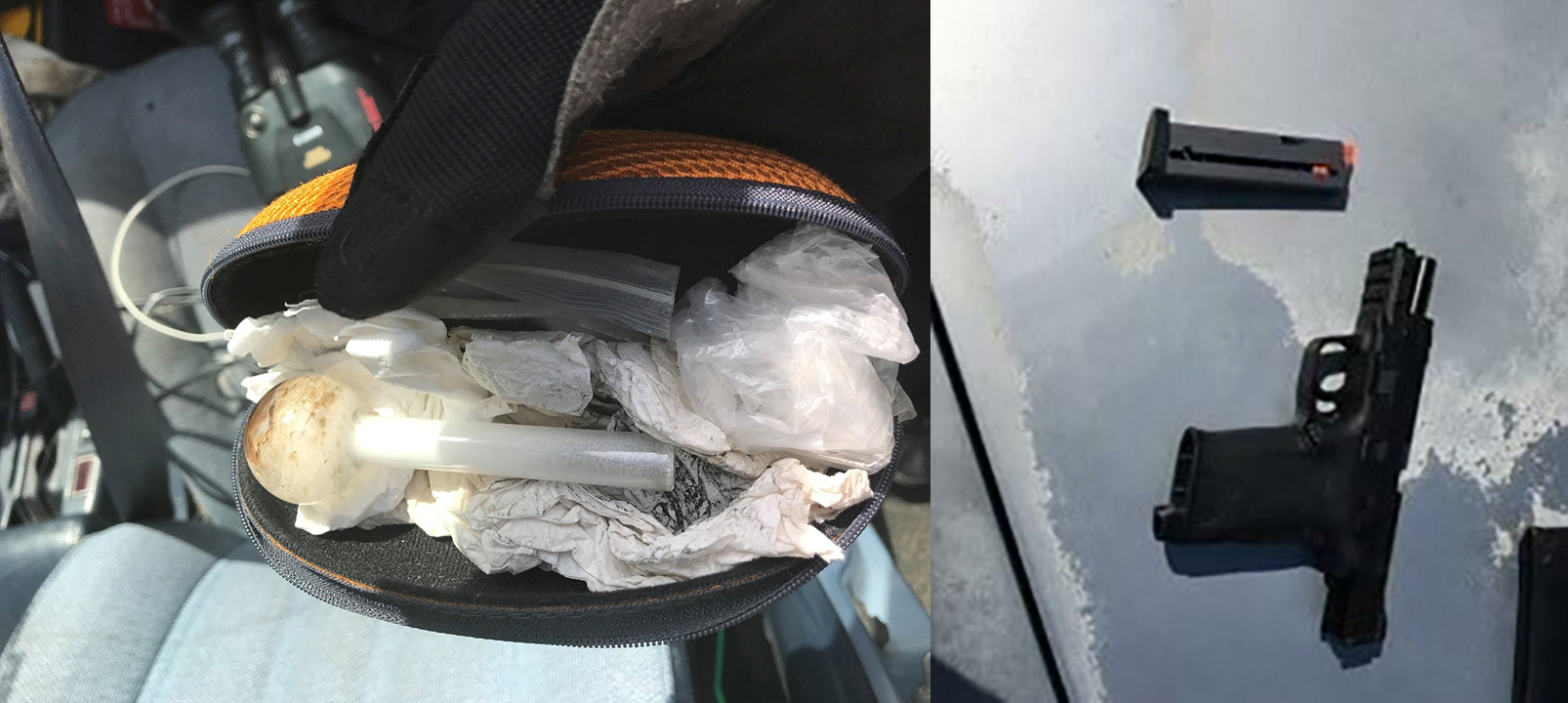
Drugs discovered in the stolen car the suspect was in and his gun on Sunday, July 18, 2021. Photos: OakleyPD
It was later discovered that the item Muscat was reaching for was a handgun, which had been reported stolen out of Livermore. Additionally, illegal narcotics, burglary tools, and stolen property were also located inside the vehicle. Muscat is a convicted felon with a two-decade history of violence, weapons violations, theft, and attempted murder. In addition to resisting arrest.
Read More

 By Walnut Creek Police Department
The Walnut Creek Police Department is investigating a homicide in the early hours of July 18, 2021. Police received multiple 911 calls reporting shots fired at approximately 01:37 AM on SOS Drive near N. Main Street. Officers arrived to find four gunshot victims, with one deceased at the scene. The other three victims were transported to a local hospital where they are receiving treatment. This is an active investigation. Details will be released as they are available.
If anyone has information regarding this incident, please call Detective Gerstner at 925-256-3578.
Read More
Photos by Michael McGee published with permission.
 By Allen Payton
An explosive device that appeared to be a pipe bomb was found in a Brentwood shopping center on Lone Tree Way around noon on Saturday, July 17, 2021.
In a post on their Facebook page on Saturday afternoon, the Brentwood Police Department wrote, “At around 12 p.m., BPD officers responded to the parking lot near Famous Footwear located at 5471 Lone Tree Way to investigate a report of suspicious device characterized as a 12 inch long pipe with caps on each end. At this time, it is unknown how the device appeared at this location.”
For safety reasons, a large portion of the parking lot was cordoned off. People were asked to avoid the area while the investigation continued, and they coordinated efforts with the bomb squad.
According to a later update posted on the Brentwood PD Facebook page, “As of 2:45 pm the Walnut Creek Police Department’s Bomb Squad responded to the scene and rendered the device safe, which was determined to be empty.
The area cordoned off will be reopened shortly. Thank you for your patience and cooperation, and Walnut Creek PD’s Bomb Squad for their quick response.
Anyone with information related to the suspicious device is asked to contact the Brentwood Police Department at 925-809-7911.”
Read More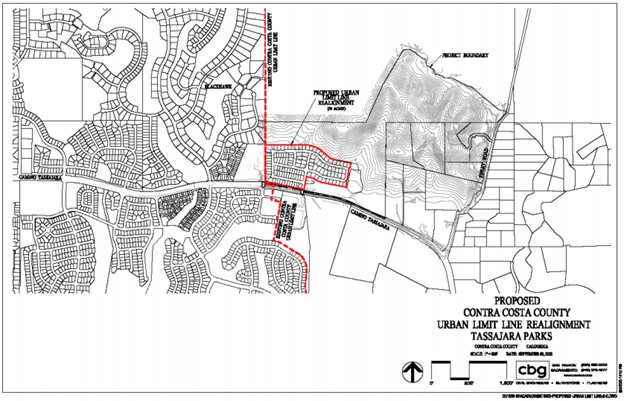
The approved Tassajara Parks Urban Limit Line realignment. From presentation.
Tassajara Parks in the San Ramon Valley and Pantages Bays in Discovery Bay will add 417 single family homes in Supervisorial District 3 with support of environmental groups
Approve Ameresco Renewable Natural Gas Processing Facility and Pipeline at Keller Canyon Landfill
Flash green light for further study moving Byron boys ranch to former Martinez Juvenile Hall
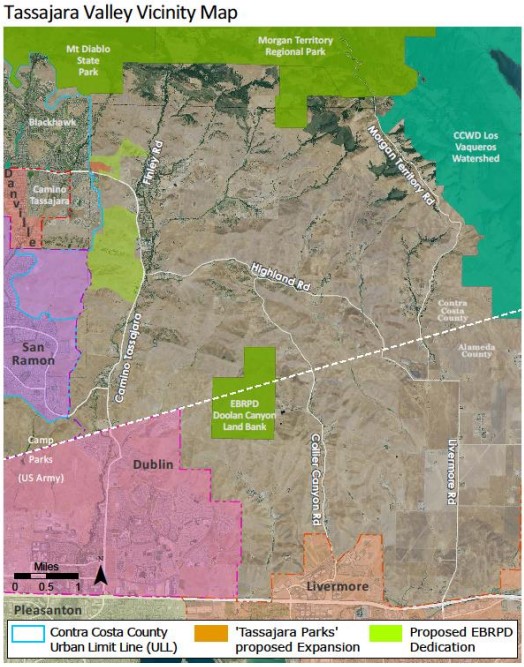
Tassajara Valley vicinity map. From presentation.
By Daniel Borsuk
The Contra Costa County Board of Supervisors worked on solving the county’s complex housing shortage during their meeting on Tuesday by approving two major housing developments, the 277-single family housing unit Pantages residential project in Discovery Bay and the controversial 125-housing unit Tassajara Parks residential project near San Ramon, both in District 3, board chair Diane Burgis’ turf.
The more controversial Tassajara Parks Residential Project drew the support of major environmental groups like Green Belt Alliance, Save Mt. Diablo and East Bay Regional Parks District mainly because the developer’s moved to do a “fee simple transfer “of 727 acres of land to the East Bay Regional Park District.
“This fee simple conveyance to the EBRPD will ensure that the Dedication Area is protected and preserved in perpetuity for the following non-urban uses only: agriculture, open space, parks, recreation, scenic uses, wetland preservation and creation, and habitat mitigation,” the supervisors’ background information states.
Save Mt. Diablo Land Conservation Director Seth Adams called the land transfer “a great trade off” and will go a long way in the preservation of wildlife, especially raptors and eagles.
“It’s a 30-acre adjustment to the Urban Limit Line which is allowed by a four-fifths vote of the Board of Supervisors based on at least one of seven findings,” Adams shared with the Herald. “Here it was the creation of an ag preserve by two more agencies.”
The Danville city council opposed the project contending the open space trade offer was inadequate especially when California is in a drought. “The city council felt that the scope and magnitude of the project with 125 homes in exchange of open space was insufficient. The city council did not feel it was worth the trade off, “said City of Danville Manager Joe Calabrigo.
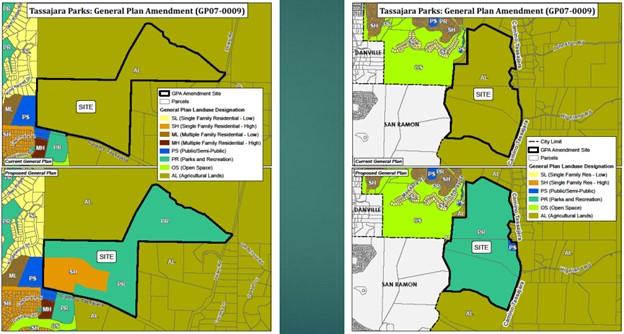
Tassajara Parks General Plan Amendment land use maps. From presentation.
District 2 Supervisor Candace Andersen of San Ramon, who cast the lone dissenting vote, said she was concerned any action by the supervisors would require approval of the voters to adjust the urban limit line.
“I know we need the right mix of housing,” said Andersen. “If we move the urban limit line, that is up to the voters. I have strong reservations about the environmental impact report. Then there is no source of water for this project.”
Before supervisors approved the Tassajara Project on a 4-1 vote, District 1 Supervisor John Gioia successfully added to the board’s resolution several conditions, one that included that the developer must install solar panels and EV charging stations inside the garage or carport. In addition, he added the installation of high efficiency appliances and insulation to zero net energy and to meet the standards to be solar-ready as defined by the California Building Standards.
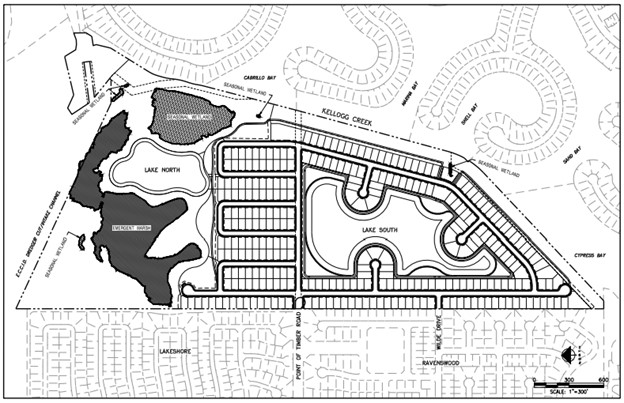
Pantages Bays site map. From presentation.
The developer agreed to Gioia’s additions to the project’s resolution of approval.
The Tassajara Parks project also garnered support from parents of Tassajara Hills Elementary School parents who were pleased the developer plans to make safety corrections to the school’s parking lot. The school is immediately west of the project’s northern side.
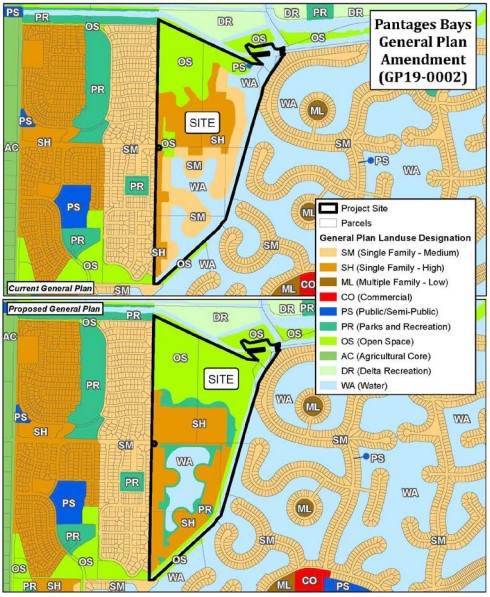
Pantages Bays General Plan Amendment maps. From presentation.
Dave Rehnstrom, EBMUD Manager of Water Distribution Planning, said contrary to the developer’s proposed water conservation efforts, “EBMUD finds this project’s water conservation measures are insufficient.”
Mainly because developers of controversial the Tassajara Parks Residential Project have proposed to dedicate 727 acres of land to the East Bay Regional Park District, that move won the support from a few environmental organizations especially Save Mt. Diablo.
After several failed attempts to obtain state and federal regulatory permit approvals since 2013, developers of the proposed Pantages Bays Project near Discovery Bay, the new project proposed would subdivide the same site into 277 residential lots, which is 15 lots less than the original 2013 project.
With two public trail systems providing 5,200 linear feet of trails and walkways, the proposed project consists of two lakes, Lake South approximately 23 acres in size, and Lake North, about seven acres in size.
Of the 277 units planned for Pantages Bay Project, about 42 units are required to be set aside as affordable housing units. Eighty percent of the affordable units, 33 units, would be affordable to Moderate income households and 20 percent of the required affordable units, 8 units, would be affordable to low-income households. “An in-lieu fee will be paid for the remaining 0.55 units,” the county planning department document states.
“This project will help alleviate a lot of the illegal dumping that occurs in that area,” Burgis observed.
Approve Amersco Natural Gas Processing Facility and Pipeline
Without receiving any public comments either in favor or in opposition, supervisors approved on a 5-0 vote Ameresco Renewable Natural Gas’s (ARNG) proposal to construct a new 48,000 square foot renewable natural gas facility on the Keller Canyon Landfill site in Pittsburg.
The publicly traded Ameresco that has been operating on the Pittsburg landfill site a RNG operation since 2009 now proposes constructing a newer RNG processing facility of about 48,000 square feet or 1.1 acres on a level pad of about 84,000 square feet. Operating 24 hours a day, seven days a week, the operation would be overseen by two operators for 40 hours per week.
According to a press release from Republic Services, which owns the landfill, “The dedication of the Keller Canyon Landfill gas-to-electricity project marks the second time this year that Republic Services, Inc. (NYSE:RSG) and Ameresco have partnered to develop and expand renewable energy sources for California and to provide power to residents of and businesses in Palo Alto and Alameda.”
“Most of the equipment would be less than 10 feet high except for the proposed enclosed flare, and a few larger pieces of equipment that would vary in height from 25 to 35 feet,” the Conservation and Development Department background document stated. “The proposed enclosed flare would be approximately 50 feet in height, similar to the two existing flares at the Keller Canyon Landfill enclosed flare facility.”
The project also calls for a new RNG underground pipeline to a proposed PG&E metering station located near the eastern edge of the Keller Canyon Landfill. The Ameresco project has drawn some concern from Concord-based Discovery Builders that the proposed pipeline will be near a proposed residential development in Pittsburg.
A spokesman for Ameresco would not answer how much the new RNG facility and pipeline will cost.
During the supervisors’ meeting, Supervisor Federal Glover of Pittsburg said through his office, Ameresco has agreed to pay the county at least $50,000 a year into the Keller Canyon Land Fill Mitigation Fund to help moderate any economic or environmental impacts stemming from the RNG project.
Every year, millions of dollars collected from Republic Services, operation of the Keller Canyon Landfill, are distributed to nonprofit organizations in the Bay Point and Pittsburg area through Supervisor Federal Glover’s office.
Supervisors Seek More Information on Orin Allen Youth Rehab Center Closure
Supervisors also instructed Contra Costa County Chief Probation Officer Essa Ehmen Krause to proceed and collect additional information, including cost figures, about a proposal to potentially move juvenile inmates at Orin Allen Youth Rehabilitation Facility in Byron, (referred to as the Byron Boys Ranch) closing that facility and transferring the inmates to a renovated former juvenile hall on Glazier Drive in Martinez. The former juvenile hall facility is now used or storage.
The proposal was presented to supervisors who are attempting to figure out how to best use resources and address the educational and psychological needs of juveniles at the aged Byron Boys Ranch, constructed in 1960 and is now out of compliance with the American Disability Act.
Due to state legislation and local juvenile rehabilitation efforts, there are now about 15 youths housed at the Byron Boys Ranch, which is used for youths convicted of non-capital crimes. For youths convicted or charged for capital crimes, they are housed at the 209-bed John A. Davis Juvenile Hall constructed in 2005. There are now about 24 inmates at juvenile hall, Krause told supervisors.
Expect Krause to give periodic updates on the potential closure of Orin Allen and the reuse of the former juvenile hall facility.
Read More












Graphic by State of California from Gov. Newsom’s Wear a Mask campaign.
Also includes Counties of Alameda, Marin, San Francisco, San Mateo, Santa Clara, and Sonoma, and the City of Berkeley; Napa and Solano Counties not included
With the COVID-19 Delta variant now infecting a small percentage of vaccinated people as well as many unvaccinated people, eight Bay Area health officers have issued health orders requiring masks indoors in public places.
The orders require all individuals, regardless of vaccination status, to wear face coverings when indoors in public settings, with limited exceptions, starting at 12:01 a.m. on Tuesday, August 3rd.
Vaccines remain the most powerful tool in the fight against COVID-19, including the Delta variant. Nonetheless, the Delta variant is infecting a small percentage of the vaccinated in the Bay Area — who still remain strongly protected against severe illness, hospitalization, and death. In those instances of infection in a vaccinated person, a face covering prevents further spread. Bay Area health officials urge all unvaccinated residents 12 and older to get vaccinated as soon as possible.
“We must act now to protect ourselves, our loved ones and our community. If you are eligible to get a COVID-19 vaccine and have not yet done so, please do not wait any longer,” said Dr. Chris Farnitano, health officer for Contra Costa. “During July the number of hospitalized COVID-19 patients in our county increased 400%. Four out of five of the COVID patients we see are not vaccinated, even though only one out of five Contra Costa adults are not vaccinated.”
These health orders aim to reduce community transmission of COVID-19 and protect everyone. Health officials are very concerned by the substantial levels of community transmission now found across the Bay Area, especially among unvaccinated people. In part, this is due to the widespread COVID-19 Delta variant, which is substantially more transmissible than previous forms of the virus. Recent information from the Centers for Disease Control and Prevention also indicates that even fully vaccinated individuals can in some cases spread the Delta variant to others, and so indoor use of face coverings provides an important added layer of protection.
The new Health Orders require wearing a well-fitting mask indoors in public settings. Indoor settings, whether public or private, are higher risk for COVID-19 transmission, especially when you are with people you do not live with. Health officials also recommend that all employers make face coverings available to individuals entering their businesses, and businesses are required to implement the indoor face covering order.
Today’s Health Orders are consistent with guidance from the Centers for Disease Control and Prevention and the California Department of Public Health, which recommend that fully vaccinated individuals wear masks while in indoor public settings. Bay Area Health Officers will continue to monitor data, including increasing vaccination throughout the region, to determine when the Orders can be adjusted or lifted.
For more information about COVID-19, and how to get a free vaccine near you, visit cchealth.org/coronavirus.
Read More
Kara Kohler and Maggie Steffens. Photos: Team USA
By Allen Payton
There are 87 Bay Area athletes competing in the Tokyo Olympics and two are from Contra Costa County. They are rowing team member Kara Kohler of Clayton and water polo team member Maggie Steffens of Danville.
Kara Kohler in a June 13, 2021 photo from her Facebook page.
Kara Kohler
2012 Bronze medal winner in quadruple sculls, Kara Kohler, whose hometown is Clayton where she was also born, is competing in Women’s Rowing in the Single Sculls event this year. She placed first in her heat on Friday and second in her semifinal race Sunday morning. Her next race is scheduled for Thursday morning, July 29.
According to Team USA, the 6’2” 30-year-old Kohler was a competitive swimmer throughout high school, at Clayton Valley in Concord, including at the 2008 Janet Evans Grand Prix Swim Meet at USC and the 2008 Pacific Swimming North America Cup Challenge. But during her senior year of high school, she was encouraged by a family friend to look into rowing collegiately, which led her down the path to becoming a recruited walk-on at UC Berkeley.
Kohler was named the Pac-10 Conference Newcomer of the Year in 2010 and won Cal’s Most Promising Freshman Award. She was also a four-time All-American.
After switching to the single sculls in 2018, Kohler won the bronze medal at the 2019 World Championships. That year, she was also named USRowing’s Female Athlete of the Year. Her hobbies include adventures with her dog Luna, camping, swimming, road biking and cooking.
According to her profile page on Tokyo 2020 Olympics website, Kohler’s parents are her greatest influence, her hero is U.S. rower Jill Costello and her philosophy is, “Enjoy the process a little more because no one’s perfect from the start.”
Maggie Steffens in action. Photo from her Instagram account.
Maggie Steffens
Steffens, who was born in San Ramon, is a two-time Gold medal winner at the 2012 and 2016 Olympics. At the 2016 games in Rio, she was named MVP, and tied the Olympic record for most goals scored at 21. The 5’8” 28-year-old athlete is the USA Women’s Water Polo Team Captain for the second time.
According to Team USA, she is a 2012 graduate of Monte Vista High School. Her sister Jessica is also a two-time Olympic medalist in water polo, first in 2008 and then on the same 2012 team Maggie played on. Steffens is the daughter of Carlos and Peggy Steffens, has one brother, Charlie, and another sister, Teresa.
She aided Stanford University to three NCAA titles (2014, 2015 and 2017) and was named FINA World Player of the Year in 2012 and 2014.
Growing up, Steffens competed in soccer, swimming, basketball and gymnastics.
She is the co-founder of 6-8 Sports, Inc., a platform connecting data and technology for youth athlete development currently focused on the sport of water polo.
Her hobbies include hiking, kayaking and canoeing, writing, singing, dancing and reading. Steffens is also fluent in Spanish.
According to her website, “Maggie was named to the Women’s National Team in 2009 and has represented the United States at every major international championship competition held annually since.”
She was honored as the NCAA Tournament MVP and received multiple Mountain Pacific Sports Federation Player of the Year and Association of Collegiate Water Polo Coaches Player of the Year honors.
She’s also scholar athlete, having earned “an undergraduate degree in Science, Technology & Society in 2017 and a Masters of Science in Management, Science and Engineering in 2018.”
See Steffens’ interview on NBC Bay Area and read more about her on the Tokyo 2020 Olympics website.
Photo: Team USA.
Read More
Shuts down westbound lanes for several hours; suspect flees scene
By CHP-Contra Costa
This evening at about 6:35pm, a freeway shooting occurred on State Route 4 westbound, just east of Port Chicago Highway in Concord. One victim succumbed to their injuries from gunshot wounds and another victim suffered moderate injuries due to gunshot wounds. The victims were in a black Toyota Camry. The unknown suspect vehicle fled the scene. As a result of the shooting, the victim vehicle crashed into the metal guard rail at the top of the Port Chicago offramp.
CHP has shut down all westbound lanes of HWY4 in the area for scene processing and collection of evidence. At this time, we do not have an estimated time of re-opening the freeway but expect it to be closed for at least a few hours. We will provide updates as soon as we can.
This is an ongoing investigation with Detectives assigned to CHP – Golden Gate Division Special Investigations Unit (SIU) who are actively investigating this shooting. Our detectives are requesting assistance from the public in gathering the details surrounding this incident. If you or anyone you know have any information that might be helpful, please call the CHP Investigative Tipline at 707-917-4491.
Read MoreA day for the recognition of Ivermectin – “Covid is treatable with ivermectin and can end the pandemic”
By British Ivermectin Recommendation Development Group
An international coalition of medical professionals together with journalists, musicians, artists and others, have established World Ivermectin Day this Saturday 24 July 2021, with the aim of sharing the evidence-based message that the cheap, safe and easily-distributed medicine ivermectin can remove the fear of the covid pandemic to lives and economies. (See North America video)
According to the National Institutes of Health, Ivermectin is a Food and Drug Administration (FDA)-approved antiparasitic drug that is used to treat several neglected tropical diseases, including onchocerciasis, helminthiases, and scabies.
Reports from in vitro studies suggest that ivermectin acts by inhibiting the host importin alpha/beta-1 nuclear transport proteins, which are part of a key intracellular transport process that viruses hijack to enhance infection by suppressing the host’s antiviral response. In addition, ivermectin docking may interfere with the attachment of the severe acute respiratory syndrome coronavirus 2 (SARS-CoV-2) spike protein to the human cell membrane.
Some studies of ivermectin have also reported potential anti-inflammatory properties, which have been postulated to be beneficial in people with COVID-19.
Some observational cohorts and clinical trials have evaluated the use of ivermectin for the prevention and treatment of COVID-19. Data from some of these studies can be found here.
“We have an incredibly positive and uplifting message to share; Ivermectin treats and prevents covid and it is the key to unlocking the never-ending cycle of pandemic peaks and personal restrictions and will help restart economies.” states Dr. Tess Lawrie, UK-based founder of the Day and co-author of a recent peer-reviewed study that verified the efficacy of the medicine.
Created in just a few weeks by a team of volunteers, World Ivermectin Day features talks and discussions that will be available to millions online. The decentralized and grassroots nature of the day has inspired individuals to organize their own live meetings and activities across the globe from a growing list of countries including the UK, Canada, Kuala Lumpur and Japan.
The principle aim of the day is for people to encourage their own governments to join the 20 or so countries already deploying ivermectin and so help protect their nations’ health and do so at low cost.
Ahead of the day, the central website, worldivermectinday.org is filling up with written and filmed testimonials from people from all around the world; many of whom are celebrating their good health and even their lives thanks to ivermectin.
World Ivermectin Day has been endorsed by the British Ivermectin Recommendation Development (BIRD) Group and the Front Line COVID-19 Critical Care Alliance (FLCCC) in the USA, key players in campaigning for ivermectin approval.
About BIRD
The British Ivermectin Recommendation Development Group (BIRD) is a truly grassroots initiative bringing together clinicians, health researchers and patient representatives from all around the world to advocate for the use of ivermectin against covid-19. (See BIRD Affiliates)
BIRD Affiliates.
About FLCCC
The FLCCC Alliance was organized in March 2020 by a group of highly published, world renowned Critical Care physician/scholars – with the academic support of allied physicians from around the world – to research and develop lifesaving protocols for the prevention and treatment of COVID-19 in all stages of illness. Their MATH+ Hospital Treatment Protocol, introduced in March 2020, has saved thousands of patients who were critically ill with COVID-19. Now, the FLCCC’s new I-MASK+ Prophylaxis and Early At-Home Outpatient Treatment Protocol with Ivermectin has been released – and is a potential solution to the global pandemic.
The doctors and volunteers behind the event have designed the day to be organic, encouraging individuals and groups worldwide to organize their own activities to mark the day. There’s no financial interest in the medicine for any of them, but they are all resolutely unified by one aim – seeing ivermectin saving lives everywhere.
Graphic by BIRD.
About Ivermectin
You may not be aware that Covid can be prevented and treated with a simple low-cost, generic tablet called Ivermectin.
On World Ivermectin Day we want you, and everyone on the planet to know this so we all can look forward to a healthier, happier future and not one of fear and uncertainty.
We are joined by health professionals, lawyers, musicians and artists and people of all backgrounds and nations to spread the amazing news about ivermectin.
Ivermectin, has a successful history stretching back to 1975 with 5 billion doses given and an impeccable safety record. Its inventors even won a Nobel Prize.
Ivermectin is not even the only generic treatment for covid, but leads a number of safe, widely available medicines that are being successfully used around the world to beat covid.
Sharing Good Health Worldwide
World Ivermectin Day is encouraging all nations who haven’t yet adopted ivermectin as part of their Covid treatment plan to take a serious review of the mountain of robust clinical evidence so they too can improve their people’s health and economies.
They are sharing the good news of how it is being successfully used by thousands of doctors in multiple countries as the way to prevent, treat and beat covid and end the pandemic. It is even effective against variants.
For more information visit WorldIvermectinDay.org. A citizen-driven day of celebration supported by our allies in the field and on the frontlines.
Allen Payton contributed to this report.
Read MoreCondition improving for three others injured in early morning shooting
Suspect Jose Guillermo Casillas-Flores. Photo by WCPD
By Walnut Creek Police Department
Walnut Creek Police have made an arrest in connection with the homicide that took place in the early morning hours of Sunday, July 18. 22-year-old Jose Guillermo Casillas-Flores, of Brentwood, was arrested on Thursday during a traffic stop. A handgun and ammunition were taken following a search of his home. There are no additional outstanding suspects stemming from the death of Lutfi Abbushi. The 25-year-old victim was a resident of San Pablo.
Walnut Creek Police Department detectives are presented the case on Thursday for review with the District Attorney.
The incident occurred at approximately 01:37 am on SOS Drive near N. Main Street. Police received multiple 911 calls reporting shots fired. Officers arrived within two minutes to find four gunshot victims, with one deceased at the scene. The entire incident occurred on SOS Drive. (See related article)
At this time, the relationship between all involved parties is unknown. The identities of the involved subjects will not be released at this time due to the ongoing investigation. This was determined to be an isolated incident and there are no ongoing threats to the community. The condition of the other three victims is improving and none of their injuries are considered life threatening.
If anyone has information regarding this incident, please call Detective Coffin at 925-943-5844 x7656. Additional media inquiries may be directed to Lieutenant Holley Connors at connors@walnutcreekpd.com.
Read MoreExtensive drilling occurred over a period of years in Happy Valley in order to locate oil. There were five more wells drilled in addition to the ones pictured here. Photos courtesy of Lafayette Historical Society.
Four workmen are to the left on the Edward Flood ranch in 1901. The man seated is Alexander Flood, and the woman is Evelyne Flood Baker, his sister.
By Laura Torkelson
It bubbled up from the ground. Edward and Anne Flood came from near Dublin, Ireland with his mother and eight children. They bought a farm in Happy Valley in 1889. Edward loved to take visitors to a section of his farm where oil seeped to the surface. He would light a match, and poof – quite a show. Once he got too close and singed his beard and eyelashes! The oil was said to be so pure that it could be used to light lamps.
In the early 1900’s, one of the Flood relatives thought that perhaps money could be made from the oil. He got investors, issued shares, drilled an oil well and made extensive plans for more. Unfortunately, no money was made on the one well. As a child, Genevieve Gallagher, born to the Flood family in 1918, remembers getting a pair of shoes with “oil money”. No fortune, and the venture was abandoned. (The Flood name might be familiar because their decedent, Nancy Flood, taught at Springhill for many years.)
Edward and Anne Flood
The oil was in the Los Arabis Drive area. That street, Timothy Lane, Rahara Drive, and Natasha Drive are all named for the Arabian horses that Dr. Leo Musser owned in the 1930s and 1940s. He reported that when it rained a lot, oily water covered his basement floor. Any Happy Valley residents still see oil? Let the Historical Society know. Come in and learn more amazing facts about Happy Valley.
Please consider becoming a member of the Lafayette Historical Society. It will help us keep our door open and lights on. To become a member or make a donation…https://lafayettehistory.org/contact-us/membership/ or follow us on our Facebook page.
Speculators formed companies, issued stock and drilled.
The suspect’s knife and gun in the floor board of the stolen car he was in on Sunday, July 18, 2021. Photos: OakleyPD
Found sitting in stolen car from San Leandro, with stolen gun from Livermore, other stolen property and drugs
By Oakley Police Department
On Sunday, July 18, 2021 at approximately 3:45 PM, officers were dispatched to a business in the 5500 block of Bridgehead Road. The reporting party advised that there appeared to be an adult male looking into vehicles, the business has had a recent history of thefts from vehicles. Upon their arrival, they located the suspect, Paul Muscat (M; 34; Richmond) seated in a vehicle.
A records check revealed that the vehicle Muscat was seated in was stolen out of San Leandro. Officers ordered him out of the vehicle, and he became combative, arming himself with a knife. Muscat was also reaching around inside the vehicle in an apparent search for something. Officers deployed their TASERs at Muscat and were able to safely take him into custody. He was taken for medical treatment and eventually booked into the Martinez Detention Facility.
Drugs discovered in the stolen car the suspect was in and his gun on Sunday, July 18, 2021. Photos: OakleyPD
It was later discovered that the item Muscat was reaching for was a handgun, which had been reported stolen out of Livermore. Additionally, illegal narcotics, burglary tools, and stolen property were also located inside the vehicle. Muscat is a convicted felon with a two-decade history of violence, weapons violations, theft, and attempted murder. In addition to resisting arrest.
Read More
By Walnut Creek Police Department
The Walnut Creek Police Department is investigating a homicide in the early hours of July 18, 2021. Police received multiple 911 calls reporting shots fired at approximately 01:37 AM on SOS Drive near N. Main Street. Officers arrived to find four gunshot victims, with one deceased at the scene. The other three victims were transported to a local hospital where they are receiving treatment. This is an active investigation. Details will be released as they are available.
If anyone has information regarding this incident, please call Detective Gerstner at 925-256-3578.
Read MorePhotos by Michael McGee published with permission.
By Allen Payton
An explosive device that appeared to be a pipe bomb was found in a Brentwood shopping center on Lone Tree Way around noon on Saturday, July 17, 2021.
In a post on their Facebook page on Saturday afternoon, the Brentwood Police Department wrote, “At around 12 p.m., BPD officers responded to the parking lot near Famous Footwear located at 5471 Lone Tree Way to investigate a report of suspicious device characterized as a 12 inch long pipe with caps on each end. At this time, it is unknown how the device appeared at this location.”
For safety reasons, a large portion of the parking lot was cordoned off. People were asked to avoid the area while the investigation continued, and they coordinated efforts with the bomb squad.
According to a later update posted on the Brentwood PD Facebook page, “As of 2:45 pm the Walnut Creek Police Department’s Bomb Squad responded to the scene and rendered the device safe, which was determined to be empty.
The area cordoned off will be reopened shortly. Thank you for your patience and cooperation, and Walnut Creek PD’s Bomb Squad for their quick response.
Anyone with information related to the suspicious device is asked to contact the Brentwood Police Department at 925-809-7911.”
Read MoreThe approved Tassajara Parks Urban Limit Line realignment. From presentation.
Tassajara Parks in the San Ramon Valley and Pantages Bays in Discovery Bay will add 417 single family homes in Supervisorial District 3 with support of environmental groups
Approve Ameresco Renewable Natural Gas Processing Facility and Pipeline at Keller Canyon Landfill
Flash green light for further study moving Byron boys ranch to former Martinez Juvenile Hall
Tassajara Valley vicinity map. From presentation.
By Daniel Borsuk
The Contra Costa County Board of Supervisors worked on solving the county’s complex housing shortage during their meeting on Tuesday by approving two major housing developments, the 277-single family housing unit Pantages residential project in Discovery Bay and the controversial 125-housing unit Tassajara Parks residential project near San Ramon, both in District 3, board chair Diane Burgis’ turf.
The more controversial Tassajara Parks Residential Project drew the support of major environmental groups like Green Belt Alliance, Save Mt. Diablo and East Bay Regional Parks District mainly because the developer’s moved to do a “fee simple transfer “of 727 acres of land to the East Bay Regional Park District.
“This fee simple conveyance to the EBRPD will ensure that the Dedication Area is protected and preserved in perpetuity for the following non-urban uses only: agriculture, open space, parks, recreation, scenic uses, wetland preservation and creation, and habitat mitigation,” the supervisors’ background information states.
Save Mt. Diablo Land Conservation Director Seth Adams called the land transfer “a great trade off” and will go a long way in the preservation of wildlife, especially raptors and eagles.
“It’s a 30-acre adjustment to the Urban Limit Line which is allowed by a four-fifths vote of the Board of Supervisors based on at least one of seven findings,” Adams shared with the Herald. “Here it was the creation of an ag preserve by two more agencies.”
The Danville city council opposed the project contending the open space trade offer was inadequate especially when California is in a drought. “The city council felt that the scope and magnitude of the project with 125 homes in exchange of open space was insufficient. The city council did not feel it was worth the trade off, “said City of Danville Manager Joe Calabrigo.
Tassajara Parks General Plan Amendment land use maps. From presentation.
District 2 Supervisor Candace Andersen of San Ramon, who cast the lone dissenting vote, said she was concerned any action by the supervisors would require approval of the voters to adjust the urban limit line.
“I know we need the right mix of housing,” said Andersen. “If we move the urban limit line, that is up to the voters. I have strong reservations about the environmental impact report. Then there is no source of water for this project.”
Before supervisors approved the Tassajara Project on a 4-1 vote, District 1 Supervisor John Gioia successfully added to the board’s resolution several conditions, one that included that the developer must install solar panels and EV charging stations inside the garage or carport. In addition, he added the installation of high efficiency appliances and insulation to zero net energy and to meet the standards to be solar-ready as defined by the California Building Standards.
Pantages Bays site map. From presentation.
The developer agreed to Gioia’s additions to the project’s resolution of approval.
The Tassajara Parks project also garnered support from parents of Tassajara Hills Elementary School parents who were pleased the developer plans to make safety corrections to the school’s parking lot. The school is immediately west of the project’s northern side.
Pantages Bays General Plan Amendment maps. From presentation.
Dave Rehnstrom, EBMUD Manager of Water Distribution Planning, said contrary to the developer’s proposed water conservation efforts, “EBMUD finds this project’s water conservation measures are insufficient.”
Mainly because developers of controversial the Tassajara Parks Residential Project have proposed to dedicate 727 acres of land to the East Bay Regional Park District, that move won the support from a few environmental organizations especially Save Mt. Diablo.
After several failed attempts to obtain state and federal regulatory permit approvals since 2013, developers of the proposed Pantages Bays Project near Discovery Bay, the new project proposed would subdivide the same site into 277 residential lots, which is 15 lots less than the original 2013 project.
With two public trail systems providing 5,200 linear feet of trails and walkways, the proposed project consists of two lakes, Lake South approximately 23 acres in size, and Lake North, about seven acres in size.
Of the 277 units planned for Pantages Bay Project, about 42 units are required to be set aside as affordable housing units. Eighty percent of the affordable units, 33 units, would be affordable to Moderate income households and 20 percent of the required affordable units, 8 units, would be affordable to low-income households. “An in-lieu fee will be paid for the remaining 0.55 units,” the county planning department document states.
“This project will help alleviate a lot of the illegal dumping that occurs in that area,” Burgis observed.
Approve Amersco Natural Gas Processing Facility and Pipeline
Without receiving any public comments either in favor or in opposition, supervisors approved on a 5-0 vote Ameresco Renewable Natural Gas’s (ARNG) proposal to construct a new 48,000 square foot renewable natural gas facility on the Keller Canyon Landfill site in Pittsburg.
The publicly traded Ameresco that has been operating on the Pittsburg landfill site a RNG operation since 2009 now proposes constructing a newer RNG processing facility of about 48,000 square feet or 1.1 acres on a level pad of about 84,000 square feet. Operating 24 hours a day, seven days a week, the operation would be overseen by two operators for 40 hours per week.
According to a press release from Republic Services, which owns the landfill, “The dedication of the Keller Canyon Landfill gas-to-electricity project marks the second time this year that Republic Services, Inc. (NYSE:RSG) and Ameresco have partnered to develop and expand renewable energy sources for California and to provide power to residents of and businesses in Palo Alto and Alameda.”
“Most of the equipment would be less than 10 feet high except for the proposed enclosed flare, and a few larger pieces of equipment that would vary in height from 25 to 35 feet,” the Conservation and Development Department background document stated. “The proposed enclosed flare would be approximately 50 feet in height, similar to the two existing flares at the Keller Canyon Landfill enclosed flare facility.”
The project also calls for a new RNG underground pipeline to a proposed PG&E metering station located near the eastern edge of the Keller Canyon Landfill. The Ameresco project has drawn some concern from Concord-based Discovery Builders that the proposed pipeline will be near a proposed residential development in Pittsburg.
A spokesman for Ameresco would not answer how much the new RNG facility and pipeline will cost.
During the supervisors’ meeting, Supervisor Federal Glover of Pittsburg said through his office, Ameresco has agreed to pay the county at least $50,000 a year into the Keller Canyon Land Fill Mitigation Fund to help moderate any economic or environmental impacts stemming from the RNG project.
Every year, millions of dollars collected from Republic Services, operation of the Keller Canyon Landfill, are distributed to nonprofit organizations in the Bay Point and Pittsburg area through Supervisor Federal Glover’s office.
Supervisors Seek More Information on Orin Allen Youth Rehab Center Closure
Supervisors also instructed Contra Costa County Chief Probation Officer Essa Ehmen Krause to proceed and collect additional information, including cost figures, about a proposal to potentially move juvenile inmates at Orin Allen Youth Rehabilitation Facility in Byron, (referred to as the Byron Boys Ranch) closing that facility and transferring the inmates to a renovated former juvenile hall on Glazier Drive in Martinez. The former juvenile hall facility is now used or storage.
The proposal was presented to supervisors who are attempting to figure out how to best use resources and address the educational and psychological needs of juveniles at the aged Byron Boys Ranch, constructed in 1960 and is now out of compliance with the American Disability Act.
Due to state legislation and local juvenile rehabilitation efforts, there are now about 15 youths housed at the Byron Boys Ranch, which is used for youths convicted of non-capital crimes. For youths convicted or charged for capital crimes, they are housed at the 209-bed John A. Davis Juvenile Hall constructed in 2005. There are now about 24 inmates at juvenile hall, Krause told supervisors.
Expect Krause to give periodic updates on the potential closure of Orin Allen and the reuse of the former juvenile hall facility.
Read More